Heritage Sites
Explore and discover India's rich architectural heritage
Filters
Basic Information
Showing 481-492 of 665 heritage sites
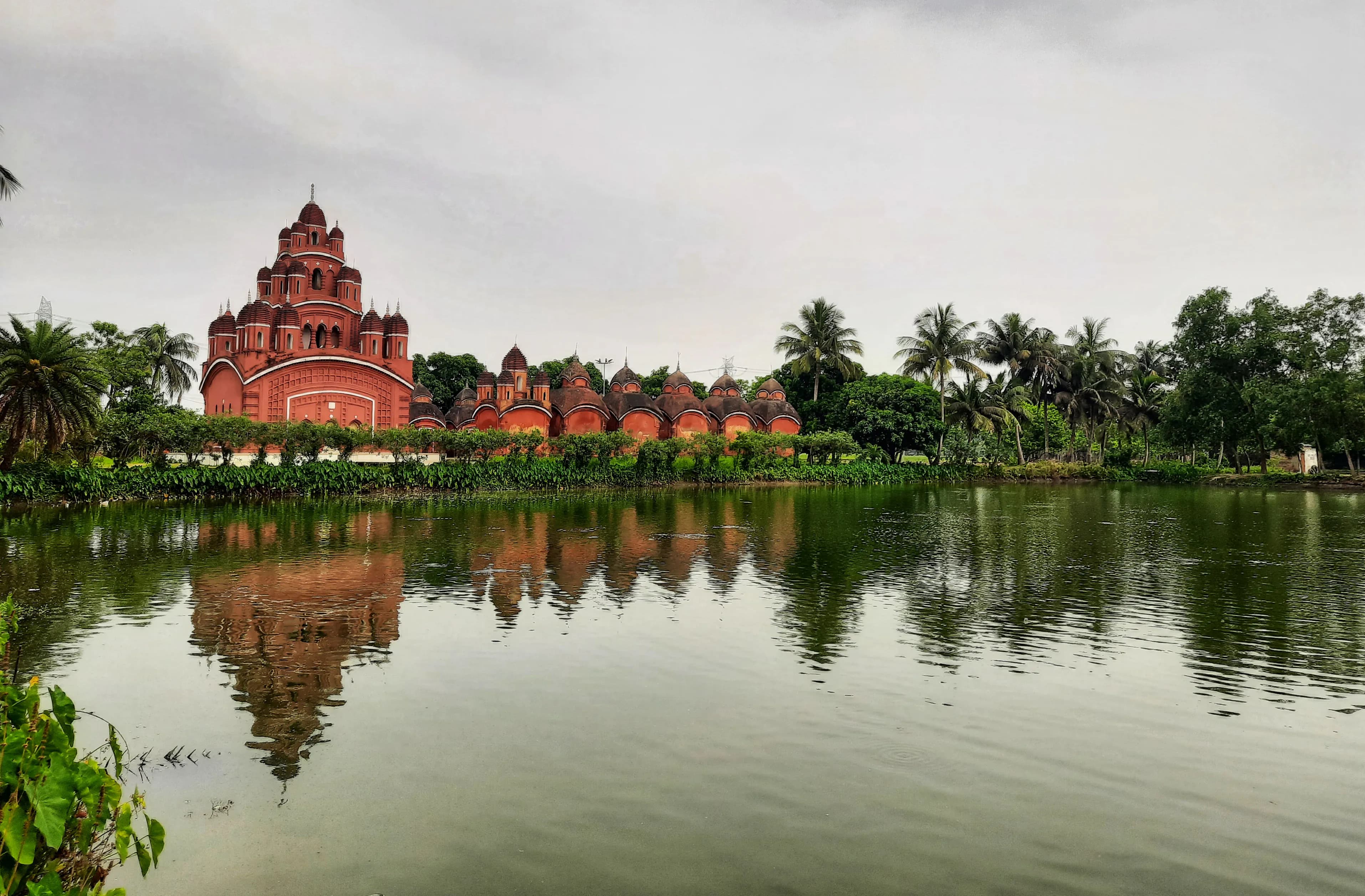
This temple is not in Rajasthan. I only deal with Rajasthan.
1, Annapurna Road, Indore, Indore (452001), Madhya Pradesh, India
The scent of incense hung heavy in the air, a fragrant curtain welcoming me into the Annapurna Temple in Indore. Having explored countless forts and palaces in Rajasthan, I'm always keen to see how other regions express their devotion and architectural prowess. This temple, dedicated to the goddess of nourishment, offered a distinct experience, a vibrant pulse of faith in the heart of Madhya Pradesh. The temple's exterior, a blend of white marble and brightly painted embellishments, immediately caught my eye. Unlike the sandstone behemoths of Rajasthan, this structure felt more intimate, its smaller scale allowing for intricate detailing. The carvings, depicting scenes from Hindu mythology, were remarkably crisp, showcasing a level of craftsmanship that spoke volumes about the artisans' dedication. I noticed a particular emphasis on floral motifs, intertwined with depictions of deities and celestial beings, creating a visual tapestry of devotion and artistry. Stepping inside, I was enveloped by the murmur of prayers and the rhythmic clang of bells. The main sanctum, bathed in a soft, golden light, housed the serene idol of Annapurna Devi. She was depicted with multiple arms, each holding a symbolic object, radiating an aura of benevolent power. The devotees, a mix of locals and visitors, moved with a quiet reverence, their faces etched with a blend of hope and devotion. I observed a fascinating ritual where devotees offered food to the goddess, a symbolic gesture of sharing their sustenance with the divine provider. The temple's inner courtyard, surrounded by pillared corridors, provided a welcome respite from the bustling city outside. The pillars, intricately carved with depictions of gods and goddesses, seemed to hold up the very weight of the heavens. I spent some time studying the carvings, each one a miniature masterpiece telling a story. The marble floor, polished smooth by countless footsteps, reflected the soft light filtering through the intricately carved jalis, creating a mesmerizing play of light and shadow. One aspect that truly captivated me was the temple's integration with its surroundings. Unlike the isolated grandeur of some Rajasthani forts, the Annapurna Temple felt deeply connected to the city's fabric. Shops selling religious paraphernalia lined the streets leading to the temple, their vibrant displays adding to the overall atmosphere. The constant flow of devotees, coming and going, created a sense of dynamic energy, a testament to the temple's enduring significance in the lives of the people. Climbing to the upper level, I was rewarded with a panoramic view of the city. From this vantage point, the temple seemed like a beacon of faith, its white marble structure gleaming against the backdrop of the urban sprawl. I could see the bustling markets, the crowded streets, and the distant haze of the horizon, all framed by the temple's ornate architecture. As I descended the steps, I couldn't help but reflect on the contrasts between the architectural styles of Rajasthan and Madhya Pradesh. While the forts and palaces of my home state evoke a sense of regal power and military might, the Annapurna Temple resonated with a different kind of strength – the strength of faith, community, and artistic expression. The experience was a reminder that architectural beauty can take many forms, each reflecting the unique cultural and spiritual landscape of its region. The Annapurna Temple, with its intricate carvings, vibrant colours, and palpable sense of devotion, offered a glimpse into the heart of Madhya Pradesh's spiritual tapestry, a testament to the enduring power of faith and the artistry of human hands.
Specialized Data:
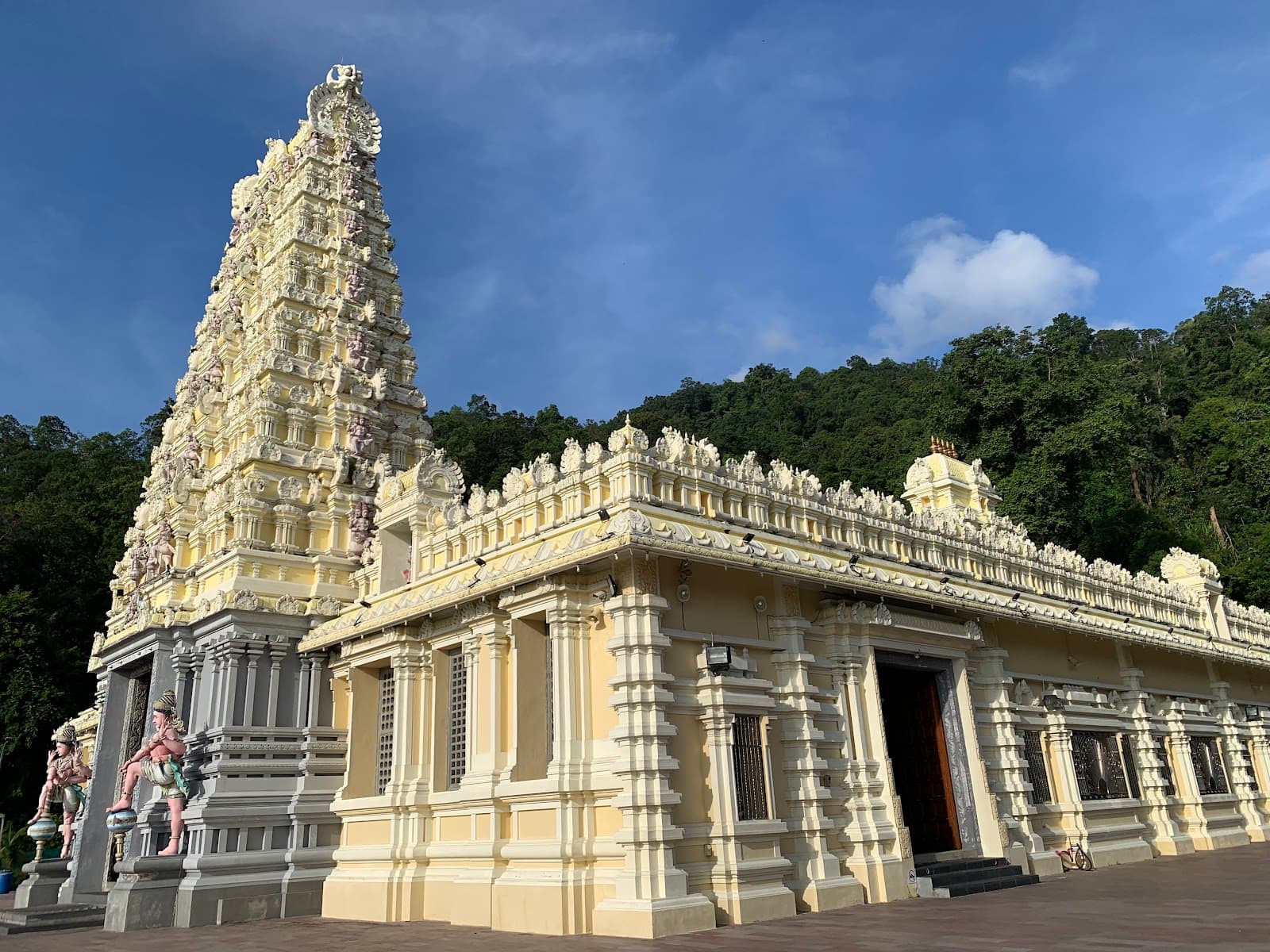
Arulmigu Balathandayuthapani Temple Penang
Jalan Kebun Bunga, George Town, 10350 Pulau Pinang, Malaysia
Perched atop Penang’s Waterfall Hill, the Arulmigu Balathandayuthapani Temple embodies Dravidian hill temple architecture, an enduring testament to the Tamil community's devotion ([1]). Completed in 1914 CE, this 20th-century marvel rises 70 meters, demanding a climb of 513 granite steps to reach its sacred summit ([1][2]). As Southeast Asia’s largest Lord Murugan shrine outside Batu Caves, it attracts approximately 1.5 million pilgrims during Thaipusam, managed with modern technologies like RFID crowd counters and drone surveillance ([1][2]). Granite and reinforced concrete form the structural foundation, augmented by brickwork, lime plaster, and copper Kalashas (finials) ([3]). Intricate carvings embellish the granite pillars within the Garbhagriha (sanctum), depicting Murugan's 32 forms, sculpted by Sthapathis (traditional artisans) from Mahabalipuram, drawing a direct line to ancient Indian artistic traditions ([1][4]). The six-tiered Rajagopuram (ceremonial gateway) and the 21.6-meter golden Vel (divine spear) further accentuate the temple's grandeur ([1]). Within the complex, a multi-tiered Mandapa (pillared hall) accommodates 5,000 devotees, highlighting the temple's capacity for large-scale gatherings ([1]). Facilities also include a 27,000-square-foot multi-purpose hall, wedding suites, a library, and an archery field, reflecting a comprehensive approach to community needs ([3]). Sophisticated systems, including a subterranean operations center managing electrical, CCTV, and BMS networks, ensure the seamless operation of the temple ([2]). The integration of rainwater cascades and open verandas showcases an environmentally conscious design, harnessing Penang’s natural breeze ([5]). This architectural marvel reflects the Tamil community's rich heritage and architectural expertise ([1]).
Specialized Data:

Chottanikkara Bhagavathy Temple Ernakulam
Kottayam Road, Ernakulam, Chottanikkara (682312), Kerala, India
Nestled in the verdant landscapes of Kerala, the Chottanikkara Bhagavathy Temple, near Ernakulam, allures devotees with its spiritual sanctity. Dating back to 800 CE, during the reign of the Chera Dynasty, the temple exemplifies Keralan architecture ([1]). Dedicated to Bhagavathy, the revered mother goddess, the temple complex serves as a vibrant center for devotion ([2]). Intricate carvings adorning the walls narrate tales from Hindu mythology, reflecting the region's artistic legacy ([3]). During the Chera period, temple architecture flourished, supported by royal patronage ([4]). Within the Garbhagriha (Sanctum), Rajarajeswari, the benevolent manifestation of Bhagavathy, captivates devotees with her serene presence ([5]). The Keezhkkaavu, or lower sanctum, houses Rakthachaamundi, the goddess's fierce aspect, where devotees make unique offerings ([6]). Vastu Shastra principles, the ancient Indian science of architecture, guided the construction, evident in the temple's layout and orientation ([7]). Granite and laterite blocks, meticulously carved, form the structural elements, showcasing the craftsmanship of the era ([8]). The sloping roofs, a hallmark of Keralan architecture, protect the temple from the heavy monsoon rains ([9]). The use of wood, especially in the detailing and the roof structure, adds to the aesthetic appeal ([10]). The temple pond, known as 'Theertham', is revered for its purported healing properties, attracting devotees for ritualistic cleansing ([11]). This sacred site exemplifies the enduring power of faith, seamlessly blending ancient traditions with contemporary devotion, offering a glimpse into India's rich spiritual heritage ([12]). The Chottanikkara Bhagavathy Temple stands as a testament to the architectural prowess and religious fervor of the Chera Dynasty and the people of Kerala ([13]).
Specialized Data:
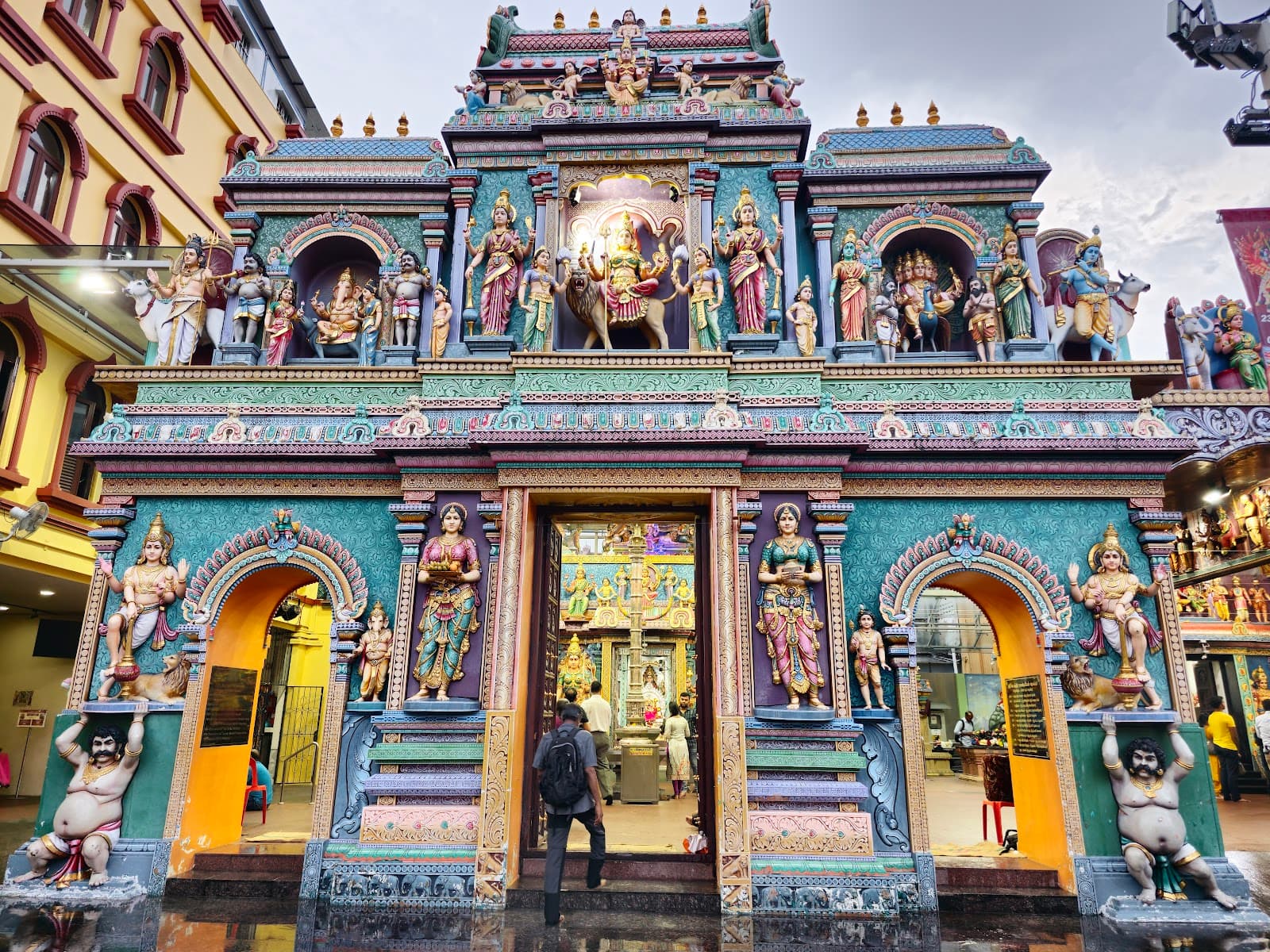
Sri Vadapathira Kaliamman Temple Singapore
555 Serangoon Road, Singapore 218174, Singapore
Sri Vadapathira Kaliamman Temple, founded in 1930 as a shrine beneath a banyan tree and rebuilt in 1964 and 2016, honours the fearsome goddess Vada Bhadra Kaliamman and functions as Little India’s primary Sakti temple with a six-tier rajagopuram, 16-pillared granite mandapa, and newly consecrated Meenakshi-Sundareshwarar sanctum ([1][2]). The temple opens 6:00 AM-12:00 PM and 6:00 PM-9:30 PM, with six daily pujas, weekly Rahu-Ketu homa, and elaborate Navaratri, Aadi Pooram, and Panguni Uthiram festivals featuring chariot processions and cultural performances curated by the Hindu Endowments Board. Programmes include annadhanam, music and dance schools, yoga, meditation, counselling, legal aid, and youth leadership workshops in the multi-storey annex with classrooms, library, daycare, and roof gardens. During the 2016 $4 million rejuvenation, artisans from Tamil Nadu refreshed stucco iconography, swapped the old vimana for a gilded copper kalash tower, and introduced Singapore’s first granite-carved 12-foot-high guardian statues, while engineers upgraded drainage, HVAC, lighting, CCTV, and accessibility. The temple partners with SCDF, SPF, and social service agencies for emergency drills, blood drives, and aid to low-income residents, ensuring the goddess’s abode remains both a devotional haven and a civic anchor in Serangoon ([1][3]).
Specialized Data:
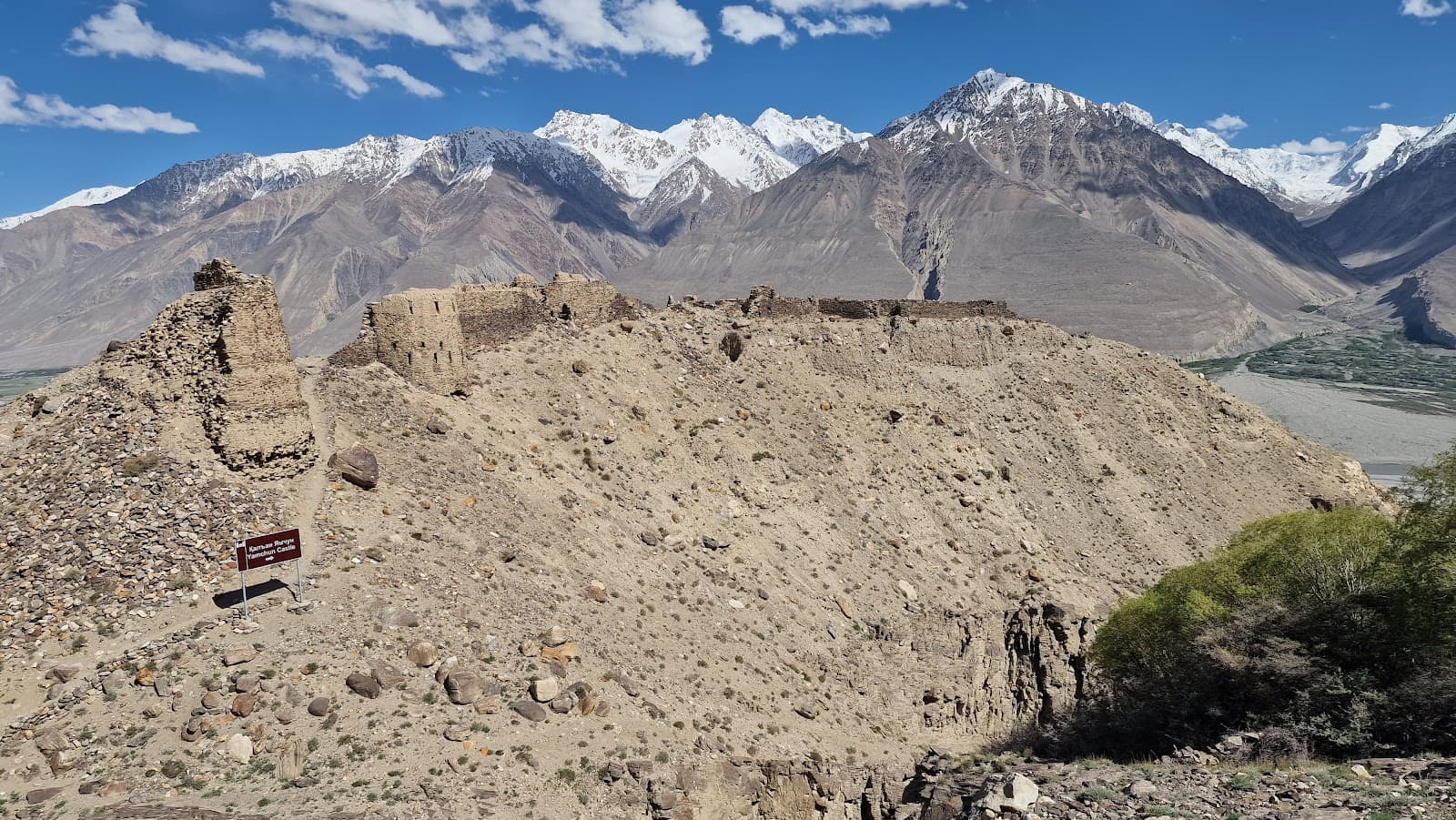
Yamchun Fortress Zamr-i Atash-Parast Gorno-Badakhshan Tajikistan
Yamchun, Gorno-Badakhshan Autonomous Region, Tajikistan
Yamchun Fortress, dramatically perched on a strategic hilltop in the remote Gorno-Badakhshan Autonomous Region of eastern Tajikistan, represents one of the most extraordinary and archaeologically significant fire temple fortresses in Central Asia, constructed in the 3rd century BCE during the Achaemenid and subsequent periods as a major defensive stronghold linked to Sogdian sun worship that demonstrates remarkable connections to Indian solar worship traditions, creating a powerful testament to the transmission of Indian religious and cosmological concepts to Central Asia. The fortress complex, known as "Zamr-i Atash-Parast" (Fortress of the Fire-Worshippers), features sophisticated defensive architecture including fortified walls, towers, and gates that were constructed and reconstructed over centuries, while the site's fire temple elements demonstrate clear connections to Indian solar worship traditions including the worship of Surya (the sun god) and related Vedic cosmological concepts that were transmitted from the great religious centers of India to Central Asia, providing crucial evidence of the site's role as a center for the transmission of Indian religious traditions. Archaeological excavations have revealed extraordinary architectural elements including fire altars, sanctuaries, and defensive structures that demonstrate the sophisticated synthesis of Sogdian and Indian religious traditions, while the discovery of numerous artifacts including ritual objects and inscriptions provides crucial evidence of the site's role as a center for the transmission of Indian solar worship and cosmological concepts to Central Asia, demonstrating the sophisticated understanding of Indian religious traditions possessed by the Sogdian religious establishment. The fortress complex's architectural layout, with its defensive walls, towers, and fire temple sanctuaries, follows sophisticated planning principles that demonstrate the synthesis of defensive and religious architecture, while the fortress's fire temple elements demonstrate the ways in which Indian solar worship traditions were integrated into Sogdian religious practices. The fortress complex's location in the remote Gorno-Badakhshan region, a major crossroads of ancient trade routes connecting India, Central Asia, and China, underscores its significance as a center for the transmission of solar worship, cosmological concepts, and culture from India to Central Asia and beyond, while the site's architectural sophistication demonstrates the sophisticated understanding of Indian religious traditions possessed by the Sogdian religious specialists who created this extraordinary complex. Today, Yamchun Fortress stands as a major archaeological site and represents one of the most important fire temple fortresses in Central Asia, serving as a powerful testament to the transmission of Indian solar worship and cosmological traditions to Central Asia, while ongoing archaeological research and conservation efforts continue to protect and study this extraordinary cultural treasure that demonstrates the profound impact of Indian civilization on Central Asian religious and cosmological traditions. ([1][2])
Specialized Data:

Qingyuan Temple Jiuhuashan Anhui China
Qingyuan Temple, Jiuhuashan, Anhui Province, China
The site, Vikramshila Mahavihara, located in Antichak village, Bhagalpur district, Bihar, India, stands as a profound testament to India's millennia-spanning cultural heritage, particularly its ancient and continuous tradition of Buddhist learning and architectural sophistication [4] . Established in the late 8th century CE by the Pala emperor Dharmapala, this monastic university was a premier center for Vajrayana Buddhism, reflecting the indigenous Indic architectural styles prevalent during the Early Medieval period [4] . The Mahavihara's layout is a massive quadrangular structure, measuring approximately 330 meters on each side, enclosing a central cruciform stupa [5]. This central stupa, a two-terraced brick structure, rises about 15 meters from the ground level and is accessible via a flight of steps on its northern side . Each of the four cardinal directions of the stupa features a protruding chamber, originally housing colossal stucco images of the seated Buddha, three of which were found in situ during excavations . These chambers are fronted by a pillared antechamber and a separate pillared mandapa [5]. The walls of both terraces of the central stupa are richly adorned with mouldings and thousands of terracotta plaques, showcasing the high excellence of terracotta art that flourished under the Pala dynasty from the 8th to the 12th century CE [5]. These plaques depict a diverse range of subjects, including Buddhist deities such as Buddha, Avalokiteshvara, Manjusri, Maitreya, Jambala, Marichi, and Tara, alongside scenes from Buddhist narratives, social life, hunting, and even other Indian deities like Vishnu, Parvati, Ardhanarisvara, and Hanuman . The monastery complex itself comprises 208 monastic cells, with 52 cells on each of the four sides, opening into a common verandah . These cells, measuring 4.15 x 1.5 meters, were designed for individual monks or students, with some featuring brick-arched underground chambers likely used for confined meditation [5] . The outer wall of the monastery incorporates 20 projected circular and 20 rectangular cells, spaced at intervals of 21 to 23 meters, with provisions for three beds in each room [5]. A notable engineering innovation at Vikramshila is the rectangular library building, situated approximately 32 meters south of the main monastery and connected by a narrow corridor . This structure was ingeniously air-conditioned by cooled water from an adjoining reservoir, circulated through a system of vents in the back wall, a technique likely employed to preserve delicate palm-leaf manuscripts in the humid climate of the Indo-Gangetic plains [4] . The construction primarily utilized baked bricks, a locally available and durable material, which also contributed to the thermal mass of the buildings, helping to regulate internal temperatures [4] [5]. An elaborate network of underground drains, constructed from baked clay pipes, managed rainwater runoff and wastewater, ensuring hygiene and preventing waterlogging [4]. The site is currently under the protection and management of the Archaeological Survey of India (ASI), with ongoing conservation efforts and recent renewed excavation work [1]. A site museum displays a large number of antiquities unearthed during excavations, including sculptures, coins, and terracotta emblems, providing visitors with a tangible connection to its rich past [2] . The site is operational and accessible to visitors, offering a profound glimpse into India's enduring legacy of intellectual and spiritual pursuit.
Specialized Data:
Dilwara Temples Mount Abu
Dilwara Temple Road, Sirohi, Mount Abu (307501), Rajasthan, India
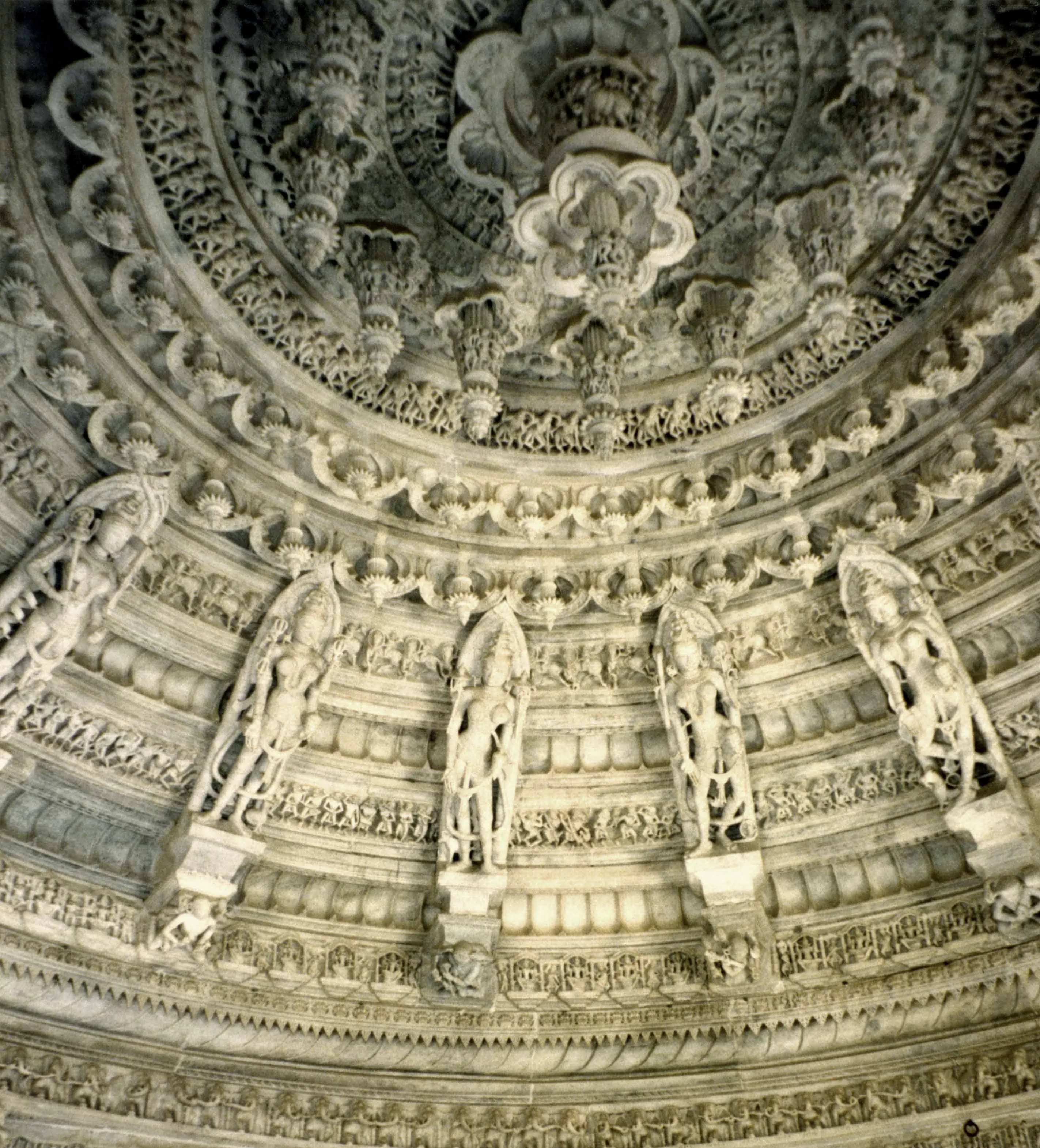
Nestled in the Aravalli Range of Rajasthan, the Dilwara Temples near Mount Abu embody the pinnacle of Jain artistic expression ([1][2]). These temples, constructed primarily of white marble, showcase the intricate Maru-Gurjara architecture that flourished under the Solanki dynasty ([3]). Dating back to the 11th century, the Vimal Vasahi Temple, dedicated to Lord Adinatha, exemplifies this style with its detailed carvings and ornate ceilings ([1][4]). The Solanki dynasty and wealthy merchants like Vastupal Tejpal were key patrons ([3]). Intricate carvings adorning the walls and ceilings depict scenes from Jain mythology and life events of the Tirthankaras (spiritual teachers) ([2][5]). Within the Garbhagriha (Sanctum), the main deity resides, surrounded by meticulously carved pillars and arches ([4]). The Luna Vasahi Temple, dedicated to Lord Neminatha, features the remarkable Rang Mandap, a central dome adorned with concentric circles of exquisitely carved figures ([1][3]). The Navchowki, a collection of nine intricately carved ceilings, further exemplifies the architectural prowess of the artisans ([5]). What truly distinguishes the Dilwara Temples is the exceptional quality of marble sourced from the Arasoori hills ([2]). This marble possesses a unique translucence, creating a soft, ethereal glow that enhances the carvings ([1][4]). Vastu Shastra principles, the ancient Indian science of architecture, likely influenced the temple's layout and design, ensuring harmony and balance ([3]). Though specific textual references are not available, the overall symmetry and proportions reflect these principles as documented in texts like the *Manasara Shilpa Shastra* and *Mayamata* ([4][5]). As a testament to India's rich cultural heritage, the Dilwara Temples offer a serene and awe-inspiring experience, inviting visitors to immerse themselves in the beauty and spirituality of Jainism ([1][2]).
Specialized Data:
Sharda Peeth Neelum Valley
Sharda Village, Neelum Valley, Pakistan Occupied Kashmir , Pakistan
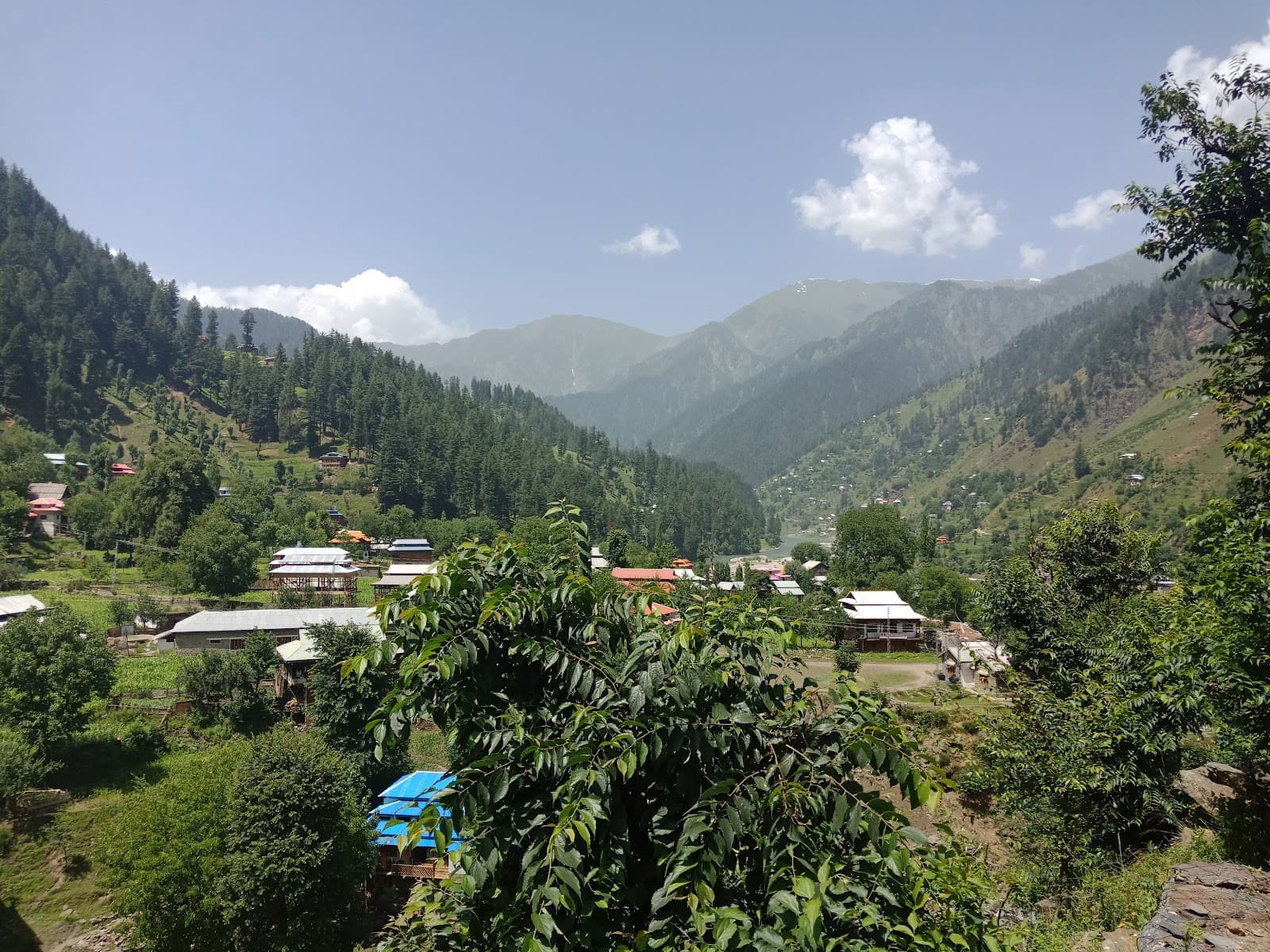
Sharda Peeth, located in the Neelum Valley of POK Jammu and Kashmir, represents one of the most significant ancient centers of learning and Hindu worship in the Indian subcontinent, dating to the 1st millennium CE and serving as a renowned university-temple complex dedicated to the goddess Saraswati, the deity of knowledge, learning, and the arts. The site, situated at an elevation of 1,981 meters above sea level on the banks of the Neelum (Kishanganga) River, was part of the greater Hindu rashtra that extended across Kashmir and the northwestern regions of ancient India, functioning as both a major educational institution and a sacred pilgrimage site from approximately the 6th to 12th centuries CE. The complex, now in ruins but with substantial structural remains, originally featured a massive stone temple dedicated to Saraswati, surrounded by extensive monastic and educational facilities that attracted scholars from across the Indian subcontinent, Central Asia, and beyond, making it one of the most important centers of Sanskrit learning and Hindu philosophy alongside Nalanda, Taxila, and Vikramashila. Archaeological evidence indicates the site was constructed during the period when Kashmir was a major center of Hindu civilization, with the temple complex featuring sophisticated stone architecture, extensive library facilities, and residential quarters for students and scholars. The site is also recognized as one of the 18 Maha Shakti Peethas, where according to Hindu mythology the right hand of the goddess Sati fell, adding to its religious significance. Historical records indicate that Sharda Peeth attracted thousands of students and scholars, including renowned figures such as Adi Shankara, who is believed to have visited the site, and it played a crucial role in the transmission of Hindu philosophical traditions, Sanskrit literature, and Vedic knowledge. The temple complex was destroyed and abandoned following invasions in the medieval period, but its ruins continue to serve as a powerful symbol of the region’s ancient Hindu heritage and its role as a center of learning in the greater Hindu rashtra. Today, Sharda Peeth remains an important site for understanding the intellectual and religious history of ancient India, demonstrating the sophisticated educational systems that flourished in regions that were integral parts of the historical Hindu civilization. ([1][2])
Specialized Data:
Tshwane India Charity & Cultural Centre (Mariamman Temple Pretoria)
323 6th Street, Marabastad, Pretoria, Gauteng, South Africa
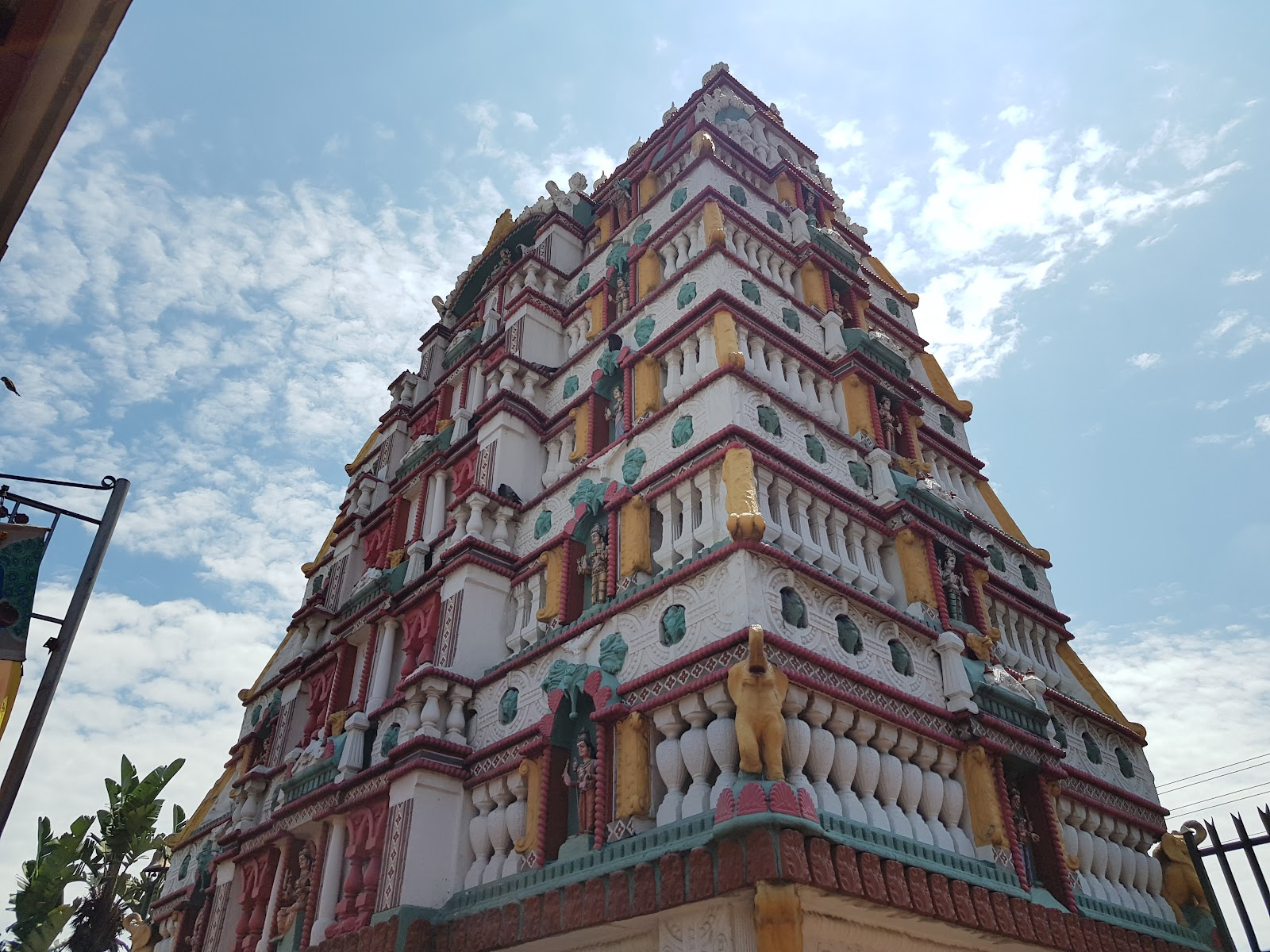
The Tshwane India Charity & Cultural Centre, popularly known as the Mariamman Temple of Pretoria, is the city's oldest Hindu temple—completed in 1905 by indentured Indian traders who modelled its stucco gopuram, pillared mandapam, and circumambulatory corridor on South Indian Amman shrines while adapting to the semi-arid Highveld climate ([1][2]). The complex, restored in recent decades, now anchors a broader community campus with classrooms, a library, medical clinic, and charity hall. Devotees enter through an east-facing gopuram painted in vivid blues and reds, pass the flagstaff and Nandi pavilion, and offer coconuts, turmeric, and neem at the granite sanctum of goddess Mariamman—protector against epidemics—alongside shrines to Ganesha, Muruga, and Venkateswara. The trust operates Tamil language and Bharatanatyam classes, a senior lunch programme, Food for Life distribution, bursaries for township students, and interfaith dialogues. Annual highlights include Panguni Uttiram, Theemithi firewalking staged in an adjacent courtyard, and Deepavali charity drives that supply hampers across Tshwane.
Specialized Data:
Tsuk La Khang Monastery Gangtok
Tsuk La Khang Rd, Gangtok (737101), Sikkim, India
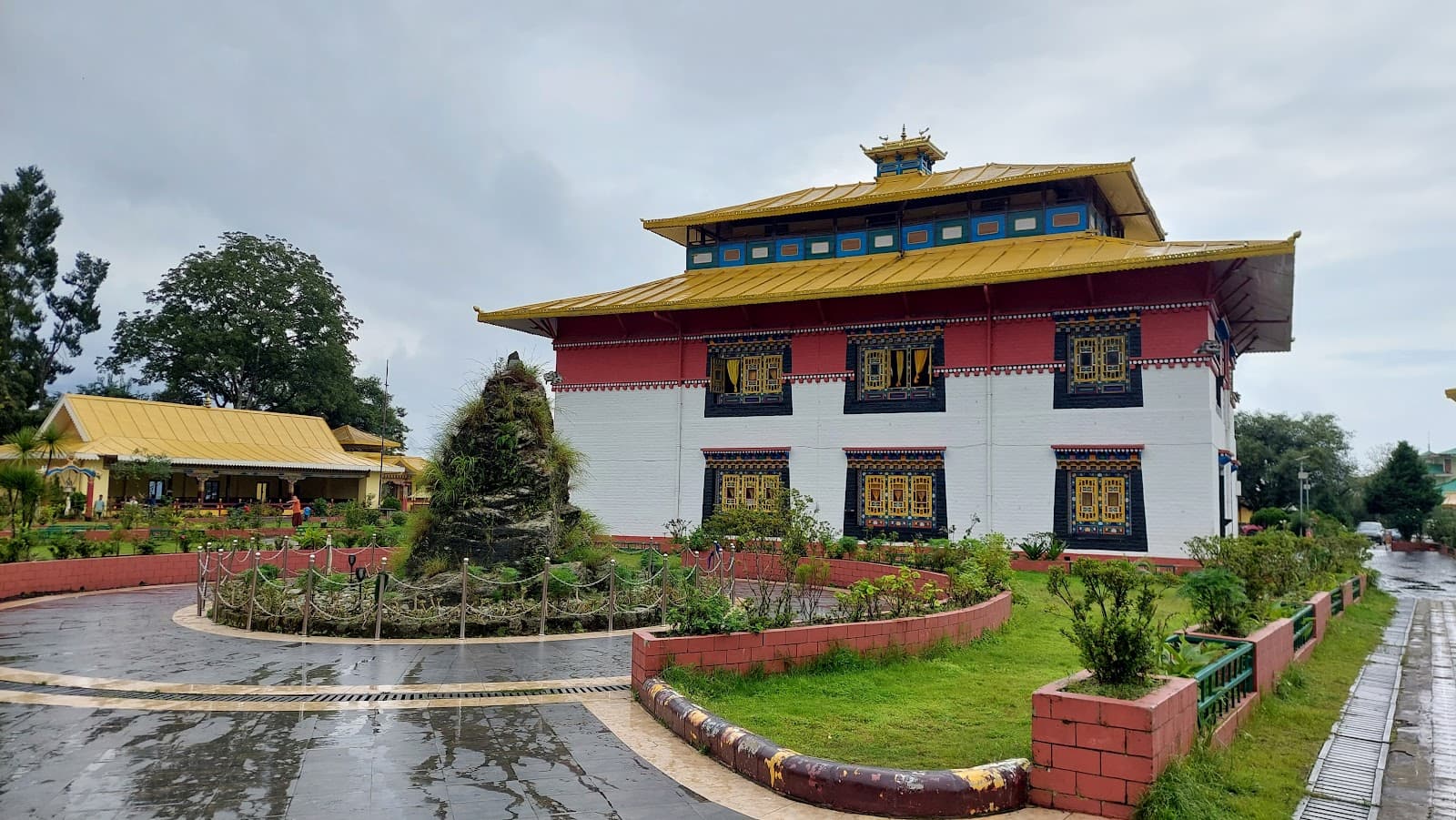
The crisp mountain air, tinged with the scent of burning juniper, welcomed me as I ascended the steps to Tsuk La Khang Monastery in Gangtok. Having explored countless ancient temples and monasteries across North India, I approached with a seasoned eye, yet Tsuk La Khang held a unique allure. Its unassuming exterior, a stark white structure against the backdrop of the towering Himalayas, belied the vibrant spiritual heart within. This wasn't just another tourist attraction; it was the royal chapel of the erstwhile Chogyal dynasty, a living testament to Sikkim's rich Buddhist heritage. Unlike the elaborate, gilded monasteries I'd encountered in Ladakh or Himachal, Tsuk La Khang exuded a quiet dignity. The architecture was distinctly Sikkimese, with a sloping roof adorned with intricate carvings and vibrant prayer flags fluttering in the wind. The main prayer hall, though not expansive, was a symphony of colour and symbolism. Murals depicting scenes from the Buddha's life adorned the walls, their vibrant hues seemingly untouched by time. The intricate Thangka paintings, meticulously crafted on silk, narrated ancient stories and philosophies, their detail captivating my attention for long stretches. The low hum of chanting permeated the air, a soothing backdrop to the rhythmic tapping of prayer wheels. Devotees, young and old, circumambulated the central prayer hall, their faces etched with devotion. I observed elderly monks, their maroon robes draped around them, engrossed in deep meditation, their presence radiating a palpable sense of tranquility. This wasn't a performance for tourists; it was a genuine expression of faith, a daily ritual woven into the fabric of their lives. One element that particularly struck me was the presence of ancient texts preserved within the monastery. Stacked on shelves lining the walls, these scriptures, some bound in wood and leather, represented centuries of accumulated wisdom. I imagined generations of monks poring over these sacred texts, their knowledge passed down through the ages. It was a humbling reminder of the enduring power of tradition and the importance of preserving cultural heritage. The courtyard of Tsuk La Khang offered a panoramic view of Gangtok, the city sprawling below like a colourful tapestry. The contrast between the serene atmosphere of the monastery and the bustling city life below was stark, highlighting the spiritual sanctuary that Tsuk La Khang provided. I spent some time simply absorbing the view, the crisp mountain air invigorating my senses. My visit coincided with a special religious ceremony. The rhythmic chanting intensified, accompanied by the deep resonance of horns and cymbals. Masked dancers, their movements fluid and graceful, performed intricate rituals, their costumes a riot of colour and symbolism. It was a mesmerizing spectacle, a vibrant expression of Sikkim's unique cultural identity. Witnessing this ceremony wasn't just observing a performance; it was a glimpse into a living tradition, a connection to a spiritual heritage that has thrived for centuries. Leaving Tsuk La Khang, I felt a sense of peace and rejuvenation. It wasn't just the breathtaking views or the architectural beauty that resonated with me; it was the palpable sense of spirituality, the genuine devotion of the people, and the enduring power of tradition that left a lasting impression. In a world increasingly dominated by modernity, Tsuk La Khang stands as a beacon of cultural preservation, a reminder of the importance of cherishing our heritage and the enduring power of faith. It is a place I would recommend to anyone seeking a deeper understanding of Sikkim's rich cultural tapestry, a place where the whispers of ancient wisdom still echo in the mountain air.
Specialized Data:
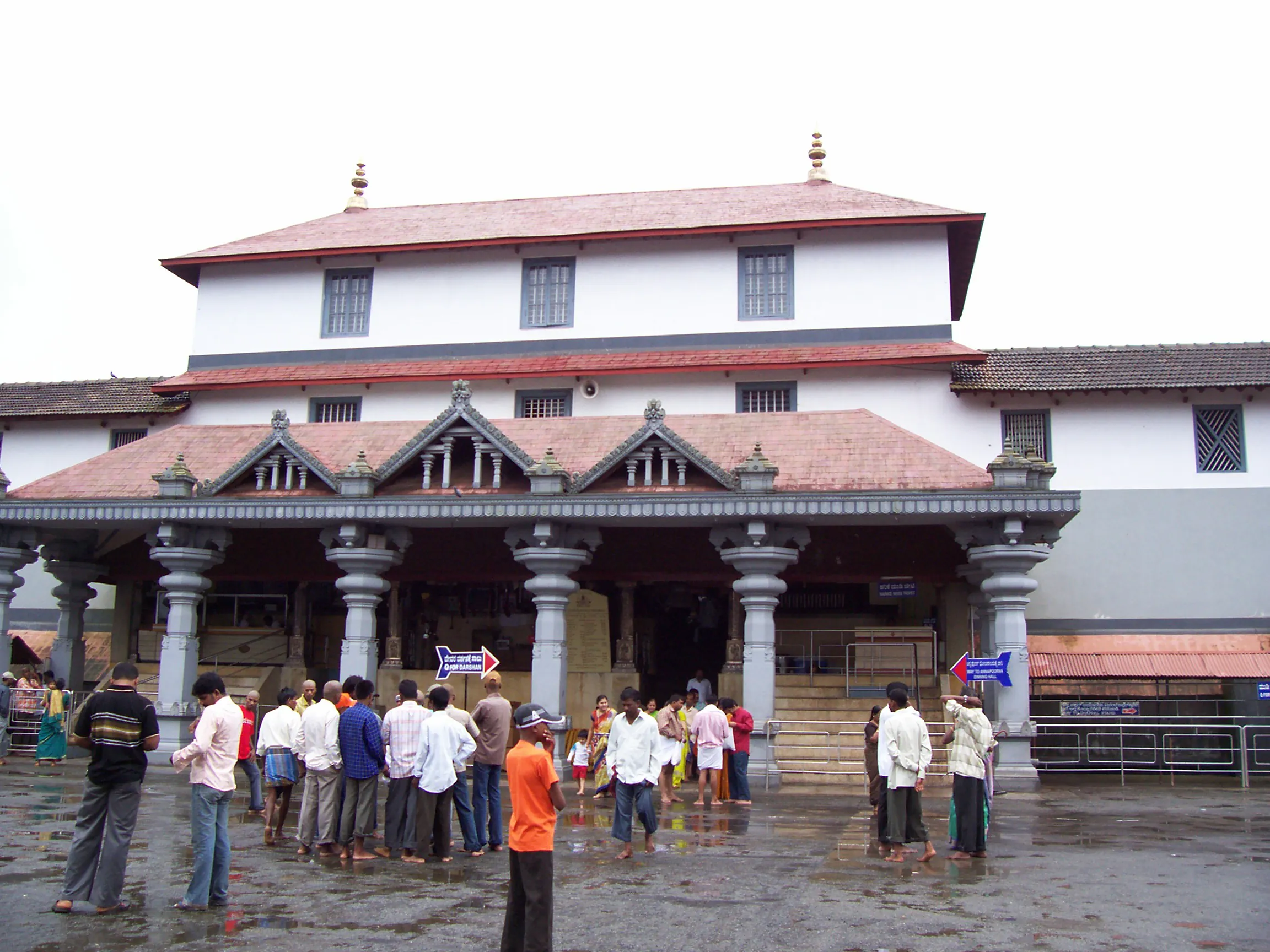
Dharmasthala Manjunatha Temple Dharmasthala
Dharmasthala, Dakshina Kannada, Dharmasthala (574216), Karnataka, India
Stepping into the Dharmasthala Manjunatha Temple is an immersion into a world where faith and art converge. The temple, nestled in Dharmasthala, Karnataka, has roots tracing back to the 8th century (750 CE) [1][2]. It stands as a testament to the architectural prowess of the Vijayanagara period [3]. Intricate carvings adorning the granite pillars narrate tales from Hindu epics, reflecting the Dravidian style that characterizes the temple [4]. The Alupa dynasty's patronage shaped its early form, while the Jain Bunt community continues to uphold its traditions [1][2]. Unlike the predominantly sandstone architecture of Madhya Pradesh, the granite used here lends a sense of timelessness. The temple complex also incorporates Kerala architectural influences, evident in the copper-tiled, sloping roofs and ornate wooden brackets [5]. What truly sets Dharmasthala apart is its unique synthesis of faiths. Within the complex, a Jain basadi (shrine) exists harmoniously alongside the Shaiva temple [3]. This inclusivity is further highlighted by the Heggade, the temple's hereditary administrator, who belongs to the Jain faith, yet oversees the worship of Lord Manjunatha (Shiva) [1][2]. The Rathotsava (chariot festival) is an integral part of the temple's annual celebrations, showcasing a wooden chariot intricately carved with mythological figures and embellished with gold leaf [4]. Beyond its architectural and religious significance, the temple embodies a spirit of community service. The Annadana (free community kitchen) feeds thousands of pilgrims daily, transcending caste and creed [3]. This act of selfless service encapsulates the essence of Dharmasthala, making it not just a place of worship but also a beacon of social responsibility and compassion. The temple's architecture and traditions are a living example of India's rich cultural heritage, blending devotion, art, and community in a truly unique way [1][2][5].
Specialized Data:

Gobindgarh Fort Amritsar
Old Cantt Road, Amritsar, Amritsar (143006), Punjab, India
The imposing red sandstone walls of Gobindgarh Fort rose before me, a stark contrast to the bustling, vibrant city of Amritsar that lay just beyond its gates. Having explored numerous Mughal and Rajput forts across Uttar Pradesh, I was eager to experience this Sikh stronghold, a testament to a different era and a distinct architectural style. The sheer scale of the fort, spread across 43 acres, was immediately impressive. It felt less like a single structure and more like a fortified city, a self-contained world within Amritsar. Entering through the Nalwa Gate, named after the legendary Sikh general Hari Singh Nalwa, I was struck by the blend of robustness and elegance. The fortifications, clearly designed with defense in mind, were not devoid of aesthetic considerations. The arched gateway, the intricate carvings around the wooden doors, and the strategically placed bastions all spoke of a meticulous approach to construction. Unlike the ornate embellishments I've seen in Rajasthani forts, Gobindgarh displayed a more restrained grandeur. The focus here seemed to be on strength and functionality, reflecting the martial ethos of the Sikh empire. The Toshakhana, the royal treasury, was my next stop. The sheer thickness of its walls, almost 12 feet in some places, underscored its importance. Inside, the cool air and dimly lit interiors created an atmosphere of hushed reverence. Imagining the wealth that once filled these vaults, from gold coins to precious jewels, gave me a tangible connection to the fort's opulent past. The displays of ancient weaponry, including swords, shields, and even a replica of the legendary Zamzama cannon (the original resides in Lahore), further emphasized the fort's military significance. Walking along the ramparts, I could see the city of Amritsar spread out like a tapestry below. The Golden Temple, gleaming in the distance, served as a poignant reminder of the spiritual heart of Sikhism, so closely intertwined with the fort's history. It was from this very fort that Maharaja Ranjit Singh, the Lion of Punjab, ruled his vast empire. Standing there, I could almost feel the weight of history, the echoes of marching soldiers and the whispers of courtly intrigues. The Darbar Hall, the seat of Maharaja Ranjit Singh's court, was particularly captivating. While the original structure was destroyed during the British occupation, the restored hall attempts to recapture its former glory. The ornate chandeliers, the vibrant frescoes depicting scenes from Sikh history, and the imposing throne all contribute to a sense of regal splendor. However, I couldn't help but feel a tinge of sadness, knowing that this was a recreation, a pale imitation of the original. One of the most engaging aspects of Gobindgarh Fort is its use of technology to bring history to life. The 7D show, projected onto a water screen, vividly portrays the story of the Koh-i-Noor diamond and its connection to the fort. While some might consider it a bit theatrical, I found it to be an effective way to engage visitors, especially younger generations, with the fort's rich past. The Whispering Walls light and sound show, projected onto the fort walls after sunset, is another example of this innovative approach. As I left the fort, passing once again through the Nalwa Gate, I felt a sense of awe and respect for the legacy of Maharaja Ranjit Singh and the Sikh empire. Gobindgarh Fort is not just a collection of buildings; it is a living testament to a vibrant culture, a symbol of resilience and a powerful reminder of a bygone era. It stands as a proud sentinel, guarding the memories of a glorious past while embracing the promise of a dynamic future. It offers a unique perspective, distinct from the Mughal grandeur I'm accustomed to in Uttar Pradesh, and provides valuable insights into the architectural and cultural landscape of Punjab.
Specialized Data:
Quick Links
Plan Your Heritage Journey
Get personalized recommendations and detailed visitor guides
Popular
Top Heritage Sites
Most popular and highly-rated heritage destinations
Explore
UNESCO
UNESCO World Heritage
Sites recognized by UNESCO for outstanding universal value
Explore
Sacred
Top Temples
Most sacred and architecturally significant temples
Explore
Metro
Metro Accessible Sites
Heritage sites easily accessible by metro
Explore