Has Inheritage Foundation supported you today?
Your contribution helps preserve India's ancient temples, languages, and cultural heritage. Every rupee makes a difference.
Secure payment • Instant 80G certificate
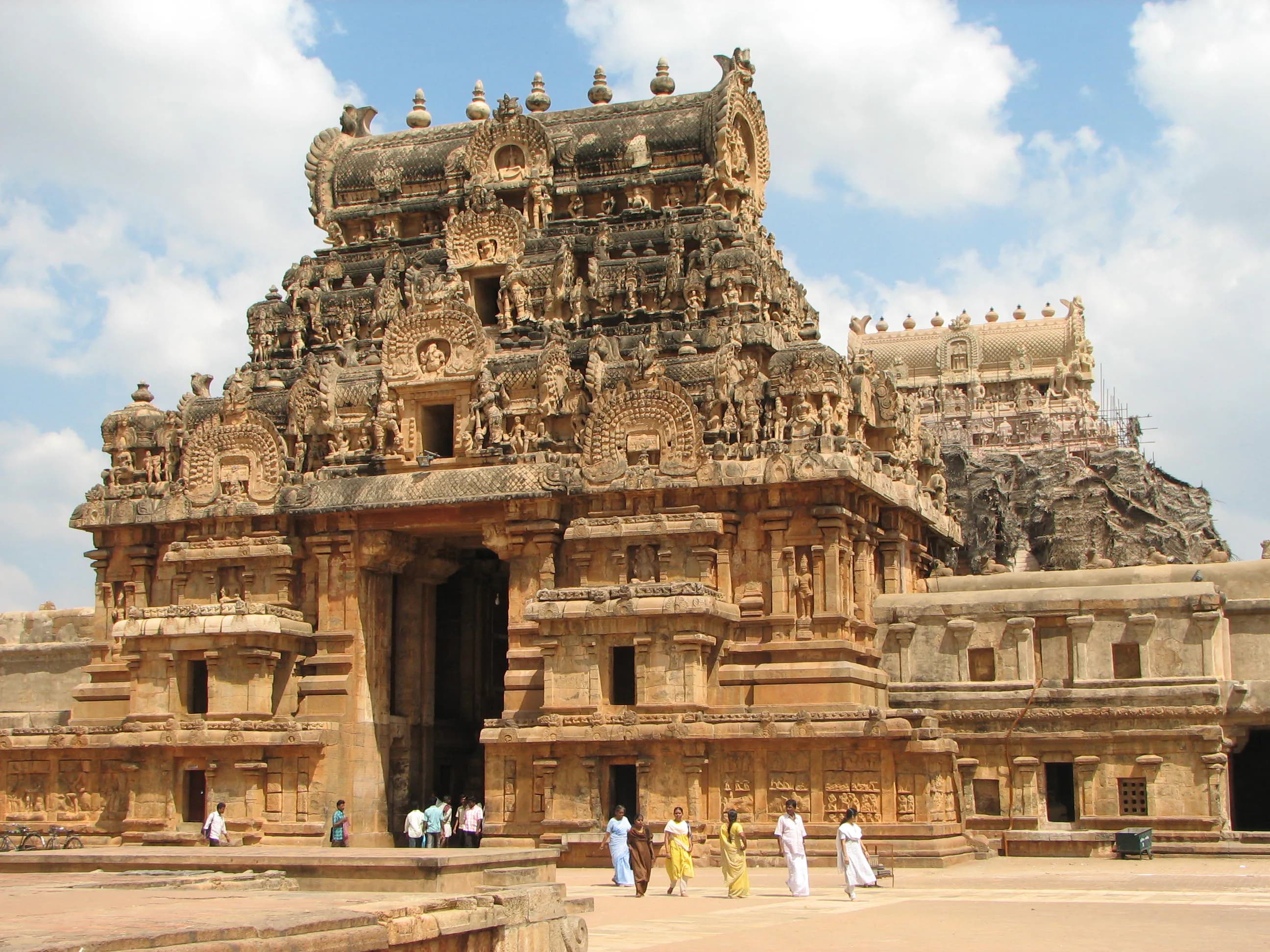
Brihadeeswarar Temple Thanjavur
The sheer scale of the Brihadeeswarar Temple in Thanjavur stopped me dead in my tracks. Having explored countless caves and temples across Maharashtra, I thought I was prepared for anything. I was wrong. This UNESCO World Heritage Site, a testament to the architectural prowess of the Chola dynasty, transcends mere grandeur ([1]). It’s a symphony in stone, a colossal expression of devotion that left me humbled and awestruck. Soaring to a height of 216 feet, the Vimana (temple tower) dominates the landscape ([2]). Unlike the stepped pyramidal structures, this Vimana (temple tower) is a singular, curvilinear structure, crowned by a monolithic Kumbham (cupola). The sheer weight of this massive granite dome, estimated at 80 tons, is an engineering feat ([3]). How the artisans managed to lift it to such a height in the 11th century is worthy of reverence. Granite and sandstone blocks, meticulously carved, form the Nandi Mandapa (Pillared Hall), which houses a colossal monolithic Nandi bull ([4]). The Nandi, carved from a single rock, exudes a quiet strength, its gaze fixed eternally on the main deity within. The intricate carvings on the Mandapa (Pillared Hall), depict scenes from Hindu mythology, a testament to the skill of the Chola artisans ([5]). Within the Garbhagriha (Sanctum), a palpable sense of serenity envelops you. The towering Lingam, the symbol of Lord Shiva, commands attention, its smooth, dark stone radiating a powerful energy. The walls surrounding the sanctum are adorned with frescoes, narrating tales of devotion and divine intervention ([6]). During the Chola Period, temple architecture revealed a deep understanding of geometry and proportion ([7]). The Vimana (temple tower), for example, is designed according to the principles of Dravidian architecture, with its intricate carvings and rhythmic vertical lines creating a sense of harmony and balance. The use of interlocking stones, without any mortar, is a testament to the precision and skill of the Chola builders ([8]). My visit to the Brihadeeswarar Temple was more than just a sightseeing trip; it was a pilgrimage of sorts. It was a journey into the heart of ancient India, a testament to the ingenuity, devotion, and artistic brilliance of a civilization that flourished centuries ago. The Brihadeeswarar Temple has carved its own niche in my memory. It stands as a powerful reminder of the enduring legacy of India's rich cultural heritage, a legacy that continues to inspire awe and wonder even today.
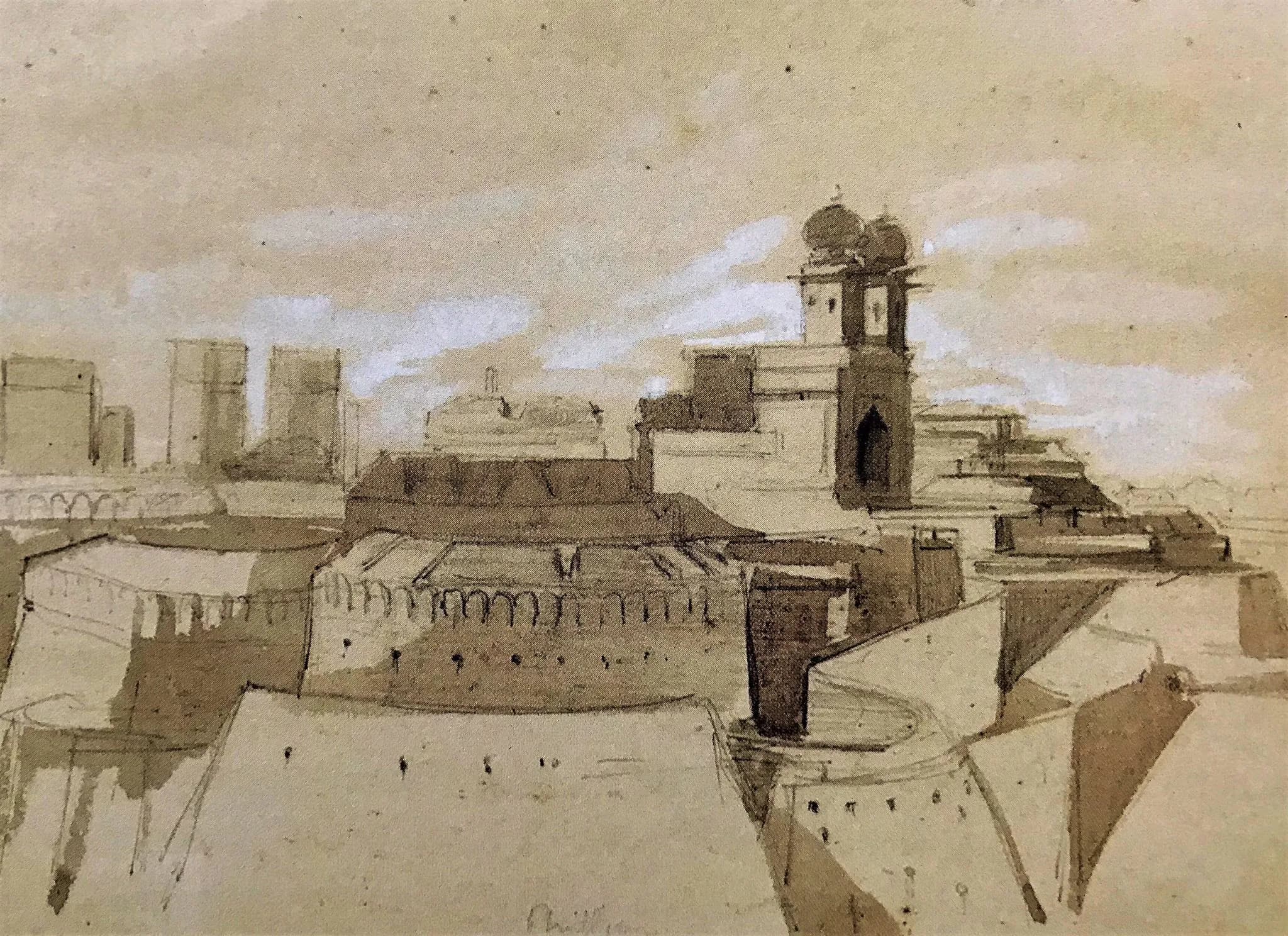
Phillaur Fort Jalandhar
The midday sun cast long shadows across the ochre walls of Phillaur Fort, baking the brickwork that had stood sentinel over the Sutlej River for centuries. Arriving from Madhya Pradesh, accustomed to the sandstone hues of our own ancient structures, the burnt orange of this Mughal-era fort struck me immediately. It wasn't the imposing grandeur of Gwalior or the intricate carvings of Khajuraho, but Phillaur possessed a quiet dignity, a subtle beauty born of its strategic location and layered history. The fort, now a heritage hotel, sits on the Grand Trunk Road, a testament to its historical importance as a crossroads of empires. As I stepped through the imposing gateway, the cacophony of the bustling highway faded, replaced by the gentle murmur of the river and the rustling of leaves in the courtyard trees. The transition was stark, a palpable shift from the present to the past. My camera, a constant companion, felt almost inadequate to capture the essence of the place. The main structure, a double-storied edifice, displayed a blend of Mughal and Sikh architectural influences. Rounded bastions, typical of Mughal military architecture, punctuated the fort's perimeter, while the decorative elements, particularly the delicate frescoes peeking from beneath layers of whitewash, hinted at later Sikh additions. I spent hours documenting these remnants, the faded floral patterns and depictions of warriors, each a whisper of the fort's rich past. The central courtyard, now a manicured lawn, was once a bustling hub of activity. I could almost envision the Mughal soldiers drilling, the horses being groomed, and the echoes of courtly life resonating within these walls. A small museum within the fort housed a collection of artifacts unearthed during restoration work – coins, pottery shards, and weaponry – tangible links to the people who once inhabited this space. Holding a corroded Mughal coin in my hand, I felt a tangible connection to that era, a sense of awe at the weight of history it represented. Climbing the narrow, winding staircase to the upper levels, I was rewarded with panoramic views of the surrounding landscape. The Sutlej River snaked its way through the plains, a silvery ribbon reflecting the bright sky. It was easy to understand why this location was so strategically important, commanding control over the river and the vital trade routes it supported. The wind whipped through the open arches, carrying with it the whispers of centuries past. One of the most captivating aspects of Phillaur Fort was its layered history. Originally built by Mughal Emperor Shah Jahan in the 17th century, it later fell into the hands of the Sikh ruler Maharaja Ranjit Singh, who further fortified and embellished it. This transition of power was reflected in the architecture itself, a fascinating palimpsest of styles. The Sikh additions, while respecting the original Mughal structure, added their own distinct flavor, creating a unique blend that spoke volumes about the region's complex past. As the sun began to dip below the horizon, casting long shadows across the courtyard, I felt a sense of melancholy wash over me. Leaving Phillaur Fort felt like saying goodbye to an old friend. It wasn't just a collection of bricks and mortar; it was a repository of stories, a testament to the ebb and flow of empires, and a poignant reminder of the passage of time. My photographs, I hoped, would capture not just the physical beauty of the fort, but also the intangible spirit of the place, the echoes of history that resonated within its ancient walls.
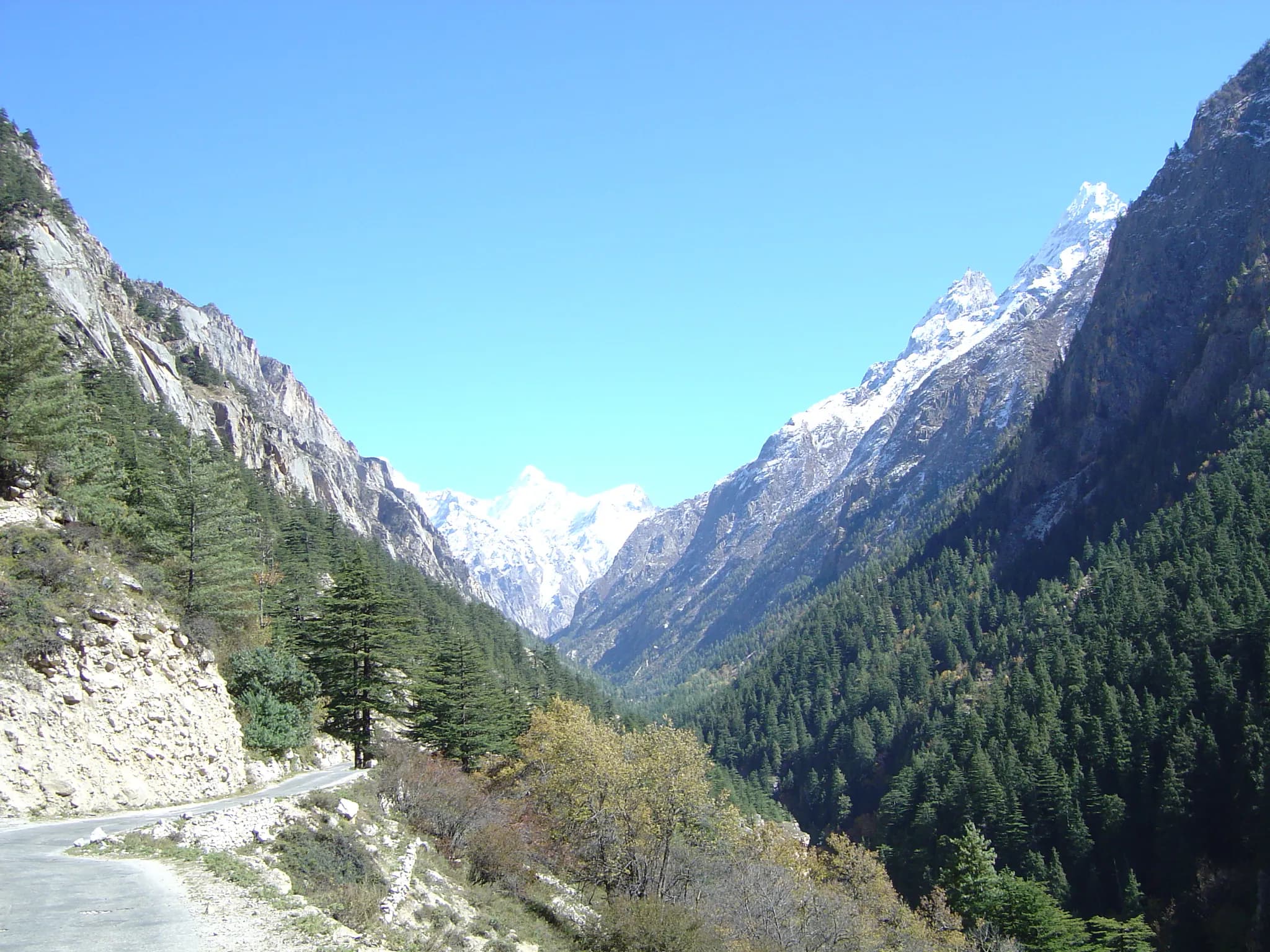
Gangotri Temple Uttarkashi
The glacial chill of the Bhagirathi River, roaring just a few meters away, seemed to permeate the very stones of the Gangotri Temple. Standing before this pristine white structure, nestled amidst the towering Himalayas, I felt a palpable shift from the Dravidian temple architecture I'm so accustomed to in Chennai. Here, the simplicity and almost austere elegance of the Gangotri Temple spoke a different architectural language, a testament to the resilience of faith in this harsh, yet breathtaking landscape. Built in the 18th century by the Gorkha General Amar Singh Thapa, the temple lacks the elaborate ornamentation and towering gopurams that characterize South Indian temples. Its two-story structure, constructed primarily of granite, is relatively small in scale, yet its presence is magnified by the sheer grandeur of its surroundings. The sloping roof, clad in sheets of copper, is a distinct feature, a practical adaptation to the heavy snowfall this region experiences. This contrasts sharply with the granite and sandstone vimanas of the south, designed to withstand torrential monsoons. Entering the sanctum sanctorum, I was struck by the reverence that permeated the air. The deity, Goddess Ganga, is depicted in a silver palanquin, a stark departure from the intricately carved stone idols I'm familiar with. The simplicity of the iconography, however, seemed to amplify the spiritual energy within the temple. The lack of elaborate carvings within the sanctum allowed the focus to remain solely on the goddess, fostering a sense of direct connection with the divine. Stepping back outside, I began to appreciate the subtle nuances of the temple's design. The lack of extensive sculptural programs, common in Dravidian architecture, allows the natural beauty of the surrounding landscape to become an integral part of the temple experience. The snow-capped peaks, the roaring river, and the crisp mountain air all contribute to a sense of awe and reverence. This integration of the natural world with the built environment is a hallmark of Himalayan temple architecture, a stark contrast to the often self-contained temple complexes of the south. I observed a few pilgrims performing parikrama around the temple. The circumambulatory path, unlike the wide prakarams of Southern temples, was a simple, paved walkway. This again highlighted the emphasis on functionality and adaptation to the environment. The temple's design prioritizes accessibility and practicality, reflecting the challenging terrain and weather conditions. The use of granite for the temple's construction is also noteworthy. While granite is used in South Indian temples, particularly for the base and pillars, the extensive use of this material at Gangotri speaks to its local availability and durability in this mountainous region. The gleaming white granite, set against the backdrop of the grey mountains and the turquoise river, creates a visually stunning contrast. One aspect that particularly intrigued me was the absence of a dedicated mandapam or pillared hall, a ubiquitous feature in South Indian temples. This absence, I believe, stems from the climatic conditions. A large open hall would be impractical in a region that experiences heavy snowfall. The temple's design, therefore, prioritizes enclosed spaces for warmth and protection from the elements. My visit to the Gangotri Temple was a profound experience, offering a fresh perspective on sacred architecture. It underscored the fact that architectural styles are not merely aesthetic choices but are deeply intertwined with the environment, the local culture, and the practical needs of the community. While the Dravidian temples of my homeland celebrate ornamentation and intricate detail, the Gangotri Temple, in its elegant simplicity, embodies a different kind of beauty, a beauty born of resilience, adaptation, and a deep reverence for the natural world. It stands as a testament to the enduring power of faith, expressed through architecture that harmonizes with its surroundings, creating a sacred space that resonates with the very soul of the Himalayas.
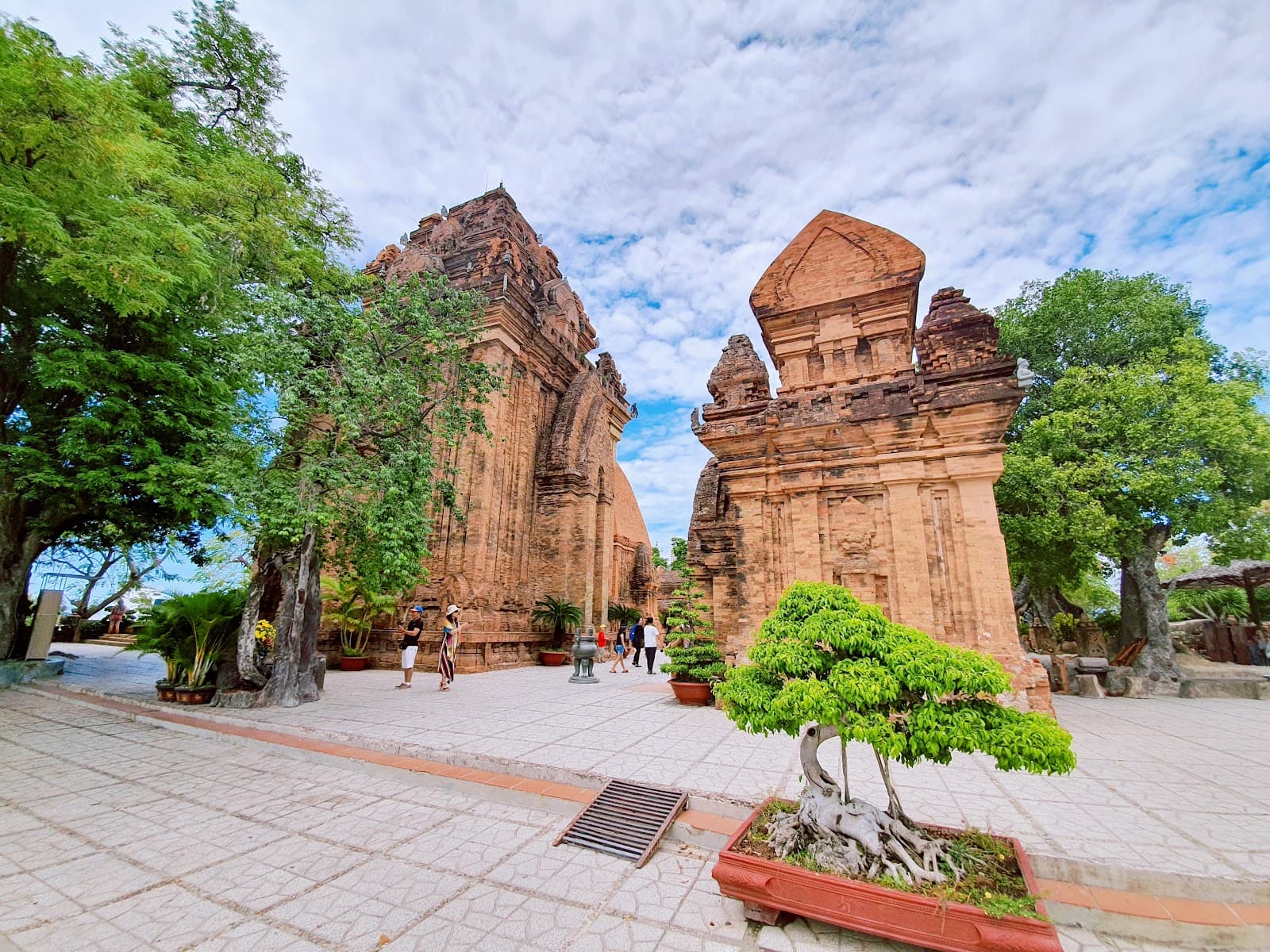
Po Nagar Cham Towers Nha Trang Vietnam
Po Nagar Cham Towers, majestically perched on a hill overlooking the Cai River in Nha Trang, Khanh Hoa Province, Vietnam, represent one of the most magnificent and spiritually significant Cham Hindu temple complexes in Vietnam, constructed from the 7th to 12th centuries CE and dedicated to Yan Po Nagar, the mother goddess of the Champa Kingdom who is identified with the Hindu goddess Bhagavati, creating a powerful testament to the profound transmission of Indian Hindu religious and artistic traditions to Southeast Asia. The temple complex, originally comprising eight towers of which four survive today, features extraordinary red brick structures adorned with intricate sandstone bas-reliefs and sculptures that demonstrate the sophisticated synthesis of Indian Hindu temple architecture, particularly the Dravidian traditions of southern India, with indigenous Cham building techniques, creating a unique architectural expression that reflects Champa's deep engagement with Indian religious and cultural traditions. The main tower, standing at 23 meters tall and dedicated to Yan Po Nagar, features elaborate decorative programs including bas-reliefs depicting Hindu deities, mythological scenes, and Cham royal processions that demonstrate the direct transmission of Indian Hindu iconography and artistic traditions, while the discovery of Sanskrit inscriptions provides crucial evidence of the site's role as a center for the transmission of Indian religious texts and practices to Southeast Asia. The temple complex served as a major center of Hindu worship for the Champa Kingdom for over five centuries, attracting devotees from across the region, while the site's location on a prominent hill overlooking the river, chosen according to Indian cosmological principles emphasizing the connection between earth and sky, underscores its spiritual significance as a place where the divine and earthly realms intersected. Archaeological evidence reveals that the complex underwent multiple phases of construction and modification, with each successive dynasty adding new towers and enhancing existing structures, creating an architectural palimpsest that documents the evolution of Cham Hindu architecture and its continued engagement with Indian traditions, while the site's continued use as an active place of worship by both Cham and Vietnamese devotees demonstrates the enduring vitality of Hindu religious practices in Vietnam. The towers feature distinctive Cham architectural elements including tiered pyramidal roofs, elaborate false doors, and extensive decorative programs that demonstrate the adaptation of Indian temple architecture to local materials and aesthetic preferences, while the sophisticated brick construction techniques, including the unique Cham method of firing bricks in situ, created exceptionally durable structures that have withstood centuries of environmental stress and human activity. Today, Po Nagar stands as a UNESCO Tentative List site and represents one of the most important Cham Hindu temples in Vietnam, serving as a powerful testament to the transmission of Indian Hindu culture and architecture to Southeast Asia, while the site's continued function as an active place of worship and its prominent location in modern Nha Trang ensure its ongoing significance as both a cultural monument and a living religious center that bridges ancient Cham traditions with contemporary Vietnamese society. ([1][2])
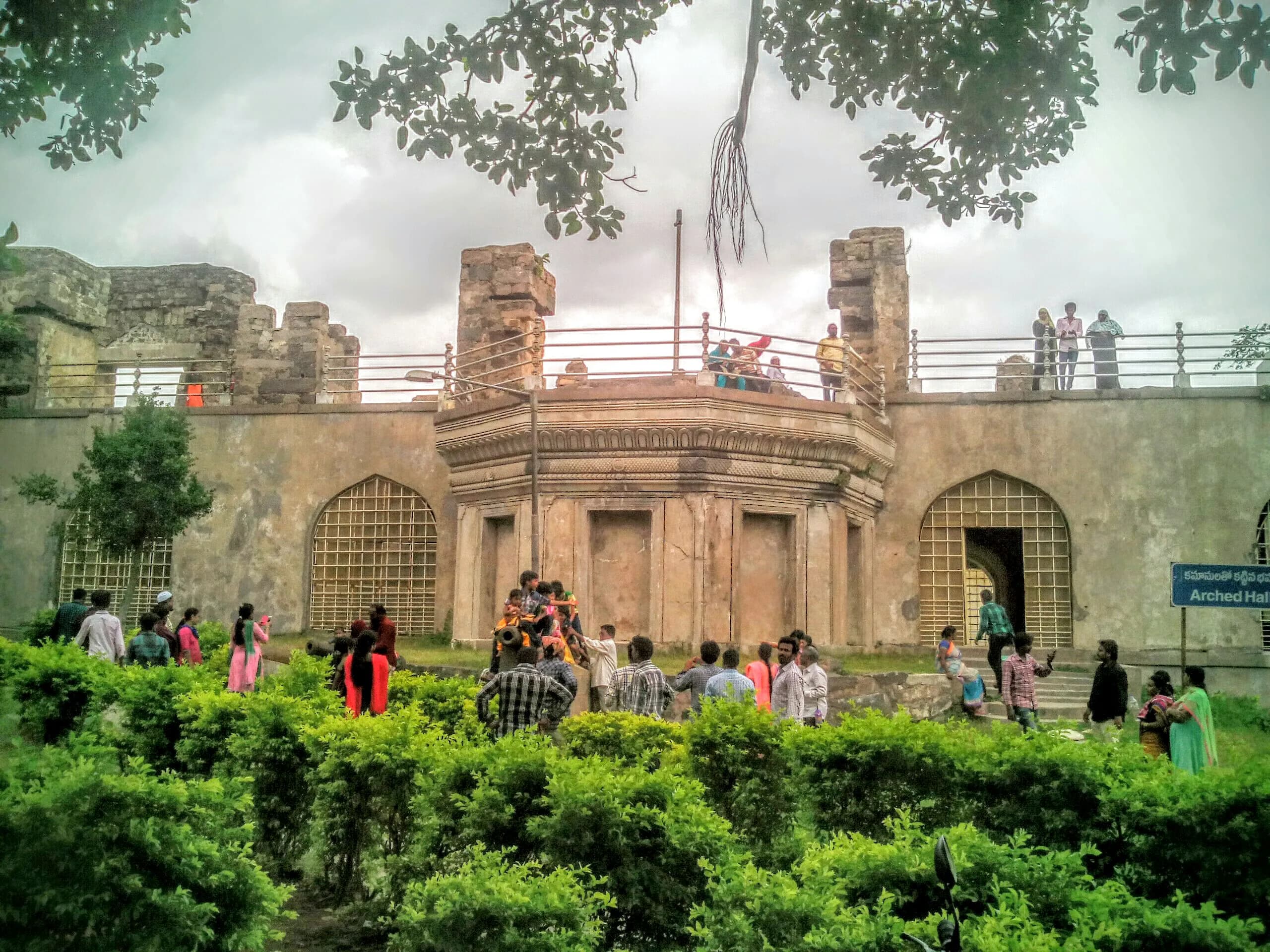
Kondapalli Fort Kondapalli
The wind whipped around me, carrying whispers of history as I stood atop Kondapalli Fort, gazing over the sprawling Krishna district. The panoramic view, a tapestry of green fields and distant villages, was a fitting reward for the climb. Coming from Gujarat, where forts often rise from arid landscapes, the lush setting of Kondapalli was a striking contrast, a testament to the diverse beauty of India's fortifications. My journey through the fort began with the imposing Dargah of Gulab Shah, a Sufi saint revered by both Hindus and Muslims. This syncretic element, so common in India, immediately piqued my interest. The Dargah, with its simple yet elegant architecture, served as a gentle prelude to the grandeur within. Passing through the colossal three-storied entrance, I was struck by the scale of the fort. Kondapalli is not just a single structure but a complex, a miniature city enclosed within its ramparts. The architecture displayed a fascinating blend of styles. While the robust construction and strategic layout bore the hallmarks of a formidable military stronghold, delicate carvings and intricate details hinted at a period of artistic flourishing. The influence of various dynasties – the Reddy Kings, the Vijayanagara Empire, and the Qutb Shahis – was evident in the eclectic mix of architectural elements. I noticed the distinct Vijayanagara style in the sturdy granite walls and the strategically placed bastions, while the later additions, like the Tanisha Mahal, showcased a more refined, almost palatial aesthetic. Exploring the ruins of the Tanisha Mahal was a particularly poignant experience. This "Queen's Palace," once a symbol of royal luxury, now stands in graceful decay. The remnants of ornate balconies, delicate arches, and intricately carved pillars spoke volumes about the fort's opulent past. I could almost picture the royal court in its heyday, the halls filled with music and laughter. The light filtering through the broken arches cast long shadows, adding to the melancholic beauty of the place. One of the most striking features of Kondapalli Fort is its ingenious water management system. Massive cisterns, carved into the rock, collected rainwater, ensuring a continuous supply for the inhabitants. This foresight, crucial in a region prone to dry spells, highlighted the architectural ingenuity of the builders. I was particularly impressed by the intricate network of channels and pipes that distributed the water throughout the fort, a testament to their advanced understanding of hydraulic engineering. As I walked along the ramparts, I noticed the strategically placed cannons, silent sentinels guarding the fort. The sheer size of these cannons, some of them impressively large, underscored the fort's military importance. The views from the ramparts were breathtaking, offering a 360-degree panorama of the surrounding countryside. I could see the winding Krishna River in the distance, its waters glinting in the sunlight. The Kondapalli Fort is more than just stones and mortar; it's a living testament to a rich and layered history. It's a place where architectural grandeur meets strategic brilliance, where whispers of royal splendor mingle with echoes of battles fought. As I descended from the fort, I carried with me not just photographs and notes, but a deeper appreciation for the architectural heritage of Andhra Pradesh. This fort, standing proud against the backdrop of time, is a must-see for anyone seeking to unravel the fascinating tapestry of Indian history. It's a place that stays with you long after you've left, its stories etched in your memory.
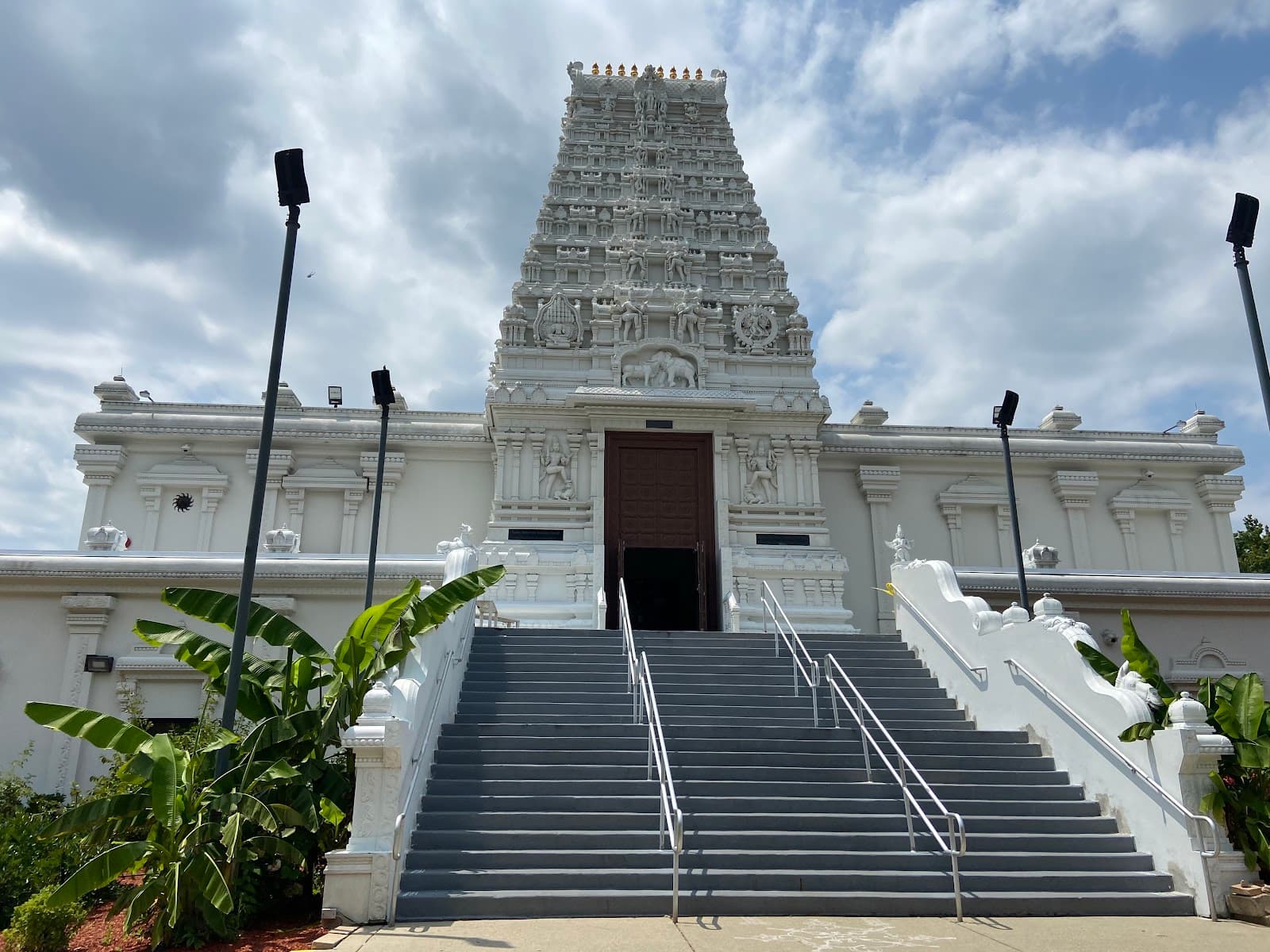
Sri Siva Vishnu Temple Lanham
Sri Siva Vishnu Temple in Lanham, Maryland, dedicated to Siva, Vishnu, and a constellation of regional deities, opens at 6:00 AM and keeps rituals running through 9:00 PM, sequencing morning suprabhatam, daily homams, and evening sahasranama archanas across two granite shrines linked by a shared mandapam ([1][2]). Volunteer desk captains manage parking lots, shoe rooms, and darshan queues via digital displays so weekday devotees and weekend tour groups flow smoothly between the Saiva and Vaishnava sanctums ([1][3]). Security teams coordinate with Prince George’s County police during festival surges, monitor CCTV networks, and audit life-safety systems that include sprinklers, smoke detection, and backup power tested monthly ([3][5]). Elevators, ramps, tactile paving, and loaner wheelchairs maintain circulation between the sanctum, canteen, and cultural hall; ushers offer assistive listening headsets and bilingual signage for Tamil, Telugu, and English programming ([1][4]). Custodians follow two-hour cleaning cycles covering granite floors, brass thresholds, and ablution stations, while mechanical crews schedule filter changes and insulation checks ahead of humid Chesapeake summers ([3][5]). Community kitchens operate under separate HVAC zoning and grease recovery, keeping prasad production compliant with Maryland health codes. Preventive maintenance dashboards log priest schedules, chillers, fire systems, and accessibility inspections; 2025 county reviews recorded zero violations, confirming the temple remains fully operational and compliant for daily worship, cultural classes, and large-format festivals ([3][4][5]).

Sivadol Temple Sivasagar
The imposing Sivadol, bathed in the soft Assamese sun, rose before me like a terracotta giant. Its sheer scale, even from a distance, was breathtaking. Having documented countless ancient sites across Madhya Pradesh, I thought I was prepared for the grandeur of Ahom architecture, but the Sivadol Temple in Sivasagar surpassed all expectations. The pyramidal structure, unlike anything I’d encountered in my home state, dominated the landscape, a testament to the ingenuity and artistry of the 18th-century Ahom kingdom. As I approached, the intricate details began to emerge. The burnt-brick surface, weathered by centuries of monsoon rains and sun, held a story in every crack and crevice. The temple, dedicated to Lord Shiva, stands as the tallest Shiva temple in India, a fact that resonated deeply as I circled its base. The sheer verticality, achieved without any visible supporting beams or columns, was a marvel of engineering. The octagonal base, rising in tiers towards the pointed apex, created a sense of dynamic movement, as if the structure itself was striving towards the heavens. The main entrance, guarded by two massive stone lions, felt like a portal to another time. Stepping inside the dimly lit sanctum, I was struck by the stark contrast between the elaborate exterior and the simple, almost austere interior. There were no ornate carvings or vibrant frescoes, just a palpable sense of sacredness. The air was thick with the scent of incense and the murmur of prayers, a reminder that this was not just an architectural marvel, but a living, breathing place of worship. I spent hours exploring the temple complex, captivated by the smaller shrines surrounding the main structure. Each shrine, though smaller in scale, echoed the architectural language of the Sivadol, creating a harmonious ensemble. The intricate brickwork, featuring geometric patterns and floral motifs, showcased the skill of the Ahom artisans. I noticed how the bricks, varying subtly in colour and texture, created a visual tapestry that shifted with the changing light. This nuanced use of a single material, without the addition of plaster or paint, spoke volumes about the aesthetic sensibilities of the era. One of the most striking features of the Sivadol is its integration with the surrounding landscape. The temple stands on a raised platform, overlooking the Sivasagar tank, a large man-made lake. The reflection of the temple in the still waters of the tank created a mesmerizing visual echo, doubling its impact. This deliberate placement, I realized, was not just for aesthetic purposes. The tank, an integral part of the temple complex, served both practical and symbolic functions, providing water for rituals and representing the cosmic ocean surrounding Mount Meru, the abode of the gods. My lens, accustomed to capturing the sandstone temples of Khajuraho and the intricate carvings of Gwalior, found a new challenge and inspiration in the Sivadol. The play of light and shadow on the textured brick surface, the sheer scale of the structure against the vast Assamese sky, the quiet dignity of the devotees – all these elements combined to create a powerful visual narrative. As I packed my equipment, preparing to leave, I felt a deep sense of gratitude. The Sivadol was more than just a temple; it was a testament to human ingenuity, a symbol of cultural resilience, and a window into a rich and fascinating history. It was a privilege to witness its grandeur and to capture its essence through my lens, adding another chapter to my ongoing exploration of India’s architectural heritage.
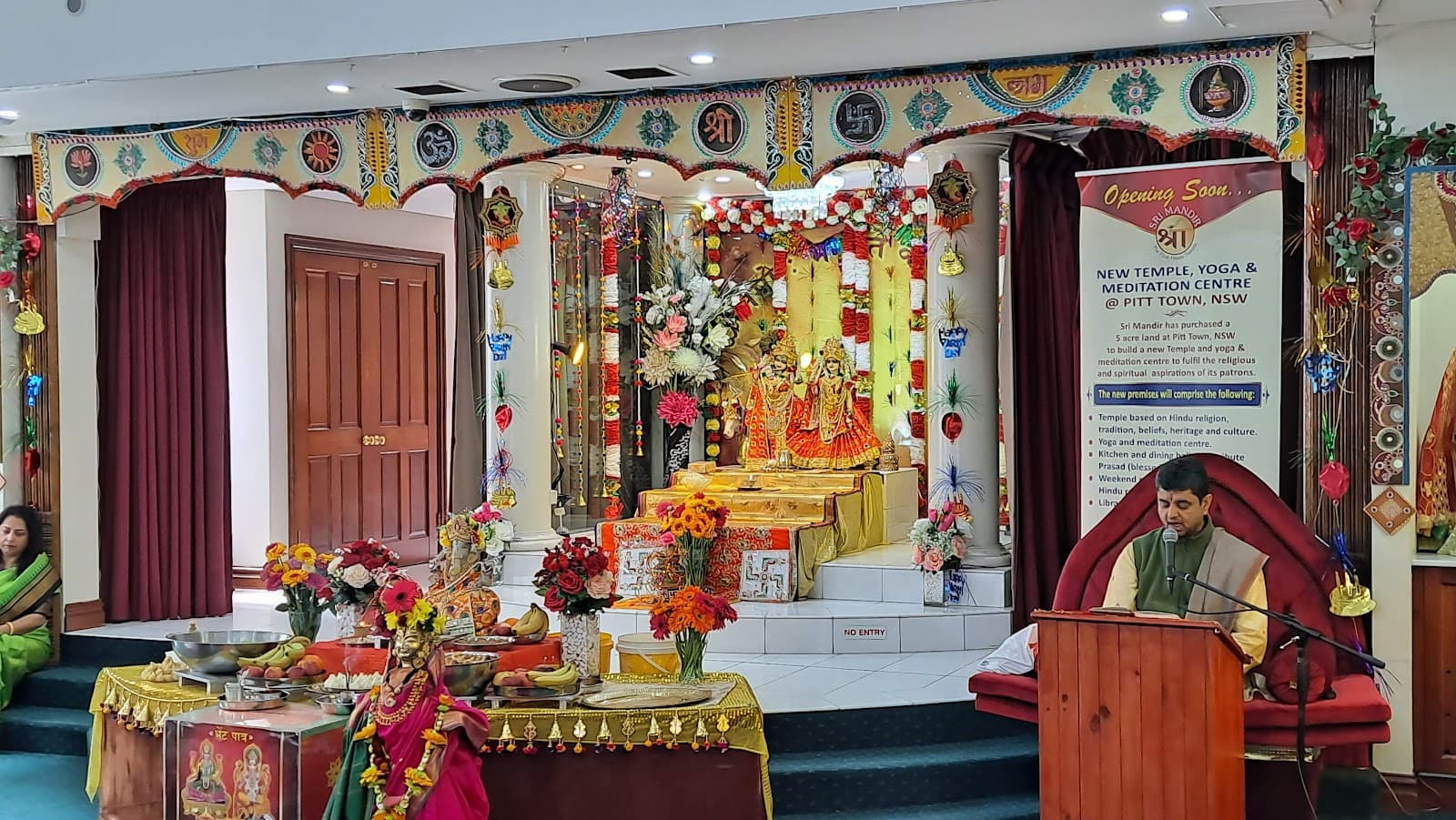
Sri Mandir Auburn
Sri Mandir Auburn is dedicated to multi-deity Hindu worship and anchors Auburn, New South Wales, as Australia’s oldest continuously operating mandir ([1][2]). Doors open 6:00 AM-12:00 PM and 4:00 PM-9:00 PM daily, with Thursday and Sunday schedules extending to 10:00 PM to accommodate Hanuman chalisa recitations and bhajan choirs ([1][3]). A volunteer operations desk under the mandapa canopy coordinates RFID-based headcounts, dispatching ushers to maintain one-way circulation along the narrow verandahs that wrap the former warehouse shell ([1][2]). The annadhanam kitchen upstairs uses induction cooklines and stainless bain-maries, while a dumbwaiter shuttles prasadam to the ground-floor hall so stairwells remain clear for emergency egress ([1][4]). Wheelchair access is provided via a platform lift off Cumberland Road and tactile paving links the entry to the garbhagriha viewing rail; volunteers are trained in Auslan basics and maintain a quiet room for neurodiverse visitors ([2][3]). Acoustic panels and ceiling fans temper the brick nave, and HEPA purifiers cycle air during peak crowds, ensuring a comfortable environment even when festival drums and conch blasts resonate through the hall ([3][5]). Digital signage presents trilingual English-Hindi-Tamil instructions, QR links for seva booking, and City of Parramatta-endorsed evacuation diagrams refreshed annually ([2]). With fire wardens rostered, first-aid kits stocked, and a broadcast desk streaming pujas to elders at home, the temple stays operationally ready for daily worship, rites of passage, and civic dialogue sessions hosted in its meeting rooms ([1][3]).
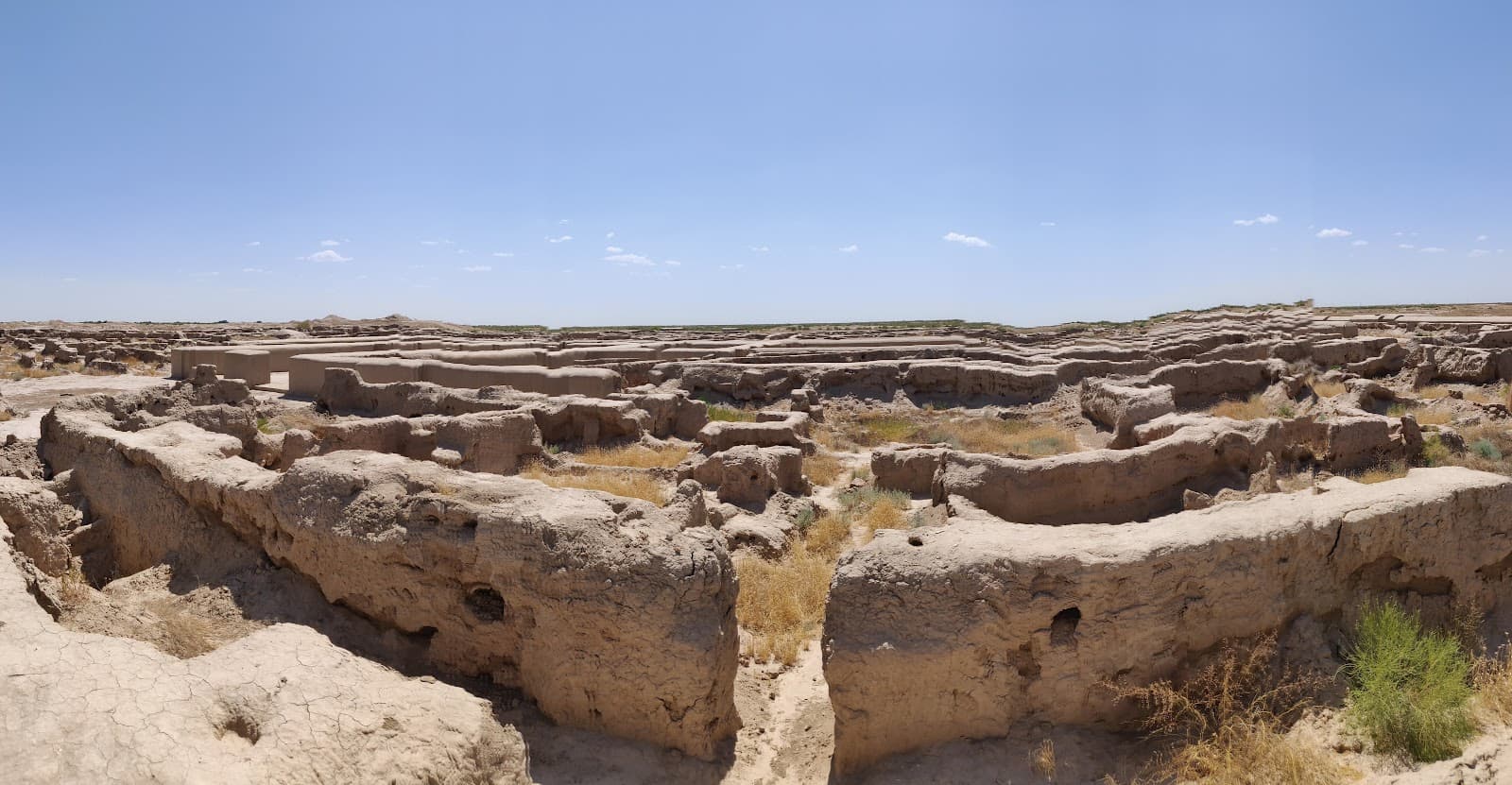
Gonur Depe Karakum Desert Turkmenistan
Gonur Depe, dramatically rising from the vast expanse of the Karakum Desert in southeastern Turkmenistan, represents one of the most extraordinary and archaeologically significant Bronze Age sites in Central Asia, dating to the 3rd millennium BCE and serving as the capital of the Bactria-Margiana Archaeological Complex (BMAC), also known as the Oxus Civilization, featuring a sophisticated temple complex with remarkable Vedic parallels that demonstrate the profound transmission of Indian religious and cosmological traditions to Central Asia, creating a powerful testament to the sophisticated synthesis of Indian and Central Asian cultural traditions during the Bronze Age. The site, spanning over 50 hectares and featuring a massive fortified citadel, palace complex, and extensive temple structures, demonstrates the direct transmission of Indian religious and cosmological concepts from the great religious centers of ancient India, particularly Vedic traditions that were systematically transmitted to Central Asia, while the site's most remarkable feature is its sophisticated temple complex featuring fire altars, ritual structures, and architectural elements that demonstrate clear parallels with Vedic fire altars and ritual practices described in ancient Indian texts including the Vedas and Brahmanas. The temple complex's architectural layout, with its central fire altar surrounded by ritual chambers, storage areas, and ceremonial spaces, follows sophisticated planning principles that demonstrate remarkable parallels with Vedic temple planning principles described in ancient Indian texts, while the temple complex's extensive decorative programs including ritual objects, seals, and architectural elements demonstrate the sophisticated synthesis of Indian religious iconography and cosmological concepts with local Central Asian aesthetic sensibilities. Archaeological evidence reveals that the site served as a major center of religious and political power for over 800 years, attracting traders, priests, and elites from across Central Asia, South Asia, and the Middle East, while the discovery of numerous artifacts including seals with motifs that demonstrate clear Indian influences, ritual objects that parallel Vedic practices, and architectural elements that reflect Indian cosmological concepts provides crucial evidence of the site's role in the transmission of Indian religious traditions to Central Asia, demonstrating the sophisticated understanding of Indian religious and cosmological traditions possessed by the site's patrons and religious establishment. The site's association with the BMAC, which had extensive trade and cultural connections with the Indus Valley Civilization and later Indian civilizations, demonstrates the sophisticated understanding of Indian religious traditions that were transmitted to Central Asia, while the site's fire altars and ritual structures demonstrate remarkable parallels with Vedic fire altars and ritual practices that were central to ancient Indian religious traditions. The site has been the subject of extensive archaeological research by Russian archaeologist Viktor Sarianidi and his team, with ongoing excavations continuing to reveal new insights into the site's sophisticated architecture, religious practices, and its role in the transmission of Indian religious traditions to Central Asia, while the site's status as a UNESCO Tentative List site demonstrates its significance as a major center for the transmission of Indian cultural traditions to Central Asia. Today, Gonur Depe stands as a UNESCO Tentative List site and represents one of the most important Bronze Age archaeological sites in Central Asia, serving as a powerful testament to the transmission of Indian religious and cosmological traditions to Central Asia, while ongoing archaeological research and conservation efforts continue to protect and study this extraordinary cultural treasure that demonstrates the profound impact of Indian civilization on Central Asian religious and cultural traditions. ([1][2])
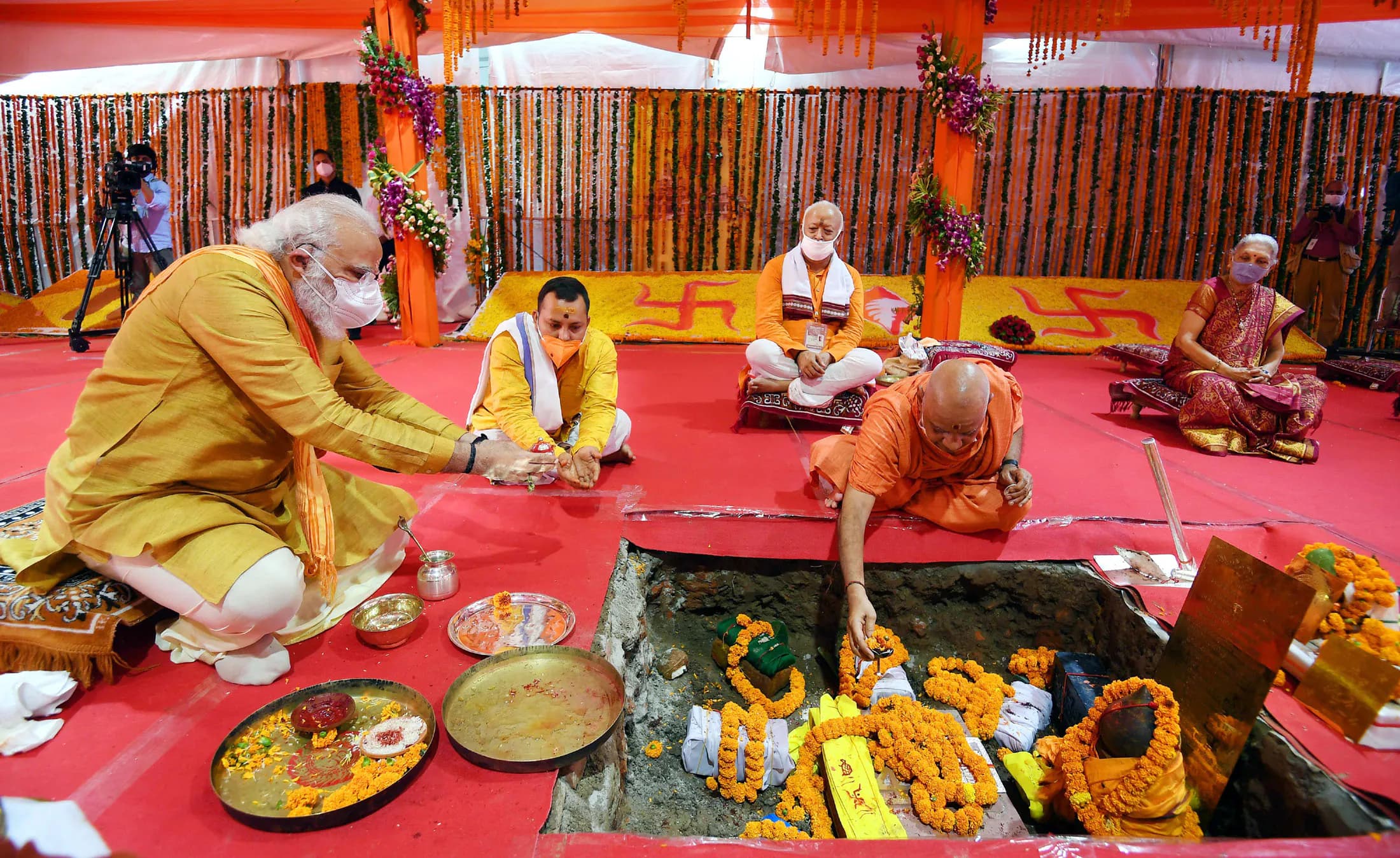
Ram Mandir Bhubaneswar
The midday sun cast long shadows across the laterite stones of the Ram Mandir in Bhubaneswar, illuminating the intricate carvings that adorned its surface. Having spent years documenting the architectural wonders of Gujarat, I was eager to experience the unique Kalinga style of temple architecture that Odisha is renowned for. And the Ram Mandir, though a relatively modern structure compared to some of Bhubaneswar's ancient marvels, did not disappoint. Unlike the towering shikharas of Gujarat's Solanki dynasty temples, the Ram Mandir presents a cluster of temples, each dedicated to a different deity – Ram, Lakshman, and Sita. This grouping immediately sets it apart, creating a sense of community and interconnectedness among the deities. The main temple, dedicated to Lord Ram, dominates the complex. Its curvilinear shikhara, a hallmark of the Kalinga style, rises elegantly towards the sky, its surface covered in a dense tapestry of sculpted figures. As I approached the main entrance, I was struck by the sheer profusion of carvings. Every inch of the temple walls, from the base to the pinnacle, seemed to pulsate with life. Mythological scenes, celestial beings, and intricate floral patterns intertwined, creating a visual narrative that captivated my attention. The figures, though weathered by time and the elements, retained a remarkable sense of dynamism. I noticed the distinctive elongated eyes and graceful postures of the figures, characteristic of the regional style. The detailed ornamentation, particularly around the doorways and windows, showcased the skill and artistry of the craftsmen who had painstakingly carved these stories into stone centuries ago. Inside the main sanctum, the atmosphere was hushed and reverent. The deity of Lord Ram, flanked by Sita and Lakshman, exuded a serene presence. The play of light and shadow within the sanctum added to the spiritual ambiance. While photography wasn't permitted inside, the image of the deities, bathed in the soft glow of oil lamps, remained etched in my memory. Moving to the smaller temples dedicated to Lakshman and Sita, I observed subtle variations in their architectural details. While adhering to the overall Kalinga style, each temple possessed its own unique character. The Lakshman temple, for instance, featured a slightly less ornate shikhara, while the Sita temple had a more intimate and enclosed feel. The outer walls of the complex presented a fascinating contrast to the more polished surfaces of the main temples. Here, the laterite stone was left largely unpolished, revealing its natural texture and warm hues. This created a sense of rustic charm and highlighted the intricate carvings even further. I spent a considerable amount of time studying the bas-relief panels depicting scenes from the Ramayana. The narrative unfolded across the walls, bringing the epic to life in a tangible way. I was particularly drawn to the depiction of the battle between Ram and Ravana, the dynamism of the scene captured with remarkable skill. One aspect that struck me was the integration of the temple complex with its surroundings. Unlike some of the more isolated temples I had encountered in Gujarat, the Ram Mandir felt connected to the bustling city of Bhubaneswar. Devotees flowed in and out, their prayers and rituals adding another layer to the temple's vibrant tapestry. The air was thick with the scent of incense and the sounds of chanting, creating a sensory experience that was both captivating and deeply moving. Leaving the Ram Mandir, I carried with me a profound appreciation for the Kalinga style of temple architecture. Its unique blend of grandeur and intricate detail, its seamless integration of mythology and artistry, and its connection to the living traditions of the community made it a truly unforgettable experience. It served as a powerful reminder of the enduring legacy of India's rich architectural heritage, and a testament to the skill and devotion of the craftsmen who shaped these sacred spaces.
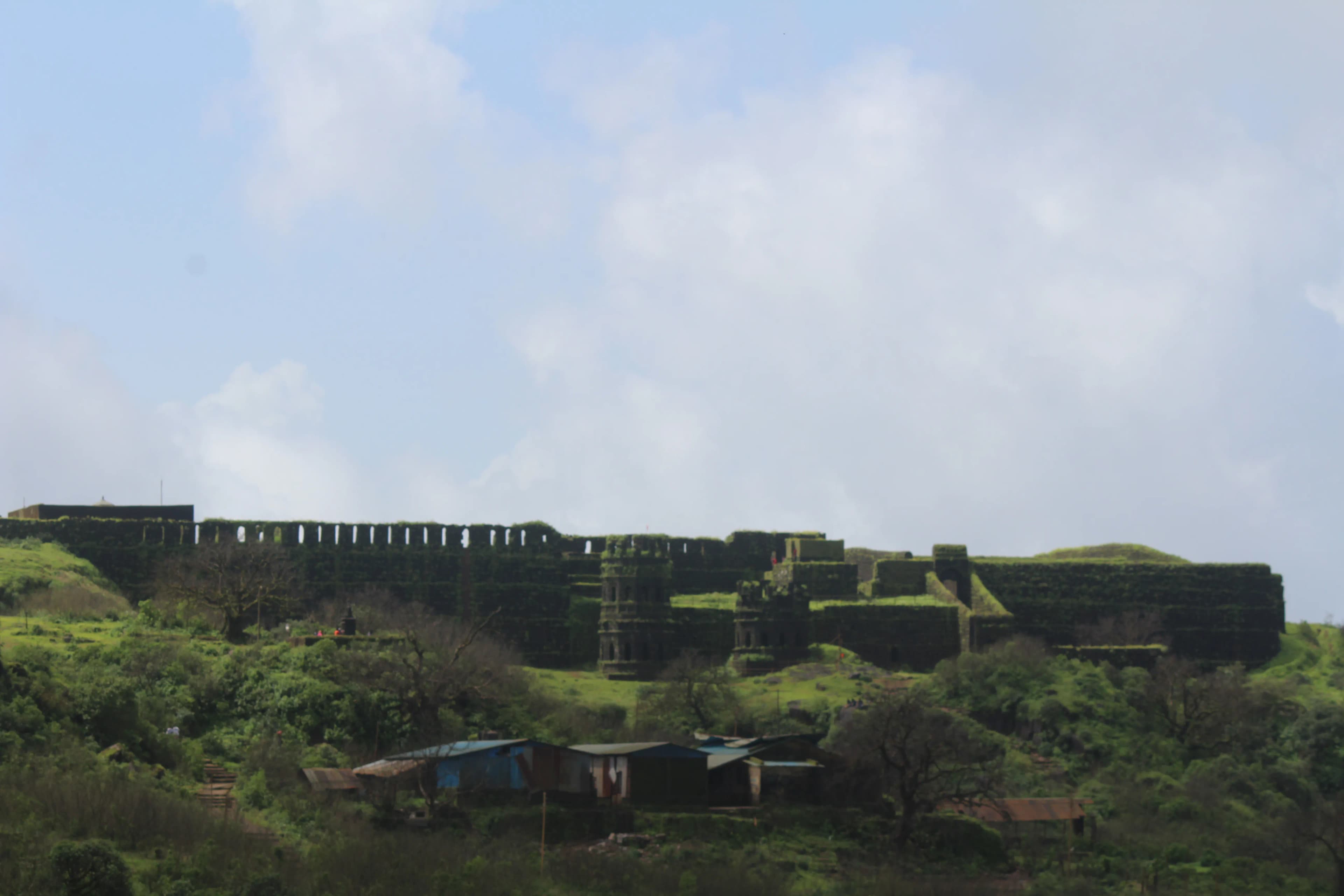
Raigad Fort Raigad
The imposing silhouette of Raigad Fort, etched against the Sahyadri mountain range, is a sight that commands reverence. Ascending via the ropeway, the sheer scale of the fortifications became immediately apparent. Unlike the granite behemoths of South India, Raigad’s laterite stone construction lends it a unique reddish-brown hue, a stark contrast to the verdant backdrop. The climb, even aided by the ropeway, instilled a sense of the strategic brilliance behind its location. One can only imagine the arduous journey undertaken by those who scaled it in centuries past. Stepping onto the Mahadarwaja, the main entrance, I was struck by the robust simplicity of its design. The absence of elaborate carvings, so characteristic of South Indian temple gateways, highlighted the fort's primarily defensive function. The massive basalt pillars flanking the entrance, however, hinted at a degree of ceremonial importance. The remnants of the once-formidable wooden doors, reinforced with iron studs, spoke volumes about the fort's resilience against sieges. The layout of the fort, spread across a plateau, is a testament to meticulous planning. The strategically placed granaries, water cisterns, and armories revealed a deep understanding of logistical necessities. The ruins of the market area, though overgrown, allowed me to visualize the bustling life that once thrived within these walls. The royal mint, with its surprisingly sophisticated equipment, offered a glimpse into the economic prowess of the Maratha empire. The Jagdishwar Temple, dedicated to Lord Shiva, stands as a poignant reminder of Chhatrapati Shivaji Maharaj's devout faith. While smaller and simpler than the grand temples of the South, its location within the fort complex underscored the integration of religious and secular life. The basalt construction of the temple, distinct from the laterite used for the fort walls, suggested that it might have pre-dated the fort itself, possibly repurposed and incorporated into the larger complex. The highlight of my visit was undoubtedly the Meghadambari, the royal palace. While only the foundations and a few walls remain, the sheer scale of the structure is awe-inspiring. I could almost picture the grandeur of the court, the vibrant tapestries, and the echoes of important discussions that once filled these halls. The panoramic view from the palace site, encompassing the surrounding valleys and hills, was breathtaking. It was easy to see why Shivaji Maharaj chose this location for his capital – a vantage point offering both strategic advantage and unparalleled natural beauty. One aspect that particularly intrigued me was the sophisticated water management system. The numerous rock-cut cisterns, strategically placed to collect rainwater, showcased a remarkable understanding of hydraulic engineering. This efficient system ensured a continuous supply of water, crucial for sustaining a large population within the fort, especially during prolonged sieges. The presence of several smaller fortifications and watchtowers scattered across the plateau further emphasized the emphasis on defense. The ingenious use of the natural terrain, incorporating cliffs and steep slopes into the defensive strategy, was a testament to the military acumen of the Maratha architects. Raigad Fort is more than just a historical monument; it's a living testament to the vision and resilience of Chhatrapati Shivaji Maharaj. While the grandeur of the South Indian temples I'm accustomed to is absent, the stark beauty and strategic brilliance of Raigad offer a different kind of architectural marvel. It's a place that resonates with history, echoing the footsteps of warriors, kings, and the everyday people who once called this fort their home. My visit to Raigad was not just a journey through time; it was an immersive experience that left me with a profound appreciation for the ingenuity and fortitude of the Maratha empire.
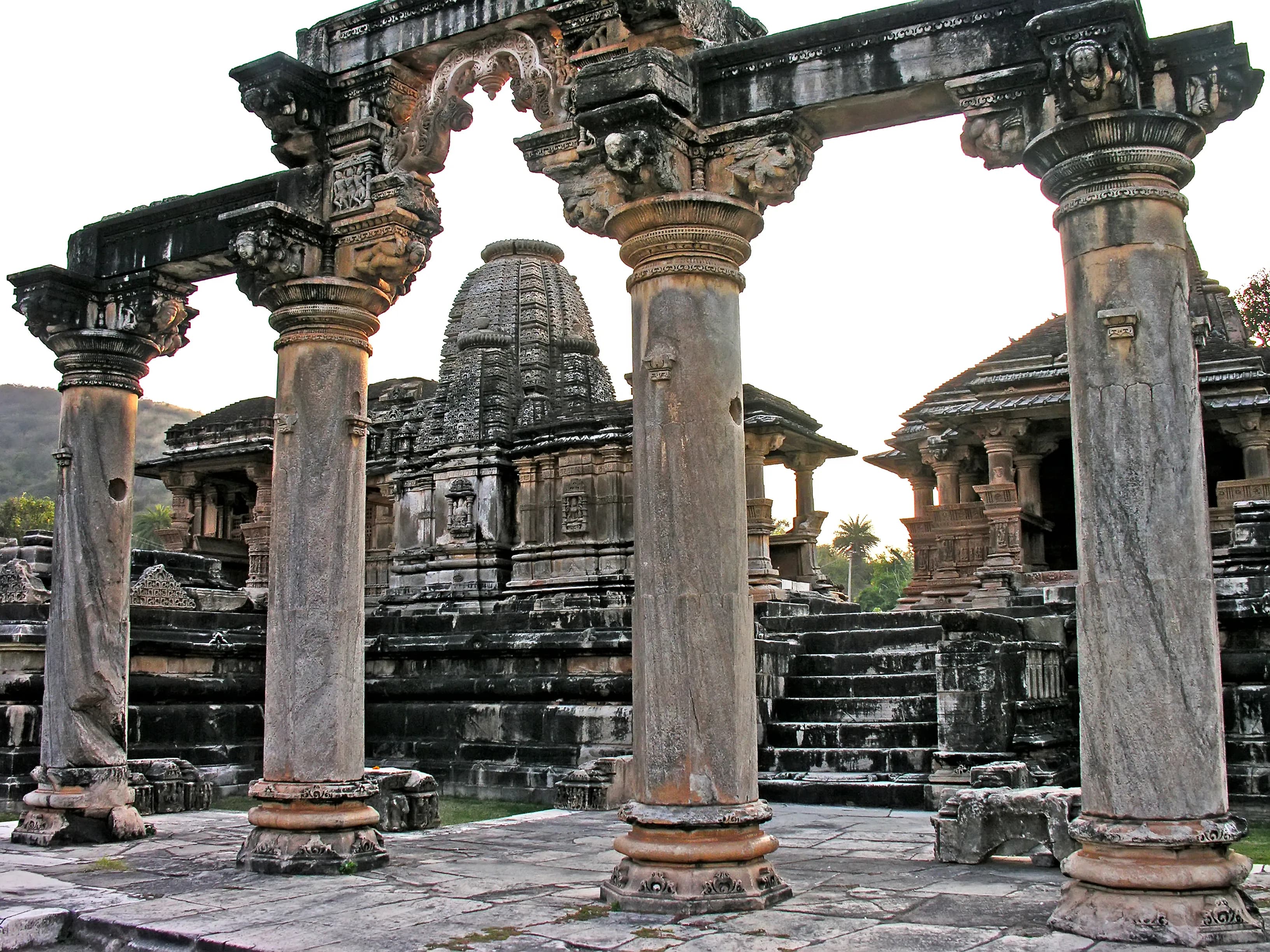
Eklingji Temple, Kailashpuri (Udaipur)
The Eklingji Temple, a revered Hindu temple complex dedicated to Lord Shiva, is situated in Kailashpuri village, Udaipur district, Rajasthan, India, embodying a continuous tradition of Indian civilization spanning millennia [5]. This site stands as a profound testament to India's enduring cultural legacy, with its origins tracing back to the 8th century CE, reflecting ancient indigenous architectural styles and spiritual practices [4] [5]. The complex is a magnificent example of traditional Indian temple architecture, primarily showcasing the Nagara style, characterized by its curvilinear shikhara (spire) and intricate carvings [3] . The main temple within the complex is double-storied, featuring a colossal pyramidal-style roof and a remarkably carved tower [3]. Constructed predominantly from marble and granite, the temple's exterior walls are adorned with intricate carvings and sculptures depicting Hindu mythological stories and deities [4] . The entrance to the main shrine is guarded by a silver image of Nandi, the sacred bull, with two additional Nandi carvings in brass and black stone found within the complex [3] [5]. The sanctum sanctorum (Garbha Griha) houses the principal deity, a striking four-faced idol of Lord Shiva, carved from black marble and approximately 50 feet in height [3] . Each face of the idol represents a different aspect of Shiva: the eastern face symbolizes Surya (the sun), the western face Lord Brahma, the northern face Lord Vishnu, and the southern face Rudra (a fierce form of Shiva) [1] [3] . A heightened Shivlinga at the center of these faces represents the core essence of Lord Shiva [1]. The Eklinga statue is further encircled by figures of Goddess Parvati, Lord Ganesha, and Lord Kartikeya [3]. The temple also features heavily ornate silver doors, which depict images of Lord Ganesha and Lord Kartikeya [5]. Between the sanctum and the sabha mandap (assembly hall), there is a silver enclosure, a later addition by Maharana Bhagwat Singh [1]. The temple complex is not merely a single structure but comprises 108 temples, each contributing to the site's rich architectural and spiritual tapestry . To the north of the main Eklingji temple, two tanks, Karz Kund and Tulsi Kund, are integral to the site's water management and ritualistic practices [3] [5]. The intricate carvings, particularly those influenced by the Kalinga style architecture and the pyramidal superstructure, necessitate ongoing, specialized conservation efforts [2]. While specific dimensions for all structures are not universally documented, the grandeur of the main temple's pyramidal roof and the 50-foot idol indicate significant scale and sophisticated engineering for its period [3]. The site is actively managed by a trust, ensuring its operational readiness and continued accessibility for devotees, with daily pujas performed by appointed priests, though the Maharana of Mewar traditionally holds the right to perform special worship [5]. The temple remains a vibrant center of spiritual devotion, attracting visitors who come to witness the morning and evening aartis and explore the surrounding shrines .
Quick Links
Plan Your Heritage Journey
Get personalized recommendations and detailed visitor guides