Has Inheritage Foundation supported you today?
Your contribution helps preserve India's ancient temples, languages, and cultural heritage. Every rupee makes a difference.
Secure payment • Instant 80G certificate
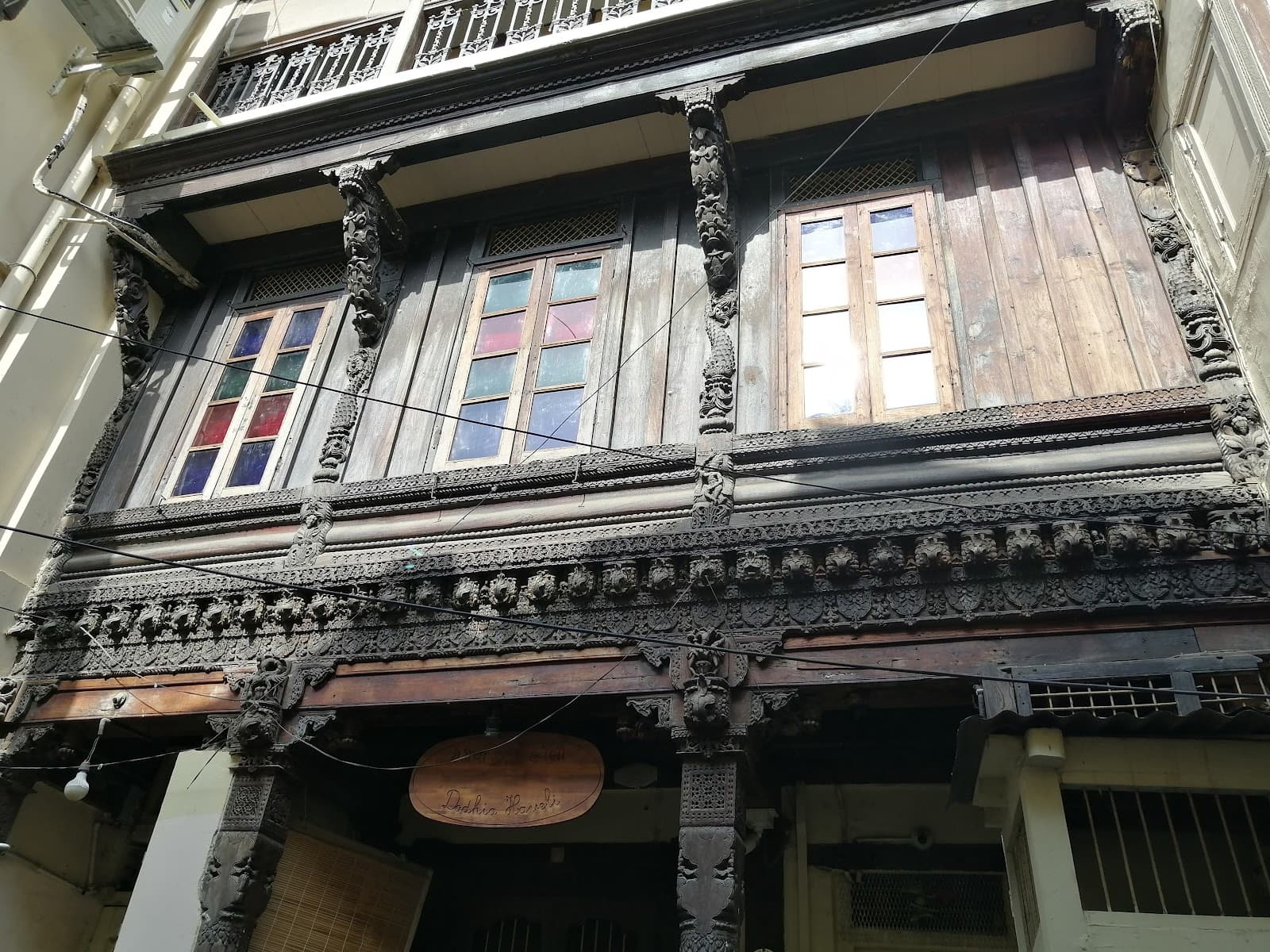
Doshiwada Ni Haveli Ahmedabad
The intricately carved wooden facade of Doshiwada Ni Haveli, nestled within the dense urban fabric of Ahmedabad’s old city, drew me in like a moth to a flame. Having spent years immersed in the stone-carved grandeur of South Indian temples, I was eager to experience the unique architectural language of this Gujarati haveli. The sheer scale of the wooden artistry was immediately striking. Unlike the imposing stone gopurams of the south, Doshiwada’s charm lay in its intimate details, a delicate tapestry woven in wood. Stepping through the imposing carved doorway, I was transported to another era. The pol, or traditional neighborhood, felt worlds away from the bustling city outside. The haveli’s courtyard, a central organizing principle, was bathed in soft, filtered light. This open-to-sky space, a feature I found reminiscent of the temple prakarams of the south, served as the heart of the house, a place for social gatherings and daily life. The surrounding balconies, supported by ornate brackets and pillars, offered glimpses into the private lives of the families who once resided here. The woodwork was breathtaking. Every surface, from the massive supporting beams to the delicate jharokhas (overhanging enclosed balconies), was adorned with intricate carvings. Unlike the narrative reliefs found in South Indian temples, the carvings here were predominantly floral and geometric, showcasing a different aesthetic sensibility. Peacocks, elephants, and other auspicious motifs were interspersed within the patterns, adding a touch of whimsy and symbolism. I noticed the recurring use of the “tree of life” motif, a symbol of prosperity and continuity, echoing the reverence for nature found in many Indian architectural traditions. The play of light and shadow within the haveli was mesmerizing. The carved wooden screens, or jalis, filtered the harsh Gujarat sun, casting dappled patterns on the polished floors. These jalis, while aesthetically pleasing, also served a practical purpose, allowing for ventilation while maintaining privacy – a clever architectural solution to the region’s hot climate. I was reminded of the pierced stone screens found in some South Indian temples, which served a similar function. As I ascended the narrow wooden staircases, the stories of the haveli unfolded. The upper floors, once the private domain of the family, revealed intimate details of their lives. The small rooms, interconnected by narrow passages, spoke of a close-knit community. The remnants of painted murals on the walls, though faded with time, hinted at the vibrant colors that once adorned these spaces. I was particularly fascinated by the hidden niches and secret compartments built into the walls, perhaps used for storing valuables or important documents. Doshiwada Ni Haveli, though different in material and style from the temples I was accustomed to, resonated with the same spirit of craftsmanship and attention to detail. The use of locally sourced wood, the intricate joinery techniques, and the adaptation of the design to the local climate all spoke of a deep understanding of the environment and a commitment to sustainable building practices. The haveli wasn't just a building; it was a living testament to the rich cultural heritage of Gujarat. It was a reminder that architectural beauty can be found not just in monumental structures, but also in the intimate spaces of everyday life. Leaving the cool confines of the haveli and stepping back into the bustling streets of Ahmedabad, I carried with me a newfound appreciation for the diversity and richness of Indian architecture.
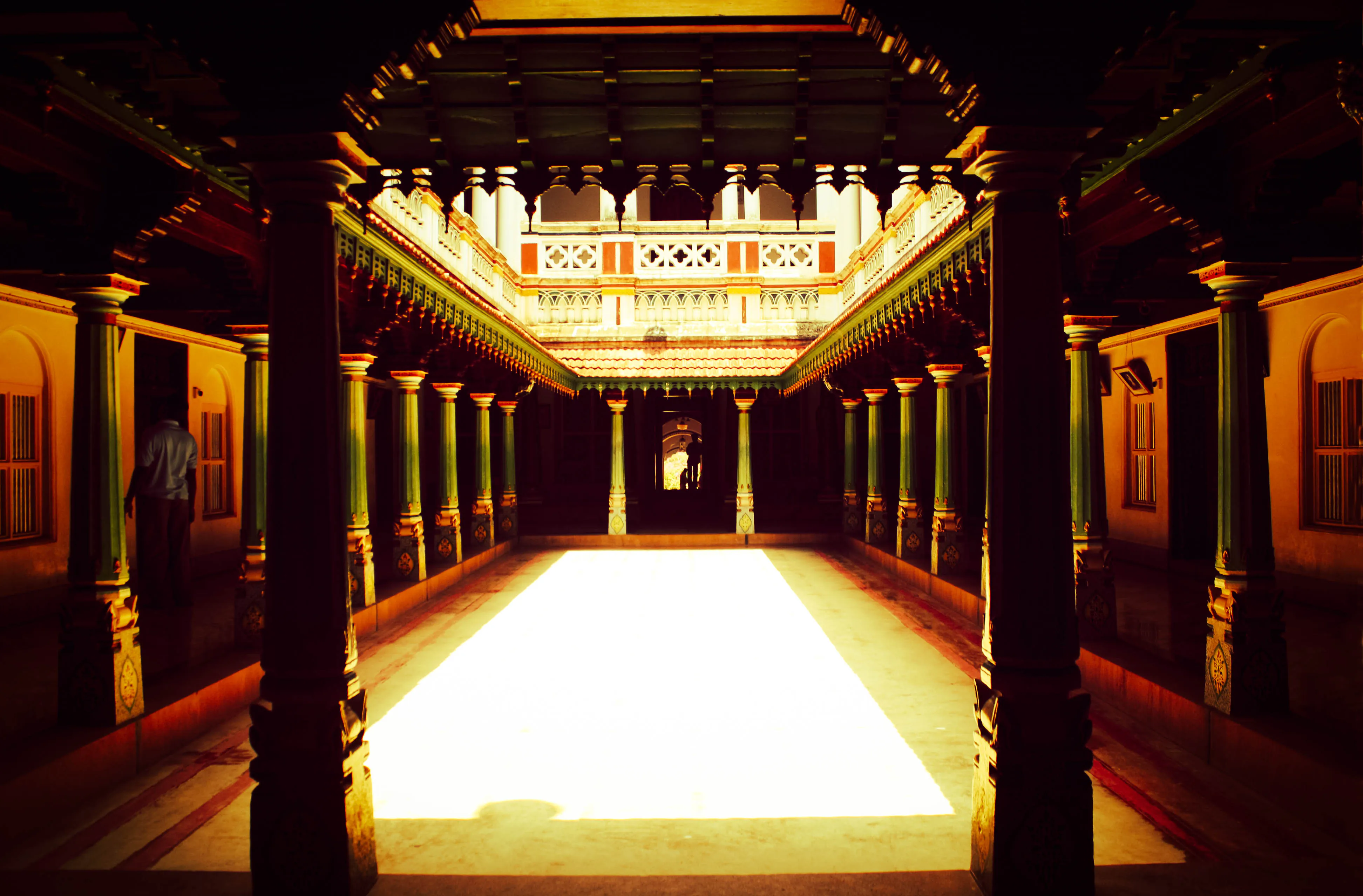
Chettinad Palace Karaikudi
The ochre walls of Chettinad Palace in Karaikudi, constructed in 1912 CE, embody a unique fusion of Tamil and European architectural styles, reflecting the Chettiar community's global engagements ([1][2]). Spanning 60,000 square feet, this edifice reveals the opulence of its patrons ([1]). Athangudi tiles, meticulously handcrafted from local clay and natural dyes, adorn the expansive courtyard with intricate geometric patterns ([3]). Intricate carvings embellishing the pillars depict mythological figures and floral motifs, showcasing the skills of local artisans ([3]). Burma teak pillars and Italian marble flooring grace the two-story structure, exemplifying the Chettiars' affinity for incorporating foreign elements into their architectural designs ([2]). High ceilings, enhanced by Belgian chandeliers, evoke a sense of grandeur ([4]). Walls painted in vibrant hues complement Tanjore paintings portraying Hindu mythological scenes ([4]). Within the Garbhagriha (Sanctum), antique European pieces harmonize with locally crafted wooden furniture inlaid with mother-of-pearl ([5]). Vastu Shastra principles, the ancient Indian science of architecture, are subtly interwoven with the colonial influences, creating a unique aesthetic. Wide corridors facilitate air circulation, a practical feature that adds to the palace's grandeur ([1]). Granite and sandstone blocks, meticulously carved, along with locally sourced black granite and Athangudi tiles, underscore the Chettiars' deep connection to their land ([3]). This architectural marvel blends tradition with modernity, embodying the Chettiars' entrepreneurial spirit and artistic sensibilities ([2][5]). The palace stands as a testament to the Chettiar community's cultural heritage and their ability to synthesize diverse influences into a cohesive and magnificent whole.
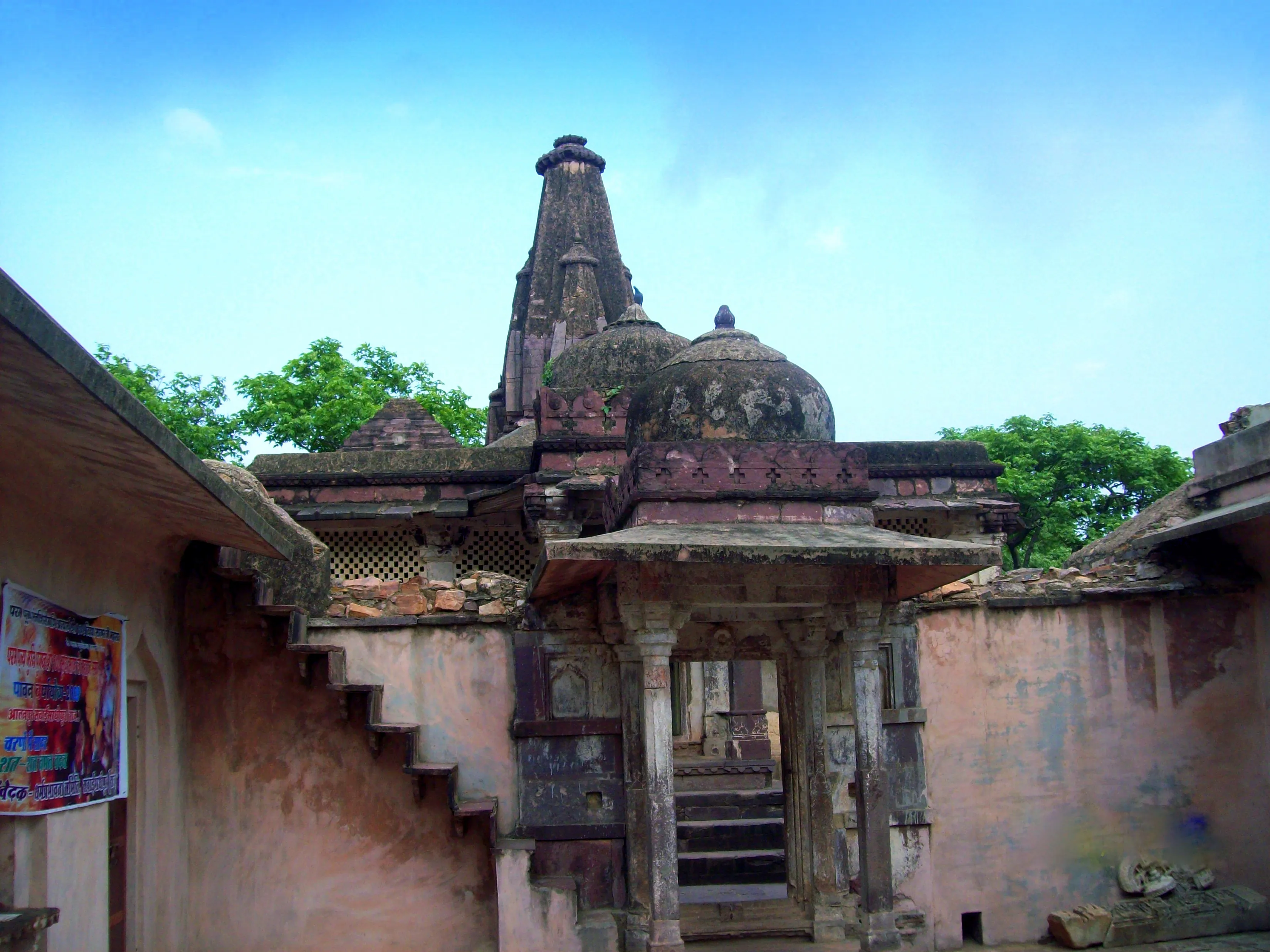
Ranthambore Fort Sawai Madhopur
The sun beat down on my neck, the dry Rajasthan air swirling around me as I climbed the steep, winding path towards Ranthambore Fort. Having explored countless forts across North India, I approached this one with a seasoned eye, yet the sheer scale and rugged beauty of Ranthambore immediately set it apart. Perched atop a massive, 700-foot-high rock formation within the Ranthambore National Park, the fort commands a breathtaking panorama of the surrounding landscape – a tapestry of dry deciduous forest, punctuated by the shimmering waters of Padam Talao. The initial ascent was a test of endurance, the uneven stone steps worn smooth by centuries of footfalls. But with every upward step, the anticipation grew, fueled by glimpses of the formidable ramparts rising against the azure sky. The fort, a UNESCO World Heritage Site, is a testament to Rajput valor and architectural ingenuity, its history etched into every stone. Built in the 10th century, it witnessed the ebb and flow of power, the rise and fall of dynasties, and the constant struggle for control of this strategic location. Passing through the imposing Ganesh Pol, the main entrance gate, I was struck by the stark contrast between the rugged exterior and the surprisingly intricate carvings that adorned the archways. The remnants of frescoes, though faded by time and the elements, hinted at a past grandeur. Within the fort walls, a complex network of palaces, temples, stepwells, and barracks unfolded, each structure whispering tales of a bygone era. The Badal Mahal, or Cloud Palace, with its delicate jalis (lattice screens) and remnants of vibrant murals, offered a glimpse into the opulent lifestyle of the royal inhabitants. The Hammir's Court, an open-air assembly area, evoked images of bustling courtly life, while the Jogi Mahal, situated near the second gate, exuded an air of quiet contemplation. One of the most striking features of Ranthambore Fort is its ingenious water harvesting system. The numerous stepwells, including the Rani-ki-Baori, are architectural marvels, showcasing the sophisticated understanding of water management possessed by the builders. Descending into the cool depths of these stepwells, I could almost feel the presence of those who had relied on these life-giving sources for centuries. The Trinetra Ganesh Temple, located within the fort, is a significant pilgrimage site. The temple, dedicated to Lord Ganesha, houses a unique idol with three eyes, and the air hummed with the quiet devotion of the pilgrims. The temple's vibrant colors and intricate carvings provided a welcome contrast to the muted tones of the fort's stone structures. From the ramparts, the view was simply mesmerizing. The vast expanse of the Ranthambore National Park stretched out before me, a haven for tigers, leopards, and other wildlife. I could see the ancient watchtowers, strategically placed along the fort walls, silent sentinels guarding the kingdom. The wind carried the distant calls of birds and the rustling of leaves, a reminder of the vibrant ecosystem that thrived beneath the fort's watchful gaze. My exploration of Ranthambore Fort was more than just a visit to a historical site; it was a journey through time. It was a humbling experience to stand amidst these ancient stones, to feel the weight of history, and to imagine the lives that had unfolded within these walls. Ranthambore Fort is not just a monument; it is a living testament to human resilience, ingenuity, and the enduring power of the past. It is a place that stays with you long after you’ve descended the winding path, its stories echoing in your mind.
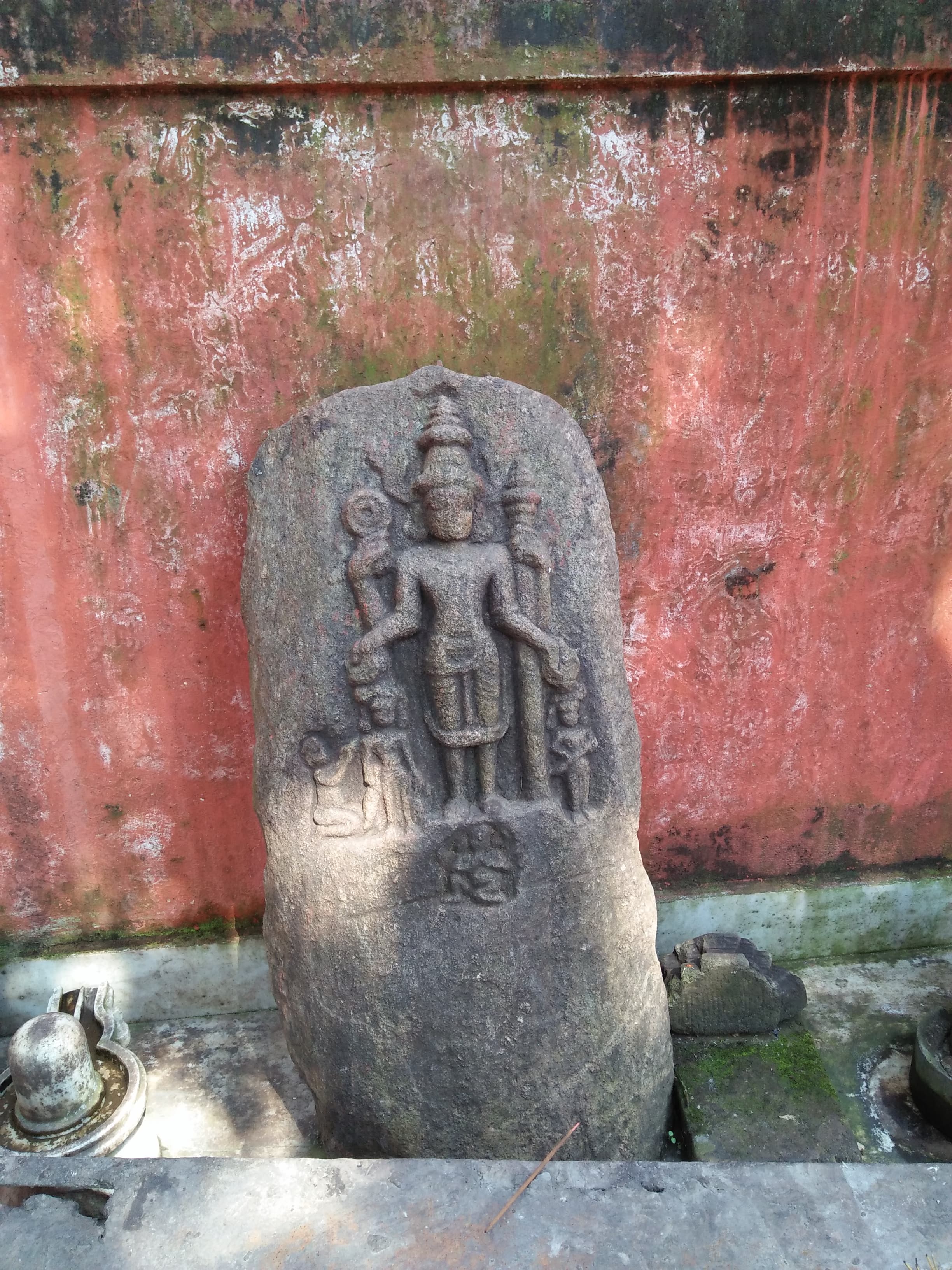
Basistha Temple Guwahati
Nestled near Guwahati, Assam, the Basistha Temple provides a tranquil retreat, its history dating back to 1751 CE during the Ahom period ([1][2]). Ahom King Rajeswar Singha commissioned this sacred space dedicated to Sage Basistha ([2]). The architectural style showcases an eclectic fusion of Ahom, Hindu, and even Mughal influences ([3]). Stone construction dominates the primary structure, harmoniously integrating with the natural surroundings ([1]). Intricate carvings embellish the walls, depicting deities and traditional floral motifs, reflecting the artistic heritage of Assam ([4]). The Sandhya River gracefully flows through the ashram, revered by devotees who partake in ritual bathing and ceremonies, emphasizing the temple's profound spiritual connection to nature ([1][2]). Smaller shrines and serene meditation caves are dotted around the complex, encouraging personal contemplation ([1]). During the Ahom reign, temple architecture witnessed unique regional adaptations ([3]). The *shikhara* (spire), while present, exhibits a less pronounced form compared to other Indian temple styles ([4]). Within the *Garbhagriha* (sanctum), a *lingam* symbolizes the divine energy of Shiva ([1]). This sacred emblem represents the focal point of worship and reverence. This temple stands as a testament to the community's enduring faith and Assam's rich cultural heritage ([2]). Its serene atmosphere and unique architectural ingenuity contribute to the Basistha Temple's enduring charm ([1][3]). The temple embodies the syncretic architectural traditions of the Ahom era, blending indigenous styles with influences from neighboring regions ([3]). It serves as a reminder of the region's vibrant past and its continued spiritual significance ([1][2]).
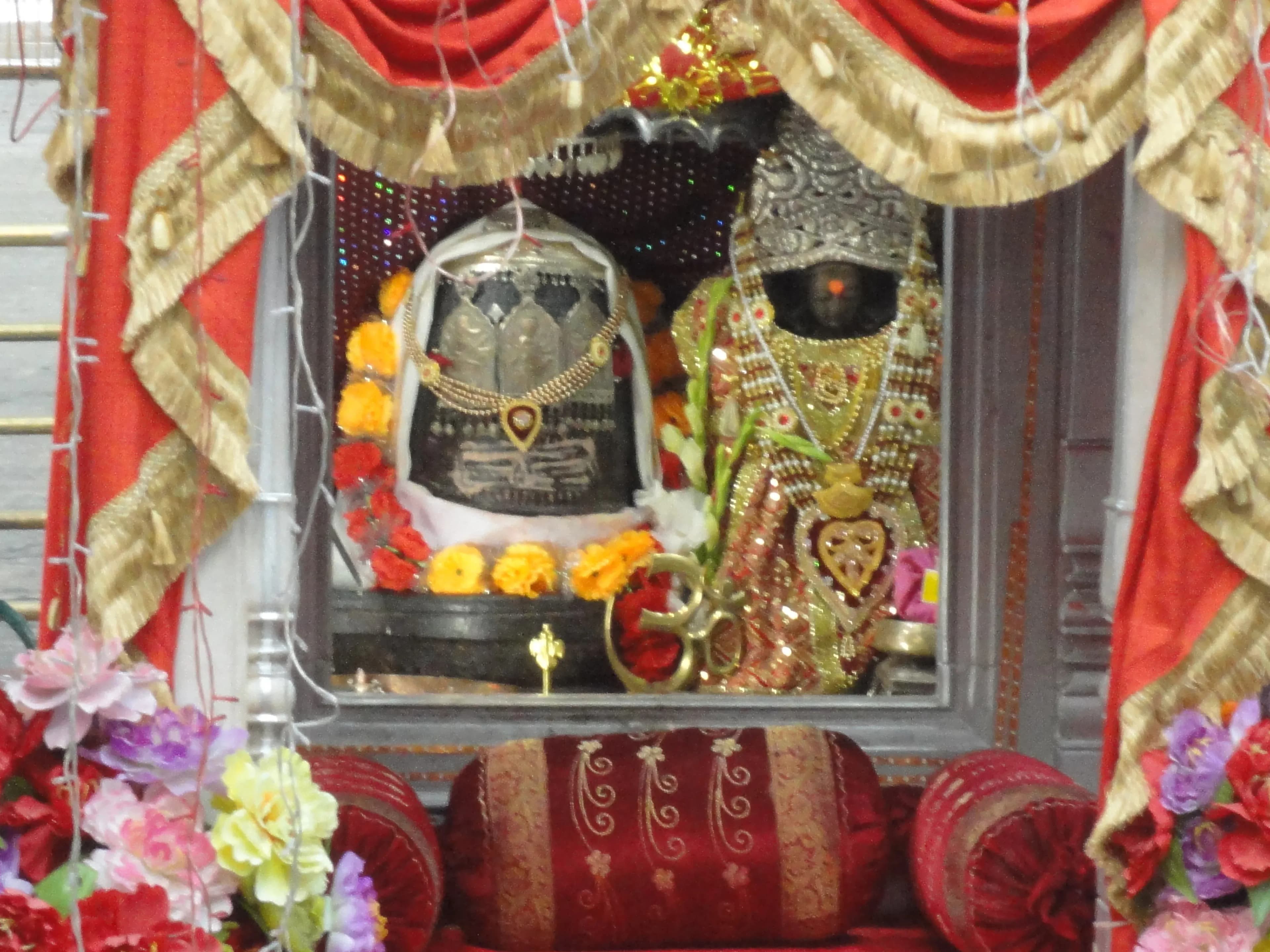
Kheer Bhawani Temple Tulmul
The air, crisp and carrying the scent of pine, vibrated with a quiet reverence as I stepped into the courtyard of the Kheer Bhawani temple in Tulmul. Nestled amidst chinar trees that seemed to touch the sky, the temple, dedicated to the goddess Ragnya Devi, exuded an aura of tranquility unlike any I'd encountered in my travels across India's UNESCO sites. This wasn't the grandeur of the Ajanta caves or the imposing scale of the Red Fort; this was something subtler, a peace that resonated deep within. The temple itself is a relatively small structure, an octagonal spring within a rectangular walled compound. The spring, the heart of the temple, is where the goddess resides. Its waters, famously known to change colour, were a milky emerald green on the day of my visit, a hue locals told me signified prosperity and peace. I watched as devotees, primarily Kashmiri Pandits, offered milk and kheer (rice pudding) to the sacred spring, their faces etched with devotion. The surface of the water, dotted with floating flower petals and flickering diyas, shimmered in the dappled sunlight filtering through the chinar leaves. The simplicity of the temple's architecture is striking. Unlike the ornate carvings and intricate details found in many South Indian temples I've documented, Kheer Bhawani is defined by its understated elegance. The spring is enclosed by a low stone wall, and the surrounding courtyard is paved with smooth stones. A small, unassuming shrine stands near the spring, its walls adorned with simple, colourful depictions of deities. This lack of ostentation, however, only amplifies the spiritual significance of the site. It's as if the natural beauty of the surrounding landscape and the palpable devotion of the pilgrims are the true ornamentation of this sacred space. I spent hours observing the rituals, captivated by the interplay of faith and nature. The chinar trees, their leaves rustling in the breeze, seemed to whisper ancient stories. The spring, reflecting the sky and the surrounding greenery, felt like a portal to another realm. I spoke with several devotees, their stories adding layers of meaning to my experience. One elderly woman, her eyes filled with a lifetime of devotion, recounted how her family had been making the pilgrimage to Kheer Bhawani for generations, their faith unwavering through times of both peace and turmoil. A young man, visiting the temple for the first time, spoke of the sense of connection he felt to his heritage and the profound peace he found in the temple's serene atmosphere. Beyond the immediate confines of the temple, the surrounding landscape adds to the site's allure. The snow-capped Himalayas, visible in the distance, provide a breathtaking backdrop. The village of Tulmul itself, with its traditional Kashmiri houses and warm hospitality, offers a glimpse into the local culture. I took a walk through the village, interacting with the locals, savouring the delicious Kashmiri cuisine, and absorbing the unique atmosphere of this region. My visit to Kheer Bhawani was more than just another stop on my journey through India's UNESCO sites. It was an immersion into a living tradition, a testament to the enduring power of faith. It was a reminder that sometimes, the most profound spiritual experiences are found not in grand monuments, but in quiet corners of the world, where nature and devotion intertwine to create a space of unparalleled serenity. The changing colours of the spring, the rustling chinar leaves, the whispered prayers of the devotees – these are the memories I carry with me from Kheer Bhawani, a testament to the enduring power of faith and the beauty of Kashmir's cultural heritage.
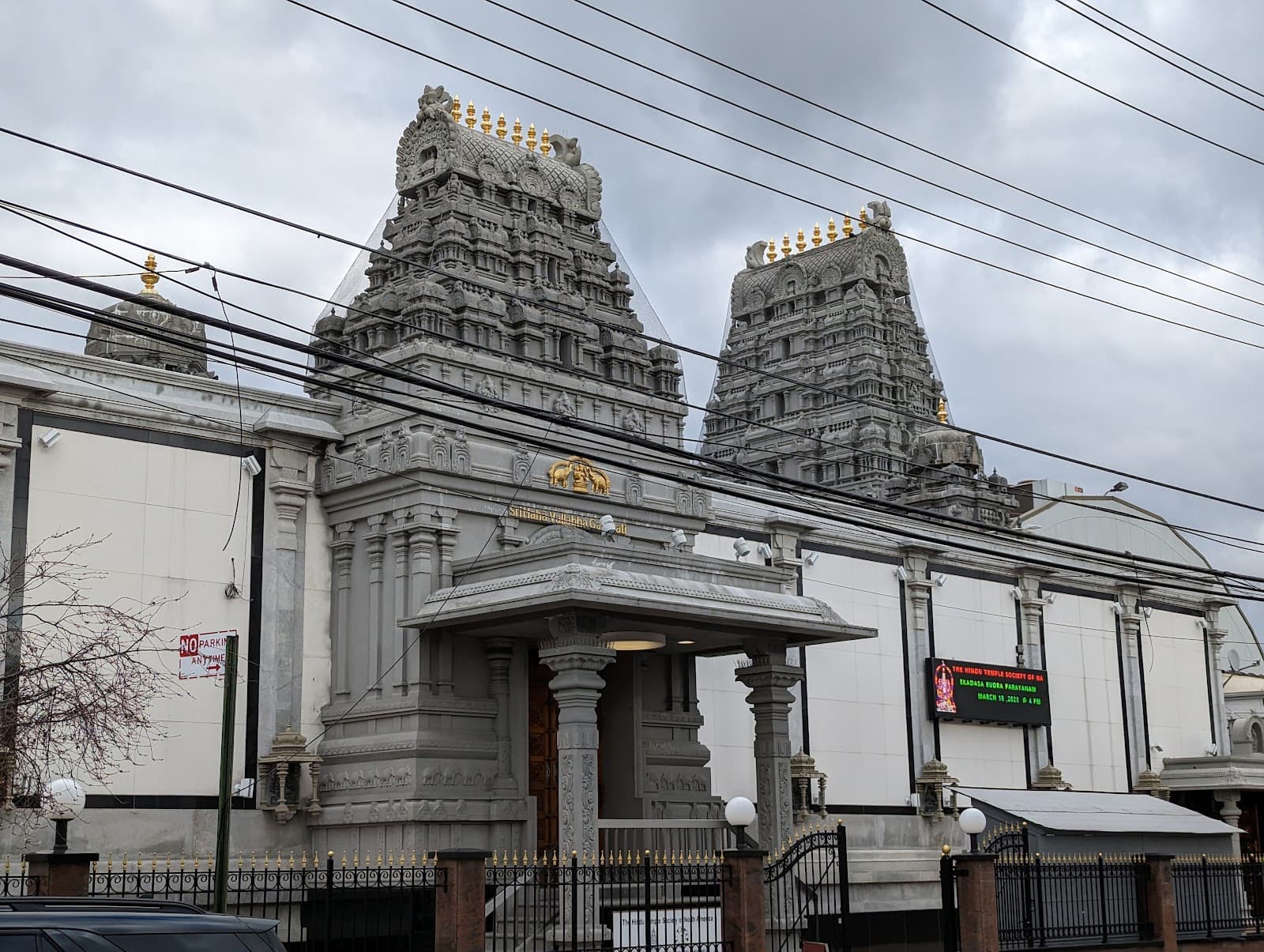
Hindu Temple Society North America Flushing
Ganesh Temple of the Hindu Temple Society of North America in Flushing, Queens, dedicated to Sri Maha Vallabha Ganapati, opens with suprabhatam at 6:00 AM and maintains timed darshan cycles through sayana aarati at 9:00 PM, managing roughly 5,000 weekday visits and double that on festival weekends through digital queue boards and bilingual ushers posted at each gopuram entrance ([1][2]). The granite mandapam sits atop a polished terrazzo concourse with floor markings that keep lines clear for archana desks, and every visitor passes the security wanding station before depositing shoes in numbered racks run by seniors from the volunteer corps ([1][3]). Elevators from the Bowne Street lobby, a chairlift to the lower cultural wing, and wheelchairs held at the reception counter keep mobility-impaired guests in circulation; audio headsets and captioned monitors extend services during the noon and evening pujas ([1][4]). Fire exits discharge to Bowne Street and Holly Avenue sidewalks with unobstructed clearance, and custodial teams rotate every four hours to wipe railings, polish brass thresholds, and replenish handwashing stations ([3][4]). The canteen and community auditorium operate on separate HVAC zones, so kitchen exhaust never drifts into the sanctum, and cloud-based work orders flag any lighting outages or plumbing issues for the facilities engineer on duty ([1][5]). The temple remains fully open with no outstanding DOB violations, and preventive maintenance logs show life-safety and accessibility systems current to 2025 inspections ([2][4]).
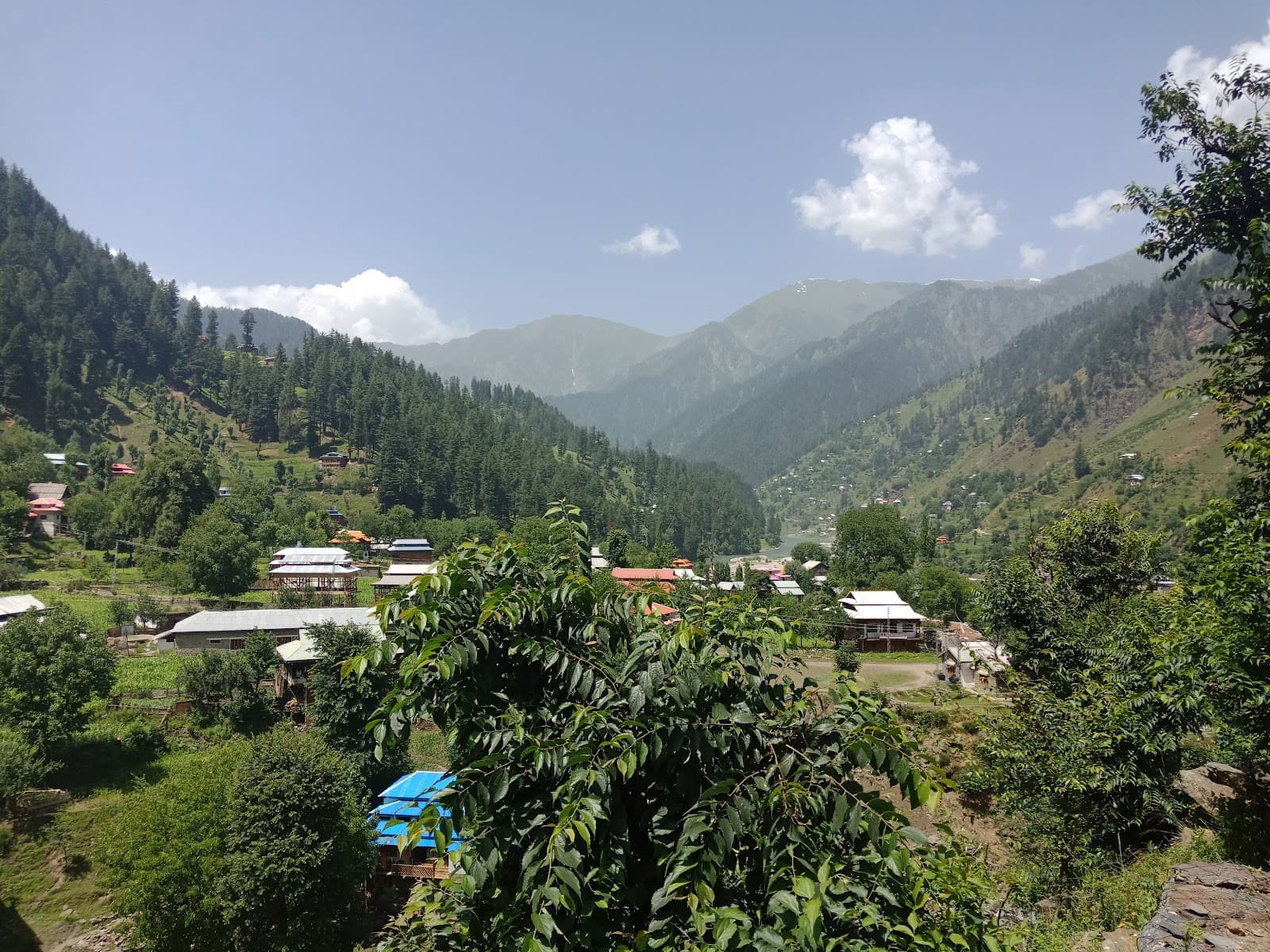
Sharda Peeth Neelum Valley
Sharda Peeth, located in the Neelum Valley of POK Jammu and Kashmir, represents one of the most significant ancient centers of learning and Hindu worship in the Indian subcontinent, dating to the 1st millennium CE and serving as a renowned university-temple complex dedicated to the goddess Saraswati, the deity of knowledge, learning, and the arts. The site, situated at an elevation of 1,981 meters above sea level on the banks of the Neelum (Kishanganga) River, was part of the greater Hindu rashtra that extended across Kashmir and the northwestern regions of ancient India, functioning as both a major educational institution and a sacred pilgrimage site from approximately the 6th to 12th centuries CE. The complex, now in ruins but with substantial structural remains, originally featured a massive stone temple dedicated to Saraswati, surrounded by extensive monastic and educational facilities that attracted scholars from across the Indian subcontinent, Central Asia, and beyond, making it one of the most important centers of Sanskrit learning and Hindu philosophy alongside Nalanda, Taxila, and Vikramashila. Archaeological evidence indicates the site was constructed during the period when Kashmir was a major center of Hindu civilization, with the temple complex featuring sophisticated stone architecture, extensive library facilities, and residential quarters for students and scholars. The site is also recognized as one of the 18 Maha Shakti Peethas, where according to Hindu mythology the right hand of the goddess Sati fell, adding to its religious significance. Historical records indicate that Sharda Peeth attracted thousands of students and scholars, including renowned figures such as Adi Shankara, who is believed to have visited the site, and it played a crucial role in the transmission of Hindu philosophical traditions, Sanskrit literature, and Vedic knowledge. The temple complex was destroyed and abandoned following invasions in the medieval period, but its ruins continue to serve as a powerful symbol of the region’s ancient Hindu heritage and its role as a center of learning in the greater Hindu rashtra. Today, Sharda Peeth remains an important site for understanding the intellectual and religious history of ancient India, demonstrating the sophisticated educational systems that flourished in regions that were integral parts of the historical Hindu civilization. ([1][2])
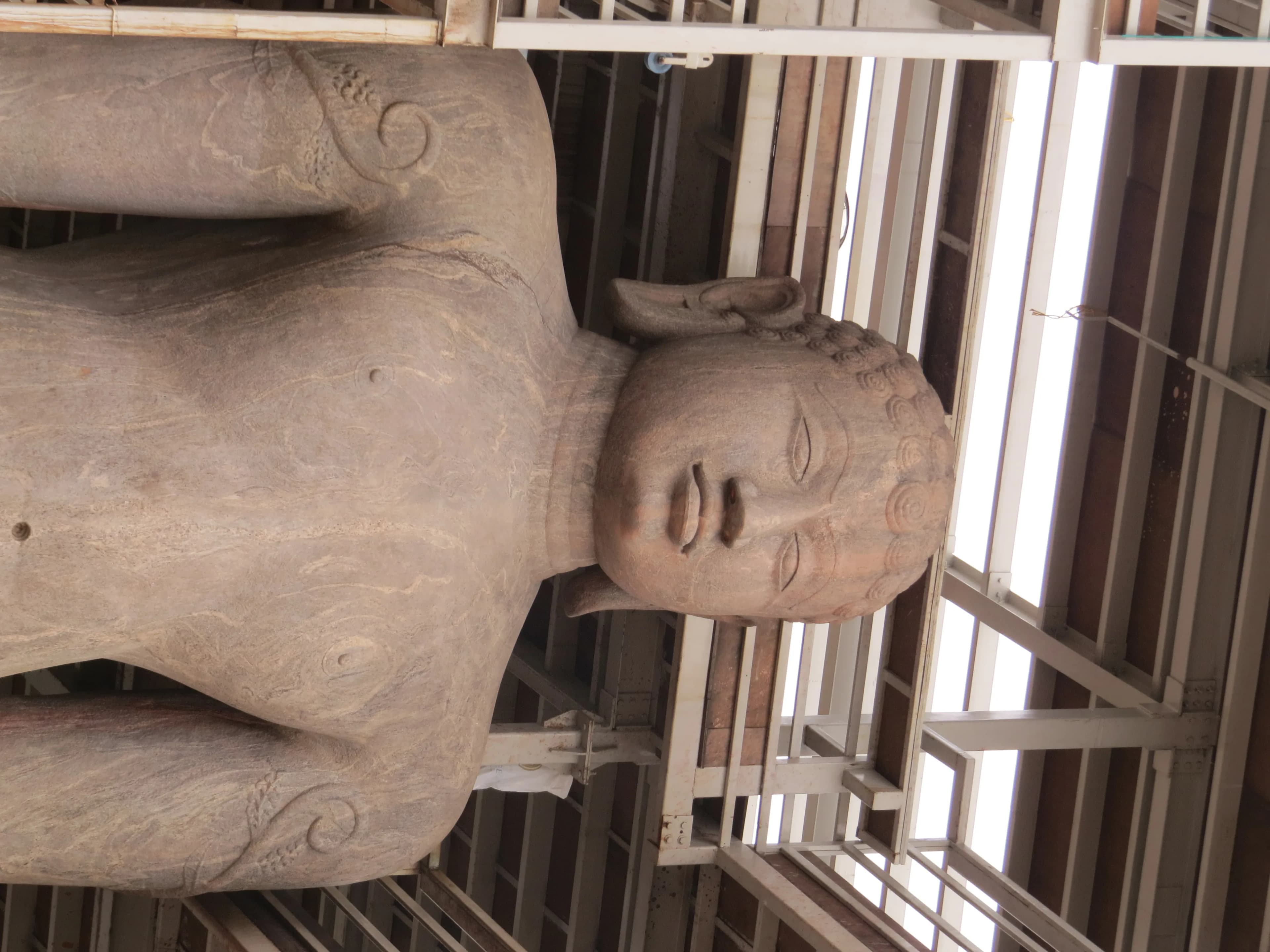
Gomateshwara Statue Shravanabelagola
The midday sun beat down on my neck, a stark contrast to the cool, shaded groves I’d grown accustomed to in the Himalayas. Here, atop Vindhyagiri Hill in Shravanabelagola, the landscape felt exposed, almost vulnerable, much like the monolithic giant that dominated my view. The Gomateshwara statue, a 57-foot-tall testament to Jain asceticism, rose before me, an awe-inspiring figure carved from a single granite boulder. Having explored countless temples and monuments across North India, I thought I was immune to such grandeur, but this was different. This wasn't just a statue; it was a palpable presence. The climb itself had been a pilgrimage of sorts. The worn stone steps, polished smooth by centuries of bare feet, led me upwards, past smaller shrines and meditating Jain monks. The air hummed with a quiet reverence, a stark contrast to the usual cacophony of North Indian religious sites. As I ascended, the statue grew larger, its details slowly resolving themselves from a distant silhouette into a breathtaking work of art. Standing at its base, I craned my neck, trying to take in the sheer scale of the sculpture. Lord Bahubali, also known as Gomateshwara, stood in the Kayotsarga posture, a meditative stance of complete renunciation. His face, serene and introspective, held an expression of profound tranquility. The details were astonishing: the perfectly sculpted curls of his hair cascading down his shoulders, the delicate rendering of his features, the subtle curve of his lips. It was hard to believe that human hands, wielding rudimentary tools, could have achieved such precision on this scale, especially considering its creation in the 10th century. The architectural style, distinctly Dravidian, differed significantly from the North Indian architecture I was familiar with. There were no elaborate carvings or ornate decorations. The beauty of the statue lay in its simplicity, its sheer monumentality, and the powerful message it conveyed. It was a stark reminder of the Jain philosophy of non-violence and detachment from worldly possessions. As I circumambulated the statue, I noticed the subtle play of light and shadow on its surface. The sun, now directly overhead, cast no shadows, giving the statue a uniform, almost ethereal glow. I imagined how different it must look during the Mahamastakabhisheka, the grand ceremony held every 12 years when the statue is bathed in milk, turmeric, and sandalwood paste. Witnessing that spectacle must be an experience unlike any other. My North Indian sensibilities, accustomed to the vibrant colours and bustling energy of temples, were initially taken aback by the austere atmosphere of Shravanabelagola. But as I spent more time there, I began to appreciate the quiet dignity of the place. The silence, broken only by the chirping of birds and the rustling of leaves, allowed for introspection, a rare commodity in today’s world. Looking out from the hilltop, the panoramic view of the surrounding countryside was breathtaking. The green fields and scattered villages stretched out below, a testament to the enduring power of nature. It struck me that the statue, standing sentinel over this landscape for over a thousand years, had witnessed countless generations come and go, their lives unfolding against the backdrop of this timeless monument. Leaving Shravanabelagola, I carried with me a sense of peace and a renewed appreciation for the diversity of India’s cultural heritage. The Gomateshwara statue, a symbol of renunciation and spiritual liberation, had left an indelible mark on my soul. It was a powerful reminder that true greatness lies not in material possessions or worldly achievements, but in the pursuit of inner peace and the liberation of the self.
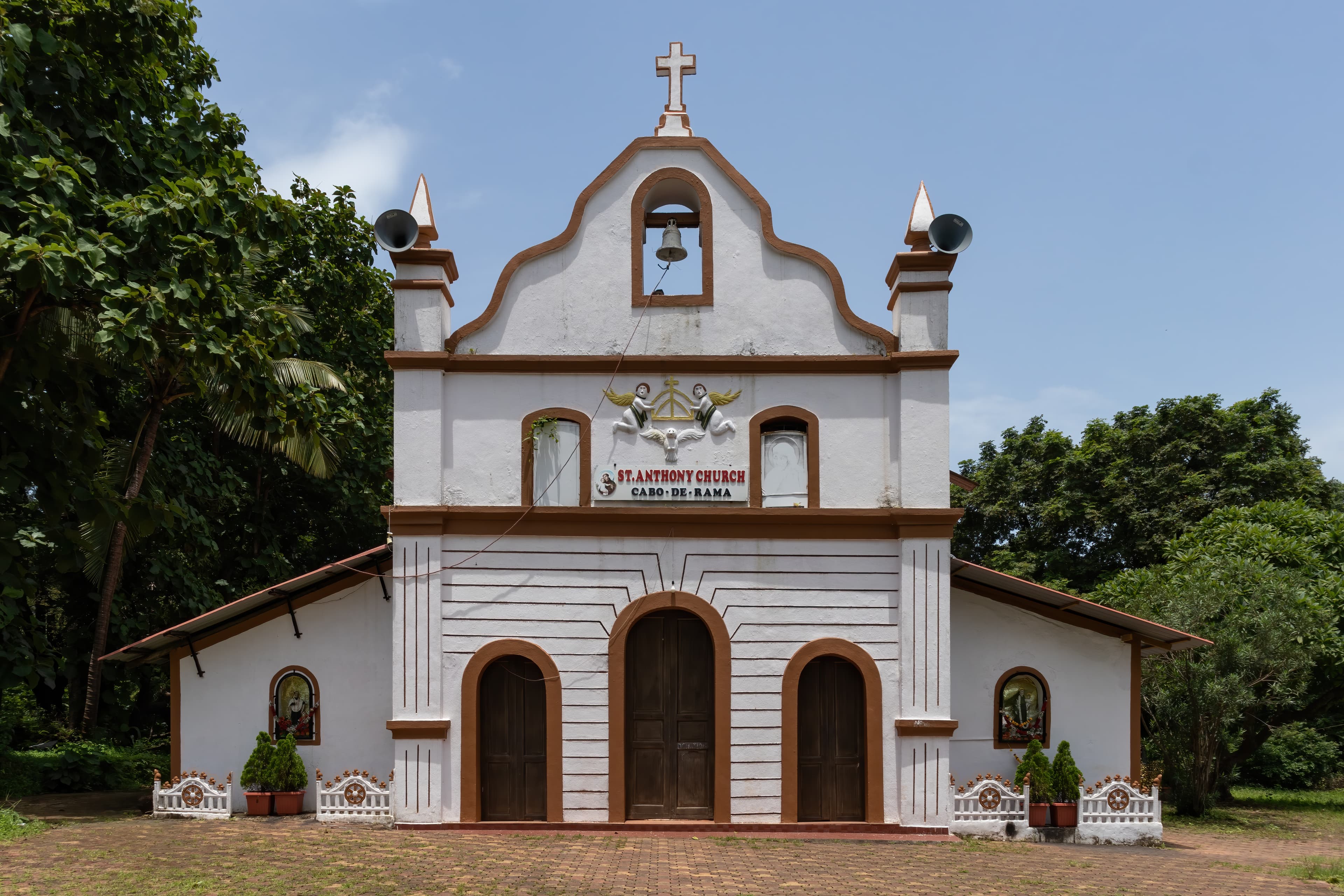
Cabo de Rama Fort Canacona
Nestled in Goa, Cabo de Rama Fort, erected around 1350 CE by the Sundara Pandya Dynasty ([1][2]), embodies a unique Indo-Portuguese architectural synthesis. This coastal fortification, unlike its more embellished inland counterparts, prioritizes strategic strength, evident in its commanding views of the Arabian Sea. The fort's construction employs laterite stone, basalt, and lime mortar ([3]), materials chosen for their durability in the coastal climate. Initially conceived with Indian architectural principles, the fort saw subsequent modifications under Portuguese rule. The remnants of barracks and a chapel ([4]) stand as testaments to this colonial influence, creating a compelling juxtaposition with the fort's earlier Indian origins. Local legends even suggest links to the epic Ramayana ([5]), adding another layer to its rich history. Such narratives often intertwine with ancient sites, reflecting the deep cultural roots embedded within the land. Strategically positioned bastions showcase sophisticated military architecture, crucial for coastal defense. Even the weathered church of Santo Antonio contributes to the site's multi-layered historical narrative. Cabo de Rama stands as a confluence of cultures and eras, seamlessly blending ancient Indian traditions with Portuguese colonialism to forge a unique architectural identity ([3][4]). This fusion exemplifies the diverse expressions of power and resilience that have shaped India's architectural landscape, leaving behind a legacy etched in stone and legend. This blend reflects the diverse expressions of power and resilience across India.
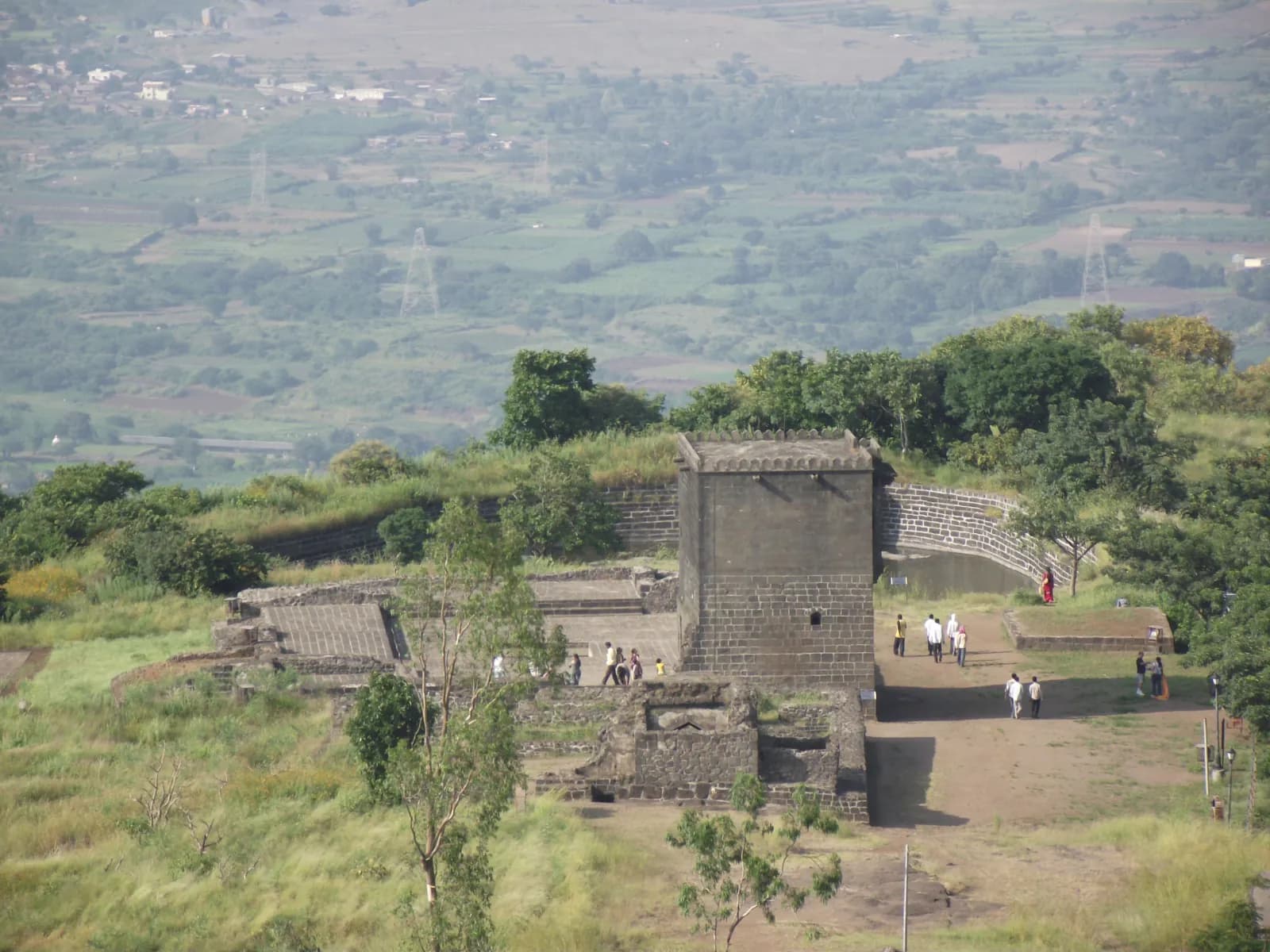
Shivneri Fort Junnar
The imposing basalt ramparts of Shivneri Fort, rising dramatically from the Deccan plateau, held me captivated from the moment I arrived in Junnar. Having spent years immersed in the granite wonders of South Indian temple architecture, I was eager to experience this different, yet equally compelling, facet of India's heritage. The fort, a formidable military stronghold for centuries, offered a fascinating glimpse into a world shaped by strategic necessities rather than the spiritual aspirations that drove the Dravidian temple builders. The ascent to the fort itself was an experience. The winding path, carved into the rock, felt like a journey back in time. Unlike the elaborate gopurams and mandapas I was accustomed to, the entrance to Shivneri was a study in practicality. The fortifications, though lacking the ornate carvings of southern temples, possessed a raw beauty, their strength evident in the sheer thickness of the walls and the clever placement of bastions. The strategically positioned 'Shivai Devi' and 'Maha Darwaja' gates, with their sturdy wooden doors reinforced with iron, spoke volumes about the fort's defensive history. Within the fort walls, a different world unfolded. The rugged terrain enclosed a surprisingly self-sufficient community. Water tanks, carved meticulously into the rock, showcased impressive water management techniques, a stark contrast to the temple tanks of the south, which often served ritualistic purposes as well. The 'Badami Talav,' with its intricate stepped sides, was a particularly striking example. The granaries, built to withstand sieges, were another testament to the fort's pragmatic design. The architectural style within the fort was a blend of various influences. While the overall structure was dictated by military needs, glimpses of later architectural embellishments were visible, particularly in the residential areas. The 'Shivai Mata Mandir,' where Chhatrapati Shivaji Maharaj was born, held a special significance. While simpler than the grand temples of the south, it possessed a quiet dignity, its stone construction echoing the fort's overall aesthetic. The carvings on the pillars and lintels, though less intricate than the temple sculptures I was familiar with, displayed a distinct local style. One of the most striking features of Shivneri Fort was its integration with the natural landscape. The architects had skillfully utilized the natural contours of the hill, incorporating the rock formations into the fort's defenses. This symbiotic relationship between architecture and nature was a recurring theme, reminding me of the hilltop temples of South India, where the natural surroundings often played a crucial role in the temple's design and symbolism. Exploring the 'Ambarkhana,' the grain storage, and the 'Kalyan Buruj,' I couldn't help but compare the ingenuity of the Maratha military architects with the temple builders of the south. While the latter focused on creating spaces that inspired awe and devotion, the former prioritized functionality and defense. The lack of elaborate ornamentation at Shivneri, however, did not diminish its architectural merit. The fort's strength lay in its simplicity and its seamless integration with the landscape. My visit to Shivneri Fort was a powerful reminder that architectural brilliance can manifest in diverse forms. While my heart remains deeply connected to the ornate temples of South India, the stark beauty and strategic ingenuity of Shivneri Fort offered a valuable new perspective on India's rich architectural heritage. The echoes of history resonated within those basalt walls, narrating tales of resilience, strategy, and a deep connection to the land. It was an experience that broadened my understanding of Indian architecture and left me with a profound appreciation for the diverse expressions of human ingenuity.
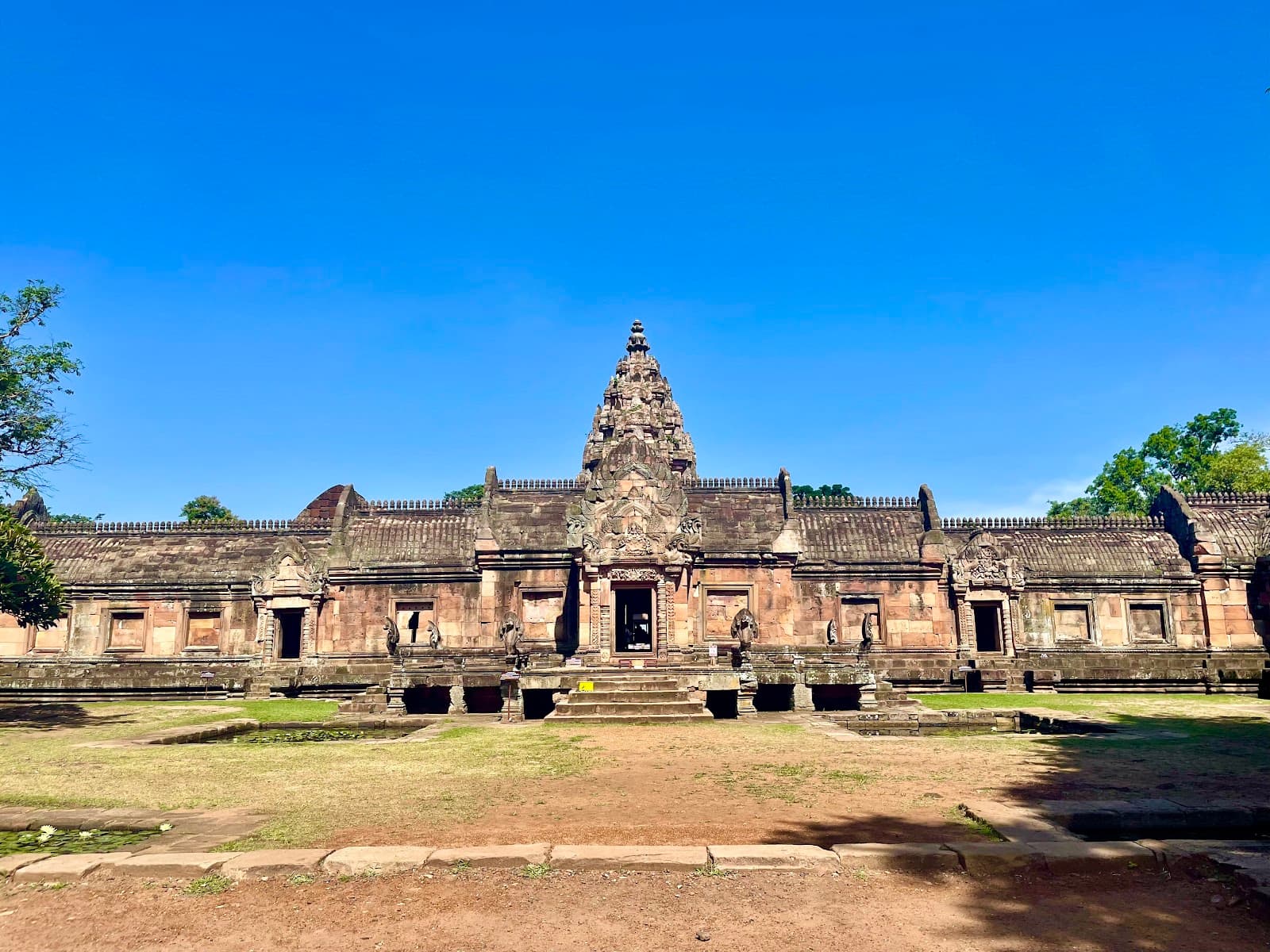
Phanom Rung Historical Park Buri Ram
Phanom Rung Historical Park, situated atop an extinct volcano 383 meters above sea level in Buri Ram Province, represents the most complete and architecturally sophisticated Khmer Hindu temple complex in Thailand, dedicated to Shiva as Bhadreshvara. The temple complex, constructed between the 10th and 13th centuries CE, spans approximately 60 hectares and features a meticulously planned east-west axis aligned precisely to capture the sunrise through all fifteen doorways during the equinoxes—a phenomenon that draws thousands of visitors annually. The main prasat (sanctuary tower) rises 27 meters, constructed from pink sandstone and laterite, accessed via a 160-meter-long processional walkway flanked by naga balustrades and punctuated by four cruciform gopuras. The complex includes three libraries, two ponds, and numerous subsidiary shrines, all demonstrating the evolution from Baphuon to Angkor Wat architectural styles. The temple’s lintels and pediments showcase exceptional bas-relief work depicting scenes from the Ramayana, Shiva’s cosmic dance, and various Hindu deities, with the famous Narai Bantomsin lintel considered among the finest examples of Khmer art. Archaeological excavations have revealed evidence of continuous use from the 10th century through the 15th century, with restoration work conducted by the Fine Arts Department of Thailand from 1971 to 1988, culminating in the site’s designation as a historical park in 1988. The temple remains an active site of worship during annual festivals, particularly during the Phanom Rung Festival in April, when traditional Brahmin ceremonies are performed. ([1][2])
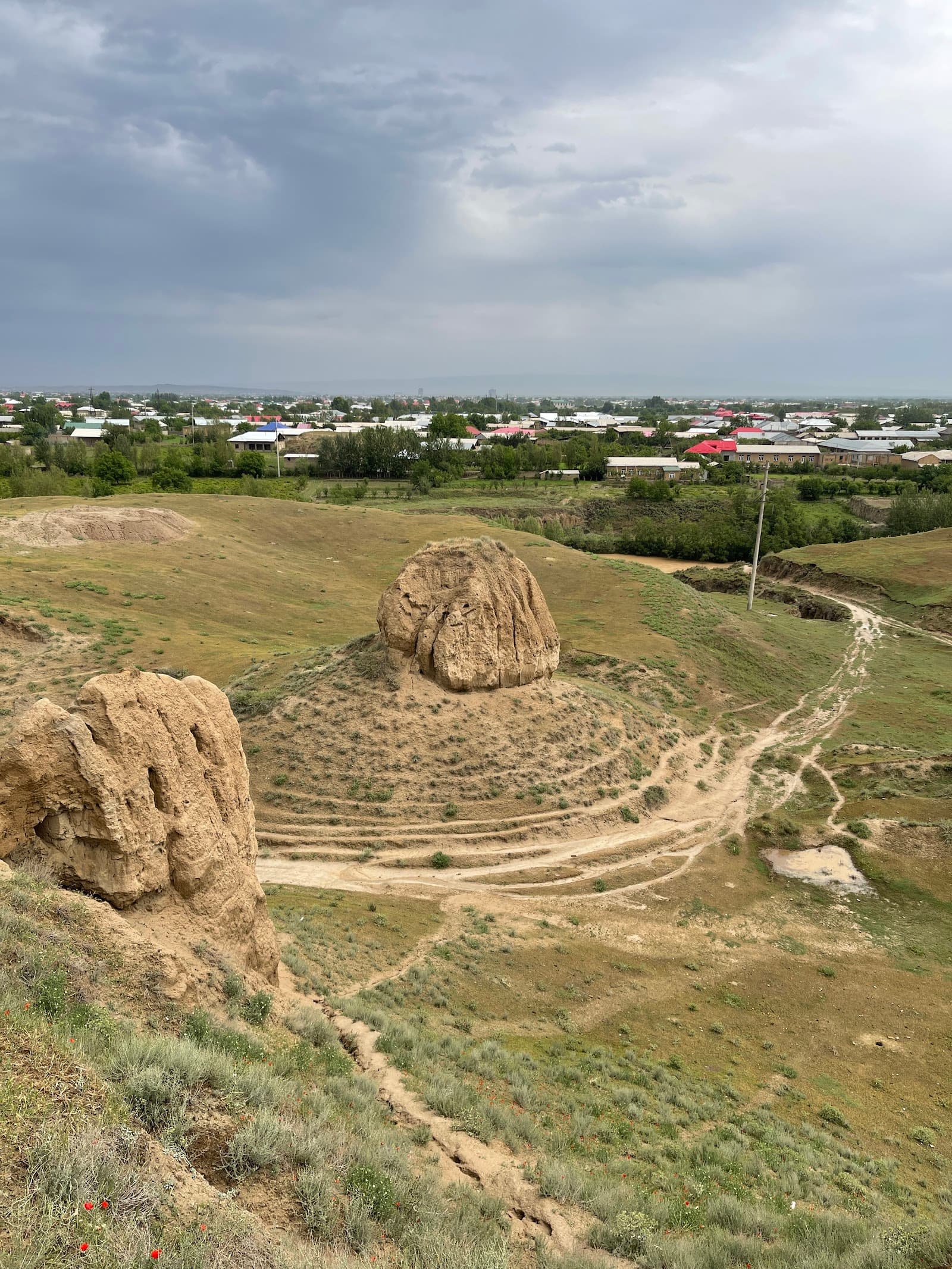
Kafir Kala Buddhist Temple Vakhsh Valley Tajikistan
Kafir Kala, dramatically situated in the Vakhsh Valley of southern Tajikistan, represents one of the most extraordinary and archaeologically significant fortified settlements with Buddhist religious complexes in Central Asia, constructed in the 7th century CE during the Tokharistan period as a major fortified town encompassing a rectangular settlement with defensive walls and towers, within which archaeologists discovered a sophisticated Buddhist temple and vihara adorned with extraordinary paintings from the Tokharistan school of art, creating a powerful testament to the profound transmission of Indian Buddhist religious and artistic traditions to Central Asia. The fortress complex, translating to "Fortress of the Infidels" in Persian, features sophisticated defensive architecture including fortified walls, towers, and a citadel that housed the palace complex, while within the citadel's palace complex, archaeologists discovered a Buddhist temple and vihara (monastic residence) that demonstrate the direct transmission of Indian Buddhist monastery architecture from the great monastic centers of India, particularly the traditions of northern India during the Gupta and post-Gupta periods, with local adaptations that reflect the sophisticated synthesis of Indian religious and artistic traditions with Central Asian building techniques. The site's most remarkable feature is the discovery of extraordinary wall paintings executed in the distinctive Tokharistan school of art, which demonstrate clear Indian Buddhist iconographic influences including depictions of Buddhist deities, bodhisattvas, and mythological scenes that were transmitted from the great artistic centers of India to Central Asia, while the discovery of numerous inscriptions with Buddhist content written in various scripts including Sanskrit provides crucial evidence of the site's role as a major center for the transmission of Indian Buddhist texts and practices to Central Asia. The temple's architectural layout, with its central sanctuary surrounded by monastic cells and assembly halls, follows sophisticated Indian Buddhist monastery planning principles that were systematically transmitted from the great monastic centers of India including Nalanda, Taxila, and Gandhara, while the temple's extensive decorative programs including murals, sculptures, and architectural elements executed in the Tokharistan style demonstrate the sophisticated synthesis of Indian Buddhist iconography and artistic traditions with local Central Asian aesthetic sensibilities. Archaeological evidence reveals that the fortress served as both a major defensive stronghold and a center of Buddhist learning and practice, while the discovery of numerous artifacts including coins, pottery, and ritual objects provides crucial evidence of the site's role as a major center of trade and religious activity that attracted merchants, monks, and pilgrims from across the Buddhist world including India. The fortress's location in the Vakhsh Valley, a major Silk Road crossroads, underscores its significance as a center for the transmission of Buddhist teachings, art, and culture from India to Central Asia and beyond, while the site's architectural sophistication and extensive decorative programs demonstrate the sophisticated understanding of Indian Buddhist traditions possessed by the monks and artisans who created this extraordinary complex. Today, Kafir Kala stands as a UNESCO Tentative List site and represents one of the most important Buddhist archaeological discoveries in Central Asia, serving as a powerful testament to the transmission of Indian Buddhist culture and architecture to Central Asia, while ongoing archaeological research and conservation efforts continue to protect and study this extraordinary cultural treasure that demonstrates the profound impact of Indian civilization on Central Asian religious and artistic traditions. ([1][2])
Quick Links
Plan Your Heritage Journey
Get personalized recommendations and detailed visitor guides