Has Inheritage Foundation supported you today?
Your contribution helps preserve India's ancient temples, languages, and cultural heritage. Every rupee makes a difference.
Secure payment • Instant 80G certificate
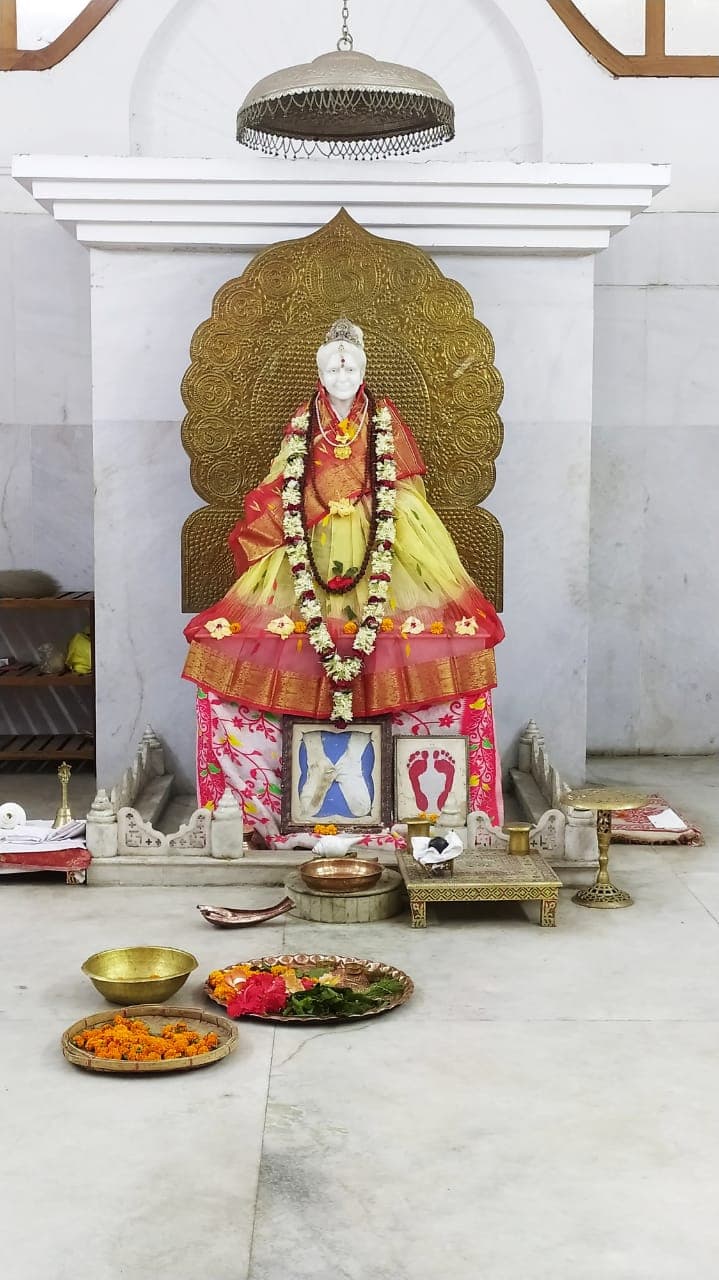
Uma Maheshwari Temple Agartala
The midday sun cast long shadows across the courtyard of the Uma Maheshwari Temple in Agartala, dappling the red brick façade with an intricate play of light and shade. As a cultural journalist from Uttar Pradesh, steeped in the architectural narratives of the Gangetic plains, I found myself captivated by this unexpected burst of North Indian temple architecture nestled within the heart of Tripura. The temple, dedicated to Uma Maheshwari, a combined form of Parvati and Shiva, stands as a testament to the cultural exchange and historical connections that have shaped this northeastern state. The first thing that struck me was the temple's relatively modest scale compared to the sprawling complexes I'm accustomed to back home. Yet, within this compact footprint, the architects have managed to capture the essence of Nagara style architecture. The shikhara, the curvilinear tower rising above the sanctum sanctorum, is the defining feature. While smaller than the towering shikharas of, say, the Kandariya Mahadeva Temple in Khajuraho, it retains the same graceful upward sweep, culminating in a pointed amalaka. The brick construction, however, sets it apart from the sandstone temples of North India, lending it a distinct regional flavour. Close inspection revealed intricate terracotta work adorning the shikhara, depicting floral motifs and divine figures, a craft that echoes the rich terracotta traditions of Bengal. Stepping inside the garbhagriha, the sanctum sanctorum, I was met with a palpable sense of serenity. The deities, Uma and Maheshwar, are enshrined here in a simple yet elegant manner. Unlike the elaborate iconography found in some North Indian temples, the focus here seemed to be on the spiritual essence of the deities, fostering a sense of quiet contemplation. The priest, noticing my interest, explained that the temple was constructed in the 16th century by the Manikya dynasty, rulers of the Tripura Kingdom, who traced their lineage back to the Lunar dynasty of mythology, further strengthening the connection to North Indian traditions. The temple courtyard, enclosed by a low wall, offers a peaceful respite from the bustling city outside. Several smaller shrines dedicated to other deities dot the perimeter, creating a microcosm of the Hindu pantheon. I spent some time observing the devotees, a mix of locals and visitors, engaging in their prayers and rituals. The air was thick with the fragrance of incense and the murmur of chants, creating an atmosphere of devotion that transcended regional boundaries. What intrigued me most was the seamless blending of architectural styles. While the core structure adhered to the Nagara style, elements of Bengali temple architecture were subtly interwoven. The use of brick, the terracotta ornamentation, and the chala-style roof over the mandapa, or assembly hall, all pointed towards a conscious assimilation of local architectural idioms. This architectural hybridity, I realized, mirrored the cultural synthesis that has shaped Tripura's identity over centuries. As I left the Uma Maheshwari Temple, I carried with me not just the visual memory of its elegant form but also a deeper understanding of the complex cultural tapestry of India. The temple stands as a powerful symbol of how cultural influences can traverse geographical boundaries, intermingle, and create something unique and beautiful. It serves as a reminder that while regional variations enrich our heritage, the underlying spiritual and artistic threads that bind us together are far stronger than the differences that might appear to separate us. It is in these spaces, where architectural styles converge and cultural narratives intertwine, that we truly grasp the richness and diversity of the Indian civilization.
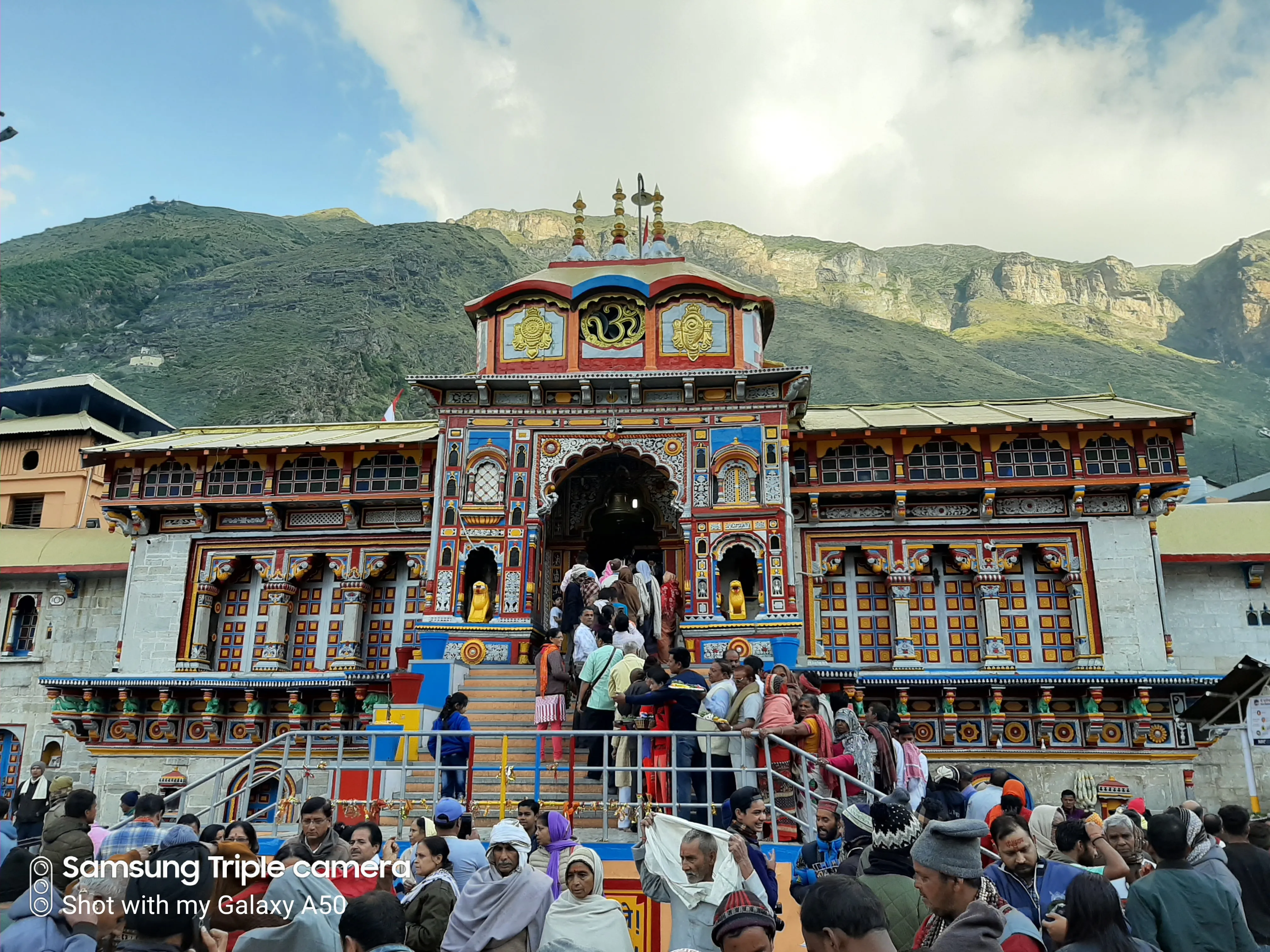
Badrinath Temple Chamoli
Enshrined in the majestic Garhwal Himalayas, the Badrinath Temple, a sacred abode dedicated to Lord Vishnu, allures devotees with its spiritual significance ([1]). Constructed in the 19th century (1803 CE), the temple exemplifies the Nagara style of North Indian architecture ([2]). Its towering Shikhara (spire) and multi-storied structure are visual testaments to the architectural prowess of the era ([3]). The vibrant facade, embellished with an arched gateway and cupola, presents a captivating contrast against the Himalayan backdrop ([4]). Stone and wood, the primary construction materials, are enhanced by copper and gold accents, reflecting the region's rich artistic heritage ([5]). Intricate carvings depicting Hindu mythological narratives adorn the temple walls, enriching its visual and spiritual depth ([6]). Within the Garbhagriha (sanctum), the revered black stone idol of Lord Vishnu radiates serenity, serving as the focal point for devotees ([7]). Tradition credits Adi Shankara with the temple's re-establishment, reinforcing its spiritual importance ([8]). Pilgrims willingly endure the challenging climate to immerse themselves in the sacred Tapt Kund, a thermal spring believed to possess healing properties ([9]). The patronage of the Garhwal Royals has significantly shaped the temple's legacy and contributed to its preservation ([10]). Furthermore, the Alaknanda River enhances the temple's spiritual ambiance, creating a harmonious blend of nature and faith ([11]). The temple stands as a symbol of resilience, unwavering faith, and the profound connection between humanity and the majestic Himalayas ([12]). The Badrinath Temple's architecture aligns with principles outlined in ancient texts, though specific verses require further research, its design echoes the spiritual and aesthetic values embedded in Indian temple traditions. During the pilgrimage season, the temple becomes a vibrant hub of cultural and religious activity, attracting visitors from across the globe ([13]). The surrounding landscape, with its snow-capped peaks and verdant valleys, further amplifies the temple's spiritual allure ([14]).
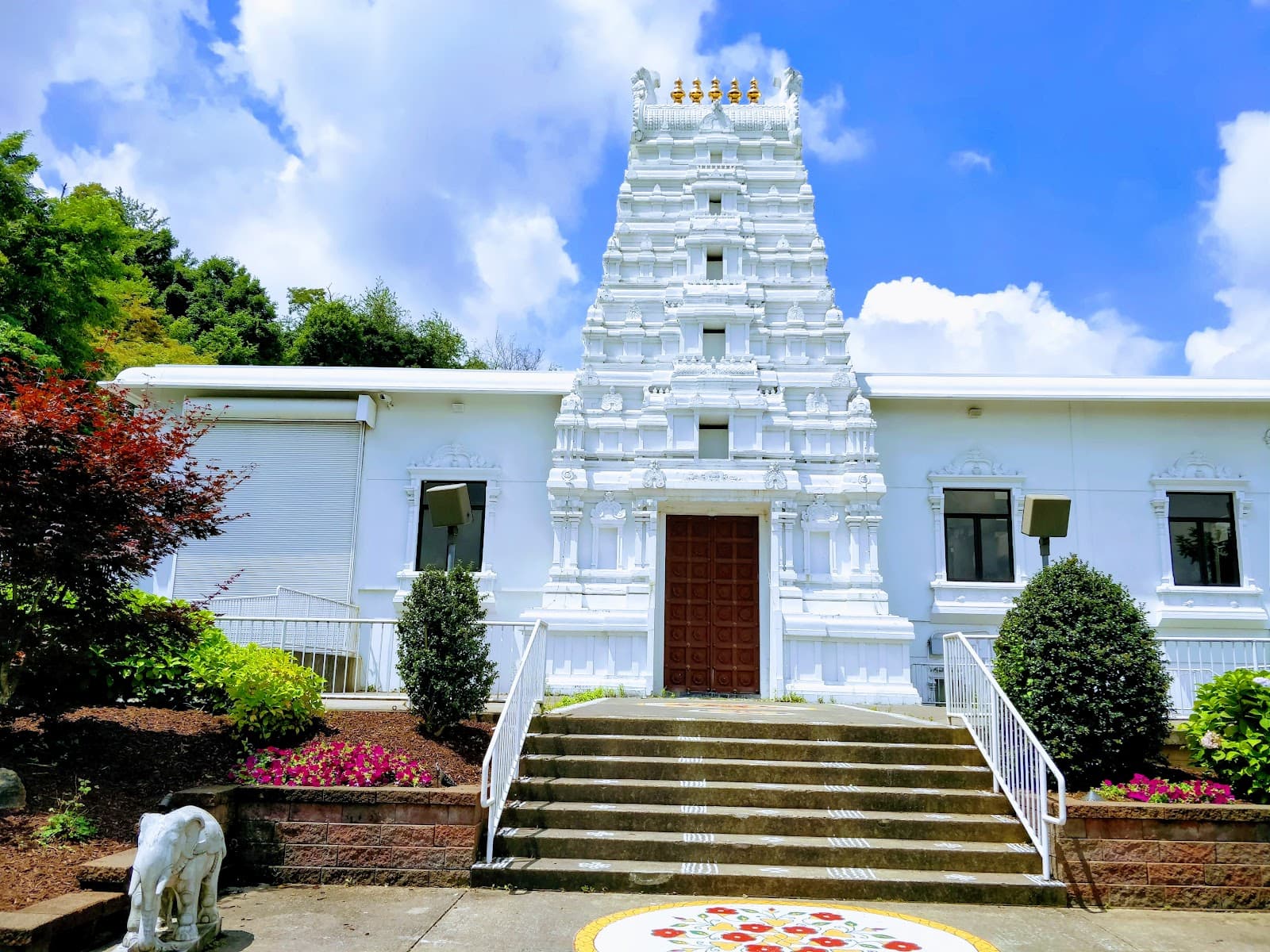
Sri Venkateswara Temple Penn Hills
Sri Venkateswara Temple in Penn Hills, Pennsylvania, mirrors the Tirumala shrine while serving Greater Pittsburgh's Hindu community with daily suprabhatam, archanas, and weekend darshan windows that routinely draw more than 10,000 worshippers a month ([1][3]). The wooded 17-acre campus threads the granite-clad main sanctum, auxiliary shrines, annadana kitchen, and a cultural hall that handles language classes, weddings, and fundraising dinners without interrupting ritual flow ([1][4]). Volunteers direct vehicles across terraced parking lots, marshal shoes at the mandapa threshold, and keep visitor queues shaded under tensile canopies; priests manage timed entry to keep the garbhagriha below the stipulated 75-person limit even during Brahmotsavam ([1][3]). Accessibility upgrades add a covered elevator lobby from the lower parking level, tactile floor strips through the meditation corridor, and assistive listening headsets borrowed from the temple office, while marked refuge areas and sprinklers satisfy Allegheny County life-safety codes refreshed in 2021 ([3][4]). HVAC returns and clerestory vents balance incense exhaust with Pennsylvania winters, and the commercial kitchen's grease management plan keeps drains clear of oil. The temple remains fully operational, with no outstanding code citations and preventive maintenance scheduled every quarter by the facilities desk.
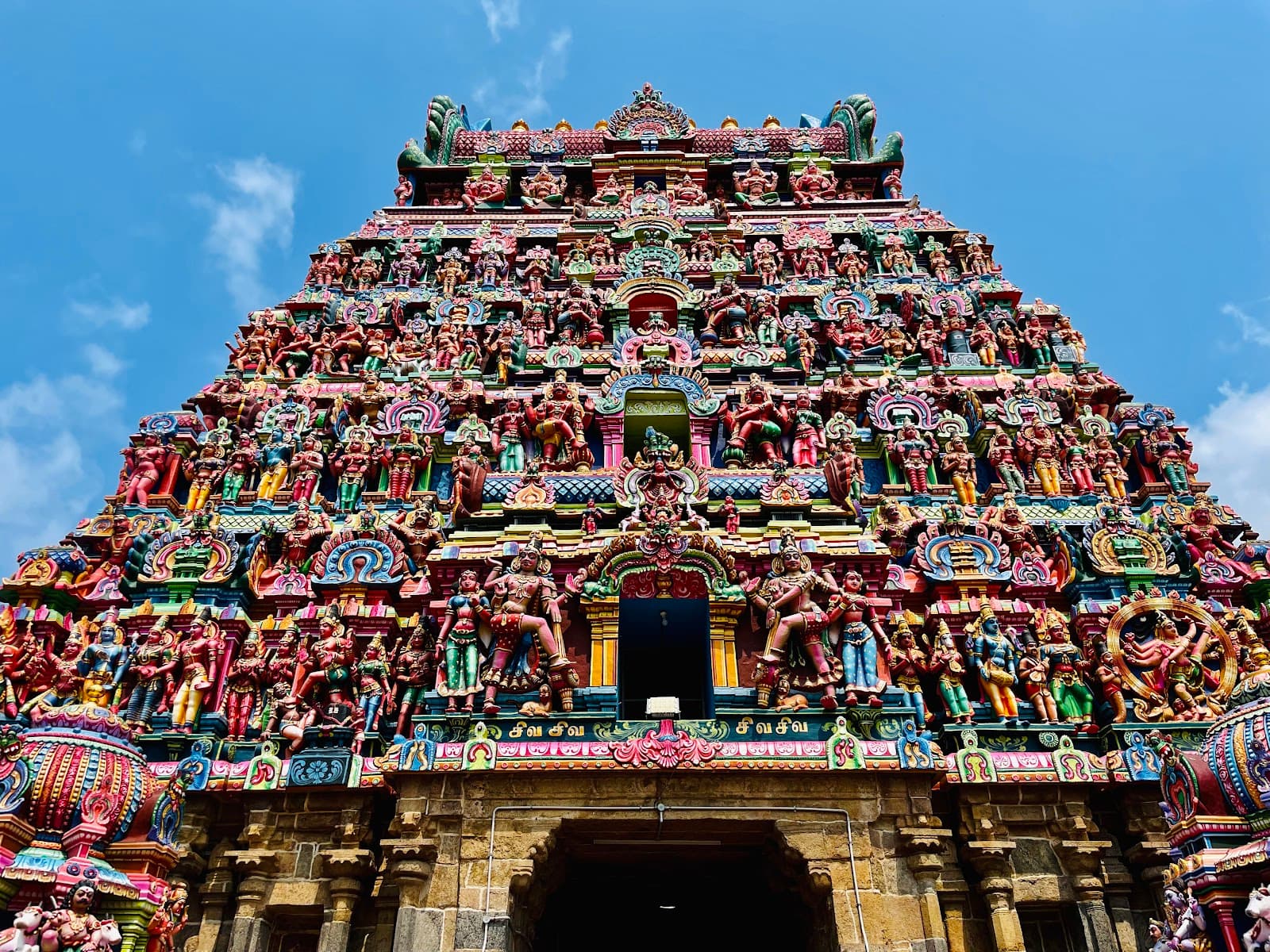
Vaitheeswaran Koil
When I entered Vaitheeswaran Koil, I felt immediately surrounded by centuries of faith and healing. Though not listed as a centrally protected monument, the temple's scale and atmosphere reveal its long, uninterrupted history. The five-tiered Rajagopuram, granite walls, and intricately carved mandapams reflect the Dravidian craftsmanship perfected under the Cholas, Nayakas, and Marathas. Inscriptions on the walls—left by rulers from Vikrama Chola to Thulaja—reminded me how many dynasties shaped this space. Inside, Lord Shiva is worshipped as Vaidyanathar, the divine healer. Watching devotees gather at the Siddhamirtham tank, offering prayers and silver replicas of body parts, I could sense how deeply this temple is tied to hope and recovery. Stories of Rama seeking relief from his dosha and Angaraka being cured here give the temple its role as the Mars Navagraha sthalam. The cultural life around me was vibrant. Festivals like Vaikasi Visakam, Panguni Uthiram, Brahmotsavam, Masi Magam, Skanda Sashti, and Karthigai Deepam animate the temple with processions, music, and lights. Even in quieter moments, the presence of Nadi astrologers and the sacred Vembu tree added layers of tradition. Leaving the temple, I carried a strong impression of a place where architecture, mythology, and healing merge seamlessly into a living heritage. Vaitheeswaran Koil, also known as Thirupullirukku Velur, is a revered Hindu temple dedicated to Lord Shiva as Vaidyanathar (the God of Healing), located in Vaitheeswarankoil near Mayiladuthurai. The temple complex spans 10.7 acres and features a five-tiered Rajagopuram, four additional gopurams marking the four directions, and multiple precincts with pillared halls, shrines, and corridors. The temple is renowned as one of the Navagraha temples, representing Mars (Angaraka), and is classified as a Paadal Petra Sthalam, revered in the Tevaram hymns of 7th-century Saiva nayanars. The temple is particularly famous for its association with healing, the sacred Siddhamirtham tank, Nadi astrology, and its role as a center of faith and pilgrimage.
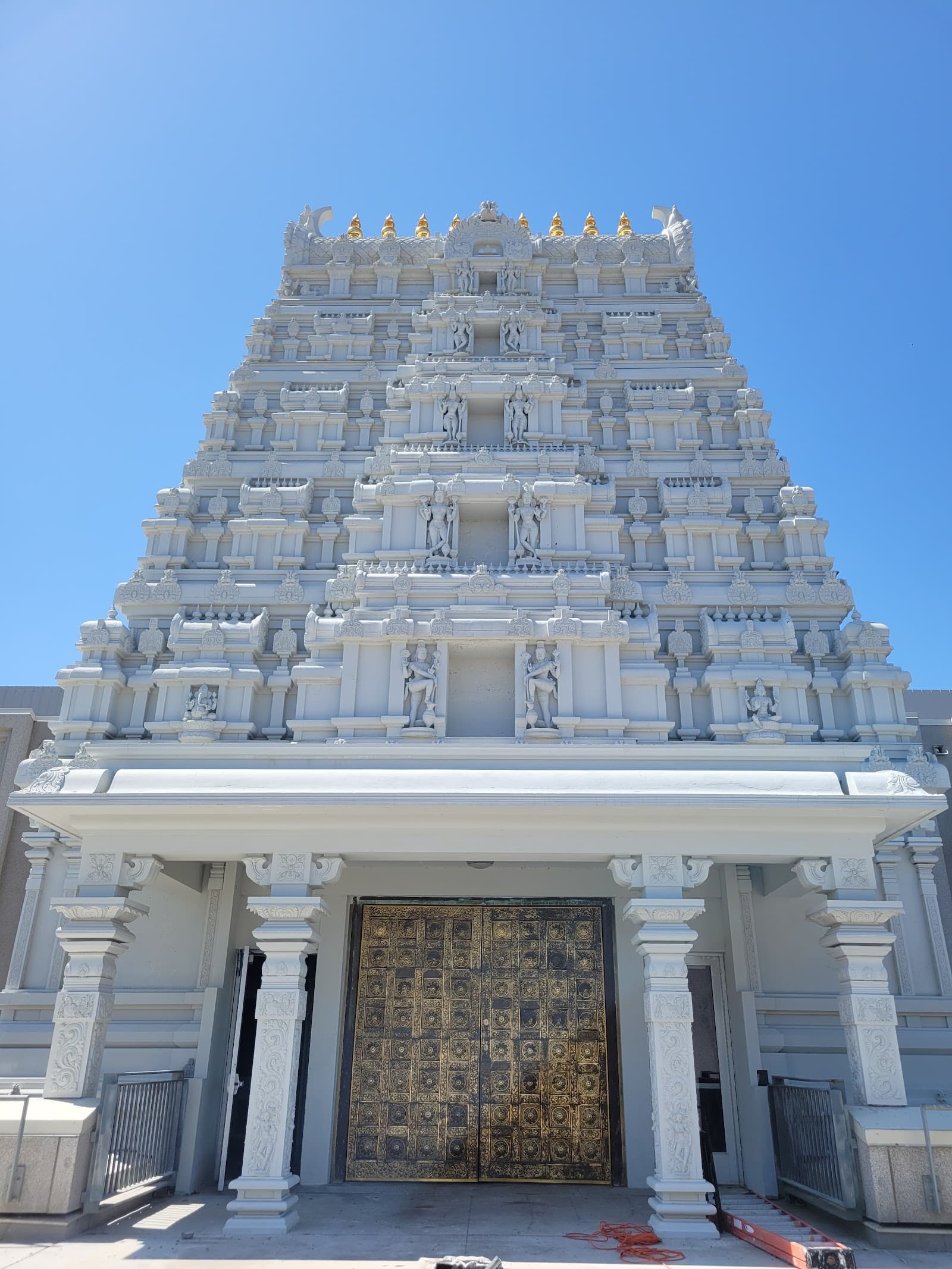
Hindu Temple Minnesota Maple Grove
Hindu Temple of Minnesota in Maple Grove, serving the Twin Cities diaspora, opens at 6:00 AM and runs daily suprabhatam, abhishekams, and evening sahasranama across 21 deities housed in a 43,000-square-foot granite complex with an adjacent cultural center and community hall ([1][2]). Volunteer leads manage parking on the wooded 80-acre campus, deploy shuttle carts, and coordinate shoe room flow during festival surges, while digital queue boards and bilingual signage keep darshan moving smoothly between the main mandapam, navagraha hall, and lakeside meditation trails ([1][3]). Security teams liaise with Maple Grove police, monitor CCTV and access control, and maintain severe-weather protocols attuned to Minnesota winters, including generator-backed heating and snow response plans ([3][5]). Elevators, ramps, heated entry plazas, tactile paths, and loaner wheelchairs maintain barrier-free circulation; assistive listening devices and captioned screens help visitors follow Sanskrit and English liturgy ([1][4]). Custodial crews sanitize wet rooms and brass railings every two hours, inspect hydronic snow-melt loops, and manage humidity to protect granite and stucco finishes, while mechanical staff monitor boilers, ERVs, and humidifiers through the building automation system ([3][5]). The community kitchen operates with dedicated HVAC, grease recovery, and allergen protocols approved by Hennepin County inspectors. Preventive maintenance dashboards track life-safety equipment, accessibility checks, and priest schedules; 2025 city inspections cleared the campus with no violations, affirming full operational readiness for worship, education, and civic programs ([3][4][5]).
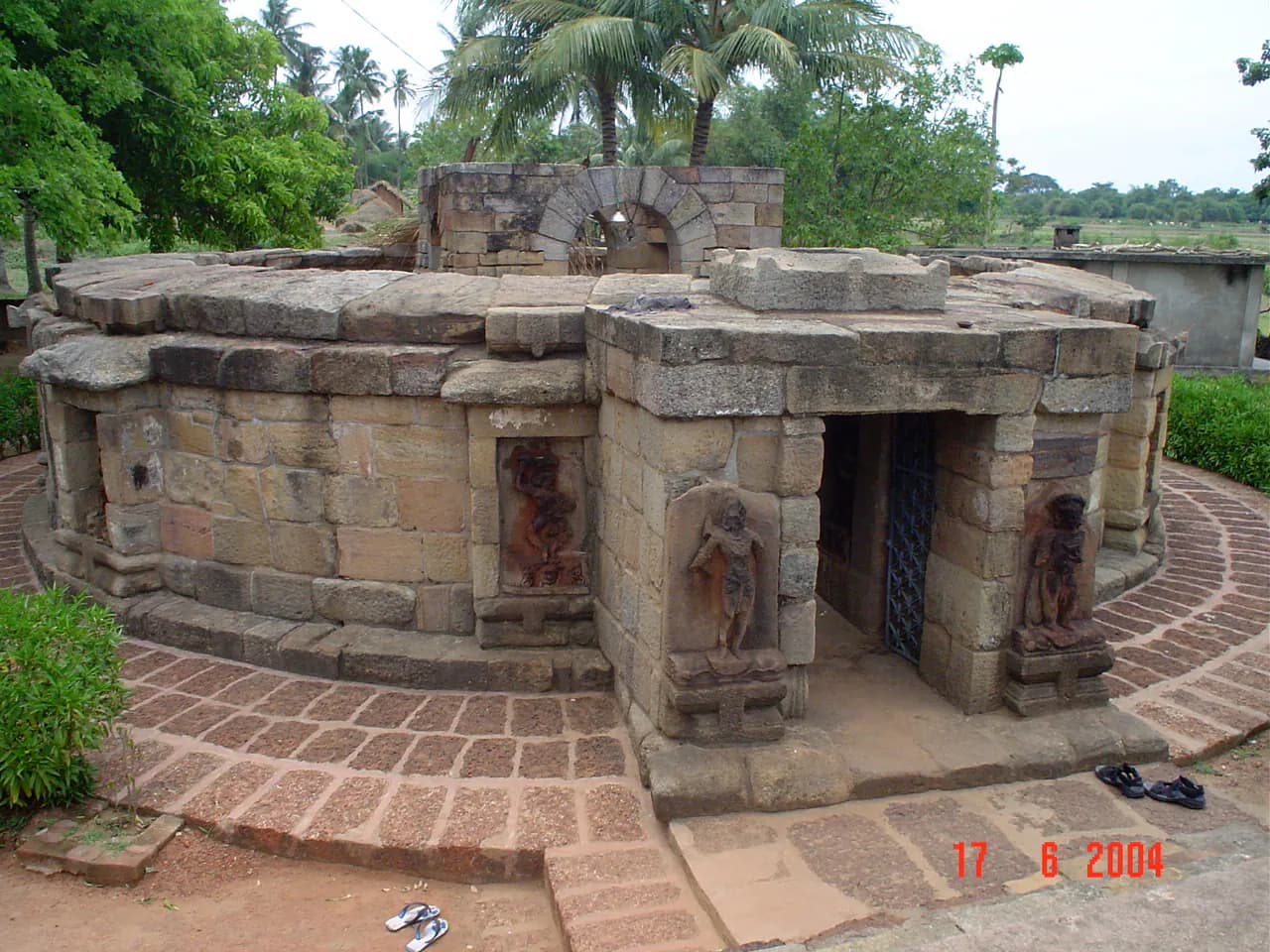
Chausath Yogini Temple Bhubaneswar
Ascending the weathered steps of the Chausath Yogini Temple in Hirapur, one encounters a mesmerizing relic of 9th-century Odisha ([1][2]). Unlike conventional closed-chamber temples, this monument, erected during the Eastern Ganga period, showcases a distinctive circular hypaethral (open-air) design ([1][2]). Queen Hiradevi of the Brahma dynasty commissioned this unique temple around 850 CE ([3]). Khondalite, laterite and sandstone were the primary materials for its construction ([4]). This temple is dedicated to the sixty-four Yoginis, considered attendants of Goddess Durga ([4]). Intricate carvings embellish the inner circular wall, portraying the Yoginis, each distinguished by unique expressions and poses ([1]). During the Eastern Ganga period, temple architecture in the Kalinga style reached its zenith, and this temple exemplifies that ([2][5]). This open-air design facilitates the integration of celestial elements into worship, aligning with tantric philosophies prevalent during its construction ([3][4]). The alignment with the cardinal directions also reflects principles found in the Vastu Shastras. Within the courtyard, a small shrine dedicated to Lord Shiva represents the cosmic equilibrium of Shakti and Shiva ([5]). Stone platforms and foundations demonstrate the temple's careful integration with the natural terrain ([1][2]). The Chausath Yogini Temple embodies the rich spiritual and artistic heritage of India ([3]). The temple's circular plan may also reflect the Mandala (cosmic diagram), resonating with deeper philosophical concepts ([4][5]). It serves as a potent symbol of India's multifaceted cultural legacy ([4][5]). Granite and sandstone blocks, meticulously carved, form the core structure, exhibiting the exceptional craftsmanship of the era ([1][2]).
Hanuman Tok Gangtok
The crisp mountain air, tinged with the scent of juniper and rhododendron, whipped around me as I stepped onto the platform of Hanuman Tok, a Hindu temple perched 3,500 feet above Gangtok. The panoramic vista that unfolded before me was simply breathtaking. The Kanchenjunga massif, its snow-capped peaks gleaming under the midday sun, dominated the horizon, a majestic backdrop to the vibrant prayer flags fluttering in the wind. This wasn't just a temple; it was a sanctuary woven into the very fabric of the Himalayan landscape. Hanuman Tok, meaning "Hanuman's shoulder," derives its name from a local legend. It is believed that Lord Hanuman, the revered monkey god of Hindu mythology, rested here momentarily while carrying the Sanjeevani herb from the Himalayas to Lanka to revive Lakshmana, as recounted in the epic Ramayana. This narrative imbues the site with a palpable sense of sacredness, a feeling amplified by the constant hum of chanting emanating from the temple. The temple itself is a relatively modern structure, built by the Indian Army, who also maintain the site. Its architecture, while not particularly ancient, reflects a blend of traditional Sikkimese and typical Hindu temple design. The vibrant colours – reds, yellows, and greens – stand out against the muted greens and browns of the surrounding hills. The sloping roof, reminiscent of Sikkimese architecture, is adorned with intricate carvings and colourful prayer flags. Inside, the main deity is Lord Hanuman, depicted in his familiar pose, a mace in hand, radiating strength and devotion. Unlike the elaborate ornamentation found in many temples of Uttar Pradesh, the interior here is relatively simple, the focus remaining firmly on the deity and the breathtaking views it commands. As I circumambulated the temple, turning the prayer wheels inscribed with mantras, I observed the diverse group of devotees. Sikkim, with its unique blend of Hinduism and Buddhism, fosters a spirit of religious harmony that is truly inspiring. I saw local Sikkimese families alongside tourists from mainland India, all united in their reverence for this sacred spot. Conversations in Nepali, Hindi, and English mingled with the rhythmic chanting, creating a vibrant tapestry of sound and faith. My upbringing in Uttar Pradesh, a land steeped in Hindu mythology and tradition, allowed me to connect with Hanuman Tok on a deeper level. While the architectural style differed from the grand temples of Varanasi or Ayodhya, the underlying devotion and reverence felt familiar. The stories of Lord Hanuman, ingrained in my consciousness from childhood, resonated even more powerfully against this majestic Himalayan backdrop. The experience wasn't just about the temple itself, but also about the journey to reach it. The winding road leading up to Hanuman Tok offered glimpses of the verdant valleys and terraced farms below, showcasing the harmonious co-existence of nature and human life. The vibrant prayer flags strung along the route, each one carrying a silent prayer to the wind, added to the spiritual ambience. Leaving Hanuman Tok, I carried with me more than just photographs and memories. I carried a sense of peace, a renewed appreciation for the power of faith, and a deeper understanding of how religious narratives intertwine with the landscape to create places of profound significance. The echoes of chanting, the crisp mountain air, and the majestic view of Kanchenjunga will forever remain etched in my mind, a testament to the spiritual richness of this Himalayan sanctuary.
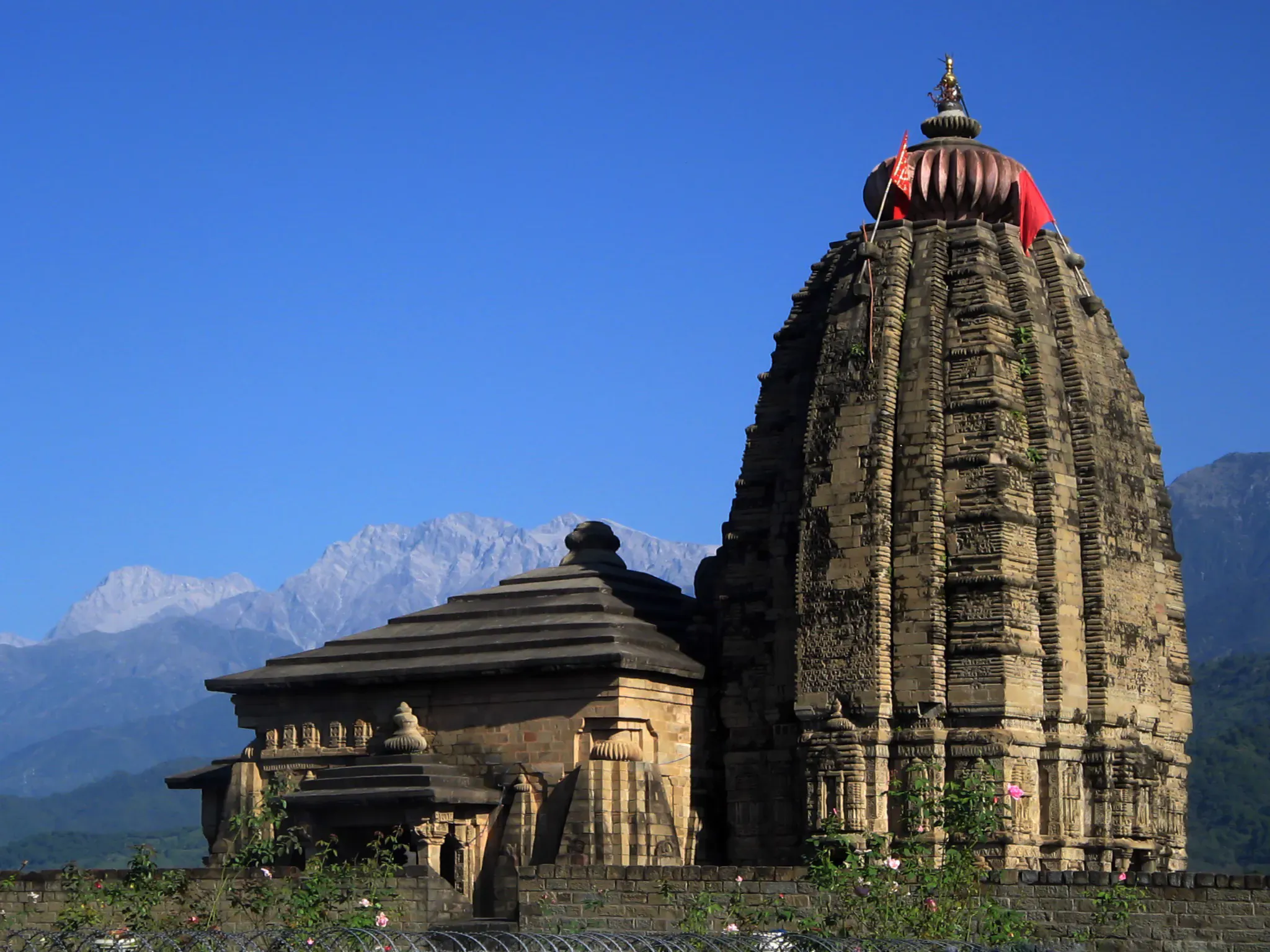
Baijnath Temple Kangra
Nestled in the Kangra Valley, the Baijnath Temple, constructed in 804 CE during the 9th century, stands as a Nagara-style Hindu temple dedicated to Lord Shiva as Vaidyanath, the 'Lord of physicians' ([3][4]). Commissioned during the Gurjara-Pratihara period, the temple's shikhara (spire) creates a striking silhouette against the Dhauladhars ([1][2]). A flight of stone steps leads to an arched doorway, subtly adorned with carvings ([5]). During the Gurjara-Pratihara period, temple architecture flourished, and this temple exemplifies the era's artistry ([1][5]). Within the Mandapa (pillared hall), latticed stone windows filter sunlight, illuminating pillars adorned with depictions of Shiva ([1][3]). The Garbhagriha (sanctum) houses the lingam, the focal point for devotees and their prayers ([2]). Miniature shikharas embellish the main structure, adding a unique visual element to the temple's design ([1][3]). Stone platforms and foundations demonstrate the temple's enduring construction. Circumambulating the temple reveals the curvilinear shikhara, distinct from Gujarati styles, echoing the steadfast mountains ([4][5]). The use of stone, wood, mortar, and slate showcases the regional materials employed in its construction ([1][2]). Its setting amidst the Himalayas enhances the temple's spiritual ambiance ([2]). The backdrop of snow-capped peaks and the Binwa River amplifies the sacred experience ([3][4]). Baijnath Temple embodies the lasting legacy of Indian temple architecture, seamlessly connecting human artistry with the beauty of the natural world ([1][5]). This sacred space continues to inspire reverence and awe, a testament to the architectural and spiritual heritage of India.
Shri Shiva Vishnu Temple Carrum Downs
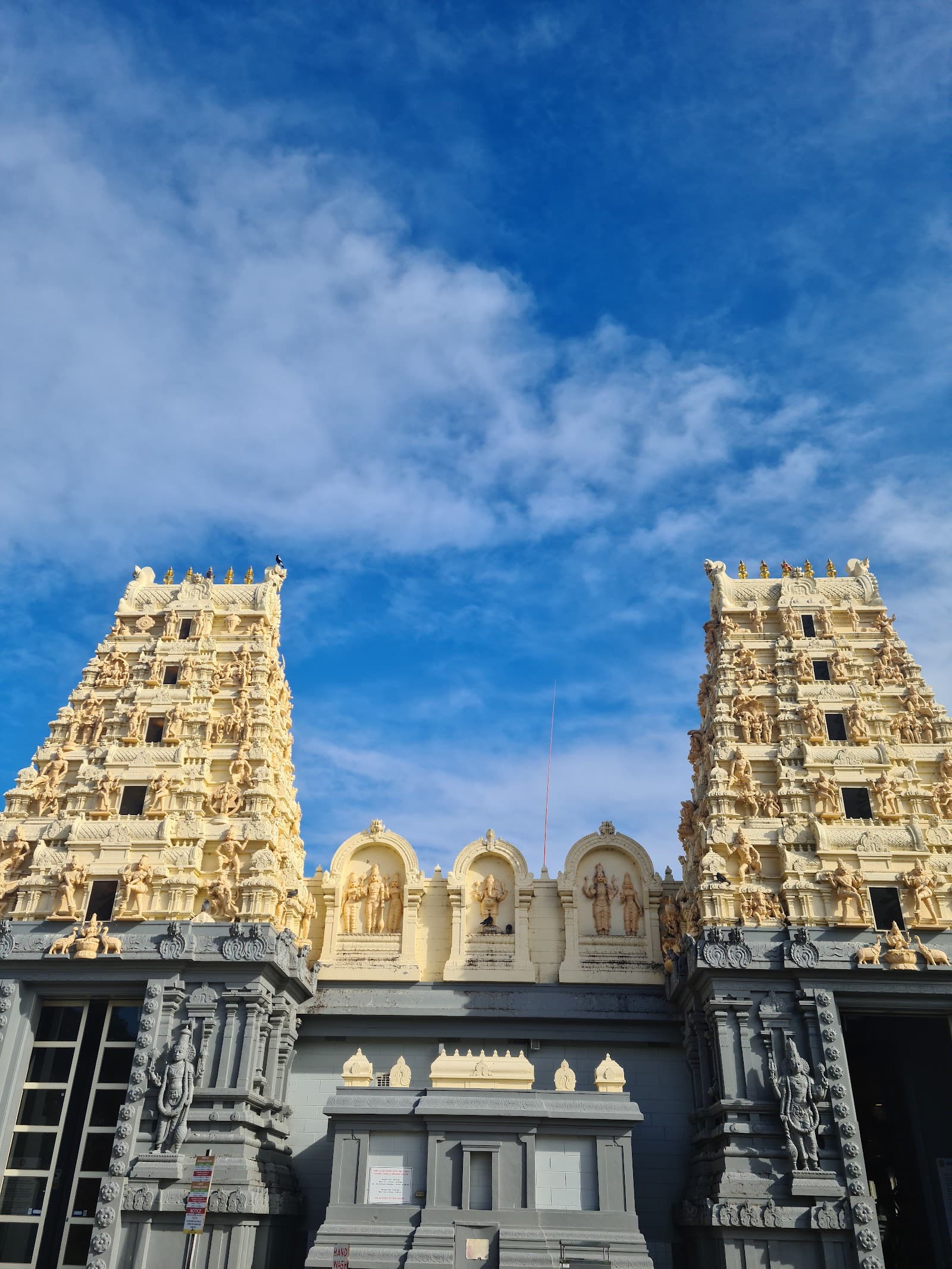
Shri Shiva Vishnu Temple Carrum Downs is dedicated to Lord Shiva and Lord Vishnu and anchors Carrum Downs, Victoria, as the largest Hindu complex in the southern hemisphere ([1][2]). Daily darshan opens 7:30 AM-12:00 PM and 4:00 PM-9:00 PM, with Saturday hours extending to 10:00 PM as dual queues marshal visitors toward the Shiva and Vishnu sanctums without crossover ([1]). A volunteer command post in the Yajna hall tracks CCTV and real-time crowd counts, dispatching ushers to the 108-pillared mandapa when coach tours arrive from interstate ([1][3]). The community centre seats 1,000 in banquet configuration, where stainless trolleys glide along polished concrete aisles and induction woks maintain prasadam throughput while keeping the hall free of combustion fumes ([1][4]). Tactile maps, contrasting floor nosings, and induction loop audio guide visitors with low vision or hearing loss, complemented by two lifts linking the cultural classrooms to the main prakaram ([3]). Accessible parking bays sit 30 metres from the gopuram and connect via canopy-covered ramps that maintain 1:20 gradients, easing pilgrimage for seniors and wheelchair users ([3]). Signage delivers tri-lingual Tamil-Hindi-English instructions, QR-linked seva booking, and bushfire evacuation diagrams audited annually by Fire Rescue Victoria ([3][5]). Air monitoring sensors in the homa kunda feed a dashboard that alerts priests when particulate loads trigger extraction fans, ensuring ceremonies run without breaching occupational standards ([5]). With cross-trained volunteers, audited hygiene workflows, and resilient visitor routing, the temple stays fully operational for worship, cultural tuition, and civic events throughout the calendar year ([1][2]).
Padmanabhapuram Palace Kanyakumari
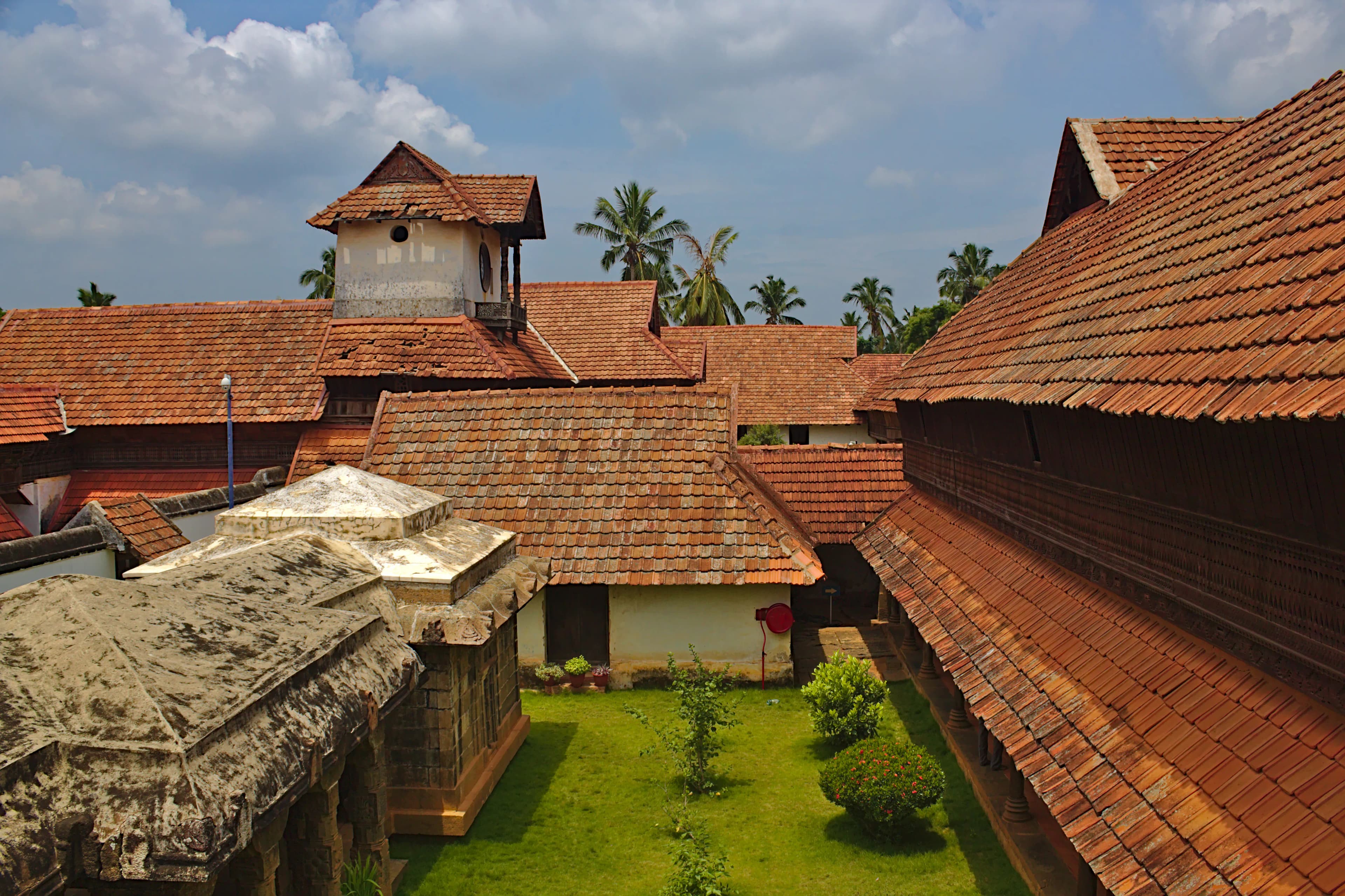
The scent of teakwood hung heavy in the air, a fragrant welcome to the Padmanabhapuram Palace. Stepping through the imposing gateway, I felt transported back in time, not to the Mughal grandeur I'm accustomed to in Uttar Pradesh, but to a distinctly different era, a world of Travancore kings and Nayak artistry. This wasn't the opulence of Agra or the intricate carvings of Fatehpur Sikri, but a more understated, almost austere elegance that spoke volumes about the region's unique history. The palace, a sprawling complex of wooden structures, isn't a single monolithic building but a series of interconnected halls, chambers, and courtyards. Unlike the sandstone and marble of the north, here, wood is king. Intricately carved pillars, polished to a dark sheen, support sloping roofs covered in terracotta tiles. The granite foundation, a stark contrast to the dark wood, anchors the structure, giving it a sense of grounded permanence. I was particularly struck by the clock tower, its European influence a subtle reminder of the trade routes that connected this southern kingdom to the wider world. The 'Thai Kottaram' or the Queen's Palace, a separate structure within the complex, captivated me with its delicate carvings. Floral motifs, scenes from epics, and intricate geometric patterns adorned every surface. The central courtyard, open to the sky, allowed light to filter in, illuminating the polished wooden floors and highlighting the intricate details of the carvings. It was easy to imagine the queen holding court here, surrounded by her attendants. One of the most striking features of the palace is the 'Mantrasala' or the Council Chamber. The sheer size of the single granite slab that forms the floor is awe-inspiring. The smooth, polished surface, cool to the touch even on a warm day, reflected the light filtering in through the intricately carved windows. I could almost hear the echoes of past deliberations, the whispers of advisors, and the pronouncements of kings. The palace museum, housed within the complex, provided a fascinating glimpse into the lives of the Travancore royalty. From ornate palanquins and weaponry to delicate ivory carvings and ancient manuscripts, the collection showcased the rich cultural heritage of the region. I was particularly intrigued by the collection of ancient coins, a testament to the kingdom's extensive trade networks. These weren't just objects; they were tangible links to a bygone era, whispering stories of maritime voyages, royal decrees, and the ebb and flow of power. As I walked through the dimly lit corridors, the creaking of the wooden floors under my feet added to the sense of history. The air was thick with the scent of age, a blend of wood, spices, and something indefinable, something that spoke of centuries of human presence. The small, strategically placed windows offered glimpses of the lush greenery outside, a reminder of the natural beauty that surrounds the palace. The contrast with the Mughal architecture I’m so familiar with was stark. Where the Mughals favoured grandeur and symmetry, the architecture here embraced a more organic, almost vernacular style. The emphasis on functionality, the use of local materials, and the integration with the natural surroundings spoke of a different aesthetic sensibility, one deeply rooted in the local environment and culture. Leaving the Padmanabhapuram Palace, I felt a profound sense of connection to a history far removed from my own. It was a humbling experience, a reminder that India's cultural tapestry is woven from countless threads, each unique and vibrant. The palace isn't just a collection of buildings; it's a living testament to the ingenuity, artistry, and resilience of the people who built it and called it home. It’s a must-see for anyone seeking to understand the rich diversity of Indian architecture and history.
Bhadrakali Temple Kurukshetra
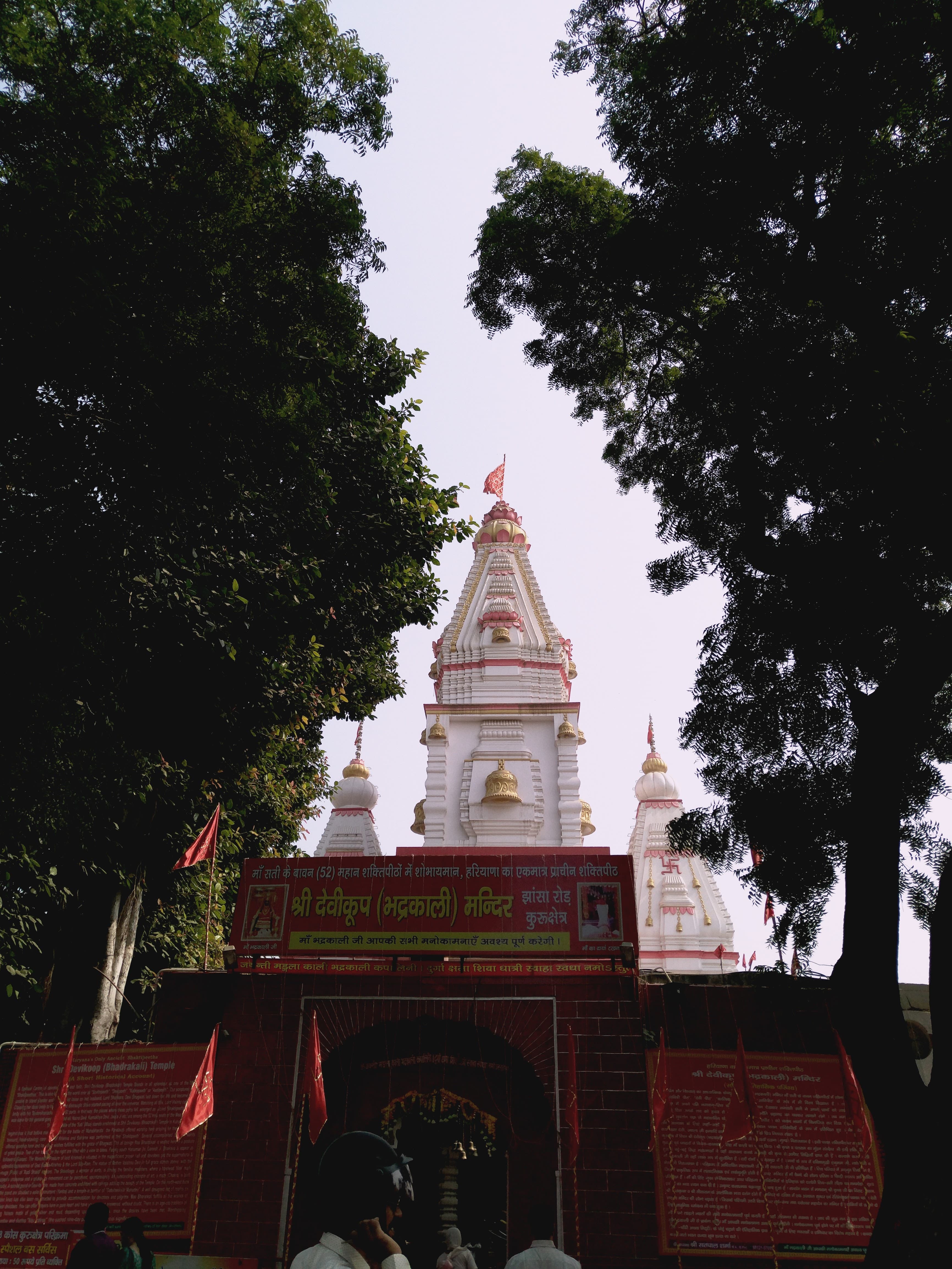
Amidst the sacred land of Kurukshetra, Haryana, the Bhadrakali Temple emerges as a significant example of North Indian temple architecture ([1]). Commissioned in 1739 CE by the Maratha ruler Baji Rao I, this sacred site reflects the patronage of the Maratha Empire in North India ([2]). Its Nagara-style Shikhara (spire) distinguishes it, a testament to the architectural traditions of the Gurjara-Pratihara period ([3][4]). Stone and brick form the primary building materials, reflecting construction practices common to the era ([5]). Intricate carvings embellish the temple walls, depicting scenes from Hindu epics such as the Mahabharata and portraying various deities, echoing the artistic expressions of the time ([1][2]). These carvings offer insights into the region's rich cultural heritage and religious beliefs ([3]). The temple's design aligns with principles outlined in ancient texts like the *Manasara Shilpa Shastra*, which discusses temple construction and iconography, although specific chapter references are currently unavailable ([4]). Within the Garbhagriha (sanctum), Goddess Bhadrakali's idol inspires reverence, embodying divine feminine power or *Shakti* ([5]). A sacred Kunda (pond) complements the temple, its waters considered purifying and integral to Hindu rituals ([1]). Observing the temple rituals reveals a blend of regional traditions, with unique chants and offerings that highlight India's diverse spiritual landscape ([2][3]). The temple's architecture, while distinct in its Nagara style, creates a sacred space, fostering a connection between devotees and the divine, thereby continuing the enduring legacy of Indian architectural and spiritual heritage ([4][5]).
Mehandipur Balaji Temple Dausa
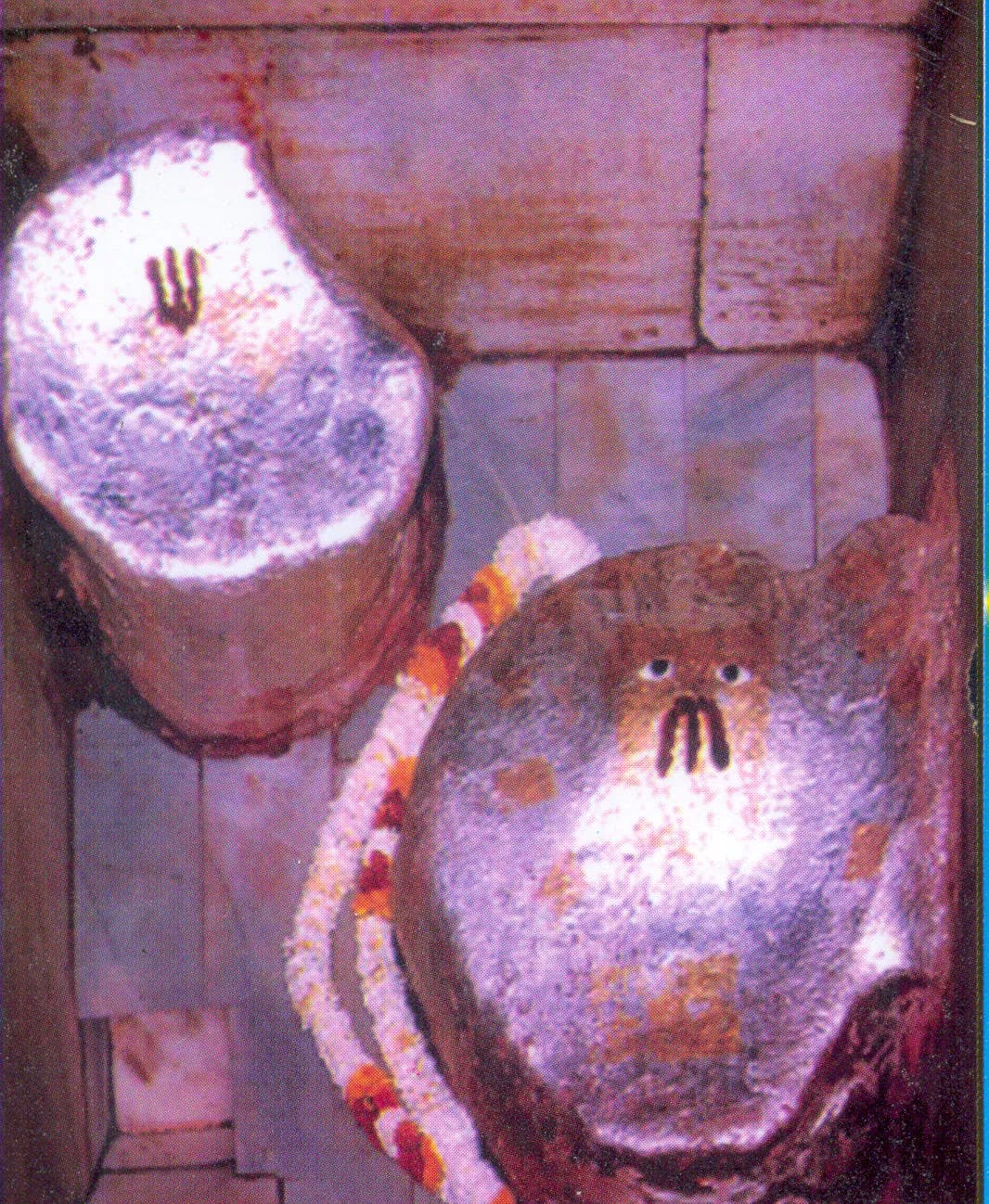
The air crackled, not with electricity, but with a palpable energy, a blend of fear and fervent hope. This was my immediate impression of Mehandipur Balaji Temple, nestled amidst the arid Aravalli hills of Rajasthan. Having explored countless serene temples across Uttar Pradesh, the sheer intensity of this place struck me as profoundly different. It wasn't the tranquility that usually permeates sacred spaces; it was a raw, almost visceral spirituality, bordering on the chaotic. The temple complex itself is relatively modest in size, a network of courtyards and interconnected shrines dedicated to Lord Hanuman, known here as Balaji, Pret Raj (King of Spirits), and Bhairav. The architecture is simple, functional rather than ornate. Unlike the sandstone grandeur of many Rajasthani temples, Mehandipur Balaji is predominantly constructed from plain stone and concrete, perhaps reflecting the focus on immediate spiritual relief rather than aesthetic embellishment. The walls, however, are a fascinating tapestry of vibrant saffron, layered over time by devotees marking their presence and prayers. What truly sets Mehandipur Balaji apart is its reputation as a centre for exorcism and the treatment of mental illnesses. As I moved through the temple, I witnessed scenes unlike anything I'd encountered before. People, their faces etched with desperation and hope, were chained to pillars, their bodies swaying rhythmically as they chanted prayers. Others were being subjected to vigorous "healing" rituals, involving forceful pronouncements and the application of sacred ash. The air was thick with the scent of incense and the murmur of incessant chanting, punctuated by sudden cries and wails. I observed a young woman, her eyes wide with terror, being held down by family members while a priest performed a ritual. It was a disturbing sight, raising complex questions about faith, mental health, and the boundaries of traditional healing practices. While the temple authorities claim remarkable success stories, the methods employed seemed harsh, even brutal, to my outsider's perspective. The line between faith and superstition blurred before my eyes. The main shrine dedicated to Balaji is a small, unassuming chamber. The deity is adorned with a bright orange sindoor paste, and the constant stream of devotees offering prayers creates a palpable sense of devotion. However, even here, the atmosphere is charged with an unusual intensity. The fervent prayers, the desperate pleas for relief, and the occasional outburst from someone seemingly possessed created a sensory overload. Beyond the main shrine, I explored the smaller temples dedicated to Pret Raj and Bhairav. These spaces were even more intense, with a palpable sense of fear hanging in the air. The rituals performed here were more esoteric, involving offerings of food and prayers to appease malevolent spirits. I witnessed individuals being "treated" for alleged possession, their bodies contorting and their voices changing as they purportedly channeled spirits. My visit to Mehandipur Balaji was a deeply unsettling yet fascinating experience. It offered a glimpse into a world where faith and superstition intertwine, where desperation drives people to seek solace in ancient rituals. While the efficacy of these practices remains debatable, the sheer intensity of belief and the palpable energy of the place are undeniable. It is a stark reminder of the complex relationship between faith, healing, and the human condition, a subject that continues to resonate long after leaving the temple's charged atmosphere.
Quick Links
Plan Your Heritage Journey
Get personalized recommendations and detailed visitor guides