Has Inheritage Foundation supported you today?
Your contribution helps preserve India's ancient temples, languages, and cultural heritage. Every rupee makes a difference.
Secure payment • Instant 80G certificate

Jwala Ji Temple Kangra
The air in Kangra Valley hummed with a palpable energy, a blend of crisp mountain air and the fervent devotion that permeated the atmosphere surrounding the Jwala Ji Temple. Nestled amidst the lower Himalayas, this ancient shrine dedicated to the Goddess Jwala Mukhi, the manifestation of eternal flame, is unlike any other I’ve encountered in my journey across India's UNESCO sites. There are no idols here, no sculpted deities. The object of veneration is the nine eternal flames that flicker from fissures in the rock, believed to be manifestations of the Goddess herself. The temple complex, while not sprawling, possesses a distinct charm. The dominant architectural style is Dogra, with intricate carvings adorning the silver-plated doors, a gift from the Maharaja Ranjit Singh, and the ornate mandap, the main prayer hall. Multi-tiered sloping roofs, typical of the region, rise above the structure, adding to its visual appeal. The courtyard, bustling with pilgrims, resonates with the rhythmic clang of bells and the chanting of mantras. The scent of incense hangs heavy in the air, a fragrant tapestry woven with the hopes and prayers of the devotees. My first encounter with the flames was a moment etched in memory. Housed within small depressions in the rock, they dance and flicker with an almost hypnotic quality. Each flame has a name – Mahakali, Annapurna, Chandi, Hinglaj, Vidhya Basni, Sarvamangala, Ambika, Anjana, and Maha Lakshmi – each representing a different aspect of the divine feminine. The flames are fueled by natural gas seeping from the earth, a geological phenomenon that adds to the mystique and reverence surrounding the site. The absence of any discernible fuel source only amplifies the belief in their divine origin. What struck me most was the palpable faith of the pilgrims. Their faces, etched with devotion, reflected a deep connection to the Goddess. From hushed whispers to fervent prayers, the atmosphere was charged with spiritual energy. I witnessed people from all walks of life, from the elderly leaning on canes to young children clinging to their parents, offering their prayers and seeking blessings. The temple serves as a powerful reminder of the enduring power of faith, a testament to the human need to connect with something larger than oneself. Beyond the main shrine, the temple complex houses several smaller shrines dedicated to other deities. I spent some time exploring these, observing the intricate details of their architecture and the unique rituals associated with each. The surrounding landscape, with its verdant hills and snow-capped peaks in the distance, added to the serene ambiance. The panoramic view from the temple courtyard is breathtaking, offering a glimpse into the natural beauty that cradles this sacred site. One of the most intriguing aspects of Jwala Ji Temple is its history, shrouded in legends and folklore. Accounts of its origins vary, with some tracing it back to the Mahabharata, while others attribute its discovery to the Mughal Emperor Akbar. The temple has witnessed the rise and fall of empires, withstanding the test of time and continuing to serve as a beacon of faith for millions. This historical depth adds another layer to the experience, making it not just a visit to a temple, but a journey through time. As I descended from the temple, the chants and the scent of incense gradually faded, but the memory of the dancing flames and the palpable devotion remained. Jwala Ji Temple is more than just a UNESCO World Heritage Site; it's a living testament to the power of faith, a place where the divine and the earthly converge, leaving an indelible mark on the soul of every visitor. It's a place I won't soon forget, a highlight of my exploration of India's rich and diverse heritage.

Shantadurga Temple Kavlem
The humid Goan air, thick with the scent of incense and marigolds, clung to me as I ascended the sweeping laterite steps leading to the Shri Shantadurga Temple in Kavlem. Having spent years immersed in the sandstone grandeur of Rajasthan's forts and palaces, I was curious to see how this Goan temple, dedicated to the Goddess of Peace, would compare. The difference was immediate and striking – a shift from the arid, imposing structures of my home state to a serene, almost ethereal white edifice nestled amidst lush greenery. The temple complex, a sprawling expanse enclosed by high walls, felt like a world apart from the bustling activity just beyond its gates. A large, rectangular water tank, or *pushkarini*, lay before the main temple, its still surface reflecting the temple’s pristine facade. This element, so rare in Rajasthan’s desert landscape, immediately established a sense of tranquility. The temple itself, a harmonious blend of Indo-Portuguese architectural styles, stood as a testament to Goa's rich and layered history. The whitewashed walls, a stark contrast to the vibrant colours I’m accustomed to, exuded a sense of calm purity. The pyramidal roof, tiled in the distinctive terracotta style common in Goa, was crowned with a simple yet elegant golden *kalash*. Stepping inside the main prayer hall, or *sabhamandap*, I was struck by the relative simplicity of the interior. Unlike the ornately carved interiors of Rajasthan's temples, the focus here was on the deity. The silver palanquin of Shri Shantadurga, adorned with fresh flowers, held centre stage. The air was thick with the murmur of prayers and the rhythmic clang of bells, creating an atmosphere of quiet devotion. Intriguingly, the temple's pillars, while lacking the intricate carvings of Rajasthani structures, displayed a unique blend of styles. I noticed subtle European influences in the form of decorative motifs, a testament to the Portuguese presence in Goa. These details, though understated, spoke volumes about the cultural exchange that shaped this region. Moving beyond the main temple, I explored the surrounding complex. The smaller shrines dedicated to other deities, the sprawling gardens, and the old *deepstambha* (lamp tower) all added to the temple's serene atmosphere. The *deepstambha*, in particular, caught my attention. While Rajasthan boasts towering *deepstambhas* adorned with intricate sculptures, this one was more modest in size, yet equally evocative. Its simple, elegant design, illuminated by flickering oil lamps, created a captivating play of light and shadow. One aspect that truly fascinated me was the temple’s location. Unlike many Rajasthani temples perched atop hills or nestled within fortified cities, Shri Shantadurga Temple is situated on a plateau surrounded by verdant rice paddies. This setting, so different from the rugged landscapes I’m familiar with, contributed to the temple’s peaceful aura. The gentle rustling of palm trees and the distant calls of birds replaced the desert winds, creating a symphony of nature that enhanced the spiritual experience. As I descended the steps, leaving the temple complex behind, I couldn't help but reflect on the contrasts I had witnessed. The Shri Shantadurga Temple, with its serene white facade, tranquil setting, and subtle blend of architectural styles, offered a unique perspective on temple architecture and worship. It was a refreshing departure from the grandeur and opulence of Rajasthan's temples, a testament to the diversity and richness of India's cultural tapestry. The experience underscored the fact that spirituality can find expression in myriad forms, each beautiful and profound in its own way.
Umaid Bhawan Palace Jodhpur
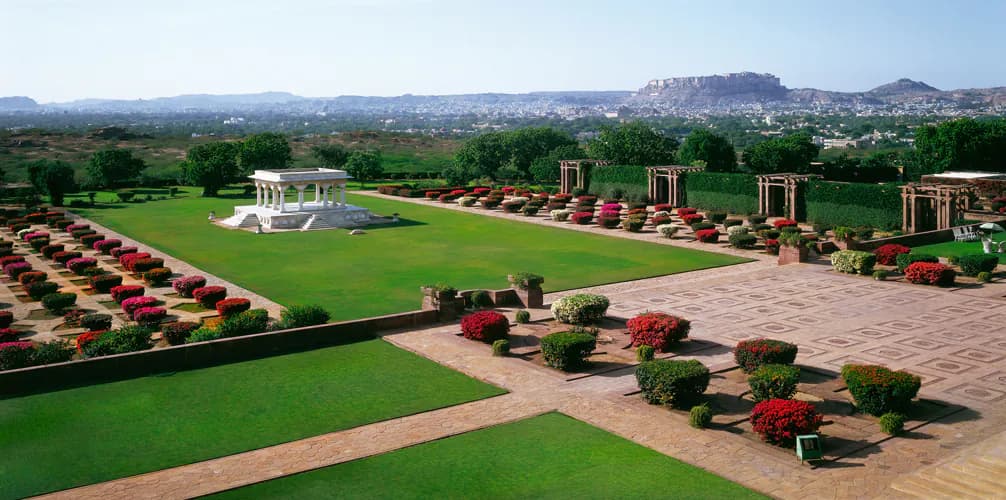
The imposing sandstone edifice of Umaid Bhawan Palace, perched atop Chittar Hill overlooking Jodhpur's blue-washed expanse, is a breathtaking spectacle. As a South Indian steeped in the Dravidian architectural idiom, I was immediately struck by the distinct shift in style. Here, the intricacies of granite carvings and towering gopurams I was accustomed to were replaced by the sweeping grandeur of Rajput and Art Deco influences. The sheer scale of the palace, a harmonious blend of Indo-Saracenic, Classical Revival, and Western Art Deco styles, was truly awe-inspiring. The palace's warm, honey-coloured sandstone, quarried locally, glowed in the afternoon sun. The intricate latticework jalis, a feature I recognized from Mughal architecture, offered glimpses of the meticulously manicured gardens below while providing shade and ventilation – a practical solution elegantly executed. Unlike the vibrant colours often associated with Rajasthani architecture, Umaid Bhawan exuded a sense of restrained opulence. The dominant sandstone was offset by polished marble flooring and subtle accents of black granite, creating a visual harmony that was both regal and inviting. Stepping inside, the central dome, a masterpiece of Art Deco design, captivated my attention. Its geometric patterns and soaring height created a sense of grandeur that rivalled the vast courtyards of South Indian temples. The use of stained glass, a Western architectural element, added a splash of colour, filtering the sunlight and casting kaleidoscopic patterns on the marble floors. The interior spaces seamlessly blended Indian and European aesthetics. Intricate murals depicting scenes from Hindu epics adorned some walls, while others showcased Art Deco motifs, a testament to the Maharaja's appreciation for both traditional and contemporary art forms. The Durbar Hall, with its gilded furniture and imposing portraits of the Jodhpur royal family, offered a glimpse into the lavish lifestyle of the Maharajas. The intricate detailing on the wooden furniture, reminiscent of the intricate woodwork found in Chettinad mansions back home, highlighted the skilled craftsmanship prevalent in both regions, albeit expressed through different mediums. The throne room, with its ornate silver chairs and intricate chandeliers, exuded an air of regal authority. Exploring the museum wing, housed within a section of the palace, provided valuable context to the building's history and the vision of Maharaja Umaid Singh. The collection of vintage cars, clocks, and photographs offered a fascinating glimpse into the Maharaja's personal interests and the era in which the palace was built. Observing the architectural plans and models on display, I could appreciate the meticulous planning and engineering that went into creating this architectural marvel. The integration of modern amenities, such as a swimming pool and a squash court, within the traditional palace structure, showcased a forward-thinking approach that resonated with me. One of the most striking aspects of Umaid Bhawan was its integration with the landscape. The palace, built on a raised platform, seemed to emerge organically from the rocky terrain. The expansive gardens, designed with geometric precision, provided a refreshing contrast to the arid landscape surrounding the palace. The panoramic views of Jodhpur's blue cityscape from the palace ramparts were simply mesmerizing. The "blue city," a sea of indigo houses stretching towards the horizon, offered a visual spectacle that was both unique and unforgettable. Umaid Bhawan Palace is more than just a building; it's a testament to a bygone era, a symbol of the grandeur and vision of the Jodhpur royal family. While vastly different from the temple architecture I was familiar with, the palace's meticulous craftsmanship, attention to detail, and harmonious blend of diverse architectural styles resonated deeply with my appreciation for architectural heritage. It served as a powerful reminder that architectural beauty transcends regional boundaries and stylistic differences, speaking a universal language of artistry and human ingenuity.
Kanipakam Vinayaka Temple Chittoor
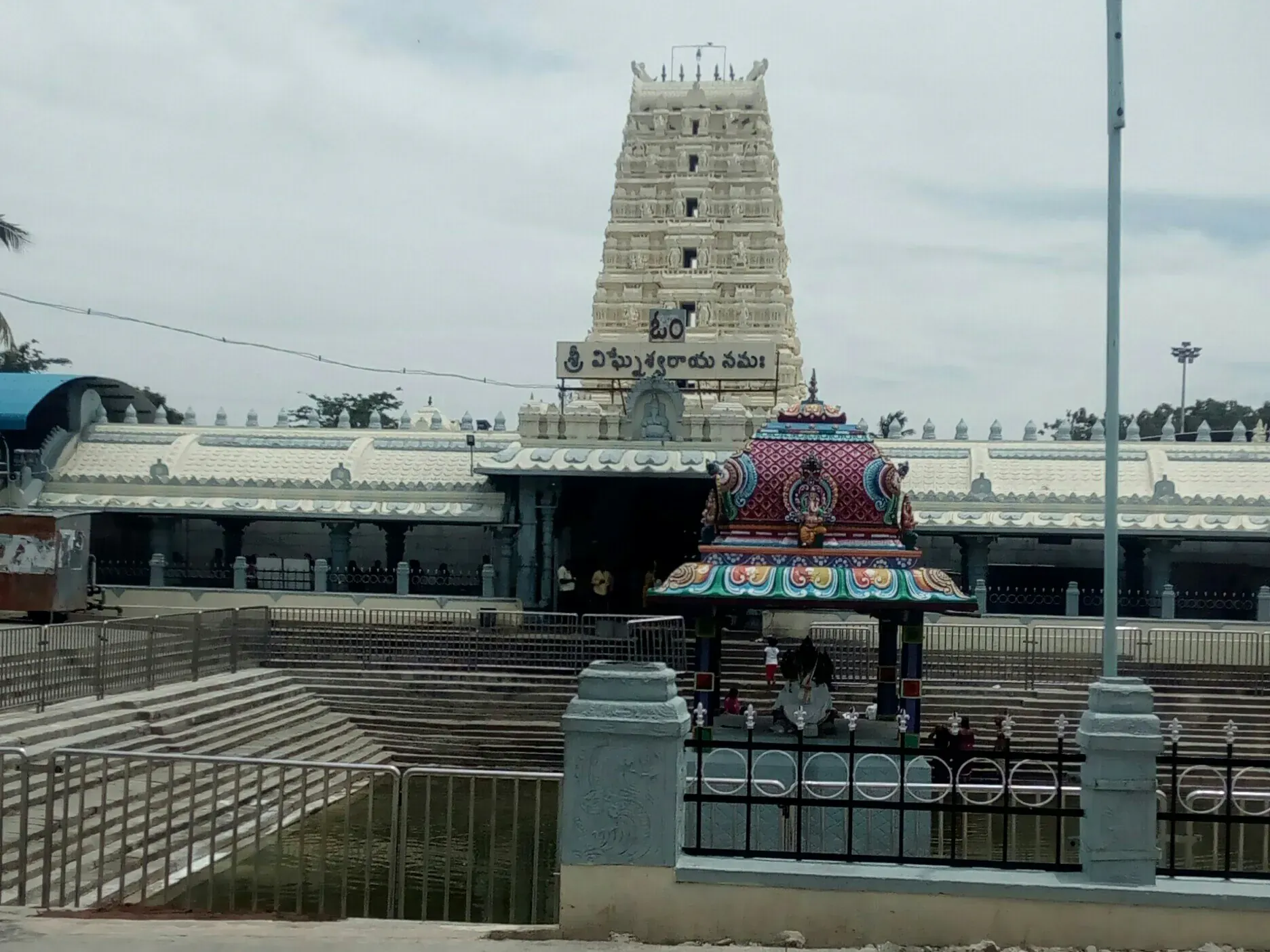
The air hung thick with the scent of incense and jasmine as I stepped through the towering gopuram of the Kanipakam Vinayaka Temple. The vibrant colours, a riot of ochre, saffron, and white, seemed to pulse under the Andhra sun. This wasn't just a temple; it was a living, breathing testament to centuries of devotion, carved into the very granite bedrock of Kanipakam. My journey from Gujarat, a land rich in its own architectural heritage, had brought me to this unique shrine dedicated to Lord Ganesha, the remover of obstacles. Unlike the ornate, intricately carved temples of my home state, Kanipakam exuded a raw, powerful energy. The temple, nestled in the Chittoor district, felt anchored to the earth, its foundations seemingly merging with the surrounding landscape. The main sanctum, a relatively small chamber, houses the Swayambhu idol of Lord Vinayaka. This self-manifested deity, a monolithic block of stone, is the very heart of Kanipakam. The smooth, dark stone, constantly bathed in the warm glow of oil lamps, held a captivating presence. I noticed the unique feature – the idol continues to grow, a phenomenon that adds to the mystique and reverence surrounding it. The silver armour adorning the deity, intricately crafted, only partially covers the growing stone, a visible testament to this ongoing marvel. As I moved through the temple complex, the rhythmic chanting of Vedic hymns filled the air, creating an atmosphere of profound serenity. The architecture, while not as elaborate as some of the Chalukyan or Solanki marvels I've documented in Gujarat, possessed a distinct charm. The Vijayanagara influence was evident in the sturdy pillars and the robust construction. The mandapams, though simpler in design compared to the ornate sabhas of Gujarat temples, provided ample space for devotees to gather and offer their prayers. I observed the intricate carvings adorning the pillars, depicting scenes from Hindu mythology. While weathered by time and the elements, these carvings still retained a remarkable clarity. The narrative panels, though less profuse than the elaborate friezes found in Gujarati temples, effectively conveyed the stories they depicted. The focus here seemed to be less on ornamentation and more on the spiritual experience. The temple tank, or pushkarini, located within the complex, added to the tranquil ambience. The clear water, reflecting the temple walls and the sky above, offered a moment of quiet contemplation. Devotees took a dip in the sacred waters, their faces reflecting a deep sense of devotion. I noticed the stepped ghats leading down to the water, a common feature in temple architecture across India, facilitating access for pilgrims. One striking aspect of Kanipakam was the palpable sense of community. Devotees from all walks of life thronged the temple courtyard, their shared faith uniting them in a common purpose. The atmosphere was charged with a collective energy, a palpable sense of belief that resonated throughout the complex. This sense of shared devotion, I realized, was as much a part of the temple's character as its architecture and history. Leaving the Kanipakam Vinayaka Temple, I carried with me not just images of its unique architecture, but also the profound sense of spiritual energy that permeated the space. It was a powerful reminder that architecture, at its best, serves not just as a visual spectacle, but as a conduit to something deeper, something that connects us to our shared human experience. The growing stone deity, a symbol of unwavering faith, remained etched in my memory, a testament to the enduring power of belief.

Dah Parvatiya Temple Ruins Tezpur
The Dah Parvatiya Temple Ruins, located in Tezpur municipality, Assam, stand as a profound testament to India's millennia-spanning cultural heritage, embodying the continuous tradition of Indian civilization through its ancient architectural remnants. This site, a Protected Monument of National Importance under the Archaeological Survey of India, showcases the sophisticated indigenous architectural styles that flourished in ancient India, particularly during the Gupta period [1]. The most celebrated feature is a meticulously carved stone door frame, which is considered one of the finest and oldest specimens of sculptural art in Assam, dating back to the 5th-6th century CE [2]. The ruins reveal the foundational layout of a temple complex, including the base of a *garbhagriha* (sanctum sanctorum) measuring approximately 8.925 feet (2.720 m) by 8.33 feet (2.54 m) [3]. This sanctum was originally enclosed by a circumambulatory passage, leading to a rectangular colonnaded *mandapa* (hall) and a smaller *mukhamantapa* (front hall) to its east [3]. Within the *garbhagriha*, a stone *kunda* or *vedi* (altar) is present, measuring 2.418 feet (0.737 m) by 2.66 feet (0.81 m) with a depth of 5 inches (130 mm) [3]. The original temple structure was constructed primarily of bricks, with dimensions of approximately 15 inches (380 mm) by 11.5 inches (290 mm) by 2.5 feet (0.76 m), a size characteristic of 5th-century construction, complemented by stone door frames and sills [3]. The surviving stone door frame, measuring 5.25 feet (1.60 m) in height and 1.25 feet (0.38 m) in width, is adorned with high-relief carvings [2]. Its lower parts feature elegant depictions of the river goddesses Ganga and Yamuna, standing with divine halos and holding garlands, flanked by female attendants, one holding a *chamara* (fly-whisk) and another a tray of flowers [2]. The upper sections of the door jambs are intricately carved with four vertical bands: a wavy creeper pattern with leaves, a lotus stem with emerging leaves and flowers supported by pygmy figures, embossed panels of human figures amidst ornamental leaves crowned by a vase, and decorative rosettes [3]. The lintel, spanning 3.75 feet (1.14 m) in length and 1.25 feet (0.38 m) in breadth, is symmetrically decorated with five *Chaitya*-windows [3]. These windows contain figures such as a four-armed male, Lakulisa Shiva flanked by mythical *suparna* figures, a flute player with a hooded snake, and Surya (the Sun god) in a cross-legged posture holding a lotus, attended by figures offering betel leaves and carrying a stick [3]. These carvings exhibit stylistic similarities to Gupta period art found in North India, including sites like Bhumra and Nachha Kuthara, and even show resemblances to Hellenistic art, underscoring the site's deep artistic connections within India's ancient cultural networks [4]. The site is currently maintained by the Archaeological Survey of India, which undertakes conservation efforts to preserve these fragile ruins, ensuring their structural integrity and accessibility for scholarly research and public viewing [5]. The ongoing archaeological findings continue to enrich the understanding of early Indian temple architecture and sculptural traditions. The site is operationally ready for visitors, offering a profound glimpse into India's enduring architectural and artistic legacy.
Mahalaxmi Temple Kolhapur
The Mahalaxmi Temple in Kolhapur, a city steeped in Maratha history, stands as a testament to the enduring power of devotion and the exquisite artistry of the Chalukya period. Bathed in the warm glow of the afternoon sun, the temple, constructed primarily of dark grey basalt, exuded a powerful aura that resonated with the chants emanating from within. As someone deeply immersed in South Indian temple architecture, I was immediately struck by the similarities and differences that presented themselves, creating a fascinating cross-cultural architectural dialogue. The temple's *garbhagriha*, the sanctum sanctorum housing the goddess Mahalaxmi, is the heart of the complex. Unlike the towering *vimanas* that characterize many South Indian temples, the Mahalaxmi Temple's main structure is relatively shorter, with a curvilinear *shikhara* that reminded me of the Kadamba style prevalent in coastal Karnataka. This shikhara, adorned with intricate carvings of deities and mythical creatures, rises above the sanctum, drawing the eye upwards. The basalt stone, while lacking the vibrant hues of granite often used in the south, possesses a quiet dignity, its dark surface reflecting the light in subtle ways. Circumambulating the sanctum, I observed the *mandapa*, or pillared hall, surrounding the *garbhagriha*. Here, the Chalukyan influence was unmistakable. The pillars, though simpler than the ornate pillars of Dravidian architecture, displayed a robust elegance. Many featured intricate carvings of floral motifs and miniature depictions of divine figures, showcasing the skill of the artisans. The open mandapa allowed for a seamless flow of air and light, creating a serene atmosphere conducive to prayer and contemplation. One of the most striking features of the Mahalaxmi Temple is the presence of a *deepmala*, a lamp tower, within the temple complex. While deepmalas are a common feature in South Indian temples, particularly in Tamil Nadu, seeing one integrated so seamlessly into the architecture of a Chalukyan temple was a unique experience. The deepmala, with its multiple tiers for oil lamps, stood as a beacon of light, symbolizing the dispelling of darkness and ignorance. The temple's outer walls are adorned with sculptures of various deities, including Ganesh, Vishnu, and Shiva. These sculptures, while weathered by time, retain a remarkable level of detail. The iconography, while sharing some common ground with South Indian traditions, also displayed distinct regional variations, reflecting the unique cultural milieu of Maharashtra. For instance, the depiction of Mahalaxmi herself, adorned with elaborate jewelry and a serene expression, felt distinctly different from the depictions of Lakshmi I had encountered in Tamil Nadu temples. Beyond the main shrine, the temple complex encompasses several smaller shrines dedicated to other deities. This clustering of shrines, reminiscent of the *koshta devatas* found in South Indian temples, creates a sense of a vibrant spiritual ecosystem, where different deities coexist harmoniously. The presence of a sacred tank within the complex further enhances this sense of spiritual completeness, echoing the importance of water in Hindu rituals. My visit to the Mahalaxmi Temple was more than just a sightseeing experience; it was a journey of architectural discovery. It highlighted the rich tapestry of Indian temple architecture, showcasing the regional variations within a broader shared tradition. The temple stands as a powerful reminder of the enduring legacy of the Chalukyas and the deep-rooted devotion that continues to animate this sacred space. The interplay of architectural styles, the intricate carvings, and the palpable sense of spiritual energy made this a truly unforgettable experience, offering valuable insights into the interconnectedness of India's diverse cultural heritage.
Shree Ayyappa Seva Sangam Temple Durban
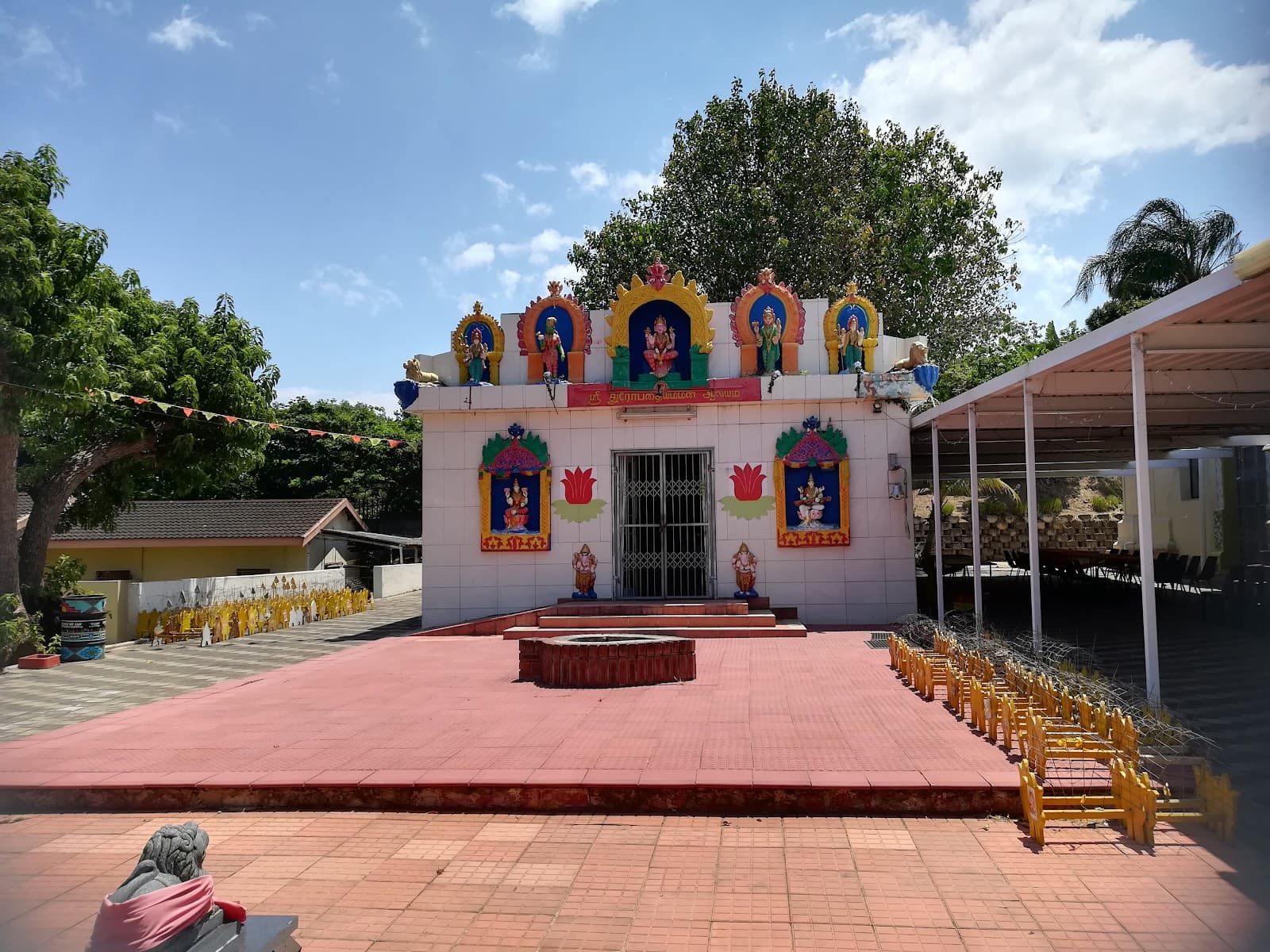
The Shree Ayyappa Seva Sangam Temple, located at 359 Langton Road, Montclair, Durban, KwaZulu-Natal, South Africa, stands as a profound testament to India's millennia-spanning cultural heritage and the continuous tradition of Indic civilization [1] [2]. Dedicated to Lord Ayyappa, a revered deity primarily worshipped in South India, particularly Kerala, this temple embodies ancient indigenous architectural styles, materials, and cultural practices that reflect India's deep historical roots [3] [4]. The temple's design integrates elements of both Kerala Temple architecture and Dravida architecture, showcasing a synthesis of South Indian temple building traditions [1] [5]. Kerala temple architecture, characterized by its unique religious sanctuary design, often features circular or square ground plans, steeply sloping roofs covered with copper sheets or terracotta tiles, and extensive use of timber [5] [2]. These architectural choices are historically adapted to the region's heavy rainfall and tropical climate, emphasizing functionality alongside aesthetic and spiritual principles [2]. The structural elements typically involve a granite plinth (adhisthana), laterite walls, and a superstructure predominantly crafted from wood, adhering to canonical rules of proportionate systems detailed in ancient treatises [5] [4]. The Shree Ayyappa Seva Sangam Temple incorporates these principles, utilizing locally available materials while maintaining the traditional forms [1]. The temple complex is designed according to the Hindu practices of 'Vaastu Shastra' and 'Agama Shastra', ensuring auspicious orientation, spatial harmony, and ritualistic correctness [1]. This adherence to ancient texts underscores the continuity of architectural knowledge passed down through generations [5]. Dravida architectural influences are evident in the temple's overall layout and decorative motifs, which often include intricate carvings and sculptures [3]. While Kerala temples typically feature simpler exteriors, the broader South Indian temple style, from which Dravida architecture evolved, is known for its elaborate gopurams (entrance towers), vimanas (superstructures over the sanctum), and mandapas (pillared halls) [3]. Though the Durban temple may not possess the monumental scale of ancient Dravidian complexes, its design principles and decorative elements draw from this rich tradition, manifesting in detailed iconography and sacred geometry [1]. The temple's sanctum (sreekovil) houses the main deity, Lord Ayyappa, and is surrounded by a circumambulatory path (pradakshina-patha), facilitating traditional devotional practices [3]. The current state of the temple reflects ongoing maintenance and active programming, serving as a vital spiritual and cultural hub for the Malayali and Tamil diaspora in Durban [2]. It offers regular pujas, festivals, and cultural education, ensuring the preservation and transmission of Indic traditions [2]. The site is fully operational and accessible to devotees and visitors, upholding its role as a living heritage site [1].

Chaturdasha Devata Temple Agartala
Stone platforms and foundations demonstrate the Chaturdasha Devata Temple's enduring presence in Tripura, constructed in 1761 CE by the Manikya dynasty ([1][2]). During the Ahom period, temple architecture in the region saw unique adaptations, blending indigenous styles with Nagara influences ([3]). The temple, dedicated to fourteen deities, exemplifies the Nagara Rekha Deul style, characterized by its curvilinear tower and tiered roof ([1]). Intricate carvings adorning the walls display floral motifs and geometric patterns, adding to the temple's aesthetic appeal ([4]). Vastu Shastra principles, the ancient Indian science of architecture, likely influenced the temple's layout and orientation, although specific textual references require further investigation ([5]). The modest scale of the temple offers a contrast to grander structures, yet its laterite brick construction highlights the skill of its artisans ([1][2]). Within the Garbhagriha (Sanctum), the deities are represented by simple stone slabs, fostering an atmosphere of sacredness ([1]). This simplicity stands in contrast to the elaborate iconography found in other temples, emphasizing the spiritual essence of the deities ([1]). The temple's design reflects the architectural preferences of the Manikya dynasty and the regional influences prevalent during its construction ([2]). Fired brick and mud brick construction techniques are evident in the temple's structure, showcasing the traditional building methods employed at the time ([1][2]). The use of lime mortar further strengthened the edifice, ensuring its longevity ([1]). Integrating seamlessly into the community, the Chaturdasha Devata Temple embodies Tripura's cultural heritage and stands as a testament to the region's rich history ([2]).
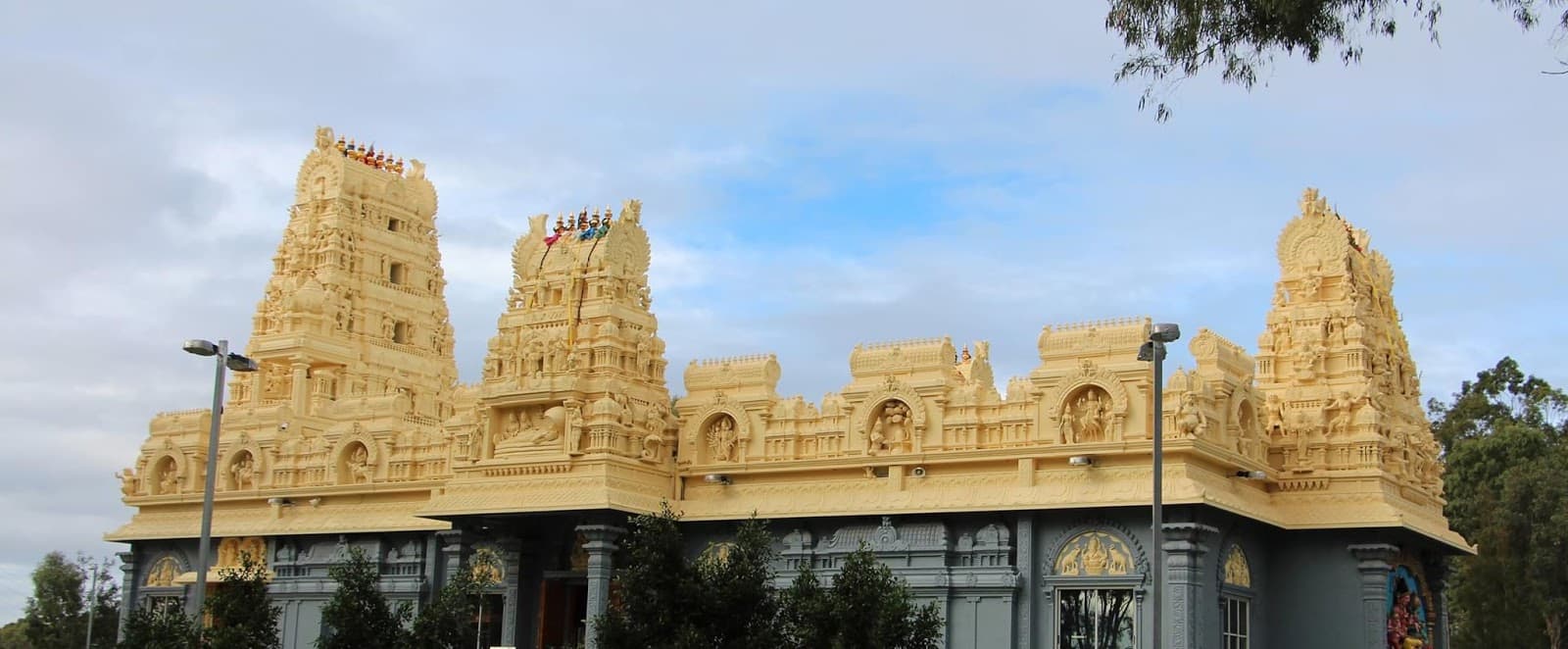
Brisbane Sri Selva Vinayakar Koil South Maclean
Anchoring Logan’s peri-urban corridor, Brisbane Sri Selva Vinayakar Koil South Maclean stands as Queensland’s first traditional Hindu temple dedicated to Lord Ganesha ([1][2]). Established around 1990 CE, this 20th-century temple reflects Dravidian architectural influences adapted to a rural Australian context ([1]). The temple was built by the Hindu Society of Queensland, who also continue to be its patron ([1]). Granite and sandstone blocks, meticulously carved, form the core of the Mandapa (Pillared Hall), while timber posts and corrugated steel roofing provide a functional and aesthetically pleasing structure ([1]). Daily rituals, or darshan, are conducted between 6:30 AM and 12:00 PM, and again from 4:30 PM to 8:30 PM ([1][5]). Special occasions such as Vinayagar Chaturthi, Thai Poosam, and Navaratri extend these hours until 10:00 PM ([1][5]). To manage the flow of devotees, volunteers guide visitors through the granite Mandapa using rope-guided lanes, ensuring a smooth and organized experience ([1][5]). Shuttle buggies are also available to assist elders in navigating the expansive site ([1][5]). Within the annadhanam shed, which can accommodate 300 people, polished concrete floors provide a clean and functional space for communal dining ([1][3]). Modern amenities such as induction woks and commercial chillers support the preparation and storage of prasadam (sacred food), with HACCP checklists ensuring food safety standards are maintained ([1][3]). Portable ramps facilitate the movement of prasadam carts between the kitchen and hall, even during inclement weather ([1][3]). Beyond worship, the temple serves as a cultural hub, hosting dance, music, and language classes in its cultural pavilion ([2]). A meditation pond and vahana sheds are situated along the Logan River flood fringe, with boardwalks and warning signage in place ([2]). Accessibility is a priority, with gravel-stabilized pathways, handrails, tactile signage, and a platform lift near the sanctum ensuring inclusivity ([2][5]). Auslan interpreters are also available during major festivals ([2][5]). Sophisticated drainage systems ensure the temple grounds remain functional, even during heavy rainfall ([3]). Digital signage displays bilingual Tamil-English instructions, weather alerts, and seva schedules, keeping the community informed and engaged ([1][2]). The temple's operations team monitors weather stations, flood gauges, and fire equipment, while the Logan Rural Fire Brigade conducts annual drills on site, ensuring preparedness for any eventuality ([3]). This proactive approach underscores the temple's commitment to community resilience and safety ([1][2]).
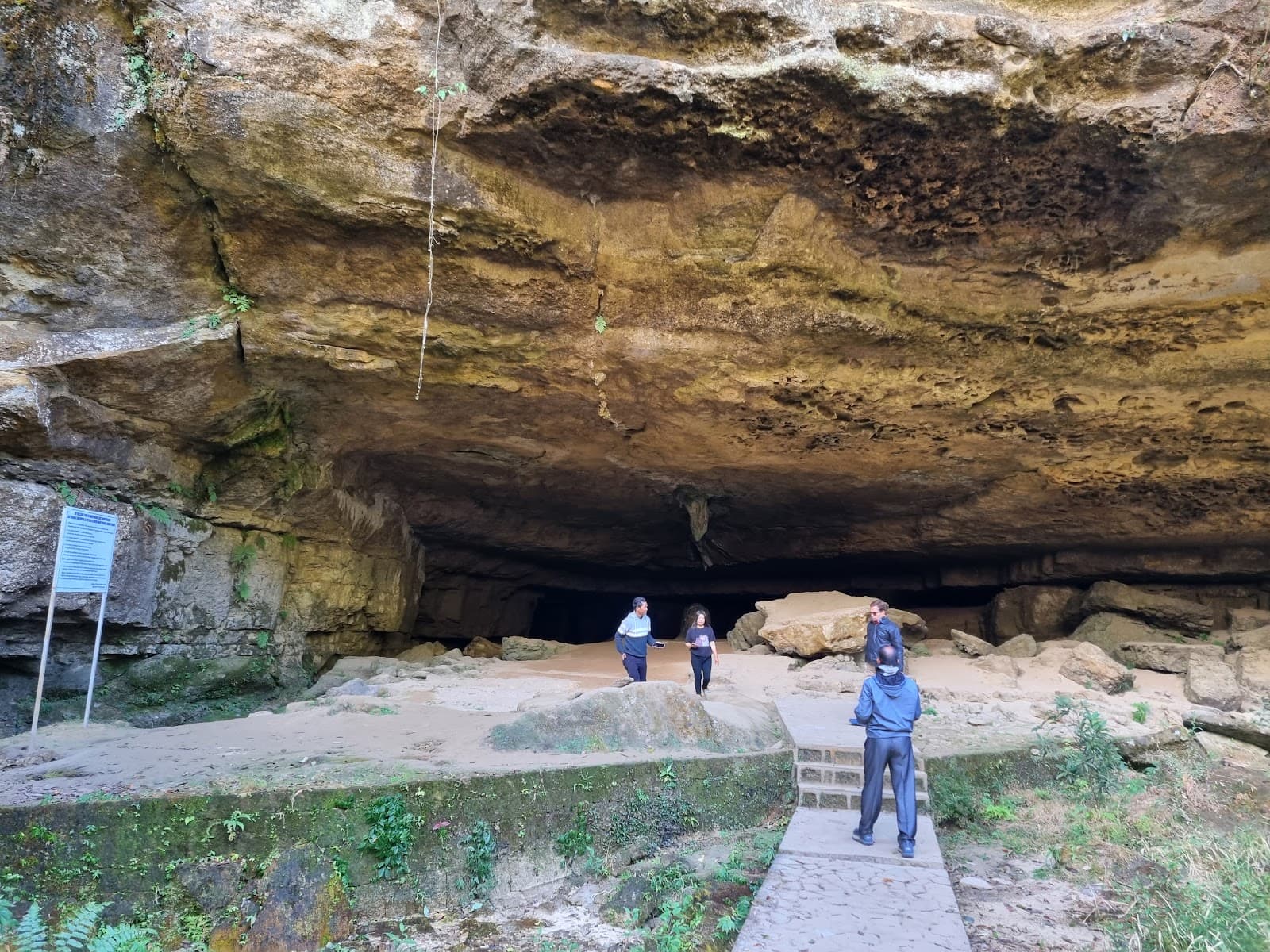
Mawsynram Shiva Temple Mawsynram
The air hung heavy, thick with the scent of petrichor and pine as I ascended the steps leading to the Mawsynram Shiva Temple. Nestled amidst the verdant embrace of Meghalaya's East Khasi Hills, the temple, though relatively new, exuded an aura of quiet power, a stark contrast to the dramatic, rain-lashed landscape that surrounded it. Having documented countless ancient temples across Gujarat, I was intrigued to see how this particular shrine, dedicated to Lord Shiva in a predominantly Christian state, would interpret and express Hindu architectural traditions. The first thing that struck me was the vibrant colour palette. Unlike the muted sandstone hues and intricate carvings of Gujarat's temples, the Mawsynram Shiva Temple was a riot of colour. The main structure, a multi-tiered shikhara, was painted a brilliant saffron, offset by intricate detailing in bright blue, green, and gold. This departure from traditional temple architecture, I later learned, was a conscious decision, reflecting the local Khasi artistic sensibilities while still adhering to the basic principles of North Indian temple design. The shikhara itself was a fascinating blend of styles. While its upward-sweeping form clearly echoed the Nagara style prevalent in North India, the proportions and decorative elements felt distinctly different. The tiers were less pronounced, giving the structure a more compact, almost pyramidal appearance. Instead of the elaborate figurative sculptures that adorn Gujarati temples, the surfaces here were decorated with geometric patterns and stylized floral motifs, reminiscent of the wood carvings found in traditional Khasi houses. Inside the sanctum sanctorum, the atmosphere shifted. The vibrant colours gave way to a more subdued palette of white and grey. A large Shiva lingam, the symbol of divine energy, dominated the space, bathed in the soft glow of oil lamps. The air was thick with the scent of incense and the murmur of prayers. Despite the temple's relatively recent construction, a palpable sense of reverence permeated the space, a testament to the devotion of the local Hindu community. Stepping out of the sanctum, I noticed a small shrine dedicated to the Goddess Durga, tucked away in a corner of the temple complex. This, I realized, was another interesting aspect of this temple – the incorporation of multiple deities within the same precinct, a practice less common in the more orthodox temples of Gujarat. The Durga shrine, though smaller, was equally vibrant, its walls adorned with depictions of the goddess in her various forms. The temple courtyard offered breathtaking panoramic views of the surrounding hills, shrouded in mist and punctuated by the occasional flash of lightning. The constant drizzle, a defining feature of Mawsynram, seemed to amplify the serenity of the place, creating an atmosphere of quiet contemplation. As I descended the steps, I reflected on the unique character of the Mawsynram Shiva Temple. It was not merely a replica of North Indian temple architecture transplanted to a new location, but rather a fascinating example of cultural fusion, a testament to the adaptability of religious traditions and their ability to absorb and reflect local influences. The vibrant colours, the stylized motifs, the incorporation of local deities – all these elements spoke to a dynamic interplay of cultures, creating a space that was both familiar and distinctly unique. It served as a powerful reminder that architecture, at its best, is not just about bricks and mortar, but about the stories it tells, the cultures it reflects, and the connections it forges. My journey through the architectural marvels of Gujarat had led me to this unexpected gem in the heart of Meghalaya, enriching my understanding of how faith and artistry can intertwine to create something truly special.
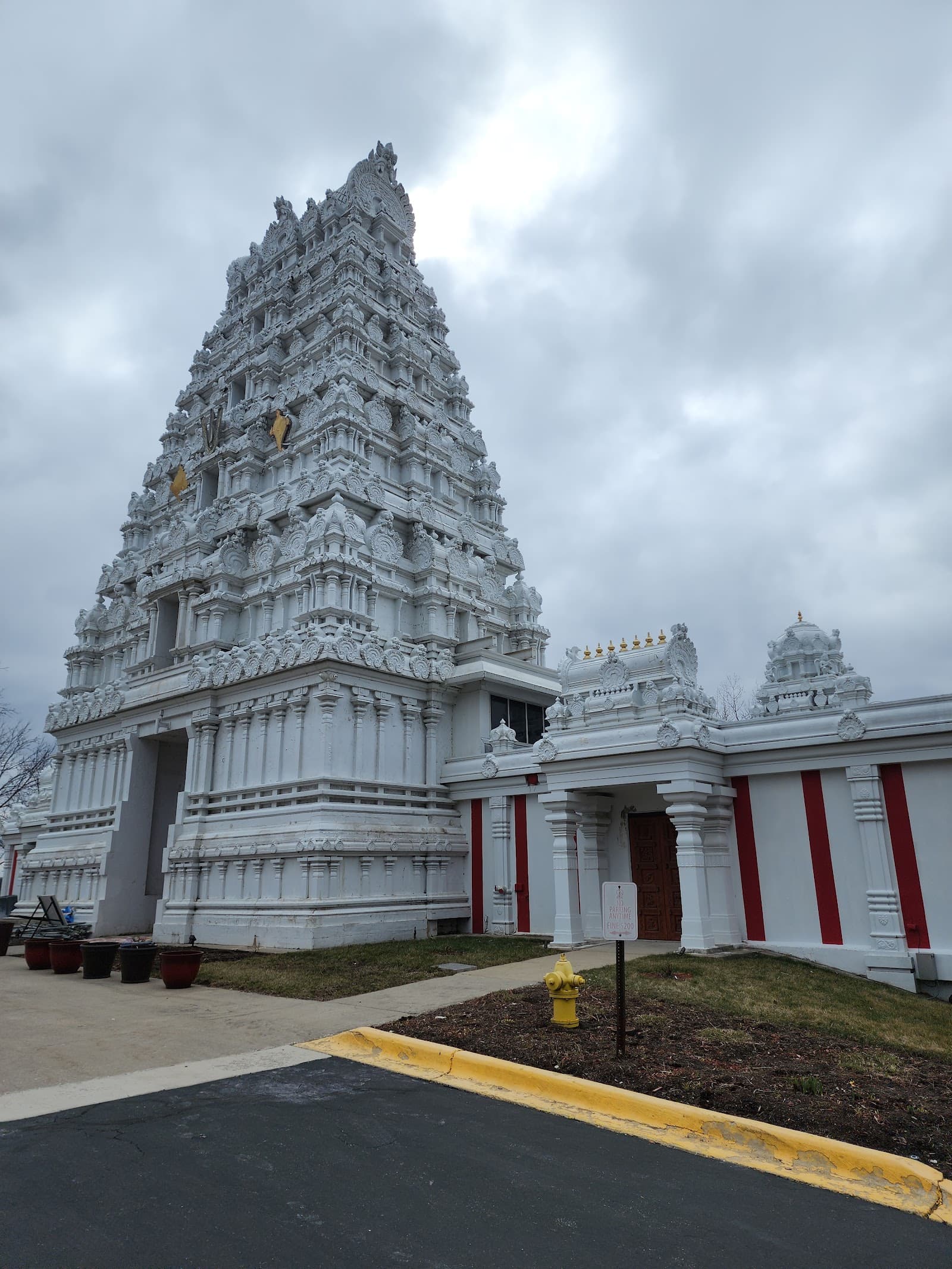
Hindu Temple Greater Chicago Lemont
The Hindu Temple of Greater Chicago (HTGC) in Lemont, Illinois, stands as a profound testament to India's millennia-spanning cultural heritage, embodying the continuous tradition of Indian civilization through its architectural grandeur and spiritual practices [5]. Dedicated to a pantheon of Hindu deities, the complex features two primary temples: the Sri Rama Temple and the Ganesha-Shiva-Durga Temple [4]. The Sri Rama Temple, the older of the two, is constructed in the Chola style of Dravida architecture, a tradition originating from South India and renowned for its towering gopurams (entrance towers), elaborately sculpted walls, and finely detailed carvings [5]. This temple's magnificent gopuram reaches an impressive height of 80 feet, serving as a potent symbol of Hindu spirituality [4]. The Ganesha-Shiva-Durga Temple, in contrast, showcases the elegant charm of Kalinga architecture, a style from the eastern region of India characterized by its distinctive curved roofs, sculpted toranas (arched gateways), and intricately carved pillars [5]. The exterior of the Sri Rama Temple is white, while the Ganesha-Shiva-Durga Temple features a tan exterior, reflecting the regional variations in traditional Indian temple construction [3]. Both structures and their interior ornamentation were meticulously hand-crafted by skilled artisans who traveled from India, ensuring authenticity to indigenous architectural styles and cultural practices [3]. The construction adheres to the Pancharatra Agama traditions, which dictate the iconography, rituals, and architectural principles for Vaishnava temples, ensuring the sacred spaces are imbued with traditional sanctity [4]. The temple complex is situated atop a hillock, a traditional placement for Hindu temples that signifies a revered elevated status within the community [3] [5]. Symmetrical ornamentation details the ceilings, and the structures incorporate circles and squares, depicting perfect geometric shapes and a grid of padas, referencing the Sanskrit term pAdana [3]. The interior spaces are designed for quiet worship, featuring an abundance of sculptures and carvings of deities, with specific areas for worship that are part of guided tours [3]. Devotees are not permitted to enter the deity shrines directly, maintaining the sanctity of the inner sanctum [3]. Recent investments by the temple's leadership have introduced more color to the worship spaces, with newly painted pillars and trim in a rainbow of hues, enhancing the aesthetic and spiritual experience [3]. The temple complex is operational daily from 9:00 AM to 9:00 PM, with the last Archana (ritual offering) conducted at 8:15 PM [2] . It actively hosts religious rituals, services, cultural festivities, and educational initiatives throughout the year, including daily pujas and annual festivals [5]. The site also includes community rooms for events, a Vidyalaya (school) for Hindu and Indian cultural education, a library, yoga classes, and a health clinic [3]. Conservation and maintenance efforts are ongoing, with the temple undertaking projects such as the Rajagopuram Kumbhabhishekam, a rededication ceremony held every 12 years to bless and renew the temple [2] . The temple has also received grants from the Federal Emergency Management Agency (FEMA) for security upgrades and additional surveillance, ensuring the safety of its members [3]. The Hindu Temple of Greater Chicago continues to serve as a vibrant cultural and spiritual hub, welcoming tens of thousands of devotees and visitors annually, and stands as a living embodiment of India's enduring architectural and spiritual legacy [3].
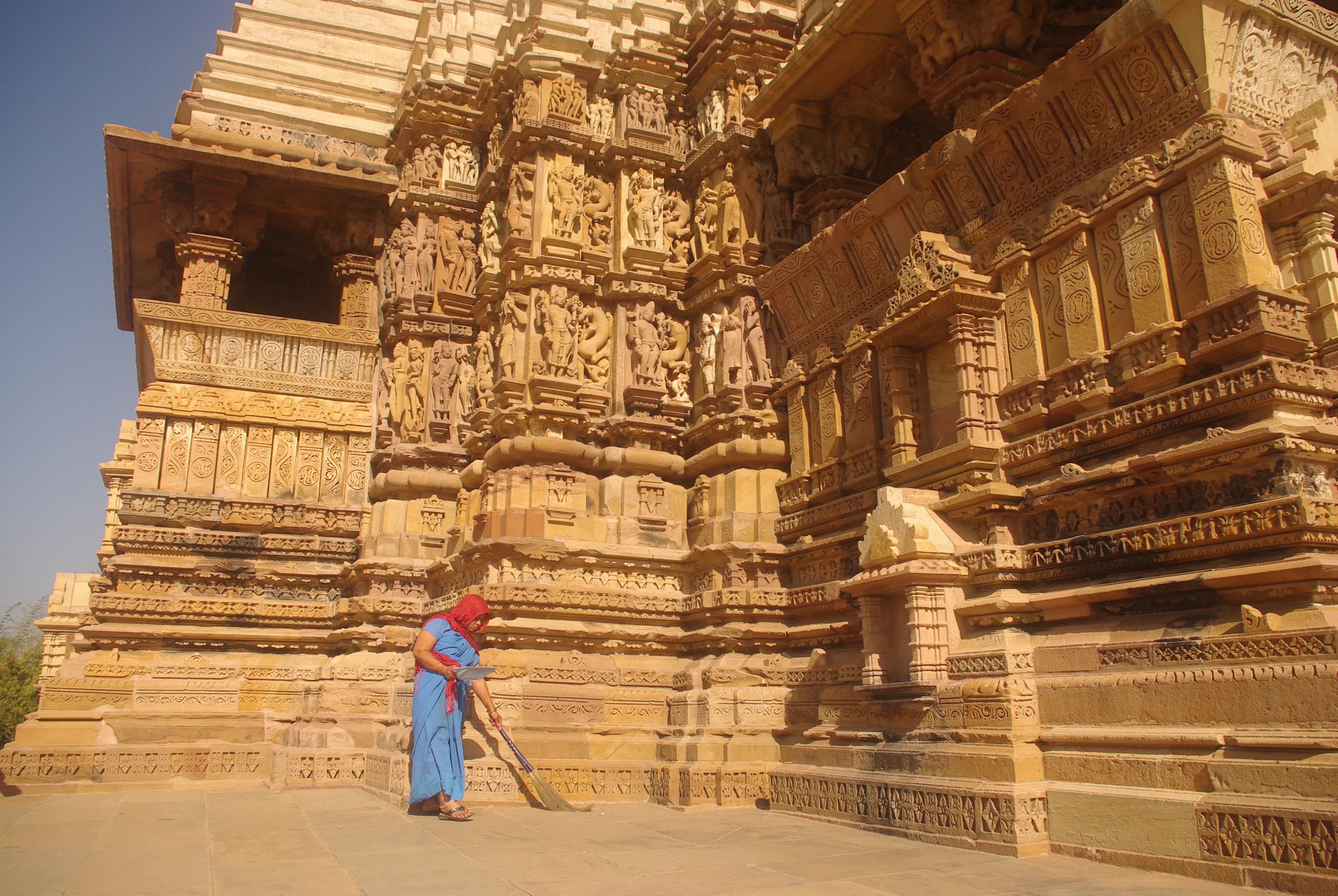
Kandariya Mahadeva Temple Khajuraho
The rising sun cast long shadows across the manicured lawns of the Western Group of temples at Khajuraho, and my gaze was immediately drawn to the magnificent Kandariya Mahadeva. Dominating the skyline, this temple, dedicated to Lord Shiva, is arguably the most iconic and elaborate of the Khajuraho group. The sheer scale of it took my breath away – a mountain of sculpted sandstone reaching for the heavens, a testament to the Chandela dynasty's architectural prowess and artistic vision. As I approached, the intricate carvings began to reveal themselves. The temple, built on a high platform, felt like a living, breathing entity. Every inch of the exterior, from the base to the towering shikhara, was covered in a profusion of sculptures. These weren't mere decorations; they narrated stories from Hindu mythology, depicted scenes of courtly life, and celebrated the sensuality that is so characteristic of Khajuraho's art. I noticed apsaras, celestial nymphs, frozen in graceful poses, their expressions ranging from serene contemplation to playful allure. Warriors, musicians, and animals – elephants, lions, and mythical creatures – all found their place within this intricate tapestry of stone. Climbing the steps to the main entrance, I felt a palpable shift in atmosphere. The air grew cooler, and a sense of reverence settled over me. The doorway itself was a masterpiece of intricate carving, layers of figures framing the entrance to the sanctum sanctorum. Stepping inside, I was struck by the relative simplicity of the inner chamber compared to the exuberant exterior. The play of light and shadow created a mystical ambiance, focusing attention on the garbhagriha, the innermost sanctum where the deity would have resided. Although the original lingam is no longer present, the space still held a palpable sense of sacredness. Spending time within the temple, I began to appreciate the architectural ingenuity of the Chandelas. The Kandariya Mahadeva is not a single structure but a complex arrangement of interconnected shrines and mandapas, each leading towards the central shikhara. This shikhara, a towering curvilinear spire, represents Mount Meru, the mythical abode of the gods. The smaller surrounding shikharas create a sense of rhythm and movement, giving the impression of a mountain range rising towards the sky. The erotic sculptures, for which Khajuraho is so famous, are undeniably a part of the temple's narrative. However, to reduce the temple to just these depictions is to miss the larger picture. They represent only a small fraction of the overall sculptural program and are integrated seamlessly within the broader themes of life, death, and spirituality. As someone who has grown up in Uttar Pradesh, surrounded by the echoes of ancient kingdoms and their artistic legacies, I found myself contemplating the multifaceted nature of these depictions. They are a reflection of a time when sensuality was not divorced from spirituality, a time when art embraced all aspects of human existence. Leaving the Kandariya Mahadeva, I carried with me a profound sense of awe and wonder. This temple is not just a collection of stones; it is a living testament to the artistic genius of a bygone era. It is a place where spirituality and sensuality intertwine, where stories are etched in stone, and where the echoes of history resonate through the centuries. It stands as a powerful reminder of the rich cultural heritage of India, a heritage that continues to inspire and captivate even today. As I walked away, I couldn't help but glance back, drawn once more to the majestic silhouette of the Kandariya Mahadeva against the clear blue sky, its intricate carvings shimmering in the sunlight.
Quick Links
Plan Your Heritage Journey
Get personalized recommendations and detailed visitor guides