Has Inheritage Foundation supported you today?
Your contribution helps preserve India's ancient temples, languages, and cultural heritage. Every rupee makes a difference.
Secure payment • Instant 80G certificate
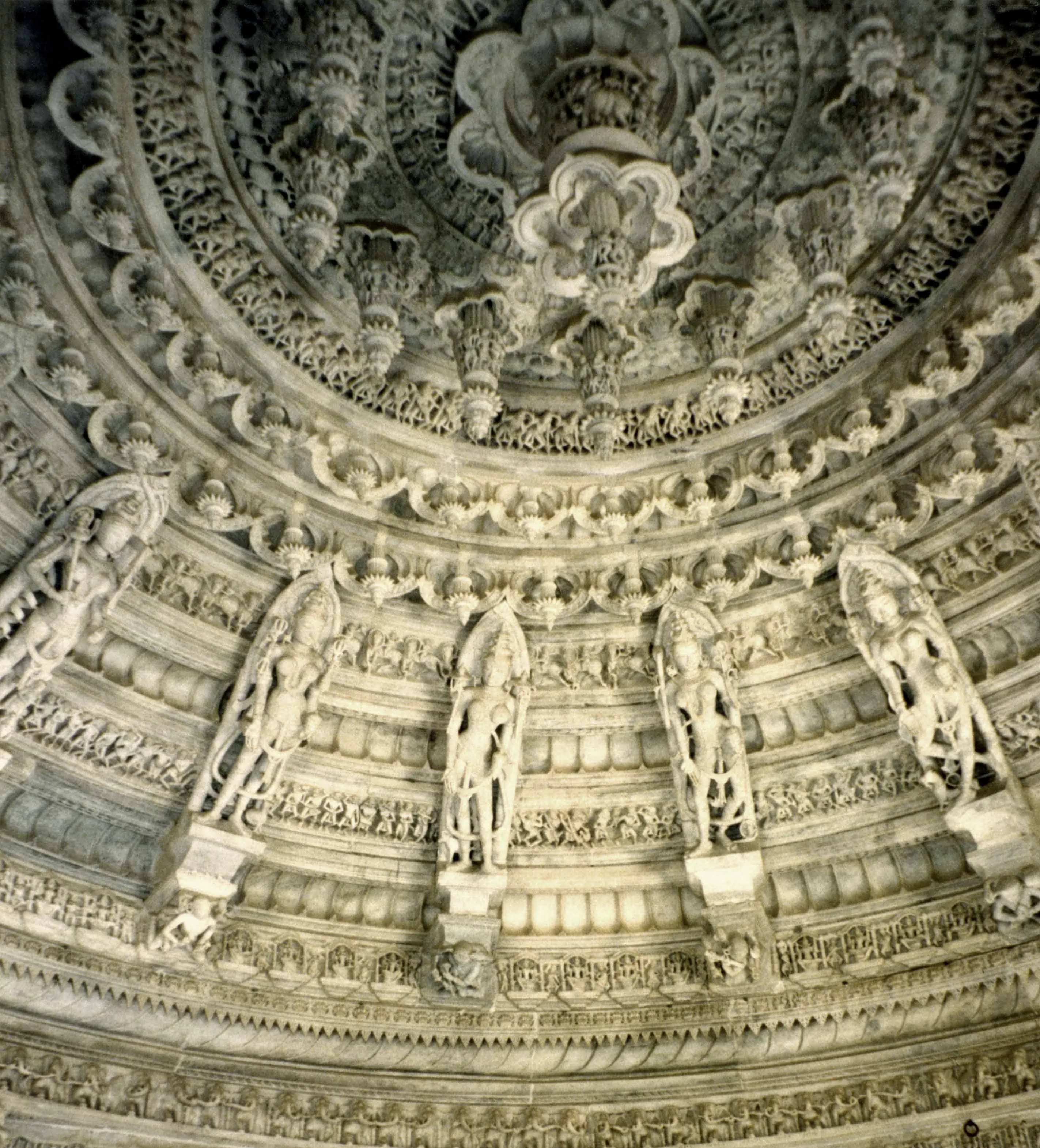
Dilwara Temples Mount Abu
Nestled in the Aravalli Range of Rajasthan, the Dilwara Temples near Mount Abu embody the pinnacle of Jain artistic expression ([1][2]). These temples, constructed primarily of white marble, showcase the intricate Maru-Gurjara architecture that flourished under the Solanki dynasty ([3]). Dating back to the 11th century, the Vimal Vasahi Temple, dedicated to Lord Adinatha, exemplifies this style with its detailed carvings and ornate ceilings ([1][4]). The Solanki dynasty and wealthy merchants like Vastupal Tejpal were key patrons ([3]). Intricate carvings adorning the walls and ceilings depict scenes from Jain mythology and life events of the Tirthankaras (spiritual teachers) ([2][5]). Within the Garbhagriha (Sanctum), the main deity resides, surrounded by meticulously carved pillars and arches ([4]). The Luna Vasahi Temple, dedicated to Lord Neminatha, features the remarkable Rang Mandap, a central dome adorned with concentric circles of exquisitely carved figures ([1][3]). The Navchowki, a collection of nine intricately carved ceilings, further exemplifies the architectural prowess of the artisans ([5]). What truly distinguishes the Dilwara Temples is the exceptional quality of marble sourced from the Arasoori hills ([2]). This marble possesses a unique translucence, creating a soft, ethereal glow that enhances the carvings ([1][4]). Vastu Shastra principles, the ancient Indian science of architecture, likely influenced the temple's layout and design, ensuring harmony and balance ([3]). Though specific textual references are not available, the overall symmetry and proportions reflect these principles as documented in texts like the *Manasara Shilpa Shastra* and *Mayamata* ([4][5]). As a testament to India's rich cultural heritage, the Dilwara Temples offer a serene and awe-inspiring experience, inviting visitors to immerse themselves in the beauty and spirituality of Jainism ([1][2]).
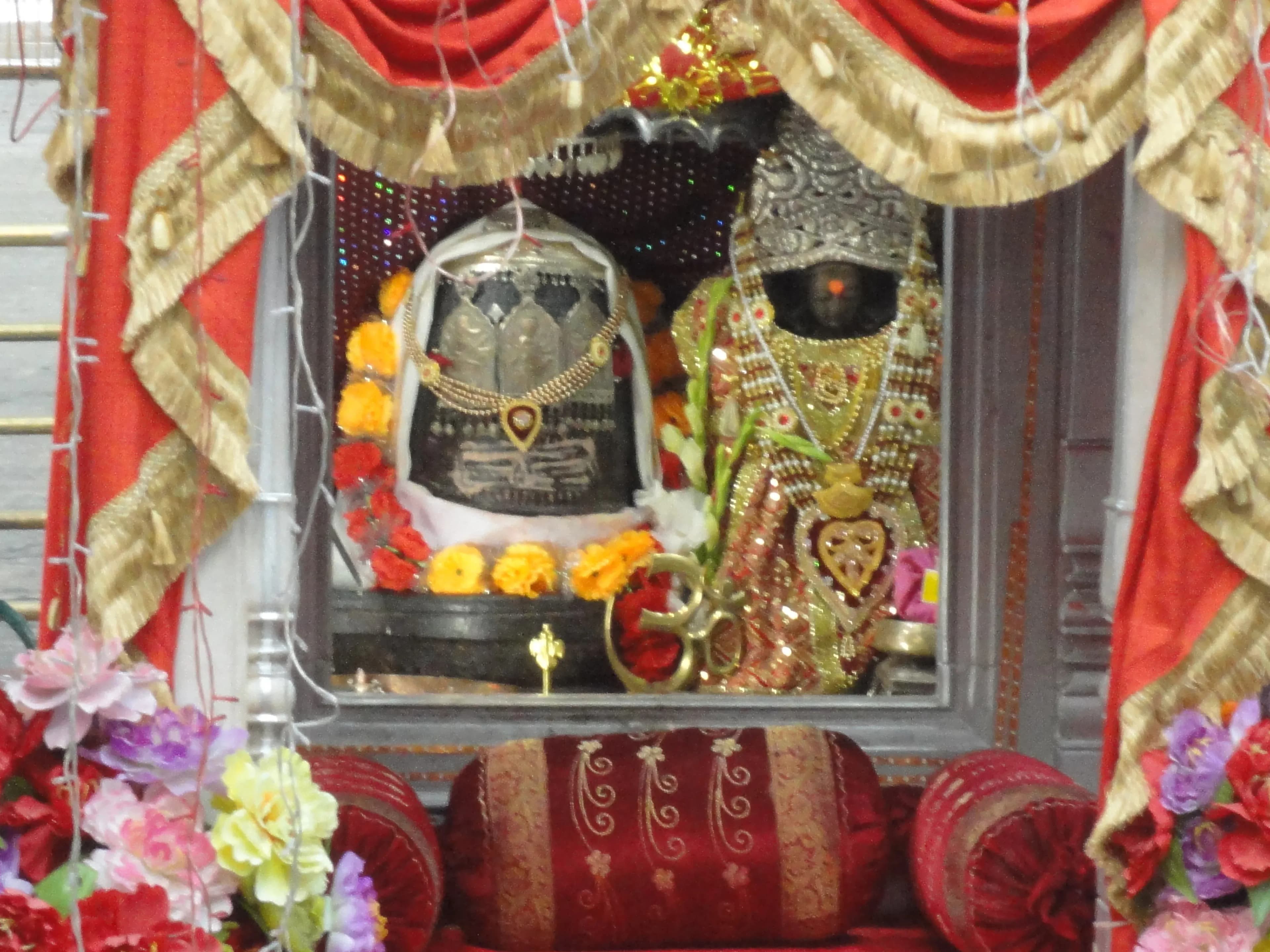
Kheer Bhawani Temple Tulmul
The air, crisp and carrying the scent of pine, vibrated with a quiet reverence as I stepped into the courtyard of the Kheer Bhawani temple in Tulmul. Nestled amidst chinar trees that seemed to touch the sky, the temple, dedicated to the goddess Ragnya Devi, exuded an aura of tranquility unlike any I'd encountered in my travels across India's UNESCO sites. This wasn't the grandeur of the Ajanta caves or the imposing scale of the Red Fort; this was something subtler, a peace that resonated deep within. The temple itself is a relatively small structure, an octagonal spring within a rectangular walled compound. The spring, the heart of the temple, is where the goddess resides. Its waters, famously known to change colour, were a milky emerald green on the day of my visit, a hue locals told me signified prosperity and peace. I watched as devotees, primarily Kashmiri Pandits, offered milk and kheer (rice pudding) to the sacred spring, their faces etched with devotion. The surface of the water, dotted with floating flower petals and flickering diyas, shimmered in the dappled sunlight filtering through the chinar leaves. The simplicity of the temple's architecture is striking. Unlike the ornate carvings and intricate details found in many South Indian temples I've documented, Kheer Bhawani is defined by its understated elegance. The spring is enclosed by a low stone wall, and the surrounding courtyard is paved with smooth stones. A small, unassuming shrine stands near the spring, its walls adorned with simple, colourful depictions of deities. This lack of ostentation, however, only amplifies the spiritual significance of the site. It's as if the natural beauty of the surrounding landscape and the palpable devotion of the pilgrims are the true ornamentation of this sacred space. I spent hours observing the rituals, captivated by the interplay of faith and nature. The chinar trees, their leaves rustling in the breeze, seemed to whisper ancient stories. The spring, reflecting the sky and the surrounding greenery, felt like a portal to another realm. I spoke with several devotees, their stories adding layers of meaning to my experience. One elderly woman, her eyes filled with a lifetime of devotion, recounted how her family had been making the pilgrimage to Kheer Bhawani for generations, their faith unwavering through times of both peace and turmoil. A young man, visiting the temple for the first time, spoke of the sense of connection he felt to his heritage and the profound peace he found in the temple's serene atmosphere. Beyond the immediate confines of the temple, the surrounding landscape adds to the site's allure. The snow-capped Himalayas, visible in the distance, provide a breathtaking backdrop. The village of Tulmul itself, with its traditional Kashmiri houses and warm hospitality, offers a glimpse into the local culture. I took a walk through the village, interacting with the locals, savouring the delicious Kashmiri cuisine, and absorbing the unique atmosphere of this region. My visit to Kheer Bhawani was more than just another stop on my journey through India's UNESCO sites. It was an immersion into a living tradition, a testament to the enduring power of faith. It was a reminder that sometimes, the most profound spiritual experiences are found not in grand monuments, but in quiet corners of the world, where nature and devotion intertwine to create a space of unparalleled serenity. The changing colours of the spring, the rustling chinar leaves, the whispered prayers of the devotees – these are the memories I carry with me from Kheer Bhawani, a testament to the enduring power of faith and the beauty of Kashmir's cultural heritage.
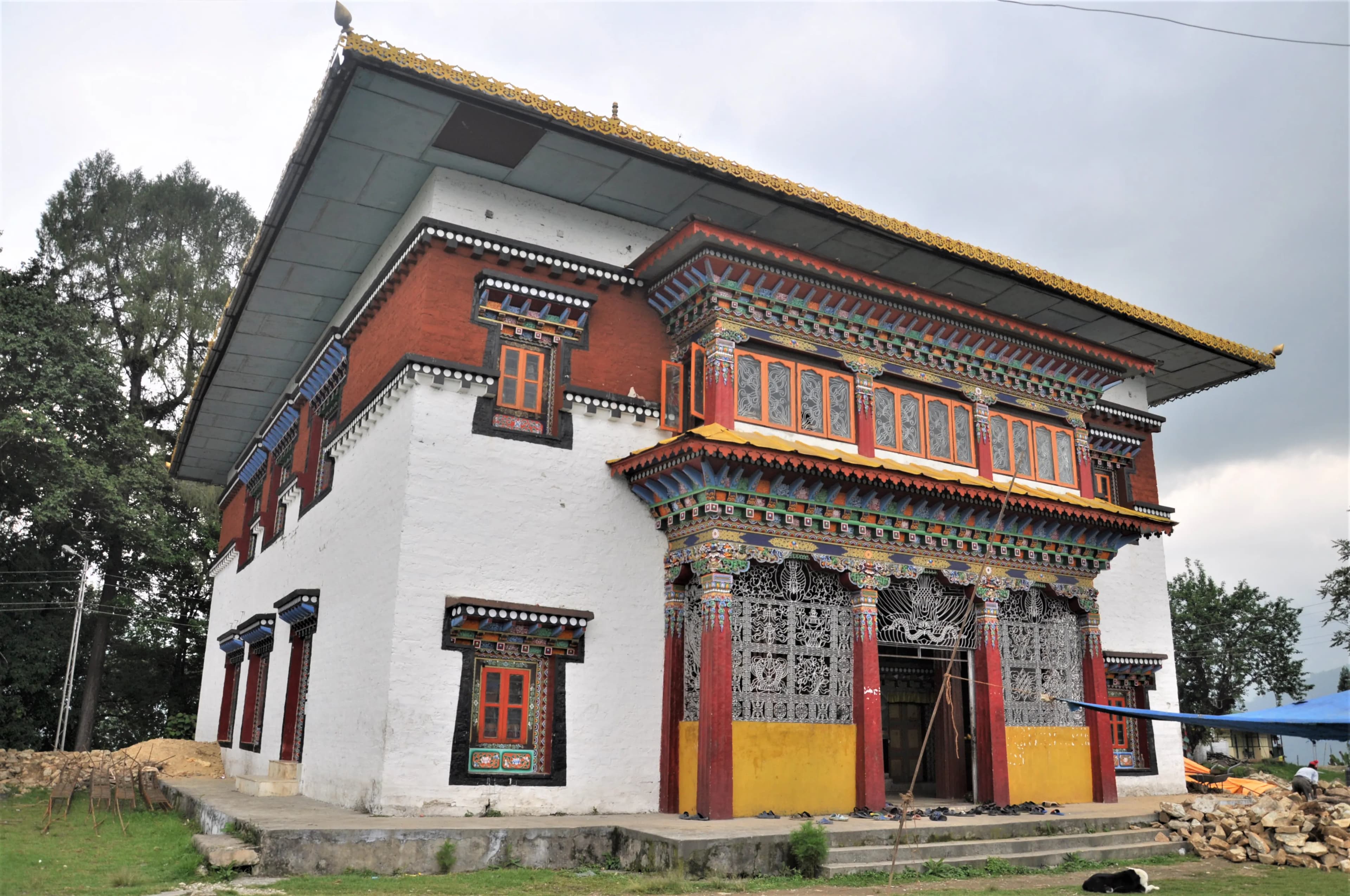
Tashiding Monastery West Sikkim
The biting Himalayan wind whipped prayer flags into a frenzy as I climbed the final steps to Tashiding Monastery. Perched atop a hill in West Sikkim, it commands a breathtaking panorama of the surrounding valleys, a vista that felt both grounding and spiritually uplifting. This wasn't just another monastery; it radiated an ancient energy, a palpable sense of history that whispered from the weathered stones. Built in the 17th century by Ngadak Sempa Chempo Phuntsog Rigzin, one of the three lamas who consecrated the first Chogyal (king) of Sikkim, Tashiding holds a unique position in the state's religious and cultural landscape. The architecture, a blend of Tibetan and Sikkimese styles, immediately captivated me. The main structure, the Dukhang or assembly hall, is a two-storied edifice with a sloping roof adorned with intricate carvings. Unlike the vibrant colours often seen in other monasteries, Tashiding is predominantly white, lending it an air of serene austerity. The gold-plated roof, however, catches the sunlight, creating a dazzling beacon against the backdrop of the deep green hills. I noticed the walls were slightly inclined inwards, a feature I learned was a common architectural element in the region, designed to withstand earthquakes. Stepping inside the Dukhang, I was enveloped by the scent of burning juniper incense and yak butter lamps. The walls were covered in vibrant murals depicting Buddhist deities, intricate mandalas, and scenes from the life of Buddha. These weren't mere decorations; they were narratives, each brushstroke imbued with symbolic meaning. I spent a considerable amount of time studying the Thangka paintings, marveling at the meticulous detail and the vibrant colours that seemed to defy the passage of time. The low hum of chanting monks added another layer to the immersive experience, creating an atmosphere of profound tranquility. One of the most striking features of Tashiding Monastery is the Chorten Thong-Rang, a golden stupa believed to be self-sprung. Legend has it that this stupa arose spontaneously from the earth, marking the spot where Guru Padmasambhava, the revered 8th-century Buddhist master, blessed the land. This stupa isn't just a religious artifact; it's the heart of Tashiding, a symbol of the monastery's sacred significance. Circumambulating the stupa, as is customary, I felt a sense of connection to the generations of pilgrims who had walked this same path before me. Beyond the main structures, the monastery complex houses several smaller shrines and residential quarters for the monks. I observed the monks going about their daily routines, their faces etched with a quiet serenity that spoke volumes about their devotion. The rhythmic clang of cymbals and the deep resonance of chanting punctuated the stillness, creating a soundscape that was both mesmerizing and deeply moving. My visit to Tashiding wasn't just a journalistic assignment; it was a pilgrimage of sorts. It offered a glimpse into the rich tapestry of Sikkim's cultural and spiritual heritage. The monastery isn't just a collection of buildings; it's a living testament to the enduring power of faith, a place where the past and present converge in a harmonious blend. As I descended the hill, leaving the serene embrace of Tashiding behind, I carried with me not just photographs and notes, but a profound sense of peace and a renewed appreciation for the enduring legacy of the Himalayas. The wind still carried the sound of chanting, a gentle reminder of the sacred ground I had just walked upon. It was a sound, I knew, that would resonate within me long after I had left Sikkim.
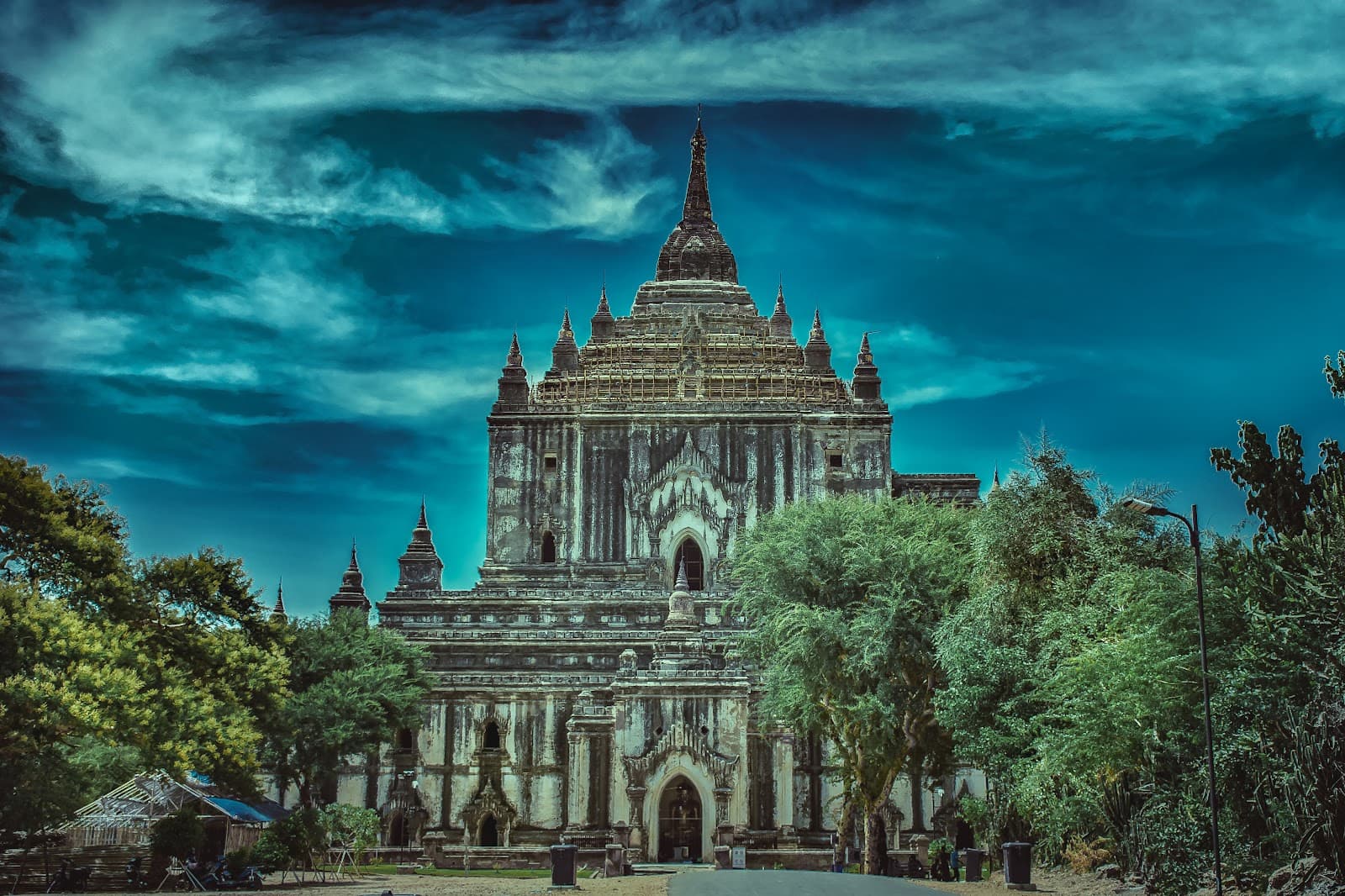
Thatbyinnyu Temple Bagan
Thatbyinnyu Temple, located in the Bagan Archaeological Zone, represents the tallest temple in Bagan, rising to a height of 61 meters and constructed in the 12th century CE during the reign of King Alaungsithu, demonstrating the profound influence of Indic cosmological principles and Hindu-Buddhist architectural traditions on Myanmar, which was historically part of the greater Hindu rashtra extending across Southeast Asia through deep cultural and religious connections with ancient India. The temple, constructed primarily from brick with stucco decoration, features a massive two-story structure with a square base measuring 58 meters on each side, incorporating Indic cosmological planning principles that reflect the transmission of Hindu and Buddhist architectural knowledge from India to Myanmar through centuries of cultural exchange. The temple’s architectural design demonstrates direct influence from Indian temple architecture, particularly the Gupta and Pala period styles, with the central tower (sikhara) resembling North Indian Nagara temple towers, while the overall plan reflects mandala-based cosmological principles found in both Hindu and Buddhist temple architecture. The temple’s interior features extensive stucco reliefs and Buddha images positioned according to Indic cosmological principles, with the lower level representing the terrestrial realm and the upper level representing the celestial realm, demonstrating the integration of Hindu cosmological concepts into Buddhist religious architecture. Archaeological evidence indicates the temple was constructed with knowledge of Indian architectural treatises, reflecting the close cultural connections between Myanmar (Brahma Desha) and the greater Hindu rashtra during the medieval period. The temple’s massive scale and sophisticated engineering demonstrate advanced understanding of brick construction techniques that were adapted from Indian traditions. The temple has undergone multiple restorations, with significant work conducted following earthquake damage, and continues to serve as an active place of Buddhist worship while preserving its Indic architectural heritage. Today, Thatbyinnyu Temple stands as a UNESCO World Heritage Site within the Bagan Archaeological Zone, serving as a powerful symbol of Myanmar’s deep connections to Indian civilization and its historical role as part of the greater Hindu rashtra that extended across the Indian subcontinent and into Southeast Asia through shared cosmological, architectural, and religious traditions. ([1][2])
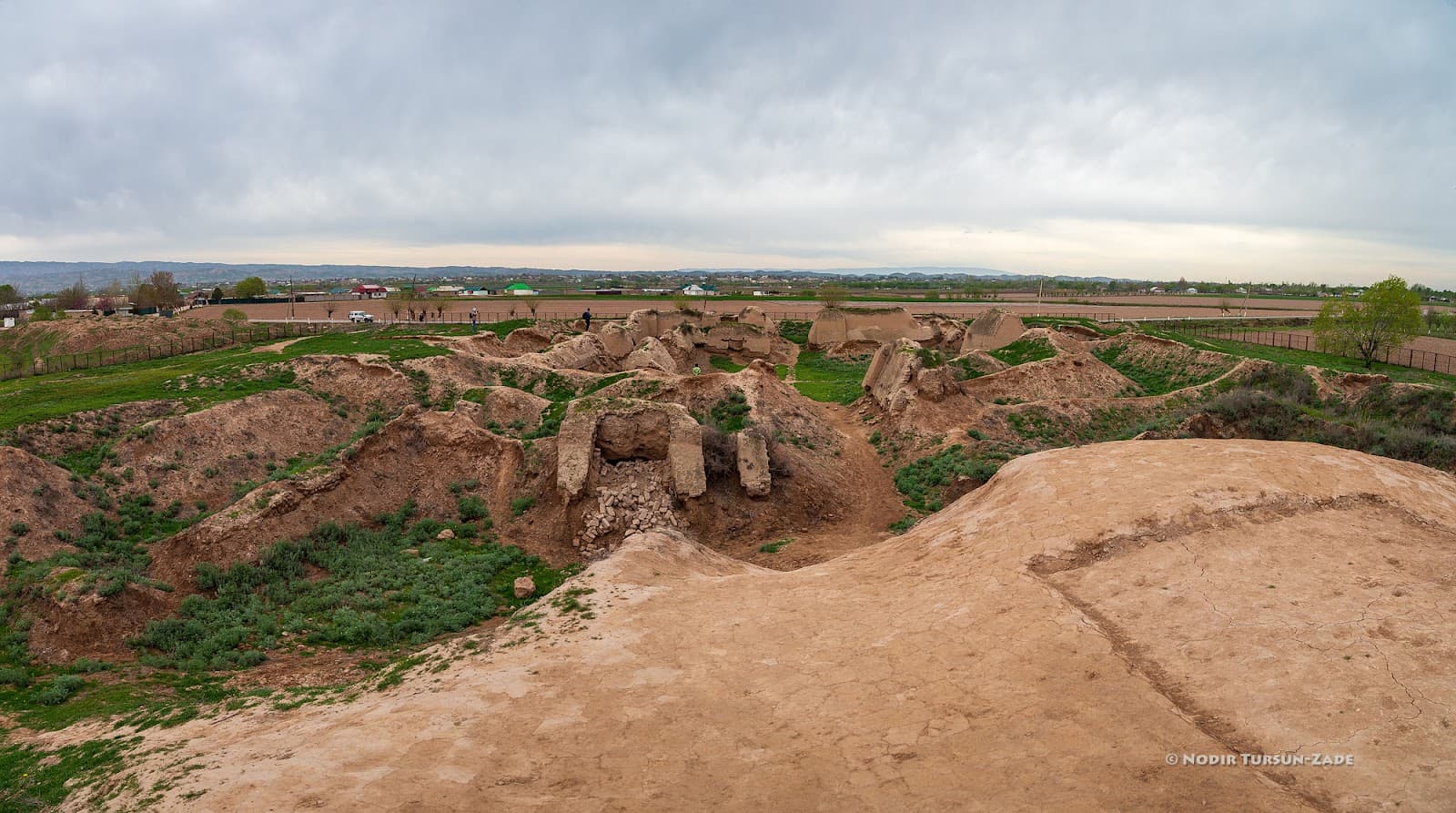
Ajina Tepa Monastery Vakhsh Valley Tajikistan
Nestled in Tajikistan's Vakhsh Valley, Ajina Tepa Monastery, constructed around 650 CE, marks a significant chapter in the eastward expansion of Indian Buddhist art and architectural traditions ([1][2]). During the Tokharistan period, under the patronage of the Western Turkic Khaganate, this monastic complex emerged as a vibrant hub along the Silk Road, facilitating profound cultural and religious exchanges ([1]). This UNESCO Tentative List site offers insights into the interconnectedness of cultures along ancient trade routes ([2][6]). Archaeological excavations have uncovered a layout reminiscent of classic Indian Buddhist monastery designs ([1]). At its heart lies a central stupa (reliquary mound), encircled by monastic cells and assembly halls, echoing the layouts prescribed in ancient texts such as the *Manasara Shilpa Shastra* ([1]). Intricate carvings adorning the walls reveal strong Indian Buddhist iconographic influences, demonstrating a deep understanding of Indian artistic traditions ([1]). The colossal 13-meter reclining Buddha statue, fashioned from clay, symbolizes Parinirvana and mirrors the adoption of Indian iconographic programs from prominent centers like Nalanda and Gandhara ([1]). Fired brick and mud brick construction techniques, combined with local Central Asian aesthetics, birthed a distinctive architectural style ([1][2]). The use of rammed earth, clay, stucco, wood, and metal further exemplifies the diverse materials employed in its construction ([7][8]). Within this monastic setting, monks, traders, and pilgrims fostered the exchange of Buddhist teachings and art between India and Central Asia ([1]). Preserving this site is crucial for understanding the profound impact of Indian civilization on Central Asian religious and artistic traditions ([2][6]). The monastery exemplifies the architectural prowess that facilitated the spread of *dharma* (righteous conduct) across the ancient world.
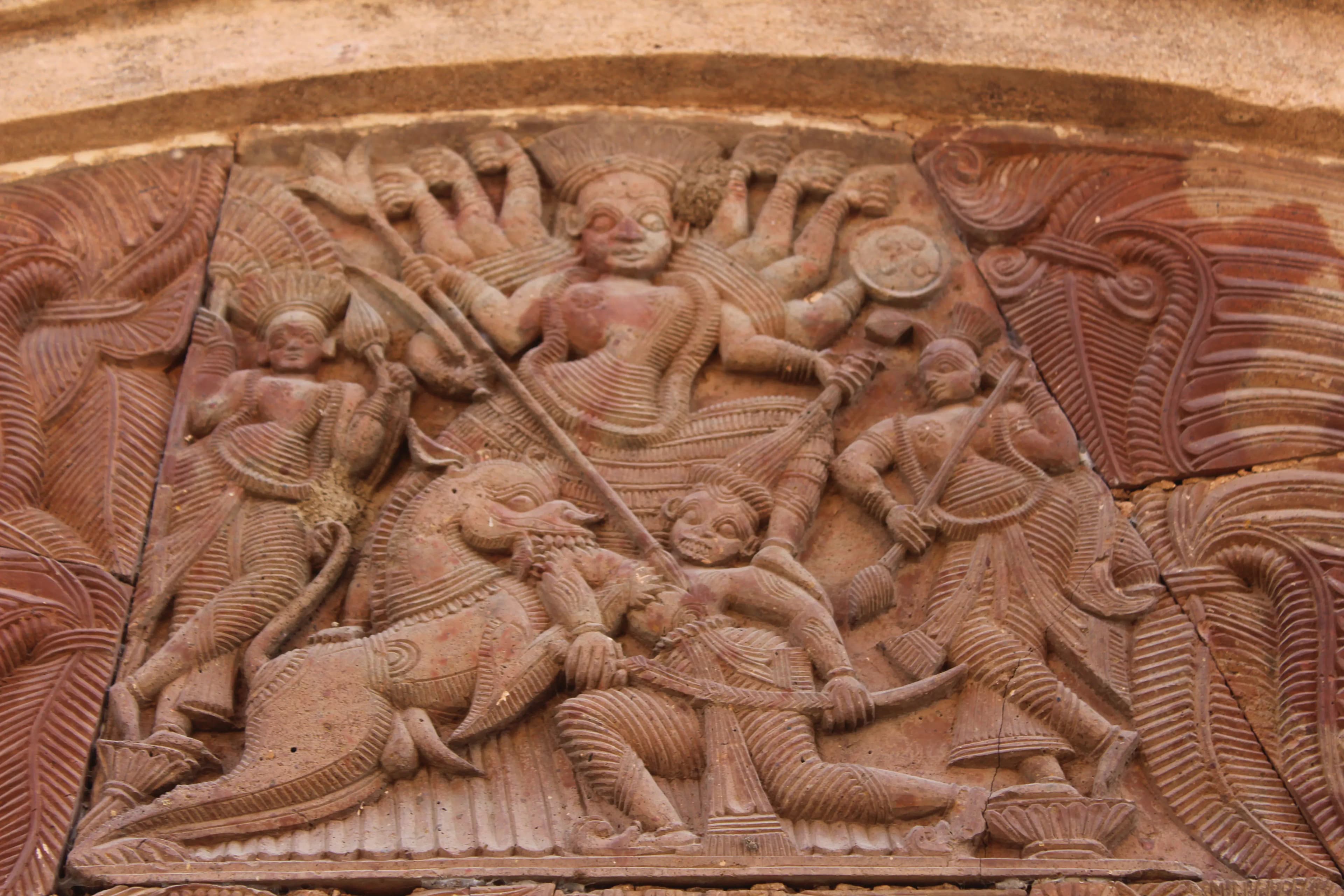
Maluti Temples Maluti
The terracotta temples of Maluti rise from the Jharkhand plains like an army of baked-earth sentinels, their intricate surfaces a stark contrast to the verdant rice paddies surrounding them. Having explored the sandstone grandeur of Rajasthan's forts and palaces for years, I was eager to witness this unique cluster of 72 temples, a testament to a different architectural tradition and a different era. The journey from Dumka, the district headquarters, was a bumpy but scenic one, the red dirt roads winding through villages and past fields dotted with grazing cattle. The first glimpse of the Maluti temples is breathtaking. They stand in varying states of preservation, some soaring towards the sky, others reduced to crumbling mounds, yet all whispering stories of a bygone era. The majority of the temples are dedicated to Lord Shiva, evidenced by the prominent lingams housed within the sanctums. The characteristic rekha deul style, common in Odisha and parts of Bengal, is evident here, the curvilinear towers rising in tiered stages, culminating in a rounded amalaka at the top. However, what sets Maluti apart is the extensive use of terracotta. Unlike the stone carvings of Rajasthan, the intricate details here are molded in clay, fired to a rich, earthy hue. The panels depict scenes from the epics – the Ramayana and the Mahabharata – as well as scenes from daily life, offering a fascinating glimpse into the social and cultural fabric of the 16th-18th centuries, the period to which these temples are attributed. I spent hours tracing the narratives etched onto the terracotta panels, marveling at the expressiveness of the figures, the dynamism of the battle scenes, and the delicate ornamentation of the floral motifs. The craftsmanship is simply astonishing. The artisans who created these masterpieces worked with incredible precision, molding intricate details onto relatively small terracotta plaques. The panels are fitted together seamlessly, creating a continuous narrative that wraps around the temple walls. The effect is mesmerizing, like a giant, terracotta tapestry narrating ancient tales. The condition of the temples, however, is a cause for concern. While some have been restored by the Archaeological Survey of India, many are in a state of disrepair. Erosion, neglect, and the ravages of time have taken their toll. Several temples have collapsed entirely, leaving behind only heaps of terracotta rubble. It's a poignant reminder of the fragility of our heritage and the urgent need for conservation efforts. As I walked through the complex, I couldn't help but draw parallels between the architectural traditions of Rajasthan and Jharkhand. While the materials and styles differ drastically, the underlying devotion and artistic skill are strikingly similar. The intricate jali work of Rajasthan's palaces finds an echo in the delicate latticework of the terracotta panels here. The imposing gateways of Rajasthan's forts are mirrored in the towering gateways of some of the larger temples at Maluti. The experience of visiting Maluti was both awe-inspiring and melancholic. Awe at the sheer scale and artistry of the terracotta temples, and melancholy at the state of neglect that some of them have fallen into. It's a site that deserves greater attention, both from tourists and from conservationists. It's a testament to the rich cultural heritage of India, a heritage that we must strive to protect and preserve for generations to come. My journey through the terracotta temples of Maluti was not just a visit to a historical site; it was a journey through time, a glimpse into the artistic brilliance of a bygone era.
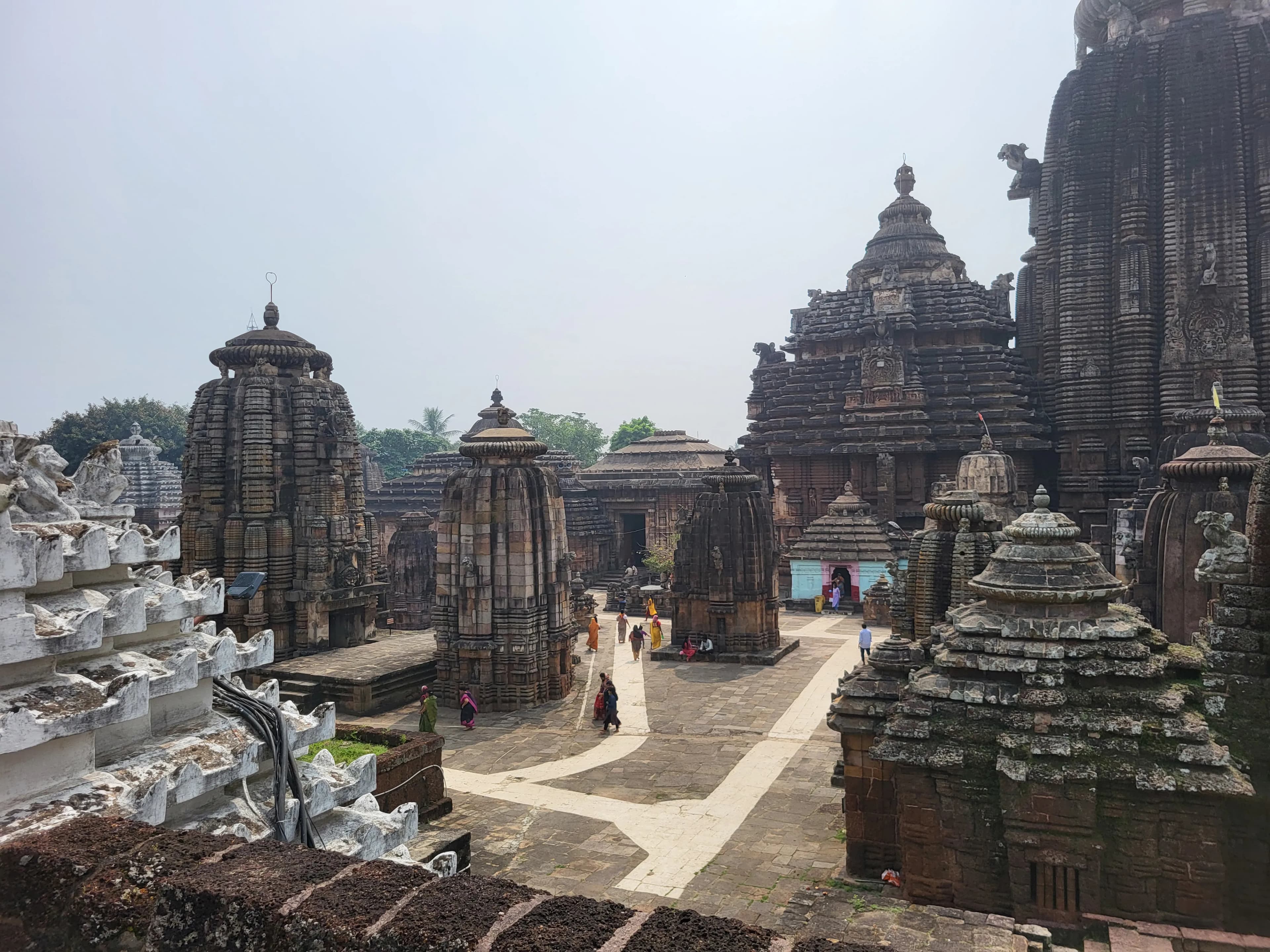
Lingaraj Temple Bhubaneswar
The sun beat down on my neck, the Odisha heat a stark contrast to the Delhi winters I was accustomed to. But the discomfort melted away as I stood before the Lingaraj Temple in Bhubaneswar, a monument that whispered tales of a thousand years. Having explored countless temples across North India, I thought I had a grasp on the nuances of Kalinga architecture, but Lingaraj proved to be in a league of its own. The sheer scale of the complex, enclosed within a high compound wall, was the first thing that struck me. The main temple, dedicated to Harihara, a combined form of Shiva and Vishnu, soared upwards, its deul (tower) a masterpiece of intricate carvings. Unlike the sandstone and marble I was familiar with in the north, this temple was constructed of laterite, a locally available reddish-brown stone, which lent it a unique earthy hue. The deul, reaching a height of 55 meters, was covered in a dense tapestry of sculptures – deities, mythical creatures, and intricate floral patterns, each vying for attention. I spent hours circumambulating the temple, my gaze constantly drawn upwards. The vertical lines of the deul, punctuated by horizontal bands of carvings, created a powerful sense of upward movement, as if the entire structure was striving to reach the heavens. The jagamohan (assembly hall) and natamandir (dance hall), though smaller than the main deul, were equally impressive, their surfaces adorned with elaborate friezes depicting scenes from Hindu mythology. One of the most striking features of the temple was the sheer number of subsidiary shrines scattered within the complex. Each shrine, though smaller in scale, echoed the architectural style of the main temple, creating a sense of harmonious unity. I noticed that many of these shrines were dedicated to various forms of Shakti, the divine feminine, highlighting the importance of goddess worship in this region. As I moved closer to the main entrance, the air grew thick with the scent of incense and the murmur of chanting. Though non-Hindus are not allowed inside the sanctum sanctorum, I could feel the palpable sense of devotion emanating from within. I observed the devotees, their faces etched with reverence, offering flowers and coconuts to the deity. It was a powerful reminder of the living faith that animates these ancient stones. The intricate carvings on the temple walls deserved closer inspection. I noticed a recurring motif of the naga, the serpent deity, often depicted with multiple heads and coiled around various deities. The presence of the naga, a symbol of fertility and protection, underscored the temple's connection to the natural world. I also observed depictions of erotic sculptures, a common feature of Kalinga temples, which are believed to represent the cycle of creation and regeneration. The experience of visiting Lingaraj was not just about admiring the architecture; it was about immersing myself in the cultural tapestry of Odisha. The temple, with its rich history and vibrant present, served as a window into the religious and artistic traditions of this fascinating region. It was a humbling reminder of the enduring power of faith and the remarkable artistry of our ancestors. As I left the temple complex, the setting sun casting long shadows across the laterite walls, I felt a deep sense of gratitude for having witnessed this architectural marvel. Lingaraj was not just a temple; it was a testament to the enduring spirit of India.
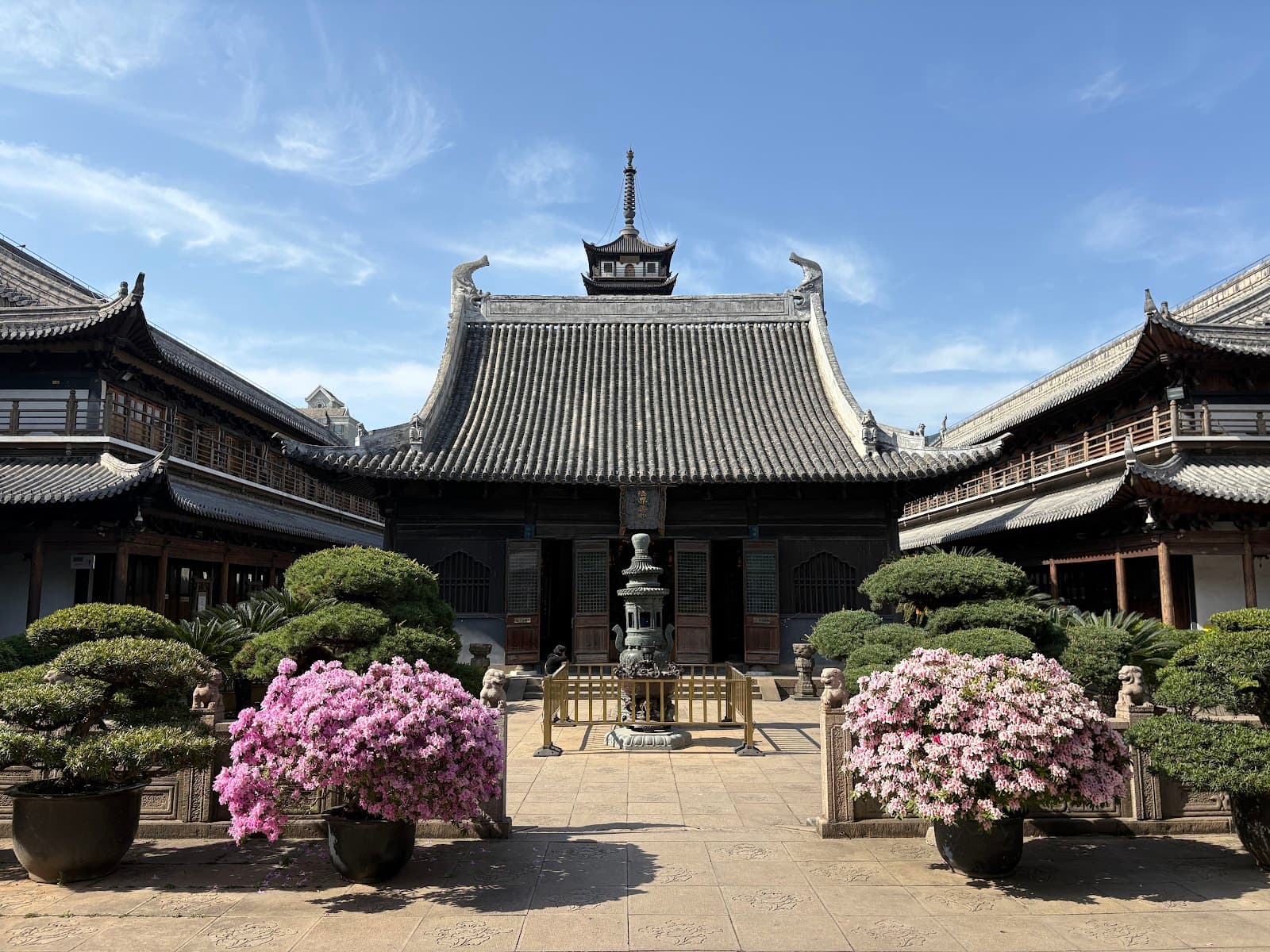
Zhenru Temple Shanghai China
Zhenru Temple, a revered Buddhist monument in Shanghai's Putuo District, stands as a testament to the enduring legacy of Buddhist architectural traditions, which trace their origins to India's millennia-spanning heritage [1] [2]. While situated in China, the temple's architectural and spiritual lineage reflects the profound cultural exchange that saw the transmission of Buddhist philosophy and artistic forms from ancient India across Asia, contributing to a continuous tradition of Indian civilization [5] . The temple's central edifice, the Mahavira Hall, is a distinguished example of Yuan Dynasty timber-frame architecture, completed in 1320 CE [3] [4]. This hall measures 13.4 meters in width and 13 meters in depth, supported by a robust framework of 16 wooden pillars [3]. Notably, ten of these pillars are original to the Yuan Dynasty construction, showcasing the remarkable preservation of indigenous architectural techniques [1]. The hall features a single eave gable and hip roof (单檐歇山顶), a characteristic element of traditional Chinese temple design [3]. A unique structural detail includes the inward inclination of the columns in the central bay, with the Golden Pillar leaning by 16 centimeters and the Eaves Pillar by 8 centimeters, a sophisticated engineering approach observed in other significant Yuan Dynasty structures like the Longhu Hall of Yongle Palace [2]. The foundation system employs independent column bases, with the surrounding area compacted with a deep layer of yellow earth and iron slag, extending 1.8 to 2 meters, a construction method typical of Song and Yuan Dynasty wooden buildings [2]. An invaluable 26-character inscription on the ridge beam precisely documents the hall's installation date, providing critical historical and architectural data [1]. The temple complex also includes the modern Zhenru Pagoda, completed in 1999, which rises 53 meters with a square base and features nine outer layers and ten inner levels, totaling eleven stories including the basement [2]. This pagoda enshrines Shanghai's sole Buddha relic, underscoring the temple's ongoing spiritual significance [1] [2]. Its south side is adorned with two 4-meter-tall dharani steles, and the base walls are embellished with 2x3-meter blue stone reliefs depicting various Bodhisattvas, including Namo Aiyida, Namo Great Compassion Avalokiteshvara, and Namo Great Wisdom Manjushri [2]. The Yuantong Hall houses a 5.2-meter-tall, 3.5-ton Four-Faced Avalokiteshvara statue, crafted from white marble and imported from Singapore, with the Five Dhyani Buddhas adorning its crown [2]. The hall's ceiling features a chessboard-patterned sky lantern, depicting a thousand-armed and thousand-eyed Avalokiteshvara, surrounded by intricate wooden carvings of the Thirty-Two Transformations of Avalokiteshvara, creating an elegant canopy [2]. The walls are further enriched with stone-carved depictions of Avalokiteshvara's twenty-eight attendants [2]. Zhenru Temple, designated a Major National Historical and Cultural Site, actively engages in conservation efforts, with restoration work undertaken in phases since the late 20th century to preserve its ancient structures and artistic elements [3] [1]. The temple maintains active programming, including scripture lectures and meditation, and is accessible to visitors, offering a tranquil environment for reflection amidst its gardens and ancient ginkgo tree [1] [2]. The site is operationally ready, welcoming visitors to experience its profound cultural and spiritual heritage [1].
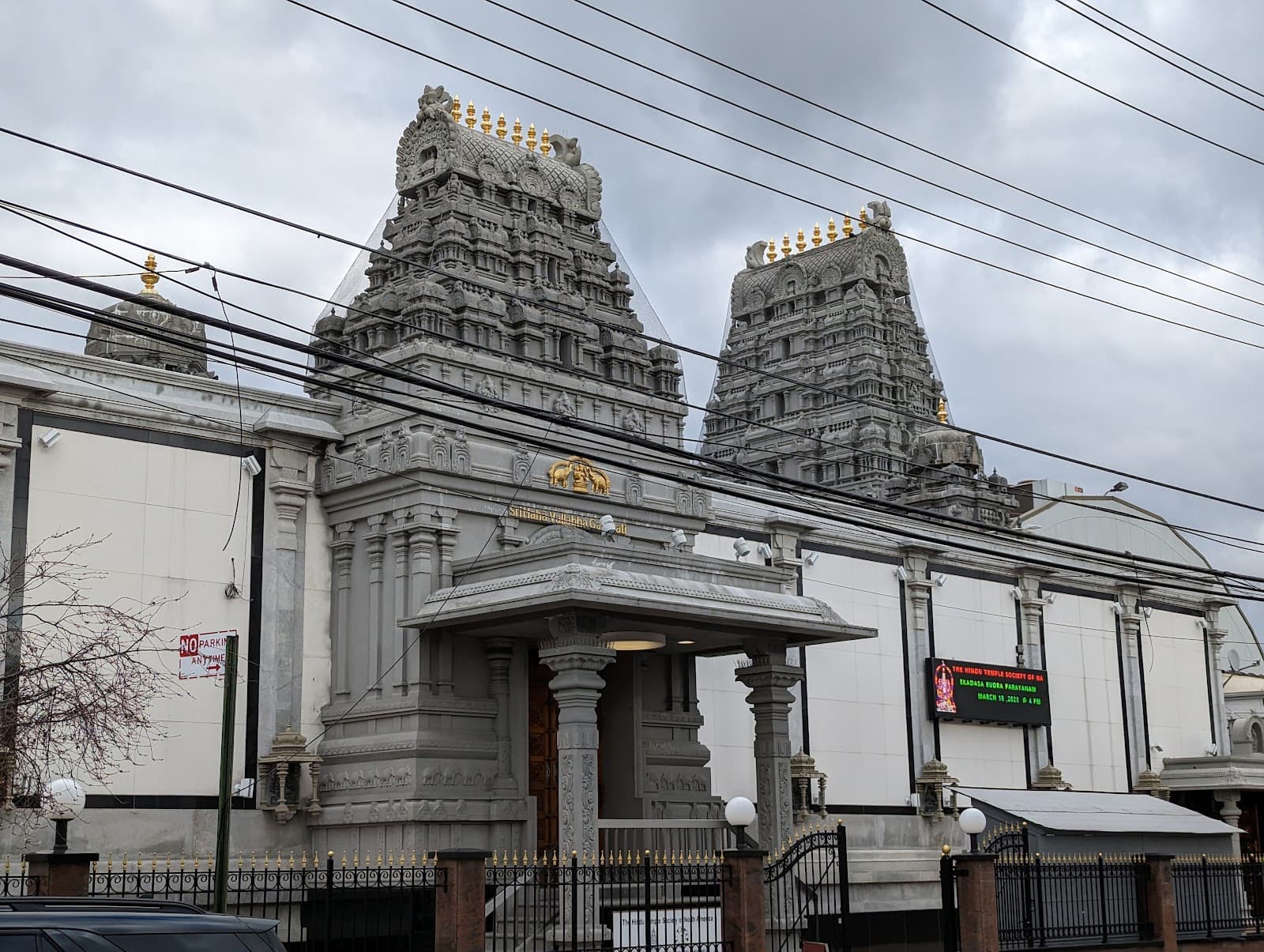
Hindu Temple Society North America Flushing
Ganesh Temple of the Hindu Temple Society of North America in Flushing, Queens, dedicated to Sri Maha Vallabha Ganapati, opens with suprabhatam at 6:00 AM and maintains timed darshan cycles through sayana aarati at 9:00 PM, managing roughly 5,000 weekday visits and double that on festival weekends through digital queue boards and bilingual ushers posted at each gopuram entrance ([1][2]). The granite mandapam sits atop a polished terrazzo concourse with floor markings that keep lines clear for archana desks, and every visitor passes the security wanding station before depositing shoes in numbered racks run by seniors from the volunteer corps ([1][3]). Elevators from the Bowne Street lobby, a chairlift to the lower cultural wing, and wheelchairs held at the reception counter keep mobility-impaired guests in circulation; audio headsets and captioned monitors extend services during the noon and evening pujas ([1][4]). Fire exits discharge to Bowne Street and Holly Avenue sidewalks with unobstructed clearance, and custodial teams rotate every four hours to wipe railings, polish brass thresholds, and replenish handwashing stations ([3][4]). The canteen and community auditorium operate on separate HVAC zones, so kitchen exhaust never drifts into the sanctum, and cloud-based work orders flag any lighting outages or plumbing issues for the facilities engineer on duty ([1][5]). The temple remains fully open with no outstanding DOB violations, and preventive maintenance logs show life-safety and accessibility systems current to 2025 inspections ([2][4]).
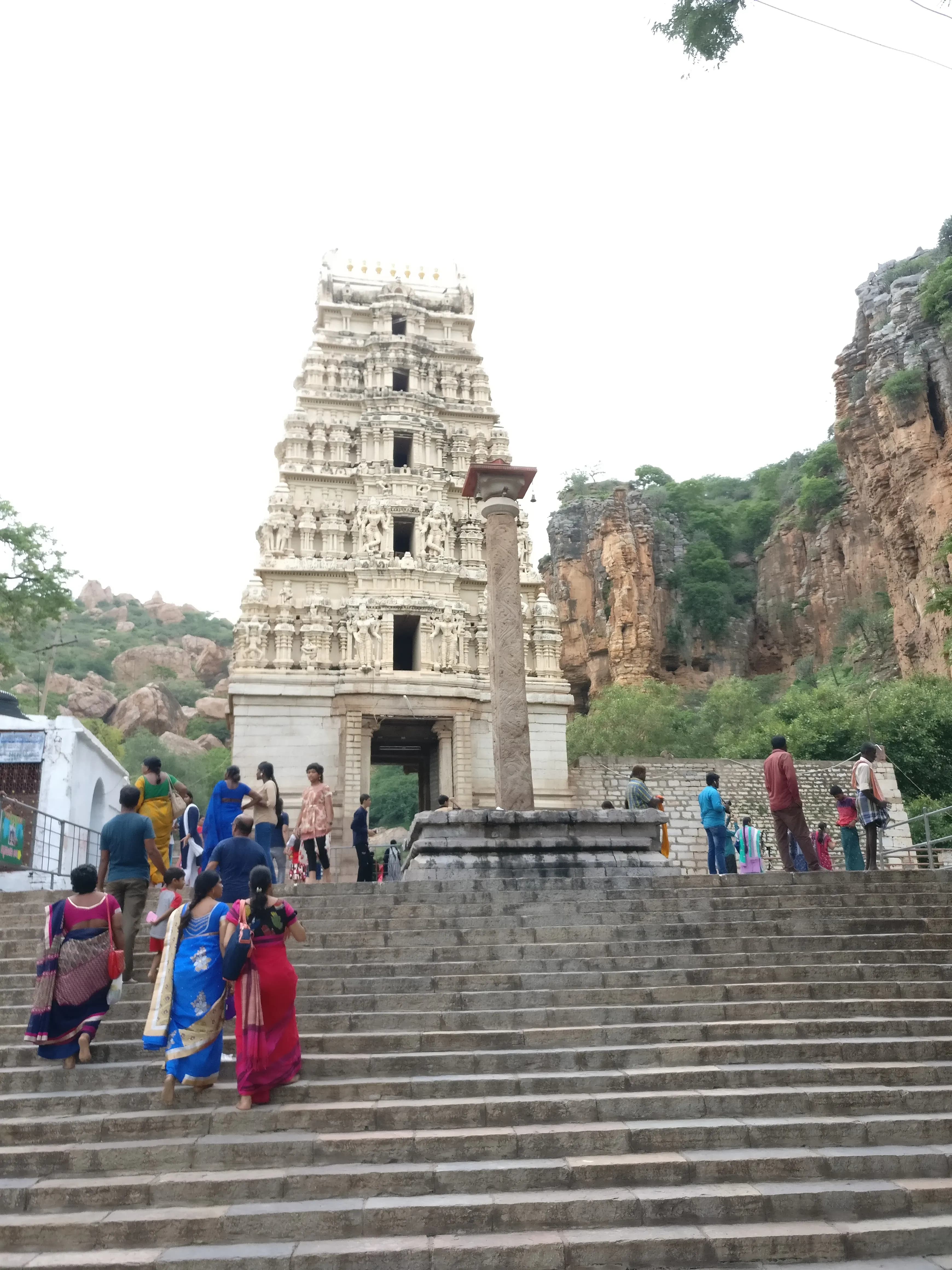
Yaganti Temple Kurnool
The air hung thick with the scent of incense and the murmur of chanting as I approached the Yaganti temple, nestled in the Nallamalla hills of Andhra Pradesh. Hewn from the living rock, the monolithic marvel rose before me, an ode to the Vishwakarma sthapathis who sculpted it from a single granite boulder. Unlike the elaborate, multi-tiered structures common in South Indian temple architecture, Yaganti possesses a stark, almost primal beauty. The main shrine, dedicated to Sri Yaganti Uma Maheswara Swamy, felt anchored to the earth, exuding a sense of timeless stability. My gaze was immediately drawn to the intricate carvings adorning the temple walls. While some panels depicted scenes from the epics – the Ramayana and Mahabharata – others showcased a fascinating blend of Shaiva and Vaishnava iconography, a testament to the region's rich and syncretic religious history. I noticed the distinct lack of mortar; the stones, fitted together with astonishing precision, spoke volumes about the advanced architectural knowledge prevalent during the Vijayanagara period, to which significant portions of the temple are attributed. Inside the dimly lit sanctum, the air was heavy with devotion. The lingam, naturally formed and perpetually moist, is a unique feature of Yaganti. Local legend attributes this to a subterranean spring and links it to the temple's name, 'Yaganti,' derived from 'Agastya' and 'ganti' – the bell of Agastya, the revered sage. While the scientific explanation points to capillary action drawing moisture from the surrounding rock, the aura of mystique surrounding the lingam was undeniable. Stepping out into the sunlight, I explored the Pushkarini, a sacred tank located within the temple complex. The water, remarkably clear and cool even under the midday sun, is believed to possess healing properties. Observing the devotees taking a ritual dip, I was struck by the continuity of tradition, a living link to centuries past. The architecture surrounding the Pushkarini, while simpler than the main temple, displayed a similar attention to detail. The stepped ghats, carved from the same granite bedrock, seamlessly integrated the tank into the natural landscape. Further exploration revealed the remnants of earlier architectural phases. The influence of the Badami Chalukyas, who are believed to have laid the foundation of the temple, was evident in certain stylistic elements, particularly in the older sections of the complex. This layering of architectural styles, from the early Chalukyan period to the later Vijayanagara additions, provided a tangible record of the temple's evolution over centuries. One of the most striking features of Yaganti is the unfinished Nandi, located a short distance from the main temple. This colossal monolithic bull, still partially attached to the bedrock, offers a glimpse into the arduous process of sculpting these monumental figures. The sheer scale of the unfinished Nandi, coupled with the precision of the already completed portions, left me in awe of the skill and dedication of the ancient artisans. As I left Yaganti, the image of the monolithic temple, rising from the earth like an organic outgrowth, remained etched in my mind. It was more than just a structure; it was a testament to human ingenuity, a repository of cultural memory, and a living embodiment of faith. The experience transcended mere observation; it was a journey through time, a dialogue with the past, and a profound reminder of the enduring power of art and architecture.

Jagannath Temple Agartala
The ochre and white hues of the Jagannath Temple in Agartala shimmered under the Tripura sun, a stark contrast to the sandstone forts and marble palaces I'm accustomed to in Rajasthan. This wasn't the Rajputana grandeur I knew, but a distinct architectural voice resonated here, a blend of Bengali and Mughal influences that captivated me from the moment I stepped onto the temple grounds. The main shrine, dedicated to Jagannath, Balabhadra, and Subhadra, sits atop a raised plinth, accessed by a sweeping flight of stairs. The structure itself is an intriguing mix of curved cornices, reminiscent of Mughal architecture, and the characteristic sloping roofs of traditional Bengali temples, creating a unique silhouette against the sky. The temple walls, painted in vibrant ochre, are adorned with intricate stucco work. Unlike the deeply carved reliefs of Rajasthani temples, these were shallower, more delicate depictions of floral motifs, deities, and scenes from Hindu mythology. I noticed the recurring use of lotus flowers, a symbol deeply embedded in both Hindu and Buddhist iconography, a testament to the region's rich cultural tapestry. The white borders framing the ochre panels provided a visual rhythm, accentuating the narrative unfolding on the walls. As I ascended the stairs, the rhythmic chanting of Sanskrit mantras filled the air, intermingling with the scent of incense and the murmur of devotees. The atmosphere was palpably different from the hushed reverence of Rajasthan's ancient temples. Here, there was a vibrant energy, a sense of community and shared devotion that resonated deeply. The main sanctum, while not as opulent as the inner chambers of, say, the Meenakshi Amman Temple, held a simple elegance. The deities, carved from wood and adorned in brightly coloured garments, exuded a serene presence. I observed the rituals with fascination, noting the distinct regional variations in worship practices. Surrounding the main temple, smaller shrines dedicated to other deities dotted the complex. One that particularly caught my eye was a small shrine dedicated to Ganesha, tucked away in a corner. The Ganesha idol, carved from black stone, was a departure from the brightly painted deities in the main shrine, lending a sense of quiet contemplation to the space. The temple courtyard, paved with stone slabs, offered a panoramic view of the surrounding area. I could see the Ujjayanta Palace in the distance, its white facade gleaming against the green backdrop of the hills. The juxtaposition of the temple's vibrant colours and the palace's serene white was a visual treat, highlighting the architectural diversity of Agartala. What struck me most about the Jagannath Temple was its accessibility. Unlike the imposing fortresses of Rajasthan, this temple felt welcoming, a place where people from all walks of life could come to seek solace and connect with their faith. I saw families sharing prasad, elderly devotees chanting prayers, and children playing in the courtyard, all coexisting in a harmonious blend of devotion and everyday life. As I left the temple grounds, the image of the ochre and white structure, bathed in the warm glow of the setting sun, stayed with me. It was a reminder that architectural beauty can take many forms, and that the essence of spirituality transcends geographical boundaries and stylistic differences. The Jagannath Temple, with its unique blend of architectural styles and its vibrant atmosphere, offered a glimpse into the rich cultural heritage of Tripura, a heritage that deserves to be celebrated and preserved.
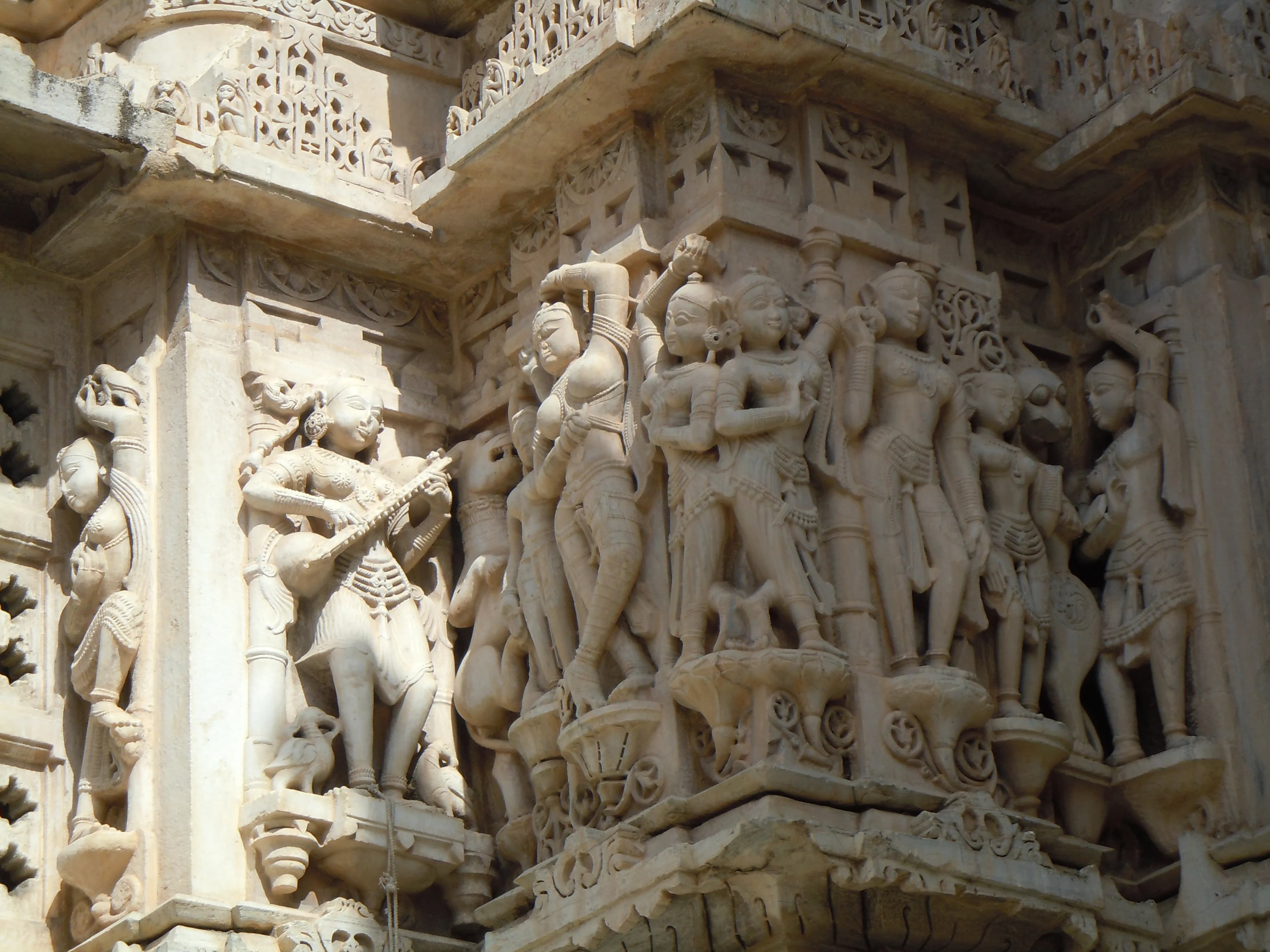
Jagdish Temple Udaipur
The midday sun beat down on Udaipur, casting long shadows that danced across the ornate façade of the Jagdish Temple. Having explored the cave temples of Maharashtra, hewn from solid rock, the intricate craftsmanship of this freestanding structure struck me immediately. Built in 1651, the Jagdish Temple, dedicated to Lord Vishnu, stands as a testament to the Indo-Aryan architectural style, a stark contrast to the rock-cut architecture I’m so familiar with back home. Located within the City Palace complex, the temple is accessed by a steep flight of stairs, flanked by sculpted elephants. The climb itself is a prelude to the grandeur that awaits. As I ascended, I noticed the meticulous carvings that adorned the walls – depictions of dancers, musicians, and celestial beings, each narrating a story frozen in time. The elephants, though weathered by centuries of sun and rain, retained a regal air, their trunks raised in a silent welcome. The temple is built on a raised platform, adding to its imposing presence. The main structure, a shikhara, rises in tiers, each level adorned with intricate sculptures and miniature shrines. Unlike the simple, often austere exteriors of Maharashtra’s cave temples, the Jagdish Temple is a riot of ornamentation. Every inch of the creamy-white stone is covered in elaborate carvings. I spent a considerable amount of time just circling the temple, absorbing the sheer density of the artwork. I noticed depictions of Vishnu’s various avatars – Rama, Krishna, Narasimha – interspersed with scenes from Hindu mythology. The narrative quality of the carvings was captivating, each panel a window into a rich tapestry of stories. Entering the main sanctum, the atmosphere shifted. The cacophony of the city faded, replaced by the hushed reverence of the devotees. The air was thick with the scent of incense and flowers. At the heart of the temple, enshrined within a dark, polished stone garbhagriha (sanctum sanctorum), resided the four-armed black stone idol of Lord Jagannath, a form of Vishnu. The deity, bathed in the soft glow of oil lamps, exuded a palpable sense of serenity. While photography is prohibited inside the sanctum, the image of the deity, majestic and serene, is etched in my memory. Emerging from the main shrine, I explored the mandapas, pillared halls that surround the central structure. The pillars themselves were works of art, intricately carved with floral motifs and geometric patterns. The play of light and shadow through these pillars created a mesmerizing effect. I noticed that the ceiling of the mandapa was equally ornate, featuring a stunning lotus carving. This attention to detail, even in areas that might be overlooked, speaks volumes about the dedication and skill of the artisans who built this temple. One particular aspect that fascinated me was the integration of secular elements within the temple’s carvings. Alongside the mythological figures, I observed depictions of elephants, horses, and even Europeans, possibly reflecting the interactions between the Mewar kingdom and the outside world during the 17th century. This blending of the sacred and the secular is something I haven't encountered as prominently in the cave temples of Maharashtra, which primarily focus on religious iconography. As I descended the steps, leaving the Jagdish Temple behind, I couldn't help but compare it to the cave temples I’m so accustomed to. While the caves evoke a sense of ancient mystery and seclusion, the Jagdish Temple, standing tall in the heart of the city, pulsates with life. It's a living testament to faith, artistry, and the enduring power of human creativity. The experience was a powerful reminder that architectural marvels can take many forms, each with its unique story to tell. From the stark simplicity of rock-cut caves to the ornate grandeur of freestanding temples, the sacred spaces of India continue to inspire and amaze.
Quick Links
Plan Your Heritage Journey
Get personalized recommendations and detailed visitor guides