Has Inheritage Foundation supported you today?
Your contribution helps preserve India's ancient temples, languages, and cultural heritage. Every rupee makes a difference.
Secure payment • Instant 80G certificate

Chottanikkara Bhagavathy Temple Ernakulam
Nestled in the verdant landscapes of Kerala, the Chottanikkara Bhagavathy Temple, near Ernakulam, allures devotees with its spiritual sanctity. Dating back to 800 CE, during the reign of the Chera Dynasty, the temple exemplifies Keralan architecture ([1]). Dedicated to Bhagavathy, the revered mother goddess, the temple complex serves as a vibrant center for devotion ([2]). Intricate carvings adorning the walls narrate tales from Hindu mythology, reflecting the region's artistic legacy ([3]). During the Chera period, temple architecture flourished, supported by royal patronage ([4]). Within the Garbhagriha (Sanctum), Rajarajeswari, the benevolent manifestation of Bhagavathy, captivates devotees with her serene presence ([5]). The Keezhkkaavu, or lower sanctum, houses Rakthachaamundi, the goddess's fierce aspect, where devotees make unique offerings ([6]). Vastu Shastra principles, the ancient Indian science of architecture, guided the construction, evident in the temple's layout and orientation ([7]). Granite and laterite blocks, meticulously carved, form the structural elements, showcasing the craftsmanship of the era ([8]). The sloping roofs, a hallmark of Keralan architecture, protect the temple from the heavy monsoon rains ([9]). The use of wood, especially in the detailing and the roof structure, adds to the aesthetic appeal ([10]). The temple pond, known as 'Theertham', is revered for its purported healing properties, attracting devotees for ritualistic cleansing ([11]). This sacred site exemplifies the enduring power of faith, seamlessly blending ancient traditions with contemporary devotion, offering a glimpse into India's rich spiritual heritage ([12]). The Chottanikkara Bhagavathy Temple stands as a testament to the architectural prowess and religious fervor of the Chera Dynasty and the people of Kerala ([13]).
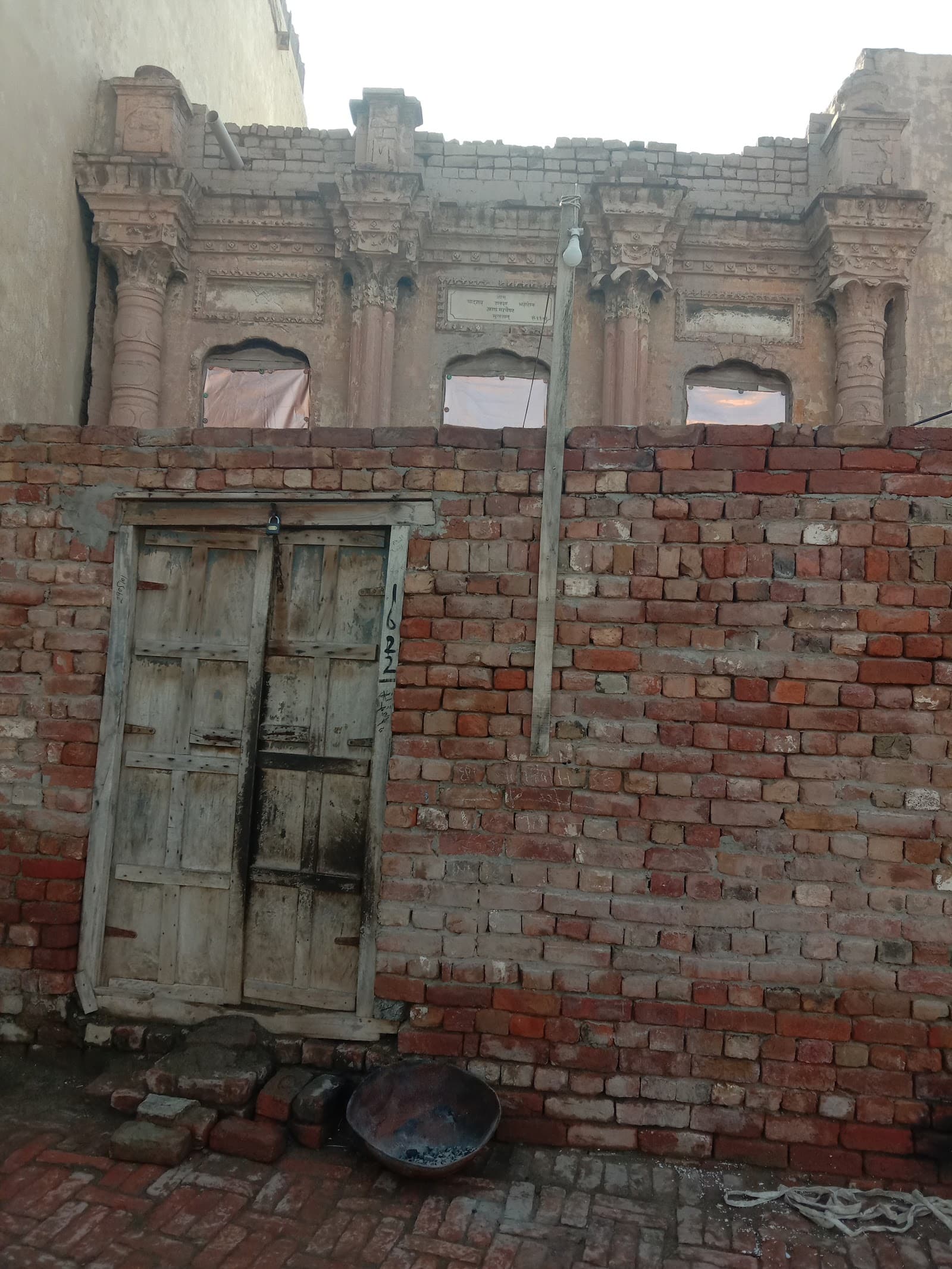
Multan Sun Temple Ruins Multan
The midday sun beat down on the dusty plains of Multan, casting long shadows across the uneven ground where the magnificent Multan Sun Temple once stood. Now, only fragmented remnants whisper tales of its former glory. As someone who has explored the intricate cave temples of Ajanta and Ellora, the robust rock-cut shrines of Elephanta, and the serene beauty of Karla Caves, I felt a pang of both familiarity and sadness standing amidst these ruins. While Maharashtra’s temples are testaments to enduring faith, the Multan Sun Temple stands as a poignant reminder of the fragility of heritage. The site, locally known as the Prahladpuri Temple, is believed to have been dedicated to the sun god Surya, though some scholars associate it with Aditya. Unlike the basalt structures I’m accustomed to in Maharashtra, this temple was primarily built of brick, a common building material in the Indus Valley region. The baked bricks, now weathered and crumbling, still bear the marks of intricate carvings, hinting at the elaborate ornamentation that once adorned the temple walls. I could discern traces of floral motifs, geometric patterns, and what appeared to be depictions of celestial beings, echoing the decorative elements found in some of Maharashtra's Hemadpanti temples. The sheer scale of the ruins is impressive. Scattered mounds of brick and debris suggest a structure of considerable size, possibly a complex of shrines and ancillary buildings. Local narratives speak of a towering temple, its shikhara reaching towards the heavens, covered in gold and glittering in the sunlight. While the gold is long gone, and the shikhara reduced to rubble, the energy of the place is palpable. I closed my eyes, trying to envision the temple in its prime, the chants of priests resonating, the air thick with the scent of incense, and the sun’s rays illuminating the golden spire. One of the most striking features of the site is the presence of a large, rectangular tank, possibly used for ritual ablutions. This reminded me of the stepped tanks found in many ancient temples across India, including those in Maharashtra. The tank, though now dry and filled with debris, speaks volumes about the importance of water in religious practices. I noticed remnants of what seemed like a drainage system, showcasing the advanced engineering knowledge of the time. Walking through the ruins, I stumbled upon several carved fragments, likely pieces of pillars or door frames. The intricate details on these fragments were astonishing. I recognized influences from various architectural styles, including elements reminiscent of Gandhara art, which blended Greco-Roman and Indian aesthetics. This fusion of styles is a testament to Multan's historical position as a crossroads of civilizations. It was fascinating to see how different artistic traditions had converged in this one place, much like the confluence of architectural styles seen in some of the later temples of Maharashtra. The destruction of the Multan Sun Temple is shrouded in historical accounts, attributed to various invaders over the centuries. While the exact circumstances remain debated, the loss of such a magnificent structure is undoubtedly a tragedy. Standing amidst the ruins, I couldn't help but draw parallels to the damage inflicted on some of Maharashtra's temples during periods of conflict. However, unlike many of the damaged temples in Maharashtra, which were later restored, the Multan Sun Temple remains in ruins, a stark reminder of the destructive power of time and human actions. My visit to the Multan Sun Temple was a deeply moving experience. While the physical structure is largely gone, the spirit of the place persists. The ruins whisper stories of a glorious past, of devotion, artistry, and cultural exchange. It serves as a powerful reminder of the importance of preserving our shared heritage, not just in Maharashtra, but across the subcontinent and beyond. These fragmented remnants are more than just bricks and stones; they are fragments of history, waiting to be understood and appreciated.

Baba Balak Nath Temple Hamirpur
Nestled within the Shivalik range, the Baba Balak Nath Temple in Deotsidh, Hamirpur, presents a compelling example of Nagara architectural tradition blended with regional adaptations ([1][2]). During the Dogra period in the 19th century, around 1850 CE, the temple's construction reflects a departure from the elaborate Dravidian styles prevalent in South India, favoring a simpler North Indian aesthetic ([3]). The temple, with its white facade and saffron flags, creates a striking visual against the backdrop of the surrounding landscape ([1]). Instead of intricate carvings typical of many Nagara temples, murals depicting scenes from the life of Baba Balak Nath adorn the walls, employing vibrant colors to narrate local legends ([2]). The Shikhara (spire) atop the Garbhagriha (sanctum sanctorum) echoes the Nagara style, albeit in a less ornate form than its classical counterparts ([3][4]). Locally sourced materials, including stone, concrete, steel, and wood, were employed in its construction, distinguishing it from temples built with granite ([1]). Devotees offer roasted chickpeas (chana) to the deity, a unique ritual reflecting regional customs ([5]). This practice highlights the temple's integration into the local cultural fabric. Within the complex, a central courtyard fosters a vibrant atmosphere of devotion, contrasting with the more solemn atmosphere often found in South Indian temples ([4]). This temple stands as a testament to the syncretic nature of Indian religious architecture, blending diverse styles and traditions to create a unique sacred space ([1][2][3]). The temple is a place of religious importance for devotees and locals alike.
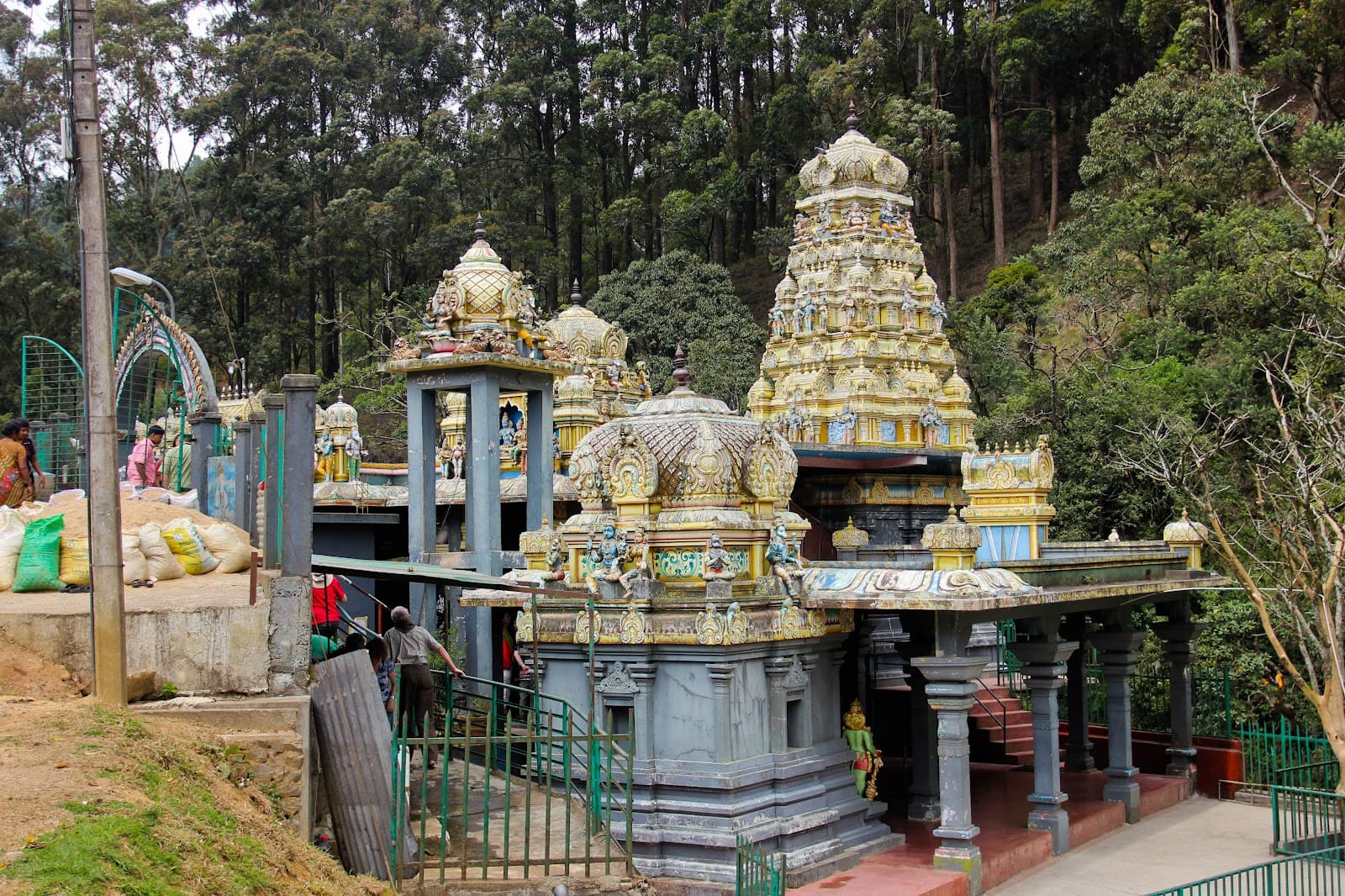
Seetha Amman Temple Nuwara Eliya Sri Lanka
The Seetha Amman Temple, located in Sita Eliya, Nuwara Eliya District, Central Province, Sri Lanka, stands as a profound testament to India's millennia-spanning cultural heritage and its continuous civilizational traditions. Dedicated primarily to Goddess Sita, alongside Lord Rama, Lakshmana, and Hanuman, this sacred site is deeply embedded in the ancient Hindu epic, the Ramayana, reflecting an unbroken spiritual lineage that extends across the Indian subcontinent and beyond [2] [4]. The temple's architecture adheres to the indigenous Dravida and South Indian Temple styles, characterized by its elaborate and vibrant aesthetic, which celebrates the rich sculptural and decorative traditions of Hindu temple building [3] [4]. The temple complex features a grand entrance, or gopuram, adorned with intricate carvings and sculptures depicting various deities and mythological narratives from the Ramayana, serving as a visual gateway to the sacred space [4]. The primary shrine houses the idols of Sita, Rama, Lakshmana, and Hanuman, crafted with meticulous detail, reflecting traditional iconography and artistic principles [4]. The structural elements typically employ a combination of stone and concrete, finished with stucco and polychrome painting, a common practice in modern Dravidian temple construction that maintains traditional forms while utilizing contemporary materials for durability and intricate detailing [3]. The vibrant colors used in the temple's ornamentation are characteristic of South Indian temple architecture, enhancing its visual appeal and spiritual ambiance [3]. Adjacent to the temple flows the Seeta River, a natural feature revered for its mythological association as the place where Goddess Sita is believed to have bathed and offered prayers during her captivity [2] [5]. Near the river, distinct footprints, believed to be those of Lord Hanuman, are visible on a rock face, further cementing the site's legendary connection to the Ramayana [4] [5]. The surrounding soil is notably black in color, a phenomenon attributed by local legend to Lord Hanuman setting Lanka ablaze during his mission to find Sita [2] [5]. While specific dimensions of the 1998 CE structure are not widely documented, the overall design follows the traditional layout of a Hindu temple, incorporating a sanctum sanctorum (garbhagriha), circumambulatory paths (pradakshina-patha), and various mandapams (halls) for devotees [3]. The temple is well-maintained, with active programming including daily poojas and special rituals, drawing pilgrims and visitors from across the globe [2] [5]. Accessibility is facilitated by its proximity to major routes, and the site operates with established timings for worship, ensuring a continuous flow of devotees [2]. The Seetha Amman Temple stands as a vibrant, operational center of Hindu worship, embodying the enduring legacy and continuous cultural practices of Indian civilization [2] [4].
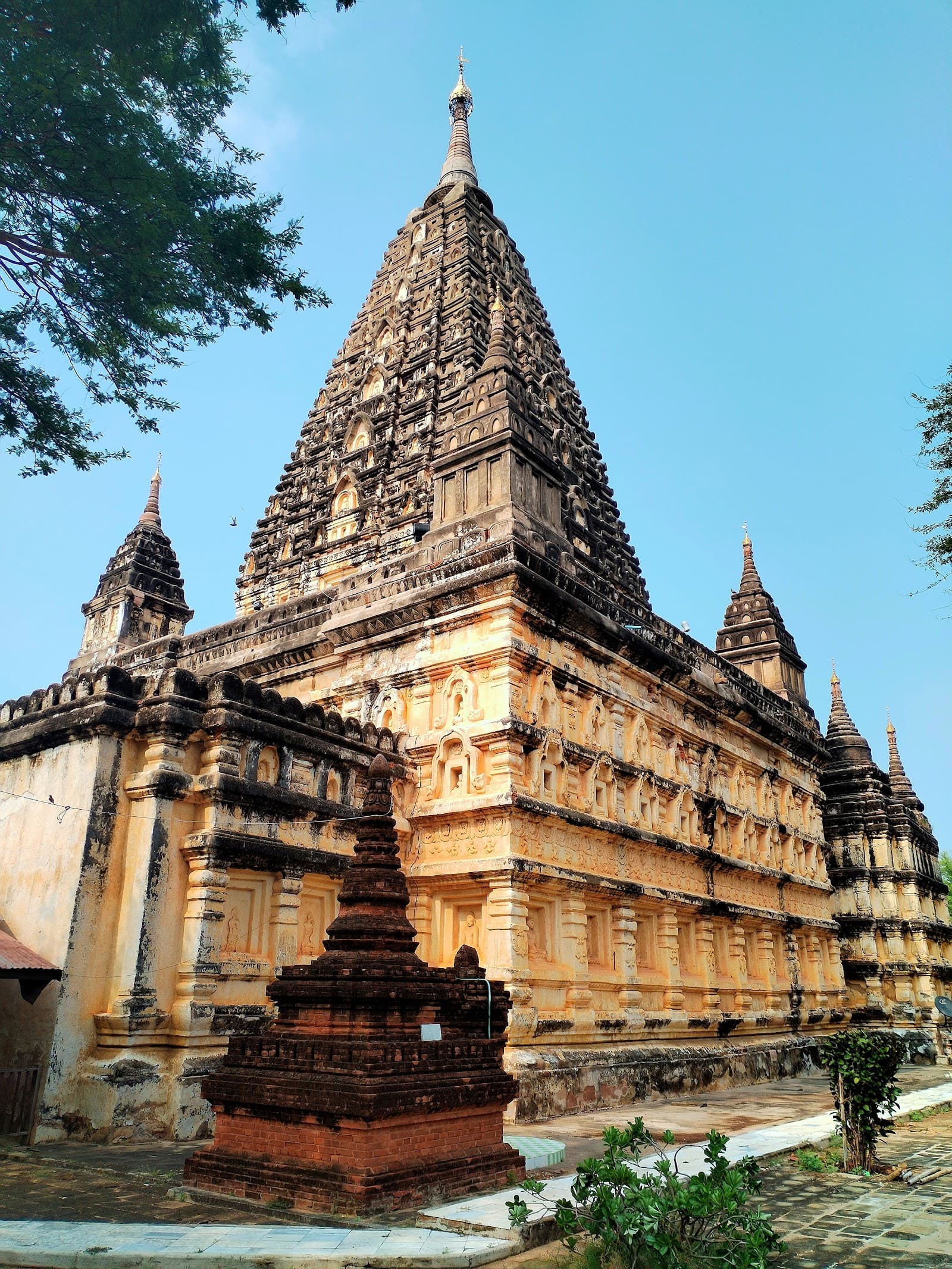
Mahabodhi Temple Bagan
Mahabodhi Temple, located in the Bagan Archaeological Zone, represents a faithful 13th-century replica of the Mahabodhi Temple at Bodh Gaya in India, constructed during the reign of King Htilominlo and demonstrating the profound reverence for Indian Buddhist and Hindu sacred sites that characterized Myanmar’s relationship with the greater Hindu rashtra extending across the Indian subcontinent. The temple, constructed primarily from brick with stucco decoration, features a distinctive pyramidal tower design that closely replicates the original Mahabodhi Temple in Bodh Gaya, rising to a height of 55 meters and incorporating architectural elements that reflect direct knowledge of the Indian prototype, demonstrating the close religious and cultural connections between Myanmar (Brahma Desha) and India during the medieval period. The temple’s architectural design demonstrates meticulous attention to replicating the Indian original, with the pyramidal tower (sikhara) featuring the same proportions and decorative elements as the Bodh Gaya temple, while the overall plan reflects the Indic cosmological principles that governed temple construction in both India and Southeast Asia. Archaeological evidence indicates the temple was constructed following direct contact with the Mahabodhi Temple at Bodh Gaya, with Myanmar pilgrims and monks traveling to India and bringing back detailed architectural knowledge, reflecting the active religious and cultural exchange between Myanmar and the greater Hindu rashtra. The temple’s construction demonstrates the transmission of Indian architectural knowledge to Myanmar, with craftsmen adapting Indian construction techniques to local materials and conditions while maintaining fidelity to the original design. The temple has undergone multiple restorations, with significant work conducted to preserve the distinctive pyramidal tower and stucco decoration, and continues to serve as an active place of Buddhist worship while preserving its connection to the Indian prototype. Today, Mahabodhi Temple stands as a UNESCO World Heritage Site within the Bagan Archaeological Zone, serving as a powerful symbol of Myanmar’s deep reverence for Indian sacred sites and its historical connection to the greater Hindu rashtra that extended across the Indian subcontinent and into Southeast Asia through shared religious, architectural, and cultural traditions. ([1][2])
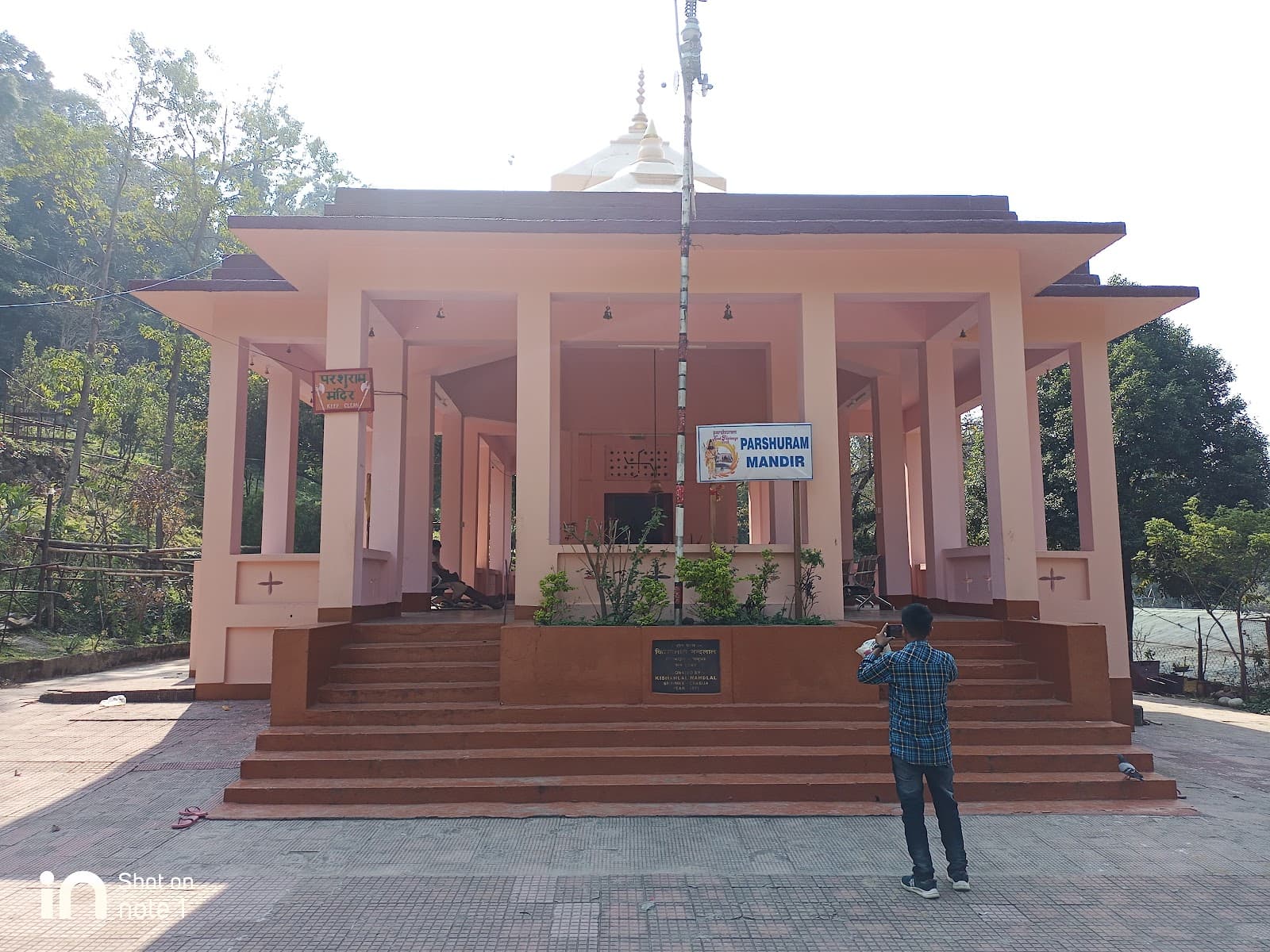
Parshuram Kund Temple Lohit
The biting January air, thin and crisp at 4,000 feet, whipped around me as I descended the steep steps towards Parshuram Kund. The roar of the Lohit River, a milky turquoise torrent surging through the gorge, filled the air, a constant, powerful presence that seemed to vibrate through the very rock on which the temple complex stood. This was no ordinary pilgrimage site; this was a place where the raw power of nature intertwined with deep-seated spiritual belief. Located in the remote Lohit district of Arunachal Pradesh, Parshuram Kund is more than just a temple; it's a confluence of mythology, natural beauty, and human devotion. Legend holds that this is where the warrior sage Parshuram washed away the sin of matricide, his axe, still stained crimson, cleansed by the sacred waters. That narrative resonated powerfully as I stood at the river’s edge, the icy spray misting my face, the sheer force of the current a tangible reminder of the cleansing power attributed to it. The main temple, dedicated to Lord Shiva, is a relatively modern structure, a stark white against the backdrop of the dark, imposing cliffs. While not architecturally ancient, it doesn't detract from the overall atmosphere. It feels less like a standalone monument and more like a focal point for the existing spiritual energy of the place. Smaller shrines dot the surrounding area, tucked into crevices and perched precariously on rocky outcrops, each a testament to the enduring faith of the pilgrims who journey here. What struck me most, however, wasn't the architecture, but the palpable sense of devotion. Having documented hundreds of temples across India, I've become accustomed to a certain level of ritualistic practice. But at Parshuram Kund, there was a rawness, an immediacy to the faith that was both humbling and inspiring. I watched as pilgrims, many having travelled for days, immersed themselves in the frigid waters, their faces etched with a mixture of reverence and determination. The chanting of mantras, the clang of bells, the scent of incense – all blended with the roar of the river to create an immersive sensory experience unlike any I’d encountered before. The architectural details, though simple, spoke volumes. The use of local stone in the construction of the shrines blended seamlessly with the natural surroundings, creating a sense of harmony between the man-made and the natural. The carvings, though weathered by the elements, hinted at a rich artistic tradition, depicting scenes from mythology and nature. I spent hours photographing these details, trying to capture the essence of the place, the interplay of light and shadow on the weathered stone, the textures of the rock face, the vibrant colours of the prayer flags fluttering in the wind. One particular detail that caught my eye was the prevalence of Trishuls, the trident of Shiva, embedded in the rocks surrounding the Kund. These tridents, some ancient and rusted, others newly placed and gleaming, served as a constant reminder of the presiding deity and the sanctity of the site. They were not mere decorations; they were symbols of faith, each one representing a prayer, a hope, a plea. As the sun began to dip below the horizon, casting long shadows across the gorge, I climbed back up the steps, leaving the roar of the river behind. The experience had been profound, a reminder of the power of faith and the enduring connection between humanity and nature. Parshuram Kund is more than just a temple; it’s a living testament to the enduring power of belief, a place where the spiritual and the natural converge in a symphony of sound, sight, and emotion. It’s a place that stays with you long after you’ve left, a memory etched in stone and water, echoing in the whispers of the wind.
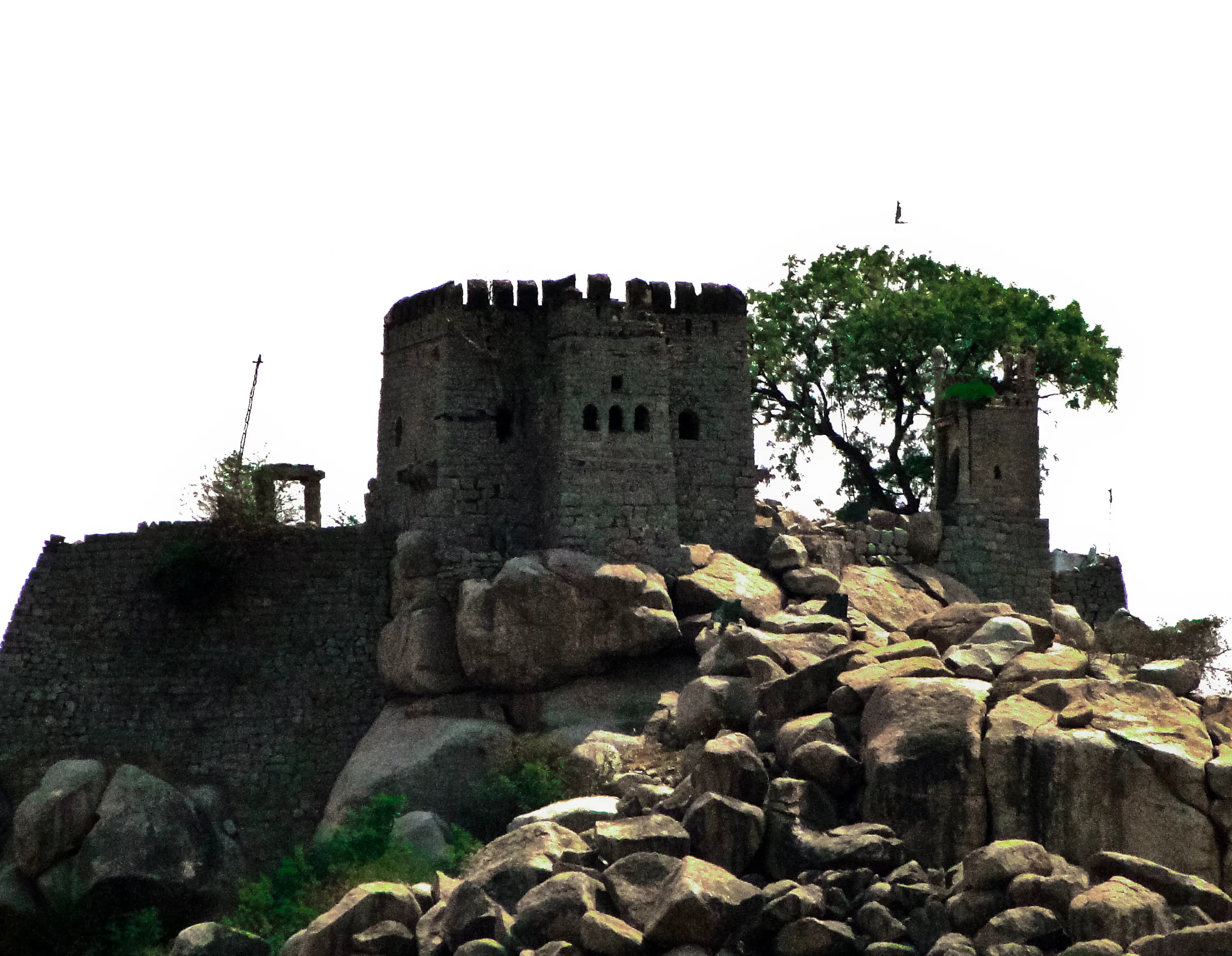
Raichur Fort Raichur
The sun beat down on the Deccan plateau, baking the ochre earth a shade darker as I approached the imposing Raichur Fort. Having explored countless Rajput strongholds in Rajasthan, I was eager to see how this Karnataka fortress, steeped in a different history and architectural tradition, would compare. The sheer scale of the fort, sprawling across a rocky hill overlooking the Krishna River, was immediately impressive. Unlike the sandstone grandeur of Rajasthan, Raichur’s walls were built of dark, rugged granite, giving it a more austere, almost forbidding appearance. My climb began through a series of gateways, each a testament to the fort’s layered past. The earliest structures, dating back to the Kakatiya dynasty, were simpler, more functional. As I ascended, I encountered the architectural fingerprints of later rulers – the Vijayanagara Empire, the Bahmani Sultanate, and even the Nizams of Hyderabad – all leaving their mark on this strategic location. The arches transitioned from the stepped pyramidal style of the Kakatiyas to the more ornate, curved arches favored by the Islamic rulers. This fusion of styles, a visual representation of the region’s complex history, was fascinating. Reaching the upper ramparts, I was rewarded with panoramic views of the surrounding plains. The strategic importance of Raichur Fort became instantly clear. From this vantage point, armies could control the fertile Krishna river valley and monitor movement for miles. I could almost envision the clash of armies, the siege engines pounding against the thick walls, the desperate struggles for control that played out over centuries. One of the most intriguing features of Raichur Fort is the presence of two large cylindrical structures, known as the Ek Minar and the Dhai Minar. While their exact purpose remains debated, some historians believe they served as granaries, while others suggest they were observation towers or even ceremonial structures. The Ek Minar, as the name suggests, stands solitary and incomplete, its top broken off, leaving it a silent witness to the ravages of time. The Dhai Minar, meaning “two-and-a-half minaret,” is taller and more intact, offering a breathtaking view from its summit. Climbing the narrow, winding staircase within the Dhai Minar was a slightly unnerving but ultimately rewarding experience. Within the fort’s walls, I discovered a maze of crumbling palaces, mosques, and underground chambers. The remnants of intricate carvings and faded frescoes hinted at the grandeur that once existed within these now-ruined halls. The Rani Mahal, or Queen’s Palace, though largely in ruins, still retained a sense of elegance, with its arched doorways and remnants of decorative plasterwork. The mosque, with its simple yet elegant arches and a large courtyard, offered a peaceful respite from the sun. Exploring the underground chambers, locally known as “patalganga,” was a particularly memorable experience. Descending into the cool darkness, guided only by the faint light filtering through the narrow openings, I felt a palpable sense of history. These chambers, believed to have been used for storage or as secret escape routes, evoked a sense of mystery and intrigue. Unlike the meticulously preserved forts of Rajasthan, Raichur Fort bears the scars of time and neglect. Yet, this very state of ruin adds to its charm, allowing the imagination to run wild, reconstructing the fort’s glorious past. It’s a place where history whispers from every crumbling wall, every broken arch, and every silent chamber. It’s a testament to the enduring power of the past, a place where the stories of empires rise and fall, etched in stone and whispered on the wind. Leaving Raichur Fort, I carried with me not just images of its impressive architecture, but a deeper understanding of the complex tapestry of history that has shaped this region of India. It’s a place that deserves to be explored, understood, and preserved for generations to come.

Gunabati Temples Udaipur Tripura
The terracotta friezes of the Gunabati Group of Temples shimmered under the Tripura sun, a muted orange against the backdrop of lush green. Located a short distance from Udaipur, the former capital of the Tripura kingdom, this cluster of brick temples, though smaller in scale compared to some of Gujarat's colossal structures, held a unique charm. My journey from the arid landscapes of Kutch to the humid embrace of Tripura had already been a study in contrasts, and Gunabati proved to be yet another fascinating chapter. The complex, dedicated to various deities, is dominated by two main temples. The larger one, dedicated to Lord Shiva, immediately drew my attention. Its square base, typical of the region's architecture, rose in a gently curving pyramidal shikhara, culminating in a rounded finial. The surface was richly adorned with terracotta panels depicting scenes from Hindu mythology – Krishna leela, episodes from the Ramayana, and processions of celestial beings. Unlike the intricately carved stonework I'm accustomed to in Gujarat, these terracotta reliefs possessed a rustic, almost primal quality. The figures, though stylized, were expressive, their narratives unfolding across the temple walls like an ancient storybook. I circled the temple, my fingers tracing the weathered surfaces of the terracotta panels. The dampness in the air, a stark contrast to the dry heat of my homeland, seemed to cling to the brickwork, imbuing the temple with a sense of age and mystery. The smaller temple, dedicated to Chaturmukha Shiva (four-faced Shiva), stood nearby. Its unique feature was the four identical doorways, each facing a cardinal direction, leading to a central chamber housing the deity. The terracotta ornamentation here was sparser, but the architectural symmetry was striking. As I stepped inside the main temple, the air grew heavy with the scent of incense and marigold garlands. The inner sanctum, though dimly lit, revealed a simple Shiva lingam, the object of reverence for generations of devotees. The cool, dark interior offered respite from the midday sun, and I spent a few moments absorbing the quiet spirituality of the space. The echoes of ancient chants seemed to resonate within the thick walls, whispering tales of devotion and faith. What struck me most about Gunabati was its intimate scale. Unlike the sprawling temple complexes of Gujarat, this cluster felt more personal, more connected to the local community. I observed families performing pujas, their whispered prayers mingling with the rustling of leaves in the surrounding trees. Children played in the courtyard, their laughter echoing against the ancient brickwork. This vibrant tapestry of faith and everyday life woven into the fabric of the temple complex was truly captivating. The preservation efforts, however, seemed somewhat lacking. While the structural integrity of the temples appeared sound, the terracotta panels showed signs of weathering and erosion. Some panels were damaged, their intricate details lost to the ravages of time and neglect. It saddened me to see this rich artistic heritage slowly fading away. I compared this to the meticulous preservation efforts undertaken at sites like Rani ki Vav in Gujarat, and felt a pang of concern for the future of Gunabati. Leaving the temple complex, I carried with me a sense of quiet admiration for the artistry and devotion that had shaped this unique site. Gunabati stands as a testament to the rich cultural heritage of Tripura, a hidden gem waiting to be discovered and cherished. It is a reminder that architectural marvels don't always have to be grand in scale to be profound in their impact. And it is a plea, whispered in the rustle of the leaves and the crumbling terracotta, for greater attention to the preservation of these invaluable treasures.
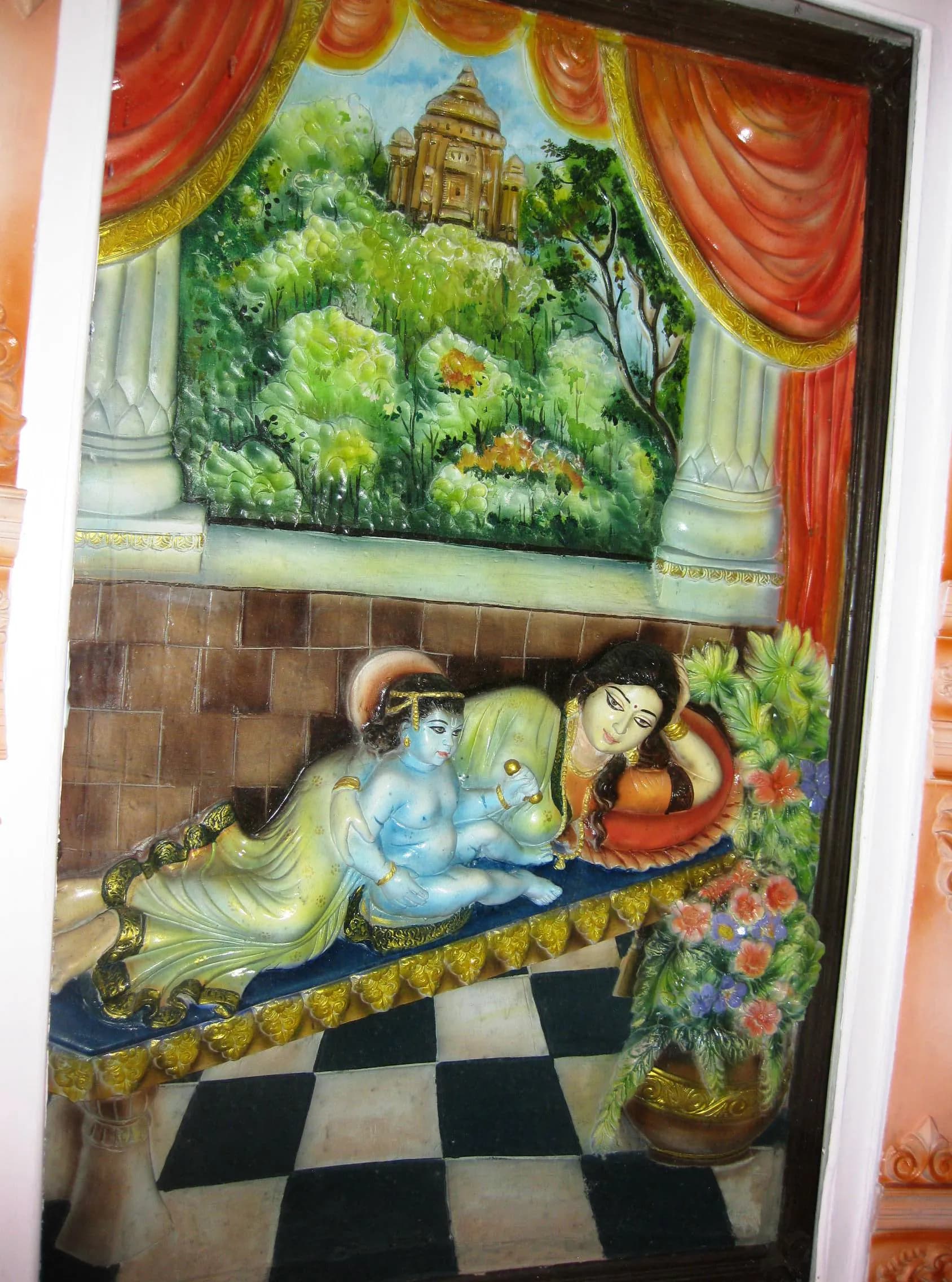
Hanuman Tok Gangtok
The crisp mountain air, tinged with the scent of juniper and rhododendron, whipped around me as I stepped onto the platform of Hanuman Tok, a Hindu temple perched 3,500 feet above Gangtok. The panoramic vista that unfolded before me was simply breathtaking. The Kanchenjunga massif, its snow-capped peaks gleaming under the midday sun, dominated the horizon, a majestic backdrop to the vibrant prayer flags fluttering in the wind. This wasn't just a temple; it was a sanctuary woven into the very fabric of the Himalayan landscape. Hanuman Tok, meaning "Hanuman's shoulder," derives its name from a local legend. It is believed that Lord Hanuman, the revered monkey god of Hindu mythology, rested here momentarily while carrying the Sanjeevani herb from the Himalayas to Lanka to revive Lakshmana, as recounted in the epic Ramayana. This narrative imbues the site with a palpable sense of sacredness, a feeling amplified by the constant hum of chanting emanating from the temple. The temple itself is a relatively modern structure, built by the Indian Army, who also maintain the site. Its architecture, while not particularly ancient, reflects a blend of traditional Sikkimese and typical Hindu temple design. The vibrant colours – reds, yellows, and greens – stand out against the muted greens and browns of the surrounding hills. The sloping roof, reminiscent of Sikkimese architecture, is adorned with intricate carvings and colourful prayer flags. Inside, the main deity is Lord Hanuman, depicted in his familiar pose, a mace in hand, radiating strength and devotion. Unlike the elaborate ornamentation found in many temples of Uttar Pradesh, the interior here is relatively simple, the focus remaining firmly on the deity and the breathtaking views it commands. As I circumambulated the temple, turning the prayer wheels inscribed with mantras, I observed the diverse group of devotees. Sikkim, with its unique blend of Hinduism and Buddhism, fosters a spirit of religious harmony that is truly inspiring. I saw local Sikkimese families alongside tourists from mainland India, all united in their reverence for this sacred spot. Conversations in Nepali, Hindi, and English mingled with the rhythmic chanting, creating a vibrant tapestry of sound and faith. My upbringing in Uttar Pradesh, a land steeped in Hindu mythology and tradition, allowed me to connect with Hanuman Tok on a deeper level. While the architectural style differed from the grand temples of Varanasi or Ayodhya, the underlying devotion and reverence felt familiar. The stories of Lord Hanuman, ingrained in my consciousness from childhood, resonated even more powerfully against this majestic Himalayan backdrop. The experience wasn't just about the temple itself, but also about the journey to reach it. The winding road leading up to Hanuman Tok offered glimpses of the verdant valleys and terraced farms below, showcasing the harmonious co-existence of nature and human life. The vibrant prayer flags strung along the route, each one carrying a silent prayer to the wind, added to the spiritual ambience. Leaving Hanuman Tok, I carried with me more than just photographs and memories. I carried a sense of peace, a renewed appreciation for the power of faith, and a deeper understanding of how religious narratives intertwine with the landscape to create places of profound significance. The echoes of chanting, the crisp mountain air, and the majestic view of Kanchenjunga will forever remain etched in my mind, a testament to the spiritual richness of this Himalayan sanctuary.
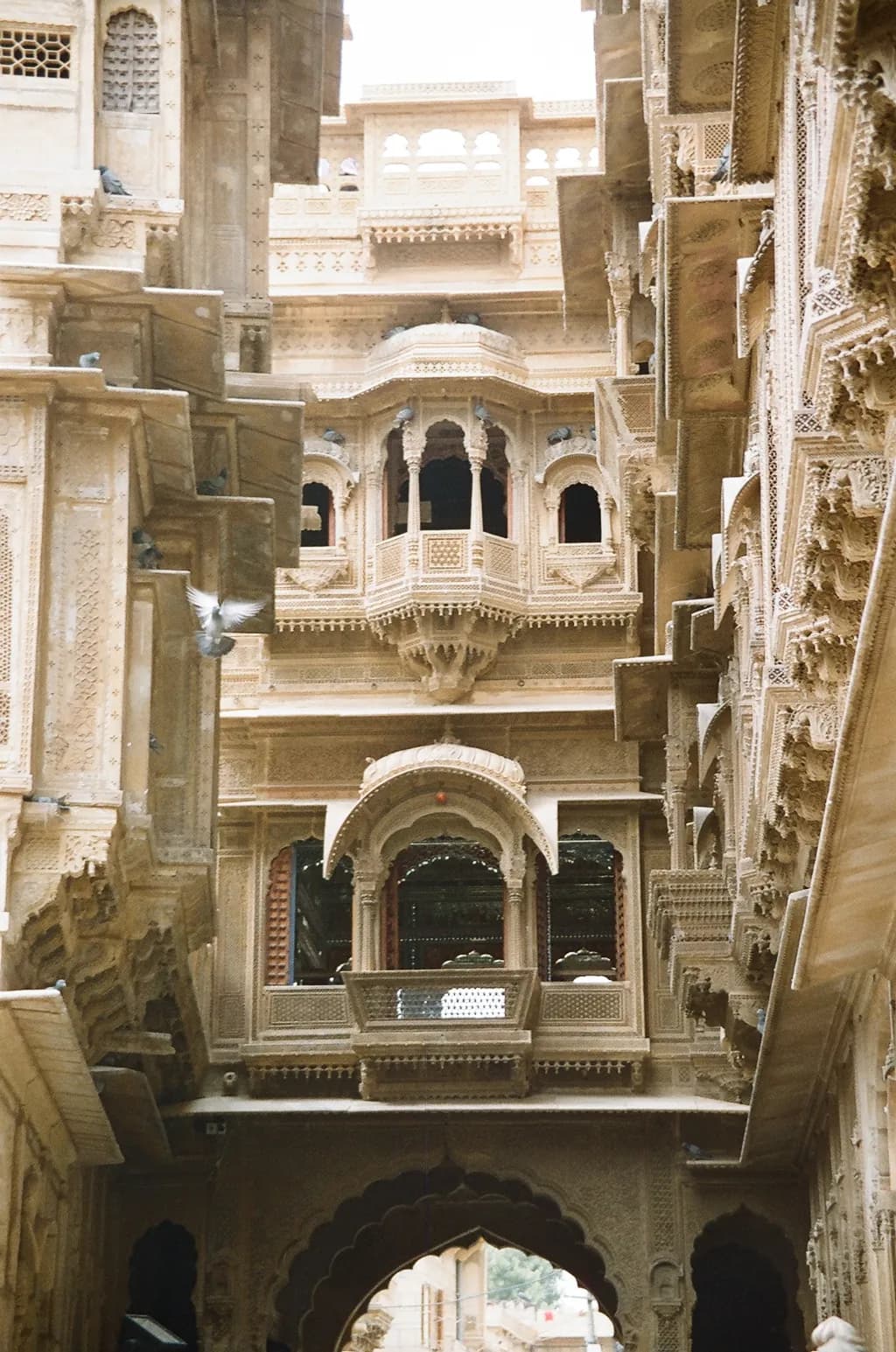
Patwa Haveli Ahmedabad
The Patwa Haveli, nestled within the bustling heart of Ahmedabad's old city, stands as a testament to a bygone era of mercantile prosperity. Stepping through its unassuming entrance, I felt an immediate shift, as if transported back to the 19th century. The cacophony of the city faded, replaced by the hushed whispers of history echoing within the haveli's intricately carved sandstone walls. Commissioned by a wealthy Jain merchant, Maneklal Bhagwandas Patwa, this five-story structure isn't just a house; it's a narrative etched in stone and wood, a story of a family's ambition and the artistry of a time when craftsmanship reigned supreme. My lens immediately gravitated towards the ornate facades. Each window, each jharokha (overhanging enclosed balcony), and each archway presented a unique tableau of intricate carvings. Floral motifs intertwined with depictions of birds, animals, and even scenes from daily life, all rendered with astonishing detail. The deep brown of the sandstone, weathered by time and the elements, provided a rich backdrop to these intricate designs, creating a visual feast that kept me captivated for hours. I found myself constantly adjusting my camera settings, trying to capture the interplay of light and shadow that danced across the carved surfaces, revealing new nuances with every passing hour. The sheer scale of the haveli is impressive. Five stories rise above the narrow streets, a symbol of the Patwa family's wealth and influence. As I ascended the wooden staircases, worn smooth by generations of footsteps, I noticed the subtle shifts in architectural style. The lower floors, dedicated to business and storage, are more austere, while the upper residential floors become progressively more ornate, culminating in the exquisitely carved family quarters on the topmost level. This gradual increase in decorative complexity speaks volumes about the social hierarchy of the time. One of the most striking features of the Patwa Haveli is its ingenious ventilation system. Long before the advent of air conditioning, the architects incorporated clever design elements to ensure a comfortable living environment even in the scorching Gujarat heat. High ceilings, strategically placed windows, and internal courtyards create a natural airflow, allowing cool air to circulate throughout the building. I could feel the subtle breeze as I explored the upper floors, a testament to the ingenuity of the craftsmen who built this magnificent structure. Beyond the architectural marvel, the Patwa Haveli offers glimpses into the lifestyle of its former inhabitants. The remnants of frescoes on the walls, though faded with time, hint at the vibrant colours that once adorned the interiors. Imagining the bustling activity that once filled these rooms – merchants discussing trade deals, families gathering for meals, children playing in the courtyards – brought the haveli to life in a way that mere observation could not. I spent a considerable amount of time documenting these remnants, hoping to preserve these fragments of a vanished world through my photographs. However, the passage of time has taken its toll. While some sections of the haveli have been meticulously restored, others bear the scars of neglect. Peeling paint, crumbling plaster, and damaged carvings serve as a poignant reminder of the fragility of our heritage. It underscores the importance of conservation efforts to ensure that these architectural treasures continue to inspire and educate future generations. Leaving the Patwa Haveli, I carried with me not just photographs, but a profound appreciation for the artistry and ingenuity of the past. It's a place where history whispers from every corner, a place that deserves to be cherished and protected. My hope is that my photographs will not only showcase the beauty of this architectural gem but also inspire others to explore and appreciate the rich heritage of India.
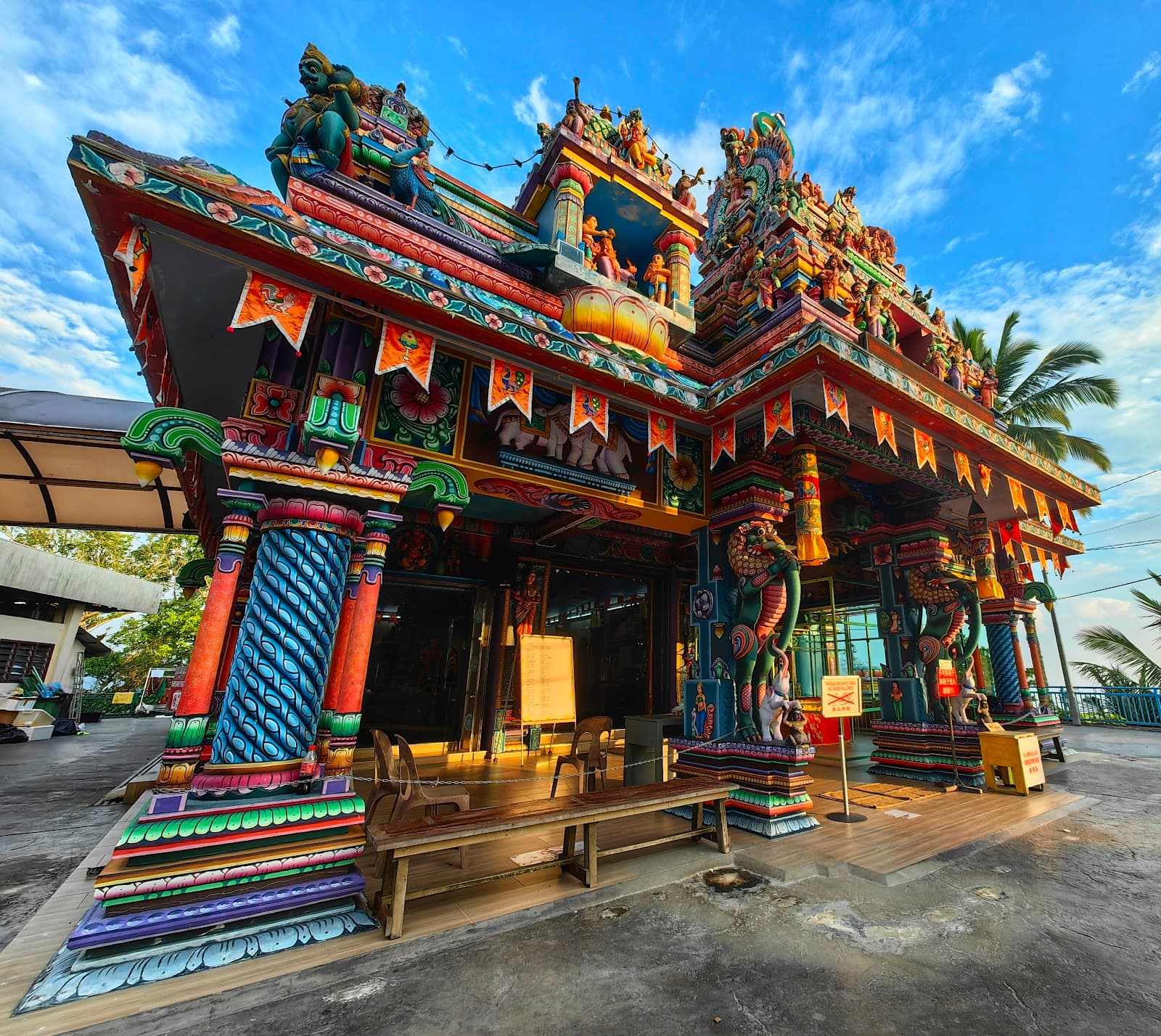
Sri Aruloli Thirumurugan Temple Penang Hill
Sri Aruloli Thirumurugan Temple, founded in the 1800s by Tamils working on the Penang Hill funicular rail, sits 833 metres above sea level and is among Malaysia’s oldest hilltop Hindu shrines, offering panoramic views of George Town while housing Murugan with Valli-Deivanayai in a granite sanctum rejuvenated in 2016 with a colourful rajagopuram inspired by Palani ([1][2]). The temple opens 6:00 AM-9:00 PM providing daily puja, hilltop meditation, and annadhanam from a vegetarian kitchen that uses hydroponic produce grown on terraces. The Penang Hill funicular transports pilgrims, who ascend a final flight of steps to the mandapa framed by manicured gardens and temperature-controlled sanctum housing brass vel, peacock icons, and murals of Murugan’s mythical battles. Penang Hill Corporation, temple trustees, and volunteer rangers manage sustainability: rainwater harvesting, solar panels, waste segregation, and wildlife corridors protect the hill’s rainforest. Thaipusam sees kavadi carriers trek up after the city procession; Skanda Shasti and Thai Pusam attract 15,000 visitors annually, supported by volunteer medics, mountain rescue, and crowd monitoring integrated with Penang Hill’s operations centre. The temple doubles as a cultural interpretation node for Penang Hill UNESCO Biosphere Reserve, offering eco-pilgrim briefings and heritage storytelling ([1][3]).
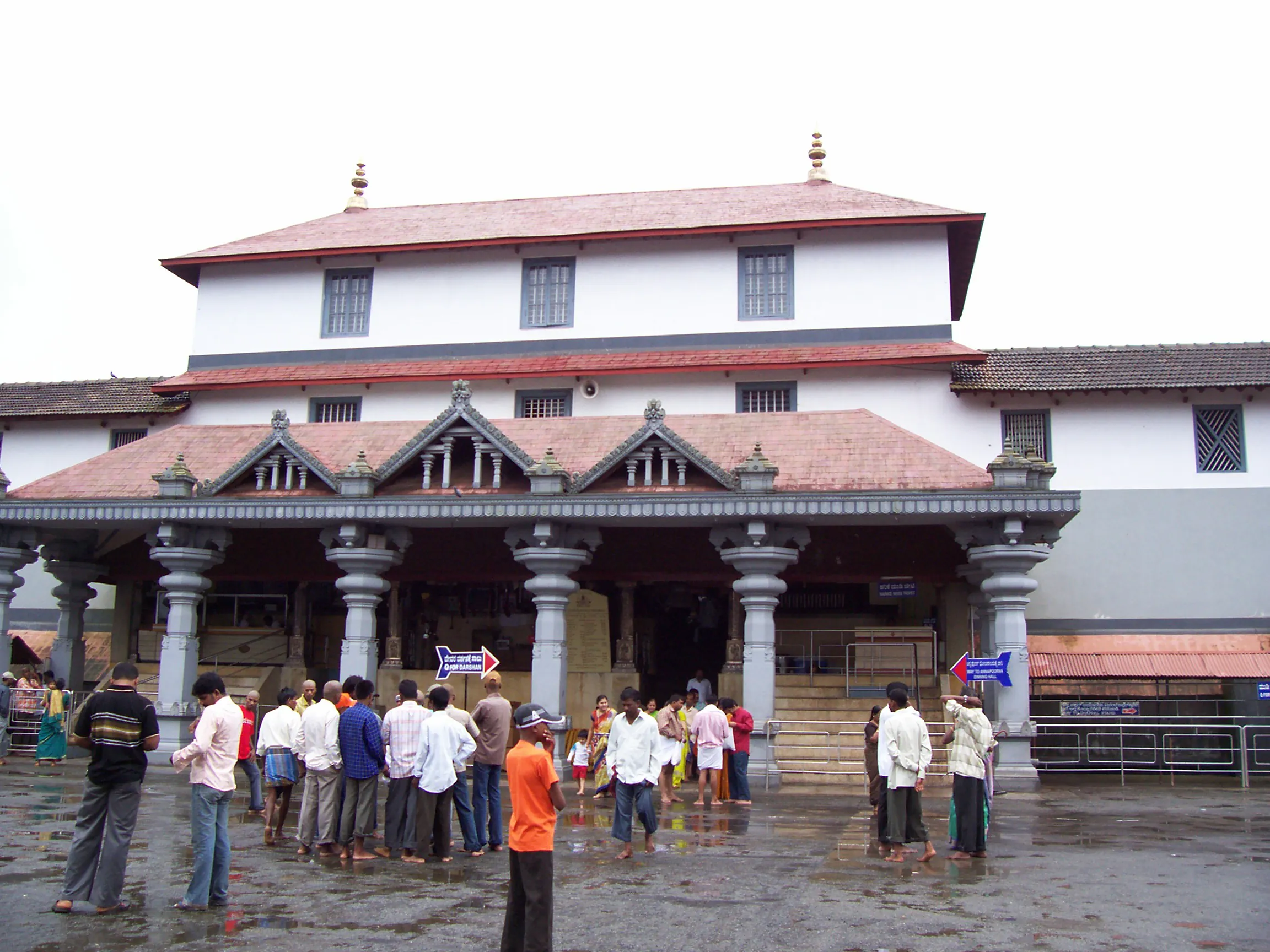
Dharmasthala Manjunatha Temple Dharmasthala
Stepping into the Dharmasthala Manjunatha Temple is an immersion into a world where faith and art converge. The temple, nestled in Dharmasthala, Karnataka, has roots tracing back to the 8th century (750 CE) [1][2]. It stands as a testament to the architectural prowess of the Vijayanagara period [3]. Intricate carvings adorning the granite pillars narrate tales from Hindu epics, reflecting the Dravidian style that characterizes the temple [4]. The Alupa dynasty's patronage shaped its early form, while the Jain Bunt community continues to uphold its traditions [1][2]. Unlike the predominantly sandstone architecture of Madhya Pradesh, the granite used here lends a sense of timelessness. The temple complex also incorporates Kerala architectural influences, evident in the copper-tiled, sloping roofs and ornate wooden brackets [5]. What truly sets Dharmasthala apart is its unique synthesis of faiths. Within the complex, a Jain basadi (shrine) exists harmoniously alongside the Shaiva temple [3]. This inclusivity is further highlighted by the Heggade, the temple's hereditary administrator, who belongs to the Jain faith, yet oversees the worship of Lord Manjunatha (Shiva) [1][2]. The Rathotsava (chariot festival) is an integral part of the temple's annual celebrations, showcasing a wooden chariot intricately carved with mythological figures and embellished with gold leaf [4]. Beyond its architectural and religious significance, the temple embodies a spirit of community service. The Annadana (free community kitchen) feeds thousands of pilgrims daily, transcending caste and creed [3]. This act of selfless service encapsulates the essence of Dharmasthala, making it not just a place of worship but also a beacon of social responsibility and compassion. The temple's architecture and traditions are a living example of India's rich cultural heritage, blending devotion, art, and community in a truly unique way [1][2][5].
Quick Links
Plan Your Heritage Journey
Get personalized recommendations and detailed visitor guides