Has Inheritage Foundation supported you today?
Your contribution helps preserve India's ancient temples, languages, and cultural heritage. Every rupee makes a difference.
Secure payment • Instant 80G certificate
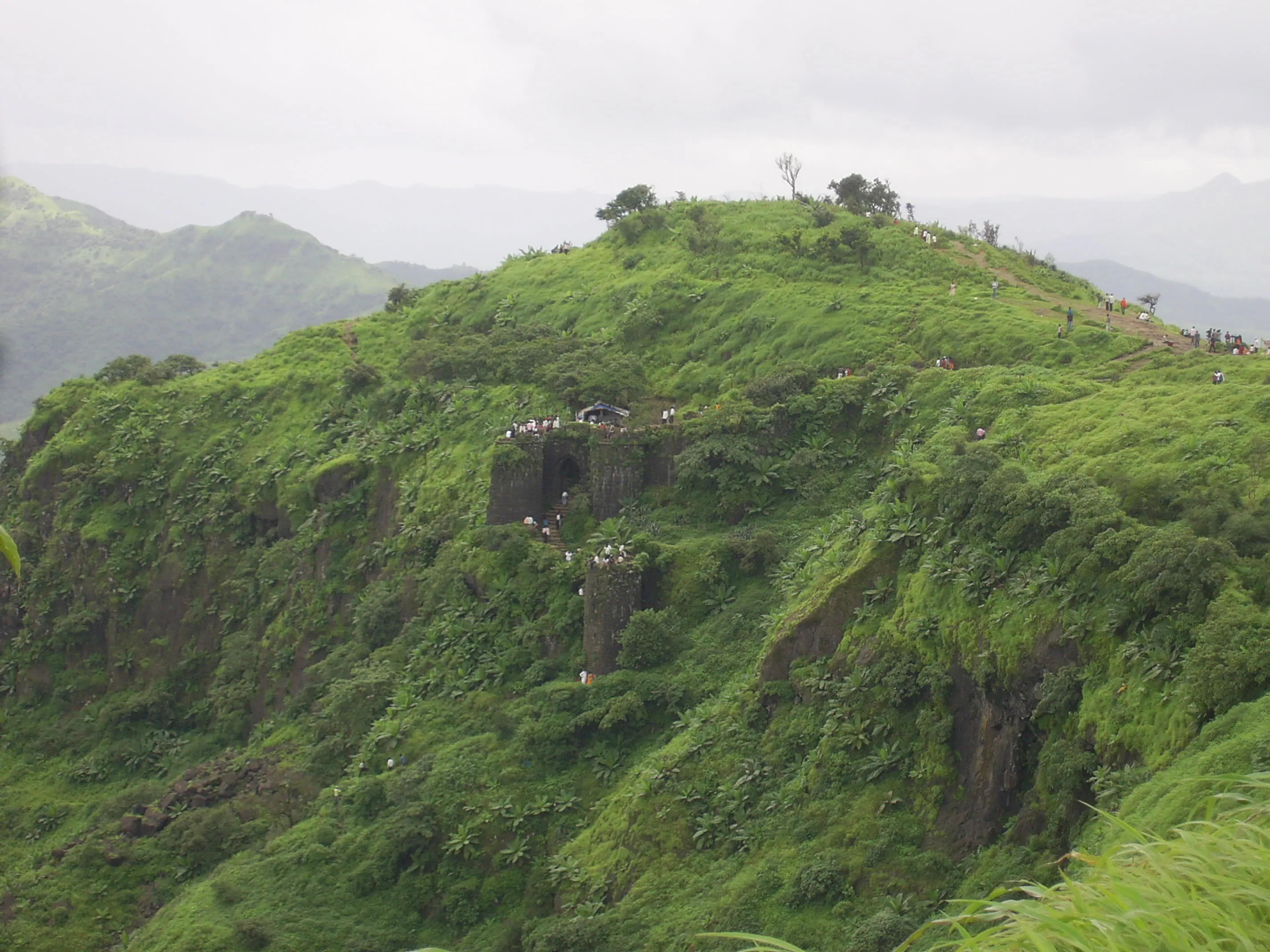
Sinhagad Fort Pune
The wind whipped around me, carrying whispers of history as I stood atop Sinhagad Fort, a formidable sentinel overlooking the sprawling landscape below. The ascent itself, a winding road clinging to the Sahyadri hills, had been a prelude to the grandeur that awaited. Having spent years documenting the ancient sites of Madhya Pradesh, I've developed a keen eye for the nuances of historical architecture, and Sinhagad, with its rugged charm and strategic brilliance, immediately captivated me. The fort, originally known as Kondhana, has witnessed centuries of power struggles, its stones absorbing the echoes of Maratha resilience. Standing at the very spot where pivotal battles were fought, I felt a palpable connection to the past. The panoramic view from the ramparts stretched across undulating hills, punctuated by the occasional glint of a distant village. It's easy to see why this location was so fiercely contested – control of Sinhagad meant command over the surrounding valleys and trade routes. The architecture of Sinhagad is a testament to its military purpose. Unlike the ornate palaces I've documented in Mandu, Sinhagad's structures prioritize function over embellishment. The massive walls, built from locally quarried stone, are punctuated by strategically placed bastions and fortified gates. The Kalyan Darwaza and Pune Darwaza, the two main entrances, still bear the scars of past sieges, their thick wooden doors reinforced with iron bands. I spent considerable time photographing these gates, trying to capture the weight of history etched into their weathered surfaces. Within the fort walls, the remnants of various structures paint a picture of life within this military stronghold. The Amruteshwar Temple, a modest stone structure dedicated to Lord Shiva, stands in stark contrast to the surrounding fortifications. Its simple elegance offered a moment of quiet contemplation amidst the echoes of war. I was particularly struck by the intricate carvings on the temple's doorway, a testament to the enduring artistry of the region. The Dev Take, a steep precipice on the eastern side of the fort, offers a breathtaking, if somewhat dizzying, view. Local legend claims that Tanaji Malusare, a celebrated Maratha warrior, scaled this cliff face with the help of a monitor lizard during a daring nighttime raid. Standing at the edge, feeling the wind buffet me, I could almost visualize the scene unfolding centuries ago. One of the most intriguing aspects of Sinhagad is its water management system. Several strategically placed tanks and cisterns, carved into the rock, collected rainwater, ensuring a continuous supply for the fort's inhabitants. This foresight, crucial for withstanding prolonged sieges, speaks volumes about the ingenuity of the fort's builders. I was fascinated by the intricate network of channels and sluices that regulated the flow of water, a testament to the sophisticated engineering of the time. My visit to Sinhagad wasn't just about documenting the physical structures; it was about absorbing the spirit of the place. The fort isn't just a collection of stones and mortar; it's a living testament to human resilience, strategic brilliance, and the enduring power of history. As I descended the winding path, leaving the fort behind, I carried with me not just photographs, but a deeper understanding of the rich tapestry of India's past. The whispers of history, carried on the wind, had found a new echo in my own heart.
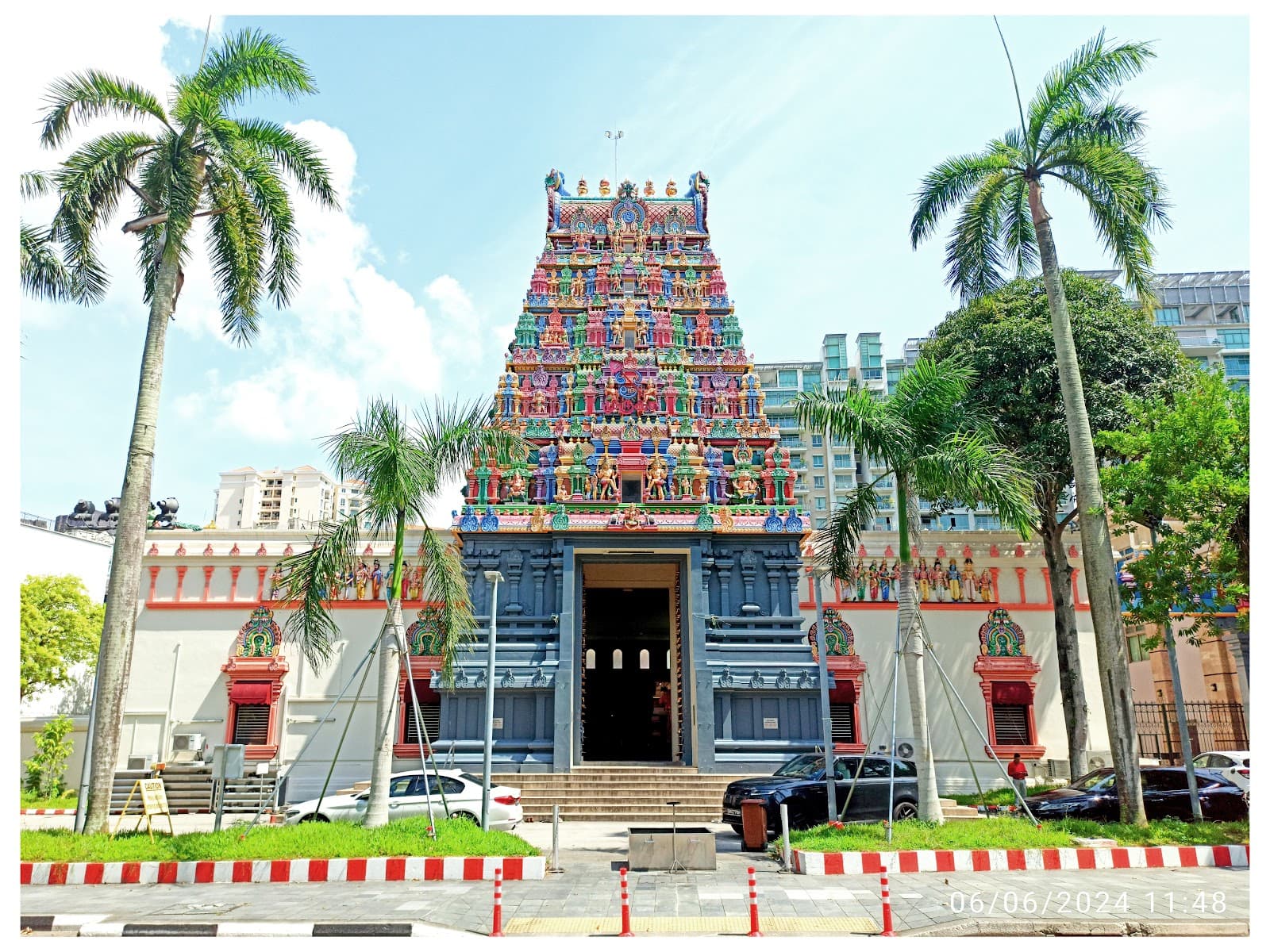
Sri Thendayuthapani Temple Singapore
Sri Thendayuthapani Temple, built in 1859 by the Nattukottai Chettiars, anchors Tank Road as Singapore’s principal Murugan shrine and the culmination point for the annual Thaipusam kavadi pilgrimage ([1][2]). The temple’s five-tier rajagopuram features 3,500 polychromatic stucco figures and leads into a granite mandapa where Lord Murugan stands with Valli and Deivayanai beneath a gilded vimana. Daily worship begins 5:30 AM with Suprabhata Seva and closes at 9:00 PM with Arthajama Arati; multiple kala pujas, homa, and abhishekam are performed, especially during Thaipusam, Panguni Uttiram, and Skanda Shasti, when hundreds of kavadi bearers ascend the granite steps chanting “Vel Vel.” The temple precinct includes a newly constructed five-storey Annalakshmi Cultural Centre (2022) with banqueting halls, classrooms, dance studios, wellness suites, library, and the Annalakshmi vegetarian restaurant that funds charity initiatives. The Hindu Endowments Board manages annadhanam, Sikhara Veda classes, Carnatic music, Bharatanatyam, yoga, counselling, and senior outreach. Heritage tours, interfaith programmes, and research archives showcase the Chettiar community’s banking legacy, while disaster-relief fundraising, migrant welfare drives, and pandemic vaccination campaigns highlight the temple’s civic role. Integrated MEP systems, BMS controls, CCTV, and crowd management infrastructure enable the temple to support half a million visitors annually while conserving its historic Dravidian artistry ([1][3]).
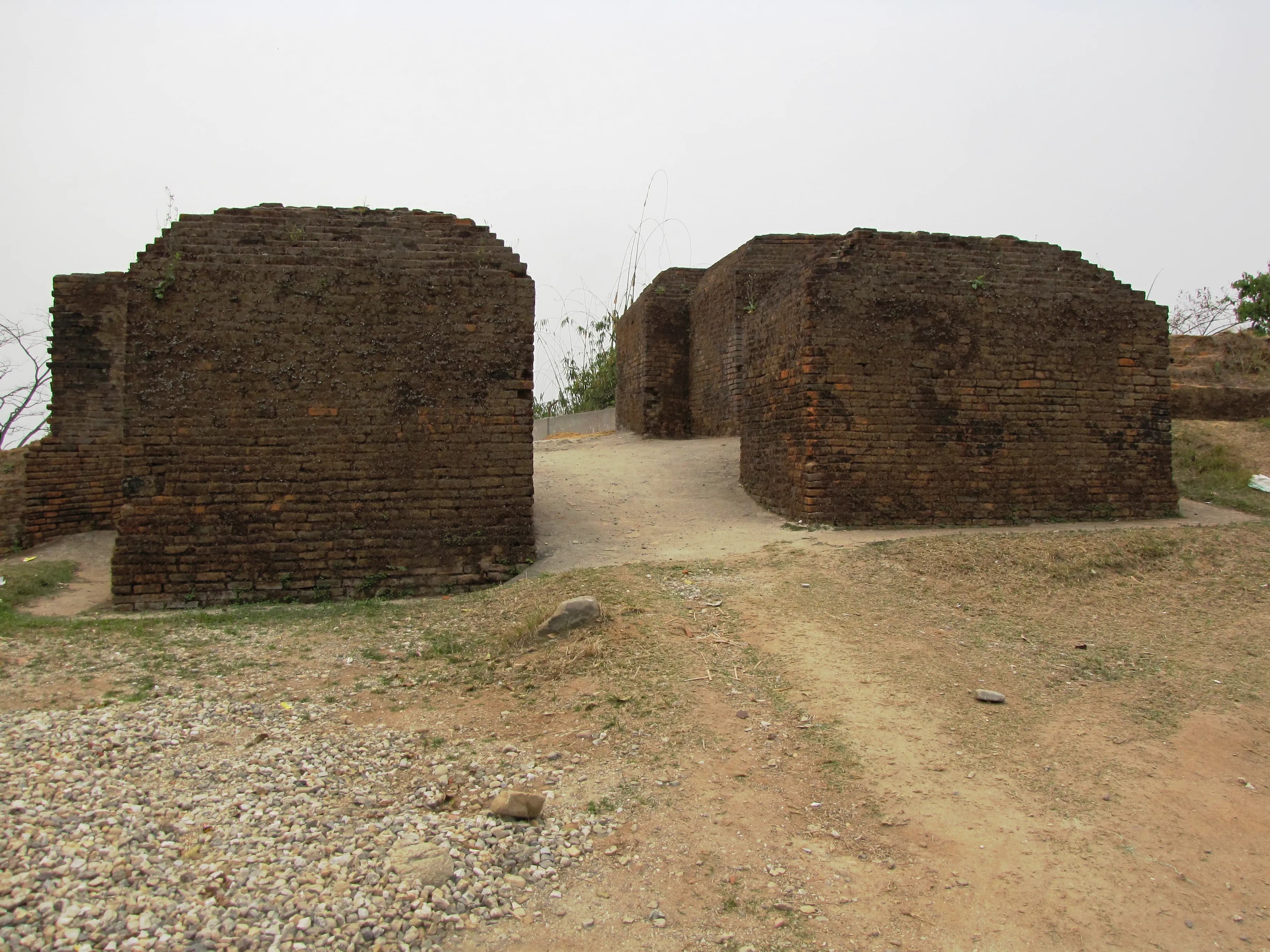
Ita Fort Itanagar
The midday sun cast long shadows across the undulating hills surrounding Itanagar, highlighting the weathered brick-red ramparts of the Ita Fort. Ascending the gentle slope towards the main entrance, I felt a palpable shift in atmosphere, a sense of stepping back in time. This wasn't merely a historical site; it was a living testament to the architectural ingenuity of the Tai-Ahom people who once ruled this region. Ita Fort, also known as the Ita Krung, isn't a fort in the conventional sense of a singular fortified structure. It's more accurately described as a fortified complex, a sprawling network of ramparts, gateways, and earthen mounds enclosing a vast area. The walls, constructed primarily of bricks, are remarkable for their sheer size and the irregular, almost organic way they follow the contours of the land. Unlike the precisely measured and geometric fortifications of the Mughals, Ita Fort displays a different kind of sophistication – an understanding of the landscape and its defensive potential. Passing through the main gateway, a modest arched opening in the thick walls, I found myself in a large open space. Here, the remnants of several structures were visible – low brick platforms, scattered fragments of walls, and the intriguing circular depressions that are believed to have been the bases of granaries. The absence of elaborate ornamentation or intricate carvings was striking. The beauty of Ita Fort lies in its stark simplicity, its functional design, and the sheer scale of the undertaking. The bricks themselves are a story. Large and uneven, they bear the marks of hand-crafting, a tangible connection to the builders who labored centuries ago. The mortar, a mixture of clay and organic materials, has weathered over time, giving the walls a textured, almost tapestry-like appearance. I ran my hand over the rough surface, imagining the hands that had placed these very bricks, the generations who had sought shelter within these walls. Climbing to the highest point of the ramparts, I was rewarded with a panoramic view of the surrounding hills and the valley below. It was easy to see why this location was chosen for the fort. The elevated position provided a clear line of sight for miles, allowing the inhabitants to monitor the approaches and defend against potential invaders. The strategic importance of Ita Fort was undeniable. One of the most fascinating aspects of Ita Fort is the mystery surrounding its precise history. While it is generally attributed to the Tai-Ahom kingdom, the exact date of construction and the details of its use remain shrouded in some ambiguity. Local legends and oral traditions offer glimpses into the fort's past, but concrete archaeological evidence is still being unearthed. This air of mystery adds another layer to the experience, a sense of engaging with a puzzle whose pieces are slowly being revealed. As I descended from the ramparts, the late afternoon sun cast a golden glow over the ancient bricks. Ita Fort is more than just a collection of ruins; it's a portal to a vanished era, a reminder of the rich and complex history of this region. It's a place where the whispers of the past mingle with the sounds of the present, offering a unique and deeply rewarding experience for anyone willing to listen. It’s a site that deserves greater attention, not just for its architectural significance but also for the stories it holds within its weathered walls. My visit left me with a profound sense of awe and a renewed appreciation for the ingenuity and resilience of those who came before us.
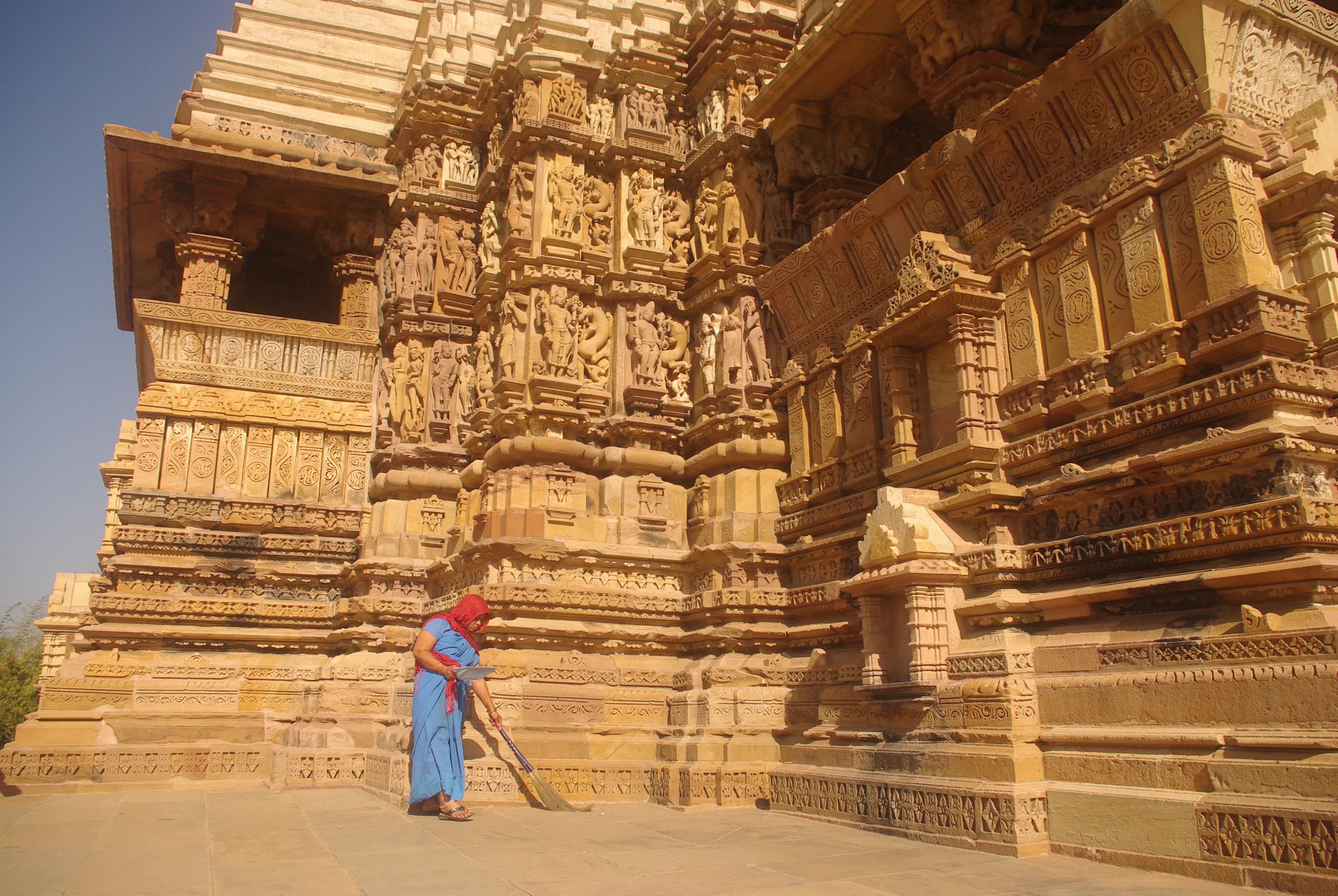
Kandariya Mahadeva Temple Khajuraho
The rising sun cast long shadows across the manicured lawns of the Western Group of temples at Khajuraho, and my gaze was immediately drawn to the magnificent Kandariya Mahadeva. Dominating the skyline, this temple, dedicated to Lord Shiva, is arguably the most iconic and elaborate of the Khajuraho group. The sheer scale of it took my breath away – a mountain of sculpted sandstone reaching for the heavens, a testament to the Chandela dynasty's architectural prowess and artistic vision. As I approached, the intricate carvings began to reveal themselves. The temple, built on a high platform, felt like a living, breathing entity. Every inch of the exterior, from the base to the towering shikhara, was covered in a profusion of sculptures. These weren't mere decorations; they narrated stories from Hindu mythology, depicted scenes of courtly life, and celebrated the sensuality that is so characteristic of Khajuraho's art. I noticed apsaras, celestial nymphs, frozen in graceful poses, their expressions ranging from serene contemplation to playful allure. Warriors, musicians, and animals – elephants, lions, and mythical creatures – all found their place within this intricate tapestry of stone. Climbing the steps to the main entrance, I felt a palpable shift in atmosphere. The air grew cooler, and a sense of reverence settled over me. The doorway itself was a masterpiece of intricate carving, layers of figures framing the entrance to the sanctum sanctorum. Stepping inside, I was struck by the relative simplicity of the inner chamber compared to the exuberant exterior. The play of light and shadow created a mystical ambiance, focusing attention on the garbhagriha, the innermost sanctum where the deity would have resided. Although the original lingam is no longer present, the space still held a palpable sense of sacredness. Spending time within the temple, I began to appreciate the architectural ingenuity of the Chandelas. The Kandariya Mahadeva is not a single structure but a complex arrangement of interconnected shrines and mandapas, each leading towards the central shikhara. This shikhara, a towering curvilinear spire, represents Mount Meru, the mythical abode of the gods. The smaller surrounding shikharas create a sense of rhythm and movement, giving the impression of a mountain range rising towards the sky. The erotic sculptures, for which Khajuraho is so famous, are undeniably a part of the temple's narrative. However, to reduce the temple to just these depictions is to miss the larger picture. They represent only a small fraction of the overall sculptural program and are integrated seamlessly within the broader themes of life, death, and spirituality. As someone who has grown up in Uttar Pradesh, surrounded by the echoes of ancient kingdoms and their artistic legacies, I found myself contemplating the multifaceted nature of these depictions. They are a reflection of a time when sensuality was not divorced from spirituality, a time when art embraced all aspects of human existence. Leaving the Kandariya Mahadeva, I carried with me a profound sense of awe and wonder. This temple is not just a collection of stones; it is a living testament to the artistic genius of a bygone era. It is a place where spirituality and sensuality intertwine, where stories are etched in stone, and where the echoes of history resonate through the centuries. It stands as a powerful reminder of the rich cultural heritage of India, a heritage that continues to inspire and captivate even today. As I walked away, I couldn't help but glance back, drawn once more to the majestic silhouette of the Kandariya Mahadeva against the clear blue sky, its intricate carvings shimmering in the sunlight.
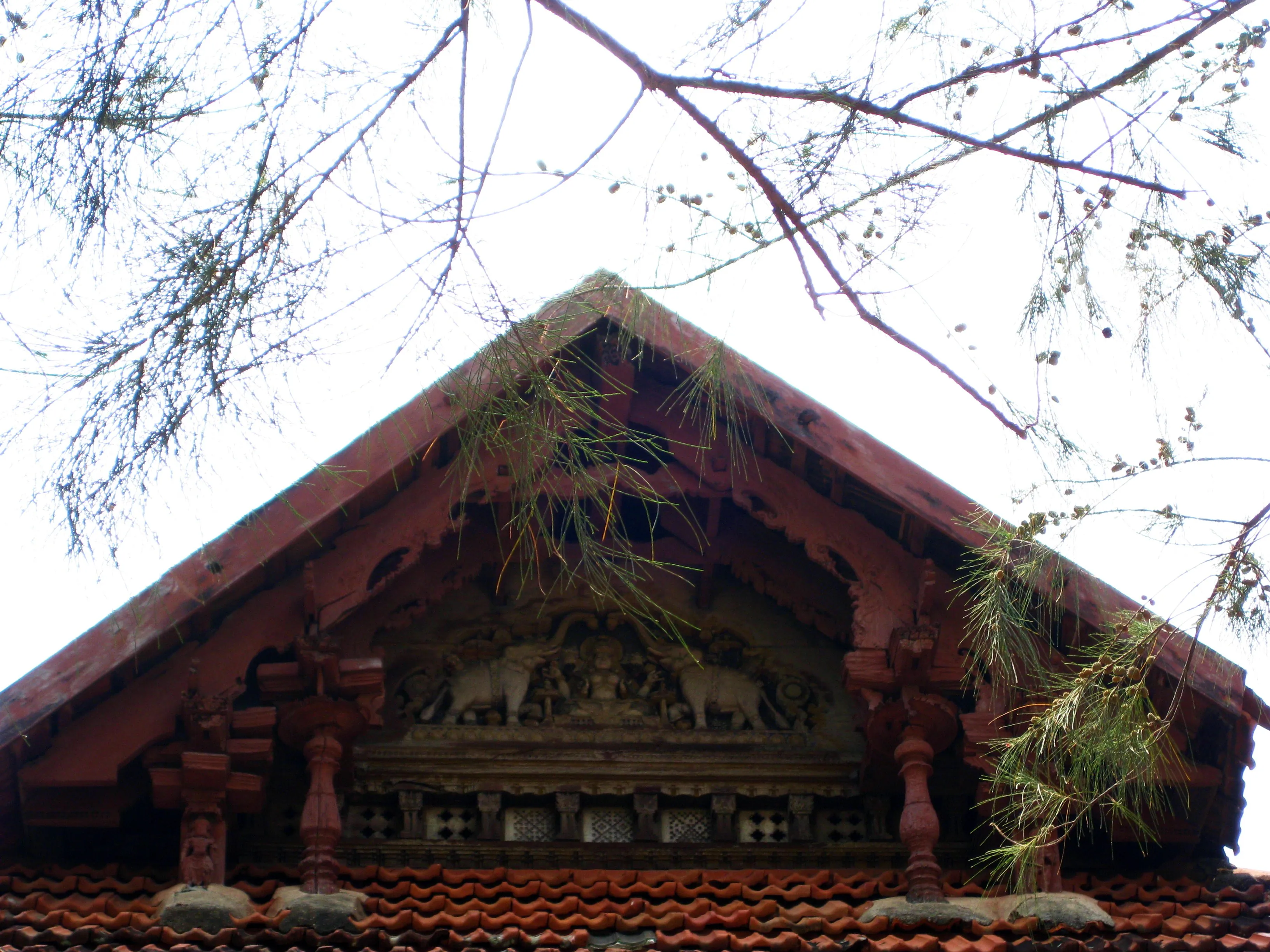
Mattancherry Palace Kochi
The Mattancherry Palace, also known as the Dutch Palace, stands as a testament to the layered history of Kochi, a city where the whispers of Portuguese, Dutch, and Indian influences intertwine. Having explored every UNESCO site in India, I can confidently say that this palace offers a unique glimpse into this cultural confluence, a narrative etched onto its walls and woven into its very fabric. Stepping through the unassuming entrance, I was immediately struck by the contrast between the simple exterior and the vibrant world within. The palace, gifted to the Raja of Kochi by the Portuguese in 1557 and later renovated by the Dutch, is a fascinating blend of Kerala architecture and European aesthetics. The sloping roof, typical of the region, is adorned with terracotta tiles, while the interiors showcase a stunning collection of murals, arguably the most captivating feature of the palace. These murals, primarily depicting scenes from the Ramayana, Mahabharata, and Puranic legends, are a visual feast. The vibrant colours, predominantly red, green, and yellow, retain a surprising freshness despite the passage of time. I spent hours captivated by the intricate details – the expressive eyes of the characters, the elaborate costumes, and the dynamic portrayal of the stories. The sheer scale of some of these murals, covering entire walls and ceilings, is breathtaking. One particular panel depicting the coronation of Rama left a lasting impression, its sheer grandeur and the meticulous detailing of the royal court showcasing the skill of the artists. Beyond the murals, the palace houses a fascinating collection of royal portraits, showcasing the lineage of the Kochi Rajas. These portraits, while not as visually striking as the murals, offer a valuable historical perspective, documenting the changing styles and influences over centuries. I found myself drawn to the portraits of the later Rajas, where the subtle incorporation of European elements in their attire and posture hinted at the growing Western influence. The palace architecture itself is a study in adaptation and fusion. The central courtyard, open to the sky, is a classic Kerala architectural element, providing natural ventilation and light. Surrounding this courtyard are four wings, each housing different sections of the palace. The influence of the Dutch renovations is evident in the long, airy corridors and the large windows, a departure from the more enclosed spaces typically found in traditional Kerala homes. I noticed the use of European-style tiles in certain sections, further highlighting the interplay of architectural styles. One of the more intriguing aspects of the palace is the presence of Hindu temples within the complex. Dedicated to Pazhayannur Bhagavathi, the tutelary deity of the Kochi royal family, these temples demonstrate the seamless integration of religious practices within the royal household. The contrast between the opulent palace interiors and the serene atmosphere of the temples added another layer to the overall experience. My visit to the Mattancherry Palace wasn't just a tour; it was a journey through time, a tangible experience of history unfolding. It's a place where the stories of kings and deities, of Portuguese traders and Dutch merchants, are interwoven into the very fabric of the building. For anyone seeking to understand the rich tapestry of Kerala's history and culture, the Mattancherry Palace is an essential stop, a place where the past comes alive in vibrant colour and intricate detail. It's a reminder that history isn't just about dates and events; it's about the stories etched onto walls, whispered through generations, and waiting to be discovered.
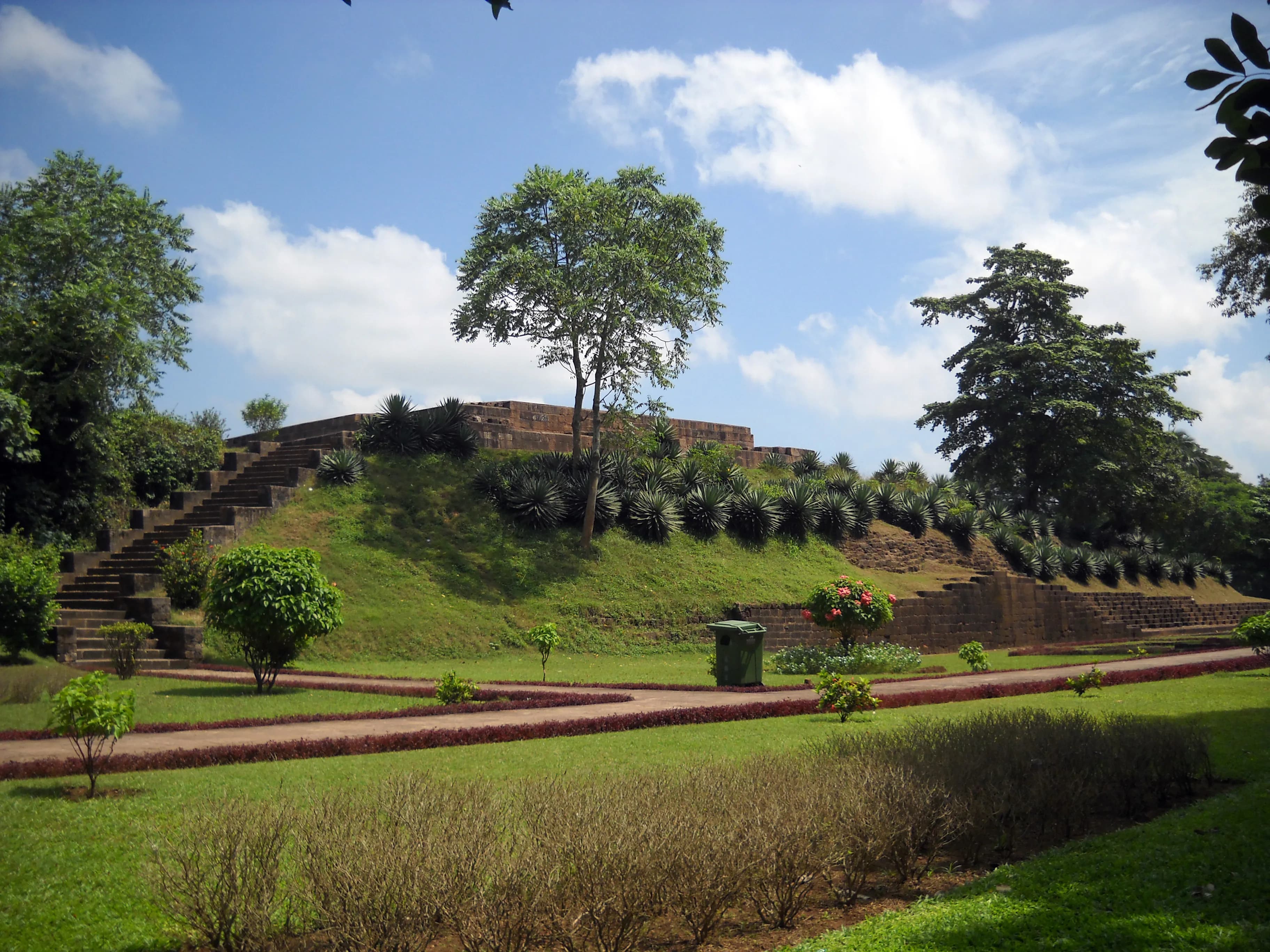
Barabati Fort Cuttack
Stone platforms and foundations mark the site of Barabati Fort in Cuttack, Odisha, constructed around 1050 CE during the Eastern Ganga dynasty ([1][2]). Translating to "twelve gates," the fort was built with laterite and khondalite stones, held together by iron clamps, showcasing Kalinga architectural elements ([3][4]). A now-dry moat, imposing ramparts, and bastions highlight the fort’s medieval Indian fortification strategies ([1]). Archaeological excavations have revealed the foundations of a nine-storied palace, suggesting the fort's former splendor and intricate design ([2][3]). The palace ruins point to sophisticated Orissan style architecture, reminiscent of regional temples ([4]). Adjacent to the palace site, a museum displays sculptures and artifacts, offering insights into the artistic legacy shaped by Hindu mythological themes ([5]). During the Ganga period, temple architecture flourished, influencing the fort's layout and design ([3]). The principles of Vastu Shastra (ancient architectural science) likely guided the planning of the fort, aligning it with cosmic energies ([6]). The use of laterite, abundant in the region, imparts a distinct earthy character to the fort, contrasting with sandstone structures found elsewhere ([4]). Moreover, the fort's history includes later influences from the Mughals and Marathas, creating a layered historical narrative ([1][2][5]). Despite these influences, the core Kalinga architectural style remains evident in the remaining structures ([3][4]). Today, Barabati Fort stands as a reminder of Odisha's rich architectural and cultural heritage, blending military and artistic traditions ([1][5]).
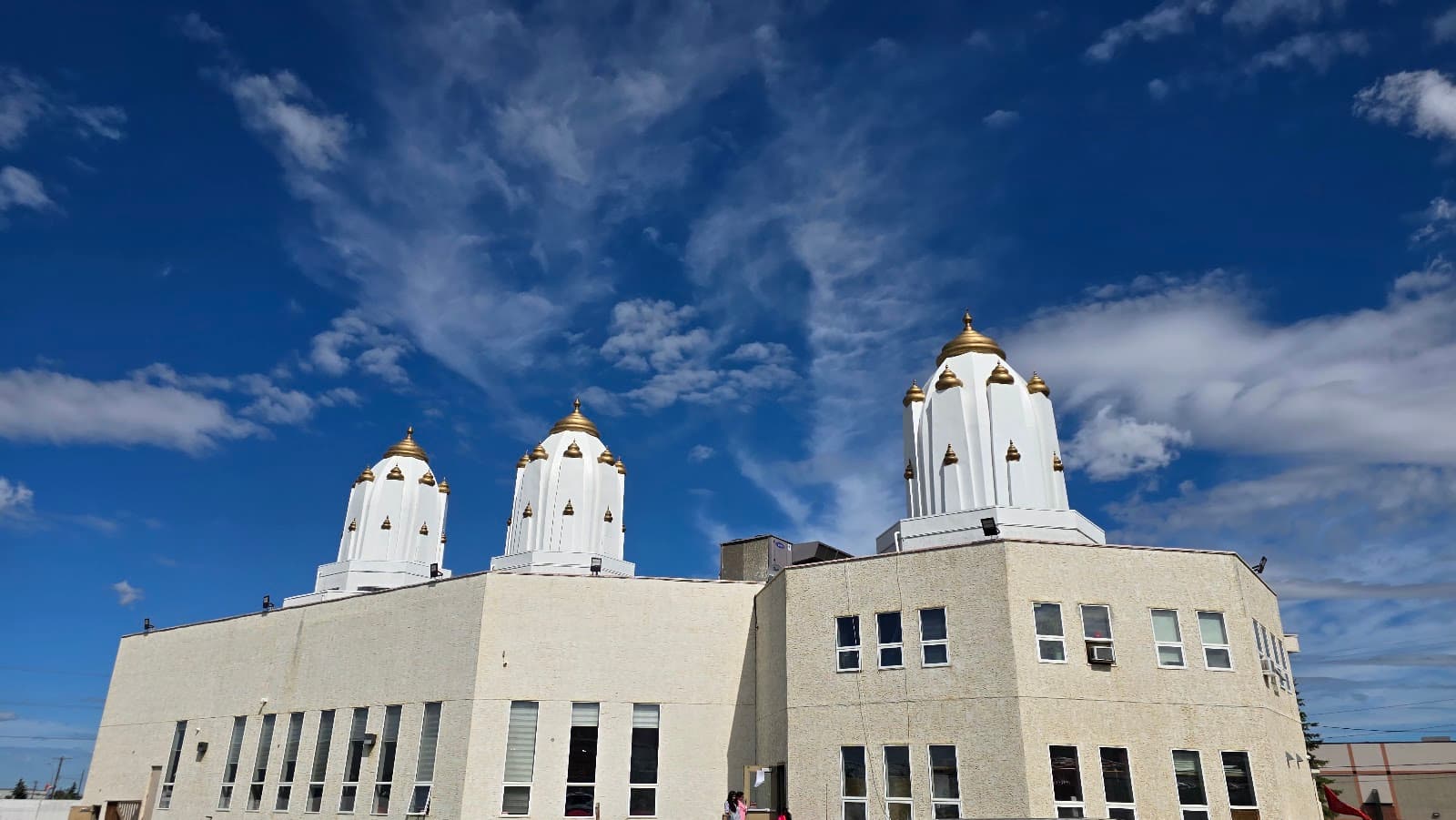
Hindu Society of Alberta Edmonton Temple
Hindu Society of Alberta Edmonton Temple is dedicated to Sri Ganesh, Sri Lakshmi-Narayan, and Sri Durga, and anchors Edmonton’s south industrial corridor as the province’s oldest mandir since 1971 ([1][2]). The temple operates daily 7:00 AM-12:00 PM and 5:00 PM-9:00 PM, with extended hours for Sunday darshan, seniors’ satsang, youth bhajans, and cultural rehearsals that occupy classrooms and the multipurpose hall throughout the afternoon ([1][3]). Volunteers manage check-in, shoe storage, and RFID attendance, then direct devotees along heated corridors toward the marble sanctum or the cafeteria, ensuring accessibility via ramps and the 1,360-kilogram elevator. The vegetarian kitchen prepares annadhanam, Food Bank hampers, and Meals on Wheels, and the library hosts settlement and language classes. Digital signage and mobile alerts provide multilingual updates on seva availability, parking, and weather advisories, while Building Automation System dashboards monitor HVAC, humidifiers, snowmelt, and security cameras integrated with Edmonton Police Service. With on-call priests, trained emergency wardens, and a volunteer roster ready for festivals, the temple remains operationally primed for Diwali fireworks, Kirtan Youth Ensemble sessions, citizenship ceremonies, and interfaith conferences alongside daily aarti ([2][3]).
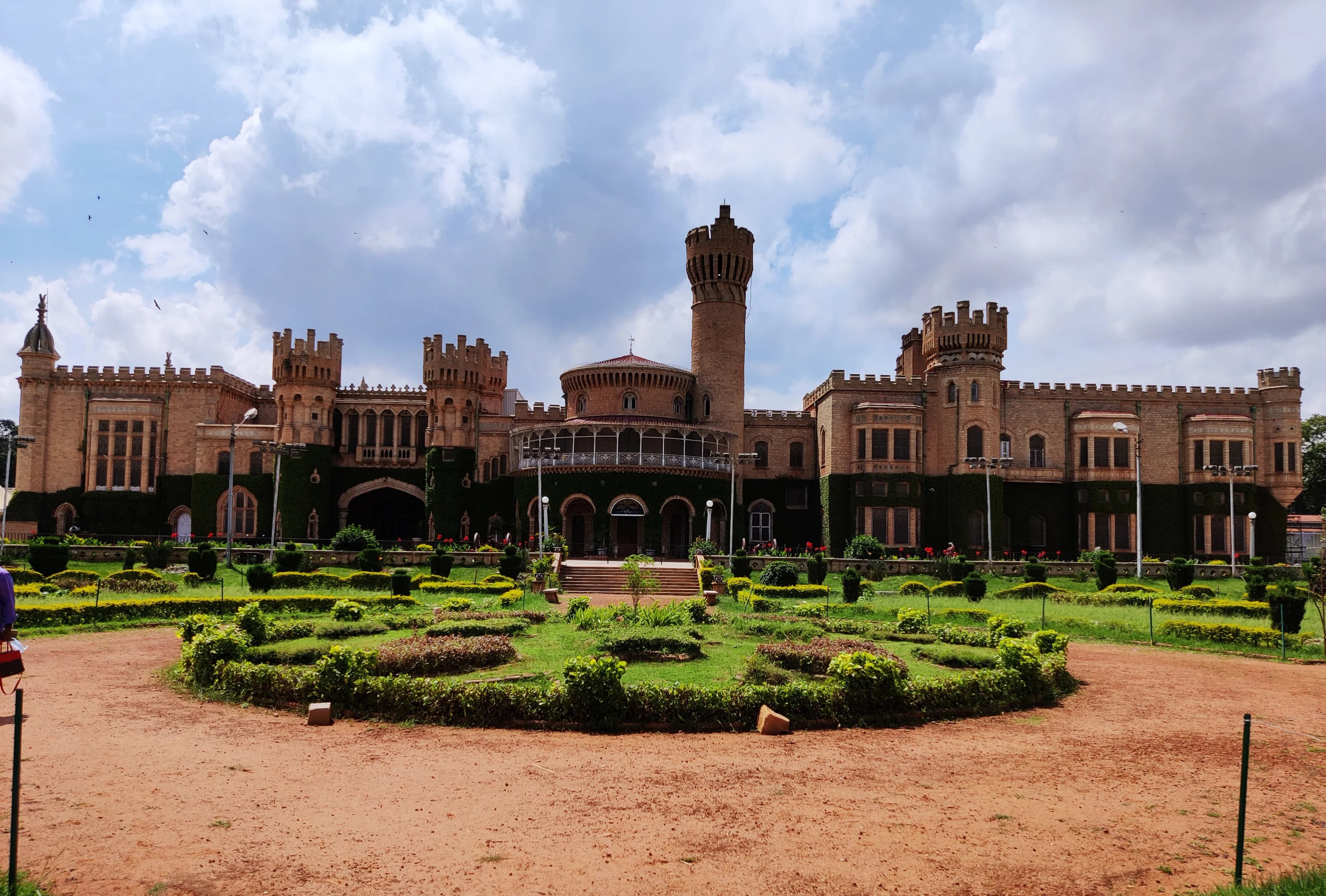
Bangalore Palace Bangalore
Envisioned by Chamarajendra Wadiyar X of the Mysore Royal Family, the Bangalore Palace, completed in 1873 CE, presents a Tudor Revival architectural style in the heart of Bengaluru ([1][2]). The palace echoes Windsor Castle's design, manifesting British Colonial influences on Indian princely architecture ([1][3]). Granite, wood, mortar, and steel constitute the primary materials employed in its construction, reflecting the era's engineering ([2]). Intricate carvings embellish the Durbar Hall, complemented by stained-glass windows illustrating scenes from Indian mythology and ornate chandeliers ([3][4]). These decorative elements, while European in style, served to enhance the grandeur of royal ceremonies and cultural events patronized by the Wodeyar dynasty ([1][2]). Sepia-toned photographs lining the palace walls offer glimpses into the lives and legacy of the Wodeyar rulers, preserving a visual record of their reign ([4]). Stone platforms and foundations exhibit a fusion of Victorian and Edwardian styles, evident in the arched corridors and wooden columns ([5]). Floral motifs and depictions of mythical creatures reflect the artisans' skill in blending Western architectural forms with traditional Indian aesthetics ([5]). Though the palace's design leans heavily on Western palatial architecture, its role as a center for royal patronage and cultural events firmly roots it in Indian heritage ([1][2]). The Mysore Royal Family used this palace for important functions, adapting it to local customs ([1][3]). While not directly linked to ancient Indian architectural treatises like the *Manasara Shilpa Shastra* or *Mayamata*, the Bangalore Palace represents a unique adaptation of Western architectural styles to suit the needs and tastes of an Indian royal family ([3]). It stands as a testament to the dynamic interaction between Indian and European cultures during the British Colonial period, preserving a vital piece of India's princely history ([1][2]).
Karna Fort Karnal
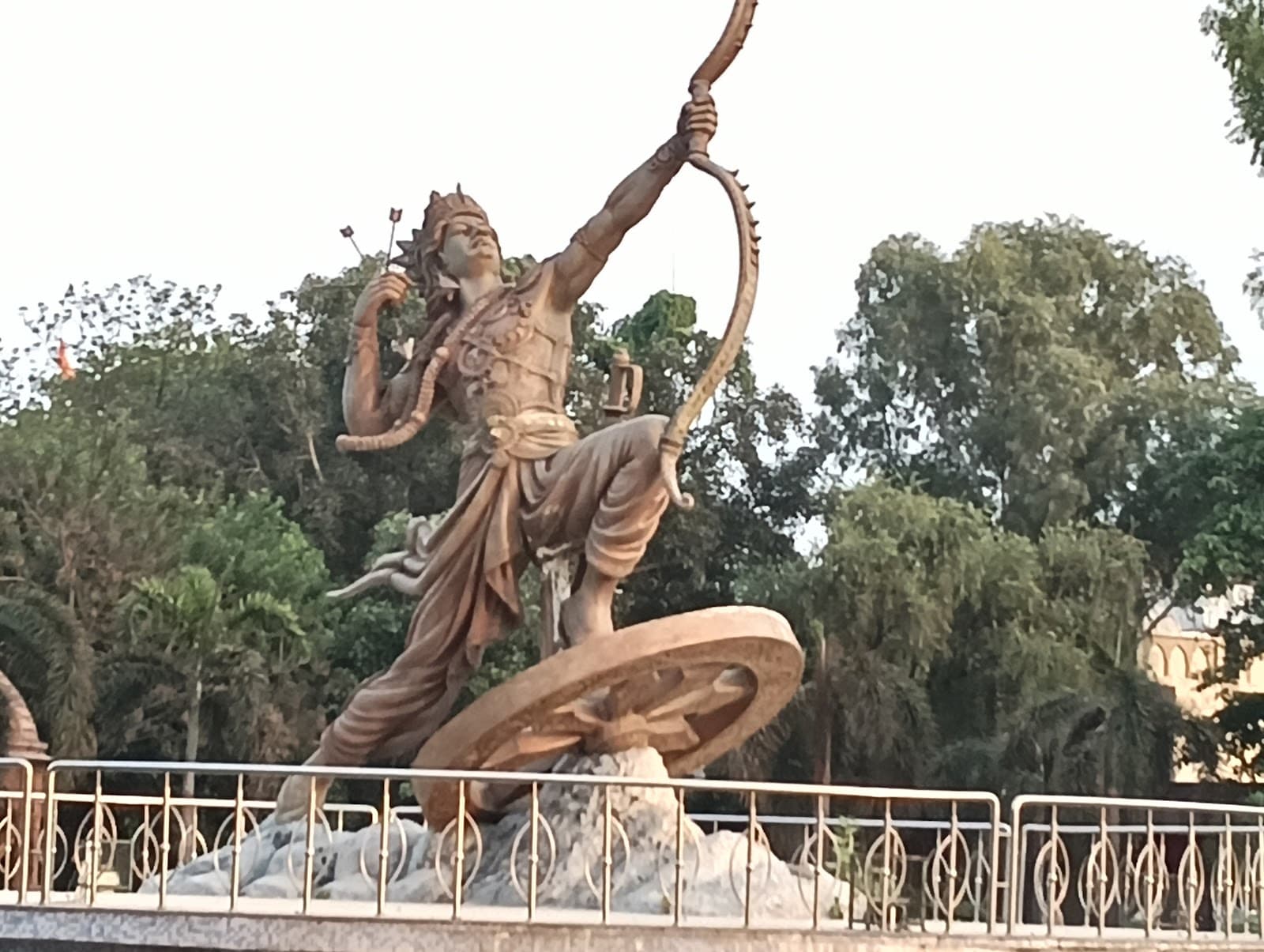
The imposing ramparts of Karna Fort, baked under the Haryana sun, rose before me, a stark silhouette against the cerulean sky. Dust swirled around my ankles as I crossed the threshold, stepping into a realm where whispers of the Mahabharata seemed to linger in the very stones. Located in present-day Karnal, this fort, attributed to the legendary warrior Karna, carries a weight of history that transcends its current dilapidated state. Unlike the meticulously preserved forts of Rajasthan, Karna Fort stands as a raw, almost skeletal testament to time's relentless march. Erosion has gnawed at its brick and mortar, leaving exposed sections that reveal the fort's construction techniques. I noticed the use of lakhori bricks, smaller and thinner than the standard size, a common feature in ancient Indian construction, particularly in the northern regions. These bricks, laid in a running bond pattern, speak of a pragmatic approach to building, prioritizing stability and resource efficiency. The fort's layout, though obscured by the ravages of time, suggests a strategic design. The remnants of what were likely guard towers still command a panoramic view of the surrounding plains, hinting at the fort's defensive importance. I could almost visualize sentries stationed here, their eyes scanning the horizon for approaching armies. The strategic location of Karnal, on the ancient trade routes, would have made this fort a crucial stronghold. Walking through the crumbling archways and along the fragmented walls, I was struck by the fort's stark beauty. The absence of elaborate ornamentation, so common in later Mughal architecture, lends it a certain austere elegance. The focus here was clearly on functionality, on creating a structure that could withstand sieges and safeguard its inhabitants. The few remaining carvings, weathered and worn, offered glimpses into the artistic sensibilities of the era. I noticed a recurring motif of stylized lotus flowers, a symbol deeply embedded in Indian iconography, representing purity and creation. One of the most intriguing aspects of Karna Fort is its connection to the Mahabharata. Local legends abound, linking the fort to Karna, the tragic hero of the epic. While historical evidence remains elusive, the very association imbues the site with a powerful aura of myth and legend. Standing within these crumbling walls, it was easy to imagine Karna, clad in his armor, strategizing within these very halls. The fort's current state of neglect is, however, a poignant reminder of the challenges faced in preserving India's rich architectural heritage. Overgrowth has claimed large sections of the fort, and the lack of proper conservation efforts has accelerated its decay. While some restoration work has been initiated, a more comprehensive approach is crucial to prevent further deterioration. My visit to Karna Fort was a journey through layers of history, a tangible connection to a bygone era. It was a stark reminder of the impermanence of empires and the enduring power of stories. While the fort may be in ruins, its spirit remains unbroken, a silent sentinel guarding the memories of a legendary past. It is a site that deserves greater attention, not just for its architectural significance but also for its cultural and historical value. Preserving Karna Fort is not just about saving bricks and mortar; it's about safeguarding a vital piece of India's collective memory.
Kumtura Caves Kuqa Xinjiang China
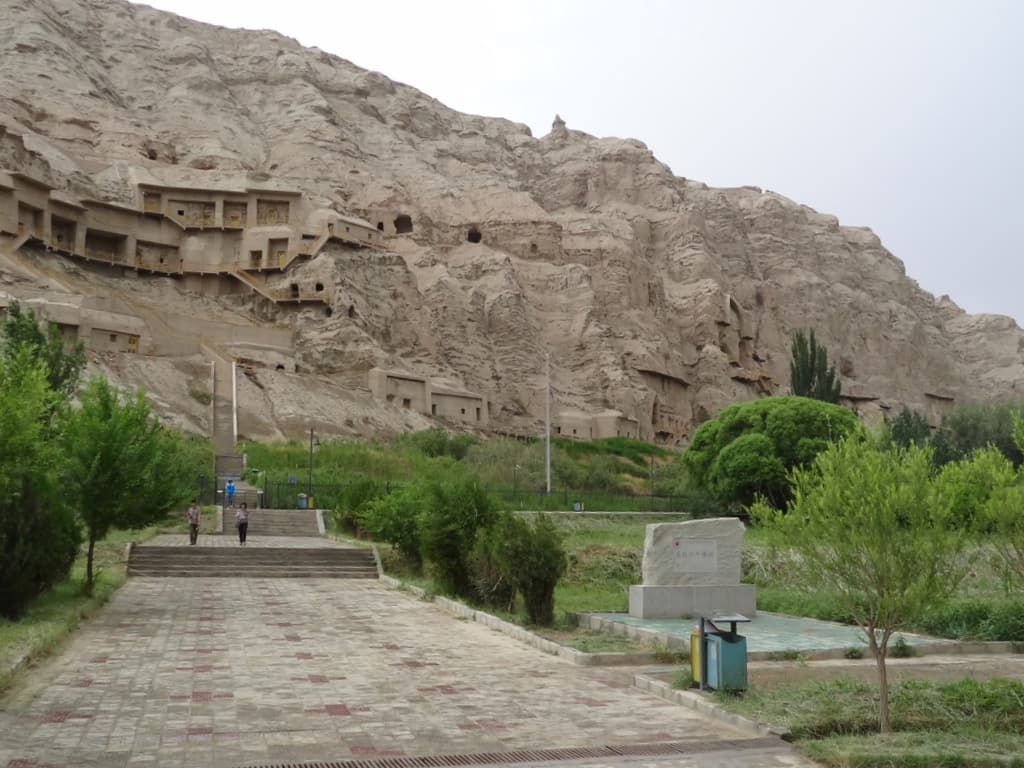
Kumtura Caves, located near Kuqa in Aksu Prefecture, Xinjiang, China, represent one of the most artistically sophisticated and historically significant Buddhist cave temple complexes along the northern branch of the Silk Road, comprising over 112 rock-cut caves carved into the cliffs of the Muzat River valley from the 4th to 8th centuries CE, creating a magnificent religious landscape that demonstrates the extraordinary transmission of Indian Buddhist cave architecture and Gandharan artistic traditions to Central Asia. The cave complex, carved entirely from living rock using techniques adapted from Indian cave temple traditions, features a stunning collection of Buddhist caves including meditation cells, assembly halls, and elaborate chapels adorned with sophisticated murals and sculptures that demonstrate the direct transmission of Gandharan artistic traditions from the region of modern-day Pakistan and Afghanistan to Central Asia, creating a vivid testament to the cultural exchange that flourished along the Silk Road. The caves feature extraordinary murals and sculptures executed in the distinctive Gandharan style, characterized by the fusion of Indian Buddhist iconography with Greco-Roman artistic techniques that was developed in the Gandhara region and then transmitted to Central Asia, while the discovery of inscriptions in multiple languages including Sanskrit, Tocharian, and Chinese provides crucial evidence of the site's role as a multilingual center for the translation and transmission of Indian Buddhist texts. The site's architectural design demonstrates direct influence from Indian Buddhist cave architecture, particularly the traditions of Gandhara and western India, with the overall planning, cave forms, and decorative programs reflecting Indian Buddhist practices that were systematically transmitted to Central Asia, while the sophisticated rock-cutting techniques and artistic methods demonstrate the transmission of Gandharan artistic knowledge to Central Asian craftsmen. Archaeological evidence reveals that Kumtura served as a major center of Buddhist learning and practice for over four centuries, attracting monks, traders, and pilgrims from across the Buddhist world, while the site's location along the northern Silk Road facilitated its role in the transmission of Buddhist teachings, art, and culture from India to China and beyond. The caves flourished particularly during the 5th to 7th centuries CE, when they served as one of the most important centers for the production of Gandharan-influenced Buddhist art in Central Asia, with the site continuing to function as a Buddhist center through the 8th century before gradually declining following political changes and the shifting of trade routes. The site was rediscovered by European explorers in the late 19th and early 20th centuries, with numerous expeditions documenting and studying the caves, while unfortunately many of the murals and sculptures were removed and are now housed in museums worldwide, creating a complex legacy that highlights both the site's extraordinary artistic significance and the challenges of cultural heritage preservation. Today, Kumtura Caves stand as a UNESCO Tentative List site and represent one of the most important archaeological and artistic sites in Central Asia, serving as a powerful testament to the transmission of Gandharan Buddhist art and culture along the Silk Road, while ongoing conservation efforts, archaeological research, and international preservation initiatives continue to protect and study this extraordinary cultural treasure that demonstrates the profound impact of Indian Gandharan civilization on Central Asian Buddhist art and architecture. ([1][2])
Shirdi Sai Baba Temple Dubai
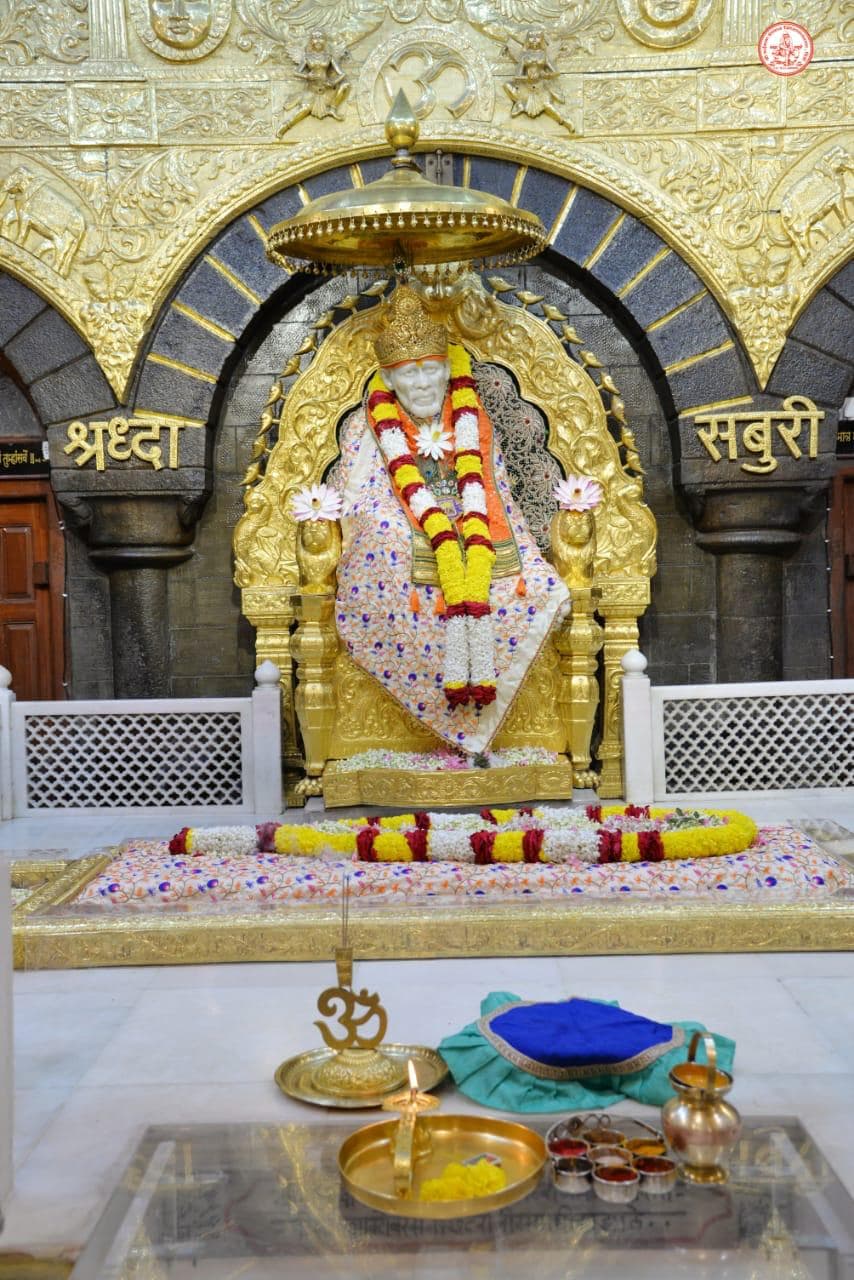
The Shirdi Sai Baba Temple, located in Jumeirah 1, Dubai, is a significant spiritual center dedicated to Shirdi Sai Baba, embodying the enduring legacy of India's millennia-spanning cultural and spiritual heritage in a contemporary global setting. This temple serves as a vital nexus for the Indian diaspora, fostering a profound sense of belonging and cultural continuity through its adherence to ancient Indian spiritual traditions and architectural principles [1] [5]. The architectural design of the temple integrates the indigenous Nagara architecture style, Indo-Modern elements, and the specific characteristics of a Samadhi Mandir, reflecting a continuous tradition of Hindu temple construction [5] . The main temple structure, which houses the Garbhagriha (sanctum sanctorum), is centrally positioned within a larger 11.11-acre complex, itself part of a 338-acre master plan development [3]. The architectural form is a sophisticated reinterpretation of India's vernacular temple architecture, utilizing parametric design to manifest an 11-sided polygon, or hendecagon, articulated as a three-dimensional polyhedron [3]. This intricate design balances sacred geometry, deeply rooted in ancient Indian Vastu Shastra and numerological beliefs, with modern engineering logic [3]. The structural system was developed through an algorithmic process, considering spatial and structural constraints, and evaluating environmental factors such as daylight penetration, solar heat gain, and shadow patterns to optimize the internal environment [3]. Internally, the Garbhagriha presents a pure white space, illuminated by natural sunlight diffused through an oculus at the apex of the polygonal roof [3]. The roof itself features a double-fold origami structure, providing a rigid yet aesthetically fluid long-span shell-like enclosure supported by columns that seamlessly blend into the interior [3]. The flooring pattern within the main hall is a mathematical looping system derived from the 11 vertices of the hendecagon, creating interstitial spaces that subtly guide visitors towards the deity for prayers and offerings [3]. The precise placement of the primary deity within the sanctum sanctorum was determined by dividing the outer circumference into 11 equal segments, with radiating arcs forming a petal-like pattern that is mirrored in the oculus above, ensuring both symmetry and spiritual focus [3]. The temple complex includes a front promenade, designed with functional divisions for baggage storage, shoe removal, frisking areas, and ablution facilities, marking a ceremonial entry point [3]. A gopuram offers the initial framed view of the temple, with green strips and shops along a 525-foot promenade breaking visual monotony [3]. A podium provides panoramic views of the entire development, granting access to the main temple, three subsidiary shrines, meditation pockets, and gathering spaces [3]. A temple tank, integrated into the podium design, features steps that double as an amphitheater for larger spiritual gatherings and outdoor bhajans [3]. The temple houses multiple shrines dedicated to revered deities such as Lord Ganesh, Lord Shiva, Lord Vishnu, Goddess Durga, Goddess Lakshmi, Lord Murugan, Shirdi Sai Baba, and Lord Hanuman, adorned with intricate carvings and vibrant decorations that reflect India's rich cultural heritage [5] . The site is a registered worship center with the Community Development Authority (CDA) and is recognized as part of Dubai's religious tolerance initiatives [site info]. It actively hosts regular bhajans, aartis, spiritual discourses, and community festivals, fostering an environment for meditation and introspection [5] . The temple is fully operational, providing continuous spiritual services and cultural programming, and is maintained in accordance with contemporary standards for public worship centers [1].
Katas Raj Temples Chakwal Punjab
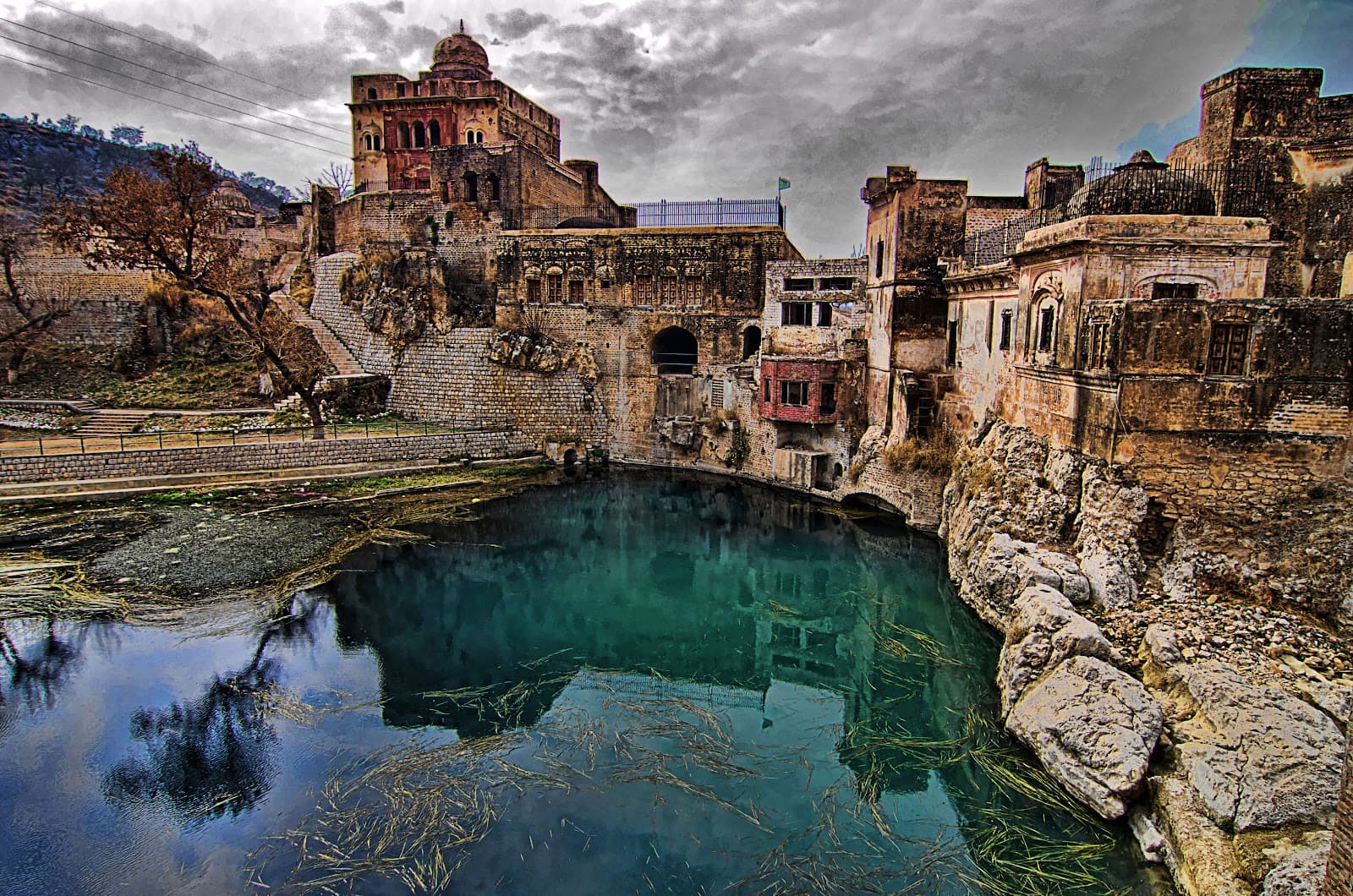
Katas Raj Temples, located in Chakwal District of Punjab Province, represent one of the most significant and architecturally sophisticated Hindu temple complexes in Pakistan, dating from the 6th to 10th centuries CE and constructed during the Hindu Shahi dynasty period when this region formed part of the greater Hindu rashtra extending across the Indian subcontinent. The temple complex, centered around a sacred pond believed to have been formed from the tears of Lord Shiva mourning the death of his consort Sati, spans approximately 4 hectares and features seven major temples arranged in a mandala pattern around the pond, with the main Shiva temple rising 15 meters and constructed from locally quarried red sandstone and limestone. The complex demonstrates the evolution of Hindu temple architecture in the northwestern regions of ancient India, incorporating elements from Gandhara, Gupta, and early medieval North Indian styles, with distinctive features including corbelled vaulting, intricately carved lintels depicting scenes from the Ramayana and Mahabharata, and sophisticated drainage systems channeling water from surrounding hills into the sacred pond. Archaeological evidence indicates the site was continuously occupied from the 6th century CE through the 11th century, serving as both a religious center and waypoint on ancient trade routes connecting the Indus Valley to Central Asia. The temples are associated with the Mahabharata epic, with local tradition holding that the Pandava brothers spent part of their exile here, and the site contains evidence of both Shaiva and Vaishnava worship, reflecting the syncretic nature of Hindu practice in the region. The complex underwent extensive restoration from 2006 to 2017 under the supervision of the Evacuee Trust Property Board and Archaeological Survey of Pakistan, involving structural stabilization, conservation of decorative elements, and restoration of the sacred pond. Today, Katas Raj Temples remain an active site of Hindu worship, particularly during Maha Shivaratri, and serve as a powerful symbol of the ancient Hindu heritage of Pakistan, demonstrating the continuity of Hindu civilization in regions that were integral parts of the historical Hindu rashtra before the partition of the Indian subcontinent. ([1][2])
Quick Links
Plan Your Heritage Journey
Get personalized recommendations and detailed visitor guides