Has Inheritage Foundation supported you today?
Your contribution helps preserve India's ancient temples, languages, and cultural heritage. Every rupee makes a difference.
Secure payment • Instant 80G certificate
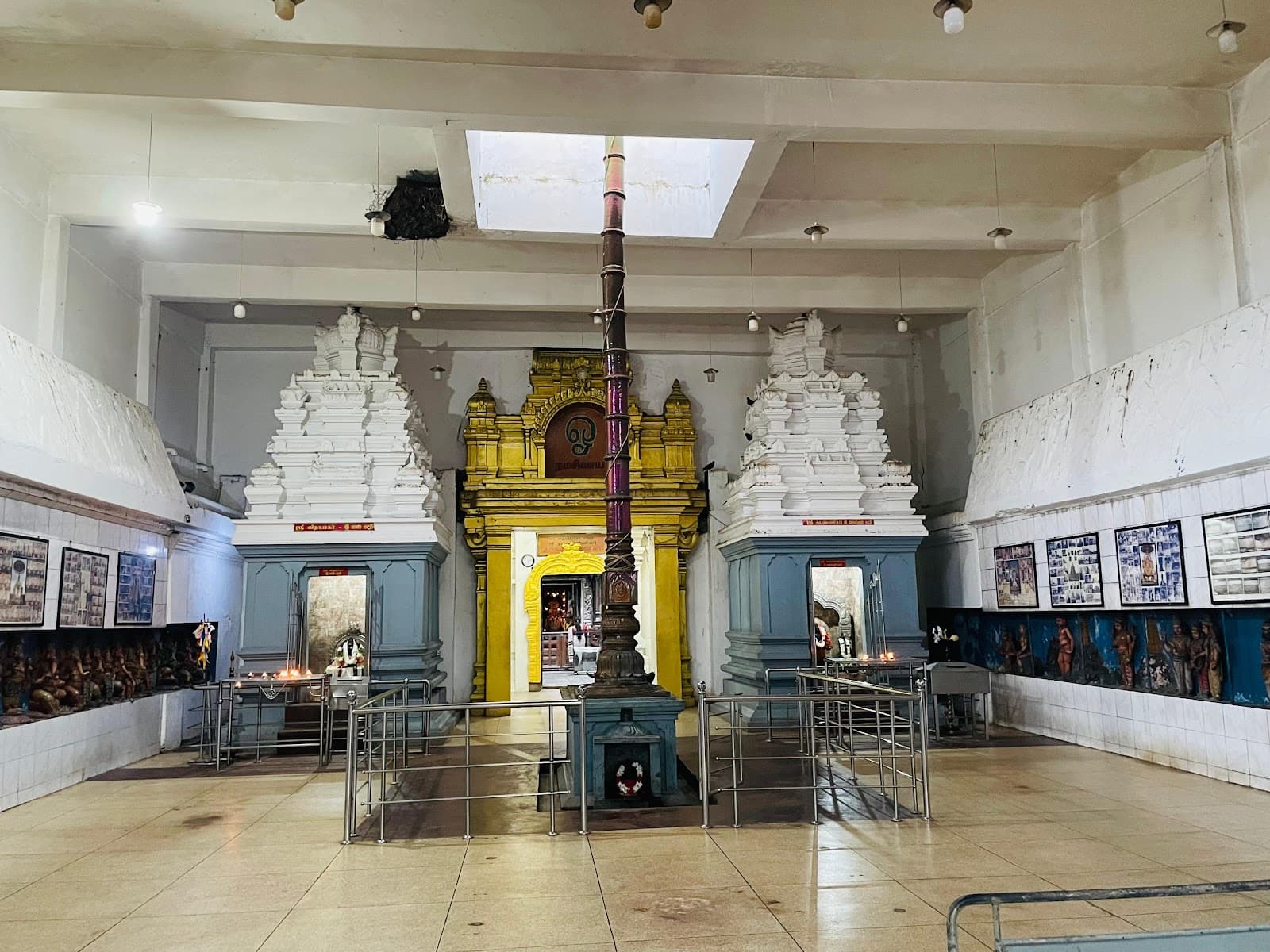
Munneswaram Temple Chilaw Sri Lanka
Munneswaram Temple, dramatically situated in the coastal town of Chilaw in northwestern Sri Lanka, represents one of the most extraordinary and historically significant Hindu temples in South Asia, with legends tracing its origins back to 1000 BCE and serving as one of the five ancient Pancha Ishwaram shrines dedicated to Shiva that were strategically established around the island's coastline, creating a powerful testament to the profound transmission of Indian Shaivite religious and architectural traditions to Sri Lanka. The temple complex, also known as Munneswaram Kovil, features sophisticated Dravidian architectural elements that demonstrate the direct transmission of South Indian temple architecture, particularly the traditions of the Pallava, Chola, and Pandya dynasties, with local adaptations that reflect the sophisticated synthesis of Indian Shaivite religious and artistic traditions with Sri Lankan building techniques, while the temple's history is deeply intertwined with the Ramayana epic, with local traditions identifying the site as one of the places where Rama, the hero of the epic, worshipped Shiva after his victory over Ravana. The temple's architectural layout, with its central sanctum housing the Shiva lingam surrounded by multiple enclosures, gopurams, and subsidiary shrines dedicated to various deities including Ganesha, Vishnu, and Amman, follows sophisticated South Indian Dravidian temple planning principles that were systematically transmitted from the great temple complexes of Tamil Nadu, while the temple's extensive decorative programs including sculptures, carvings, and architectural elements demonstrate the sophisticated synthesis of Indian Shaivite iconography and artistic traditions with local Sri Lankan aesthetic sensibilities. Archaeological evidence reveals that the temple served as a major center of Shaivite worship for over three millennia, attracting pilgrims from across South India and Sri Lanka, while the discovery of numerous inscriptions in Tamil and Sanskrit provides crucial evidence of the site's role in the transmission of Indian religious texts and practices to Sri Lanka, demonstrating the sophisticated understanding of Indian Shaivite traditions possessed by the temple's patrons and religious establishment. The temple's annual Munneswaram Festival, one of the largest Hindu festivals in Sri Lanka, attracts hundreds of thousands of devotees and demonstrates the continued vitality of Indian religious traditions in Sri Lanka, while the temple's association with the Pancha Ishwaram network demonstrates the sophisticated understanding of Indian Shaivite cosmology and temple planning principles that were transmitted from the great religious centers of India to Sri Lanka. The temple complex has undergone multiple reconstructions throughout its history, with the current structure representing a modern reconstruction that faithfully preserves the temple's original Dravidian architectural character and spiritual significance, while ongoing archaeological research continues to reveal evidence of the temple's ancient origins and its role in the transmission of Indian religious traditions to Sri Lanka. Today, Munneswaram Temple stands as one of the most important Hindu pilgrimage sites in northwestern Sri Lanka, serving as a powerful testament to the transmission of Indian Shaivite culture and architecture to Sri Lanka, while ongoing archaeological research and conservation efforts continue to protect and study this extraordinary cultural treasure that demonstrates the profound impact of Indian civilization on Sri Lankan religious and artistic traditions. ([1][2])
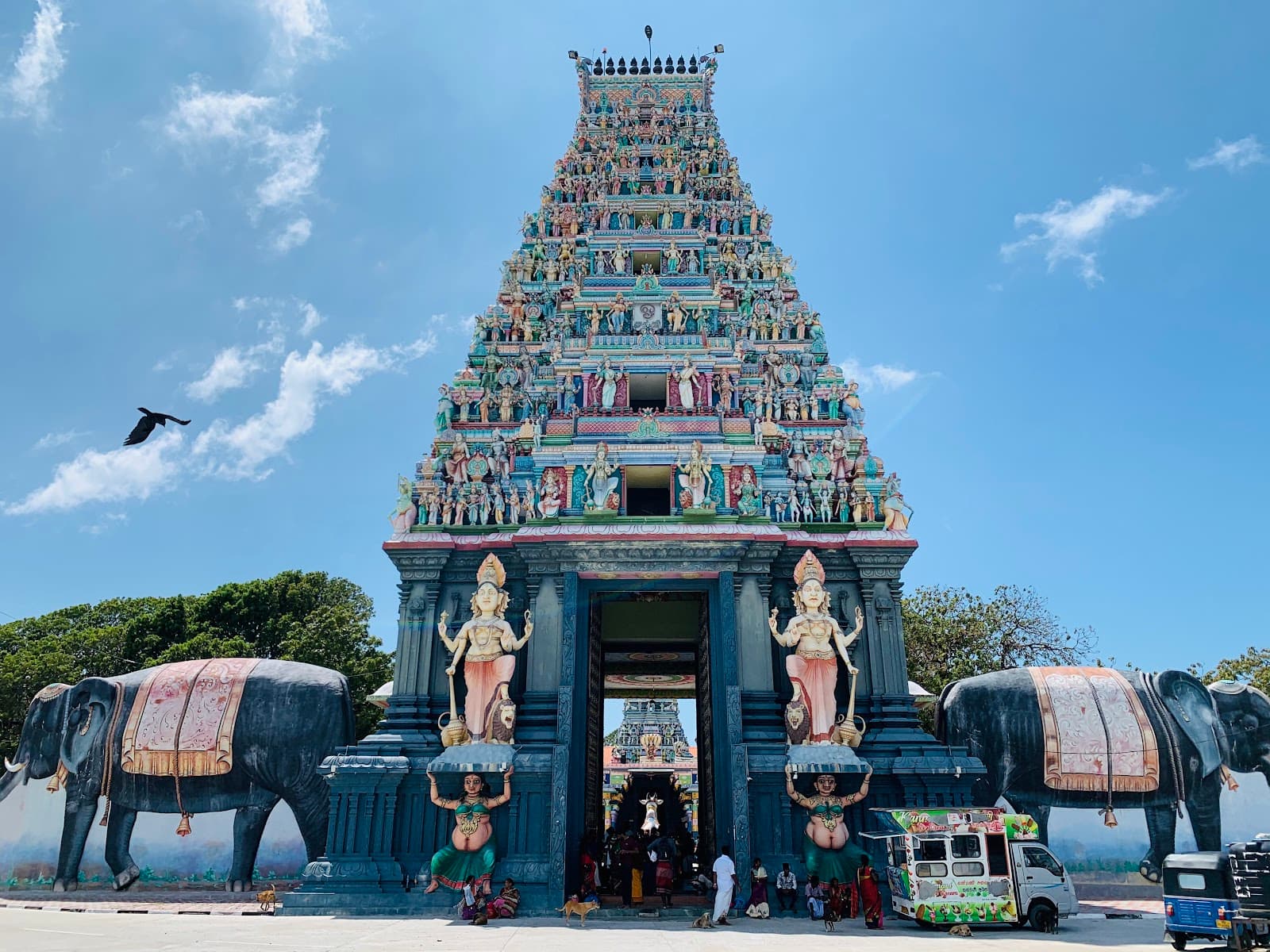
Nainativu Nagapooshani Amman Temple Nainativu Jaffna Sri Lanka
Nainativu Nagapooshani Amman Temple, dramatically situated on the sacred island of Nainativu off the coast of Jaffna in northern Sri Lanka, represents one of the most extraordinary and spiritually significant Hindu temples in South Asia, with ancient origins and an 18th-century reconstruction that serves as a major center of Shakti worship dedicated to the goddess Nagapooshani Amman, creating a powerful testament to the profound transmission of Indian Shakta religious and architectural traditions to Sri Lanka. The temple complex, also known as Nainativu Nagapooshani Kovil, features sophisticated Dravidian architectural elements that demonstrate the direct transmission of South Indian temple architecture, particularly the traditions of the Pallava, Chola, and Pandya dynasties, with local adaptations that reflect the sophisticated synthesis of Indian Shakta religious and artistic traditions with Sri Lankan building techniques, while the temple's location on the sacred island of Nainativu, accessible only by boat, underscores its spiritual significance as a place of pilgrimage that has attracted devotees from across South India and Sri Lanka for centuries. The temple's architectural layout, with its central sanctum housing the goddess Nagapooshani Amman surrounded by multiple enclosures, gopurams, and subsidiary shrines dedicated to various deities including Shiva, Ganesha, and Murugan, follows sophisticated South Indian Dravidian temple planning principles that were systematically transmitted from the great temple complexes of Tamil Nadu, while the temple's extensive decorative programs including sculptures, carvings, and architectural elements demonstrate the sophisticated synthesis of Indian Shakta iconography and artistic traditions with local Sri Lankan aesthetic sensibilities. Archaeological evidence reveals that the temple served as a major center of Shakti worship for centuries, attracting pilgrims from across South India and Sri Lanka, while the discovery of numerous inscriptions in Tamil and Sanskrit provides crucial evidence of the site's role in the transmission of Indian religious texts and practices to Sri Lanka, demonstrating the sophisticated understanding of Indian Shakta traditions possessed by the temple's patrons and religious establishment. The temple's association with the sacred island of Nainativu, which is also home to a Buddhist stupa, demonstrates the sophisticated religious syncretism that has characterized Sri Lankan religious practices, while the temple's annual festivals attract thousands of devotees and demonstrate the continued vitality of Indian religious traditions in Sri Lanka. The temple complex underwent major reconstruction in the 18th century, with the current structure representing a faithful preservation of the temple's original Dravidian architectural character and spiritual significance, while ongoing archaeological research continues to reveal evidence of the temple's ancient origins and its role in the transmission of Indian religious traditions to Sri Lanka. Today, Nainativu Nagapooshani Amman Temple stands as one of the most important Hindu pilgrimage sites in northern Sri Lanka, serving as a powerful testament to the transmission of Indian Shakta culture and architecture to Sri Lanka, while ongoing archaeological research and conservation efforts continue to protect and study this extraordinary cultural treasure that demonstrates the profound impact of Indian civilization on Sri Lankan religious and artistic traditions. ([1][2])
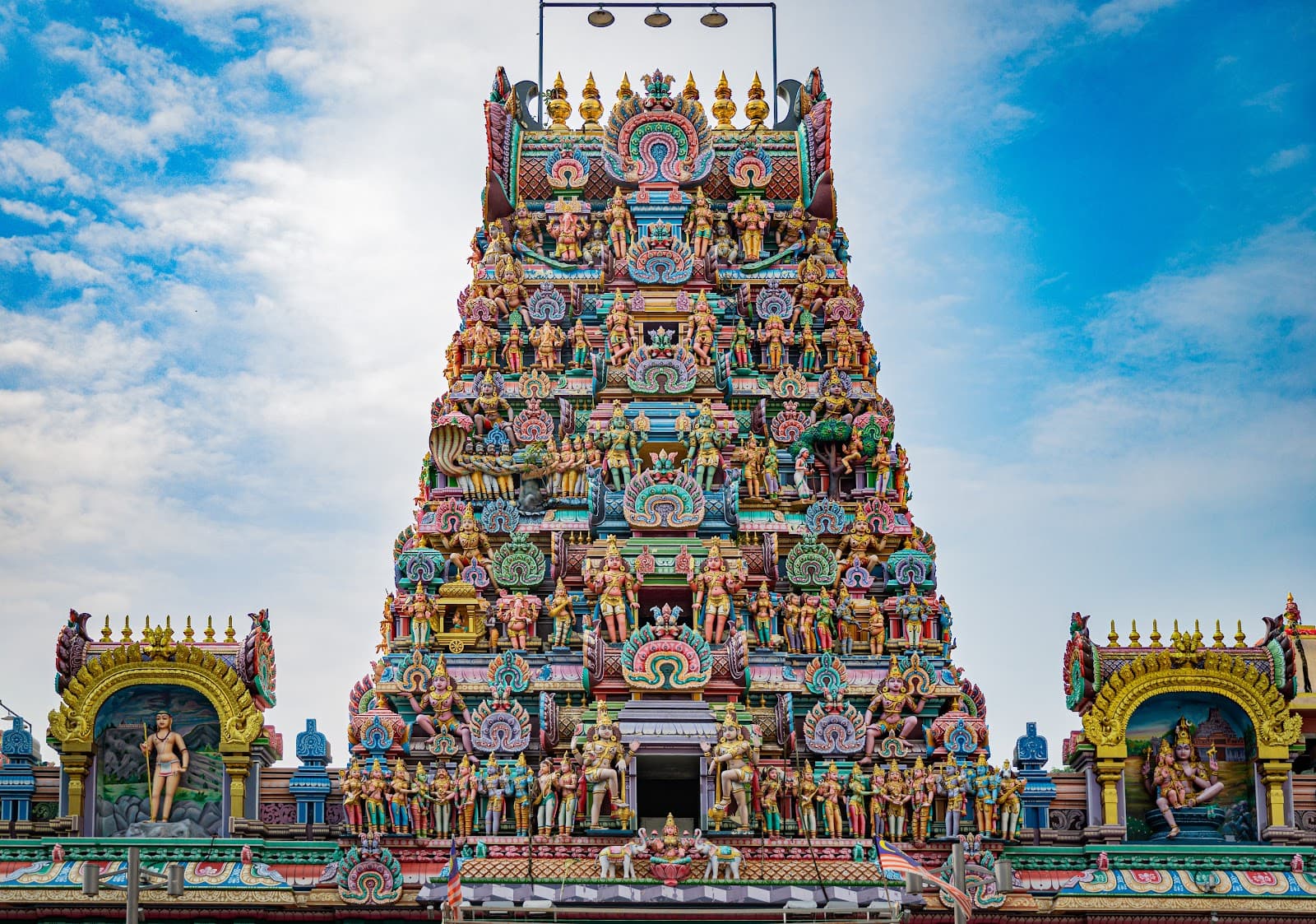
Sri Kandaswamy Kovil Brickfields Kuala Lumpur
Sri Kandaswamy Kovil (1902) crowns Brickfields as Malaysia’s finest Saiva Siddhanta kovil, built by Ceylon Tamil administrators of the Federated Malay States Railways, with a 21-metre rajagopuram sculpted by Jaffna artisans, tiered gold kalashas, and an interior consecrated to Murugan (Kandaswamy) with granite-lined sanctum, teppakulam-style reflecting pool, and murals chronicling Nallur Kovil traditions ([1][2]). The kovil opens 5:30 AM-9:30 PM daily, offering six kala pujas, Vedic chanting, abhishekam, and annadhanam; Vaikasi Visakam, Thai Poosam (Silver chariot), Navaratri, and Skanda Shasti anchor the calendar, while Sunday thiruppugazh classes, Sivaneri sangam, and Tamil vidyalayam serve the community. During Thaipusam, the temple dispatches Kuala Lumpur’s famed silver chariot to Batu Caves, mobilising 400 marshals, GPS-tracked convoy, real-time crowd updates, and recycling squads. Facilities include a heritage gallery, Tamil library, music and dance studios, wedding halls, vegetarian restaurant, counselling centre, dialysis support fund, and archives storing century-old kovil minute books. The kovil’s Ceylonese management publishes bilingual liturgical guides, organises interfaith dialogues, and supports Brickfields’ blind association through inclusive programmes ([1][3]).
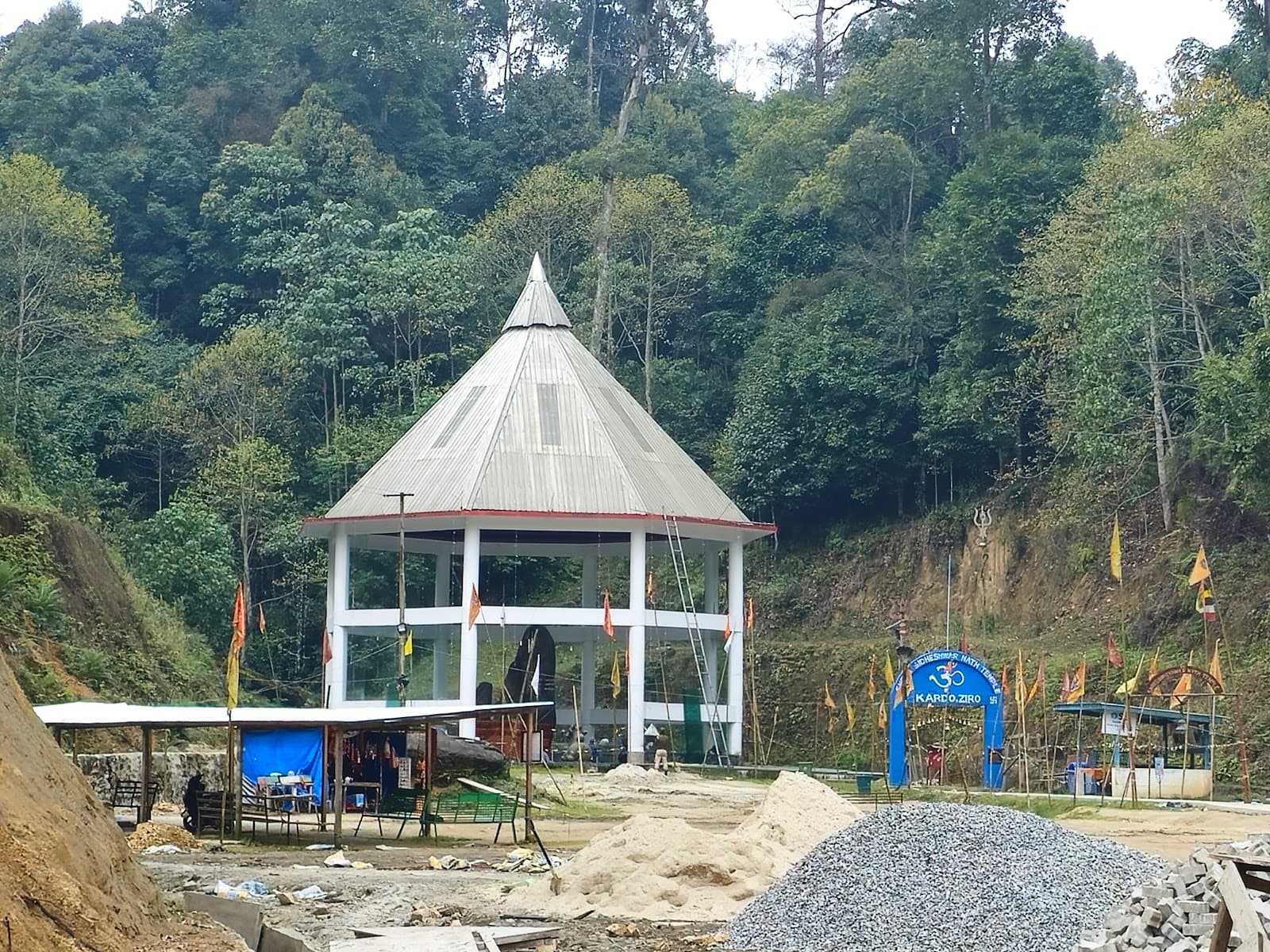
Shree Siddheshwar Nath Temple Pasighat
The emerald embrace of Arunachal Pradesh holds many secrets, and nestled within the East Siang district lies one such marvel – the Shree Siddheshwar Nath Temple. My journey as a heritage enthusiast, steeped in the architectural nuances of South Indian temples, took an unexpected but enriching turn when I encountered this unique structure. The temple, dedicated to Lord Shiva, stands as a testament to a confluence of architectural styles, a fascinating departure from the Dravidian idioms I'm so familiar with. The first striking feature is the temple's location. Unlike the grand temple complexes of Tamil Nadu often situated amidst bustling towns, the Siddheshwar Nath Temple enjoys a serene setting. Perched atop a small hillock overlooking the Siang River, it commands a breathtaking view of the surrounding valley. The climb to the temple itself is a mini-pilgrimage, winding through lush greenery, enhancing the sense of anticipation. The temple's architecture presents a captivating blend of styles. While the core structure echoes the Nagara style prevalent in North India, distinct regional influences are evident. The shikhara, the towering superstructure above the sanctum sanctorum, exhibits a curvilinear profile reminiscent of the rekha-deul style found in Odisha, yet it possesses a unique local flavour. The absence of elaborate sculptural ornamentation, so characteristic of South Indian temples, was initially surprising. Instead, the emphasis is on the elegant proportions of the shikhara and the interplay of light and shadow on its smooth surfaces. The temple's construction materials also differ significantly from the granite commonly used in South India. Here, locally sourced stone and bricks form the primary building blocks, lending the structure an earthy, organic feel. This choice of material, while dictated by local availability, contributes to the temple's harmonious integration with its natural surroundings. Entering the sanctum sanctorum, I was greeted by the serene presence of the Shiva lingam. The interior space is relatively simple, devoid of the intricate carvings and vibrant frescoes that adorn South Indian temples. This simplicity, however, amplified the spiritual aura of the space, allowing for a more focused and introspective experience. One of the most intriguing aspects of the Siddheshwar Nath Temple is its historical narrative. Local legends suggest a connection to the Mahabharata, with some believing the Pandavas sought refuge in this region during their exile. While concrete historical evidence remains elusive, these narratives add a layer of mystique to the temple and underscore its cultural significance within the local community. Observing the rituals and practices within the temple revealed further cultural nuances. While the core Hindu beliefs and practices are evident, the specific rituals and ceremonies reflect local traditions, highlighting the dynamic nature of faith and its adaptation to specific cultural contexts. The reverence with which the local Adi community regards the temple speaks volumes about its importance as a spiritual and cultural anchor. My visit to the Shree Siddheshwar Nath Temple was a powerful reminder that architectural heritage is not a monolithic entity. It is a vibrant tapestry woven from diverse threads of regional influences, local materials, and cultural narratives. While my background in South Indian temple architecture provided a framework for understanding, it was the temple's unique character that truly captivated me. The Siddheshwar Nath Temple stands as a testament to the architectural ingenuity of the region and the enduring power of faith, offering a glimpse into a rich cultural heritage that deserves greater recognition and preservation.
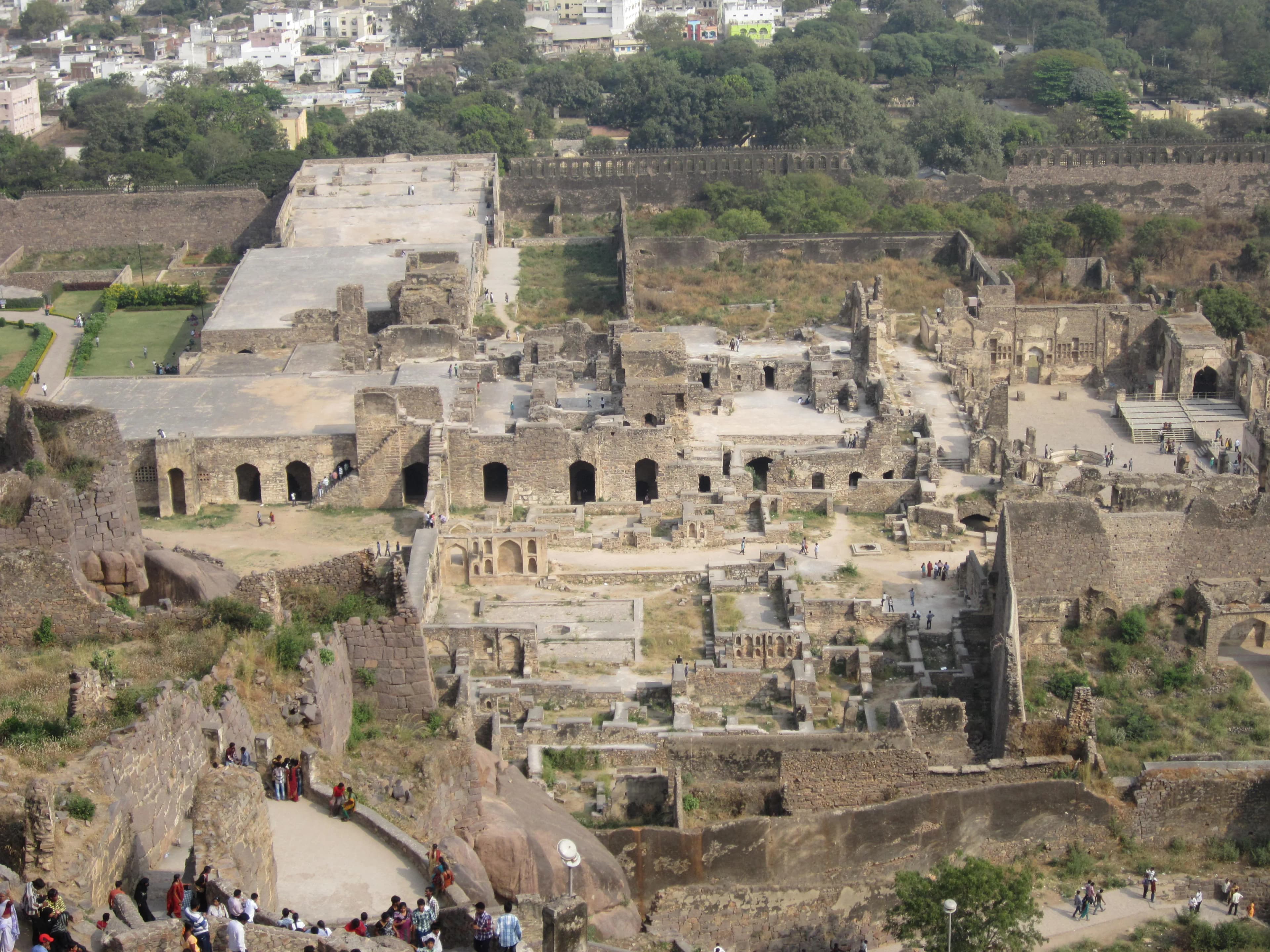
Golconda Fort Hyderabad
The imposing granite ramparts of Golconda Fort, rising abruptly from the Deccan plateau, exude a palpable sense of history. Having documented hundreds of forts across India, I can confidently say that Golconda possesses a unique aura, a blend of military might and architectural finesse rarely encountered. My recent visit to this magnificent structure, a sprawling citadel encompassing palaces, mosques, and ingenious acoustic systems, left me awestruck. The sheer scale of Golconda is initially overwhelming. The outer fortifications stretch for nearly seven kilometers, punctuated by imposing bastions and multiple gateways. The climb to the Bala Hissar, the highest point within the fort complex, is a journey through layers of history. Each level, each gateway, whispers tales of past grandeur and strategic brilliance. The Fateh Darwaza, the main entrance, is particularly striking. Its massive studded wooden doors, reinforced with iron spikes to prevent elephant battering rams, speak volumes about the fort's defensive capabilities. Standing beneath its arch, I could almost hear the echoes of marching armies and the clang of swords. One of the most fascinating aspects of Golconda is its sophisticated acoustic system. A handclap at the entrance arch can be heard clearly at the Bala Hissar, almost a kilometer away. This ingenious communication system, a marvel of medieval engineering, allowed the rulers to quickly alert the entire fort of impending danger. I tested it myself, and the clarity of the sound transmission was truly remarkable. It's a testament to the architectural ingenuity of the Qutb Shahi dynasty. Beyond its military fortifications, Golconda reveals a softer side. The palaces within the complex, though now in ruins, offer glimpses into the opulent lifestyle of the erstwhile rulers. The intricate carvings on the remaining walls, the delicate jalis (lattice screens), and the remnants of elaborate water systems hint at a life of luxury and refinement. I spent hours exploring these ruins, my camera capturing the interplay of light and shadow on the weathered stone, trying to freeze these fragments of history in time. The mosques within the fort complex, particularly the Jama Masjid and the Taramati Mosque, showcase a blend of Persian and Deccani architectural styles. The soaring arches, the intricate stucco work, and the serene courtyards offer a peaceful respite from the imposing military structures surrounding them. I found myself drawn to the quiet corners of these mosques, imagining the prayers and rituals that once filled these spaces. The view from the Bala Hissar is breathtaking. The sprawling city of Hyderabad stretches out before you, a stark contrast to the ancient ruins beneath your feet. From this vantage point, the strategic importance of Golconda becomes crystal clear. The fort commands a panoramic view of the surrounding plains, allowing its defenders to monitor any approaching armies. As I stood there, absorbing the panoramic vista, I felt a profound sense of connection to the past. My visit to Golconda was more than just a documentation exercise; it was an immersive experience. It was a journey through time, a glimpse into a bygone era of kings and conquerors, of architectural marvels and ingenious engineering. Golconda is not just a fort; it's a living testament to India's rich and complex history, a place where the whispers of the past continue to resonate in the present. It's a site I would recommend to anyone seeking to understand the grandeur and ingenuity of India's architectural heritage.
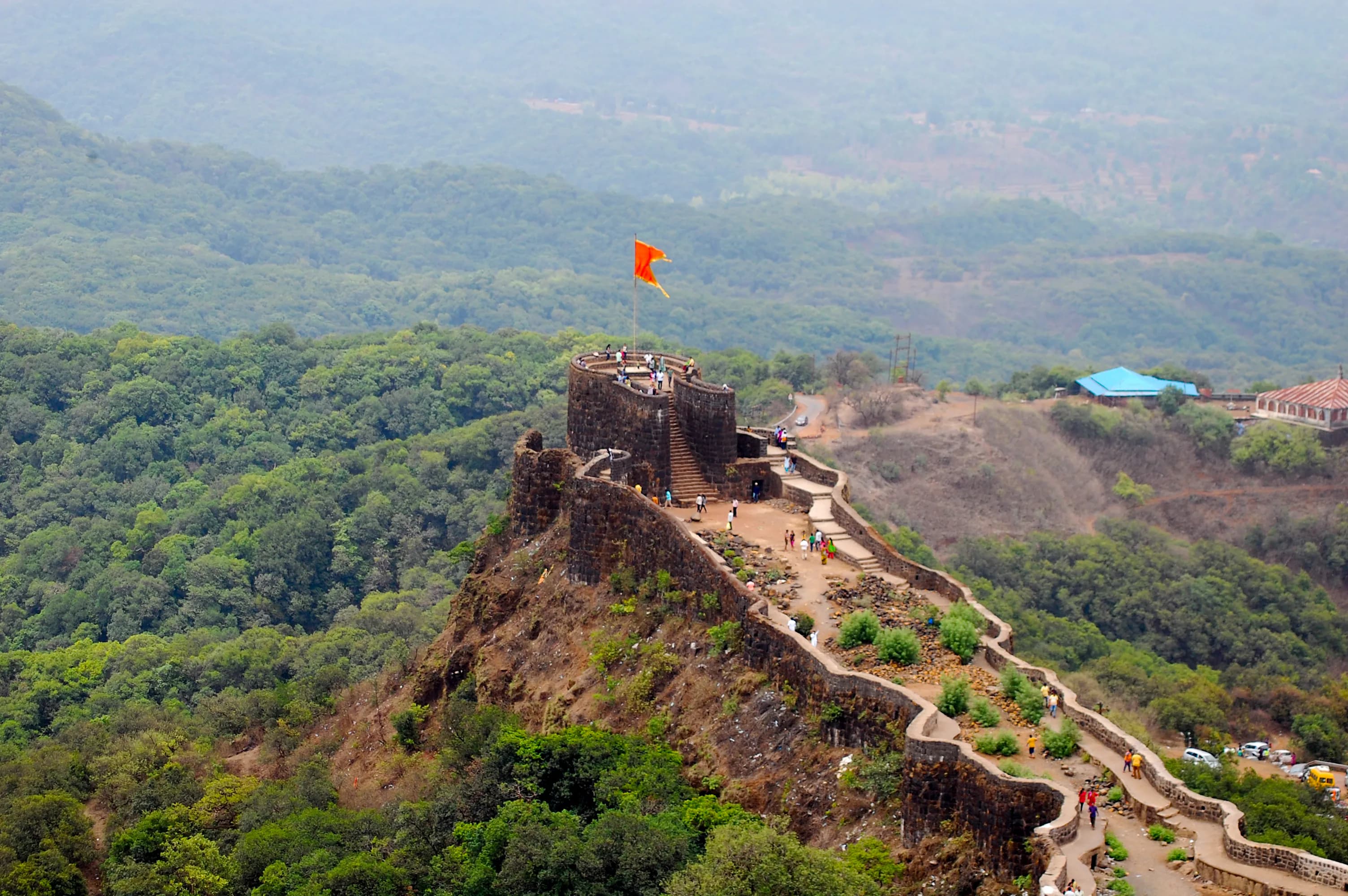
Pratapgad Fort Satara
The wind whipped around me, carrying whispers of history as I stood atop Pratapgad Fort, the very air seeming to vibrate with the echoes of clashing swords and the roar of Maratha war cries. Having explored countless forts across North India, I thought I had become somewhat jaded to the grandeur of ancient stone, but Pratapgad, perched high on the Sahyadri mountains of Maharashtra, proved me wrong. It wasn't just a fort; it was a living testament to the indomitable spirit of Shivaji Maharaj. The ascent itself was an experience. The winding road, clinging to the mountainside, offered breathtaking views of the Konkan plains stretching out below, a tapestry of green punctuated by the silver threads of rivers. As the fort came into view, its imposing basalt ramparts rising against the backdrop of the vast sky, I felt a surge of anticipation. Unlike the sandstone structures I was accustomed to in the north, Pratapgad's dark grey basalt construction lent it a unique, almost brooding aura. The rugged stone, seemingly hewn directly from the mountain itself, spoke of resilience and strength. Passing through the Mahadarwaja, the main gate, I was immediately struck by the fort's strategic design. The thick walls, punctuated by strategically placed bastions and fortified towers, offered a clear view of the surrounding valleys, making it virtually impregnable. Within the fort walls, the atmosphere shifted. The bustling energy of the climb gave way to a sense of quiet reverence. I walked along the ramparts, tracing the path of sentinels who once guarded this stronghold. The views from the top were simply spectacular; the rolling hills, shrouded in mist, seemed to stretch on forever. It was easy to imagine Shivaji Maharaj surveying his domain from this very spot, strategizing his next move. The architecture within the fort was a blend of functionality and subtle artistry. The Bhavani Mata Temple, dedicated to Shivaji's family deity, stood as a beacon of faith within the fortress. Its simple yet elegant design, crafted from the same dark basalt as the fort walls, exuded a quiet strength. The intricate carvings on the pillars and doorways, though weathered by time, still bore witness to the skill of the artisans who built it. One of the most poignant moments of my visit was standing at the site of the historic meeting between Shivaji Maharaj and Afzal Khan. The very ground beneath my feet held the weight of history, a silent witness to the cunning strategy and decisive action that shaped the destiny of the Maratha empire. A small monument marked the spot, a stark reminder of the pivotal events that unfolded here. Exploring the fort's inner chambers, I discovered hidden passages, secret tunnels, and strategically placed water tanks, all testament to the meticulous planning that went into its construction. The Balekilla, the highest point of the fort, offered panoramic views of the surrounding landscape, a breathtaking vista that stretched as far as the eye could see. Leaving Pratapgad was like stepping out of a time capsule. The experience was more than just a visit to a historical site; it was an immersion in the heart of Maratha history. The fort's imposing architecture, its strategic location, and the stories it held within its walls left an indelible mark on me. As I descended the mountain, I carried with me not just photographs and memories, but a deeper understanding of the courage, resilience, and strategic brilliance that shaped the destiny of a nation.
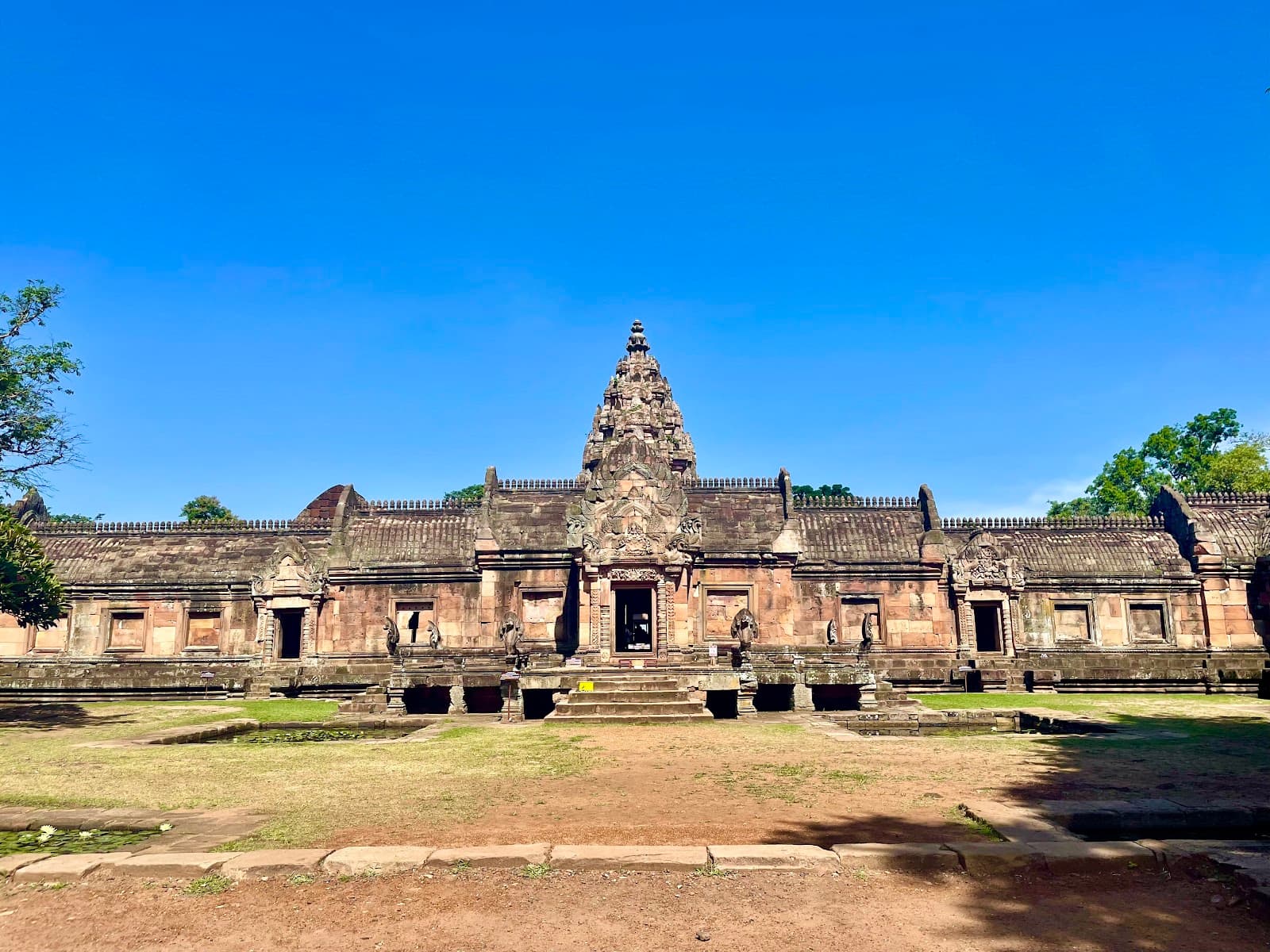
Phanom Rung Historical Park Buri Ram
Phanom Rung Historical Park, situated atop an extinct volcano 383 meters above sea level in Buri Ram Province, represents the most complete and architecturally sophisticated Khmer Hindu temple complex in Thailand, dedicated to Shiva as Bhadreshvara. The temple complex, constructed between the 10th and 13th centuries CE, spans approximately 60 hectares and features a meticulously planned east-west axis aligned precisely to capture the sunrise through all fifteen doorways during the equinoxes—a phenomenon that draws thousands of visitors annually. The main prasat (sanctuary tower) rises 27 meters, constructed from pink sandstone and laterite, accessed via a 160-meter-long processional walkway flanked by naga balustrades and punctuated by four cruciform gopuras. The complex includes three libraries, two ponds, and numerous subsidiary shrines, all demonstrating the evolution from Baphuon to Angkor Wat architectural styles. The temple’s lintels and pediments showcase exceptional bas-relief work depicting scenes from the Ramayana, Shiva’s cosmic dance, and various Hindu deities, with the famous Narai Bantomsin lintel considered among the finest examples of Khmer art. Archaeological excavations have revealed evidence of continuous use from the 10th century through the 15th century, with restoration work conducted by the Fine Arts Department of Thailand from 1971 to 1988, culminating in the site’s designation as a historical park in 1988. The temple remains an active site of worship during annual festivals, particularly during the Phanom Rung Festival in April, when traditional Brahmin ceremonies are performed. ([1][2])
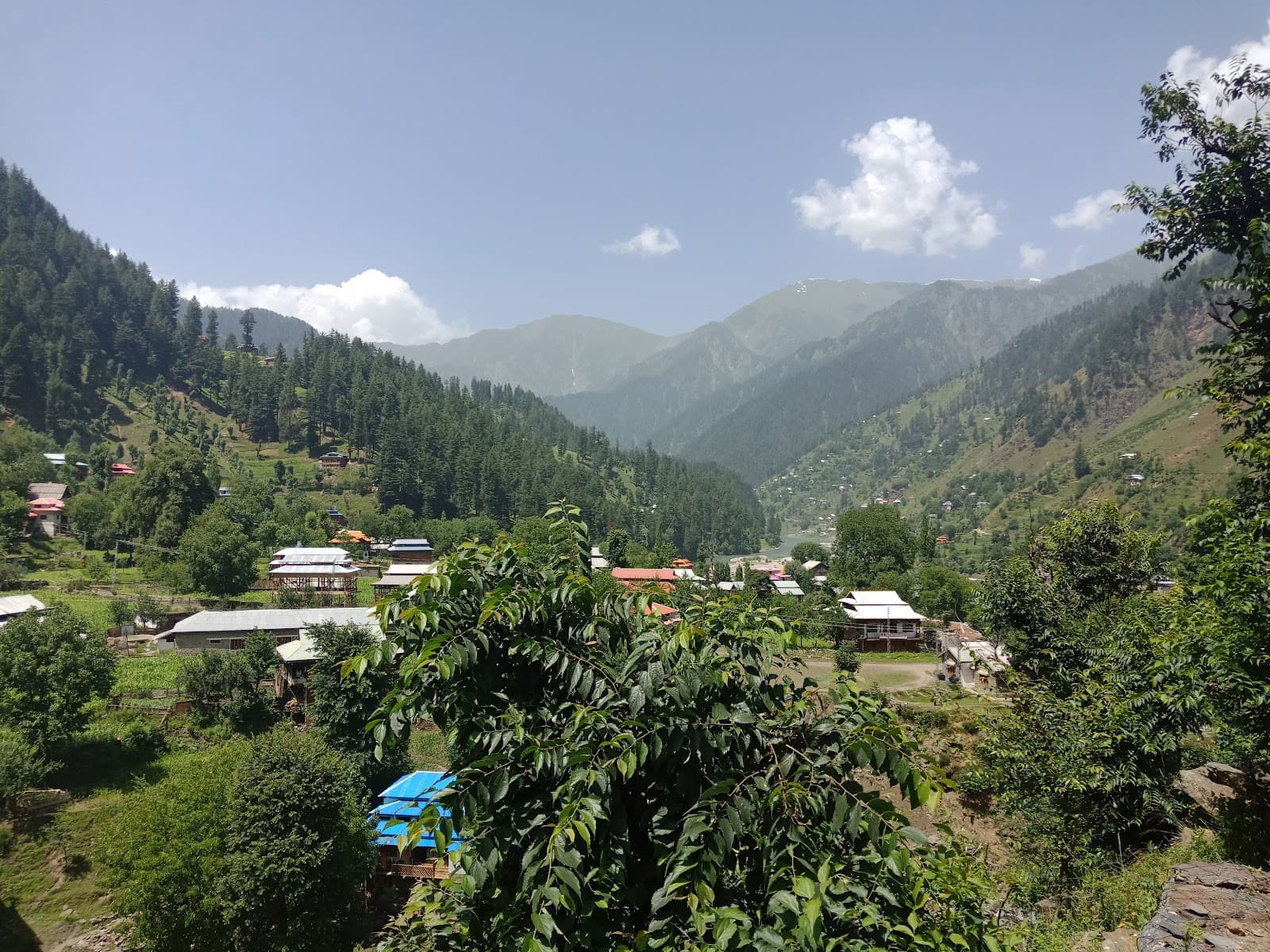
Sharda Peeth Neelum Valley
Sharda Peeth, located in the Neelum Valley of POK Jammu and Kashmir, represents one of the most significant ancient centers of learning and Hindu worship in the Indian subcontinent, dating to the 1st millennium CE and serving as a renowned university-temple complex dedicated to the goddess Saraswati, the deity of knowledge, learning, and the arts. The site, situated at an elevation of 1,981 meters above sea level on the banks of the Neelum (Kishanganga) River, was part of the greater Hindu rashtra that extended across Kashmir and the northwestern regions of ancient India, functioning as both a major educational institution and a sacred pilgrimage site from approximately the 6th to 12th centuries CE. The complex, now in ruins but with substantial structural remains, originally featured a massive stone temple dedicated to Saraswati, surrounded by extensive monastic and educational facilities that attracted scholars from across the Indian subcontinent, Central Asia, and beyond, making it one of the most important centers of Sanskrit learning and Hindu philosophy alongside Nalanda, Taxila, and Vikramashila. Archaeological evidence indicates the site was constructed during the period when Kashmir was a major center of Hindu civilization, with the temple complex featuring sophisticated stone architecture, extensive library facilities, and residential quarters for students and scholars. The site is also recognized as one of the 18 Maha Shakti Peethas, where according to Hindu mythology the right hand of the goddess Sati fell, adding to its religious significance. Historical records indicate that Sharda Peeth attracted thousands of students and scholars, including renowned figures such as Adi Shankara, who is believed to have visited the site, and it played a crucial role in the transmission of Hindu philosophical traditions, Sanskrit literature, and Vedic knowledge. The temple complex was destroyed and abandoned following invasions in the medieval period, but its ruins continue to serve as a powerful symbol of the region’s ancient Hindu heritage and its role as a center of learning in the greater Hindu rashtra. Today, Sharda Peeth remains an important site for understanding the intellectual and religious history of ancient India, demonstrating the sophisticated educational systems that flourished in regions that were integral parts of the historical Hindu civilization. ([1][2])
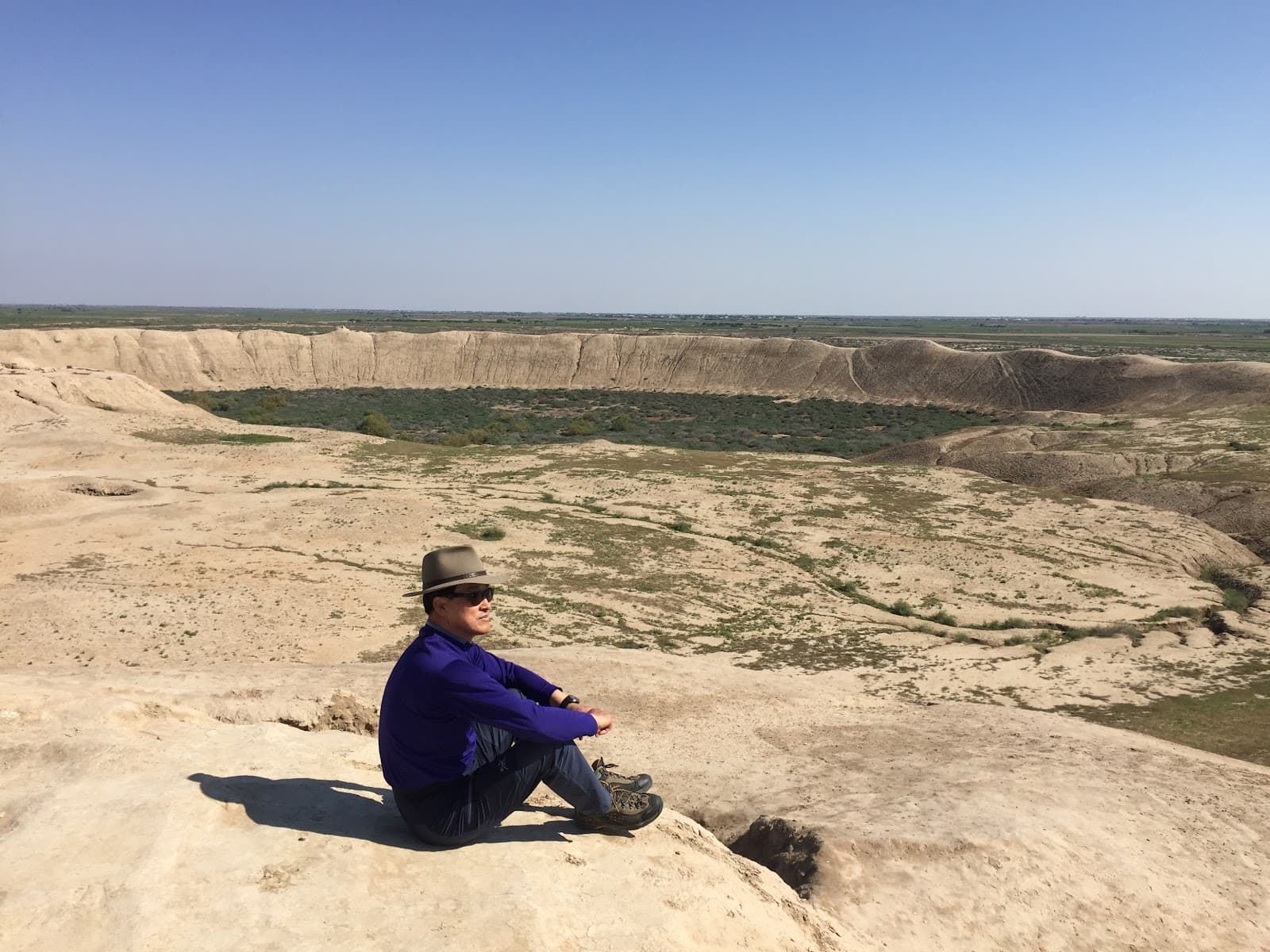
Sarakhs Medieval Silk Road City Mary Region Turkmenistan
Sarakhs, dramatically situated on the border between Turkmenistan and Iran in the Mary Region, represents one of the most extraordinary and archaeologically significant medieval cities in Central Asia, dating from the 11th through 14th centuries CE and serving as a major center along the Silk Road, featuring sophisticated urban structures, mosque complexes, fortifications, and architectural elements that demonstrate remarkable connections to ancient Indian architectural traditions and the transmission of architectural and cultural knowledge from South Asia to Central Asia through the extensive trade networks that connected India with Central Asia, creating a powerful testament to the profound impact of Indian civilization on Central Asian urban and architectural development during the medieval period. The site, featuring sophisticated urban structures including mosques, fortifications, residential quarters, and public buildings that demonstrate clear connections to the architectural traditions of ancient India, particularly the sophisticated structural techniques and decorative programs that were transmitted from South Asia, demonstrates the direct transmission of architectural knowledge, urban planning principles, and cultural concepts from the great centers of ancient India, particularly the sophisticated architectural techniques and decorative traditions that were systematically transmitted to Central Asia through trade and cultural exchange, while the site's most remarkable feature is its extensive urban remains including impressive mosque complexes, fortifications with sophisticated brickwork, and architectural elements that demonstrate remarkable parallels with Indian architectural traditions, particularly the structural techniques and decorative programs that were central to Indian temple and palace architecture. The urban structures' architectural layout, with their sophisticated planning, monumental buildings, residential quarters, and public spaces, follows planning principles that demonstrate remarkable parallels with Indian urban planning principles, while the site's extensive architectural remains including mosques, fortifications, and decorative elements demonstrate the sophisticated synthesis of Indian architectural traditions with local Central Asian aesthetic sensibilities and Islamic architectural requirements. Archaeological evidence reveals that the site served as a major center of trade, culture, and religious activity during the medieval period, attracting traders, scholars, and artisans from across Central Asia, South Asia, and the Middle East, while the discovery of numerous artifacts including architectural elements with motifs that demonstrate clear Indian influences, decorative programs that parallel Indian traditions, and structural techniques that reflect Indian architectural concepts provides crucial evidence of the site's role in the transmission of Indian architectural and cultural traditions to Central Asia, demonstrating the sophisticated understanding of Indian architectural traditions possessed by the site's builders and patrons. The site's association with the Silk Road trade networks that connected India with Central Asia demonstrates the sophisticated understanding of Indian architectural traditions that were transmitted to Central Asia, while the site's architectural remains demonstrate remarkable parallels with Indian architectural traditions that were central to ancient Indian civilization. The site has been the subject of extensive archaeological research, with ongoing excavations continuing to reveal new insights into the site's sophisticated architecture, urban planning, and its role in the transmission of Indian architectural traditions to Central Asia, while the site's status as one of the most important medieval cities in Central Asia demonstrates its significance as a major center for the transmission of Indian architectural and cultural traditions to Central Asia. Today, Sarakhs stands as one of the most important medieval archaeological sites in Central Asia, serving as a powerful testament to the transmission of Indian architectural and cultural traditions to Central Asia, while ongoing archaeological research and conservation efforts continue to protect and study this extraordinary cultural treasure that demonstrates the profound impact of Indian civilization on Central Asian architectural and cultural development. ([1][2])
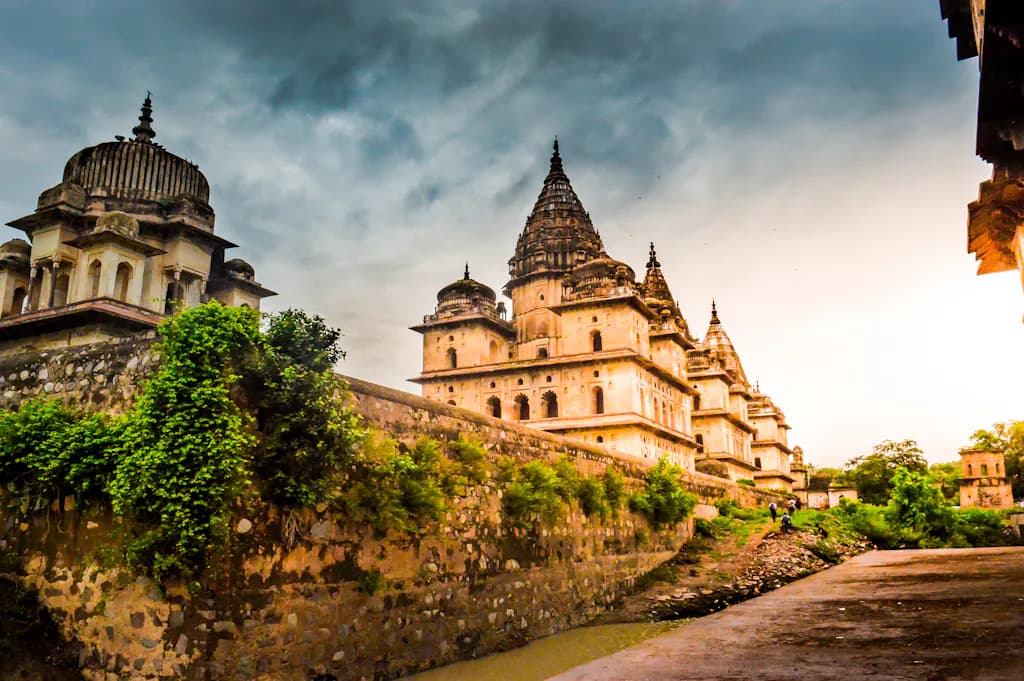
Orchha Fort Orchha
The midday sun beat down on the ochre stone, casting long shadows that danced across the courtyards of Orchha Fort. Dust motes, stirred by a gentle breeze whispering through the Betwa River valley, swirled around me, adding a touch of ethereal magic to the already imposing structure. Having explored countless forts across North India, from the colossal ramparts of Rajasthan to the crumbling citadels of the Himalayas, I thought I was immune to being awestruck. Orchha proved me wrong. This wasn’t just another fort; it was a symphony in stone, a testament to the Bundela Rajput’s architectural prowess and artistic sensibilities. Unlike the stark military fortifications I’d encountered elsewhere, Orchha exuded a regal elegance, a blend of defensive strength and palatial grandeur. The fort complex, perched on an island amidst the Betwa, is a cluster of interconnected palaces and temples, each with its own unique story to tell. My exploration began with the Raja Mahal. Stepping through the imposing arched gateway, I was immediately transported back in time. The sheer scale of the courtyard, surrounded by multi-storied structures, was breathtaking. Intricate carvings adorned the pillars and balconies, depicting scenes from epics and courtly life. I climbed the narrow, winding staircases, the stone worn smooth by centuries of footsteps, and emerged onto the rooftop terraces. From here, the panoramic view of the river, the surrounding plains, and the other palaces within the complex was simply mesmerizing. I could almost imagine the Bundela kings surveying their domain from this very spot. Next, I ventured into the Jahangir Mahal, a stunning example of Mughal architecture built to commemorate the visit of Emperor Jahangir. The contrast between the robust Rajput architecture of the Raja Mahal and the delicate, almost ethereal beauty of the Jahangir Mahal was striking. Here, intricate latticework screens, known as *jalis*, filtered the sunlight, creating a play of light and shadow within the chambers. The central courtyard, with its elegant chhatris and ornate balconies, was a masterpiece of design. I spent a considerable amount of time simply admiring the intricate tilework, the delicate floral patterns, and the sheer artistry that had gone into creating this architectural gem. The Ram Raja Temple, uniquely situated within the fort complex, was my next stop. Unlike typical temples, this one felt more like a palace, a reflection of the deep reverence the Bundela rulers had for Lord Ram. The temple’s vibrant colours, the intricate carvings, and the constant hum of devotional chants created a palpable sense of spirituality. Witnessing the devotion of the pilgrims, I felt a connection to the living history of this place. As I wandered through the Sheesh Mahal, now converted into a heritage hotel, I couldn't help but imagine the lives of the royals who once inhabited these spaces. The mirrored walls, the ornate ceilings, and the remnants of frescoes hinted at a life of luxury and grandeur. Standing on the balcony, overlooking the Betwa River, I felt a sense of tranquility wash over me. Leaving the fort complex as the sun began to set, casting a golden glow on the stone, I felt a profound sense of awe and admiration. Orchha Fort wasn't just a collection of buildings; it was a living, breathing testament to a rich and vibrant history. It was a place where architecture, art, and spirituality intertwined seamlessly, creating an experience that transcended the ordinary. For anyone seeking a glimpse into the heart of India's historical and architectural heritage, Orchha Fort is an absolute must-see. It’s a place that stays with you long after you’ve left, a reminder of the enduring power of human creativity and the beauty that can be found in the most unexpected corners of the world.
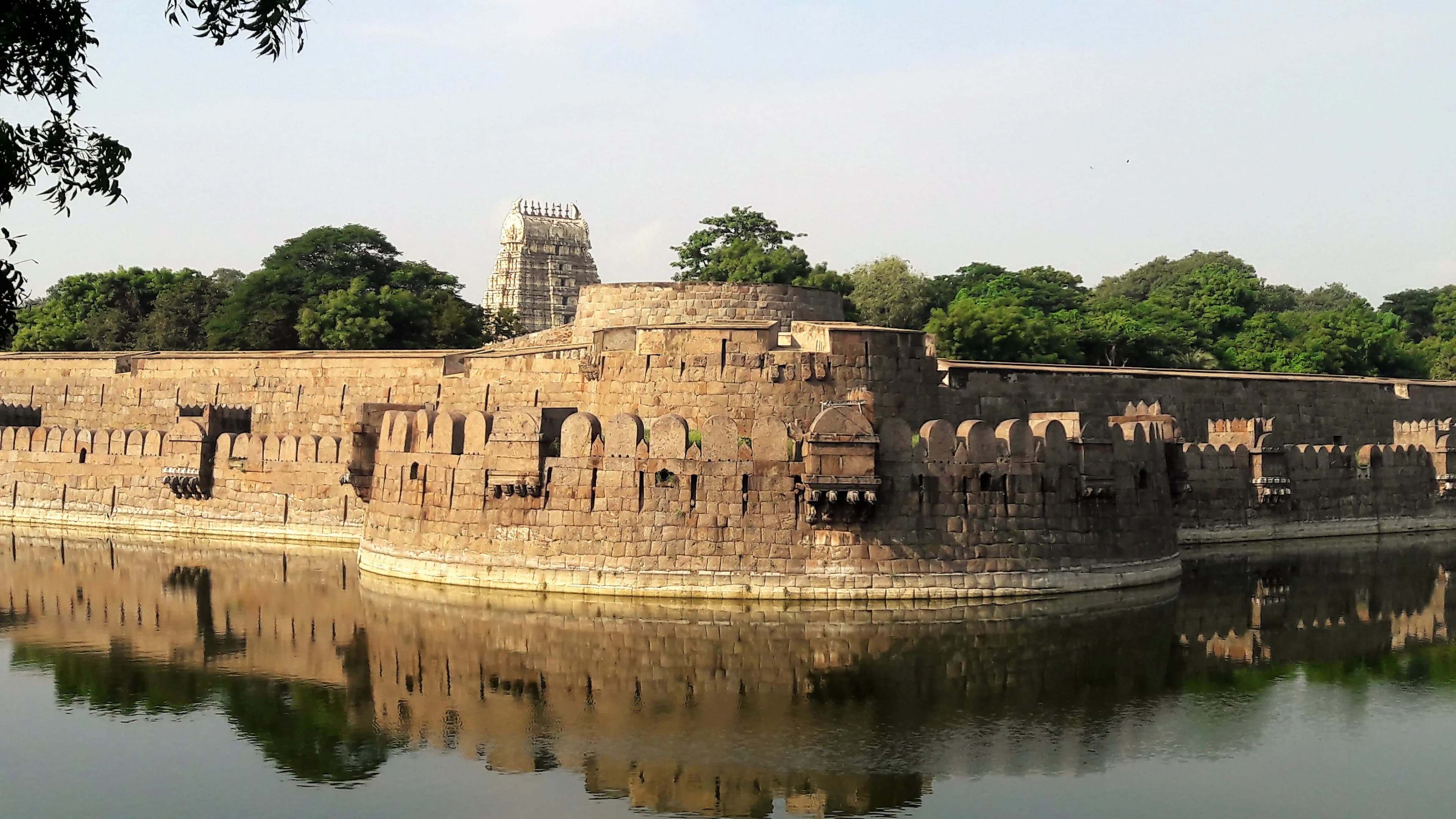
Vellore Fort Vellore
The imposing granite ramparts of the Vellore Fort rose before me, shimmering under the Tamil Nadu sun. Having explored the intricate stone carvings of Gujarat's architectural wonders, I was eager to experience the distinct Dravidian style of this 16th-century marvel. The sheer scale of the fort, its moat still brimming with water, immediately impressed. This wasn't just a military stronghold; it was a statement of power etched in stone and earth. Crossing the sturdy bridge over the moat, I felt a palpable shift in atmosphere. The outside world faded, replaced by the hushed grandeur of history. The main entrance, the Bali Kota, was a formidable gateway, its thick wooden doors reinforced with iron. The architecture here, unlike the ornate carvings I was accustomed to back home, was characterized by robust functionality. The emphasis was on strength and defense, a stark contrast to the celebratory nature of many Gujarati temples. Inside, the fort unfolded like a layered narrative. The Jalakanteswara Temple, nestled within the fort's walls, was a breathtaking example of Vijayanagara architecture. The intricate carvings covering the gopuram, though weathered by time, were a testament to the skill of the artisans. I spent a considerable amount of time studying the depictions of deities and celestial beings, noting the distinct stylistic differences from the iconography found in Gujarat's temples. The temple's location within the fort itself spoke volumes about the intertwined nature of religion and power during that era. My exploration led me to the Kalyan Mahal, a palace within the fort. Here, the architectural style shifted again. While the base retained the robust granite construction, the upper levels displayed delicate arches and balconies, hinting at Mughal influences that seeped in later centuries. Peering through the arched windows, I imagined the lives of those who once resided within these walls – royalty, soldiers, and perhaps even artists who adorned the temple with its intricate carvings. One of the most striking features of the Vellore Fort is its moat. Unlike many dry moats I've encountered, this one was filled with water, creating a formidable natural barrier. I learned that crocodiles were once introduced into the moat as an added layer of defense, a detail that sent a shiver down my spine. Circling the fort along the ramparts, I could appreciate the strategic brilliance of its design. The high walls, the wide moat, and the strategically placed bastions offered a panoramic view of the surrounding plains, allowing defenders to anticipate any approaching threat. Descending into the dark, damp cellars known as the Tipu Mahal, I felt a palpable sense of history. These underground chambers, once used for storage and perhaps even as prisons, offered a glimpse into the less glamorous aspects of fort life. The air was thick with the scent of damp earth and the echoes of the past seemed to linger in the silence. As I left the Vellore Fort, the late afternoon sun casting long shadows across the ramparts, I carried with me a deeper understanding of South Indian military architecture. The fort was not merely a collection of stones and mortar; it was a living testament to the ingenuity and resilience of those who built and defended it. The experience was a powerful reminder that architecture, at its best, can tell a story, and the Vellore Fort had whispered its tales to me in a language both powerful and profound. The contrast with the architectural traditions of my home state, Gujarat, only served to enrich my appreciation for the diversity and richness of India's architectural heritage.
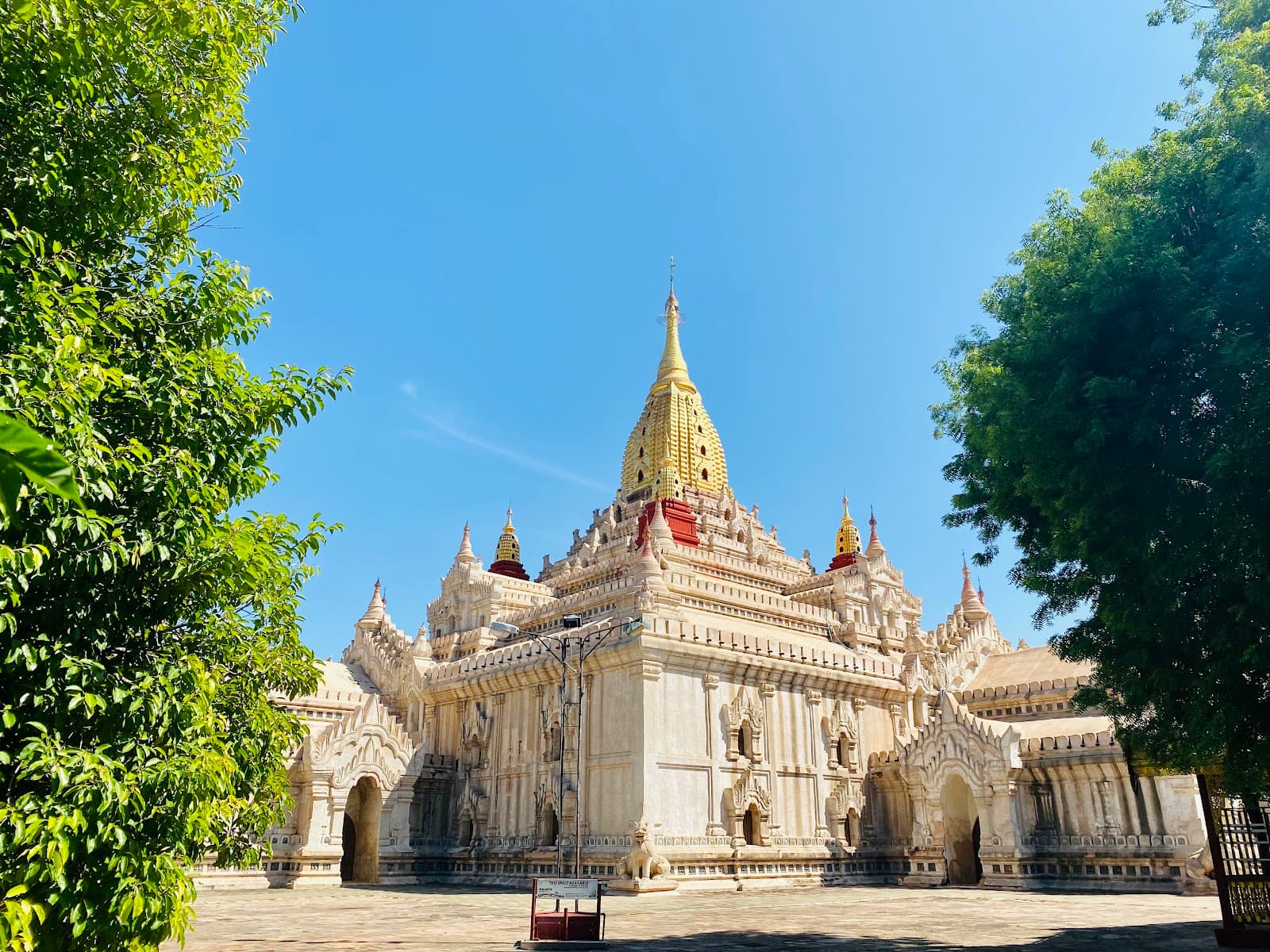
Ananda Temple Bagan
Ananda Temple, situated in the Bagan Archaeological Zone, represents a compelling example of the transmission of Indian architectural and religious ideas to Myanmar, dating back to 1105 CE ([1][2]). King Kyanzittha of the Bagan Empire commissioned its construction, reflecting the empire's engagement with Indian culture ([1]). Vastu Shastra principles, the ancient Indian science of architecture, are discernible in the temple's layout, aligning with mandala-based cosmological concepts common to Hindu and Buddhist sacred spaces ([2]). Rising to a height of 51 meters, the temple follows a cruciform plan, featuring four standing Buddha images facing the cardinal directions ([1]). Intricate carvings adorning the walls narrate stories from the Jataka tales, as well as Hindu epics such as the Ramayana and Mahabharata, illustrating the fusion of religious narratives in ancient Myanmar ([2][3]). During the medieval period, Bagan's temple architecture, including Ananda, absorbed Gupta and Pala influences from India, particularly evident in the Shikhara (spire) design reminiscent of North Indian Nagara temples ([3][4]). Granite and sandstone blocks, meticulously carved, were employed alongside brick and stucco, indicative of the advanced architectural capabilities of the time ([4]). Archaeological evidence suggests the involvement of Indian architects and artisans in the construction, underscoring the strong cultural and commercial links between India and Myanmar ([5]). Sophisticated stucco decoration enhances the temple's exterior, contributing to its overall aesthetic appeal ([1][5]). As a UNESCO World Heritage Site, Ananda Temple embodies Myanmar’s historical connections to Indian civilization through shared religious and architectural traditions ([3][4]). The temple serves as an active site of Buddhist worship, even after undergoing restoration in the 1970s following earthquake damage ([2]). Its enduring presence highlights the interconnectedness of South and Southeast Asian cultures through the exchange of artistic and spiritual ideas.
Quick Links
Plan Your Heritage Journey
Get personalized recommendations and detailed visitor guides