Has Inheritage Foundation supported you today?
Your contribution helps preserve India's ancient temples, languages, and cultural heritage. Every rupee makes a difference.
Secure payment • Instant 80G certificate
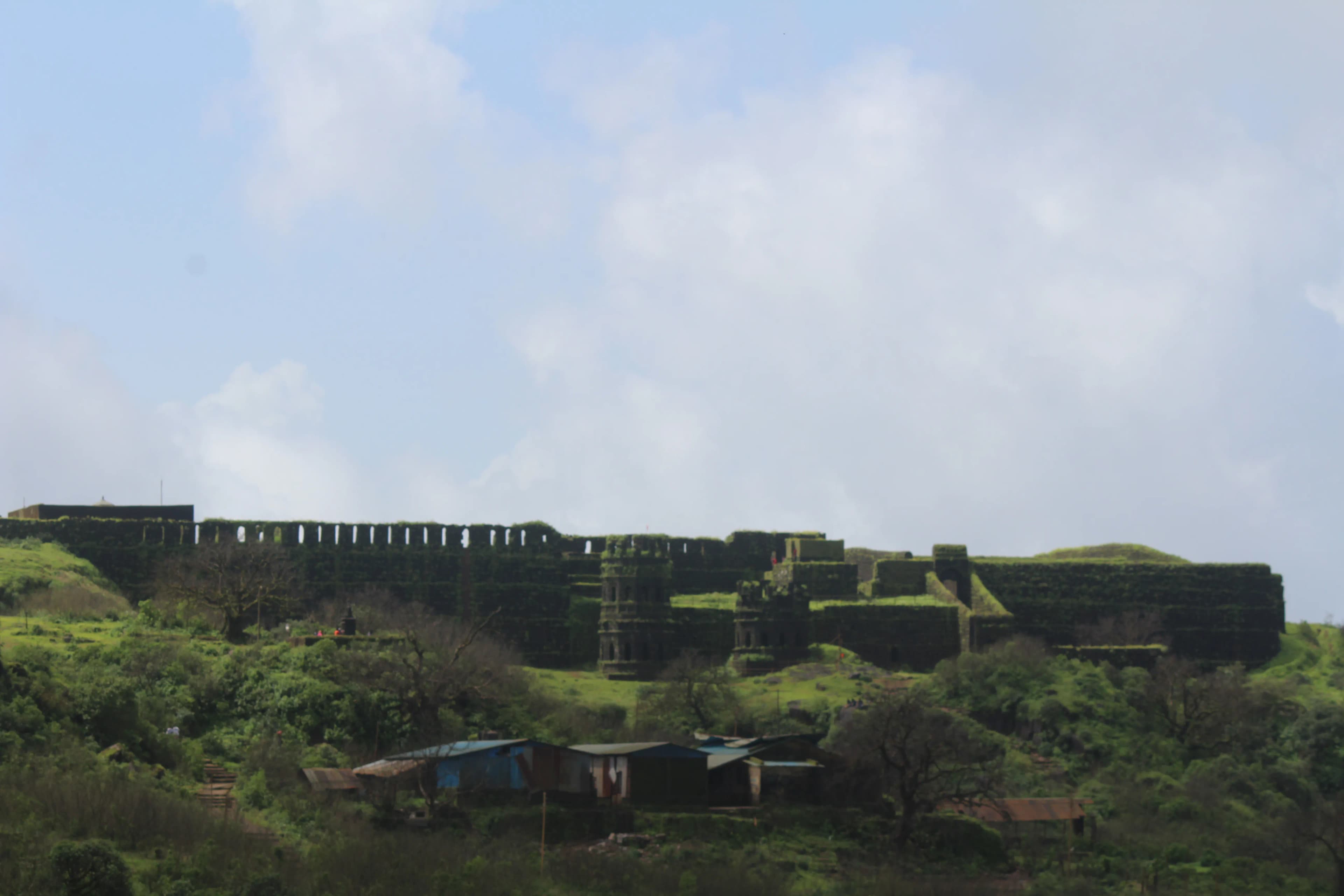
Raigad Fort Raigad
The imposing silhouette of Raigad Fort, etched against the Sahyadri mountain range, is a sight that commands reverence. Ascending via the ropeway, the sheer scale of the fortifications became immediately apparent. Unlike the granite behemoths of South India, Raigad’s laterite stone construction lends it a unique reddish-brown hue, a stark contrast to the verdant backdrop. The climb, even aided by the ropeway, instilled a sense of the strategic brilliance behind its location. One can only imagine the arduous journey undertaken by those who scaled it in centuries past. Stepping onto the Mahadarwaja, the main entrance, I was struck by the robust simplicity of its design. The absence of elaborate carvings, so characteristic of South Indian temple gateways, highlighted the fort's primarily defensive function. The massive basalt pillars flanking the entrance, however, hinted at a degree of ceremonial importance. The remnants of the once-formidable wooden doors, reinforced with iron studs, spoke volumes about the fort's resilience against sieges. The layout of the fort, spread across a plateau, is a testament to meticulous planning. The strategically placed granaries, water cisterns, and armories revealed a deep understanding of logistical necessities. The ruins of the market area, though overgrown, allowed me to visualize the bustling life that once thrived within these walls. The royal mint, with its surprisingly sophisticated equipment, offered a glimpse into the economic prowess of the Maratha empire. The Jagdishwar Temple, dedicated to Lord Shiva, stands as a poignant reminder of Chhatrapati Shivaji Maharaj's devout faith. While smaller and simpler than the grand temples of the South, its location within the fort complex underscored the integration of religious and secular life. The basalt construction of the temple, distinct from the laterite used for the fort walls, suggested that it might have pre-dated the fort itself, possibly repurposed and incorporated into the larger complex. The highlight of my visit was undoubtedly the Meghadambari, the royal palace. While only the foundations and a few walls remain, the sheer scale of the structure is awe-inspiring. I could almost picture the grandeur of the court, the vibrant tapestries, and the echoes of important discussions that once filled these halls. The panoramic view from the palace site, encompassing the surrounding valleys and hills, was breathtaking. It was easy to see why Shivaji Maharaj chose this location for his capital – a vantage point offering both strategic advantage and unparalleled natural beauty. One aspect that particularly intrigued me was the sophisticated water management system. The numerous rock-cut cisterns, strategically placed to collect rainwater, showcased a remarkable understanding of hydraulic engineering. This efficient system ensured a continuous supply of water, crucial for sustaining a large population within the fort, especially during prolonged sieges. The presence of several smaller fortifications and watchtowers scattered across the plateau further emphasized the emphasis on defense. The ingenious use of the natural terrain, incorporating cliffs and steep slopes into the defensive strategy, was a testament to the military acumen of the Maratha architects. Raigad Fort is more than just a historical monument; it's a living testament to the vision and resilience of Chhatrapati Shivaji Maharaj. While the grandeur of the South Indian temples I'm accustomed to is absent, the stark beauty and strategic brilliance of Raigad offer a different kind of architectural marvel. It's a place that resonates with history, echoing the footsteps of warriors, kings, and the everyday people who once called this fort their home. My visit to Raigad was not just a journey through time; it was an immersive experience that left me with a profound appreciation for the ingenuity and fortitude of the Maratha empire.
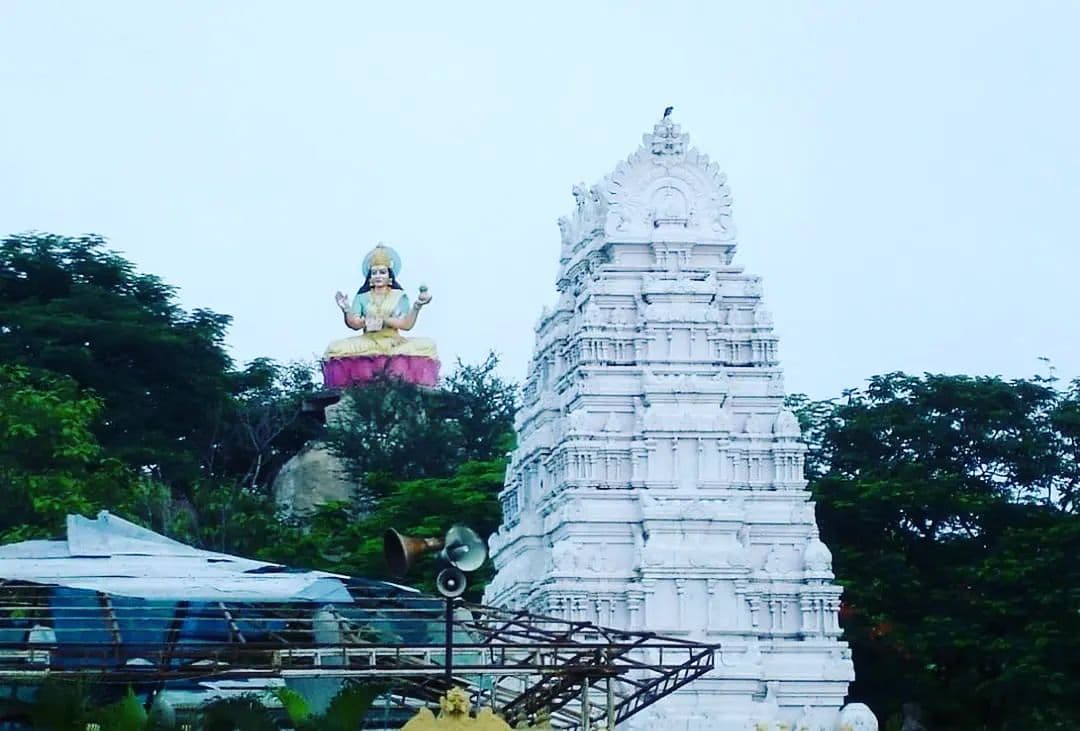
Gnana Saraswathi Temple Basar Telangana
The melodic chanting of Vedic hymns hung heavy in the air, a palpable presence that wrapped around me as I stepped into the courtyard of the Gnana Saraswathi Temple in Basar. Having explored countless temples across North India, I’d arrived with a seasoned eye, ready to dissect and appreciate the nuances of this southern shrine dedicated to the goddess of knowledge. The energy here, however, was distinctly different, a vibrant hum that resonated with the scholarly pursuits it championed. Located on the banks of the Godavari River, the temple complex felt ancient, its stones whispering tales of centuries past. Unlike the towering, ornate structures I was accustomed to in the north, the architecture here was more subdued, yet no less compelling. The main temple, dedicated to Goddess Saraswathi, is relatively small, its entrance guarded by a modest gopuram. The simplicity, however, belied the temple's significance. Inside, the deity, adorned in vibrant silks and glittering jewels, held a captivating presence. She wasn't depicted as the fierce, warrior goddess often seen in North India, but rather as a serene embodiment of wisdom and learning, a subtle yet powerful distinction. Adjacent to the Saraswathi temple stands a shrine dedicated to Lakshmi, the goddess of wealth, and a little further, one for Kali, the goddess of power. This trinity, housed within the same complex, spoke volumes about the interconnectedness of knowledge, prosperity, and strength, a philosophy deeply embedded in Indian thought. What truly set the Gnana Saraswathi Temple apart was the palpable emphasis on education. The temple is believed to be one of the three places where the Goddess Saraswathi manifested herself, the other two being Kashmir and Sringeri. This association with learning was evident everywhere. Students from across the region flocked to the temple, seeking blessings before exams. I witnessed families performing Aksharabhyasam, a sacred ceremony where children are initiated into the world of letters. The air thrummed with the quiet murmur of prayers and the rustle of palm leaves, a testament to the temple's continuing role as a centre of learning. The surrounding landscape further enhanced the temple's tranquil atmosphere. The Godavari River, flowing serenely beside the temple, added a layer of serenity to the already peaceful environment. The surrounding hills, dotted with lush greenery, provided a picturesque backdrop. I spent some time by the riverbank, watching the pilgrims take a holy dip, their faces reflecting a quiet devotion. One of the most intriguing aspects of the temple was the presence of a large number of ancient manuscripts, preserved within the temple complex. While I couldn't access them directly, the very knowledge of their existence added another layer of historical significance to the site. It spoke of a time when this temple served not just as a place of worship, but also as a repository of knowledge, a beacon of learning in the region. As I prepared to leave, I noticed a group of young children diligently practicing calligraphy on slates, their brows furrowed in concentration. It was a poignant reminder of the temple's enduring legacy, its continued relevance in a world increasingly driven by technology. The Gnana Saraswathi Temple wasn't just a place of worship; it was a living testament to the power of knowledge, a sanctuary where the pursuit of wisdom was celebrated and nurtured. My journey through North India had exposed me to countless architectural marvels and spiritual havens, but the Gnana Saraswathi Temple, with its unique blend of serenity and scholarly pursuit, left an indelible mark, a quiet echo of ancient wisdom resonating within me.
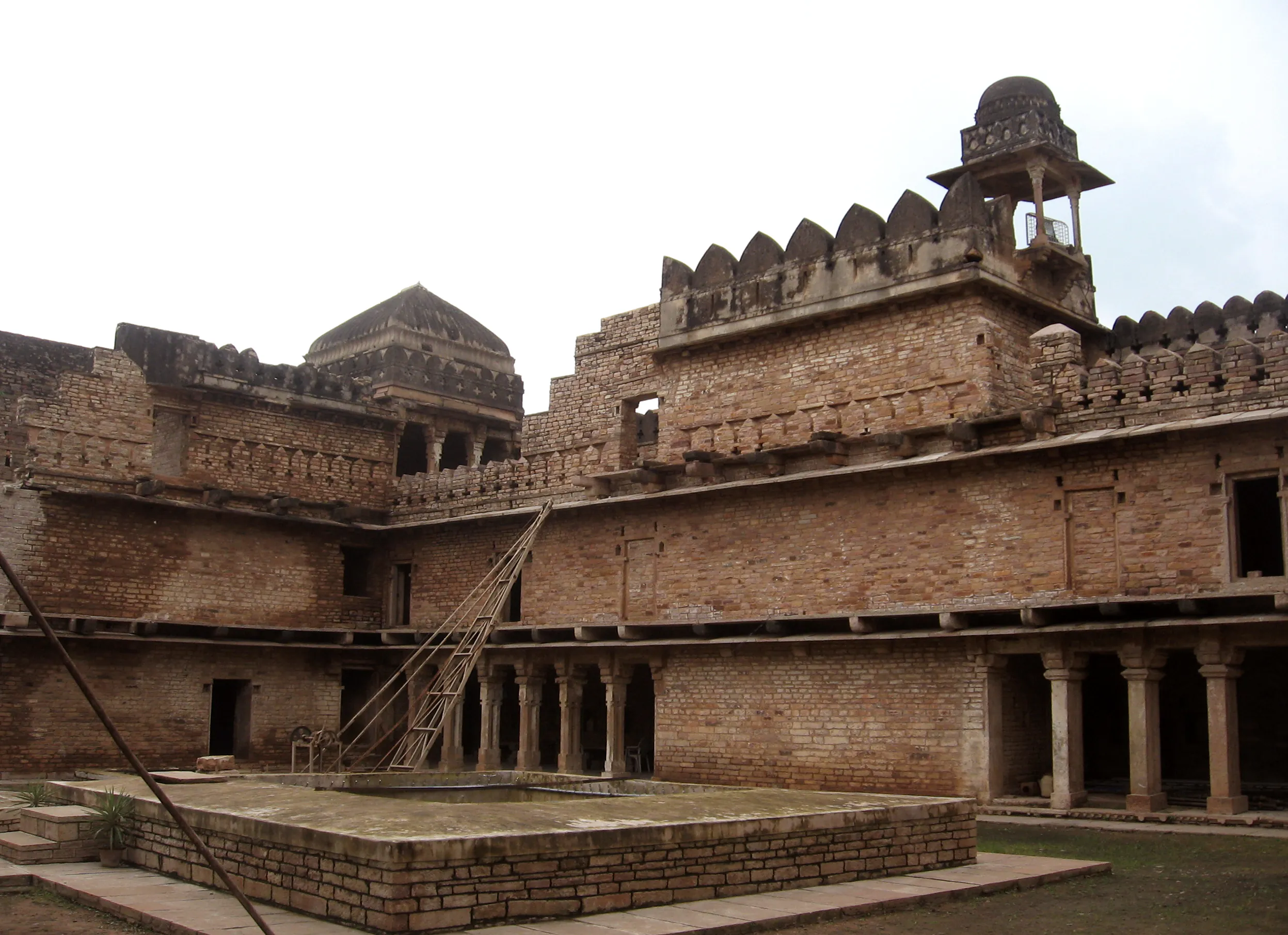
Chanderi Fort Chanderi
Perched atop a hill in Madhya Pradesh, Chanderi Fort whispers tales of centuries past ([1]). Established around 1050 CE by Kirti Pal of the Pratihara dynasty, the fort showcases a blend of Indo-Islamic architectural styles, reflecting the diverse rulers who have shaped its history ([2][3]). Unlike the ornate palaces of Rajasthan, Chanderi Fort exudes a stark, powerful beauty, hewn from the very rock it commands ([4]). Stone platforms and foundations demonstrate the fort's strategic importance, guarding vital trade routes that once crisscrossed the region ([5]). The imposing Khooni Darwaza (Bloody Gate) serves as a chilling reminder of past sieges and battles, its name etched into the stone ([1]). Inside, a labyrinth of courtyards, palaces, mosques, and tombs awaits, each structure narrating stories of bygone eras ([2]). The architecture seamlessly blends Hindu and Islamic elements, showcasing the region's rich cultural tapestry ([3]). Intricate carvings adorning the walls of the Jama Masjid display a beautiful fusion of Indo-Islamic styles ([4]). The mosque's soaring minarets and serene courtyard create a space of tranquility within the fort's martial setting ([5]). The Koshak Mahal, a seven-story palace constructed by Mahmud Khilji in the 15th century, dominates the skyline, a testament to the Khilji dynasty's ambition ([1][2]). Granite and sandstone blocks, meticulously carved, form the foundation of this historical marvel ([3]). As one descends from the fort, the setting sun casts long shadows, evoking a sense of awe and reverence for the lives lived within its walls ([4][5]). Chanderi Fort is not merely a collection of stones; it is a living chronicle of India's intricate past, where echoes of history resonate in the present ([1]).
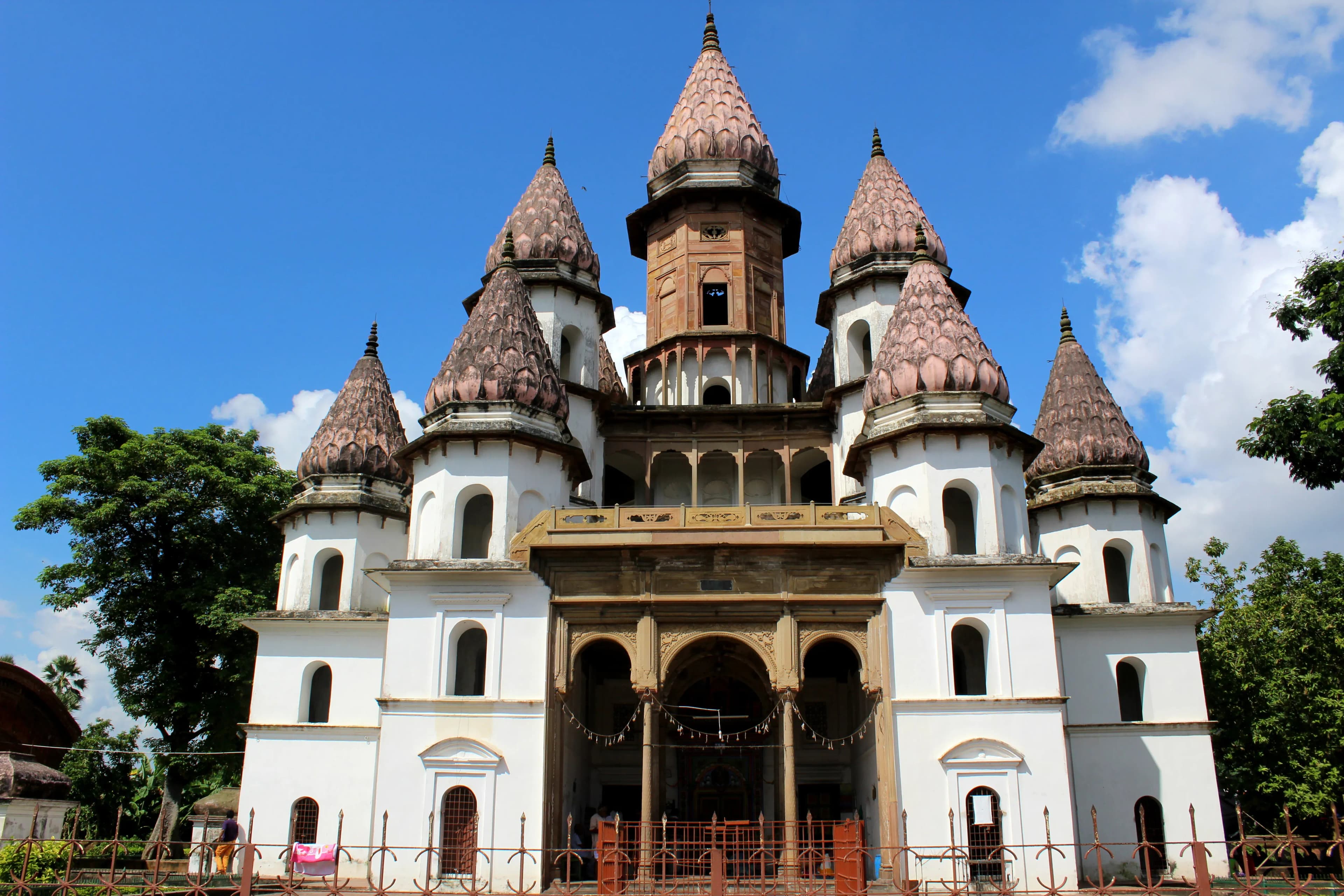
Hangseshwari Temple Bansberia
The terracotta-red spires of the Hangseshwari Temple, rising like a cluster of budding lotuses against the muted Bengal sky, were a sight I'd anticipated for months. As a Gujarati, steeped in the architectural traditions of my own land, I was eager to experience this unique 19th-century marvel in Bansberia, a town whispering stories of Bengal's rich past. The Hooghly River, flowing serenely nearby, seemed to amplify the temple's tranquil aura. Approaching the temple, the sheer audacity of its design became apparent. Unlike the traditional shikharas of North Indian temples or the gopurams of South India, Hangseshwari presented a novel form – a cluster of thirteen towers, arranged in an elliptical shape around a central, larger spire. Each of these miniature shikharas, or rather, ratnas, as they are locally known, is adorned with intricate terracotta panels depicting scenes from Hindu mythology. The deep red of the baked clay, now softened by time and weather, contrasted beautifully with the verdant green of the surrounding foliage. Stepping inside the elliptical ambulatory, I was immediately struck by the play of light and shadow. The narrow openings between the ratnas allowed slivers of sunlight to penetrate the inner sanctum, creating an ethereal atmosphere. The central chamber, housing the deity Hangseshwari (literally, "swan-riding goddess"), was relatively dark, adding to the sense of mystery and reverence. The goddess, however, was not in the traditional iconographic form. Instead, a symbolic representation, a lotus bud, takes her place, further adding to the temple's unique character. The terracotta work, undeniably the highlight of Hangseshwari, deserves special mention. The panels, though weathered, retain a remarkable level of detail. I spent a considerable amount of time examining the intricate depictions of deities, celestial beings, and scenes from epics like the Ramayana and the Mahabharata. The craftsmanship is exquisite, showcasing the skill of the Bengali artisans of the time. The narrative quality of these panels is particularly striking, transforming the temple walls into a visual chronicle of Hindu mythology. One aspect that intrigued me was the fusion of architectural styles evident in the temple's design. While the ratnas bear a resemblance to North Indian shikharas, the overall elliptical layout and the use of terracotta are distinctly Bengali. This blending of influences speaks to the region's history as a cultural crossroads, absorbing and adapting elements from various traditions. However, the temple isn't without its scars. Years of neglect and exposure to the elements have taken their toll. Some of the terracotta panels are damaged, and the once vibrant colours have faded. Restoration efforts are underway, but the sheer scale of the work makes it a slow and painstaking process. It's a poignant reminder of the fragility of our heritage and the importance of continuous preservation efforts. As I walked around the temple, absorbing its unique atmosphere, I couldn't help but draw parallels with the stepwells of Gujarat, particularly the intricate carvings and the play of light and shadow. While the architectural styles are vastly different, the underlying artistic principles seemed to resonate. It reinforced the idea that despite the diversity of India's architectural landscape, there's a common thread of artistic ingenuity and spiritual expression that binds them together. Leaving Hangseshwari, I carried with me not just photographs and notes, but a deeper appreciation for the architectural ingenuity of Bengal. This temple, a testament to the region's rich artistic heritage, stands as a unique blend of tradition and innovation, a must-see for anyone seeking to explore the architectural tapestry of India.

Jwala Ji Temple Kangra
The air in Kangra Valley hummed with a palpable energy, a blend of crisp mountain air and the fervent devotion that permeated the atmosphere surrounding the Jwala Ji Temple. Nestled amidst the lower Himalayas, this ancient shrine dedicated to the Goddess Jwala Mukhi, the manifestation of eternal flame, is unlike any other I’ve encountered in my journey across India's UNESCO sites. There are no idols here, no sculpted deities. The object of veneration is the nine eternal flames that flicker from fissures in the rock, believed to be manifestations of the Goddess herself. The temple complex, while not sprawling, possesses a distinct charm. The dominant architectural style is Dogra, with intricate carvings adorning the silver-plated doors, a gift from the Maharaja Ranjit Singh, and the ornate mandap, the main prayer hall. Multi-tiered sloping roofs, typical of the region, rise above the structure, adding to its visual appeal. The courtyard, bustling with pilgrims, resonates with the rhythmic clang of bells and the chanting of mantras. The scent of incense hangs heavy in the air, a fragrant tapestry woven with the hopes and prayers of the devotees. My first encounter with the flames was a moment etched in memory. Housed within small depressions in the rock, they dance and flicker with an almost hypnotic quality. Each flame has a name – Mahakali, Annapurna, Chandi, Hinglaj, Vidhya Basni, Sarvamangala, Ambika, Anjana, and Maha Lakshmi – each representing a different aspect of the divine feminine. The flames are fueled by natural gas seeping from the earth, a geological phenomenon that adds to the mystique and reverence surrounding the site. The absence of any discernible fuel source only amplifies the belief in their divine origin. What struck me most was the palpable faith of the pilgrims. Their faces, etched with devotion, reflected a deep connection to the Goddess. From hushed whispers to fervent prayers, the atmosphere was charged with spiritual energy. I witnessed people from all walks of life, from the elderly leaning on canes to young children clinging to their parents, offering their prayers and seeking blessings. The temple serves as a powerful reminder of the enduring power of faith, a testament to the human need to connect with something larger than oneself. Beyond the main shrine, the temple complex houses several smaller shrines dedicated to other deities. I spent some time exploring these, observing the intricate details of their architecture and the unique rituals associated with each. The surrounding landscape, with its verdant hills and snow-capped peaks in the distance, added to the serene ambiance. The panoramic view from the temple courtyard is breathtaking, offering a glimpse into the natural beauty that cradles this sacred site. One of the most intriguing aspects of Jwala Ji Temple is its history, shrouded in legends and folklore. Accounts of its origins vary, with some tracing it back to the Mahabharata, while others attribute its discovery to the Mughal Emperor Akbar. The temple has witnessed the rise and fall of empires, withstanding the test of time and continuing to serve as a beacon of faith for millions. This historical depth adds another layer to the experience, making it not just a visit to a temple, but a journey through time. As I descended from the temple, the chants and the scent of incense gradually faded, but the memory of the dancing flames and the palpable devotion remained. Jwala Ji Temple is more than just a UNESCO World Heritage Site; it's a living testament to the power of faith, a place where the divine and the earthly converge, leaving an indelible mark on the soul of every visitor. It's a place I won't soon forget, a highlight of my exploration of India's rich and diverse heritage.
Phanom Rung Historical Park Buri Ram
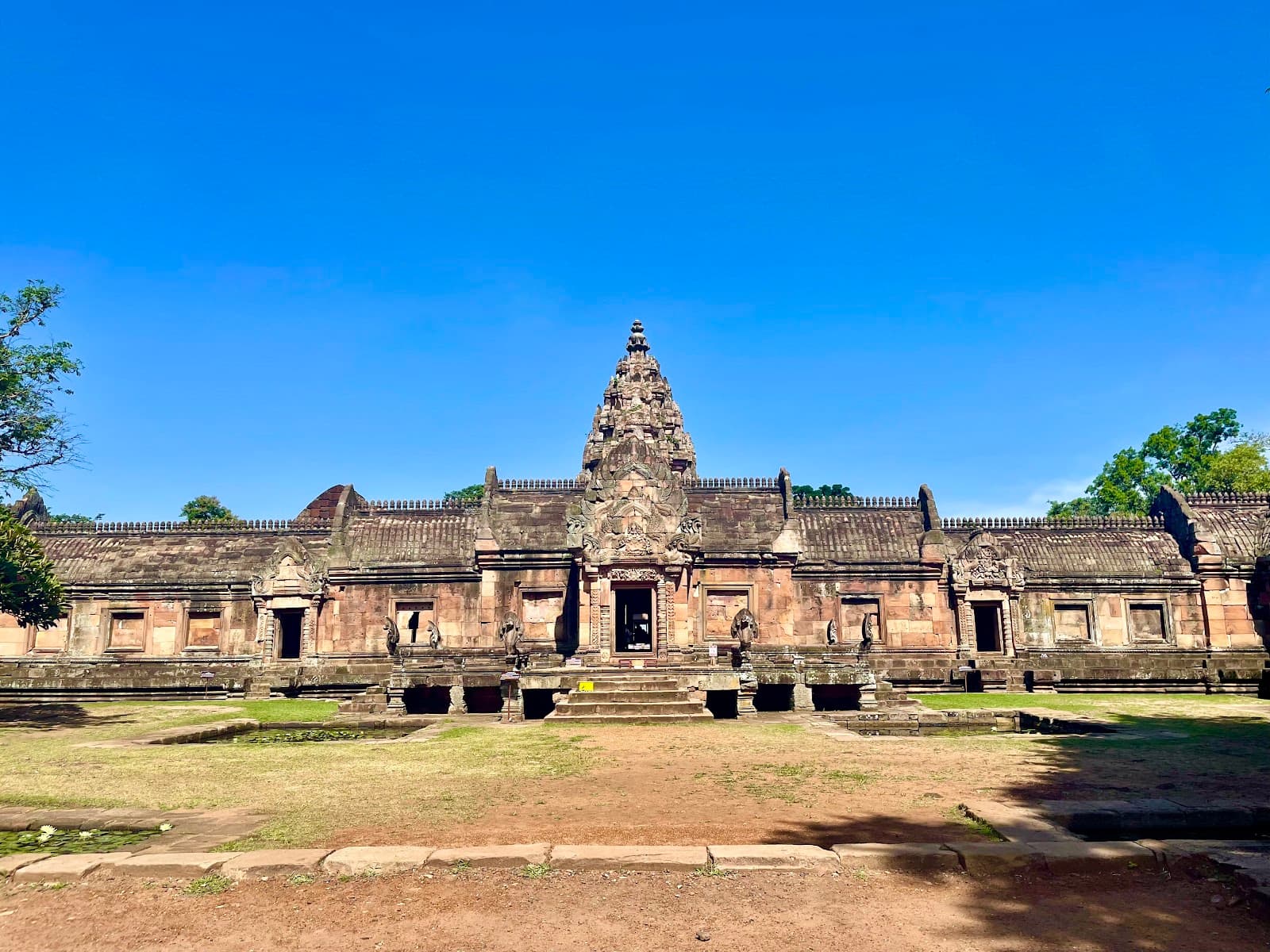
Phanom Rung Historical Park, situated atop an extinct volcano 383 meters above sea level in Buri Ram Province, represents the most complete and architecturally sophisticated Khmer Hindu temple complex in Thailand, dedicated to Shiva as Bhadreshvara. The temple complex, constructed between the 10th and 13th centuries CE, spans approximately 60 hectares and features a meticulously planned east-west axis aligned precisely to capture the sunrise through all fifteen doorways during the equinoxes—a phenomenon that draws thousands of visitors annually. The main prasat (sanctuary tower) rises 27 meters, constructed from pink sandstone and laterite, accessed via a 160-meter-long processional walkway flanked by naga balustrades and punctuated by four cruciform gopuras. The complex includes three libraries, two ponds, and numerous subsidiary shrines, all demonstrating the evolution from Baphuon to Angkor Wat architectural styles. The temple’s lintels and pediments showcase exceptional bas-relief work depicting scenes from the Ramayana, Shiva’s cosmic dance, and various Hindu deities, with the famous Narai Bantomsin lintel considered among the finest examples of Khmer art. Archaeological excavations have revealed evidence of continuous use from the 10th century through the 15th century, with restoration work conducted by the Fine Arts Department of Thailand from 1971 to 1988, culminating in the site’s designation as a historical park in 1988. The temple remains an active site of worship during annual festivals, particularly during the Phanom Rung Festival in April, when traditional Brahmin ceremonies are performed. ([1][2])
Orchha Fort Orchha
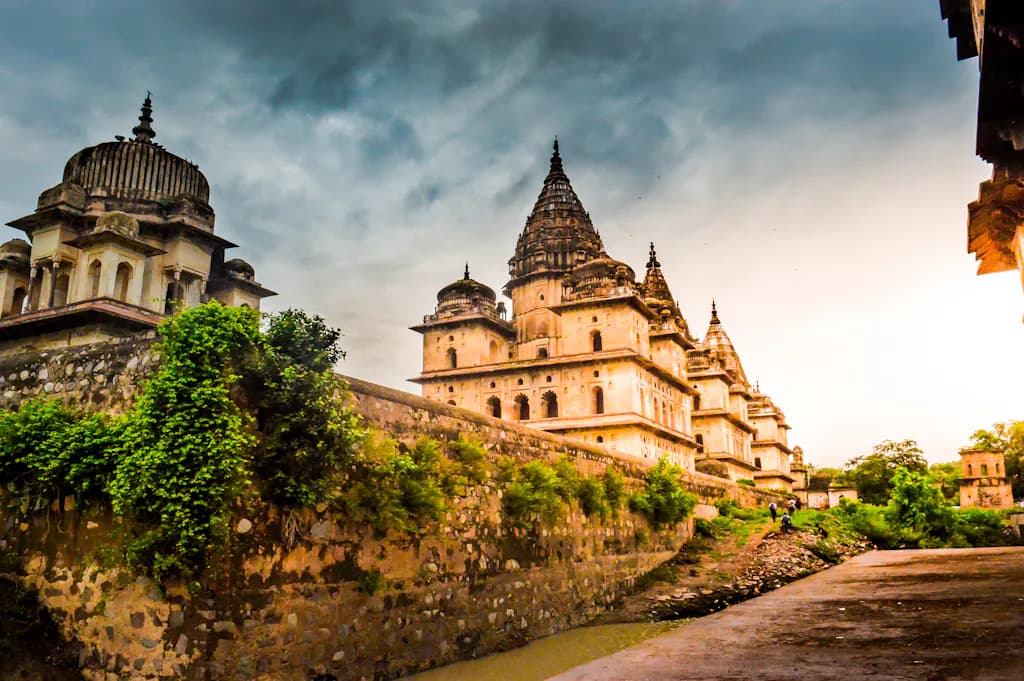
The midday sun beat down on the ochre stone, casting long shadows that danced across the courtyards of Orchha Fort. Dust motes, stirred by a gentle breeze whispering through the Betwa River valley, swirled around me, adding a touch of ethereal magic to the already imposing structure. Having explored countless forts across North India, from the colossal ramparts of Rajasthan to the crumbling citadels of the Himalayas, I thought I was immune to being awestruck. Orchha proved me wrong. This wasn’t just another fort; it was a symphony in stone, a testament to the Bundela Rajput’s architectural prowess and artistic sensibilities. Unlike the stark military fortifications I’d encountered elsewhere, Orchha exuded a regal elegance, a blend of defensive strength and palatial grandeur. The fort complex, perched on an island amidst the Betwa, is a cluster of interconnected palaces and temples, each with its own unique story to tell. My exploration began with the Raja Mahal. Stepping through the imposing arched gateway, I was immediately transported back in time. The sheer scale of the courtyard, surrounded by multi-storied structures, was breathtaking. Intricate carvings adorned the pillars and balconies, depicting scenes from epics and courtly life. I climbed the narrow, winding staircases, the stone worn smooth by centuries of footsteps, and emerged onto the rooftop terraces. From here, the panoramic view of the river, the surrounding plains, and the other palaces within the complex was simply mesmerizing. I could almost imagine the Bundela kings surveying their domain from this very spot. Next, I ventured into the Jahangir Mahal, a stunning example of Mughal architecture built to commemorate the visit of Emperor Jahangir. The contrast between the robust Rajput architecture of the Raja Mahal and the delicate, almost ethereal beauty of the Jahangir Mahal was striking. Here, intricate latticework screens, known as *jalis*, filtered the sunlight, creating a play of light and shadow within the chambers. The central courtyard, with its elegant chhatris and ornate balconies, was a masterpiece of design. I spent a considerable amount of time simply admiring the intricate tilework, the delicate floral patterns, and the sheer artistry that had gone into creating this architectural gem. The Ram Raja Temple, uniquely situated within the fort complex, was my next stop. Unlike typical temples, this one felt more like a palace, a reflection of the deep reverence the Bundela rulers had for Lord Ram. The temple’s vibrant colours, the intricate carvings, and the constant hum of devotional chants created a palpable sense of spirituality. Witnessing the devotion of the pilgrims, I felt a connection to the living history of this place. As I wandered through the Sheesh Mahal, now converted into a heritage hotel, I couldn't help but imagine the lives of the royals who once inhabited these spaces. The mirrored walls, the ornate ceilings, and the remnants of frescoes hinted at a life of luxury and grandeur. Standing on the balcony, overlooking the Betwa River, I felt a sense of tranquility wash over me. Leaving the fort complex as the sun began to set, casting a golden glow on the stone, I felt a profound sense of awe and admiration. Orchha Fort wasn't just a collection of buildings; it was a living, breathing testament to a rich and vibrant history. It was a place where architecture, art, and spirituality intertwined seamlessly, creating an experience that transcended the ordinary. For anyone seeking a glimpse into the heart of India's historical and architectural heritage, Orchha Fort is an absolute must-see. It’s a place that stays with you long after you’ve left, a reminder of the enduring power of human creativity and the beauty that can be found in the most unexpected corners of the world.
Jorhat Fort Jorhat
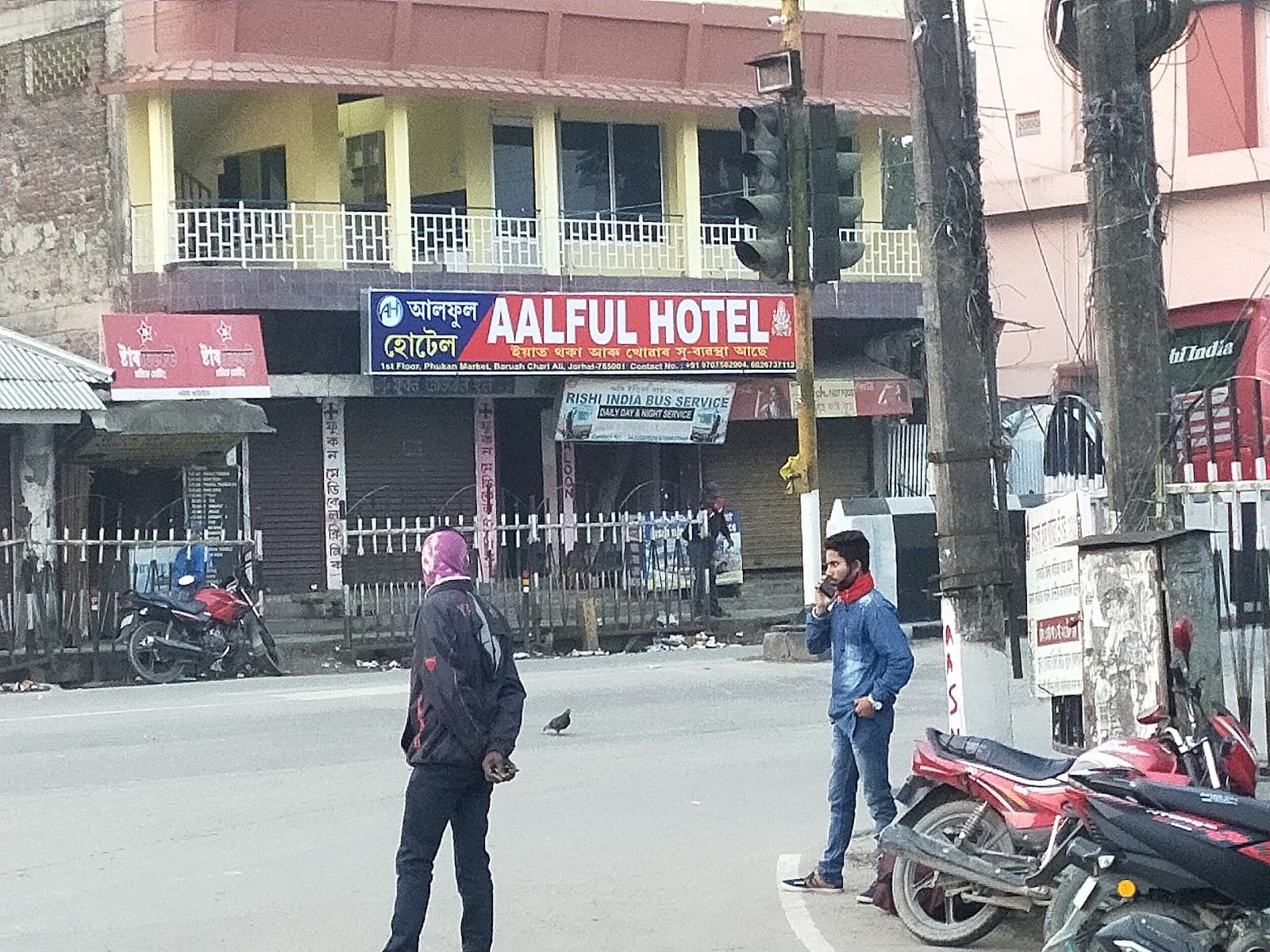
The midday sun cast long shadows across the sprawling grounds of Jorhat Fort, or what remained of it. Unlike the imposing stone behemoths I've encountered across Rajasthan or the intricate carvings of Deccan forts, Jorhat presented a different kind of grandeur, a quieter dignity etched in brick and earth. Here in Assam, on the banks of the Bhogdoi River, the Ahom dynasty had once held sway, and their legacy, though fragmented, whispered through the ruins. My camera, a constant companion for over two decades, felt almost intrusive in this space. The silence, broken only by the chirping of birds and the distant hum of city life, demanded a respectful stillness. The main gateway, though crumbling in places, still held an echo of its former might. The arch, a gentle curve of burnt brick, was devoid of the elaborate ornamentation I've come to expect from Mughal or Rajput architecture. Instead, its strength lay in its simplicity, a testament to the pragmatic approach of the Ahom builders. Stepping through the gateway felt like crossing a threshold into a forgotten era. The fort, now largely in ruins, offered glimpses into its layered past. The once-imposing walls, constructed of baked bricks, were now breached in places, overtaken by vegetation. Yet, the sheer scale of the ramparts hinted at the fort's defensive prowess. I could almost picture the Ahom soldiers patrolling these walls, their watchful eyes scanning the horizon for invaders. The central structure, known as the Kareng Ghar, was the heart of the fort. Unlike the stone palaces of other regions, this royal residence was primarily built of brick and wood. While much of the wooden structure has succumbed to time and the elements, the brick foundations and lower walls still stand. The intricate brickwork, devoid of mortar, showcased the skill of the Ahom artisans. I spent a considerable amount of time photographing these details, fascinated by the precision and artistry involved in creating such complex patterns. One of the most striking features within the Kareng Ghar complex was the Talatal Ghar, a multi-storied subterranean structure. Descending into its cool, dimly lit chambers felt like stepping back in time. The unique architectural design, with its secret tunnels and hidden passages, spoke volumes about the strategic thinking of the Ahom rulers. While photography was challenging in the low light, I managed to capture the essence of this intriguing space, the play of light and shadow adding to its mystique. Beyond the main structures, the fort grounds were a tapestry of overgrown mounds and scattered remnants. Fragments of pottery, pieces of brick, and traces of what might have been living quarters lay scattered across the landscape. Each piece, though seemingly insignificant, added another layer to the narrative of this historic site. I found myself drawn to these smaller details, imagining the lives of the people who once inhabited this space. My visit to Jorhat Fort wasn't just about documenting its architectural features; it was about experiencing a tangible connection to a rich and often overlooked history. It was a reminder that heritage isn't just about grand monuments and elaborate carvings; it's also about the stories etched in the simplest of structures, the whispers of the past carried on the wind. As I packed my equipment, the setting sun casting a warm glow over the ruins, I felt a deep sense of gratitude for the opportunity to witness this piece of Assam's history, a history waiting to be rediscovered and shared with the world.
Ananda Temple Bagan
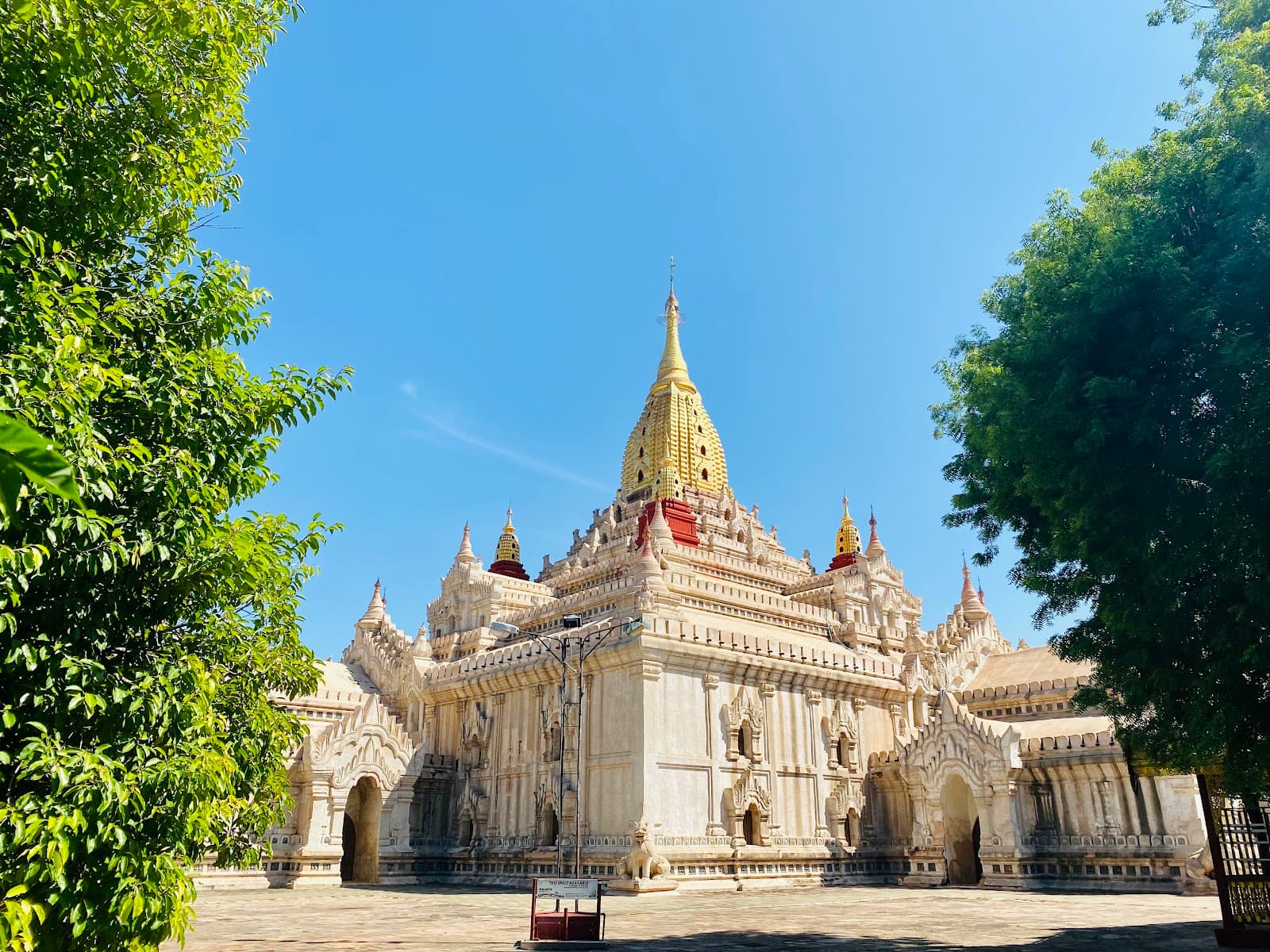
Ananda Temple, situated in the Bagan Archaeological Zone, represents a compelling example of the transmission of Indian architectural and religious ideas to Myanmar, dating back to 1105 CE ([1][2]). King Kyanzittha of the Bagan Empire commissioned its construction, reflecting the empire's engagement with Indian culture ([1]). Vastu Shastra principles, the ancient Indian science of architecture, are discernible in the temple's layout, aligning with mandala-based cosmological concepts common to Hindu and Buddhist sacred spaces ([2]). Rising to a height of 51 meters, the temple follows a cruciform plan, featuring four standing Buddha images facing the cardinal directions ([1]). Intricate carvings adorning the walls narrate stories from the Jataka tales, as well as Hindu epics such as the Ramayana and Mahabharata, illustrating the fusion of religious narratives in ancient Myanmar ([2][3]). During the medieval period, Bagan's temple architecture, including Ananda, absorbed Gupta and Pala influences from India, particularly evident in the Shikhara (spire) design reminiscent of North Indian Nagara temples ([3][4]). Granite and sandstone blocks, meticulously carved, were employed alongside brick and stucco, indicative of the advanced architectural capabilities of the time ([4]). Archaeological evidence suggests the involvement of Indian architects and artisans in the construction, underscoring the strong cultural and commercial links between India and Myanmar ([5]). Sophisticated stucco decoration enhances the temple's exterior, contributing to its overall aesthetic appeal ([1][5]). As a UNESCO World Heritage Site, Ananda Temple embodies Myanmar’s historical connections to Indian civilization through shared religious and architectural traditions ([3][4]). The temple serves as an active site of Buddhist worship, even after undergoing restoration in the 1970s following earthquake damage ([2]). Its enduring presence highlights the interconnectedness of South and Southeast Asian cultures through the exchange of artistic and spiritual ideas.
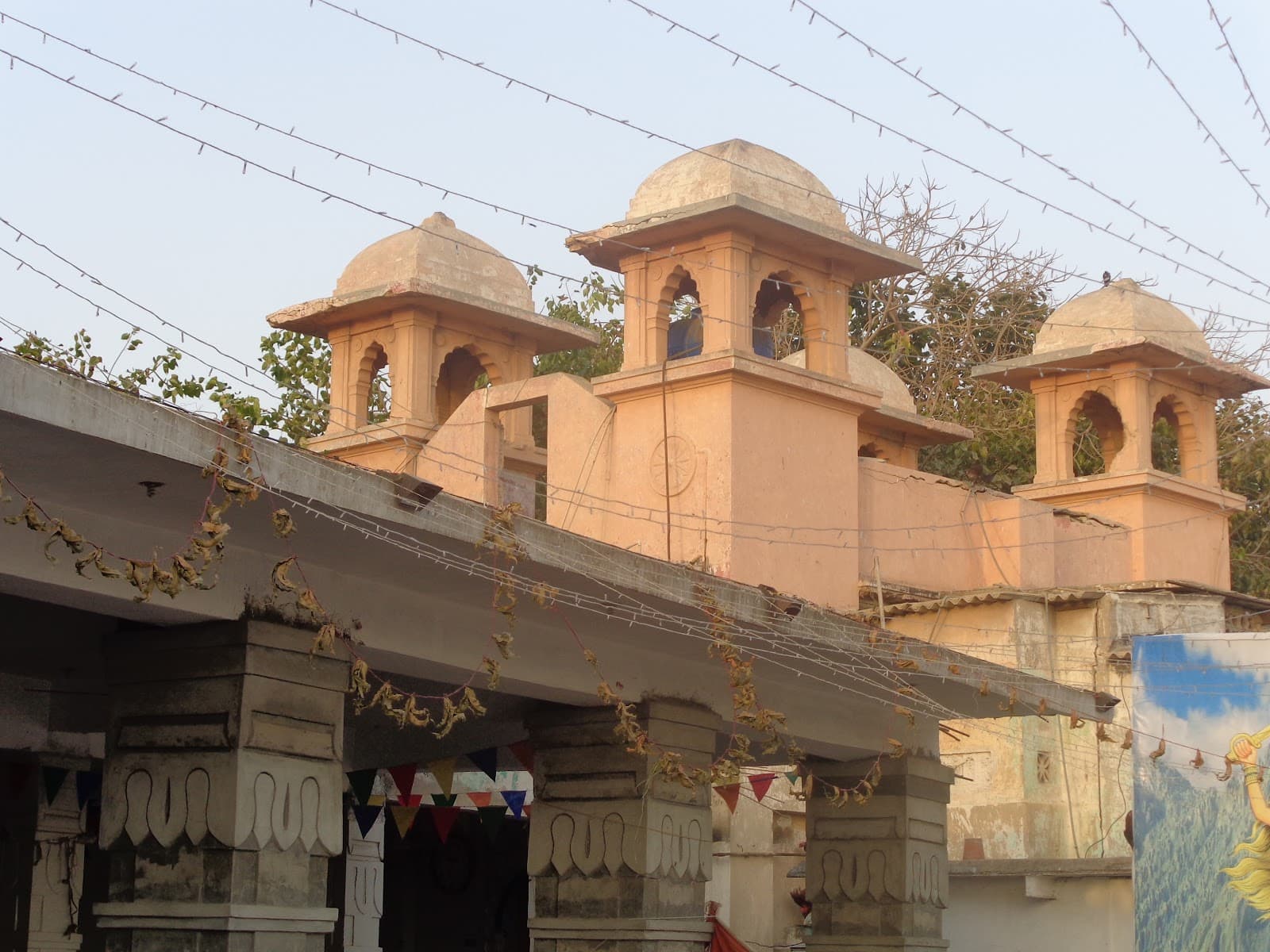
Shri Lakshmi Narayan Mandir Karachi
Shri Lakshmi Narayan Mandir, located in Karachi’s Saddar area along the banks of the historic Indus River, represents a significant 19th-century Hindu temple complex dedicated to Lakshmi and Narayan (Vishnu), serving as a testament to the continuity of Vaishnava worship traditions in the Sindh region that was historically part of the greater Hindu rashtra extending across the Indian subcontinent. The temple, constructed during the British colonial period when Hindu communities in Sindh were flourishing and maintaining strong connections to their religious and cultural heritage, features distinctive architecture that blends traditional North Indian temple design with local Sindhi adaptations, reflecting the synthesis of pan-Indian Hindu traditions with regional cultural practices. The temple complex, originally more extensive but now reduced due to urban development, features a main sanctum housing images of Lakshmi and Narayan, surrounded by subsidiary shrines and a courtyard that has served as a center of Hindu worship in Karachi for over a century. The site’s location along the Indus River, one of the cradles of ancient Indian civilization, reflects the deep historical connections between Hindu religious practices and the river systems that sustained ancient Indian kingdoms. The temple serves as an important center for Vaishnava worship, particularly during festivals associated with Lakshmi and Vishnu, demonstrating the continuity of Vedic and Puranic Hindu traditions in Pakistan. Archaeological and historical evidence indicates the temple has undergone multiple renovations, with the current structure dating primarily to the 19th century but incorporating elements that reflect centuries of Hindu architectural evolution in the region. Today, Shri Lakshmi Narayan Mandir stands as a symbol of the Vaishnava Hindu heritage of Sindh and the region’s historical connection to the greater Hindu rashtra, serving as a reminder of the sophisticated religious and cultural traditions that flourished in regions that were integral parts of ancient Indian civilization. ([1][2])
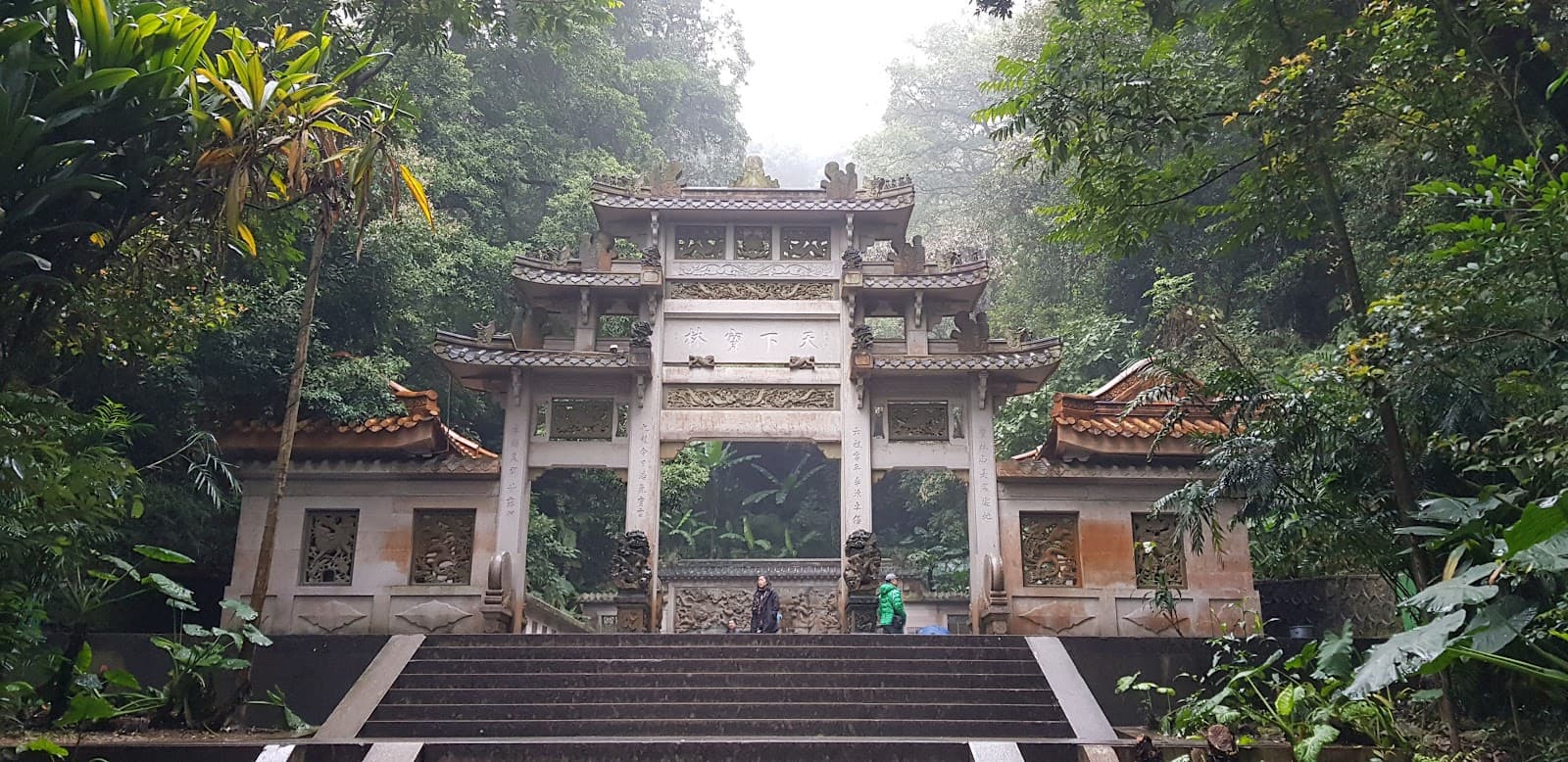
Nanhua Temple Shaoguan Guangdong China
Nanhua Temple, a revered Buddhist monastery in Shaoguan, Guangdong Province, China, stands as a profound testament to India's millennia-spanning cultural heritage and the continuous tradition of Indian civilization. Founded in 550 CE by the Indian monk Zhiyao Sanzang, the temple complex embodies a unique Indo-Chinese Buddhist architectural style, deeply rooted in Indian Buddhist traditions, particularly the stupa form [1] [2]. Spanning an expansive area of 42.5 hectares, the site is strategically positioned against a mountain, facing south, a traditional orientation in both Indian and Chinese sacred architecture [1]. The architectural ensemble, while featuring elements of traditional Chinese design, integrates distinctive Indian Buddhist influences, reflecting the transmission of spiritual and artistic practices from ancient India [2]. The Grand Hall, a central and imposing structure, is recognized as the largest Buddhist architectural edifice in Guangdong Province [3]. Its roof is adorned with vibrant glazed tiles, a characteristic decorative element [3]. Within its sanctum, sublime statues of Sakyamuni Buddha, Medicine Buddha, and Amitabha Buddha are enshrined, accompanied by an assembly of 500 intricately crafted clay sculptures depicting Buddhist arhats, showcasing a rich iconographic program [1]. The Lingxi Tower, also known as the Pagoda of the Sixth Patriarch, represents a significant architectural feature. Originally constructed in timber during the early Tang Dynasty, it underwent a substantial reconstruction in brick during the Ming Dynasty, evolving its material composition while retaining its spiritual function [1]. This tower serves as a reliquary, housing the preserved 'real body' of Huineng, the Sixth Patriarch of Chan Buddhism, a practice reminiscent of Indian stupa architecture where relics of enlightened beings are venerated [4]. The construction primarily utilizes durable materials such as wood, brick, and stone, reflecting indigenous building practices adapted over centuries [2]. The temple complex is meticulously arranged with a series of halls, courtyards, and pagodas, creating a harmonious spatial flow that facilitates meditation and pilgrimage [4]. Decorative elements throughout the temple include intricate carvings and sculptures that narrate Buddhist narratives and depict various deities and enlightened figures, reflecting a synthesis of Indian and local artistic expressions. Ongoing conservation efforts at Nanhua Temple involve historical documentation, archaeological excavations, and structural stabilization to preserve its ancient fabric [2]. These initiatives ensure the integrity of its architectural elements and the longevity of its cultural relics, which include an ancient silken cassock embroidered with a thousand Buddhas, a decree issued by Empress Wu Zetian, wood-carved arhats from the Northern Song Dynasty, a thousand-jin copper clock, a thousand-person pan from the Yuan Dynasty, a thousand-Buddha steel tower from the Qing Dynasty, and the Dazang Sutra inscribed in gold [1]. The site remains operationally ready, welcoming visitors and pilgrims, and continues to be a vibrant center for Buddhist practice and a living testament to India's enduring cultural legacy [5].

Angkor Wat Siem Reap Cambodia
Majestically situated near Siem Reap, Cambodia, Angkor Wat, erected in the 12th century CE under King Suryavarman II, is recognized as the world's largest religious structure ([1][2]). Originally a Hindu temple dedicated to Vishnu, the preserver in the Hindu Trimurti, it showcases the profound influence of Indian Hindu architectural and religious traditions in Southeast Asia ([1]). Encompassing over 162 hectares, and surrounded by a vast moat symbolizing the cosmic ocean, its design mirrors Mount Meru, the sacred center of the universe in Hindu cosmology ([2]). Intricate carvings adorning the walls, stretching over 800 meters, depict scenes from Hindu epics such as the Ramayana and Mahabharata, including the Samudra Manthan (Churning of the Ocean of Milk) and the Battle of Kurukshetra ([3]). These detailed depictions illustrate the transmission of Indian Hindu iconographic programs to Cambodia ([3]). Vastu Shastra principles, the ancient Indian science of architecture, guided the temple's layout, with a central quincunx of towers representing Mount Meru's peaks, enclosed by galleries and courtyards ([4]). These principles systematically transmitted from Indian temple complexes of the Pallava, Chola, and Chalukya dynasties ([4]). Granite and sandstone blocks, meticulously carved, form the structure, ingeniously fitted together without mortar, demonstrating advanced engineering techniques ([5]). Over 1,860 apsaras (celestial dancers) and numerous devatas (deities) grace the sandstone walls, reflecting a deep understanding of Indian Hindu iconography ([5]). Sanskrit inscriptions provide critical insights into the site's role in disseminating Indian religious texts and practices ([1][2]). This UNESCO World Heritage Site stands as a testament to the enduring impact of Indian civilization on Southeast Asian traditions ([1][2]). The temple's imposing Shikhara (spire) and elaborate Mandapa (pillared hall) reflect design elements found in numerous Indian temples, further solidifying the Indian influence on this architectural marvel.
Quick Links
Plan Your Heritage Journey
Get personalized recommendations and detailed visitor guides