Has Inheritage Foundation supported you today?
Your contribution helps preserve India's ancient temples, languages, and cultural heritage. Every rupee makes a difference.
Secure payment • Instant 80G certificate
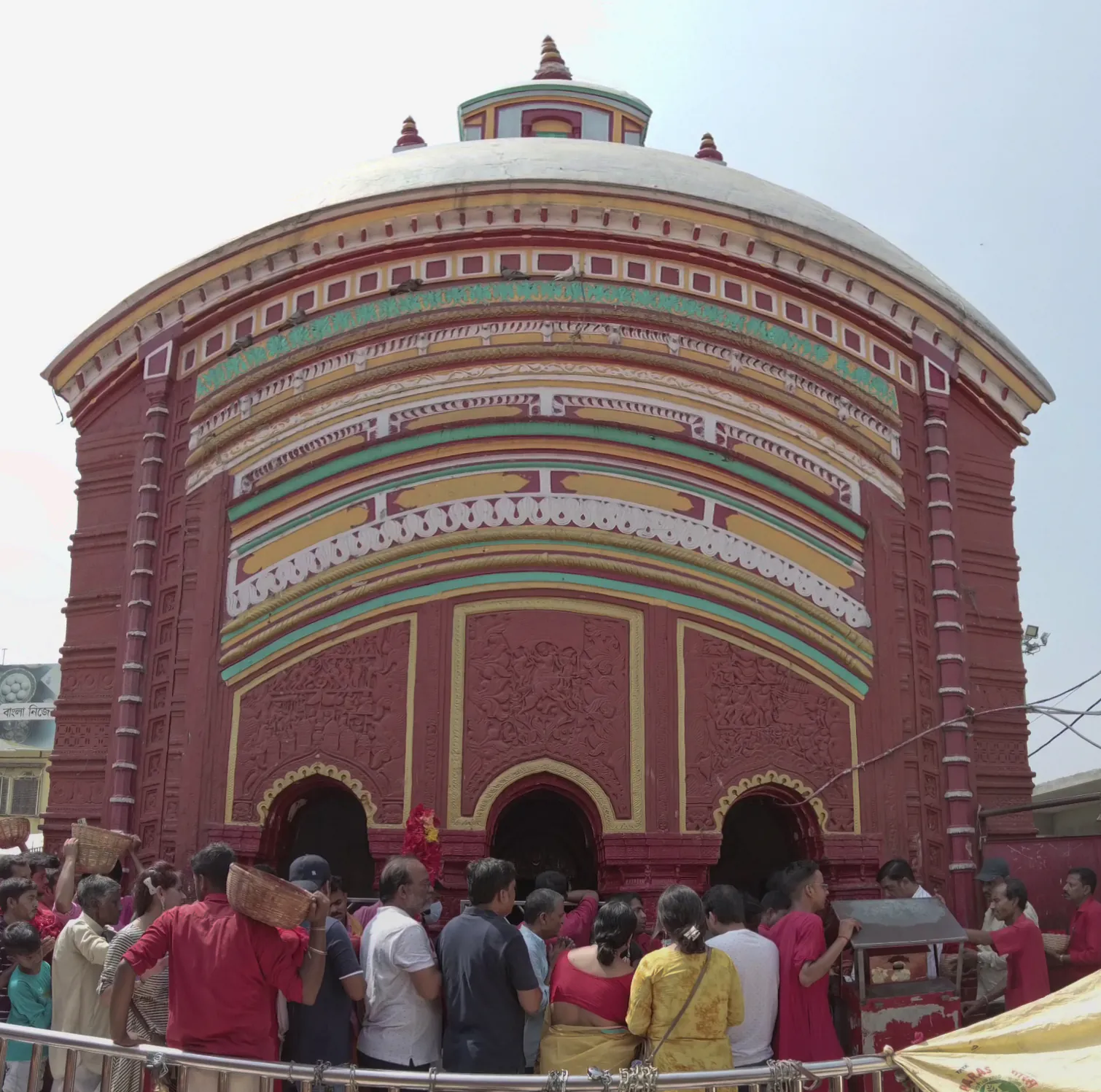
Tarapith Temple Tarapith
The air hung thick with the scent of incense and something more primal – a metallic tang that I later understood was dried blood, offered as part of the tantric rituals Tarapith Temple is renowned for. Located in the heart of rural West Bengal, this temple, dedicated to the fearsome goddess Tara, a form of Kali, is unlike any of the 500+ monuments I've documented across India. It’s not the grandeur of the architecture that strikes you first, but the raw, visceral energy that permeates the very ground you stand on. The temple itself is relatively modest in size, a traditional Bengali hut-style structure with a sloping, thatched roof. It houses the main deity, Goddess Tara, depicted in her usual fierce form, with a garland of skulls, a protruding tongue, and four arms. But what sets this idol apart is the small stone figure of Shiva lying at her feet, drinking the blood dripping from her tongue. This iconography, stark and unsettling, speaks volumes about the temple's association with tantric practices. Surrounding the main temple is a sprawling complex, a chaotic tapestry of smaller shrines, sacrificial altars, and cremation grounds. The cremation ghats, situated on the banks of the Dwaraka River, are a constant reminder of the cycle of life and death, a theme deeply intertwined with the worship of Tara. I watched as families performed last rites, the smoke from the pyres mingling with the incense, creating an almost surreal atmosphere. The architectural details, while not ornate, are symbolic. The predominant use of red brick and terracotta reflects the earthy, primal nature of the deity. The sloping roof, typical of Bengali architecture, provides a sense of groundedness, contrasting with the intense spiritual energy that swirls within. I noticed intricate terracotta plaques adorning some of the smaller shrines, depicting scenes from Hindu mythology, adding a layer of narrative to the otherwise austere surroundings. What truly captivated me, however, was the human element. Tarapith attracts a diverse crowd – devout pilgrims seeking blessings, families performing rituals for departed loved ones, and the aghoris, ascetic Shaiva sadhus known for their unconventional practices. I spent hours observing the interplay between these different groups, each with their own unique relationship with the goddess. The palpable devotion, mixed with a palpable sense of fear and awe, created an atmosphere unlike anything I'd experienced before. I witnessed devotees offering everything from flowers and sweets to animal sacrifices. The sight of the latter, while unsettling to some, is an integral part of the tantric tradition practiced here. It's a stark reminder of the raw, unfiltered nature of faith, a far cry from the sanitized versions often presented in mainstream religious discourse. One particular interaction stayed with me. An elderly woman, her face etched with wrinkles and her eyes filled with a quiet intensity, sat near the main temple, chanting mantras. I approached her cautiously, and after a brief conversation, she shared her story of seeking solace and healing at Tarapith for years. Her unwavering faith, despite the hardships she had faced, was a testament to the power of belief and the solace that places like Tarapith offer. Documenting Tarapith was a challenging but deeply rewarding experience. It pushed me beyond the comfortable confines of traditional temple photography and forced me to confront the complex and often unsettling realities of faith and ritual. It's a place where life and death, devotion and fear, tradition and transgression, all converge, creating a powerful and unforgettable experience. It's a place that stays with you long after you've left, a constant reminder of the multifaceted nature of human spirituality.
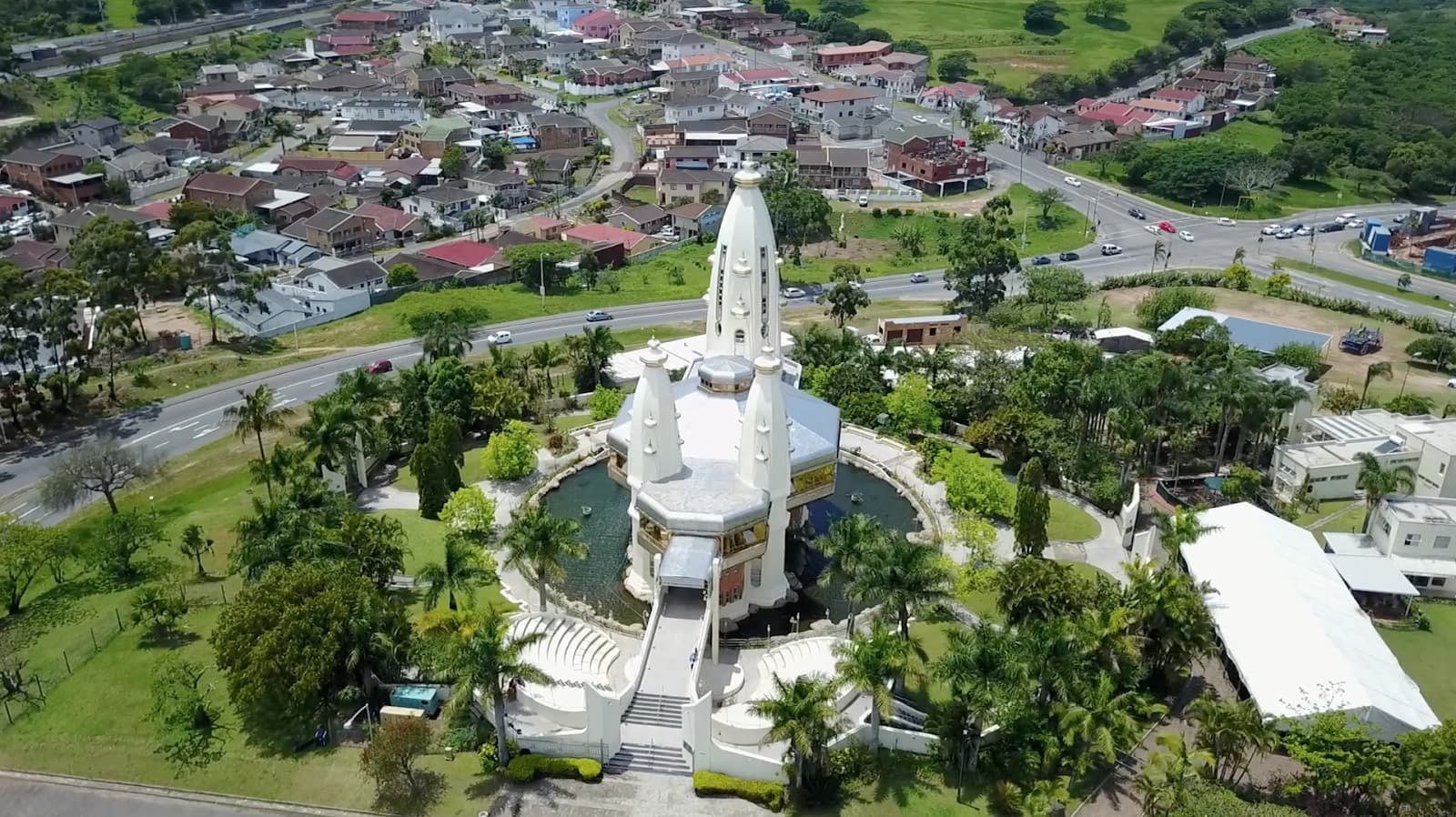
Sri Sri Radha Radhanath Temple (Temple of Understanding)
Sri Sri Radha Radhanath Temple—popularly called the Temple of Understanding—opened in 1985 atop Chatsworth’s Lotus Park with a 56-metre triple-domed hall, mirrored ceiling panels, stained glass lotus windows, and marble balustrades that reinterpret classical Indian temple geometry for a modern South African skyline ([1][2]). The ISKCON complex houses the deities Sri Sri Radha Radhanath, Lord Jagannath Baladeva Subhadra, and Sri Sri Gaura-Nitai on a gold-leafed altar backed by Italian marble reliefs; devotees circumambulate beneath parabolic arches while chandeliers reflect across the glass mosaic vault. Daily worship begins 4:30 AM with mangala-arati and extends through twelve services culminating in night-time shayana arati accompanied by Durban’s signature kirtan ensembles. Beyond ritual, the 3.5-hectare campus functions as a social engine: a commercial-grade kitchen cooks up to 15,000 vegetarian meals weekly for the Food For Life programme, the Bhaktivedanta College offers spiritual education, yoga, counselling, and youth mentorship, and the Govinda’s restaurant and bakery anchor a vegetarian culinary tradition for the city. The temple’s amphitheatre hosts annual Festival of Chariots cultural productions, multi-faith dialogues, and classical Indian arts festivals broadcast worldwide via ISKCON's media network ([1][2]).

Khalchayan Temple Ruins Lebap Turkmenistan
Khalchayan Temple Ruins, dramatically situated in the Lebap Region of eastern Turkmenistan, represents one of the most extraordinary and archaeologically significant Kushan-period sites in Central Asia, dating to the 2nd century BCE and featuring remarkable Indic sculptures and architectural elements that demonstrate the profound transmission of Indian Buddhist and Hindu religious and artistic traditions to Central Asia during the Kushan period, creating a powerful testament to the sophisticated synthesis of Indian and Central Asian cultural traditions. The temple ruins, featuring sophisticated architectural elements and extraordinary Indic sculptures executed in the distinctive Kushan-Gandharan style that emerged from the synthesis of Indian and Central Asian artistic traditions, demonstrates the direct transmission of Indian Buddhist and Hindu iconographic programs and artistic traditions from the great artistic centers of India including Gandhara, Mathura, and the monastic centers of northern India, while the site's most remarkable feature is its extraordinary collection of Indic sculptures featuring Buddha images, Bodhisattvas, and Hindu deities executed with remarkable artistic sophistication and iconographic accuracy that demonstrate the sophisticated understanding of Indian Buddhist and Hindu iconography possessed by Kushan artists. The temple ruins' architectural layout, with their central structures surrounded by ritual spaces and architectural elements, follows sophisticated planning principles that demonstrate remarkable parallels with Indian Buddhist and Hindu temple planning principles, while the temple ruins' extensive decorative programs including Indic sculptures, architectural elements, and religious iconography demonstrate the sophisticated synthesis of Indian Buddhist and Hindu iconography and artistic traditions with local Central Asian aesthetic sensibilities, particularly the distinctive Kushan-Gandharan style that emerged from the synthesis of Indian and Central Asian artistic traditions. Archaeological evidence reveals that the site served as a major center of religious and artistic activity during the Kushan period, attracting traders, artists, and religious practitioners from across Central Asia, South Asia, and beyond, while the discovery of numerous Indic sculptures including Buddha images, Bodhisattvas, and Hindu deities that demonstrate clear Indian influences, architectural elements that parallel Indian practices, and religious iconography that reflects Indian Buddhist and Hindu cosmological concepts provides crucial evidence of the site's role in the transmission of Indian religious and artistic traditions to Central Asia, demonstrating the sophisticated understanding of Indian Buddhist and Hindu traditions possessed by the site's patrons and artistic establishment. The site's association with the Kushan Empire, which had strong connections to India and played a crucial role in the transmission of Indian religious and artistic traditions to Central Asia, demonstrates the sophisticated understanding of Indian religious and artistic traditions that were transmitted to Central Asia, while the site's Indic sculptures and architectural elements demonstrate remarkable parallels with Indian Buddhist and Hindu temple architecture and iconographic programs that were central to ancient Indian religious traditions. The site has been the subject of extensive archaeological research, with ongoing excavations continuing to reveal new insights into the site's sophisticated architecture, artistic programs, and its role in the transmission of Indian religious and artistic traditions to Central Asia, while the site's status as a UNESCO Tentative List site demonstrates its significance as a major center for the transmission of Indian cultural traditions to Central Asia. Today, Khalchayan Temple Ruins stands as a UNESCO Tentative List site and represents one of the most important Kushan-period sites in Central Asia, serving as a powerful testament to the transmission of Indian Buddhist and Hindu culture and art to Central Asia, while ongoing archaeological research and conservation efforts continue to protect and study this extraordinary cultural treasure that demonstrates the profound impact of Indian civilization on Central Asian religious and artistic traditions. ([1][2])
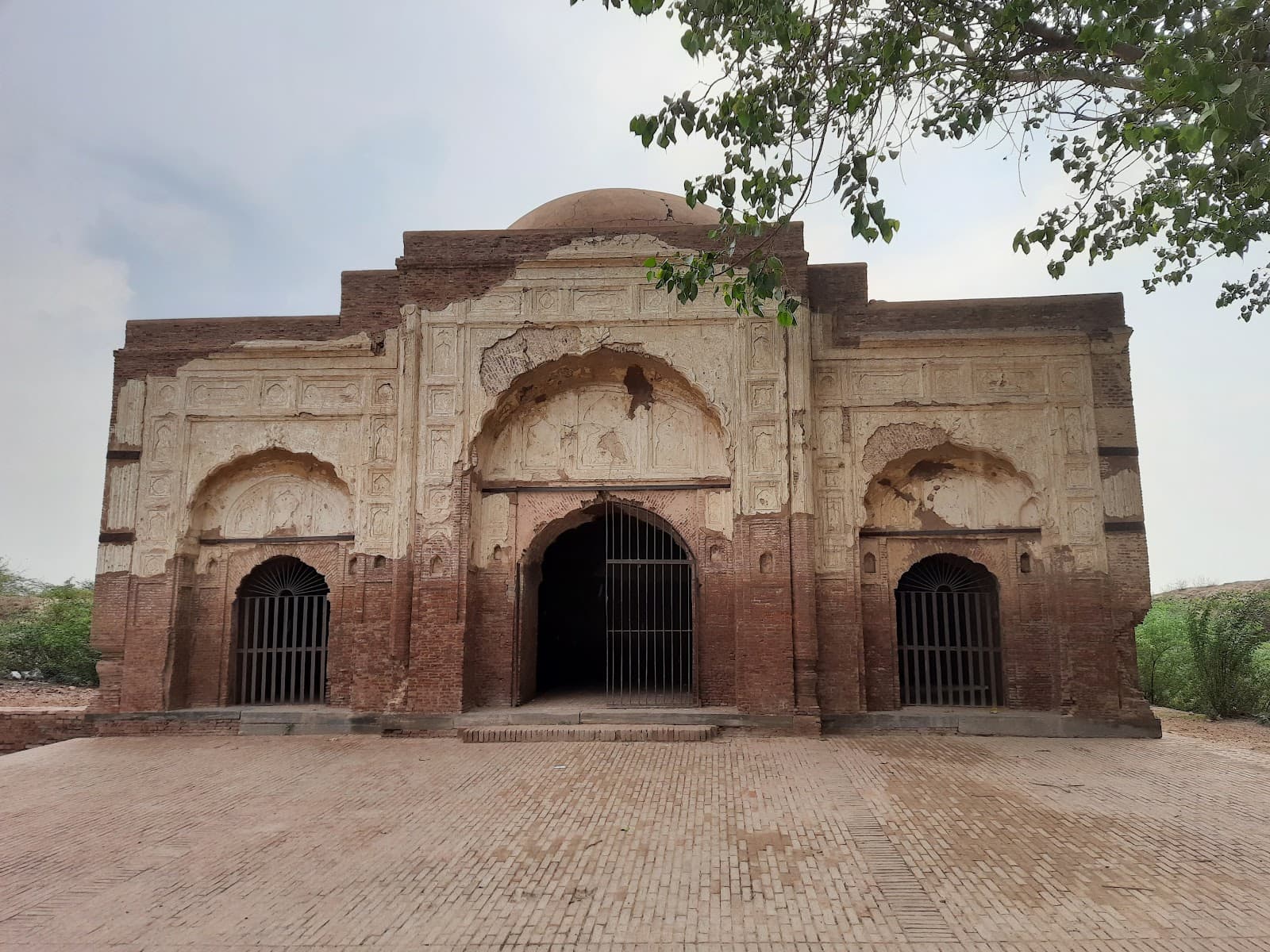
Hansi Fort Prithviraj Chauhan
Asigarh Fort, also known as Hansi Fort or Prithviraj Chauhan Fort, stands as a protected monument managed by the Archaeological Survey of India in Hansi, Hisar district. The fort complex spans approximately 30 acres in a square configuration with security posts at four corners. Current visitor access operates daily from 8:00 AM to 6:00 PM, with closures on Mondays. Entry remains free for all visitors. The site lacks formal visitor infrastructure: no wheelchair access, restrooms, guides, souvenir shops, or food stalls are available. Informal parking exists near the entrance. The fort's weathered gateways, bastions, and ramparts present an exposed environment requiring morning or evening visits to avoid harsh sunlight. Archaeological excavations in 1982 recovered 58 Jain bronze images from the 8th–9th century CE, establishing the site's pre-medieval significance. The monument requires extensive restoration to address structural deterioration and unauthorized occupancy issues documented in recent ASI assessments.
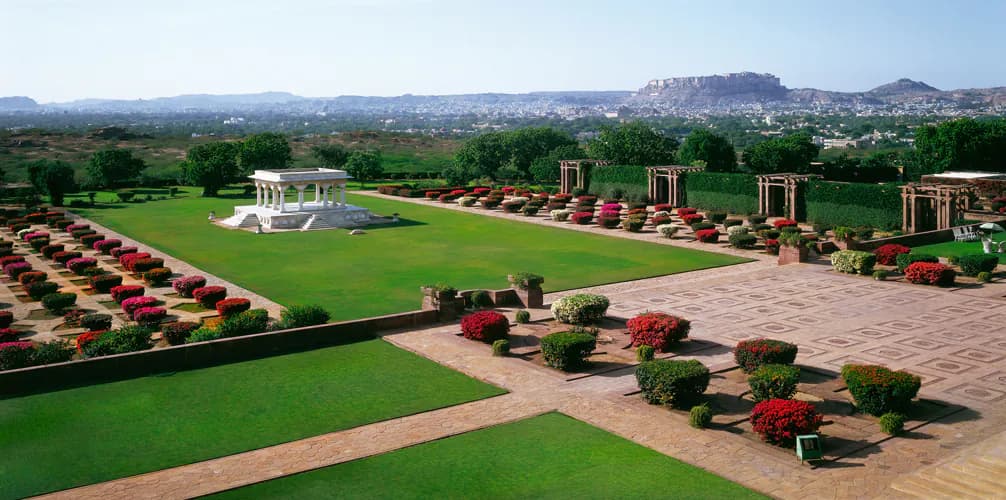
Umaid Bhawan Palace Jodhpur
The imposing sandstone edifice of Umaid Bhawan Palace, perched atop Chittar Hill overlooking Jodhpur's blue-washed expanse, is a breathtaking spectacle. As a South Indian steeped in the Dravidian architectural idiom, I was immediately struck by the distinct shift in style. Here, the intricacies of granite carvings and towering gopurams I was accustomed to were replaced by the sweeping grandeur of Rajput and Art Deco influences. The sheer scale of the palace, a harmonious blend of Indo-Saracenic, Classical Revival, and Western Art Deco styles, was truly awe-inspiring. The palace's warm, honey-coloured sandstone, quarried locally, glowed in the afternoon sun. The intricate latticework jalis, a feature I recognized from Mughal architecture, offered glimpses of the meticulously manicured gardens below while providing shade and ventilation – a practical solution elegantly executed. Unlike the vibrant colours often associated with Rajasthani architecture, Umaid Bhawan exuded a sense of restrained opulence. The dominant sandstone was offset by polished marble flooring and subtle accents of black granite, creating a visual harmony that was both regal and inviting. Stepping inside, the central dome, a masterpiece of Art Deco design, captivated my attention. Its geometric patterns and soaring height created a sense of grandeur that rivalled the vast courtyards of South Indian temples. The use of stained glass, a Western architectural element, added a splash of colour, filtering the sunlight and casting kaleidoscopic patterns on the marble floors. The interior spaces seamlessly blended Indian and European aesthetics. Intricate murals depicting scenes from Hindu epics adorned some walls, while others showcased Art Deco motifs, a testament to the Maharaja's appreciation for both traditional and contemporary art forms. The Durbar Hall, with its gilded furniture and imposing portraits of the Jodhpur royal family, offered a glimpse into the lavish lifestyle of the Maharajas. The intricate detailing on the wooden furniture, reminiscent of the intricate woodwork found in Chettinad mansions back home, highlighted the skilled craftsmanship prevalent in both regions, albeit expressed through different mediums. The throne room, with its ornate silver chairs and intricate chandeliers, exuded an air of regal authority. Exploring the museum wing, housed within a section of the palace, provided valuable context to the building's history and the vision of Maharaja Umaid Singh. The collection of vintage cars, clocks, and photographs offered a fascinating glimpse into the Maharaja's personal interests and the era in which the palace was built. Observing the architectural plans and models on display, I could appreciate the meticulous planning and engineering that went into creating this architectural marvel. The integration of modern amenities, such as a swimming pool and a squash court, within the traditional palace structure, showcased a forward-thinking approach that resonated with me. One of the most striking aspects of Umaid Bhawan was its integration with the landscape. The palace, built on a raised platform, seemed to emerge organically from the rocky terrain. The expansive gardens, designed with geometric precision, provided a refreshing contrast to the arid landscape surrounding the palace. The panoramic views of Jodhpur's blue cityscape from the palace ramparts were simply mesmerizing. The "blue city," a sea of indigo houses stretching towards the horizon, offered a visual spectacle that was both unique and unforgettable. Umaid Bhawan Palace is more than just a building; it's a testament to a bygone era, a symbol of the grandeur and vision of the Jodhpur royal family. While vastly different from the temple architecture I was familiar with, the palace's meticulous craftsmanship, attention to detail, and harmonious blend of diverse architectural styles resonated deeply with my appreciation for architectural heritage. It served as a powerful reminder that architectural beauty transcends regional boundaries and stylistic differences, speaking a universal language of artistry and human ingenuity.
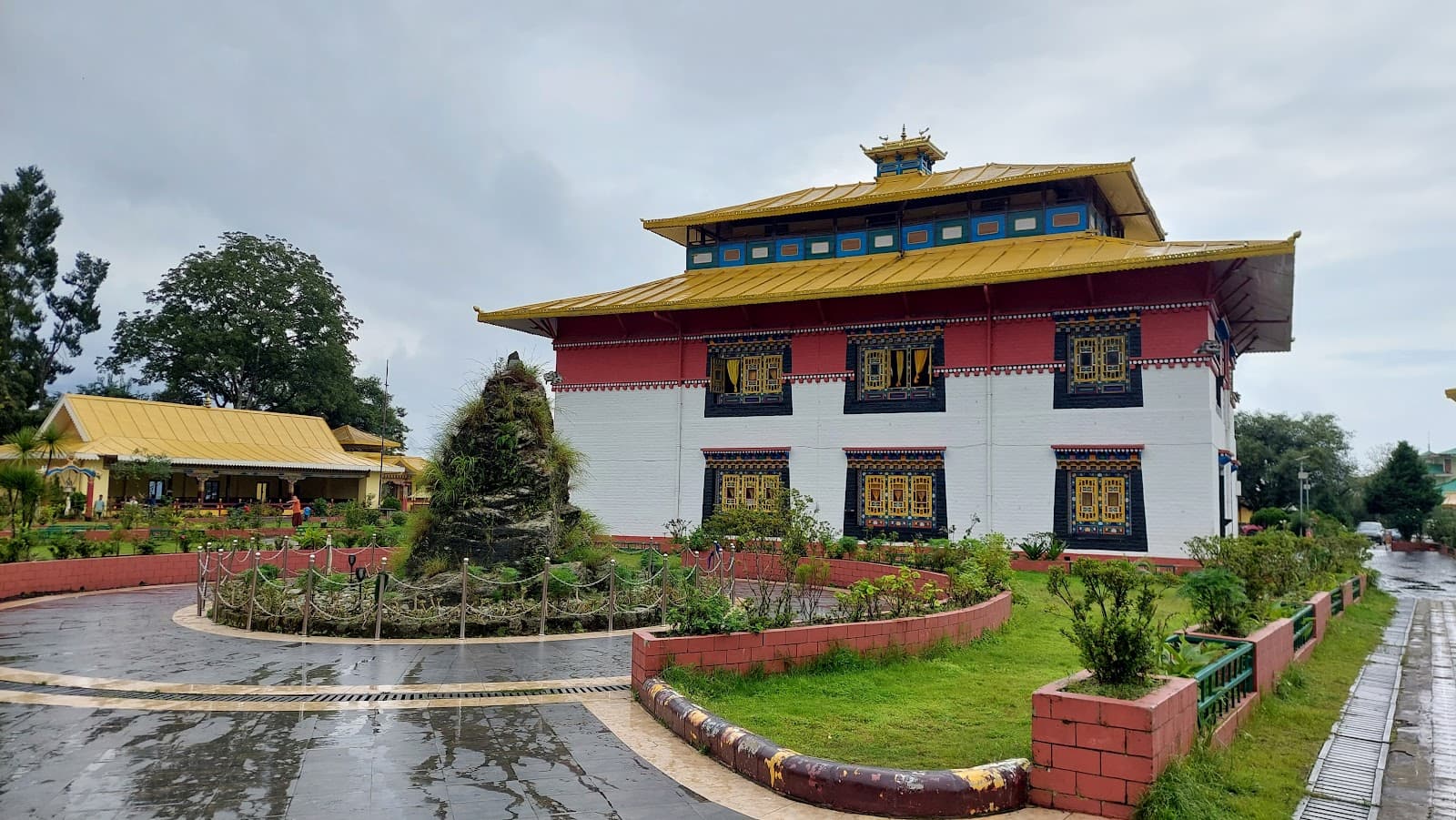
Tsuk La Khang Monastery Gangtok
The crisp mountain air, tinged with the scent of burning juniper, welcomed me as I ascended the steps to Tsuk La Khang Monastery in Gangtok. Having explored countless ancient temples and monasteries across North India, I approached with a seasoned eye, yet Tsuk La Khang held a unique allure. Its unassuming exterior, a stark white structure against the backdrop of the towering Himalayas, belied the vibrant spiritual heart within. This wasn't just another tourist attraction; it was the royal chapel of the erstwhile Chogyal dynasty, a living testament to Sikkim's rich Buddhist heritage. Unlike the elaborate, gilded monasteries I'd encountered in Ladakh or Himachal, Tsuk La Khang exuded a quiet dignity. The architecture was distinctly Sikkimese, with a sloping roof adorned with intricate carvings and vibrant prayer flags fluttering in the wind. The main prayer hall, though not expansive, was a symphony of colour and symbolism. Murals depicting scenes from the Buddha's life adorned the walls, their vibrant hues seemingly untouched by time. The intricate Thangka paintings, meticulously crafted on silk, narrated ancient stories and philosophies, their detail captivating my attention for long stretches. The low hum of chanting permeated the air, a soothing backdrop to the rhythmic tapping of prayer wheels. Devotees, young and old, circumambulated the central prayer hall, their faces etched with devotion. I observed elderly monks, their maroon robes draped around them, engrossed in deep meditation, their presence radiating a palpable sense of tranquility. This wasn't a performance for tourists; it was a genuine expression of faith, a daily ritual woven into the fabric of their lives. One element that particularly struck me was the presence of ancient texts preserved within the monastery. Stacked on shelves lining the walls, these scriptures, some bound in wood and leather, represented centuries of accumulated wisdom. I imagined generations of monks poring over these sacred texts, their knowledge passed down through the ages. It was a humbling reminder of the enduring power of tradition and the importance of preserving cultural heritage. The courtyard of Tsuk La Khang offered a panoramic view of Gangtok, the city sprawling below like a colourful tapestry. The contrast between the serene atmosphere of the monastery and the bustling city life below was stark, highlighting the spiritual sanctuary that Tsuk La Khang provided. I spent some time simply absorbing the view, the crisp mountain air invigorating my senses. My visit coincided with a special religious ceremony. The rhythmic chanting intensified, accompanied by the deep resonance of horns and cymbals. Masked dancers, their movements fluid and graceful, performed intricate rituals, their costumes a riot of colour and symbolism. It was a mesmerizing spectacle, a vibrant expression of Sikkim's unique cultural identity. Witnessing this ceremony wasn't just observing a performance; it was a glimpse into a living tradition, a connection to a spiritual heritage that has thrived for centuries. Leaving Tsuk La Khang, I felt a sense of peace and rejuvenation. It wasn't just the breathtaking views or the architectural beauty that resonated with me; it was the palpable sense of spirituality, the genuine devotion of the people, and the enduring power of tradition that left a lasting impression. In a world increasingly dominated by modernity, Tsuk La Khang stands as a beacon of cultural preservation, a reminder of the importance of cherishing our heritage and the enduring power of faith. It is a place I would recommend to anyone seeking a deeper understanding of Sikkim's rich cultural tapestry, a place where the whispers of ancient wisdom still echo in the mountain air.

ISKCON Temple Shillong
The crisp Shillong air, tinged with the scent of pine, carried the faint sound of chanting as I approached the ISKCON temple. Perched atop a hill, the temple complex commanded a breathtaking view of the undulating Meghalayan landscape, a vista of emerald green valleys stitched together by winding ribbons of road. The stark white of the temple, a refreshing contrast against the verdant backdrop, seemed to radiate a sense of tranquility. My initial impression was one of unexpected grandeur. Having documented numerous temples across Gujarat, from the intricately carved sandstone edifices of Modhera to the marble marvels of Dwarka, I was prepared for something more modest in this remote northeastern corner of India. Instead, I found myself facing a sprawling complex, its architecture a fascinating blend of traditional and contemporary styles. The main temple, dedicated to Lord Krishna, is a majestic structure. Its multi-tiered shikhara, a departure from the typical Gujarati temple spire, rose towards the sky, its pristine white surface punctuated by arched windows and delicate ornamental details. While the overall silhouette echoed the familiar North Indian Nagara style, the influence of local Khasi architecture was subtly woven into the fabric of the building. The sloping roofs, reminiscent of traditional Khasi houses, and the use of locally sourced stone in the lower levels created a unique architectural dialogue. Stepping inside, the atmosphere shifted. The hushed reverence, the soft glow of lamps, and the rhythmic chanting transported me to a different realm. The main prayer hall, a vast, columned space, was filled with devotees. The intricate carvings on the marble deities of Radha and Krishna, the vibrant murals depicting scenes from the Bhagavata Purana, and the ornate chandeliers hanging from the ceiling all contributed to a sense of opulent spirituality. What struck me most, however, was the seamless integration of modern amenities within this traditional setting. The temple complex houses a well-equipped guest house, a spacious library, and a state-of-the-art auditorium, all designed to cater to the needs of visitors and devotees. This blend of the ancient and the modern, the spiritual and the practical, is a testament to the adaptability of faith in the 21st century. As I explored the temple grounds, I discovered a small museum dedicated to the history of ISKCON. The exhibits, which included photographs, manuscripts, and personal belongings of the movement's founder, Srila Prabhupada, offered a glimpse into the global reach of this spiritual tradition. It was fascinating to see how this faith, originating in the heart of India, had found a home in the hills of Meghalaya. Later, I sat in the temple gardens, overlooking the valley below. The setting sun painted the sky in hues of orange and purple, casting long shadows across the landscape. The chanting from the temple, now softer, mingled with the chirping of crickets and the distant sounds of the city. In that moment, I felt a profound sense of peace, a feeling that transcended geographical boundaries and cultural differences. The ISKCON temple in Shillong is more than just a place of worship; it is a testament to the power of faith to inspire, to unite, and to create beauty. It is a place where tradition and modernity coexist harmoniously, where the spiritual and the practical intertwine, and where the serenity of the hills meets the vibrant energy of devotion. It is a must-see for anyone seeking a glimpse into the rich tapestry of India's spiritual landscape.
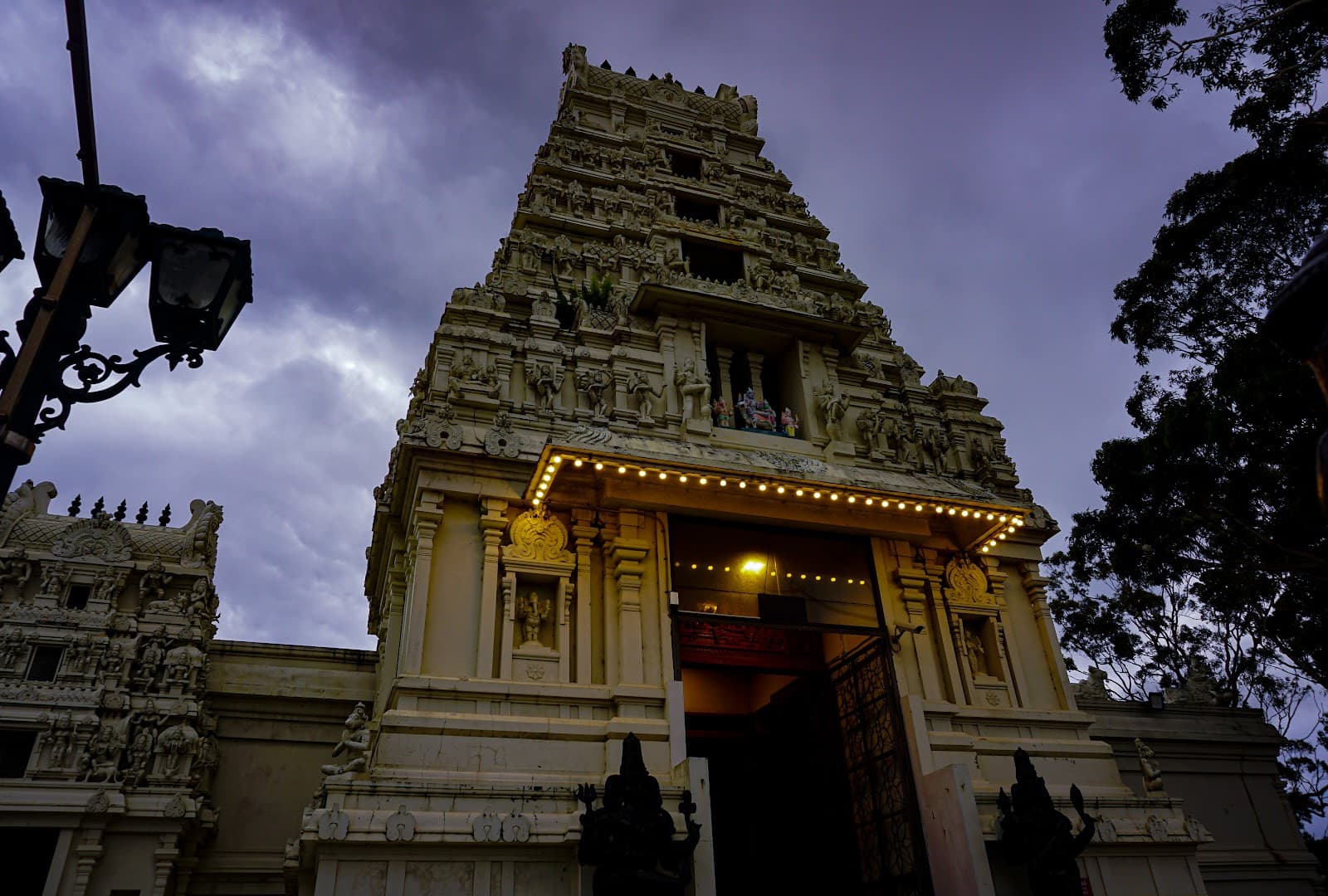
Sri Venkateswara Temple Helensburgh
Sri Venkateswara Temple Helensburgh is dedicated to Lord Venkateswara and anchors Helensburgh, New South Wales, as the largest traditional mandir in the southern hemisphere ([1][2]). Weekday darshan operates from 8:00 AM to 12:00 PM and 4:00 PM to 7:00 PM, while weekend seva blocks extend to 8:30 PM with queue marshals stationed under the sixteen-column mandapa to separate ticketed archana devotees from casual visitors ([1][5]). The annadhanam hall seats 350 with stainless service lines and HACCP logs posted beside the prasadam counter, and volunteers patrol the dining floor between sittings to keep evacuation aisles clear ([1][2]). Asphalt car parks on Temple Road are segmented into family, coach, and accessible bays, each mapped on LED boards that update occupancy in real time during Brahmotsavam ([1]). A 1:14 accessible ramp wraps the southern side of the rajagopuram and connects to a hydraulic platform that bridges the final granite risers, so wheelchair users reach the sanctum viewing rail without lifting assistance ([3]). Orientation signage uses bilingual Tamil-English panels, QR-linked audio guides, and pictograms for shoe storage, first aid, and quiet rooms, helping newcomers settle without slowing veteran pilgrims ([2][6]). Site stewards log fire drills, rainwater pump tests, and sanitation cycles within an asset-management tablet so compliance tasks are timestamped before evening arati concludes ([4]). With the granite kitchen humming, the main hall ventilated via roof monitors, and ushers escorting seniors to shaded seating, the complex remains fully ready for year-round worship, festivals, and coach tours ([1][2]).

Nallur Kandaswamy Kovil Jaffna Sri Lanka
Nallur Kandaswamy Kovil, dramatically situated in the historic town of Jaffna in northern Sri Lanka, represents one of the most extraordinary and culturally significant Hindu temples in South Asia, with origins dating back to 948 CE and a major reconstruction in 1734 CE that serves as the principal center of Murugan (Skanda) worship in Sri Lanka, creating a powerful testament to the profound transmission of Indian Shaivite and Murugan religious and architectural traditions to Sri Lanka. The temple complex, also known as Nallur Murugan Kovil, features sophisticated Dravidian architectural elements that demonstrate the direct transmission of South Indian temple architecture, particularly the traditions of the Chola and Pandya dynasties, with local adaptations that reflect the sophisticated synthesis of Indian Shaivite and Murugan religious and artistic traditions with Sri Lankan building techniques, while the temple's towering gopurams (gateway towers), elaborately carved and painted in vibrant colors, represent some of the finest examples of Dravidian temple architecture in Sri Lanka. The temple's architectural layout, with its central sanctum housing the Murugan deity surrounded by multiple enclosures, gopurams, and subsidiary shrines dedicated to various deities including Shiva, Parvati, Ganesha, and other Hindu gods, follows sophisticated South Indian Dravidian temple planning principles that were systematically transmitted from the great temple complexes of Tamil Nadu including Palani, Tiruchendur, and Swamimalai, while the temple's extensive decorative programs including sculptures, carvings, and architectural elements demonstrate the sophisticated synthesis of Indian Shaivite and Murugan iconography and artistic traditions with local Sri Lankan aesthetic sensibilities. Archaeological evidence reveals that the temple served as a major center of Murugan worship for over a millennium, attracting pilgrims from across South India and Sri Lanka, while the discovery of numerous inscriptions in Tamil and Sanskrit provides crucial evidence of the site's role in the transmission of Indian religious texts and practices to Sri Lanka, demonstrating the sophisticated understanding of Indian Shaivite and Murugan traditions possessed by the temple's patrons and religious establishment. The temple's annual Vel Festival, one of the largest and most vibrant Hindu festivals in Sri Lanka, features elaborate processions, traditional music, and cultural performances that attract hundreds of thousands of devotees and demonstrate the continued vitality of Indian religious traditions in Sri Lanka, while the temple's association with the Jaffna Kingdom demonstrates its historical significance as a center of Tamil Hindu culture and religious practice. The temple complex underwent major reconstruction in 1734 CE under the patronage of the Jaffna Kingdom, with the current structure representing a faithful preservation of the temple's original Dravidian architectural character and spiritual significance, while ongoing archaeological research continues to reveal evidence of the temple's ancient origins and its role in the transmission of Indian religious traditions to Sri Lanka. Today, Nallur Kandaswamy Kovil stands as one of the most important Hindu pilgrimage sites in northern Sri Lanka, serving as a powerful testament to the transmission of Indian Shaivite and Murugan culture and architecture to Sri Lanka, while ongoing archaeological research and conservation efforts continue to protect and study this extraordinary cultural treasure that demonstrates the profound impact of Indian civilization on Sri Lankan religious and artistic traditions. ([1][2])
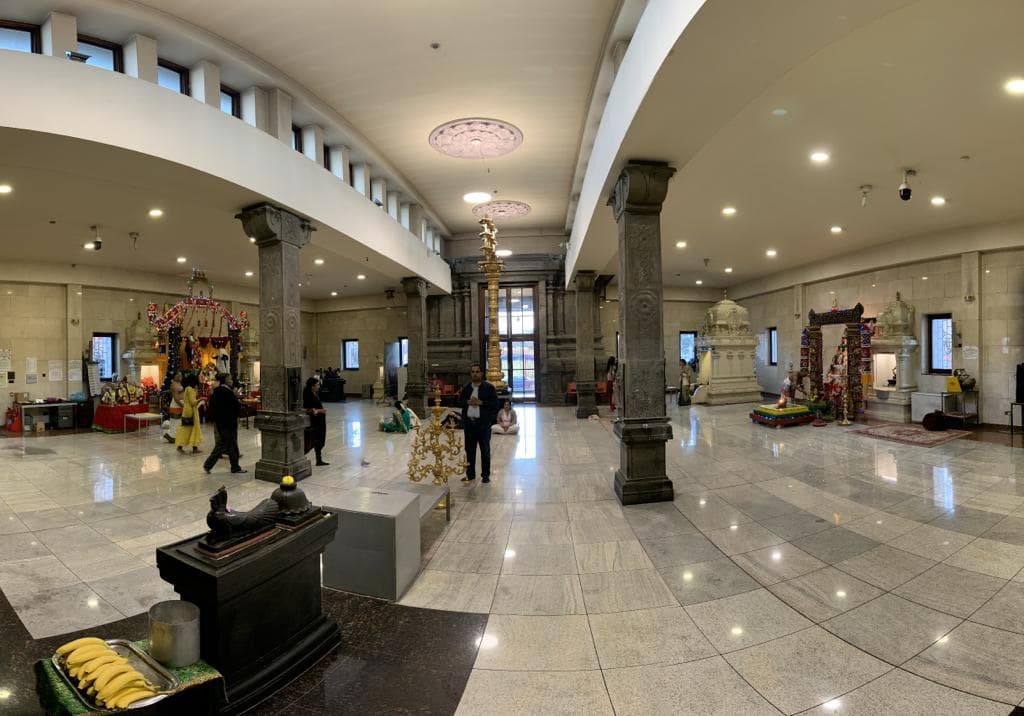
London Sri Murugan Temple
London Sri Murugan Temple, consecrated in 1984 and extensively rebuilt between 2002 and 2005, is Britain’s most prominent Tamil Saiva temple, crowned by a 52-foot rajagopuram adorned with 32,000 hand-painted stucco icons depicting the six abodes of Lord Murugan ([1][2]). The temple opens 8:00 AM-1:00 PM and 4:00 PM-8:30 PM daily, with suprabhatam at 7:30 AM, kalasa puja at 12:00 PM, and evening arti at 7:00 PM; priests trained in Jaffna and Chidambaram conduct six daily puja kalam, elaborate abhishekam, and monthly Thirukalyanam ceremonies. Pilgrims progress from the granite-clad mandapa to the sanctum of Sri Murugan with consorts Valli and Deivanai, flanked by shrines to Ganapathy, Ayyappan, Durga, Navagraha, and Lord Venkateswara, while the annadhanam kitchen serves weekday prasadam and the bhajan hall hosts Tamil music, Bharatanatyam, and nadeswaram classes ([1][3]). The temple supports Tamil language schools, immigration and welfare clinics, counselling, and diaspora archives; its annual Chariot Festival (Ther Thiruvila) and Thaipusam draw tens of thousands through Manor Park, coordinated with Newham Council, Metropolitan Police, TfL, and NHS crews. Volunteer operations manage crowd flow, security screening, recycling, and medical tents, while digital teams livestream festivals and daily worship worldwide. The temple’s facilities team monitors HVAC, underfloor heating, CCTV, and fire safety systems to safeguard devotees and the richly painted sanctum, sustaining a vibrant devotional and civic hub for London’s Tamil community ([1][4]).
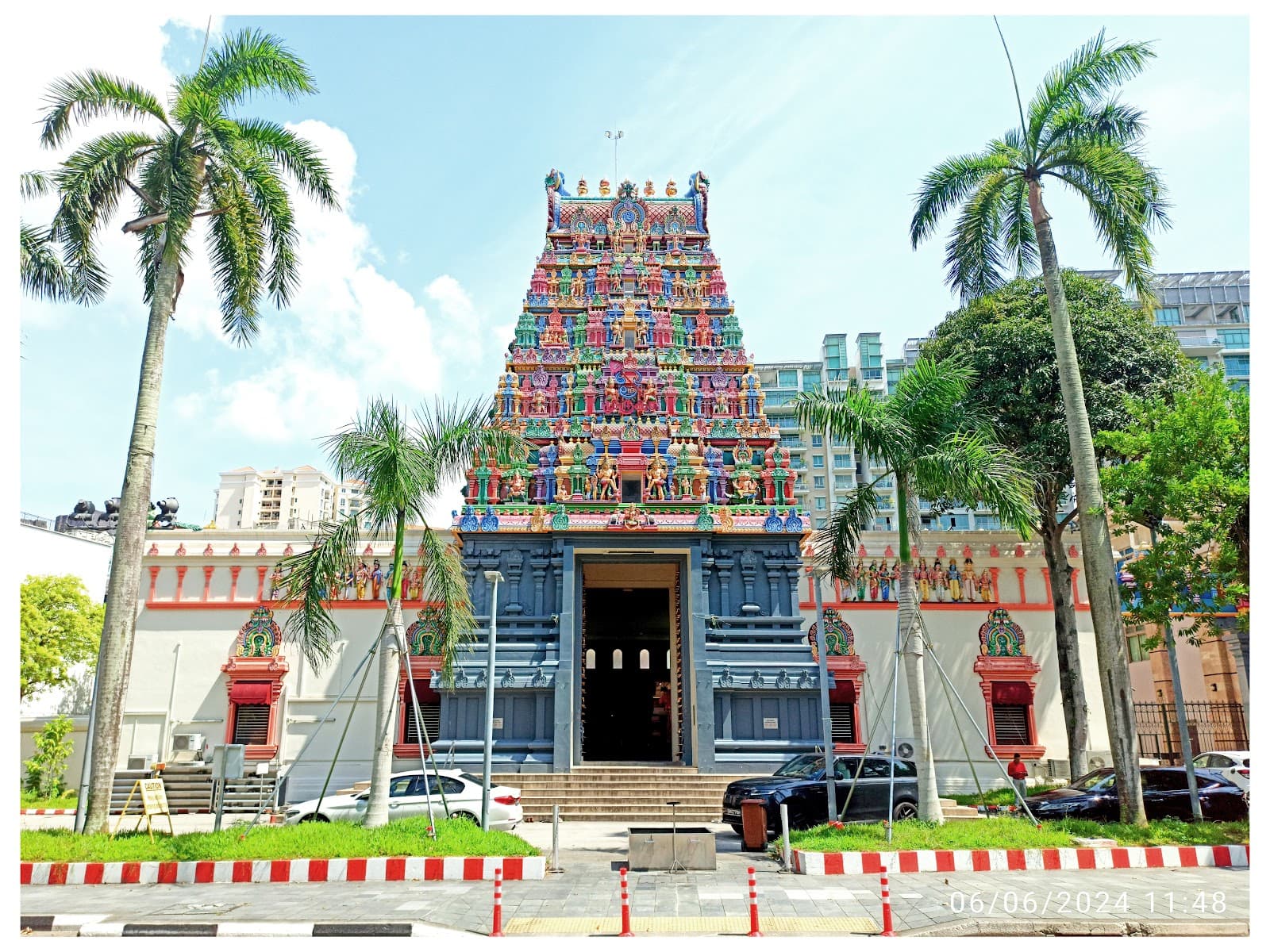
Sri Thendayuthapani Temple Singapore
Sri Thendayuthapani Temple, built in 1859 by the Nattukottai Chettiars, anchors Tank Road as Singapore’s principal Murugan shrine and the culmination point for the annual Thaipusam kavadi pilgrimage ([1][2]). The temple’s five-tier rajagopuram features 3,500 polychromatic stucco figures and leads into a granite mandapa where Lord Murugan stands with Valli and Deivayanai beneath a gilded vimana. Daily worship begins 5:30 AM with Suprabhata Seva and closes at 9:00 PM with Arthajama Arati; multiple kala pujas, homa, and abhishekam are performed, especially during Thaipusam, Panguni Uttiram, and Skanda Shasti, when hundreds of kavadi bearers ascend the granite steps chanting “Vel Vel.” The temple precinct includes a newly constructed five-storey Annalakshmi Cultural Centre (2022) with banqueting halls, classrooms, dance studios, wellness suites, library, and the Annalakshmi vegetarian restaurant that funds charity initiatives. The Hindu Endowments Board manages annadhanam, Sikhara Veda classes, Carnatic music, Bharatanatyam, yoga, counselling, and senior outreach. Heritage tours, interfaith programmes, and research archives showcase the Chettiar community’s banking legacy, while disaster-relief fundraising, migrant welfare drives, and pandemic vaccination campaigns highlight the temple’s civic role. Integrated MEP systems, BMS controls, CCTV, and crowd management infrastructure enable the temple to support half a million visitors annually while conserving its historic Dravidian artistry ([1][3]).
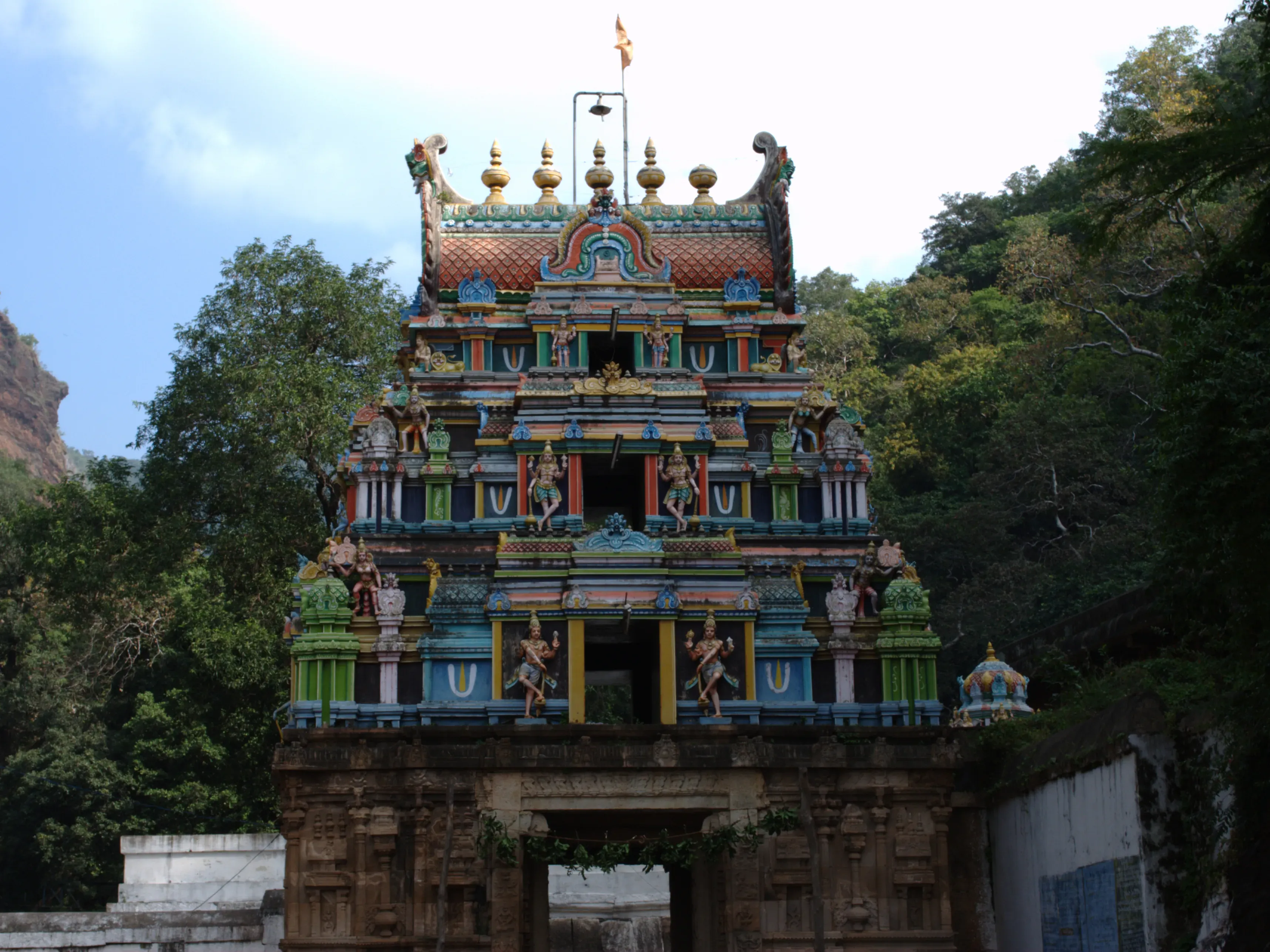
Ahobilam Temple Kurnool
Nestled within Andhra Pradesh's Nallamala Hills, the Ahobilam Temple, dating back to circa 1350 CE, serves as a testament to Vijayanagara architectural traditions ([2][8]). The temple is a sacred site dedicated to Lord Narasimha ([3][8]). During the Vijayanagara period, the rulers adopted the Dravidian style, skillfully carving the temple into the existing rock formations ([3][8]). Stone platforms and foundations exemplify this rock-cut technique, utilizing locally sourced granite to integrate with the natural landscape ([10]). The temple complex is geographically and spiritually divided into Lower and Upper Ahobilam ([3]). During the Vijayanagara period, temple architecture flourished, which is evident in the elaborate carvings that embellish the *mandapam* (pillared hall) and *vimana* (tower) of Lower Ahobilam ([2][9]). These carvings illustrate narratives from Hindu epics and Puranas, visually echoing the *sthala purana* (temple legend) in stone ([11][12]). Vastu Shastra principles, the ancient Indian science of architecture, guided the temple's layout and orientation, ensuring harmony and balance ([10][11]). The absence of towering *gopurams* (gateway towers) at Upper Ahobilam emphasizes the location's raw spirituality ([10]). Granite and sandstone blocks, meticulously carved, are combined with timber, bricks, and lime mortar, highlighting Vijayanagara construction expertise ([2][8]). The temple's design reflects a deep understanding of Dravidian architectural conventions and the region's natural resources ([9][10]). Ahobilam embodies the enduring relationship between humanity and the divine, representing ancient Indian knowledge systems and architectural skill ([10][11]). Ascending to Upper Ahobilam inspires *bhakti* (devotion) and *shakti* (divine energy), reinforcing the temple's profound spiritual importance ([3]). The integration of natural elements and artistic expression makes Ahobilam a significant example of Vijayanagara temple architecture ([2][10]).
Quick Links
Plan Your Heritage Journey
Get personalized recommendations and detailed visitor guides