Has Inheritage Foundation supported you today?
Your contribution helps preserve India's ancient temples, languages, and cultural heritage. Every rupee makes a difference.
Secure payment • Instant 80G certificate

Khalchayan Temple Ruins Lebap Turkmenistan
Khalchayan Temple Ruins, dramatically situated in the Lebap Region of eastern Turkmenistan, represents one of the most extraordinary and archaeologically significant Kushan-period sites in Central Asia, dating to the 2nd century BCE and featuring remarkable Indic sculptures and architectural elements that demonstrate the profound transmission of Indian Buddhist and Hindu religious and artistic traditions to Central Asia during the Kushan period, creating a powerful testament to the sophisticated synthesis of Indian and Central Asian cultural traditions. The temple ruins, featuring sophisticated architectural elements and extraordinary Indic sculptures executed in the distinctive Kushan-Gandharan style that emerged from the synthesis of Indian and Central Asian artistic traditions, demonstrates the direct transmission of Indian Buddhist and Hindu iconographic programs and artistic traditions from the great artistic centers of India including Gandhara, Mathura, and the monastic centers of northern India, while the site's most remarkable feature is its extraordinary collection of Indic sculptures featuring Buddha images, Bodhisattvas, and Hindu deities executed with remarkable artistic sophistication and iconographic accuracy that demonstrate the sophisticated understanding of Indian Buddhist and Hindu iconography possessed by Kushan artists. The temple ruins' architectural layout, with their central structures surrounded by ritual spaces and architectural elements, follows sophisticated planning principles that demonstrate remarkable parallels with Indian Buddhist and Hindu temple planning principles, while the temple ruins' extensive decorative programs including Indic sculptures, architectural elements, and religious iconography demonstrate the sophisticated synthesis of Indian Buddhist and Hindu iconography and artistic traditions with local Central Asian aesthetic sensibilities, particularly the distinctive Kushan-Gandharan style that emerged from the synthesis of Indian and Central Asian artistic traditions. Archaeological evidence reveals that the site served as a major center of religious and artistic activity during the Kushan period, attracting traders, artists, and religious practitioners from across Central Asia, South Asia, and beyond, while the discovery of numerous Indic sculptures including Buddha images, Bodhisattvas, and Hindu deities that demonstrate clear Indian influences, architectural elements that parallel Indian practices, and religious iconography that reflects Indian Buddhist and Hindu cosmological concepts provides crucial evidence of the site's role in the transmission of Indian religious and artistic traditions to Central Asia, demonstrating the sophisticated understanding of Indian Buddhist and Hindu traditions possessed by the site's patrons and artistic establishment. The site's association with the Kushan Empire, which had strong connections to India and played a crucial role in the transmission of Indian religious and artistic traditions to Central Asia, demonstrates the sophisticated understanding of Indian religious and artistic traditions that were transmitted to Central Asia, while the site's Indic sculptures and architectural elements demonstrate remarkable parallels with Indian Buddhist and Hindu temple architecture and iconographic programs that were central to ancient Indian religious traditions. The site has been the subject of extensive archaeological research, with ongoing excavations continuing to reveal new insights into the site's sophisticated architecture, artistic programs, and its role in the transmission of Indian religious and artistic traditions to Central Asia, while the site's status as a UNESCO Tentative List site demonstrates its significance as a major center for the transmission of Indian cultural traditions to Central Asia. Today, Khalchayan Temple Ruins stands as a UNESCO Tentative List site and represents one of the most important Kushan-period sites in Central Asia, serving as a powerful testament to the transmission of Indian Buddhist and Hindu culture and art to Central Asia, while ongoing archaeological research and conservation efforts continue to protect and study this extraordinary cultural treasure that demonstrates the profound impact of Indian civilization on Central Asian religious and artistic traditions. ([1][2])
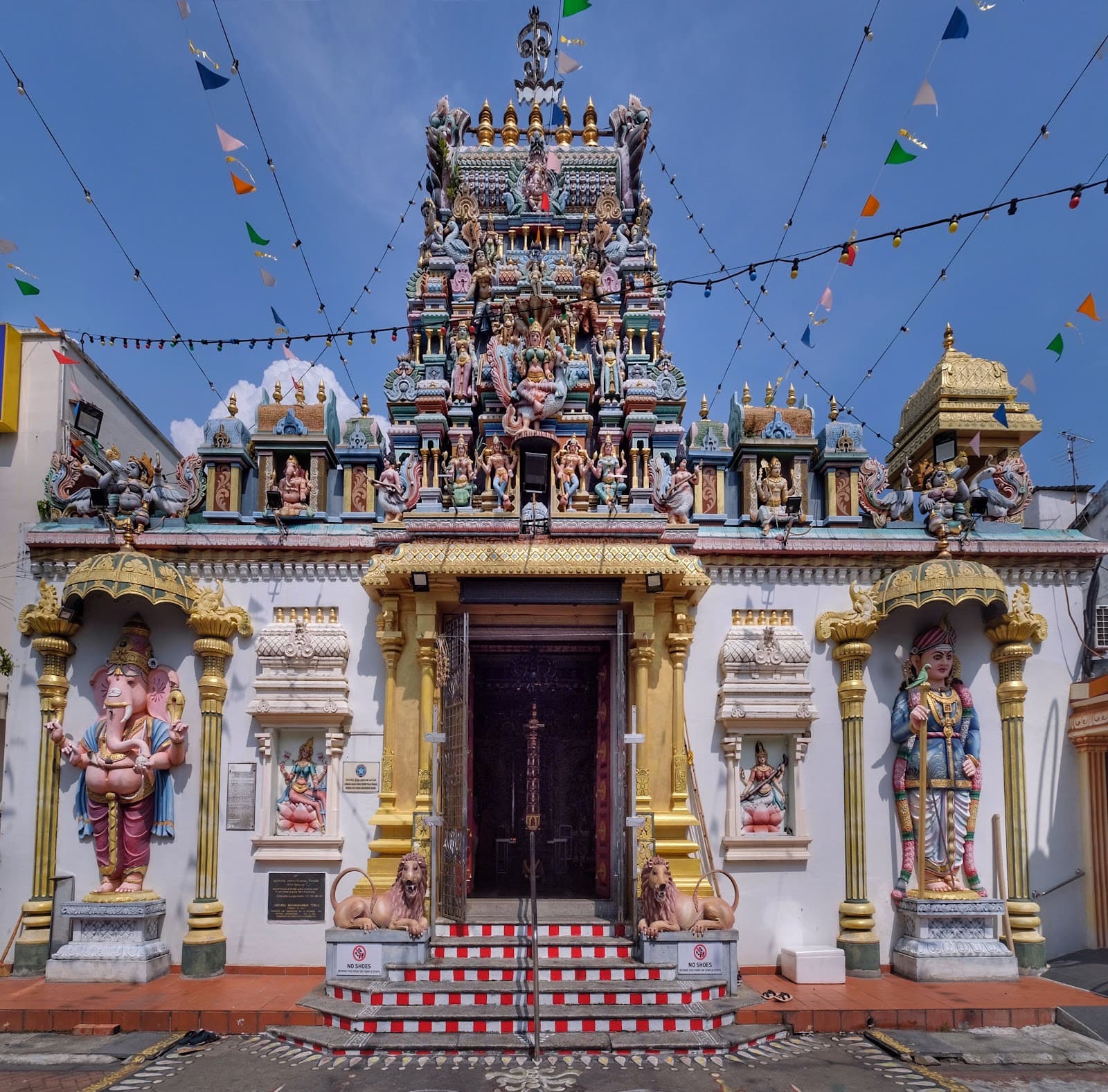
Sri Maha Mariamman Temple George Town Penang
Sri Maha Mariamman Temple (1833) anchors Queen Street within George Town’s UNESCO World Heritage Site, narrating nearly two centuries of Tamil presence through a five-tier gopuram (1930), hand-painted murals of Skanda Shasti, and the silver Ratha Vimana chariot that leads Penang’s Thaipusam procession, making this the oldest Hindu temple in Penang ([1][2]). The temple opens 5:30 AM-9:30 PM with six daily pujas, Friday abhishekam, and continuous annadhanam; festivals include Chitra Pournami, Aadi Pooram, Navaratri, Theppotsavam, and the famed Thaipusam silver chariot journey from Lebuh Queen to Waterfall Hill, mobilising 700 volunteers, medical teams, crowd marshals, waste collectors, and digital trackers. Facilities include a cultural hall, Tamil school, heritage gallery, library, counselling office, vegetarian canteen, and relief storehouse that supported Penangites during the 1997 haze, 2004 tsunami, and COVID-19 lockdowns. The temple’s trustee board (Hindu Mahajana Sangam) manages welfare programmes, scholarships, and interfaith dialogues. The precinct integrates heritage shophouses, Neem and bauhinia trees, and multi-faith foot traffic, encapsulating George Town’s cosmopolitan legacy ([1][3]).
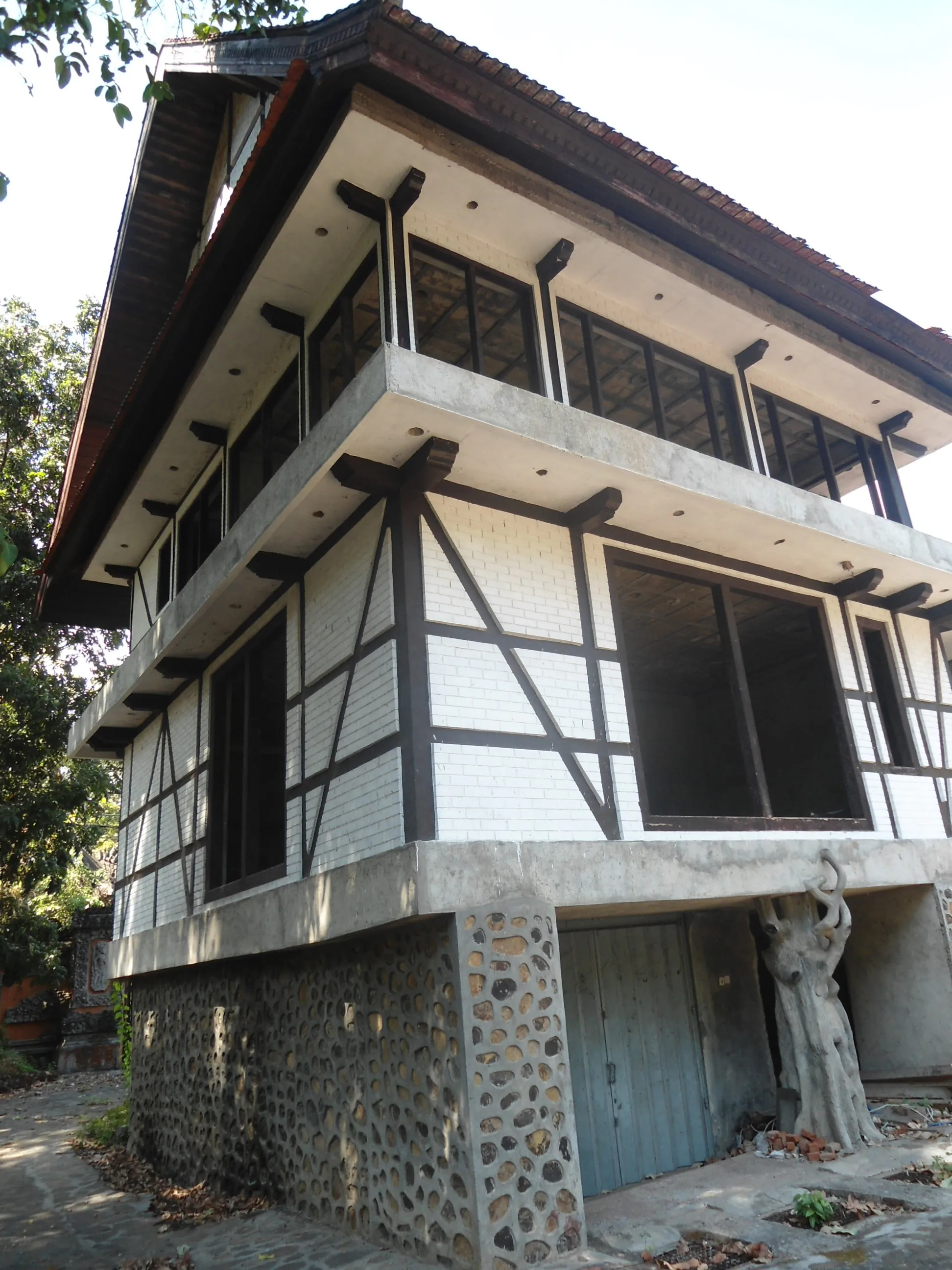
Puri Palace Puri
Puri Palace, situated on Chakra Tirtha Road in Puri, Odisha, stands as a significant testament to India's millennia-spanning cultural heritage, embodying a continuous tradition of indigenous architectural and cultural practices [1]. While the current structure largely reflects renovations and expansions from the 19th and early 20th centuries, its foundational significance is deeply rooted in the ancient Eastern Ganga Period, celebrating India's enduring legacy [1]. The palace's architecture presents a compelling blend of traditional Kalinga styles and colonial influences, showcasing a layered history of design evolution [1]. It incorporates elements characteristic of the Nagara architecture style, particularly the Deula architecture prevalent in Indic temple construction, which is evident in its intricate carvings and pyramidal roof forms [1] [4]. The imposing facade, predominantly white, features symmetrical arrangements punctuated by intricately carved balconies and jharokhas, which are traditional projecting windows, reflecting Odisha's rich artistic heritage [1]. Delicate floral patterns and mythical figures are meticulously etched into the sandstone, narrating silent tales of devotion and royal patronage [1]. The palace spans an area of approximately 20,438.66 square meters, with a height of 9.1 meters, a width of 82.81 meters, and a length of 1667.3 meters, indicating a vast complex [1]. Construction primarily utilized laterite stone, a common material in Odishan temples, joined with lime mortar [1]. Sandstone was employed for structural elements such as columns, beams, and decorative facades, while wood was used for roofing structures, doors, and window frames [1]. Iron and copper were strategically incorporated for clamps, dowels, and decorative elements, providing both reinforcement and resistance to the saline coastal environment [1]. The construction techniques involved a raised platform foundation, created by compacting layers of earth mixed with lime and laterite fines, crucial for stability in the coastal climate and against waterlogging [1]. The porous nature of laterite provides natural insulation, and the breathable lime mortar helps regulate humidity, demonstrating sophisticated environmental responsiveness [1]. Inside, the palace features cool marble floors, high ceilings adorned with ornate chandeliers, and antique furniture, preserving the original character despite modernization [1]. The Archaeological Survey of India (ASI) protects this historic palace, with ongoing conservation efforts ensuring its preservation [1]. Restoration work, particularly at the adjacent Jagannath Temple, which is integral to the palace complex, focuses on structural stabilization, repairs to the Jagamohan (assembly hall), stone carving restoration, and conservation of murals, addressing damage from natural weathering and cyclones [1] [3]. Archaeological excavations within the palace complex have unearthed remnants of earlier structures, including a 12th-century temple predating the current Jagannath Temple, along with fortifications and pottery shards, offering glimpses into the daily lives of past inhabitants [1]. The site is well-maintained, with visitor facilities available, though accessibility for wheelchair users is gradually improving and requires prior confirmation due to uneven surfaces and crowds [1]. The palace remains operationally ready, welcoming visitors to experience its profound historical and architectural depth [1].
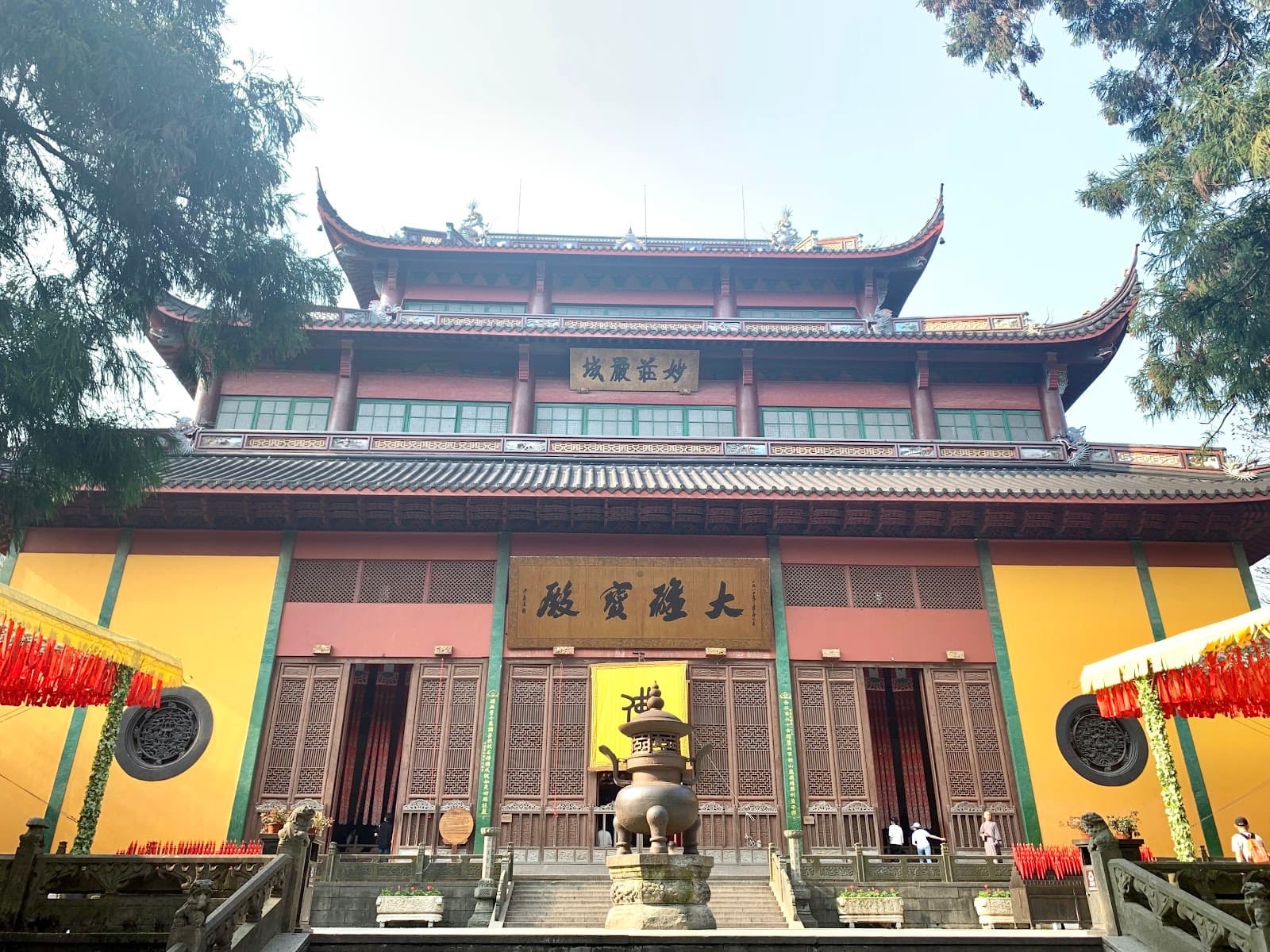
Lingyin Temple Hangzhou Zhejiang China
Lingyin Temple, dramatically situated in the scenic hills west of Hangzhou in Zhejiang Province, represents one of the most extraordinary and historically significant Buddhist temple complexes in China, dating from the 4th century CE and serving as a major center of Indo-Chinese Buddhist heritage that flourished as a crucial link in the transmission of Indian Buddhist traditions to China, featuring sophisticated Buddhist temple structures, extensive rock carvings, and ritual spaces that demonstrate clear connections to the architectural and artistic traditions of ancient India, particularly the sophisticated temple planning principles and rock-cut architecture traditions that were transmitted from the great Buddhist centers of northern India, creating a powerful testament to the profound transmission of Indian Buddhist civilization to China during the early medieval period. The site, featuring sophisticated Buddhist temple structures with halls, pagodas, and the remarkable Feilai Peak rock carvings that demonstrate clear connections to the architectural and artistic traditions of ancient India, particularly the sophisticated rock-cut temple and sculpture traditions that were transmitted from the great Buddhist centers of northern India, demonstrates the direct transmission of Indian Buddhist architectural knowledge, religious iconography, and cultural concepts from the great monastic universities of ancient India, particularly Nalanda and Taxila, which systematically transmitted Buddhist teachings and architectural traditions to China through the extensive trade and pilgrimage networks that connected India with China, while the site's most remarkable feature is its extensive collection of rock carvings on Feilai Peak, featuring hundreds of Buddhist sculptures carved directly into the limestone cliffs that demonstrate remarkable parallels with Indian rock-cut temple traditions, particularly the structural techniques and iconographic programs that were central to Indian Buddhist art, including depictions of Buddhas, Bodhisattvas, and guardian deities that reflect Indian iconographic traditions. The temple structures' architectural layout, with their sophisticated planning, central halls surrounded by subsidiary structures, meditation chambers, and ceremonial spaces, follows planning principles that demonstrate remarkable parallels with Indian Buddhist monastery planning principles, particularly the vihara and rock-cut temple traditions that were central to Indian Buddhist architecture, while the site's extensive archaeological remains including the Feilai Peak rock carvings with clear Indian stylistic influences, Buddhist sculptures that reflect Indian iconographic traditions, and architectural elements demonstrate the sophisticated synthesis of Indian Buddhist iconography and cosmological concepts with local Chinese aesthetic sensibilities and building materials. Historical evidence reveals that the site served as a major center of Buddhist learning and religious activity during the 4th through 13th centuries, attracting monks, traders, and pilgrims from across China, South Asia, and Southeast Asia, while the discovery of numerous artifacts including rock carvings with clear Indian stylistic influences, Buddhist sculptures that reflect Indian iconographic traditions, and architectural elements that reflect Indian architectural concepts provides crucial evidence of the site's role in the transmission of Indian Buddhist traditions to China, demonstrating the sophisticated understanding of Indian Buddhist architecture and religious practices possessed by the site's patrons and monastic establishment. The site's association with the ancient city of Hangzhou, which flourished as a major cultural and commercial center with extensive connections to India and Southeast Asia, demonstrates the sophisticated understanding of Indian Buddhist traditions that were transmitted to China, while the site's Buddhist temple structures and rock carvings demonstrate remarkable parallels with Indian Buddhist temple architecture and rock-cut art traditions that were central to ancient Indian civilization. The site has been the subject of extensive historical research and conservation efforts, with ongoing work continuing to reveal new insights into the site's sophisticated architecture, religious practices, and its role in the transmission of Indian Buddhist traditions to China, while the site's status as one of the most important historical Buddhist temples in China demonstrates its significance as a major center for the transmission of Indian Buddhist and cultural traditions to China. Today, Lingyin Temple stands as one of the most important historical Buddhist temples in China, serving as a powerful testament to the transmission of Indian Buddhist civilization to China, while ongoing historical research and conservation efforts continue to protect and study this extraordinary cultural treasure that demonstrates the profound impact of Indian civilization on Chinese religious and cultural development. ([1][2])
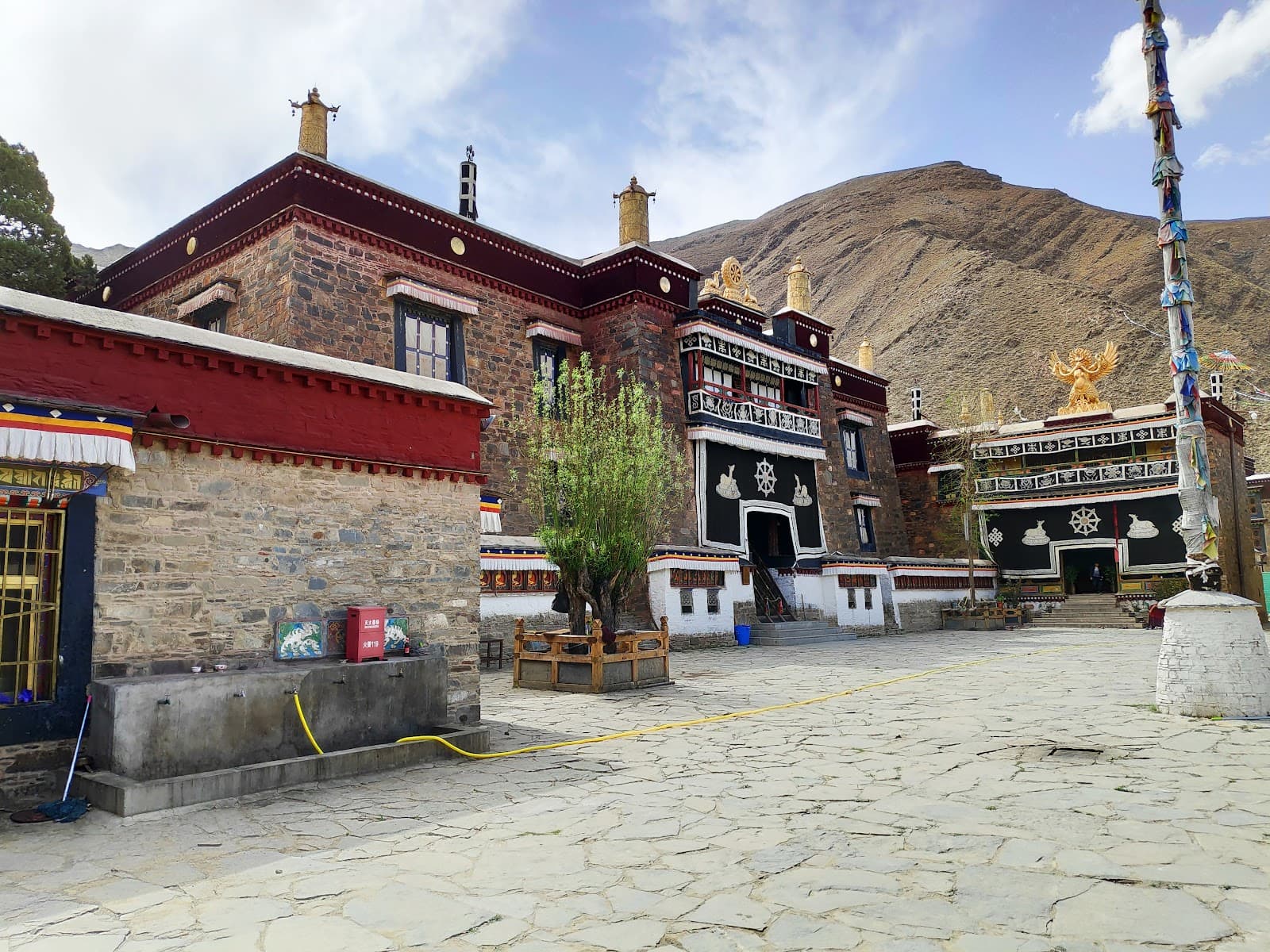
Mindrolling Monastery Lhoka Tibet
Mindrolling Monastery, located in Lhoka, Tibet, represents one of the most important Nyingma monasteries in Tibet and stands as a major center for the Nyingma school of Tibetan Buddhism, constructed in the 17th century CE and maintaining strong connections to Indian tantra traditions transmitted through Padmasambhava (Guru Rinpoche) and other Indian masters who traveled to Tibet, demonstrating the profound transmission of Indian Buddhist tantric traditions to Tibet, which has maintained deep cultural, religious, and historical connections with India for over two millennia. The monastery complex, constructed primarily from stone, wood, and earth with extensive decorative elements, features a massive structure containing numerous temples, chapels, assembly halls, and meditation facilities arranged according to Indian Buddhist monastery planning principles, with the overall design reflecting mandala-based cosmological principles found in Indian Buddhist architecture. The monastery’s architectural design demonstrates direct influence from Indian Buddhist monastery architecture, particularly the tantric traditions transmitted from India, with the overall plan, meditation facilities, and ritual spaces reflecting traditions that were transmitted to Tibet through centuries of cultural exchange, while the emphasis on Indian tantra traditions demonstrates the transmission of Indian Buddhist tantric practices to Tibet. Archaeological and historical evidence indicates the monastery was constructed with knowledge of Indian Buddhist tantric traditions and practices, reflecting the close cultural connections between Tibet and India during the medieval period, when Indian tantric masters, texts, and practices continued to influence Tibetan Buddhism. The monastery has served as a major center for Tibetan Buddhist learning and practice for over three centuries, maintaining strong connections to Indian Buddhist traditions through the study and practice of Indian tantric texts and practices. The monastery has undergone multiple expansions and renovations over the centuries, with significant additions conducted to accommodate growing numbers of practitioners and expanding educational programs. Today, Mindrolling Monastery continues to serve as an important place of Buddhist worship and learning in Tibet, demonstrating the enduring influence of Indian Buddhist tantric traditions on Tibetan culture and serving as a powerful symbol of Tibet’s deep connections to Indian civilization through the preservation and practice of Indian Buddhist tantra. ([1][2])
Kamakshi Amman Temple Kanchipuram
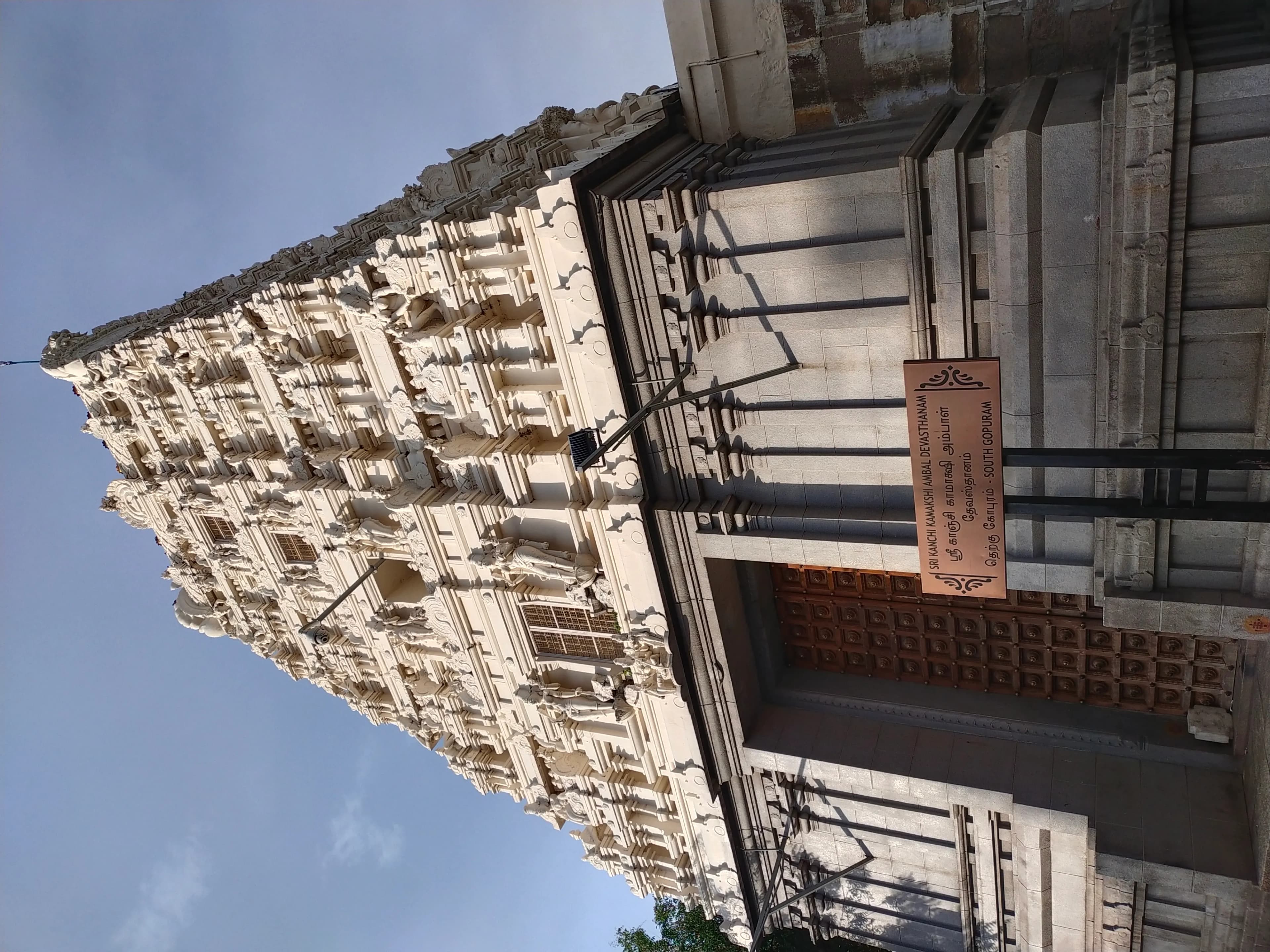
The air in Kanchipuram hummed with a palpable energy, a blend of devotion and the weight of centuries. I stood before the Kamakshi Amman Temple, its towering gopuram a vibrant tapestry against the Tamil Nadu sky. This wasn't just another temple on my list of 500+; it was a pilgrimage site, a living testament to the power of Shakti, and a visual feast for a heritage photographer like myself. Unlike many South Indian temples that are dedicated to male deities, this one celebrates the supreme goddess Kamakshi, a form of Parvati. The temple’s architecture is a fascinating blend of Dravidian styles, evolving over centuries under various dynasties. The main gopuram, though a relatively recent addition, commands attention with its intricate stucco work depicting scenes from Hindu mythology. The vibrant colours, refreshed periodically, pulsed with life under the strong southern sun. I spent a good hour just circling the base, tilting my camera at impossible angles to capture the sheer scale and detail of the sculpted figures. The gopuram serves as a dramatic prelude to the inner sanctum, a promise of the sacred energy within. Passing through the entrance, I was struck by the relative quiet. The bustling street life of Kanchipuram seemed to melt away, replaced by a hushed reverence. The temple complex is built around a series of concentric enclosures, each leading closer to the heart of the shrine. I noticed the distinct shift in architectural style as I moved inwards. The outer walls were simpler, adorned with rhythmic rows of pilasters and punctuated by smaller shrines dedicated to various deities. As I approached the inner sanctum, the carvings became more elaborate, the stonework finer, and the atmosphere more charged. The inner sanctum, the garbhagriha, houses the main deity, Kamakshi Amman. Photography isn't permitted inside, which, in a way, amplified the experience. It forced me to be fully present, to absorb the atmosphere, the chanting, the scent of incense, and the palpable devotion of the pilgrims. The goddess is depicted in a seated posture, a unique representation compared to other Parvati temples where she is often shown standing. This seated posture, I learned from a local priest, signifies her peaceful, meditative state, radiating a calming energy that permeated the entire temple. Beyond the main shrine, the temple complex houses several smaller mandapams, each with its own unique architectural character. The Kalyana Mandapam, used for ceremonial weddings, was particularly striking. Its intricately carved pillars, depicting scenes from the marriage of Shiva and Parvati, were a testament to the skill of the ancient artisans. I spent considerable time studying the nuances of each carving, the flow of the narrative, and the expressive postures of the figures. The play of light and shadow within the mandapam added another layer of depth to the visual experience. One of the most captivating aspects of the Kamakshi Amman Temple is its tangible connection to the daily lives of the people. It’s not a museum piece, but a living, breathing entity. I witnessed families performing pujas, women offering flowers, and children playing in the courtyards. This vibrant tapestry of human interaction woven into the ancient architecture is what truly makes a heritage site come alive. It’s the stories whispered within the stones, the echoes of prayers, and the continuity of faith that I strive to capture in my photographs. Leaving the temple, I carried with me not just images, but a deeper understanding of the cultural significance of this sacred space. The Kamakshi Amman Temple isn't just a monument; it's a repository of faith, art, and history, a testament to the enduring power of the divine feminine in the heart of South India.
Maha Lakshmi Temple Abu Dhabi (BAPS Campus)
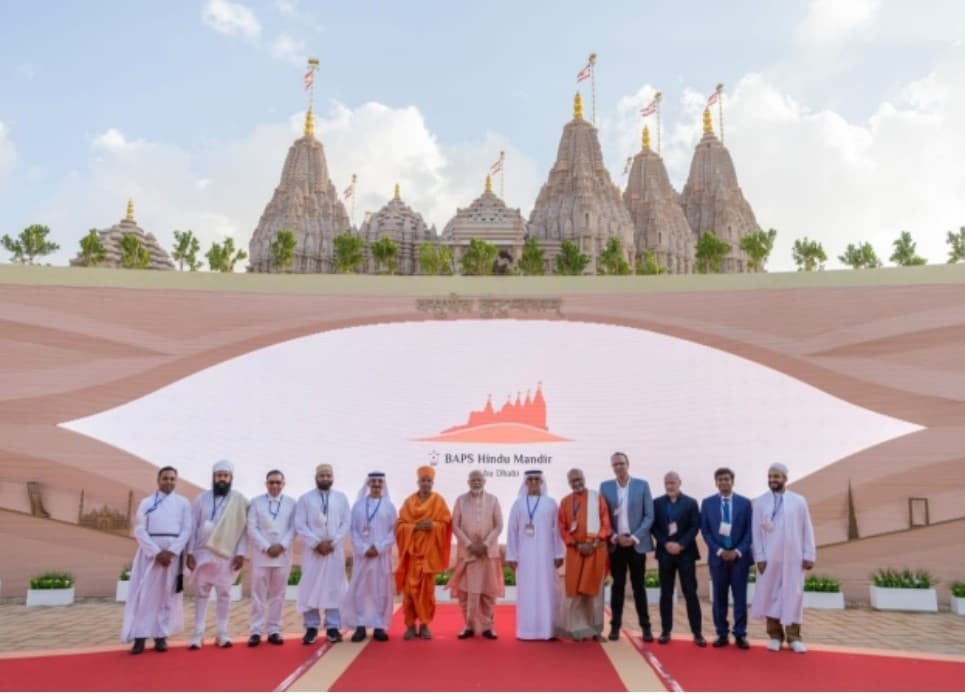
The Maha Lakshmi Temple forms the southern devotional wing of the BAPS Hindu Mandir campus in Abu Dhabi, providing a dedicated sanctum for Sri Mahalaxmi-Narayana with a Vaikuntha-inspired sinhasan crafted from Italian marble, gold-plated lotuses, and fibre-optic constellations that mirror Abu Dhabi's desert night sky ([1][2]). Consecrated alongside the main mandir in February 2024, the Lakshmi sanctum offers a quieter devotional experience focused on prosperity, education, and wellbeing—hosting specialised Lakshmi Pujas for entrepreneurs, students, and families moving to the Gulf. The hall seats 600 devotees, features carved marble columns, and integrates digital translation kiosks offering arti lyrics in Hindi, English, Malayalam, and Tagalog. Daily schedule aligns with the mandir's 6:00 AM-9:00 PM operations, but the Lakshmi wing hosts additional Friday evening Ashtalakshmi satsang, Saturday bridal blessings, and quarterly finance literacy workshops led by community volunteers. Donors can participate in Navagraha homa, Kuber puja, or annadhanam out of the adjoining seva kitchen. A micro-museum displays stories of Gulf entrepreneurs whose philanthropy supported the mandir and documents historic trade links between Gujarat, the Malabar coast, and the Trucial States.
Chausath Yogini Temple Bhubaneswar
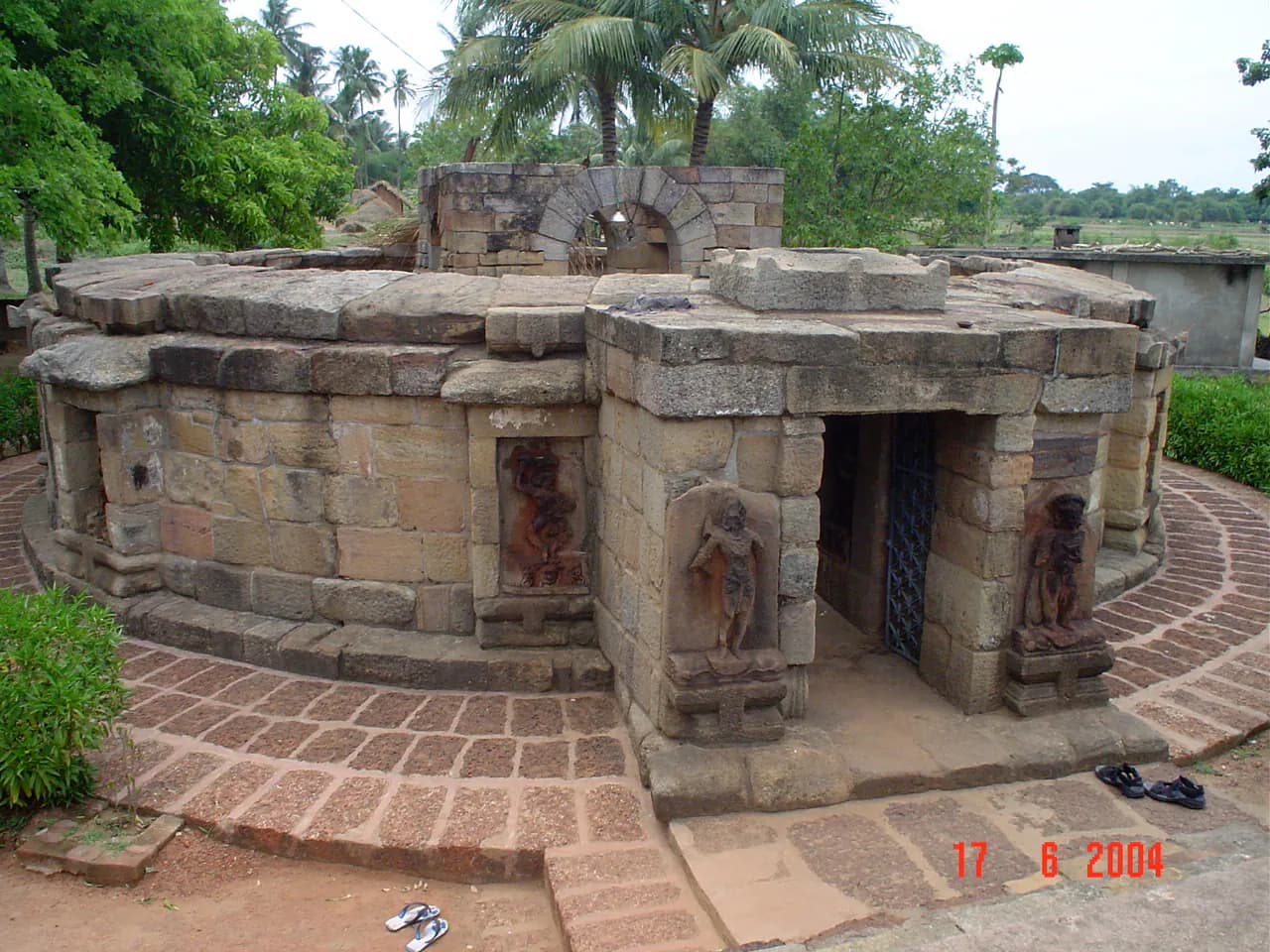
Ascending the weathered steps of the Chausath Yogini Temple in Hirapur, one encounters a mesmerizing relic of 9th-century Odisha ([1][2]). Unlike conventional closed-chamber temples, this monument, erected during the Eastern Ganga period, showcases a distinctive circular hypaethral (open-air) design ([1][2]). Queen Hiradevi of the Brahma dynasty commissioned this unique temple around 850 CE ([3]). Khondalite, laterite and sandstone were the primary materials for its construction ([4]). This temple is dedicated to the sixty-four Yoginis, considered attendants of Goddess Durga ([4]). Intricate carvings embellish the inner circular wall, portraying the Yoginis, each distinguished by unique expressions and poses ([1]). During the Eastern Ganga period, temple architecture in the Kalinga style reached its zenith, and this temple exemplifies that ([2][5]). This open-air design facilitates the integration of celestial elements into worship, aligning with tantric philosophies prevalent during its construction ([3][4]). The alignment with the cardinal directions also reflects principles found in the Vastu Shastras. Within the courtyard, a small shrine dedicated to Lord Shiva represents the cosmic equilibrium of Shakti and Shiva ([5]). Stone platforms and foundations demonstrate the temple's careful integration with the natural terrain ([1][2]). The Chausath Yogini Temple embodies the rich spiritual and artistic heritage of India ([3]). The temple's circular plan may also reflect the Mandala (cosmic diagram), resonating with deeper philosophical concepts ([4][5]). It serves as a potent symbol of India's multifaceted cultural legacy ([4][5]). Granite and sandstone blocks, meticulously carved, form the core structure, exhibiting the exceptional craftsmanship of the era ([1][2]).
Hindu Temple Society North America Flushing
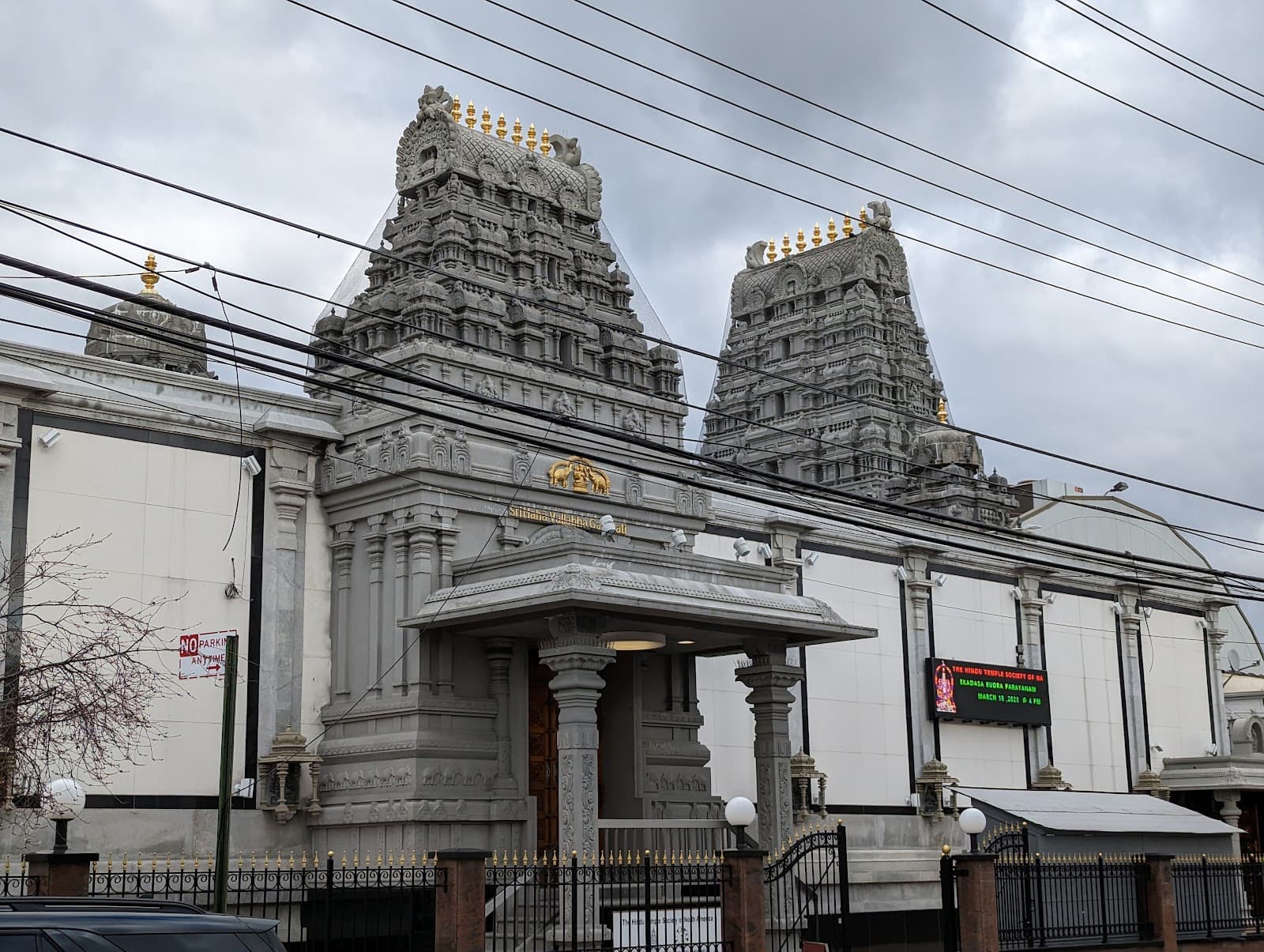
Ganesh Temple of the Hindu Temple Society of North America in Flushing, Queens, dedicated to Sri Maha Vallabha Ganapati, opens with suprabhatam at 6:00 AM and maintains timed darshan cycles through sayana aarati at 9:00 PM, managing roughly 5,000 weekday visits and double that on festival weekends through digital queue boards and bilingual ushers posted at each gopuram entrance ([1][2]). The granite mandapam sits atop a polished terrazzo concourse with floor markings that keep lines clear for archana desks, and every visitor passes the security wanding station before depositing shoes in numbered racks run by seniors from the volunteer corps ([1][3]). Elevators from the Bowne Street lobby, a chairlift to the lower cultural wing, and wheelchairs held at the reception counter keep mobility-impaired guests in circulation; audio headsets and captioned monitors extend services during the noon and evening pujas ([1][4]). Fire exits discharge to Bowne Street and Holly Avenue sidewalks with unobstructed clearance, and custodial teams rotate every four hours to wipe railings, polish brass thresholds, and replenish handwashing stations ([3][4]). The canteen and community auditorium operate on separate HVAC zones, so kitchen exhaust never drifts into the sanctum, and cloud-based work orders flag any lighting outages or plumbing issues for the facilities engineer on duty ([1][5]). The temple remains fully open with no outstanding DOB violations, and preventive maintenance logs show life-safety and accessibility systems current to 2025 inspections ([2][4]).
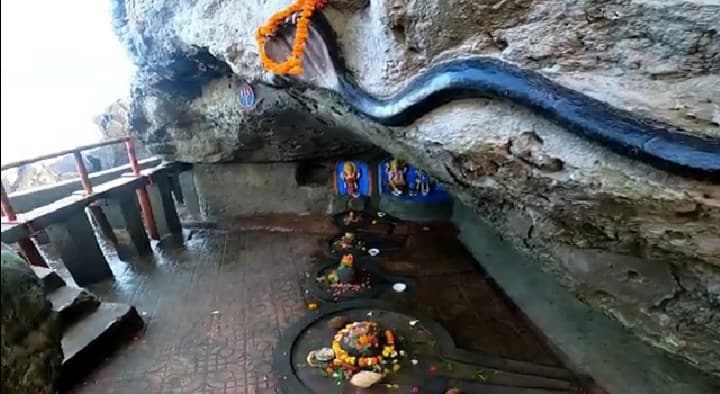
Gangeshwar Mahadev Temple Fudam Diu
The roar of the Arabian Sea was a constant, rhythmic backdrop to the serenity I found at the Gangeshwar Mahadev Temple. Tucked away near the fishing village of Fudam in Diu, this cluster of five ancient Shiva shrines isn't your typical grand temple complex. Carved directly into a cliff face overlooking the churning ocean, they feel intrinsically linked to the raw power of nature. Having explored countless temples across North India, from the towering peaks of the Himalayas to the plains of the Gangetic belt, I can confidently say this one holds a unique charm. The path down to the temples is a gentle descent, winding through weathered rocks smoothed by centuries of sea spray and wind. As I approached, the first thing that struck me was the seamless integration of the shrines with the natural landscape. It's as if the rock itself had yielded to the devotion of the artisans, revealing the deities within. Each of the five shrines is dedicated to Lord Shiva, represented by intricately carved Shiva lingams housed within these rock-cut chambers. Unlike the polished marble and ornate carvings I've seen in many North Indian temples, these lingams are more rugged, almost primal in their presentation. They are perpetually bathed in the cool, salty spray of the ocean waves that crash against the rocks just meters away, creating a truly mesmerizing spectacle. The architecture is simple yet striking. The shrines are not enclosed by elaborate structures, but rather open to the elements, protected only by the overhanging cliff face. This minimalist approach allows the natural beauty of the location to take center stage. The rock face itself forms the walls and ceiling of each shrine, and the constant interplay of light and shadow adds a dramatic dimension to the experience. I noticed intricate carvings adorning the entrances to some of the shrines, depicting various deities and mythological figures. While weathered by time and the elements, these carvings still bear testament to the skill and devotion of the artisans who created them centuries ago. The air at Gangeshwar Mahadev is thick with the scent of the sea and the murmur of prayers. Local fishermen, their faces etched with the wisdom of the ocean, often stop by to offer their respects before heading out to sea. This tangible connection between the temple and the local community is something I find deeply moving. It's a reminder that these sacred spaces are not just relics of the past, but living, breathing entities that continue to play a vital role in the lives of the people. I spent hours exploring the nooks and crannies of the temple complex, captivated by the interplay of nature and spirituality. The rhythmic crashing of the waves against the rocks, the salty breeze on my face, and the hushed reverence of the devotees created an atmosphere unlike any I've experienced before. I sat for a while, simply observing the waves and contemplating the enduring power of faith. One particular detail that caught my eye was the presence of small, naturally formed pools of seawater within the rock formations near the shrines. Locals believe that these pools hold sacred water and often use it for ritual cleansing. This intimate connection with the natural elements further reinforces the unique character of this temple. As the sun began to set, casting a warm golden glow over the Arabian Sea, I reluctantly made my way back up the path, leaving the roar of the ocean and the serenity of Gangeshwar Mahadev behind. The experience was more than just a visit to a temple; it was a profound encounter with the raw power of nature and the enduring spirit of devotion. It’s a testament to the fact that sometimes, the most powerful spiritual experiences are found not in grand structures, but in the quiet embrace of nature itself. This is a place I will undoubtedly revisit, drawn back by the unique blend of natural beauty and spiritual significance that sets it apart from any other temple I've encountered in my travels across North India.
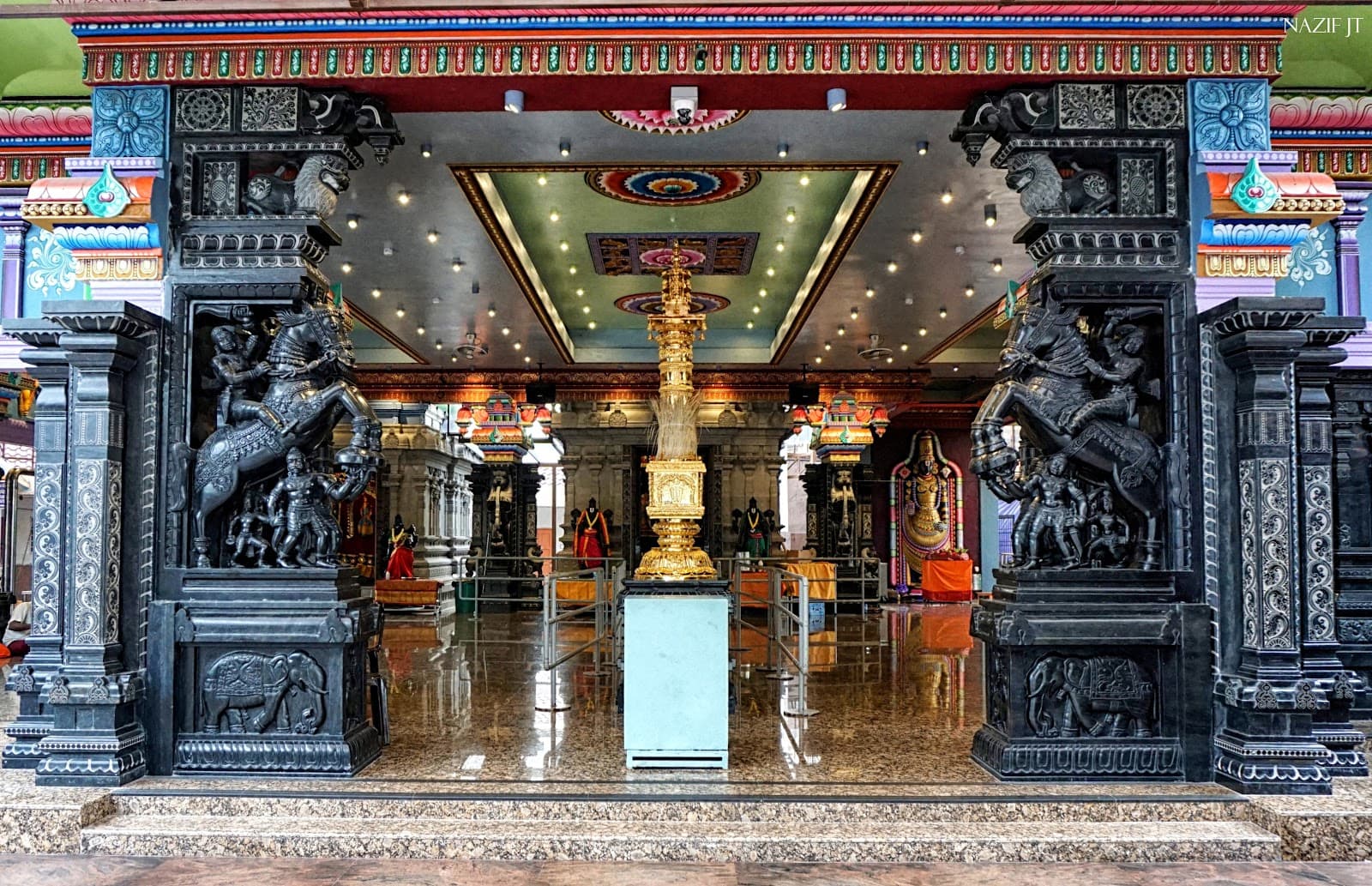
Sri Sundararaja Perumal Temple Klang Selangor
The Sri Sundararaja Perumal Temple, located in Klang, Selangor, Malaysia, stands as a profound testament to India's millennia-spanning cultural heritage and the enduring continuity of Indian civilization across geographical boundaries [1] [3]. Dedicated to Lord Vishnu in his form as Perumal, this sacred site serves as a vital center for Vaishnavite worship, often revered as the 'Thirupathi of South East Asia' [1] [2]. The temple exemplifies the indigenous Dravida architectural style, characterized by its intricate carvings and monumental structures, reflecting a continuous tradition of temple building that dates back thousands of years in the Indian subcontinent [1] . The entire structure is notably constructed from granite, a material chosen for its durability and majestic appearance, a hallmark of traditional South Indian temple construction techniques [1] [3]. The architectural ensemble is dominated by a towering gopuram, the entrance tower, which is richly adorned with a multitude of sculptures depicting Hindu deities, mythological narratives, and celestial beings [1] [3]. These detailed carvings are not merely decorative but serve as visual narratives of Hindu epics such as the Ramayana and Mahabharata, embodying the deep iconographic traditions of Indian art [5]. The main sanctum, known as the Perumal Sannathi, houses the principal deity, Lord Perumal, alongside his consort, Goddess Mahalakshmi [2] [3]. Surrounding this central complex are several other notable shrines, including those dedicated to Lord Shiva, Parvati, Ganesha, Murugan, Ayyappan, Lord Saneshwara (Saturn), and the Navagrahas (nine planets) [2] [3]. An additional Anjaneya Sannathi is situated adjacent to the central complex, with a Nagaraja Sannathi located at the corner outside the temple structure [2]. The spatial arrangement of these shrines within the temple complex follows traditional Agama Shastra principles, ensuring proper devotional flow and ritualistic practices [5]. The temple's current state reflects a significant reconstruction completed in 2015, which modernized facilities while meticulously preserving its traditional South Indian Dravidian architectural integrity [1] [2]. This reconstruction effort underscores a commitment to maintaining the site's heritage while accommodating its active role as a spiritual and cultural hub [1]. The temple is recognized as a National Heritage Site since 2012, acknowledging its profound cultural and historical significance [4]. It actively hosts daily rituals and ceremonies, attracting a continuous flow of devotees and visitors [1]. Major Hindu festivals such as Purataasi Month, Vaikunta Ekadasi, Panguni Uthiram, and Thiruvadirai are celebrated with grand ceremonies, music, and dance, drawing thousands and ensuring the vibrant continuity of Indian cultural practices [1] [5]. The temple is operationally ready, with established visiting hours and accessibility for all visitors, serving as a living monument to India's enduring spiritual and artistic legacy [1].
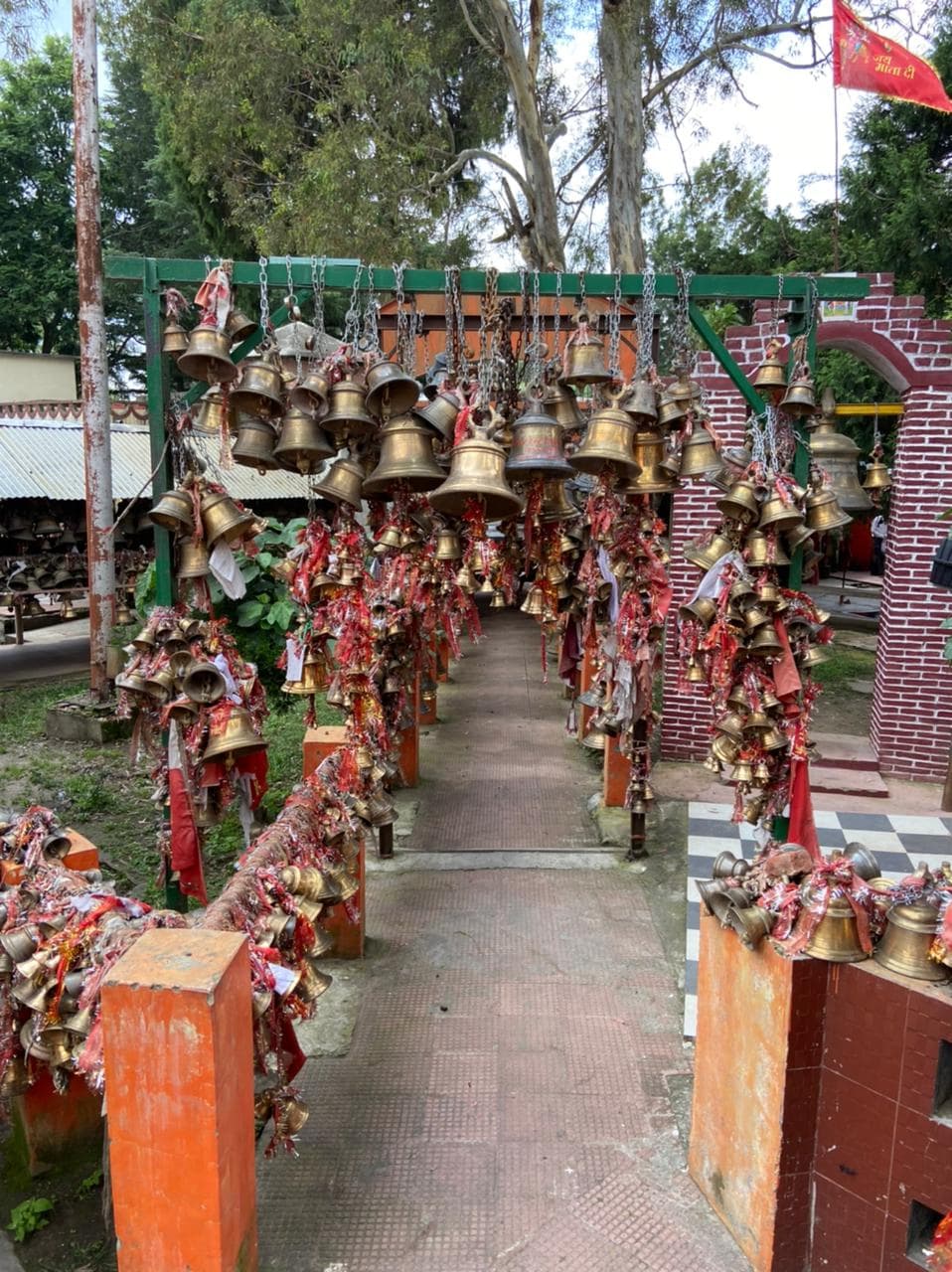
Chitai Golu Devta Temple Almora
Nestled in the tranquil hills of Almora, Uttarakhand, the Chitai Golu Devta Temple presents a unique blend of faith and architectural simplicity, primarily expressed through the countless bells offered by devotees ([1]). Unlike traditional Nagara architecture, typically characterized by elaborate Shikhara (spire), this 20th-century temple exhibits a more modest aesthetic, allowing the votive bells to take precedence ([2]). The temple is dedicated to Golu Devta, a revered deity considered an incarnation of Lord Shiva and worshipped as the dispenser of justice ([3]). Stone platforms and foundations mark the temple's enduring presence, with the courtyard serving as a vibrant hub of activity ([4]). Here, devotees present their prayers, attach bells, and pen letters, their expressions reflecting profound hope and reverence ([5]). The act of tying bells is a symbolic gesture, representing answered prayers and a tangible connection with the divine ([1][2]). This practice resonates with the broader Hindu tradition of offering symbolic objects to deities as a form of supplication and gratitude. Intricate carvings adorn the walls of the main shrine, which houses the deity, while the surrounding structure features sloping slate roofs and whitewashed walls, characteristic of regional architecture ([4]). The temple's architectural style, while not strictly adhering to classical Nagara principles outlined in texts like the *Manasara Shilpa Shastra*, reflects a vernacular adaptation, emphasizing local materials and construction techniques ([5]). The temple's modest design ensures the focus remains on the thousands of bells, creating a striking visual and auditory spectacle, a symphony of faith echoing through the Himalayan landscape ([1][3]). Letters affixed to the temple walls represent whispered pleas and heartfelt prayers, underscoring the deep bond between devotees and the deity ([3]). During the British Colonial Period, temple architecture in India often saw a fusion of traditional styles with contemporary influences, though the Chitai Golu Devta Temple largely retains its regional character ([2]). The convergence of faith and architectural modesty creates an atmosphere that resonates with the enduring power of belief ([1][2]).
Quick Links
Plan Your Heritage Journey
Get personalized recommendations and detailed visitor guides