Has Inheritage Foundation supported you today?
Your contribution helps preserve India's ancient temples, languages, and cultural heritage. Every rupee makes a difference.
Secure payment • Instant 80G certificate
Bidar Fort Bidar
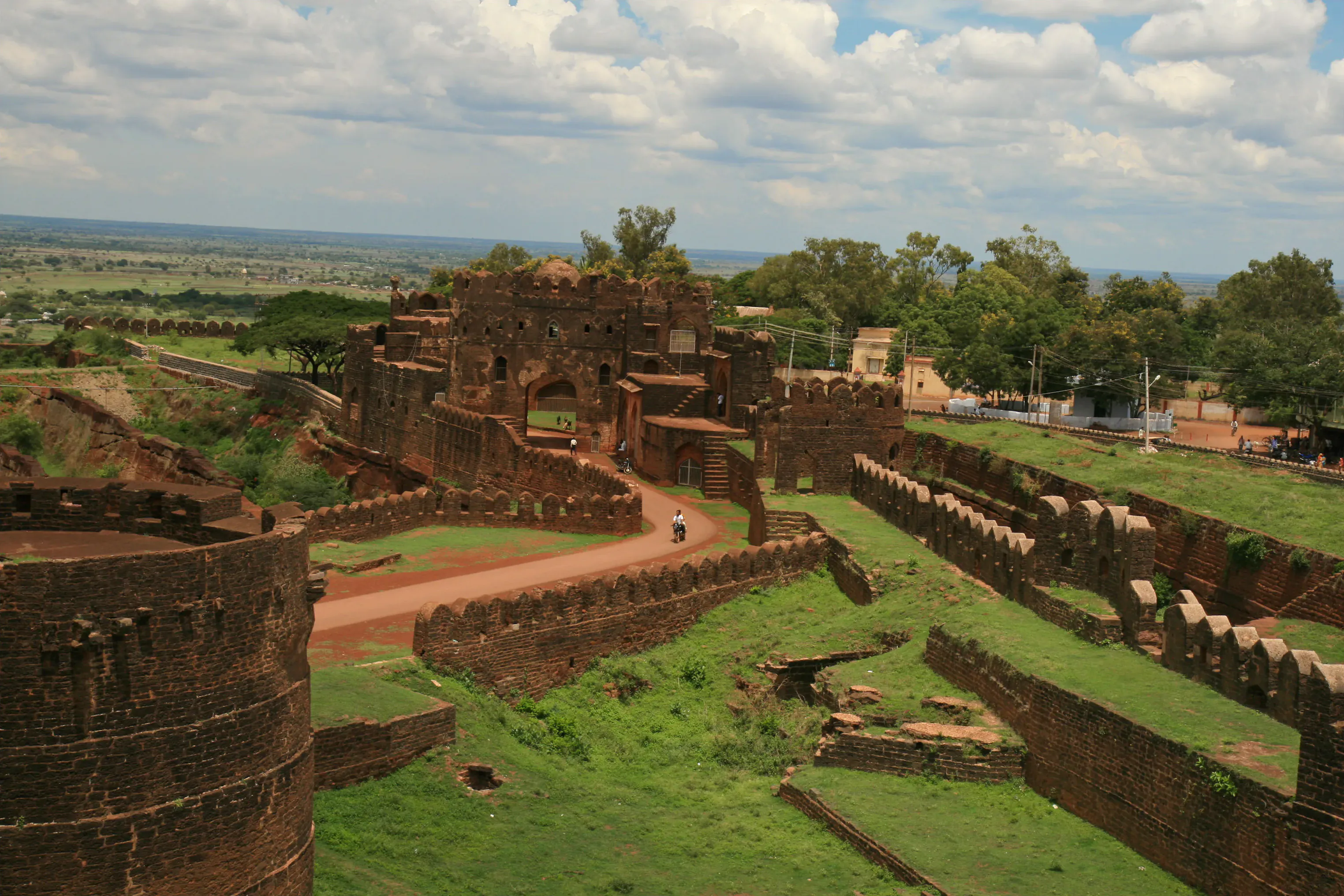
Emerging from the Deccan plateau, the imposing laterite walls of Bidar Fort embody a fusion of Indo-Islamic architectural styles ([1]). Constructed in 1428 CE by Bahamani Sultan Ahmad Shah I, during the Vijayanagara Period, the fort reflects the grandeur of the Bahamani Sultanate ([2][3]). Its design integrates Persian, Turkish, and Indian elements, evident in its arches, domes and garden layouts ([4]). Stepping through the Gumbad Darwaza, the fort reveals its robust military architecture. Remnants of intricate tilework, featuring vibrant blue and turquoise hues, offer glimpses into its past splendor ([5]). Within the Rangin Mahal, or Painted Palace, faded frescoes on the walls evoke a sense of regal elegance. From the Takht Mahal, the throne room, panoramic views symbolize the Sultan's authority ([1]). Sophisticated water management systems, exemplified by the Karez, ensured a constant water supply within the fort ([2][3]). Furthermore, the fort houses impressive cannons, including the Malik-e-Maidan, reflecting its turbulent history ([4][5]). Laterite stone, limestone, black trap, and red sandstone were the primary materials utilized in its construction ([6]). Such materials, sourced locally, underscore the architectural ingenuity of the era. The integration of Persian gardens showcases a synthesis of cultural influences, blending aesthetic beauty with functional design ([7]). The fort's design principles extend from ancient Indian traditions to Persian artistry ([1][2]). Bidar Fort stands as a testament to the Deccan region's architectural prowess and cultural synthesis, showcasing a unique blend of indigenous and foreign influences ([8]).
Shree Ayyappa Seva Sangam Temple Durban
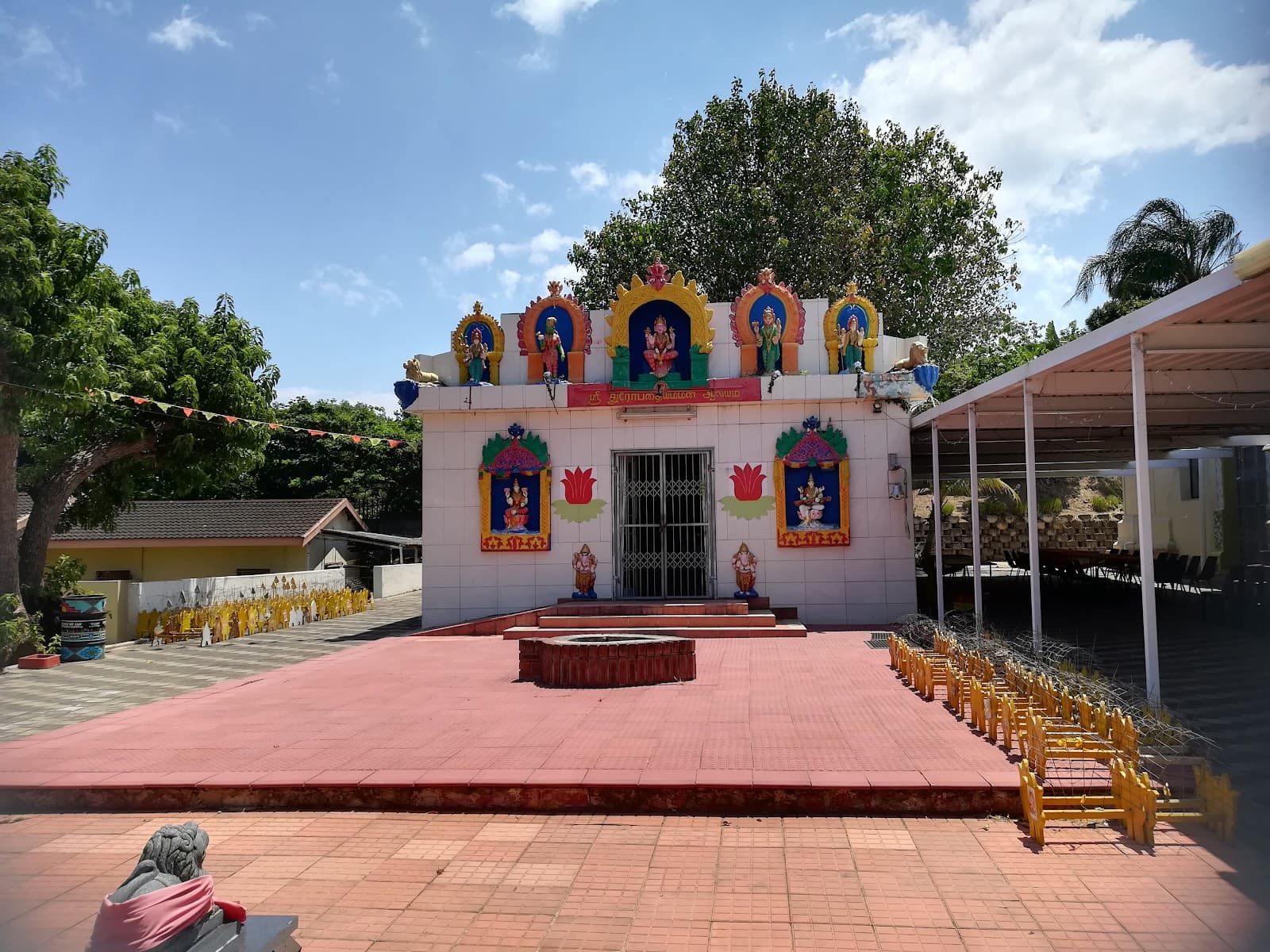
The Shree Ayyappa Seva Sangam Temple, located at 359 Langton Road, Montclair, Durban, KwaZulu-Natal, South Africa, stands as a profound testament to India's millennia-spanning cultural heritage and the continuous tradition of Indic civilization [1] [2]. Dedicated to Lord Ayyappa, a revered deity primarily worshipped in South India, particularly Kerala, this temple embodies ancient indigenous architectural styles, materials, and cultural practices that reflect India's deep historical roots [3] [4]. The temple's design integrates elements of both Kerala Temple architecture and Dravida architecture, showcasing a synthesis of South Indian temple building traditions [1] [5]. Kerala temple architecture, characterized by its unique religious sanctuary design, often features circular or square ground plans, steeply sloping roofs covered with copper sheets or terracotta tiles, and extensive use of timber [5] [2]. These architectural choices are historically adapted to the region's heavy rainfall and tropical climate, emphasizing functionality alongside aesthetic and spiritual principles [2]. The structural elements typically involve a granite plinth (adhisthana), laterite walls, and a superstructure predominantly crafted from wood, adhering to canonical rules of proportionate systems detailed in ancient treatises [5] [4]. The Shree Ayyappa Seva Sangam Temple incorporates these principles, utilizing locally available materials while maintaining the traditional forms [1]. The temple complex is designed according to the Hindu practices of 'Vaastu Shastra' and 'Agama Shastra', ensuring auspicious orientation, spatial harmony, and ritualistic correctness [1]. This adherence to ancient texts underscores the continuity of architectural knowledge passed down through generations [5]. Dravida architectural influences are evident in the temple's overall layout and decorative motifs, which often include intricate carvings and sculptures [3]. While Kerala temples typically feature simpler exteriors, the broader South Indian temple style, from which Dravida architecture evolved, is known for its elaborate gopurams (entrance towers), vimanas (superstructures over the sanctum), and mandapas (pillared halls) [3]. Though the Durban temple may not possess the monumental scale of ancient Dravidian complexes, its design principles and decorative elements draw from this rich tradition, manifesting in detailed iconography and sacred geometry [1]. The temple's sanctum (sreekovil) houses the main deity, Lord Ayyappa, and is surrounded by a circumambulatory path (pradakshina-patha), facilitating traditional devotional practices [3]. The current state of the temple reflects ongoing maintenance and active programming, serving as a vital spiritual and cultural hub for the Malayali and Tamil diaspora in Durban [2]. It offers regular pujas, festivals, and cultural education, ensuring the preservation and transmission of Indic traditions [2]. The site is fully operational and accessible to devotees and visitors, upholding its role as a living heritage site [1].
Sita Kund Munger
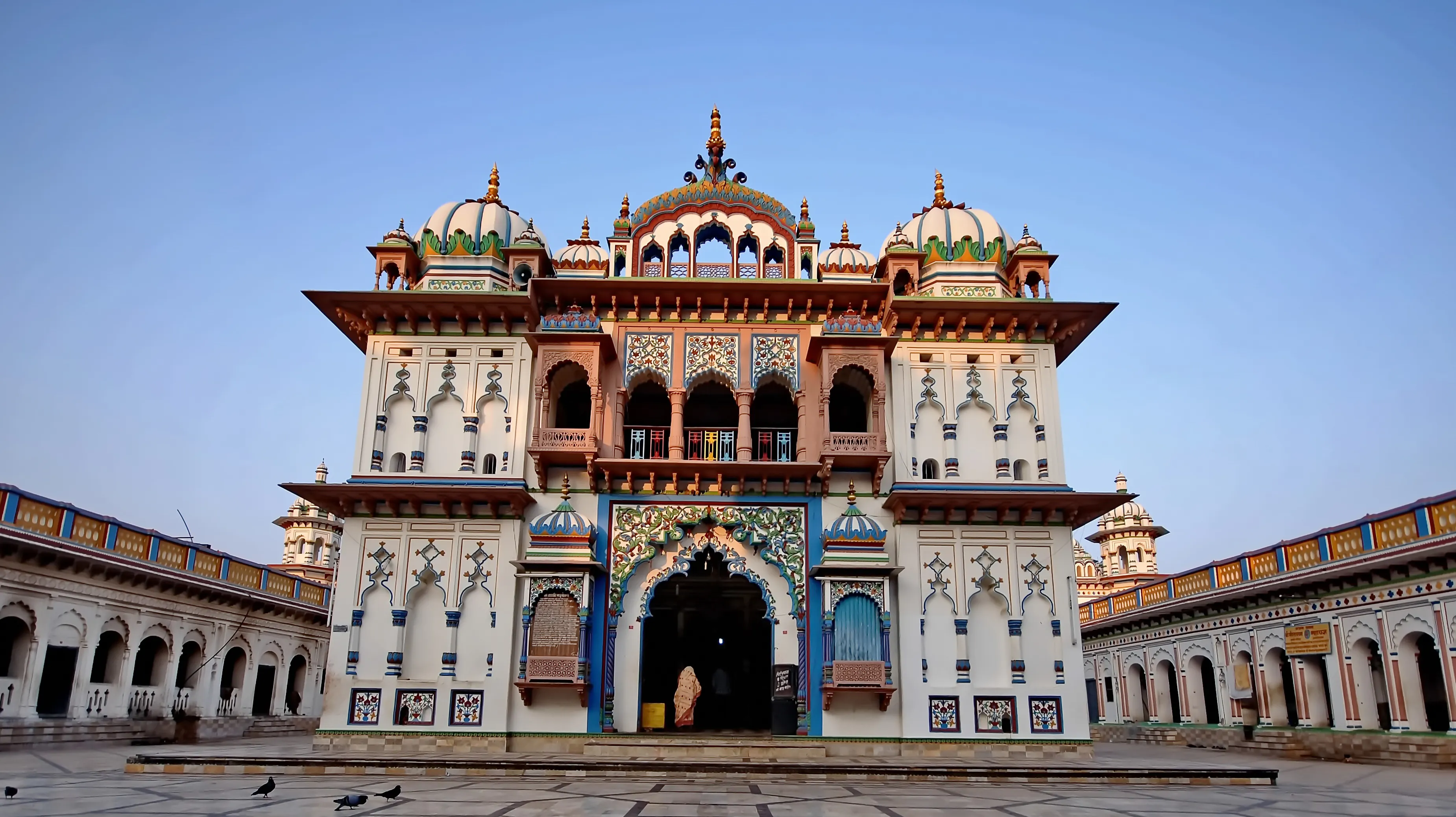
The midday sun beat down on Munger, casting long shadows that danced across the ancient stones of Sita Kund. Having explored the labyrinthine caves and soaring temples of Maharashtra, I arrived at this Bihar pilgrimage site with a sense of anticipation, eager to experience a different flavour of sacred India. Sita Kund, nestled amidst the bustling city, is a compact temple complex radiating a quiet, unassuming spirituality. It doesn't boast the grandeur of Ellora or the intricate carvings of Ajanta, but its simplicity holds a unique charm. The main attraction, the Kund itself, is a rectangular water tank enclosed within a modest structure. The water, believed to be sacred, is surprisingly clear despite the constant flow of devotees taking a holy dip. Local legend claims Sita, the exiled queen from the epic Ramayana, bathed here, lending the site its name and sanctity. While I couldn't verify the mythological claims, the palpable reverence of the pilgrims was undeniable. Women in vibrant sarees offered prayers, the scent of incense mingling with the humid air, creating an atmosphere thick with devotion. The architecture of the temple surrounding the Kund is a blend of simple practicality and subtle artistry. Unlike the elaborate rock-cut marvels I'm accustomed to in Maharashtra, Sita Kund showcases a more straightforward brick and mortar construction. The walls are adorned with faded frescoes depicting scenes from the Ramayana, their muted colours whispering tales of ancient devotion. While time and weather have taken their toll, these remnants offer glimpses into the artistic sensibilities of a bygone era. I noticed the recurring motif of the lotus flower, a symbol of purity and divinity, subtly incorporated into the pillars and archways. The architectural style, while not overtly ornate, reflects a quiet elegance, a testament to the enduring power of faith. Climbing the narrow staircase to the rooftop offered a panoramic view of Munger. The sprawling cityscape contrasted sharply with the serene atmosphere of the Kund below. From this vantage point, I could appreciate the temple's strategic location, a spiritual oasis amidst the urban hustle. The rooftop also houses a small shrine dedicated to Lord Rama, Sita's husband. The simple idol, adorned with fresh flowers, seemed to gaze serenely over the city, a silent guardian of its inhabitants. What struck me most about Sita Kund wasn't its architectural magnificence or historical significance, but the genuine devotion of the people. I witnessed families sharing quiet moments of prayer, elderly women chanting mantras with closed eyes, and young children offering flowers with innocent enthusiasm. This unpretentious display of faith, devoid of any ostentation, was deeply moving. It reminded me that spirituality isn't confined to grand temples and elaborate rituals; it can be found in the simplest of acts, in the quiet corners of a bustling city. As I left Sita Kund, the chants of the devotees still resonated in my ears. The experience was a refreshing departure from the grandeur I'm used to in Maharashtra's caves and temples. It was a reminder that the essence of faith lies not in the size or splendor of a structure, but in the sincerity of the hearts that seek solace within its walls. Sita Kund, in its unassuming simplicity, offers a powerful testament to the enduring human need for connection with the divine. It's a place where mythology and reality intertwine, where the whispers of ancient legends blend with the fervent prayers of modern devotees, creating a tapestry of faith that transcends time.
Jal Mandir Pawapuri
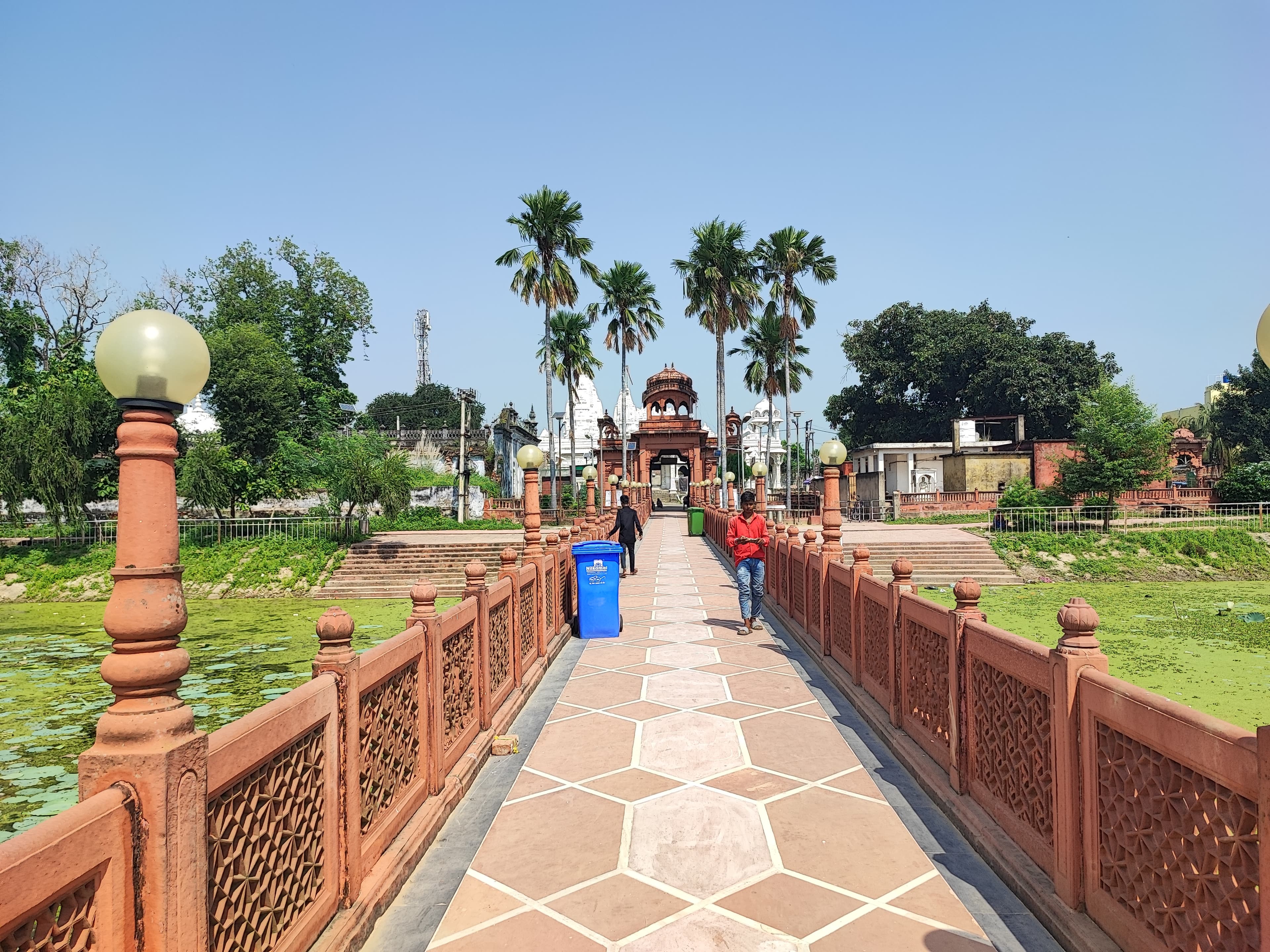
The midday sun beat down on Pawapuri, the heat shimmering off the vast, placid tank. But the air held a palpable stillness, a sense of reverence that seemed to emanate from the heart of the tank itself – the Jal Mandir, a marble marvel floating serenely on its lotus-shaped pedestal. Having crisscrossed North India, documenting countless temples, I thought I was immune to architectural surprises. Pawapuri, however, proved me wrong. The approach to the Jal Mandir is a pilgrimage in itself. Barefoot, I walked the long, red sandstone bridge that stretches across the tank, the water reflecting the cloudless sky like a giant mirror. With each step, the temple grew larger, its pristine white marble a stark contrast against the azure backdrop. The bridge, I learned, represents the final path of Lord Mahavira, the 24th Tirthankara of Jainism, who attained Moksha (liberation) at this very spot. That knowledge imbued the walk with a profound sense of significance. Reaching the temple, I was immediately struck by its delicate beauty. Unlike the towering, ornate structures I’d encountered elsewhere, the Jal Mandir exuded a quiet elegance. Built entirely of white marble, it is a relatively small structure, a single-storied pavilion with a pyramidal shikhara. The shikhara, however, is not the typical North Indian style I’m accustomed to. It’s more reminiscent of the curvilinear towers of Odisha, lending the temple a unique architectural identity. Intricate carvings of lotus flowers, elephants, and celestial beings adorn the marble surface, each detail meticulously crafted. Inside the sanctum, a serene statue of Lord Mahavira sits in meditative posture. The atmosphere within is hushed, punctuated only by the soft chanting of devotees. Sunlight filters through the latticed marble screens, casting dappled patterns on the floor. It’s a space that invites contemplation, a sanctuary from the outside world. Circumambulating the temple, I noticed the four small shrines located at each corner of the platform. These are dedicated to the other Tirthankaras who also attained Moksha at Pawapuri. The platform itself is surrounded by a marble balustrade, offering uninterrupted views of the surrounding tank. Schools of fish darted beneath the surface, adding a touch of life to the tranquil scene. Beyond the immediate vicinity of the Jal Mandir, the tank is fringed by other temples and dharamshalas. The entire complex is meticulously maintained, a testament to the devotion of the Jain community. I spent hours wandering the grounds, absorbing the peaceful atmosphere and observing the rituals of the pilgrims. Many were performing the Parikrama, the circumambulation of the tank, their faces etched with devotion. What struck me most about Pawapuri was the palpable sense of peace that permeated the air. It wasn't just the quietude of the location, but something deeper, a spiritual resonance that seemed to emanate from the very ground itself. Perhaps it was the knowledge that this was the place where Lord Mahavira achieved liberation, or perhaps it was the collective devotion of the pilgrims who flocked to this sacred site. Whatever the reason, Pawapuri left an indelible mark on me. As I left the temple complex, the setting sun cast a golden glow over the Jal Mandir, transforming the white marble into a shimmering beacon of peace. It was a sight I won’t soon forget, a reminder of the profound spirituality that can be found in the most unexpected corners of India. My journey through North India has taken me to countless temples, each with its own unique story to tell. But Pawapuri, with its serene Jal Mandir and its palpable sense of peace, holds a special place in my heart. It is a place where architecture, nature, and spirituality converge to create an experience that is both humbling and deeply moving.
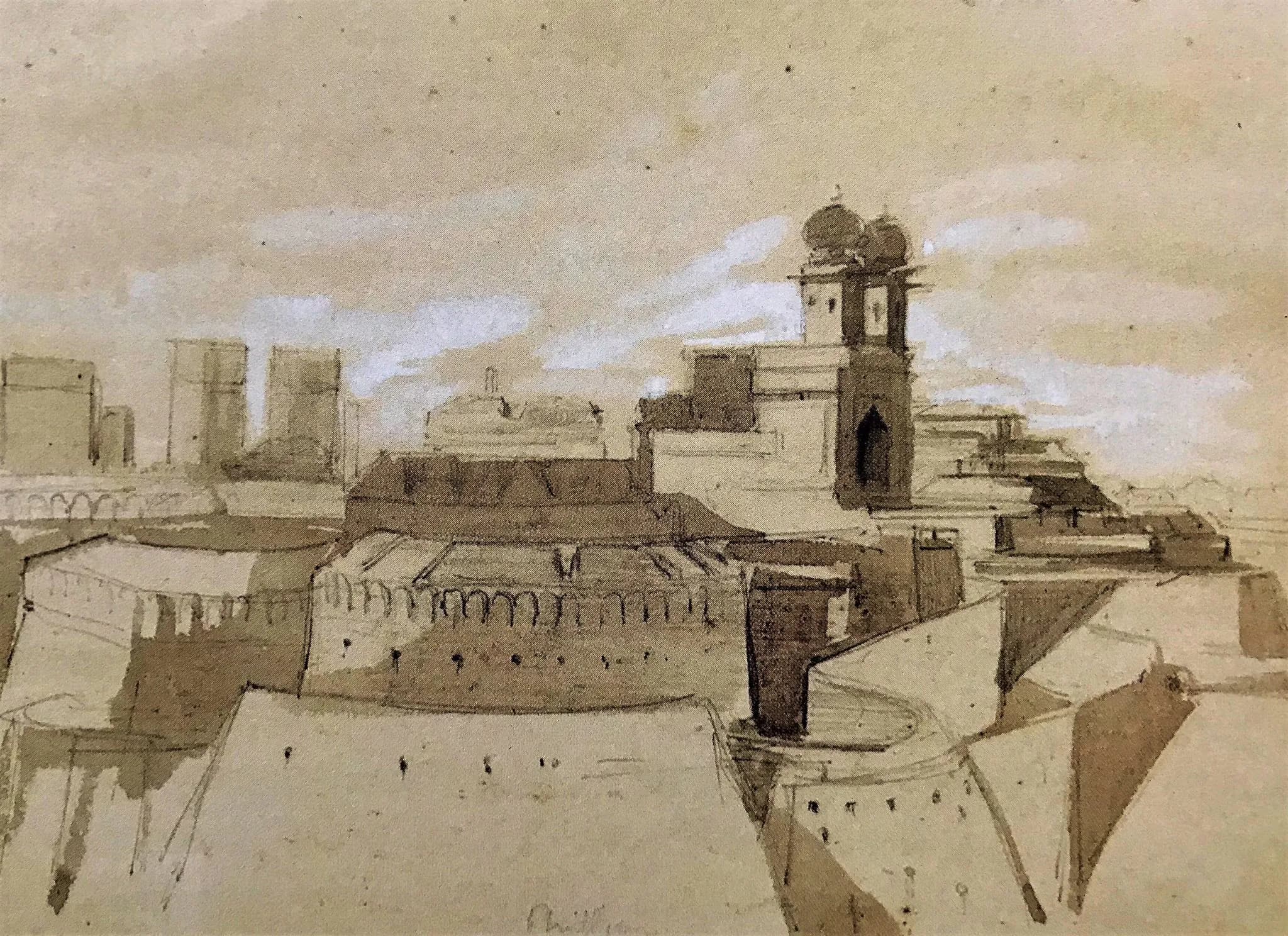
Phillaur Fort Jalandhar
The midday sun cast long shadows across the ochre walls of Phillaur Fort, baking the brickwork that had stood sentinel over the Sutlej River for centuries. Arriving from Madhya Pradesh, accustomed to the sandstone hues of our own ancient structures, the burnt orange of this Mughal-era fort struck me immediately. It wasn't the imposing grandeur of Gwalior or the intricate carvings of Khajuraho, but Phillaur possessed a quiet dignity, a subtle beauty born of its strategic location and layered history. The fort, now a heritage hotel, sits on the Grand Trunk Road, a testament to its historical importance as a crossroads of empires. As I stepped through the imposing gateway, the cacophony of the bustling highway faded, replaced by the gentle murmur of the river and the rustling of leaves in the courtyard trees. The transition was stark, a palpable shift from the present to the past. My camera, a constant companion, felt almost inadequate to capture the essence of the place. The main structure, a double-storied edifice, displayed a blend of Mughal and Sikh architectural influences. Rounded bastions, typical of Mughal military architecture, punctuated the fort's perimeter, while the decorative elements, particularly the delicate frescoes peeking from beneath layers of whitewash, hinted at later Sikh additions. I spent hours documenting these remnants, the faded floral patterns and depictions of warriors, each a whisper of the fort's rich past. The central courtyard, now a manicured lawn, was once a bustling hub of activity. I could almost envision the Mughal soldiers drilling, the horses being groomed, and the echoes of courtly life resonating within these walls. A small museum within the fort housed a collection of artifacts unearthed during restoration work – coins, pottery shards, and weaponry – tangible links to the people who once inhabited this space. Holding a corroded Mughal coin in my hand, I felt a tangible connection to that era, a sense of awe at the weight of history it represented. Climbing the narrow, winding staircase to the upper levels, I was rewarded with panoramic views of the surrounding landscape. The Sutlej River snaked its way through the plains, a silvery ribbon reflecting the bright sky. It was easy to understand why this location was so strategically important, commanding control over the river and the vital trade routes it supported. The wind whipped through the open arches, carrying with it the whispers of centuries past. One of the most captivating aspects of Phillaur Fort was its layered history. Originally built by Mughal Emperor Shah Jahan in the 17th century, it later fell into the hands of the Sikh ruler Maharaja Ranjit Singh, who further fortified and embellished it. This transition of power was reflected in the architecture itself, a fascinating palimpsest of styles. The Sikh additions, while respecting the original Mughal structure, added their own distinct flavor, creating a unique blend that spoke volumes about the region's complex past. As the sun began to dip below the horizon, casting long shadows across the courtyard, I felt a sense of melancholy wash over me. Leaving Phillaur Fort felt like saying goodbye to an old friend. It wasn't just a collection of bricks and mortar; it was a repository of stories, a testament to the ebb and flow of empires, and a poignant reminder of the passage of time. My photographs, I hoped, would capture not just the physical beauty of the fort, but also the intangible spirit of the place, the echoes of history that resonated within its ancient walls.
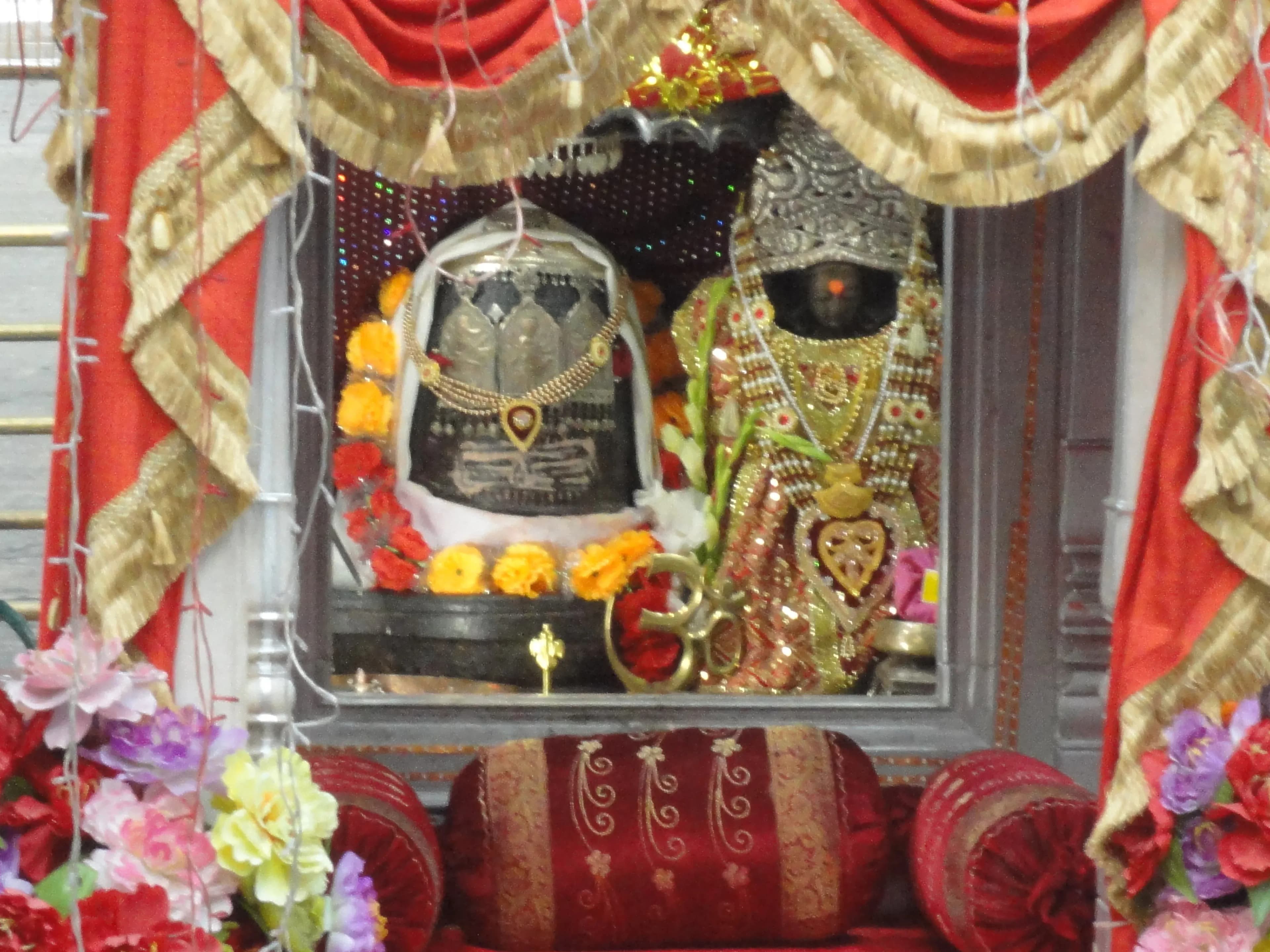
Kheer Bhawani Temple Tulmul
The air, crisp and carrying the scent of pine, vibrated with a quiet reverence as I stepped into the courtyard of the Kheer Bhawani temple in Tulmul. Nestled amidst chinar trees that seemed to touch the sky, the temple, dedicated to the goddess Ragnya Devi, exuded an aura of tranquility unlike any I'd encountered in my travels across India's UNESCO sites. This wasn't the grandeur of the Ajanta caves or the imposing scale of the Red Fort; this was something subtler, a peace that resonated deep within. The temple itself is a relatively small structure, an octagonal spring within a rectangular walled compound. The spring, the heart of the temple, is where the goddess resides. Its waters, famously known to change colour, were a milky emerald green on the day of my visit, a hue locals told me signified prosperity and peace. I watched as devotees, primarily Kashmiri Pandits, offered milk and kheer (rice pudding) to the sacred spring, their faces etched with devotion. The surface of the water, dotted with floating flower petals and flickering diyas, shimmered in the dappled sunlight filtering through the chinar leaves. The simplicity of the temple's architecture is striking. Unlike the ornate carvings and intricate details found in many South Indian temples I've documented, Kheer Bhawani is defined by its understated elegance. The spring is enclosed by a low stone wall, and the surrounding courtyard is paved with smooth stones. A small, unassuming shrine stands near the spring, its walls adorned with simple, colourful depictions of deities. This lack of ostentation, however, only amplifies the spiritual significance of the site. It's as if the natural beauty of the surrounding landscape and the palpable devotion of the pilgrims are the true ornamentation of this sacred space. I spent hours observing the rituals, captivated by the interplay of faith and nature. The chinar trees, their leaves rustling in the breeze, seemed to whisper ancient stories. The spring, reflecting the sky and the surrounding greenery, felt like a portal to another realm. I spoke with several devotees, their stories adding layers of meaning to my experience. One elderly woman, her eyes filled with a lifetime of devotion, recounted how her family had been making the pilgrimage to Kheer Bhawani for generations, their faith unwavering through times of both peace and turmoil. A young man, visiting the temple for the first time, spoke of the sense of connection he felt to his heritage and the profound peace he found in the temple's serene atmosphere. Beyond the immediate confines of the temple, the surrounding landscape adds to the site's allure. The snow-capped Himalayas, visible in the distance, provide a breathtaking backdrop. The village of Tulmul itself, with its traditional Kashmiri houses and warm hospitality, offers a glimpse into the local culture. I took a walk through the village, interacting with the locals, savouring the delicious Kashmiri cuisine, and absorbing the unique atmosphere of this region. My visit to Kheer Bhawani was more than just another stop on my journey through India's UNESCO sites. It was an immersion into a living tradition, a testament to the enduring power of faith. It was a reminder that sometimes, the most profound spiritual experiences are found not in grand monuments, but in quiet corners of the world, where nature and devotion intertwine to create a space of unparalleled serenity. The changing colours of the spring, the rustling chinar leaves, the whispered prayers of the devotees – these are the memories I carry with me from Kheer Bhawani, a testament to the enduring power of faith and the beauty of Kashmir's cultural heritage.
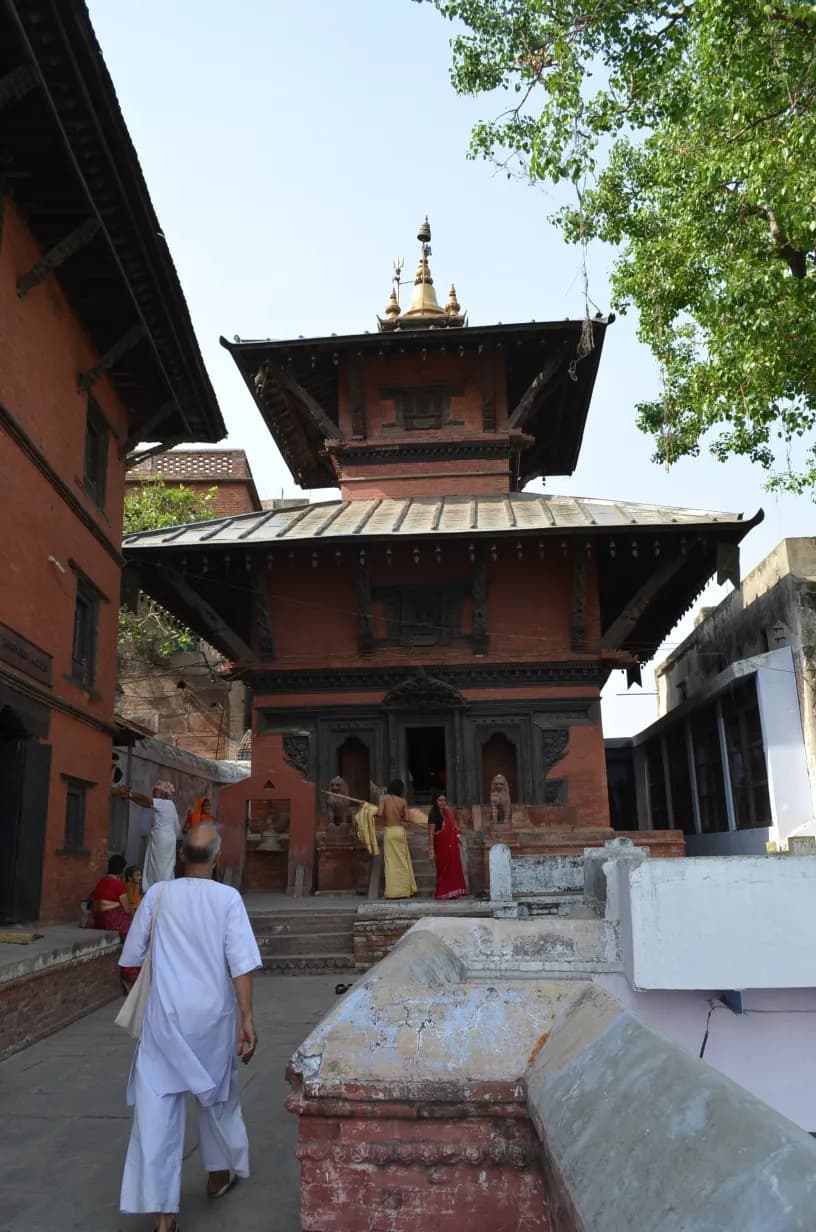
Nepali Mandir Kohima
The Nepali Mandir, located on P.R. Hill in Kohima, Nagaland, stands as a significant Hindu temple dedicated to various deities, embodying a continuous tradition of Indian civilization that spans millennia. This sacred site, though formally established in the 20th century, draws upon ancient indigenous architectural styles and cultural practices, reflecting India's deep historical roots and enduring spiritual legacy [1]. The temple primarily showcases the Nepali Pagoda architecture style, characterized by its multi-tiered roofs and timber-framed construction, a style that has historically interacted with and influenced Indian architectural traditions [4] [5]. Additionally, elements of the Nagara architecture style, prevalent in Northern, Central, Western, and Eastern India, including the northeastern states, are subtly integrated, demonstrating a blend of regional influences within a broader Indian architectural continuum . The structure is predominantly crafted from wood, a material central to vernacular architecture in the Himalayan region, allowing for intricate carvings and detailed sculptural work [3]. These wooden elements contribute to the temple's distinctive aesthetic, with sculptures that have been noted for their resemblance to those found in the Khajuraho Group of Monuments, highlighting a shared artistic vocabulary within Indian temple art [3]. The temple's design incorporates pitched roofs, a characteristic feature of the Nepali Pagoda style, which are both aesthetically pleasing and functionally adapted to the local climate [2]. The intricate architecture and serene atmosphere provide a spiritual haven for devotees and visitors alike, fostering a sense of peace and reflection [1]. Beautifully carved idols and vibrant offerings adorn the temple, reflecting the profound devotion of the local community and the continuity of Hindu spiritual practices [1]. While specific dimensions are not widely documented, the temple's construction techniques emphasize traditional craftsmanship, utilizing timber framing for structural integrity [2]. The site is recognized as a National Heritage Site, underscoring its cultural importance within India [2]. Conservation efforts are ongoing, though detailed information on specific restoration projects or archaeological findings at this particular site is limited in public records [2]. The temple remains an active place of worship, with regular rituals and community engagement, ensuring its operational readiness and continued role as a vibrant cultural anchor in Kohima [1]. Visitors are encouraged to engage with local temple caretakers to gain deeper insights into the rituals and historical significance of the temple, further connecting with the rich cultural tapestry of Nagaland [1].
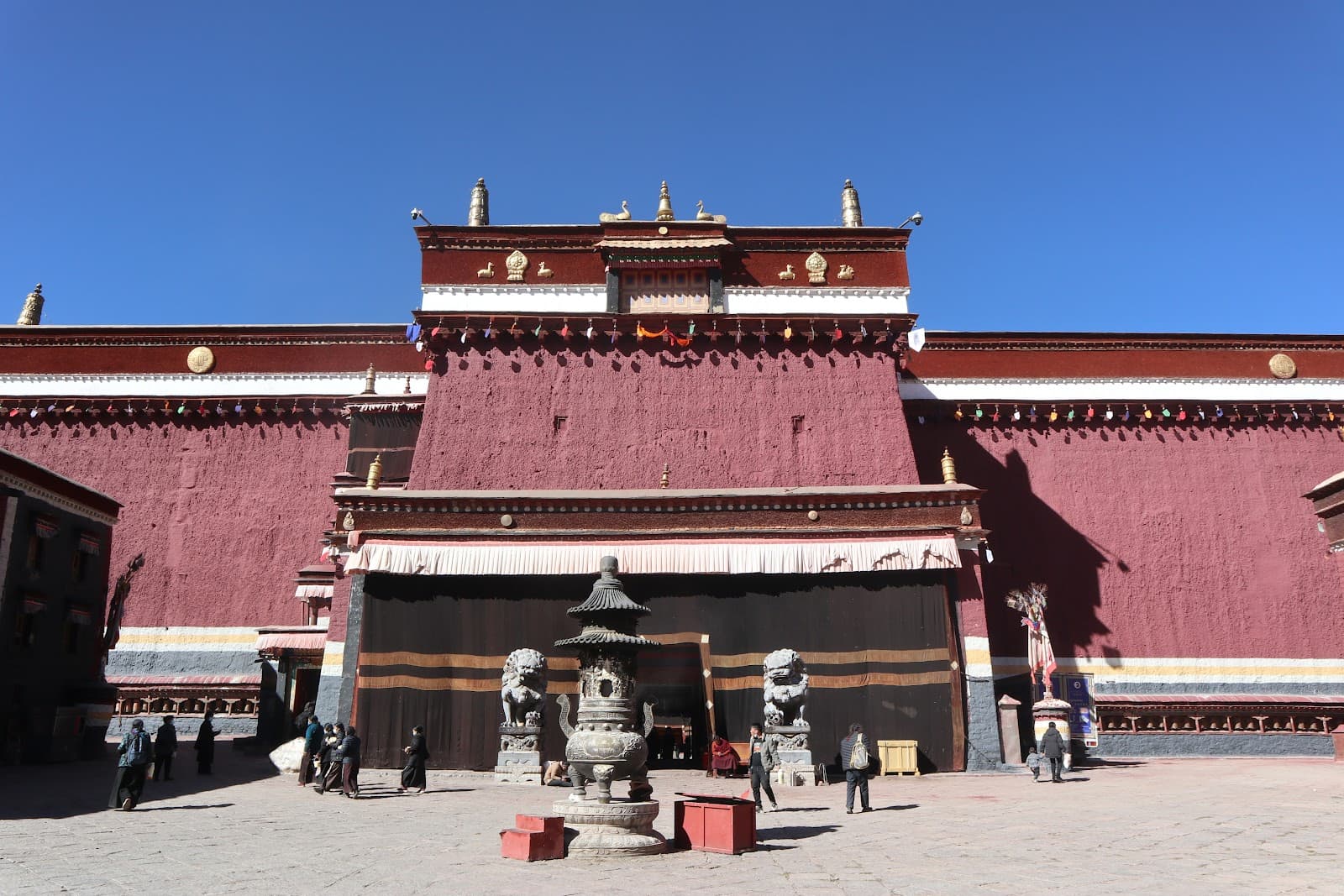
Sakya Monastery Shigatse Tibet
Sakya Monastery, located in Sakya County, Shigatse, Tibet, represents one of the most important monasteries in Tibet and stands as a major center for the Sakya school of Tibetan Buddhism, constructed in the 11th century CE and housing one of the most extensive collections of Indian Buddhist texts and manuscripts in Tibet, demonstrating the profound transmission of Indian Buddhist learning traditions to Tibet, which has maintained deep cultural, religious, and historical connections with India for over two millennia. The monastery complex, constructed primarily from stone, wood, and earth with extensive decorative elements, features a massive structure containing numerous temples, chapels, assembly halls, and an extensive library that houses thousands of Indian Buddhist manuscripts and texts brought from Nalanda and other Indian Buddhist learning centers, making it one of the most important repositories of Indian Buddhist knowledge in Tibet. The monastery’s architectural design demonstrates direct influence from Indian Buddhist monastery architecture, particularly the Nalanda model, with the overall plan and library facilities reflecting traditions that were transmitted to Tibet through centuries of cultural exchange, while the extensive collection of Indian Buddhist texts demonstrates the active transmission of Indian Buddhist scholarship to Tibet. Archaeological and historical evidence indicates the monastery was constructed by the Khon family, who maintained strong connections with Indian Buddhist learning centers including Nalanda, importing Indian Buddhist texts, scholars, and architectural knowledge to Tibet. The monastery has served as a major center for Tibetan Buddhist learning and practice for over nine centuries, maintaining strong connections to Indian Buddhist traditions through the study and preservation of Indian Buddhist texts, philosophy, and practices. The monastery has undergone multiple expansions and renovations over the centuries, with significant additions conducted to accommodate growing collections of Indian Buddhist texts and expanding educational programs. Today, Sakya Monastery continues to serve as an important place of Buddhist worship and learning in Tibet, demonstrating the enduring influence of Indian Buddhist traditions on Tibetan culture and serving as a powerful symbol of Tibet’s deep connections to Indian civilization through the preservation and study of Indian Buddhist knowledge. ([1][2])
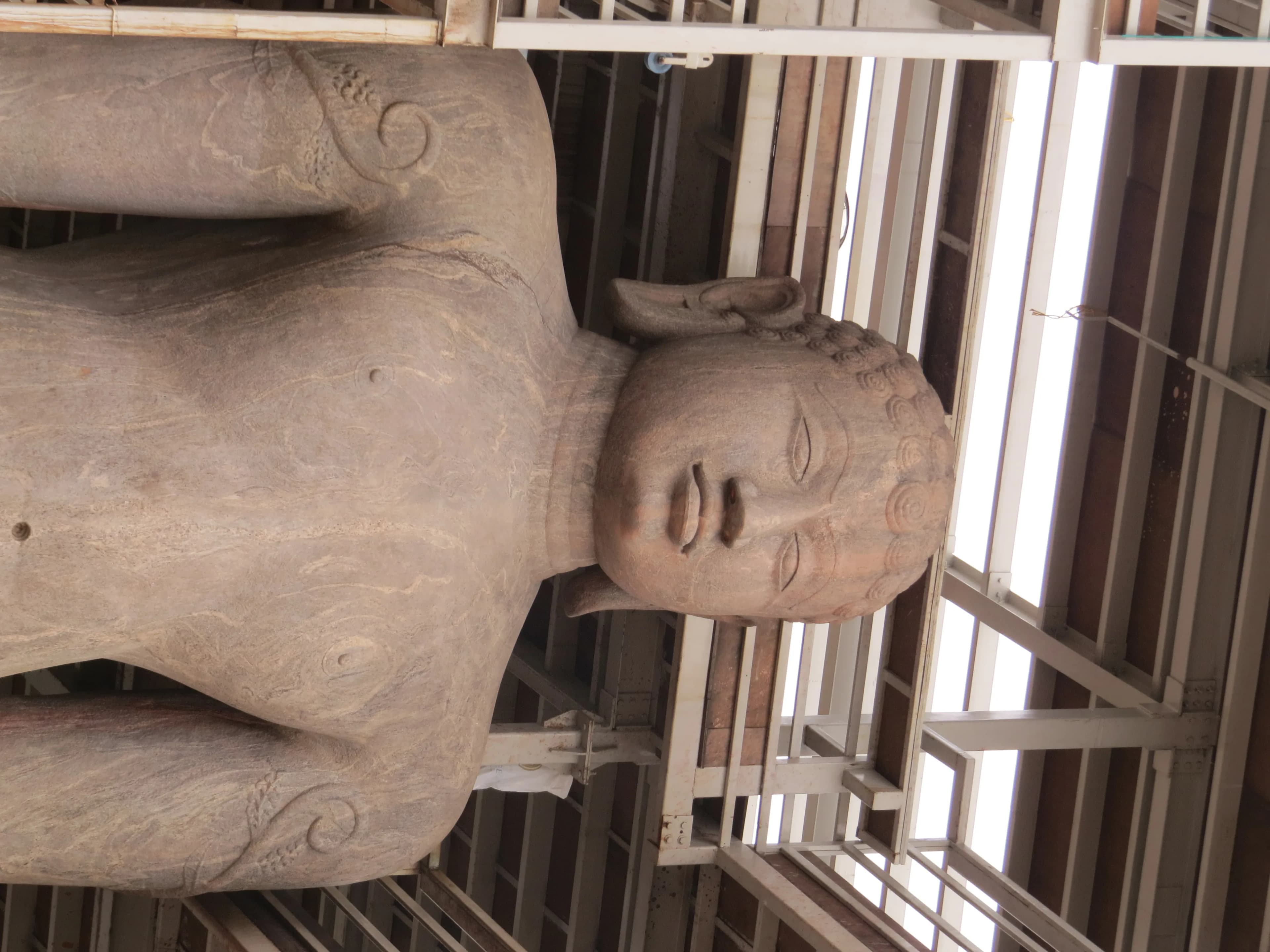
Gomateshwara Statue Shravanabelagola
The midday sun beat down on my neck, a stark contrast to the cool, shaded groves I’d grown accustomed to in the Himalayas. Here, atop Vindhyagiri Hill in Shravanabelagola, the landscape felt exposed, almost vulnerable, much like the monolithic giant that dominated my view. The Gomateshwara statue, a 57-foot-tall testament to Jain asceticism, rose before me, an awe-inspiring figure carved from a single granite boulder. Having explored countless temples and monuments across North India, I thought I was immune to such grandeur, but this was different. This wasn't just a statue; it was a palpable presence. The climb itself had been a pilgrimage of sorts. The worn stone steps, polished smooth by centuries of bare feet, led me upwards, past smaller shrines and meditating Jain monks. The air hummed with a quiet reverence, a stark contrast to the usual cacophony of North Indian religious sites. As I ascended, the statue grew larger, its details slowly resolving themselves from a distant silhouette into a breathtaking work of art. Standing at its base, I craned my neck, trying to take in the sheer scale of the sculpture. Lord Bahubali, also known as Gomateshwara, stood in the Kayotsarga posture, a meditative stance of complete renunciation. His face, serene and introspective, held an expression of profound tranquility. The details were astonishing: the perfectly sculpted curls of his hair cascading down his shoulders, the delicate rendering of his features, the subtle curve of his lips. It was hard to believe that human hands, wielding rudimentary tools, could have achieved such precision on this scale, especially considering its creation in the 10th century. The architectural style, distinctly Dravidian, differed significantly from the North Indian architecture I was familiar with. There were no elaborate carvings or ornate decorations. The beauty of the statue lay in its simplicity, its sheer monumentality, and the powerful message it conveyed. It was a stark reminder of the Jain philosophy of non-violence and detachment from worldly possessions. As I circumambulated the statue, I noticed the subtle play of light and shadow on its surface. The sun, now directly overhead, cast no shadows, giving the statue a uniform, almost ethereal glow. I imagined how different it must look during the Mahamastakabhisheka, the grand ceremony held every 12 years when the statue is bathed in milk, turmeric, and sandalwood paste. Witnessing that spectacle must be an experience unlike any other. My North Indian sensibilities, accustomed to the vibrant colours and bustling energy of temples, were initially taken aback by the austere atmosphere of Shravanabelagola. But as I spent more time there, I began to appreciate the quiet dignity of the place. The silence, broken only by the chirping of birds and the rustling of leaves, allowed for introspection, a rare commodity in today’s world. Looking out from the hilltop, the panoramic view of the surrounding countryside was breathtaking. The green fields and scattered villages stretched out below, a testament to the enduring power of nature. It struck me that the statue, standing sentinel over this landscape for over a thousand years, had witnessed countless generations come and go, their lives unfolding against the backdrop of this timeless monument. Leaving Shravanabelagola, I carried with me a sense of peace and a renewed appreciation for the diversity of India’s cultural heritage. The Gomateshwara statue, a symbol of renunciation and spiritual liberation, had left an indelible mark on my soul. It was a powerful reminder that true greatness lies not in material possessions or worldly achievements, but in the pursuit of inner peace and the liberation of the self.
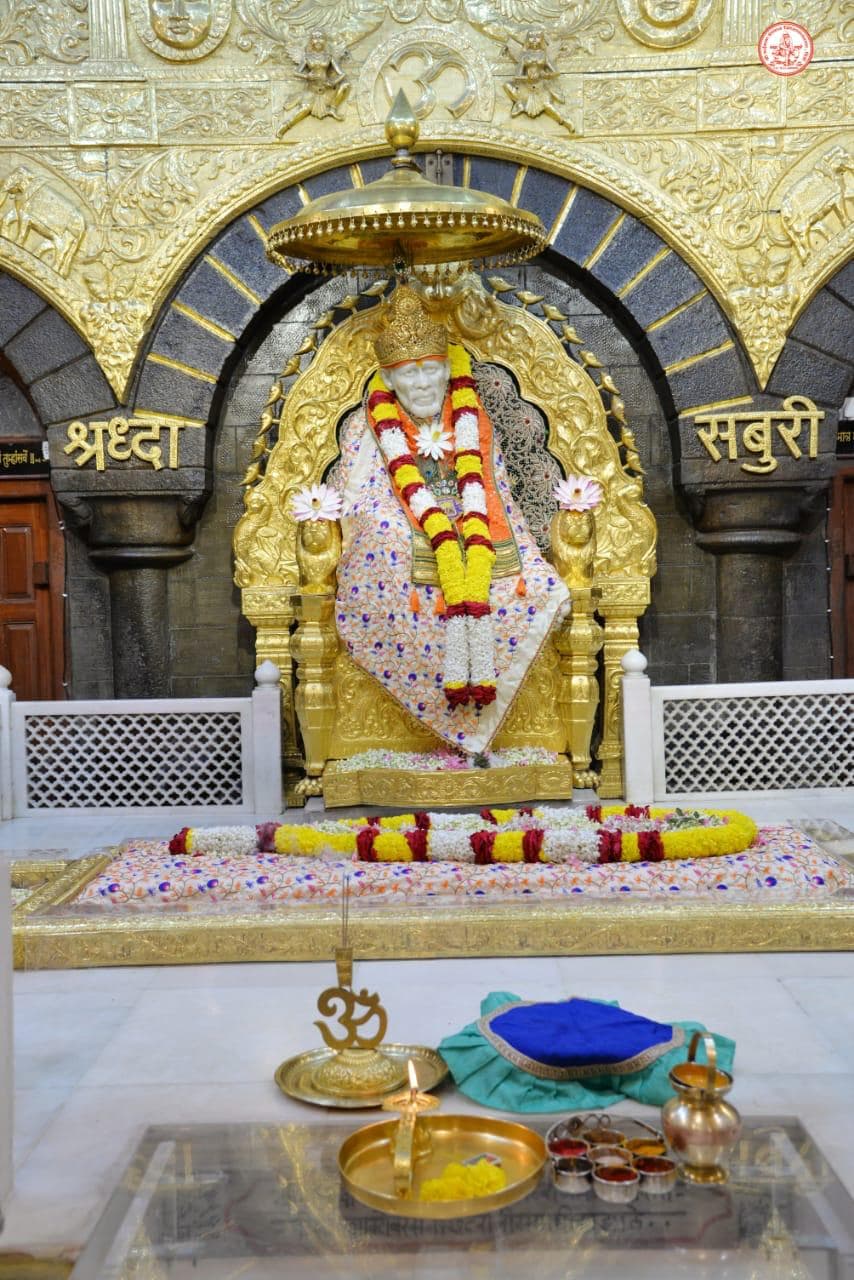
Shirdi Sai Baba Temple Dubai
The Shirdi Sai Baba Temple, located in Jumeirah 1, Dubai, is a significant spiritual center dedicated to Shirdi Sai Baba, embodying the enduring legacy of India's millennia-spanning cultural and spiritual heritage in a contemporary global setting. This temple serves as a vital nexus for the Indian diaspora, fostering a profound sense of belonging and cultural continuity through its adherence to ancient Indian spiritual traditions and architectural principles [1] [5]. The architectural design of the temple integrates the indigenous Nagara architecture style, Indo-Modern elements, and the specific characteristics of a Samadhi Mandir, reflecting a continuous tradition of Hindu temple construction [5] . The main temple structure, which houses the Garbhagriha (sanctum sanctorum), is centrally positioned within a larger 11.11-acre complex, itself part of a 338-acre master plan development [3]. The architectural form is a sophisticated reinterpretation of India's vernacular temple architecture, utilizing parametric design to manifest an 11-sided polygon, or hendecagon, articulated as a three-dimensional polyhedron [3]. This intricate design balances sacred geometry, deeply rooted in ancient Indian Vastu Shastra and numerological beliefs, with modern engineering logic [3]. The structural system was developed through an algorithmic process, considering spatial and structural constraints, and evaluating environmental factors such as daylight penetration, solar heat gain, and shadow patterns to optimize the internal environment [3]. Internally, the Garbhagriha presents a pure white space, illuminated by natural sunlight diffused through an oculus at the apex of the polygonal roof [3]. The roof itself features a double-fold origami structure, providing a rigid yet aesthetically fluid long-span shell-like enclosure supported by columns that seamlessly blend into the interior [3]. The flooring pattern within the main hall is a mathematical looping system derived from the 11 vertices of the hendecagon, creating interstitial spaces that subtly guide visitors towards the deity for prayers and offerings [3]. The precise placement of the primary deity within the sanctum sanctorum was determined by dividing the outer circumference into 11 equal segments, with radiating arcs forming a petal-like pattern that is mirrored in the oculus above, ensuring both symmetry and spiritual focus [3]. The temple complex includes a front promenade, designed with functional divisions for baggage storage, shoe removal, frisking areas, and ablution facilities, marking a ceremonial entry point [3]. A gopuram offers the initial framed view of the temple, with green strips and shops along a 525-foot promenade breaking visual monotony [3]. A podium provides panoramic views of the entire development, granting access to the main temple, three subsidiary shrines, meditation pockets, and gathering spaces [3]. A temple tank, integrated into the podium design, features steps that double as an amphitheater for larger spiritual gatherings and outdoor bhajans [3]. The temple houses multiple shrines dedicated to revered deities such as Lord Ganesh, Lord Shiva, Lord Vishnu, Goddess Durga, Goddess Lakshmi, Lord Murugan, Shirdi Sai Baba, and Lord Hanuman, adorned with intricate carvings and vibrant decorations that reflect India's rich cultural heritage [5] . The site is a registered worship center with the Community Development Authority (CDA) and is recognized as part of Dubai's religious tolerance initiatives [site info]. It actively hosts regular bhajans, aartis, spiritual discourses, and community festivals, fostering an environment for meditation and introspection [5] . The temple is fully operational, providing continuous spiritual services and cultural programming, and is maintained in accordance with contemporary standards for public worship centers [1].
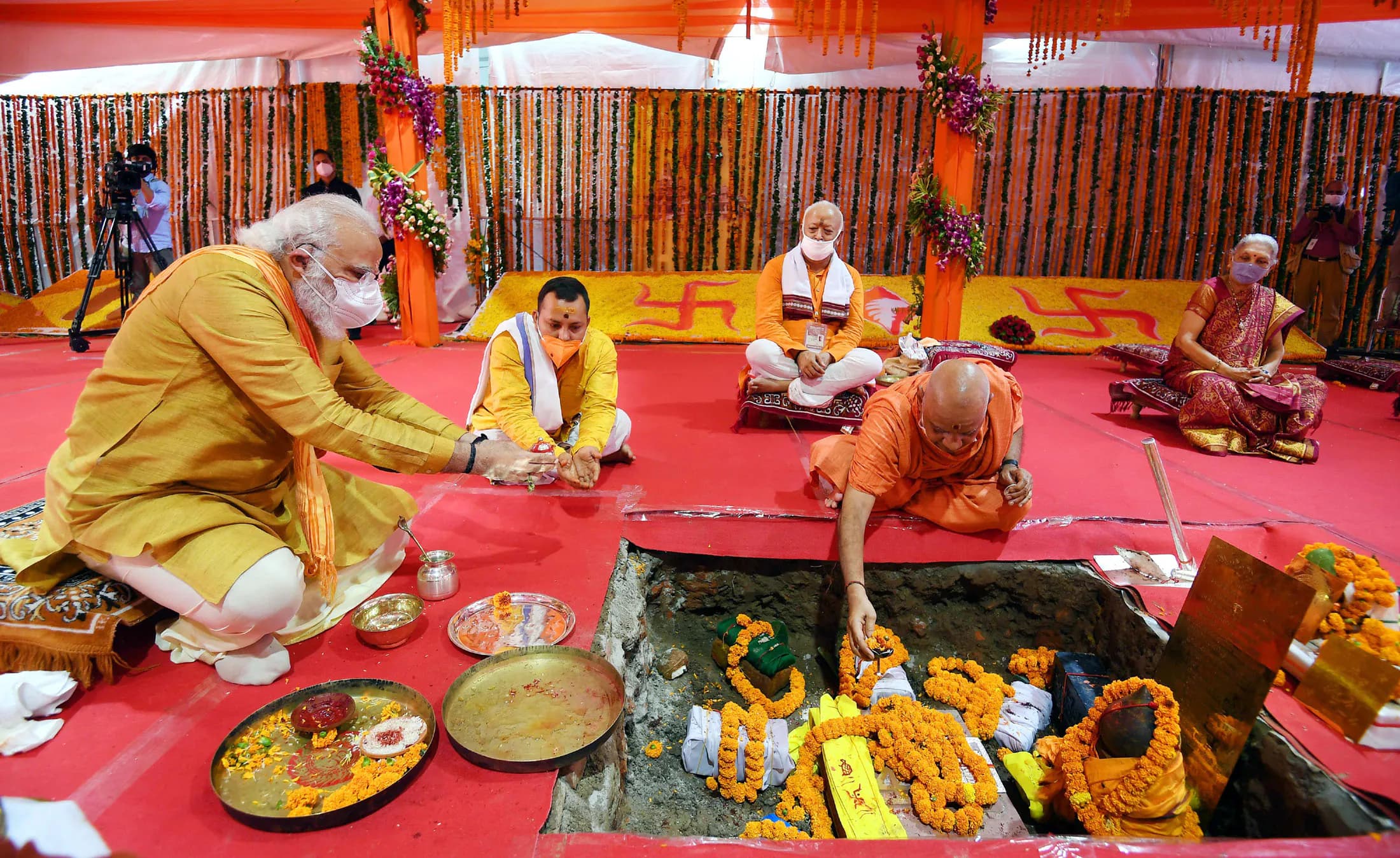
Ram Mandir Bhubaneswar
The midday sun cast long shadows across the laterite stones of the Ram Mandir in Bhubaneswar, illuminating the intricate carvings that adorned its surface. Having spent years documenting the architectural wonders of Gujarat, I was eager to experience the unique Kalinga style of temple architecture that Odisha is renowned for. And the Ram Mandir, though a relatively modern structure compared to some of Bhubaneswar's ancient marvels, did not disappoint. Unlike the towering shikharas of Gujarat's Solanki dynasty temples, the Ram Mandir presents a cluster of temples, each dedicated to a different deity – Ram, Lakshman, and Sita. This grouping immediately sets it apart, creating a sense of community and interconnectedness among the deities. The main temple, dedicated to Lord Ram, dominates the complex. Its curvilinear shikhara, a hallmark of the Kalinga style, rises elegantly towards the sky, its surface covered in a dense tapestry of sculpted figures. As I approached the main entrance, I was struck by the sheer profusion of carvings. Every inch of the temple walls, from the base to the pinnacle, seemed to pulsate with life. Mythological scenes, celestial beings, and intricate floral patterns intertwined, creating a visual narrative that captivated my attention. The figures, though weathered by time and the elements, retained a remarkable sense of dynamism. I noticed the distinctive elongated eyes and graceful postures of the figures, characteristic of the regional style. The detailed ornamentation, particularly around the doorways and windows, showcased the skill and artistry of the craftsmen who had painstakingly carved these stories into stone centuries ago. Inside the main sanctum, the atmosphere was hushed and reverent. The deity of Lord Ram, flanked by Sita and Lakshman, exuded a serene presence. The play of light and shadow within the sanctum added to the spiritual ambiance. While photography wasn't permitted inside, the image of the deities, bathed in the soft glow of oil lamps, remained etched in my memory. Moving to the smaller temples dedicated to Lakshman and Sita, I observed subtle variations in their architectural details. While adhering to the overall Kalinga style, each temple possessed its own unique character. The Lakshman temple, for instance, featured a slightly less ornate shikhara, while the Sita temple had a more intimate and enclosed feel. The outer walls of the complex presented a fascinating contrast to the more polished surfaces of the main temples. Here, the laterite stone was left largely unpolished, revealing its natural texture and warm hues. This created a sense of rustic charm and highlighted the intricate carvings even further. I spent a considerable amount of time studying the bas-relief panels depicting scenes from the Ramayana. The narrative unfolded across the walls, bringing the epic to life in a tangible way. I was particularly drawn to the depiction of the battle between Ram and Ravana, the dynamism of the scene captured with remarkable skill. One aspect that struck me was the integration of the temple complex with its surroundings. Unlike some of the more isolated temples I had encountered in Gujarat, the Ram Mandir felt connected to the bustling city of Bhubaneswar. Devotees flowed in and out, their prayers and rituals adding another layer to the temple's vibrant tapestry. The air was thick with the scent of incense and the sounds of chanting, creating a sensory experience that was both captivating and deeply moving. Leaving the Ram Mandir, I carried with me a profound appreciation for the Kalinga style of temple architecture. Its unique blend of grandeur and intricate detail, its seamless integration of mythology and artistry, and its connection to the living traditions of the community made it a truly unforgettable experience. It served as a powerful reminder of the enduring legacy of India's rich architectural heritage, and a testament to the skill and devotion of the craftsmen who shaped these sacred spaces.

Prasat Ta Mueang Surin
Prasat Ta Mueang, located in Prasat District of Surin Province, represents an important 11th-century Khmer Hindu temple complex distinguished by its well-preserved lingam remnants and evidence of extensive Shiva worship. The temple complex, constructed during the Baphuon period in the 11th century CE, is dedicated to Shiva, with the main prasat housing a massive lingam pedestal and numerous subsidiary shrines containing smaller lingams, demonstrating the importance of lingam worship in Khmer religious practice. The complex features a rectangular laterite enclosure wall, accessed through gopuras that lead to the inner courtyard containing the main prasat, libraries, and numerous subsidiary structures. The main prasat, constructed from pink sandstone and laterite, rises approximately 16 meters and features a square plan with porches extending in cardinal directions. The temple’s lintels and pediments, carved from pink sandstone, depict scenes from Hindu mythology, particularly Shiva-related themes, including the cosmic dance, lingam worship, and various deities. The complex includes two libraries positioned east of the main prasat, numerous subsidiary shrines, and evidence of a sophisticated drainage system. Archaeological evidence indicates the temple served as an important regional religious center for Shiva worship, with the concentration of lingam remnants suggesting it may have been a particularly significant site for lingam rituals. The site has undergone restoration since the 1980s, involving structural stabilization and conservation of remaining decorative elements and lingam remnants. Today, Prasat Ta Mueang remains an important site for understanding Khmer lingam worship and Shiva temple architecture, attracting visitors interested in its well-preserved lingam remnants and historical significance as a center of Shiva devotion. ([1][2])
Quick Links
Plan Your Heritage Journey
Get personalized recommendations and detailed visitor guides