Has Inheritage Foundation supported you today?
Your contribution helps preserve India's ancient temples, languages, and cultural heritage. Every rupee makes a difference.
Secure payment • Instant 80G certificate
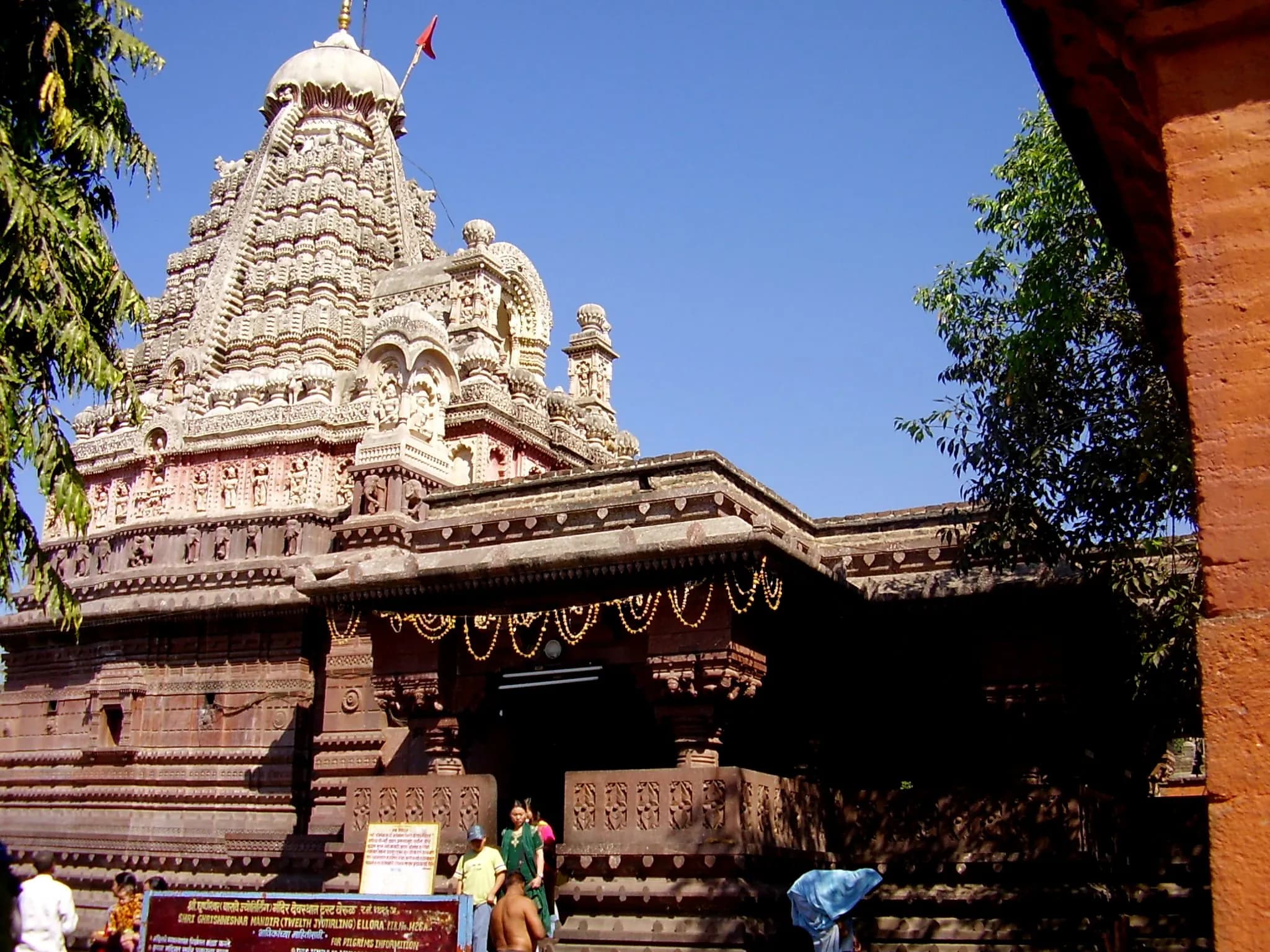
Grishneshwar Temple Verul
The late afternoon sun cast long shadows across the basalt courtyard of the Grishneshwar Temple, illuminating the intricate carvings that covered every inch of its surface. Standing before this resurrected marvel, the twelfth Jyotirlinga, I felt a palpable connection to the centuries of devotion that have imbued this site with a quiet power. Unlike some of the grander, more imposing temples I’ve encountered, Grishneshwar possesses a subtle elegance, a whispered grandeur that speaks volumes about the enduring spirit of its builders. Reconstructed in the 18th century by Ahilyabai Holkar, the temple stands as a testament to her dedication to preserving India's sacred heritage. While the current structure is relatively recent, the site itself is ancient, with its roots tracing back to the Yadava period. This layering of history, the palimpsest of architectural styles, is what makes Grishneshwar so fascinating. One can discern the influence of the earlier Hemadpanti style in the simple, yet robust, forms of the mandapa and the shikhara, while the later Maratha additions bring a flourish of ornamentation, a riot of sculpted figures and decorative motifs. The red stone shikhara, rising towards the cerulean sky, is a masterpiece of proportion and detail. Each tier, adorned with miniature shrines and celestial beings, tells a story, a fragment of the rich tapestry of Hindu mythology. I spent a considerable amount of time simply circling the temple, my gaze tracing the lines of the carvings, trying to decipher the narratives etched in stone. From depictions of Shiva’s various forms to scenes from the epics, the shikhara is a visual encyclopedia of Hindu iconography. Stepping inside the dimly lit garbhagriha, the sanctum sanctorum, the atmosphere shifted dramatically. The air was thick with the scent of incense and the murmur of prayers. The lingam, the symbolic representation of Shiva, rested in a simple depression, its smooth, dark stone absorbing the reverence of the devotees. Despite the constant flow of worshippers, a sense of tranquility pervaded the space, a stillness that allowed for a moment of introspection, a connection with the divine. The mandapa, the pillared hall leading to the sanctum, is equally captivating. The massive pillars, each carved with intricate designs, support a richly decorated ceiling. I was particularly struck by the depictions of the Ashtadikpalakas, the eight guardian deities, each occupying a cardinal direction, their presence adding a sense of cosmic order to the space. The play of light and shadow within the mandapa created a mesmerizing effect, highlighting the depth and detail of the carvings. Beyond the architectural marvels, it was the palpable devotion of the pilgrims that truly resonated with me. Their quiet reverence, their whispered prayers, their offerings of flowers and fruits, all contributed to the sacred ambiance of the site. Witnessing their faith, their connection to this ancient place of worship, reinforced the enduring power of these sacred spaces. Leaving the cool confines of the temple, I paused at the entrance to look back. The setting sun bathed the stone in a warm, golden light, accentuating its timeless beauty. Grishneshwar is more than just a temple; it is a living testament to India’s rich cultural and spiritual heritage, a place where history, art, and faith converge to create an experience that is both humbling and inspiring. It is a place I will long remember, not just for its architectural splendor, but for the profound sense of connection it evoked.
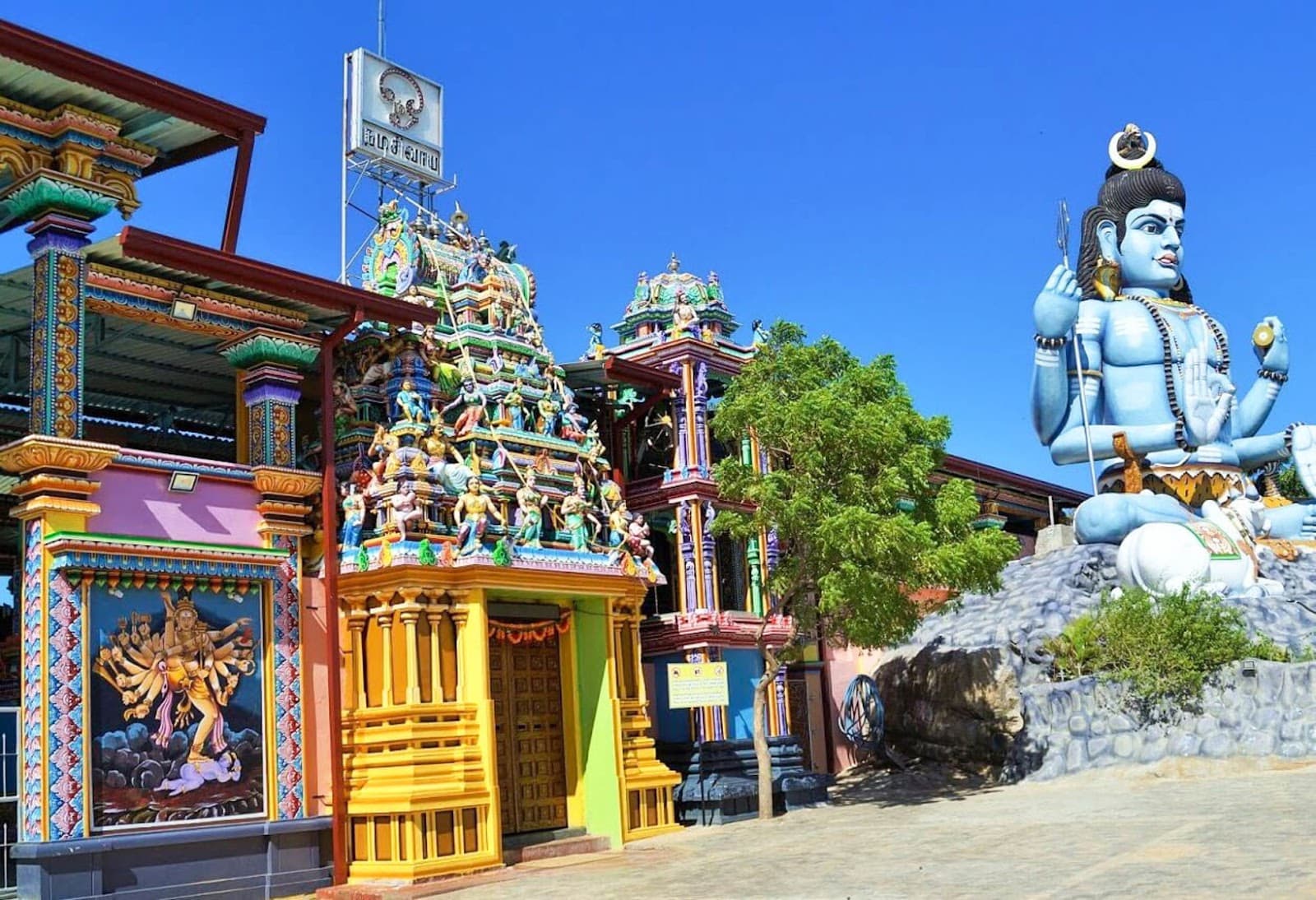
Koneswaram Temple Trincomalee Sri Lanka
Koneswaram Temple, dramatically perched atop the majestic Swami Rock overlooking the azure waters of the Indian Ocean in Trincomalee, represents one of the most extraordinary and spiritually significant Hindu temples in South Asia, with origins tracing back to the 3rd century BCE and serving as one of the five ancient Pancha Ishwaram shrines dedicated to Shiva that were strategically established around the island's coastline to protect Sri Lanka according to ancient Tamil and Sanskrit traditions, creating a powerful testament to the profound transmission of Indian Shaivite religious and architectural traditions to Sri Lanka. The temple complex, known as Thirukoneswaram in Tamil and Koneswaram Kovil, features sophisticated Dravidian architectural elements that demonstrate the direct transmission of South Indian temple architecture, particularly the traditions of the Pallava, Chola, and Pandya dynasties, with local adaptations that reflect the sophisticated synthesis of Indian Shaivite religious and artistic traditions with Sri Lankan building techniques and aesthetic sensibilities. The temple's most remarkable feature is its spectacular location atop Swami Rock, a dramatic promontory that rises 400 feet above sea level, providing panoramic views of the Indian Ocean and Trincomalee Bay, while the temple's architectural layout, with its central sanctum housing the Shiva lingam surrounded by multiple enclosures, gopurams (gateway towers), and subsidiary shrines, follows sophisticated South Indian Dravidian temple planning principles that were systematically transmitted from the great temple complexes of Tamil Nadu including Chidambaram, Madurai, and Rameswaram. Archaeological evidence reveals that the temple served as a major center of Shaivite worship for over two millennia, attracting pilgrims from across South India and Southeast Asia, while the discovery of numerous inscriptions in Tamil, Sanskrit, and Sinhala provides crucial evidence of the site's role in the transmission of Indian religious texts and practices to Sri Lanka, demonstrating the sophisticated understanding of Indian Shaivite traditions possessed by the temple's patrons and religious establishment. The temple's history is deeply intertwined with the Ramayana epic, with local traditions identifying the site as one of the places where Ravana, the legendary king of Lanka, worshipped Shiva, while the temple's association with the Pancha Ishwaram network demonstrates the sophisticated understanding of Indian Shaivite cosmology and temple planning principles that were transmitted from the great religious centers of India to Sri Lanka. The temple complex has undergone multiple reconstructions throughout its history, most notably after its destruction by Portuguese colonizers in 1624 CE, with the current structure representing a modern reconstruction that faithfully preserves the temple's original Dravidian architectural character and spiritual significance. Today, Koneswaram Temple stands as one of the most important Hindu pilgrimage sites in Sri Lanka, serving as a powerful testament to the transmission of Indian Shaivite culture and architecture to Sri Lanka, while ongoing archaeological research and conservation efforts continue to protect and study this extraordinary cultural treasure that demonstrates the profound impact of Indian civilization on Sri Lankan religious and artistic traditions. ([1][2])
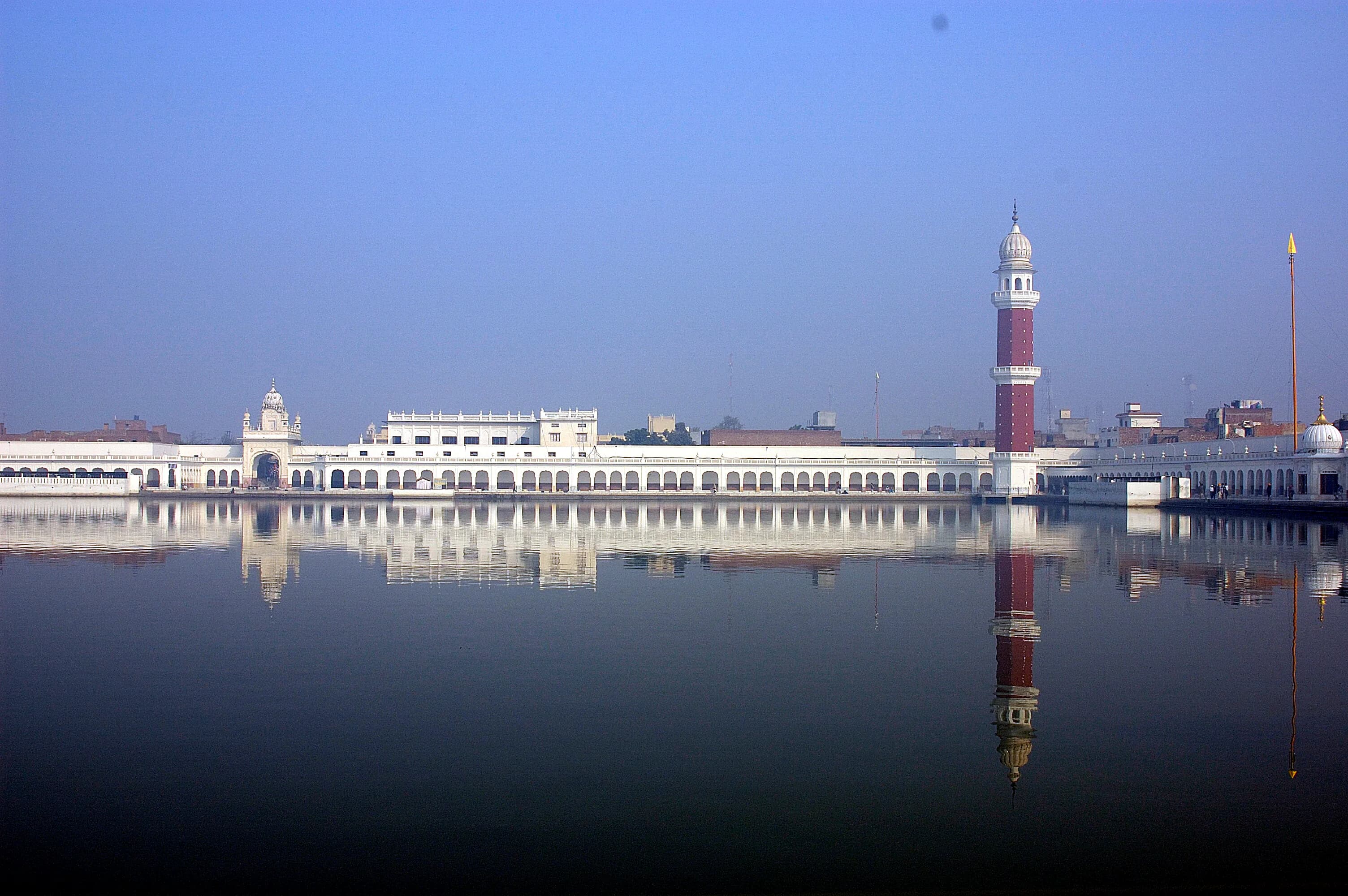
Tarn Taran Sahib Tarn Taran
The midday sun beat down on the shimmering expanse of the sarovar, its waters reflecting the pristine white marble of the Darbar Sahib, the central structure of the Tarn Taran Sahib complex. This wasn't just another gurudwara; its sheer scale and unique architectural features set it apart from the hundreds of Sikh shrines I’ve documented across India. Located in the heart of Tarn Taran, Punjab, this place exuded a palpable sense of tranquility, a spiritual hum that resonated through the air and the very stones beneath my feet. The first thing that struck me was the sarovar itself, the largest of all the holy tanks in Sikhism. It’s said that a dip in its waters has healing properties, and observing the devotees taking a ritual bath, their faces etched with devotion, I could almost sense the weight of belief and tradition carried within this sacred space. The tank is surrounded by a marble walkway, offering panoramic views of the gurudwara and the bustling activity around it. I spent a good hour just absorbing the scene, the interplay of light and shadow on the water, the rhythmic chants emanating from the main hall, and the constant flow of pilgrims. The Darbar Sahib, rising majestically from the sarovar's edge, is a marvel of Sikh architecture. Unlike the more common gilded domes, Tarn Taran Sahib boasts a distinctive ribbed dome, plated with gold leaf that shimmered brilliantly under the Punjab sun. Intricate inlay work, a hallmark of Sikh architecture, adorned the marble facade, depicting floral patterns and verses from the Guru Granth Sahib. The level of detail was breathtaking; I found myself constantly drawn closer, my lens capturing the nuances of each carved motif, each inlaid gemstone. As I stepped inside the main hall, I was enveloped by a sense of reverence. The Guru Granth Sahib, the holy scripture of Sikhism, rested on a raised platform, draped in rich fabrics. The melodious kirtan, the Sikh devotional music, filled the air, creating an atmosphere of profound spirituality. The walls, adorned with frescoes depicting scenes from Sikh history and mythology, added another layer of richness to the space. I noticed that the frescoes here were particularly vibrant, their colours seemingly intensified by the soft light filtering through the intricately carved marble screens. One element that truly distinguished Tarn Taran Sahib was the integration of Islamic architectural influences. The minarets flanking the main structure, a feature rarely seen in Sikh architecture, spoke to a history of cultural exchange and coexistence. These minarets, while clearly distinct from the main gurudwara in style, seemed to harmonize with the overall design, creating a unique visual tapestry. This subtle blending of architectural styles offered a powerful testament to the syncretic nature of Indian heritage. Beyond the main complex, I explored the surrounding structures, each with its own story to tell. The Bunga Baba Deep Singh, a smaller shrine dedicated to a revered Sikh warrior, stood as a reminder of the sacrifices made to protect this sacred place. The langar hall, where free meals are served to all visitors regardless of their background, was a bustling hub of activity, embodying the Sikh principles of seva, or selfless service. My time at Tarn Taran Sahib was more than just a photographic documentation; it was an immersive experience. It was a journey into the heart of Sikh faith and a testament to the enduring power of architecture to reflect and shape cultural identity. As I packed my equipment, the setting sun casting long shadows across the sarovar, I carried with me not just images, but a deeper understanding of the rich tapestry of Indian heritage.

Virupaksha Temple Hampi
The sun beat down on the ochre boulders of Hampi, casting long shadows across the sprawling ruins. My journey through Uttar Pradesh’s architectural wonders had led me south, to this UNESCO World Heritage site, and my first stop was the magnificent Virupaksha Temple, a vibrant splash of life amidst the hushed whispers of history. Unlike the sandstone temples of my home state, this temple, dedicated to Lord Virupaksha, a form of Shiva, was predominantly built of granite, its dark grey stone shimmering under the intense Karnataka sun. Entering through the towering gopuram, its intricate carvings narrating tales from the epics, I was immediately struck by the palpable energy of the place. This wasn't a relic of the past; it was a living, breathing temple, with the rhythmic chants of priests, the fragrance of incense, and the devout murmurings of pilgrims creating a symphony of faith. The gopuram itself was a marvel, its nine tiers reaching towards the heavens, adorned with vibrant depictions of gods, goddesses, and mythical creatures. The sheer scale of it dwarfed me, a testament to the architectural prowess of the Vijayanagara Empire. The temple complex unfolded before me like a storybook. I wandered through the pillared halls, the granite columns intricately carved with scenes from the Ramayana and Mahabharata. The carvings weren't mere decorations; they were narratives etched in stone, each panel a window into the rich mythology of the region. I noticed a distinct South Indian influence in the sculptural style, a departure from the more North Indian aesthetics I was accustomed to. The figures were more elongated, their features sharper, their ornamentation more elaborate. One particular carving caught my attention – a depiction of Lord Shiva’s marriage to Pampa, the goddess of the Tungabhadra River. The river, a lifeline for Hampi, flowed just beyond the temple walls, its presence a constant reminder of the symbiotic relationship between nature and faith. This narrative, carved centuries ago, resonated deeply, highlighting the reverence for rivers that has been integral to Indian culture for millennia. The main shrine, housing the deity of Virupaksha, exuded an aura of serenity. The air was thick with the scent of sandalwood and flowers, and the soft chanting created an atmosphere of profound peace. I observed the rituals, fascinated by the continuity of tradition, the same chants and offerings likely performed for centuries within these very walls. It was a powerful reminder of the enduring power of faith. Beyond the main shrine, I explored the ruins of the marketplace, imagining the bustling activity that once filled this space. The remnants of shops and stalls hinted at a thriving commercial hub, a testament to Hampi's past glory as the capital of the Vijayanagara Empire. The architecture here was more functional, less ornate than the temple itself, yet it spoke volumes about the city's sophisticated urban planning. Climbing the Hemakuta Hill, located within the temple complex, offered a panoramic view of the surrounding landscape. The sprawling ruins, interspersed with giant boulders, stretched as far as the eye could see, a poignant reminder of the empire's grandeur and its eventual decline. From this vantage point, the Virupaksha Temple stood tall, a beacon of faith amidst the ruins, a symbol of resilience and continuity. As I descended, the late afternoon sun cast a golden glow over the temple. The carvings seemed to come alive, their stories whispering in the gentle breeze. My visit to the Virupaksha Temple was more than just a sightseeing experience; it was a journey through time, a glimpse into a rich tapestry of history, faith, and art. It was a powerful reminder of the interconnectedness of cultures, and the enduring legacy of India's architectural heritage. Leaving the temple, I carried with me not just photographs and memories, but a deeper understanding of the cultural nuances that make India so incredibly diverse and captivating.
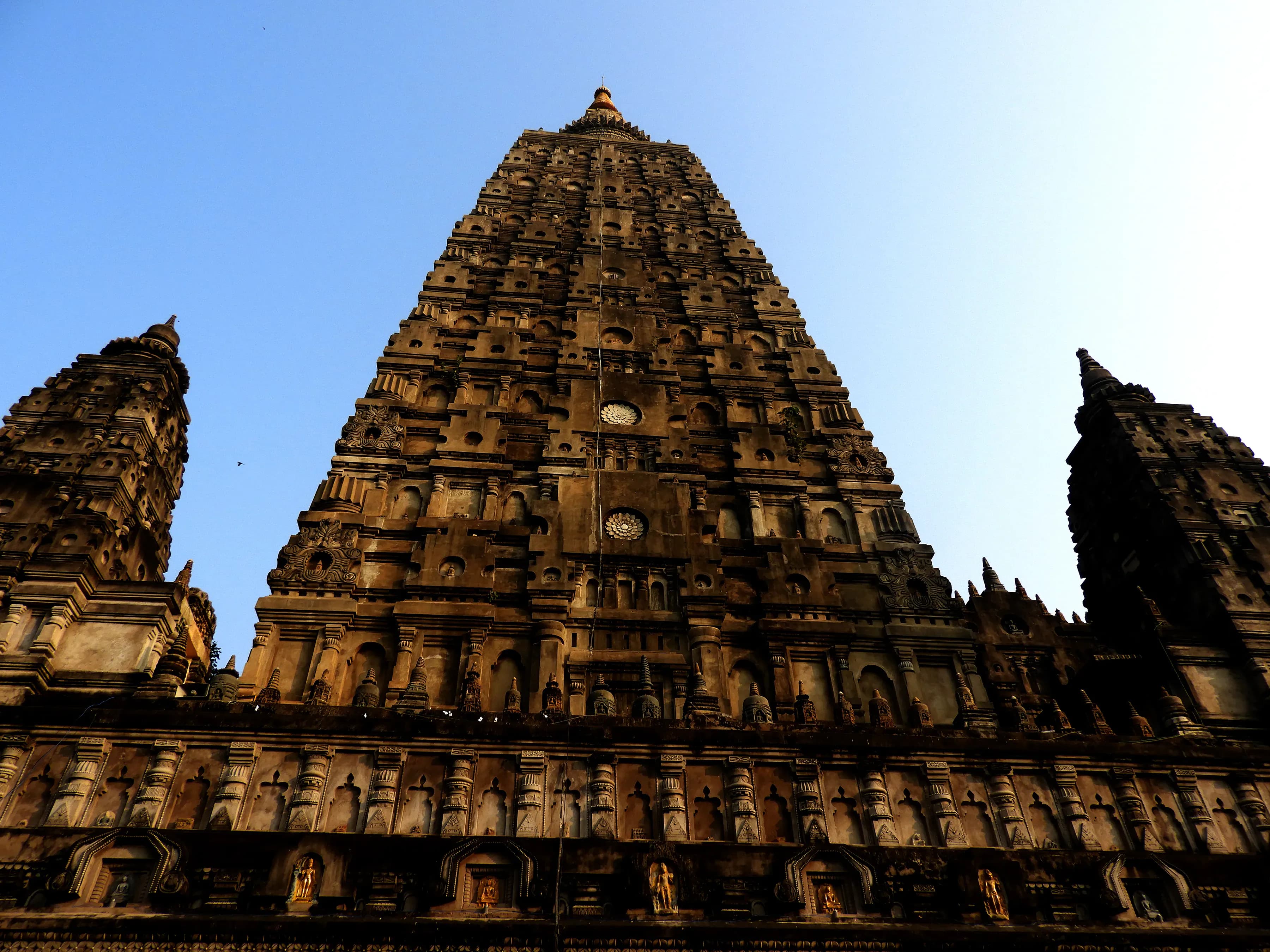
Mahabodhi Temple Bodh Gaya
The midday sun beat down on my shoulders, but the shade of the Bodhi tree offered a welcome respite. I sat there, much like countless pilgrims before me, gazing up at the Mahabodhi Temple, its towering pyramidal spire a beacon against the brilliant blue sky. As a Rajasthani journalist accustomed to the sandstone hues and intricate carvings of our forts and palaces, the Mahabodhi Temple presented a striking contrast – a different narrative etched in stone and brick. The sheer scale of the structure is breathtaking. Rising to a height of 55 meters, the main tower is surrounded by four smaller, similarly shaped towers, creating a harmonious, ascending rhythm. The temple’s architecture, distinct from the Rajputana style I’m familiar with, speaks volumes about the historical and cultural exchange that has shaped this region. The shikhara, the pyramidal tower, is a classic feature of North Indian temple architecture, yet here at Bodh Gaya, it takes on a unique character. The brickwork, weathered by centuries of sun and monsoon, lends a sense of antiquity, a palpable connection to the past. Intricate carvings of various deities, celestial beings, and floral motifs adorn the facade, a testament to the skilled craftsmanship of the era. I walked around the temple complex, my fingers tracing the worn stones of the circumambulation path. The air hummed with a quiet energy, a blend of devotion and serenity. Pilgrims from across the globe chanted softly, their faces etched with reverence. I observed the distinct architectural elements – the railings surrounding the main temple, crafted from intricately carved stone, a blend of the older Gupta period style and later additions. These railings, I learned, are among the earliest surviving examples of their kind in India, offering a glimpse into the evolution of Buddhist art and architecture. The Vajrasana, the diamond throne, located at the foot of the Bodhi tree, marks the spot where Siddhartha Gautama is said to have attained enlightenment. The very ground beneath my feet felt charged with history. I noticed the red sandstone slabs surrounding the Vajrasana, a stark contrast to the grey stone of the temple itself, perhaps a later addition or a deliberate choice to highlight the sacred spot. Inside the main sanctum, a colossal gilded statue of the Buddha sits in meditation, radiating an aura of tranquility. The dimly lit chamber, filled with the scent of incense and the murmur of prayers, fostered a sense of introspection. The walls, though bare now, once bore vibrant frescoes, fragments of which can still be seen, hinting at the temple’s former glory. Beyond the main temple, the complex houses several smaller shrines, votive stupas, and meditation platforms. I spent some time exploring these, each structure whispering tales of devotion and spiritual seeking. The variety of architectural styles within the complex reflects the centuries of patronage and renovation the temple has undergone, a testament to its enduring significance. As I left the Mahabodhi Temple, the setting sun casting long shadows across the complex, I carried with me not just images of its architectural grandeur, but a deeper understanding of its spiritual resonance. It was a journey from the familiar landscapes of Rajasthan to the heart of Buddhism, a journey that highlighted the rich tapestry of India’s cultural heritage. The Mahabodhi Temple stands not just as a monument of brick and stone, but as a living testament to the enduring power of faith and the pursuit of enlightenment.
Jaisalmer Fort Jaisalmer
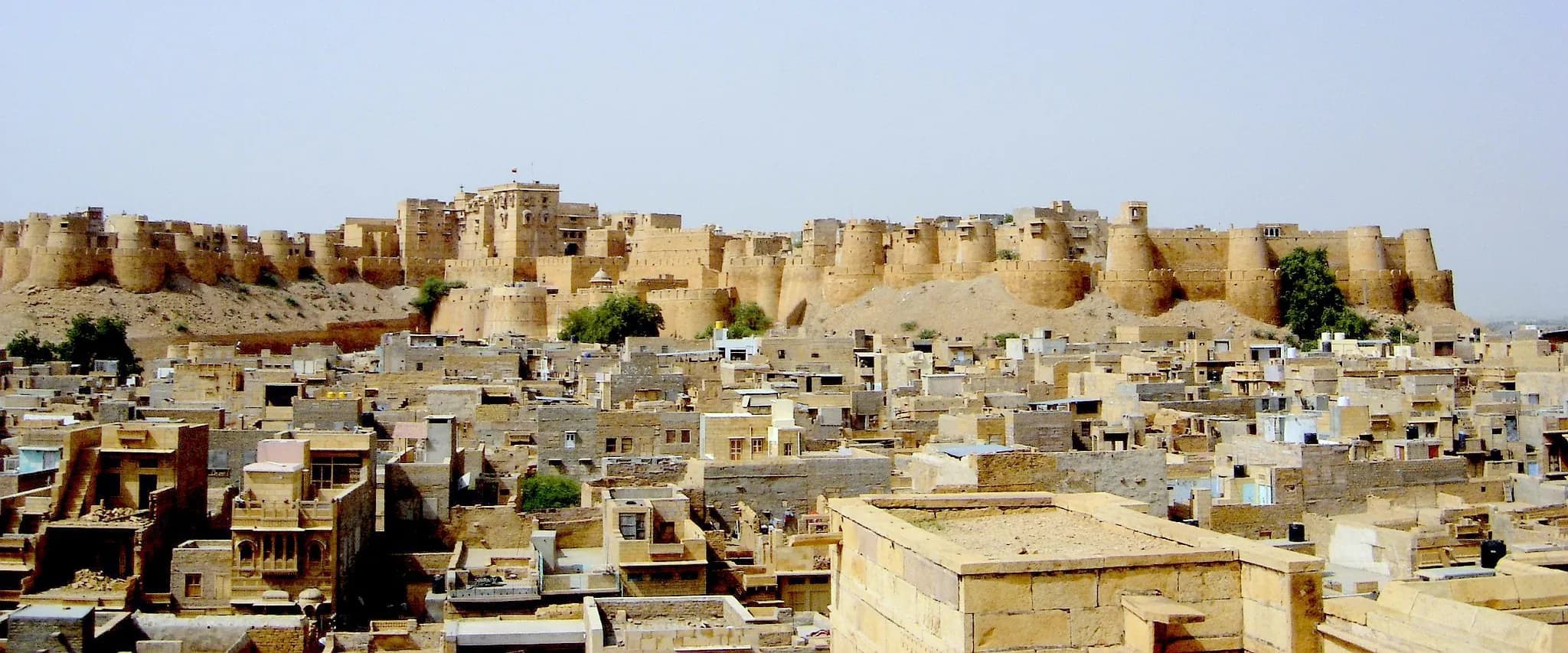
The wind, a constant companion in the Thar Desert, whipped around me as I ascended the winding ramparts of Jaisalmer Fort, a colossal sandstone behemoth rising from the desert itself. It wasn't just a fort; it was a living, breathing city, a testament to Rajputana resilience etched against the vast canvas of the Indian desert. My five-hundredth monument, and it felt like the first, the sheer scale and grandeur eclipsing everything I'd witnessed before. The "Sonar Quila," as it’s locally known, truly lived up to its golden moniker. The late afternoon sun bathed the fort in a warm, honeyed light, highlighting the intricate carvings that adorned every surface. It wasn't the polished, pristine beauty of some restored monuments; this was a beauty born of age and endurance, the sandstone weathered and textured, whispering tales of centuries past. Passing through the Suraj Pol, the main gate, I was immediately struck by the organized chaos within. Narrow, winding lanes, a vibrant tapestry of shops selling textiles, jewelry, and handicrafts, pulsed with life. It was a far cry from the sterile, museum-like atmosphere of some historical sites. Here, history wasn't confined to glass displays; it was lived, breathed, and bargained over. The architecture within the fort was a captivating blend of Rajput and Islamic styles. Jharokhas, the ornate balconies projecting from the haveli facades, offered glimpses into the opulent lives once lived within. I spent hours photographing these intricate details, the delicate latticework, the miniature arches, each a testament to the skill of the artisans who crafted them centuries ago. The Patwon Ki Haveli, a cluster of five interconnected havelis, was particularly striking, its facade a riot of intricate carvings that seemed to defy gravity. Climbing to the topmost ramparts, the city of Jaisalmer unfolded below me, a sea of golden rooftops merging seamlessly with the desert beyond. The panoramic view was breathtaking, the vastness of the landscape emphasizing the fort's strategic importance. I could almost imagine the Rajput warriors, standing on these very ramparts, scanning the horizon for approaching armies. The Jain temples within the fort were another highlight. Their intricate marble carvings, a stark contrast to the rough-hewn sandstone of the fort walls, spoke of a different kind of devotion. The play of light and shadow within the temples created an ethereal atmosphere, transporting me to a realm of quiet contemplation. But it wasn't just the grand architecture or the stunning views that captivated me. It was the people. The shopkeepers, the residents, the children playing in the narrow lanes – they were all part of the fort's living history. I spent time talking to them, listening to their stories, understanding their connection to this ancient place. A chai-wallah recounted tales passed down through generations, while a textile merchant explained the intricate patterns woven into the local fabrics. These interactions, these glimpses into everyday life, added another layer of depth to my understanding of Jaisalmer Fort. As the sun began to set, casting long shadows across the ramparts, I felt a profound sense of connection to this place. Jaisalmer Fort wasn't just a collection of stones and mortar; it was a living organism, a testament to human resilience and artistry. It was a place where history whispered from every corner, where the past and present intertwined seamlessly, creating an experience that transcended the visual and touched the soul. Leaving the fort, I carried with me not just photographs, but memories and stories, woven into the fabric of my own journey as a heritage photographer.
Panchmukhi Hanuman Temple Karachi Sindh
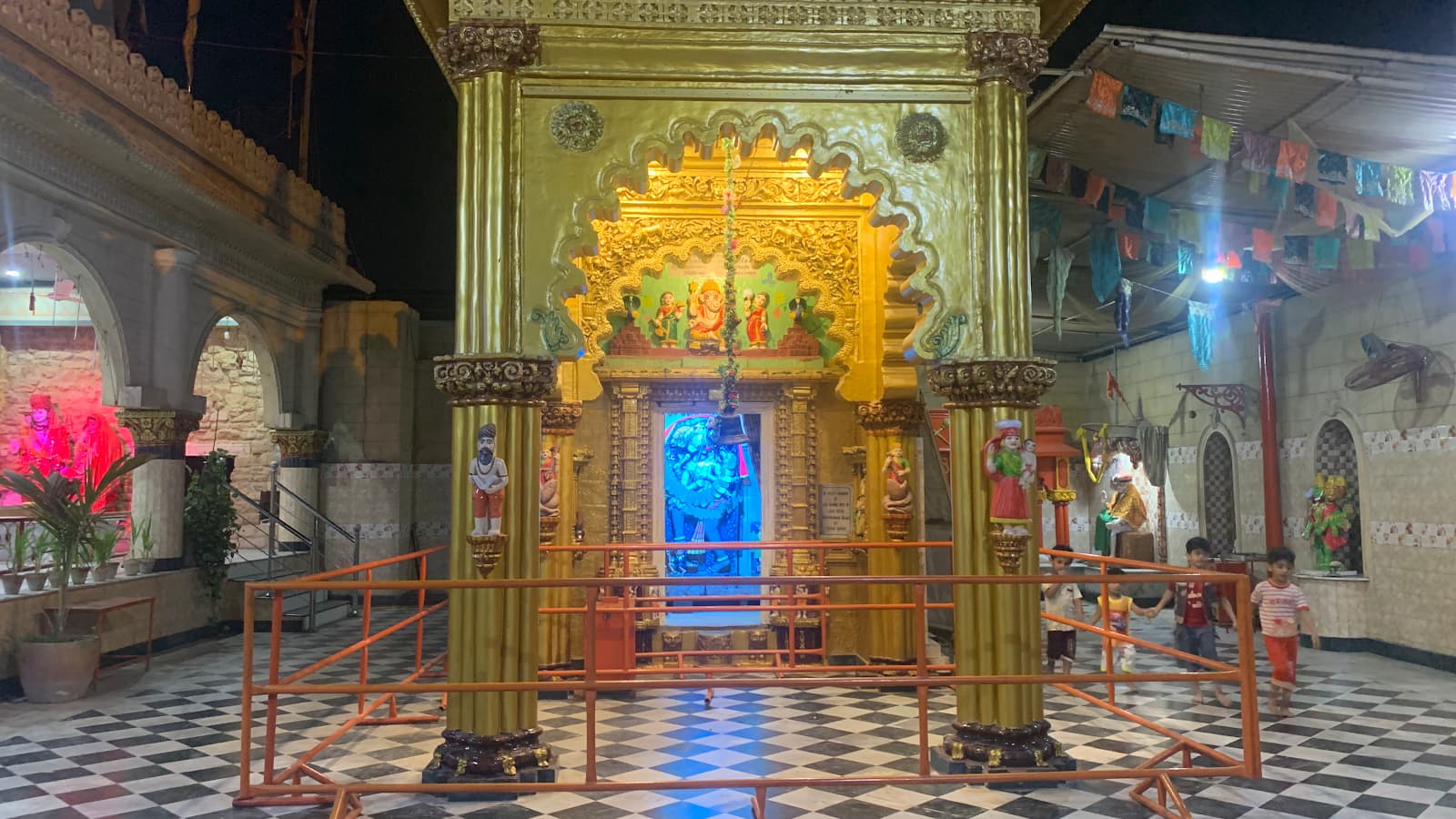
Panchmukhi Hanuman Temple, located in Karachi’s Soldier Bazaar area, represents one of the oldest continuously functioning Hindu temples in Pakistan, with archaeological evidence indicating worship at this site for over 1,500 years, dating to a period when the Sindh region formed an integral part of the greater Hindu rashtra extending across the Indian subcontinent. The temple, dedicated to Lord Hanuman in his Panchmukhi (five-faced) form, houses a unique naturally formed stone idol believed to be over 1,500 years old, making it one of the rarest and most significant Hanuman shrines in the world. The temple complex, originally spanning approximately 2,609 square feet but now reduced due to urban encroachment, features a main sanctum housing the Panchmukhi Hanuman murti, surrounded by subsidiary shrines and a courtyard that has served as a center of Hindu worship in Karachi for over a millennium. The temple’s architectural style reflects the evolution of Hindu temple design in the Sindh region, incorporating elements from ancient Indian, medieval, and colonial periods, with the current structure dating primarily to the 19th and 20th centuries but built upon foundations that may date to the 5th or 6th century CE. Archaeological excavations conducted in 2019 revealed artifacts including eight to nine images of Hanuman estimated to be at least 300 years old, along with evidence of multiple construction phases and ritual deposits indicating continuous worship over centuries. The temple is declared a national heritage site under the Sindh Cultural Heritage (Preservation) Act 1994, recognizing its significance as a symbol of Pakistan’s ancient Hindu heritage. The Panchmukhi Hanuman idol, believed to be naturally formed rather than man-made, is considered extremely rare and sacred, with devotees performing circumambulation (pradakshina) 11 or 21 times as part of their worship. The temple serves as a vital center for Karachi’s Hindu community, hosting major festivals including Hanuman Jayanti, Holi, and Diwali, with celebrations that have attracted thousands of devotees and demonstrated interfaith harmony. Today, Panchmukhi Hanuman Temple stands as a powerful testament to the continuity of Hindu worship in regions that were historically part of the greater Hindu rashtra, demonstrating that Hindu religious traditions have persisted in Pakistan despite political changes, serving as a bridge between the ancient Hindu heritage of the Indian subcontinent and contemporary Hindu communities in Pakistan. ([1][2])
Brahma Temple Carambolim
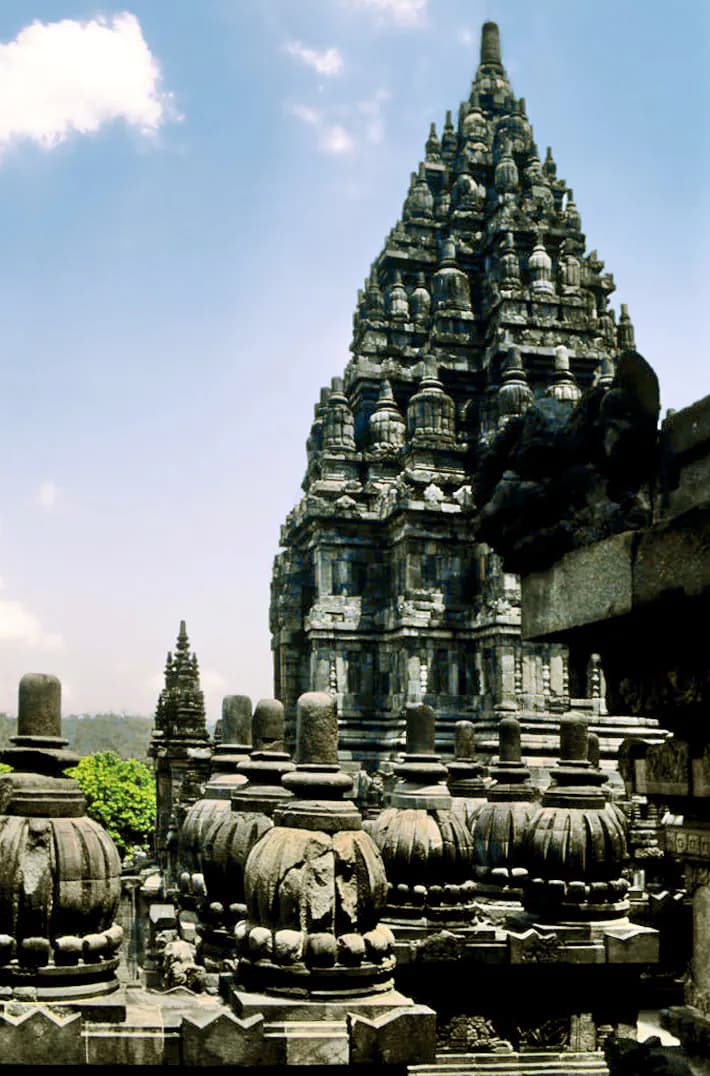
Amidst Goa's lush landscapes, the Brahma Temple in Carambolim whispers tales of the Kadamba Dynasty's artistic achievements ([1][2]). Forged in the 11th century (1050 CE) by the Kadamba Dynasty, this temple embodies Dravidian architectural influences in the region ([3]). Diverging from the towering gopurams typical of South India, the temple presents a more subtle aesthetic, harmonizing with its natural environment ([4]). Laterite stone constitutes the main building material, bestowing a warm, earthy hue to the structure ([1]). The pyramidal Shikhara (spire) atop the Garbhagriha (sanctum) echoes the Kadamba style prevalent from the 10th to 14th centuries ([2][3]). Within the Garbhagriha, the basalt idol of Lord Brahma radiates a serene presence ([5]). The relative absence of intricate carvings emphasizes simplicity and spiritual focus ([4]). Stone platforms and foundations exemplify the enduring craftsmanship of the Kadamba artisans ([1][2]). Architectural elements like the Mandapa (pillared hall) might have existed, though evidence requires further exploration of regional Kadamba temple layouts. The temple tank, mirroring the temple's form, amplifies the tranquil atmosphere ([5]). Temples dedicated to Brahma are relatively rare, making this site a unique example of religious patronage during the Kadamba period ([3]). During the Kadamba Period, temple architecture in Goa saw a unique blend of regional styles with Dravidian influences ([1][2]). The Brahma Temple, therefore, represents a crucial link to Goa's cultural past, echoing narratives of a bygone era ([3][5]). The temple's design, while understated, adheres to principles of sacred architecture, creating a space conducive to contemplation and reverence ([4]). This sacred space invites reflection and reverence, epitomizing the fusion of faith, architecture, and nature ([1][5]).
Gangotri Temple Uttarkashi
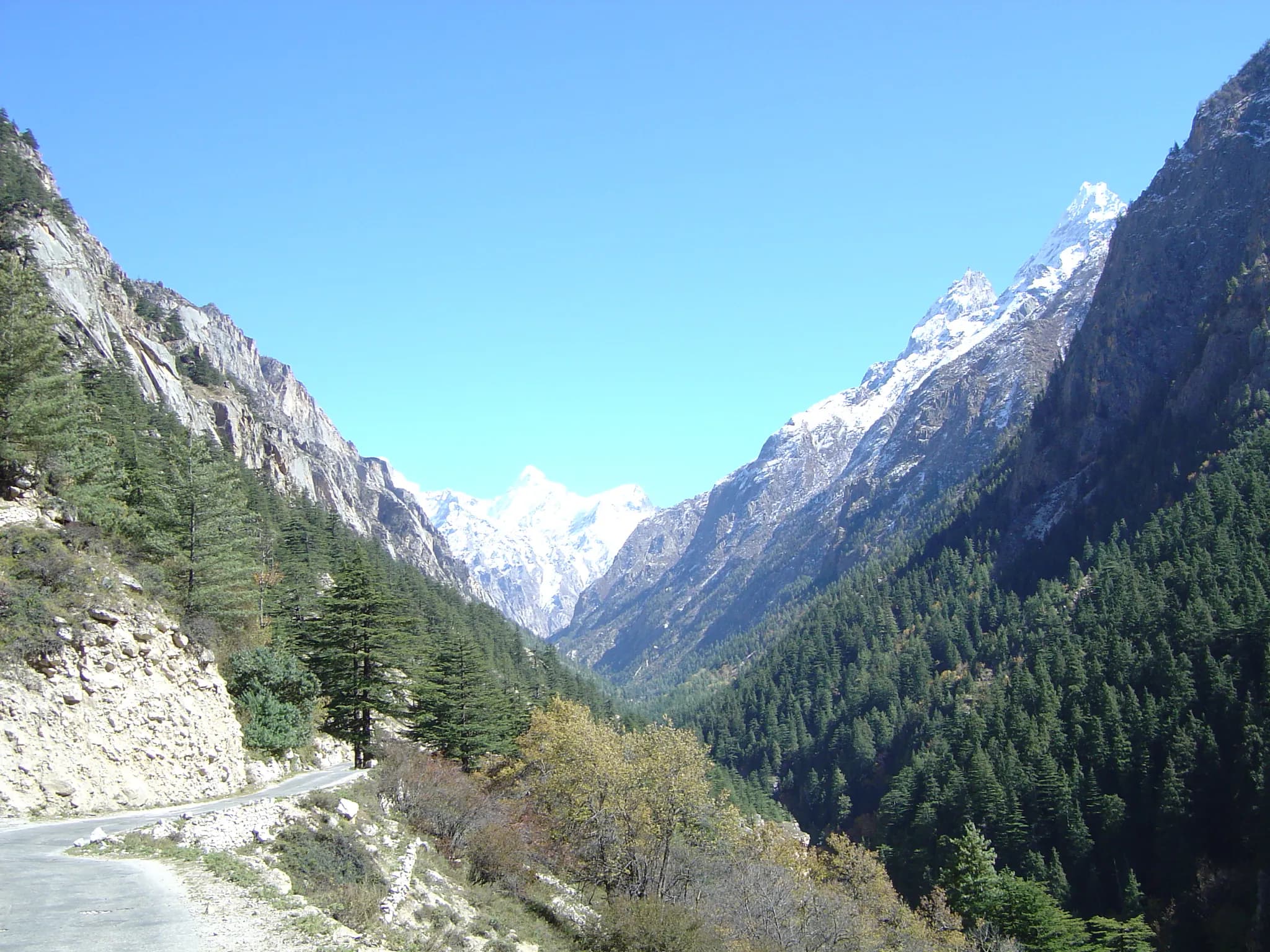
The glacial chill of the Bhagirathi River, roaring just a few meters away, seemed to permeate the very stones of the Gangotri Temple. Standing before this pristine white structure, nestled amidst the towering Himalayas, I felt a palpable shift from the Dravidian temple architecture I'm so accustomed to in Chennai. Here, the simplicity and almost austere elegance of the Gangotri Temple spoke a different architectural language, a testament to the resilience of faith in this harsh, yet breathtaking landscape. Built in the 18th century by the Gorkha General Amar Singh Thapa, the temple lacks the elaborate ornamentation and towering gopurams that characterize South Indian temples. Its two-story structure, constructed primarily of granite, is relatively small in scale, yet its presence is magnified by the sheer grandeur of its surroundings. The sloping roof, clad in sheets of copper, is a distinct feature, a practical adaptation to the heavy snowfall this region experiences. This contrasts sharply with the granite and sandstone vimanas of the south, designed to withstand torrential monsoons. Entering the sanctum sanctorum, I was struck by the reverence that permeated the air. The deity, Goddess Ganga, is depicted in a silver palanquin, a stark departure from the intricately carved stone idols I'm familiar with. The simplicity of the iconography, however, seemed to amplify the spiritual energy within the temple. The lack of elaborate carvings within the sanctum allowed the focus to remain solely on the goddess, fostering a sense of direct connection with the divine. Stepping back outside, I began to appreciate the subtle nuances of the temple's design. The lack of extensive sculptural programs, common in Dravidian architecture, allows the natural beauty of the surrounding landscape to become an integral part of the temple experience. The snow-capped peaks, the roaring river, and the crisp mountain air all contribute to a sense of awe and reverence. This integration of the natural world with the built environment is a hallmark of Himalayan temple architecture, a stark contrast to the often self-contained temple complexes of the south. I observed a few pilgrims performing parikrama around the temple. The circumambulatory path, unlike the wide prakarams of Southern temples, was a simple, paved walkway. This again highlighted the emphasis on functionality and adaptation to the environment. The temple's design prioritizes accessibility and practicality, reflecting the challenging terrain and weather conditions. The use of granite for the temple's construction is also noteworthy. While granite is used in South Indian temples, particularly for the base and pillars, the extensive use of this material at Gangotri speaks to its local availability and durability in this mountainous region. The gleaming white granite, set against the backdrop of the grey mountains and the turquoise river, creates a visually stunning contrast. One aspect that particularly intrigued me was the absence of a dedicated mandapam or pillared hall, a ubiquitous feature in South Indian temples. This absence, I believe, stems from the climatic conditions. A large open hall would be impractical in a region that experiences heavy snowfall. The temple's design, therefore, prioritizes enclosed spaces for warmth and protection from the elements. My visit to the Gangotri Temple was a profound experience, offering a fresh perspective on sacred architecture. It underscored the fact that architectural styles are not merely aesthetic choices but are deeply intertwined with the environment, the local culture, and the practical needs of the community. While the Dravidian temples of my homeland celebrate ornamentation and intricate detail, the Gangotri Temple, in its elegant simplicity, embodies a different kind of beauty, a beauty born of resilience, adaptation, and a deep reverence for the natural world. It stands as a testament to the enduring power of faith, expressed through architecture that harmonizes with its surroundings, creating a sacred space that resonates with the very soul of the Himalayas.
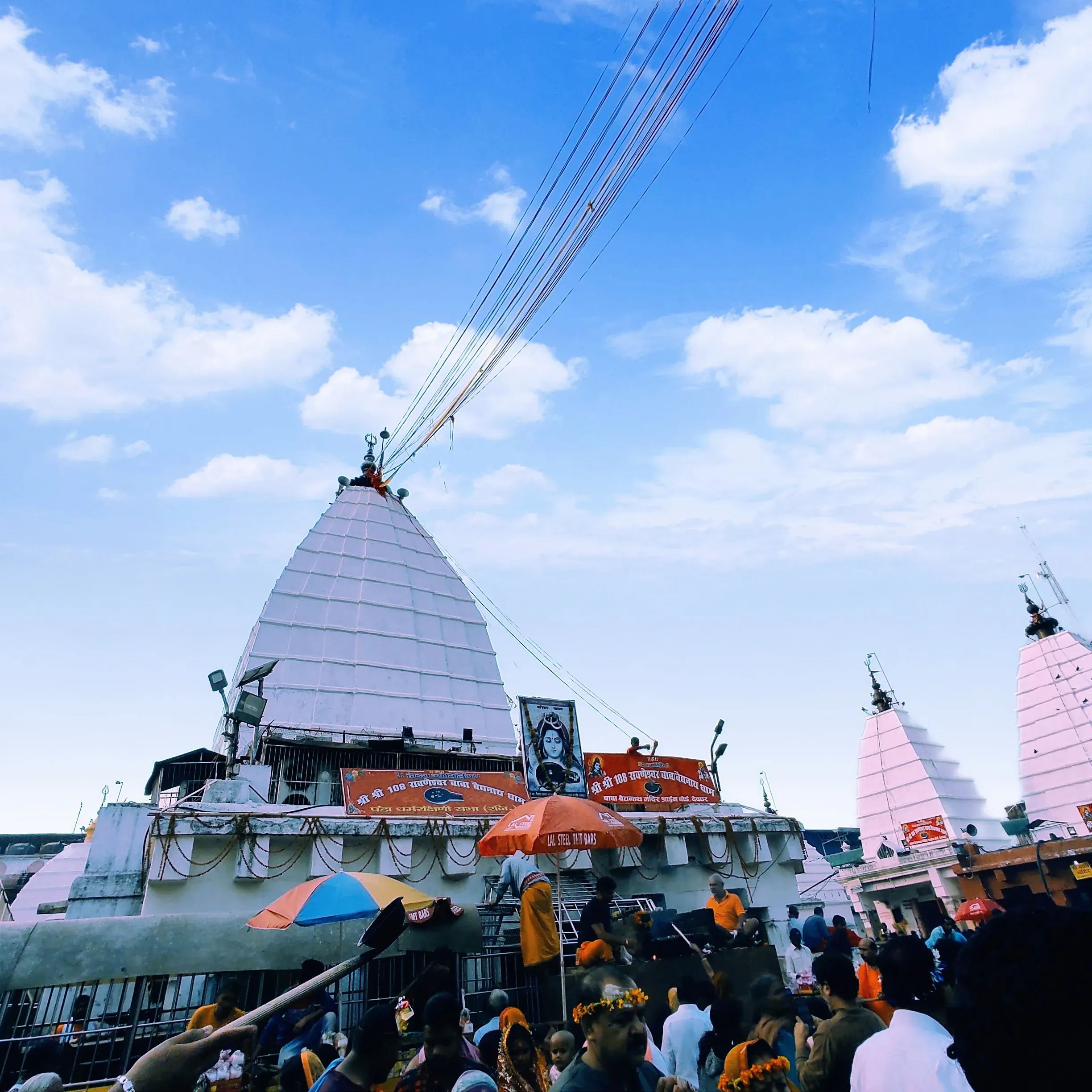
Baidyanath Temple Deoghar
Encircled by formidable walls, the Baidyanath Temple in Deoghar, Jharkhand, is a sacred complex dedicated to Lord Shiva, attracting countless devotees ([1][2]). This cluster comprises twenty-two temples, each contributing to the spiritual ambiance ([1]). During the late medieval period, around 1650 CE, Raja Puran Mal commissioned the temple, adopting the Nagara style distinguished by curvilinear towers ([1][3]). Intricate carvings embellish the sandstone Shikhara (Spire), showcasing floral motifs, divine figures, and geometric patterns ([3]). These carvings display a restrained elegance, setting it apart from more exuberant regional styles ([1]). Stone, laterite, brick, and plaster were employed with sophisticated construction techniques throughout the complex ([1]). Vastu Shastra principles, the ancient Indian science of architecture, likely influenced the temple's layout and orientation, although specific textual references are not available ([2]). The temple reflects the architectural traditions prevalent during its time. Within the courtyard, the echoes of chants and the resonating bells create a vibrant atmosphere ([1]). Witnessing the rituals, offerings, and silent prayers of pilgrims fosters a profound sense of connection ([2][3]). Leaving the Baidyanath Temple, visitors gain a deeper appreciation for the fusion of architecture, faith, and human experience ([1]). This temple stands as an enduring symbol of faith, intertwining tangible and intangible elements ([2]). The Baidyanath Temple's construction in the 17th century showcases the architectural and artistic achievements of the period, reflecting the patronage of Raja Puran Mal and the enduring legacy of Nagara temple architecture in India ([1][3]). The temple continues to be a significant pilgrimage site, embodying the rich cultural and religious heritage of India ([2]).
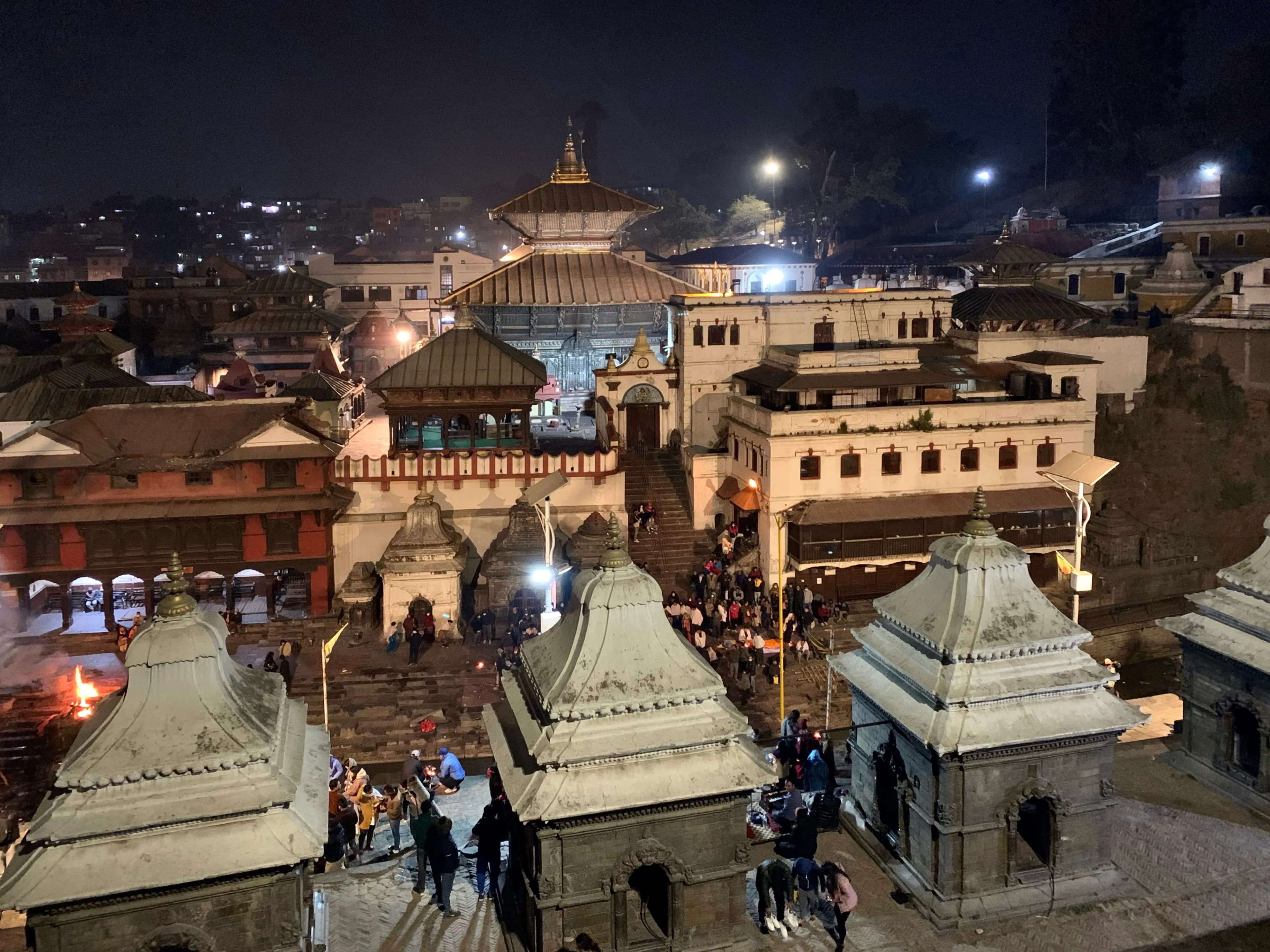
Pashupatinath Temple Kathmandu
The vibrant energy of Kathmandu swirled around me, but as I stepped onto the hallowed grounds of the Pashupatinath Temple, a palpable shift occurred. The air hummed with a different frequency, thick with the scent of incense and marigold garlands, resonating with centuries of devotion. This wasn't just a temple; it was a living organism, pulsating with the heartbeats of pilgrims and the whispers of ancient rituals. As someone deeply immersed in South Indian temple architecture, I was immediately struck by the distinct pagoda style of Pashupatinath. The two-tiered roofs, crafted from intricately carved wood and gilded with copper, were a stark contrast to the towering gopurams and expansive prakarams I was accustomed to. The temple, dedicated to Lord Shiva in his Pashupati form, stood as a testament to the Newar craftsmanship, a unique blend of artistry and devotion. Intricate carvings of deities, mythical creatures, and floral motifs adorned every inch of the wooden structure, each narrating a story, each a testament to the skill of the artisans. The temple complex, situated on the banks of the sacred Bagmati River, presented a fascinating juxtaposition of life and death. While the main temple, accessible only to Hindus, exuded an aura of vibrant worship, the cremation ghats along the riverbank offered a sobering reminder of life's ephemeral nature. Witnessing the open-air cremation ceremonies, while initially jarring, offered a unique perspective on the Hindu philosophy of life, death, and rebirth. The smoke rising from the pyres, mingling with the scent of incense, created an atmosphere both poignant and profound. Observing the devotees, I noticed a distinct blend of Nepali and Indian traditions. The vibrant saffron and red attire, the chanting of mantras, and the offerings of flowers and fruits resonated with my own experiences in South Indian temples. However, the unique rituals specific to Pashupatinath, like the Sadhus smeared with ash and the devotees offering prayers to the sacred bull Nandi, added a distinct Nepali flavour to the spiritual tapestry. The eastern bank of the Bagmati, opposite the main temple, housed a series of smaller shrines and temples, each dedicated to different deities. Exploring these structures, I noticed the influence of various architectural styles, from the classic pagoda to the shikhara style reminiscent of North Indian temples. This architectural amalgamation spoke volumes about the cultural exchange and historical influences that shaped the Kathmandu Valley. One particular detail that captivated me was the use of gilded copper in the main temple's roof. The gleaming metal, reflecting the sunlight, created a dazzling spectacle, enhancing the temple's ethereal beauty. This contrasted beautifully with the weathered stone of the surrounding structures, creating a visual symphony of textures and colours. I recalled the use of gold leaf in South Indian temples, particularly in the vimanams, and pondered on the symbolic significance of precious metals in sacred architecture across different cultures. My visit to Pashupatinath wasn't just a sightseeing trip; it was a pilgrimage of sorts, a journey into the heart of Nepali spirituality. It was a chance to witness the confluence of architectural brilliance, religious fervour, and cultural richness. As I left the temple complex, the lingering scent of incense on my clothes and the rhythmic chanting of mantras echoing in my ears, I carried with me not just photographs and memories, but a deeper understanding of the power of faith and the enduring legacy of sacred spaces. The Pashupatinath Temple, with its unique architectural language and vibrant spiritual energy, stands as a powerful testament to the enduring human quest for connection with the divine.

Keriya Ruins Yotkan Hotan Xinjiang China
Keriya Ruins, also known as Yotkan, located in Keriya County near Hotan, Xinjiang, China, preserve the remarkable remains of a Kushan-era Buddhist settlement that flourished along the southern branch of the Silk Road during the 1st to 4th centuries CE, representing one of the earliest and most significant centers for the transmission of Indian Buddhist traditions to Central Asia during the period when the Kushan Empire facilitated extensive cultural exchange between India and Central Asia. The settlement, constructed primarily from rammed earth, fired brick, and wood with extensive stucco and painted decoration, features the remains of Buddhist stupas, temples, monastic cells, and residential structures that demonstrate the systematic transmission of Indian Buddhist architectural and artistic traditions to Central Asia, while the discovery of numerous artifacts including sculptures, coins, pottery, and manuscripts provides crucial evidence of the site's role as a major center of trade, cultural exchange, and religious transmission along the Silk Road. The site's architectural design demonstrates direct influence from Indian Buddhist architecture, particularly the traditions of the Kushan period in northern India and Gandhara, with the overall planning, stupa forms, and decorative programs reflecting Indian Buddhist practices that were systematically introduced to Central Asia through centuries of cultural exchange, while the discovery of Kushan coins and artifacts showing clear Indian influences provides further evidence of the deep cultural connections between the region and the Indian subcontinent. Archaeological excavations have revealed evidence of extensive Buddhist activity at the site, including the discovery of stupas, temples, and monastic structures that demonstrate the site's importance as a center of Buddhist worship and learning, while the site's location along the southern Silk Road, connecting India with Central Asia and China, underscores its historical role in facilitating the transmission of Buddhist teachings, art, and culture. The settlement flourished particularly during the 2nd to 4th centuries CE, when the Kushan Empire facilitated extensive cultural and religious exchange between India and Central Asia, creating conditions that allowed for the flourishing of Buddhism and the transmission of Indian architectural and artistic traditions to the Tarim Basin, while the site continued to function as a Buddhist center through the 5th and 6th centuries before gradually declining following the decline of the Kushan Empire. The site was likely abandoned during the 7th or 8th century CE following political changes and shifting trade routes, but the substantial architectural remains that survive provide crucial evidence of the site's original grandeur and importance, while ongoing archaeological research continues to reveal new insights into the site's history, the lives of its inhabitants, and the cultural exchanges that occurred along the Silk Road. Today, Keriya Ruins stand as an important archaeological site in the Taklamakan Desert, serving as a powerful testament to the early transmission of Indian Buddhist traditions to Central Asia and the historical role of the Kushan Empire in facilitating cultural exchange, while ongoing archaeological research and preservation efforts continue to protect and study this extraordinary cultural treasure that demonstrates the profound impact of Indian civilization on Central Asian societies during the ancient period. ([1][2])
Quick Links
Plan Your Heritage Journey
Get personalized recommendations and detailed visitor guides