Has Inheritage Foundation supported you today?
Your contribution helps preserve India's ancient temples, languages, and cultural heritage. Every rupee makes a difference.
Secure payment • Instant 80G certificate
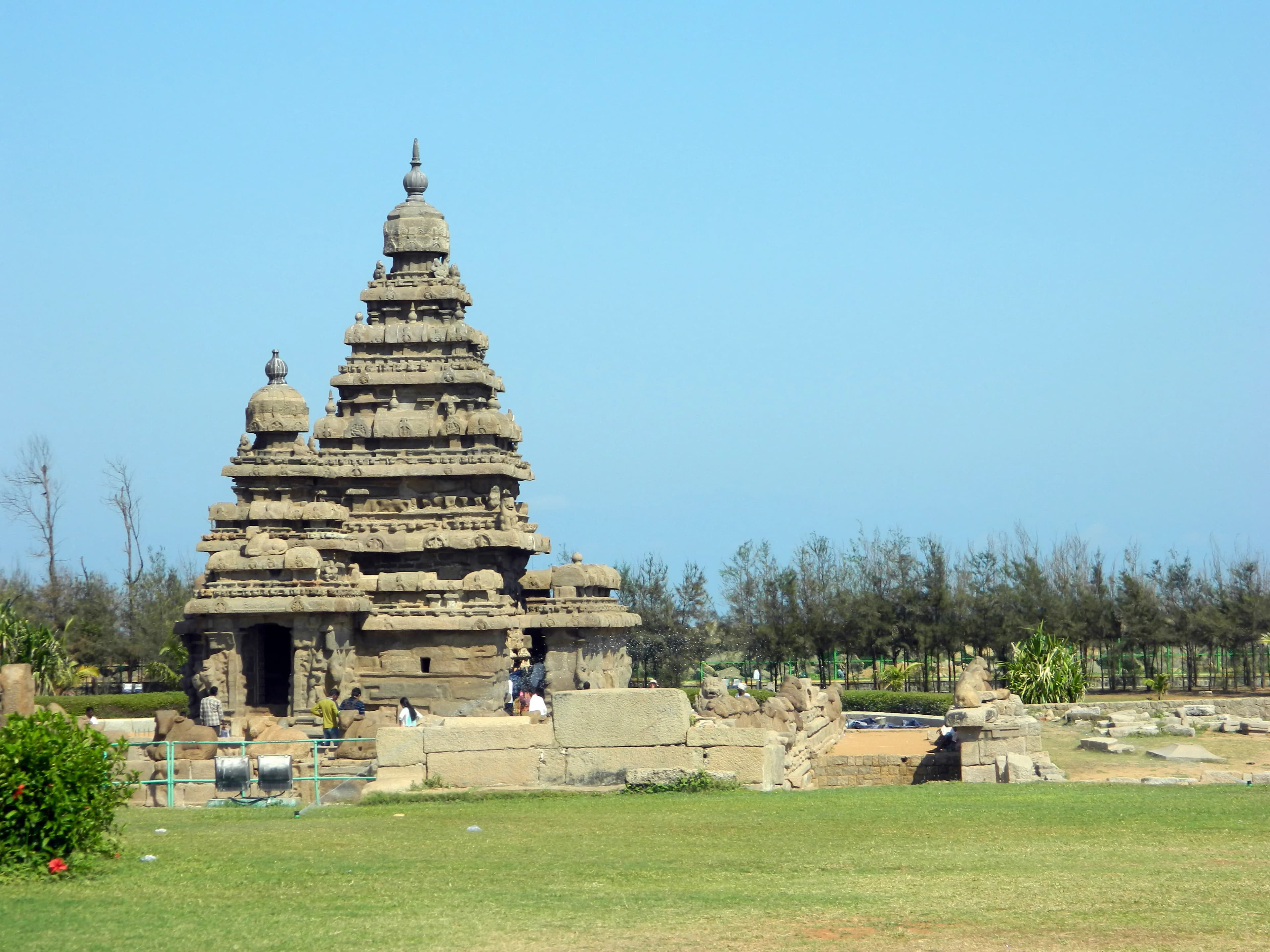
Shore Temple Mahabalipuram
The salt-laced wind whipped my dupatta around me as I stood before the Shore Temple at Mahabalipuram, the granite behemoths rising defiantly against the relentless churn of the Bay of Bengal. Having spent years immersed in the temple architecture of Uttar Pradesh, from the intricate sandstone carvings of Khajuraho to the soaring spires of Varanasi, I was eager to experience the distinct Dravidian artistry of this UNESCO World Heritage Site. And it did not disappoint. The Shore Temple, unlike the inland temples I was accustomed to, felt intrinsically connected to the ocean. The rhythmic crashing of waves against the stone base created a constant, almost meditative soundtrack. Built during the reign of the Pallava dynasty in the 8th century, the temple complex, though weathered by centuries of sea spray and wind, still retains a remarkable sense of grandeur. It’s a testament to the skill of the artisans who carved these intricate structures directly from the rocky outcrop. The complex consists of three shrines, two dedicated to Shiva and one to Vishnu. The pyramidal towers, or *vimanas*, are characteristic of Dravidian architecture, a stark contrast to the curvilinear *shikharas* of North Indian temples. These *vimanas*, tiered and sculpted with miniature shrines, mythical creatures, and divine figures, rise towards the sky, their granite surfaces shimmering under the intense Tamil Nadu sun. I was particularly struck by the smaller shrines that dot the complex, almost like architectural echoes of the main structures. They create a sense of layered history, whispering tales of devotion and artistic ingenuity. Climbing the worn steps of the main Shiva temple, I was greeted by the sight of the *garbhagriha*, the inner sanctum. While photography inside is restricted, the mental image of the dimly lit space, imbued with centuries of prayer and ritual, remains vivid. The air within felt thick with history, a palpable connection to the generations who had worshipped here before me. Wandering through the complex, I noticed the intricate carvings that adorned every surface. Unlike the narrative panels common in North Indian temples, the sculptures here seemed more focused on individual deities and celestial beings. I recognized depictions of Shiva, Vishnu, and Durga, their forms imbued with a powerful serenity. The level of detail was astounding, from the delicate folds of their garments to the intricate ornamentation adorning their crowns. It was clear that these carvings were not merely decorative; they were expressions of deep religious devotion. One of the most striking features of the Shore Temple is its relationship with the sea. The complex is designed in such a way that during certain times of the year, the rising sun appears perfectly aligned with the main Shiva shrine. This deliberate integration of the natural world into the sacred architecture speaks to the Pallava understanding of the cosmos. It's a powerful reminder of the interconnectedness of all things, a concept deeply embedded in Indian philosophy. As I sat on the rocks overlooking the temple, watching the waves crash against the shore, I reflected on the journey that had brought me here. From the Gangetic plains to the Coromandel Coast, the architectural expressions of faith in India are incredibly diverse, yet united by a common thread of devotion and artistic brilliance. The Shore Temple, with its windswept grandeur and intricate carvings, stands as a powerful testament to the enduring legacy of the Pallava dynasty and the rich tapestry of Indian art and culture. It is a place where the divine meets the earthly, where stone and sea converge in a timeless embrace.

Anuradhapura Ancient City North Central Province Sri Lanka
Anuradhapura, located in Sri Lanka's North Central Province, served as the island's first capital, flourishing from around 350 BC for over 1,300 years ([1][2]). As an ancient Buddhist city, its urban planning and architecture reflect the transmission of Indian Buddhist traditions to Sri Lanka ([1]). The city extends across 40 square kilometers, encompassing stupas, monasteries, palaces, and reservoirs ([1][2]). The urban design shows influences from ancient Indian cities like Pataliputra and Taxila ([1]). Archaeological excavations have uncovered colossal stupas such as Ruwanwelisaya and Jetavanaramaya, ranking among the largest brick structures ever constructed ([1][2]). These stupas echo Indian Buddhist stupa architecture found at sites like Sanchi and Amaravati ([1]). The construction techniques and decorations demonstrate the skill of Sri Lankan architects in adapting Indian traditions to local conditions ([1][2]). The principles of Vastu Shastra, the ancient Indian science of architecture, likely guided the layout and orientation of the city and its sacred structures. Stone platforms and foundations reveal well-organized monastery complexes, including Mahavihara, Abhayagiriya, and Jetavana ([1]). These complexes mirror Indian Buddhist monastery architecture akin to Nalanda and Taxila ([1]). Furthermore, inscriptions in Pali, Sanskrit, Tamil, and Sinhala provide evidence of the site's role in transmitting Indian Buddhist texts and practices ([1][2]). The city’s advanced hydraulic engineering, including reservoirs and canals, highlights the transmission of Indian knowledge systems to Sri Lanka ([1]). Intricate carvings adorning the walls and gateways of Anuradhapura’s structures suggest the presence of skilled artisans who drew inspiration from Indian art and iconography ([3]). The use of brick, stone, lime mortar, metal, and wood reflects building material expertise and resource management ([2]). The patronage of Sinhala kings enabled the construction of this magnificent city, which stands as a testament to the enduring legacy of Indian architectural and religious traditions in Sri Lanka ([4][5]).
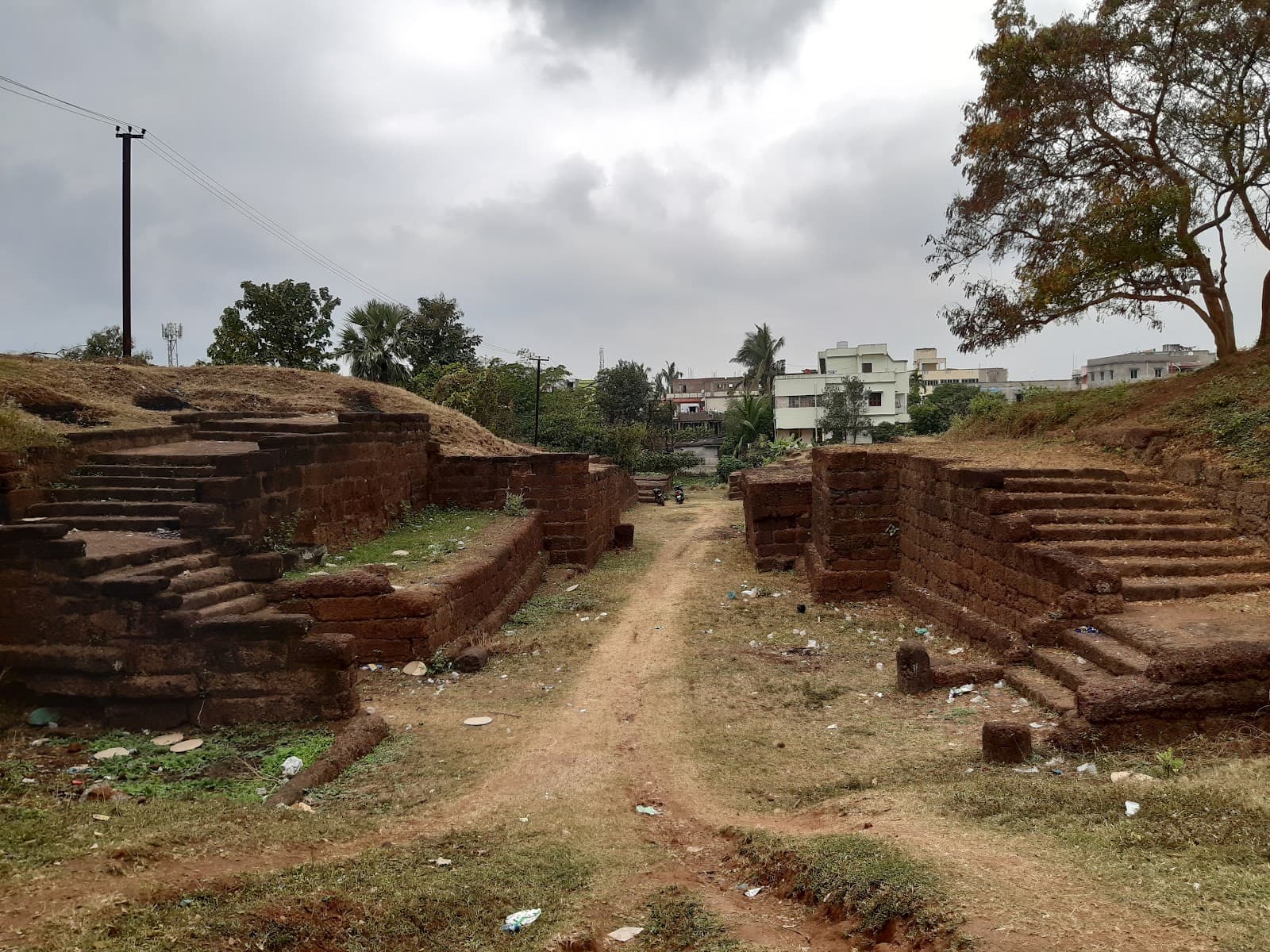
Sisupalgarh Fort Bhubaneswar
The laterite ramparts of Sisupalgarh rose before me, baked a deep, rusty red under the Odisha sun. Not the imposing, sheer walls of a Rajput fortress, but rather the sprawling, undulating remains of a city fortification, hinting at a life lived within centuries ago. Here, just a few kilometers from the bustling modernity of Bhubaneswar, lay the whispers of ancient Kalinga, a realm steeped in history and architectural ingenuity. My fingers traced the rough texture of the laterite, a porous rock formed from iron-rich soil. Its use spoke volumes about the builders’ resourcefulness and understanding of the local environment. This wasn't just a defensive structure; it was a testament to sustainable building practices, utilizing readily available materials. The ramparts, though eroded by time, still retained a sense of formidable strength. They stretched in a roughly square shape, enclosing an area of approximately 1.2 square kilometers, a scale that impressed upon me the sheer size of this ancient settlement. Walking along the top of the ramparts, I could see the clear demarcation of the moat, now dry and overgrown, but once a crucial defensive feature. The strategic placement of gateways, particularly the impressive northern and southern entrances, suggested a well-planned urban layout. These weren't mere openings; they were carefully constructed passages, designed for both defense and ceremonial processions. I could almost picture the chariots rumbling through, the soldiers standing guard, the vibrant life of the city flowing in and out. Descending into the heart of the fort, I encountered the remnants of what were once bustling streets and residential areas. The foundations of houses, crafted from the same laterite, were still visible, laid out in a grid pattern, indicative of a planned urban settlement. The discovery of artifacts like pottery shards, terracotta figurines, and iron implements during excavations paints a vivid picture of daily life within these walls. It wasn't just a military outpost; it was a thriving urban center, a hub of trade and cultural exchange. One of the most striking features of Sisupalgarh is its sophisticated water management system. Evidence suggests the presence of elaborate drains and reservoirs, showcasing the advanced engineering skills of the time. The careful planning of water resources, crucial in a region with distinct wet and dry seasons, speaks to the foresight and practicality of the city's planners. It’s a reminder that even in ancient times, urban planning considered the practicalities of daily life, not just defense and grandeur. The Ashokan rock edicts discovered nearby, though not within the fort itself, add another layer of historical significance to Sisupalgarh. They suggest that the city, then known as Tosali, was a major administrative center under the Mauryan empire. This connection to one of India’s most influential rulers adds a palpable sense of historical weight to the site. Standing amidst these ruins, I felt a tangible connection to the past, a sense of awe at the ingenuity and resilience of those who built and inhabited this ancient city. Sisupalgarh isn't just a collection of ruins; it's a living testament to the rich tapestry of Indian history. It's a place where the past whispers to the present, offering glimpses into the lives, beliefs, and architectural prowess of a civilization that thrived centuries ago. The site deserves more attention, not just as a historical curiosity, but as a valuable lesson in sustainable urban planning and a reminder of the enduring legacy of ancient India. As I left the fort, the setting sun casting long shadows over the laterite walls, I carried with me a profound sense of wonder and a renewed appreciation for the architectural marvels of ancient India. Sisupalgarh is more than just a fort; it is a time capsule, waiting to be explored and understood.
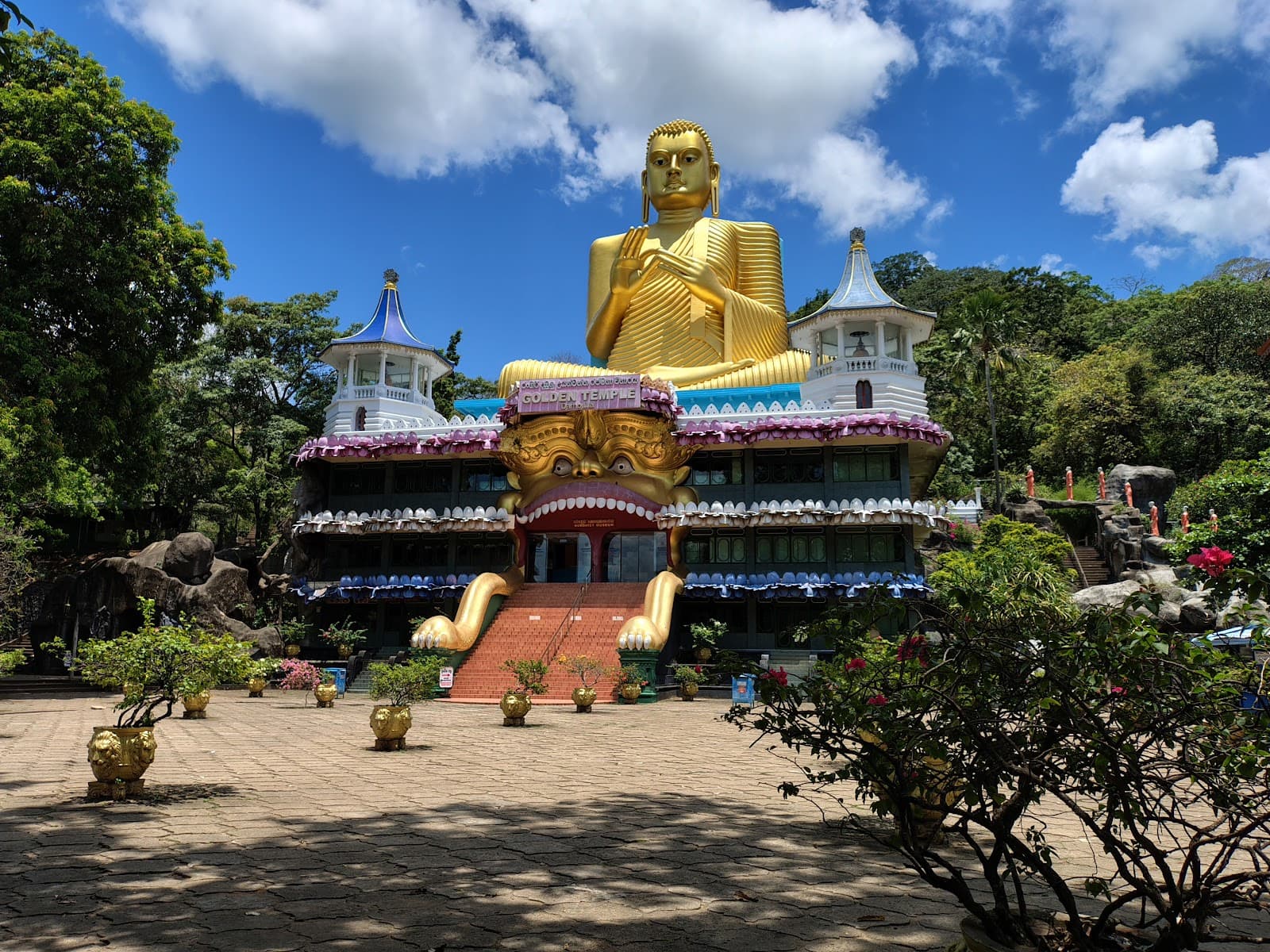
Dambulla Cave Temple Matale Sri Lanka
Nestled within the heart of Sri Lanka, the Dambulla Cave Temple, also known as the Golden Temple of Dambulla, is an ancient marvel carved into a massive granite rock ([1][2]). Originating in the 1st century BCE, during the reign of King Valagamba, this complex stands 160 meters above the surrounding plains, representing a significant testament to the enduring legacy of Buddhist art and architecture in South Asia ([1]). As the largest and best-preserved cave temple complex in Sri Lanka, it houses over 150 Buddha statues and extensive murals ([1][2]). Intricate carvings adorning the walls of the five interconnected caves showcase a profound transmission of Indian Buddhist religious and artistic traditions to Sri Lanka ([1][2]). These caves, continuously used as places of Buddhist worship for over two millennia, feature Buddha statues executed in various mudras (hand gestures) and postures, along with murals covering over 2,100 square meters ([1]). The artistic sophistication and iconographic accuracy of these statues demonstrate the deep understanding of Indian Buddhist iconography possessed by Sri Lankan artists ([1][2]). During the ancient period, the murals, painted in vibrant colors, depict scenes from the Buddha's life, Jataka tales, and various Buddhist deities, illustrating the transmission of Indian Buddhist narrative traditions ([1][2]). Archaeological evidence indicates that the temple served as a major center of Buddhist worship and learning for over two millennia, attracting monks, pilgrims, and patrons from across Sri Lanka and South India ([1]). Inscriptions in Sinhala, Tamil, and Sanskrit offer crucial evidence of the site's role in transmitting Indian Buddhist texts and practices ([1][2]). The temple's patronage by kings like Valagamba and Nissanka Malla further solidified its importance ([1]). Today, Dambulla Cave Temple, a UNESCO World Heritage Site, remains a vital pilgrimage site, demonstrating the profound impact of Indian civilization on Sri Lankan religious and artistic traditions ([1][2]). Ongoing research and conservation efforts ensure the preservation of this extraordinary cultural treasure ([1]).
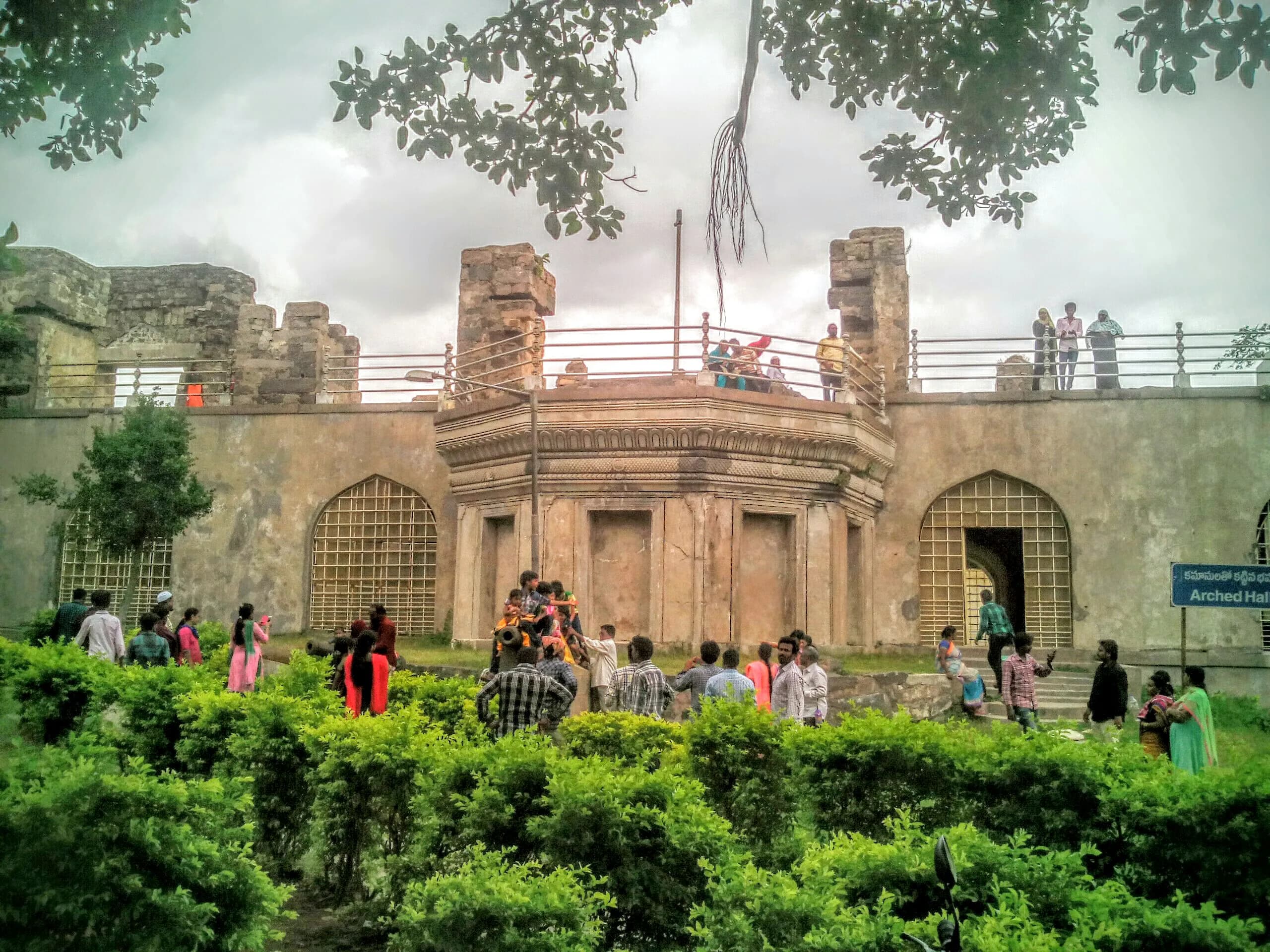
Kondapalli Fort Kondapalli
The wind whipped around me, carrying whispers of history as I stood atop Kondapalli Fort, gazing over the sprawling Krishna district. The panoramic view, a tapestry of green fields and distant villages, was a fitting reward for the climb. Coming from Gujarat, where forts often rise from arid landscapes, the lush setting of Kondapalli was a striking contrast, a testament to the diverse beauty of India's fortifications. My journey through the fort began with the imposing Dargah of Gulab Shah, a Sufi saint revered by both Hindus and Muslims. This syncretic element, so common in India, immediately piqued my interest. The Dargah, with its simple yet elegant architecture, served as a gentle prelude to the grandeur within. Passing through the colossal three-storied entrance, I was struck by the scale of the fort. Kondapalli is not just a single structure but a complex, a miniature city enclosed within its ramparts. The architecture displayed a fascinating blend of styles. While the robust construction and strategic layout bore the hallmarks of a formidable military stronghold, delicate carvings and intricate details hinted at a period of artistic flourishing. The influence of various dynasties – the Reddy Kings, the Vijayanagara Empire, and the Qutb Shahis – was evident in the eclectic mix of architectural elements. I noticed the distinct Vijayanagara style in the sturdy granite walls and the strategically placed bastions, while the later additions, like the Tanisha Mahal, showcased a more refined, almost palatial aesthetic. Exploring the ruins of the Tanisha Mahal was a particularly poignant experience. This "Queen's Palace," once a symbol of royal luxury, now stands in graceful decay. The remnants of ornate balconies, delicate arches, and intricately carved pillars spoke volumes about the fort's opulent past. I could almost picture the royal court in its heyday, the halls filled with music and laughter. The light filtering through the broken arches cast long shadows, adding to the melancholic beauty of the place. One of the most striking features of Kondapalli Fort is its ingenious water management system. Massive cisterns, carved into the rock, collected rainwater, ensuring a continuous supply for the inhabitants. This foresight, crucial in a region prone to dry spells, highlighted the architectural ingenuity of the builders. I was particularly impressed by the intricate network of channels and pipes that distributed the water throughout the fort, a testament to their advanced understanding of hydraulic engineering. As I walked along the ramparts, I noticed the strategically placed cannons, silent sentinels guarding the fort. The sheer size of these cannons, some of them impressively large, underscored the fort's military importance. The views from the ramparts were breathtaking, offering a 360-degree panorama of the surrounding countryside. I could see the winding Krishna River in the distance, its waters glinting in the sunlight. The Kondapalli Fort is more than just stones and mortar; it's a living testament to a rich and layered history. It's a place where architectural grandeur meets strategic brilliance, where whispers of royal splendor mingle with echoes of battles fought. As I descended from the fort, I carried with me not just photographs and notes, but a deeper appreciation for the architectural heritage of Andhra Pradesh. This fort, standing proud against the backdrop of time, is a must-see for anyone seeking to unravel the fascinating tapestry of Indian history. It's a place that stays with you long after you've left, its stories etched in your memory.
Aranmula Parthasarathy Temple Aranmula
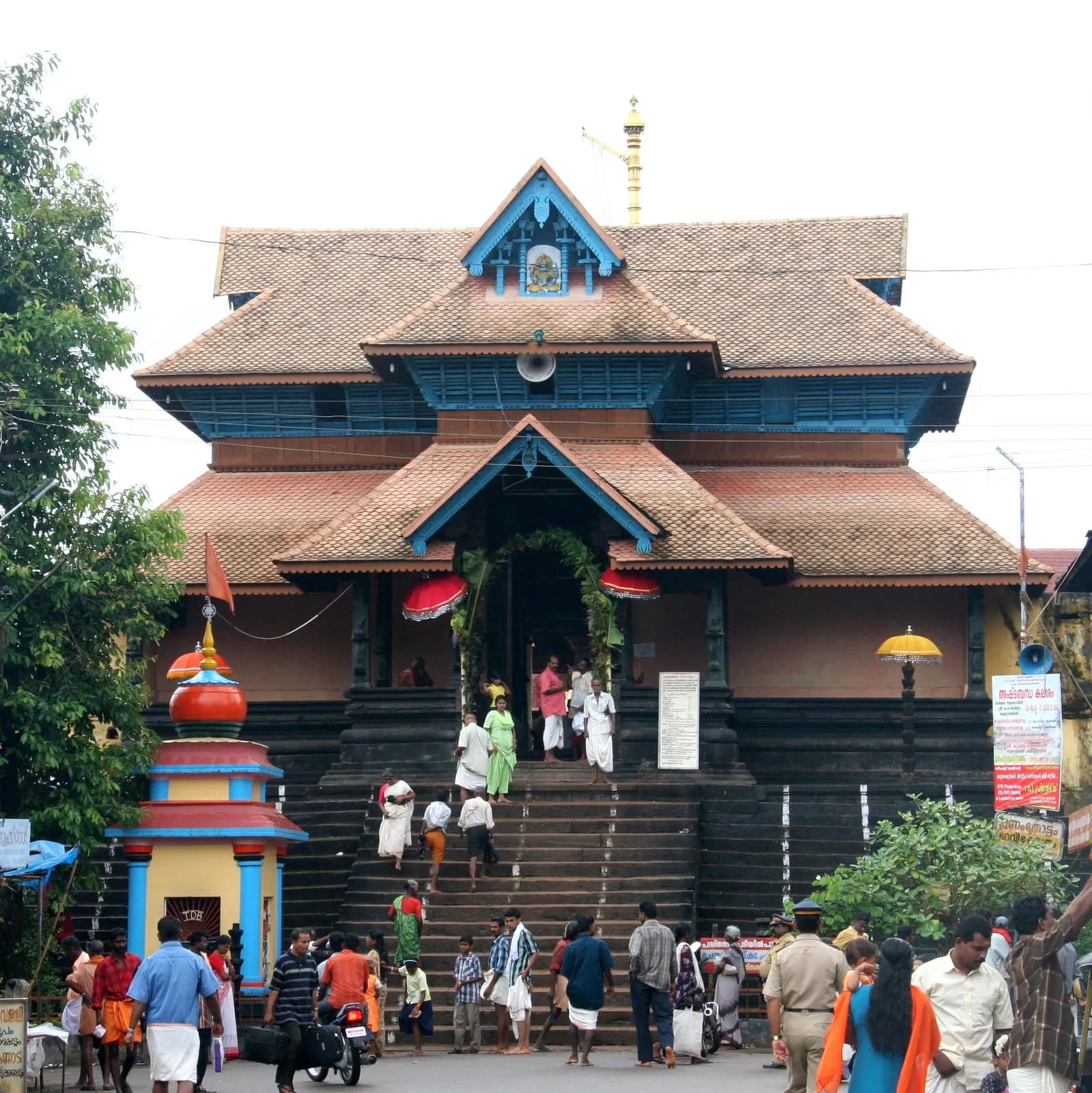
Enclosed by Kerala's lush landscapes, the Aranmula Parthasarathy Temple, a shrine dedicated to Lord Krishna, exemplifies the region's distinct architectural heritage ([1][2]). Constructed around 1550 CE, during the Chera period, the temple diverges from the towering gopurams (gateway towers) typical of Tamil Nadu temples, embracing the Kerala style with its sloping, copper-shingled roofs ([3][4]). Commissioned by Pandya Dynasty kings, the temple showcases the architectural prowess of the time ([5]). Intricate carvings embellishing the wooden eaves and pillars narrate scenes from the Mahabharata, reflecting the region's deep-rooted mythological traditions ([1][2]). The use of laterite, wood, stone, and copper highlights the traditional materials employed in Kerala temple construction ([3][4][5]). Further, the Koothambalam (temple theatre) within the complex underscores the temple's function as a cultural center, its ornate pillars resonating with the echoes of Kathakali performances ([1][2]). Within the Garbhagriha (Sanctum Sanctorum), the deity is adorned with resplendent silks and jewels, creating a mystical ambiance heightened by the aroma of sandalwood and incense ([3][4]). The temple's design may subtly align with principles outlined in texts like the *Manasara Shilpa Shastra*, though specific verses are not directly documented ([5]). Also, Aranmula's connection to the Aranmula Kannadi, a unique metal mirror crafted through a secret process, adds to the temple's mystique ([1][2][3]). During the annual Onam festival, the Vallam Kali boat race on the Pampa River enhances the temple's spiritual significance, celebrating the enduring power of tradition ([4][5]). The temple stands as a repository of Kerala's cultural and architectural legacy, inviting visitors to immerse themselves in its rich history and spiritual aura ([1][2][3]). The gable roofs further accentuate the distinctiveness of the temple, setting it apart from other architectural styles in the region ([4][5]).

Koneurgench Dash Mosque Temple Remnants Dashoguz Turkmenistan
Koneurgench, dramatically situated in the Dashoguz Region of northern Turkmenistan, represents one of the most extraordinary and archaeologically significant medieval cities in Central Asia, serving as the capital of the Khorezm Empire and featuring the remarkable Dash Mosque with its 12th-13th century temple remnants that demonstrate pre-Islamic layers with remarkable parallels to Indian religious and architectural traditions, creating a powerful testament to the sophisticated synthesis of Indian and Central Asian cultural traditions during the medieval period. The ancient city, also known as Kunya-Urgench and designated as a UNESCO World Heritage Site, features extraordinary architectural elements including the Dash Mosque with its underlying temple structures that demonstrate clear Indian architectural influences from periods before the Islamic conquest, while the site's most remarkable feature is its sophisticated pre-Islamic temple remnants featuring architectural elements, ritual structures, and decorative programs that demonstrate clear parallels with Indian temple architecture and religious practices. The temple remnants' architectural layout, with their central ritual structures surrounded by ceremonial spaces and architectural elements, follows sophisticated planning principles that demonstrate remarkable parallels with Indian temple planning principles, while the temple remnants' extensive decorative programs including architectural elements and religious iconography demonstrate the sophisticated synthesis of Indian religious iconography and architectural traditions with local Central Asian aesthetic sensibilities. Archaeological evidence reveals that the site served as a major center of religious and cultural activity for centuries before the Islamic period, attracting traders, priests, and elites from across Central Asia, South Asia, and beyond, while the discovery of numerous artifacts including architectural elements that demonstrate clear Indian influences, ritual objects that parallel Indian practices, and religious iconography that reflects Indian cosmological concepts provides crucial evidence of the site's role in the transmission of Indian religious traditions to Central Asia, demonstrating the sophisticated understanding of Indian religious and architectural traditions possessed by the site's patrons and religious establishment. The site's association with the Khorezm Empire, which had extensive trade and cultural connections with India throughout its history, demonstrates the sophisticated understanding of Indian religious traditions that were transmitted to Central Asia, while the site's pre-Islamic temple remnants and architectural elements demonstrate remarkable parallels with Indian temple architecture and religious practices that were central to ancient Indian religious traditions. The site has been the subject of extensive archaeological research, with ongoing excavations continuing to reveal new insights into the site's sophisticated architecture, religious practices, and its role in the transmission of Indian religious traditions to Central Asia, while the site's status as a UNESCO World Heritage Site demonstrates its significance as a major center for the transmission of Indian cultural traditions to Central Asia. Today, Koneurgench stands as a UNESCO World Heritage Site and represents one of the most important medieval cities in Central Asia, serving as a powerful testament to the transmission of Indian religious and architectural traditions to Central Asia, while ongoing archaeological research and conservation efforts continue to protect and study this extraordinary cultural treasure that demonstrates the profound impact of Indian civilization on Central Asian religious and cultural traditions. ([1][2])
Ananda Temple Bagan
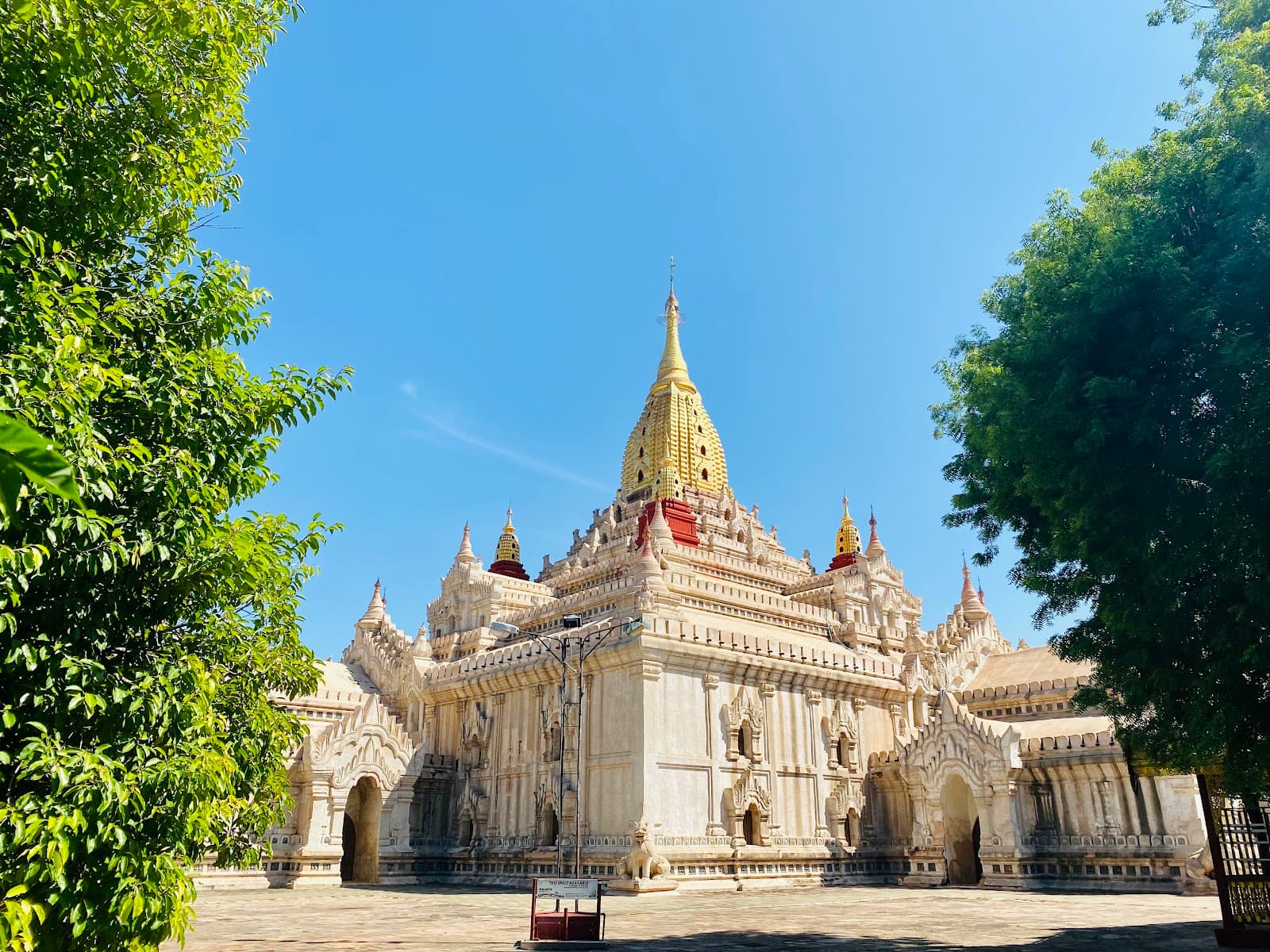
Ananda Temple, situated in the Bagan Archaeological Zone, represents a compelling example of the transmission of Indian architectural and religious ideas to Myanmar, dating back to 1105 CE ([1][2]). King Kyanzittha of the Bagan Empire commissioned its construction, reflecting the empire's engagement with Indian culture ([1]). Vastu Shastra principles, the ancient Indian science of architecture, are discernible in the temple's layout, aligning with mandala-based cosmological concepts common to Hindu and Buddhist sacred spaces ([2]). Rising to a height of 51 meters, the temple follows a cruciform plan, featuring four standing Buddha images facing the cardinal directions ([1]). Intricate carvings adorning the walls narrate stories from the Jataka tales, as well as Hindu epics such as the Ramayana and Mahabharata, illustrating the fusion of religious narratives in ancient Myanmar ([2][3]). During the medieval period, Bagan's temple architecture, including Ananda, absorbed Gupta and Pala influences from India, particularly evident in the Shikhara (spire) design reminiscent of North Indian Nagara temples ([3][4]). Granite and sandstone blocks, meticulously carved, were employed alongside brick and stucco, indicative of the advanced architectural capabilities of the time ([4]). Archaeological evidence suggests the involvement of Indian architects and artisans in the construction, underscoring the strong cultural and commercial links between India and Myanmar ([5]). Sophisticated stucco decoration enhances the temple's exterior, contributing to its overall aesthetic appeal ([1][5]). As a UNESCO World Heritage Site, Ananda Temple embodies Myanmar’s historical connections to Indian civilization through shared religious and architectural traditions ([3][4]). The temple serves as an active site of Buddhist worship, even after undergoing restoration in the 1970s following earthquake damage ([2]). Its enduring presence highlights the interconnectedness of South and Southeast Asian cultures through the exchange of artistic and spiritual ideas.
Moti Bagh Palace Patiala
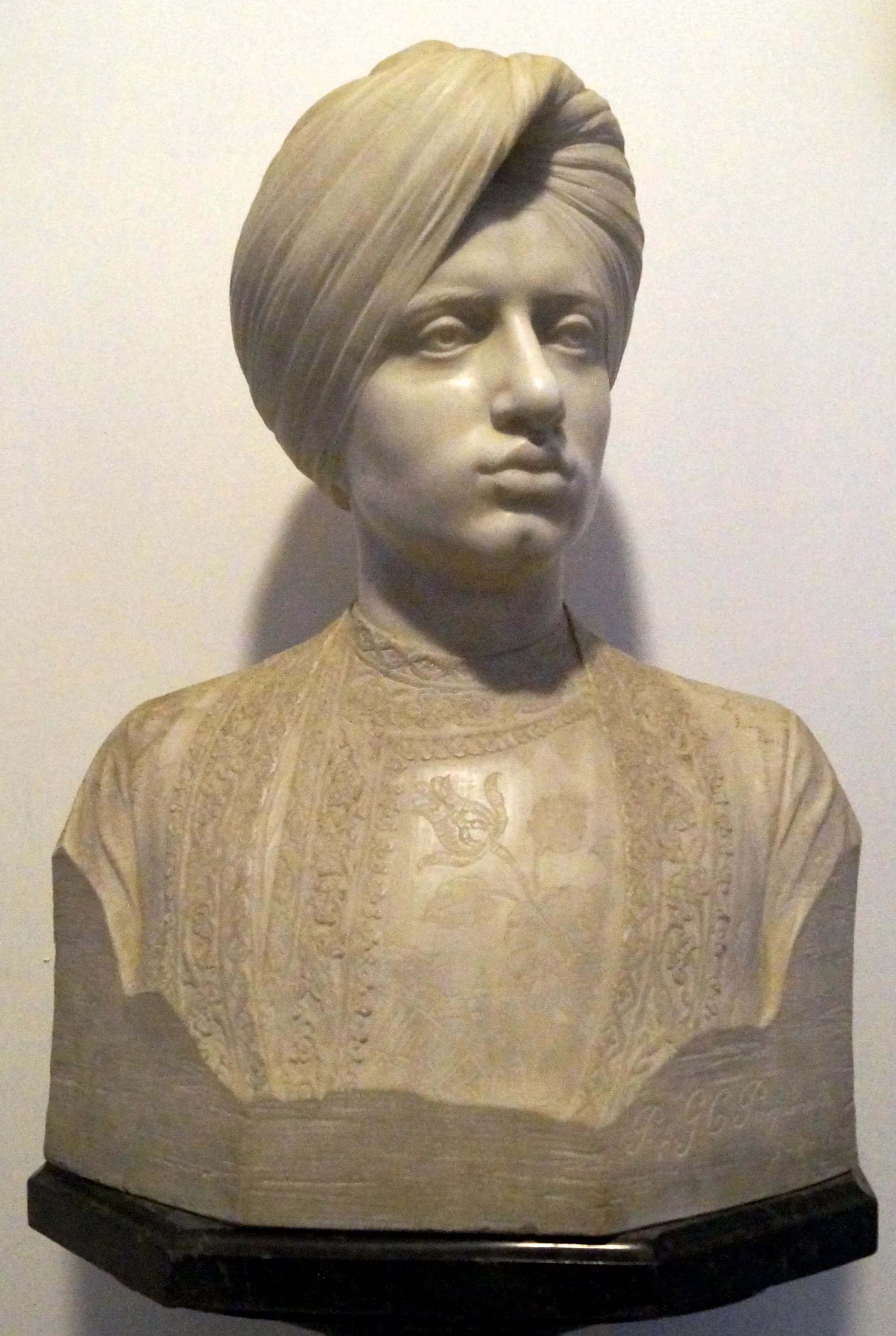
The sun, a molten orb in the Patiala sky, cast long shadows across the manicured lawns of Moti Bagh Palace. Coming from Uttar Pradesh, a land steeped in Mughal grandeur, I was curious to see how Patiala’s royal legacy would compare. The palace, a sprawling complex, didn't disappoint. It wasn't the overwhelming opulence of Awadh's architecture, but a more restrained, almost European elegance blended with Sikh influences. My first impression was of space. Unlike the tightly clustered buildings of some palaces, Moti Bagh breathes. The main palace, the Quila Mubarak, stands as the anchor, its red sandstone walls a stark contrast to the verdant surroundings. The architecture here is a fascinating blend. While the overall layout and the use of sandstone reminded me of Rajput palaces back home, the intricate stucco work, particularly around the arched entrances and windows, spoke of a distinct regional style. Floral motifs, geometric patterns, and even depictions of animals adorned the walls, a testament to the artisans' skill. Stepping inside the Quila Mubarak felt like stepping back in time. The Sheesh Mahal, or Palace of Mirrors, was breathtaking. While smaller than the Sheesh Mahal in Jaipur's Amber Fort, the intricate mirror work here was no less dazzling. The play of light reflecting off the myriad tiny mirrors, creating an illusion of infinite space, was mesmerizing. I could almost imagine the royal court assembled here, their silks and jewels shimmering in the candlelight. The Darbar Hall, with its high ceilings and imposing chandeliers, exuded an air of formality. I was particularly struck by the portraits lining the walls – a visual chronicle of Patiala's rulers. Their stern faces, adorned with elaborate turbans and jewels, seemed to gaze down upon me, silent witnesses to centuries of history. The portraits weren't mere decorations; they were a powerful assertion of lineage and authority, a theme I’ve often encountered in the palaces of Uttar Pradesh as well. Moving beyond the Quila Mubarak, I explored the other parts of the complex. The sprawling gardens, a blend of Mughal and European landscaping, offered a welcome respite from the grandeur of the palace. Fountains, once undoubtedly gurgling with water, now stood silent, their weathered stone a reminder of time's relentless march. I could picture the royal family strolling through these gardens, enjoying the shade of the trees and the fragrance of the flowers. The museum within the complex was a treasure trove of artifacts. From antique weaponry and intricately embroidered textiles to vintage photographs and royal memorabilia, the collection offered a glimpse into the opulent lifestyle of Patiala's rulers. I was particularly fascinated by the collection of Phulkari embroidery, a traditional craft of Punjab. The vibrant colors and intricate patterns were a testament to the region's rich artistic heritage. It reminded me of the Chikankari embroidery of Lucknow, another example of the exquisite craftsmanship found across India. One aspect that stood out at Moti Bagh was the relative lack of restoration compared to some of the more heavily touristed sites I’ve visited. While some sections were well-maintained, others showed signs of neglect. Peeling paint, crumbling plaster, and overgrown vegetation whispered of a glorious past fading into obscurity. This, in a way, added to the palace's charm. It felt less like a polished museum piece and more like a living, breathing entity, bearing the weight of its history. As I left Moti Bagh Palace, the setting sun painting the sky in hues of orange and purple, I couldn't help but feel a sense of melancholy. The palace, a testament to a bygone era, stood as a silent sentinel, guarding the memories of a vanished kingdom. It was a poignant reminder of the ephemeral nature of power and the enduring legacy of art and architecture. The experience, while different from the Mughal splendor I’m accustomed to, offered a valuable glimpse into another facet of India's rich cultural tapestry.
Ita Fort Itanagar
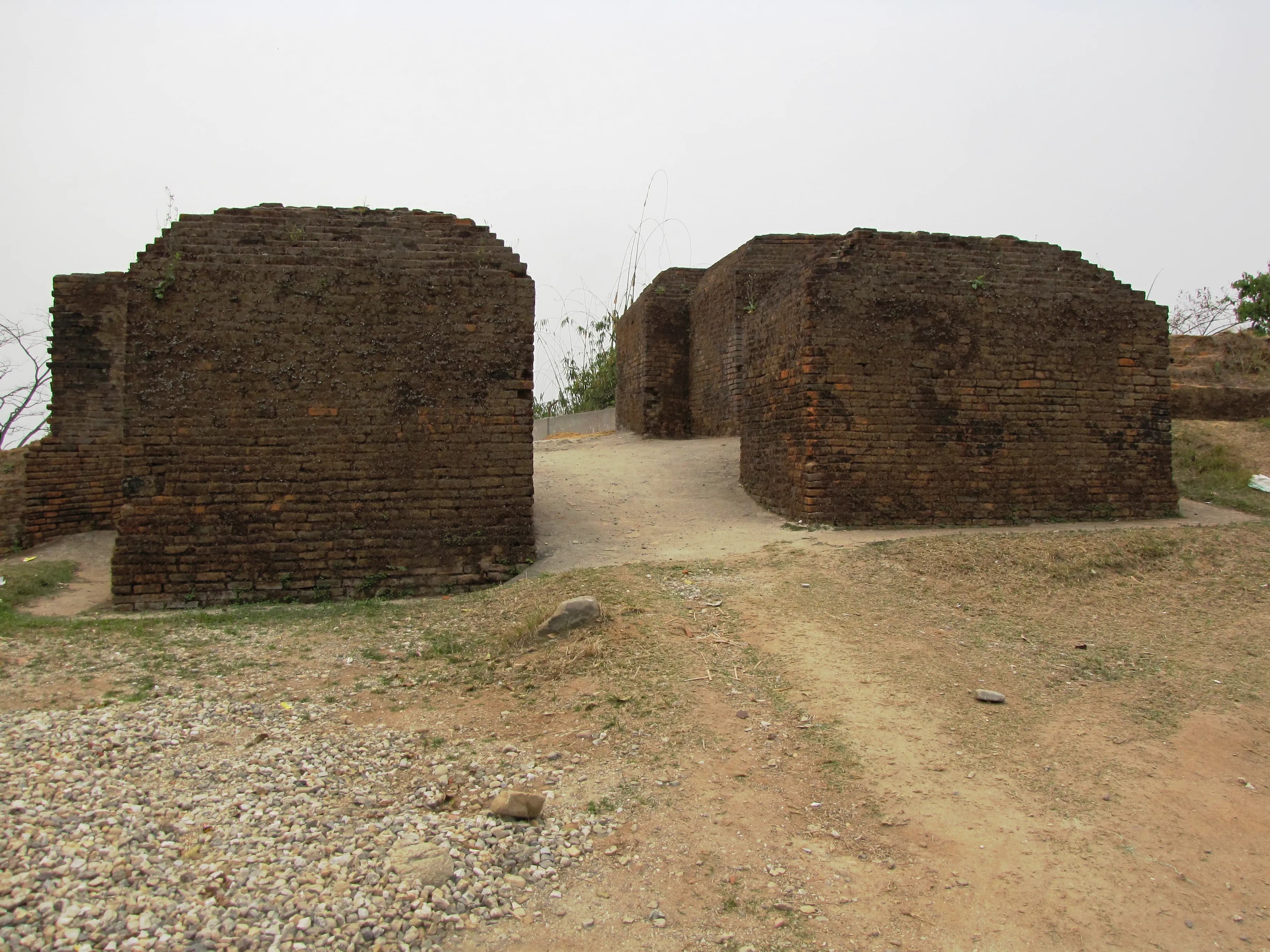
The midday sun cast long shadows across the undulating hills surrounding Itanagar, highlighting the weathered brick-red ramparts of the Ita Fort. Ascending the gentle slope towards the main entrance, I felt a palpable shift in atmosphere, a sense of stepping back in time. This wasn't merely a historical site; it was a living testament to the architectural ingenuity of the Tai-Ahom people who once ruled this region. Ita Fort, also known as the Ita Krung, isn't a fort in the conventional sense of a singular fortified structure. It's more accurately described as a fortified complex, a sprawling network of ramparts, gateways, and earthen mounds enclosing a vast area. The walls, constructed primarily of bricks, are remarkable for their sheer size and the irregular, almost organic way they follow the contours of the land. Unlike the precisely measured and geometric fortifications of the Mughals, Ita Fort displays a different kind of sophistication – an understanding of the landscape and its defensive potential. Passing through the main gateway, a modest arched opening in the thick walls, I found myself in a large open space. Here, the remnants of several structures were visible – low brick platforms, scattered fragments of walls, and the intriguing circular depressions that are believed to have been the bases of granaries. The absence of elaborate ornamentation or intricate carvings was striking. The beauty of Ita Fort lies in its stark simplicity, its functional design, and the sheer scale of the undertaking. The bricks themselves are a story. Large and uneven, they bear the marks of hand-crafting, a tangible connection to the builders who labored centuries ago. The mortar, a mixture of clay and organic materials, has weathered over time, giving the walls a textured, almost tapestry-like appearance. I ran my hand over the rough surface, imagining the hands that had placed these very bricks, the generations who had sought shelter within these walls. Climbing to the highest point of the ramparts, I was rewarded with a panoramic view of the surrounding hills and the valley below. It was easy to see why this location was chosen for the fort. The elevated position provided a clear line of sight for miles, allowing the inhabitants to monitor the approaches and defend against potential invaders. The strategic importance of Ita Fort was undeniable. One of the most fascinating aspects of Ita Fort is the mystery surrounding its precise history. While it is generally attributed to the Tai-Ahom kingdom, the exact date of construction and the details of its use remain shrouded in some ambiguity. Local legends and oral traditions offer glimpses into the fort's past, but concrete archaeological evidence is still being unearthed. This air of mystery adds another layer to the experience, a sense of engaging with a puzzle whose pieces are slowly being revealed. As I descended from the ramparts, the late afternoon sun cast a golden glow over the ancient bricks. Ita Fort is more than just a collection of ruins; it's a portal to a vanished era, a reminder of the rich and complex history of this region. It's a place where the whispers of the past mingle with the sounds of the present, offering a unique and deeply rewarding experience for anyone willing to listen. It’s a site that deserves greater attention, not just for its architectural significance but also for the stories it holds within its weathered walls. My visit left me with a profound sense of awe and a renewed appreciation for the ingenuity and resilience of those who came before us.
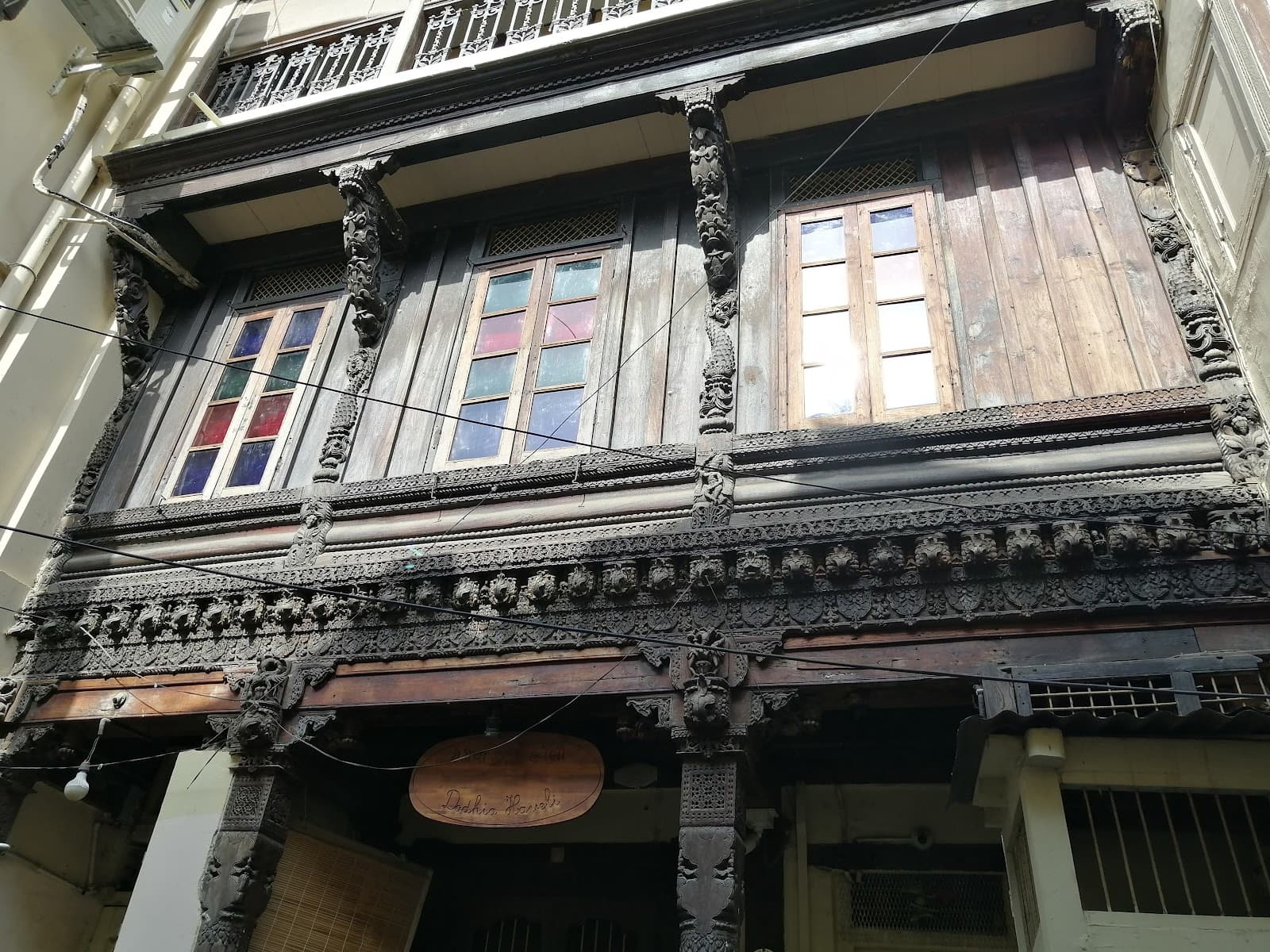
Doshiwada Ni Haveli Ahmedabad
The intricately carved wooden facade of Doshiwada Ni Haveli, nestled within the dense urban fabric of Ahmedabad’s old city, drew me in like a moth to a flame. Having spent years immersed in the stone-carved grandeur of South Indian temples, I was eager to experience the unique architectural language of this Gujarati haveli. The sheer scale of the wooden artistry was immediately striking. Unlike the imposing stone gopurams of the south, Doshiwada’s charm lay in its intimate details, a delicate tapestry woven in wood. Stepping through the imposing carved doorway, I was transported to another era. The pol, or traditional neighborhood, felt worlds away from the bustling city outside. The haveli’s courtyard, a central organizing principle, was bathed in soft, filtered light. This open-to-sky space, a feature I found reminiscent of the temple prakarams of the south, served as the heart of the house, a place for social gatherings and daily life. The surrounding balconies, supported by ornate brackets and pillars, offered glimpses into the private lives of the families who once resided here. The woodwork was breathtaking. Every surface, from the massive supporting beams to the delicate jharokhas (overhanging enclosed balconies), was adorned with intricate carvings. Unlike the narrative reliefs found in South Indian temples, the carvings here were predominantly floral and geometric, showcasing a different aesthetic sensibility. Peacocks, elephants, and other auspicious motifs were interspersed within the patterns, adding a touch of whimsy and symbolism. I noticed the recurring use of the “tree of life” motif, a symbol of prosperity and continuity, echoing the reverence for nature found in many Indian architectural traditions. The play of light and shadow within the haveli was mesmerizing. The carved wooden screens, or jalis, filtered the harsh Gujarat sun, casting dappled patterns on the polished floors. These jalis, while aesthetically pleasing, also served a practical purpose, allowing for ventilation while maintaining privacy – a clever architectural solution to the region’s hot climate. I was reminded of the pierced stone screens found in some South Indian temples, which served a similar function. As I ascended the narrow wooden staircases, the stories of the haveli unfolded. The upper floors, once the private domain of the family, revealed intimate details of their lives. The small rooms, interconnected by narrow passages, spoke of a close-knit community. The remnants of painted murals on the walls, though faded with time, hinted at the vibrant colors that once adorned these spaces. I was particularly fascinated by the hidden niches and secret compartments built into the walls, perhaps used for storing valuables or important documents. Doshiwada Ni Haveli, though different in material and style from the temples I was accustomed to, resonated with the same spirit of craftsmanship and attention to detail. The use of locally sourced wood, the intricate joinery techniques, and the adaptation of the design to the local climate all spoke of a deep understanding of the environment and a commitment to sustainable building practices. The haveli wasn't just a building; it was a living testament to the rich cultural heritage of Gujarat. It was a reminder that architectural beauty can be found not just in monumental structures, but also in the intimate spaces of everyday life. Leaving the cool confines of the haveli and stepping back into the bustling streets of Ahmedabad, I carried with me a newfound appreciation for the diversity and richness of Indian architecture.
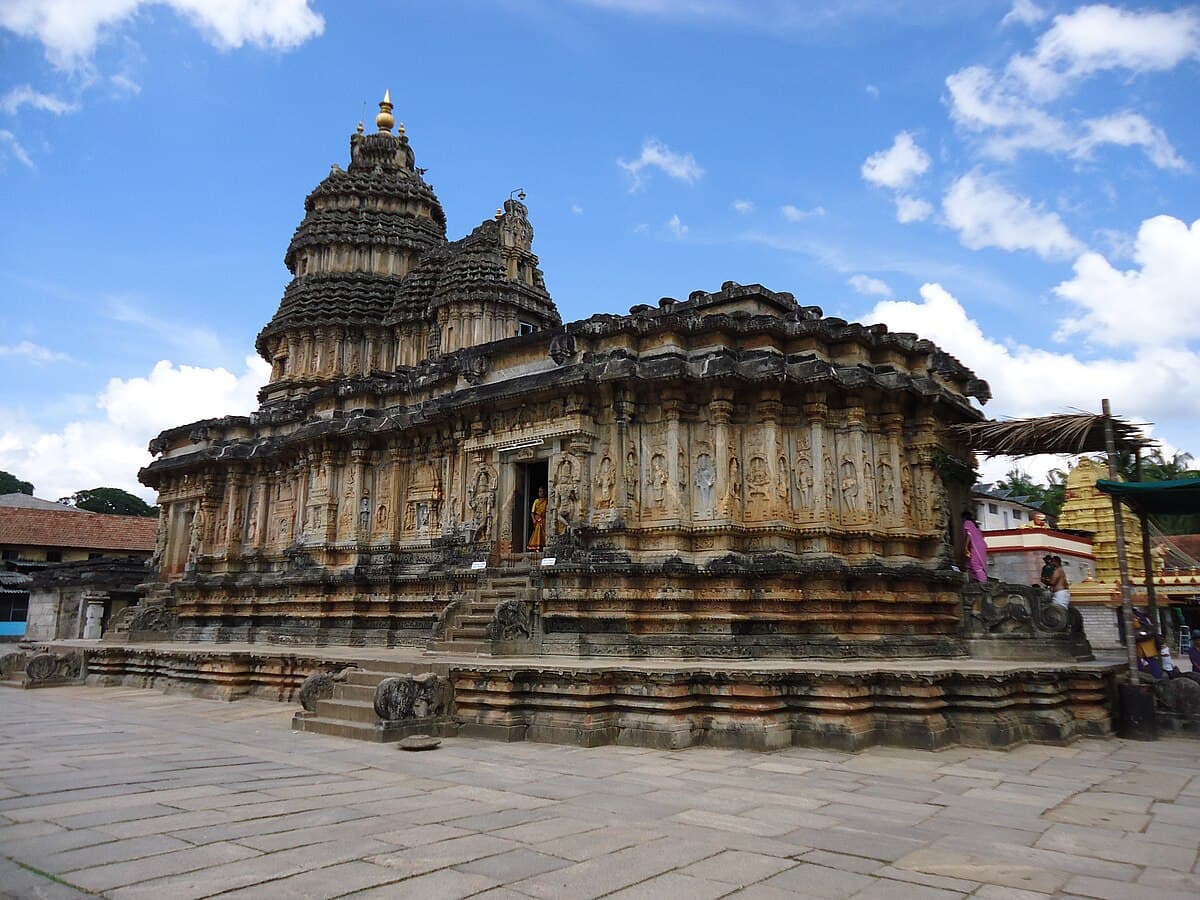
Sringeri Sharadamba Temple Sringeri
The Sharadamba Temple at Sringeri, nestled within the verdant embrace of the Western Ghats, exudes an aura of timeless serenity. The temple, dedicated to the goddess of learning, Sharada, isn't just a structure of stone and wood; it's a living testament to centuries of devotion and scholarship. My recent visit, as a heritage photographer from Madhya Pradesh, felt less like a documentation and more like a pilgrimage. The current temple, rebuilt in the 1910s after a fire, retains the essence of the original structure envisioned by Adi Shankaracharya in the 8th century. While the earlier structure was primarily wooden, the present temple incorporates Hoysala and Dravidian architectural elements, creating a unique blend of styles. The towering gopuram, though a later addition, commands attention with its intricate carvings of deities and mythical creatures. It acts as a vibrant gateway to the serene courtyard within. Stepping inside, I was immediately drawn to the Vidyashankara Temple, a 14th-century marvel dedicated to Lord Shiva. This architectural gem, built during the Vijayanagara period, stands on a raised platform with intricately carved granite pillars depicting various incarnations of Vishnu. The fusion of Hoysala and Dravidian styles is particularly evident here, with the ornate pillars and detailed friezes showcasing a remarkable level of craftsmanship. I spent hours photographing the intricate details – the delicate floral patterns, the expressive figures of gods and goddesses, and the mesmerizing geometric designs. The play of light and shadow on the stone surfaces added another layer of depth to the visual narrative. The main shrine of Sharadamba, however, is the heart of the temple complex. The goddess, seated gracefully on a golden throne, radiates an aura of profound peace and wisdom. The sandalwood idol, adorned with exquisite jewellery, is a masterpiece of devotional art. Unlike the imposing grandeur of the Vidyashankara Temple, the Sharadamba shrine exudes a quiet elegance. The focus remains firmly on the goddess, inviting contemplation and introspection. I found myself captivated by the simplicity and purity of the space, a stark contrast to the ornate surroundings. The temple complex also houses a library, a testament to Sringeri's historical significance as a center of learning. While I couldn't access the ancient texts, the very presence of this library underscored the temple's role in preserving and propagating knowledge. The atmosphere within the complex was charged with a palpable sense of devotion and scholarship, a feeling that permeated every corner, from the bustling courtyard to the quiet corners of the library. One of the most striking aspects of the Sringeri Sharadamba Temple is its seamless integration with the surrounding landscape. The Tunga River, flowing gently beside the temple, adds to the tranquil atmosphere. I spent some time by the riverbank, observing the devotees performing rituals and taking in the breathtaking views of the surrounding hills. The natural beauty of the location enhances the spiritual significance of the temple, creating a harmonious blend of the divine and the earthly. My experience at Sringeri wasn't just about capturing images; it was about immersing myself in the rich history and spiritual significance of the place. The temple isn't merely a static monument; it's a vibrant hub of religious and cultural activity. The chanting of Vedic hymns, the fragrance of incense, and the constant flow of devotees created a dynamic atmosphere that was both captivating and humbling. As a heritage photographer, I felt privileged to witness and document this living heritage, a testament to the enduring power of faith and tradition. The images I captured, I hope, will convey not just the architectural beauty of the temple, but also the profound spiritual experience it offers.
Quick Links
Plan Your Heritage Journey
Get personalized recommendations and detailed visitor guides