Has Inheritage Foundation supported you today?
Your contribution helps preserve India's ancient temples, languages, and cultural heritage. Every rupee makes a difference.
Secure payment • Instant 80G certificate
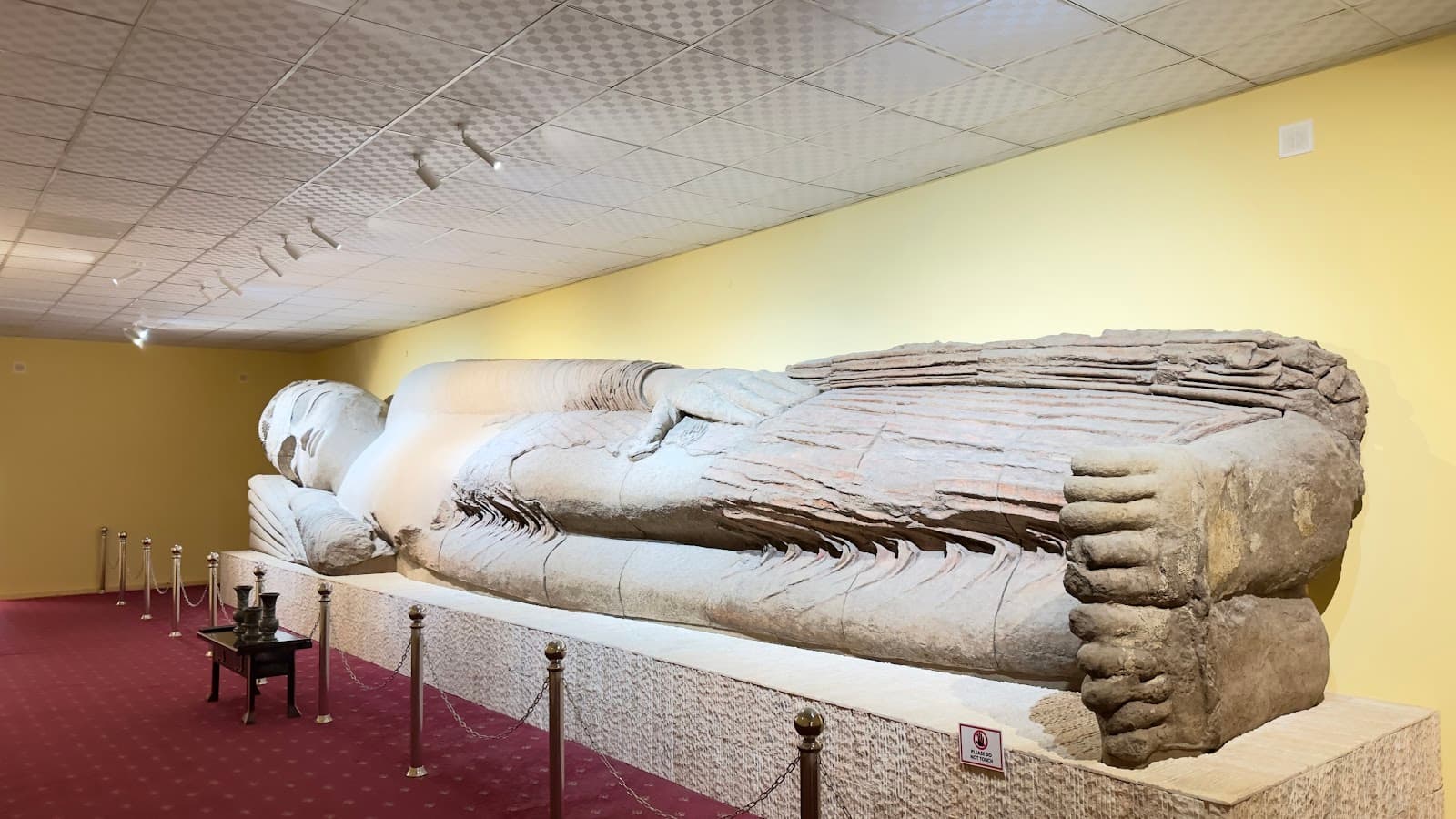
Takhti Sangin Oxus Temple Khatlon Tajikistan
Takhti Sangin, dramatically situated at the confluence of the Vakhsh and Panj rivers in southern Tajikistan, represents one of the most extraordinary and archaeologically significant ancient temples in Central Asia, constructed in the 3rd century BCE during the Achaemenid and subsequent Hellenistic periods as a major sanctuary dedicated to the Oxus River (modern Amu Darya) that yielded extraordinary artifacts demonstrating the profound transmission of Indian religious and artistic traditions to Central Asia along the ancient trade routes. The temple complex, known as the "Oxus Temple" and excavated extensively by Soviet and Tajik archaeologists, features sophisticated architectural elements that demonstrate the synthesis of Achaemenid, Hellenistic, and Indian architectural traditions, while the site's extraordinary collection of artifacts, including numerous objects with clear Indian iconographic and stylistic influences, provides crucial evidence of the transmission of Indian religious and artistic traditions to Central Asia during the early centuries BCE. The temple's most remarkable discovery was the "Oxus Treasure," a collection of over 1,800 gold and silver artifacts including vessels, statuettes, and decorative objects, many of which demonstrate clear Indian iconographic influences including depictions of Indian deities, mythological scenes, and artistic motifs that were transmitted from the great artistic centers of India to Central Asia, while the discovery of numerous artifacts with Sanskrit inscriptions and Indian artistic styles provides crucial evidence of the site's role as a major center for the transmission of Indian religious and cultural traditions. Archaeological evidence reveals that the temple served as a major center of worship and trade, attracting pilgrims and merchants from across the ancient world including India, while the discovery of numerous artifacts with Indian iconography including depictions of Hindu deities, Buddhist symbols, and Indian artistic motifs demonstrates the sophisticated understanding of Indian religious and artistic traditions possessed by the temple's patrons and artisans. The temple's architectural layout, with its central sanctuary surrounded by courtyards and auxiliary structures, follows sophisticated planning principles that demonstrate the synthesis of various architectural traditions including Indian temple planning principles that were transmitted to Central Asia, while the temple's extensive decorative programs including sculptures, reliefs, and architectural elements demonstrate the ways in which Indian artistic traditions were integrated into Central Asian religious architecture. Today, Takhti Sangin stands as a UNESCO Tentative List site and represents one of the most important archaeological discoveries in Central Asia, serving as a powerful testament to the transmission of Indian religious and artistic traditions to Central Asia, while ongoing archaeological research and conservation efforts continue to protect and study this extraordinary cultural treasure that demonstrates the profound impact of Indian civilization on Central Asian religious and artistic traditions. ([1][2])

Shantadurga Temple Kavlem
The humid Goan air, thick with the scent of incense and marigolds, clung to me as I ascended the sweeping laterite steps leading to the Shri Shantadurga Temple in Kavlem. Having spent years immersed in the sandstone grandeur of Rajasthan's forts and palaces, I was curious to see how this Goan temple, dedicated to the Goddess of Peace, would compare. The difference was immediate and striking – a shift from the arid, imposing structures of my home state to a serene, almost ethereal white edifice nestled amidst lush greenery. The temple complex, a sprawling expanse enclosed by high walls, felt like a world apart from the bustling activity just beyond its gates. A large, rectangular water tank, or *pushkarini*, lay before the main temple, its still surface reflecting the temple’s pristine facade. This element, so rare in Rajasthan’s desert landscape, immediately established a sense of tranquility. The temple itself, a harmonious blend of Indo-Portuguese architectural styles, stood as a testament to Goa's rich and layered history. The whitewashed walls, a stark contrast to the vibrant colours I’m accustomed to, exuded a sense of calm purity. The pyramidal roof, tiled in the distinctive terracotta style common in Goa, was crowned with a simple yet elegant golden *kalash*. Stepping inside the main prayer hall, or *sabhamandap*, I was struck by the relative simplicity of the interior. Unlike the ornately carved interiors of Rajasthan's temples, the focus here was on the deity. The silver palanquin of Shri Shantadurga, adorned with fresh flowers, held centre stage. The air was thick with the murmur of prayers and the rhythmic clang of bells, creating an atmosphere of quiet devotion. Intriguingly, the temple's pillars, while lacking the intricate carvings of Rajasthani structures, displayed a unique blend of styles. I noticed subtle European influences in the form of decorative motifs, a testament to the Portuguese presence in Goa. These details, though understated, spoke volumes about the cultural exchange that shaped this region. Moving beyond the main temple, I explored the surrounding complex. The smaller shrines dedicated to other deities, the sprawling gardens, and the old *deepstambha* (lamp tower) all added to the temple's serene atmosphere. The *deepstambha*, in particular, caught my attention. While Rajasthan boasts towering *deepstambhas* adorned with intricate sculptures, this one was more modest in size, yet equally evocative. Its simple, elegant design, illuminated by flickering oil lamps, created a captivating play of light and shadow. One aspect that truly fascinated me was the temple’s location. Unlike many Rajasthani temples perched atop hills or nestled within fortified cities, Shri Shantadurga Temple is situated on a plateau surrounded by verdant rice paddies. This setting, so different from the rugged landscapes I’m familiar with, contributed to the temple’s peaceful aura. The gentle rustling of palm trees and the distant calls of birds replaced the desert winds, creating a symphony of nature that enhanced the spiritual experience. As I descended the steps, leaving the temple complex behind, I couldn't help but reflect on the contrasts I had witnessed. The Shri Shantadurga Temple, with its serene white facade, tranquil setting, and subtle blend of architectural styles, offered a unique perspective on temple architecture and worship. It was a refreshing departure from the grandeur and opulence of Rajasthan's temples, a testament to the diversity and richness of India's cultural tapestry. The experience underscored the fact that spirituality can find expression in myriad forms, each beautiful and profound in its own way.
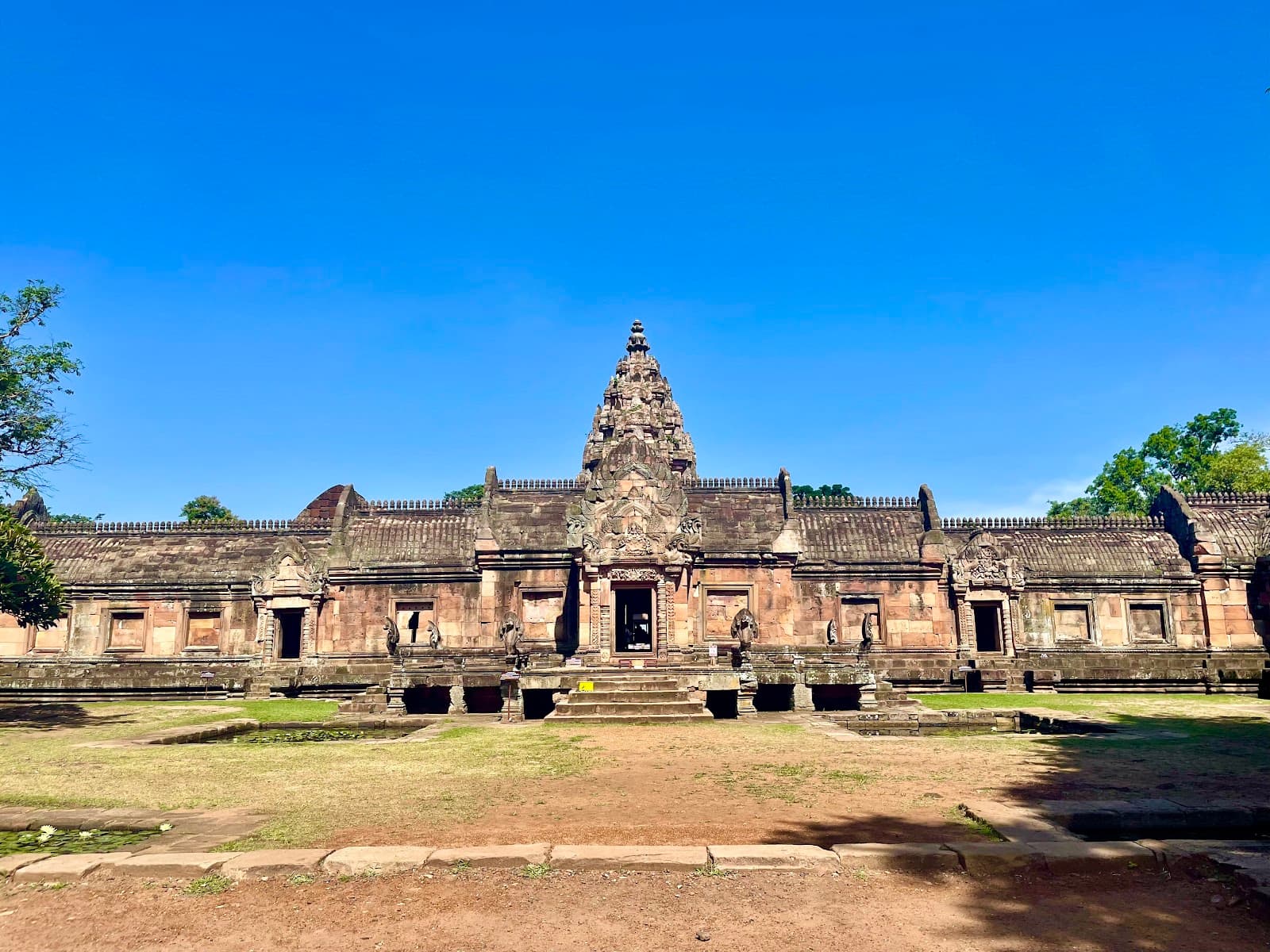
Phanom Rung Historical Park Buri Ram
Phanom Rung Historical Park, situated atop an extinct volcano 383 meters above sea level in Buri Ram Province, represents the most complete and architecturally sophisticated Khmer Hindu temple complex in Thailand, dedicated to Shiva as Bhadreshvara. The temple complex, constructed between the 10th and 13th centuries CE, spans approximately 60 hectares and features a meticulously planned east-west axis aligned precisely to capture the sunrise through all fifteen doorways during the equinoxes—a phenomenon that draws thousands of visitors annually. The main prasat (sanctuary tower) rises 27 meters, constructed from pink sandstone and laterite, accessed via a 160-meter-long processional walkway flanked by naga balustrades and punctuated by four cruciform gopuras. The complex includes three libraries, two ponds, and numerous subsidiary shrines, all demonstrating the evolution from Baphuon to Angkor Wat architectural styles. The temple’s lintels and pediments showcase exceptional bas-relief work depicting scenes from the Ramayana, Shiva’s cosmic dance, and various Hindu deities, with the famous Narai Bantomsin lintel considered among the finest examples of Khmer art. Archaeological excavations have revealed evidence of continuous use from the 10th century through the 15th century, with restoration work conducted by the Fine Arts Department of Thailand from 1971 to 1988, culminating in the site’s designation as a historical park in 1988. The temple remains an active site of worship during annual festivals, particularly during the Phanom Rung Festival in April, when traditional Brahmin ceremonies are performed. ([1][2])
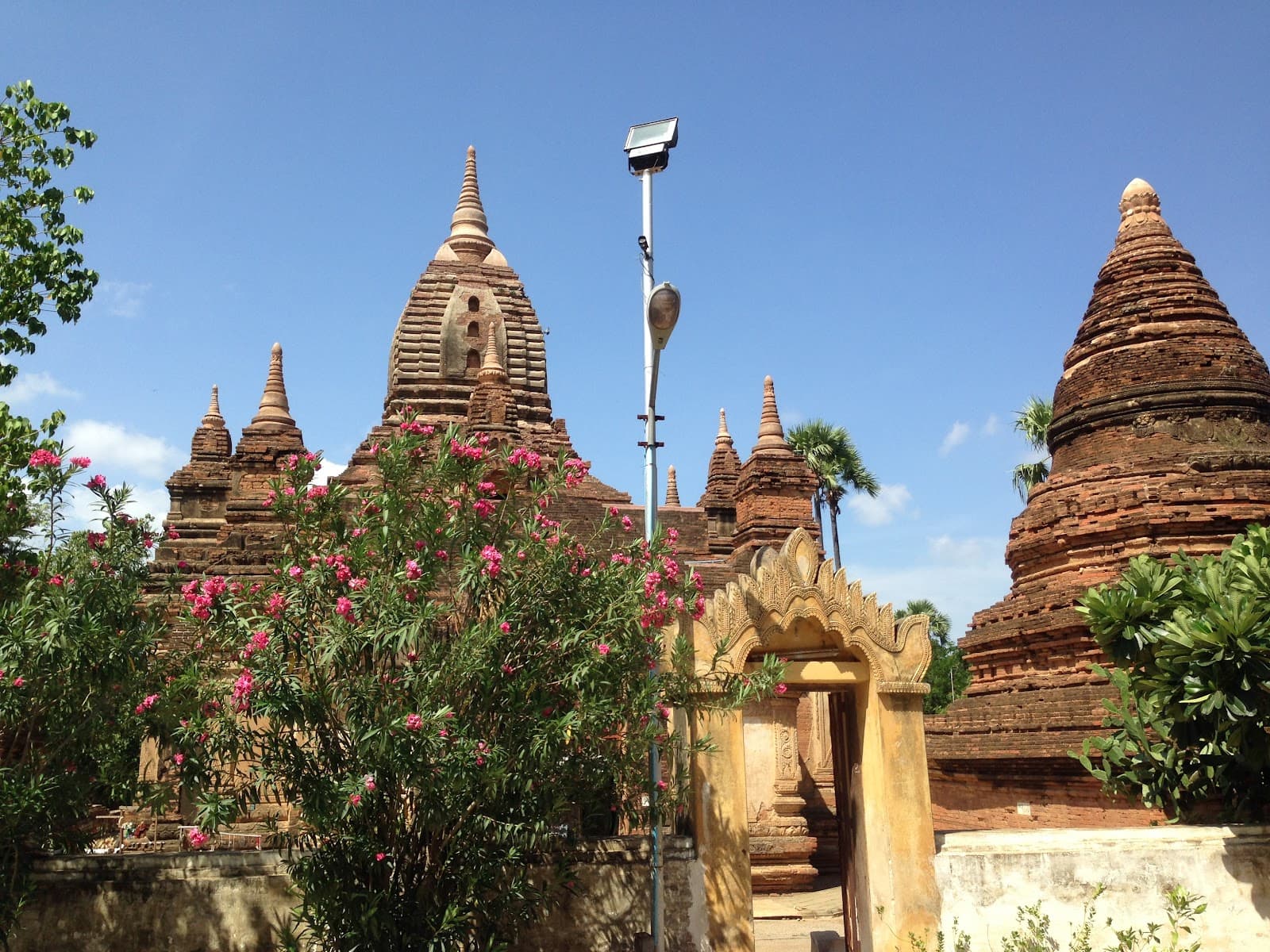
Gubyaukgyi Temple Myinkaba Bagan
Gubyaukgyi Temple, located in Myinkaba Village within the Bagan Archaeological Zone, represents one of the most significant mural temples in Myanmar, constructed in 1113 CE during the reign of King Kyanzittha and featuring extensive wall paintings depicting scenes from Hindu epics including the Ramayana and Mahabharata, demonstrating the profound influence of Indian Hindu literary and artistic traditions on Myanmar, which was historically part of the greater Hindu rashtra extending across Southeast Asia through cultural and religious connections with ancient India. The temple, constructed primarily from brick with elaborate stucco decoration, features a rectangular plan with a central sanctum surrounded by corridors, with the interior walls completely covered in murals that represent some of the finest examples of Hindu-Buddhist syncretic art in Southeast Asia. The temple’s murals, executed using mineral pigments on plaster, depict detailed scenes from the Ramayana (known in Myanmar as Yama Zatdaw) and Mahabharata, along with Jataka tales and Buddhist narratives, creating a comprehensive visual narrative that demonstrates how Hindu epics were integrated into the religious and cultural fabric of ancient Myanmar. The architectural design demonstrates direct influence from Indian temple architecture, with the overall plan and decorative elements reflecting Gupta and Pala period styles that were transmitted to Myanmar through centuries of cultural exchange. Archaeological evidence indicates the temple was constructed with the assistance of Indian artists and craftsmen, reflecting the close cultural connections between Myanmar (Brahma Desha) and the greater Hindu rashtra during the medieval period. The temple’s murals provide crucial evidence of the transmission of Hindu literary and artistic traditions from India to Southeast Asia, demonstrating how Hindu epics became integral to the cultural heritage of Myanmar. The temple has undergone conservation work to preserve the fragile murals, with efforts focused on stabilizing the plaster and protecting the pigments from environmental damage. Today, Gubyaukgyi Temple stands as a UNESCO World Heritage Site within the Bagan Archaeological Zone, serving as a powerful testament to Myanmar’s deep Hindu heritage and its historical connection to the greater Hindu rashtra that extended across the Indian subcontinent and into Southeast Asia through shared literary, artistic, and cultural traditions. ([1][2])

Lakshmi Narayan Mandir Kolasib
The vibrant green hills of Mizoram cradle many surprises, and for a temple architecture enthusiast like myself, steeped in the Dravidian idiom of South India, the Lakshmi Narayan Mandir in Kolasib was a fascinating anomaly. Perched atop a hill overlooking the town, this temple, dedicated to Vishnu and Lakshmi, presents a unique blend of architectural styles, a testament to the cultural confluence in this northeastern state. The first thing that struck me was the temple's shikhara. While reminiscent of the Nagara style prevalent in North India, with its curvilinear tower rising towards the heavens, it lacked the intricate carvings and elaborate ornamentation I’m accustomed to seeing in temples like the Kandariya Mahadeva in Khajuraho. Instead, the shikhara here was relatively plain, its smooth sandstone surface punctuated by simple horizontal bands and a modest amalaka crowning the top. This simplicity, however, lent it a certain elegance, allowing the natural beauty of the sandstone to shine through. The mandapa, or pillared hall, leading to the sanctum sanctorum, displayed a different influence altogether. The pillars, while square in section, were devoid of the intricate sculptures and narrative friezes that adorn South Indian temple pillars. Instead, they were adorned with simple geometric patterns, painted in vibrant hues of red, blue, and yellow, reminiscent of Mizo traditional designs. This unexpected burst of colour against the muted sandstone created a visually arresting contrast. Inside the garbhagriha, the deities of Lakshmi and Narayan resided, their serene presence radiating a sense of peace. The iconography was familiar, yet subtly different. Lakshmi, usually depicted seated on a lotus, here stood beside Vishnu, a posture more commonly seen in North Indian depictions. This subtle shift in iconography further highlighted the temple's unique blend of regional influences. The temple's location itself added to its charm. The panoramic view of Kolasib town and the surrounding hills, visible from the temple courtyard, was breathtaking. The lush greenery and the crisp mountain air created a serene atmosphere, conducive to contemplation and reflection. Unlike the bustling temple complexes of South India, the Lakshmi Narayan Mandir offered a sense of quietude, a space for personal communion with the divine. What intrigued me most was the narrative behind this architectural hybrid. Built in the late 20th century, the temple reflects the migration of people and ideas across India. While the core architectural style is North Indian, the local Mizo artisans have clearly left their mark, incorporating their own artistic traditions into the temple's decorative elements. This fusion of styles is not merely an aesthetic choice; it’s a reflection of the cultural exchange and assimilation that has shaped the region's identity. The Lakshmi Narayan Mandir is not just a place of worship; it's a living testament to India's diverse cultural tapestry. It challenges preconceived notions of architectural purity and demonstrates how different styles can harmoniously coexist, creating something unique and beautiful. For me, this temple was a powerful reminder that heritage is not static; it's a dynamic process of evolution and adaptation, constantly being shaped by the people and the environment that surround it. My visit to the Lakshmi Narayan Mandir was more than just a sightseeing trip; it was a lesson in architectural syncretism, a testament to the enduring power of cultural exchange. The temple stands as a symbol of unity in diversity, showcasing how different traditions can intertwine to create something truly special.
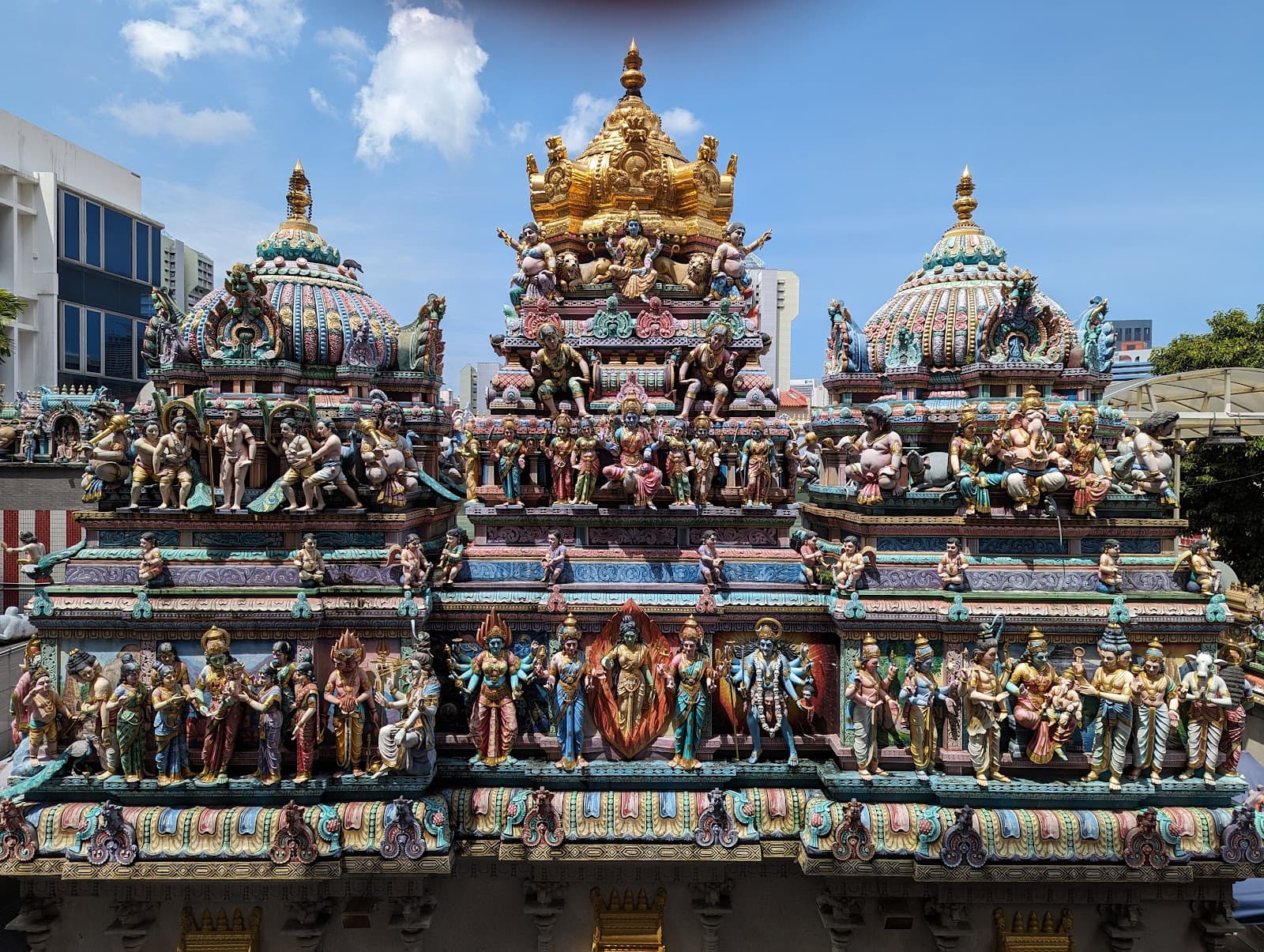
Sri Veeramakaliamman Temple Singapore
Sri Veeramakaliamman Temple was founded in 1881 by Tamil labourers and is Little India’s earliest Kali worship centre, presiding over Serangoon Road with an 18-metre rajagopuram bearing 600 hand-painted stucco deities that narrate the goddess’s legends and Singapore’s migrant heritage ([1][2]). Daily puja commences at 5:30 AM with suprabhatam and concludes with 9:00 PM arthajama arti; devotees flow through granite-lined corridors past sanctums for Kaliamman, Thandayuthapani, Nataraja, Ganesha, Bairavar, Bhairavi, and Navagraha, while the annadhanam hall serves vegetarian meals to workers, seniors, and low-income families. The temple’s marriage hall hosts up to 200 ceremonies annually, and classrooms nurture Tamil literacy, Carnatic music, and Bharatanatyam under the Sri Veeramakaliamman Educational and Cultural Programme. The temple is the staging ground for Aadi Thiruvizha, Navaratri Kolu, Theertham, and the goddess’s chariot procession during Deepavali, events that draw tens of thousands and require extensive volunteer marshals, safe entry systems, and collaboration with the Hindu Endowments Board, Land Transport Authority, and Singapore Police Force. During crises—from World War II air raids to SARS and COVID-19—the temple has offered refuge, meals, and vaccination outreach, sustaining its role as both a devotional abode and a civic safety net for Little India ([1][3]).

ISKCON Temple Shillong
The crisp Shillong air, tinged with the scent of pine, carried the faint sound of chanting as I approached the ISKCON temple. Perched atop a hill, the temple complex commanded a breathtaking view of the undulating Meghalayan landscape, a vista of emerald green valleys stitched together by winding ribbons of road. The stark white of the temple, a refreshing contrast against the verdant backdrop, seemed to radiate a sense of tranquility. My initial impression was one of unexpected grandeur. Having documented numerous temples across Gujarat, from the intricately carved sandstone edifices of Modhera to the marble marvels of Dwarka, I was prepared for something more modest in this remote northeastern corner of India. Instead, I found myself facing a sprawling complex, its architecture a fascinating blend of traditional and contemporary styles. The main temple, dedicated to Lord Krishna, is a majestic structure. Its multi-tiered shikhara, a departure from the typical Gujarati temple spire, rose towards the sky, its pristine white surface punctuated by arched windows and delicate ornamental details. While the overall silhouette echoed the familiar North Indian Nagara style, the influence of local Khasi architecture was subtly woven into the fabric of the building. The sloping roofs, reminiscent of traditional Khasi houses, and the use of locally sourced stone in the lower levels created a unique architectural dialogue. Stepping inside, the atmosphere shifted. The hushed reverence, the soft glow of lamps, and the rhythmic chanting transported me to a different realm. The main prayer hall, a vast, columned space, was filled with devotees. The intricate carvings on the marble deities of Radha and Krishna, the vibrant murals depicting scenes from the Bhagavata Purana, and the ornate chandeliers hanging from the ceiling all contributed to a sense of opulent spirituality. What struck me most, however, was the seamless integration of modern amenities within this traditional setting. The temple complex houses a well-equipped guest house, a spacious library, and a state-of-the-art auditorium, all designed to cater to the needs of visitors and devotees. This blend of the ancient and the modern, the spiritual and the practical, is a testament to the adaptability of faith in the 21st century. As I explored the temple grounds, I discovered a small museum dedicated to the history of ISKCON. The exhibits, which included photographs, manuscripts, and personal belongings of the movement's founder, Srila Prabhupada, offered a glimpse into the global reach of this spiritual tradition. It was fascinating to see how this faith, originating in the heart of India, had found a home in the hills of Meghalaya. Later, I sat in the temple gardens, overlooking the valley below. The setting sun painted the sky in hues of orange and purple, casting long shadows across the landscape. The chanting from the temple, now softer, mingled with the chirping of crickets and the distant sounds of the city. In that moment, I felt a profound sense of peace, a feeling that transcended geographical boundaries and cultural differences. The ISKCON temple in Shillong is more than just a place of worship; it is a testament to the power of faith to inspire, to unite, and to create beauty. It is a place where tradition and modernity coexist harmoniously, where the spiritual and the practical intertwine, and where the serenity of the hills meets the vibrant energy of devotion. It is a must-see for anyone seeking a glimpse into the rich tapestry of India's spiritual landscape.

Bhuteshwar Temple Jind
Granite and sandstone blocks, meticulously carved, constitute the Bhuteshwar Temple in Jind, Haryana, a legacy of the Gurjara-Pratihara dynasty's reign ([1][2]). Established around 750 CE, this 8th-century temple presents a hybrid architectural style, integrating Hindu and Islamic elements ([3]). This fusion reflects the era's dynamic cultural landscape and the architectural innovation prevalent during the Gurjara-Pratihara period. The temple complex, reminiscent of a fortified citadel, has weathered centuries of change, standing as a testament to its enduring construction and historical significance ([4]). Intricate carvings embellishing the walls portray deities and mythical beings, their details softened by time, yet still discernible ([1]). The central shrine is distinguished by a pyramidal Shikhara (spire), exhibiting a simpler design compared to the elaborate structures of other North Indian temples ([2]). High walls and bastions, coupled with a now-dry moat, underscore the site's defensive past, creating a striking juxtaposition of martial fortifications and spiritual serenity ([3][4]). The use of sandstone, bricks, and lime mortar showcases the architectural skills of the time, blending heritage and devotion ([4][5]). Within the Garbhagriha (sanctum), the temple remains a vibrant space for the local community, evidenced by contemporary murals and offerings ([5]). The Indo-Islamic architectural style is manifested in the convergence of Hindu and Islamic designs, illustrating a unique cultural synthesis ([1][2][3]). During the Gurjara-Pratihara period, temple architecture often incorporated regional influences, and Bhuteshwar Temple exemplifies this trend ([1][2]). The temple's design, while not explicitly linked to specific verses from texts like the *Manasara Shilpa Shastra*, reflects the broader principles of temple construction prevalent in that era, emphasizing harmony and proportion in its design ([3][4][5]).
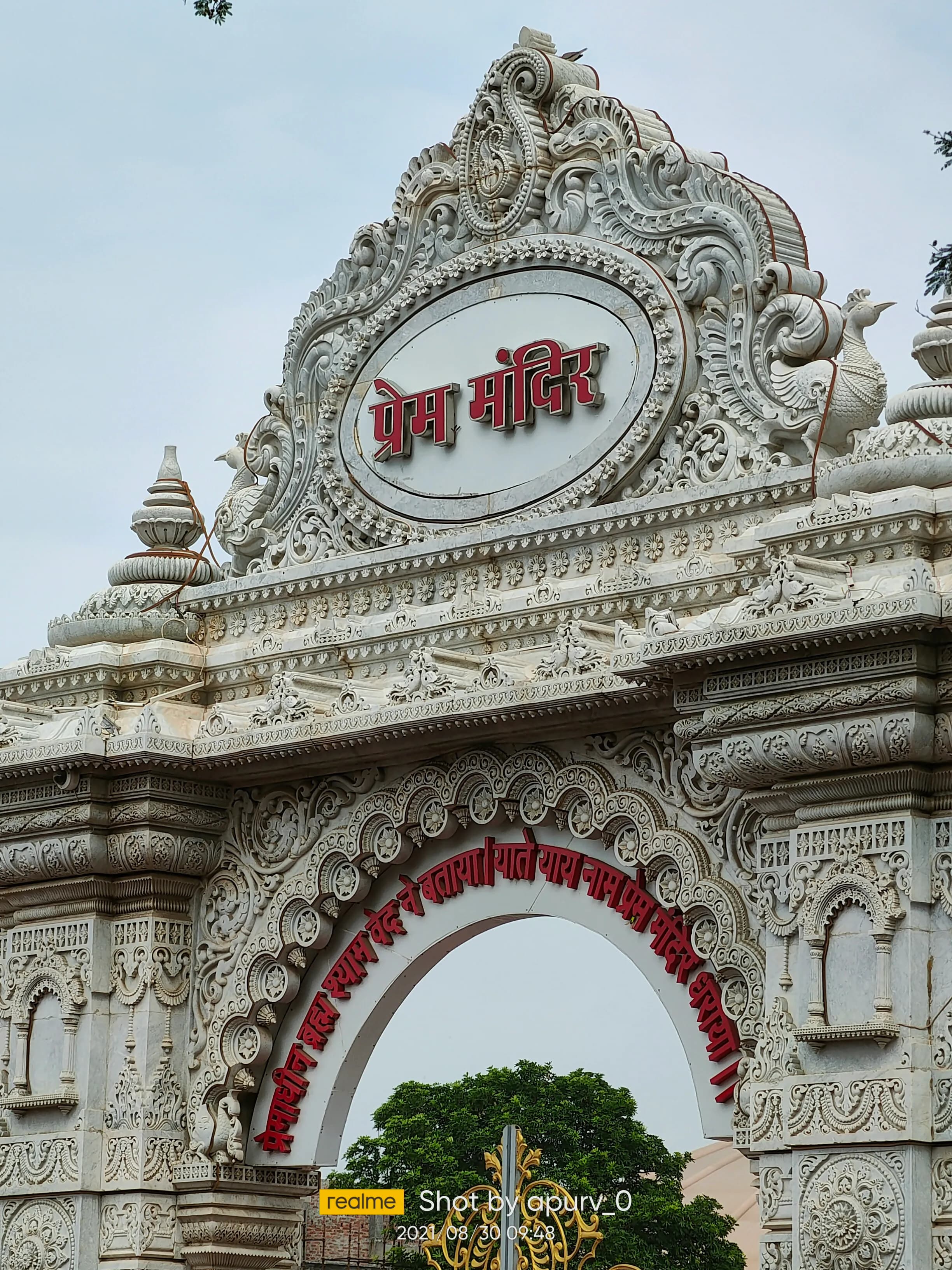
Prem Mandir Vrindavan
The air hummed with a palpable devotion, a tangible energy that enveloped me as I stepped onto the pristine marble expanse of Prem Mandir in Vrindavan. Having explored countless temples across North India, I thought I was immune to the sheer scale and grandeur of religious architecture, but Prem Mandir stopped me in my tracks. Bathed in the warm glow of the late afternoon sun, the temple, a relatively recent addition to Vrindavan's spiritual landscape, shimmered like a celestial palace descended to earth. The sheer scale is breathtaking. Towering white spires, intricately carved with depictions of Krishna's leelas, reach towards the sky, creating a skyline unlike any other in this holy city. Unlike the older, sandstone structures that characterize much of Vrindavan, Prem Mandir’s Italian marble construction gives it a unique, almost ethereal quality. The stone, imported from Italy, is polished to a high sheen, reflecting the sunlight and creating a dazzling spectacle. As I walked through the main gate, I was struck by the meticulous detailing. Every inch of the temple, from the towering shikharas to the delicate floral motifs adorning the walls, speaks of painstaking craftsmanship. The main temple structure is built on a raised platform, accessed by a broad flight of stairs. Circumambulating the main shrine, I noticed the intricate bas-relief panels depicting scenes from Krishna's life. These aren't mere carvings; they are narratives etched in stone, each panel telling a story with remarkable expressiveness. I paused at a depiction of the Rasa Lila, the divine dance of Krishna with the gopis, captivated by the fluidity of the figures and the sense of joyous movement captured in the static medium. One of the most striking features of Prem Mandir is the Govardhan Hill replica situated behind the main temple. This miniature mountain, crafted with impressive realism, is a testament to the devotion that fueled the temple's creation. Waterfalls cascade down its slopes, feeding a small lake at its base, creating a serene oasis within the bustling temple complex. Walking around the hill, I felt transported to the pastoral landscape of Braj, the region where Krishna is said to have spent his youth. As dusk settled, the temple underwent a magical transformation. Thousands of tiny lights embedded in the marble facade flickered to life, illuminating the intricate carvings and casting a warm, inviting glow over the entire complex. The light show, synchronized with devotional music, is a spectacle in itself, drawing gasps of admiration from the assembled devotees. The narrative of Krishna's life, projected onto the temple walls, added another layer to the experience, bringing the stories etched in stone to vibrant life. What truly sets Prem Mandir apart, however, is not just its architectural magnificence or the dazzling light show, but the palpable sense of serenity that pervades the atmosphere. Despite the crowds, a sense of peacefulness permeates the air. I observed families seated on the marble floors, lost in prayer, and groups of pilgrims chanting hymns with quiet devotion. The temple, despite its grandeur, feels remarkably intimate, a space where individuals can connect with their faith in their own way. Leaving Prem Mandir, I carried with me not just the memory of its architectural splendor, but also a renewed appreciation for the power of faith and devotion. It’s a testament to human ingenuity and artistic skill, a place where spirituality and artistry converge to create an experience that is both awe-inspiring and deeply moving. For anyone journeying through North India's spiritual heartland, Prem Mandir is an essential stop, a place to witness the enduring power of belief manifested in marble and light.
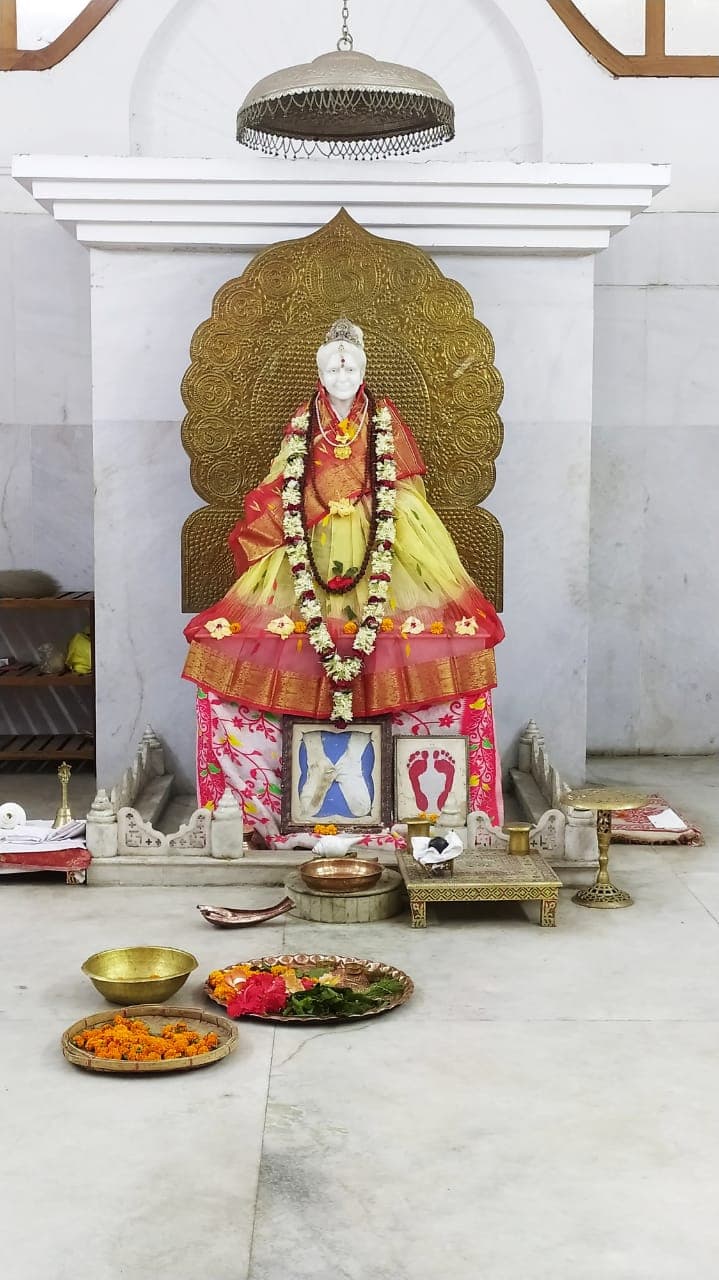
Uma Maheshwari Temple Agartala
The midday sun cast long shadows across the courtyard of the Uma Maheshwari Temple in Agartala, dappling the red brick façade with an intricate play of light and shade. As a cultural journalist from Uttar Pradesh, steeped in the architectural narratives of the Gangetic plains, I found myself captivated by this unexpected burst of North Indian temple architecture nestled within the heart of Tripura. The temple, dedicated to Uma Maheshwari, a combined form of Parvati and Shiva, stands as a testament to the cultural exchange and historical connections that have shaped this northeastern state. The first thing that struck me was the temple's relatively modest scale compared to the sprawling complexes I'm accustomed to back home. Yet, within this compact footprint, the architects have managed to capture the essence of Nagara style architecture. The shikhara, the curvilinear tower rising above the sanctum sanctorum, is the defining feature. While smaller than the towering shikharas of, say, the Kandariya Mahadeva Temple in Khajuraho, it retains the same graceful upward sweep, culminating in a pointed amalaka. The brick construction, however, sets it apart from the sandstone temples of North India, lending it a distinct regional flavour. Close inspection revealed intricate terracotta work adorning the shikhara, depicting floral motifs and divine figures, a craft that echoes the rich terracotta traditions of Bengal. Stepping inside the garbhagriha, the sanctum sanctorum, I was met with a palpable sense of serenity. The deities, Uma and Maheshwar, are enshrined here in a simple yet elegant manner. Unlike the elaborate iconography found in some North Indian temples, the focus here seemed to be on the spiritual essence of the deities, fostering a sense of quiet contemplation. The priest, noticing my interest, explained that the temple was constructed in the 16th century by the Manikya dynasty, rulers of the Tripura Kingdom, who traced their lineage back to the Lunar dynasty of mythology, further strengthening the connection to North Indian traditions. The temple courtyard, enclosed by a low wall, offers a peaceful respite from the bustling city outside. Several smaller shrines dedicated to other deities dot the perimeter, creating a microcosm of the Hindu pantheon. I spent some time observing the devotees, a mix of locals and visitors, engaging in their prayers and rituals. The air was thick with the fragrance of incense and the murmur of chants, creating an atmosphere of devotion that transcended regional boundaries. What intrigued me most was the seamless blending of architectural styles. While the core structure adhered to the Nagara style, elements of Bengali temple architecture were subtly interwoven. The use of brick, the terracotta ornamentation, and the chala-style roof over the mandapa, or assembly hall, all pointed towards a conscious assimilation of local architectural idioms. This architectural hybridity, I realized, mirrored the cultural synthesis that has shaped Tripura's identity over centuries. As I left the Uma Maheshwari Temple, I carried with me not just the visual memory of its elegant form but also a deeper understanding of the complex cultural tapestry of India. The temple stands as a powerful symbol of how cultural influences can traverse geographical boundaries, intermingle, and create something unique and beautiful. It serves as a reminder that while regional variations enrich our heritage, the underlying spiritual and artistic threads that bind us together are far stronger than the differences that might appear to separate us. It is in these spaces, where architectural styles converge and cultural narratives intertwine, that we truly grasp the richness and diversity of the Indian civilization.
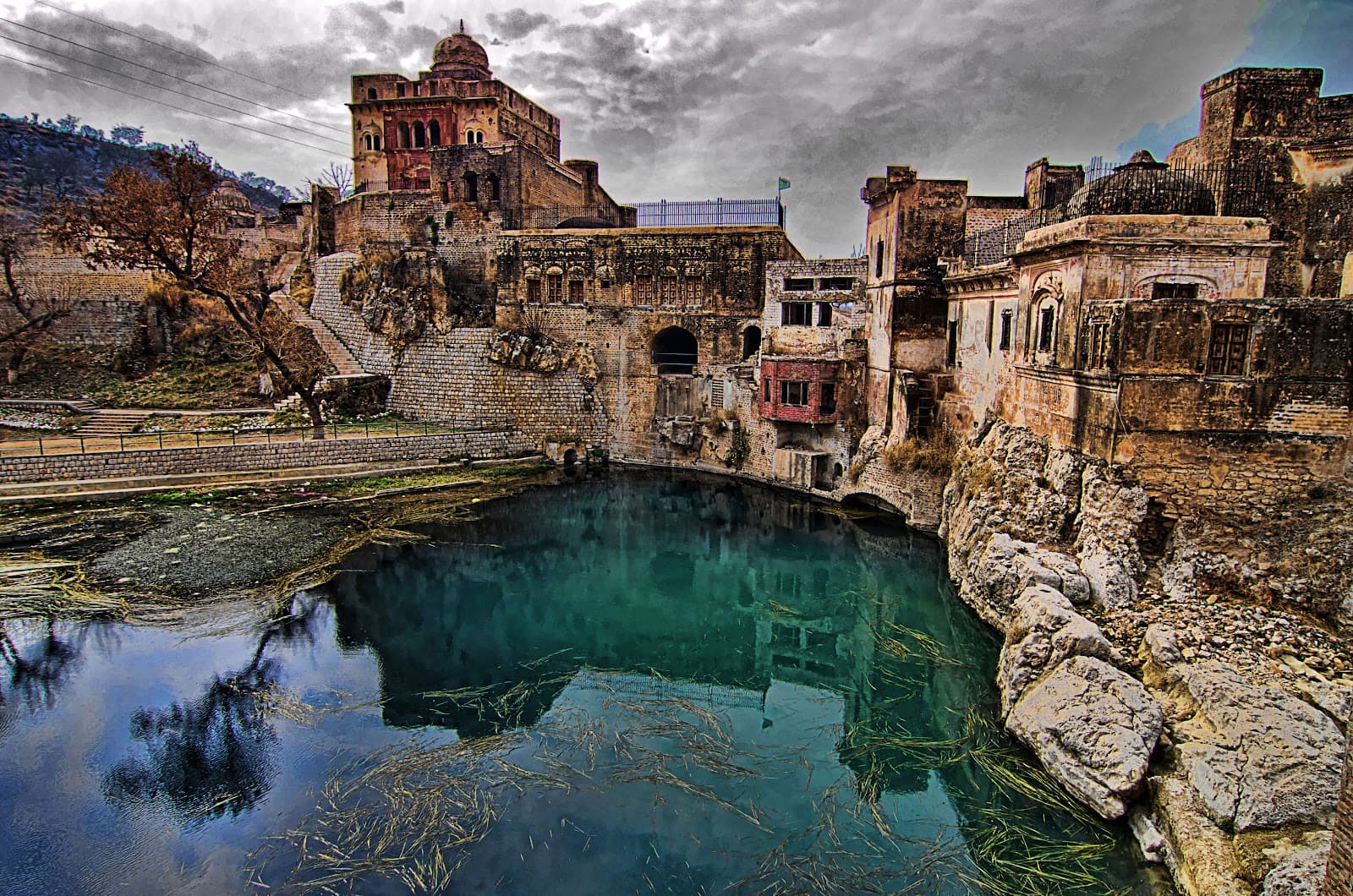
Katas Raj Temples Chakwal Punjab
Katas Raj Temples, located in Chakwal District of Punjab Province, represent one of the most significant and architecturally sophisticated Hindu temple complexes in Pakistan, dating from the 6th to 10th centuries CE and constructed during the Hindu Shahi dynasty period when this region formed part of the greater Hindu rashtra extending across the Indian subcontinent. The temple complex, centered around a sacred pond believed to have been formed from the tears of Lord Shiva mourning the death of his consort Sati, spans approximately 4 hectares and features seven major temples arranged in a mandala pattern around the pond, with the main Shiva temple rising 15 meters and constructed from locally quarried red sandstone and limestone. The complex demonstrates the evolution of Hindu temple architecture in the northwestern regions of ancient India, incorporating elements from Gandhara, Gupta, and early medieval North Indian styles, with distinctive features including corbelled vaulting, intricately carved lintels depicting scenes from the Ramayana and Mahabharata, and sophisticated drainage systems channeling water from surrounding hills into the sacred pond. Archaeological evidence indicates the site was continuously occupied from the 6th century CE through the 11th century, serving as both a religious center and waypoint on ancient trade routes connecting the Indus Valley to Central Asia. The temples are associated with the Mahabharata epic, with local tradition holding that the Pandava brothers spent part of their exile here, and the site contains evidence of both Shaiva and Vaishnava worship, reflecting the syncretic nature of Hindu practice in the region. The complex underwent extensive restoration from 2006 to 2017 under the supervision of the Evacuee Trust Property Board and Archaeological Survey of Pakistan, involving structural stabilization, conservation of decorative elements, and restoration of the sacred pond. Today, Katas Raj Temples remain an active site of Hindu worship, particularly during Maha Shivaratri, and serve as a powerful symbol of the ancient Hindu heritage of Pakistan, demonstrating the continuity of Hindu civilization in regions that were integral parts of the historical Hindu rashtra before the partition of the Indian subcontinent. ([1][2])
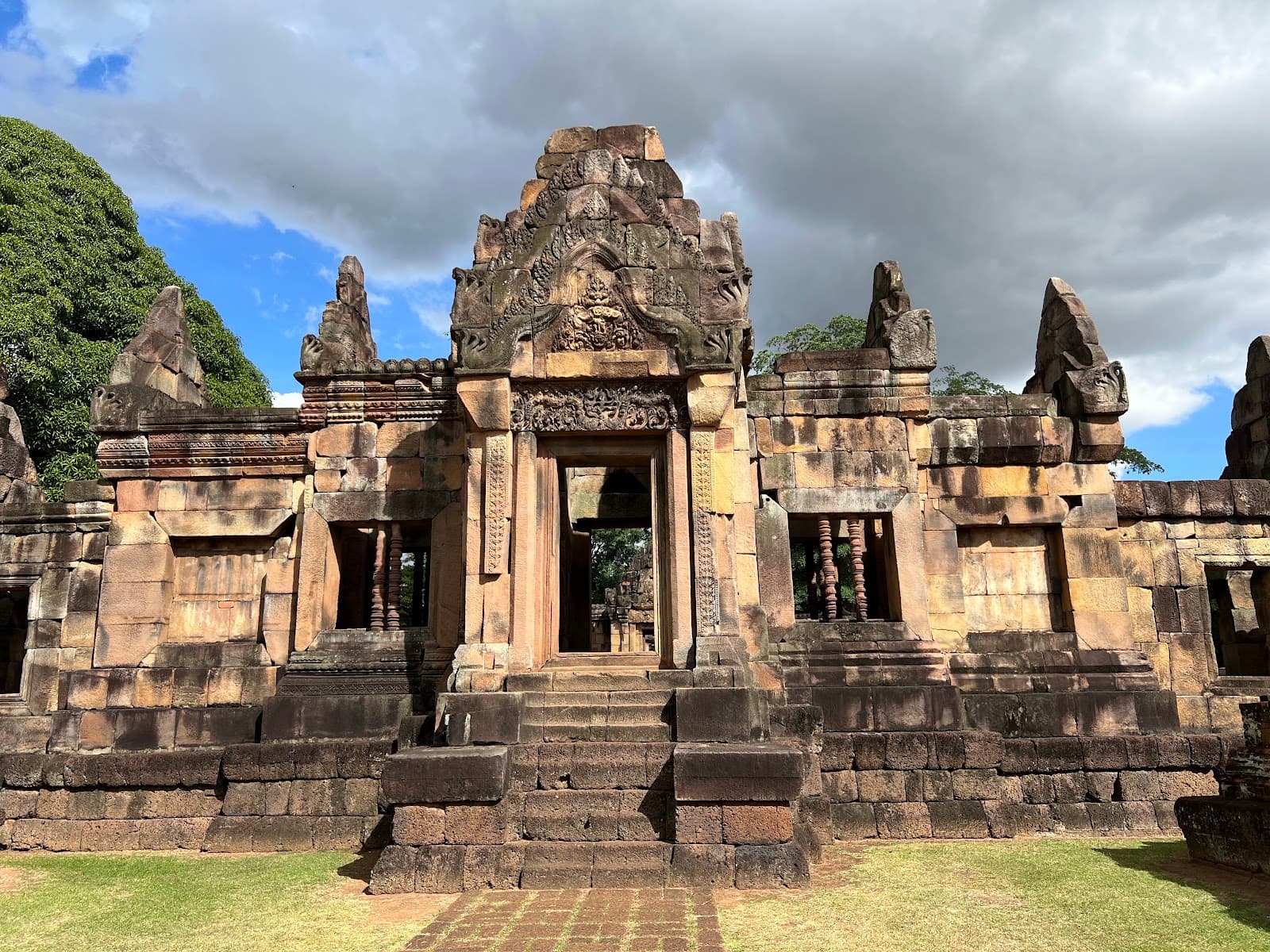
Prasat Hin Muang Tam Buri Ram
Prasat Hin Muang Tam, located approximately 8 kilometers southeast of Phanom Rung in Buri Ram Province, represents a unique Khmer temple complex distinguished by its flat concentric layout and exceptional integration of water features symbolizing the cosmic oceans surrounding Mount Meru. The temple, constructed in the late 10th and early 11th centuries CE during the Baphuon period, is dedicated primarily to Shiva, with evidence of Vishnu worship in subsidiary shrines, demonstrating the syncretic nature of Khmer religious practice. The complex features a distinctive quincunx arrangement of five sandstone prasats—one central tower surrounded by four corner towers—all constructed from pink sandstone and laterite, set within a rectangular laterite enclosure measuring 274 by 420 meters. The temple’s most remarkable feature is its four L-shaped ponds positioned at the cardinal directions, each measuring approximately 50 by 100 meters, symbolizing the four oceans of Hindu cosmology and creating a unique architectural expression of cosmic geography. The central prasat rises 15 meters and houses a massive lingam pedestal, while the four corner towers contain smaller shrines. The temple’s lintels and pediments showcase exceptional bas-relief work depicting scenes from Hindu mythology, including the churning of the ocean of milk, Shiva’s cosmic dance, and various deities. The complex includes two libraries positioned east of the central prasat, numerous subsidiary shrines, and a sophisticated drainage system that channels water from the ponds through the temple complex. Archaeological evidence indicates the temple served as a regional religious center complementing the larger Phanom Rung complex. The site underwent restoration from 1984 to 1995, involving structural stabilization and conservation of decorative elements. Today, Prasat Hin Muang Tam remains an important site for understanding Khmer temple architecture and Hindu cosmology, attracting visitors interested in its unique water-based design and exceptional stone carvings. ([1][2])
Quick Links
Plan Your Heritage Journey
Get personalized recommendations and detailed visitor guides