Has Inheritage Foundation supported you today?
Your contribution helps preserve India's ancient temples, languages, and cultural heritage. Every rupee makes a difference.
Secure payment • Instant 80G certificate
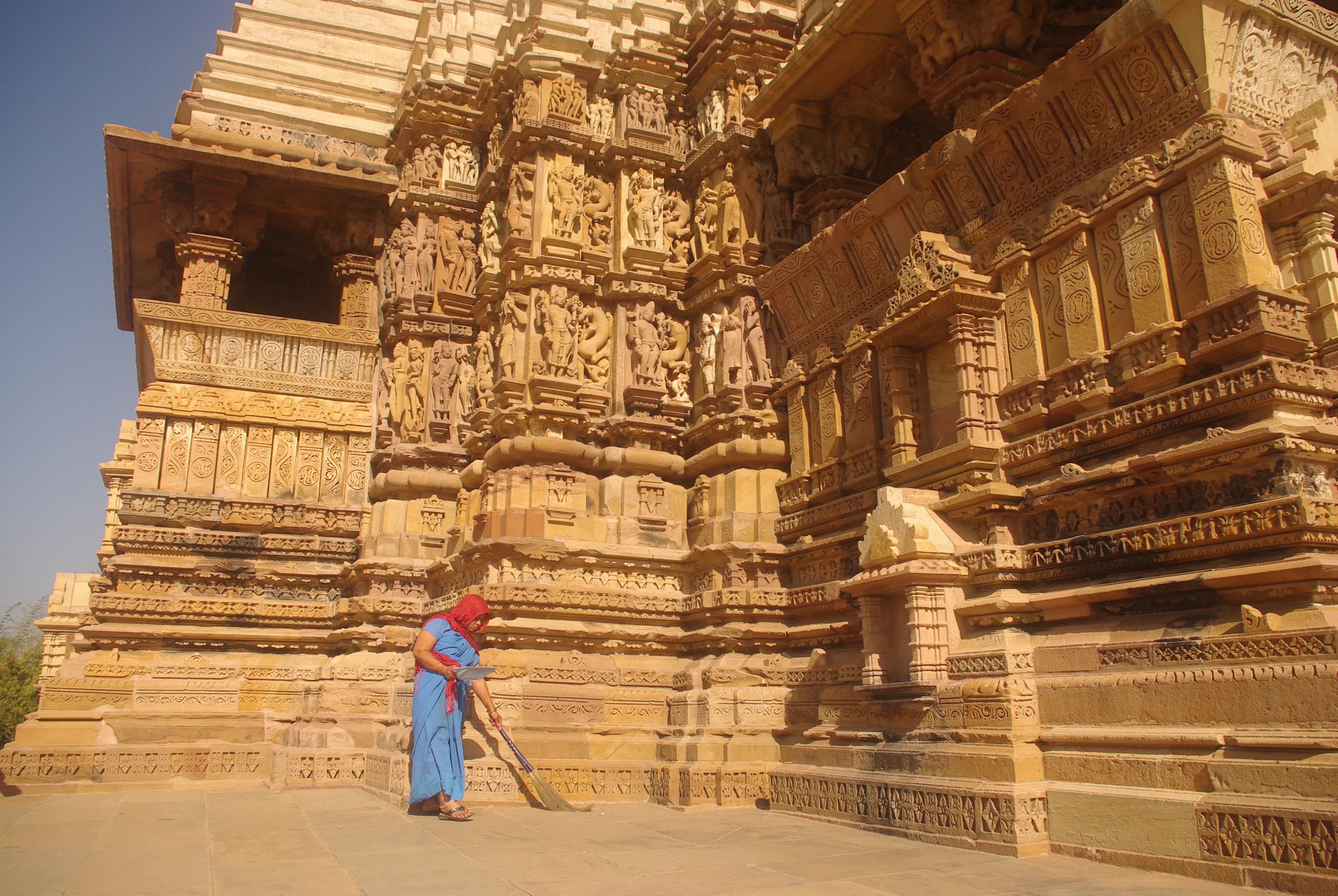
Kandariya Mahadeva Temple Khajuraho
The rising sun cast long shadows across the manicured lawns of the Western Group of temples at Khajuraho, and my gaze was immediately drawn to the magnificent Kandariya Mahadeva. Dominating the skyline, this temple, dedicated to Lord Shiva, is arguably the most iconic and elaborate of the Khajuraho group. The sheer scale of it took my breath away – a mountain of sculpted sandstone reaching for the heavens, a testament to the Chandela dynasty's architectural prowess and artistic vision. As I approached, the intricate carvings began to reveal themselves. The temple, built on a high platform, felt like a living, breathing entity. Every inch of the exterior, from the base to the towering shikhara, was covered in a profusion of sculptures. These weren't mere decorations; they narrated stories from Hindu mythology, depicted scenes of courtly life, and celebrated the sensuality that is so characteristic of Khajuraho's art. I noticed apsaras, celestial nymphs, frozen in graceful poses, their expressions ranging from serene contemplation to playful allure. Warriors, musicians, and animals – elephants, lions, and mythical creatures – all found their place within this intricate tapestry of stone. Climbing the steps to the main entrance, I felt a palpable shift in atmosphere. The air grew cooler, and a sense of reverence settled over me. The doorway itself was a masterpiece of intricate carving, layers of figures framing the entrance to the sanctum sanctorum. Stepping inside, I was struck by the relative simplicity of the inner chamber compared to the exuberant exterior. The play of light and shadow created a mystical ambiance, focusing attention on the garbhagriha, the innermost sanctum where the deity would have resided. Although the original lingam is no longer present, the space still held a palpable sense of sacredness. Spending time within the temple, I began to appreciate the architectural ingenuity of the Chandelas. The Kandariya Mahadeva is not a single structure but a complex arrangement of interconnected shrines and mandapas, each leading towards the central shikhara. This shikhara, a towering curvilinear spire, represents Mount Meru, the mythical abode of the gods. The smaller surrounding shikharas create a sense of rhythm and movement, giving the impression of a mountain range rising towards the sky. The erotic sculptures, for which Khajuraho is so famous, are undeniably a part of the temple's narrative. However, to reduce the temple to just these depictions is to miss the larger picture. They represent only a small fraction of the overall sculptural program and are integrated seamlessly within the broader themes of life, death, and spirituality. As someone who has grown up in Uttar Pradesh, surrounded by the echoes of ancient kingdoms and their artistic legacies, I found myself contemplating the multifaceted nature of these depictions. They are a reflection of a time when sensuality was not divorced from spirituality, a time when art embraced all aspects of human existence. Leaving the Kandariya Mahadeva, I carried with me a profound sense of awe and wonder. This temple is not just a collection of stones; it is a living testament to the artistic genius of a bygone era. It is a place where spirituality and sensuality intertwine, where stories are etched in stone, and where the echoes of history resonate through the centuries. It stands as a powerful reminder of the rich cultural heritage of India, a heritage that continues to inspire and captivate even today. As I walked away, I couldn't help but glance back, drawn once more to the majestic silhouette of the Kandariya Mahadeva against the clear blue sky, its intricate carvings shimmering in the sunlight.
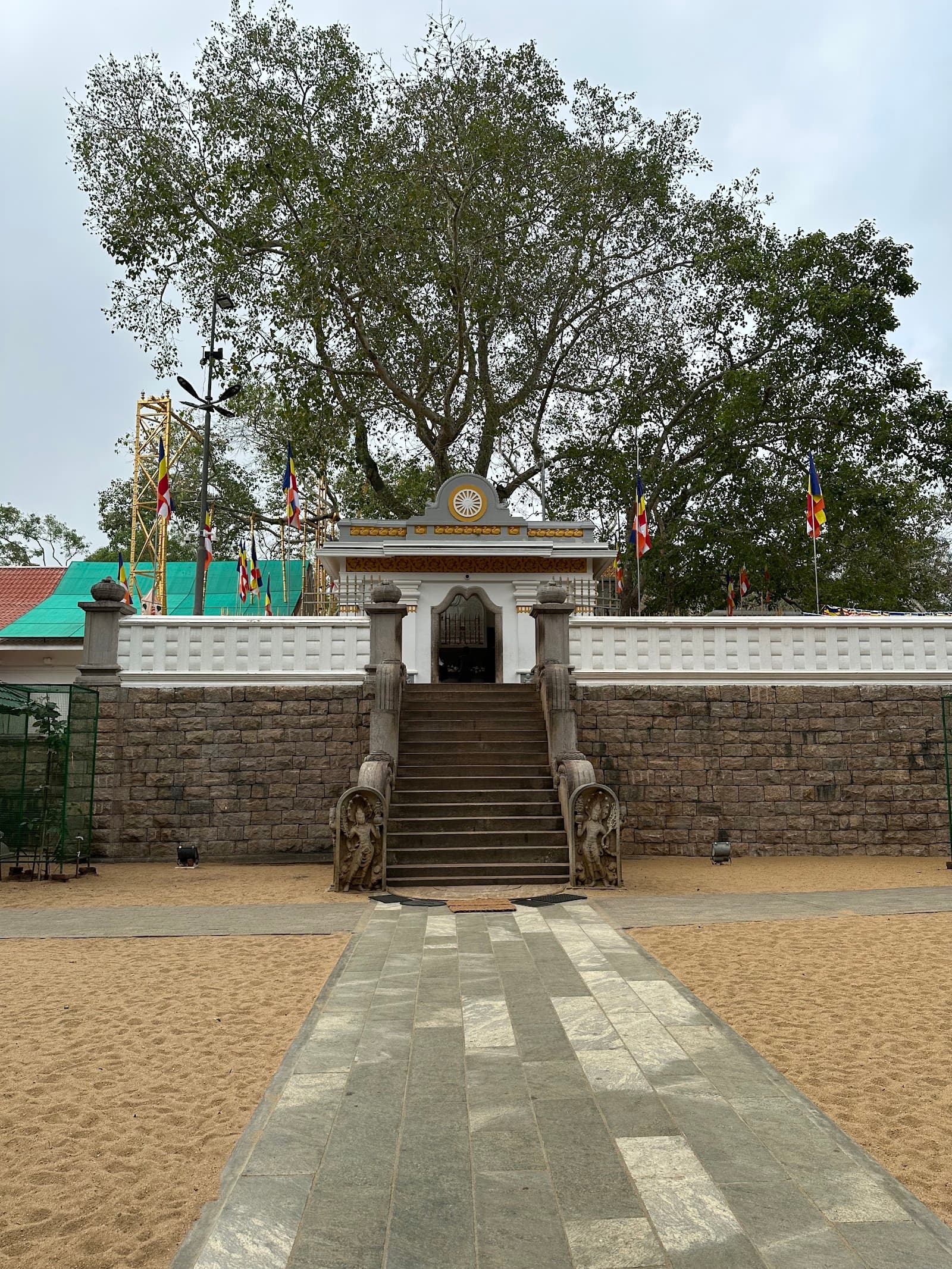
Sri Maha Bodhi Mahamevnawa Anuradhapura Sri Lanka
Sri Maha Bodhi, dramatically situated in the Mahamevnawa Park in the ancient city of Anuradhapura, represents one of the most extraordinary and spiritually significant living trees in the world, planted in 288 BCE from a sapling of the original Bodhi tree under which the Buddha attained enlightenment in Bodh Gaya, India, creating a powerful testament to the profound transmission of Indian Buddhist religious traditions to Sri Lanka and serving as the oldest historically authenticated tree in the world. The sacred fig tree (Ficus religiosa), known as Jaya Sri Maha Bodhi, stands as a living link to the Buddha's enlightenment and represents one of the most important Buddhist pilgrimage sites in the world, while the tree's history is deeply intertwined with the introduction of Buddhism to Sri Lanka by Mahinda, the son of the Indian Emperor Ashoka, and his sister Sanghamitta, who brought the sapling from India as part of the mission to establish Buddhism in Sri Lanka. The tree's location within the Mahamevnawa Park, surrounded by ancient monasteries, stupas, and religious structures, demonstrates the sophisticated understanding of Indian Buddhist monastery planning principles that were transmitted from the great monastic centers of India including Nalanda, Taxila, and Bodh Gaya to Sri Lanka, while the tree's association with the ancient city of Anuradhapura, which served as the capital of Sri Lanka for over a millennium, underscores its significance as a center for the transmission of Buddhist teachings, art, and culture from India to Sri Lanka. Archaeological evidence reveals that the tree has been continuously venerated for over 2,300 years, making it one of the oldest continuously venerated objects in the world, while the discovery of numerous inscriptions, chronicles, and historical records provides crucial evidence of the site's role in the transmission of Indian Buddhist texts and practices to Sri Lanka, demonstrating the sophisticated understanding of Indian Buddhist traditions possessed by the Sri Lankan Buddhist establishment. The tree's association with the Mahavamsa and Dipavamsa chronicles, which document the history of Buddhism in Sri Lanka, demonstrates the sophisticated understanding of Indian Buddhist historiography that was transmitted from India to Sri Lanka, while the tree's continued veneration by millions of Buddhists from across the world demonstrates the profound impact of Indian Buddhist culture on Sri Lankan religious traditions. The tree is protected by a sophisticated system of terraces, railings, and protective structures that have been constructed over centuries, demonstrating the continued devotion of the Sri Lankan people to this sacred symbol of the Buddha's enlightenment, while ongoing conservation efforts ensure the tree's continued health and vitality. Today, Sri Maha Bodhi stands as a UNESCO World Heritage Site and represents one of the most important Buddhist pilgrimage sites in the world, serving as a powerful testament to the transmission of Indian Buddhist culture to Sri Lanka, while ongoing archaeological research and conservation efforts continue to protect and study this extraordinary cultural treasure that demonstrates the profound impact of Indian civilization on Sri Lankan religious traditions. ([1][2])
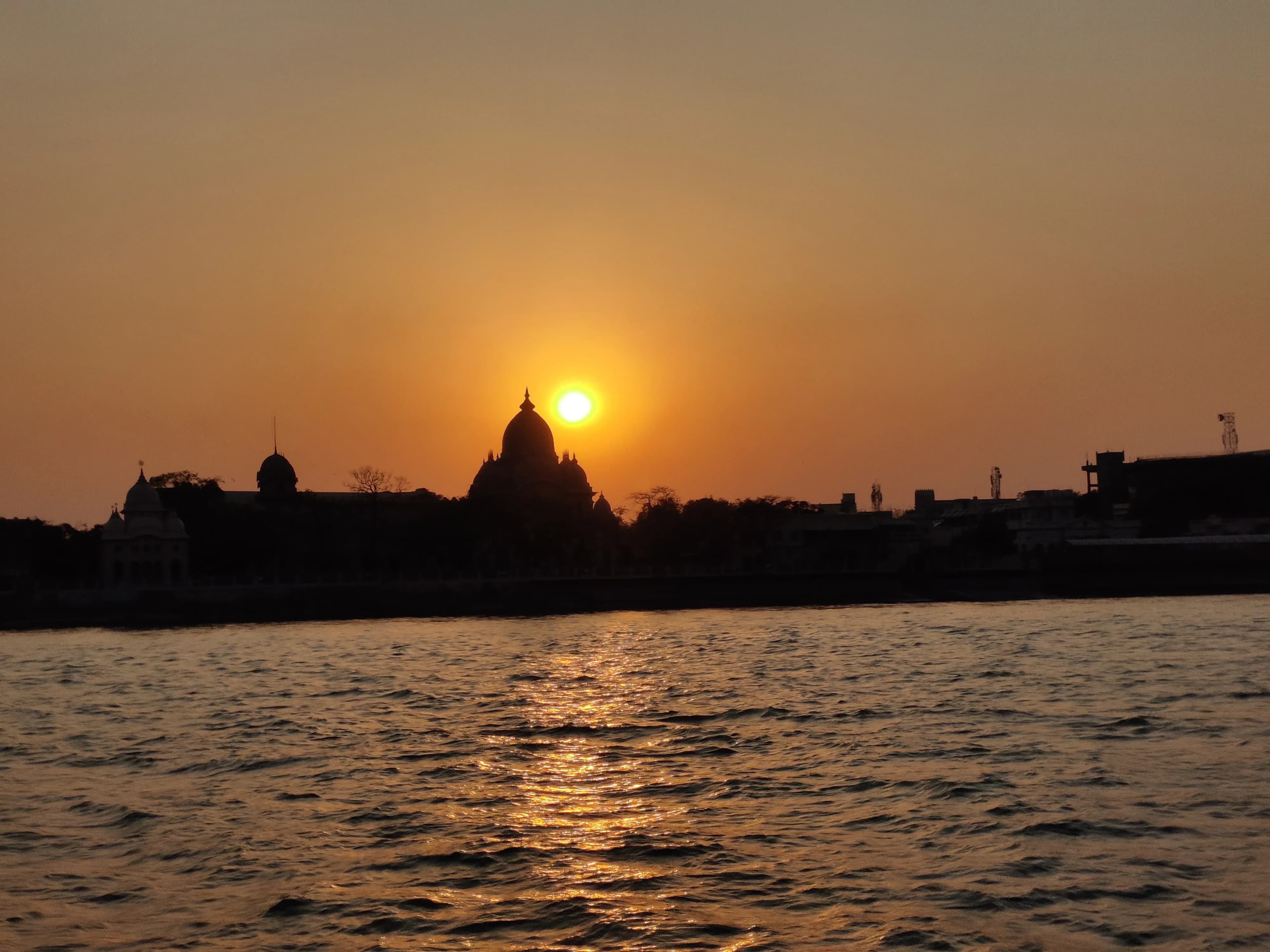
Belur Math Howrah
On the banks of the Hooghly River in West Bengal, Belur Math emerges as an architectural marvel, epitomizing syncretism and universal harmony ([1]). Envisioned by Swami Vivekananda in the late 19th century, the Math seamlessly fuses Hindu, Islamic, and Christian architectural elements, reflecting a vision of unity and religious tolerance ([2][3]). During the British Colonial Period, this unique architectural style took shape, marking a departure from traditional Indian temple designs ([4]). The Sri Ramakrishna Temple, the centerpiece of Belur Math, showcases this fusion through its design. The central dome draws inspiration from Mughal architecture, while Gothic arches and pillars echo European cathedral styles ([5]). Red sandstone, reminiscent of Rajput-era structures, is juxtaposed with white marble, creating a visually striking contrast ([1]). Intricate carvings, however, retain a distinct Indian essence, featuring floral motifs and symbols from various faiths, echoing the artistry found in ancient Indian temples ([2]). The layout, conceived in the form of a cross, further symbolizes the concept of religious harmony ([3]). Stained-glass windows add to the spiritual ambiance, casting colorful light across the interiors. Beyond the main temple, the Swami Vivekananda Temple and the Old Math contribute to the campus, preserving the legacy of the Ramakrishna Mission ([4][5]). Belur Math transcends specific architectural styles, embodying a universal spiritual message. It stands as a reminder of India's composite culture and its long-standing tradition of assimilating diverse influences.
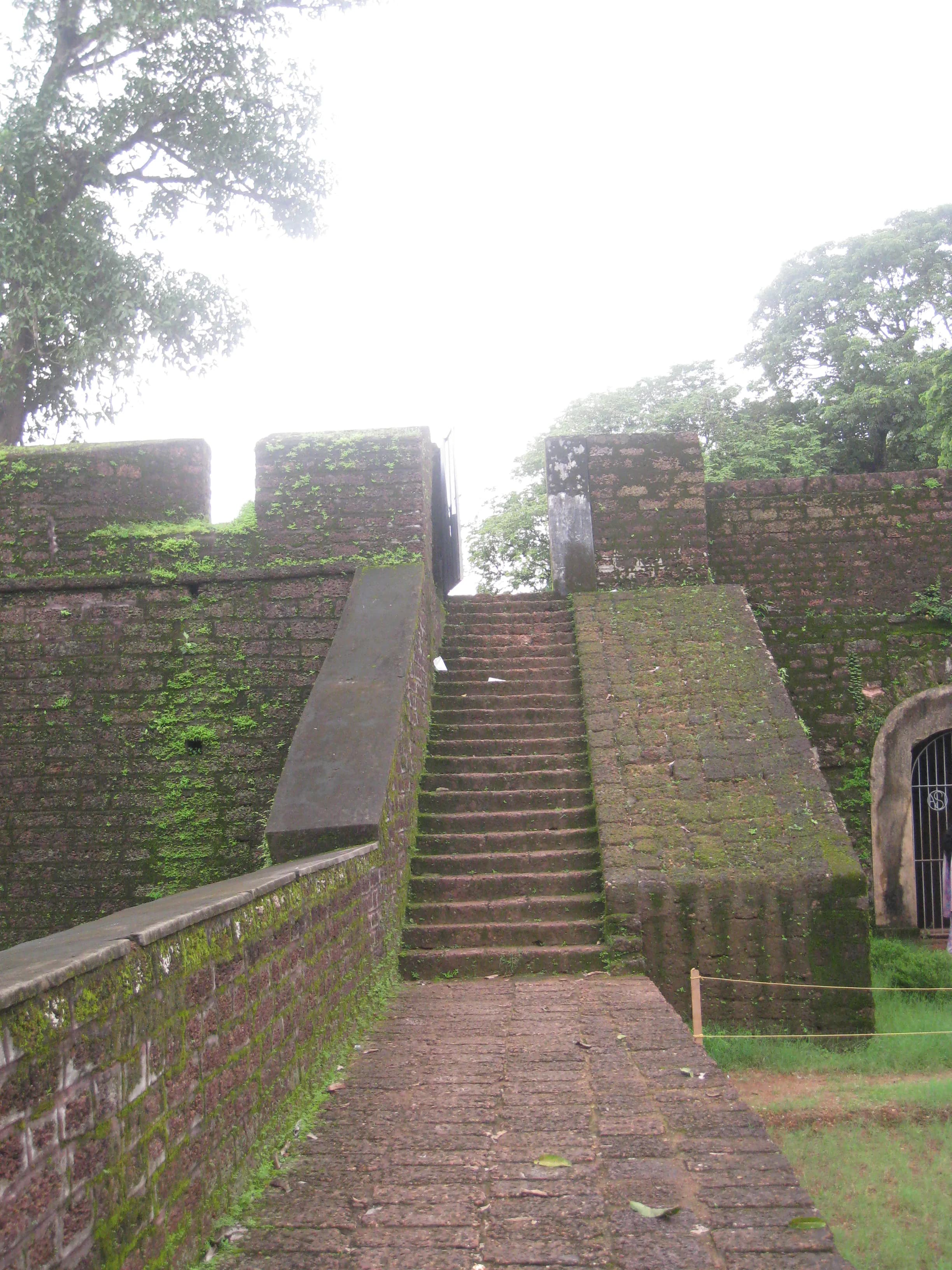
Thalassery Fort Thalassery
The laterite walls of Thalassery Fort rose against the Malabar Coast’s emerald-green backdrop, a stark, ochre-red testament to a turbulent past. The humidity hung heavy in the air, a familiar embrace for someone accustomed to the tropical climate of Madhya Pradesh, yet the salty tang of the Arabian Sea was a welcome change. My camera, a constant companion, felt almost weightless in my hand, eager to document the stories whispered by these weathered stones. Thalassery Fort isn’t a sprawling citadel like the ones I’m used to back home. It’s compact, almost square, with surprisingly high walls that command a panoramic view of the coastline. The British East India Company erected this stronghold in 1708, a strategic move to solidify their burgeoning pepper trade. Standing at the ramparts, I could almost visualize the bustling port below, laden with sacks of spice destined for distant shores, the air thick with the aroma of cloves, cinnamon, and of course, black gold – pepper. The laterite, a locally sourced material, gives the fort a unique texture. It’s not the polished sandstone of Gwalior or the intricately carved marble of Mandu. This is a rougher, more utilitarian beauty. The porous laterite blocks, some bleached almost white by the relentless sun and sea spray, others retaining a deep, earthy red, create a fascinating tapestry of colour and texture. I found myself drawn to the subtle variations in the stone, capturing close-ups of the lichen clinging to the shaded crevices, the intricate patterns formed by the weathering, the silent narrative etched by time. The fort’s architecture is a blend of practicality and subtle elegance. The bastions, strategically placed at the corners, offer commanding views of the surrounding area. The arched gateways, though now weathered and worn, still retain a sense of grandeur. I noticed the lack of elaborate ornamentation, a stark contrast to the ornate Mughal architecture I’m familiar with. This simplicity, however, speaks volumes about the fort’s primary function – defense. It’s a structure built for purpose, not for display. Inside the fort, the remnants of the past are scattered like pieces of a forgotten puzzle. The crumbling barracks, the overgrown courtyard, the silent well – each element whispers tales of the soldiers who lived and fought within these walls. I spent hours exploring these spaces, my camera capturing the interplay of light and shadow, trying to piece together the fragments of history. The light in Kerala is different, softer somehow, and it cast a unique glow on the ruins, lending them an almost ethereal quality. One of the most striking features of Thalassery Fort is its location. Unlike many inland forts, this one sits right on the edge of the sea. The rhythmic crashing of the waves against the base of the walls creates a constant soundtrack, a reminder of the fort’s maritime significance. I walked along the ramparts, the sea breeze whipping through my hair, and imagined the ships arriving and departing, the cannons roaring, the cries of the sailors echoing across the water. The fort is not merely a historical relic; it's a living entity, intertwined with the fabric of the town. Local fishermen dry their nets on the rocks below, children play cricket in the shadow of the walls, and families gather in the evenings to enjoy the cool sea breeze. This seamless integration of the past and the present is what truly captivated me. It’s a testament to the fort’s enduring presence in the community. Leaving Thalassery Fort, I felt a sense of connection, not just to the site itself, but to the people whose lives have been touched by its presence. My camera, now heavy with images, felt like a repository of stories, waiting to be shared. The laterite walls, bathed in the golden light of the setting sun, seemed to wave goodbye, a silent promise of a return visit.
Chitradurga Fort Chitradurga
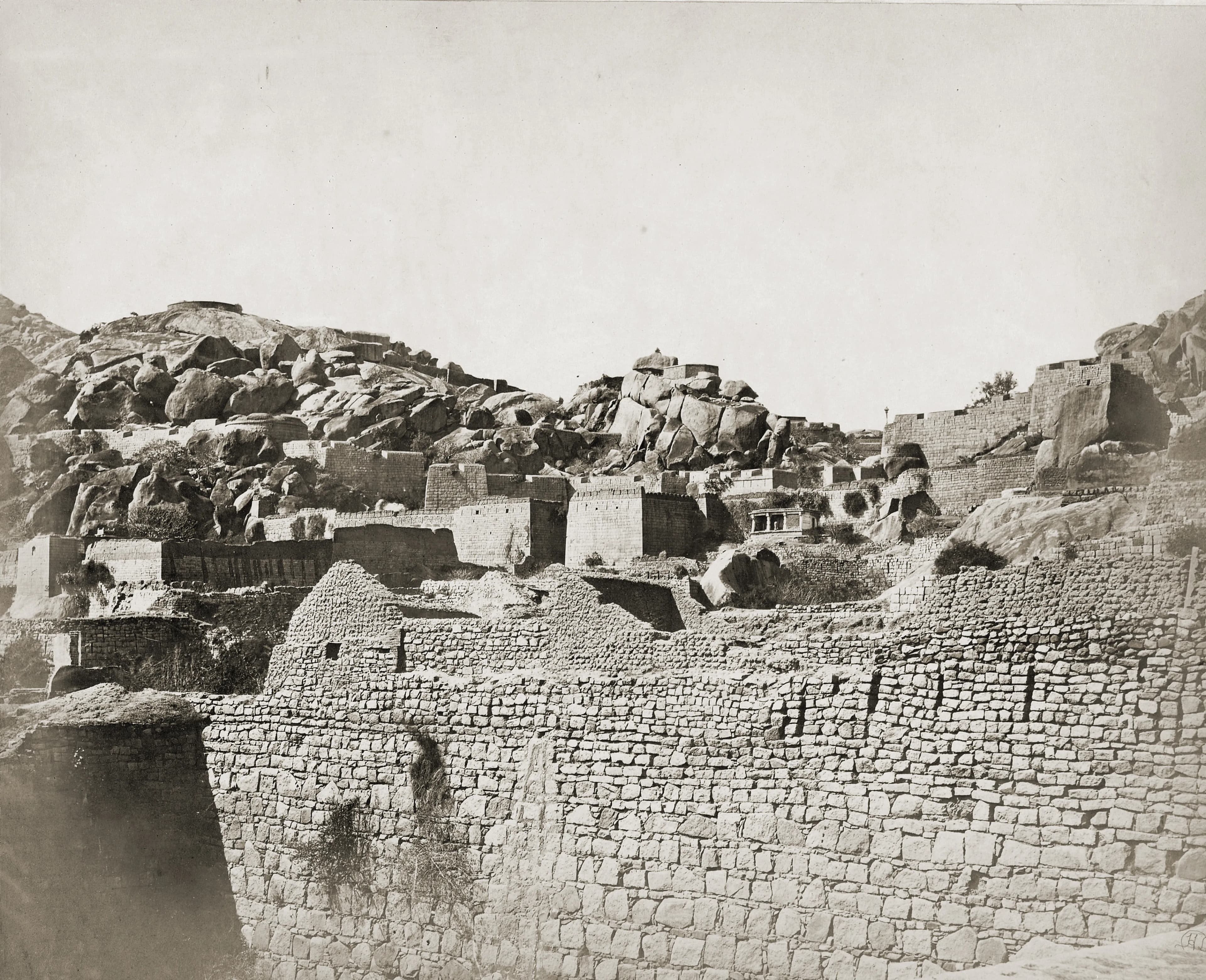
Majestically rising from the rocky terrain of Karnataka, Chitradurga Fort embodies the Nayaka dynasty's military prowess and architectural vision ([1]). Established around 1050 CE, during the 11th century, this imposing fort exemplifies Dravidian architecture and innovative fortification strategies ([2]). Its construction during the Vijayanagara period showcases the integration of natural elements into its robust defenses ([3]). Seven concentric walls, each named after figures from Hindu mythology, form the fort's strategic layout, designed to repel invaders ([3]). Granite and trap rock, fortified with mud mortar and laterite, constitute the fort's durable structure ([4]). These materials, sourced locally, reflect the Nayakas' resourcefulness and understanding of the regional landscape ([4]). Local stone was used to create sloping walls. Intricate carvings embellishing the Hidimbeshwara Temple within the fort complex depict scenes from Hindu epics, reflecting the religious beliefs of the Nayaka rulers ([5]). This artistic counterpoint to the fort's military function highlights the dynasty's patronage of both the martial and fine arts ([5]). Sophisticated rainwater harvesting systems ensured water security during prolonged sieges, showcasing advanced engineering capabilities ([6]). These systems, designed to collect and store monsoon rains, sustained the garrison and civilian population within the fort ([6]). During the rule of the Nayakas of Chitradurga, the fort expanded, incorporating the natural landscape into its defensive design ([3]). Tales of hidden tunnels and secret passages add to the fort's mystique, evoking a sense of intrigue and adventure ([7]). The fort's silhouette against the Karnataka skyline serves as a powerful reminder of India's rich architectural heritage, inviting visitors to explore its storied past ([1][2]). The fort reflects the rich heritage of the Nayaka dynasty.
Mariamman Temple Cato Manor Durban
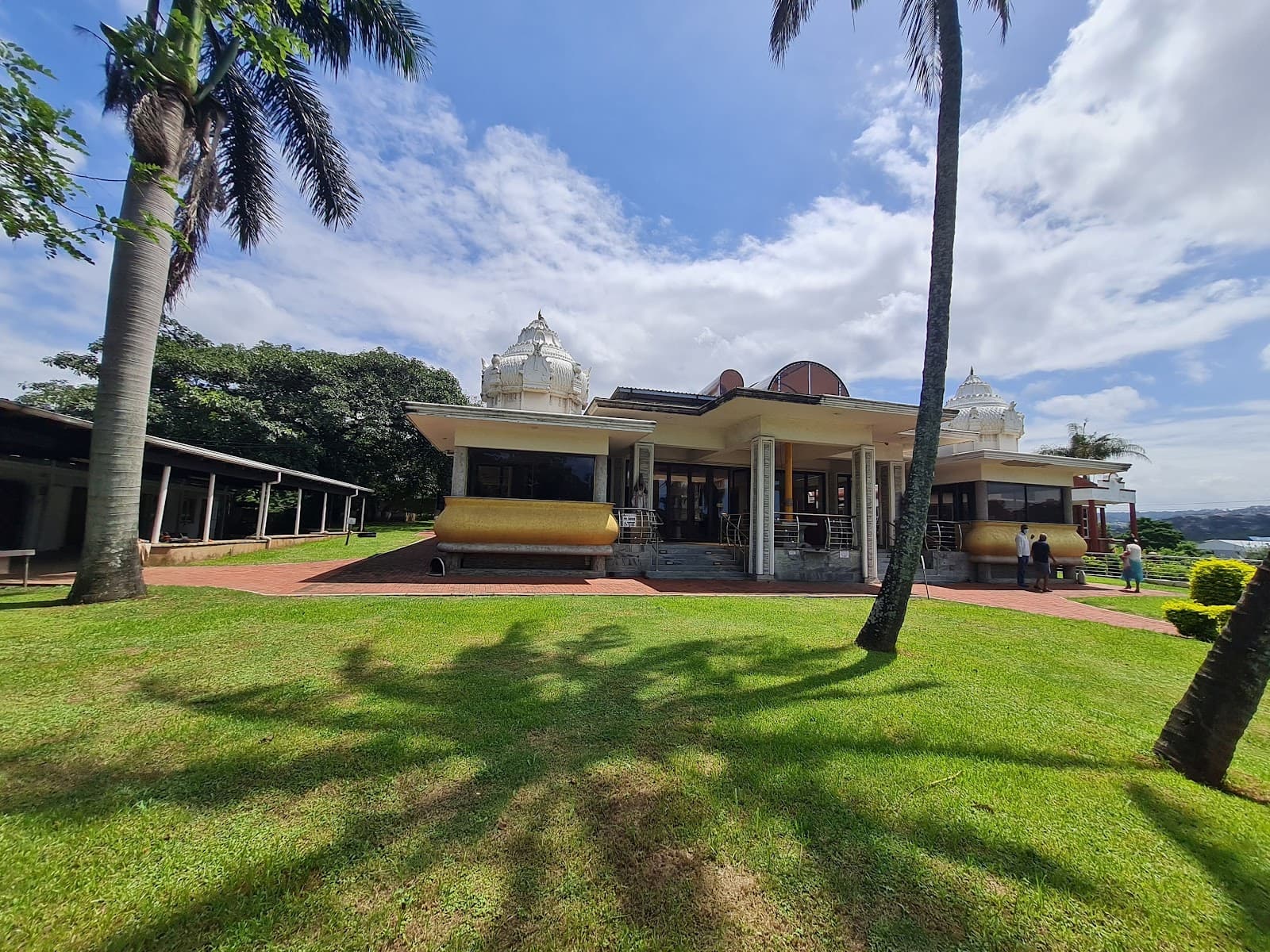
The Mariamman Temple of Cato Manor—initially erected in 1870 by early market gardeners—was rebuilt on higher ground after the 1905 floods and re-consecrated in 1932 by trader S.P. Chetty with a triad of barrel-vaulted towers sculpted in low relief, blending Dravidian iconography and the loose light of Durban's coastal plain ([1]). The main shrine to goddess Mariamman stands at the centre of a symmetrical courtyard anchored by smaller sancta for Gengaiammen and Draupadi; processional paths weave between mango trees planted by the founding families and the sacred fire pit used during annual Theemithi vows. The temple's unpainted brick facades and profuse stucco figurines capture the vernacular workmanship of indentured artisans—primitive yet lyrical depictions of deities holding neem leaves, tridents, and conches, illuminated at twilight by ghee lamps. Community halls along the perimeter host Tamil cultural classes, scripture recitation, marriage counselling, and relief cooking for surrounding informal settlements. ([1])
Vishnu Mandir Richmond Hill
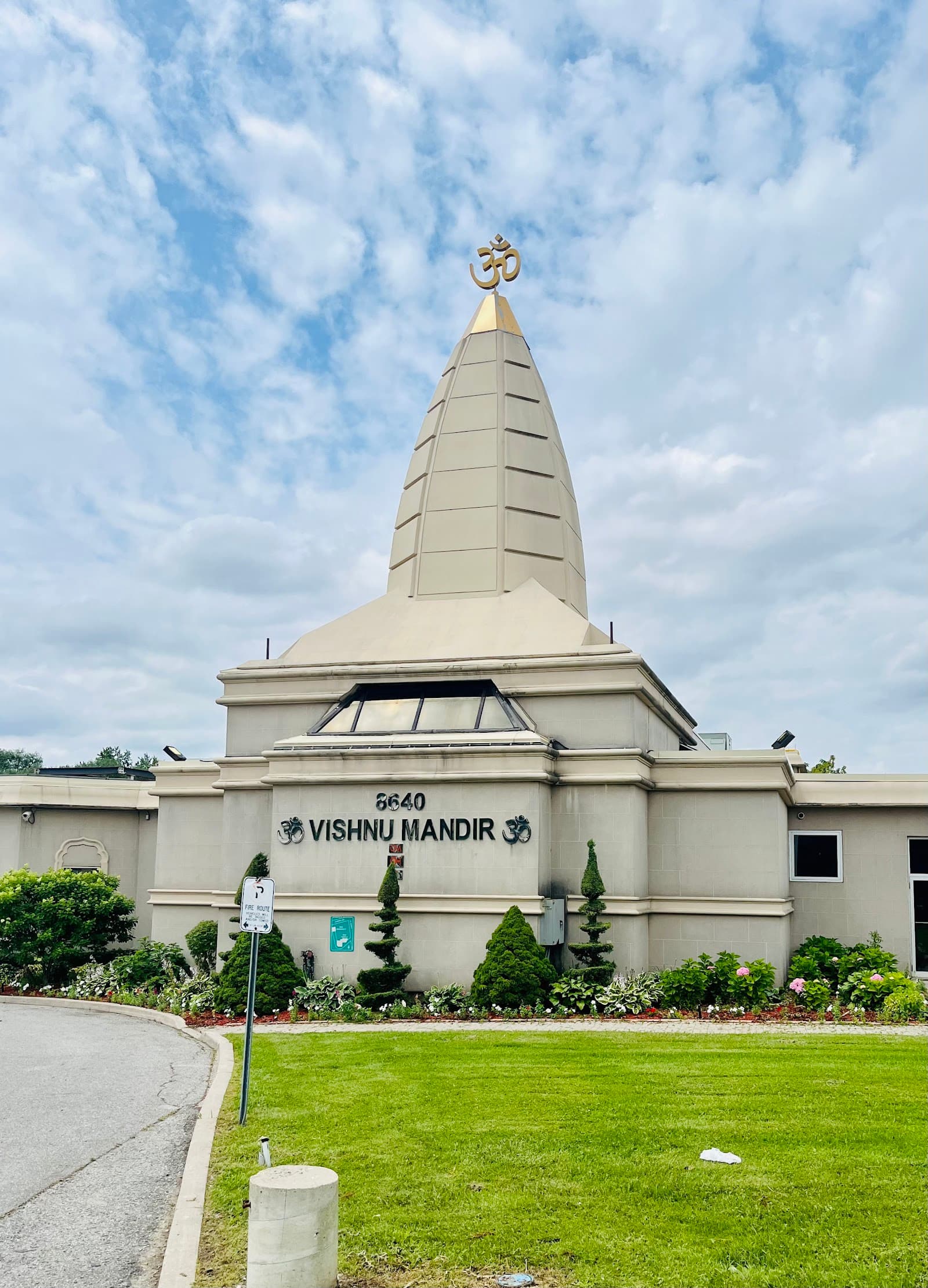
Vishnu Mandir Richmond Hill is dedicated to Lord Vishnu and anchors York Region as a year-round devotional and cultural campus with daily worship, Sunday satsang, and an animal sanctuary on its 15-acre grounds ([1][2]). The mandir opens 7:00 AM-12:00 PM and 5:00 PM-9:00 PM, while the adjoining Peace Park, seniors’ lounge, and Govindas cafeteria operate throughout the afternoon, giving volunteers space to manage annadhanam, yoga, and children’s Bal Vihar programming without disrupting darshan queues ([1][3]). Reception staff issue RFID badges, direct vehicles to permeable-paver lots, and brief school groups on heritage interpretation before docents guide them through the marble-clad mandapa, museum displays, and the outdoor Gandhi Peace Garden. Mandir operations run on a rotating seva schedule that maintains clean shoe storage, sanitised restrooms, and audio-visual broadcasts to the global Vishnu Mandir Television network. Accessibility is supported by heated ramps, a 1,600-kilogram elevator, tactile floor strips, and hearing loops in the main hall, while digital signage relays aarti times, meditation sessions, and weather contingencies for the cremation service pavilion. With in-house security, Building Automation System dashboards, and emergency plans developed with York Region partners, the campus stays ready for large festivals, wellness clinics, and intercultural diplomacy alongside the morning aarti ([2][3]).
Anuradhapura Ancient City North Central Province Sri Lanka
Anuradhapura, located in Sri Lanka's North Central Province, served as the island's first capital, flourishing from around 350 BC for over 1,300 years ([1][2]). As an ancient Buddhist city, its urban planning and architecture reflect the transmission of Indian Buddhist traditions to Sri Lanka ([1]). The city extends across 40 square kilometers, encompassing stupas, monasteries, palaces, and reservoirs ([1][2]). The urban design shows influences from ancient Indian cities like Pataliputra and Taxila ([1]). Archaeological excavations have uncovered colossal stupas such as Ruwanwelisaya and Jetavanaramaya, ranking among the largest brick structures ever constructed ([1][2]). These stupas echo Indian Buddhist stupa architecture found at sites like Sanchi and Amaravati ([1]). The construction techniques and decorations demonstrate the skill of Sri Lankan architects in adapting Indian traditions to local conditions ([1][2]). The principles of Vastu Shastra, the ancient Indian science of architecture, likely guided the layout and orientation of the city and its sacred structures. Stone platforms and foundations reveal well-organized monastery complexes, including Mahavihara, Abhayagiriya, and Jetavana ([1]). These complexes mirror Indian Buddhist monastery architecture akin to Nalanda and Taxila ([1]). Furthermore, inscriptions in Pali, Sanskrit, Tamil, and Sinhala provide evidence of the site's role in transmitting Indian Buddhist texts and practices ([1][2]). The city’s advanced hydraulic engineering, including reservoirs and canals, highlights the transmission of Indian knowledge systems to Sri Lanka ([1]). Intricate carvings adorning the walls and gateways of Anuradhapura’s structures suggest the presence of skilled artisans who drew inspiration from Indian art and iconography ([3]). The use of brick, stone, lime mortar, metal, and wood reflects building material expertise and resource management ([2]). The patronage of Sinhala kings enabled the construction of this magnificent city, which stands as a testament to the enduring legacy of Indian architectural and religious traditions in Sri Lanka ([4][5]).
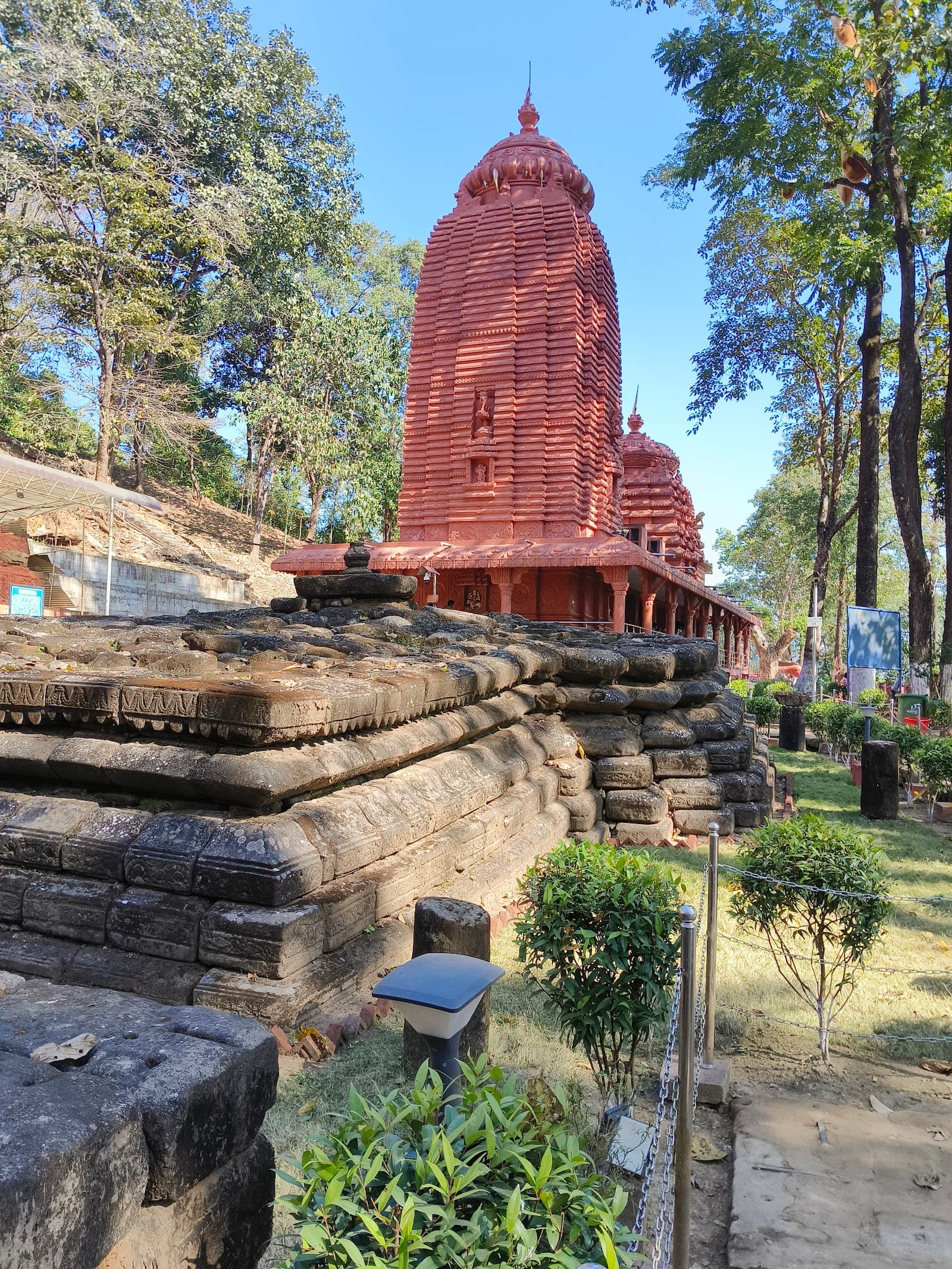
Malinithan Temple Likabali
The air hung thick and humid, a palpable presence as I navigated the final stretch of the winding road leading to Malinithan, a ruined temple complex tucked away in the verdant embrace of Arunachal Pradesh's Lower Siang district. The anticipation was almost as dense as the jungle itself. Having visited every UNESCO World Heritage Site in India, I've encountered grandeur on an epic scale, but Malinithan promised something different – a whisper of a lost kingdom, a forgotten chapter in India's rich tapestry. Emerging from the dense foliage, the first sight of Malinithan is arresting. Scattered across a gently sloping hillside are the remnants of a once-magnificent temple, its stones bearing the indelible marks of time and the elements. Unlike the meticulously preserved monuments I'd encountered elsewhere, Malinithan exudes a raw, almost melancholic beauty. Nature has begun to reclaim the site, with roots snaking through crevices and moss clinging to the weathered sculptures. The central complex is dominated by the ruins of what is believed to have been the main temple. The remaining structures, though fragmented, hint at a sophisticated architectural style. Intricately carved stone blocks, some featuring depictions of deities, animals, and floral motifs, lay scattered across the site. The craftsmanship is remarkable, showcasing a clear influence of both Hindu and tribal artistic traditions. One particular carving, a remarkably well-preserved elephant head, captured my attention. The detail in the folds of its trunk and the expression in its eyes spoke volumes about the skill of the artisans who shaped it centuries ago. My guide, a local from the nearby village, explained that Malinithan is believed to have been built by the Chutiya kings, who ruled the region between the 14th and 16th centuries. He recounted local legends surrounding the site, tales of powerful rulers, hidden treasures, and divine interventions. These stories, passed down through generations, added another layer of intrigue to the already captivating ruins. As I explored further, I noticed a distinct shift in the architectural style. While the central complex displayed a more classical Hindu influence, the surrounding structures exhibited a more indigenous character. This fusion of styles, a testament to the cultural exchange that shaped the region, is what makes Malinithan truly unique. It's not just a temple; it's a melting pot of artistic and religious influences, a tangible link to a vibrant past. One of the most striking features of Malinithan is the abundance of sculpted lingams, the phallic symbol representing Lord Shiva. These range in size from small, palm-sized objects to massive structures several feet tall. The sheer number of lingams scattered across the site suggests that Malinithan was a significant center of Shaivite worship. The climb to the upper reaches of the site offered breathtaking panoramic views of the surrounding hills and valleys. Standing there, amidst the ruins, I felt a profound sense of connection to the past. I imagined the temple in its heyday, bustling with activity, a vibrant hub of religious and cultural life. The silence of the present day, broken only by the chirping of birds and the rustling of leaves, served to amplify the echoes of the past. Malinithan is not just a collection of ruins; it's a living testament to the ingenuity and artistic prowess of a forgotten kingdom. It's a place where history whispers from every stone, where legends intertwine with reality, and where the past and present converge in a symphony of silence and grandeur. While it may not yet bear the official UNESCO World Heritage Site designation, its historical and cultural significance is undeniable. My visit to Malinithan was more than just another stop on my journey; it was a pilgrimage into the heart of a lost world, a poignant reminder of the ephemeral nature of empires and the enduring power of human creativity.
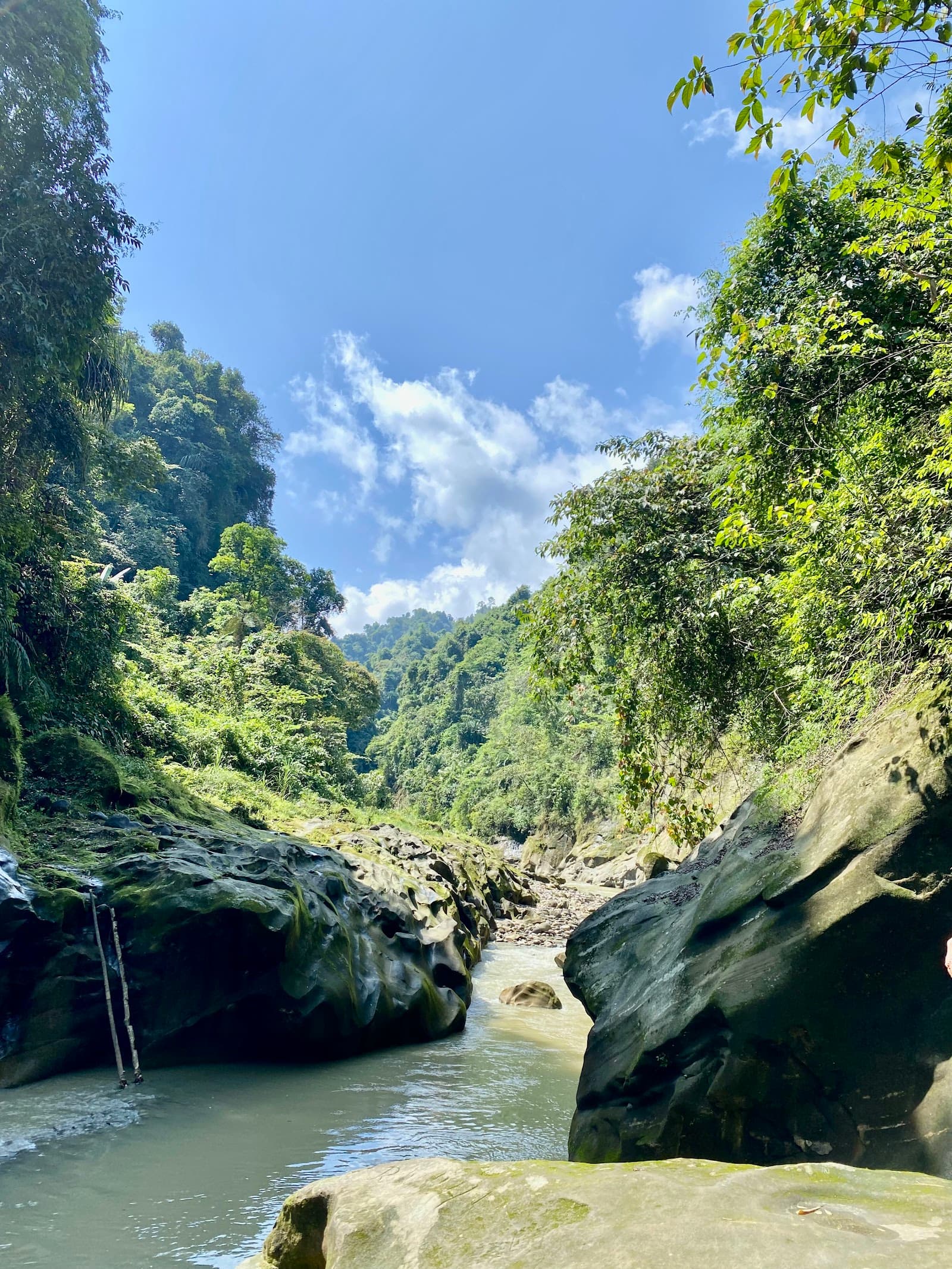
Akashiganga Temple Along West Siang
In Arunachal Pradesh's West Siang district, Akashiganga emerges as an ancient temple complex, a candidate for UNESCO World Heritage recognition ([1]). The routes leading to it present picturesque vistas of the Himalayan foothills ([2]). During the Pala period, around 1350 CE, this sacred site was established, distinguished by its Nagara-style architecture and curvilinear tower ([3][4]). Predominantly, stone and timber were employed in its construction, reflecting the area's natural resources ([3]). What makes Akashiganga notable is the convergence of Hinduism and indigenous Adi traditions ([2]). The primary Shiva temple, though unpretentious, possesses profound spiritual importance for the Adi community ([1]). Eschewing the intricate embellishments common in South Indian temples, the temple's aesthetic accentuates the inherent beauty of its surroundings ([2]). Vedic astronomical principles guided the temple's layout, harmonizing it with cosmic energies ([5]). Intricate carvings embellish the temple walls, illustrating deities and narratives from Hindu mythology ([4]). Akashiganga, which translates to "Sky River," is traditionally associated with the Ganges River, enhancing its sacred status ([1][2]). Pilgrims undertake journeys to offer prayers, drawn to the site's palpable spiritual aura ([3]). As an embodiment of the region's cultural legacy and the enduring strength of faith, Akashiganga stands as a testament to Arunachal Pradesh's rich heritage ([1]). The architectural style incorporates a tiered roof, adding to its unique character ([3]). Bamboo and cane are also integrated into the structure, showcasing the use of local materials ([3]). The Pala Dynasty's patronage is evident in the temple's design and construction ([3]).
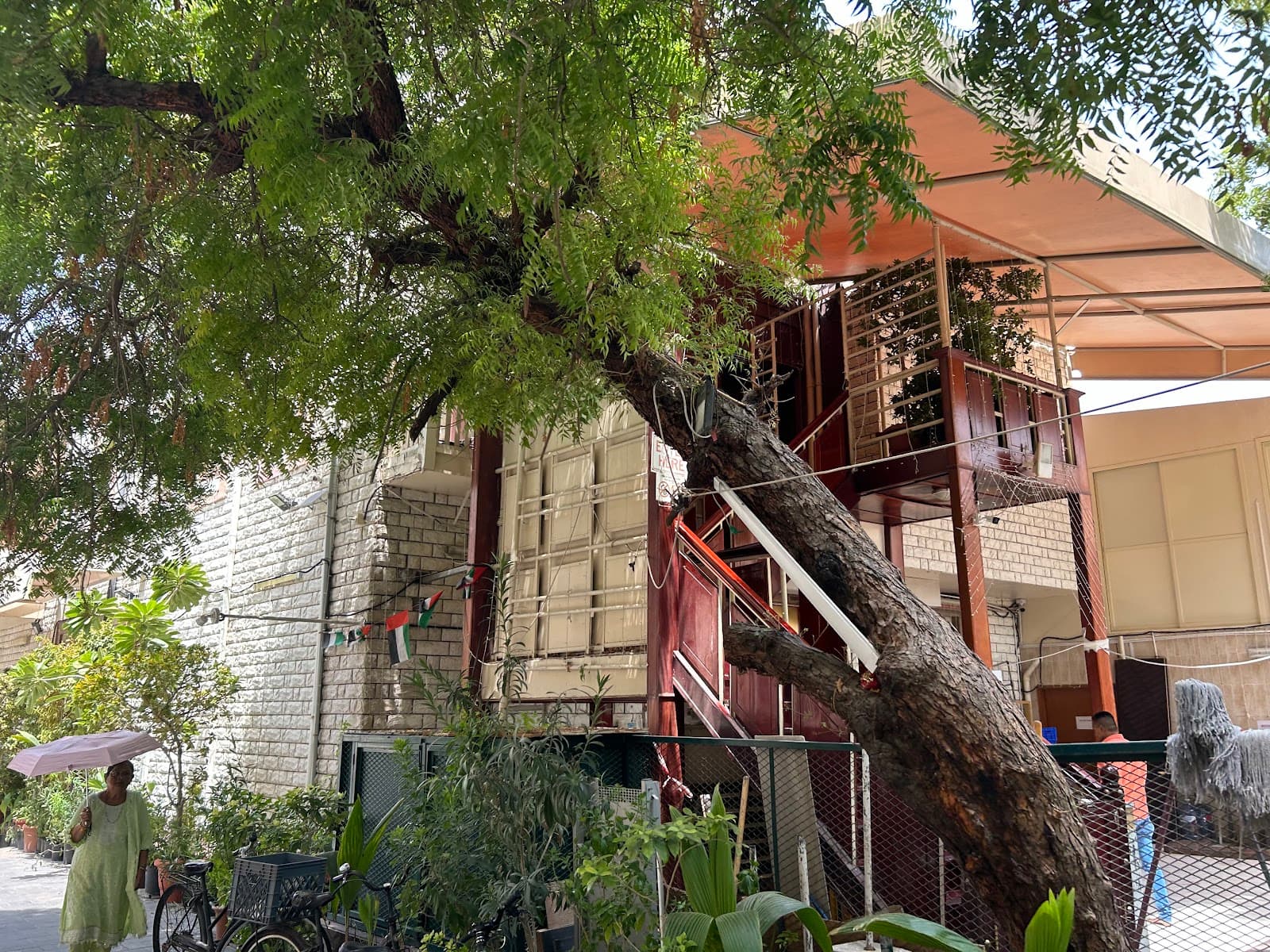
Shri Guruvayurappan Temple UAE
Shri Guruvayurappan Temple UAE, consecrated in 2013 after a decade of Kerala community fund-raising, transplants the ambiance of Guruvayur's Chuttambalam to Al Quoz with a granite-clad sanctum, Kerala-style copper-draped kodimaram (flagstaff), nadappura verandah circling the garbhagriha, and daily Sopana Sangeetham bhajans accompanied by edakka and chenda drummers ([1][2]). The 35,000-square-foot complex houses Lord Guruvayurappan with Guruvayur's Parthasarathi idol, Mahaganapathy, Ayyappa, Bhagavathy, and Navagraha shrines, as well as a Nalambalam corridor for clockwise pradakshina. The interior replicates Kerala temple proportions: teak beam ceilings, oil-lamp-lined corridors, and granite flooring cooled by traditional vedi (ventilation shafts). A 24-hour Nirmalya darshan schedule serves early commuters; Usha Pooja, Pantheeradi Pooja, Ucha Pooja, Deeparadhana, and Athazha Pooja bookend the day, with Thiruvathira and Ekadasi fasts drawing thousands. The cultural wing includes a Kathakali rehearsal hall, Carnatic classrooms, Sanskrit and Malayalam tutoring rooms, Ayurveda clinic, annadhanam kitchen, and digital library archiving palm-leaf manuscripts.
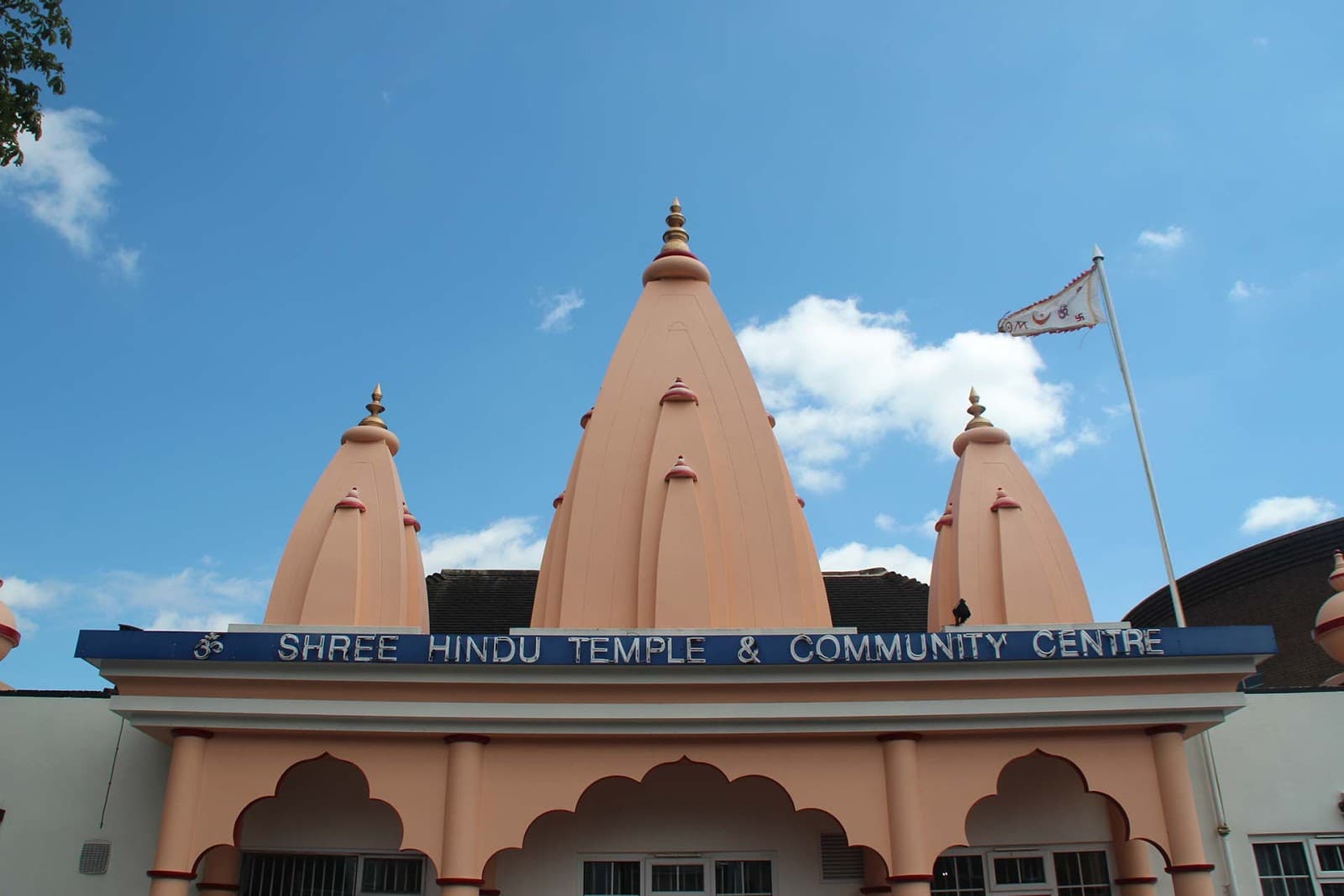
Shree Hindu Temple & Community Centre Leicester
Shree Hindu Temple & Community Centre Leicester, established in 1969 and inaugurated in 1980, is one of the UK’s longest-operating multi-deity mandirs and remains a cornerstone for Leicestershire Hindus with shrines to Ram Darbar, Mahadev Parivar, Radha Krishna, Hanuman, Durga, and Jain Parshvanath housed within a marble sanctum ringed by an octagonal rasa mandala ([1][2]). The temple opens 8:00 AM-1:00 PM and 4:00 PM-9:00 PM daily, with arti at 10:30 AM and 7:00 PM; volunteers oversee RFID entry, shoe racks, queue management, and welfare desks while priests conduct daily Ganesh puja, Vishnu sahasranam archana, and weekend yagya. The adjacent three-storey Community Centre contains classrooms for Gujarati, Hindi, and Sanskrit instruction, a gymnasium, yoga studios, Annapurna kitchen, library, IT lab, and the Govind Dham elder care lounge; Monday-to-Friday annadhanam feeds seniors while Saturday community kitchen produces 400+ free meals for Leicester’s Food Stop and Homeless Shelter ([1][3]). Cultural programmes range from Bhajan Sandhya, Garba rehearsals, and Sangeet Sabha to mental health clinics, legal advice surgeries, employment fairs, and British Hindu chaplaincy training. The temple’s festival planning committee works with Leicester City Council, East Midlands Ambulance Service, and Leicestershire Police to deliver Diwali village events on Belgrave Road, Rath Yatra floats, and multi-faith Remembrance Day services. An in-house communications team broadcasts arti and festivals on YouTube and Kirtan Mandali Radio, while building managers orchestrate security, CCTV, fire safety, and energy monitoring to keep the 4,645 square-metre campus resilient for daily worship and civic service ([1][4]).
Quick Links
Plan Your Heritage Journey
Get personalized recommendations and detailed visitor guides