Has Inheritage Foundation supported you today?
Your contribution helps preserve India's ancient temples, languages, and cultural heritage. Every rupee makes a difference.
Secure payment • Instant 80G certificate
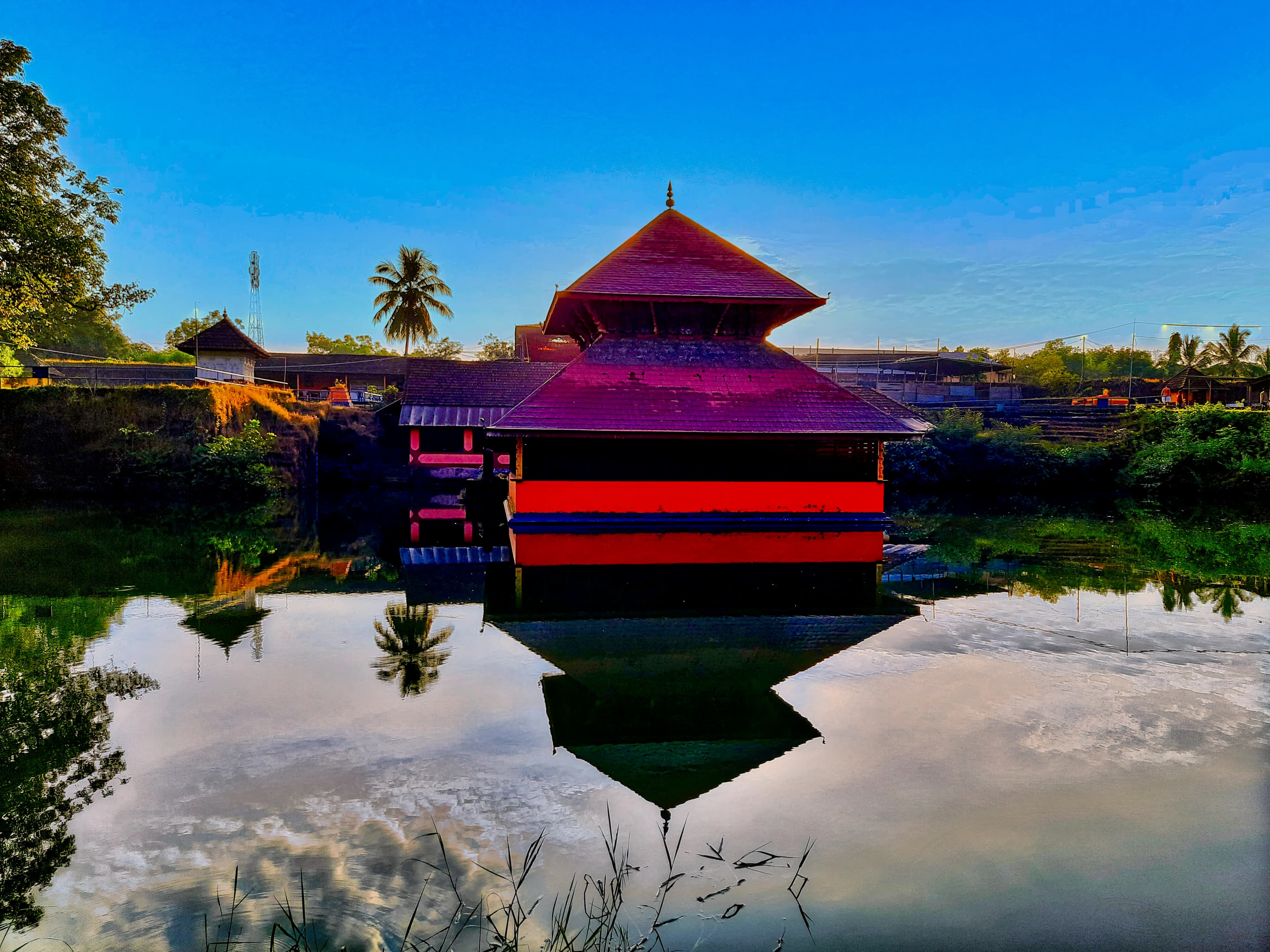
Ananthapura Lake Temple Kasaragod
Nestled in the verdant landscapes of Kerala, the Ananthapura Lake Temple in Kasaragod provides a tranquil spiritual experience ([1][2]). Dating to 850 CE, during the Chera period, this unique temple is dedicated to Lord Vishnu as Ananthapadmanabha ([1]). The temple exemplifies the Kerala Dravidian architectural style, characterized by sloping roofs and laterite construction ([2]). The Kadamba dynasty of North Canara were patrons of the temple ([1]). Within the Garbhagriha (Sanctum), the idol of Lord Vishnu reclining on the serpent Anantha captivates devotees ([2]). Intricate carvings adorn the wooden pillars, depicting scenes from Hindu mythology and reflecting the region's rich artistic traditions ([3]). These carvings serve not only as decoration but also as a narrative medium, conveying stories and teachings to devotees ([3]). Granite and wood are also used in the temple's construction ([1]). During the Chera period, temple architecture in Kerala flourished, with structures designed to withstand the region's heavy rainfall ([5]). Temple complexes often included features like the Kulam (Pond) which is connected to the rich heritage and culture of the region ([6]). The presence of Babiya, the vegetarian crocodile, adds to the temple's mystique, symbolizing the intertwining of nature and spirituality ([3]). Vastu Shastra principles, the ancient Indian science of architecture, likely guided the temple's layout and orientation, harmonizing it with its natural surroundings ([4]). The Manasara Shilpa Shastra and Mayamata texts provide detailed guidelines on temple construction, including the precise measurements and placement of various elements to create a sacred space ([7]). Stone platforms and foundations demonstrate the temple's enduring construction ([1]). The use of laterite, a locally sourced material, highlights the temple's integration with the regional environment ([2]).
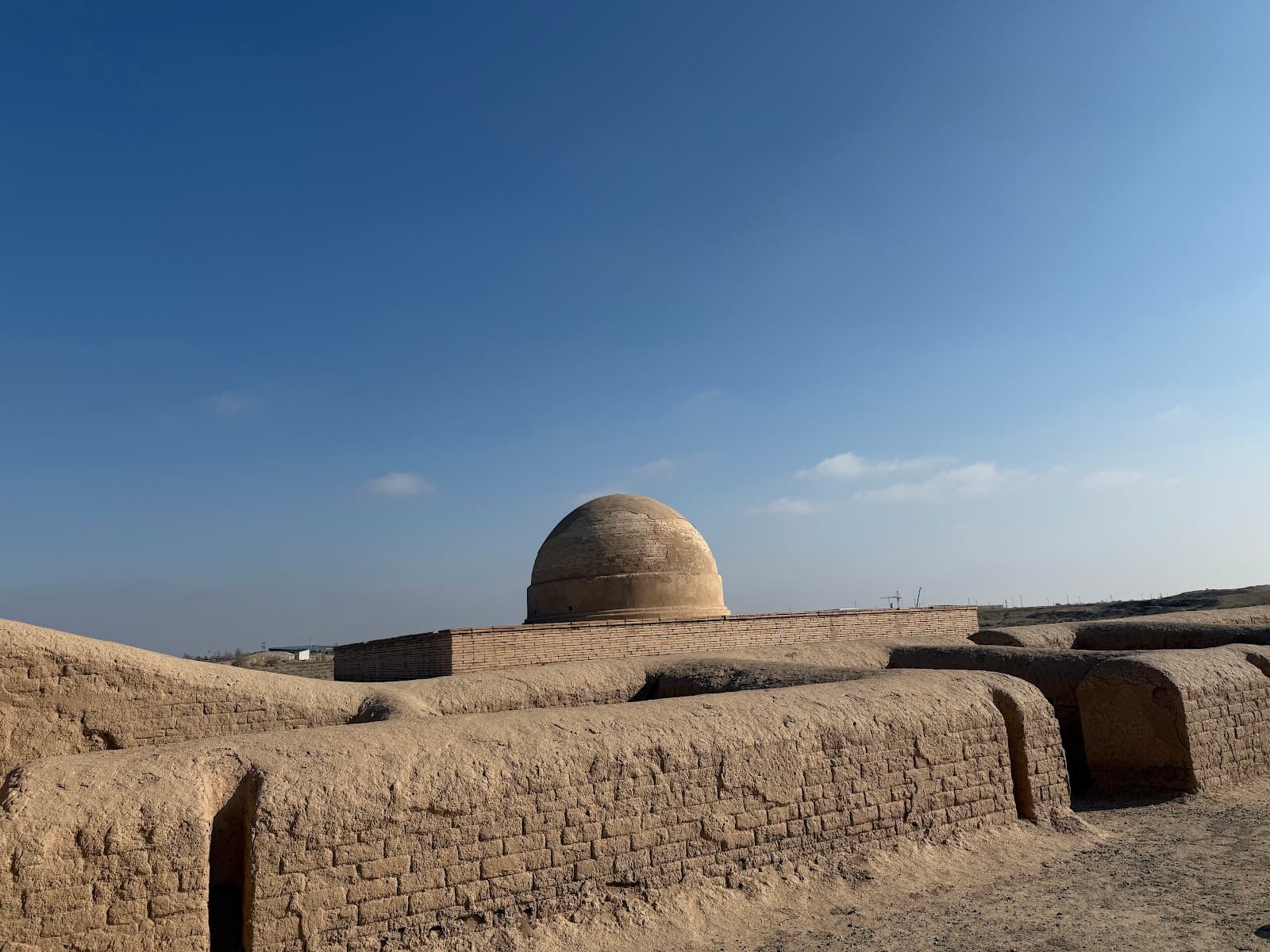
Fayaz Tepe Monastery Termez Uzbekistan
Fayaz Tepe Monastery, located near Termez in southern Uzbekistan, represents one of the most extraordinary and archaeologically significant Buddhist monastic complexes along the ancient Silk Road, constructed from the 1st to 3rd centuries CE during the height of the Kushan Empire, creating a powerful testament to the profound transmission of Indian Buddhist religious and architectural traditions to Central Asia. The monastery complex, comprising multiple structures including stupas, chapels, monastic cells, and assembly halls arranged around a central courtyard, features remarkable architectural elements that demonstrate the direct transmission of Indian Buddhist monastery architecture, particularly the traditions of northern India during the Kushan period, with local adaptations that reflect the sophisticated synthesis of Indian religious and artistic traditions with Central Asian building techniques. The site's most remarkable feature is the discovery of numerous Sanskrit inscriptions carved into stone and written on various materials, providing crucial evidence of the site's role as a major center for the transmission of Indian Buddhist texts and practices to Central Asia, while the architectural layout, with its central stupa surrounded by monastic cells and assembly halls, follows the classic Indian Buddhist monastery plan that was systematically transmitted from the great monastic centers of India including Taxila, Nalanda, and Gandhara. Archaeological excavations have revealed extraordinary Buddhist sculptures and reliefs executed in the distinctive Gandharan style, demonstrating the direct transmission of Indian Buddhist iconography and artistic traditions to Central Asia, while the discovery of numerous artifacts including coins, pottery, and ritual objects provides crucial evidence of the site's role as a major center of Buddhist learning and practice that attracted monks, traders, and pilgrims from across the Buddhist world. The monastery's location near Termez, a major Silk Road crossroads, underscores its significance as a center for the transmission of Buddhist teachings, art, and culture from India to Central Asia and beyond, while the site's architectural sophistication and extensive decorative programs demonstrate the sophisticated understanding of Indian Buddhist traditions possessed by the monks and artisans who created this extraordinary complex. Today, Fayaz Tepe stands as a UNESCO Tentative List site and represents one of the most important Buddhist archaeological discoveries in Central Asia, serving as a powerful testament to the transmission of Indian Buddhist culture and architecture to Central Asia, while ongoing archaeological research and conservation efforts continue to protect and study this extraordinary cultural treasure that demonstrates the profound impact of Indian civilization on Central Asian religious and artistic traditions. ([1][2])
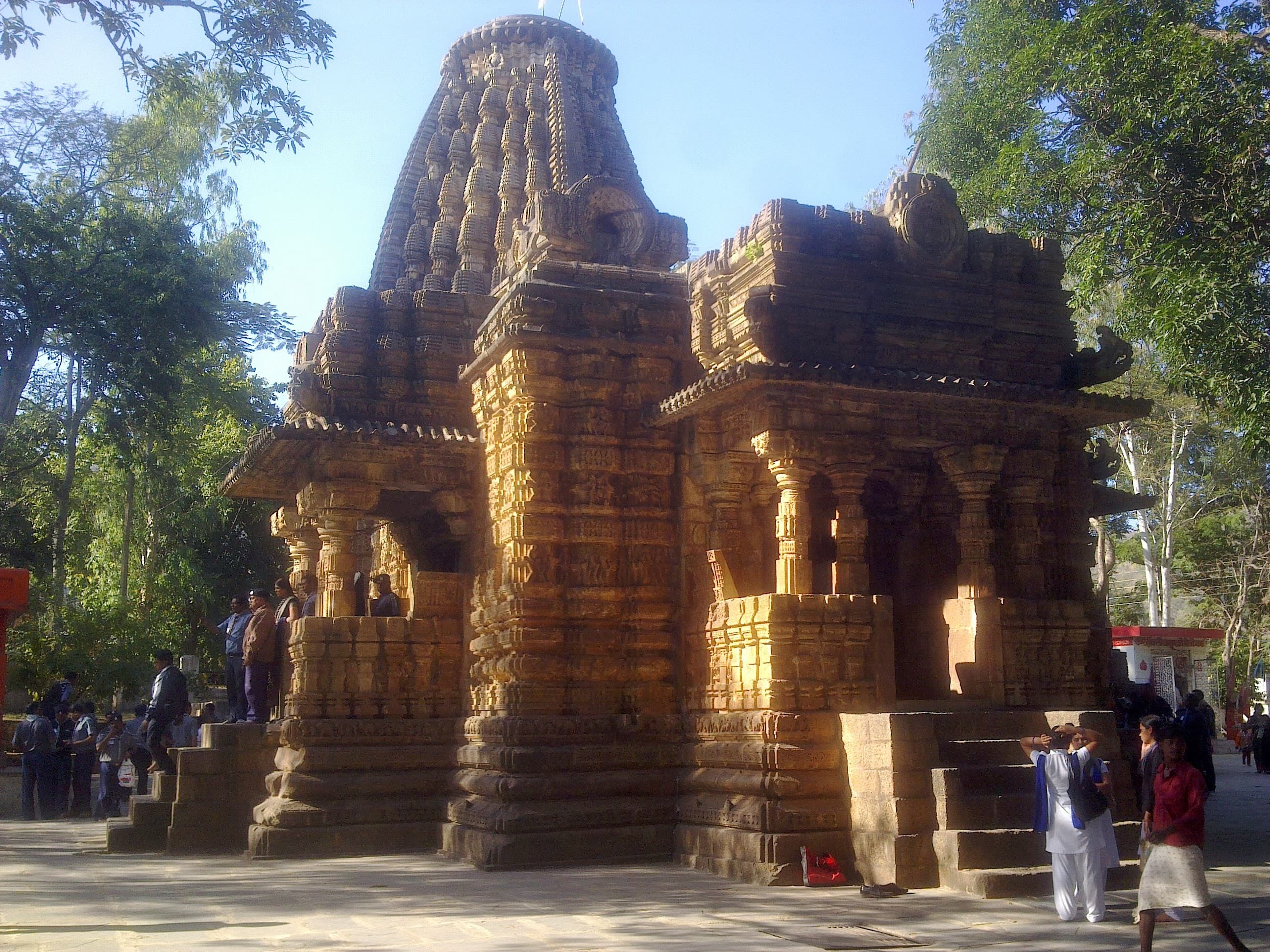
Bhoramdeo Temple Kabirdham
Granite and sandstone blocks, meticulously carved, form the Bhoramdeo Temple in Kabirdham, Chhattisgarh, a stunning example of 11th-century Indian architecture ([1][2]). Built around 1050 CE during the Kalachuri period, under the patronage of the Nagavanshi kings, this Hindu temple represents a seamless blend of Nagara and Bhumija architectural styles ([2][3]). The temple's intricate carvings narrate stories from the Ramayana and Mahabharata, offering insights into the daily life and artistic sensibilities of the era ([1][3][4]). During the Kalachuri period, temple architecture experienced significant development, influencing the construction of Bhoramdeo ([3][4]). The shikhara (spire) showcases the curvilinear elegance of the Nagara style, while the mandapa (pillared hall) features elaborate carvings ([2][5]). The Nagara style is characterized by its towering superstructure, while the Bhumija style, a regional variant, incorporates miniature spires attached to the main tower, adding complexity and visual richness ([5]). These architectural elements align with principles detailed in ancient texts like the *Vishnudharmottara Purana*, which discusses temple construction and iconography, as documented in the text ([6]). Also within the complex is the Madwa Mahal, adorned with celestial nymphs, enhancing the complex's spiritual allure ([1]). Beyond its artistic and architectural significance, Bhoramdeo's location amidst lush greenery, with the Maikal range as a backdrop, contributes to its tranquil ambiance ([4]). The gentle flow of the Jonk River further enhances the spiritual atmosphere, solidifying its status as a pilgrimage site ([5]). Bhoramdeo stands not only as the 'Khajuraho of Chhattisgarh' but also as a unique architectural marvel, embodying the rich heritage of ancient India, attracting pilgrims and tourists alike ([4][5]).
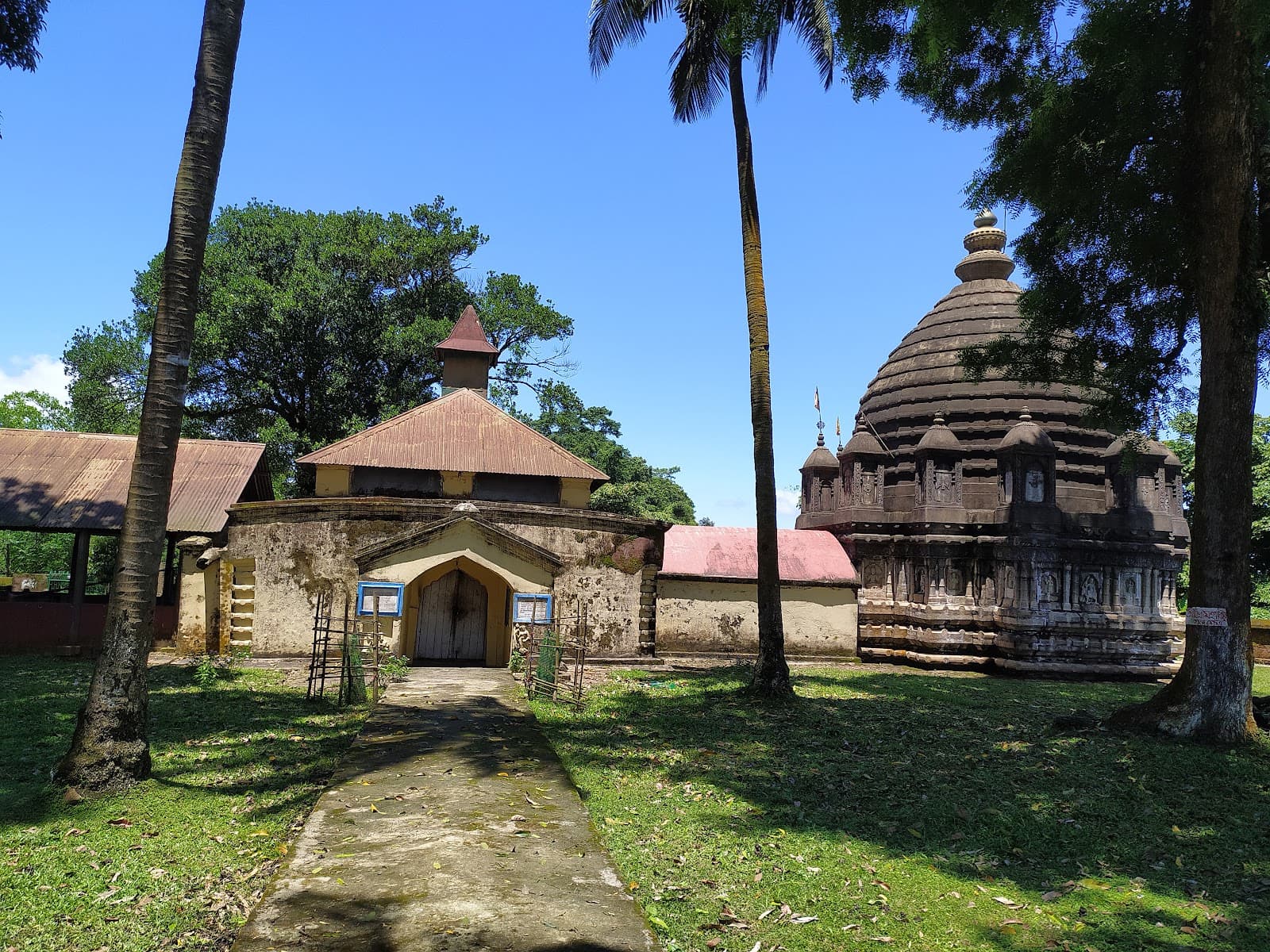
Asvakranta Temple Guwahati
Nestled on the northern bank of the Brahmaputra River in Guwahati, Assam, the Asvakranta Temple stands as a testament to the enduring architectural traditions of the region, dating back to 1565 CE ([1][2]). Commissioned by King Naranarayan of the Koch dynasty during the Kamarupa period, this sacred site reflects Gupta architectural influences in its design and stone-carved narratives ([1][3]). The name Asvakranta, meaning "where the horse stopped," originates from local lore that recounts Lord Krishna's horse pausing at this very spot ([4]). Stone platforms and foundations form the base of the temple, highlighting the primary construction material ([3]). The temple's relatively small structure features a pyramidal form, crowned by a curved Shikhara (spire) ([3]). Within the Garbhagriha (sanctum), devotees find Anantashayana Vishnu, a symbolic representation of Lord Vishnu reclining on the serpent Ananta ([4]). The temple's serene atmosphere draws visitors seeking spiritual solace. During the 16th century, temple architecture in Assam flourished, yet Asvakranta maintains its distinctive character ([1][2]). The Brahmaputra River's proximity has led to erosion, revealing layers of the complex's history ([4]). Despite the river's impact, Asvakranta continues to embody unwavering faith ([4]). Broken pillars and scattered stones hint at a more expansive past, beckoning further exploration and conservation efforts ([4][5]). The temple's design, while modest, incorporates elements that reflect the broader architectural styles prevalent during the Kamarupa period, showcasing a blend of regional and pan-Indian influences ([1][3]). The use of stone, brick, wood, and terracotta further enriches the temple's material palette, adding to its unique charm and historical significance ([3]).

Laban Namghar Shillong
The Laban Namghar complex in Shillong, nestled amidst the rolling East Khasi Hills, presented a fascinating departure from the South Indian temple architecture I'm so accustomed to. Used primarily as a place of worship and community gathering by the Khasi people, it offered a unique glimpse into the indigenous religious practices of Meghalaya. The term "Namghar," meaning "prayer house," aptly describes its function, but it doesn't fully capture the complex's social and cultural significance. My first impression was one of understated elegance. Unlike the towering gopurams and intricately carved mandapas of Dravidian temples, the Namghar structures are characterized by simplicity and functionality. Built primarily from wood and bamboo, with corrugated iron sheet roofing, they blend seamlessly with the surrounding landscape. The absence of elaborate ornamentation allows the natural beauty of the materials to shine through. The main prayer hall, a large rectangular structure, sits at the heart of the complex. Its sloping roof, supported by sturdy wooden pillars, reminded me of traditional Khasi houses, highlighting the connection between domestic and sacred spaces. Inside the prayer hall, the atmosphere is serene and contemplative. Sunlight filters through the windows, illuminating the bare wooden floors and walls. There are no idols or deities, a stark contrast to the iconography-rich interiors of South Indian temples. Instead, a simple platform at the far end serves as a focal point for prayers and rituals. The absence of visual representations of the divine emphasizes the Khasi belief in a formless, omnipresent God. The complex also houses several smaller structures used for various community activities. I observed a group of elders gathered in one of these buildings, engaged in animated discussion, highlighting the Namghar's role as a social hub. This reminded me of the sabhas and mandapas found in South Indian temples, which historically served as spaces for community gatherings and intellectual discourse. One of the most striking features of the Laban Namghar is its integration with the natural environment. The complex is surrounded by lush greenery, and the sound of birdsong permeates the air. This connection with nature is central to Khasi beliefs, which emphasize the sanctity of the natural world. Unlike the often enclosed and heavily built-up temple complexes of South India, the Namghar embraces its surroundings, creating a harmonious blend of the built and natural environments. Observing the rituals performed within the Namghar was particularly insightful. The chanting of hymns, accompanied by the rhythmic beating of drums, created a mesmerizing soundscape. While the specific rituals and beliefs differed significantly from those I've witnessed in Hindu temples, the underlying sense of reverence and devotion felt remarkably familiar. This underscored the universality of human spiritual expression, regardless of cultural or religious differences. The architectural details, though simple, revealed a deep understanding of local materials and construction techniques. The use of bamboo and wood, readily available in the region, speaks to a sustainable approach to building. The sloping roofs, designed to withstand the heavy monsoon rains, demonstrate a practical adaptation to the local climate. The joinery techniques used in the construction of the wooden pillars and beams, while lacking the elaborate carvings of South Indian temples, showcased a distinct craftsmanship. My visit to the Laban Namghar complex was a humbling experience. It broadened my understanding of sacred architecture beyond the familiar confines of South Indian temples. It highlighted the diversity of religious expression within India and the importance of preserving these unique cultural traditions. The simplicity and functionality of the Namghar, its integration with nature, and its role as a community hub offered valuable lessons in sustainable architecture and community building. It served as a powerful reminder that sacred spaces can take many forms, each reflecting the unique beliefs and values of the community it serves.
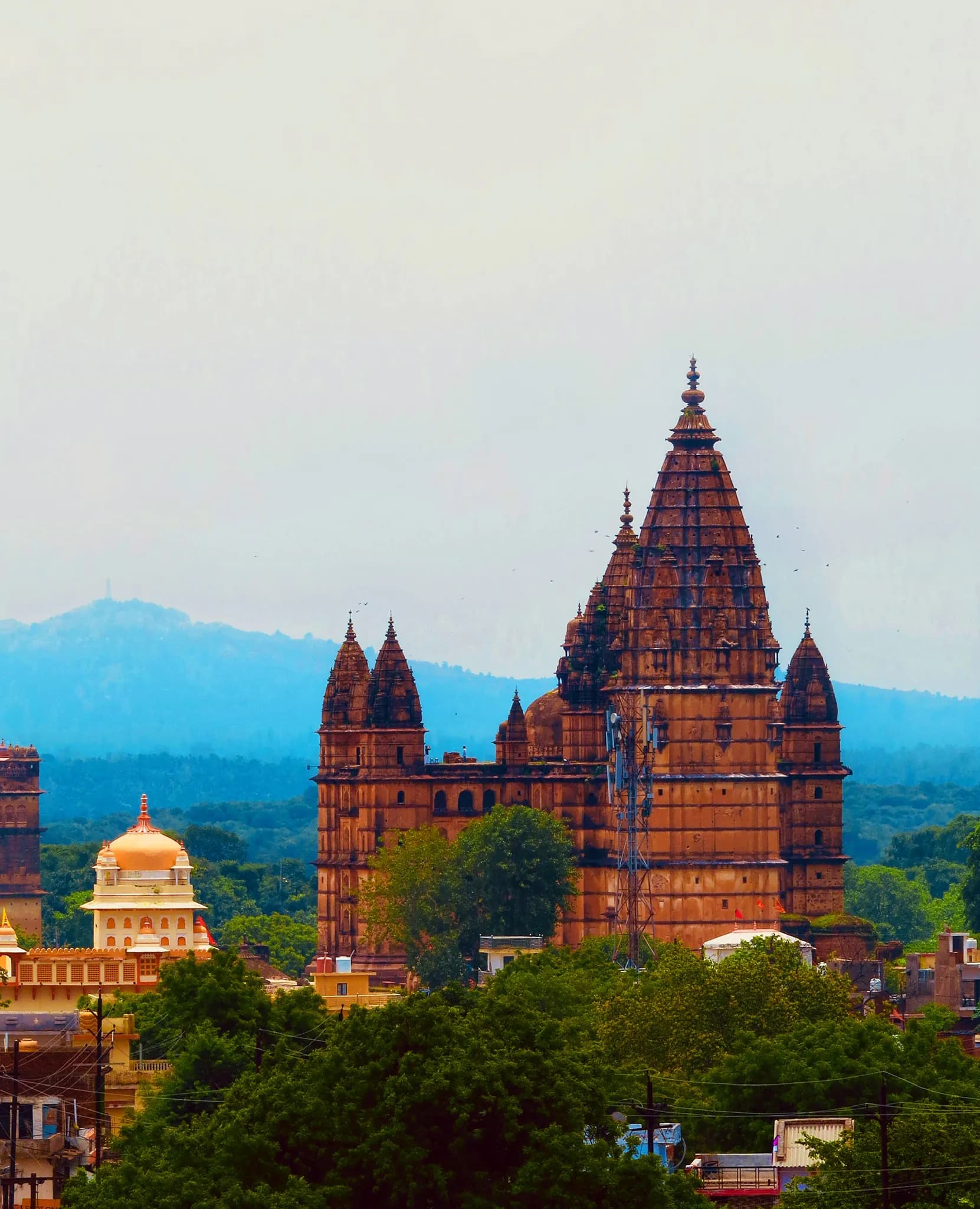
Chaturbhuj Temple Orchha
The Chaturbhuj Temple in Orchha, Madhya Pradesh, stands as a compelling example of architectural fusion ([1][2]). Commissioned by the Bundela Rajput chiefs in 1558 CE, during the 16th century, the temple represents a unique blend of Indo-Islamic styles ([2][3]). Though originally intended to enshrine Lord Vishnu, it is now recognized for the absence of its deity ([4]). Granite and sandstone blocks, meticulously carved, constitute the temple's imposing structure ([1][3]). The integration of Hindu and Mughal architectural elements is seamless ([2]). Intricate carvings embellish the facade, depicting mythological narratives and floral designs characteristic of the Rajput era ([5]). Rising above, the tall Shikhara (spire), a quintessential feature of Hindu temple architecture, dominates Orchha's skyline ([1]). This architectural element is rooted in the principles outlined in texts like the *Brihat Samhita*, which dedicates an entire chapter to the construction and design of temple spires. Ascending the temple steps rewards visitors with panoramic vistas of Orchha ([4]). Inside, the absence of a deity allows for an unobstructed appreciation of the soaring vaulted ceilings and massive pillars ([3]). One's gaze is immediately captured by the delicate Jali (latticework) windows, showcasing the craftsmanship of the period ([5]). The use of Jali is consistent with design principles found in the *Vastu Shastras*, which emphasize natural light and ventilation. As a testament to the Bundela's architectural skill, the Chaturbhuj Temple embodies a convergence of history and artistry ([2][4]). This temple serves as a potent reminder of India's vast and multifaceted cultural legacy ([1][3]). The temple is a beautiful synthesis of diverse styles, creating a unique architectural marvel.
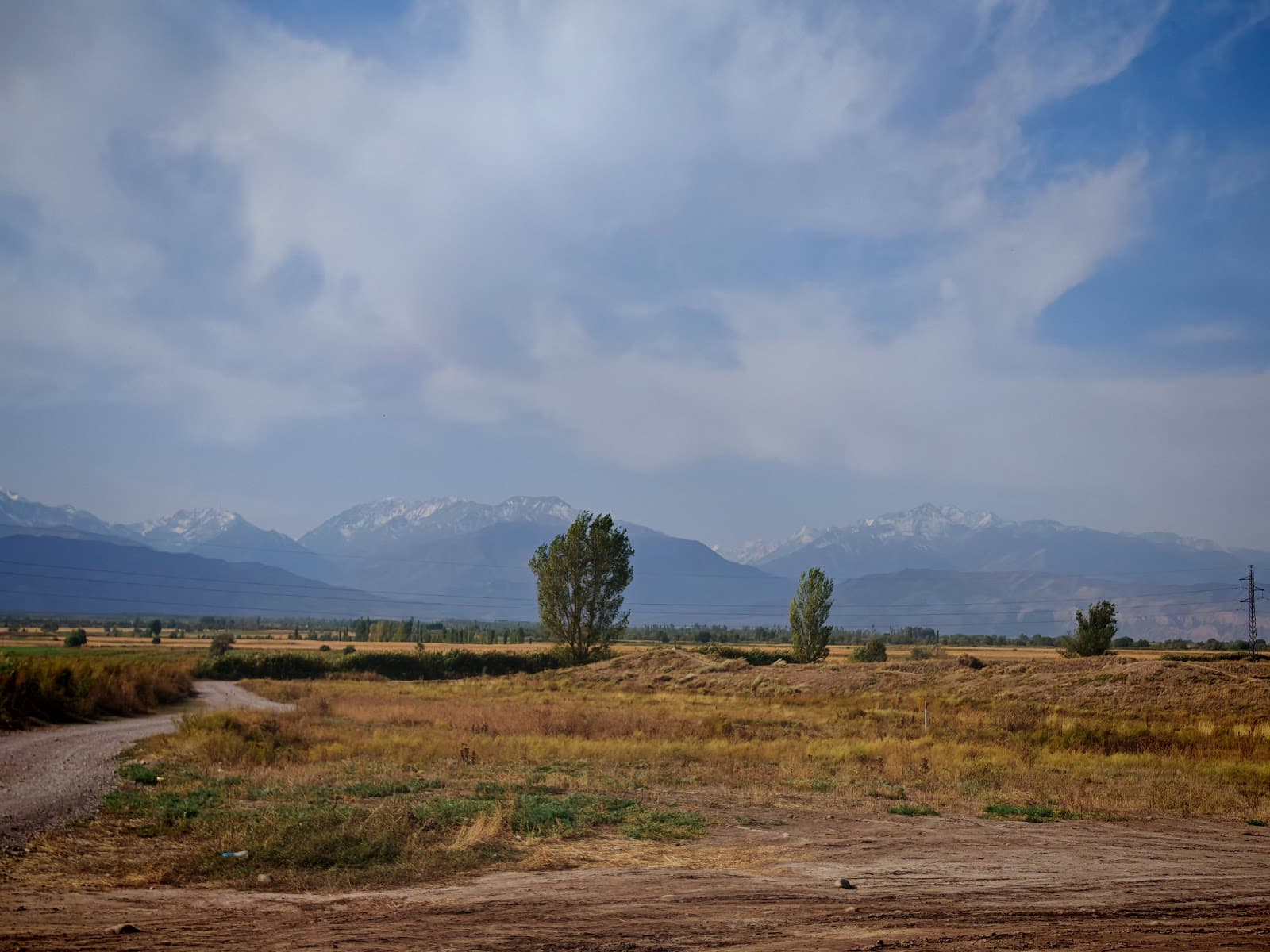
Ak-Beshim Buddhist Temple Chui Valley Kyrgyzstan
Ak-Beshim, located in Kyrgyzstan's Chui Valley, flourished as Suyab between the 6th and 8th centuries CE ([1][2]). As a vital Silk Road hub, the city became a melting pot of Indian Buddhist, Chinese, and Central Asian cultures ([1]). The temple complex illustrates the transmission of Indian Buddhist architectural knowledge into Central Asia ([1][2]). Fired brick and mud brick construction techniques shaped the monastic complex, which includes stupas and temple structures that resonate with Indian Buddhist architecture ([1][2]). The layout, featuring central stupas surrounded by monastic cells and ritual chambers, reflects the traditions of Indian Viharas (monasteries) and Chaitya halls (prayer halls) ([1]). Buddhist sculptures and inscriptions reveal a synthesis of Indian iconography and Central Asian aesthetics ([1][3]). These artistic elements likely drew inspiration from the Shilpa Shastras, ancient Indian texts detailing art and architecture, although specific textual references from texts like the Manasara Shilpa Shastra are yet to be definitively established through archaeological evidence at this site. Archaeological excavations have uncovered artifacts, including Buddhist sculptures exhibiting Indian stylistic influences, Sanskrit inscriptions, and architectural components reflecting Indian cosmological concepts ([2][3]). These discoveries emphasize Ak-Beshim's role in disseminating Indian Buddhist traditions ([1][2]). The presence of Sanskrit, the liturgical language of Hinduism and Buddhism, suggests a deep cultural exchange ([3]). The influence of Vastu Shastra principles, the ancient Indian science of architecture, may be observed in the temple's layout, although further research is needed to confirm specific applications of texts like the Mayamata ([4]). During the Early Medieval period, temple architecture often integrated local materials and techniques with established religious traditions ([5]). Ak-Beshim's construction, utilizing fired brick, mud brick, stone, lime mortar, metal, and wood, showcases this fusion ([1][2]). Ongoing research promises further insights into the intricate interplay of architecture and religious practices at this significant Silk Road site ([1][5]).
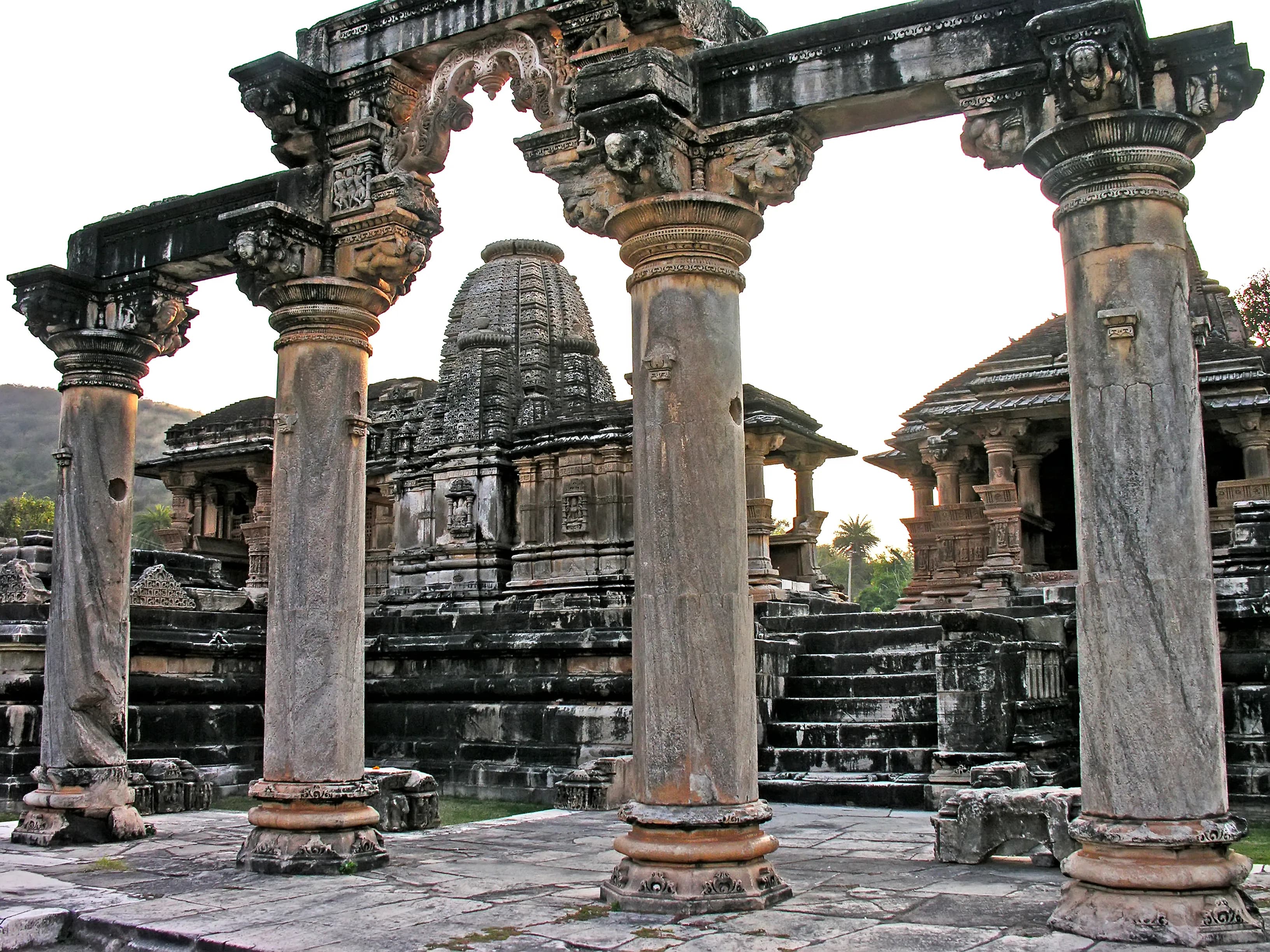
Eklingji Temple, Kailashpuri (Udaipur)
The Eklingji Temple, a revered Hindu temple complex dedicated to Lord Shiva, is situated in Kailashpuri village, Udaipur district, Rajasthan, India, embodying a continuous tradition of Indian civilization spanning millennia [5]. This site stands as a profound testament to India's enduring cultural legacy, with its origins tracing back to the 8th century CE, reflecting ancient indigenous architectural styles and spiritual practices [4] [5]. The complex is a magnificent example of traditional Indian temple architecture, primarily showcasing the Nagara style, characterized by its curvilinear shikhara (spire) and intricate carvings [3] . The main temple within the complex is double-storied, featuring a colossal pyramidal-style roof and a remarkably carved tower [3]. Constructed predominantly from marble and granite, the temple's exterior walls are adorned with intricate carvings and sculptures depicting Hindu mythological stories and deities [4] . The entrance to the main shrine is guarded by a silver image of Nandi, the sacred bull, with two additional Nandi carvings in brass and black stone found within the complex [3] [5]. The sanctum sanctorum (Garbha Griha) houses the principal deity, a striking four-faced idol of Lord Shiva, carved from black marble and approximately 50 feet in height [3] . Each face of the idol represents a different aspect of Shiva: the eastern face symbolizes Surya (the sun), the western face Lord Brahma, the northern face Lord Vishnu, and the southern face Rudra (a fierce form of Shiva) [1] [3] . A heightened Shivlinga at the center of these faces represents the core essence of Lord Shiva [1]. The Eklinga statue is further encircled by figures of Goddess Parvati, Lord Ganesha, and Lord Kartikeya [3]. The temple also features heavily ornate silver doors, which depict images of Lord Ganesha and Lord Kartikeya [5]. Between the sanctum and the sabha mandap (assembly hall), there is a silver enclosure, a later addition by Maharana Bhagwat Singh [1]. The temple complex is not merely a single structure but comprises 108 temples, each contributing to the site's rich architectural and spiritual tapestry . To the north of the main Eklingji temple, two tanks, Karz Kund and Tulsi Kund, are integral to the site's water management and ritualistic practices [3] [5]. The intricate carvings, particularly those influenced by the Kalinga style architecture and the pyramidal superstructure, necessitate ongoing, specialized conservation efforts [2]. While specific dimensions for all structures are not universally documented, the grandeur of the main temple's pyramidal roof and the 50-foot idol indicate significant scale and sophisticated engineering for its period [3]. The site is actively managed by a trust, ensuring its operational readiness and continued accessibility for devotees, with daily pujas performed by appointed priests, though the Maharana of Mewar traditionally holds the right to perform special worship [5]. The temple remains a vibrant center of spiritual devotion, attracting visitors who come to witness the morning and evening aartis and explore the surrounding shrines .
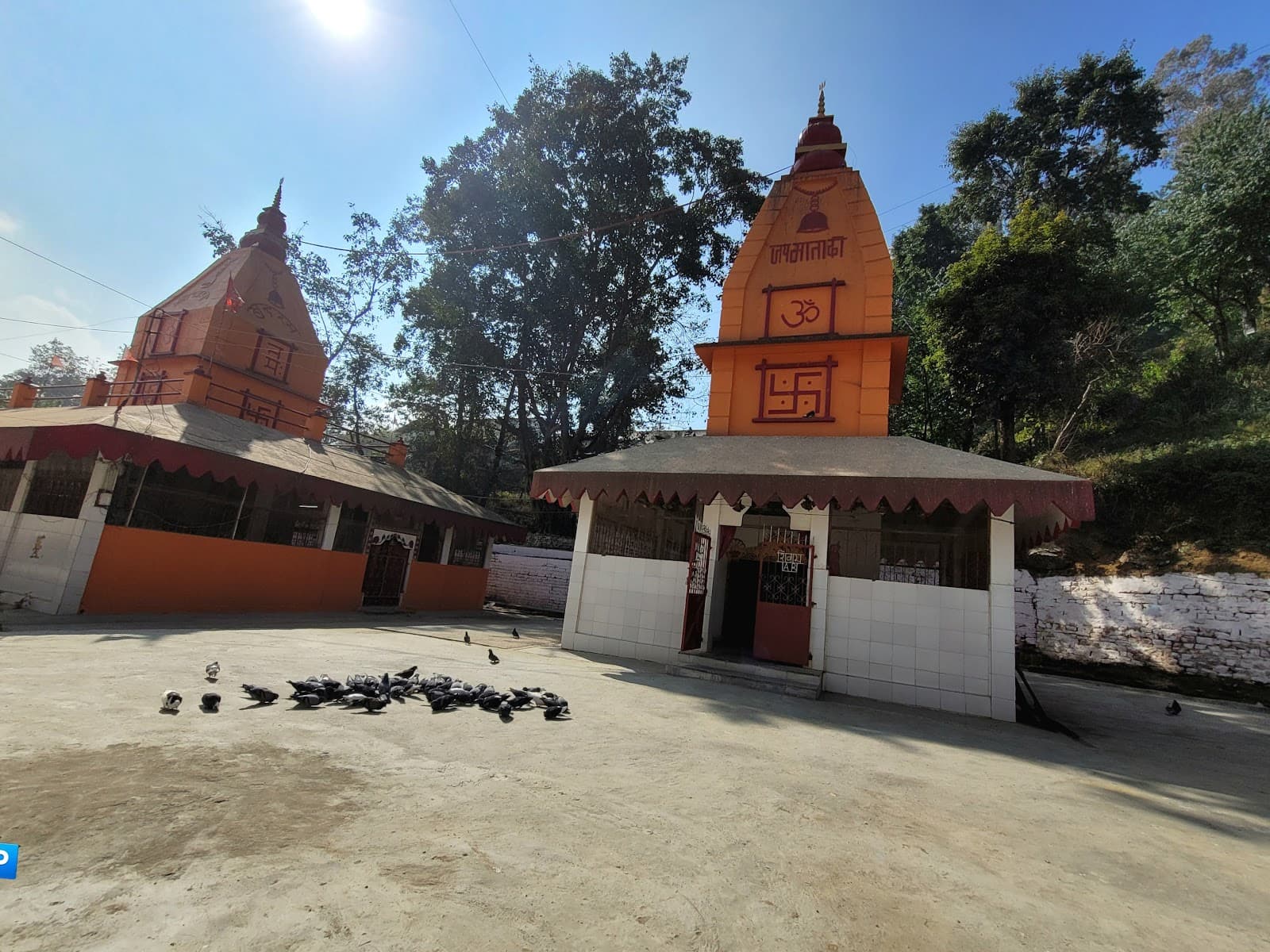
Wokha Shiv Mandir Wokha
The Wokha Shiv Mandir, dedicated to Lord Shiva, stands prominently on DC Hill in Wokha, Nagaland, representing a continuous tradition of Hindu temple architecture within India's millennia-spanning cultural heritage. This sacred Hindu temple, built in 1975 CE by local Naga tribespeople, integrates elements of the Nagara, Kalinga Nagara, and Chalukya Nagara architectural styles, alongside traditional Naga architectural influences. The temple's most striking feature is its towering shikhara, a pyramidal spire characteristic of North Indian temple architecture, which rises above the garbhagriha, or sanctum sanctorum. Unlike traditional sandstone or granite, this shikhara is crafted from concrete and painted a vibrant saffron, reflecting the temple's modern construction and the resourcefulness of the local community. Nagara temples are typically built on a raised stone platform, often with steps leading up to them, and lack elaborate boundary walls or gateways. The Wokha Shiv Mandir, while adopting these stylistic principles, utilizes modern materials such as concrete, cement, and steel for its primary structure, with brick infill walls. The temple measures approximately 10 meters in height, 7.5 meters in width, and has an area of 450 square meters, with a length of 1795.88 meters, though this length figure might refer to the entire complex or property rather than the main temple structure itself. Intricate carvings adorn the concrete pillars flanking the main entrance, depicting a blend of traditional Naga motifs and Hindu iconography, such as a Naga warrior alongside Ganesha. This fusion of cultural influences is a recurring theme throughout the complex, extending to smaller shrines dedicated to various deities, including the Naga deity Dzükou positioned respectfully alongside Hanuman. The garbhagriha, the innermost sanctum, houses a Shiva lingam, bathed in the warm glow of oil lamps, emphasizing the deity's powerful presence. The construction technique involved significant excavation and leveling for a stable concrete foundation, likely a reinforced concrete raft or footing system, crucial for the hilly terrain of Wokha. Reinforced concrete columns support the superstructure, allowing for larger spans than traditional load-bearing masonry. The exterior finishing, possibly plaster or paint over concrete, provides aesthetic flexibility and weather protection. The temple complex is well-maintained with regular upkeep by the Temple Trust, ensuring its preservation and continued active programming for devotees. Visitors are expected to observe respectful attire and behavior, with photography restrictions potentially applying inside the sanctum. The site is operational and accessible, serving as a vibrant center for spiritual devotion and cultural exchange, a testament to India's enduring cultural legacy.
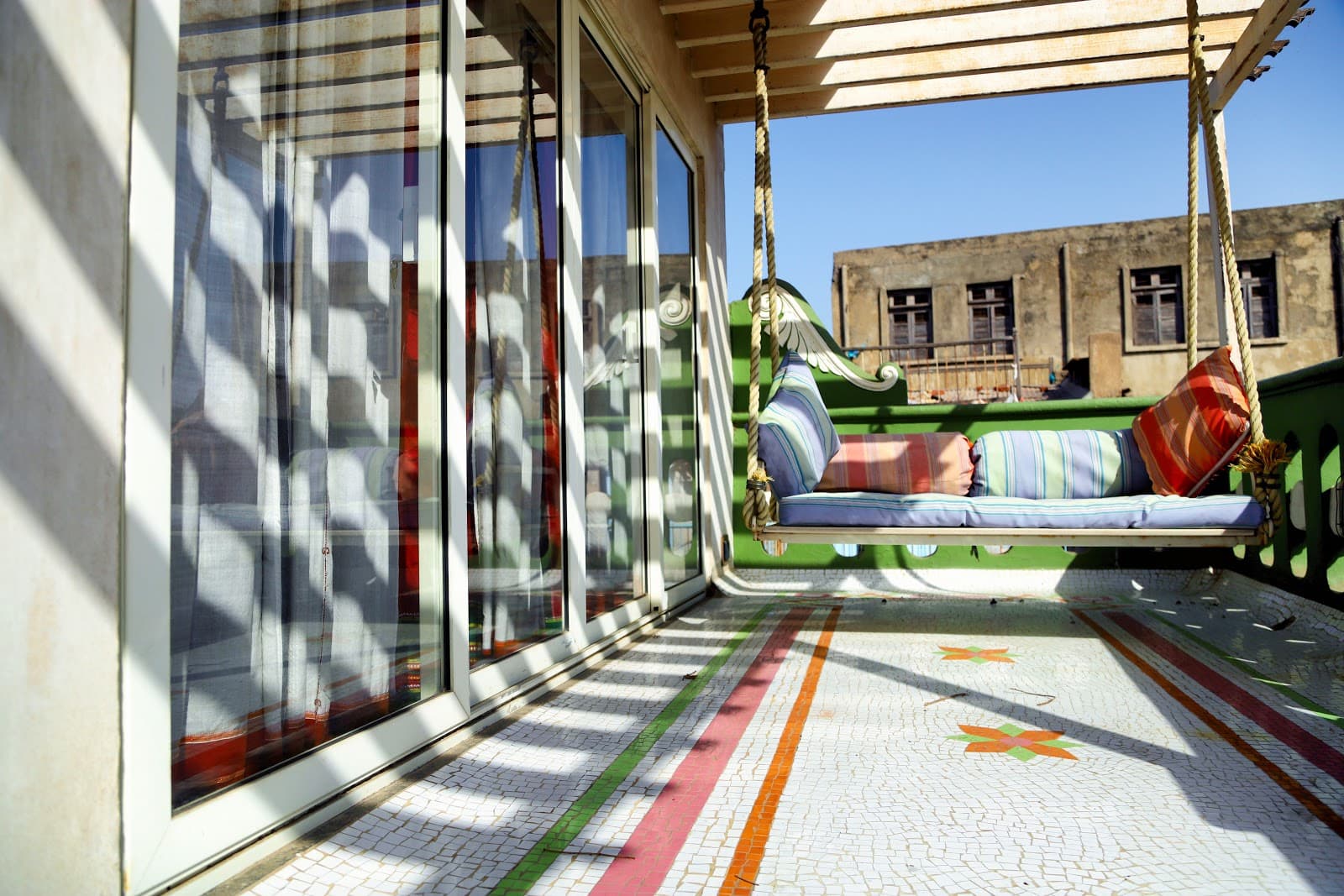
Mangaldas Ni Haveli Ahmedabad
The midday sun cast long shadows across the intricately carved wooden facade of Mangaldas Ni Haveli, a structure seemingly frozen in time amidst the bustling heart of Ahmedabad’s old city. Stepping through the imposing gateway, I felt an immediate shift, a palpable transition from the frenetic energy of the streets to the hushed tranquility of a bygone era. As a heritage enthusiast steeped in the Dravidian architecture of South India, I was eager to experience this distinctly different architectural vernacular – the Gujarati haveli. The haveli, built in the 19th century by Seth Mangaldas Girdhardas, a prominent textile merchant, is a testament to the opulence and artistry of that period. Unlike the towering gopurams and expansive prakarams of South Indian temples, the haveli unfolds inwards, revealing a series of interconnected courtyards, each a microcosm of domestic life. The first courtyard, or chowk, served as a public space, where business transactions likely took place. I noted the robust wooden pillars, intricately carved with floral motifs and mythological figures, supporting the overhanging balconies. The wood, darkened with age, whispered stories of generations past, a stark contrast to the stone I was accustomed to in the South. Moving deeper into the haveli, I was struck by the interplay of light and shadow. Small, strategically placed windows, some adorned with stained glass, filtered the harsh sunlight, creating a mosaic of colours on the polished floors. The jharokhas, or overhanging enclosed balconies, offered glimpses into the inner chambers while maintaining privacy. These architectural elements, while serving a practical purpose, also contributed to the overall aesthetic, creating a sense of mystery and intrigue. The haveli’s ornamentation is a feast for the eyes. Every surface, from the pillars and brackets to the ceilings and lintels, is adorned with intricate carvings. While the overall style is distinctly Gujarati, I noticed subtle influences of Mughal architecture in the ornate floral patterns and the use of jalis, or perforated screens. Unlike the bold, narrative sculptures found in South Indian temples, the carvings here were more delicate and intricate, emphasizing floral patterns, geometric designs, and stylized depictions of birds and animals. One of the most captivating spaces within the haveli is the inner courtyard, a private oasis for the family. Here, the carvings become even more elaborate, depicting scenes from everyday life, religious narratives, and even glimpses of the family’s trading activities. The courtyard is surrounded by two or three stories of wooden galleries, connected by narrow, winding staircases. Looking up, I could imagine the hustle and bustle of family life, the women of the house engaged in their daily chores, children playing, and the patriarch overseeing his business affairs. The haveli’s current state of preservation is a testament to the efforts of the Ahmedabad Municipal Corporation, which has undertaken restoration work. However, the passage of time has inevitably left its mark. Some of the wooden elements show signs of wear and tear, and the vibrant colours that once adorned the walls have faded. Yet, this patina of age adds to the haveli’s charm, lending it an air of authenticity that a pristine restoration could never replicate. My visit to Mangaldas Ni Haveli was a journey of discovery, an opportunity to appreciate the diversity and richness of India’s architectural heritage. While the haveli’s architectural style differed significantly from the Dravidian temples I was familiar with, the underlying principles of craftsmanship, artistry, and cultural expression resonated deeply. The haveli stands as a poignant reminder of a bygone era, a tangible link to the lives and aspirations of a prominent merchant family, and a testament to the enduring power of architectural heritage.
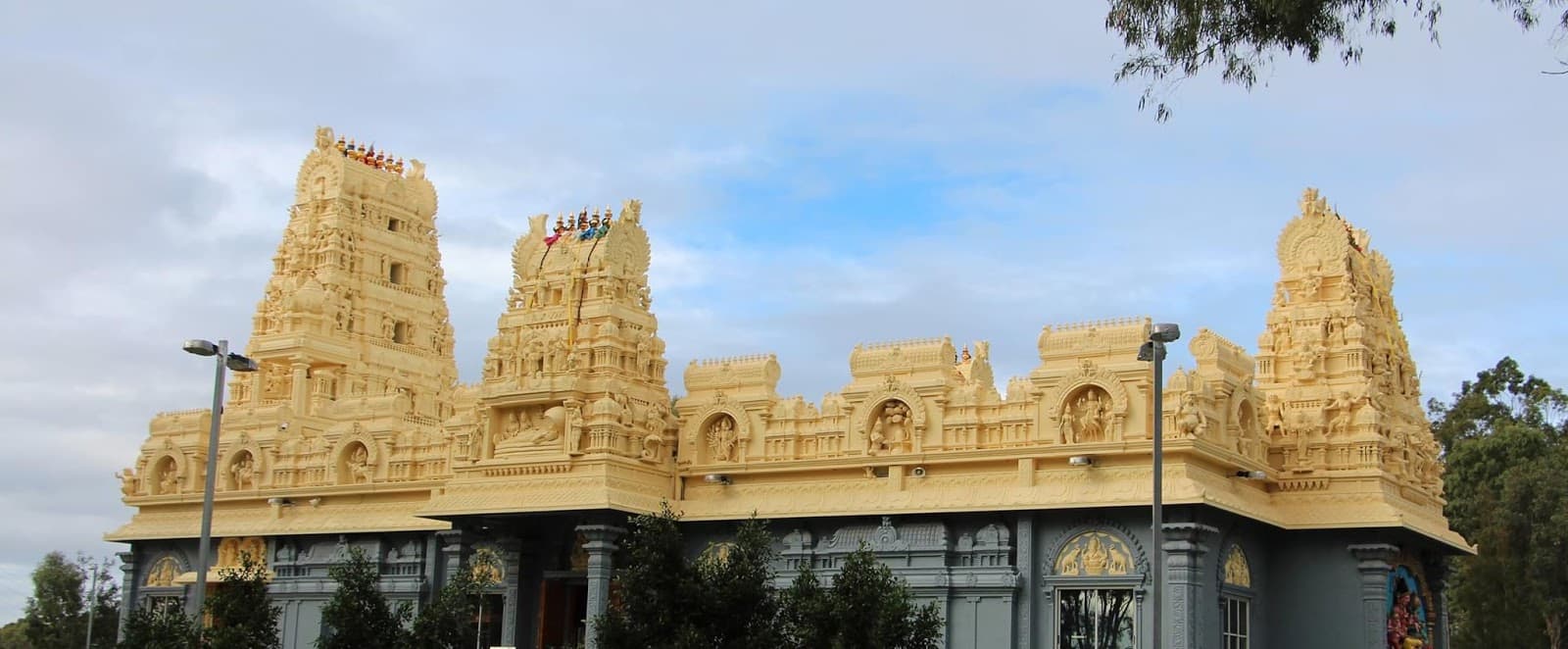
Brisbane Sri Selva Vinayakar Koil South Maclean
Anchoring Logan’s peri-urban corridor, Brisbane Sri Selva Vinayakar Koil South Maclean stands as Queensland’s first traditional Hindu temple dedicated to Lord Ganesha ([1][2]). Established around 1990 CE, this 20th-century temple reflects Dravidian architectural influences adapted to a rural Australian context ([1]). The temple was built by the Hindu Society of Queensland, who also continue to be its patron ([1]). Granite and sandstone blocks, meticulously carved, form the core of the Mandapa (Pillared Hall), while timber posts and corrugated steel roofing provide a functional and aesthetically pleasing structure ([1]). Daily rituals, or darshan, are conducted between 6:30 AM and 12:00 PM, and again from 4:30 PM to 8:30 PM ([1][5]). Special occasions such as Vinayagar Chaturthi, Thai Poosam, and Navaratri extend these hours until 10:00 PM ([1][5]). To manage the flow of devotees, volunteers guide visitors through the granite Mandapa using rope-guided lanes, ensuring a smooth and organized experience ([1][5]). Shuttle buggies are also available to assist elders in navigating the expansive site ([1][5]). Within the annadhanam shed, which can accommodate 300 people, polished concrete floors provide a clean and functional space for communal dining ([1][3]). Modern amenities such as induction woks and commercial chillers support the preparation and storage of prasadam (sacred food), with HACCP checklists ensuring food safety standards are maintained ([1][3]). Portable ramps facilitate the movement of prasadam carts between the kitchen and hall, even during inclement weather ([1][3]). Beyond worship, the temple serves as a cultural hub, hosting dance, music, and language classes in its cultural pavilion ([2]). A meditation pond and vahana sheds are situated along the Logan River flood fringe, with boardwalks and warning signage in place ([2]). Accessibility is a priority, with gravel-stabilized pathways, handrails, tactile signage, and a platform lift near the sanctum ensuring inclusivity ([2][5]). Auslan interpreters are also available during major festivals ([2][5]). Sophisticated drainage systems ensure the temple grounds remain functional, even during heavy rainfall ([3]). Digital signage displays bilingual Tamil-English instructions, weather alerts, and seva schedules, keeping the community informed and engaged ([1][2]). The temple's operations team monitors weather stations, flood gauges, and fire equipment, while the Logan Rural Fire Brigade conducts annual drills on site, ensuring preparedness for any eventuality ([3]). This proactive approach underscores the temple's commitment to community resilience and safety ([1][2]).
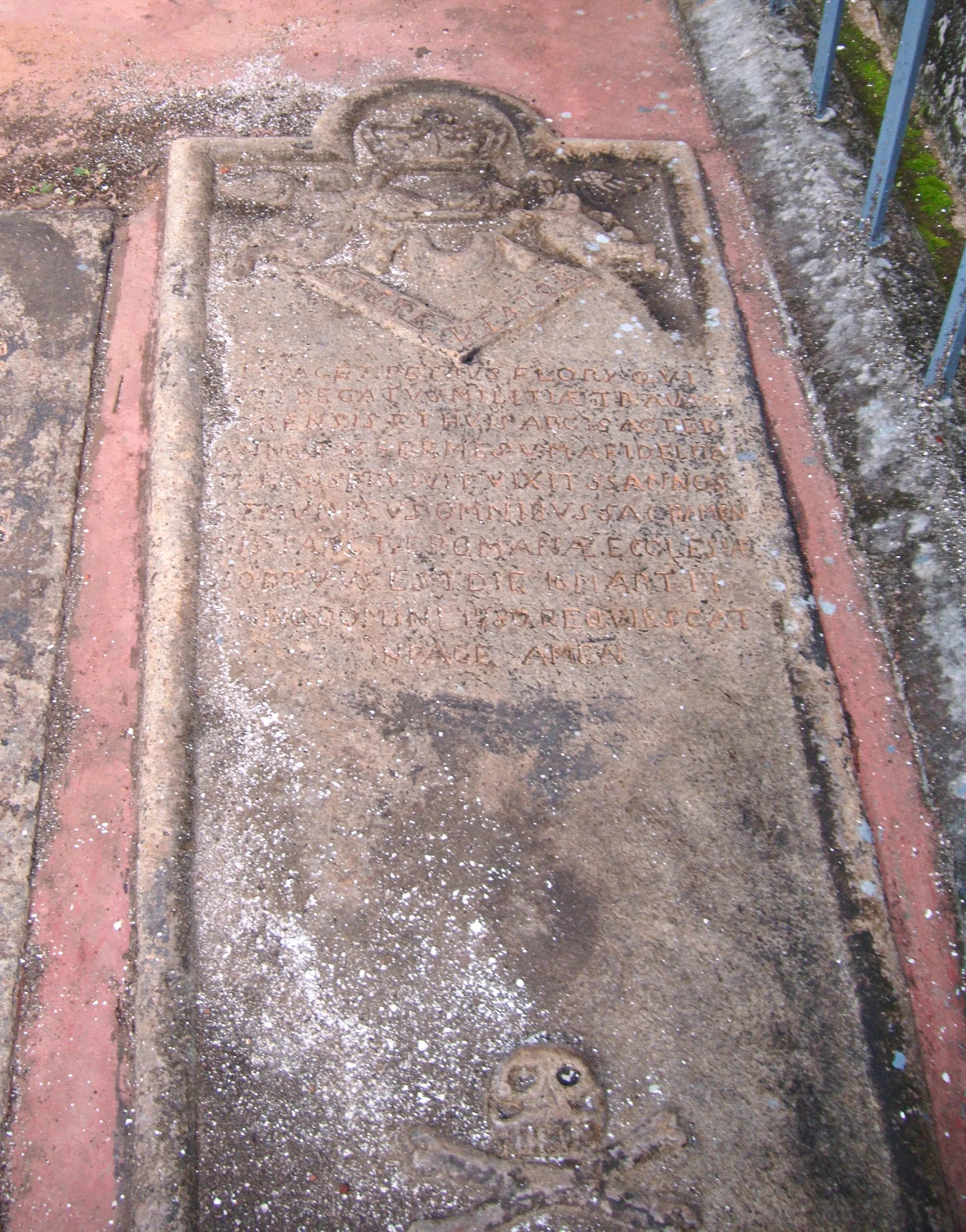
Udayagiri Fort Nellore
The imposing silhouette of Udayagiri Fort, etched against the Andhra Pradesh sky, held a promise of architectural marvels and historical whispers. My Chennai upbringing, steeped in South Indian temple architecture, had prepared me for the grandeur of Dravidian artistry, but Udayagiri offered a unique blend, a confluence of military might and artistic finesse. The fort, perched atop a hill, commands a panoramic view of the surrounding landscape, a strategic advantage clearly appreciated by its successive rulers, from the early Ganga dynasty to the Vijayanagara Empire. The ascent itself was an experience. The winding path, punctuated by remnants of fortifications, hinted at the fort's layered history. The initial structures, dating back to the 13th century, displayed a raw, functional aesthetic. The later additions, particularly those from the Vijayanagara period, showcased a more refined architectural vocabulary. This was evident in the intricate carvings adorning the gateways and the sophisticated engineering of the ramparts. Entering through the main gateway, I was immediately struck by the contrast between the rugged exterior and the surprisingly intricate details within. The massive granite blocks, fitted together with remarkable precision, spoke volumes about the engineering prowess of the time. The gateway itself was flanked by two imposing bastions, their surfaces bearing faint traces of what I suspected were once vibrant frescoes. The remnants, though faded, hinted at a rich decorative tradition. The fort's layout is a fascinating study in military architecture. The strategic placement of bastions, the interconnected network of walls, and the cleverly designed water management systems all pointed to a deep understanding of defensive strategies. The large water tanks, or *pushkarinis*, within the fort complex, were not merely utilitarian; their stepped embankments and surrounding pavilions suggested a conscious effort to integrate functionality with aesthetics. This integration of practical needs with artistic sensibilities is a hallmark of South Indian architecture, and Udayagiri is a prime example. One of the most captivating structures within the fort is the Rani Mahal, the Queen's Palace. While significantly dilapidated, the remnants of intricate stucco work and delicate carvings on the pillars and doorways offered glimpses of its former glory. The layout of the palace, with its courtyards and interconnected chambers, echoed the architectural principles seen in Vijayanagara-era palaces elsewhere, such as those in Hampi. However, Udayagiri's Rani Mahal possessed a unique charm, a quiet dignity amidst its ruins. The fort also houses several temples, the most prominent being the two temples dedicated to Lord Shiva. These temples, while smaller in scale compared to the grand temples of Tamil Nadu, displayed distinct architectural features. The *gopurams*, though not as towering, retained the characteristic layered structure. The carvings on the temple walls, while weathered by time, depicted scenes from Hindu mythology, showcasing the continued influence of religious narratives in architectural expression. My exploration of Udayagiri was not merely a visual experience; it was a journey through time. The fort's stones whispered stories of battles fought, empires built, and artistic traditions nurtured. The echoes of the past resonated in the silent courtyards and the crumbling walls. Udayagiri, unlike some meticulously preserved sites, retains a raw, authentic feel. This, for me, enhanced its appeal. It allowed me to connect with the past in a more visceral way, to imagine the lives of those who walked these very paths centuries ago. As I descended the hill, leaving the imposing silhouette of Udayagiri behind, I carried with me not just photographs and notes, but a deeper appreciation for the rich tapestry of Indian history and architecture.
Quick Links
Plan Your Heritage Journey
Get personalized recommendations and detailed visitor guides