Has Inheritage Foundation supported you today?
Your contribution helps preserve India's ancient temples, languages, and cultural heritage. Every rupee makes a difference.
Secure payment • Instant 80G certificate
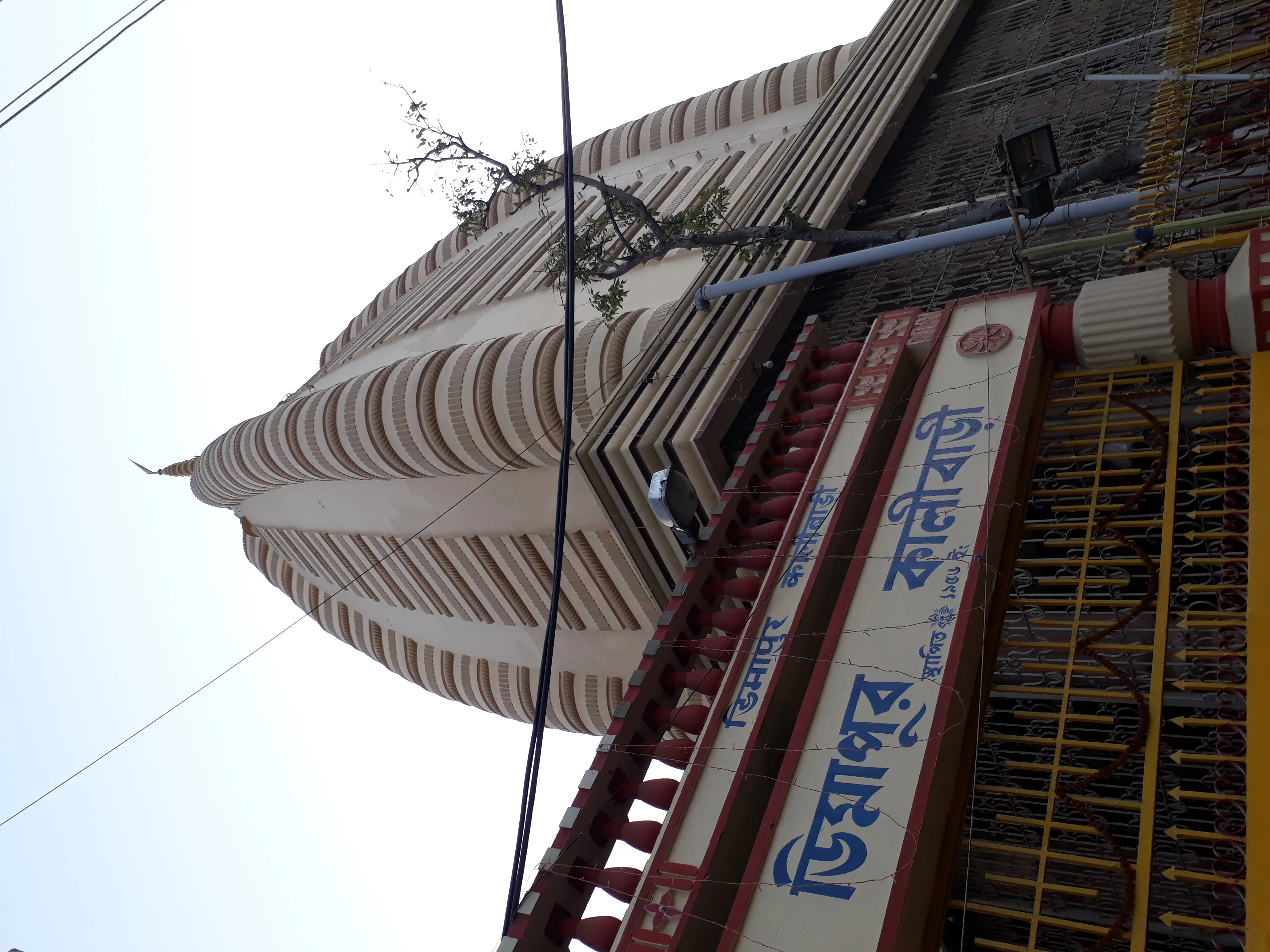
Dimapur Kalibari Dimapur
The air, thick with the scent of incense and marigold garlands, hung heavy as I stepped through the imposing gateway of the Dimapur Kalibari. This wasn't the Himalayas I was accustomed to, the familiar terrain of my North Indian explorations. This was Dimapur, Nagaland, and the vibrant colours, the unfamiliar lilt of the language, and the unique architecture of this temple instantly told me I was in a different world. The Kalibari, dedicated to the goddess Kali, stands as a striking testament to the Bengali community's presence in this northeastern state. It isn't tucked away in quiet contemplation; rather, it embraces the city's bustle, situated near the heart of Dimapur. The first thing that struck me was the sheer scale of the complex. The main temple, a two-storied structure, is painted a brilliant shade of orange, a hue that seems to amplify the tropical sun. Intricate white detailing adorns the façade, a delicate counterpoint to the bold colour. It’s a far cry from the muted sandstone and marble of North Indian temples, and yet, the reverence in the air felt instantly familiar. Climbing the steps to the main sanctum, I noticed the distinctive curved roof, reminiscent of traditional Bengali architecture, yet with a subtle Naga influence in the decorative motifs. The roofline is adorned with a series of miniature domes, or chhatris, each intricately carved and painted. These architectural flourishes speak to a cultural exchange, a blending of traditions that defines this unique place of worship. Inside, the atmosphere is charged with devotion. The scent of burning camphor and the rhythmic chanting of prayers filled the air. The idol of Kali, resplendent in her traditional garb, dominates the sanctum. Her fierce expression, usually interpreted as a symbol of destruction of evil, felt strangely comforting here, a powerful presence amidst the unfamiliar surroundings. Unlike the often hushed reverence of North Indian temples, here, the devotion is more expressive. Devotees offered prayers with a fervent energy, their voices rising and falling in unison. Stepping out onto the temple balcony, I was greeted by a panoramic view of Dimapur. The sprawling city, a mix of concrete buildings and lush greenery, stretched out before me. From this vantage point, the Kalibari felt like an anchor, a spiritual haven amidst the urban chaos. The temple complex also houses a smaller shrine dedicated to Lord Shiva. This shrine, while less elaborate than the main temple, possesses a quiet charm. The smooth, grey stone of the Shiva lingam offered a stark contrast to the vibrant colours of the Kali temple, creating a sense of balance within the complex. What truly sets the Dimapur Kalibari apart is its inclusive nature. While primarily a Hindu temple, it attracts visitors from various faiths and backgrounds. I saw local Naga families alongside Bengali devotees, all united in a shared sense of reverence. This intermingling of cultures, this quiet acceptance of different beliefs, is perhaps the most powerful testament to the spirit of this place. As I left the Kalibari, the scent of incense still clinging to my clothes, I felt a profound sense of connection. This wasn't just a temple; it was a microcosm of India's diverse cultural tapestry. It was a reminder that spirituality transcends geographical boundaries and architectural styles. It was a testament to the enduring power of faith, expressed in a myriad of ways, in a corner of India far removed from my familiar North.
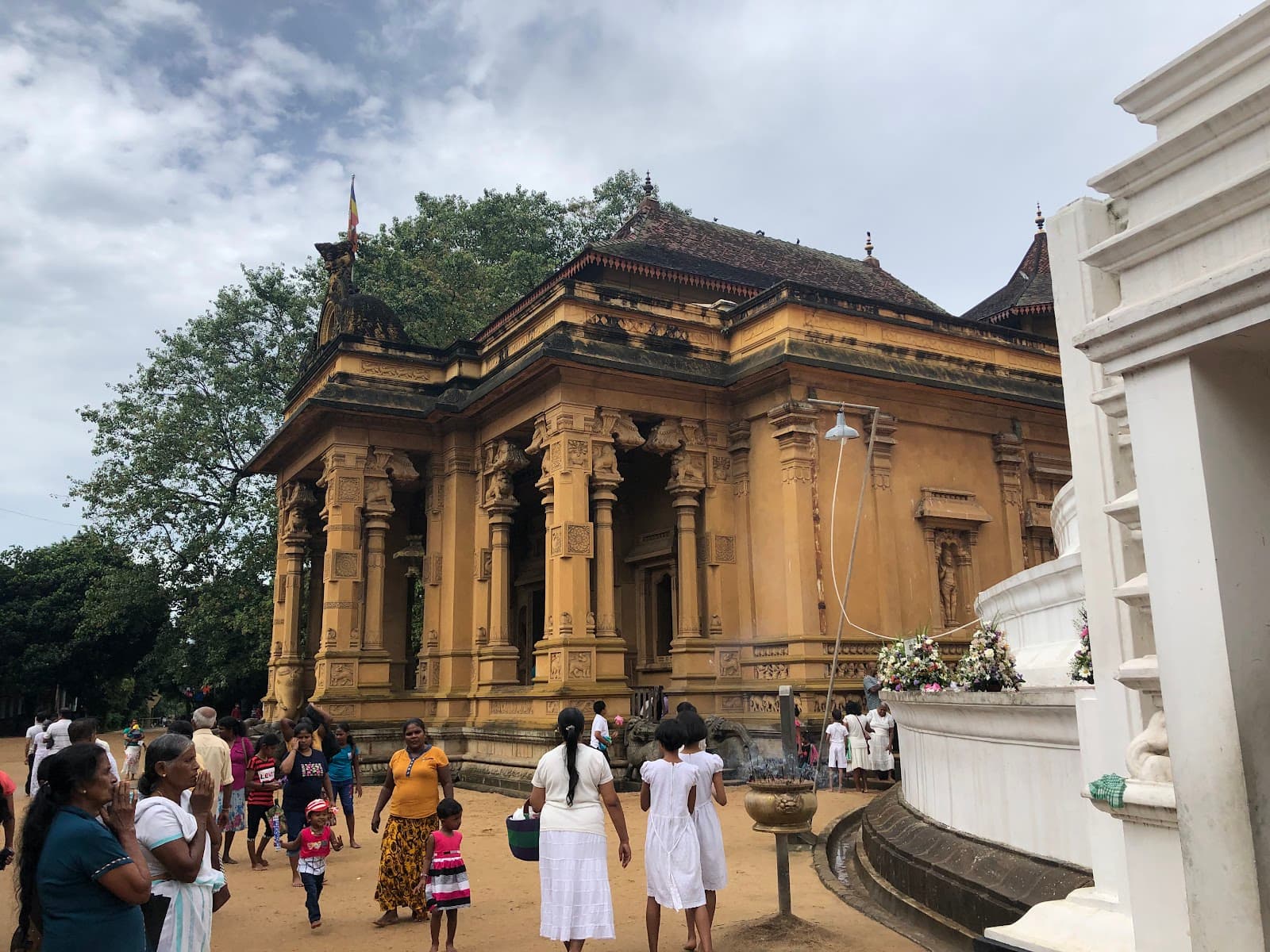
Kelaniya Raja Maha Vihara Colombo Sri Lanka
Kelaniya Raja Maha Vihara, dramatically situated on the banks of the Kelani River near Colombo, represents one of the most extraordinary and historically significant Buddhist temples in Sri Lanka, with lore tracing its origins back to the 6th century BCE when the Buddha is believed to have visited the site during his third visit to Sri Lanka, creating a powerful testament to the profound transmission of Indian Buddhist religious traditions to Sri Lanka and serving as a major center of Buddhist worship that integrates a Vishnu shrine, demonstrating the sophisticated religious syncretism that has characterized Sri Lankan religious practices. The temple complex, also known as Kelaniya Temple, features sophisticated architectural elements that demonstrate the direct transmission of Indian Buddhist temple architecture, particularly the traditions of northern India during the time of the Buddha, with local adaptations that reflect the sophisticated synthesis of Indian Buddhist religious and artistic traditions with Sri Lankan building techniques, while the temple's most remarkable feature is its association with the Buddha's visit, which is documented in ancient chronicles including the Mahavamsa and represents one of the most important events in the history of Buddhism in Sri Lanka. The temple's architectural layout, with its central stupa, image house, and assembly halls, follows sophisticated Indian Buddhist monastery planning principles that were systematically transmitted from the great monastic centers of India, while the temple's extensive decorative programs including murals, sculptures, and architectural elements demonstrate the sophisticated synthesis of Indian Buddhist iconography and artistic traditions with local Sri Lankan aesthetic sensibilities. Archaeological evidence reveals that the temple served as a major center of Buddhist worship for over two and a half millennia, attracting pilgrims from across Sri Lanka and South India, while the discovery of numerous inscriptions in Sinhala, Tamil, and Sanskrit provides crucial evidence of the site's role in the transmission of Indian Buddhist texts and practices to Sri Lanka, demonstrating the sophisticated understanding of Indian Buddhist traditions possessed by the temple's patrons and religious establishment. The temple's unique feature of integrating a Vishnu shrine within the Buddhist temple complex demonstrates the sophisticated religious syncretism that has characterized Sri Lankan religious practices, while the temple's association with the Kelani River, which flows into the Indian Ocean, underscores its significance as a center for the transmission of Buddhist teachings, art, and culture from India to Sri Lanka. The temple complex has undergone multiple reconstructions throughout its history, with the current structure representing a modern reconstruction that faithfully preserves the temple's original architectural character and spiritual significance, while ongoing archaeological research continues to reveal evidence of the temple's ancient origins and its role in the transmission of Indian religious traditions to Sri Lanka. Today, Kelaniya Raja Maha Vihara stands as one of the most important Buddhist pilgrimage sites in Sri Lanka, serving as a powerful testament to the transmission of Indian Buddhist culture and architecture to Sri Lanka, while ongoing archaeological research and conservation efforts continue to protect and study this extraordinary cultural treasure that demonstrates the profound impact of Indian civilization on Sri Lankan religious and artistic traditions. ([1][2])
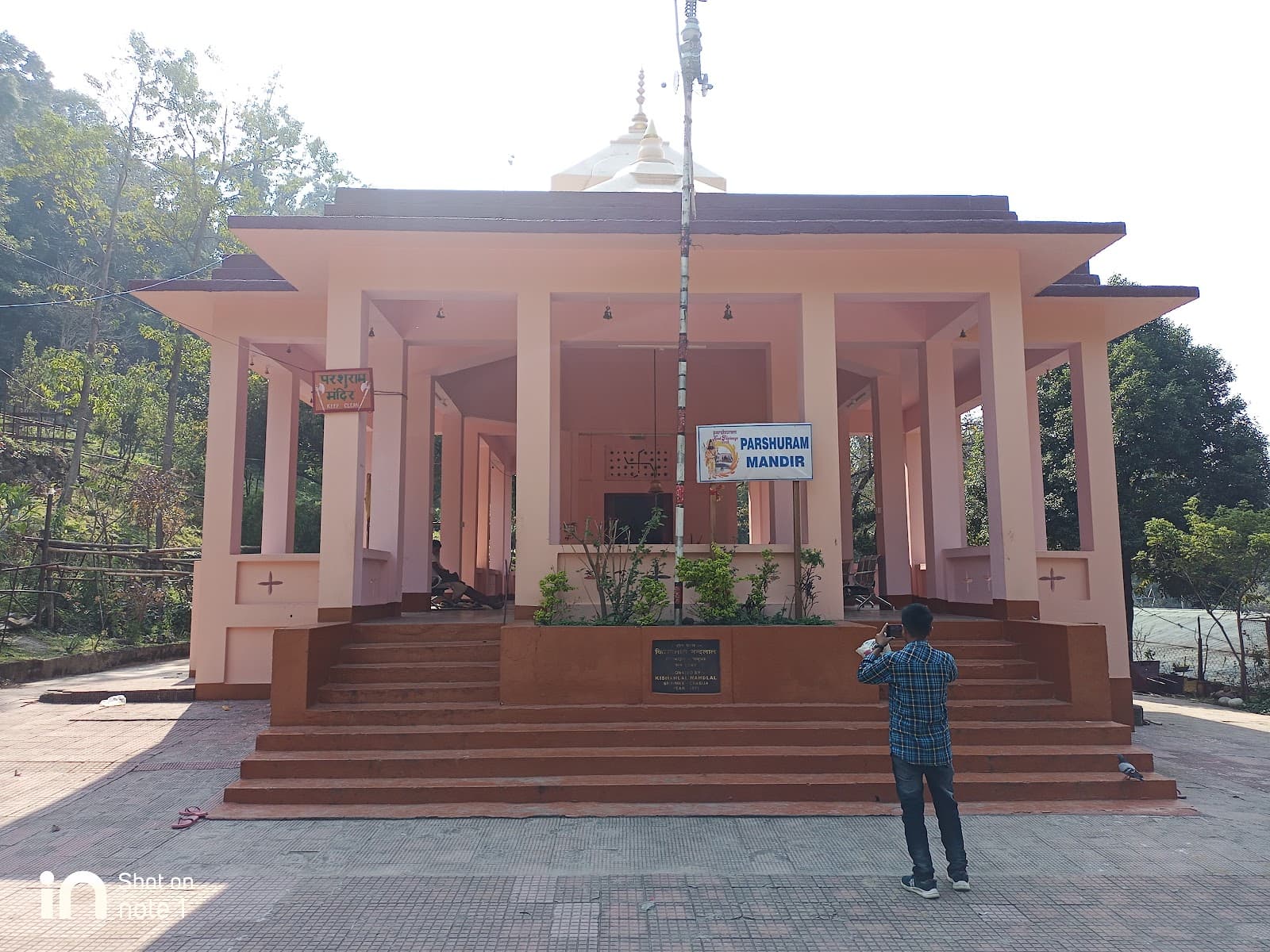
Parshuram Kund Temple Lohit
The biting January air, thin and crisp at 4,000 feet, whipped around me as I descended the steep steps towards Parshuram Kund. The roar of the Lohit River, a milky turquoise torrent surging through the gorge, filled the air, a constant, powerful presence that seemed to vibrate through the very rock on which the temple complex stood. This was no ordinary pilgrimage site; this was a place where the raw power of nature intertwined with deep-seated spiritual belief. Located in the remote Lohit district of Arunachal Pradesh, Parshuram Kund is more than just a temple; it's a confluence of mythology, natural beauty, and human devotion. Legend holds that this is where the warrior sage Parshuram washed away the sin of matricide, his axe, still stained crimson, cleansed by the sacred waters. That narrative resonated powerfully as I stood at the river’s edge, the icy spray misting my face, the sheer force of the current a tangible reminder of the cleansing power attributed to it. The main temple, dedicated to Lord Shiva, is a relatively modern structure, a stark white against the backdrop of the dark, imposing cliffs. While not architecturally ancient, it doesn't detract from the overall atmosphere. It feels less like a standalone monument and more like a focal point for the existing spiritual energy of the place. Smaller shrines dot the surrounding area, tucked into crevices and perched precariously on rocky outcrops, each a testament to the enduring faith of the pilgrims who journey here. What struck me most, however, wasn't the architecture, but the palpable sense of devotion. Having documented hundreds of temples across India, I've become accustomed to a certain level of ritualistic practice. But at Parshuram Kund, there was a rawness, an immediacy to the faith that was both humbling and inspiring. I watched as pilgrims, many having travelled for days, immersed themselves in the frigid waters, their faces etched with a mixture of reverence and determination. The chanting of mantras, the clang of bells, the scent of incense – all blended with the roar of the river to create an immersive sensory experience unlike any I’d encountered before. The architectural details, though simple, spoke volumes. The use of local stone in the construction of the shrines blended seamlessly with the natural surroundings, creating a sense of harmony between the man-made and the natural. The carvings, though weathered by the elements, hinted at a rich artistic tradition, depicting scenes from mythology and nature. I spent hours photographing these details, trying to capture the essence of the place, the interplay of light and shadow on the weathered stone, the textures of the rock face, the vibrant colours of the prayer flags fluttering in the wind. One particular detail that caught my eye was the prevalence of Trishuls, the trident of Shiva, embedded in the rocks surrounding the Kund. These tridents, some ancient and rusted, others newly placed and gleaming, served as a constant reminder of the presiding deity and the sanctity of the site. They were not mere decorations; they were symbols of faith, each one representing a prayer, a hope, a plea. As the sun began to dip below the horizon, casting long shadows across the gorge, I climbed back up the steps, leaving the roar of the river behind. The experience had been profound, a reminder of the power of faith and the enduring connection between humanity and nature. Parshuram Kund is more than just a temple; it’s a living testament to the enduring power of belief, a place where the spiritual and the natural converge in a symphony of sound, sight, and emotion. It’s a place that stays with you long after you’ve left, a memory etched in stone and water, echoing in the whispers of the wind.
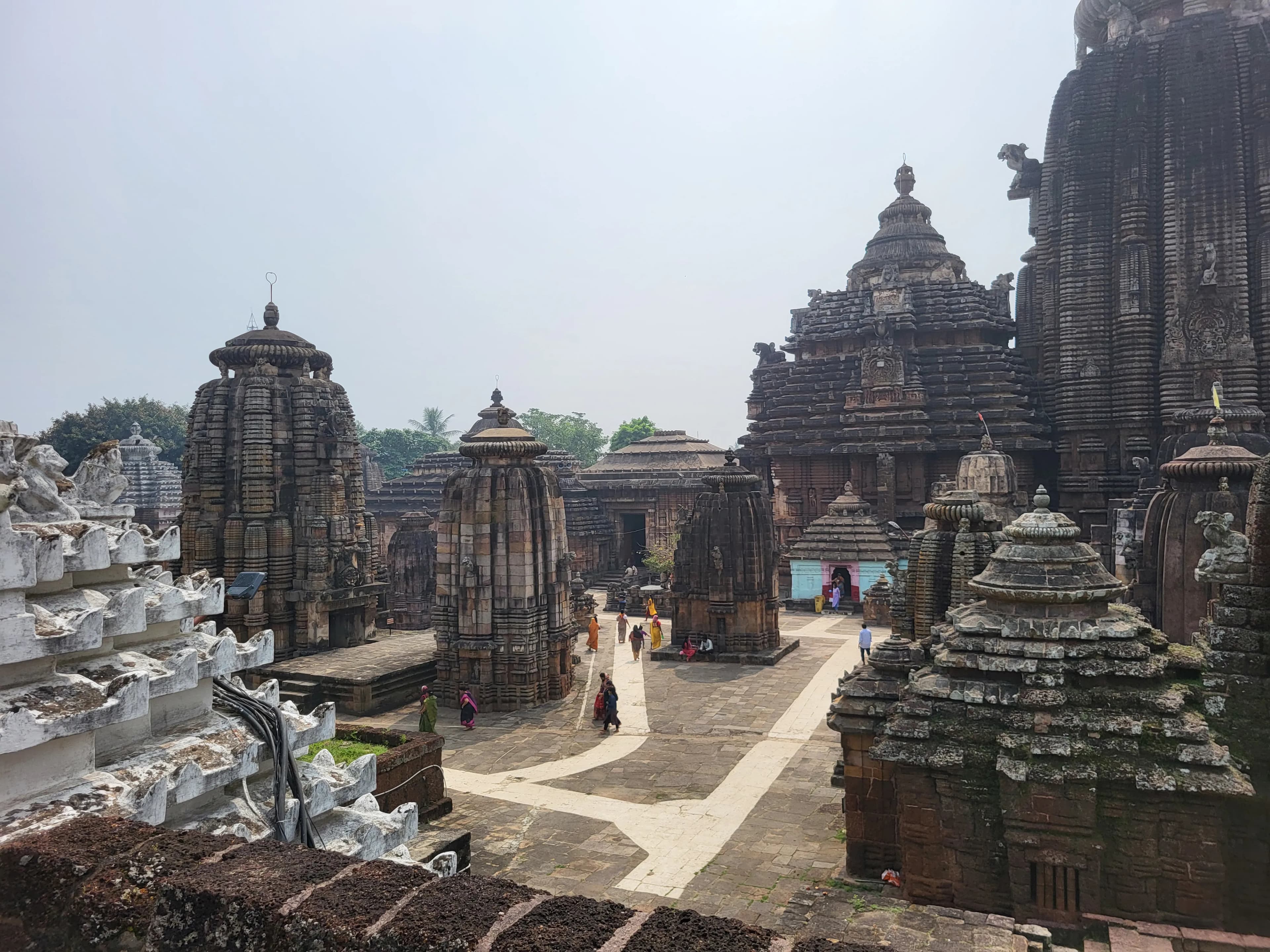
Lingaraj Temple Bhubaneswar
The sun beat down on my neck, the Odisha heat a stark contrast to the Delhi winters I was accustomed to. But the discomfort melted away as I stood before the Lingaraj Temple in Bhubaneswar, a monument that whispered tales of a thousand years. Having explored countless temples across North India, I thought I had a grasp on the nuances of Kalinga architecture, but Lingaraj proved to be in a league of its own. The sheer scale of the complex, enclosed within a high compound wall, was the first thing that struck me. The main temple, dedicated to Harihara, a combined form of Shiva and Vishnu, soared upwards, its deul (tower) a masterpiece of intricate carvings. Unlike the sandstone and marble I was familiar with in the north, this temple was constructed of laterite, a locally available reddish-brown stone, which lent it a unique earthy hue. The deul, reaching a height of 55 meters, was covered in a dense tapestry of sculptures – deities, mythical creatures, and intricate floral patterns, each vying for attention. I spent hours circumambulating the temple, my gaze constantly drawn upwards. The vertical lines of the deul, punctuated by horizontal bands of carvings, created a powerful sense of upward movement, as if the entire structure was striving to reach the heavens. The jagamohan (assembly hall) and natamandir (dance hall), though smaller than the main deul, were equally impressive, their surfaces adorned with elaborate friezes depicting scenes from Hindu mythology. One of the most striking features of the temple was the sheer number of subsidiary shrines scattered within the complex. Each shrine, though smaller in scale, echoed the architectural style of the main temple, creating a sense of harmonious unity. I noticed that many of these shrines were dedicated to various forms of Shakti, the divine feminine, highlighting the importance of goddess worship in this region. As I moved closer to the main entrance, the air grew thick with the scent of incense and the murmur of chanting. Though non-Hindus are not allowed inside the sanctum sanctorum, I could feel the palpable sense of devotion emanating from within. I observed the devotees, their faces etched with reverence, offering flowers and coconuts to the deity. It was a powerful reminder of the living faith that animates these ancient stones. The intricate carvings on the temple walls deserved closer inspection. I noticed a recurring motif of the naga, the serpent deity, often depicted with multiple heads and coiled around various deities. The presence of the naga, a symbol of fertility and protection, underscored the temple's connection to the natural world. I also observed depictions of erotic sculptures, a common feature of Kalinga temples, which are believed to represent the cycle of creation and regeneration. The experience of visiting Lingaraj was not just about admiring the architecture; it was about immersing myself in the cultural tapestry of Odisha. The temple, with its rich history and vibrant present, served as a window into the religious and artistic traditions of this fascinating region. It was a humbling reminder of the enduring power of faith and the remarkable artistry of our ancestors. As I left the temple complex, the setting sun casting long shadows across the laterite walls, I felt a deep sense of gratitude for having witnessed this architectural marvel. Lingaraj was not just a temple; it was a testament to the enduring spirit of India.
Mes Aynak Archaeological Site Logar Afghanistan
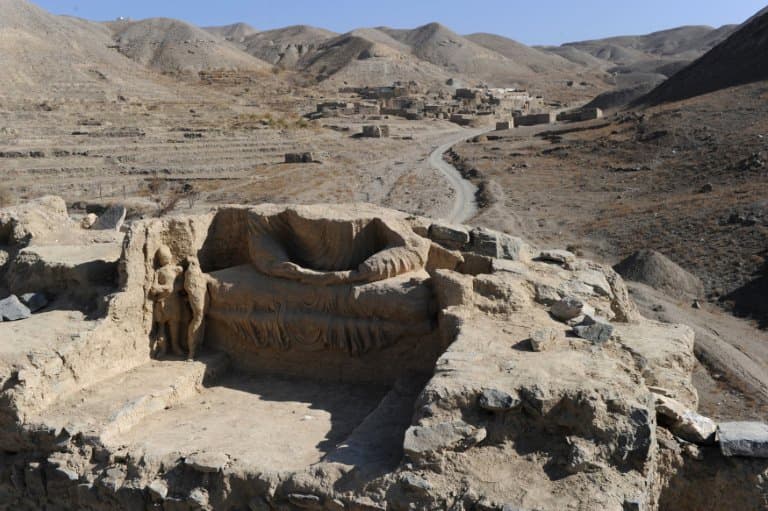
Mes Aynak, located in Logar Province, Afghanistan, represents one of the most extraordinary and archaeologically significant Buddhist monastic complexes in Central Asia, comprising a vast network of monasteries, stupas, and temples constructed from the 3rd to 8th centuries CE, spread across a dramatic mountain landscape that also contains one of the world's largest untapped copper deposits, creating a unique intersection of ancient religious heritage and modern economic interests that has drawn international attention to the site's preservation. The monastery complex, constructed primarily from stone, fired brick, and stucco with extensive decorative elements, features numerous Buddhist monasteries arranged across multiple terraced levels on the mountainside, each containing stupas, chapels, meditation cells, assembly halls, and elaborate sculptural programs that demonstrate the sophisticated transmission of Indian Buddhist architectural and artistic traditions to Afghanistan during the Kushan and post-Kushan periods. The site's architectural design demonstrates direct influence from Indian Buddhist monastery architecture, particularly the traditions of northern India, with the overall planning, stupa forms, and decorative programs reflecting Indian Buddhist practices that were systematically transmitted to Afghanistan, while the discovery of Hindu imagery and iconography alongside Buddhist elements provides crucial evidence of the syncretic nature of religious practice in the region and the transmission of diverse Indian religious traditions. Archaeological excavations have revealed extraordinary preservation of wall paintings, stucco sculptures, and architectural elements that demonstrate the sophisticated artistic traditions of the period, with the artistic work showing clear influence from Indian styles while incorporating local elements, creating a unique synthesis that characterizes Buddhist art in Afghanistan during this period. The monastery complex flourished particularly during the 5th to 7th centuries CE, when it served as a major center of Buddhist learning and practice, with the site's location along ancient trade routes facilitating its role in the transmission of Buddhist teachings and artistic traditions across Central Asia, while the extensive copper mining activities that occurred at the site in ancient times demonstrate the integration of religious and economic activities. The site was likely abandoned during the 8th or 9th century CE following the decline of Buddhism in Afghanistan, but the substantial architectural remains that survive provide extraordinary evidence of the site's original grandeur and importance, while the discovery of numerous artifacts including sculptures, coins, and inscriptions continues to provide crucial insights into the site's history and significance. Today, Mes Aynak stands as a UNESCO Tentative List site and represents one of the most important archaeological discoveries in Afghanistan in recent decades, while the site faces an urgent preservation challenge due to planned copper mining operations that threaten the archaeological remains, creating a complex situation that highlights the tensions between cultural heritage preservation and economic development in modern Afghanistan. ([1][2])
Rohtasgarh Fort Rohtas
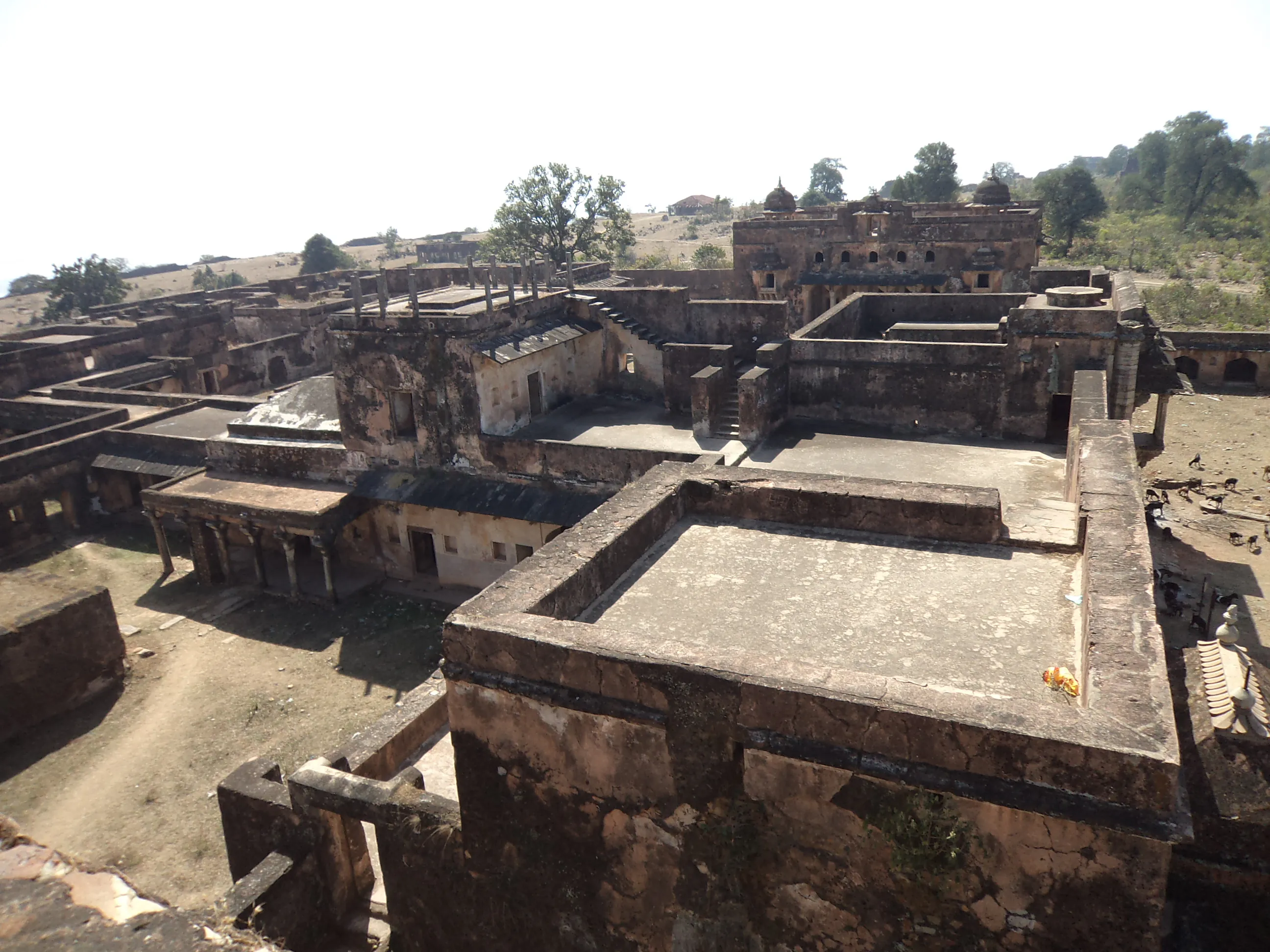
The cyclopean walls of Rohtasgarh Fort rose before me, a stark silhouette against the Bihar sky. Ascending the winding road, I felt a palpable shift, a journey not just upwards, but backwards in time. This wasn't merely a fort; it was a palimpsest of history, layered with the narratives of Suryavanshi kings, Afghan rulers, and even a brief, intriguing brush with the Mughals. My first impression was of sheer scale. Rohtasgarh isn't a compact citadel; it sprawls across a plateau, encompassing over 70 square kilometers. The outer fortifications, following the natural contours of the hill, are a testament to strategic brilliance. These aren't just walls; they are integrated with the landscape, utilizing the steep cliffs and ravines as natural defenses. The sheer drop from the ramparts is breathtaking, and I could easily imagine the daunting task faced by any would-be attacker. Passing through the multiple gateways, each a marvel of military engineering, I began to appreciate the fort's layered history. The initial impression of robust, almost crude, strength gave way to glimpses of refined artistry. The 'Hathi Pol' or Elephant Gate, for instance, displays a surprising elegance despite its defensive purpose. The carvings, though weathered by time, hinted at a period of artistic flourishing. Later, I discovered that many of these finer details were added during the Suri dynasty, showcasing their distinct aesthetic sensibilities. Within the fort's vast expanse, the structures range from the purely functional to the surprisingly ornate. The 'Rajmahal,' or royal palace, though now in ruins, still whispers of past grandeur. I was particularly struck by the 'Rang Mahal,' its faded frescoes a testament to the vibrant court life that once thrived within these walls. The intricate jali work, allowing for both ventilation and privacy, spoke of a sophisticated understanding of architectural principles. One of the most intriguing aspects of Rohtasgarh is its water management system. The numerous baolis, or stepwells, are not just utilitarian structures; they are architectural marvels. The most impressive, the 'Ganesh Baoli,' descends several stories, its intricate steps and landings creating a mesmerizing geometric pattern. Standing at the bottom, looking up at the sliver of sky framed by the well's opening, I felt a sense of awe at the ingenuity of the ancient builders. They had not just conquered the terrain but had also mastered the essential element of water, ensuring the fort's self-sufficiency. Beyond the grand structures, it was the smaller details that captured my attention. The remnants of a marketplace, the carved doorways of private residences, the hidden passages – each element contributed to a richer understanding of life within the fort. I spent hours exploring the lesser-known corners, tracing the faint outlines of past lives. Rohtasgarh isn't just a collection of stones and mortar; it's a living testament to human ingenuity and resilience. Standing on the ramparts, gazing out at the vast panorama, I felt a profound connection to the past. This wasn't just a visit; it was an immersion in history, a journey through time etched in stone. The fort stands as a silent sentinel, guarding the stories of empires risen and fallen, a powerful reminder of the enduring legacy of ancient Indian architecture.

Reis Magos Fort Panaji
The laterite ramparts of Reis Magos Fort, bathed in the Goan sun, seemed to emanate a quiet strength, a testament to their enduring presence. Perched strategically at the mouth of the Mandovi River, the fort’s reddish-brown walls contrasted sharply with the vibrant green of the surrounding foliage and the dazzling blue of the Arabian Sea beyond. My visit here wasn't just another stop on my architectural journey; it was a palpable connection to a layered history, a whispered conversation with the past. Unlike many of the grander, more ornate forts I’ve explored across India, Reis Magos possesses a distinct character of understated resilience. Built in 1551 by the Portuguese, it served primarily as a protective bastion against invaders, a role mirrored in its robust, functional design. The walls, though not excessively high, are remarkably thick, showcasing the practical approach to defense prevalent in the 16th century. The laterite, a locally sourced material, lends the fort a unique earthy hue, seamlessly blending it with the Goan landscape. This pragmatic use of local resources is a hallmark of many ancient Indian structures, a testament to the ingenuity of the builders. Ascending the narrow, winding staircase within the fort, I was struck by the strategic placement of the gun embrasures. These openings, carefully positioned to offer a commanding view of the river, spoke volumes about the fort's military significance. The views from the ramparts were breathtaking, offering a panoramic vista of the Mandovi River merging with the sea, dotted with fishing boats and modern vessels. It was easy to imagine the Portuguese sentinels scanning the horizon for approaching enemies, the fort serving as their vigilant guardian. The architecture within the fort is relatively simple, devoid of the elaborate carvings and embellishments often found in Mughal or Rajput structures. The focus here was clearly on functionality and defense. The chapel, dedicated to the Three Wise Men (Reis Magos), is a small, unassuming structure, yet it holds a quiet dignity. The stark white walls and the simple altar offer a peaceful respite from the martial atmosphere of the fort. The interplay of light filtering through the small windows created an ethereal ambiance, a stark contrast to the robust exterior. One of the most intriguing aspects of Reis Magos is its layered history. Having served as a prison during the Portuguese era and later under the Indian government, the fort carries within its walls echoes of both confinement and resilience. The restoration work, undertaken meticulously in recent years, has breathed new life into the structure while preserving its historical integrity. The addition of a small museum within the fort further enhances the visitor experience, showcasing artifacts and providing valuable insights into the fort's rich past. As I descended from the ramparts, I couldn't help but reflect on the enduring power of architecture to tell stories. Reis Magos Fort, though smaller and less ostentatious than many of its counterparts, speaks volumes about the strategic importance of Goa, the ingenuity of its builders, and the ebb and flow of history. It's a place where the past and present intertwine, offering a unique and enriching experience for anyone seeking to connect with the rich tapestry of Indian history. The fort stands not just as a relic of a bygone era, but as a living testament to the enduring spirit of Goa. It's a place that stays with you long after you've left, a quiet reminder of the stories whispered within its ancient walls.
Takht-e Rostam Samangan Afghanistan
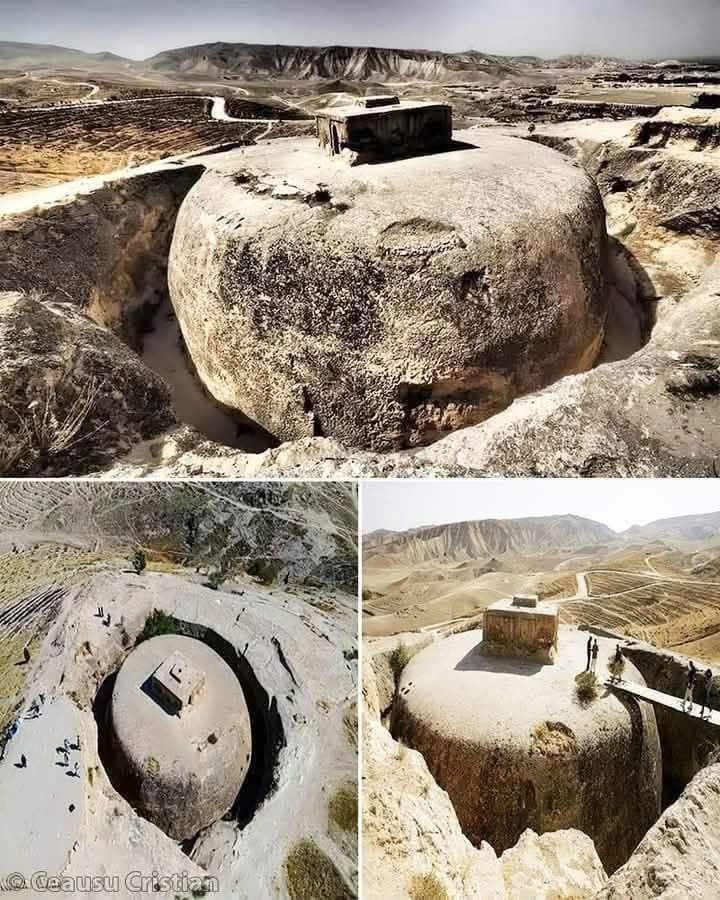
Takht-e Rostam, located in Samangan Province, Afghanistan, presents one of the most extraordinary and architecturally unique Buddhist monastic complexes in Central Asia, featuring a remarkable rock-cut stupa monastery carved directly into a natural hill during the 4th century CE, creating an underground architectural marvel that demonstrates the sophisticated transmission of Indian Buddhist cave architecture traditions to Afghanistan during the Kushan and post-Kushan periods. The monastery complex, carved entirely from living rock using techniques adapted from Indian cave temple traditions, features a massive underground stupa chamber accessed through a vertical shaft, with the stupa itself carved in relief from the rock face, creating a three-dimensional architectural sculpture that combines structural engineering with artistic mastery in a manner unparalleled in Central Asian Buddhist architecture. The site's architectural design demonstrates direct influence from Indian Buddhist cave architecture, particularly the early rock-cut monasteries of western India such as Ajanta and Ellora, with the overall plan, stupa form, and decorative elements reflecting traditions that were systematically transmitted from India to Afghanistan through centuries of cultural exchange along the Silk Road. Archaeological evidence reveals that the monastery was constructed during a period when Buddhism flourished across Afghanistan under Kushan and later Hephthalite patronage, with the site serving as both a religious center and a waypoint for Buddhist monks and traders traveling between India and Central Asia, while the sophisticated rock-cutting techniques employed demonstrate the transmission of Indian architectural knowledge to Afghan craftsmen. The monastery complex includes multiple chambers, meditation cells, and water management systems carved directly into the rock, demonstrating sophisticated understanding of both structural engineering and hydrological principles, while the stupa's elaborate decorative program featuring Buddhist iconography and Indic motifs provides crucial evidence of the transmission of Indian artistic traditions to Central Asia. The site has undergone multiple phases of use and modification over the centuries, with evidence of continued Buddhist activity through the 7th century CE, while the site's eventual abandonment and subsequent use as a local landmark reflects the complex religious and cultural transformations that occurred in Afghanistan following the decline of Buddhism in the region. Today, Takht-e Rostam stands as a UNESCO-recognized archaeological site and represents one of the most important examples of rock-cut Buddhist architecture in Central Asia, serving as a powerful testament to Afghanistan's ancient Buddhist heritage and its historical role as a center for the transmission of Indian religious and architectural traditions across the ancient world, while ongoing archaeological research continues to reveal new insights into the site's construction techniques, religious practices, and cultural significance. ([1][2])
Shri Devi Mandir Panipat
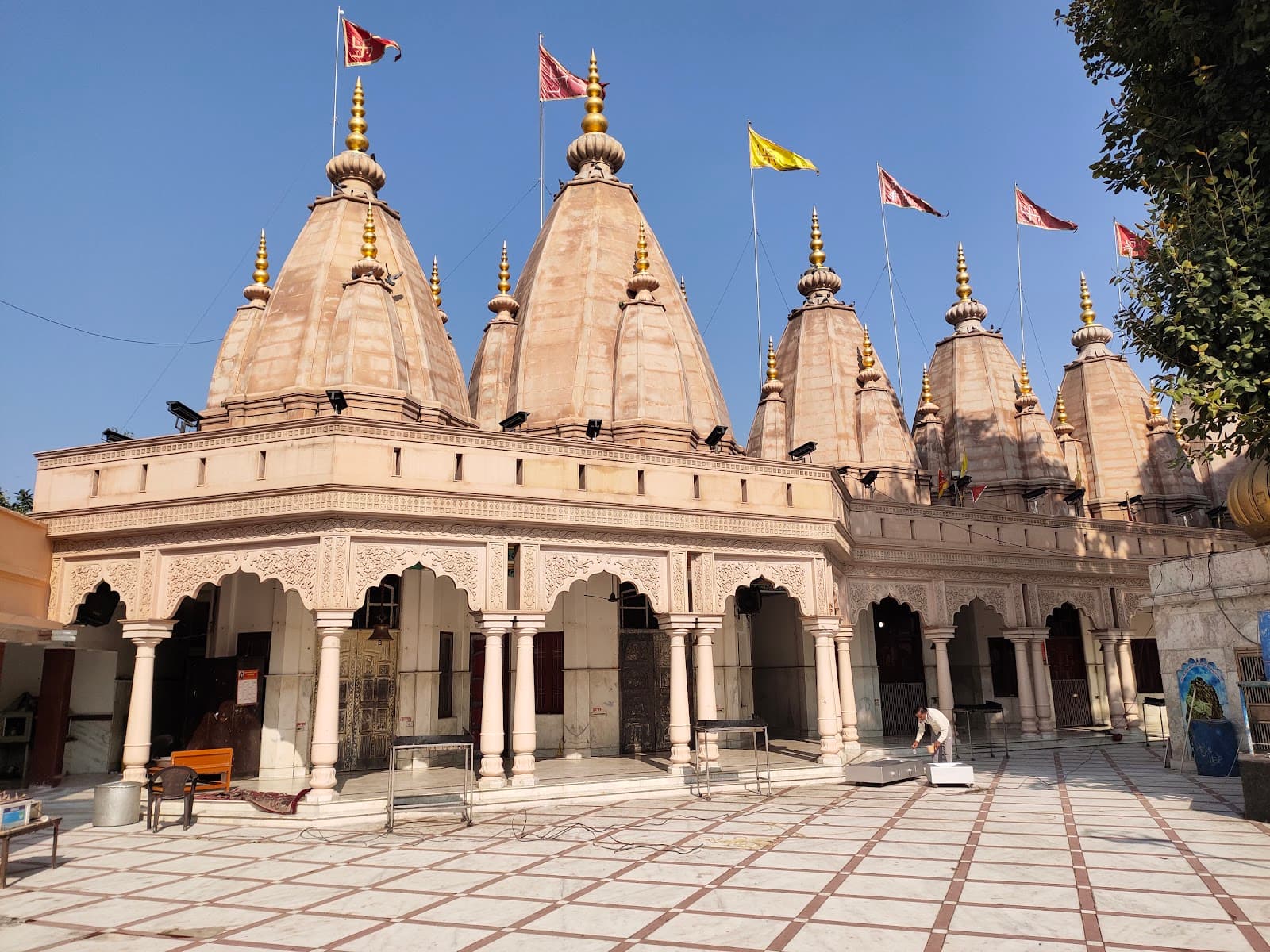
The midday sun beat down on Panipat, casting long shadows across the dusty plains, but within the cool confines of the Shri Devi Mandir, a different kind of energy pulsed. Having explored the basalt-carved wonders of Maharashtra’s caves and the intricate details of its countless temples, I arrived at this North Indian shrine with a keen eye for comparison, and I wasn't disappointed. The Shri Devi Mandir, dedicated to the goddess Bhadrakali, offers a distinct experience, a testament to a different architectural idiom and a unique spiritual resonance. The temple complex is surprisingly expansive, a sprawling network of courtyards, shrines, and halls. Unlike the often vertically oriented temples of the Deccan plateau, this structure embraces horizontality. Low-slung buildings, painted in vibrant shades of saffron, ochre, and white, surround the central sanctum. The main entrance, a towering gateway adorned with intricate carvings of deities and floral motifs, immediately sets the tone. The carvings, though weathered by time, retain a remarkable clarity, showcasing a blend of Mughal and Rajput influences – a testament to the region's rich history. Stepping through the gateway felt like crossing a threshold into another world. The clamor of the city faded, replaced by the soft murmur of chants and the clanging of bells. The courtyard, paved with smooth, cool stone, offered a welcome respite from the heat. Devotees moved with a quiet reverence, their faces etched with devotion. I observed the subtle differences in their rituals compared to those I’d witnessed back home – the way they offered flowers, the specific mantras they chanted, the distinct aroma of incense that hung heavy in the air. The main shrine, housing the idol of Shri Devi, is a relatively small structure, but its simplicity is its strength. The deity, depicted in a fierce yet benevolent form, is adorned with vibrant garments and elaborate jewelry. The air within the sanctum vibrated with a palpable energy, a feeling of concentrated devotion that transcended the physical space. I spent a few moments simply observing the interplay of light and shadow on the idol, the flickering flames of the oil lamps, and the expressions of quiet contemplation on the faces of the devotees. What struck me most about the Shri Devi Mandir was its accessibility. Unlike some of the more ancient temples I've visited, where a certain formality and distance are maintained, this temple felt remarkably inclusive. People from all walks of life, young and old, rich and poor, mingled freely, united in their reverence for the goddess. I saw families sharing prasad, children playing in the courtyards, and elderly devotees lost in quiet prayer. This sense of community, of shared faith, was truly heartwarming. Beyond the main shrine, the complex houses several smaller shrines dedicated to other deities, each with its own unique character. I explored these smaller spaces, noting the variations in architectural style and the different iconography. One shrine, dedicated to Lord Shiva, featured a striking lingam carved from black stone, while another, dedicated to Lord Hanuman, was adorned with vibrant murals depicting scenes from the Ramayana. As I wandered through the complex, I couldn't help but reflect on the power of faith and the diverse ways in which it manifests itself across India. From the rock-cut caves of Ajanta and Ellora to the towering gopurams of Tamil Nadu, and now to the humble yet vibrant Shri Devi Mandir in Panipat, each sacred space offers a unique window into the rich tapestry of Indian spirituality. This temple, with its blend of architectural styles, its palpable sense of devotion, and its inclusive atmosphere, left a lasting impression, reminding me that the essence of faith transcends geographical boundaries and architectural forms.
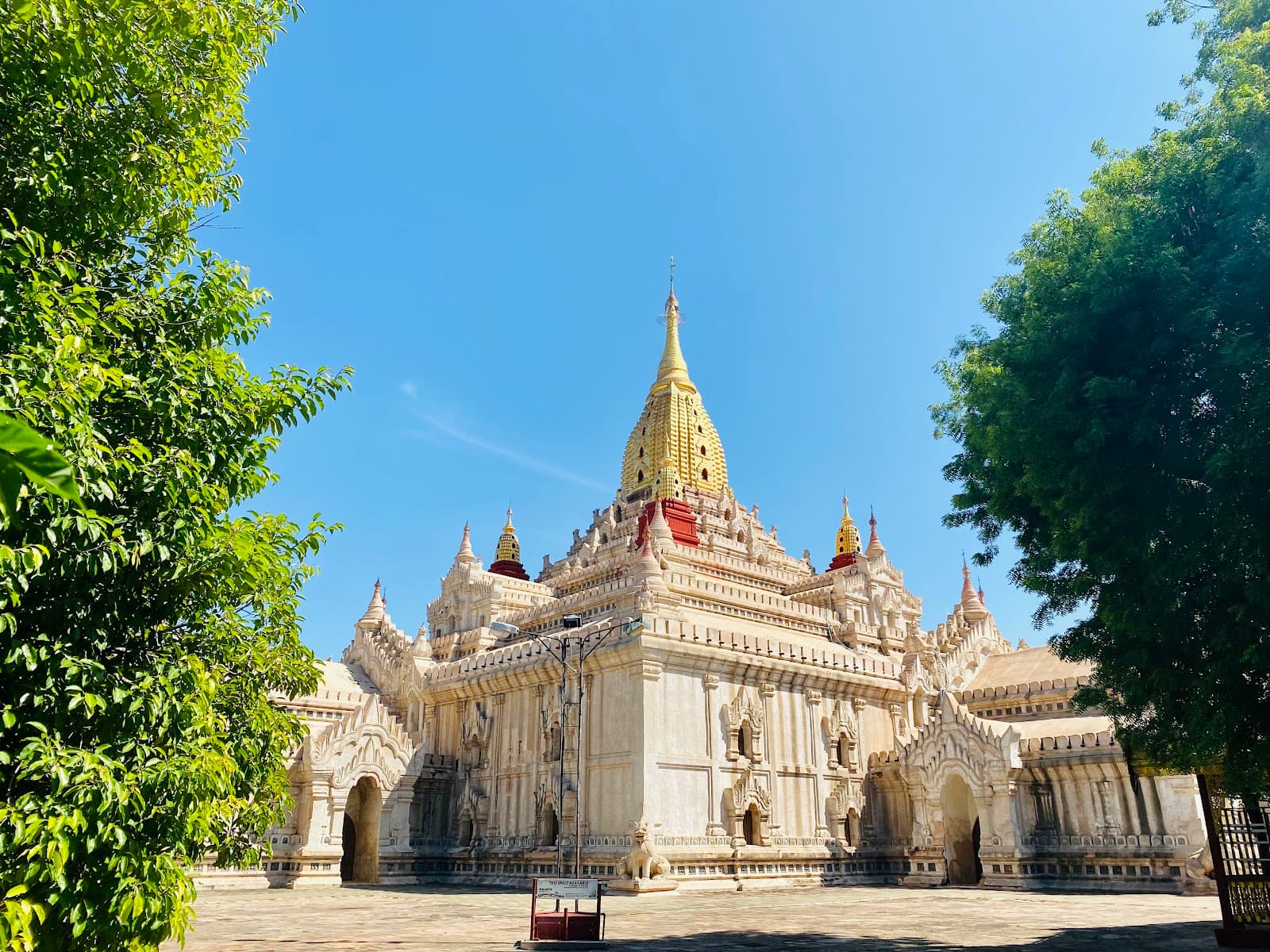
Ananda Temple Bagan
Ananda Temple, situated in the Bagan Archaeological Zone, represents a compelling example of the transmission of Indian architectural and religious ideas to Myanmar, dating back to 1105 CE ([1][2]). King Kyanzittha of the Bagan Empire commissioned its construction, reflecting the empire's engagement with Indian culture ([1]). Vastu Shastra principles, the ancient Indian science of architecture, are discernible in the temple's layout, aligning with mandala-based cosmological concepts common to Hindu and Buddhist sacred spaces ([2]). Rising to a height of 51 meters, the temple follows a cruciform plan, featuring four standing Buddha images facing the cardinal directions ([1]). Intricate carvings adorning the walls narrate stories from the Jataka tales, as well as Hindu epics such as the Ramayana and Mahabharata, illustrating the fusion of religious narratives in ancient Myanmar ([2][3]). During the medieval period, Bagan's temple architecture, including Ananda, absorbed Gupta and Pala influences from India, particularly evident in the Shikhara (spire) design reminiscent of North Indian Nagara temples ([3][4]). Granite and sandstone blocks, meticulously carved, were employed alongside brick and stucco, indicative of the advanced architectural capabilities of the time ([4]). Archaeological evidence suggests the involvement of Indian architects and artisans in the construction, underscoring the strong cultural and commercial links between India and Myanmar ([5]). Sophisticated stucco decoration enhances the temple's exterior, contributing to its overall aesthetic appeal ([1][5]). As a UNESCO World Heritage Site, Ananda Temple embodies Myanmar’s historical connections to Indian civilization through shared religious and architectural traditions ([3][4]). The temple serves as an active site of Buddhist worship, even after undergoing restoration in the 1970s following earthquake damage ([2]). Its enduring presence highlights the interconnectedness of South and Southeast Asian cultures through the exchange of artistic and spiritual ideas.
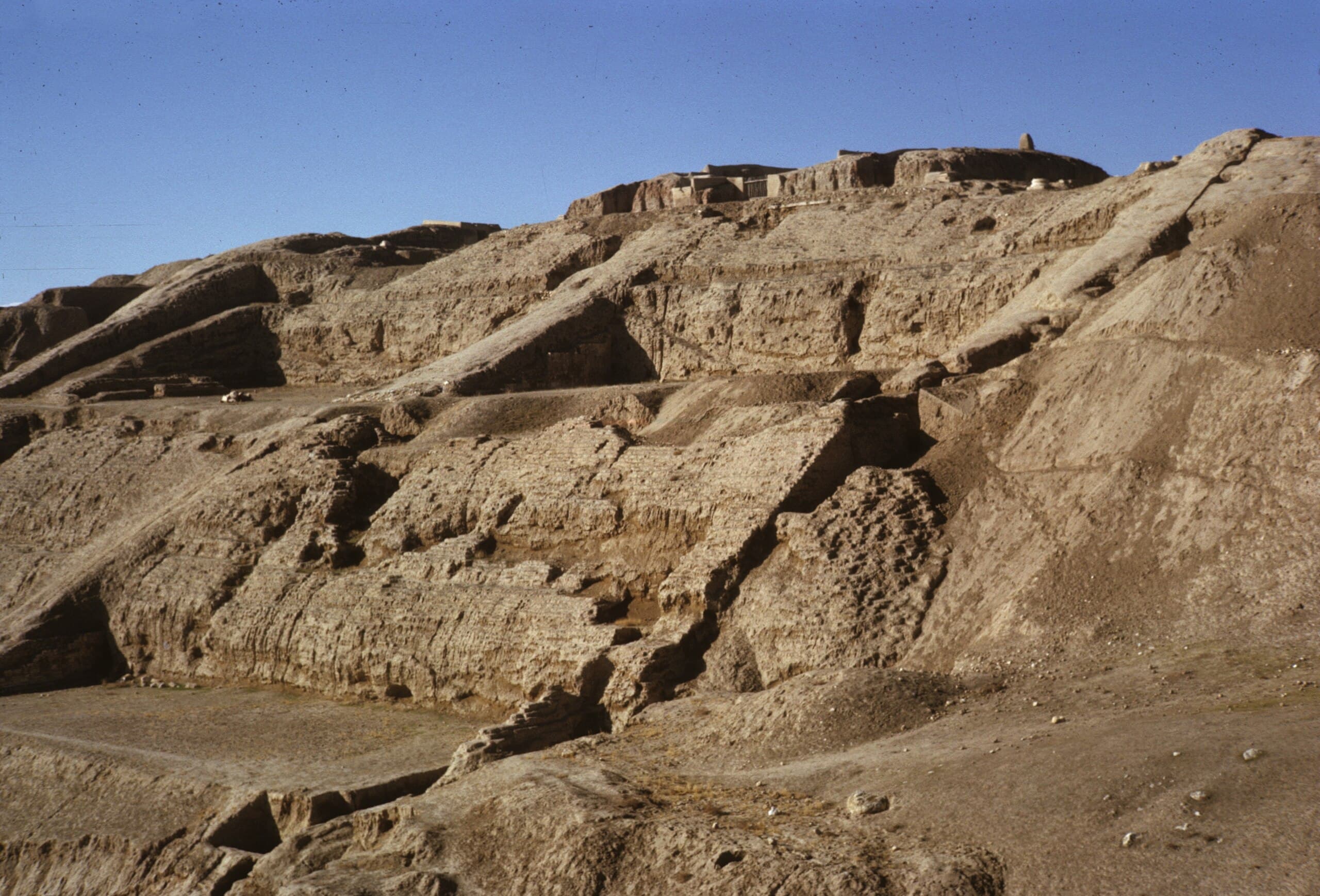
Surkh Kotal Zamindawar Temple Baghlan Afghanistan
Surkh Kotal, also known as the Zamindawar Temple, stands dramatically atop a natural hill in Baghlan Province, Afghanistan, representing one of the most magnificent and architecturally sophisticated Kushan-era Hindu temples dedicated to the solar deity Surya, constructed in the 2nd century CE during the reign of the Kushan Empire, which ruled over vast territories stretching from Central Asia through Afghanistan to northern India, creating a vibrant cultural bridge between Indian and Central Asian civilizations. The temple complex, constructed primarily from locally quarried limestone and sandstone with extensive use of fired brick, features a massive terraced structure rising approximately 60 meters above the surrounding plain, accessed through a monumental staircase of over 200 steps that ascends the steep hillside, creating a dramatic approach that emphasizes the temple's elevated spiritual significance. The temple's architectural design demonstrates a brilliant synthesis of Indian Hindu temple architecture, particularly the early Nagara style, with Central Asian and Hellenistic influences characteristic of the Kushan period, featuring a central sanctum housing the Surya deity, surrounded by multiple courtyards, subsidiary shrines, and elaborate water management systems including cisterns and channels that demonstrate sophisticated engineering knowledge. Archaeological excavations have revealed extensive inscriptions in Bactrian script and Prakrit, providing crucial evidence of the Kushan Empire's multilingual administration and the temple's role as a major religious and administrative center, while the discovery of numerous sculptures, architectural fragments, and ritual objects demonstrates the site's importance as a center of Surya worship that attracted devotees from across the Kushan realm. The temple complex includes multiple construction phases spanning from the 2nd to the 4th centuries CE, with significant expansions and renovations that reflect the evolving religious practices and the Kushan Empire's continued patronage of Hindu traditions, while the site's strategic location along ancient trade routes connecting India with Central Asia and China underscores its role in facilitating cultural and religious exchange. The temple's destruction, likely during the 5th century CE following the decline of the Kushan Empire, left the site in ruins, but the massive stone foundations, terraces, and architectural fragments that remain provide extraordinary evidence of the temple's original grandeur and the sophisticated engineering techniques employed in its construction. Today, Surkh Kotal stands as a UNESCO Tentative List site and represents one of the most important archaeological monuments in Afghanistan, serving as a powerful testament to the region's ancient Hindu heritage and its historical role as a center of Indian religious and cultural influence in Central Asia, while ongoing archaeological research continues to reveal new insights into Kushan architecture, religious practices, and the transmission of Indian traditions across the ancient world. ([1][2])
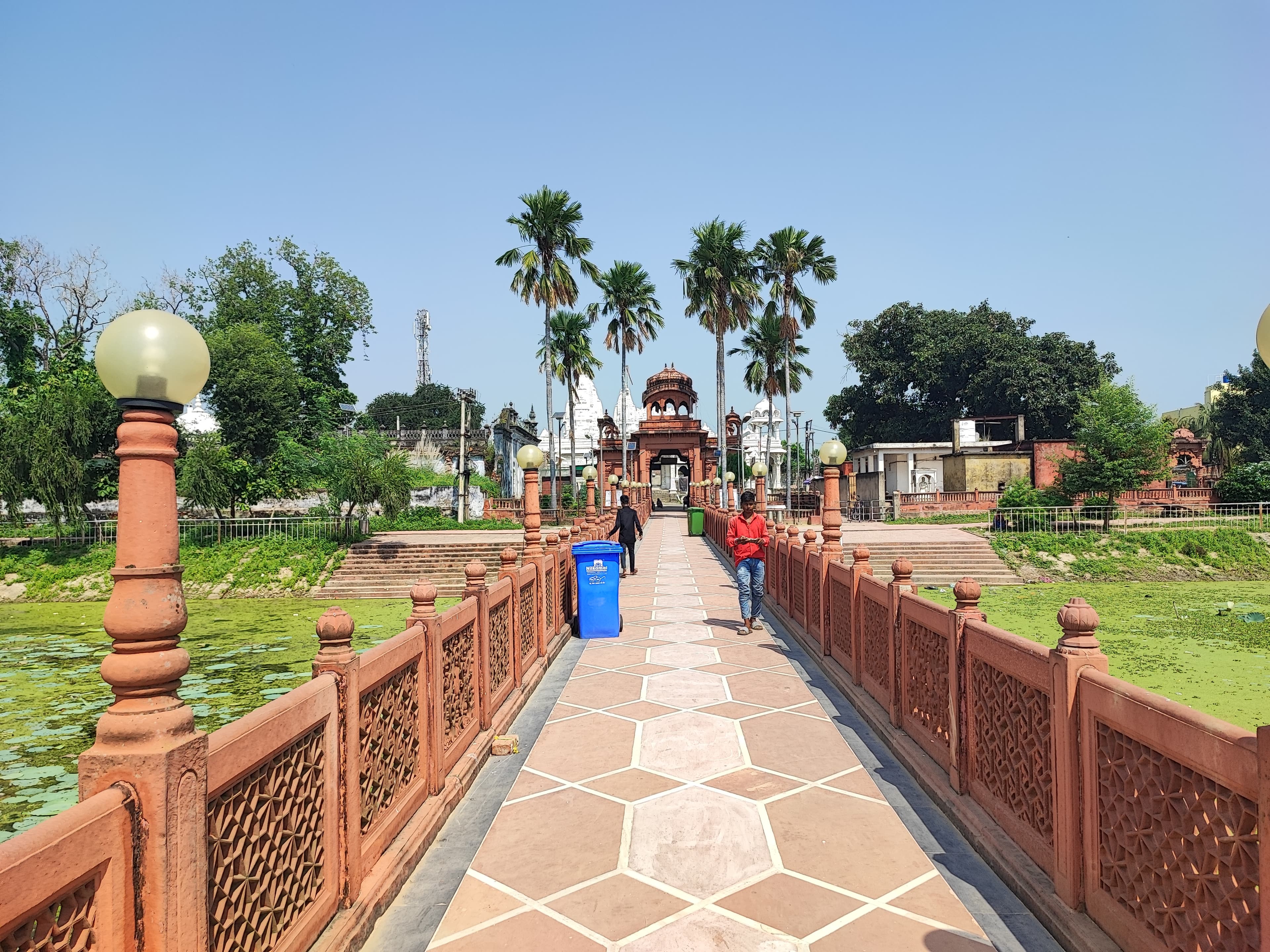
Jal Mandir Pawapuri
The midday sun beat down on Pawapuri, the heat shimmering off the vast, placid tank. But the air held a palpable stillness, a sense of reverence that seemed to emanate from the heart of the tank itself – the Jal Mandir, a marble marvel floating serenely on its lotus-shaped pedestal. Having crisscrossed North India, documenting countless temples, I thought I was immune to architectural surprises. Pawapuri, however, proved me wrong. The approach to the Jal Mandir is a pilgrimage in itself. Barefoot, I walked the long, red sandstone bridge that stretches across the tank, the water reflecting the cloudless sky like a giant mirror. With each step, the temple grew larger, its pristine white marble a stark contrast against the azure backdrop. The bridge, I learned, represents the final path of Lord Mahavira, the 24th Tirthankara of Jainism, who attained Moksha (liberation) at this very spot. That knowledge imbued the walk with a profound sense of significance. Reaching the temple, I was immediately struck by its delicate beauty. Unlike the towering, ornate structures I’d encountered elsewhere, the Jal Mandir exuded a quiet elegance. Built entirely of white marble, it is a relatively small structure, a single-storied pavilion with a pyramidal shikhara. The shikhara, however, is not the typical North Indian style I’m accustomed to. It’s more reminiscent of the curvilinear towers of Odisha, lending the temple a unique architectural identity. Intricate carvings of lotus flowers, elephants, and celestial beings adorn the marble surface, each detail meticulously crafted. Inside the sanctum, a serene statue of Lord Mahavira sits in meditative posture. The atmosphere within is hushed, punctuated only by the soft chanting of devotees. Sunlight filters through the latticed marble screens, casting dappled patterns on the floor. It’s a space that invites contemplation, a sanctuary from the outside world. Circumambulating the temple, I noticed the four small shrines located at each corner of the platform. These are dedicated to the other Tirthankaras who also attained Moksha at Pawapuri. The platform itself is surrounded by a marble balustrade, offering uninterrupted views of the surrounding tank. Schools of fish darted beneath the surface, adding a touch of life to the tranquil scene. Beyond the immediate vicinity of the Jal Mandir, the tank is fringed by other temples and dharamshalas. The entire complex is meticulously maintained, a testament to the devotion of the Jain community. I spent hours wandering the grounds, absorbing the peaceful atmosphere and observing the rituals of the pilgrims. Many were performing the Parikrama, the circumambulation of the tank, their faces etched with devotion. What struck me most about Pawapuri was the palpable sense of peace that permeated the air. It wasn't just the quietude of the location, but something deeper, a spiritual resonance that seemed to emanate from the very ground itself. Perhaps it was the knowledge that this was the place where Lord Mahavira achieved liberation, or perhaps it was the collective devotion of the pilgrims who flocked to this sacred site. Whatever the reason, Pawapuri left an indelible mark on me. As I left the temple complex, the setting sun cast a golden glow over the Jal Mandir, transforming the white marble into a shimmering beacon of peace. It was a sight I won’t soon forget, a reminder of the profound spirituality that can be found in the most unexpected corners of India. My journey through North India has taken me to countless temples, each with its own unique story to tell. But Pawapuri, with its serene Jal Mandir and its palpable sense of peace, holds a special place in my heart. It is a place where architecture, nature, and spirituality converge to create an experience that is both humbling and deeply moving.
Quick Links
Plan Your Heritage Journey
Get personalized recommendations and detailed visitor guides