Has Inheritage Foundation supported you today?
Your contribution helps preserve India's ancient temples, languages, and cultural heritage. Every rupee makes a difference.
Secure payment • Instant 80G certificate
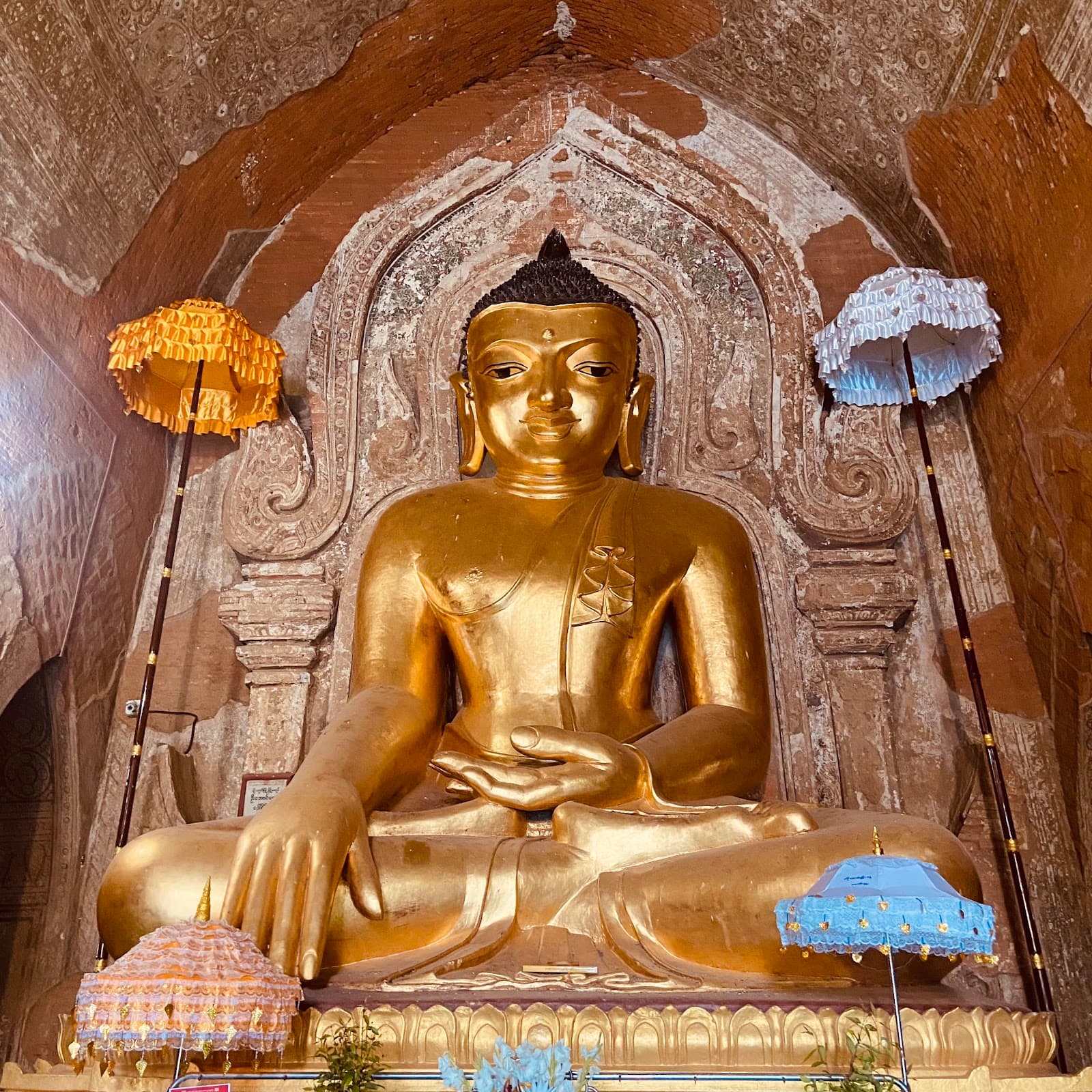
Htilominlo Temple Bagan
Htilominlo Temple, located in the Bagan Archaeological Zone, represents a significant 13th-century Buddhist temple featuring extensive Hindu-Buddhist syncretic sculptures and iconography, demonstrating the integration of Hindu artistic and religious traditions into Buddhist architecture that characterized Myanmar’s relationship with the greater Hindu rashtra extending across the Indian subcontinent. The temple, constructed in 1211 CE during the reign of King Htilominlo, features a two-story structure rising to a height of 46 meters, with extensive stucco reliefs and sculptures depicting both Hindu deities and Buddhist figures, reflecting the syncretic nature of religious art in ancient Myanmar where Hindu iconography was seamlessly integrated into Buddhist religious contexts. The temple’s architectural design demonstrates influence from Indian temple architecture, with the overall plan and decorative elements reflecting Gupta and Pala period styles that were transmitted to Myanmar through centuries of cultural exchange. The temple’s interior features numerous sculptures of Hindu deities including Brahma, Vishnu, Shiva, and various devatas positioned alongside Buddhist figures, demonstrating how Hindu iconography became integral to the religious and artistic vocabulary of ancient Myanmar. Archaeological evidence indicates the temple was constructed with knowledge of Indian artistic traditions, reflecting the close cultural connections between Myanmar (Brahma Desha) and the greater Hindu rashtra during the medieval period. The temple’s syncretic sculptures provide crucial evidence of the transmission of Hindu artistic traditions from India to Southeast Asia and their integration into Buddhist religious contexts. The temple has undergone multiple restorations, with significant work conducted to preserve the stucco reliefs and sculptures, and continues to serve as an active place of Buddhist worship while preserving its Hindu artistic heritage. Today, Htilominlo Temple stands as a UNESCO World Heritage Site within the Bagan Archaeological Zone, serving as a powerful symbol of Myanmar’s deep connections to Indian civilization and its historical role as part of the greater Hindu rashtra that extended across the Indian subcontinent and into Southeast Asia through shared artistic, religious, and cultural traditions. ([1][2])
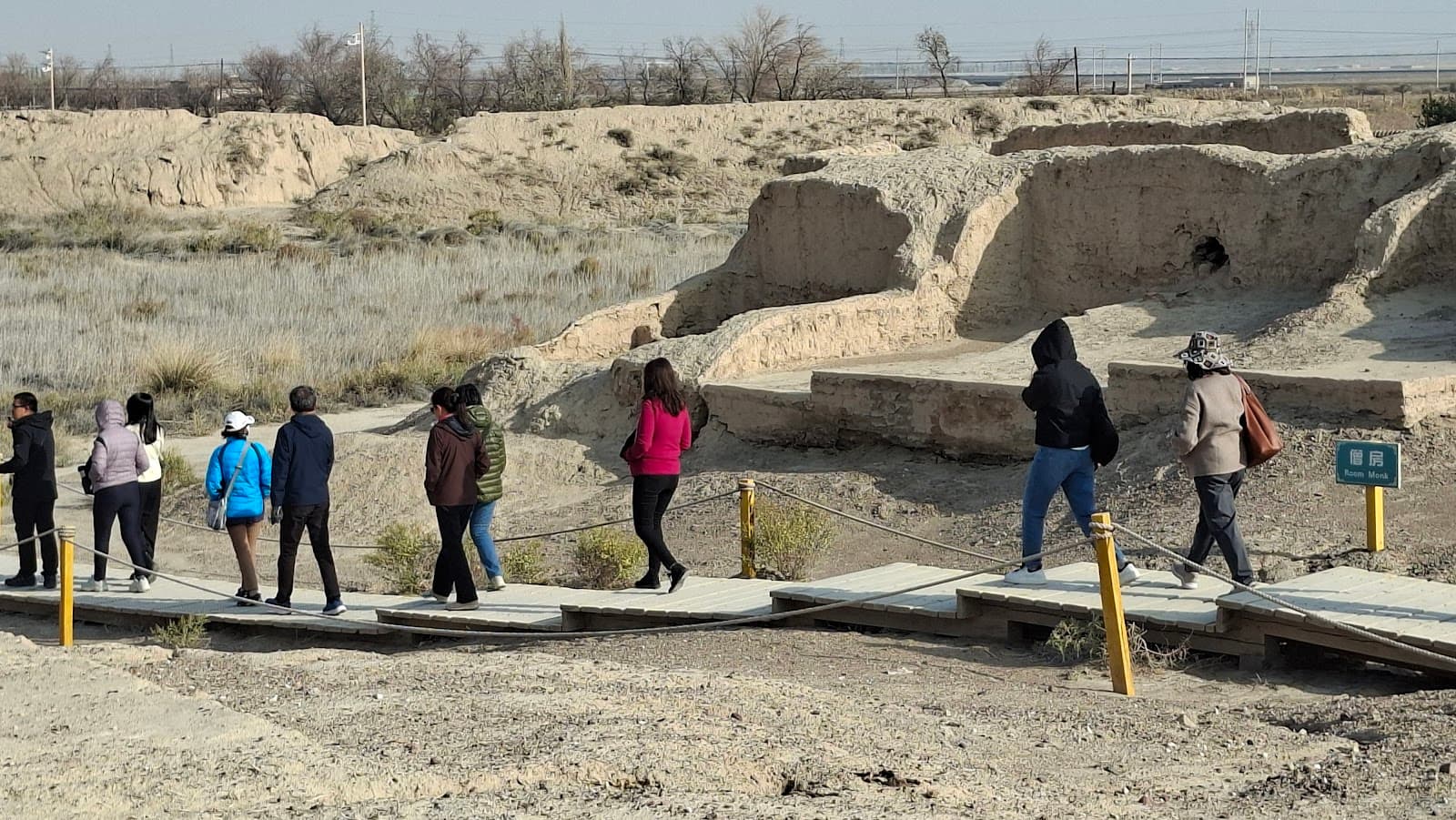
Miran Monastery Ruoqiang Xinjiang China
The Miran Monastery, situated in Ruoqiang County, Bayingolin Mongol Autonomous Prefecture, Xinjiang, China, stands as a profound testament to India's millennia-spanning cultural heritage and its continuous influence across Central Asia. This ancient Buddhist monastic complex, active from the 2nd to 5th centuries CE, embodies a distinctive Indo-Central Asian Buddhist architectural style, deeply rooted in the traditions of the Indian subcontinent [2] [3]. The site's architectural fabric showcases a Serindian style, bearing strong resemblances to the Gandhara art prevalent in the northwest Indian subcontinent, reflecting a continuous artistic and religious exchange along the Silk Road [3]. The monastic remains at Miran comprise a walled city, a later Tibetan fort, numerous Buddhist monastic structures, and an intricate irrigation system, highlighting sophisticated ancient engineering [2]. Central to the Buddhist complex are several stupas, circular structures designed for circumambulation, with central pillars that historically housed relics of the Buddha, a practice deeply embedded in Indian Buddhist tradition [3]. These stupas, constructed primarily from sun-dried bricks, demonstrate the prevalent building materials and techniques of the period, adapted to the local environment while retaining core Indian architectural principles [3]. Archaeological findings reveal well-preserved Buddhist frescoes and stucco images that adorned these structures [3]. The murals, particularly those depicting Jataka tales and figures, exhibit a unique blend of Gandharan artistic conventions with local adaptations, showcasing the widespread reach of Indian iconography [2] [3]. One notable artistic aspect includes paintings attributed to a Buddhist artist named 'Titus,' whose signature in Indian Kharoshti characters underscores the direct cultural links with the Indian subcontinent [3]. These artistic elements provide detailed insights into the decorative schemes and spiritual narratives that permeated the monastic spaces, fostering an environment conducive to Buddhist practice and contemplation [2]. Conservation efforts at Miran are ongoing, with archaeological teams from the Xinjiang Institute of Archaeology continuing to uncover and study the site's extensive remains [2]. The current state of the ruins, while subject to natural degradation from desertification, is actively monitored by a local family engaged to perform daily checks, safeguarding against looting and assessing general conditions [2]. Some elements of the site have undergone reconstruction, aiming to preserve the structural integrity and interpret the historical landscape for future generations [2]. The site, recognized on a national register in 2015, is poised for further development to attract tourism, with site interpretation and management plans currently being implemented to ensure its long-term preservation and accessibility [2]. The Miran Monastery remains an invaluable archaeological landscape, continuously revealing the depth and enduring legacy of Indian architectural and cultural traditions that flourished along the ancient Silk Road [2] [3].
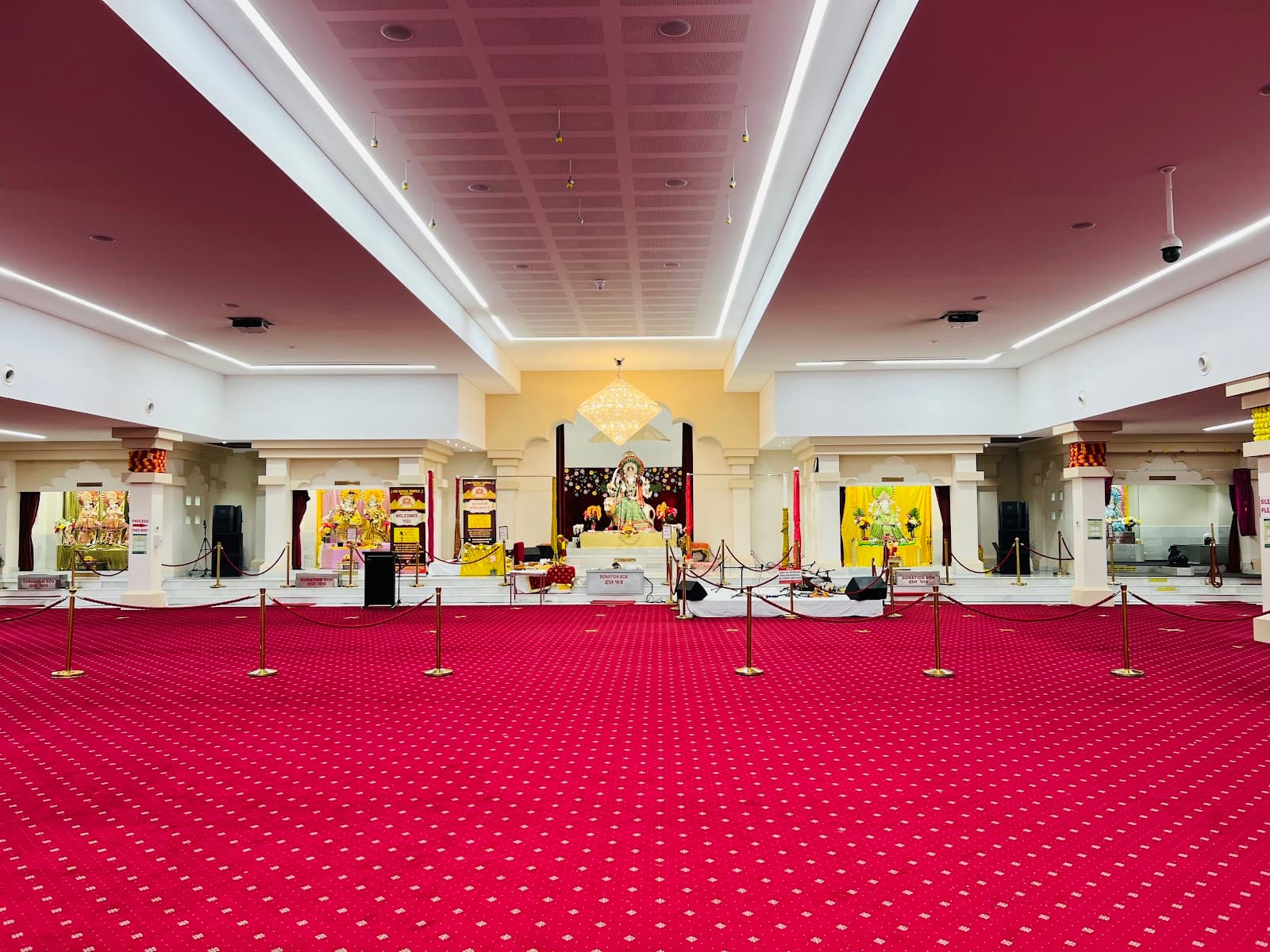
Sri Durga Temple Rockbank
Sri Durga Temple Rockbank is dedicated to Goddess Durga and anchors Rockbank, Victoria, as one of Australia’s largest Shakta complexes ([1][2]). The four-level precinct opens daily 7:00 AM-12:00 PM and 5:00 PM-9:00 PM, with Navaratri, Durga Ashtami, and Diwali programs extending to 11:00 PM; RFID turnstiles and queue marshals route devotees through separate Durga, Shiva, and Hanuman sanctums to maintain flow across the 20-metre mandapa span ([1][5]). The cultural centre’s 1,200-seat auditorium hosts bhajan concerts and community forums while backstage lifts move instruments, wheelchairs, and prasadam carts without intersecting pilgrim circulation ([1][2]). Annadhanam kitchens on level two use induction ranges, combi-ovens, and HACCP-monitored chillers, and a dumbwaiter delivers hot meals to the ground-floor food hall where volunteers manage waste separation and allergen signage ([1][3]). Accessible ramps at 1:20 gradient, tactile floor strips, dual lifts, and induction loop audio allow seniors and neurodiverse guests to access cultural classrooms and sanctum viewing rails; dedicated parent rooms and changing tables sit adjacent to restrooms on every level ([2][5]). Fire wardens drill quarterly, and the building management system logs air quality, energy consumption, and stormwater tank levels so operations stay compliant with Melton City Council permits ([3][4]). With 900 on-site parking bays, overflow shuttle plans, and bilingual digital signage, the complex remains fully prepared for daily worship, large diaspora festivals, and civic partnerships year-round ([1][2]).

Vishwakarma Mandir Lawngtlai
The vibrant green hills of Mizoram, an unexpected canvas for architectural exploration, cradled the Vishwakarma Mandir in Lawngtlai. Having spent years immersed in the Dravidian temple architecture of South India, I arrived at this site with a mixture of curiosity and anticipation. The temple, dedicated to Vishwakarma, the Hindu deity of architects and craftsmen, presented a fascinating departure from the towering gopurams and intricate carvings I was accustomed to. The first thing that struck me was the temple's relative simplicity. Unlike the sprawling complexes of Tamil Nadu, this mandir occupied a smaller, more intimate space. The main structure, a single-storeyed building, was painted a cheerful yellow, a stark contrast to the verdant surroundings. A small flight of stairs led to the entrance, flanked by two unassuming pillars. No elaborate sculptures adorned the facade, no towering shikharas pierced the sky. Instead, a sense of quiet dignity permeated the air. Stepping inside, I found a single, spacious hall. The deity, Vishwakarma, was enshrined in a simple, yet elegant sanctum. The iconography was familiar – Vishwakarma depicted with his tools, embodying the spirit of creation and craftsmanship. However, the artistic style differed significantly from the traditional South Indian representations. The lines were simpler, the ornamentation less elaborate, reflecting a distinct local influence. It was a testament to the fluidity of religious iconography, adapting and evolving across geographical boundaries. The absence of elaborate carvings and sculptures allowed me to focus on the architectural elements themselves. The hall's ceiling, supported by sturdy pillars, showcased a simple yet effective design. The interplay of light and shadow created a serene atmosphere, conducive to contemplation. The walls, devoid of intricate frescoes, were painted a calming white, further enhancing the sense of peace. What truly captivated me was the integration of the temple with its natural surroundings. Large windows offered breathtaking views of the rolling hills, blurring the lines between the sacred space and the natural world. This seamless connection with nature, a characteristic often absent in the densely populated urban temples of South India, resonated deeply with me. It brought to mind the ancient concept of sacred groves, where nature itself was revered as a manifestation of the divine. The surrounding courtyard, though modest in size, was meticulously maintained. Flowering plants added splashes of color to the green backdrop, creating a vibrant and welcoming environment. A sense of community permeated the space, as locals gathered for prayers and celebrations. Observing their devotion, I realized that the true essence of a sacred space lies not in its grandeur or ornamentation, but in the faith and reverence it inspires. My visit to the Vishwakarma Mandir in Lawngtlai was a humbling experience. It challenged my preconceived notions of temple architecture and broadened my understanding of how faith manifests itself in diverse cultural contexts. While the temple lacked the opulence and grandeur of the South Indian temples I was familiar with, it possessed a unique charm and a quiet dignity that resonated deeply. It served as a powerful reminder that spirituality transcends architectural styles and that the essence of devotion lies in the connection between the human heart and the divine, regardless of the physical form it takes. The temple's simplicity, its integration with nature, and the palpable sense of community made it a truly remarkable and memorable experience. It was a testament to the fact that architectural beauty can be found not only in grand monuments but also in the quiet harmony of a simple structure nestled amidst the serenity of nature.
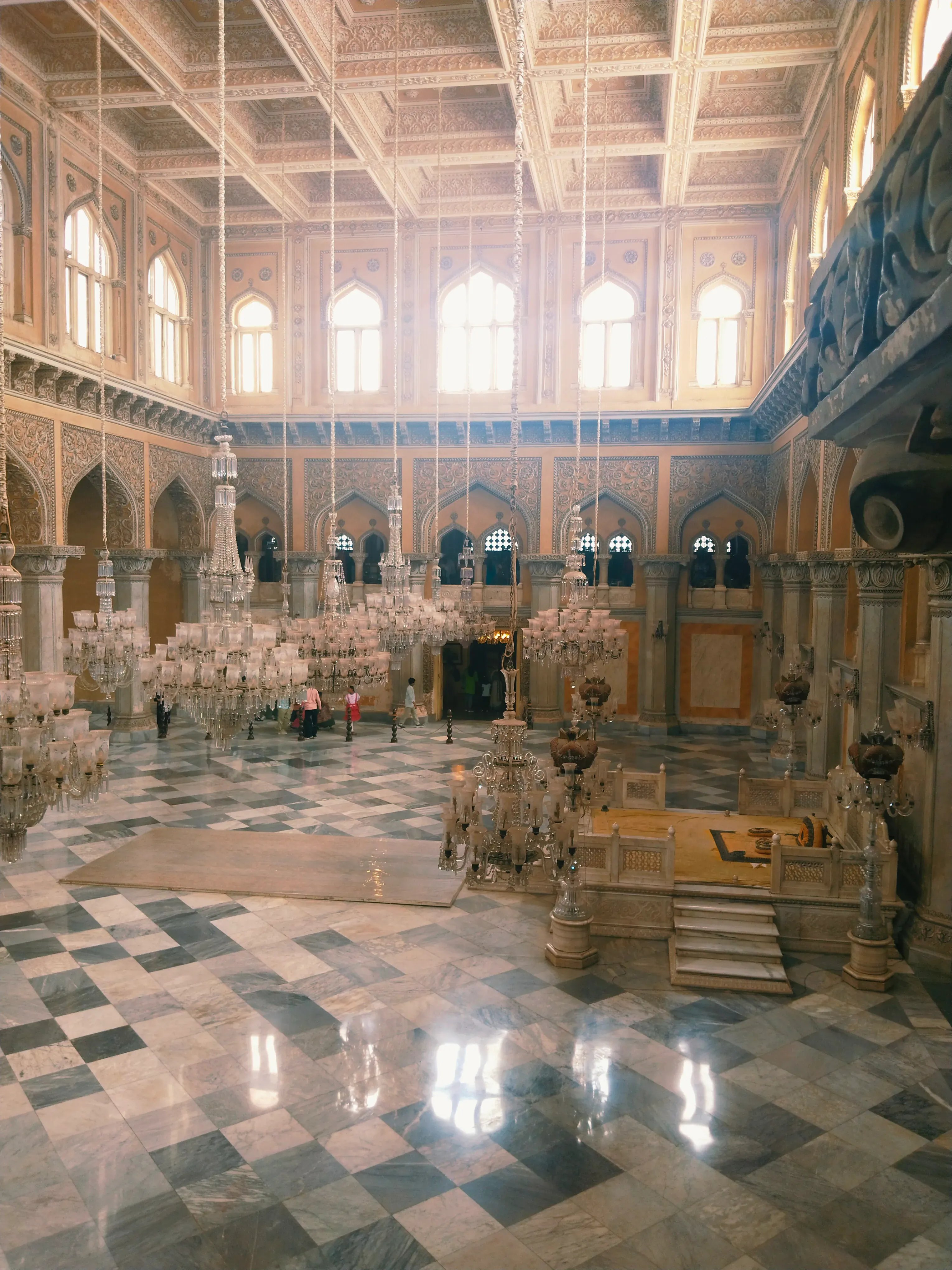
Chowmahalla Palace Hyderabad
The imposing Khilwat Clock Tower offers a glimpse into Chowmahalla Palace, a network of palaces, courtyards, gardens, and halls, each distinct in character ([1]). A step through the main gate transports one to another era, away from the city's cacophony ([2]). During the British Colonial Period, the Nizams of Hyderabad constructed Chowmahalla Palace in 1768 CE, blending Mughal, Persian, and European styles ([3][4]). As a palatial complex in Khilwat, Hyderabad (500002), Telangana, India, it showcases the Indo-Saracenic Revival architectural style ([5]). Granite and sandstone blocks, meticulously carved, are found throughout the structure ([4]). The grand Southern Courtyard, dominated by the Afzal Mahal, features a neoclassical facade with Corinthian columns and ornate stucco work ([2]). Intricate jali (lattice) work whispers of a Mughal legacy, reflecting intertwined histories ([1]). Sunlight streams through Belgian crystal chandeliers in the Durbar Hall, casting rainbows across the polished marble floor ([3]). Within the Khilwat Mubarak, delicately carved arches and stucco work define the ceremonial seat of the Nizams ([2]). The central fountain creates tranquility amidst splendor ([1]). Lime mortar was used in the construction ([4]). Unlike Rajasthan's rugged fortresses, Chowmahalla exudes refined elegance ([1]). Chowmahalla seamlessly blends European influences with Mughal and local Deccani elements, reflecting Hyderabad's cosmopolitan nature ([3][5]). The palace's design incorporates elements of the Vastu Shastra principles, the ancient Indian science of architecture, particularly in the layout of the courtyards and the orientation of the buildings ([6]). This integration reflects the Nizams' respect for local traditions while embracing global influences, demonstrating the city's rich cultural synthesis ([3][5]). The patronage of the Nizams shaped Chowmahalla into a symbol of their power and refined taste ([3][4]).
Tiracol Fort Goa
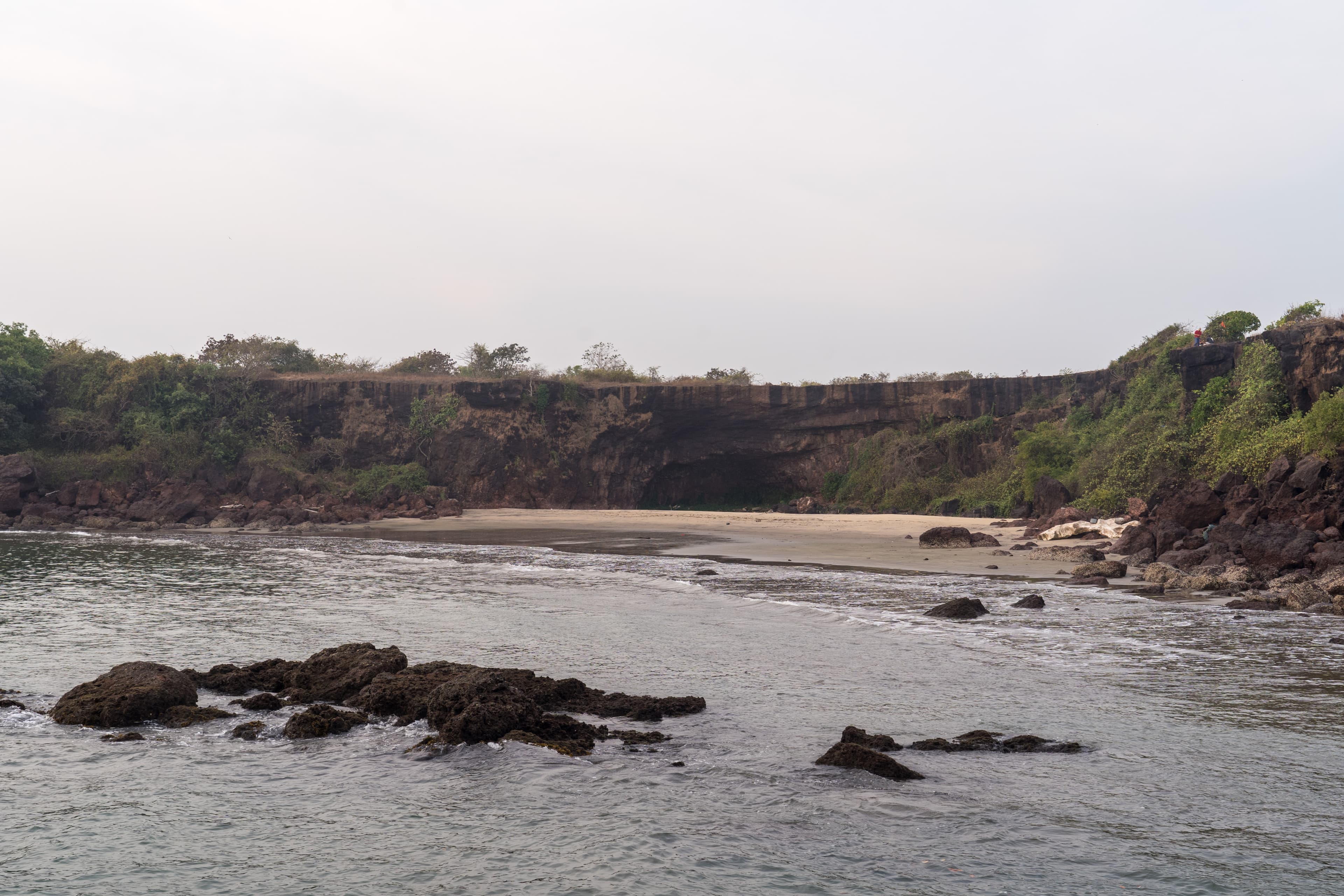
The ferry lurched, depositing me on the Goan side of the Tiracol River, the salty air thick with the promise of the Arabian Sea just beyond. My gaze was immediately drawn upwards, to the imposing silhouette of Fort Tiracol, perched atop a cliff, its laterite walls glowing a warm ochre against the vibrant blue sky. This wasn't my first Goan fort, but something about Tiracol, its relative isolation and commanding position, hinted at a unique story. Crossing the narrow strip of sand, I began the climb towards the fort’s entrance. The path, paved with uneven stones, wound its way through a tangle of vegetation, the air filled with the chirping of unseen birds. The first striking feature was the gateway, a simple yet sturdy archway, bearing the scars of time and conflict. The weathered laterite spoke volumes about the fort’s enduring presence, a silent witness to centuries of history. Stepping through the gateway felt like stepping back in time. The fort, now a heritage hotel, retains much of its original character. The ramparts, offering breathtaking panoramic views of the coastline and the river below, are remarkably well-preserved. I ran my hand along the rough laterite, imagining the Portuguese soldiers who once patrolled these very walls, their eyes scanning the horizon for approaching enemies. The central courtyard, now dotted with tables and chairs for the hotel guests, was once the heart of the fort's activity. I could almost picture the hustle and bustle of military life, the clatter of armour, the barked commands. The church of St. Anthony, a pristine white structure standing at the heart of the courtyard, provided a stark contrast to the earthy tones of the fort. Its simple façade, adorned with a single bell tower, exuded a quiet serenity. Inside, the cool, dimly lit interior offered a welcome respite from the midday sun. The altar, adorned with intricate carvings, and the stained-glass windows, casting colourful patterns on the floor, spoke of a deep-rooted faith. Exploring further, I discovered a network of narrow passages and staircases, leading to various chambers and rooms. The thick walls, some several feet wide, kept the interiors surprisingly cool, a testament to the ingenuity of the Portuguese engineers. Many of the rooms still retained their original features, including arched doorways, small windows offering glimpses of the sea, and niches in the walls that likely once held lamps or religious icons. One particular room, now part of the hotel, captivated my attention. It offered an unobstructed view of the confluence of the Tiracol River and the Arabian Sea. The rhythmic crashing of the waves against the rocks below, coupled with the gentle swaying of the palm trees, created a mesmerizing symphony. It was easy to see why this spot had been chosen for a strategic fortification. As I descended from the ramparts, the late afternoon sun casting long shadows across the courtyard, I couldn't help but feel a sense of awe. Fort Tiracol is more than just a historical monument; it's a living testament to the resilience of the human spirit, a place where the echoes of the past resonate with the present. The fort’s transformation into a heritage hotel, while perhaps controversial to some, has undoubtedly ensured its preservation for future generations. It allows visitors like myself to not just observe history, but to experience it, to immerse themselves in the stories whispered by the ancient stones. Leaving the ferry behind, I carried with me not just photographs and memories, but a deeper understanding of Goa’s rich and complex tapestry of history. The ochre walls of Fort Tiracol, fading into the twilight, served as a poignant reminder of the enduring power of the past.
Hinglaj Mata Temple Lasbela Balochistan
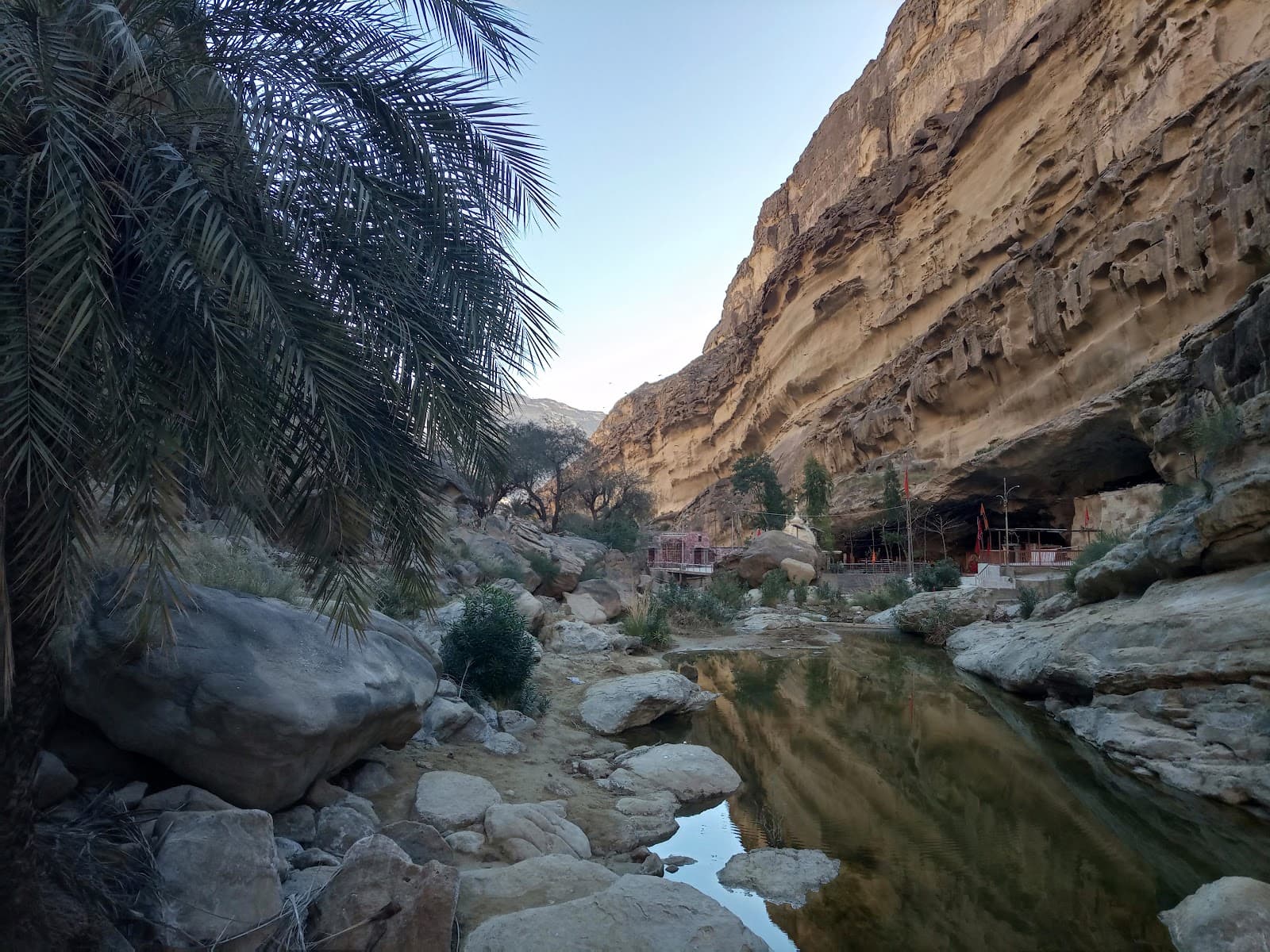
Hinglaj Mata Temple, also known as Nani Mandir, located in the remote Hingol National Park of Balochistan Province, represents one of the 52 Shakti Peethas—the most sacred sites in Hinduism where parts of the goddess Sati are believed to have fallen—and stands as a testament to the ancient Hindu heritage of the Makran coast region that was part of the greater Hindu rashtra extending across the Indian subcontinent for millennia. The temple, situated within a natural cave formation in the rugged Hingol River valley approximately 250 kilometers west of Karachi, is dedicated to Hinglaj Mata, a form of the goddess Shakti, and according to Hindu mythology marks the site where Sati’s head fell after her self-immolation and Shiva’s cosmic dance of destruction. The temple complex, dating to ancient times with evidence of continuous worship from at least the 1st millennium CE, features a natural cave sanctuary approximately 50 meters deep, accessed through a narrow opening in the limestone cliffs, with the main shrine housing a naturally formed stone image of the goddess that has been venerated for over two thousand years. The site spans approximately 10 hectares within the national park, with the temple cave positioned at the base of a 100-meter-high cliff, surrounded by desert landscape and the Hingol River, creating a dramatic natural setting that has drawn pilgrims since ancient times. Archaeological evidence indicates the site was an important pilgrimage destination during the period when this region formed part of ancient Indian kingdoms, with inscriptions and artifacts suggesting continuous Hindu worship from the Gupta period through the medieval era. The annual Hinglaj Yatra, the largest Hindu pilgrimage in Pakistan attracting over 250,000 devotees, demonstrates the enduring significance of this site as a center of Shakti worship and a symbol of the shared Hindu heritage of the Indian subcontinent. The temple’s remote location and natural cave setting have preserved its ancient character, with minimal structural modifications over centuries, allowing it to retain its original spiritual atmosphere. Today, Hinglaj Mata Temple remains one of the most important Hindu pilgrimage sites in Pakistan, serving as a powerful reminder of the region’s ancient Hindu heritage and its connection to the greater Hindu rashtra that once extended across present-day Pakistan, India, and beyond. ([1][2])

Sarveshwar Mahadev Temple Kurukshetra
The late afternoon sun cast long shadows across the Kurukshetra battlefield, imbuing the landscape with a palpable sense of history. But it wasn't the echoes of ancient warfare that drew me here; it was the Sarveshwar Mahadev Temple, a structure whispering tales of devotion amidst the whispers of war. Standing before its weathered facade, I felt a tug, a connection to layers of history often obscured by the more prominent narratives of this land. The temple, dedicated to Lord Shiva, isn't imposing in the way of some grand Southern Indian temples. Instead, it exudes a quiet dignity, its Nagara style architecture a testament to the enduring influence of North Indian temple traditions. The shikhara, the curvilinear tower rising above the sanctum sanctorum, displays a classic beehive shape, though time and the elements have softened its edges, lending it a sense of venerable age. Unlike the ornate, multi-tiered shikharas of later temples, this one possesses a simpler elegance, its surface punctuated by vertical bands and miniature decorative motifs that hint at a more austere aesthetic. Stepping inside the dimly lit garbhagriha, the sanctum sanctorum, I was struck by the palpable sense of reverence. The air was thick with the scent of incense and the murmur of prayers. The lingam, the symbolic representation of Lord Shiva, stood at the center, bathed in the soft glow of oil lamps. The smooth, dark stone seemed to absorb the ambient light, radiating a quiet power. The walls within the sanctum were plain, devoid of elaborate carvings, further emphasizing the focus on the central deity. Circumambulating the sanctum, I observed the outer walls of the temple. Here, the narrative shifted. Panels of intricate carvings depicted scenes from Hindu mythology, predominantly stories related to Lord Shiva. The figures, though weathered, retained a remarkable dynamism. I was particularly captivated by a depiction of Shiva’s cosmic dance, Tandava, the energy of the scene seemingly frozen in stone. The sculptor had masterfully captured the fluidity of movement, the divine frenzy contained within the rigid confines of the stone panel. The temple’s location within the historically significant Kurukshetra adds another layer of intrigue. Local legends link the temple to the Mahabharata, claiming it was built by the Pandavas themselves after the great war. While historical evidence for this claim remains elusive, the connection underscores the temple's enduring presence in the cultural memory of the region. It stands as a silent witness to centuries of change, a testament to the enduring power of faith amidst the ebb and flow of empires and ideologies. As I walked around the temple complex, I noticed several smaller shrines dedicated to other deities within the Hindu pantheon. This syncretic element, common in many Indian temples, speaks to the evolving nature of religious practice, the absorption and assimilation of diverse beliefs over time. The presence of these smaller shrines creates a sense of community, a spiritual ecosystem where different deities coexist within a shared sacred space. Leaving the Sarveshwar Mahadev Temple, I carried with me more than just photographs and notes. I carried a sense of connection to the past, a deeper understanding of the intricate tapestry of Indian history and spirituality. The temple, in its quiet dignity, had spoken volumes, revealing glimpses into the artistic, religious, and cultural landscape of a bygone era. It stands as a reminder that even amidst the clamor of history, the whispers of faith continue to resonate, offering solace and meaning across the ages.

Sanamahi Temple Imphal
The air, thick with the scent of incense and marigold, vibrated with a low hum of chanting as I stepped into the Lainingthou Sanamahi Kiyong Temple complex in Imphal. This wasn't the ornate, stone-carved architecture I was accustomed to in Gujarat. Here, in the heart of Manipur, a different kind of beauty unfolded, a testament to Meitei traditions and a reverence for nature. The temple, dedicated to Lainingthou Sanamahi, the supreme deity in Meitei Sanamahism, felt rooted in the earth, exuding an ancient energy. The first thing that struck me was the absence of a central deity idol within the main sanctum. Instead, a sacred fire, perpetually burning, held court. This fire, the symbolic representation of Sanamahi, flickered and danced, casting an ethereal glow on the surrounding space. The sanctum itself, a simple, square structure, was constructed from wood and bamboo, materials that spoke of harmony with the environment. Its thatched roof, layered thick and sloping steeply, was a marvel of traditional craftsmanship, a design I later learned was meant to withstand the heavy monsoon rains. Surrounding the main sanctum were smaller shrines dedicated to other deities of the Meitei pantheon. Each shrine, though distinct, shared a common architectural vocabulary: the same natural materials, the same reverence for simplicity. Unlike the elaborate carvings and sculptures adorning Gujarati temples, the beauty here lay in the clean lines, the unadorned surfaces, and the palpable sense of sacredness. I spent some time observing the rituals. Devotees, dressed in traditional attire, offered flowers, fruits, and incense to the sacred fire. The rhythmic chanting, accompanied by the beating of drums, created a mesmerizing soundscape, transporting me to another realm. It was a stark contrast to the temple rituals I was familiar with, yet equally captivating. The reverence and devotion were universal, transcending the differences in language and ritualistic practices. The temple complex wasn't confined to the structures alone. A large open courtyard, meticulously maintained, formed the heart of the space. This courtyard, I learned, was crucial for community gatherings and festivals. I could almost visualize the vibrant celebrations, the dances, the music, transforming this serene space into a hub of cultural expression. Tall, slender trees dotted the periphery, providing shade and a sense of tranquility. The integration of nature into the temple complex wasn't merely aesthetic; it was integral to the Meitei belief system, a reflection of their deep connection with the natural world. As I wandered through the complex, I noticed intricate wood carvings adorning the pillars and lintels. These weren't depictions of deities, as one might expect, but rather intricate geometric patterns and stylized floral motifs. The craftsmanship was exquisite, a testament to the skill and artistry of the local artisans. The absence of representational imagery further emphasized the focus on the intangible, the spiritual essence of the deity. My visit to the Lainingthou Sanamahi Kiyong Temple was a profound experience. It challenged my preconceived notions of what constituted sacred architecture. It wasn't the grandeur of scale or the opulence of materials that defined this space, but rather the simplicity, the connection to nature, and the palpable sense of spiritual energy. It was a reminder that architectural marvels can take many forms, each reflecting the unique cultural and spiritual landscape of its people. Leaving the temple, the scent of incense still clinging to my clothes, I carried with me a newfound appreciation for the diverse expressions of faith and the architectural wonders they inspire.
Kailasa Temple Ellora
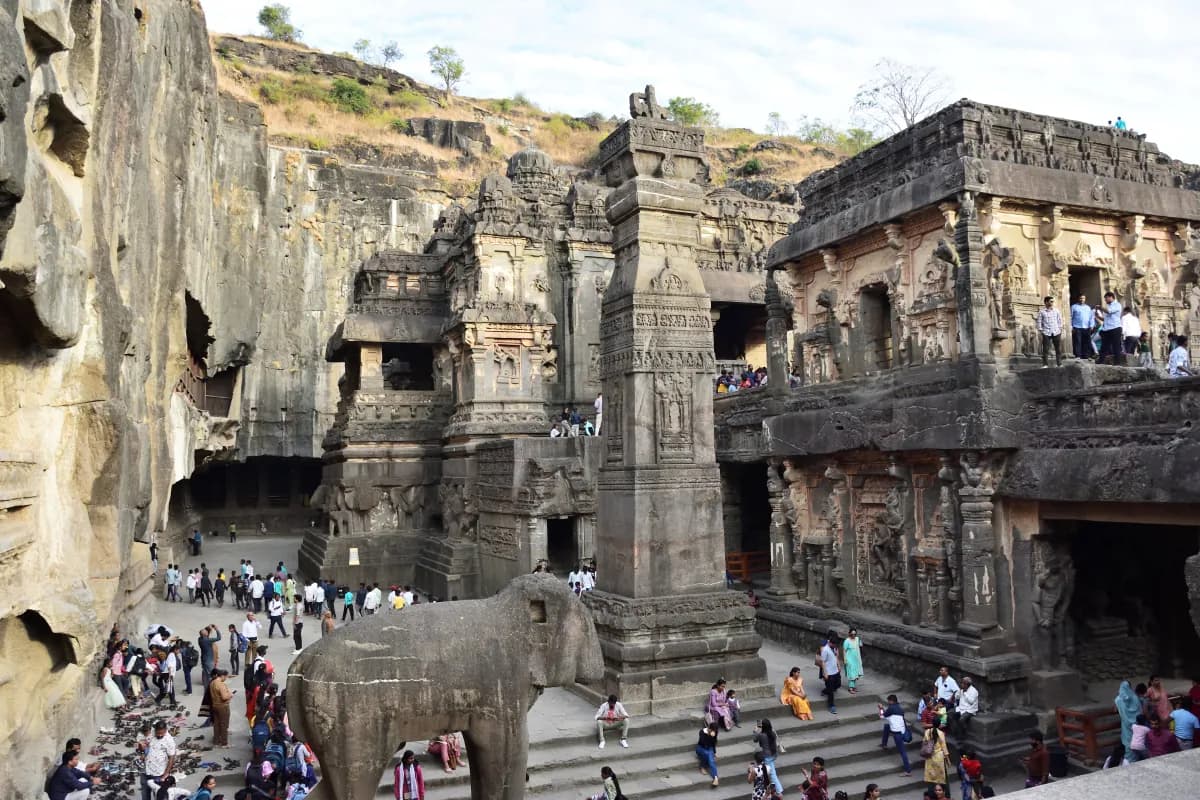
The sheer audacity of Kailasa Temple at Ellora leaves you breathless. Carved from a single basalt cliff, it stands as a testament to the Rashtrakuta dynasty's ambition and the unparalleled skill of their artisans. Unlike the other cave temples at Ellora, which are excavated inwards, Kailasa (Cave 16) was carved outwards, a monumental task that involved removing over 200,000 tonnes of rock. Standing in the courtyard, craning my neck to take in the three-story structure, I felt dwarfed by its immensity. The sheer scale is overwhelming, almost defying logic. My journey through the complex began with the entrance gateway, a gopuram teeming with intricate carvings of deities and mythical creatures. Passing through, I found myself in a large open courtyard, the main temple dominating the space. Two free-standing pillars, or dhvajastambhas, flank the entrance, adding to the grandeur. Elephants, seemingly frozen in mid-stride, stand guard at the base of the temple, their sculpted forms remarkably lifelike even after centuries of exposure to the elements. The temple itself is a marvel of Dravidian architecture. Multi-storied and adorned with elaborate carvings, it’s a visual feast. I spent hours exploring the different levels, each revealing new details. The main shrine, dedicated to Lord Shiva, houses a lingam, the symbol of divine energy. Surrounding the shrine are smaller shrines dedicated to other deities, each a miniature masterpiece in its own right. The carvings on the outer walls narrate stories from Hindu mythology, the Ramayana and Mahabharata vividly depicted in stone. I was particularly captivated by the depiction of Ravana attempting to lift Mount Kailasa, the abode of Shiva. The sheer dynamism of the scene, captured with such precision, is a testament to the sculptor's mastery. The details are astonishing – the expressions on the faces of the figures, the intricate folds of their garments, the delicate ornamentation – all carved with remarkable precision. One of the most striking features of Kailasa Temple is the intricate network of bridges, staircases, and passageways that connect the different levels. Climbing these ancient stairs, worn smooth by centuries of footsteps, I felt a palpable connection to the past. I imagined the priests and devotees who once thronged these spaces, their chants and prayers echoing through the courtyard. Beyond the main temple, the complex includes several smaller shrines and chambers. I explored the Lankeshvara cave, dedicated to Lord Shiva, and the Nandi Mandapa, which houses a colossal sculpture of Nandi, Shiva's sacred bull. The Nandi Mandapa, in particular, impressed me with its sheer size and the intricate carvings that adorned its walls and ceiling. As the sun began to set, casting long shadows across the courtyard, I took a final look at Kailasa Temple. The golden light illuminated the carvings, giving them an ethereal glow. It was a magical moment, a fitting end to my exploration of this extraordinary site. Having visited every UNESCO site in India, I can confidently say that Kailasa Temple stands apart. It's not just a temple; it's a symphony in stone, a testament to human ingenuity and devotion. It’s a site that must be experienced to be truly appreciated. The sheer scale, the intricate carvings, and the palpable sense of history combine to create an experience that is both awe-inspiring and deeply moving. It's a place that stays with you long after you've left, a reminder of the incredible achievements of India's rich cultural heritage.
Maluti Temples Maluti
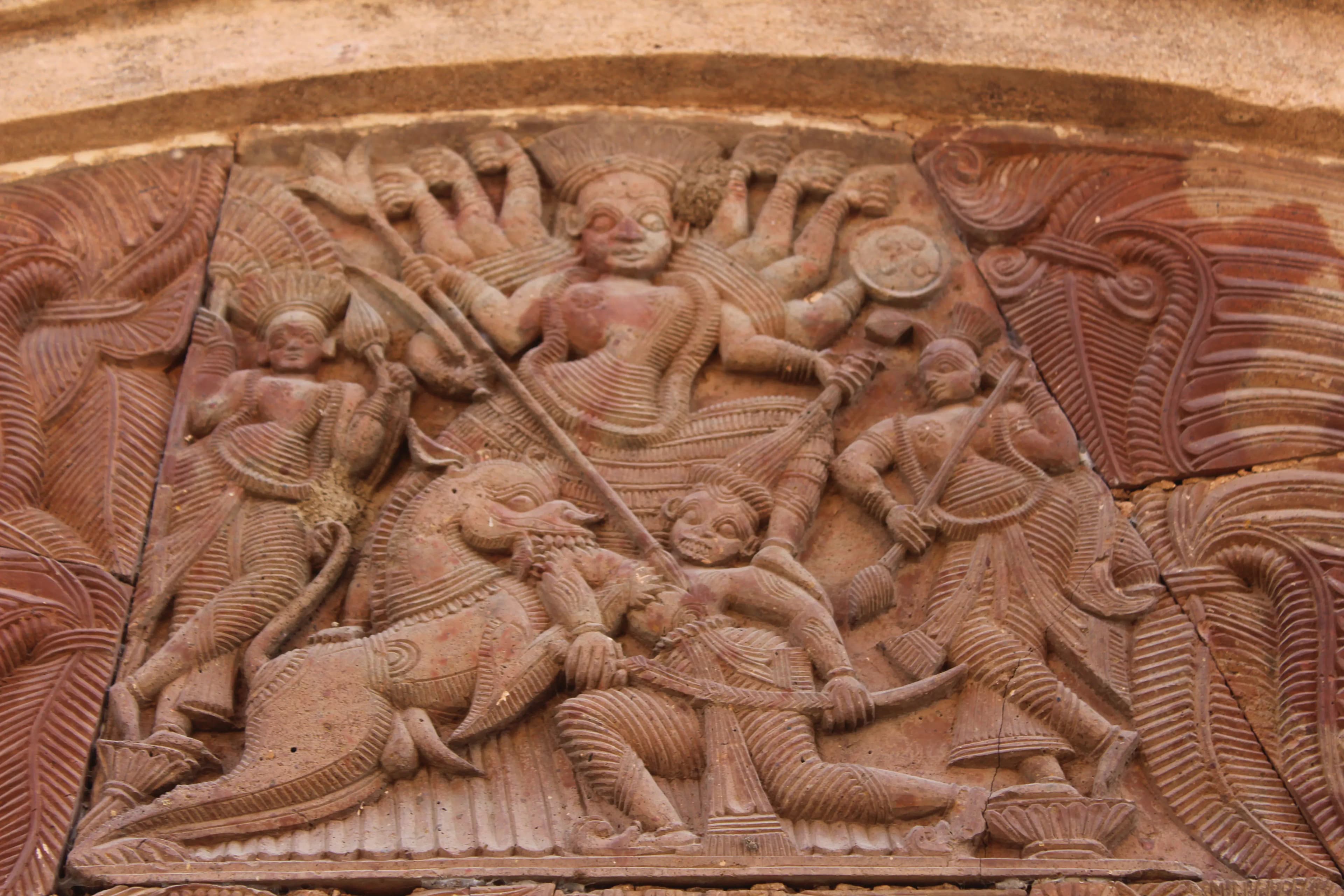
The terracotta temples of Maluti rise from the Jharkhand plains like an army of baked-earth sentinels, their intricate surfaces a stark contrast to the verdant rice paddies surrounding them. Having explored the sandstone grandeur of Rajasthan's forts and palaces for years, I was eager to witness this unique cluster of 72 temples, a testament to a different architectural tradition and a different era. The journey from Dumka, the district headquarters, was a bumpy but scenic one, the red dirt roads winding through villages and past fields dotted with grazing cattle. The first glimpse of the Maluti temples is breathtaking. They stand in varying states of preservation, some soaring towards the sky, others reduced to crumbling mounds, yet all whispering stories of a bygone era. The majority of the temples are dedicated to Lord Shiva, evidenced by the prominent lingams housed within the sanctums. The characteristic rekha deul style, common in Odisha and parts of Bengal, is evident here, the curvilinear towers rising in tiered stages, culminating in a rounded amalaka at the top. However, what sets Maluti apart is the extensive use of terracotta. Unlike the stone carvings of Rajasthan, the intricate details here are molded in clay, fired to a rich, earthy hue. The panels depict scenes from the epics – the Ramayana and the Mahabharata – as well as scenes from daily life, offering a fascinating glimpse into the social and cultural fabric of the 16th-18th centuries, the period to which these temples are attributed. I spent hours tracing the narratives etched onto the terracotta panels, marveling at the expressiveness of the figures, the dynamism of the battle scenes, and the delicate ornamentation of the floral motifs. The craftsmanship is simply astonishing. The artisans who created these masterpieces worked with incredible precision, molding intricate details onto relatively small terracotta plaques. The panels are fitted together seamlessly, creating a continuous narrative that wraps around the temple walls. The effect is mesmerizing, like a giant, terracotta tapestry narrating ancient tales. The condition of the temples, however, is a cause for concern. While some have been restored by the Archaeological Survey of India, many are in a state of disrepair. Erosion, neglect, and the ravages of time have taken their toll. Several temples have collapsed entirely, leaving behind only heaps of terracotta rubble. It's a poignant reminder of the fragility of our heritage and the urgent need for conservation efforts. As I walked through the complex, I couldn't help but draw parallels between the architectural traditions of Rajasthan and Jharkhand. While the materials and styles differ drastically, the underlying devotion and artistic skill are strikingly similar. The intricate jali work of Rajasthan's palaces finds an echo in the delicate latticework of the terracotta panels here. The imposing gateways of Rajasthan's forts are mirrored in the towering gateways of some of the larger temples at Maluti. The experience of visiting Maluti was both awe-inspiring and melancholic. Awe at the sheer scale and artistry of the terracotta temples, and melancholy at the state of neglect that some of them have fallen into. It's a site that deserves greater attention, both from tourists and from conservationists. It's a testament to the rich cultural heritage of India, a heritage that we must strive to protect and preserve for generations to come. My journey through the terracotta temples of Maluti was not just a visit to a historical site; it was a journey through time, a glimpse into the artistic brilliance of a bygone era.
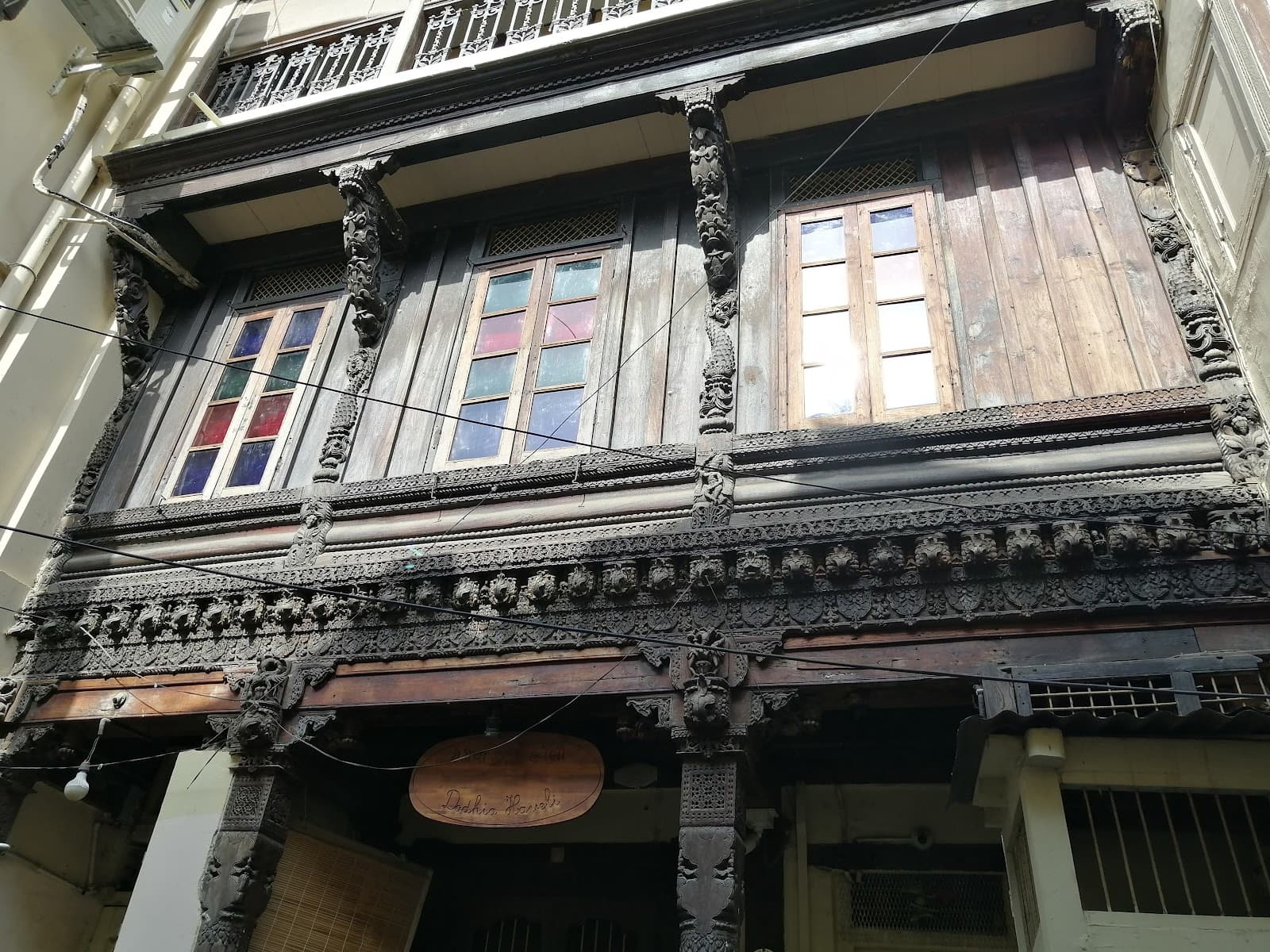
Doshiwada Ni Haveli Ahmedabad
The intricately carved wooden facade of Doshiwada Ni Haveli, nestled within the dense urban fabric of Ahmedabad’s old city, drew me in like a moth to a flame. Having spent years immersed in the stone-carved grandeur of South Indian temples, I was eager to experience the unique architectural language of this Gujarati haveli. The sheer scale of the wooden artistry was immediately striking. Unlike the imposing stone gopurams of the south, Doshiwada’s charm lay in its intimate details, a delicate tapestry woven in wood. Stepping through the imposing carved doorway, I was transported to another era. The pol, or traditional neighborhood, felt worlds away from the bustling city outside. The haveli’s courtyard, a central organizing principle, was bathed in soft, filtered light. This open-to-sky space, a feature I found reminiscent of the temple prakarams of the south, served as the heart of the house, a place for social gatherings and daily life. The surrounding balconies, supported by ornate brackets and pillars, offered glimpses into the private lives of the families who once resided here. The woodwork was breathtaking. Every surface, from the massive supporting beams to the delicate jharokhas (overhanging enclosed balconies), was adorned with intricate carvings. Unlike the narrative reliefs found in South Indian temples, the carvings here were predominantly floral and geometric, showcasing a different aesthetic sensibility. Peacocks, elephants, and other auspicious motifs were interspersed within the patterns, adding a touch of whimsy and symbolism. I noticed the recurring use of the “tree of life” motif, a symbol of prosperity and continuity, echoing the reverence for nature found in many Indian architectural traditions. The play of light and shadow within the haveli was mesmerizing. The carved wooden screens, or jalis, filtered the harsh Gujarat sun, casting dappled patterns on the polished floors. These jalis, while aesthetically pleasing, also served a practical purpose, allowing for ventilation while maintaining privacy – a clever architectural solution to the region’s hot climate. I was reminded of the pierced stone screens found in some South Indian temples, which served a similar function. As I ascended the narrow wooden staircases, the stories of the haveli unfolded. The upper floors, once the private domain of the family, revealed intimate details of their lives. The small rooms, interconnected by narrow passages, spoke of a close-knit community. The remnants of painted murals on the walls, though faded with time, hinted at the vibrant colors that once adorned these spaces. I was particularly fascinated by the hidden niches and secret compartments built into the walls, perhaps used for storing valuables or important documents. Doshiwada Ni Haveli, though different in material and style from the temples I was accustomed to, resonated with the same spirit of craftsmanship and attention to detail. The use of locally sourced wood, the intricate joinery techniques, and the adaptation of the design to the local climate all spoke of a deep understanding of the environment and a commitment to sustainable building practices. The haveli wasn't just a building; it was a living testament to the rich cultural heritage of Gujarat. It was a reminder that architectural beauty can be found not just in monumental structures, but also in the intimate spaces of everyday life. Leaving the cool confines of the haveli and stepping back into the bustling streets of Ahmedabad, I carried with me a newfound appreciation for the diversity and richness of Indian architecture.
Quick Links
Plan Your Heritage Journey
Get personalized recommendations and detailed visitor guides