Has Inheritage Foundation supported you today?
Your contribution helps preserve India's ancient temples, languages, and cultural heritage. Every rupee makes a difference.
Secure payment • Instant 80G certificate
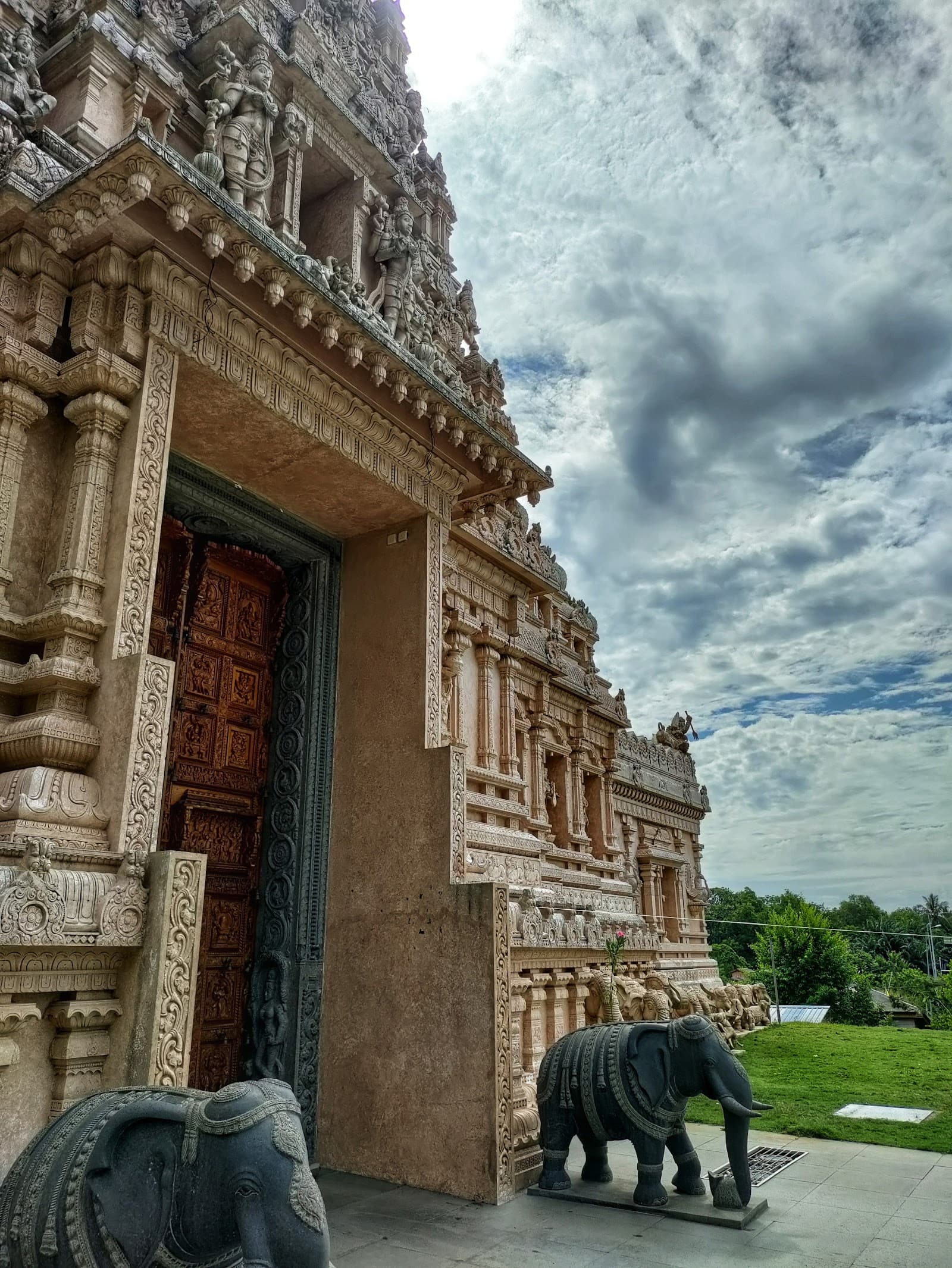
Sri Shakti Devasthanam Bukit Rotan Selangor
Sri Shakti Devasthanam is Malaysia’s only temple inspired by the ancient concept of Paadal Petra Sthalams, inaugurated in 2015 after a decade-long project that sourced sculptors, craftsmen, and ritualists from Tamil Nadu to create a 48,000-square-foot granite complex with a 27.5-metre rajagopuram, five-tiered vimanas, 96 lion pillars, and a circular circumambulatory corridor depicting 51 forms of Shakti in high relief ([1][2]). Every surface is hand-carved—sthapathis spent seven years chiselling over 15,000 sculptures, including celestial dancers, guardians, and mythic narratives of Chandi Parameshwari. The temple operates 6:00 AM-9:30 PM with five kala pujas, weekly Chandi homa, monthly Navavarana puja, and continuous annadhanam. During Navaratri, the temple stages alankaram representing nine manifestations of Devi using floral, textile, and jewel ensembles curated by artisans from Kanchipuram; attendance swells to 80,000, supported by RFID headcounts, rain shelters, medical bays, logistics warehouses, and sustainability stations. Facilities include the Shakti Peetam hall (for meditation and yoga), language classrooms, heritage gallery, vegetarian café, library housing Sri Vidya manuscripts, rain gardens, and a volunteer operations centre coordinating humanitarian outreach across Selangor ([1][3]).
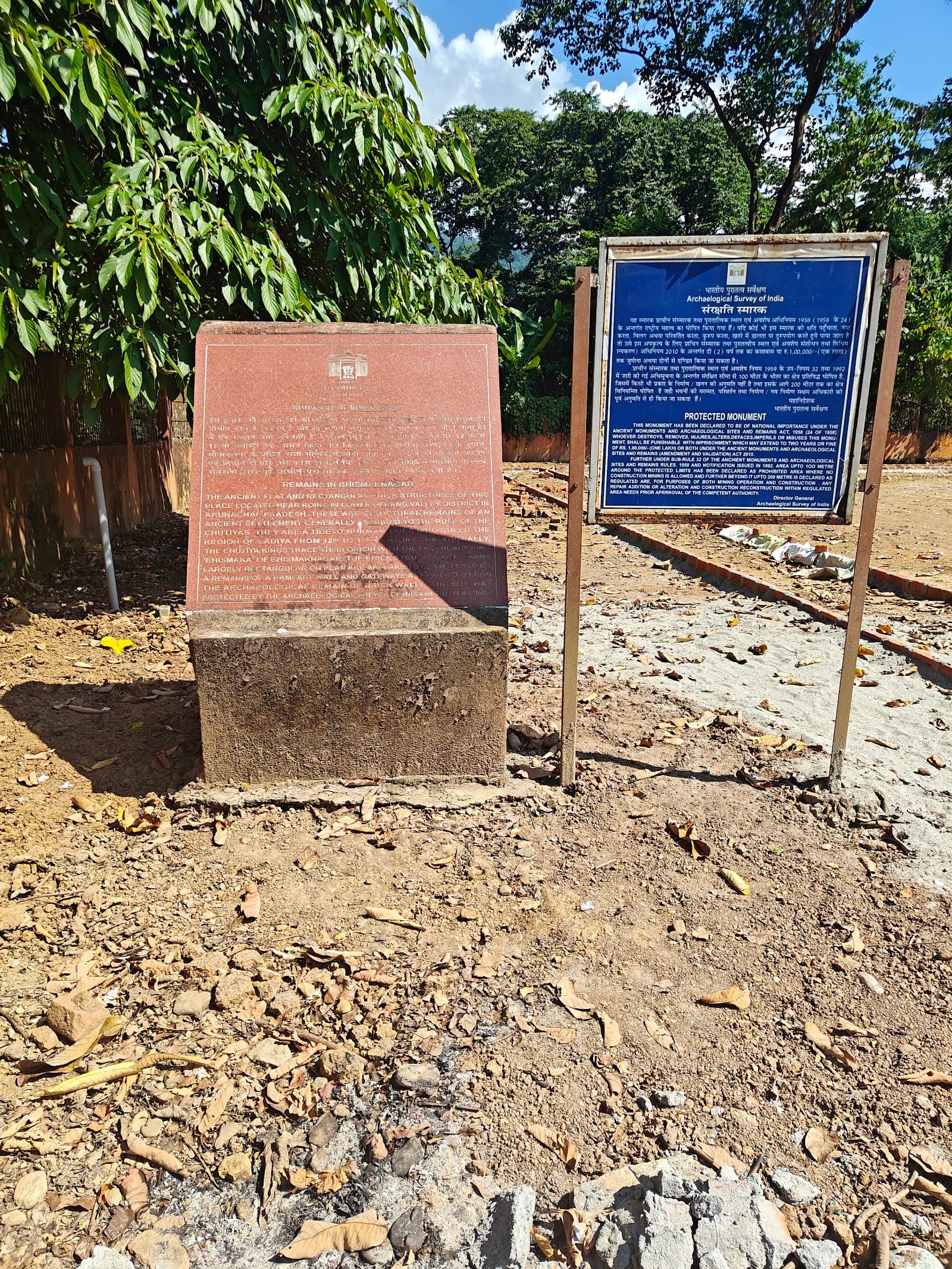
Bhismaknagar Fort Roing
Fired brick and mud brick construction techniques define Bhismaknagar Fort, erected around 1100 CE by the Chutia kingdom in Arunachal Pradesh ([1][2]). As an archaeological site in Khatan, Lower Dibang Valley, Roing, it represents a significant example of Tai Ahom architectural influence ([3]). Archaeological excavations have uncovered a sophisticated, sprawling complex, revealing the architectural prowess of this medieval kingdom ([4]). The fort's rectangular layout features ramparts and gateways, constructed primarily from brick, showcasing the ingenuity of the builders ([5]). Intricate carvings adorning the walls display geometric and floral motifs, reflecting the cultural richness of the Chutia kingdom ([2]). Unlike typical stone fortifications, Bhismaknagar utilized locally abundant clay, crafting large bricks without mortar ([1][5]). Stone platforms and foundations demonstrate a planned construction, hinting at residential and administrative functions ([3][4]). The use of burnt brick, stone, timber, and bamboo highlights the resourcefulness of the builders ([1][2][3]). During the Ahom Period, temple architecture, though not fully evident in Bhismaknagar's ruins, likely influenced the fort's design ([5]). The architectural style incorporates elements of medieval design, with a focus on functionality and defense ([3][4]). Vastu Shastra principles, the ancient Indian science of architecture, may have guided the layout and orientation of the fort, although specific textual references are not available ([5]). Bhismaknagar offers a glimpse into a forgotten era, a testament to the resilience and artistry of its creators ([1]). Bhismaknagar remains a significant archaeological site, linking us to India's diverse heritage ([2][3]). Further research and preservation efforts are crucial to understanding the full scope of its historical and architectural importance ([1][4]). The site stands as a reminder of the Chutia kingdom's legacy and their contribution to the region's cultural landscape ([2][5]).
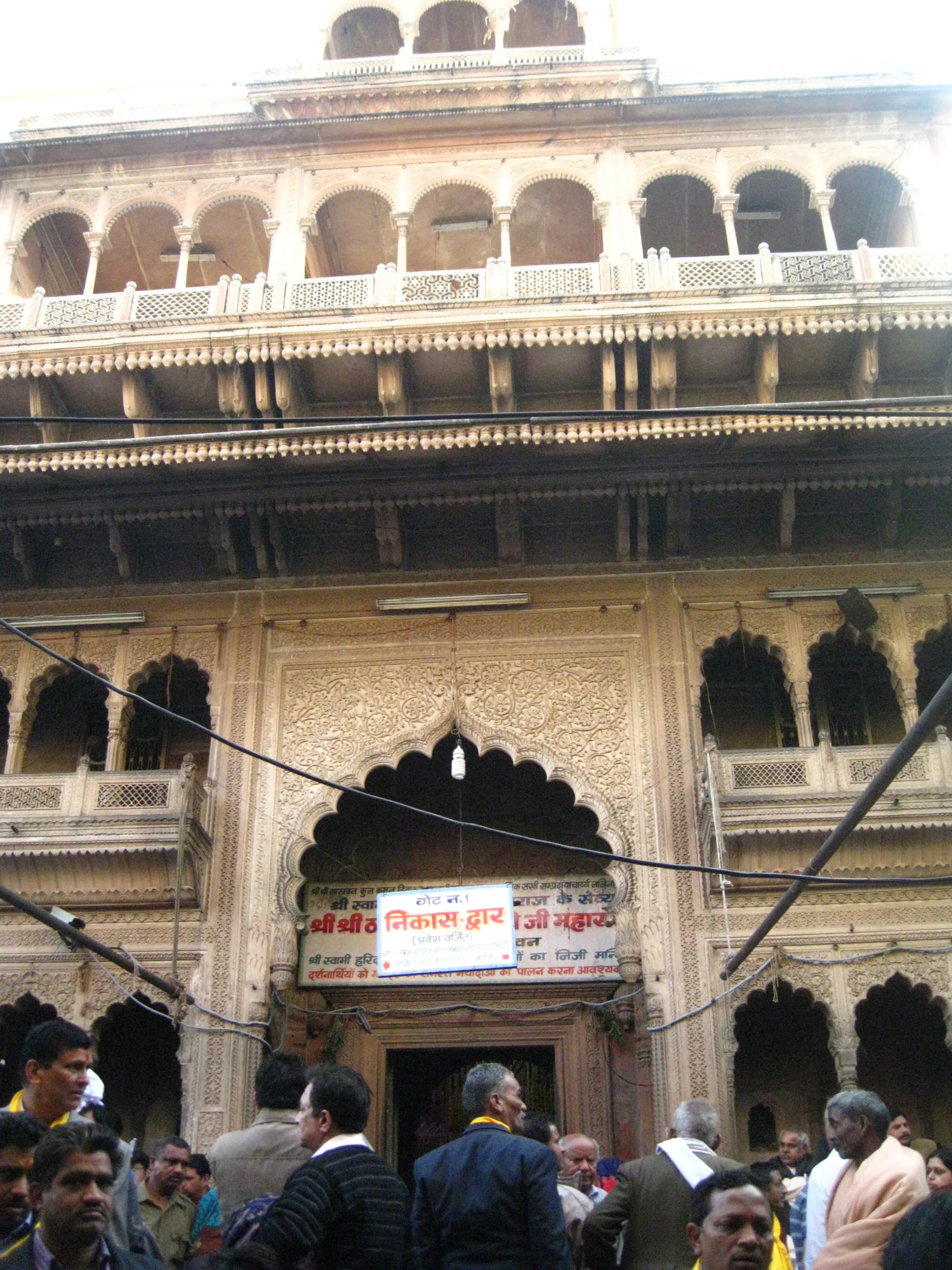
Banke Bihari Temple Vrindavan
The Banke Bihari Temple, situated in Vrindavan, Mathura district, Uttar Pradesh, stands as a profound testament to India's millennia-spanning cultural heritage and its continuous tradition of devotion to Lord Krishna [1] [2]. This revered Hindu temple is dedicated to Banke Bihari, an iconic representation believed to embody the combined divine forms of Radha and Krishna [1] [2]. The central idol, a captivating black image, is notably depicted in the Tribhanga (three-bend) posture, a classical stance in Indian iconography that signifies grace and divine playfulness [1] [2]. The temple's architecture predominantly reflects the indigenous Rajasthani style, a tradition deeply rooted in India's historical architectural practices, characterized by intricate craftsmanship and robust construction [1] [5]. While the specific dimensions of the entire complex are not universally published, the structural elements feature wide entrances adorned with beautifully carved arches, a hallmark of traditional Indian temple design [1]. The walls throughout the temple interior are meticulously covered with elaborate carvings and vibrant paintings, which vividly narrate episodes from Lord Krishna's life, serving both as decorative elements and didactic visual scriptures [1]. The roof, constructed in a traditional manner, exhibits detailed decorations that further enhance the aesthetic and spiritual ambiance of the sacred space [1]. The temple's interior is celebrated for its exquisite stonework and stunning designs, encompassing a large prayer hall where devotees gather for bhajans and aarti, fostering a collective spiritual experience [1]. The spatial arrangement includes a peaceful courtyard, offering a tranquil environment for contemplation amidst the vibrant devotional activities [1]. Uniquely, the temple does not feature bells within its premises, nor does it perform the Mangala Aarti (early morning ritual) daily, except on Krishna Janmashtami, out of a belief to avoid disturbing the deity, who is revered as a child [2] [5]. Furthermore, the darshan (viewing) of the idol is intentionally interrupted every five minutes by drawing curtains, a practice stemming from the belief that an uninterrupted gaze might cause Banke Bihari to accompany a devotee home, leaving the temple empty [2] [5]. This distinctive ritual underscores the intimate and personal relationship devotees share with the deity. The temple is thronged by thousands of visitors daily, maintaining its status as an active center of worship and cultural practice [5]. Conservation efforts are ongoing to preserve this national heritage site, ensuring its structural integrity and the longevity of its artistic and spiritual elements [4]. The site remains fully operational, accessible to devotees and visitors, and continues to uphold its ancient traditions and maintenance protocols, embodying the enduring legacy of Indian civilization [1] [4].
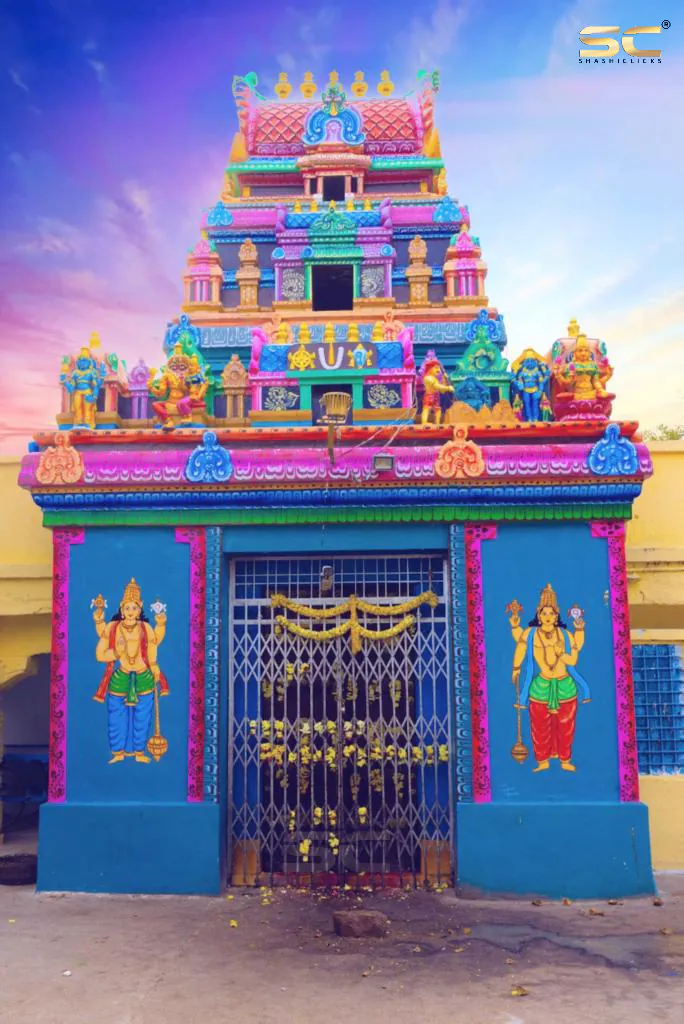
Chilkur Balaji Temple Hyderabad
Nestled in the Ranga Reddy district near Hyderabad, the Chilkur Balaji Temple, also known as "Visa Balaji," showcases a distinctive Dravidian architectural style dating back to the 14th century ([1][2]). During the Vijayanagara period, the temple was erected using granite, mortar, concrete, wood, and tiles ([3]). Though specific textual references are currently undocumented, Vastu Shastra principles, the ancient Indian science of architecture, likely influenced its design. In contrast to more elaborate gopurams (temple towers) found elsewhere, the temple's exterior is relatively modest ([4]). Within the Garbhagriha (Sanctum), devotees worship Lord Venkateswara, seeking blessings, particularly for visa aspirations ([5]). Intricate carvings embellish the walls, adding to the sacred ambiance, though they are less elaborate compared to other Dravidian temples. Furthermore, the patronage of Kakatiya Dynasty feudatories enriches its historical significance ([1]). The temple's unique ritual of pradakshinas (circumambulations) underscores its distinct traditions. Stone platforms and foundations exemplify the enduring construction techniques prevalent during the Vijayanagara era. The temple's simplicity and lack of commercialism distinguish it, fostering a more direct spiritual connection. Furthermore, the modest appearance and the fervent prayers of devotees contribute to a powerful spiritual atmosphere, reflecting the region's rich cultural heritage ([3][4]). The pyramidal towers are a testament to the Dravidian style, while the ornate carvings subtly narrate tales from Hindu scriptures ([6]). The use of locally sourced granite highlights the resourcefulness of the Vijayanagara artisans ([7]). The temple stands as a beacon of faith, drawing visitors with its unpretentious charm and deep-rooted traditions ([8]).
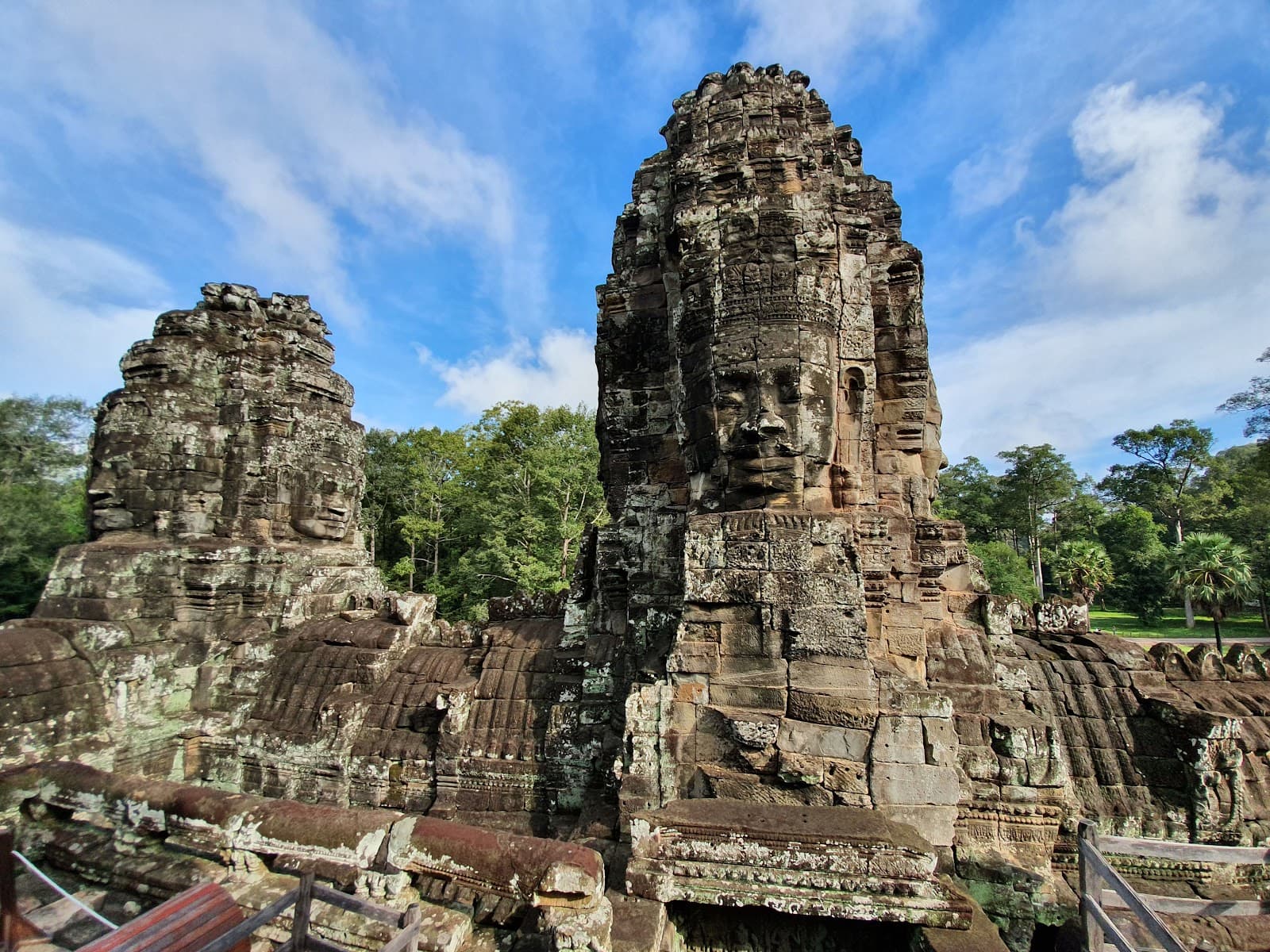
Angkor Thom Bayon Siem Reap Cambodia
Nestled within Angkor Thom, the ancient Khmer capital, stands Bayon Temple, a testament to the architectural and religious synthesis achieved during the reign of King Jayavarman VII around 1250 CE ([1][2]). Conceived as a Mahayana Buddhist state temple, Bayon integrates elements of Indian Buddhist and Hindu iconography with distinctive Khmer architectural designs ([1]). The temple's construction utilized materials such as sandstone, laterite, lime mortar, metal, and wood ([2]). Intricate carvings adorning the temple walls narrate scenes from Khmer history and episodes from Indian mythology, most notably the Samudra Manthan (Churning of the Ocean of Milk), illustrating the transmission of Indian cultural narratives to Southeast Asia ([1][2]). These elaborate bas-reliefs provide invaluable insights into the religious and social life of the Khmer Empire ([3]). Originally, the Bayon featured 54 towers; 37 remain, each sculpted with colossal stone faces ([1]). Scholars propose these 216 faces represent Avalokiteshvara, the bodhisattva of compassion, or a syncretic representation of Buddha and the king himself ([2]). During its construction, Vastu Shastra principles, the ancient Indian science of architecture, likely influenced the temple's layout ([4]). Its three-tiered structure may reflect the three worlds of Indian cosmology ([1]). Vedic traditions also influenced the temple's spatial arrangement and iconographic program ([4][5]). Shaiva (Shiva-worshipping) motifs are incorporated, indicative of the religious syncretism prevalent in Khmer society ([1][2]). Granite and sandstone blocks, meticulously carved, form the structural components of the temple, showcasing the advanced engineering skills of Khmer artisans ([3]). Today, as a UNESCO World Heritage Site, Angkor Thom and Bayon exemplify the profound influence of Indian culture on Southeast Asian architecture and art ([3][4][5]). Ongoing research and conservation efforts ensure the preservation of this invaluable cultural heritage for future generations ([5]).
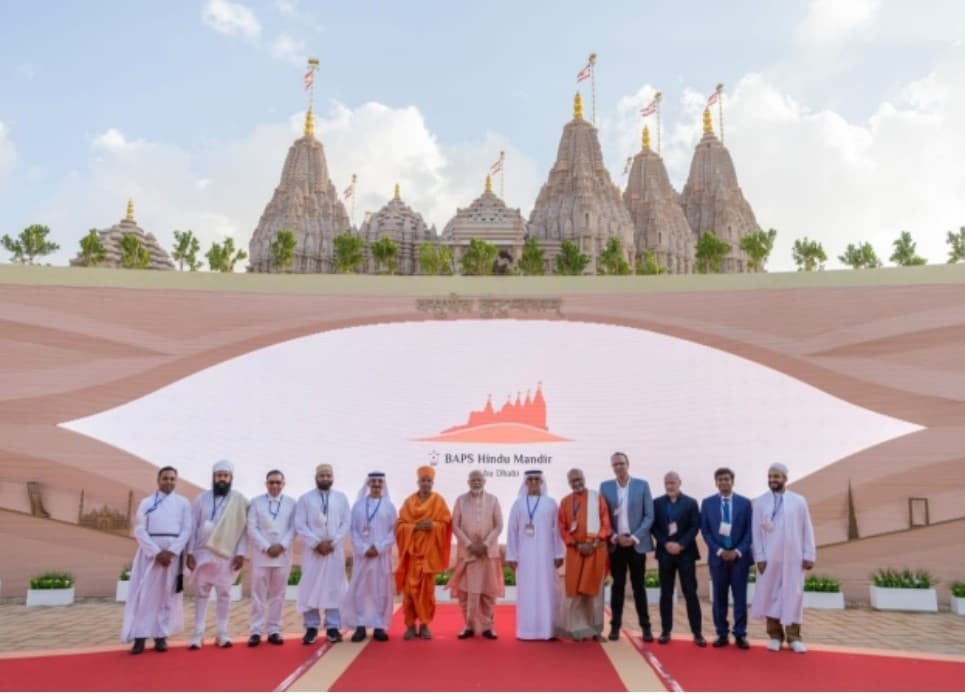
Maha Lakshmi Temple Abu Dhabi (BAPS Campus)
The Maha Lakshmi Temple forms the southern devotional wing of the BAPS Hindu Mandir campus in Abu Dhabi, providing a dedicated sanctum for Sri Mahalaxmi-Narayana with a Vaikuntha-inspired sinhasan crafted from Italian marble, gold-plated lotuses, and fibre-optic constellations that mirror Abu Dhabi's desert night sky ([1][2]). Consecrated alongside the main mandir in February 2024, the Lakshmi sanctum offers a quieter devotional experience focused on prosperity, education, and wellbeing—hosting specialised Lakshmi Pujas for entrepreneurs, students, and families moving to the Gulf. The hall seats 600 devotees, features carved marble columns, and integrates digital translation kiosks offering arti lyrics in Hindi, English, Malayalam, and Tagalog. Daily schedule aligns with the mandir's 6:00 AM-9:00 PM operations, but the Lakshmi wing hosts additional Friday evening Ashtalakshmi satsang, Saturday bridal blessings, and quarterly finance literacy workshops led by community volunteers. Donors can participate in Navagraha homa, Kuber puja, or annadhanam out of the adjoining seva kitchen. A micro-museum displays stories of Gulf entrepreneurs whose philanthropy supported the mandir and documents historic trade links between Gujarat, the Malabar coast, and the Trucial States.
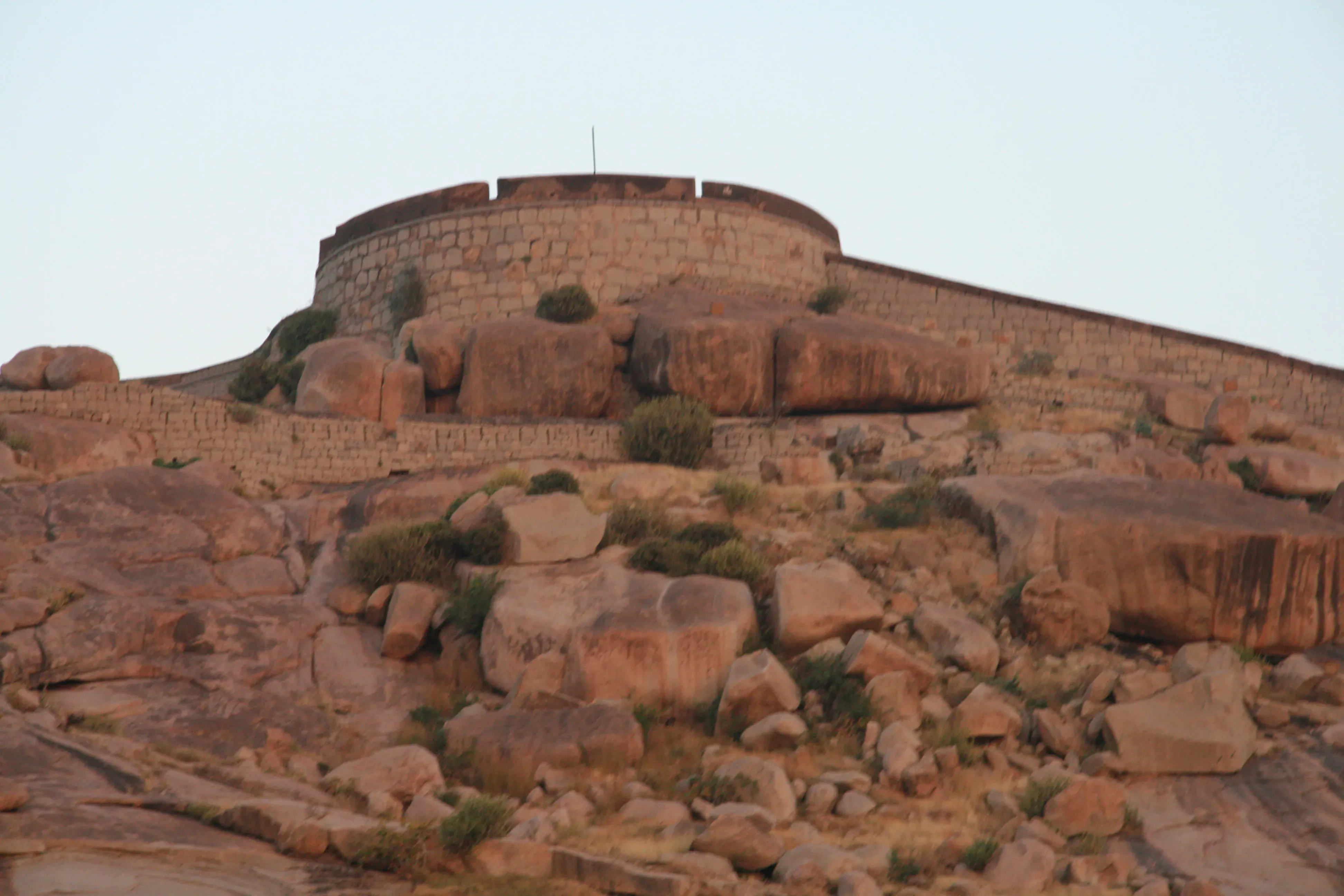
Bellary Fort Bellary
Granite and sandstone blocks, meticulously carved, form the imposing structure of Bellary Fort, rising dramatically from the Karnataka plains ([1]). Established around 1565 CE by Hanumappa Nayaka during the Vijayanagara period, the fort showcases a blend of Badami Chalukya and military architectural styles ([2][3]). Vastu Shastra principles, the ancient Indian science of architecture, likely influenced the fort's strategic layout and defensive design, though specific textual references are not available ([4]). This hilltop fortification embodies the Vijayanagara empire's strategic and artistic sensibilities. Sophisticated drainage systems ensure the preservation of the fort's structural integrity, demonstrating ancient engineering prowess ([5]). Intricate carvings adorning the walls, though weathered by time, hint at the fort's past grandeur ([6]). During the Vijayanagara Period, temple architecture and fort design shared common elements, emphasizing both aesthetic beauty and defensive strength ([7]). The use of locally available granite and stone highlights the region's traditional building practices. Stone platforms and foundations demonstrate the enduring legacy of the fort, a silent witness to centuries of Deccan history ([8]). Exploring Bellary Fort offers a captivating journey through layers of history, revealing the architectural traditions of different dynasties ([9]). The lower fort, with its roughly hewn granite walls, contrasts sharply with the upper fort, built by Hyder Ali and Tipu Sultan, displaying planned, geometric precision ([10]). The mosque within the upper fort blends Islamic and Deccan styles, adding another layer to the fort's rich heritage ([11]). This layering reflects the diverse cultural influences shaping the Deccan region over time. Within the fort complex, remnants of older structures suggest continuous occupation and adaptation over centuries ([12]). The fort's commanding position atop the hill provided a strategic advantage, allowing rulers to control the surrounding landscape. The design elements, while not directly linked to a specific verse in texts like the *Manasara Shilpa Shastra*, reflect the broader principles of site selection and fortification described in such treatises ([13]). Bellary Fort stands as a powerful reminder of India's rich architectural and military heritage ([14]).
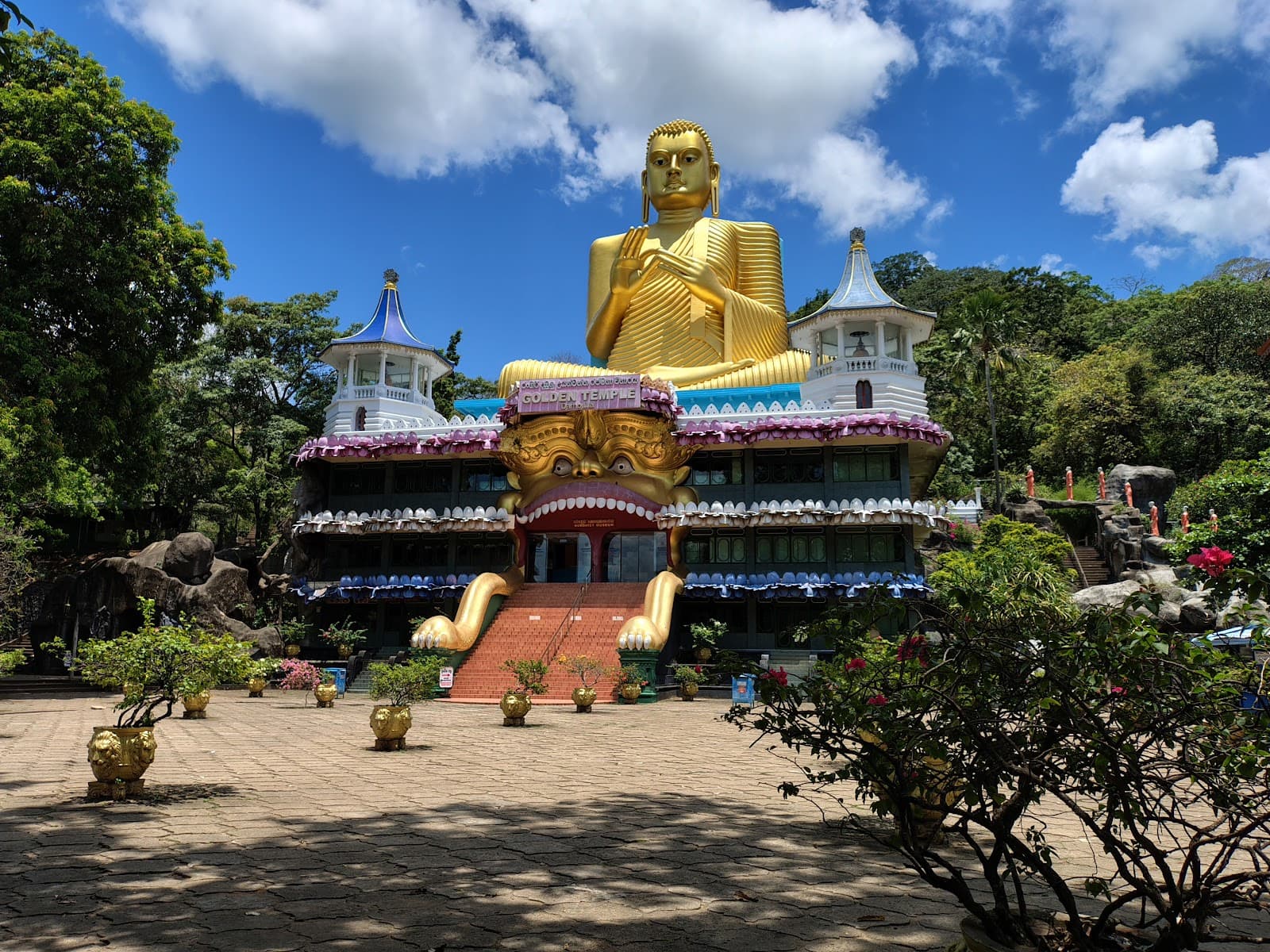
Dambulla Cave Temple Matale Sri Lanka
Nestled within the heart of Sri Lanka, the Dambulla Cave Temple, also known as the Golden Temple of Dambulla, is an ancient marvel carved into a massive granite rock ([1][2]). Originating in the 1st century BCE, during the reign of King Valagamba, this complex stands 160 meters above the surrounding plains, representing a significant testament to the enduring legacy of Buddhist art and architecture in South Asia ([1]). As the largest and best-preserved cave temple complex in Sri Lanka, it houses over 150 Buddha statues and extensive murals ([1][2]). Intricate carvings adorning the walls of the five interconnected caves showcase a profound transmission of Indian Buddhist religious and artistic traditions to Sri Lanka ([1][2]). These caves, continuously used as places of Buddhist worship for over two millennia, feature Buddha statues executed in various mudras (hand gestures) and postures, along with murals covering over 2,100 square meters ([1]). The artistic sophistication and iconographic accuracy of these statues demonstrate the deep understanding of Indian Buddhist iconography possessed by Sri Lankan artists ([1][2]). During the ancient period, the murals, painted in vibrant colors, depict scenes from the Buddha's life, Jataka tales, and various Buddhist deities, illustrating the transmission of Indian Buddhist narrative traditions ([1][2]). Archaeological evidence indicates that the temple served as a major center of Buddhist worship and learning for over two millennia, attracting monks, pilgrims, and patrons from across Sri Lanka and South India ([1]). Inscriptions in Sinhala, Tamil, and Sanskrit offer crucial evidence of the site's role in transmitting Indian Buddhist texts and practices ([1][2]). The temple's patronage by kings like Valagamba and Nissanka Malla further solidified its importance ([1]). Today, Dambulla Cave Temple, a UNESCO World Heritage Site, remains a vital pilgrimage site, demonstrating the profound impact of Indian civilization on Sri Lankan religious and artistic traditions ([1][2]). Ongoing research and conservation efforts ensure the preservation of this extraordinary cultural treasure ([1]).
Jayanti Devi Temple Ropar
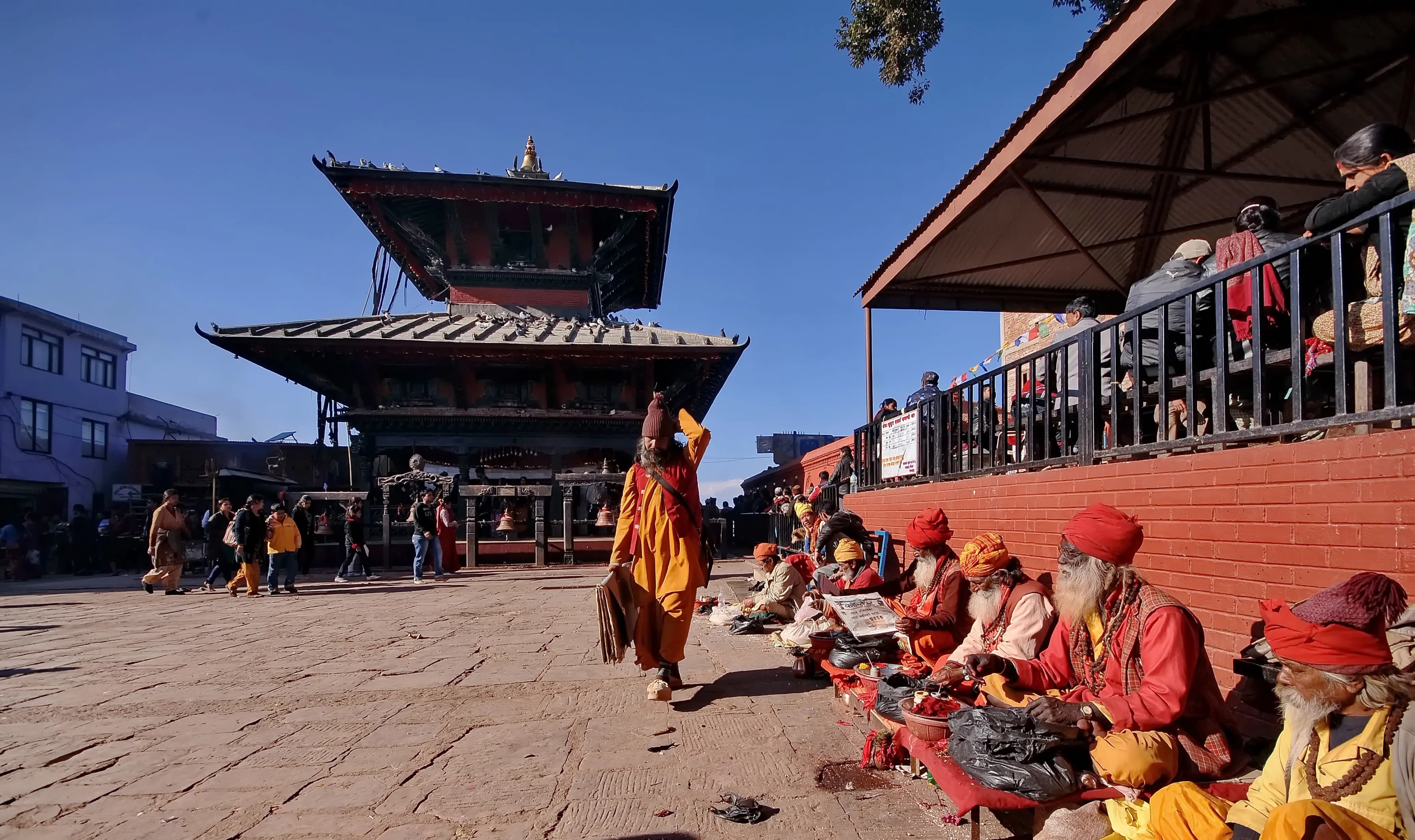
The crisp Punjab air, scented with woodsmoke and the faint sweetness of jaggery, carried the rhythmic clang of temple bells as I approached the Jayanti Devi Temple. Perched atop a hill overlooking the Sutlej River near Ropar, this wasn't the typical cave temple I was accustomed to back home in Maharashtra. Instead, it presented a fascinating blend of ancient and modern architecture, a testament to layers of devotion built over centuries. The climb itself was an experience. A winding road led me through a vibrant tapestry of green fields, offering glimpses of the river below. As I ascended, the temple complex gradually revealed itself, a cluster of structures clinging to the hillside, crowned by the main shrine. The initial impression was one of vibrant colour – saffron, red, and gold dominating the palette, a stark contrast to the muted tones of the Deccan caves I’m so familiar with. The main temple dedicated to Jayanti Devi, the goddess of victory, is a relatively modern structure, its gleaming white marble exterior intricately carved with depictions of various deities. However, the real historical weight lies within the smaller, older shrines nestled around it. These, built from rough-hewn stone and brick, spoke of a history far older than the marble edifice. One particular shrine, tucked away in a corner, captivated me. Its dark, weathered stones bore faded remnants of ancient frescoes, hinting at a rich artistic heritage. I peered inside, the air thick with the scent of incense and years of accumulated prayers. Though the frescoes were damaged, I could discern the outlines of divine figures, their forms imbued with a quiet power. The temple complex is a labyrinth of courtyards, interconnected by narrow passageways and staircases. Each turn revealed a new shrine, a new deity, a new story whispered by the stones. Unlike the structured layouts of many Maharashtrian temples, this felt organic, almost haphazard, as if each shrine had sprung up independently, driven by the fervent devotion of its builders. This unplanned growth added to the temple's charm, creating a sense of discovery and wonder. I noticed a distinct architectural influence from the surrounding region. The sloping roofs, reminiscent of Himalayan architecture, were a departure from the flat or domed roofs common in Maharashtra. The use of local materials like sandstone and brick also contributed to this regional flavour. Intriguingly, I also observed elements that echoed Mughal architecture, particularly in the decorative arches and intricate jali work adorning some of the older structures. This fusion of styles spoke volumes about the region's history, a confluence of cultures and influences. The atmosphere within the temple complex was electric. Devotees thronged the courtyards, their prayers mingling with the rhythmic chanting of priests. The air was thick with the scent of incense, flowers, and the ghee used in the countless lamps flickering before the deities. I watched as families offered prayers, their faces etched with devotion. The palpable faith resonated deeply, transcending language and cultural barriers. From the highest point of the complex, the view was breathtaking. The Sutlej River snaked through the plains below, a silver ribbon against the verdant landscape. The surrounding hills, dotted with villages, stretched out as far as the eye could see. It was a panorama that spoke of peace and tranquility, a fitting backdrop for a place of worship. My visit to the Jayanti Devi Temple was a departure from my usual explorations of Maharashtra’s caves. It was a journey into a different architectural landscape, a different cultural context, and a different expression of faith. Yet, the underlying essence remained the same – the human need to connect with something larger than oneself, to find solace and meaning in the sacred. And that, I realized, is a universal language, spoken as fluently in the vibrant courtyards of a hillside temple in Punjab as it is in the hushed chambers of a cave temple in Maharashtra.
Sri Sundararaja Perumal Temple Klang Selangor
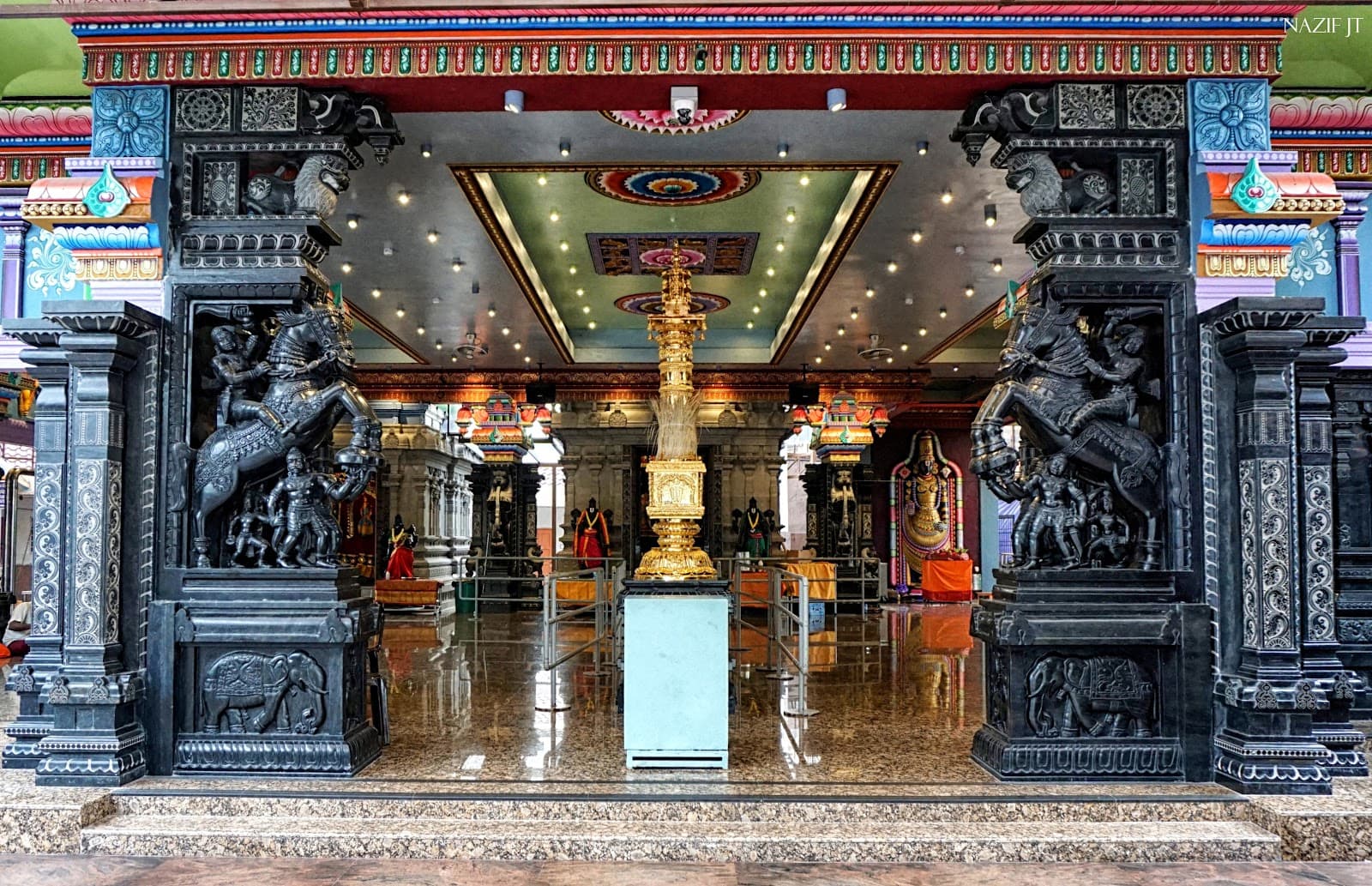
The Sri Sundararaja Perumal Temple, located in Klang, Selangor, Malaysia, stands as a profound testament to India's millennia-spanning cultural heritage and the enduring continuity of Indian civilization across geographical boundaries [1] [3]. Dedicated to Lord Vishnu in his form as Perumal, this sacred site serves as a vital center for Vaishnavite worship, often revered as the 'Thirupathi of South East Asia' [1] [2]. The temple exemplifies the indigenous Dravida architectural style, characterized by its intricate carvings and monumental structures, reflecting a continuous tradition of temple building that dates back thousands of years in the Indian subcontinent [1] . The entire structure is notably constructed from granite, a material chosen for its durability and majestic appearance, a hallmark of traditional South Indian temple construction techniques [1] [3]. The architectural ensemble is dominated by a towering gopuram, the entrance tower, which is richly adorned with a multitude of sculptures depicting Hindu deities, mythological narratives, and celestial beings [1] [3]. These detailed carvings are not merely decorative but serve as visual narratives of Hindu epics such as the Ramayana and Mahabharata, embodying the deep iconographic traditions of Indian art [5]. The main sanctum, known as the Perumal Sannathi, houses the principal deity, Lord Perumal, alongside his consort, Goddess Mahalakshmi [2] [3]. Surrounding this central complex are several other notable shrines, including those dedicated to Lord Shiva, Parvati, Ganesha, Murugan, Ayyappan, Lord Saneshwara (Saturn), and the Navagrahas (nine planets) [2] [3]. An additional Anjaneya Sannathi is situated adjacent to the central complex, with a Nagaraja Sannathi located at the corner outside the temple structure [2]. The spatial arrangement of these shrines within the temple complex follows traditional Agama Shastra principles, ensuring proper devotional flow and ritualistic practices [5]. The temple's current state reflects a significant reconstruction completed in 2015, which modernized facilities while meticulously preserving its traditional South Indian Dravidian architectural integrity [1] [2]. This reconstruction effort underscores a commitment to maintaining the site's heritage while accommodating its active role as a spiritual and cultural hub [1]. The temple is recognized as a National Heritage Site since 2012, acknowledging its profound cultural and historical significance [4]. It actively hosts daily rituals and ceremonies, attracting a continuous flow of devotees and visitors [1]. Major Hindu festivals such as Purataasi Month, Vaikunta Ekadasi, Panguni Uthiram, and Thiruvadirai are celebrated with grand ceremonies, music, and dance, drawing thousands and ensuring the vibrant continuity of Indian cultural practices [1] [5]. The temple is operationally ready, with established visiting hours and accessibility for all visitors, serving as a living monument to India's enduring spiritual and artistic legacy [1].
Shree Swaminarayan Mandir Cardiff
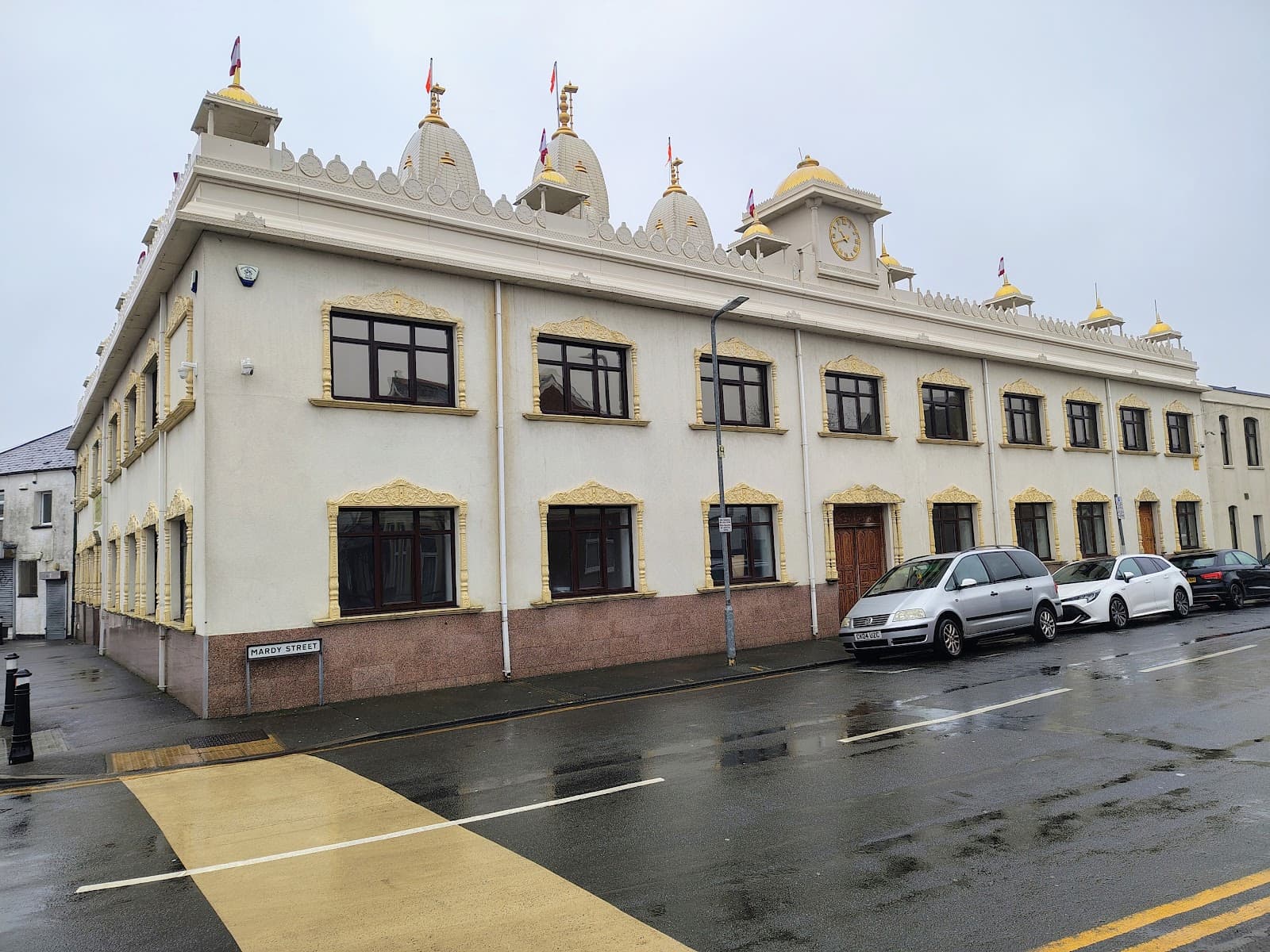
The Shree Swaminarayan Mandir Cardiff, located at 55 Merches Place in Grangetown, Cardiff, Wales, United Kingdom, stands as a vibrant testament to India's millennia-spanning cultural heritage, dedicated to Bhagwan Swaminarayan [1]. This sacred edifice embodies a continuous tradition of Indian civilization, manifesting indigenous architectural styles and cultural practices that reflect India's deep historical roots, even in its modern construction [4]. The mandir integrates elements of Swaminarayan architecture, Maru-Gurjara architecture, Haveli architecture, and Indo-Victorian influences, showcasing a sophisticated synthesis of ancient design principles with contemporary adaptation [3]. Swaminarayan temples, including the Cardiff Mandir, adhere to the Nagara style of temple architecture, a prominent tradition in North and West India, characterized by its curvilinear shikhara (spire) [4] [5]. This style is meticulously guided by Vastu Shastra, an ancient Indian discipline of sacred architecture that integrates principles of time, space, and cosmology to create spiritually conducive environments [4]. The construction eschews ferrous metals for structural reinforcement, relying instead on self-load-bearing masonry to ensure longevity and spiritual purity, a practice rooted in ancient texts that prescribe mandirs to last a thousand years [4]. The gold-topped shikaras, typical of North Indian temple architecture, crown the shrines (sinhashan) within the mandir, symbolizing mountain peaks and connecting the structure to the natural world revered by ancient Hindu seers [2] [4]. The Maru-Gurjara style, originating in Gujarat and Rajasthan between the 11th and 13th centuries CE, contributes to the mandir's intricate detailing, known for its opulent carvings and sculptural richness [5] . This style, a subset of the Nagara tradition, features elaborate ornamentation and a distinctive curvilinear tower design [5] . Haveli architecture, a traditional Indian mansion style dating back to the 1600s, influences the mandir's aesthetic with its characteristic detailed carvings and spatial arrangements, often incorporating courtyards and intricate wooden elements [3] . The fusion of these indigenous styles with Indo-Victorian elements demonstrates the adaptability and enduring legacy of Indian craftsmanship [3]. The mandir's interior features intricate carvings and sculptures that depict deities and mythological narratives, serving as visual representations of Hindu philosophy and iconography [4]. These decorative elements are not merely aesthetic but are imbued with symbolic meaning, guiding the worshipper's spiritual journey [4]. The Shree Swaminarayan Mandir Cardiff is recognized by Cardiff Council as a community anchor within Grangetown regeneration initiatives and holds the status of a Registered Place of Worship [provided in prompt]. It actively hosts a variety of religious and cultural programming, including festivals like Tulsi Vivah and Diwali, and community events, ensuring continuous engagement and accessibility for devotees and visitors [1]. The mandir maintains regular opening hours and conducts daily Aarti ceremonies, facilitating a steady flow of worshippers [1]. The site is operationally ready, upholding high standards of maintenance and compliance, reflecting the community's dedication to preserving and promoting its rich cultural and spiritual heritage [1].

Shantadurga Temple Kavlem
The humid Goan air, thick with the scent of incense and marigolds, clung to me as I ascended the sweeping laterite steps leading to the Shri Shantadurga Temple in Kavlem. Having spent years immersed in the sandstone grandeur of Rajasthan's forts and palaces, I was curious to see how this Goan temple, dedicated to the Goddess of Peace, would compare. The difference was immediate and striking – a shift from the arid, imposing structures of my home state to a serene, almost ethereal white edifice nestled amidst lush greenery. The temple complex, a sprawling expanse enclosed by high walls, felt like a world apart from the bustling activity just beyond its gates. A large, rectangular water tank, or *pushkarini*, lay before the main temple, its still surface reflecting the temple’s pristine facade. This element, so rare in Rajasthan’s desert landscape, immediately established a sense of tranquility. The temple itself, a harmonious blend of Indo-Portuguese architectural styles, stood as a testament to Goa's rich and layered history. The whitewashed walls, a stark contrast to the vibrant colours I’m accustomed to, exuded a sense of calm purity. The pyramidal roof, tiled in the distinctive terracotta style common in Goa, was crowned with a simple yet elegant golden *kalash*. Stepping inside the main prayer hall, or *sabhamandap*, I was struck by the relative simplicity of the interior. Unlike the ornately carved interiors of Rajasthan's temples, the focus here was on the deity. The silver palanquin of Shri Shantadurga, adorned with fresh flowers, held centre stage. The air was thick with the murmur of prayers and the rhythmic clang of bells, creating an atmosphere of quiet devotion. Intriguingly, the temple's pillars, while lacking the intricate carvings of Rajasthani structures, displayed a unique blend of styles. I noticed subtle European influences in the form of decorative motifs, a testament to the Portuguese presence in Goa. These details, though understated, spoke volumes about the cultural exchange that shaped this region. Moving beyond the main temple, I explored the surrounding complex. The smaller shrines dedicated to other deities, the sprawling gardens, and the old *deepstambha* (lamp tower) all added to the temple's serene atmosphere. The *deepstambha*, in particular, caught my attention. While Rajasthan boasts towering *deepstambhas* adorned with intricate sculptures, this one was more modest in size, yet equally evocative. Its simple, elegant design, illuminated by flickering oil lamps, created a captivating play of light and shadow. One aspect that truly fascinated me was the temple’s location. Unlike many Rajasthani temples perched atop hills or nestled within fortified cities, Shri Shantadurga Temple is situated on a plateau surrounded by verdant rice paddies. This setting, so different from the rugged landscapes I’m familiar with, contributed to the temple’s peaceful aura. The gentle rustling of palm trees and the distant calls of birds replaced the desert winds, creating a symphony of nature that enhanced the spiritual experience. As I descended the steps, leaving the temple complex behind, I couldn't help but reflect on the contrasts I had witnessed. The Shri Shantadurga Temple, with its serene white facade, tranquil setting, and subtle blend of architectural styles, offered a unique perspective on temple architecture and worship. It was a refreshing departure from the grandeur and opulence of Rajasthan's temples, a testament to the diversity and richness of India's cultural tapestry. The experience underscored the fact that spirituality can find expression in myriad forms, each beautiful and profound in its own way.
Quick Links
Plan Your Heritage Journey
Get personalized recommendations and detailed visitor guides