Has Inheritage Foundation supported you today?
Your contribution helps preserve India's ancient temples, languages, and cultural heritage. Every rupee makes a difference.
Secure payment • Instant 80G certificate

Sivadol Temple Sivasagar
The imposing Sivadol, bathed in the soft Assamese sun, rose before me like a terracotta giant. Its sheer scale, even from a distance, was breathtaking. Having documented countless ancient sites across Madhya Pradesh, I thought I was prepared for the grandeur of Ahom architecture, but the Sivadol Temple in Sivasagar surpassed all expectations. The pyramidal structure, unlike anything I’d encountered in my home state, dominated the landscape, a testament to the ingenuity and artistry of the 18th-century Ahom kingdom. As I approached, the intricate details began to emerge. The burnt-brick surface, weathered by centuries of monsoon rains and sun, held a story in every crack and crevice. The temple, dedicated to Lord Shiva, stands as the tallest Shiva temple in India, a fact that resonated deeply as I circled its base. The sheer verticality, achieved without any visible supporting beams or columns, was a marvel of engineering. The octagonal base, rising in tiers towards the pointed apex, created a sense of dynamic movement, as if the structure itself was striving towards the heavens. The main entrance, guarded by two massive stone lions, felt like a portal to another time. Stepping inside the dimly lit sanctum, I was struck by the stark contrast between the elaborate exterior and the simple, almost austere interior. There were no ornate carvings or vibrant frescoes, just a palpable sense of sacredness. The air was thick with the scent of incense and the murmur of prayers, a reminder that this was not just an architectural marvel, but a living, breathing place of worship. I spent hours exploring the temple complex, captivated by the smaller shrines surrounding the main structure. Each shrine, though smaller in scale, echoed the architectural language of the Sivadol, creating a harmonious ensemble. The intricate brickwork, featuring geometric patterns and floral motifs, showcased the skill of the Ahom artisans. I noticed how the bricks, varying subtly in colour and texture, created a visual tapestry that shifted with the changing light. This nuanced use of a single material, without the addition of plaster or paint, spoke volumes about the aesthetic sensibilities of the era. One of the most striking features of the Sivadol is its integration with the surrounding landscape. The temple stands on a raised platform, overlooking the Sivasagar tank, a large man-made lake. The reflection of the temple in the still waters of the tank created a mesmerizing visual echo, doubling its impact. This deliberate placement, I realized, was not just for aesthetic purposes. The tank, an integral part of the temple complex, served both practical and symbolic functions, providing water for rituals and representing the cosmic ocean surrounding Mount Meru, the abode of the gods. My lens, accustomed to capturing the sandstone temples of Khajuraho and the intricate carvings of Gwalior, found a new challenge and inspiration in the Sivadol. The play of light and shadow on the textured brick surface, the sheer scale of the structure against the vast Assamese sky, the quiet dignity of the devotees – all these elements combined to create a powerful visual narrative. As I packed my equipment, preparing to leave, I felt a deep sense of gratitude. The Sivadol was more than just a temple; it was a testament to human ingenuity, a symbol of cultural resilience, and a window into a rich and fascinating history. It was a privilege to witness its grandeur and to capture its essence through my lens, adding another chapter to my ongoing exploration of India’s architectural heritage.
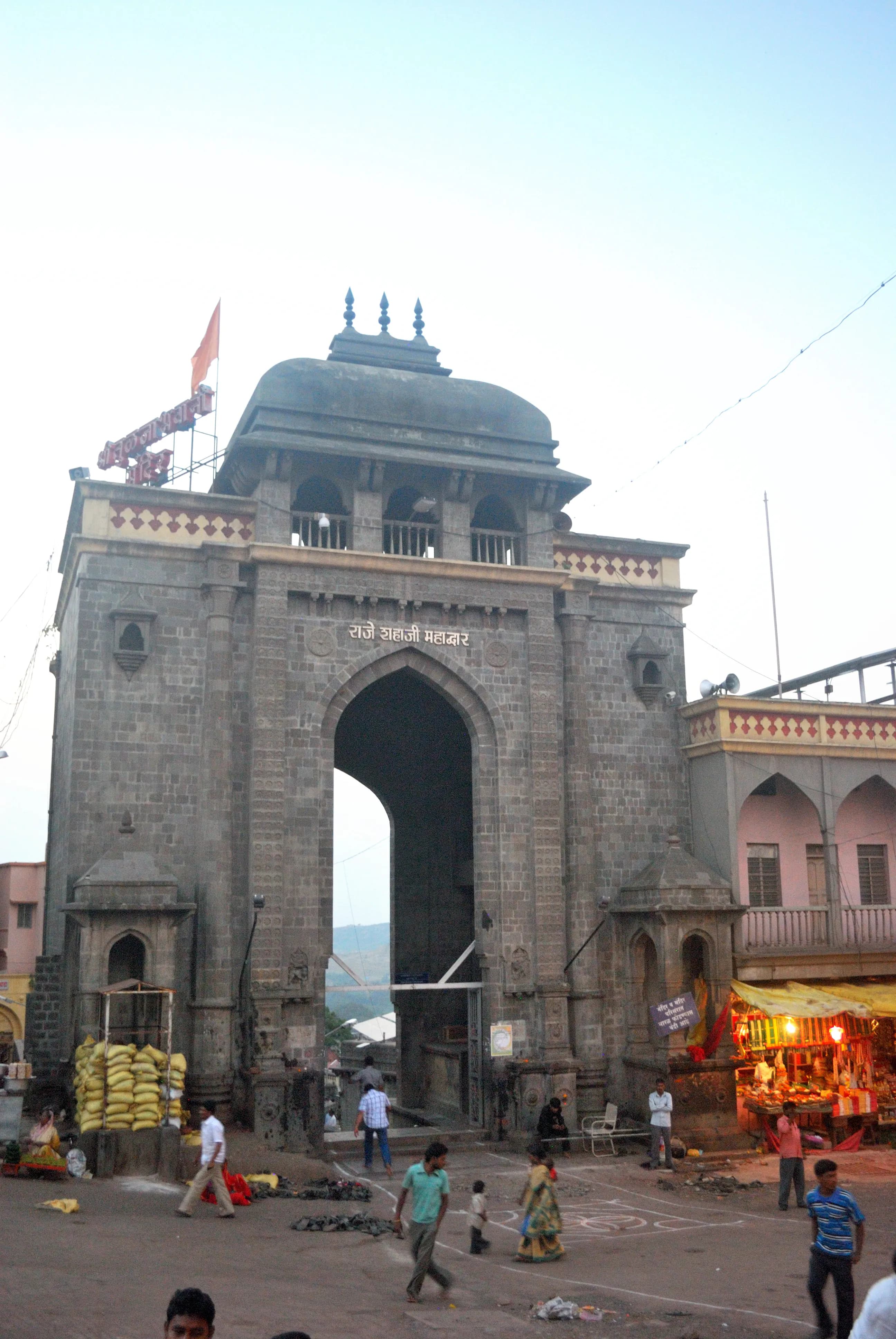
Tulja Bhavani Temple Tuljapur
The air thrummed with a palpable energy as I stepped through the imposing Gopura gateway of the Tulja Bhavani Temple. The saffron flags fluttering atop the structure seemed to pulse with the rhythm of devotional chants emanating from within. Here, in the heart of Maharashtra's Osmanabad district, nestled within the rugged embrace of the Balaghat range, stood a testament to centuries of unwavering faith – the abode of Tulja Bhavani, the revered family deity of the Bhosale dynasty and a powerful manifestation of Shakti. My visit, as a cultural journalist deeply rooted in the traditions of Uttar Pradesh, was not merely an observation but a pilgrimage of sorts. While Uttar Pradesh boasts its own rich tapestry of Devi temples, experiencing the reverence for Bhavani Mata in Maharashtra offered a unique perspective on the diverse expressions of devotion across India. The temple complex, a sprawling labyrinth of courtyards and shrines, unfolded before me. The architecture, predominantly of the Hemadpanthi style, displayed a distinct departure from the North Indian Nagara style I was accustomed to. The use of black basalt stone, intricately carved with geometric patterns and floral motifs, lent the structure a sense of grounded strength. The sloping roofs, devoid of the elaborate curvilinear shikharas common in North Indian temples, created a stark yet elegant silhouette against the clear sky. I joined the throng of devotees making their way to the inner sanctum. The queue, though long, moved with a surprising fluidity, each individual propelled by an inner current of devotion. The anticipation built with every step, the air thick with the fragrance of incense and the murmur of prayers. Finally, I stood before the Goddess. The idol of Tulja Bhavani, crafted from black stone, exuded an aura of both fierce power and maternal benevolence. Unlike the ornate, elaborately adorned idols often seen in North Indian temples, Bhavani Mata's image was strikingly simple yet captivating. Her eight arms, each holding a symbolic weapon, spoke of her ability to vanquish evil and protect her devotees. The serene expression on her face, however, conveyed a sense of profound peace, a reassurance that transcended the clamor of the temple. As I observed the rituals, I noticed the unique Marathi traditions interwoven with the broader Hindu practices. The rhythmic chanting of Marathi hymns, the distinctive style of the priests' attire, and the offerings of specific regional delicacies all contributed to a distinct cultural flavor. It was fascinating to witness how the same deity, worshipped across geographical boundaries, could manifest in such diverse and vibrant forms. Beyond the main shrine, the temple complex housed several smaller shrines dedicated to other deities, each with its own unique story and significance. I spent hours exploring these spaces, absorbing the intricate details of the carvings, deciphering the symbolic representations, and engaging in conversations with the temple priests and local devotees. These interactions provided invaluable insights into the history, mythology, and cultural significance of Tulja Bhavani. One of the most striking aspects of my experience was the palpable sense of community that permeated the temple. People from all walks of life, irrespective of their social standing or economic background, came together in a shared space of devotion. The temple served not just as a place of worship, but also as a social hub, a place for connection and collective expression. Leaving the Tulja Bhavani Temple, I carried with me more than just memories and photographs. I carried a deeper understanding of the multifaceted nature of faith, the power of shared belief, and the enduring legacy of India's rich cultural heritage. The experience reinforced my belief that exploring these sacred spaces is not just an act of journalistic inquiry, but a journey of personal and cultural enrichment. It is a journey that continues to resonate within me, shaping my understanding of the diverse tapestry of India's spiritual landscape.
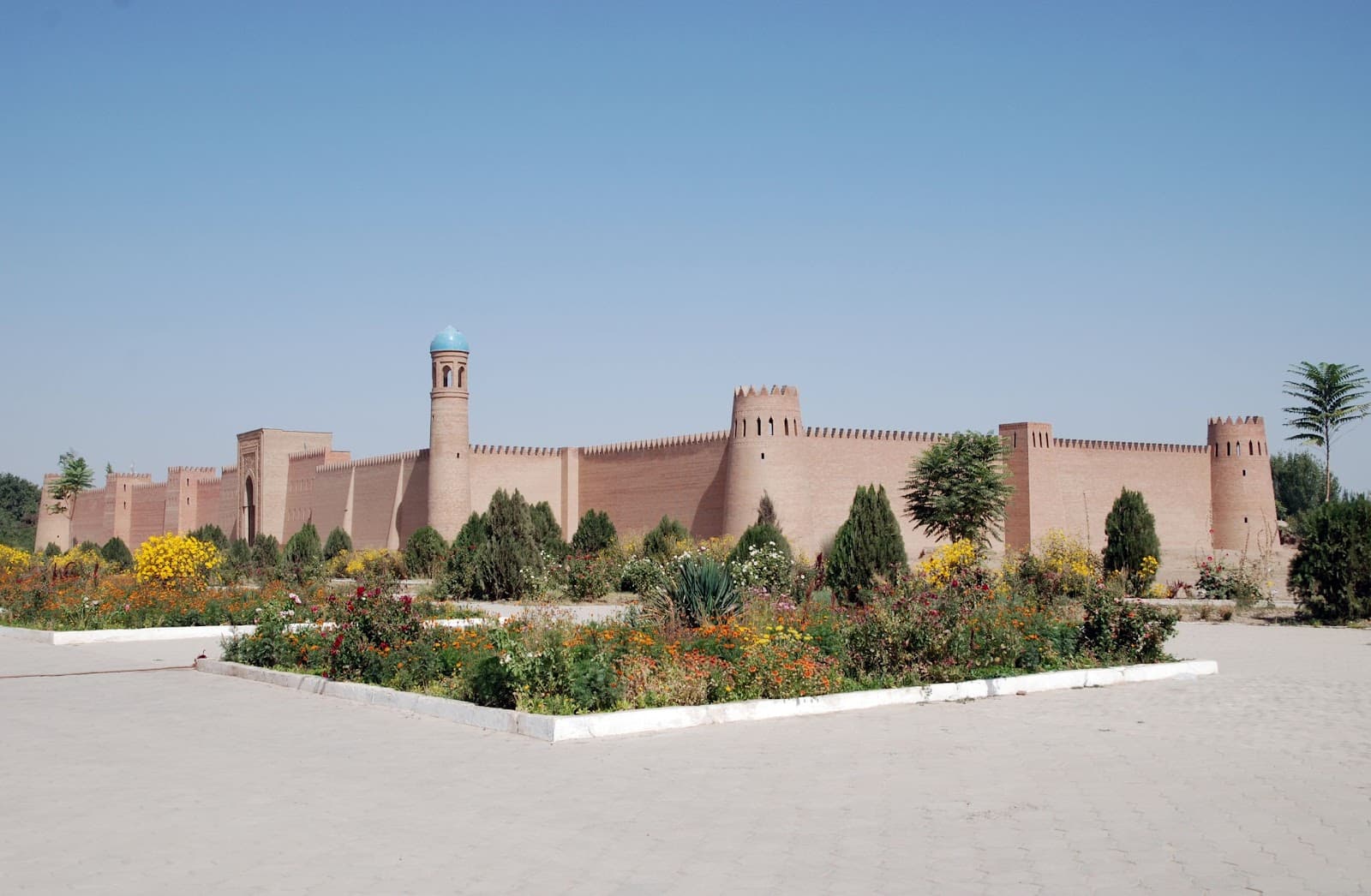
Hulbuk Palace Complex Vose Tajikistan
Hulbuk Palace Complex, dramatically situated in the Vose District of southern Tajikistan, represents one of the most extraordinary and archaeologically significant medieval palace complexes in Central Asia, constructed in the 9th-12th centuries CE during the Samanid and subsequent periods as a major administrative and cultural center that includes extraordinary Buddhist and Hindu artifacts in its museum collection, creating a powerful testament to the continued transmission of Indian religious and artistic traditions to Central Asia even after the Islamic conquest. The palace complex, featuring sophisticated architectural elements that demonstrate the synthesis of Islamic, Central Asian, and Indian architectural traditions, while the site's museum collection includes numerous Buddhist and Hindu artifacts including sculptures, reliefs, and decorative objects that demonstrate clear Indian iconographic and stylistic influences, providing crucial evidence of the continued presence and influence of Indian religious and artistic traditions in Central Asia during the medieval period. Archaeological excavations have revealed extraordinary architectural elements including courtyards, halls, and decorative programs that demonstrate the sophisticated synthesis of various architectural traditions, while the discovery of numerous Buddhist and Hindu artifacts in the museum collection provides crucial evidence of the site's role as a center for the preservation and display of Indian religious and artistic traditions, demonstrating the sophisticated understanding of Indian cultural heritage possessed by the palace's patrons and curators. The palace complex's architectural layout, with its central courtyards surrounded by halls and administrative structures, follows sophisticated planning principles that demonstrate the synthesis of various architectural traditions including Indian palace planning principles that were transmitted to Central Asia, while the palace's extensive decorative programs including architectural elements and artifacts demonstrate the ways in which Indian artistic traditions were integrated into Central Asian palace architecture and collections. The palace complex's location in the Vose District, a major administrative and cultural center, underscores its significance as a center for the preservation and display of Indian religious and artistic traditions, while the site's museum collection demonstrates the sophisticated understanding of Indian cultural heritage possessed by Central Asian rulers and administrators. Today, Hulbuk Palace Complex stands as a UNESCO Tentative List site and represents one of the most important medieval palace complexes in Central Asia, serving as a powerful testament to the transmission and preservation of Indian religious and artistic traditions in Central Asia, while ongoing archaeological research and conservation efforts continue to protect and study this extraordinary cultural treasure that demonstrates the profound impact of Indian civilization on Central Asian religious and artistic traditions. ([1][2])
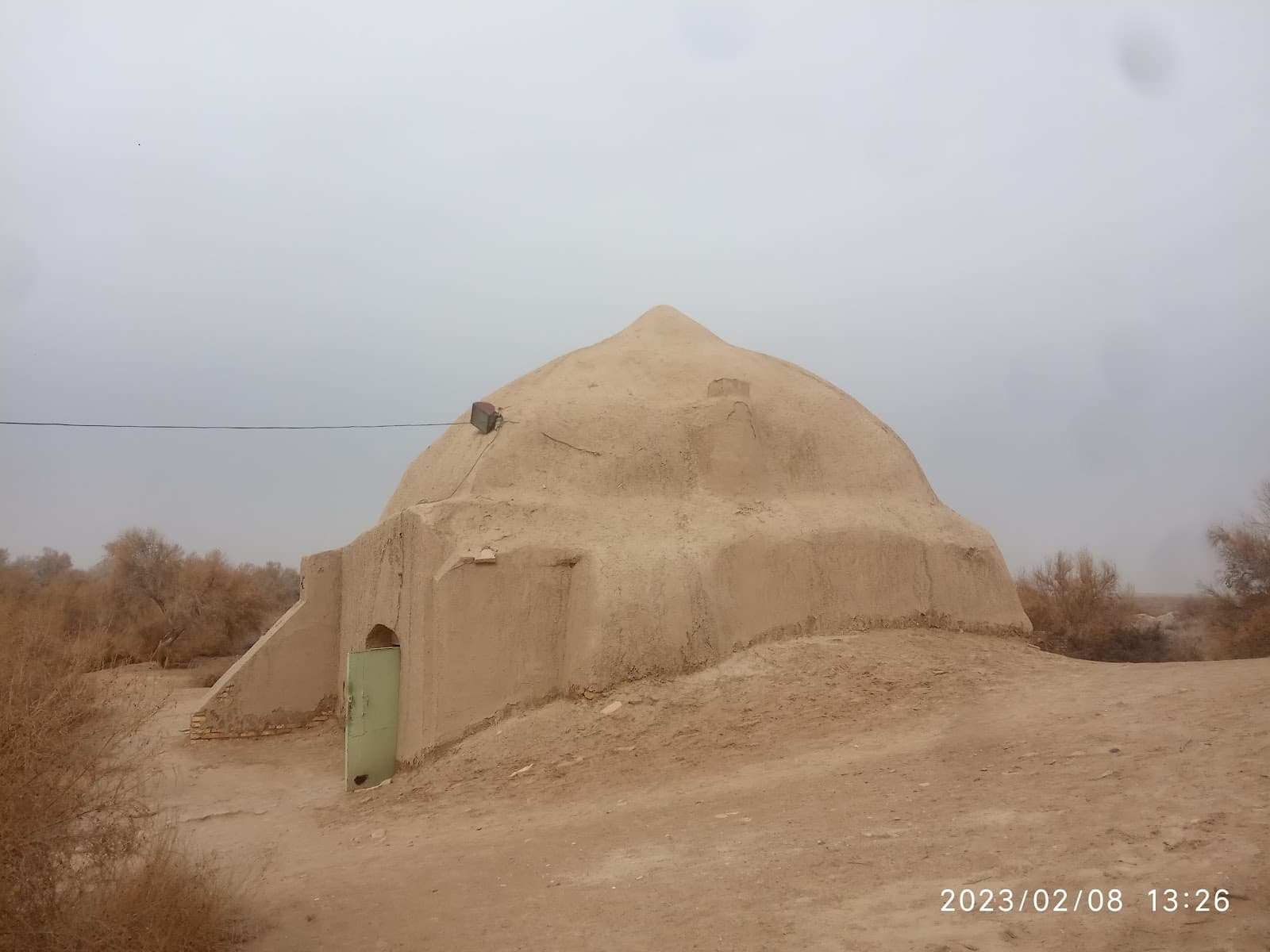
Dandânqan Fortress Temple Area Mary Region Turkmenistan
Nestled in the Mary Region of Turkmenistan, Dandânqan Fortress stands as a significant medieval fortress, notable for its fusion of Central Asian and Indian Buddhist architectural traditions ([1][2]). The fortress features a temple area displaying influences from Indian Buddhist temple architecture and artistic programs ([1]). This synthesis highlights the transmission of Indian religious and architectural concepts to Central Asia during the medieval period ([1][2]). Archaeological excavations have uncovered Buddhist fragments, including sculptures, architectural elements, and religious iconography, revealing parallels with Indian Buddhist art centers like Gandhara and Mathura ([1]). The layout of the temple area, with its central structures and ritual spaces, mirrors Indian Buddhist temple planning principles ([1][2]). These discoveries provide crucial evidence of the site's role in transmitting Indian Buddhist traditions to Central Asia ([1]). During the medieval period, when Central Asia experienced extensive trade and cultural connections with India, Dandânqan Fortress became a major center of religious and military activity ([1]). The patronage of the Samanid Dynasty facilitated the integration of Indian Buddhist elements into the fortress's design ([1][2]). Mud brick, fired brick, stone, lime mortar, metal, and wood were employed in the construction, showcasing the architectural prowess of the era ([1]). Intricate carvings adorning the walls and structures further exemplify the blending of Indian and Central Asian aesthetics ([1][2]). The presence of Buddhist fragments and architectural elements demonstrates a remarkable understanding of Indian Buddhist temple architecture and iconographic programs ([1]). Today, as a UNESCO Tentative List site, Dandânqan Fortress represents a vital cultural treasure, illustrating the profound impact of Indian civilization on Central Asian religious and cultural traditions ([1][2]). The ongoing archaeological research and conservation efforts ensure the protection and study of this extraordinary site ([1]).
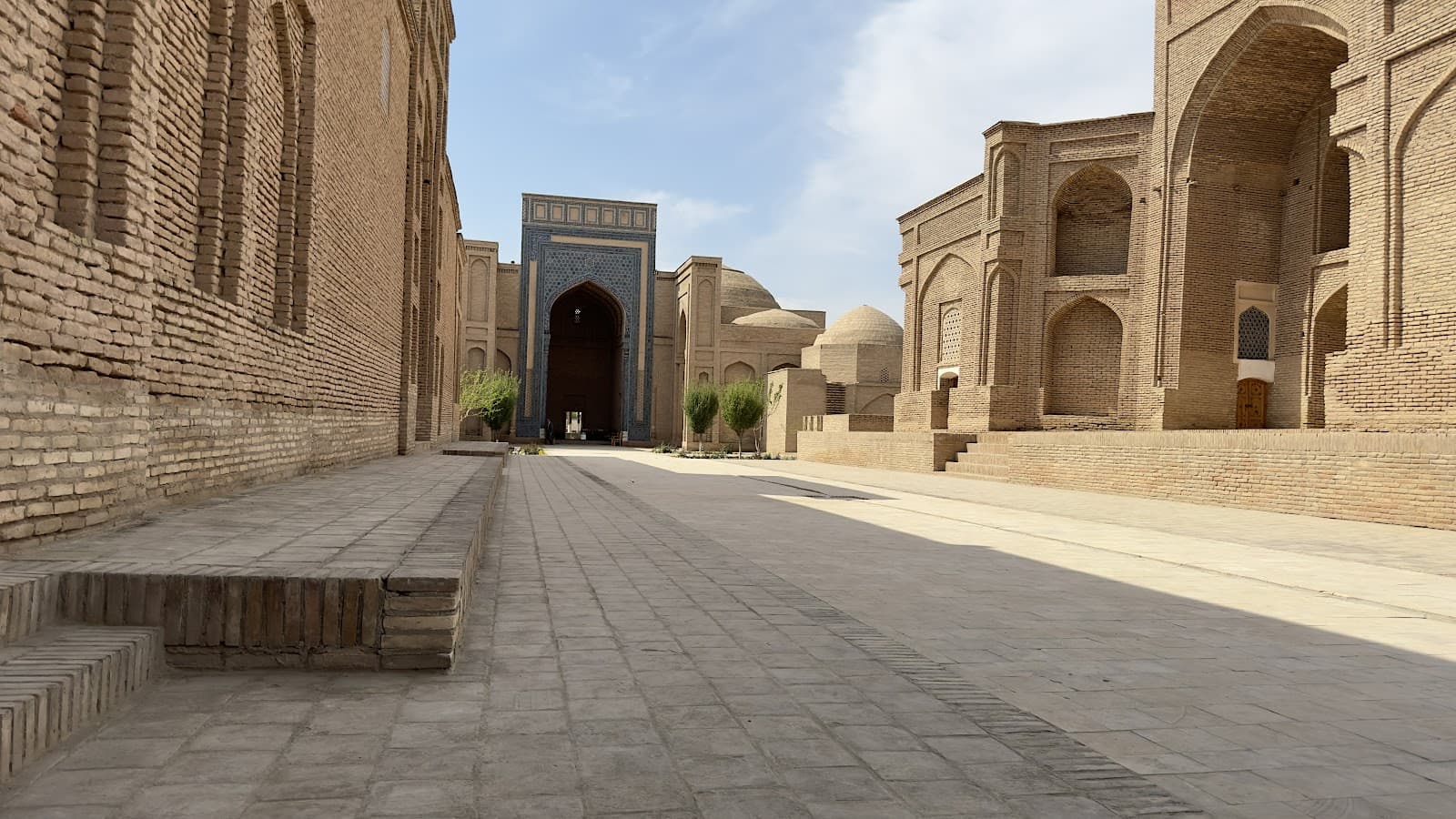
Ming-Öy Mingbulak Buddhist Caves Surxondaryo Uzbekistan
Ming-Öy (Mingbulak) Buddhist Caves, dramatically carved into the rocky cliffs of the Surxondaryo Region in southern Uzbekistan, represent one of the most extraordinary and architecturally sophisticated rock-cut Buddhist cave complexes in Central Asia, constructed during the 6th century CE through the remarkable technique of rock-cut architecture that demonstrates the direct transmission of Indian Buddhist cave monastery traditions from the great rock-cut complexes of India including Ajanta, Ellora, and the caves of western India to Central Asia. The cave complex, comprising multiple levels of interconnected chambers carved directly into the natural rock formations, features extraordinary architectural elements including meditation cells, assembly halls, stupa chambers, and living quarters that demonstrate the sophisticated synthesis of Indian Buddhist rock-cut architecture with local Central Asian adaptations, while the discovery of numerous sculptures, paintings, and inscriptions provides crucial evidence of the site's role as a major center for the transmission of Indian Buddhist texts, art, and practices to Central Asia. The caves feature elaborate decorative programs including sculptures and paintings executed in styles that demonstrate clear connections to Indian artistic traditions, while the architectural layout, with its central assembly halls surrounded by smaller cells and stupa chambers, follows the classic Indian Buddhist cave monastery plan that was systematically transmitted from the great rock-cut complexes of India, creating a powerful visual testament to the cultural exchange that flourished along the Silk Road. Archaeological excavations have revealed that the complex served as a major center of Buddhist learning and practice, while the site's location in the Surxondaryo Region underscores its significance as a center for the transmission of Buddhist teachings, art, and culture from India to Central Asia, demonstrating the remarkable reach of Indian cultural influence into the interior regions of Central Asia. Today, Ming-Öy stands as a UNESCO Tentative List site and represents one of the most important rock-cut Buddhist cave complexes in Central Asia, serving as a powerful testament to the transmission of Indian Buddhist culture and architecture to Central Asia, while ongoing archaeological research and conservation efforts continue to protect and study this extraordinary cultural treasure that demonstrates the profound impact of Indian civilization on Central Asian religious and artistic traditions. ([1][2])
Jagannath Temple Puri
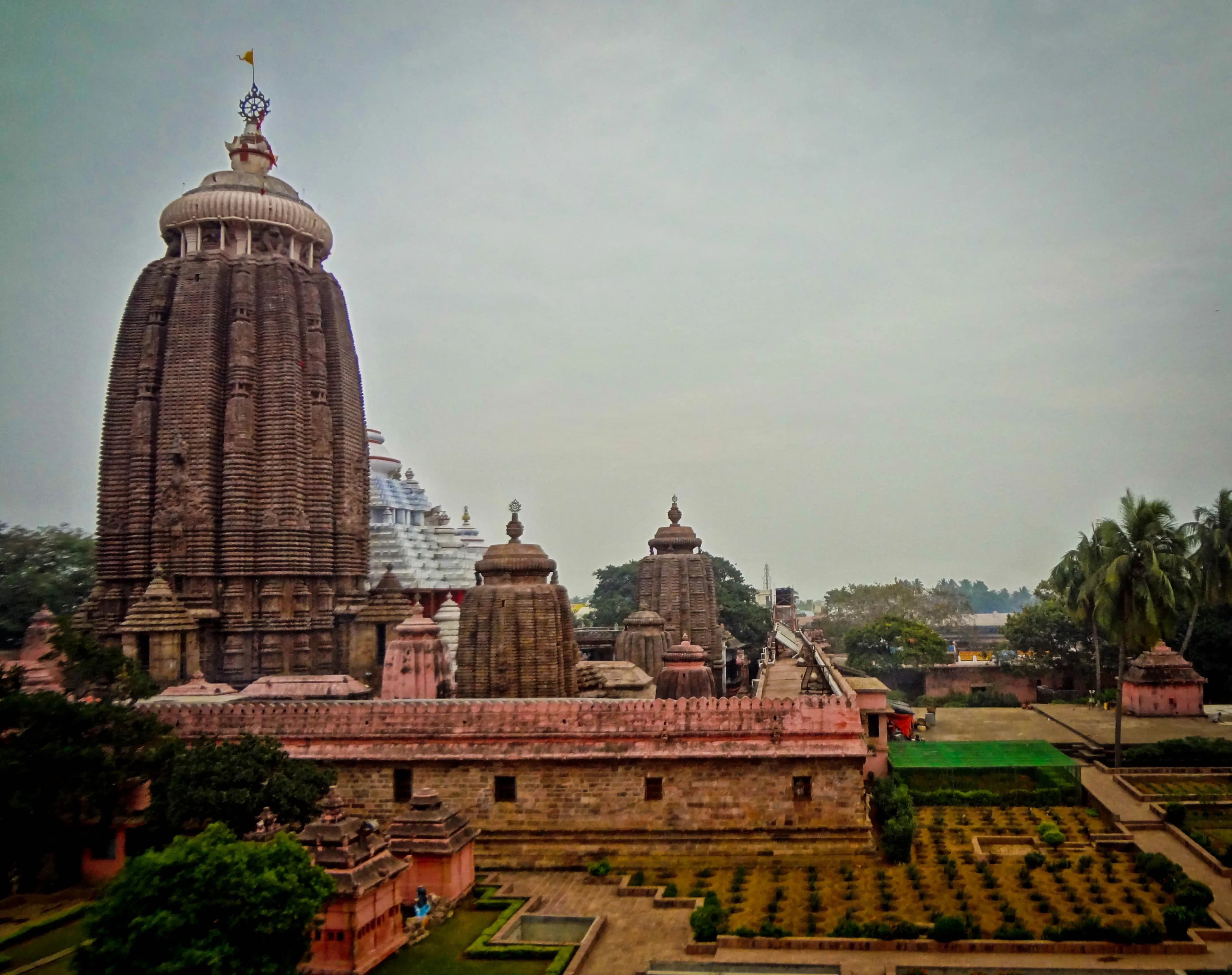
The Jagannath Temple in Puri, Odisha, stands as a profound testament to India's millennia-spanning cultural heritage, dedicated to Lord Jagannath, a form of Vishnu, alongside his siblings Balabhadra and Subhadra [2]. This monumental complex, located on Grand Road, Puri, is a vibrant center of continuous Indian civilization, embodying indigenous architectural styles and spiritual practices that reflect the nation's deep historical roots [1]. The temple is a prime example of Kalinga architecture, characterized by its curvilinear tower (rekha deul) and intricate sculptural ornamentation, which distinguishes it from other pan-Indian temple styles like Nagara and Dravida [3]. The temple complex is enclosed within a massive laterite wall known as Meghanada Pacheri, measuring approximately 202.70 meters by 196.29 meters and standing 6.1 meters high [3] . An inner wall, the Kurma Bedha, further encircles the main temple . The central shrine, or Vimana (Deula), rises to an impressive height of 57.28 meters from the inner parikrama floor to the apex of the Nila Chakra [3]. The temple's main structure comprises four distinct components arranged in an east-west alignment: the Vimana (sanctum sanctorum), the Jagamohana (porch or assembly hall), the Natamandapa (hall for cultural performances), and the Bhogamandapa (hall for offerings) [2] [3]. The Vimana is designed on a Pancha Ratha (five chariot) floor plan, where the vertical structure is divided into five projected column-like features, lending a unique vertical rhythm [2]. The Jagamohana, in contrast, is built in the Pidha deula style, featuring a pyramidal roof composed of horizontal layers [2]. Construction primarily utilized massive laterite blocks, quarried locally, fitted without mortar, showcasing the precision of Kalinga architecture [1]. Iron beams were incorporated to hold sections together, indicating advanced metallurgical knowledge for the period [1]. The temple's vertical structure is divided into five principal parts: Pitha (foundation), Bada (vertical wall), Gandi (main tower), and Mastaka (crowning elements), which includes the sacred Nila Chakra [2]. The Nila Chakra, an eight-spoked wheel made of Ashtadhatu (an alloy of eight metals), is 3.5 meters high with a circumference of about 11 meters, and is considered sacrosanct . Intricate carvings adorn the temple walls, depicting scenes from Hindu mythology, celestial beings, and floral motifs, often exhibiting a level of detail resembling wood or ivory [2] [3]. Friezes on the lower walls portray elephants, horses, and warriors in procession [2]. Niches on the Raha paga (central projection) house Parsva-devatas (side deities) such as Varaha, Trivikrama, and Nrusimha, sculpted from chlorite stone [2]. The temple features four elaborately carved gates: Singhadwara (Eastern Gate) flanked by crouching lions, Ashwadwara (Southern Gate) depicting horses, Vyaghrdwara (Western Gate) representing tigers, and Hastidwara (Northern Gate) featuring elephants [2]. The Singhadwara, the main entrance, is fronted by the monolithic Aruna Stambha, a sixteen-sided pillar topped with an idol of Aruna, the charioteer of Surya . The temple's kitchen is renowned as one of the largest in the world, preparing vegetarian Mahaprasad for thousands of devotees daily using traditional methods with earthen pots and firewood, a practice preserved for centuries [1] . The Archaeological Survey of India (ASI) plays a crucial role in the conservation of this Monument of National Importance, undertaking structural repairs using traditional methods and materials like laterite and lime plaster, and meticulously cleaning and conserving carvings [1] . Ongoing structural monitoring and repairs are in place, with efforts to incorporate both advanced conservation techniques and traditional knowledge systems to ensure durability and authenticity [1] . The temple remains an active place of worship, ensuring consistent ritual maintenance and upkeep of its architectural integrity [1]. The site is fully operational, welcoming pilgrims and visitors, with ongoing efforts to enhance accessibility, including a new ramp near the North Gate for the elderly and persons with disabilities .
Jain Temple Nagarparkar Tharparkar
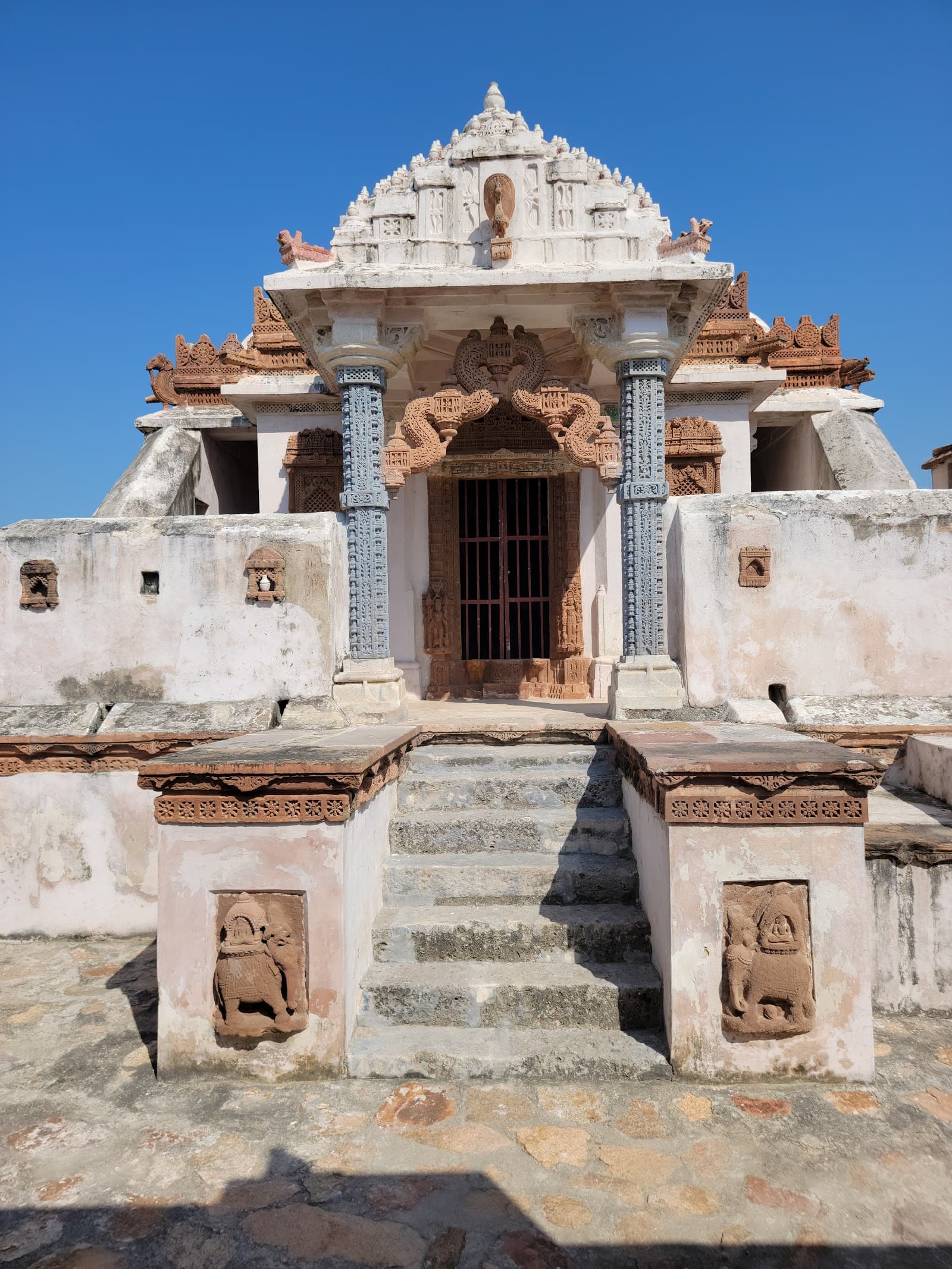
Jain Temple Nagarparkar, located in the Thar Desert region of Sindh Province, represents a significant 14th-16th century CE Jain temple complex that demonstrates the rich religious diversity of the region, which was historically part of the greater Hindu rashtra extending across the Indian subcontinent and maintained strong connections to Indic religious traditions including Jainism. The temple complex, now part of the Nagarparkar Cultural Landscape inscribed on UNESCO’s tentative list, features multiple Jain temples constructed primarily from white marble, with the most notable being the Gori Temple dedicated to Lord Parshvanatha, the 23rd Jain Tirthankara. The temples, constructed during a period when the Thar Desert region was part of various Hindu and Jain kingdoms that maintained strong cultural and commercial connections to Rajasthan and other parts of India, feature distinctive architecture that closely resembles the famous Jain temples of Mount Abu in Rajasthan, demonstrating the cultural unity of the greater Hindu rashtra that extended across political boundaries. The Gori Temple, measuring 125 feet by 60 feet and constructed entirely of marble, stands on a high platform accessed by stone steps, with interiors adorned with intricate Jain religious imagery including frescoes that are considered older than those in North Indian Jain temples. The temple complex includes 24 small cells, possibly representing the 24 Tirthankaras of Jainism, and demonstrates sophisticated stone carving techniques, intricate architectural planning, and advanced understanding of marble construction. Archaeological evidence indicates the temples were constructed during a period when Nagarparkar was an important trading center connecting the Thar Desert to maritime trade routes, with Jain merchants playing a significant role in maintaining commercial and cultural connections across the greater Hindu rashtra. Today, Jain Temple Nagarparkar stands as a powerful symbol of the Jain heritage of Pakistan and the region’s historical connection to the greater Hindu rashtra, serving as a reminder of the sophisticated religious and cultural traditions that flourished in regions that were integral parts of ancient Indian civilization. ([1][2])
Sri Vairavimada Kaliamman Temple Singapore
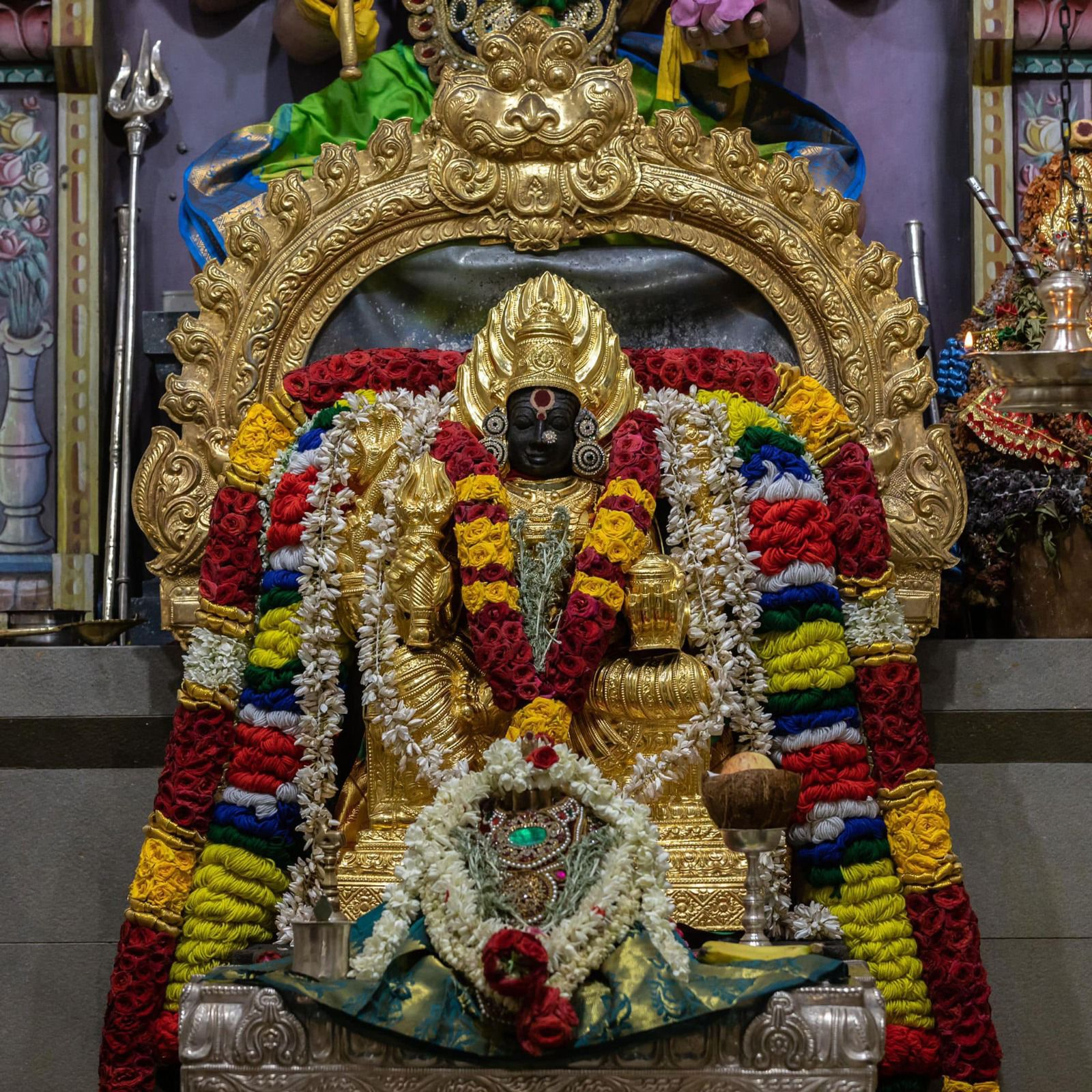
Sri Vairavimada Kaliamman Temple began as a shrine housed within a Chettiar bungalow in Sri Rangoon Road in 1872 and moved to Toa Payoh in 1982; after a S$9 million redevelopment it reopened in 2014 as a fortress-like sanctum honouring Sri Vairavimada Kaliamman, Vairavar, and Kali’s fierce retinue through towering stucco guardians, alternating crimson-white façade stripes, and a granite-clad mandapa crowned by a 20-metre gopuram ([1][2]). The temple opens 7:00 AM-12:00 PM and 6:00 PM-9:30 PM, with elaborate homa for Vairavar, Rahu-Ketu, and Navagraha performed weekly, while Vaigasi Visakam, Aadi Pooram, Navaratri, Sivarathiri, and Panguni Uthiram festivals feature kavadi, urumi drumming, and cultural programmes. Worshippers access education and welfare services—including annadhanam, Tamil/Bharatanatyam/Carnatic classes, yoga, counselling, and seniors’ clubs—within a six-storey complex housing classrooms, hostel rooms, a heritage gallery, and multi-purpose halls. The temple works with the Hindu Endowments Board, People’s Association, and grassroots organisations to support migrant worker outreach, medical screenings, blood drives, and environmental campaigns. A central courtyard with sacred neem and bilva trees, rooftop meditation decks, and VRF air-conditioning underscores the integration of Dravidian sacred geometry with Singaporean urban design. The temple employs CCTV, BMS, and safe-entry protocols to steward large festivals and now doubles as a community resilience hub for Toa Payoh residents ([1][3]).

Golconda Fort Hyderabad
The Deccan plateau shimmered under the late afternoon sun as I approached Golconda Fort, its imposing ramparts rising abruptly from the landscape, a stark contrast to the bustling city of Hyderabad that sprawled around it. Having explored countless forts across North India, from the majestic citadels of Rajasthan to the crumbling ramparts of the Himalayas, I was eager to see how this southern stronghold measured up. The sheer scale of Golconda took me aback. This wasn't just a fort; it was a city within a city, spread across a granite hill, its walls stretching for nearly seven kilometers. The climb to the Bala Hissar, the highest point of the fort, was a journey through layers of history. Each gateway, each bastion, each crumbling wall whispered tales of power, intrigue, and the rise and fall of empires. The architecture was a fascinating blend of Hindu and Persian influences, a testament to the fort's diverse past. The sturdy granite construction, typical of the region, was punctuated by elegant arches, intricate carvings, and the occasional splash of turquoise tile work, hinting at the Persian aesthetic favored by the Qutb Shahi dynasty. I was particularly struck by the ingenious acoustic design. A clap at the entrance gate could be heard clearly at the Bala Hissar, almost a kilometer away – a feat of engineering that served both as a communication system and a display of power. As I wandered through the royal apartments, I imagined the opulence and grandeur that once filled these spaces. The remnants of intricate frescoes, delicate jali screens, and ornate balconies offered glimpses into the luxurious lives of the Qutb Shahi rulers. The view from the Bala Hissar was breathtaking, offering a panoramic vista of Hyderabad, a modern metropolis juxtaposed against the ancient fort. It was a powerful reminder of the enduring legacy of the past. One of the most captivating aspects of Golconda was its water management system. The intricate network of tanks, cisterns, and aqueducts, designed to harvest and conserve rainwater, was a marvel of ancient engineering. Even today, centuries later, these systems continue to function, a testament to the ingenuity of the builders. I spent a considerable amount of time exploring the Rani Mahal, the queen's quarters, with its private bathing area and ingenious ventilation system, designed to keep the interiors cool even during the scorching summer months. The whispers of history were palpable everywhere. I could almost hear the clatter of hooves, the clash of swords, and the murmur of courtly intrigue. The Koh-i-Noor diamond, one of the most famous jewels in the world, was reportedly once housed within these walls, adding another layer of mystique to the fort's already rich history. Unlike many historical sites in India, Golconda felt remarkably well-maintained. The pathways were clear, the signage informative, and the overall experience was enhanced by the absence of intrusive commercialization. This allowed me to truly immerse myself in the history and atmosphere of the place. As the sun began to set, casting long shadows across the ramparts, I descended from the fort, carrying with me a profound sense of awe and admiration. Golconda was more than just a fort; it was a living testament to a rich and complex history, a place where the echoes of the past resonated with the present. It was a reminder that even in the midst of a bustling modern city, the whispers of history can still be heard, if you only know where to listen. My journey through North India had brought me face to face with countless historical wonders, but Golconda, with its unique blend of architectural brilliance, ingenious engineering, and captivating history, held a special place among them.
Solophok Chardham Namchi
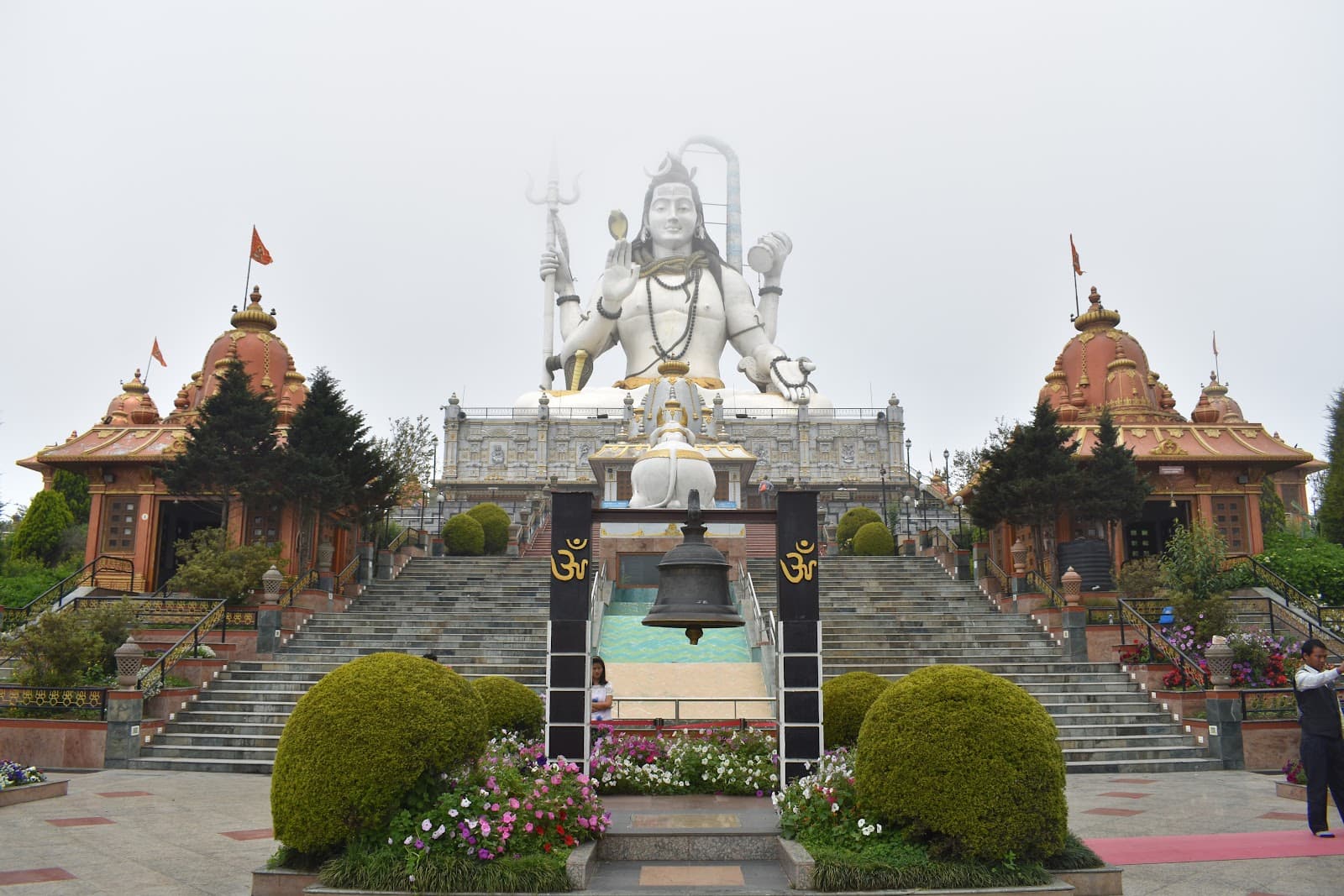
The vibrant prayer flags snapping in the Himalayan breeze were my welcome to Solophok Chardham, a surprisingly recent addition to Sikkim’s spiritual landscape. Perched on the Solophok hilltop overlooking Namchi, this complex, completed in 2011, isn’t ancient in the way of many UNESCO sites, but its ambition is palpable. It aims to replicate the revered Char Dham pilgrimage circuit of India – Badrinath, Dwarka, Puri, and Rameshwaram – within a single location, making it accessible to those unable to undertake the arduous original journey. The centerpiece, and the first structure that caught my eye, is the towering 108-foot statue of Lord Shiva, known here as Siddheshwar. Its sheer scale is breathtaking, gleaming gold against the backdrop of the snow-capped Kanchenjunga range. The statue itself is a marvel of modern engineering, and I learned from a local priest that it was constructed using copper and plated with gold. The detailing on Lord Shiva’s form, from the intricate folds of his garments to the serene expression on his face, is remarkably precise. Circling the statue, I found myself immersed in the representations of the four Dhams. Each shrine is architecturally distinct, reflecting the style of its original counterpart. The Badrinath replica, dedicated to Lord Vishnu, features the characteristic sloping roof and brightly coloured facade I’d seen in Uttarakhand. Dwarka, dedicated to Lord Krishna, echoed the intricate carvings and sandstone hues of Gujarat’s coastal temples. The Jagannath temple of Puri, with its distinctive pyramidal roof and vibrant murals, transported me back to Odisha. Finally, the Rameshwaram replica, dedicated to Lord Shiva in his Ramalingeswara form, captured the Dravidian architectural style of Tamil Nadu with its towering gopuram. While the architectural mimicry is impressive, Solophok Chardham isn’t merely a copy-paste project. The complex incorporates elements of Sikkimese Buddhist architecture, creating a unique blend of styles. The prayer wheels lining the pathways, the colourful murals depicting Buddhist deities, and the presence of monks going about their daily rituals, all contribute to a syncretic atmosphere that feels distinctly Sikkimese. This fusion, I felt, was the most compelling aspect of the site. It speaks to the region’s history of religious harmony and the fluidity of faith in the Himalayas. Beyond the main shrines, the complex offers panoramic views of the surrounding valleys and mountains. I spent a considerable amount of time simply absorbing the scenery, the peace punctuated only by the fluttering prayer flags and the distant chanting from within the temples. There’s a palpable sense of serenity here, a quiet energy that encourages introspection. One aspect that struck me was the meticulous upkeep of the entire complex. Despite the constant flow of visitors, the grounds were impeccably clean, the gardens well-maintained, and the shrines themselves pristine. This speaks volumes about the reverence with which the site is held by both the local community and the managing authorities. My visit to Solophok Chardham was more than just ticking off another UNESCO site on my list. It was an immersion in a unique blend of architectural styles, religious traditions, and breathtaking natural beauty. While the complex is relatively new, it carries a weight of spiritual significance, offering a glimpse into the rich tapestry of faith and devotion that defines the Himalayan region. It’s a testament to the power of human ambition, not just in replicating architectural marvels, but in creating a space that fosters peace, reflection, and a deeper understanding of India’s diverse spiritual heritage. It’s a place I wouldn’t hesitate to recommend to anyone seeking a unique and inspiring travel experience.
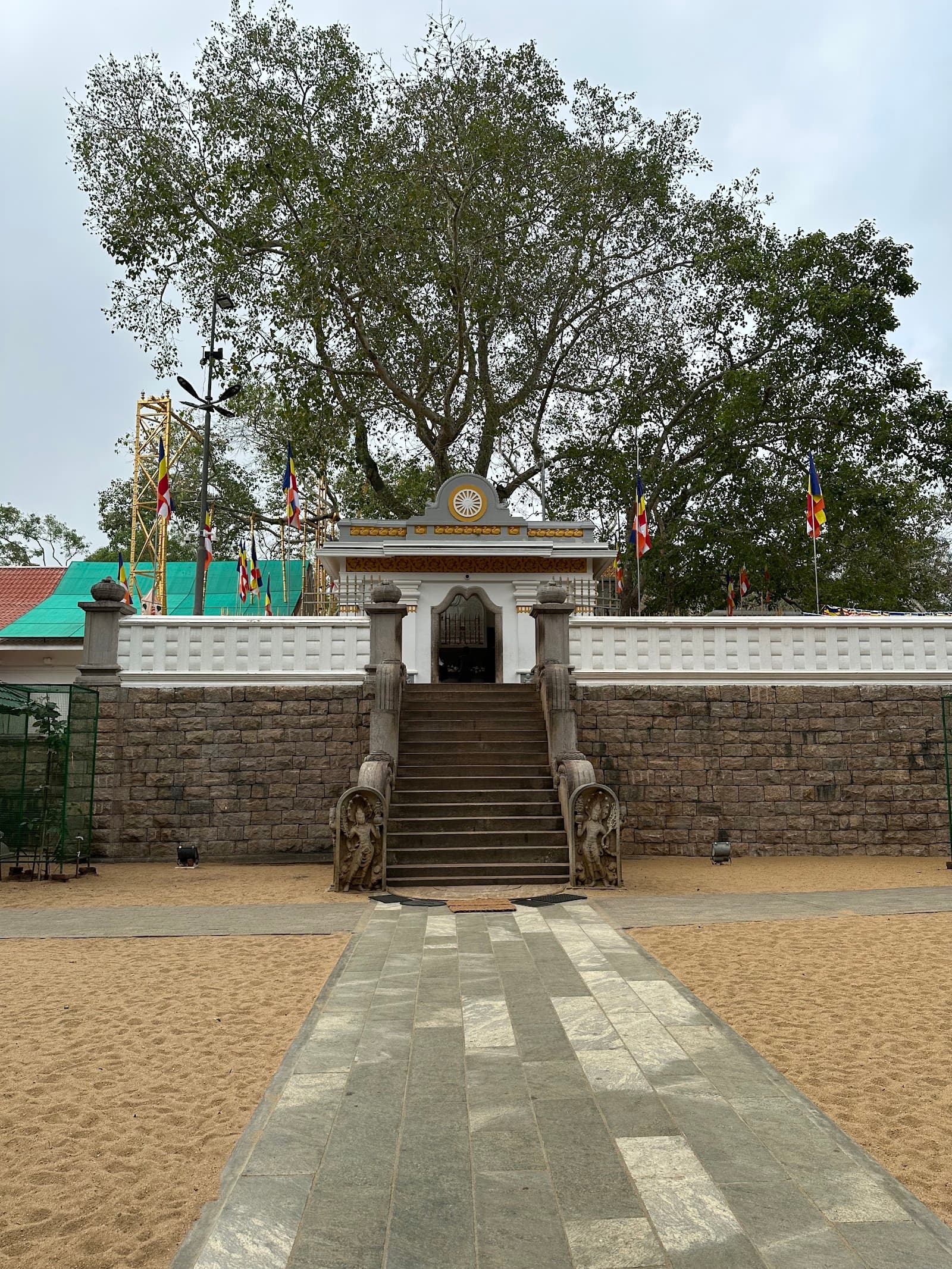
Sri Maha Bodhi Mahamevnawa Anuradhapura Sri Lanka
Sri Maha Bodhi, dramatically situated in the Mahamevnawa Park in the ancient city of Anuradhapura, represents one of the most extraordinary and spiritually significant living trees in the world, planted in 288 BCE from a sapling of the original Bodhi tree under which the Buddha attained enlightenment in Bodh Gaya, India, creating a powerful testament to the profound transmission of Indian Buddhist religious traditions to Sri Lanka and serving as the oldest historically authenticated tree in the world. The sacred fig tree (Ficus religiosa), known as Jaya Sri Maha Bodhi, stands as a living link to the Buddha's enlightenment and represents one of the most important Buddhist pilgrimage sites in the world, while the tree's history is deeply intertwined with the introduction of Buddhism to Sri Lanka by Mahinda, the son of the Indian Emperor Ashoka, and his sister Sanghamitta, who brought the sapling from India as part of the mission to establish Buddhism in Sri Lanka. The tree's location within the Mahamevnawa Park, surrounded by ancient monasteries, stupas, and religious structures, demonstrates the sophisticated understanding of Indian Buddhist monastery planning principles that were transmitted from the great monastic centers of India including Nalanda, Taxila, and Bodh Gaya to Sri Lanka, while the tree's association with the ancient city of Anuradhapura, which served as the capital of Sri Lanka for over a millennium, underscores its significance as a center for the transmission of Buddhist teachings, art, and culture from India to Sri Lanka. Archaeological evidence reveals that the tree has been continuously venerated for over 2,300 years, making it one of the oldest continuously venerated objects in the world, while the discovery of numerous inscriptions, chronicles, and historical records provides crucial evidence of the site's role in the transmission of Indian Buddhist texts and practices to Sri Lanka, demonstrating the sophisticated understanding of Indian Buddhist traditions possessed by the Sri Lankan Buddhist establishment. The tree's association with the Mahavamsa and Dipavamsa chronicles, which document the history of Buddhism in Sri Lanka, demonstrates the sophisticated understanding of Indian Buddhist historiography that was transmitted from India to Sri Lanka, while the tree's continued veneration by millions of Buddhists from across the world demonstrates the profound impact of Indian Buddhist culture on Sri Lankan religious traditions. The tree is protected by a sophisticated system of terraces, railings, and protective structures that have been constructed over centuries, demonstrating the continued devotion of the Sri Lankan people to this sacred symbol of the Buddha's enlightenment, while ongoing conservation efforts ensure the tree's continued health and vitality. Today, Sri Maha Bodhi stands as a UNESCO World Heritage Site and represents one of the most important Buddhist pilgrimage sites in the world, serving as a powerful testament to the transmission of Indian Buddhist culture to Sri Lanka, while ongoing archaeological research and conservation efforts continue to protect and study this extraordinary cultural treasure that demonstrates the profound impact of Indian civilization on Sri Lankan religious traditions. ([1][2])
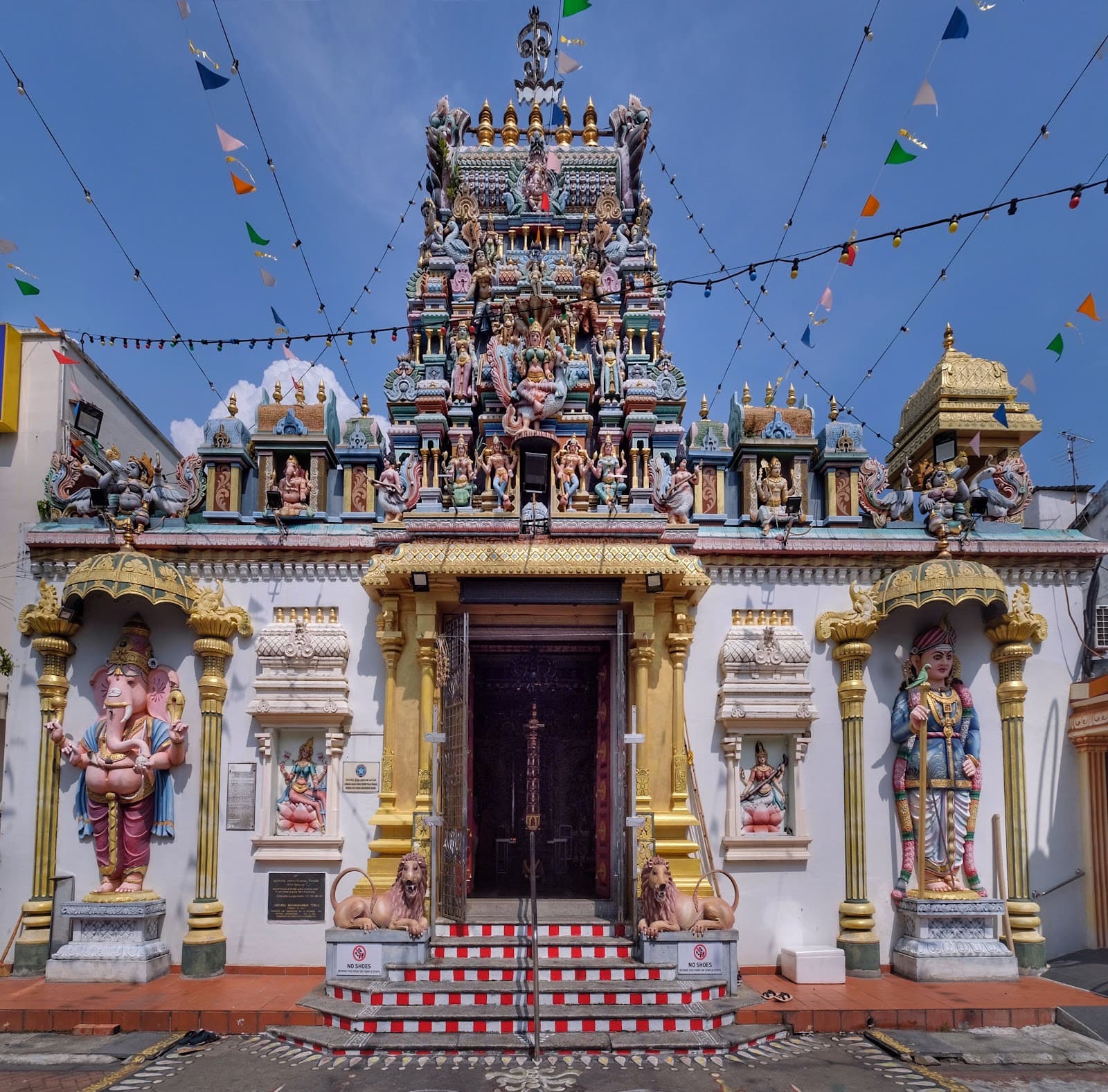
Sri Maha Mariamman Temple George Town Penang
Sri Maha Mariamman Temple (1833) anchors Queen Street within George Town’s UNESCO World Heritage Site, narrating nearly two centuries of Tamil presence through a five-tier gopuram (1930), hand-painted murals of Skanda Shasti, and the silver Ratha Vimana chariot that leads Penang’s Thaipusam procession, making this the oldest Hindu temple in Penang ([1][2]). The temple opens 5:30 AM-9:30 PM with six daily pujas, Friday abhishekam, and continuous annadhanam; festivals include Chitra Pournami, Aadi Pooram, Navaratri, Theppotsavam, and the famed Thaipusam silver chariot journey from Lebuh Queen to Waterfall Hill, mobilising 700 volunteers, medical teams, crowd marshals, waste collectors, and digital trackers. Facilities include a cultural hall, Tamil school, heritage gallery, library, counselling office, vegetarian canteen, and relief storehouse that supported Penangites during the 1997 haze, 2004 tsunami, and COVID-19 lockdowns. The temple’s trustee board (Hindu Mahajana Sangam) manages welfare programmes, scholarships, and interfaith dialogues. The precinct integrates heritage shophouses, Neem and bauhinia trees, and multi-faith foot traffic, encapsulating George Town’s cosmopolitan legacy ([1][3]).
Quick Links
Plan Your Heritage Journey
Get personalized recommendations and detailed visitor guides