Has Inheritage Foundation supported you today?
Your contribution helps preserve India's ancient temples, languages, and cultural heritage. Every rupee makes a difference.
Secure payment • Instant 80G certificate
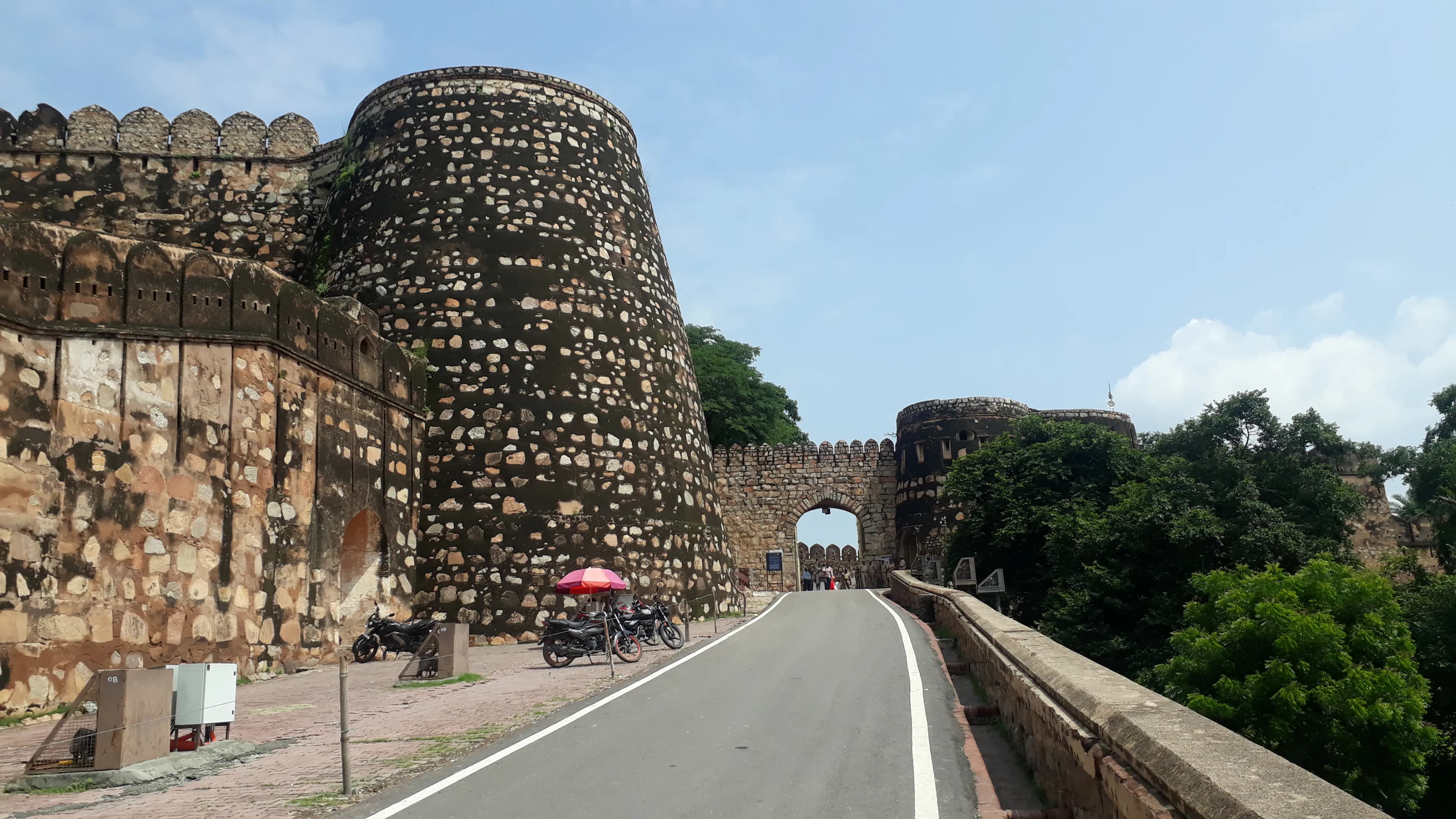
Jhansi Fort Jhansi
The imposing sandstone ramparts of Jhansi Fort, rising dramatically from the Bundelkhand plains, seemed to hum with untold stories. Having explored countless caves and temples back home in Maharashtra, I’ve developed a keen eye for historical resonance, and this fort, even from a distance, vibrated with a palpable energy. The scorching Uttar Pradesh sun beat down as I approached the main gate, the very same gateway Rani Lakshmibai, the iconic warrior queen, is said to have charged through on horseback, her infant son strapped to her back. Entering through the Karak Bijli Toop (Lightning Cannon) gate, I was immediately struck by the fort's sheer scale. The walls, averaging 20 feet thick and rising to a height of 100 feet in places, enclosed a vast expanse. Unlike the basalt structures I’m accustomed to in Maharashtra, the reddish-brown sandstone gave the fort a distinct, almost earthy feel. The walls, though scarred by cannon fire and the ravages of time, held an undeniable strength, a testament to the fort's enduring resilience. My exploration began with the Ganesh Mandir, nestled within the fort's complex. The small, unassuming temple, dedicated to Lord Ganesha, offered a moment of quiet contemplation amidst the fort's martial history. The intricate carvings on the temple door, though weathered, spoke of a time of artistic flourishing within these walls. From there, I moved towards the Rani Mahal, the queen's palace. This was where the personal became intertwined with the historical. The palace, though now a museum, still echoed with the whispers of Rani Lakshmibai's life. The delicate murals depicting scenes of courtly life and nature, now faded but still visible, offered a glimpse into the queen's world, a world far removed from the battlefield. I paused in the courtyard, imagining the queen strategizing with her advisors, her spirit as fiery as the Bundelkhand sun. The panoramic view from the top of the fort was breathtaking. The sprawling city of Jhansi stretched out below, a tapestry of old and new. I could see the very path the queen took during her daring escape, a path etched not just in history books, but in the very landscape itself. It was here, looking out at the vastness, that the weight of history truly settled upon me. The fort’s architecture revealed a blend of influences. While predominantly exhibiting Hindu architectural styles, certain elements, like the strategically placed bastions and the use of cannons, hinted at the later Maratha influence. The Kadak Bijli cannon itself, a massive piece of artillery, stood as a silent witness to the fierce battles fought here during the 1857 uprising. The museum within the Rani Mahal housed a collection of artifacts from that era – swords, shields, and even some personal belongings of the queen. While these objects were fascinating in their own right, they also served as poignant reminders of the human cost of conflict. As I descended from the ramparts, leaving the fort behind, I couldn't shake the feeling that I had walked through a living testament to courage and resilience. Jhansi Fort is more than just stones and mortar; it’s a repository of stories, a symbol of resistance, and a powerful reminder of a queen who dared to defy an empire. It is a place where history isn't just read, it's felt. And for a history enthusiast like myself, that's the most rewarding experience of all.
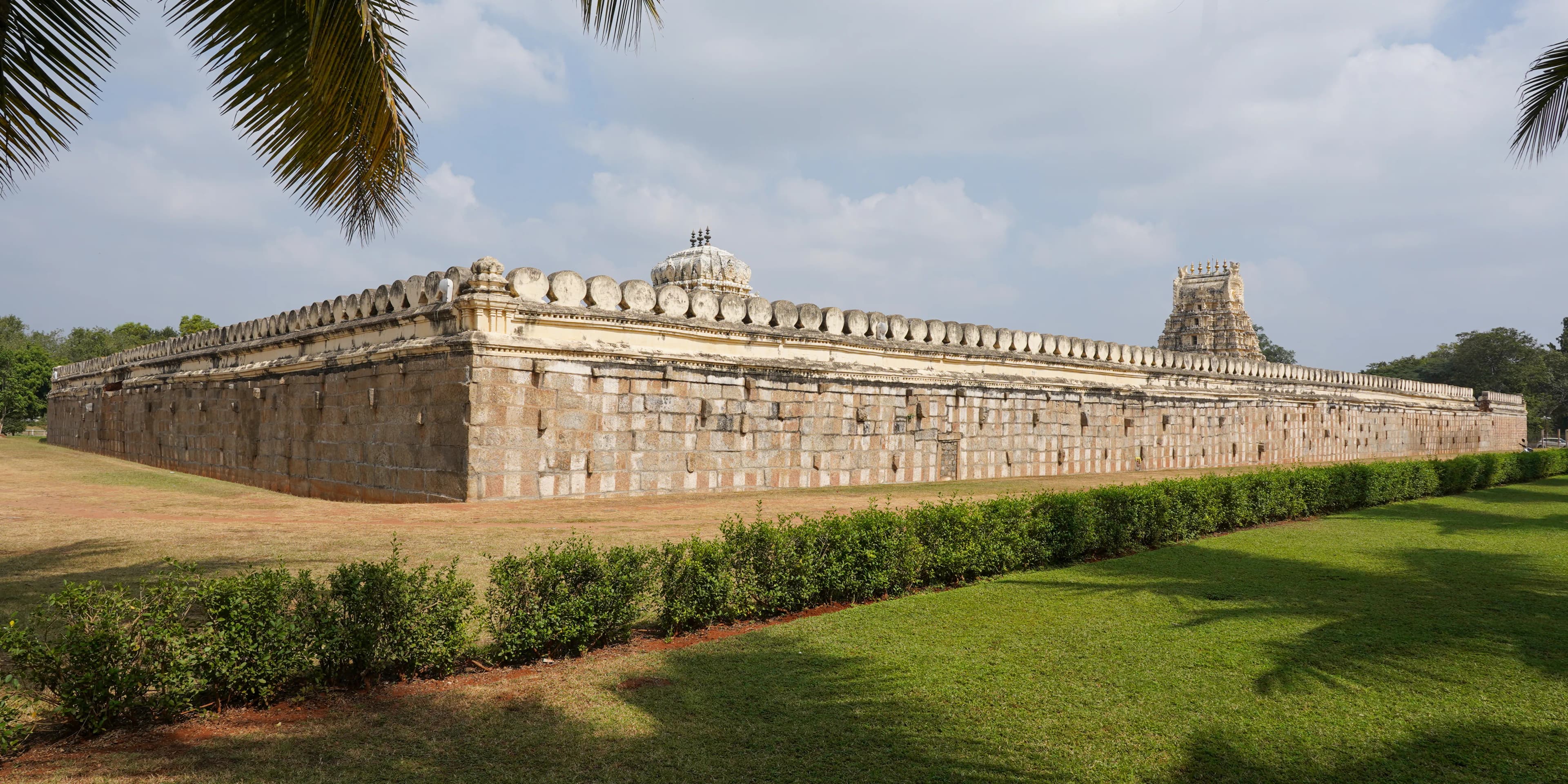
Sri Ranganathaswamy Temple Srirangam
The cacophony of Delhi faded into a distant memory as I stepped onto the hallowed grounds of the Sri Ranganathaswamy Temple in Srirangam. Having explored the intricate carvings of Khajuraho and the towering grandeur of Kedarnath, I thought I had a grasp on the scale of North Indian temple architecture. I was mistaken. Srirangam isn't just a temple; it's a living, breathing city dedicated to Lord Vishnu, an island sanctuary cradled by the Cauvery River. Its sheer magnitude, a sprawling 631 acres enclosed by seven concentric walls or *prakarams*, is unlike anything I've encountered in my years traversing the northern plains. My exploration began at the outermost prakaram, bustling with flower sellers, vendors offering prasad, and the constant hum of devotional chants. Each gateway, or *gopuram*, I passed through felt like a portal to another era, each more intricately carved than the last. The vibrant colours, a stark contrast to the muted sandstone hues I was accustomed to in the north, pulsated with life under the Tamil Nadu sun. The towering gopurams, some reaching dizzying heights, seemed to pierce the very sky, their surfaces teeming with depictions of deities, mythical creatures, and scenes from the epics. As I moved inwards, the atmosphere shifted. The outer courtyards’ frenetic energy gradually gave way to a palpable sense of serenity. The sheer number of shrines, mandapams (pillared halls), and smaller temples within the complex is staggering. I found myself drawn to the Hall of 1000 Pillars, a marvel of Vijayanagara architecture. Each pillar, carved from a single block of granite, tells a story, a testament to the skill and devotion of the artisans who shaped them centuries ago. The play of light and shadow within the hall created an ethereal atmosphere, transporting me back to a time of royal patronage and artistic flourishing. The heart of the temple, the sanctum sanctorum where Lord Ranganatha reclines on the serpent Adisesha, is an experience I won't soon forget. The anticipation built with each step, each prakaram crossed, until finally, I stood before the deity. The air was thick with incense and the murmur of prayers. The sheer devotion emanating from the devotees around me was infectious, a powerful reminder of the spiritual significance this place holds for millions. Beyond the religious aspect, the temple is a living testament to South Indian history and artistry. The architecture reflects a fascinating blend of styles, influenced by the Cholas, Pandyas, Vijayanagara rulers, and even later additions by the Nayaks. I spent hours examining the intricate carvings, noticing the subtle differences in style that marked the passage of time and the changing hands of power. The walls themselves seemed to whisper stories of conquests, devotion, and artistic innovation. One striking difference I observed compared to North Indian temples was the prominence of Dravidian architecture. The towering gopurams, the intricate carvings covering every surface, and the use of granite as the primary building material created a unique aesthetic experience. The temple complex felt like a microcosm of South Indian art and culture, a treasure trove waiting to be explored. Leaving the cool sanctuary of the temple and stepping back into the bustling streets of Srirangam, I felt a profound sense of awe. Sri Ranganathaswamy Temple is more than just a place of worship; it's a living monument to faith, artistry, and the enduring power of human devotion. It's a journey through time, a testament to the rich tapestry of South Indian heritage, and an experience that has indelibly etched itself onto my memory. My journey through North India had prepared me for many things, but nothing could have truly prepared me for the sheer magnitude and spiritual resonance of Srirangam.
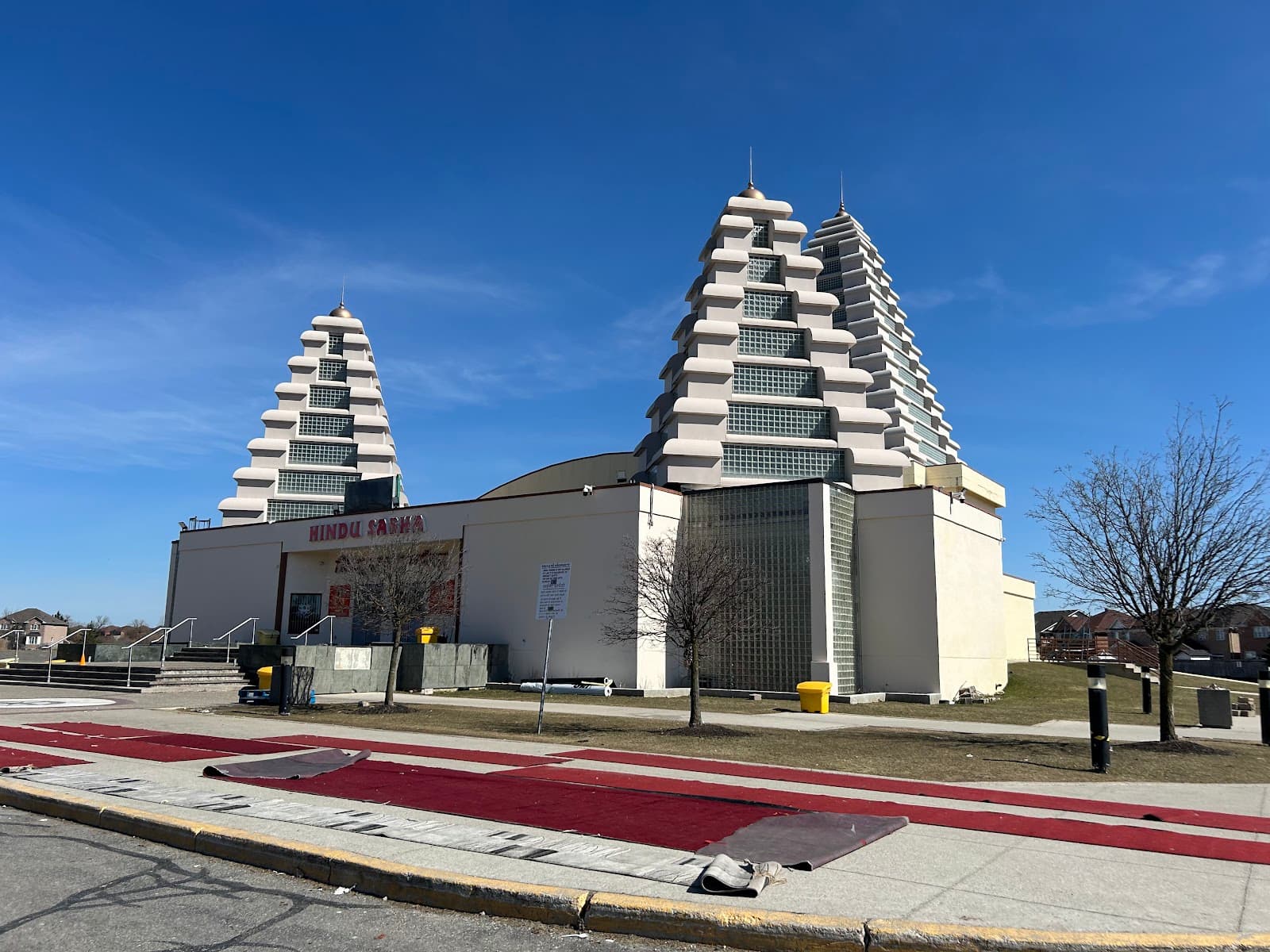
Hindu Sabha Mandir Brampton
The Hindu Sabha Mandir, located at 9225 The Gore Road in Brampton, Ontario, Canada, stands as a profound testament to the enduring legacy of India's millennia-spanning cultural heritage, embodying the continuous tradition of Hindu civilization in the diaspora. Dedicated primarily to Maa Jagdamba, this sacred edifice serves as a vital spiritual and cultural nexus for the Hindu community in the Greater Toronto Area [1] [2]. Its architectural design predominantly adheres to the Dravida style, characterized by its pyramidal multi-tiered towers known as *vimanas* or *shikharas*, intricate carvings, and monumental structures, reflecting an indigenous architectural idiom that originated in Southern India thousands of years ago [5] . While incorporating modern institutional and brick architecture, the temple meticulously preserves the aesthetic principles and iconographic traditions of ancient Indian temple building [5] . The temple complex encompasses an expansive constructed area of approximately 32,000 square feet [3] [4]. The main floor alone spans about 17,000 square feet, featuring a dedicated altar area of 4,000 square feet where the primary deities are enshrined [3]. The lower level houses a substantial community hall and kitchen, covering approximately 15,000 square feet, designed to facilitate large gatherings and community service initiatives [3]. The main prayer hall is engineered to accommodate over 1,000 devotees, reflecting its role as a major congregational space [3]. A prominent architectural feature is the main *shikhara*, which rises to an impressive height of approximately 120 feet, dominating the skyline and serving as a beacon for the community [3]. The construction employs contemporary engineering techniques while integrating traditional Indian craftsmanship for its decorative elements, including sculptures and intricate carvings that adorn the exterior and interior, depicting various deities, mythological narratives, and auspicious symbols [5]. The temple's design ensures optimal spatial arrangements for rituals, meditation, and communal activities, with designated areas for *darshan*, *puja*, and *prasad* distribution [1]. Currently, the Hindu Sabha Mandir is an actively functioning religious and cultural center, offering daily worship services, morning and evening *aartis*, *bhajan-kirtan* sessions, and *satsangs* [1] [2]. Special religious programs are organized to celebrate major Hindu festivals such as Diwali, Holi, and Dussehra, drawing thousands of devotees [1]. The temple also runs comprehensive religious education and *sanskar* programs for children and youth, alongside regular yoga and meditation sessions, fostering spiritual and physical well-being within the community [1]. Conservation efforts focus on routine maintenance and preservation of its architectural integrity, ensuring the longevity of its traditional elements. The temple is managed by a dedicated board and management team, supported by a Women Empowerment Group, which actively participates in various temple activities and community outreach programs, including a food bank [1] [2]. The site is fully operational, accessible to visitors, and adheres to established maintenance protocols, serving as a vibrant hub for cultural exchange and spiritual enrichment [1] [2]. Photography is generally not permitted inside the main sanctum, and traditional or formal attire is recommended for visitors [1]. An ongoing project includes the construction of a 55-foot-tall statue of Lord Hanuman, further enhancing the temple's spiritual landscape .
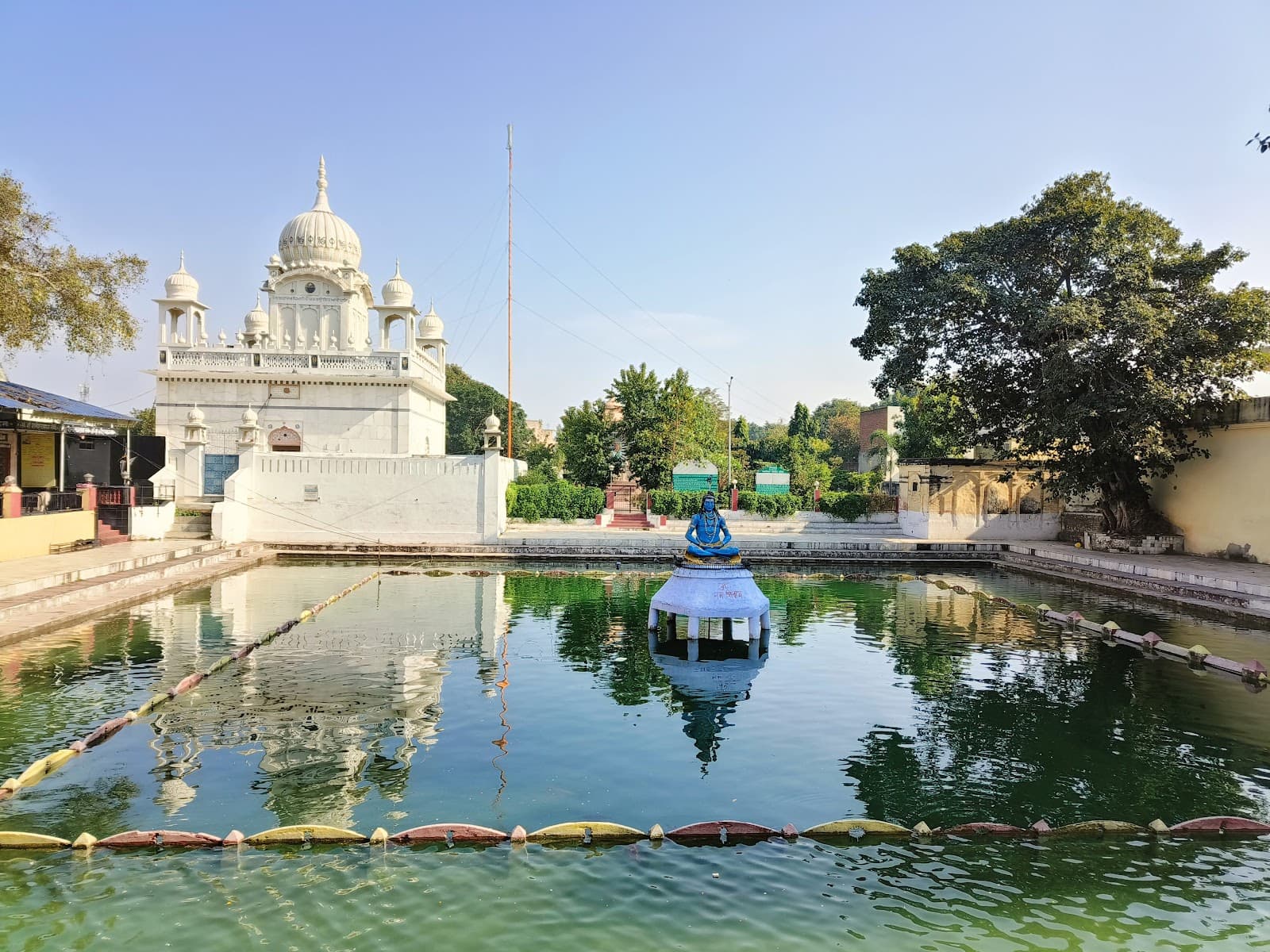
Sthaneshwar Mahadev Temple Thanesar
The late afternoon sun cast long shadows across the courtyard of the Sthaneshwar Mahadev Temple, painting the weathered stone a warm ochre. Dust motes danced in the shafts of light filtering through the gaps in the surrounding buildings, lending an ethereal quality to the scene. Here, in the heart of Thanesar, nestled within the historically significant land of Kurukshetra, stood a testament to centuries of devotion and architectural evolution. My visit wasn't just a reporting assignment; it was a pilgrimage of sorts, a chance to connect with the tangible remnants of India's rich past. The temple's current structure, while undeniably impressive, whispers of multiple reconstructions. The core, I learned from the temple priest, dates back to the ancient period, possibly even pre-Gupta times. However, much of what stands today bears the unmistakable mark of the Maratha reconstruction in the 18th century. This layering of history, this palimpsest of architectural styles, is precisely what makes Sthaneshwar Mahadev so fascinating. The shikhara, the towering superstructure above the sanctum sanctorum, rises with a gentle curve, its surface adorned with intricate carvings. While the Maratha influence is evident in the overall form, closer inspection reveals subtle nods to earlier architectural traditions. The amalaka, the crowning disc-like element, retains a classical simplicity, hinting at the temple’s older origins. I spent a considerable amount of time circling the structure, my gaze tracing the lines of the carvings, trying to decipher the stories they told. Many were weathered beyond recognition, yet their presence spoke volumes about the devotion and artistry of the craftsmen who had painstakingly etched them into the stone. Stepping inside the sanctum, I was struck by the palpable sense of reverence. The air was thick with the scent of incense and the murmur of prayers. The main deity, Lord Shiva, is represented by a lingam, a smooth, cylindrical stone that is the focal point of worship. The simplicity of this aniconic representation contrasted sharply with the ornate carvings that adorned the surrounding walls. It was a powerful reminder of the core principles of Hindu philosophy – the formless divine residing within the tangible world. The temple complex is not limited to the main shrine. Smaller shrines dedicated to various deities dot the courtyard, each with its own unique character. I was particularly drawn to a small, almost hidden shrine dedicated to Lord Hanuman. The vibrant vermilion paint that covered the statue of the Hanuman contrasted beautifully with the muted tones of the surrounding stonework. One of the most striking features of the Sthaneshwar Mahadev Temple is its connection to the sacred tank, known as the Brahma Sarovar. Located just a short walk from the temple, the tank is believed to have been created by Lord Brahma himself. Pilgrims come from far and wide to bathe in its holy waters, particularly during the solar eclipse. Standing by the edge of the tank, I could feel the weight of history and mythology pressing down on me. This was not just a body of water; it was a living testament to the enduring power of faith. My visit to Sthaneshwar Mahadev was more than just an architectural study; it was an immersion into the living tapestry of Indian culture and spirituality. The temple, with its layers of history, its intricate carvings, and its palpable sense of sanctity, offered a glimpse into the enduring power of faith and the artistry of those who sought to express it through architecture. As I left the temple grounds, the setting sun casting long shadows behind me, I carried with me not just photographs and notes, but a deeper understanding of the continuity of India's cultural heritage.
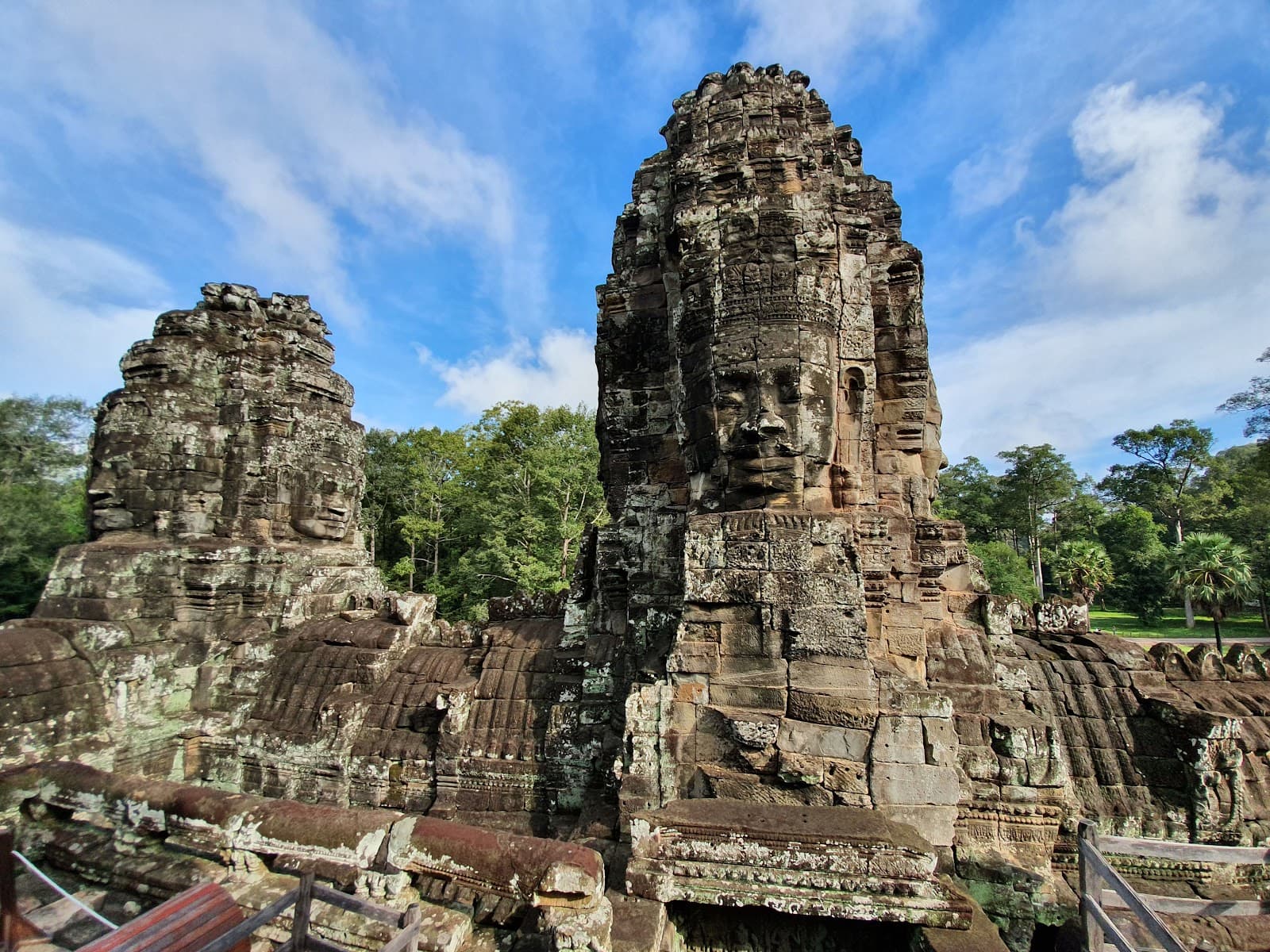
Angkor Thom Bayon Siem Reap Cambodia
Nestled within Angkor Thom, the ancient Khmer capital, stands Bayon Temple, a testament to the architectural and religious synthesis achieved during the reign of King Jayavarman VII around 1250 CE ([1][2]). Conceived as a Mahayana Buddhist state temple, Bayon integrates elements of Indian Buddhist and Hindu iconography with distinctive Khmer architectural designs ([1]). The temple's construction utilized materials such as sandstone, laterite, lime mortar, metal, and wood ([2]). Intricate carvings adorning the temple walls narrate scenes from Khmer history and episodes from Indian mythology, most notably the Samudra Manthan (Churning of the Ocean of Milk), illustrating the transmission of Indian cultural narratives to Southeast Asia ([1][2]). These elaborate bas-reliefs provide invaluable insights into the religious and social life of the Khmer Empire ([3]). Originally, the Bayon featured 54 towers; 37 remain, each sculpted with colossal stone faces ([1]). Scholars propose these 216 faces represent Avalokiteshvara, the bodhisattva of compassion, or a syncretic representation of Buddha and the king himself ([2]). During its construction, Vastu Shastra principles, the ancient Indian science of architecture, likely influenced the temple's layout ([4]). Its three-tiered structure may reflect the three worlds of Indian cosmology ([1]). Vedic traditions also influenced the temple's spatial arrangement and iconographic program ([4][5]). Shaiva (Shiva-worshipping) motifs are incorporated, indicative of the religious syncretism prevalent in Khmer society ([1][2]). Granite and sandstone blocks, meticulously carved, form the structural components of the temple, showcasing the advanced engineering skills of Khmer artisans ([3]). Today, as a UNESCO World Heritage Site, Angkor Thom and Bayon exemplify the profound influence of Indian culture on Southeast Asian architecture and art ([3][4][5]). Ongoing research and conservation efforts ensure the preservation of this invaluable cultural heritage for future generations ([5]).
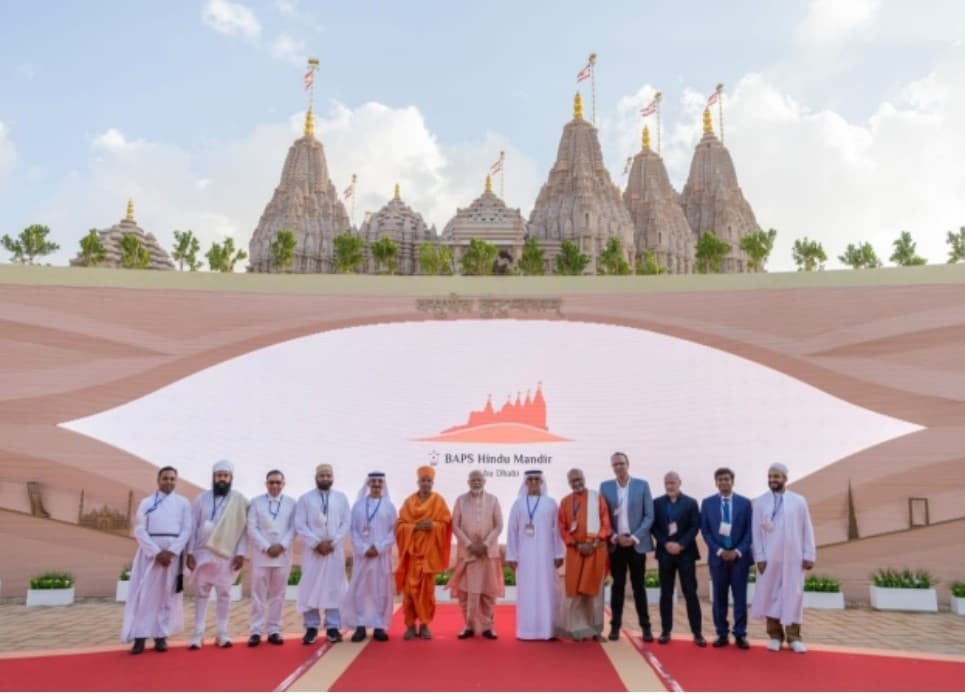
Maha Lakshmi Temple Abu Dhabi (BAPS Campus)
The Maha Lakshmi Temple forms the southern devotional wing of the BAPS Hindu Mandir campus in Abu Dhabi, providing a dedicated sanctum for Sri Mahalaxmi-Narayana with a Vaikuntha-inspired sinhasan crafted from Italian marble, gold-plated lotuses, and fibre-optic constellations that mirror Abu Dhabi's desert night sky ([1][2]). Consecrated alongside the main mandir in February 2024, the Lakshmi sanctum offers a quieter devotional experience focused on prosperity, education, and wellbeing—hosting specialised Lakshmi Pujas for entrepreneurs, students, and families moving to the Gulf. The hall seats 600 devotees, features carved marble columns, and integrates digital translation kiosks offering arti lyrics in Hindi, English, Malayalam, and Tagalog. Daily schedule aligns with the mandir's 6:00 AM-9:00 PM operations, but the Lakshmi wing hosts additional Friday evening Ashtalakshmi satsang, Saturday bridal blessings, and quarterly finance literacy workshops led by community volunteers. Donors can participate in Navagraha homa, Kuber puja, or annadhanam out of the adjoining seva kitchen. A micro-museum displays stories of Gulf entrepreneurs whose philanthropy supported the mandir and documents historic trade links between Gujarat, the Malabar coast, and the Trucial States.
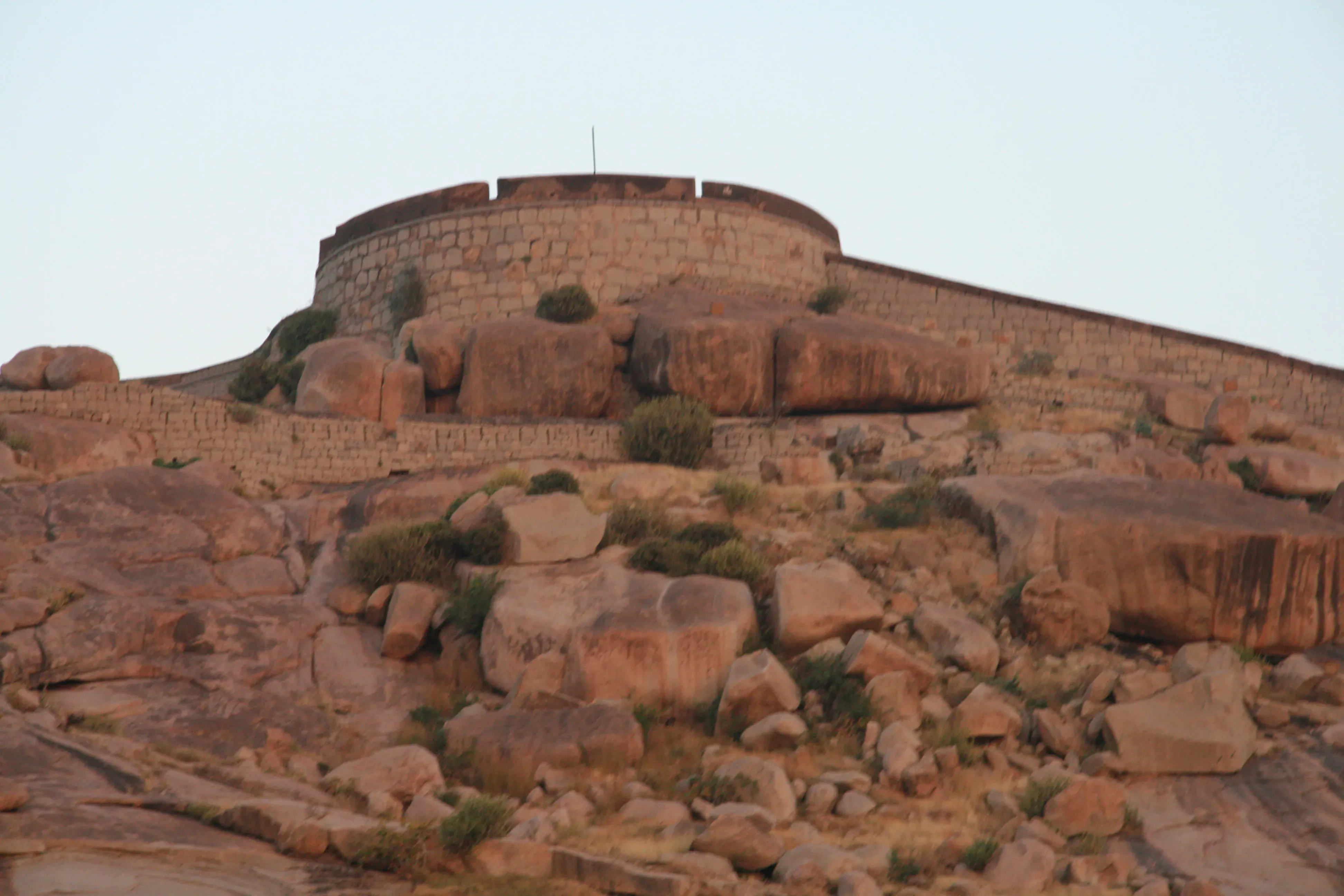
Bellary Fort Bellary
Granite and sandstone blocks, meticulously carved, form the imposing structure of Bellary Fort, rising dramatically from the Karnataka plains ([1]). Established around 1565 CE by Hanumappa Nayaka during the Vijayanagara period, the fort showcases a blend of Badami Chalukya and military architectural styles ([2][3]). Vastu Shastra principles, the ancient Indian science of architecture, likely influenced the fort's strategic layout and defensive design, though specific textual references are not available ([4]). This hilltop fortification embodies the Vijayanagara empire's strategic and artistic sensibilities. Sophisticated drainage systems ensure the preservation of the fort's structural integrity, demonstrating ancient engineering prowess ([5]). Intricate carvings adorning the walls, though weathered by time, hint at the fort's past grandeur ([6]). During the Vijayanagara Period, temple architecture and fort design shared common elements, emphasizing both aesthetic beauty and defensive strength ([7]). The use of locally available granite and stone highlights the region's traditional building practices. Stone platforms and foundations demonstrate the enduring legacy of the fort, a silent witness to centuries of Deccan history ([8]). Exploring Bellary Fort offers a captivating journey through layers of history, revealing the architectural traditions of different dynasties ([9]). The lower fort, with its roughly hewn granite walls, contrasts sharply with the upper fort, built by Hyder Ali and Tipu Sultan, displaying planned, geometric precision ([10]). The mosque within the upper fort blends Islamic and Deccan styles, adding another layer to the fort's rich heritage ([11]). This layering reflects the diverse cultural influences shaping the Deccan region over time. Within the fort complex, remnants of older structures suggest continuous occupation and adaptation over centuries ([12]). The fort's commanding position atop the hill provided a strategic advantage, allowing rulers to control the surrounding landscape. The design elements, while not directly linked to a specific verse in texts like the *Manasara Shilpa Shastra*, reflect the broader principles of site selection and fortification described in such treatises ([13]). Bellary Fort stands as a powerful reminder of India's rich architectural and military heritage ([14]).

Kal Bhairav Temple Ujjain
The air crackled with an energy I hadn’t anticipated. Not the usual tourist hubbub, but something older, thicker, woven into the very stones of the Kal Bhairav Temple in Ujjain. Dust motes danced in the shafts of sunlight slicing through the ancient gateway, illuminating the worn carvings that hinted at stories untold. This wasn't just a temple; it was a palimpsest of history, each layer whispering secrets of devotion and time. My camera, usually a reliable extension of myself, felt inadequate. How could I possibly capture the weight of centuries etched into the weathered stone? The temple, dedicated to the fearsome form of Shiva, Kal Bhairav, sits nestled on the banks of the Shipra River. The river itself seemed to hold its breath as it flowed past, a silent witness to the countless rituals performed on these banks. The main entrance, guarded by two imposing dwarapalas, felt like a portal to another realm. Their expressions, eroded by time yet still potent, spoke of a power beyond human comprehension. Stepping through the archway, I was struck by the contrast between the vibrant energy of the devotees and the stoic stillness of the temple structure. The scent of incense hung heavy in the air, mingling with the earthy aroma of the river and the metallic tang of offerings. Architecturally, the temple is a marvel. The shikhara, the towering spire that dominates the skyline, is a testament to the skill of the ancient artisans. Intricate carvings of deities, mythical creatures, and floral motifs adorn every surface, each telling a story from Hindu mythology. I spent hours tracing the lines of these carvings with my lens, trying to decipher the narratives they held. The play of light and shadow on the stone created an ever-shifting tapestry, adding another layer of complexity to the visual narrative. One particular carving caught my attention – a depiction of Kal Bhairav himself, eight-armed and fearsome, astride his vahana, the dog. The detail was astonishing; I could almost feel the raw power emanating from the deity. This wasn't just a representation; it felt like a presence. It was in moments like these, lost in the minutiae of the carvings, that I truly understood the devotion this place inspired. Beyond the main shrine, the temple complex sprawls, encompassing smaller shrines, courtyards, and pillared halls. Each space has its own unique character, its own story to tell. I found myself drawn to a quieter corner, a small shrine dedicated to the Goddess Parvati. The serenity of this space offered a stark contrast to the vibrant energy of the main shrine, providing a moment of quiet contemplation amidst the throngs of devotees. The most striking aspect of the Kal Bhairav Temple, however, is its palpable connection to the past. This isn't a museum piece; it's a living, breathing entity, still actively worshipped by thousands. Witnessing the rituals, the offerings, the fervent prayers, I felt a profound sense of connection to something larger than myself. It was a humbling experience, a reminder of the enduring power of faith and tradition. As the day drew to a close, and the last rays of sunlight painted the temple in hues of gold and ochre, I knew I had only scratched the surface of this ancient site. My photographs, though meticulously composed, could only capture a fraction of the experience. The true essence of the Kal Bhairav Temple lies in the intangible – the energy, the devotion, the whispers of history that echo through its hallowed halls. It's a place that stays with you long after you've left, a testament to the enduring power of the sacred.
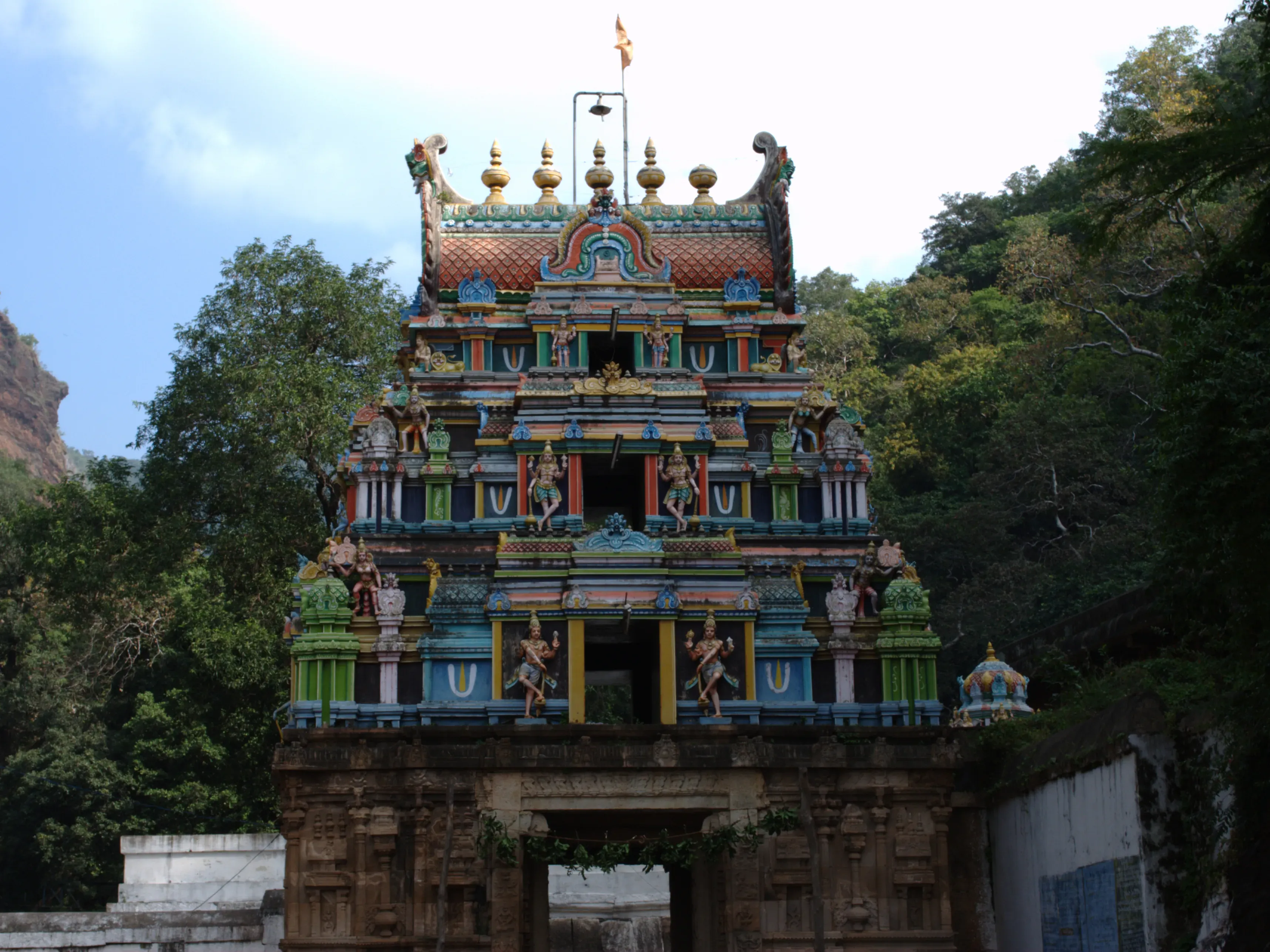
Ahobilam Temple Kurnool
Nestled within Andhra Pradesh's Nallamala Hills, the Ahobilam Temple, dating back to circa 1350 CE, serves as a testament to Vijayanagara architectural traditions ([2][8]). The temple is a sacred site dedicated to Lord Narasimha ([3][8]). During the Vijayanagara period, the rulers adopted the Dravidian style, skillfully carving the temple into the existing rock formations ([3][8]). Stone platforms and foundations exemplify this rock-cut technique, utilizing locally sourced granite to integrate with the natural landscape ([10]). The temple complex is geographically and spiritually divided into Lower and Upper Ahobilam ([3]). During the Vijayanagara period, temple architecture flourished, which is evident in the elaborate carvings that embellish the *mandapam* (pillared hall) and *vimana* (tower) of Lower Ahobilam ([2][9]). These carvings illustrate narratives from Hindu epics and Puranas, visually echoing the *sthala purana* (temple legend) in stone ([11][12]). Vastu Shastra principles, the ancient Indian science of architecture, guided the temple's layout and orientation, ensuring harmony and balance ([10][11]). The absence of towering *gopurams* (gateway towers) at Upper Ahobilam emphasizes the location's raw spirituality ([10]). Granite and sandstone blocks, meticulously carved, are combined with timber, bricks, and lime mortar, highlighting Vijayanagara construction expertise ([2][8]). The temple's design reflects a deep understanding of Dravidian architectural conventions and the region's natural resources ([9][10]). Ahobilam embodies the enduring relationship between humanity and the divine, representing ancient Indian knowledge systems and architectural skill ([10][11]). Ascending to Upper Ahobilam inspires *bhakti* (devotion) and *shakti* (divine energy), reinforcing the temple's profound spiritual importance ([3]). The integration of natural elements and artistic expression makes Ahobilam a significant example of Vijayanagara temple architecture ([2][10]).
Dabhoi Fort Vadodara
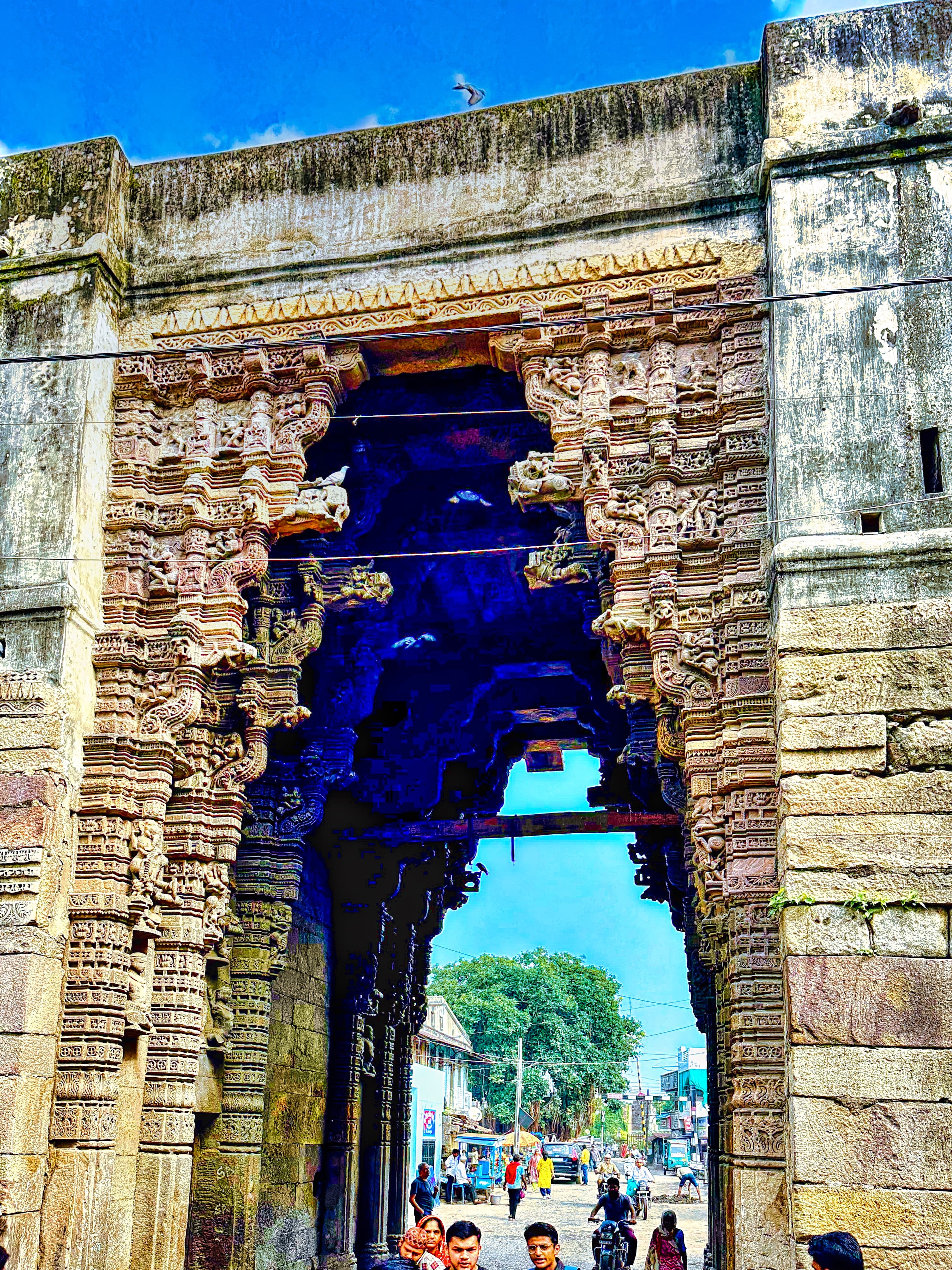
Approaching Dabhoi Fort in Gujarat, one confronts a formidable quadrangular structure erected circa 1150 CE during the Solanki dynasty ([1][2]). This fortified city, conceived by Siddhraj Jaisinh, showcases Chalukya architectural prowess and Hindu military strategy ([3]). Spanning over 60 acres, its sandstone and basalt walls, bonded with lime mortar, present a commanding presence ([4]). Intricate carvings adorning the Hira Bhagol (Diamond Gate) depict deities and scenes from epics, revealing the refined artistry of Solanki artisans ([1][3]). Strategic machicolations and jalis (latticework screens) ensured both defense and ventilation ([2]). The fort's layout reflects Vastu Shastra principles, the ancient Indian science of architecture, integrating residential, commercial, and sacred spaces ([5]). Within the fort, the Kalika Mata Temple stands as a testament to continuous religious practice, its architecture evolving through renovations ([1]). The temple's carvings, portraying various forms of the goddess, contrast with the fort's military austerity ([3]). Sophisticated drainage systems ensured sanitation, while four stepwells, including the Chand Baori, provided water ([4]). These vavs (stepwells) are elaborate subterranean structures, their geometric steps descending to the water level ([2]). Granite and sandstone blocks, meticulously carved, form the fort's bastions and ramparts ([3][4]). These ramparts, wide enough for chariots, offered strategic vantage points ([1]). Dabhoi Fort encapsulates Solanki-era urban planning and architectural ingenuity, reflecting a blend of military, artistic, and hydraulic engineering, embodying the rich heritage of Gujarat ([2][5]).
Sri Sundararaja Perumal Temple Klang Selangor
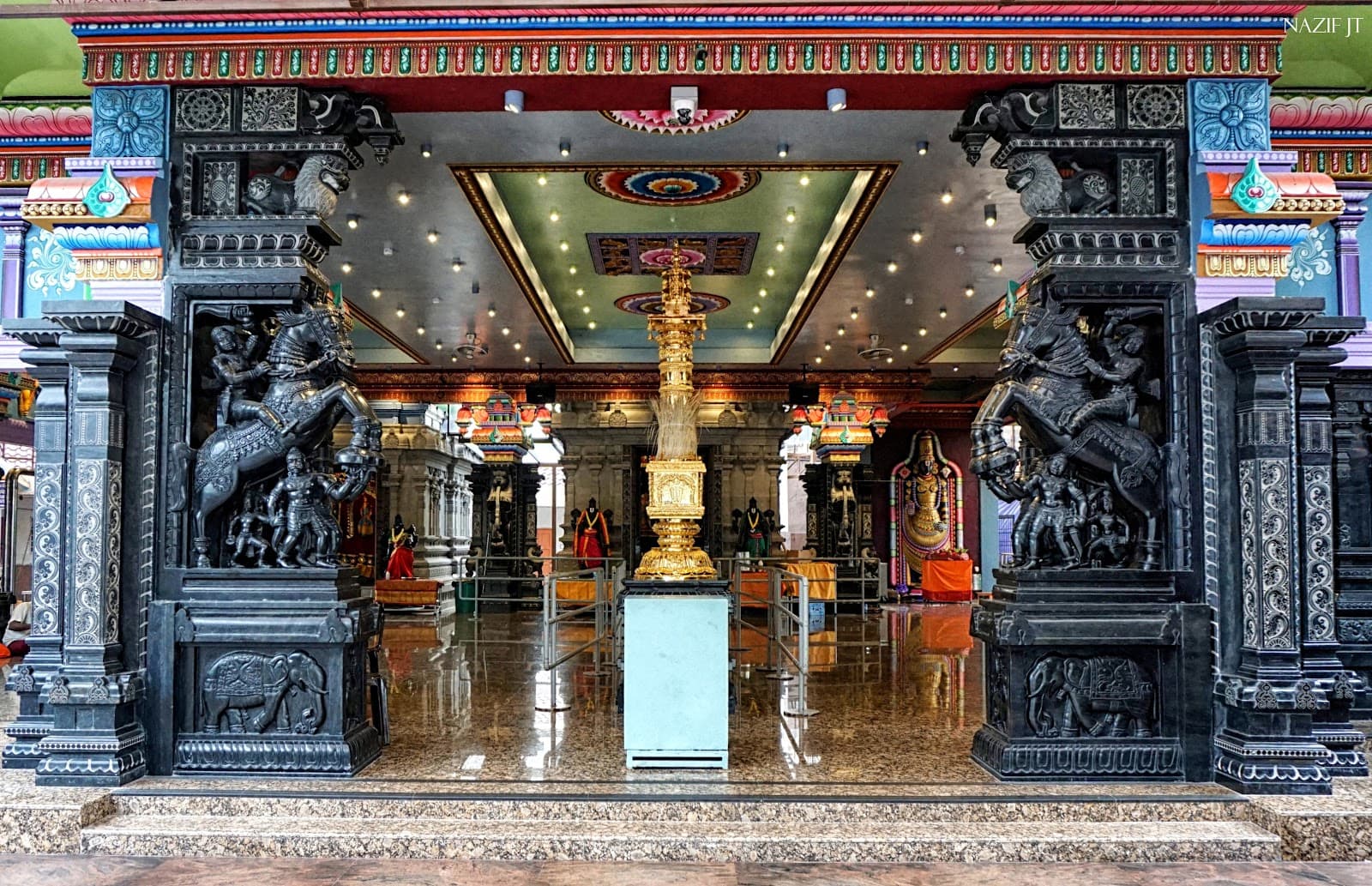
The Sri Sundararaja Perumal Temple, located in Klang, Selangor, Malaysia, stands as a profound testament to India's millennia-spanning cultural heritage and the enduring continuity of Indian civilization across geographical boundaries [1] [3]. Dedicated to Lord Vishnu in his form as Perumal, this sacred site serves as a vital center for Vaishnavite worship, often revered as the 'Thirupathi of South East Asia' [1] [2]. The temple exemplifies the indigenous Dravida architectural style, characterized by its intricate carvings and monumental structures, reflecting a continuous tradition of temple building that dates back thousands of years in the Indian subcontinent [1] . The entire structure is notably constructed from granite, a material chosen for its durability and majestic appearance, a hallmark of traditional South Indian temple construction techniques [1] [3]. The architectural ensemble is dominated by a towering gopuram, the entrance tower, which is richly adorned with a multitude of sculptures depicting Hindu deities, mythological narratives, and celestial beings [1] [3]. These detailed carvings are not merely decorative but serve as visual narratives of Hindu epics such as the Ramayana and Mahabharata, embodying the deep iconographic traditions of Indian art [5]. The main sanctum, known as the Perumal Sannathi, houses the principal deity, Lord Perumal, alongside his consort, Goddess Mahalakshmi [2] [3]. Surrounding this central complex are several other notable shrines, including those dedicated to Lord Shiva, Parvati, Ganesha, Murugan, Ayyappan, Lord Saneshwara (Saturn), and the Navagrahas (nine planets) [2] [3]. An additional Anjaneya Sannathi is situated adjacent to the central complex, with a Nagaraja Sannathi located at the corner outside the temple structure [2]. The spatial arrangement of these shrines within the temple complex follows traditional Agama Shastra principles, ensuring proper devotional flow and ritualistic practices [5]. The temple's current state reflects a significant reconstruction completed in 2015, which modernized facilities while meticulously preserving its traditional South Indian Dravidian architectural integrity [1] [2]. This reconstruction effort underscores a commitment to maintaining the site's heritage while accommodating its active role as a spiritual and cultural hub [1]. The temple is recognized as a National Heritage Site since 2012, acknowledging its profound cultural and historical significance [4]. It actively hosts daily rituals and ceremonies, attracting a continuous flow of devotees and visitors [1]. Major Hindu festivals such as Purataasi Month, Vaikunta Ekadasi, Panguni Uthiram, and Thiruvadirai are celebrated with grand ceremonies, music, and dance, drawing thousands and ensuring the vibrant continuity of Indian cultural practices [1] [5]. The temple is operationally ready, with established visiting hours and accessibility for all visitors, serving as a living monument to India's enduring spiritual and artistic legacy [1].
Shree Swaminarayan Mandir Cardiff
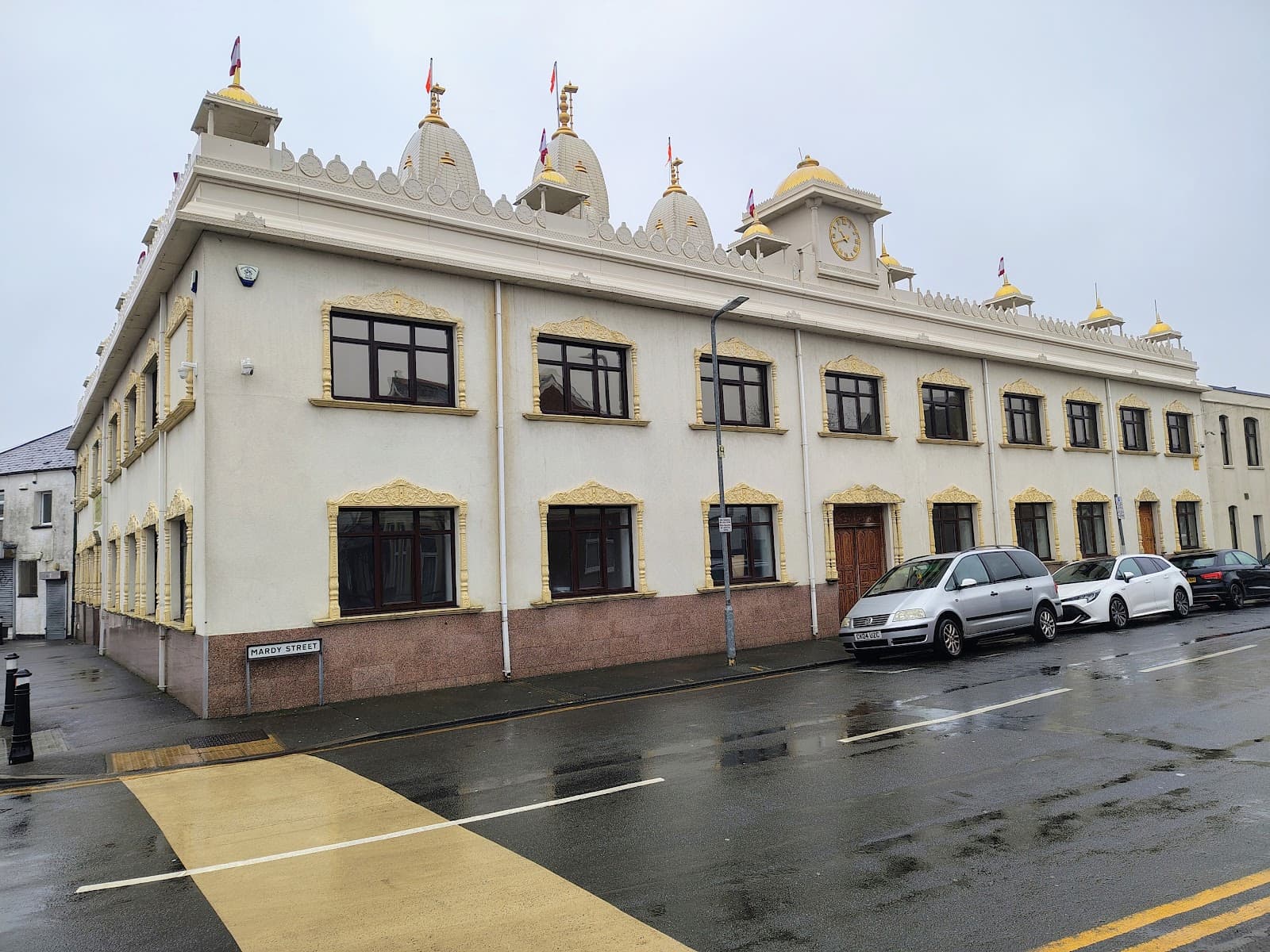
The Shree Swaminarayan Mandir Cardiff, located at 55 Merches Place in Grangetown, Cardiff, Wales, United Kingdom, stands as a vibrant testament to India's millennia-spanning cultural heritage, dedicated to Bhagwan Swaminarayan [1]. This sacred edifice embodies a continuous tradition of Indian civilization, manifesting indigenous architectural styles and cultural practices that reflect India's deep historical roots, even in its modern construction [4]. The mandir integrates elements of Swaminarayan architecture, Maru-Gurjara architecture, Haveli architecture, and Indo-Victorian influences, showcasing a sophisticated synthesis of ancient design principles with contemporary adaptation [3]. Swaminarayan temples, including the Cardiff Mandir, adhere to the Nagara style of temple architecture, a prominent tradition in North and West India, characterized by its curvilinear shikhara (spire) [4] [5]. This style is meticulously guided by Vastu Shastra, an ancient Indian discipline of sacred architecture that integrates principles of time, space, and cosmology to create spiritually conducive environments [4]. The construction eschews ferrous metals for structural reinforcement, relying instead on self-load-bearing masonry to ensure longevity and spiritual purity, a practice rooted in ancient texts that prescribe mandirs to last a thousand years [4]. The gold-topped shikaras, typical of North Indian temple architecture, crown the shrines (sinhashan) within the mandir, symbolizing mountain peaks and connecting the structure to the natural world revered by ancient Hindu seers [2] [4]. The Maru-Gurjara style, originating in Gujarat and Rajasthan between the 11th and 13th centuries CE, contributes to the mandir's intricate detailing, known for its opulent carvings and sculptural richness [5] . This style, a subset of the Nagara tradition, features elaborate ornamentation and a distinctive curvilinear tower design [5] . Haveli architecture, a traditional Indian mansion style dating back to the 1600s, influences the mandir's aesthetic with its characteristic detailed carvings and spatial arrangements, often incorporating courtyards and intricate wooden elements [3] . The fusion of these indigenous styles with Indo-Victorian elements demonstrates the adaptability and enduring legacy of Indian craftsmanship [3]. The mandir's interior features intricate carvings and sculptures that depict deities and mythological narratives, serving as visual representations of Hindu philosophy and iconography [4]. These decorative elements are not merely aesthetic but are imbued with symbolic meaning, guiding the worshipper's spiritual journey [4]. The Shree Swaminarayan Mandir Cardiff is recognized by Cardiff Council as a community anchor within Grangetown regeneration initiatives and holds the status of a Registered Place of Worship [provided in prompt]. It actively hosts a variety of religious and cultural programming, including festivals like Tulsi Vivah and Diwali, and community events, ensuring continuous engagement and accessibility for devotees and visitors [1]. The mandir maintains regular opening hours and conducts daily Aarti ceremonies, facilitating a steady flow of worshippers [1]. The site is operationally ready, upholding high standards of maintenance and compliance, reflecting the community's dedication to preserving and promoting its rich cultural and spiritual heritage [1].
Quick Links
Plan Your Heritage Journey
Get personalized recommendations and detailed visitor guides