Has Inheritage Foundation supported you today?
Your contribution helps preserve India's ancient temples, languages, and cultural heritage. Every rupee makes a difference.
Secure payment • Instant 80G certificate
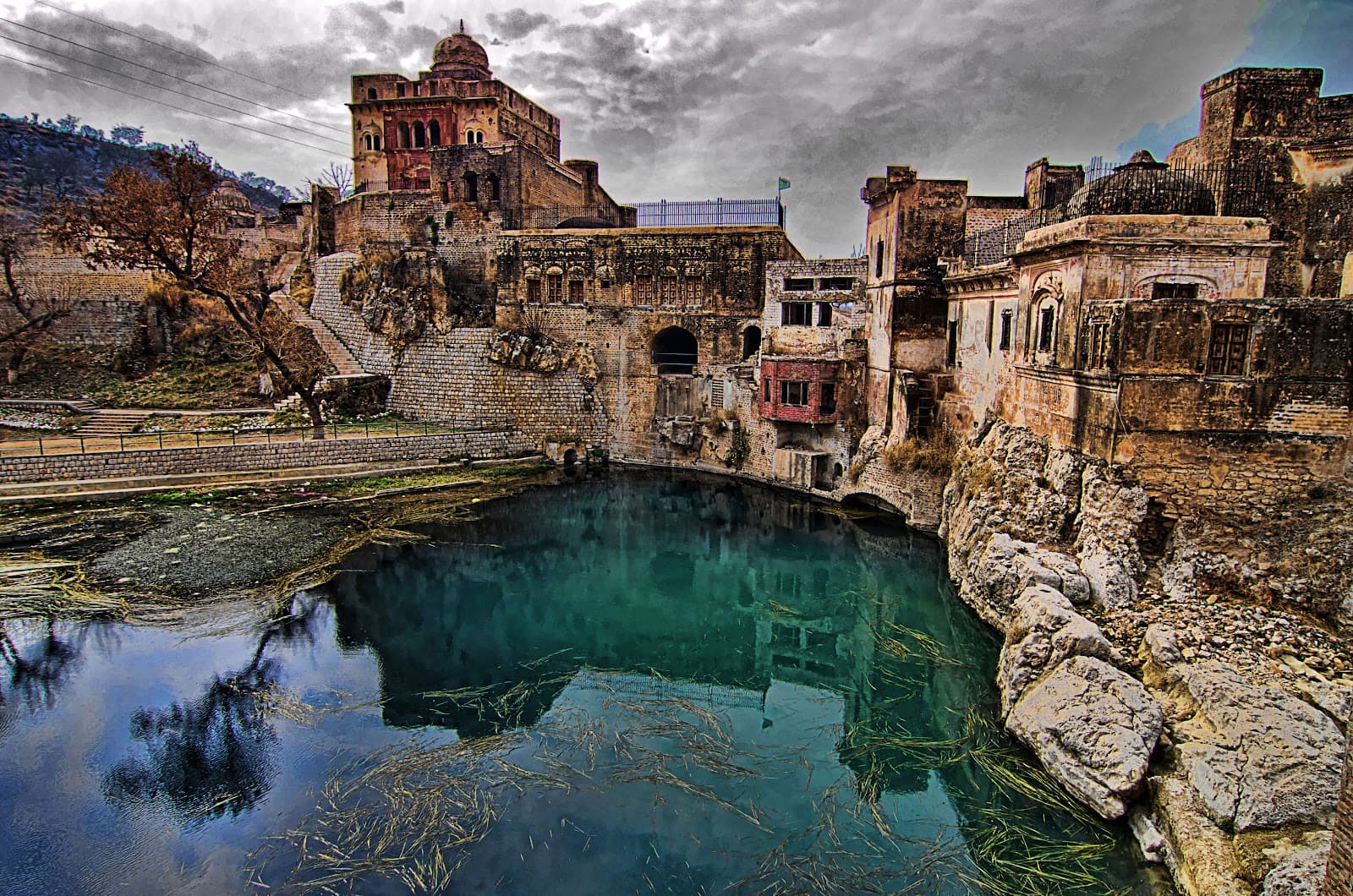
Katas Raj Temples Chakwal Punjab
Katas Raj Temples, located in Chakwal District of Punjab Province, represent one of the most significant and architecturally sophisticated Hindu temple complexes in Pakistan, dating from the 6th to 10th centuries CE and constructed during the Hindu Shahi dynasty period when this region formed part of the greater Hindu rashtra extending across the Indian subcontinent. The temple complex, centered around a sacred pond believed to have been formed from the tears of Lord Shiva mourning the death of his consort Sati, spans approximately 4 hectares and features seven major temples arranged in a mandala pattern around the pond, with the main Shiva temple rising 15 meters and constructed from locally quarried red sandstone and limestone. The complex demonstrates the evolution of Hindu temple architecture in the northwestern regions of ancient India, incorporating elements from Gandhara, Gupta, and early medieval North Indian styles, with distinctive features including corbelled vaulting, intricately carved lintels depicting scenes from the Ramayana and Mahabharata, and sophisticated drainage systems channeling water from surrounding hills into the sacred pond. Archaeological evidence indicates the site was continuously occupied from the 6th century CE through the 11th century, serving as both a religious center and waypoint on ancient trade routes connecting the Indus Valley to Central Asia. The temples are associated with the Mahabharata epic, with local tradition holding that the Pandava brothers spent part of their exile here, and the site contains evidence of both Shaiva and Vaishnava worship, reflecting the syncretic nature of Hindu practice in the region. The complex underwent extensive restoration from 2006 to 2017 under the supervision of the Evacuee Trust Property Board and Archaeological Survey of Pakistan, involving structural stabilization, conservation of decorative elements, and restoration of the sacred pond. Today, Katas Raj Temples remain an active site of Hindu worship, particularly during Maha Shivaratri, and serve as a powerful symbol of the ancient Hindu heritage of Pakistan, demonstrating the continuity of Hindu civilization in regions that were integral parts of the historical Hindu rashtra before the partition of the Indian subcontinent. ([1][2])
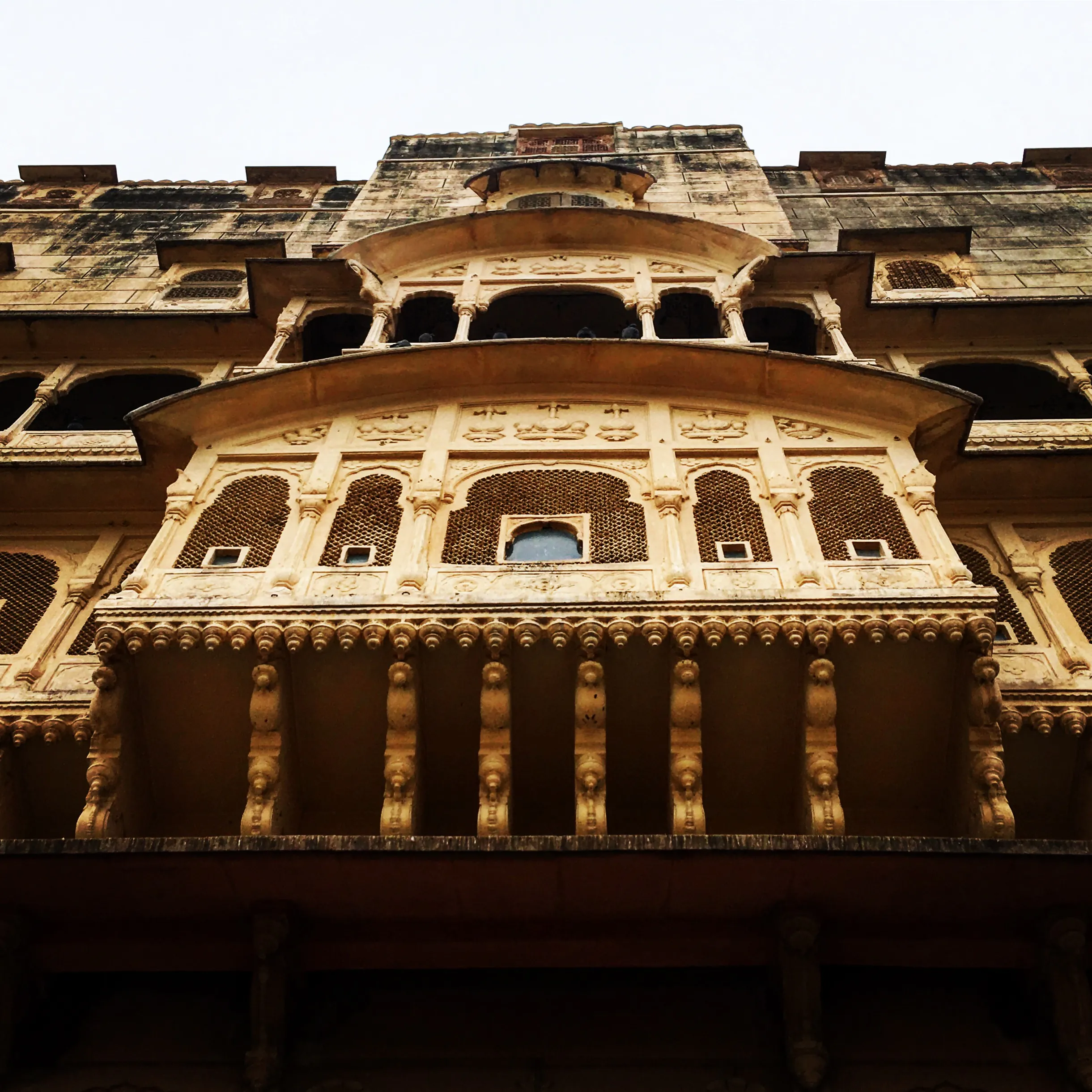
City Palace Udaipur
The City Palace, Udaipur, situated in the historic city of Udaipur, Rajasthan, India, stands as a monumental testament to India's millennia-spanning cultural heritage and the continuous tradition of Indian civilization [1] [4]. This sprawling complex, built predominantly in indigenous Rajput architectural styles, with influences from Indo-Islamic, Haveli, and Maru-Gurjara traditions, reflects the deep historical roots and sophisticated craftsmanship of the region [1] [4]. Constructed primarily from granite and marble, the palace complex extends over an impressive facade of 244 meters (801 ft) in length and 30.4 meters (100 ft) in height, perched atop a ridge on the eastern bank of Lake Pichola . The structural system relies on robust marble and masonry, showcasing traditional Indian engineering prowess . The architectural details within the City Palace are extensive and intricate, featuring a fusion of courtyards, corridors, terraces, pavilions, and hanging gardens [1]. Specific features include elaborate mirror-work, delicate marble-work, vibrant murals, and intricate wall paintings, alongside silver-work and inlay-work . The Mor Chowk, or Peacock Courtyard, is particularly notable for its three-dimensional mosaic peacocks, crafted from 5,000 pieces of colored glass, representing the seasons of summer, winter, and monsoon . The Sheesh Mahal, or Palace of Mirrors, dazzles with its intricate mirror-work, while the Chini Chitrashala displays Chinese and Dutch ornamental tiles [1] . Defensive features are integrated into the design, such as zigzag corridors linking various palaces, intended to thwart surprise attacks . Water management systems, including fountains and pools like the one in Badi Mahal, provided cooling effects and were utilized for festivals such as Holi [1] . The City Palace Museum, housed within the Mardana Mahal and Zenana Mahal, actively preserves and displays royal artifacts, historic paintings, sculptures, and textiles, offering a glimpse into the royal lifestyle and cultural practices of the Mewar dynasty [4]. Conservation efforts are ongoing, with a state-of-the-art conservation laboratory established at the City Palace Museum, focusing on works on paper and aiming to become a regional training center [2]. A comprehensive Conservation Master Plan and Management Plan, funded by the Getty Foundation, guides future interventions and developments, emphasizing indigenous conservation techniques and an Indian perspective in international conservation . The site is fully operational, welcoming visitors to explore its historical grandeur, with guided tours available to enhance understanding of its rich heritage . The palace complex continues to serve as a vibrant cultural hub, hosting events and maintaining its legacy as a testament to India's enduring cultural continuum .
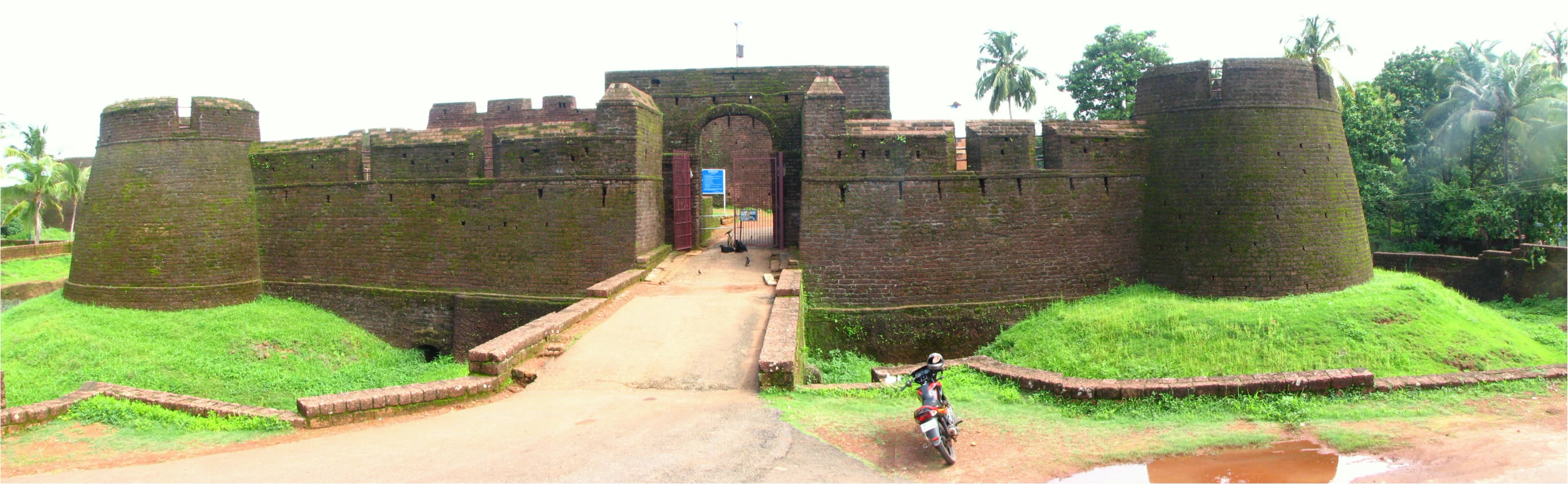
Bekal Fort Kasaragod
Amidst Kerala's coastal tapestry lies Bekal Fort, a 17th-century sentinel erected by Shivappa Nayaka of Keladi around 1650 CE ([3][4]). Unlike the Mughal's northern citadels, Bekal Fort showcases Kerala's military architecture, strategically positioned along the Malabar Coast ([1][4]). Its laterite walls, stretching over a kilometer, embody raw, earthy strength, a testament to the region's defensive needs ([1][2]). Sophisticated strategic planning defines Bekal Fort, evident in its keyhole-shaped bastion offering panoramic maritime views ([3]). The zigzagging pathways, a deliberate design to disorient invaders, highlight the fort's military function ([4]). The fort's design integrates Kerala's architectural traditions, reflecting the region's unique aesthetic sensibilities ([2]). While lacking the ornate carvings of other Indian forts, Bekal's beauty resides in its stark simplicity, emphasizing the natural strength of laterite ([1][2][5]). Within the fort's expanse, a Hanuman temple provides a vibrant counterpoint to the muted tones of the laterite structure ([3]). This sacred space reflects the enduring Hindu traditions of the region, coexisting harmoniously within the fort's military architecture. Vastu Shastra principles, the ancient Indian science of architecture, likely influenced the fort's layout, optimizing its defensive capabilities and aligning it with natural energies, though specific textual references are not available ([2]). Bekal Fort stands as a powerful reminder of Kerala's rich history and architectural prowess, blending military strategy with regional artistry ([4][5]). Laterite, stone, wood, and clay were used in the construction of this fort ([2]).
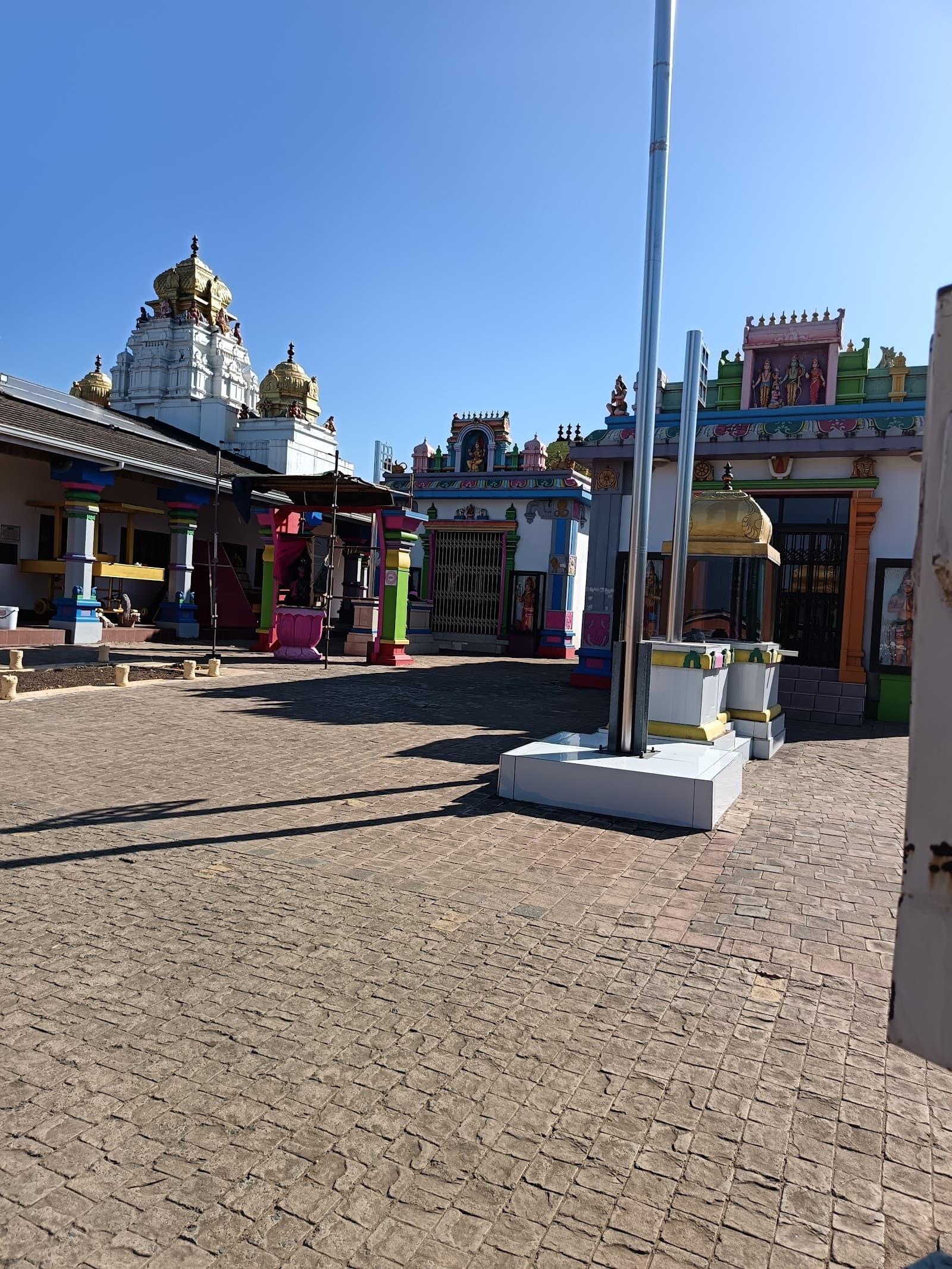
Shree Ganesha Temple Mount Edgecombe
The Shree Ganesha Temple, located on Old Main Road in Mount Edgecombe, KwaZulu-Natal, South Africa, stands as a profound testament to India's millennia-spanning cultural heritage and the enduring continuity of Indic civilization. Dedicated to Lord Ganesha, the remover of obstacles, this sacred edifice embodies the ancient Dravida architectural style, a tradition rooted deeply in South Indian temple construction that has evolved over thousands of years [1]. The temple's design reflects indigenous architectural principles, meticulously transplanted and adapted by Tamil indentured labourers, thereby preserving and propagating a continuous lineage of sacred building practices far from its geographical origins [2]. The temple complex is characterized by a classical arrangement, enclosed within a heavily modulated perimeter wall, a feature common in traditional Dravidian temple architecture that defines the sacred space [3]. The primary entrance is marked by a low gopuram, referred to as a Sikhala tower, which serves as a monumental gateway, adorned with intricate sculptural details that narrate Hindu iconography and mythological narratives [4]. This gopuram, though modest in scale compared to the towering structures of mainland India, faithfully replicates the essential elements of its ancient prototypes, including multi-tiered superstructures and decorative kalashas [1]. Upon entering, an axial pathway leads past a kodi pole, an external altar and flagpole, which is an integral part of South Indian temple rituals and symbolism [3]. The central focus of the complex is the garbhagriha, or cella, a square sanctum sanctorum positioned precisely on the central axis, housing the primary deity, Lord Ganesha [4]. The construction, believed to be the oldest surviving 'solid' temple in Africa, suggests the use of robust materials such as brick and stucco, meticulously crafted by skilled artisans, including the architect Kristappa Reddy, who was an indentured bricklayer [3]. While specific dimensions are not widely documented, the temple's layout adheres to the `shilpa shastras`, ancient Indian treatises on art and architecture, ensuring proportional harmony and sacred geometry [1]. The temple also features a Shiva Temple, constructed in 1912 CE by master temple builder Kothanar Ramsamy Pillay, which is crowned by a deeply modulated barrel vault, further showcasing the layered architectural history and continuous devotional practices at the site [3]. Decorative elements throughout the complex include sculptures of various deities, mythical creatures, and floral motifs, all executed in traditional South Indian styles, reflecting the rich artistic traditions of India [1]. The presence of Nandi, the sacred bull, guarding the corners of the courtyard, reinforces the Shaivite influences and the comprehensive nature of Hindu worship practiced here [3]. Recognized as a provincial heritage site, the Shree Ganesha Temple has undergone significant conservation efforts, including a gopuram refurbishment in 1968 CE and a chariot restoration in 2005 CE, ensuring the preservation of its structural integrity and aesthetic value [2]. These ongoing maintenance and restoration works are crucial for sustaining the temple's role as an active place of worship and a cultural landmark. The temple remains fully operational, hosting regular religious ceremonies, festivals, and community gatherings, thereby continuing its ancient role as a vibrant center for Hindu cultural and spiritual life, accessible to devotees and visitors alike [5]. Its operational readiness underscores its enduring legacy as a living monument to India's profound and continuous cultural traditions.

Gobindgarh Fort Amritsar
The imposing red sandstone walls of Gobindgarh Fort rose before me, a stark contrast to the bustling, vibrant city of Amritsar that lay just beyond its gates. Having explored numerous Mughal and Rajput forts across Uttar Pradesh, I was eager to experience this Sikh stronghold, a testament to a different era and a distinct architectural style. The sheer scale of the fort, spread across 43 acres, was immediately impressive. It felt less like a single structure and more like a fortified city, a self-contained world within Amritsar. Entering through the Nalwa Gate, named after the legendary Sikh general Hari Singh Nalwa, I was struck by the blend of robustness and elegance. The fortifications, clearly designed with defense in mind, were not devoid of aesthetic considerations. The arched gateway, the intricate carvings around the wooden doors, and the strategically placed bastions all spoke of a meticulous approach to construction. Unlike the ornate embellishments I've seen in Rajasthani forts, Gobindgarh displayed a more restrained grandeur. The focus here seemed to be on strength and functionality, reflecting the martial ethos of the Sikh empire. The Toshakhana, the royal treasury, was my next stop. The sheer thickness of its walls, almost 12 feet in some places, underscored its importance. Inside, the cool air and dimly lit interiors created an atmosphere of hushed reverence. Imagining the wealth that once filled these vaults, from gold coins to precious jewels, gave me a tangible connection to the fort's opulent past. The displays of ancient weaponry, including swords, shields, and even a replica of the legendary Zamzama cannon (the original resides in Lahore), further emphasized the fort's military significance. Walking along the ramparts, I could see the city of Amritsar spread out like a tapestry below. The Golden Temple, gleaming in the distance, served as a poignant reminder of the spiritual heart of Sikhism, so closely intertwined with the fort's history. It was from this very fort that Maharaja Ranjit Singh, the Lion of Punjab, ruled his vast empire. Standing there, I could almost feel the weight of history, the echoes of marching soldiers and the whispers of courtly intrigues. The Darbar Hall, the seat of Maharaja Ranjit Singh's court, was particularly captivating. While the original structure was destroyed during the British occupation, the restored hall attempts to recapture its former glory. The ornate chandeliers, the vibrant frescoes depicting scenes from Sikh history, and the imposing throne all contribute to a sense of regal splendor. However, I couldn't help but feel a tinge of sadness, knowing that this was a recreation, a pale imitation of the original. One of the most engaging aspects of Gobindgarh Fort is its use of technology to bring history to life. The 7D show, projected onto a water screen, vividly portrays the story of the Koh-i-Noor diamond and its connection to the fort. While some might consider it a bit theatrical, I found it to be an effective way to engage visitors, especially younger generations, with the fort's rich past. The Whispering Walls light and sound show, projected onto the fort walls after sunset, is another example of this innovative approach. As I left the fort, passing once again through the Nalwa Gate, I felt a sense of awe and respect for the legacy of Maharaja Ranjit Singh and the Sikh empire. Gobindgarh Fort is not just a collection of buildings; it is a living testament to a vibrant culture, a symbol of resilience and a powerful reminder of a bygone era. It stands as a proud sentinel, guarding the memories of a glorious past while embracing the promise of a dynamic future. It offers a unique perspective, distinct from the Mughal grandeur I'm accustomed to in Uttar Pradesh, and provides valuable insights into the architectural and cultural landscape of Punjab.
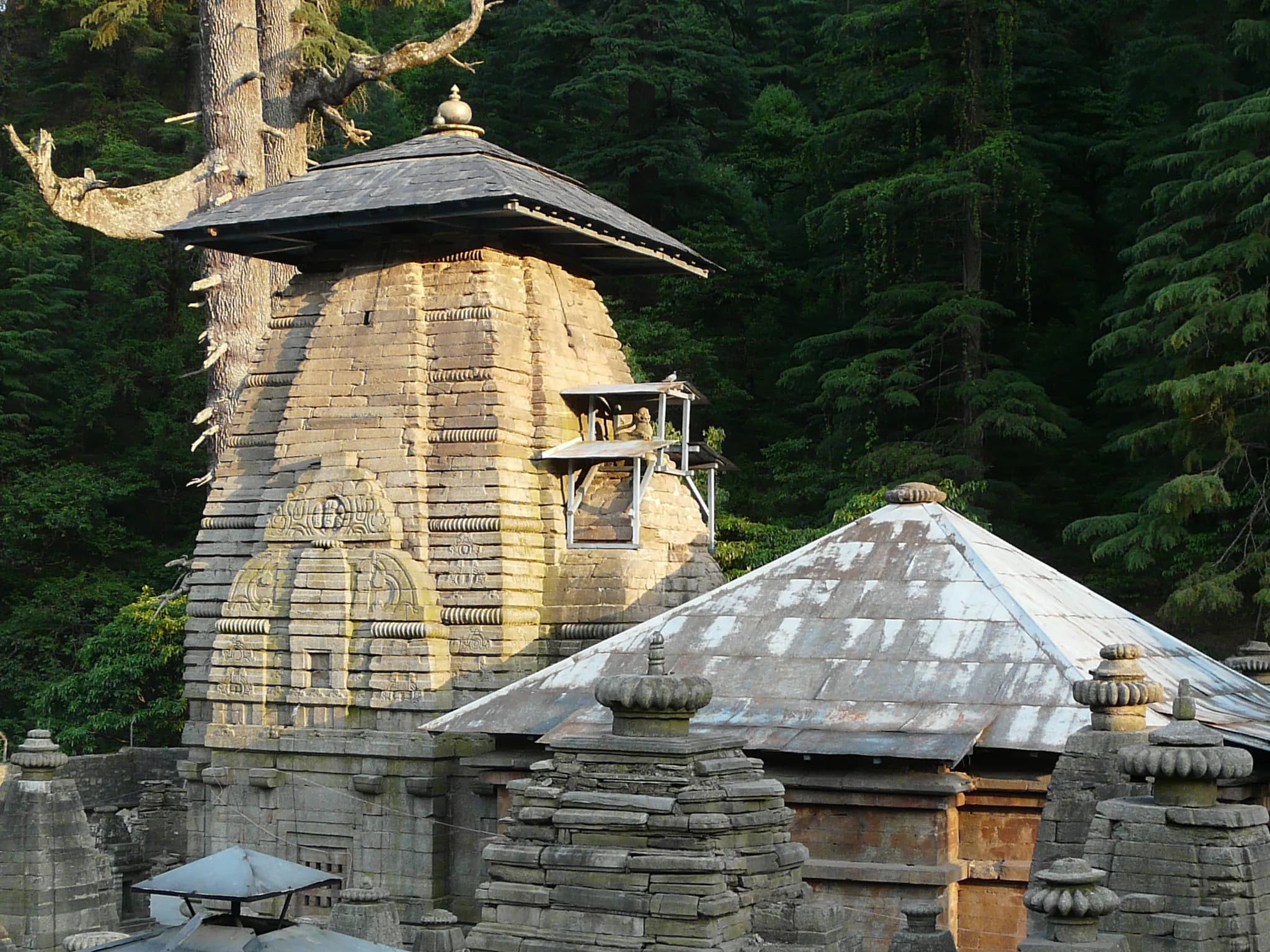
Jageshwar Temples Almora
The crisp mountain air of Uttarakhand carried the scent of pine and something older, something sacred. I stood at the entrance to the Jageshwar temple complex, a sprawling tapestry of over 124 stone temples nestled within a deodar forest. It wasn't simply a collection of structures; it felt like stepping into a living, breathing organism that had evolved organically over centuries. The Jageshwar group isn't a planned, symmetrical layout like Khajuraho or Modhera; it's a cluster, a family of shrines that have grown around each other, whispering stories of devotion and architectural ingenuity. My initial impression was one of subdued grandeur. Unlike the towering, imposing structures of South India, these temples were more intimate, their grey stone surfaces softened by moss and lichen. The majority of the temples belong to the Nagara style of North Indian architecture, characterized by a curvilinear shikhara, the tower above the sanctum. However, the shikharas here possess a distinct local flavour. They are taller and more slender than those found in, say, Odisha, giving them an almost ethereal quality against the backdrop of the Himalayas. Several temples, particularly the larger ones dedicated to Jageshwar (Shiva) and Mrityunjaya, exhibit the classic tiered structure of the shikhara, with miniature replicas of the main tower adorning each level, diminishing in size as they ascend towards the finial. I spent hours wandering through the complex, tracing the weathered carvings on the doorways and pillars. The intricate detailing, though eroded by time and the elements, still spoke volumes of the skill of the artisans. Recurring motifs included stylized lotuses, geometric patterns, and depictions of divine figures – Shiva, Parvati, and Ganesha being the most prominent. One particular panel, on a smaller shrine dedicated to Nandi, caught my attention. It depicted a scene from Shiva's marriage to Parvati, the figures rendered with a surprising dynamism, their expressions almost palpable despite the wear and tear. The main Jageshwar temple, dedicated to the eponymous deity, is the largest and arguably the most impressive. Its towering shikhara dominates the skyline of the complex, drawing the eye upwards. Inside the sanctum, a lingam, the aniconic representation of Shiva, resides in a dimly lit chamber, imbued with a palpable sense of reverence. The air was thick with the scent of incense and the murmur of prayers, a testament to the fact that this is not merely an archaeological site but a living place of worship. What struck me most about Jageshwar was the sense of continuity. The architectural styles evident here span several centuries, from the early Gupta period to the later medieval era. You can trace the evolution of the Nagara style, observing the subtle changes in the shikhara design, the ornamentation, and the layout of the temples. This layering of history, this palpable connection to the past, is what sets Jageshwar apart. It's not a static museum piece; it's a dynamic testament to the enduring power of faith and the artistry of generations of builders. As the sun began to dip behind the mountains, casting long shadows across the complex, I felt a profound sense of peace. Jageshwar is more than just a collection of temples; it's a sanctuary, a place where the whispers of the past mingle with the prayers of the present. It's a place that reminds us of the enduring power of human creativity and the timeless search for the divine. And it's a place that I, as a student of ancient Indian architecture, will carry with me, etched in my memory, for years to come.
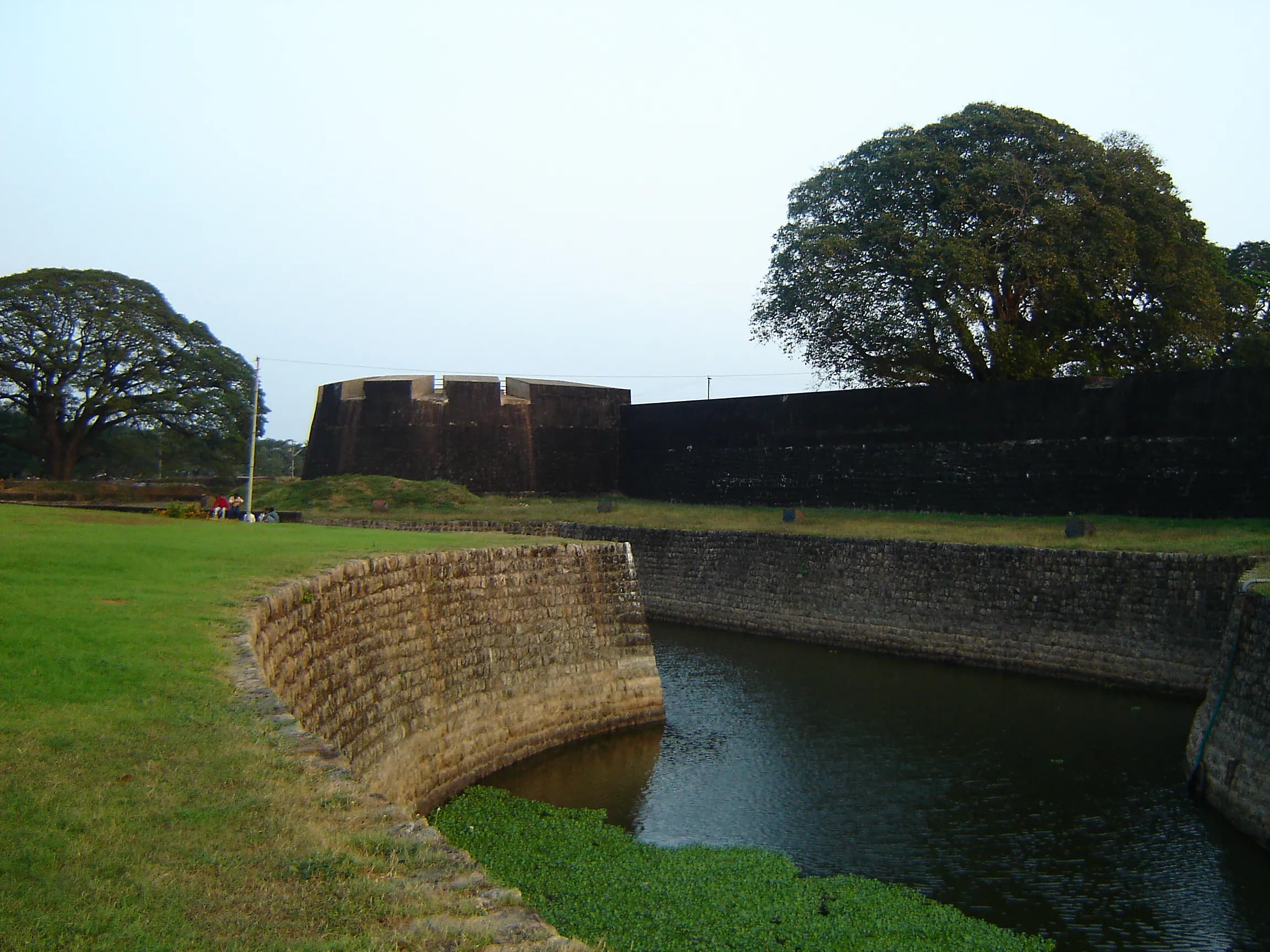
Palakkad Fort Palakkad
The imposing laterite walls of Palakkad Fort, locally known as Tipu's Fort, rose before me under the Kerala sun, a stark contrast to the vibrant green of the surrounding landscape. Having explored countless architectural wonders across Gujarat, I was eager to see how this Kerala fortress compared to the intricate stone carvings and majestic structures of my home state. The sheer scale of the fort, a sprawling rectangle dominating the heart of Palakkad town, was immediately impressive. Stepping through the enormous teakwood gates, I felt a palpable shift in atmosphere. The bustling town sounds faded, replaced by the quiet whispers of history echoing within the thick ramparts. Unlike the ornate gateways of Gujarati forts, these were functional, emphasizing defense over decoration, a testament to the fort's strategic importance. The laterite stone, so characteristic of Kerala architecture, gave the walls a unique reddish-brown hue, different from the sandstone and marble I was accustomed to. The rough texture of the stone, almost porous, spoke of centuries of weathering and resilience. I walked along the ramparts, tracing the outline of the fort, and the strategic brilliance of its design became clear. The wide moat, now dry, would have been a formidable obstacle, while the strategically placed bastions offered commanding views of the surrounding plains. I could imagine archers stationed here, their arrows raining down on any approaching enemy. The fort's location, guarding the Palakkad Gap, a crucial mountain pass connecting Kerala to Tamil Nadu, underscored its historical significance as a gateway between kingdoms. Descending from the ramparts, I explored the inner courtyard. The stark simplicity of the fort's interior contrasted sharply with the elaborate palaces and courtyards found within Gujarati forts. Here, functionality reigned supreme. The barracks, now empty, hinted at the lives of the soldiers who once garrisoned this fortress. I could almost hear the clang of swords and the rhythmic marching of feet. One of the most striking features within the fort is the Hanuman temple, a splash of vibrant color against the muted tones of the laterite. The intricate carvings on the temple walls, depicting scenes from the Ramayana, showcased a different architectural style, a blend of Kerala and Dravidian influences. This juxtaposition of the austere fort and the ornate temple highlighted the cultural fusion that has shaped this region. The small, unassuming Anjaneya Swami temple, dedicated to Lord Hanuman, tucked away in a corner of the fort, held a certain charm. Local legend claims that the idol magically grew in size, necessitating the raising of the temple roof – a story that added a touch of mystique to the place. This reminded me of the numerous folklore and legends associated with Gujarati forts, demonstrating the power of storytelling in preserving history and culture. Climbing the steps of the watchtower, I was rewarded with panoramic views of Palakkad town and the surrounding countryside. The verdant rice paddies stretching out beyond the fort walls painted a picture of tranquility, a stark contrast to the fort's martial past. From this vantage point, I could appreciate the fort's strategic importance, controlling the vital passage through the mountains. My visit to Palakkad Fort offered a fascinating glimpse into a different architectural tradition. While lacking the ornate embellishments of Gujarati forts, its strength lay in its simplicity and strategic design. The laterite walls, the dry moat, and the commanding bastions spoke volumes about the fort's military history. It was a powerful reminder of the diverse architectural heritage of India, each region with its unique story to tell. The fort stands as a silent sentinel, guarding not just the Palakkad Gap, but also the memories of a bygone era.
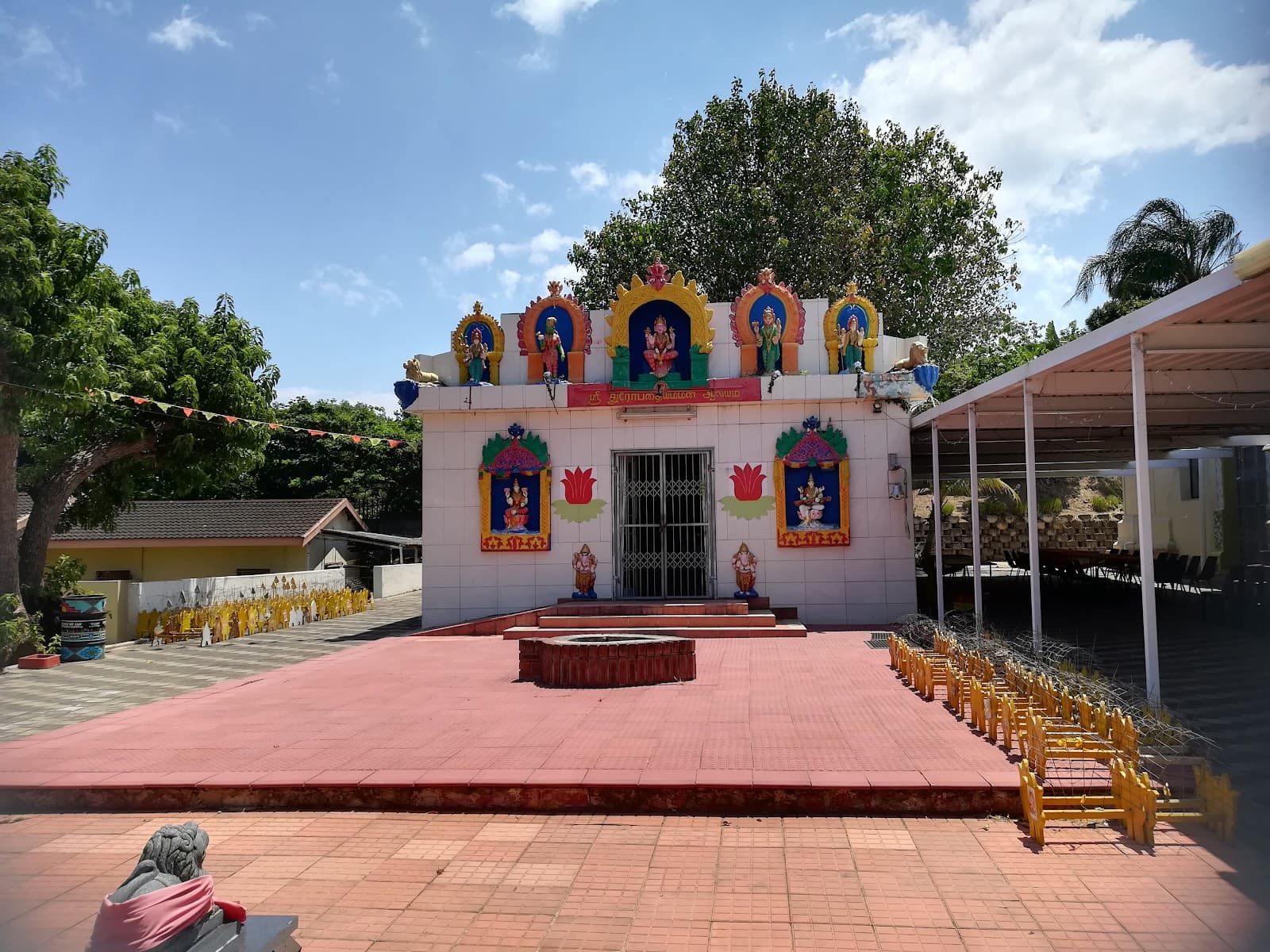
Shree Ayyappa Seva Sangam Temple Durban
The Shree Ayyappa Seva Sangam Temple, located at 359 Langton Road, Montclair, Durban, KwaZulu-Natal, South Africa, stands as a profound testament to India's millennia-spanning cultural heritage and the continuous tradition of Indic civilization [1] [2]. Dedicated to Lord Ayyappa, a revered deity primarily worshipped in South India, particularly Kerala, this temple embodies ancient indigenous architectural styles, materials, and cultural practices that reflect India's deep historical roots [3] [4]. The temple's design integrates elements of both Kerala Temple architecture and Dravida architecture, showcasing a synthesis of South Indian temple building traditions [1] [5]. Kerala temple architecture, characterized by its unique religious sanctuary design, often features circular or square ground plans, steeply sloping roofs covered with copper sheets or terracotta tiles, and extensive use of timber [5] [2]. These architectural choices are historically adapted to the region's heavy rainfall and tropical climate, emphasizing functionality alongside aesthetic and spiritual principles [2]. The structural elements typically involve a granite plinth (adhisthana), laterite walls, and a superstructure predominantly crafted from wood, adhering to canonical rules of proportionate systems detailed in ancient treatises [5] [4]. The Shree Ayyappa Seva Sangam Temple incorporates these principles, utilizing locally available materials while maintaining the traditional forms [1]. The temple complex is designed according to the Hindu practices of 'Vaastu Shastra' and 'Agama Shastra', ensuring auspicious orientation, spatial harmony, and ritualistic correctness [1]. This adherence to ancient texts underscores the continuity of architectural knowledge passed down through generations [5]. Dravida architectural influences are evident in the temple's overall layout and decorative motifs, which often include intricate carvings and sculptures [3]. While Kerala temples typically feature simpler exteriors, the broader South Indian temple style, from which Dravida architecture evolved, is known for its elaborate gopurams (entrance towers), vimanas (superstructures over the sanctum), and mandapas (pillared halls) [3]. Though the Durban temple may not possess the monumental scale of ancient Dravidian complexes, its design principles and decorative elements draw from this rich tradition, manifesting in detailed iconography and sacred geometry [1]. The temple's sanctum (sreekovil) houses the main deity, Lord Ayyappa, and is surrounded by a circumambulatory path (pradakshina-patha), facilitating traditional devotional practices [3]. The current state of the temple reflects ongoing maintenance and active programming, serving as a vital spiritual and cultural hub for the Malayali and Tamil diaspora in Durban [2]. It offers regular pujas, festivals, and cultural education, ensuring the preservation and transmission of Indic traditions [2]. The site is fully operational and accessible to devotees and visitors, upholding its role as a living heritage site [1].
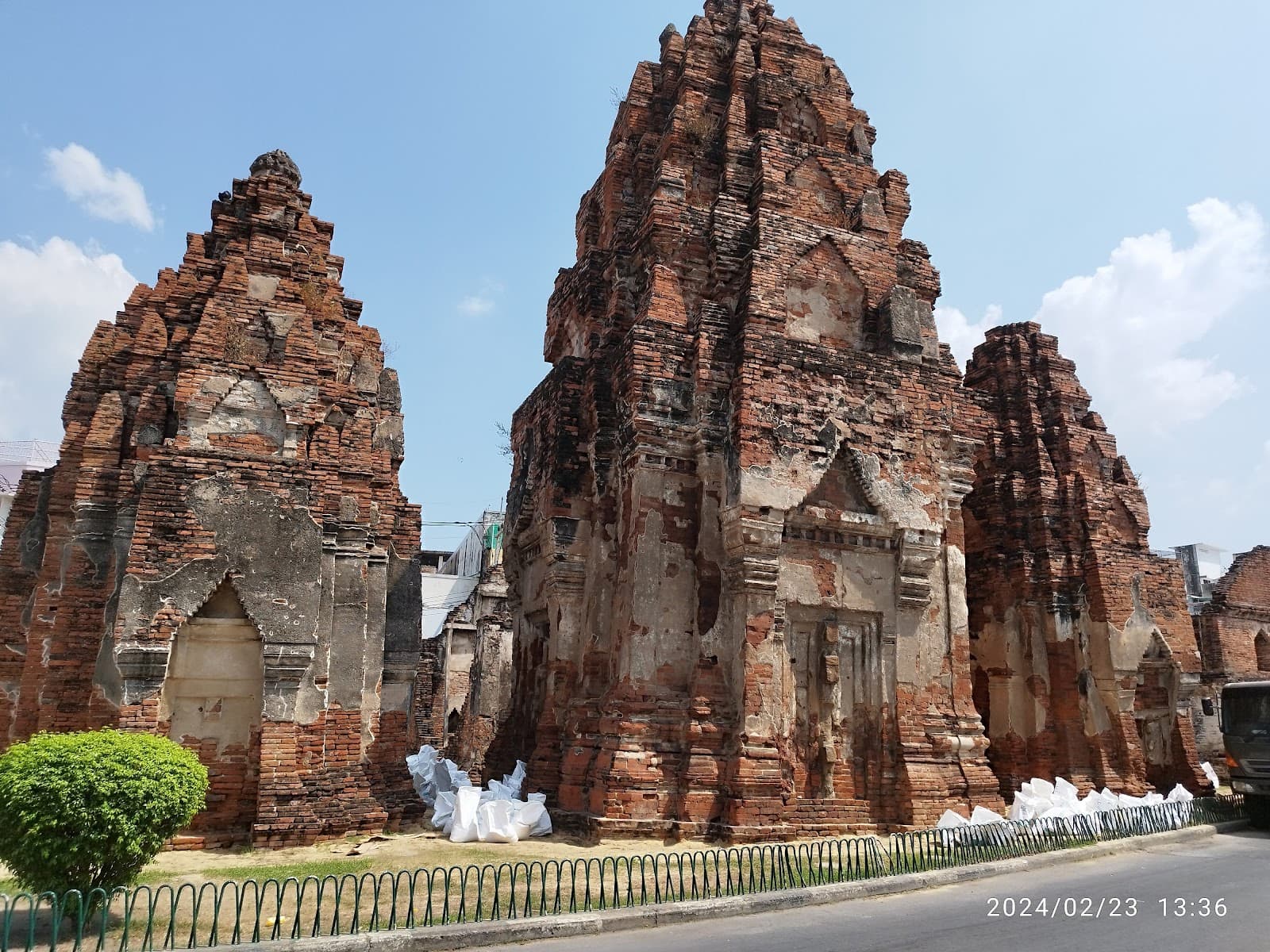
San Phra Kan Prang Khaek Lopburi
San Phra Kan, also known as Prang Khaek, located in Lopburi town, represents the oldest Khmer Hindu shrine in Central Thailand, dating to the 9th-10th centuries CE and constructed during the early Angkorian period, likely during the reign of Suryavarman II. The temple complex features three brick prangs (towers) arranged in a row, dedicated to the Hindu trinity of Brahma, Vishnu, and Shiva, demonstrating the syncretic nature of early Khmer religious practice. The complex spans approximately 0.5 hectares and features a rectangular laterite enclosure wall, though much has been lost to urban development. The three prangs, constructed primarily from brick with sandstone doorframes and decorative elements, rise to heights between 10 and 12 meters, with the central tower being slightly taller. The temple’s architectural style represents early Angkorian period, predating the more elaborate Baphuon and Angkor Wat styles, featuring simpler decorative elements and construction techniques. The complex includes evidence of stucco decoration, though most has been lost to weathering. Archaeological evidence indicates the temple served as an important early Khmer religious center in Central Thailand, establishing the foundation for later Khmer architectural developments in the region. The site has undergone restoration since the 1930s, involving structural stabilization and conservation. Today, San Phra Kan remains an important site for understanding early Khmer architecture in Thailand, attracting visitors interested in its historical significance as the oldest Angkorian temple in Central Thailand and its role in establishing Khmer cultural influence in the region. ([1][2])
Panch Mahal Fatehpur Sikri
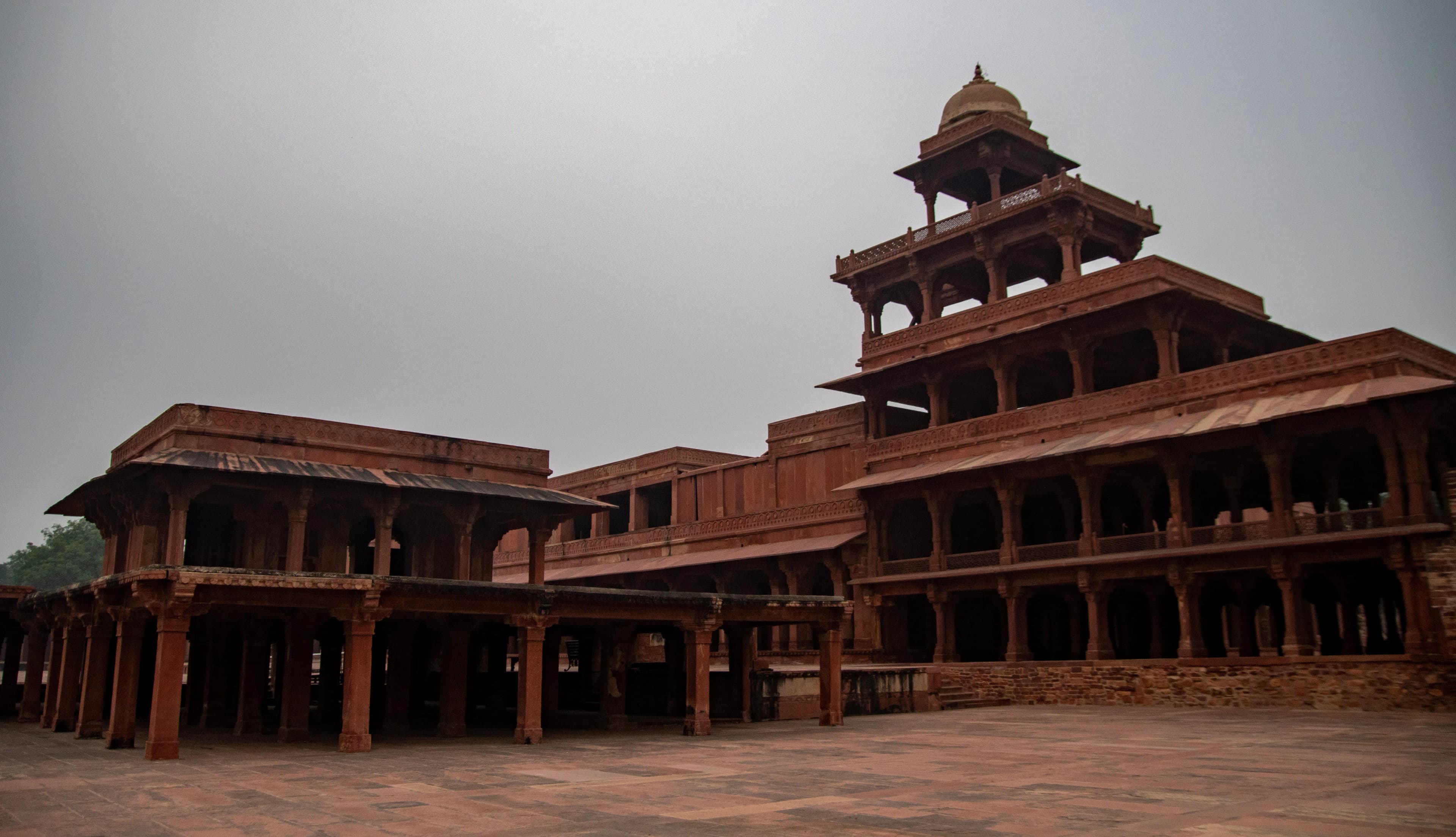
The wind whispers stories through the pierced screens of Panch Mahal, a structure that rises like a delicately carved sandcastle against the Fatehpur Sikri skyline. As I adjusted my camera, framing the pyramidal tiers against the vast Uttar Pradesh sky, I felt a palpable connection to the Mughal era. This wasn't just a building; it was a breathing testament to Akbar's vision, a blend of Hindu and Persian architectural styles that spoke volumes about the cultural confluence of the time. The ground floor, a sprawling open pavilion supported by 84 pillars, once served as a cool respite from the summer heat. I could almost envision the royal women gathered here, their laughter echoing through the now silent spaces. The pillars, each uniquely carved with intricate floral and geometric patterns, captivated my lens. The play of light and shadow through the jaalis, the intricately carved stone lattices, created a mesmerizing tapestry that shifted with the sun's journey across the sky. I spent a considerable amount of time documenting these details, trying to capture the essence of the craftsmanship that had stood the test of centuries. Ascending the levels, the structure shrinks in size, each tier offering a more exclusive and panoramic view of the surrounding city. The second story, supported by fewer pillars, felt more intimate, perhaps a space for smaller gatherings. The third, fourth, and fifth levels, each progressively smaller, culminate in a single chhatri, a domed kiosk, on the topmost tier. This final level, once Akbar's private retreat, offered an unparalleled vista of his magnificent creation. Standing there, I felt a sense of awe, imagining the emperor contemplating his empire from this vantage point. The red sandstone, bathed in the golden hues of the late afternoon sun, radiated warmth. The subtle variations in the stone's color, from a rich ochre to a pale rose, added depth and texture to my photographs. I focused on capturing the interplay of light and shadow, highlighting the intricate carvings and the graceful arches. The pillars, while seemingly uniform from a distance, revealed their unique personalities upon closer inspection. Some bore delicate floral motifs, others geometric patterns, and still others a combination of both, a testament to the artisans' skill and creativity. One aspect that particularly intrigued me was the absence of walls on the lower levels. This open design, unusual for a palace, fostered a sense of connection with the surrounding environment. I could see how the structure, while grand, was also designed for comfort and practicality, allowing for the free flow of air and offering breathtaking views. The jaalis, while providing privacy, also allowed for glimpses of the outside world, blurring the lines between inside and out. My experience at Panch Mahal transcended mere documentation. It was a journey through time, a conversation with the past. As I packed my equipment, the setting sun casting long shadows across the courtyard, I felt a deep sense of gratitude for the opportunity to witness and preserve the legacy of this magnificent structure. The photographs I captured are not just images; they are fragments of history, frozen moments in time, waiting to share their stories with the world. They are a testament to the enduring beauty of Mughal architecture and a reminder of the rich cultural heritage that India holds within its embrace.

Pinjore Fort Panchkula
The midday sun cast long shadows across the Mughal Gardens, highlighting the geometric precision that frames the Pinjore Fort. Stepping through the arched gateway, I felt a palpable shift, a transition from the bustling present of Panchkula to the serene whispers of the past. This wasn't just another fort; it was a carefully curated experience, a blend of military might and refined aesthetics. The fort itself, known locally as Yadavindra Gardens, isn't a towering behemoth like some of the Rajput strongholds I've documented in Madhya Pradesh. Instead, it presents a more intimate scale, a series of interconnected structures nestled within the embrace of the gardens. The seven-terraced Mughal Gardens, inspired by the legendary Shalimar Bagh, are integral to the fort's character. Fountains, once powered by an ingenious system of natural springs, now lie dormant, yet the intricate channels and symmetrical flowerbeds still evoke a sense of grandeur. My lens was immediately drawn to the Sheesh Mahal, the palace of mirrors. While smaller than its namesake in Jaipur, the delicate inlay work here possesses a unique charm. Tiny fragments of mirror, meticulously arranged in floral patterns, catch the light, creating a kaleidoscope of reflections. I spent hours capturing the interplay of light and shadow, trying to convey the sheer artistry involved in this intricate craft. The Rang Mahal, with its open courtyards and intricately carved balconies, offered another perspective. I imagined the vibrant life that once filled these spaces, the rustle of silk, the melodies of court musicians, the scent of exotic perfumes. Climbing the steps to the upper levels of the fort, I was rewarded with panoramic views of the gardens and the surrounding Shivalik foothills. The strategic location of the fort, guarding the passage into the hills, became immediately apparent. The ramparts, though not as imposing as those of Gwalior Fort, still spoke of a time of skirmishes and sieges. I noticed the remnants of defensive structures, the strategically placed bastions, the narrow embrasures for archers. These details, often overlooked by casual visitors, are crucial in understanding the fort's historical context. What struck me most about Pinjore was the seamless integration of nature and architecture. The gardens aren't merely an adjunct to the fort; they are an integral part of its design. The architects skillfully incorporated the natural contours of the land, using terraces and water channels to create a harmonious blend of built and natural environments. This sensitivity to the landscape is a hallmark of Mughal architecture, and it's beautifully exemplified here. As I wandered through the Jal Mahal, a pavilion situated amidst a tranquil water tank, I couldn't help but compare it to the water palaces of Mandu. While the scale and grandeur are different, the underlying principle of using water as a cooling and aesthetic element is the same. The reflections of the pavilion in the still water created a mesmerizing visual effect, a testament to the architects' understanding of light and perspective. My time at Pinjore Fort was a journey through layers of history, a testament to the enduring legacy of Mughal artistry and engineering. It's a place where the whispers of the past resonate in the present, inviting visitors to connect with a rich and complex heritage. As I packed my equipment, the setting sun cast a golden glow over the fort, etching the scene in my memory, a reminder of the beauty and resilience of India's architectural treasures. This wasn't just a photographic assignment; it was an immersive experience, a privilege to document a piece of history.
Raj Mahal Orchha
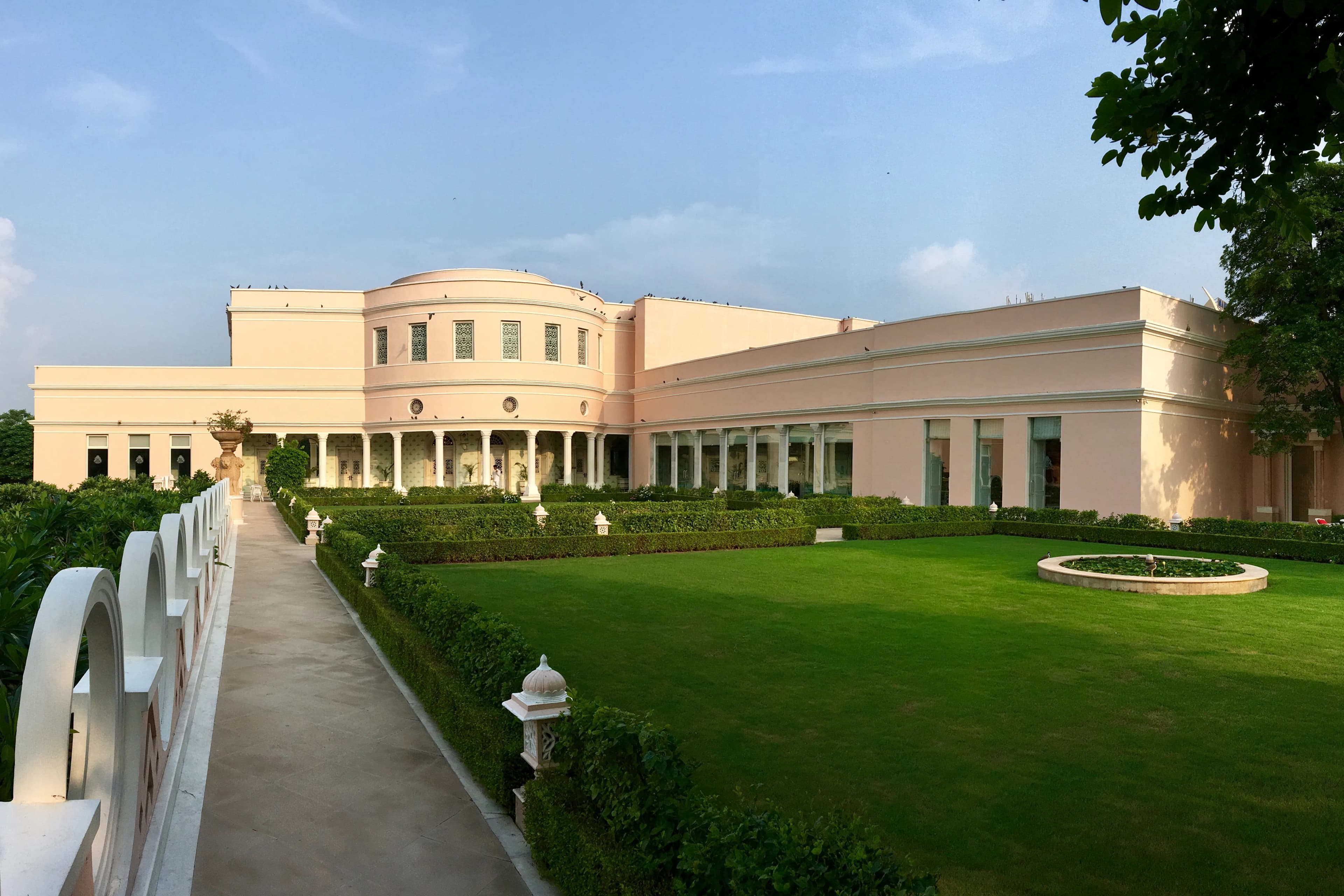
The Jahangir Mahal at Orchha rose before me, a sandstone behemoth shimmering under the Madhya Pradesh sun. Having spent years immersed in the architectural heritage of Uttar Pradesh, I’ve developed a keen eye for the nuances of Mughal and Rajput influences, and this palace, a fascinating blend of both, held me captive from the first glimpse. Its imposing structure, perched atop a rocky outcrop, commands the landscape, a testament to the Bundela Rajput power that once flourished here. Ascending the broad, elephant-friendly ramp, I was struck by the sheer scale of the courtyard. It felt less like a palace courtyard and more like a fortified town square, capable of hosting grand processions and military exercises. The rough-hewn sandstone, now softened by centuries of sun and wind, still retained an aura of strength and resilience. The intricate jali work, so characteristic of Mughal architecture, offered glimpses of the inner chambers while filtering the harsh sunlight into dappled patterns on the floor. I paused, tracing the delicate floral motifs carved into the stone screens, imagining the skilled artisans who painstakingly created these masterpieces centuries ago. Stepping through the arched gateway, I entered a labyrinth of interconnected chambers, each revealing a new facet of the palace's story. The grand Darbar Hall, with its soaring ceilings and expansive balconies, spoke of regal audiences and lavish celebrations. The remnants of vibrant frescoes, now faded but still discernible, hinted at the opulence that once adorned these walls. Peacocks, elephants, and intricate geometric patterns danced across the plaster, a testament to the artistic sensibilities of the Bundela rulers. I climbed the narrow, winding staircases to the upper levels, each turn revealing breathtaking panoramic views of the Betwa River snaking through the landscape below. From this vantage point, I could appreciate the strategic brilliance of the palace's location, offering a clear view of approaching armies or visitors. The chhatris, or cenotaphs, of Orchha's rulers dotted the riverbanks, shimmering white against the green foliage, a poignant reminder of the ephemeral nature of power. One particular detail that captivated me was the integration of Hindu architectural elements within the predominantly Mughal style. The chhatris crowning the palace roof, for instance, are a distinctly Rajput feature, a subtle assertion of the Bundela identity within the broader Mughal framework. This fusion of styles, so characteristic of Orchha’s architecture, speaks volumes about the cultural exchange and synthesis that occurred during this period. The Sheesh Mahal, with its mirrored mosaics, was a dazzling spectacle. Fragments of glass, meticulously arranged in intricate patterns, reflected the sunlight, creating a kaleidoscope of colours. I imagined the queen and her attendants admiring their reflections in these shimmering surfaces, transported to a world of glittering fantasy. As I wandered through the deserted chambers, I couldn't help but feel a sense of melancholy. The grandeur of the Jahangir Mahal, now largely silent and empty, serves as a poignant reminder of the rise and fall of empires. The echoes of past glories resonate within these walls, whispering tales of power, artistry, and the inevitable passage of time. Yet, even in its present state of faded splendour, the Jahangir Mahal retains a powerful allure. It stands as a testament to the enduring legacy of the Bundela Rajputs, a tangible link to a rich and complex history that continues to fascinate and inspire. Leaving the palace, I carried with me not just images of its architectural marvels, but a deeper understanding of the cultural tapestry that has shaped this region of India. The Jahangir Mahal is more than just a palace; it is a living museum, a repository of stories waiting to be discovered by those who take the time to listen.
Quick Links
Plan Your Heritage Journey
Get personalized recommendations and detailed visitor guides