Has Inheritage Foundation supported you today?
Your contribution helps preserve India's ancient temples, languages, and cultural heritage. Every rupee makes a difference.
Secure payment • Instant 80G certificate
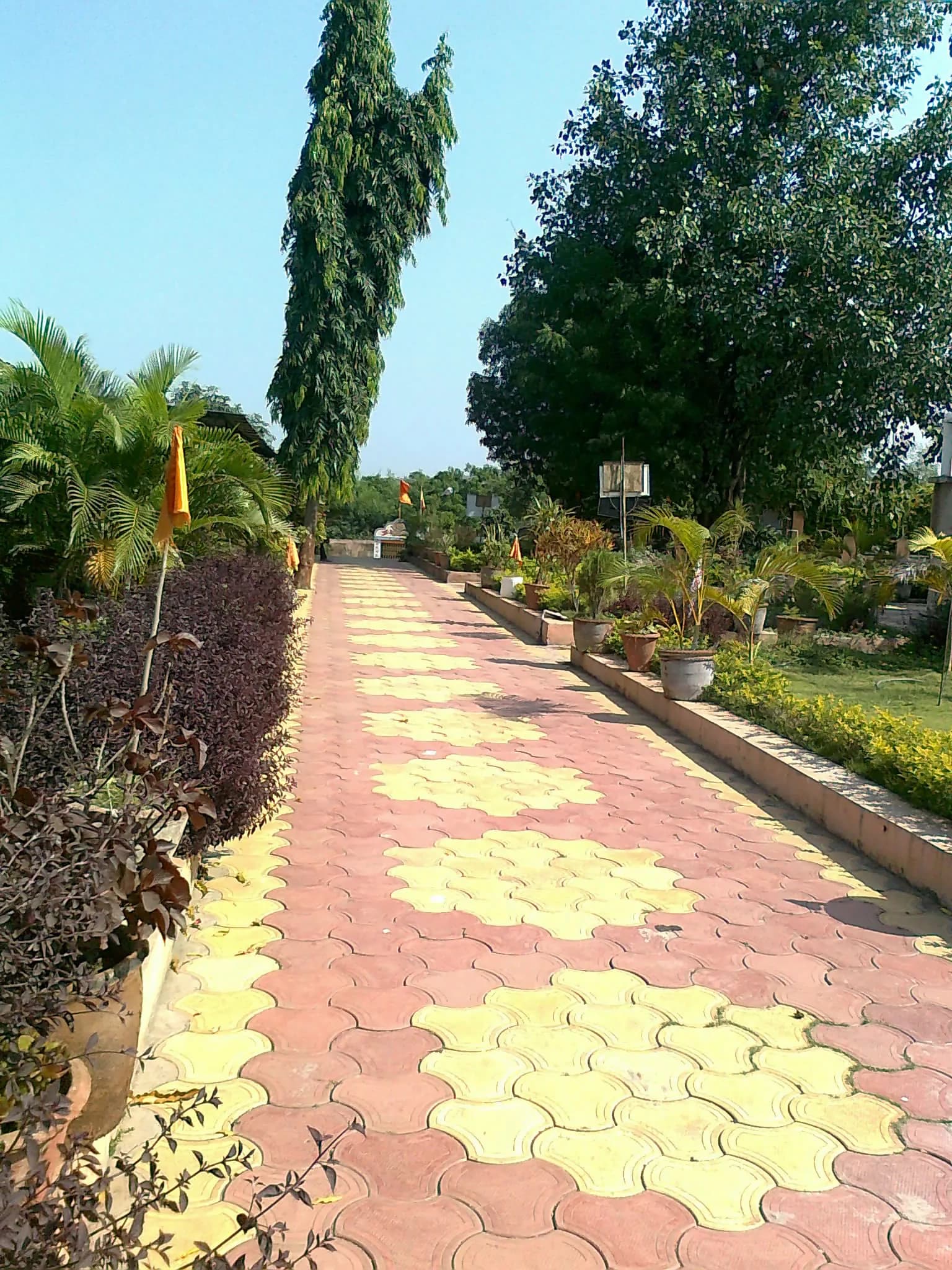
Shri Krishna Mandir Ludhiana
The midday sun cast long shadows across the sprawling courtyard of Shri Krishna Mandir in Ludhiana, the light catching the intricate carvings that adorned its facade. The temple, a relatively recent construction compared to the ancient wonders I typically study, still exuded a palpable sense of devotion and architectural richness. Its gleaming white marble exterior, punctuated by vibrant splashes of colour, stood in stark contrast to the bustling urban landscape that surrounded it. My initial impression was one of harmonious fusion. The temple’s design cleverly blends elements of traditional North Indian Nagara architecture with a touch of contemporary flair. The shikhara, the towering structure above the sanctum sanctorum, while not reaching the dizzying heights of some ancient temples, still commanded attention with its graceful curves and ornate detailing. Small, delicately carved miniature shikharas clustered around the main one, creating a sense of rhythmic ascension. Stepping inside, the cool marble floor offered respite from the Punjab heat. The main prayer hall, a vast and airy space, was filled with the murmur of chanting and the scent of incense. The pillars supporting the high ceiling were far from simple structural elements; each was a canvas for intricate carvings depicting scenes from the Krishna Leela, the divine plays of Lord Krishna. I was particularly struck by the dynamic portrayal of Krishna’s Rasa Leela, the dance with the gopis, which captured the fluidity and energy of the divine dance. The sculptor’s skill was evident in the expressive faces and flowing garments of the figures, bringing the mythological narrative to life. Unlike the dimly lit interiors of many ancient temples, Shri Krishna Mandir was bathed in natural light, which streamed in through large windows adorned with stained glass depicting various deities. This modern touch, while a departure from traditional temple architecture, enhanced the vibrancy of the space and allowed for a clearer appreciation of the artistry within. The temple complex extends beyond the main prayer hall, encompassing smaller shrines dedicated to other deities, including Radha, Shiva, and Hanuman. Each shrine, while smaller in scale, maintained the same level of artistic detail and devotional fervour. I noticed a distinct shift in architectural style in the Hanuman shrine, which incorporated elements reminiscent of Dravidian architecture, particularly in the gopuram-like structure above the entrance. This subtle incorporation of different architectural styles within a single complex spoke to the inclusive nature of the temple and its embrace of diverse traditions. One of the most captivating aspects of Shri Krishna Mandir was its extensive use of coloured marble inlay work. Floral motifs, geometric patterns, and depictions of divine symbols adorned the walls, pillars, and even the ceiling, creating a visual feast. The vibrant hues of red, green, blue, and yellow contrasted beautifully with the pristine white marble, adding a layer of opulence and grandeur to the space. This inlay work, reminiscent of the pietra dura technique, demonstrated a high level of craftsmanship and meticulous attention to detail. As I wandered through the temple complex, I observed the seamless integration of the sacred and the secular. Devotees engaged in prayer and ritual, while families strolled through the gardens, children playing in the designated areas. This harmonious coexistence underscored the temple's role as not just a place of worship, but also a community hub, a space for social interaction and cultural expression. My visit to Shri Krishna Mandir offered a fascinating glimpse into the evolution of temple architecture in India. While rooted in tradition, the temple embraces modern elements and diverse influences, creating a unique architectural vocabulary that reflects the dynamic nature of faith and cultural expression in contemporary India. It served as a potent reminder that architecture, even in its sacred manifestations, is not static but continues to adapt and evolve, reflecting the changing needs and aspirations of the communities it serves.
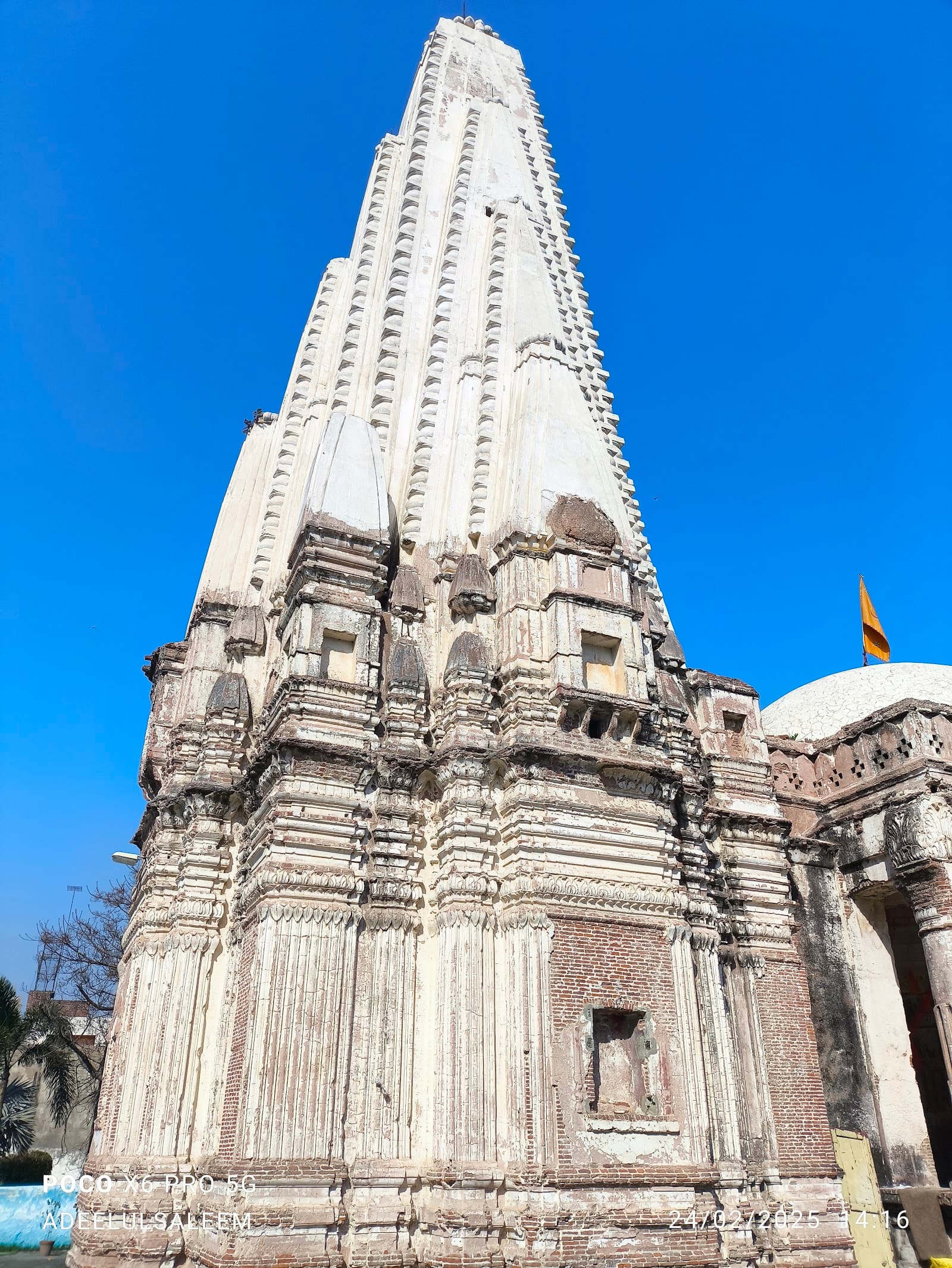
Shawala Teja Singh Temple Sialkot Punjab
The Shawala Teja Singh Temple, dedicated to Lord Shiva, stands as a profound testament to India's millennia-spanning spiritual and architectural heritage in Sialkot, Punjab Province, Pakistan [3]. This sacred edifice, rooted in the continuous tradition of Indian civilization, embodies indigenous architectural styles, materials, and cultural practices that reflect the deep historical roots of the subcontinent [1] [5]. Constructed primarily in the Nagara architectural style, with influences from regional Punjabi and Indo-Islamic aesthetics, the temple showcases a layered history of design and craftsmanship [1]. While specific dimensions are not widely documented, the temple's structure typically features a curvilinear shikhara (spire) characteristic of North Indian temple architecture, rising above the garbhagriha (sanctum sanctorum) [3]. The construction predominantly utilizes local brick and lime mortar, materials historically prevalent in the region, with later additions potentially incorporating stucco and plasterwork [2]. The temple's exterior and interior once featured intricate carvings, sculptures, and vibrant murals, though many of these decorative elements have suffered degradation over time [1]. Historical accounts mention beautiful marble floors and ornate pillars, indicative of the refined craftsmanship employed during its construction and subsequent embellishments [1]. The spatial arrangement follows the traditional Hindu temple plan, with a central shrine housing the deity, surrounded by circumambulatory paths (pradakshina-patha) [3]. While advanced technical specifications like water management systems or defensive features are not explicitly detailed in available records, the temple's elevated position on a dune along Allama Iqbal Road suggests a deliberate choice for prominence and perhaps natural protection . Currently, the Shawala Teja Singh Temple is recognized as a protected heritage site, undergoing significant conservation and restoration efforts [2] [3]. The Pakistan government, through the Evacuee Trust Property Board (ETPB), has undertaken renovation work to restore the temple to its original design, including whitewashing the entire building, fixing the main entrance, and constructing boundary walls for security [2]. Archaeological findings are not extensively reported, but the ongoing restoration work provides opportunities for deeper understanding of its construction phases and earlier forms [2]. The temple is now formally handed over to the Pakistan Hindu Council, facilitating pilgrim visits and religious rituals, thereby ensuring its active programming and continued spiritual significance for the local Hindu community [2] [3]. Accessibility has been improved, and the site is maintained to allow visitor flow, symbolizing the enduring legacy of Indian cultural traditions [2]. The operational readiness of the temple underscores its role as a living heritage site, continuously serving its original purpose while standing as a monument to India's profound and unbroken cultural continuum [2].
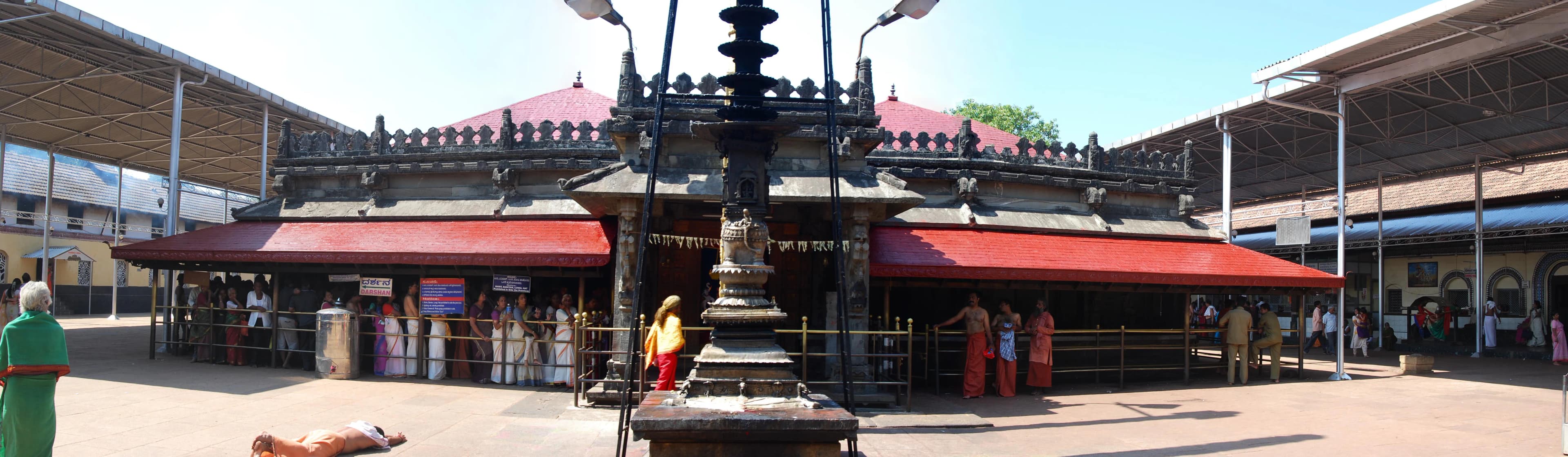
Kollur Mookambika Temple Udupi
The air hung heavy with the scent of incense and jasmine as I ascended the stone steps leading to the Kollur Mookambika Temple. Nestled amidst the verdant embrace of the Kodachadri hills in Karnataka's Udupi district, this temple, dedicated to Goddess Mookambika, exudes a palpable aura of sanctity. Unlike the towering gopurams that characterize many South Indian temples, Mookambika's entrance is comparatively understated, marked by a modest gateway. This architectural choice, I felt, immediately sets the tone for a more intimate spiritual experience. Stepping into the inner courtyard, my gaze was drawn to the main shrine. The temple's architecture, while predominantly Dravidian, displays interesting influences from Kerala's architectural traditions. The sloping tiled roofs, reminiscent of Kerala temple styles, blend seamlessly with the granite structure, creating a unique aesthetic. The absence of a traditional *prakara* or circumambulatory passage around the sanctum sanctorum further enhances the sense of closeness to the deity. The sanctum sanctorum houses the unique *Jyotirlinga* of Goddess Mookambika. Unlike traditional Shiva lingams, this one is a *swayambhu* (self-manifested) and is not carved or shaped. It is believed to be a confluence of the energies of Saraswati, Lakshmi, and Parvati. The golden *kavacha* adorning the lingam glittered under the soft glow of oil lamps, adding to the mystical atmosphere. I observed the intricate carvings on the silver-plated doorway leading to the sanctum. These depictions, while weathered by time, still showcased the skill of the artisans who crafted them centuries ago. One of the most striking features of the Kollur Mookambika Temple is the presence of a *Chakra* and *Shankha* (discus and conch), symbols typically associated with Vishnu, placed alongside the Jyotirlinga. This unique amalgamation of Shakta and Vaishnava iconography speaks volumes about the temple's inclusive spiritual ethos. It’s a testament to the syncretic nature of Hindu belief systems, a phenomenon I’ve often encountered in my explorations of South Indian temples. The temple complex also houses smaller shrines dedicated to other deities like Subramanya and Ganesha. These shrines, while simpler in design, echo the architectural vocabulary of the main temple. I noticed the use of laterite stone in some of the ancillary structures, a common building material in the coastal regions of Karnataka and Kerala. The temple tank, located a short distance from the main shrine, is believed to have healing properties. Observing the devotees taking a dip in the sacred waters, I reflected on the deep-rooted cultural significance of temple tanks in South India, serving as spaces for ritual purification and community gathering. As I walked around the temple, I observed the diverse crowd of devotees. People from all walks of life, speaking different languages, had converged at this sacred site, united by their faith. The rhythmic chanting of Vedic hymns, the fragrance of burning camphor, and the clanging of bells created a sensory tapestry that resonated deep within me. My visit to the Kollur Mookambika Temple was more than just an architectural study; it was a spiritual immersion. The temple's unique blend of architectural styles, its inclusive iconography, and the palpable devotion of its pilgrims left an indelible impression on me. It reinforced my belief that these ancient structures are not merely monuments of stone and mortar, but living embodiments of faith, culture, and history. They serve as vital links to our past, offering glimpses into the rich tapestry of India's spiritual heritage.
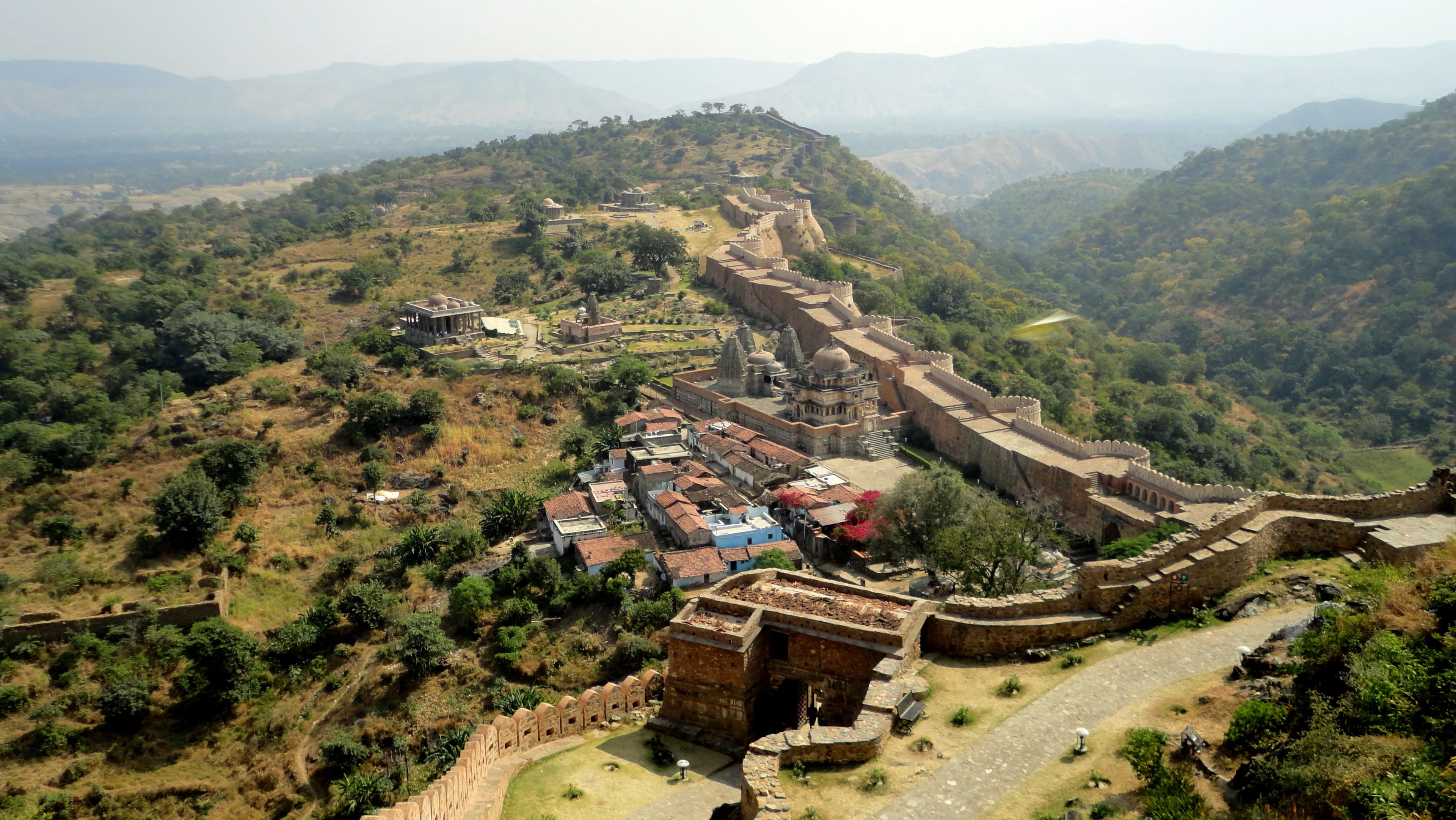
Kumbhalgarh Fort Rajsamand
The wind whipped around me, carrying whispers of history as I stood atop Kumbhalgarh Fort, the formidable sentinel of the Aravalli range. Stretching as far as the eye could see, the ramparts snaked across the mountaintops, a testament to Rana Kumbha's ambition and the architectural prowess of the 15th century. They say the wall is so thick that eight horses could ride abreast along it – and having walked a section myself, I can readily believe it. The sheer scale is breathtaking. It's no wonder they call it the "Great Wall of India." My visit began at the main gate, Aret Pol, a sturdy structure bearing the scars of numerous sieges. The intricate carvings, though worn by time and weather, still spoke of a rich artistic tradition. Passing through the gate felt like stepping back in centuries, leaving the modern world behind. The climb to the top was steep, the sun beating down mercilessly, but the anticipation spurred me on. Within the fort's embrace lies a complex network of palaces, temples, and gardens. The Badal Mahal, or Cloud Palace, perched at the highest point, offered panoramic views of the surrounding landscape. From this vantage point, I could appreciate the strategic brilliance of the fort’s location. The undulating hills and dense forests would have provided ample warning of approaching armies, making Kumbhalgarh a near-impregnable fortress. The architecture within the fort is a fascinating blend of Rajput and Mughal influences. The jharokhas, or overhanging balconies, are exquisitely carved, offering glimpses of the intricate latticework within. I noticed the recurring motif of the sun and the lotus flower, symbols of power and purity respectively. The palaces, while grand, also possess a certain understated elegance. The use of local stone and the integration of the natural landscape into the design create a sense of harmony and balance. One of the most striking features of Kumbhalgarh is the sheer number of temples within its walls. From the small, almost hidden shrines to the larger, more elaborate structures, they represent a vibrant spiritual life that thrived within the fort's protective embrace. The Neelkanth Mahadev Temple, with its massive Shiva lingam, is particularly impressive. The intricate carvings on the pillars and ceilings are a testament to the skill of the artisans who worked on them. Beyond the grand palaces and temples, I was equally captivated by the smaller details: the worn steps leading to hidden chambers, the remnants of frescoes on the walls, the strategically placed water tanks that sustained life within the fort during sieges. These details offer a glimpse into the daily lives of the people who once inhabited this magnificent structure – the royalty, the soldiers, the artisans, and the common folk. My visit to Kumbhalgarh wasn't just about admiring the architecture and the breathtaking views. It was about connecting with the past, feeling the weight of history, and imagining the lives lived within these ancient walls. The echoes of battles fought, of celebrations held, of empires risen and fallen, seemed to permeate the very stones of the fort. As I descended, leaving the fort behind, I carried with me not just photographs and memories, but a deeper understanding of Rajasthan's rich and complex heritage. Kumbhalgarh is more than just a fort; it's a living testament to human ingenuity, resilience, and the enduring power of the past.
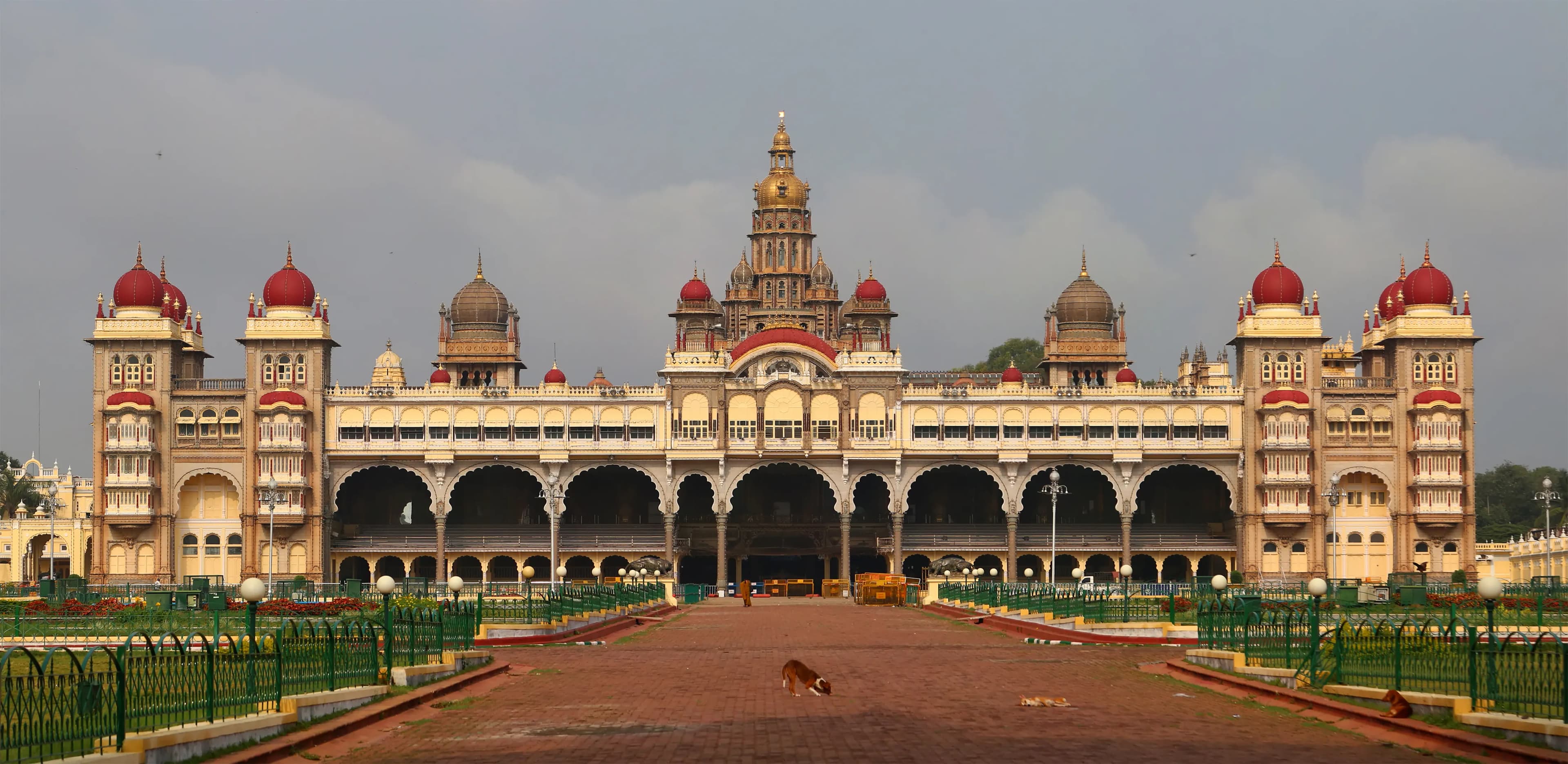
Mysore Palace Mysuru
The Mysore Palace, or Amba Vilas Palace, isn't merely a structure; it's a statement. A statement of opulence, a testament to craftsmanship, and a living chronicle of a dynasty. As a Chennai native steeped in the Dravidian architectural idiom of South Indian temples, I found myself both captivated and challenged by the Indo-Saracenic style that defines this majestic palace. The blend of Hindu, Muslim, Rajput, and Gothic elements creates a unique architectural vocabulary, a departure from the gopurams and mandapas I'm accustomed to, yet equally mesmerizing. My first impression was one of sheer scale. The sprawling palace grounds, meticulously manicured, prepare you for the grandeur within. The three-storied stone structure, with its grey granite base and deep pink marble domes, stands as a beacon against the Mysore sky. The central arch, adorned with intricate carvings and flanked by imposing towers, draws the eye upwards, culminating in the breathtaking five-story gopuram. This fusion, the gopuram atop an Indo-Saracenic structure, is a powerful symbol of the cultural confluence that shaped Mysore's history. Stepping inside, I was immediately transported to a world of intricate detail. The Durbar Hall, with its ornate pillars, stained-glass ceilings, and intricately carved doorways, is a spectacle of craftsmanship. The pillars, far from being uniform, display a fascinating variety of designs, each a testament to the skill of the artisans. I noticed subtle variations in the floral motifs, the scrollwork, and even the miniature sculptures adorning the capitals. This attention to detail, reminiscent of the meticulous carvings found in Chola temples, spoke volumes about the dedication poured into this palace. The Kalyanamantapa, the marriage hall, is another jewel in the palace's crown. The octagonal hall, with its vibrant stained-glass ceiling depicting scenes from Hindu mythology, is a riot of color and light. The floor, paved with exquisite mosaic tiles, adds another layer of intricacy. While the overall style is distinctly different from the mandapas found in South Indian temples, I could appreciate the shared emphasis on creating a sacred, visually stunning space. Exploring further, I was particularly drawn to the Gombe Thotti, or Doll's Pavilion. This museum houses a remarkable collection of dolls from around the world, offering a glimpse into diverse cultures and artistic traditions. While not strictly architectural, it provided a fascinating cultural context for the palace and its inhabitants. The palace's exterior, particularly during the evening illumination, is truly magical. Thousands of bulbs outline the structure, transforming it into a shimmering spectacle. This, I felt, was a modern interpretation of the kuthuvilakku, the traditional oil lamps used to illuminate temple towers during festivals. While the technology is different, the effect is the same – a breathtaking display of light and shadow that enhances the architectural beauty. One aspect that particularly resonated with my background in South Indian temple architecture was the use of open courtyards. These courtyards, while smaller than the prakarams found in temples, serve a similar purpose – providing ventilation, natural light, and a sense of tranquility amidst the grandeur. They also offer framed views of different parts of the palace, creating a dynamic visual experience as one moves through the complex. The Mysore Palace is not just a palace; it's a living museum, a testament to the artistry and vision of its creators. It's a place where architectural styles converge, where history whispers from every corner, and where the grandeur of the past continues to captivate visitors from around the world. As I left the palace grounds, I carried with me not just images of its splendor, but a deeper appreciation for the rich tapestry of Indian architecture and the unique stories it tells.
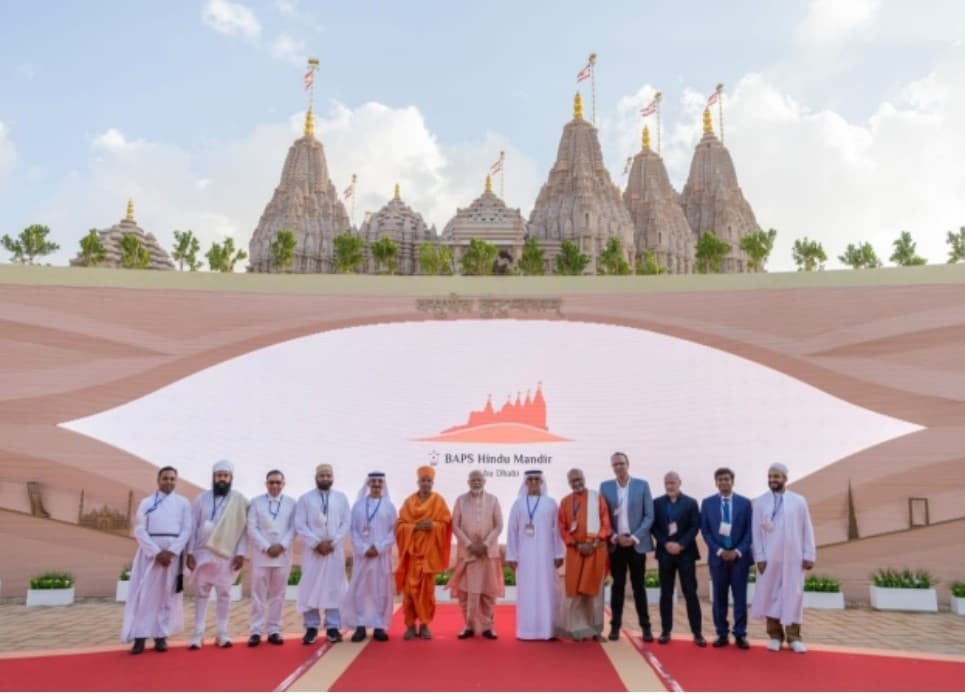
Maha Lakshmi Temple Abu Dhabi (BAPS Campus)
The Maha Lakshmi Temple forms the southern devotional wing of the BAPS Hindu Mandir campus in Abu Dhabi, providing a dedicated sanctum for Sri Mahalaxmi-Narayana with a Vaikuntha-inspired sinhasan crafted from Italian marble, gold-plated lotuses, and fibre-optic constellations that mirror Abu Dhabi's desert night sky ([1][2]). Consecrated alongside the main mandir in February 2024, the Lakshmi sanctum offers a quieter devotional experience focused on prosperity, education, and wellbeing—hosting specialised Lakshmi Pujas for entrepreneurs, students, and families moving to the Gulf. The hall seats 600 devotees, features carved marble columns, and integrates digital translation kiosks offering arti lyrics in Hindi, English, Malayalam, and Tagalog. Daily schedule aligns with the mandir's 6:00 AM-9:00 PM operations, but the Lakshmi wing hosts additional Friday evening Ashtalakshmi satsang, Saturday bridal blessings, and quarterly finance literacy workshops led by community volunteers. Donors can participate in Navagraha homa, Kuber puja, or annadhanam out of the adjoining seva kitchen. A micro-museum displays stories of Gulf entrepreneurs whose philanthropy supported the mandir and documents historic trade links between Gujarat, the Malabar coast, and the Trucial States.
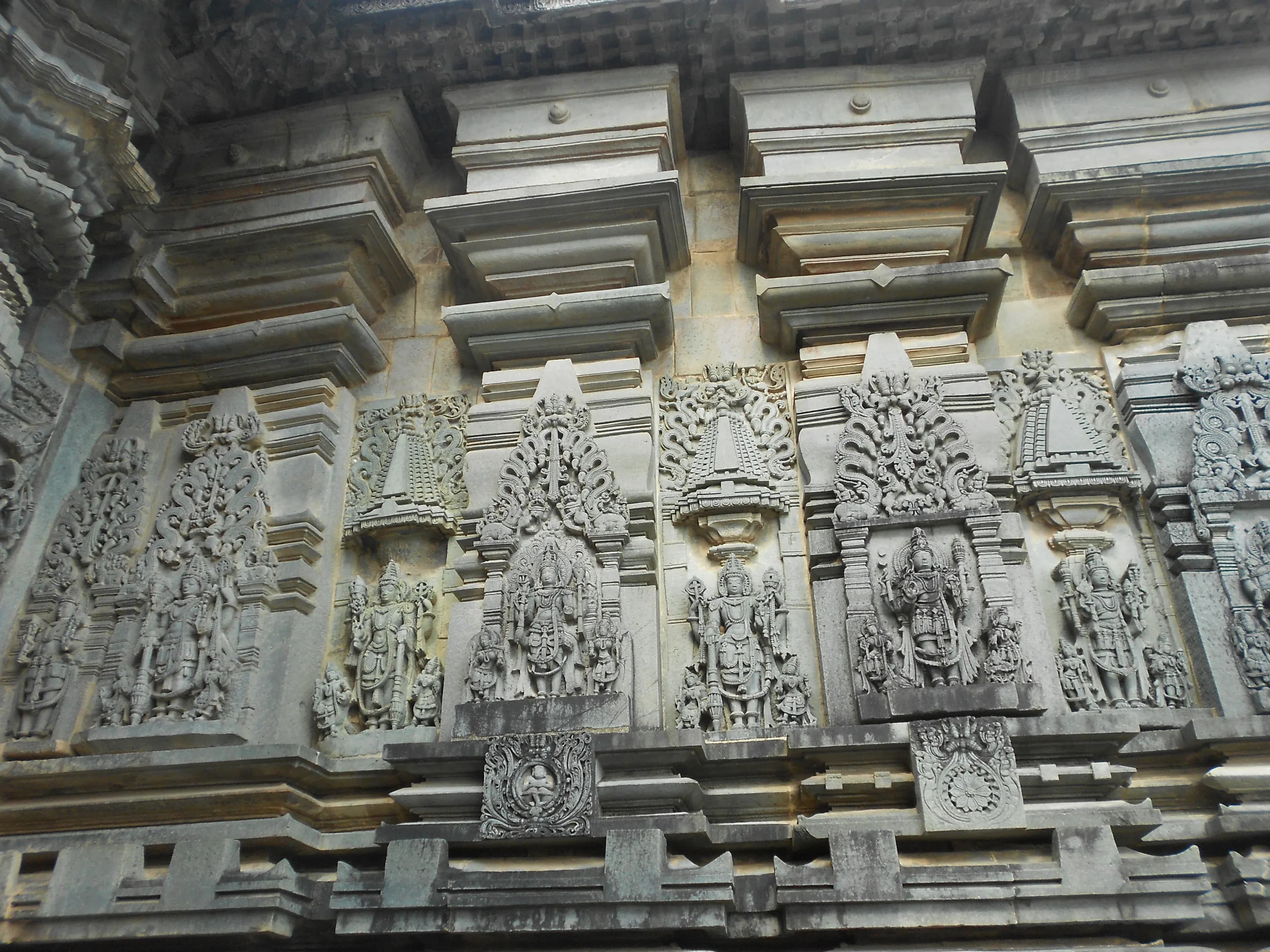
Chennakesava Temple Belur
Intricate carvings adorning the walls of the Chennakesava Temple in Belur, Karnataka, narrate the artistic zenith of the Hoysala Empire ([1][2]). Commissioned by Vishnuvardhana Hoysala in 103 CE (2nd Century), the temple is dedicated to Vishnu in his form as Chennakesava, meaning 'handsome Kesava' ([3]). The temple exemplifies Hoysala architecture, renowned for its detailed craftsmanship and unique style ([1]). This temple is a prime example of the Vesara style, seamlessly blending architectural elements from both North and South India ([4]). During the Hoysala period, temple architecture prioritized elaborate surface ornamentation, a departure from the towering structures of other dynasties ([5]). Soapstone, favored for its softness, facilitated the creation of intricate carvings that depict scenes from epics, mythology, and daily life ([3]). Granite forms the temple's foundation, providing stability and strength ([1]). The star-shaped platform (Jagati) elevates the structure, allowing devotees to circumambulate the deity ([3]). Within the Garbhagriha (Sanctum), the murti (idol) of Chennakesava resides, radiating divine energy and serving as the focal point for worship ([2]). Vastu Shastra principles, the ancient Indian science of architecture, guided the temple's layout, proportions, and orientation, ensuring harmony and balance ([4]). The absence of towering gopurams (spires) encourages visitors to appreciate the temple's horizontal expanse and intricate details ([5]). The outer walls are adorned with friezes of elephants, lions, horses, and celestial beings, showcasing the empire's wealth and cultural richness ([1][3]). Sophisticated sculpting techniques using soapstone made possible the elaborate detailing, though weathering has taken its toll on some elements ([3]). The Chennakesava Temple, now a UNESCO World Heritage Site, stands as a testament to the artistic and architectural achievements of the Hoysala period, inviting all to marvel at the artisans' skill and devotion ([1][2]). The temple reflects the Hoysalas' deep reverence for Vishnu and their commitment to preserving and promoting Hindu traditions ([5]).
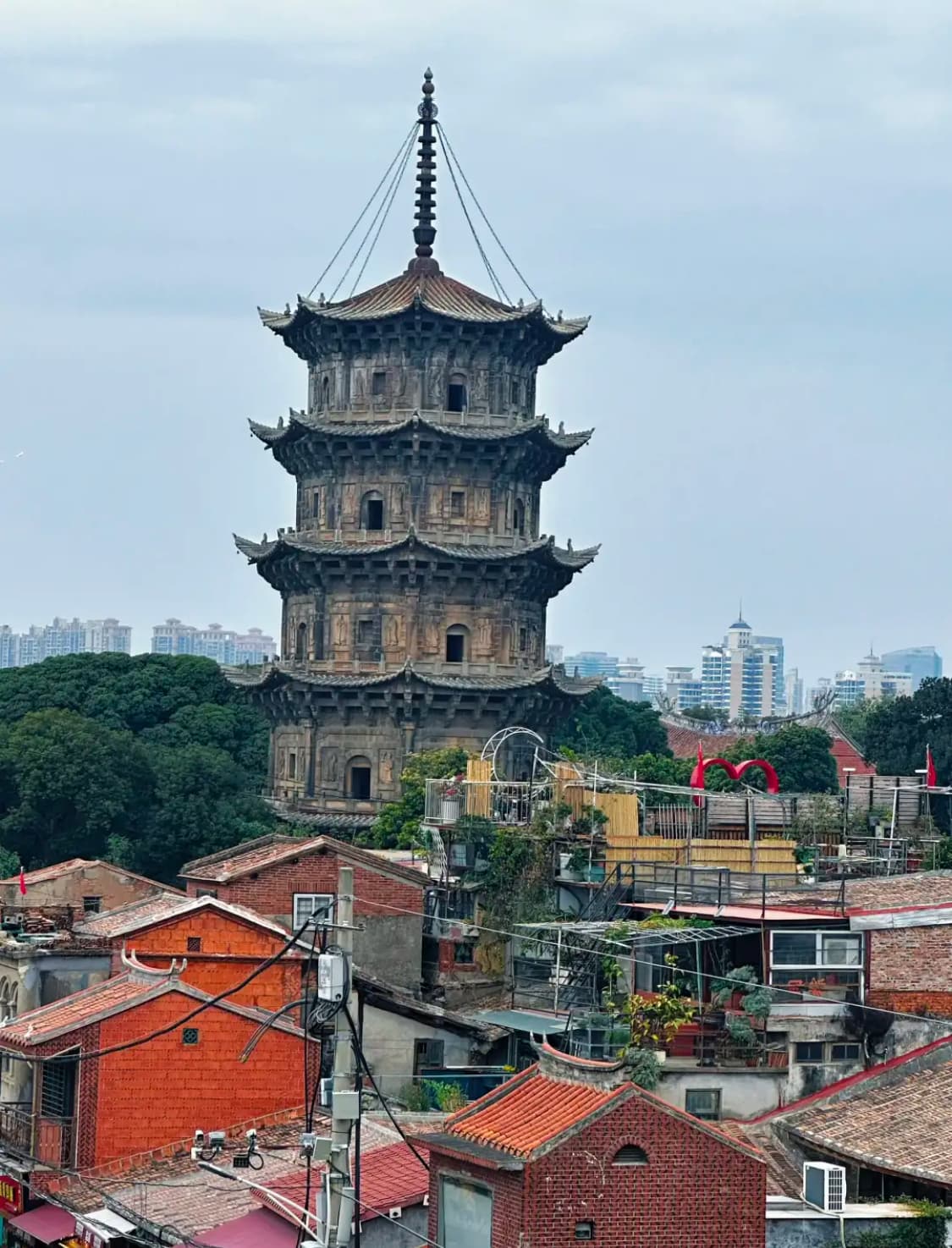
Kaiyuan Temple Quanzhou Fujian China
Kaiyuan Temple, dramatically situated in the historic city of Quanzhou in southeastern Fujian Province, represents one of the most extraordinary and archaeologically significant Buddhist temple complexes in China, dating from the 7th century CE and serving as a major center along the Maritime Silk Road that flourished as a cosmopolitan hub where Indian Hindu and Buddhist traditions, Chinese cultural influences, and Southeast Asian maritime cultures converged, creating a powerful testament to the profound transmission of Indian religious civilization to China during the medieval period. The site, featuring sophisticated Buddhist temple structures with the remarkable preservation of ancient Hindu stone columns that demonstrate clear connections to the architectural traditions of ancient India, particularly the sophisticated column design principles and decorative programs that were transmitted from the great temple centers of southern India, demonstrates the direct transmission of Indian architectural knowledge, religious iconography, and cultural concepts from the great centers of ancient India, particularly the sophisticated temple architecture traditions that were systematically transmitted to China through the extensive maritime trade networks that connected India with China, while the site's most remarkable feature is its extraordinary collection of ancient Hindu stone columns, originally from a Hindu temple that once stood on the site, featuring sophisticated carvings of Hindu deities, mythological scenes, and architectural elements that demonstrate remarkable parallels with Indian temple architecture traditions, particularly the structural techniques and decorative programs that were central to Indian temple architecture. The temple structures' architectural layout, with their sophisticated planning, central halls surrounded by subsidiary structures, and the integration of Hindu architectural elements into Buddhist temple design, follows planning principles that demonstrate remarkable parallels with Indian temple planning principles, particularly the structural techniques and decorative traditions that were central to Indian temple architecture, while the site's extensive archaeological remains including the Hindu stone columns, Buddhist sculptures, and architectural elements demonstrate the sophisticated synthesis of Indian Hindu and Buddhist iconography and cosmological concepts with local Chinese aesthetic sensibilities and building materials. Archaeological evidence reveals that the site served as a major center of religious activity and cultural exchange during the 7th through 13th centuries, attracting traders, monks, and pilgrims from across China, South Asia, and Southeast Asia, while the discovery of numerous artifacts including the Hindu stone columns with clear Indian stylistic influences, Buddhist sculptures that reflect Indian iconographic traditions, and architectural elements that reflect Indian architectural concepts provides crucial evidence of the site's role in the transmission of Indian religious traditions to China, demonstrating the sophisticated understanding of Indian temple architecture and religious practices possessed by the site's patrons and religious establishment. The site's association with the ancient city of Quanzhou, which flourished as a major trading port along the Maritime Silk Road with extensive connections to India and Southeast Asia, demonstrates the sophisticated understanding of Indian religious traditions that were transmitted to China, while the site's Hindu stone columns and Buddhist temple structures demonstrate remarkable parallels with Indian temple architecture traditions that were central to ancient Indian civilization. The site has been the subject of extensive archaeological research and conservation efforts, with ongoing work continuing to reveal new insights into the site's sophisticated architecture, religious practices, and its role in the transmission of Indian religious traditions to China, while the site's status as part of the Quanzhou UNESCO World Heritage Site demonstrates its significance as a major center for the transmission of Indian religious and cultural traditions to China. Today, Kaiyuan Temple stands as one of the most important religious sites in China, serving as a powerful testament to the transmission of Indian religious civilization to China, while ongoing archaeological research and conservation efforts continue to protect and study this extraordinary cultural treasure that demonstrates the profound impact of Indian civilization on Chinese religious and cultural development. ([1][2])
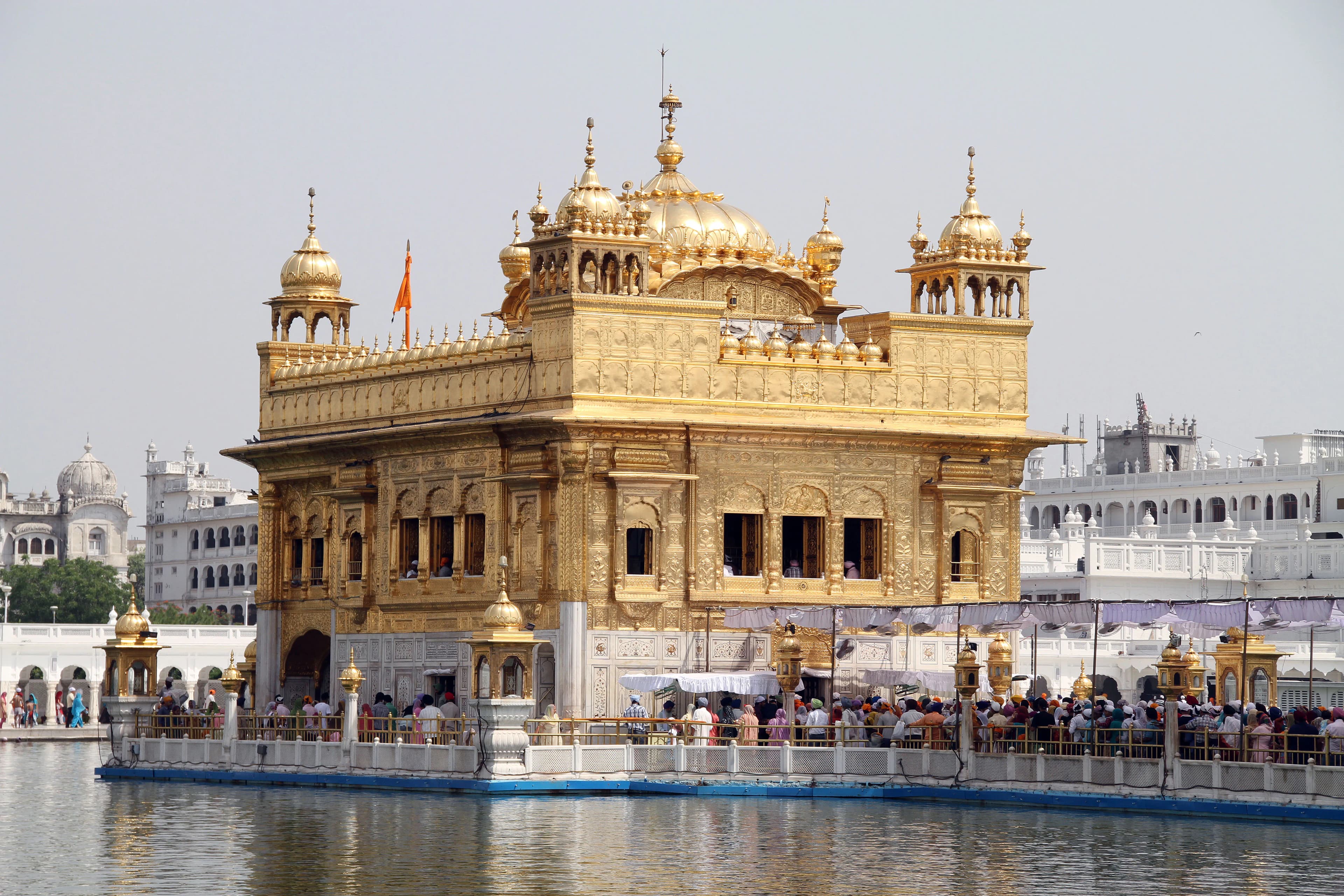
Golden Temple Amritsar
The shimmering reflection of the Golden Temple, or Sri Harmandir Sahib as it’s reverently called, in the Amrit Sarovar (Pool of Nectar) is an image that sears itself onto your soul. As a cultural journalist from Uttar Pradesh, I’ve witnessed countless expressions of faith across North India, but the serene spirituality of this Sikh gurudwara is unlike anything I’ve encountered. Stepping onto the marble parikrama, the circumambulatory path that encircles the temple, felt like entering a realm detached from the bustling city of Amritsar just beyond its walls. The architecture is a breathtaking blend of Mughal and Rajput influences, a testament to the syncretic nature of the region's history. The white marble platform, intricately inlaid with pietra dura work featuring floral motifs and geometric patterns, provides a stark yet harmonious contrast to the gilded superstructure. The gold plating, added later by Maharaja Ranjit Singh, shimmers brilliantly, especially as the sun begins its descent, casting a warm glow across the complex. The central dome, reminiscent of a lotus flower, is crowned with a chhatri, a small, ornate pavilion, a common feature in Rajput architecture. This fusion of styles speaks volumes about the cultural exchange and artistic patronage that flourished in Punjab. The constant chanting of hymns, the Gurbani, emanating from within the temple, creates an atmosphere of meditative tranquility. I observed devotees from all walks of life, Sikhs and non-Sikhs alike, circumambulating the holy tank with folded hands, their faces etched with devotion. The air hummed with a palpable sense of reverence, a collective energy of faith that transcended language and background. It was fascinating to witness the seva, the selfless service, performed by volunteers. From cleaning the floors to serving langar, the free community kitchen, everyone contributed, reinforcing the Sikh principles of equality and community. The langar itself is a remarkable experience. Thousands are fed daily, regardless of caste, creed, or social status. Sitting cross-legged on the floor alongside strangers, sharing a simple yet delicious meal, fostered a sense of unity and shared humanity. The sheer scale of the operation and the seamless efficiency with which it’s managed are truly impressive. It’s a powerful embodiment of the Sikh philosophy of Vand Chhako, sharing with others and consuming together. Inside the Harmandir Sahib, the atmosphere is even more charged with spirituality. The Guru Granth Sahib, the holy scripture of Sikhism, is placed on a raised platform under a richly embroidered canopy. The Granthi, the ceremonial reader, recites the verses with a melodic resonance that fills the sanctum. The air is thick with the scent of incense and the murmur of prayers. It’s a space that invites introspection and contemplation, a sanctuary for the soul. As I exited the complex, crossing the threshold back into the vibrant city life, I carried with me a profound sense of peace and a renewed appreciation for the power of faith. The Golden Temple isn't just a stunning architectural marvel; it’s a living testament to the enduring principles of equality, service, and devotion. It’s a place where the divine and the human intersect, creating an experience that is both deeply personal and universally resonant. The memory of the golden reflection shimmering in the holy waters, a beacon of hope and spirituality, will undoubtedly stay with me for years to come. It's a testament to the rich tapestry of India’s spiritual heritage, a story I, as a cultural journalist, feel privileged to have witnessed and shared.

Srikalahasti Temple Srikalahasti
The air hung thick with incense and the murmur of chanting as I stepped through the towering gopuram of the Srikalahasti Temple. Sunlight, fractured by the intricate carvings, dappled the stone floor, creating an ethereal atmosphere. This wasn't just another temple on my UNESCO World Heritage journey across India; Srikalahasti held a different energy, a palpable sense of ancient power. Located in the Chittoor district of Andhra Pradesh, this temple, dedicated to Vayu, the wind god, is a testament to centuries of devotion and architectural brilliance. My eyes were immediately drawn upwards to the main Vimana, the Shikharam, soaring above the inner sanctum. This impressive structure, known as the Vayu Lingam, is not a sculpted idol but a natural rock formation believed to be a manifestation of Vayu. The flickering lamps surrounding it cast dancing shadows, adding to the mystique. The temple's Dravidian architecture is a marvel, with its intricate carvings depicting scenes from Hindu mythology. I spent a considerable amount of time studying the detailed friezes, each panel narrating a story, a testament to the skill of the artisans who crafted them centuries ago. The vibrant colours, though faded with time, still hinted at the temple's former glory. One of the most striking features of Srikalahasti is its massive, 100-pillar mandapam. The sheer scale of this hall is breathtaking. Each pillar is a work of art, adorned with elaborate carvings of deities, mythical creatures, and floral motifs. I could almost hear the echoes of ancient ceremonies and festivals that must have taken place within these hallowed walls. Walking through the mandapam, I felt a sense of connection to the generations of devotees who had walked this same path before me. The temple complex is vast, encompassing several smaller shrines dedicated to various deities. I explored each one, noting the unique architectural nuances and the distinct atmosphere they held. The shrine of Kalahasteeswara, a form of Shiva, is particularly noteworthy. The legend of the spider, the snake, and the elephant, each offering their devotion to Shiva in their own way, is deeply embedded in the temple's lore and adds another layer of spiritual significance to the site. Beyond the architectural grandeur, what truly captivated me at Srikalahasti was the palpable devotion of the pilgrims. From the elderly woman whispering prayers with closed eyes to the young family offering coconuts, the air was thick with faith. Witnessing this fervent devotion firsthand gave me a deeper understanding of the temple's significance, not just as a historical monument but as a living, breathing centre of spirituality. As I left the temple, the chanting still resonated in my ears. Srikalahasti is more than just a collection of stones and carvings; it's a testament to the enduring power of faith and the artistic brilliance of a bygone era. It's a place where history, mythology, and spirituality intertwine, creating an experience that stays with you long after you've left its sacred grounds. Of all the UNESCO sites I've visited in India, Srikalahasti holds a special place, a reminder of the rich tapestry of culture and belief that makes this country so unique. The wind, whispering through the temple towers, seemed to carry the echoes of centuries of prayers, a testament to the enduring spirit of this ancient sanctuary.
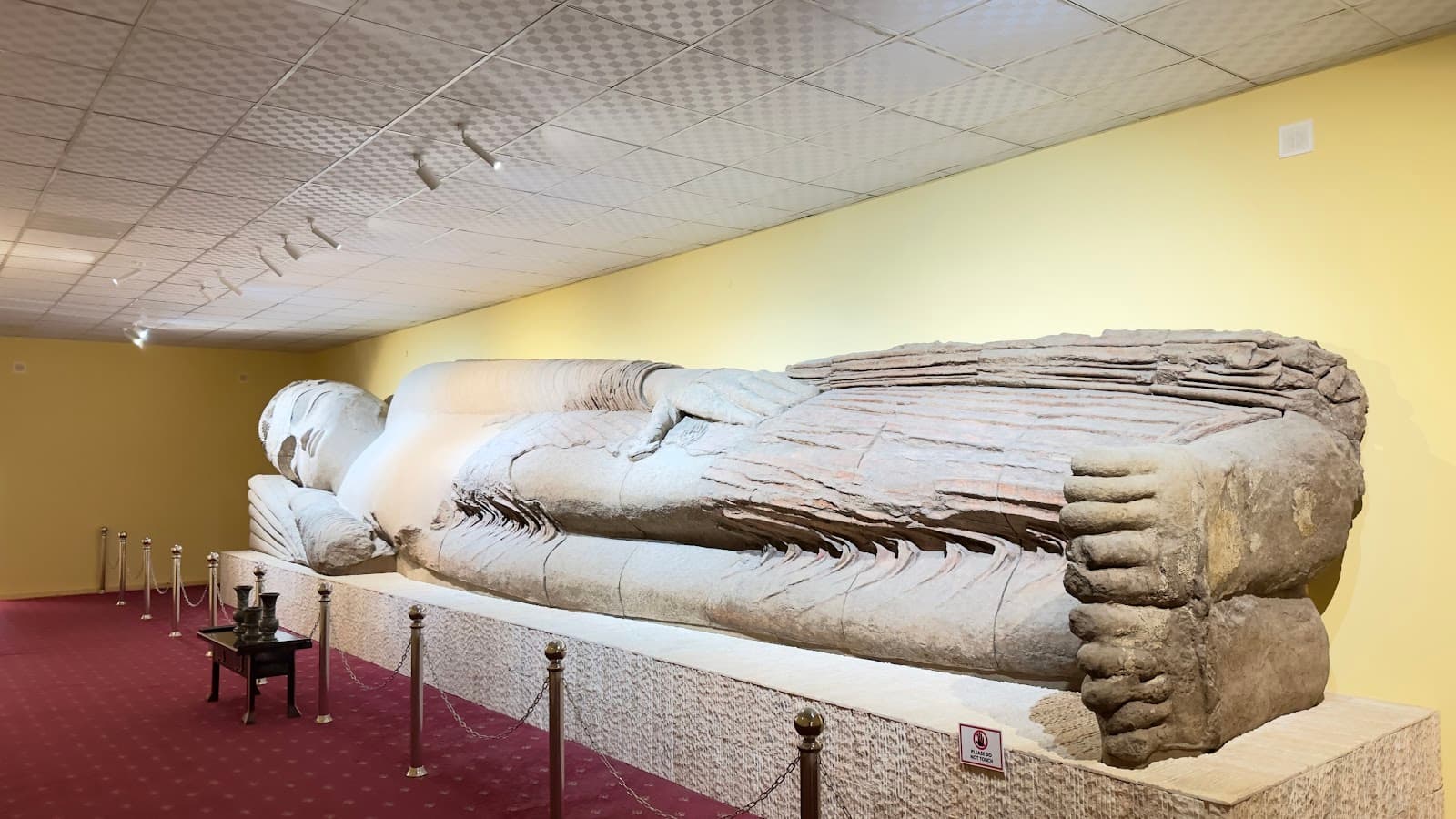
Takhti Sangin Oxus Temple Khatlon Tajikistan
Takhti Sangin, dramatically situated at the confluence of the Vakhsh and Panj rivers in southern Tajikistan, represents one of the most extraordinary and archaeologically significant ancient temples in Central Asia, constructed in the 3rd century BCE during the Achaemenid and subsequent Hellenistic periods as a major sanctuary dedicated to the Oxus River (modern Amu Darya) that yielded extraordinary artifacts demonstrating the profound transmission of Indian religious and artistic traditions to Central Asia along the ancient trade routes. The temple complex, known as the "Oxus Temple" and excavated extensively by Soviet and Tajik archaeologists, features sophisticated architectural elements that demonstrate the synthesis of Achaemenid, Hellenistic, and Indian architectural traditions, while the site's extraordinary collection of artifacts, including numerous objects with clear Indian iconographic and stylistic influences, provides crucial evidence of the transmission of Indian religious and artistic traditions to Central Asia during the early centuries BCE. The temple's most remarkable discovery was the "Oxus Treasure," a collection of over 1,800 gold and silver artifacts including vessels, statuettes, and decorative objects, many of which demonstrate clear Indian iconographic influences including depictions of Indian deities, mythological scenes, and artistic motifs that were transmitted from the great artistic centers of India to Central Asia, while the discovery of numerous artifacts with Sanskrit inscriptions and Indian artistic styles provides crucial evidence of the site's role as a major center for the transmission of Indian religious and cultural traditions. Archaeological evidence reveals that the temple served as a major center of worship and trade, attracting pilgrims and merchants from across the ancient world including India, while the discovery of numerous artifacts with Indian iconography including depictions of Hindu deities, Buddhist symbols, and Indian artistic motifs demonstrates the sophisticated understanding of Indian religious and artistic traditions possessed by the temple's patrons and artisans. The temple's architectural layout, with its central sanctuary surrounded by courtyards and auxiliary structures, follows sophisticated planning principles that demonstrate the synthesis of various architectural traditions including Indian temple planning principles that were transmitted to Central Asia, while the temple's extensive decorative programs including sculptures, reliefs, and architectural elements demonstrate the ways in which Indian artistic traditions were integrated into Central Asian religious architecture. Today, Takhti Sangin stands as a UNESCO Tentative List site and represents one of the most important archaeological discoveries in Central Asia, serving as a powerful testament to the transmission of Indian religious and artistic traditions to Central Asia, while ongoing archaeological research and conservation efforts continue to protect and study this extraordinary cultural treasure that demonstrates the profound impact of Indian civilization on Central Asian religious and artistic traditions. ([1][2])
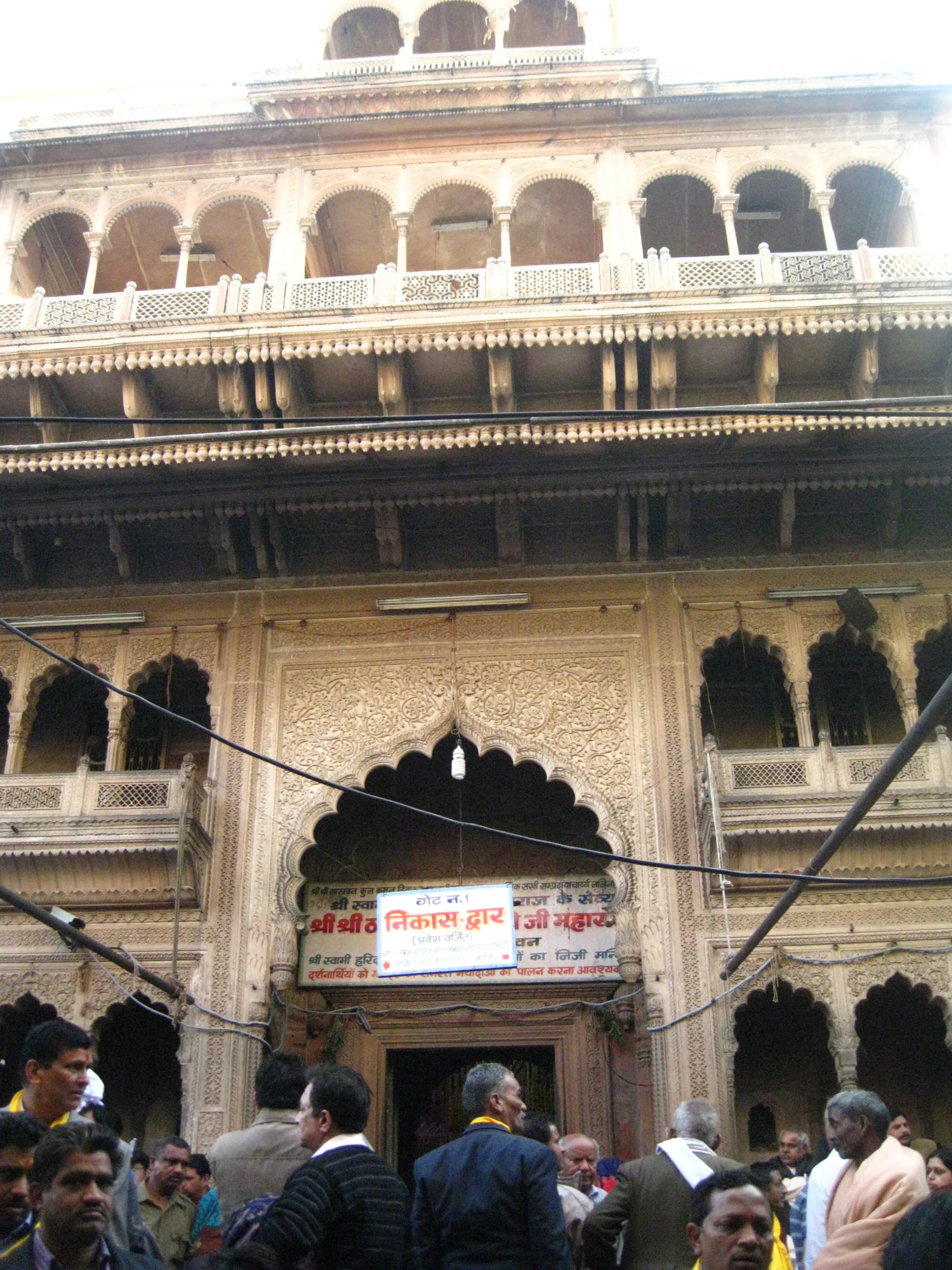
Banke Bihari Temple Vrindavan
The Banke Bihari Temple, situated in Vrindavan, Mathura district, Uttar Pradesh, stands as a profound testament to India's millennia-spanning cultural heritage and its continuous tradition of devotion to Lord Krishna [1] [2]. This revered Hindu temple is dedicated to Banke Bihari, an iconic representation believed to embody the combined divine forms of Radha and Krishna [1] [2]. The central idol, a captivating black image, is notably depicted in the Tribhanga (three-bend) posture, a classical stance in Indian iconography that signifies grace and divine playfulness [1] [2]. The temple's architecture predominantly reflects the indigenous Rajasthani style, a tradition deeply rooted in India's historical architectural practices, characterized by intricate craftsmanship and robust construction [1] [5]. While the specific dimensions of the entire complex are not universally published, the structural elements feature wide entrances adorned with beautifully carved arches, a hallmark of traditional Indian temple design [1]. The walls throughout the temple interior are meticulously covered with elaborate carvings and vibrant paintings, which vividly narrate episodes from Lord Krishna's life, serving both as decorative elements and didactic visual scriptures [1]. The roof, constructed in a traditional manner, exhibits detailed decorations that further enhance the aesthetic and spiritual ambiance of the sacred space [1]. The temple's interior is celebrated for its exquisite stonework and stunning designs, encompassing a large prayer hall where devotees gather for bhajans and aarti, fostering a collective spiritual experience [1]. The spatial arrangement includes a peaceful courtyard, offering a tranquil environment for contemplation amidst the vibrant devotional activities [1]. Uniquely, the temple does not feature bells within its premises, nor does it perform the Mangala Aarti (early morning ritual) daily, except on Krishna Janmashtami, out of a belief to avoid disturbing the deity, who is revered as a child [2] [5]. Furthermore, the darshan (viewing) of the idol is intentionally interrupted every five minutes by drawing curtains, a practice stemming from the belief that an uninterrupted gaze might cause Banke Bihari to accompany a devotee home, leaving the temple empty [2] [5]. This distinctive ritual underscores the intimate and personal relationship devotees share with the deity. The temple is thronged by thousands of visitors daily, maintaining its status as an active center of worship and cultural practice [5]. Conservation efforts are ongoing to preserve this national heritage site, ensuring its structural integrity and the longevity of its artistic and spiritual elements [4]. The site remains fully operational, accessible to devotees and visitors, and continues to uphold its ancient traditions and maintenance protocols, embodying the enduring legacy of Indian civilization [1] [4].
Quick Links
Plan Your Heritage Journey
Get personalized recommendations and detailed visitor guides