Has Inheritage Foundation supported you today?
Your contribution helps preserve India's ancient temples, languages, and cultural heritage. Every rupee makes a difference.
Secure payment • Instant 80G certificate
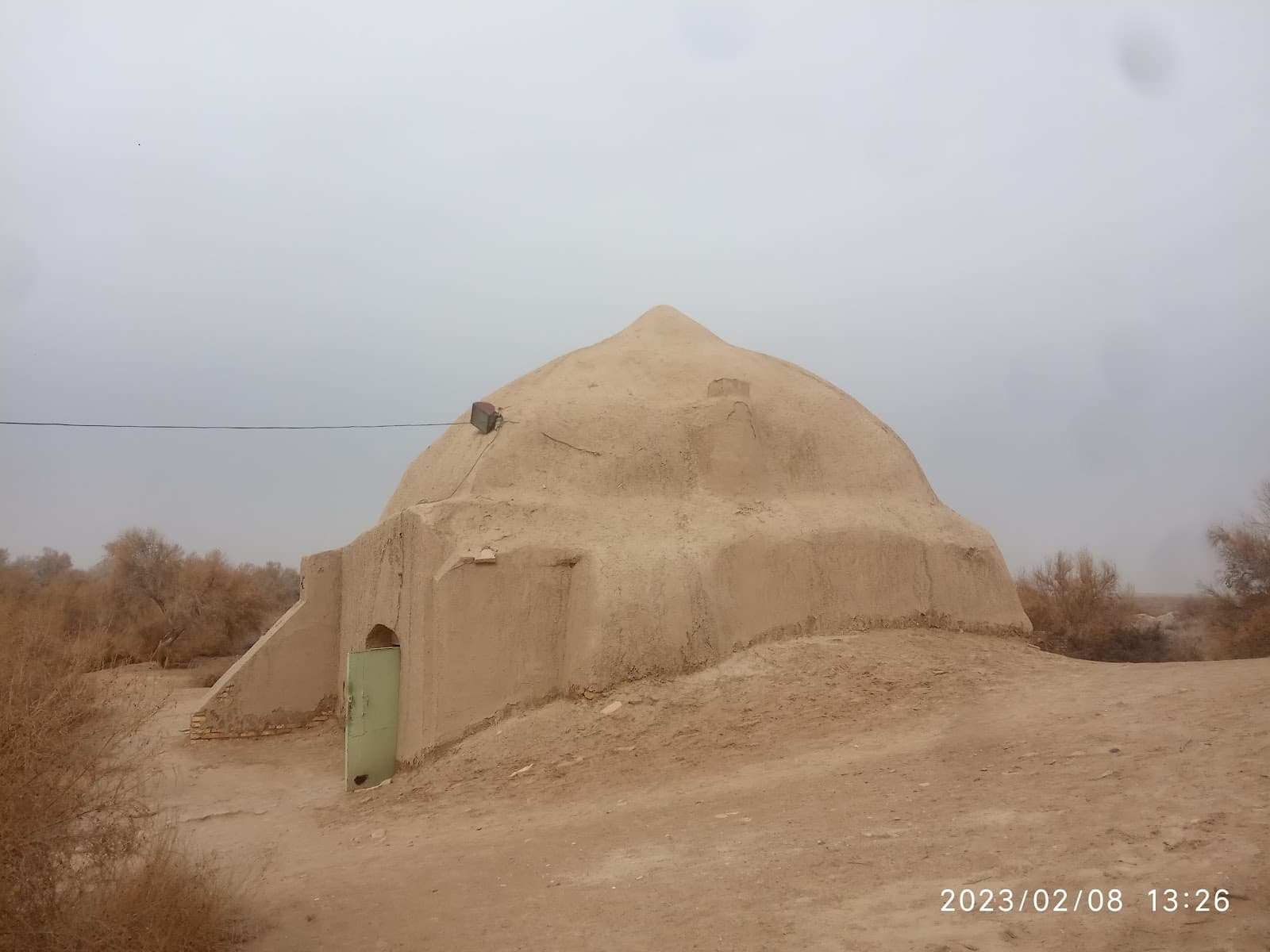
Dandânqan Fortress Temple Area Mary Region Turkmenistan
Nestled in the Mary Region of Turkmenistan, Dandânqan Fortress stands as a significant medieval fortress, notable for its fusion of Central Asian and Indian Buddhist architectural traditions ([1][2]). The fortress features a temple area displaying influences from Indian Buddhist temple architecture and artistic programs ([1]). This synthesis highlights the transmission of Indian religious and architectural concepts to Central Asia during the medieval period ([1][2]). Archaeological excavations have uncovered Buddhist fragments, including sculptures, architectural elements, and religious iconography, revealing parallels with Indian Buddhist art centers like Gandhara and Mathura ([1]). The layout of the temple area, with its central structures and ritual spaces, mirrors Indian Buddhist temple planning principles ([1][2]). These discoveries provide crucial evidence of the site's role in transmitting Indian Buddhist traditions to Central Asia ([1]). During the medieval period, when Central Asia experienced extensive trade and cultural connections with India, Dandânqan Fortress became a major center of religious and military activity ([1]). The patronage of the Samanid Dynasty facilitated the integration of Indian Buddhist elements into the fortress's design ([1][2]). Mud brick, fired brick, stone, lime mortar, metal, and wood were employed in the construction, showcasing the architectural prowess of the era ([1]). Intricate carvings adorning the walls and structures further exemplify the blending of Indian and Central Asian aesthetics ([1][2]). The presence of Buddhist fragments and architectural elements demonstrates a remarkable understanding of Indian Buddhist temple architecture and iconographic programs ([1]). Today, as a UNESCO Tentative List site, Dandânqan Fortress represents a vital cultural treasure, illustrating the profound impact of Indian civilization on Central Asian religious and cultural traditions ([1][2]). The ongoing archaeological research and conservation efforts ensure the protection and study of this extraordinary site ([1]).
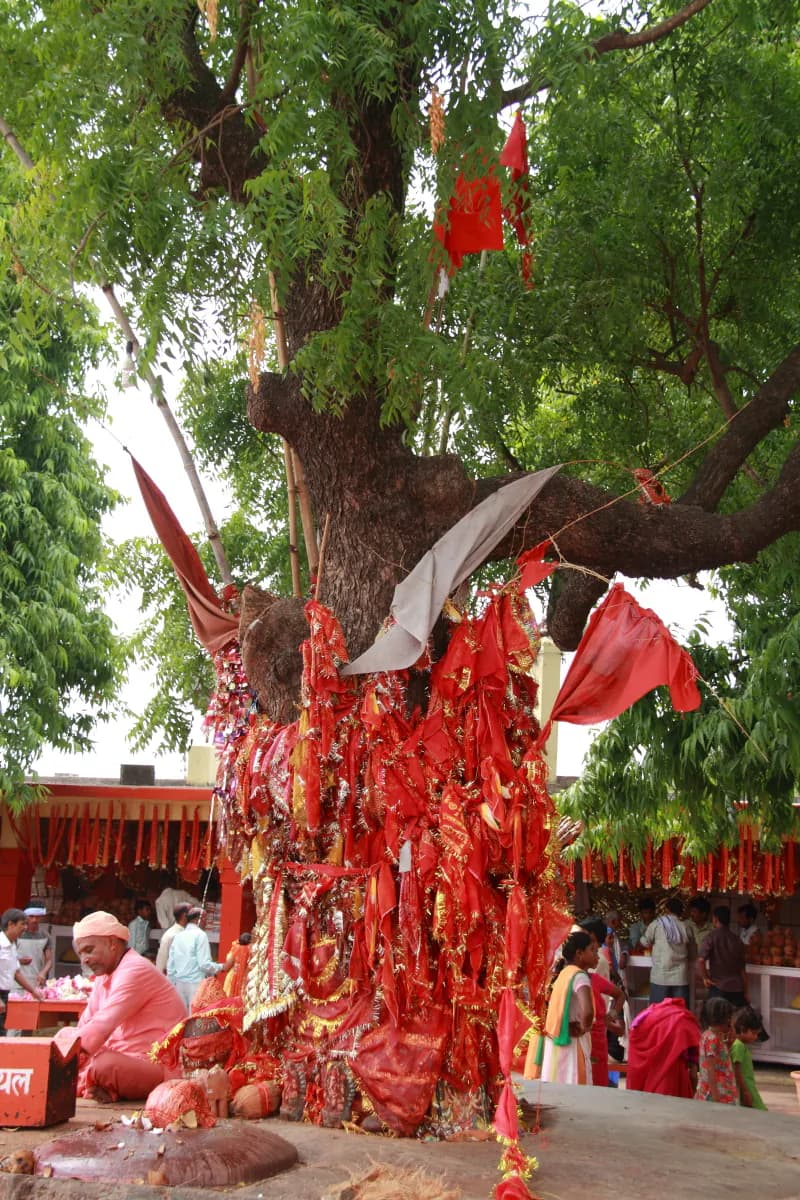
Patan Devi Temple Patna
The midday sun beat down on Patna, the air thick with humidity, but the moment I stepped onto the grounds of the Patan Devi Temple, a palpable shift occurred. It wasn't just the cooler air within the temple precincts, but a sense of stepping back in time, into a space imbued with centuries of devotion and history. Located on the banks of the Ganges, this Shakti Peetha, dedicated to the goddess Patneshwari, exudes an aura of power that’s both captivating and humbling. Unlike the elaborate, towering structures of Gujarat’s temples, Patan Devi presents a different kind of architectural beauty. The main temple, though recently renovated, retains a core of ancient simplicity. The structure is relatively small, built on a raised platform, and its modest exterior belies the spiritual weight it carries. The primary shrine houses the 'pindi' or holy stone, representing the goddess, and it's this unassuming stone that draws thousands of devotees daily. The lack of ostentatious ornamentation allows the focus to remain solely on the divine presence. What struck me most was the palpable energy of the place. The air vibrated with the chants of devotees, the rhythmic clang of bells, and the scent of incense. It was a sensory overload in the best possible way, a complete immersion in an active, living faith. I watched as families performed 'puja', their faces etched with devotion, and observed the intricate rituals performed by the temple priests. It was a powerful reminder of the enduring strength of faith and the role these sacred spaces play in people’s lives. Architecturally, the temple displays a blend of styles. While the core structure seems to echo older, perhaps even Gupta-era influences, later additions, particularly the ornate silver doors and some of the surrounding shrines, showcase Mughal and later Rajput architectural elements. This amalgamation speaks volumes about the temple's long history and its position at the crossroads of different cultures and empires. The silver doors, intricately carved with depictions of deities and floral motifs, are particularly noteworthy. They gleam in the soft light filtering through the temple entrance, creating a mesmerizing visual. Moving beyond the main shrine, I explored the surrounding complex. Smaller shrines dedicated to other deities dot the courtyard, each with its own unique character. The walls are adorned with colourful murals depicting scenes from Hindu mythology, adding a vibrant touch to the otherwise austere surroundings. I noticed the recurring motif of lions, perhaps a nod to the goddess’s power and strength. One aspect that resonated deeply with my Gujarati sensibilities was the sense of community within the temple complex. Just as in the temples back home, Patan Devi serves as a social hub, a place where people from all walks of life come together to connect with the divine and with each other. I saw families sharing 'prasad', friends catching up, and elders narrating stories to younger generations. This social fabric woven around faith is something I’ve always found deeply moving, and it was evident here in Patna as well. Leaving the temple, I carried with me not just photographs and notes, but a profound sense of connection to a place steeped in history and spirituality. Patan Devi is more than just a temple; it’s a living testament to the enduring power of faith and a fascinating example of how architecture can serve as a conduit to the divine. It’s a must-see for anyone seeking to understand the rich tapestry of Indian culture and spirituality.
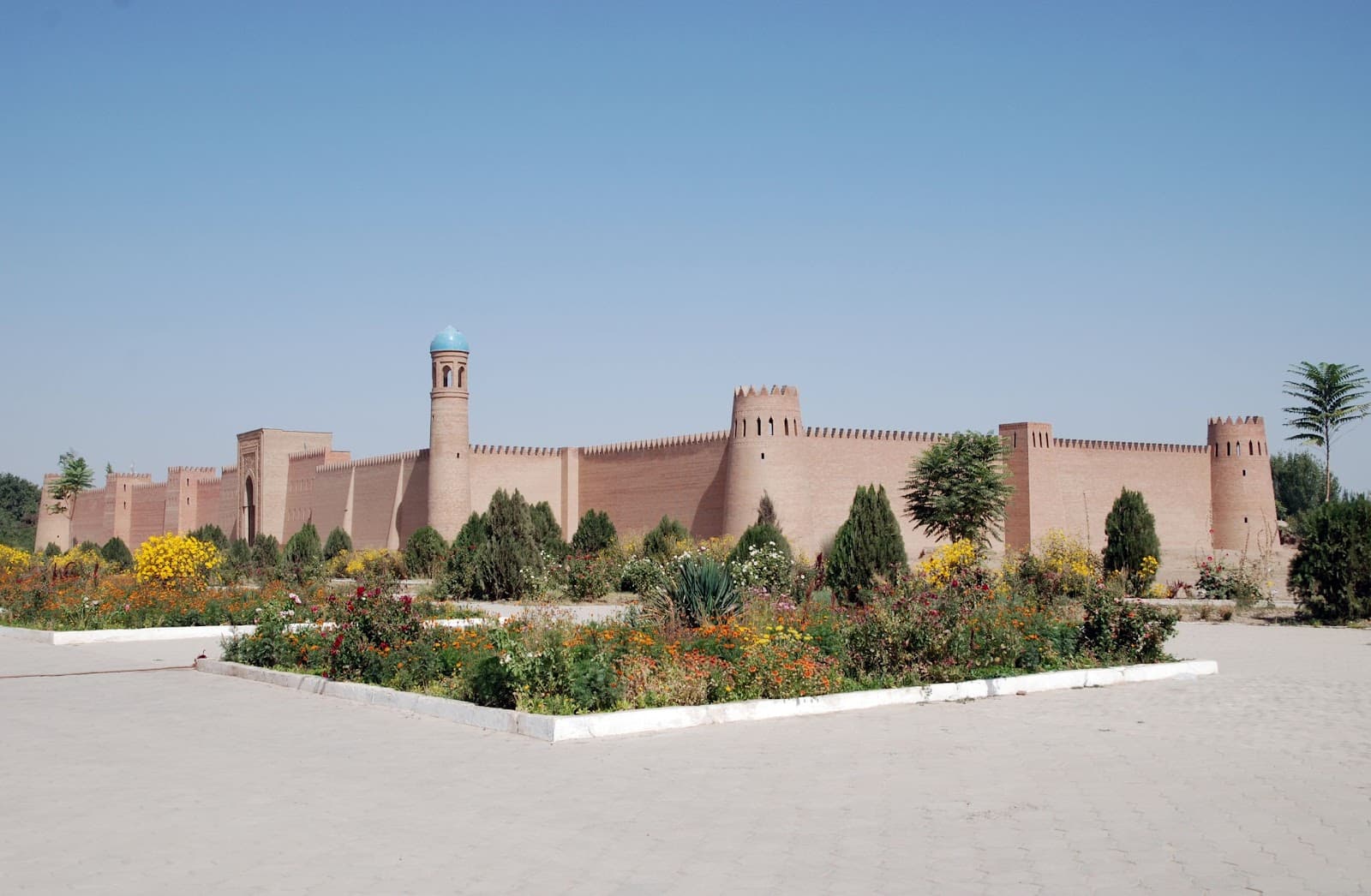
Hulbuk Palace Complex Vose Tajikistan
Hulbuk Palace Complex, dramatically situated in the Vose District of southern Tajikistan, represents one of the most extraordinary and archaeologically significant medieval palace complexes in Central Asia, constructed in the 9th-12th centuries CE during the Samanid and subsequent periods as a major administrative and cultural center that includes extraordinary Buddhist and Hindu artifacts in its museum collection, creating a powerful testament to the continued transmission of Indian religious and artistic traditions to Central Asia even after the Islamic conquest. The palace complex, featuring sophisticated architectural elements that demonstrate the synthesis of Islamic, Central Asian, and Indian architectural traditions, while the site's museum collection includes numerous Buddhist and Hindu artifacts including sculptures, reliefs, and decorative objects that demonstrate clear Indian iconographic and stylistic influences, providing crucial evidence of the continued presence and influence of Indian religious and artistic traditions in Central Asia during the medieval period. Archaeological excavations have revealed extraordinary architectural elements including courtyards, halls, and decorative programs that demonstrate the sophisticated synthesis of various architectural traditions, while the discovery of numerous Buddhist and Hindu artifacts in the museum collection provides crucial evidence of the site's role as a center for the preservation and display of Indian religious and artistic traditions, demonstrating the sophisticated understanding of Indian cultural heritage possessed by the palace's patrons and curators. The palace complex's architectural layout, with its central courtyards surrounded by halls and administrative structures, follows sophisticated planning principles that demonstrate the synthesis of various architectural traditions including Indian palace planning principles that were transmitted to Central Asia, while the palace's extensive decorative programs including architectural elements and artifacts demonstrate the ways in which Indian artistic traditions were integrated into Central Asian palace architecture and collections. The palace complex's location in the Vose District, a major administrative and cultural center, underscores its significance as a center for the preservation and display of Indian religious and artistic traditions, while the site's museum collection demonstrates the sophisticated understanding of Indian cultural heritage possessed by Central Asian rulers and administrators. Today, Hulbuk Palace Complex stands as a UNESCO Tentative List site and represents one of the most important medieval palace complexes in Central Asia, serving as a powerful testament to the transmission and preservation of Indian religious and artistic traditions in Central Asia, while ongoing archaeological research and conservation efforts continue to protect and study this extraordinary cultural treasure that demonstrates the profound impact of Indian civilization on Central Asian religious and artistic traditions. ([1][2])
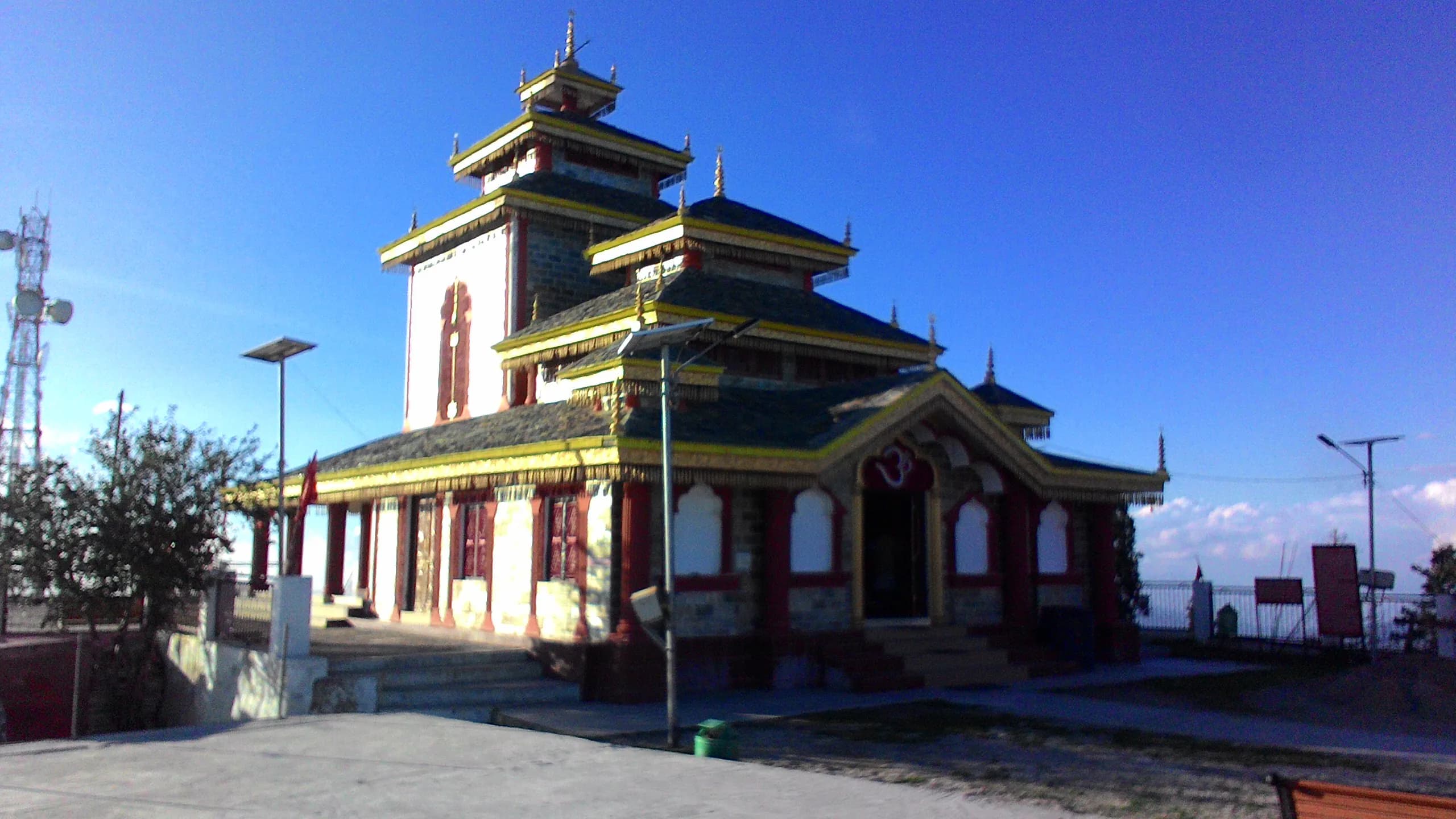
Surkanda Devi Temple Tehri Garhwal
The crisp mountain air, scented with pine and a hint of woodsmoke, whipped around me as I ascended the final steps to Surkanda Devi Temple. Perched at an altitude of almost 10,000 feet in the Tehri Garhwal district of Uttarakhand, the temple commands a breathtaking panorama of the Himalayan peaks. It's a view that instantly justifies the arduous journey, a blend of winding roads and a steep, albeit scenic, climb. My camera, a constant companion, felt almost inadequate to capture the grandeur of the snow-capped giants against the azure sky. Surkanda Devi, dedicated to the goddess Sati, holds a profound significance in Hindu mythology. Local legend recounts this spot as the place where Sati's head fell after she self-immolated. This narrative imbues the location with a palpable sense of reverence, a quiet energy that hums beneath the surface of the bustling activity of pilgrims. The temple itself is relatively small, a stark contrast to the vastness of the landscape it inhabits. Its architecture is a simple yet elegant example of traditional Himalayan temple design. The main shrine, constructed of grey stone, features a sloping slate roof adorned with a golden trident, glinting in the sunlight. Unlike the ornate carvings found in many South Indian temples, the aesthetic here is one of understated beauty, allowing the natural surroundings to take center stage. I spent hours observing the intricate details. The stonework, though weathered by time and the elements, displayed a remarkable craftsmanship. The mortar, seemingly a simple mixture of lime and sand, had held the structure together for centuries, a testament to the ingenuity of the builders. Small brass bells, tied to the eaves, chimed melodiously in the wind, adding another layer to the sensory experience. Inside the sanctum sanctorum, photography is prohibited, a rule I respected. However, the memory of the dimly lit space, filled with the fragrance of incense and the murmur of prayers, remains vivid. The atmosphere was thick with devotion, a collective energy that transcended language and background. It was a privilege to witness this intimate expression of faith. Beyond the main shrine, the temple complex includes several smaller structures and open spaces. I noticed a series of small stone platforms, likely used for rituals. The surrounding walls were adorned with faded murals depicting scenes from Hindu mythology. These weathered paintings, though partially obscured by time, offered a glimpse into the rich artistic traditions of the region. I meticulously documented these fragments of history, hoping to preserve their stories through my lens. One of the most striking aspects of Surkanda Devi is the seamless integration of the built environment with the natural landscape. The temple seems to grow organically from the mountainside, a harmonious blend of human creation and nature's artistry. The panoramic views from the temple courtyard are simply mesmerizing. The rolling hills, blanketed in dense forests, stretch out as far as the eye can see, punctuated by the towering peaks of the Himalayas. As the sun began to dip below the horizon, casting long shadows across the valley, I felt a profound sense of peace. Surkanda Devi is more than just a temple; it's a sanctuary, a place where the spiritual and the natural converge. My experience here transcended the purely visual; it was a journey into the heart of the Himalayas, a testament to the enduring power of faith and the breathtaking beauty of the natural world. Leaving the temple, I carried with me not just photographs, but a deeper appreciation for the rich cultural and spiritual heritage of Uttarakhand.
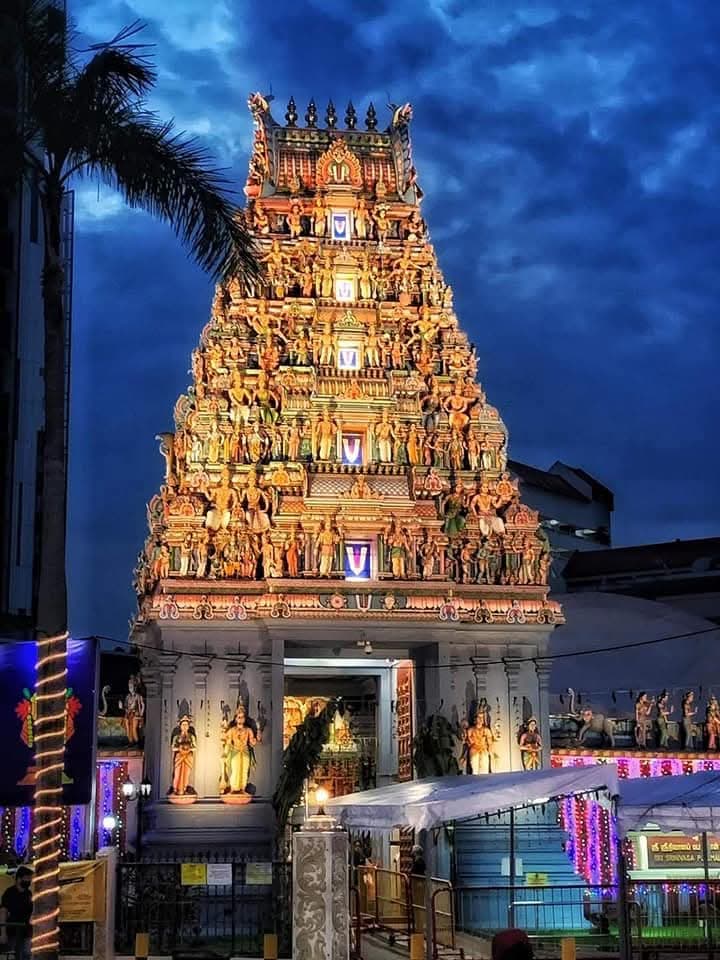
Sri Srinivasa Perumal Temple Singapore
The Sri Srinivasa Perumal Temple, located at 397 Serangoon Road in Singapore, stands as a profound testament to India's millennia-spanning cultural heritage, embodying the continuous tradition of Dravida Vaishnava architecture [2] [3]. Dedicated to Sri Srinivasa Perumal, a manifestation of Lord Vishnu, this sacred edifice reflects the deep historical roots and enduring sophistication of Indian temple building traditions [3]. The temple's architectural style is predominantly Dravidian, characterized by its towering gopuram, intricate sculptural work, and adherence to ancient Agama Shastras principles [3]. The most striking feature is the five-tiered gopuram, which reaches a height of 20 meters [3]. This monumental entrance tower is adorned with a multitude of stucco sculptures depicting various deities, mythological narratives, and celestial beings, all rendered with meticulous detail and vibrant polychromy [3]. The gopuram serves not only as a gateway but also as a visual representation of the cosmic hierarchy, a common element in South Indian temple architecture [3]. The construction primarily utilizes brick and mortar, a traditional method that allows for the intricate sculptural detailing seen throughout the structure [3]. The temple complex encompasses a main shrine (garbhagriha) housing the principal deity, surrounded by a circumambulatory path (pradakshina patha), and several subsidiary shrines dedicated to other deities such as Lakshmi, Andal, and Garuda [3]. Separate sanctums are also present for Chakrathaazhvar and Lord Hanuman, reflecting the comprehensive pantheon worshipped within the Vaishnava tradition [3]. Within the inner courtyard, a well marks the historical location of a stream, which was traditionally used by devotees for ritual cleansing before worship, highlighting the integration of natural elements into the sacred space [3]. A Tulasi (holy basil) plant, revered in Hinduism, is also present, symbolizing purity and devotion [3]. The temple ceiling above the main hall features a colorful circular pattern illustrating the nine planets (Navagrahas), an astrological motif common in Hindu temples [3]. The structural system employs traditional load-bearing walls and columns, with finely carved pillars supporting the roof structures [3]. The intricate carvings on these pillars often depict episodes from Hindu epics and Puranas, serving both decorative and didactic purposes [3]. The temple was gazetted as a National Monument in 1978, underscoring its significant cultural and architectural value [2]. Regular conservation efforts are undertaken, with major facelifts and consecration ceremonies (kumbhabhishekam) occurring approximately every 12 years, a practice rooted in ancient Hindu traditions to rejuvenate the sacred energy of the temple [2]. The most recent major restoration was completed in 2018, ensuring the structural integrity and aesthetic preservation of its ancient forms and intricate artwork [2]. The temple remains an active place of worship, hosting daily rituals, major festivals like Panguni Brahmotsavam and Thaipusam, and community services, demonstrating its continuous operational readiness and its role as a vibrant center for cultural and spiritual practices [2].
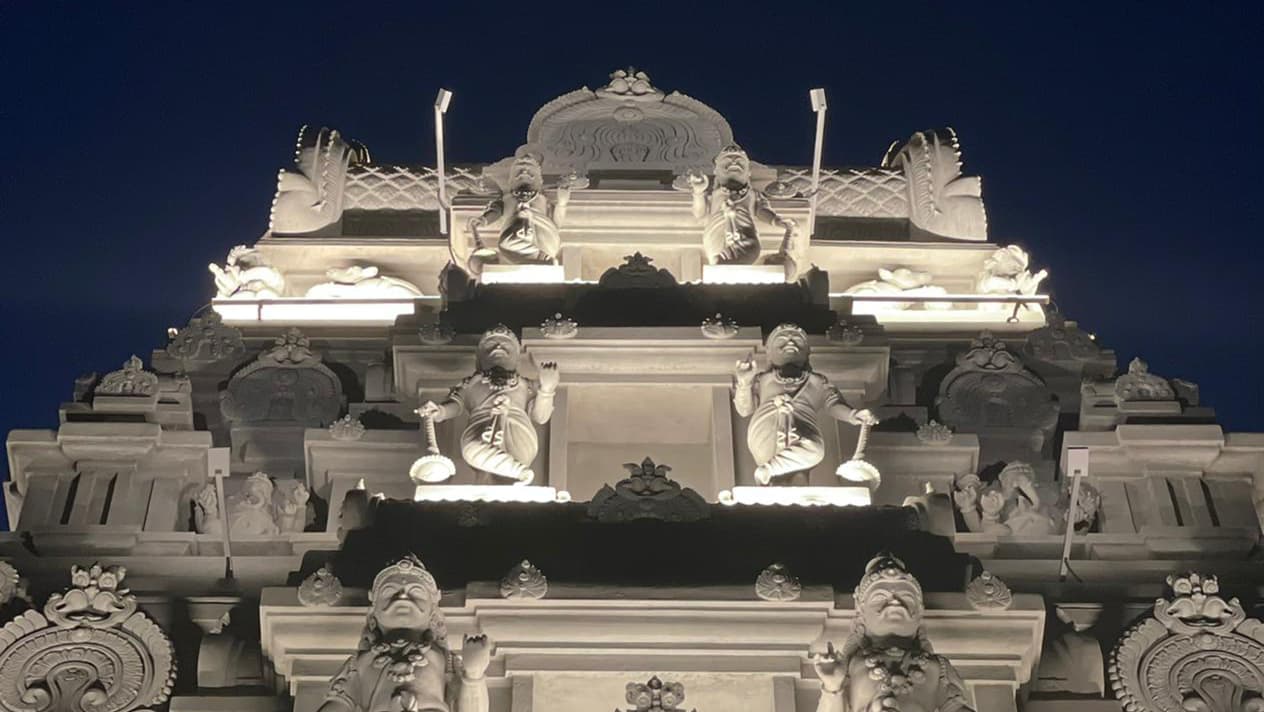
Shree Ghanapathy Temple Wimbledon
Shree Ghanapathy Temple Wimbledon was consecrated on 8 June 1981 by His Holiness Sri La Sri Sambamurthy Sivachariar, transforming a disused engineering works into the first purpose-built Hindu temple in Europe devoted to Sri Maha Ganapathy and the tutelary deities of London’s Saiva Tamil community ([1][2]). The temple opens daily 8:00 AM-1:00 PM and 4:00 PM-9:00 PM, with suprabhatam at 7:30 AM, ucha kaala puja at 12:00 PM, and evening arti at 7:00 PM. Pilgrims arrive through the granite-clad Rajagopuram (added 2005) into a marble mandapa that houses thirteen shrines including Ganapathy, Meenakshi-Sundareshwarar, Murugan with Valli and Deivanai, Durga, Navagraha, and the guardians of the 63 Nayanmars; priests conduct daily homa, abhishekam, and archana, while the Mahalakshmi community hall and Annapoorani kitchen serve weekday annadhanam and celebratory feasts ([1][3]). The temple broadcasts Araneri online radio, operates Saturday Tamil and Sanskrit schools, Bharatanatyam and mridangam academies, yoga therapy clinics, food bank collections, and immigration advice sessions. During Chithirai, Aadi, Navaratri, and Skanda Shasti, volunteer teams steward street processions that carry utsava murti around Wimbledon, coordinate flower-garland workshops, and prepare prasadam for thousands. Operational resilience comes from a building management hub overseeing HVAC, underfloor heating, lighting, and CCTV, while the charitable trust liaises with Merton Council to manage event road closures, waste recycling, and safeguarding for elders and children participating in temple activities ([1][4]).
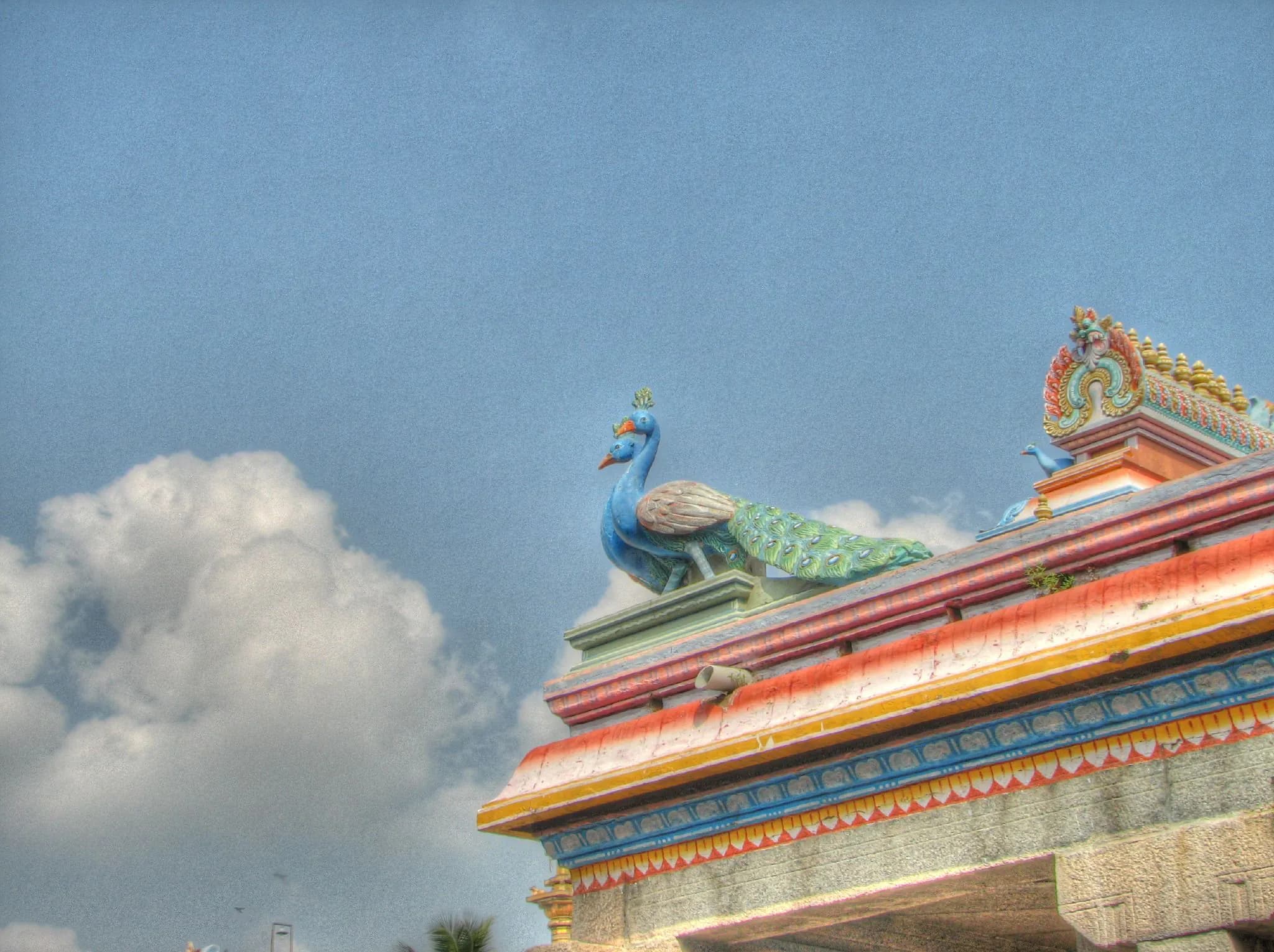
Kapaleeshwarar Temple Mylapore
The gopuram explodes upwards, a riot of colour against the Chennai sky. Standing before Kapaleeshwarar Temple in Mylapore, I felt a familiar thrill, the same one that accompanies me at every ancient site I document. But this was different. This wasn't the sandstone and laterite of my Madhya Pradesh. This was granite, sculpted into a vibrant tapestry of deities, mythical creatures, and floral motifs. The sheer scale of the gopuram, towering at 37 meters, was breathtaking, each tier a meticulously crafted narrative. My lens, usually accustomed to the muted tones of central India’s heritage, struggled to capture the sheer vibrancy of the Dravidian architecture. The primary colours, so boldly applied, seemed almost defiant against the weathering of time. I found myself constantly adjusting the settings, trying to balance the intense sunlight with the deep shadows cast by the intricate carvings. The eastern gopuram, though smaller than the western entrance, offered a captivating view of the temple tank, its still waters reflecting the towering structure. Stepping inside, the energy shifted. The cacophony of the city faded, replaced by the scent of incense and the murmur of devotees. The temple, dedicated to Lord Shiva as Kapaleeshwarar and Goddess Parvati as Karpagambal, exudes a palpable sense of history. The inner sanctum, while restricted to devotees, held a quiet power that resonated even from a distance. I focused my attention on the mandapams, each pillar a testament to the skill of the artisans who carved them centuries ago. Unlike the elaborate narratives on the gopuram, the pillars within were often adorned with intricate geometric patterns, interspersed with depictions of yashas, celestial beings. The play of light and shadow on these carvings created an ethereal atmosphere, inviting contemplation. The temple tank, or the Kapaleeswarar Theertham, deserves special mention. It's not merely a water body; it's a living part of the temple complex. Devotees circumambulate it, offer prayers, and perform rituals. The surrounding mandapams provide shade and a vantage point to observe the activities. I spent a considerable amount of time here, capturing the interplay between the temple's reflection in the water and the daily life unfolding around it. A group of women performing aarti, the vibrant colours of their saris contrasting with the grey stone, made for a particularly compelling composition. One aspect that struck me was the seamless blend of the ancient and the contemporary. While the temple’s core clearly dates back centuries, evidence of renovations and additions from different periods is visible. This isn't a static monument frozen in time; it's a living, evolving space. The presence of modern amenities, the bustling market just outside the temple walls, and the constant flow of devotees all contribute to a dynamic atmosphere. As a photographer accustomed to the grandeur of ancient forts and palaces, I was surprised by the intimate nature of the Kapaleeshwarar Temple. The intricate details, the vibrant colours, and the palpable spiritual energy create an immersive experience. It's not just a visual spectacle; it's a sensory feast. The rhythmic chanting, the fragrance of jasmine, and the cool touch of the granite under my feet all contributed to a profound sense of connection to this sacred space. Leaving the temple, I felt a sense of gratitude, not just for the opportunity to document its beauty, but for the glimpse it offered into the rich cultural tapestry of South India. The images I captured, I knew, would only be a pale reflection of the experience itself.
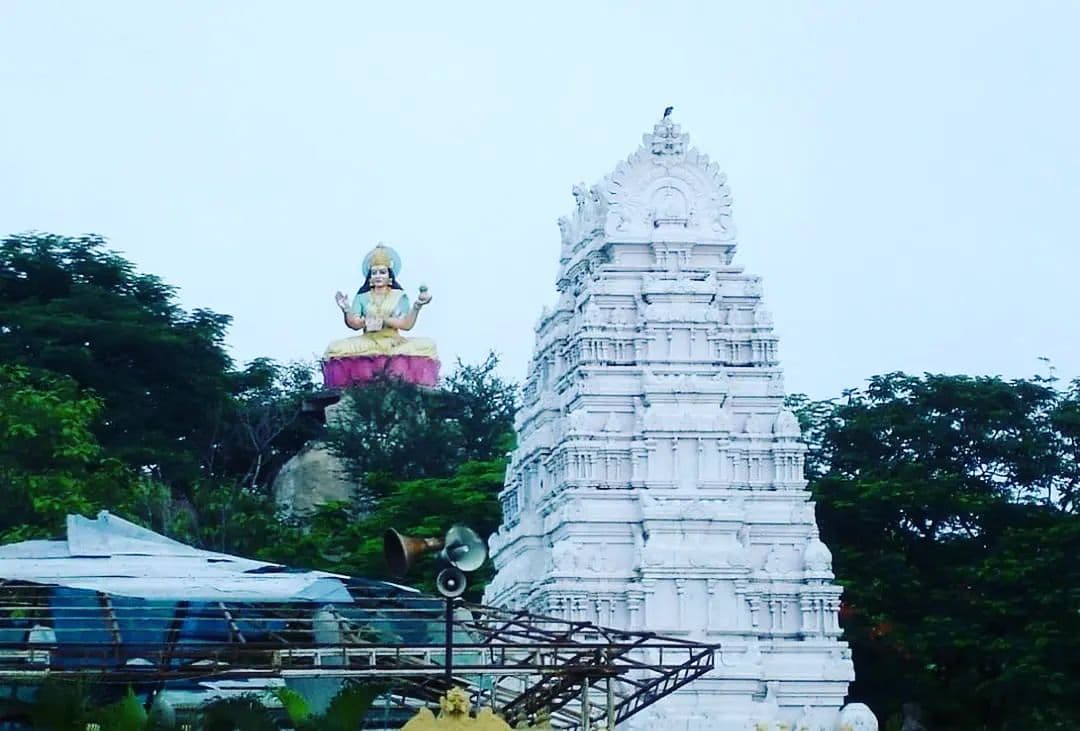
Gnana Saraswathi Temple Basar Telangana
The melodic chanting of Vedic hymns hung heavy in the air, a palpable presence that wrapped around me as I stepped into the courtyard of the Gnana Saraswathi Temple in Basar. Having explored countless temples across North India, I’d arrived with a seasoned eye, ready to dissect and appreciate the nuances of this southern shrine dedicated to the goddess of knowledge. The energy here, however, was distinctly different, a vibrant hum that resonated with the scholarly pursuits it championed. Located on the banks of the Godavari River, the temple complex felt ancient, its stones whispering tales of centuries past. Unlike the towering, ornate structures I was accustomed to in the north, the architecture here was more subdued, yet no less compelling. The main temple, dedicated to Goddess Saraswathi, is relatively small, its entrance guarded by a modest gopuram. The simplicity, however, belied the temple's significance. Inside, the deity, adorned in vibrant silks and glittering jewels, held a captivating presence. She wasn't depicted as the fierce, warrior goddess often seen in North India, but rather as a serene embodiment of wisdom and learning, a subtle yet powerful distinction. Adjacent to the Saraswathi temple stands a shrine dedicated to Lakshmi, the goddess of wealth, and a little further, one for Kali, the goddess of power. This trinity, housed within the same complex, spoke volumes about the interconnectedness of knowledge, prosperity, and strength, a philosophy deeply embedded in Indian thought. What truly set the Gnana Saraswathi Temple apart was the palpable emphasis on education. The temple is believed to be one of the three places where the Goddess Saraswathi manifested herself, the other two being Kashmir and Sringeri. This association with learning was evident everywhere. Students from across the region flocked to the temple, seeking blessings before exams. I witnessed families performing Aksharabhyasam, a sacred ceremony where children are initiated into the world of letters. The air thrummed with the quiet murmur of prayers and the rustle of palm leaves, a testament to the temple's continuing role as a centre of learning. The surrounding landscape further enhanced the temple's tranquil atmosphere. The Godavari River, flowing serenely beside the temple, added a layer of serenity to the already peaceful environment. The surrounding hills, dotted with lush greenery, provided a picturesque backdrop. I spent some time by the riverbank, watching the pilgrims take a holy dip, their faces reflecting a quiet devotion. One of the most intriguing aspects of the temple was the presence of a large number of ancient manuscripts, preserved within the temple complex. While I couldn't access them directly, the very knowledge of their existence added another layer of historical significance to the site. It spoke of a time when this temple served not just as a place of worship, but also as a repository of knowledge, a beacon of learning in the region. As I prepared to leave, I noticed a group of young children diligently practicing calligraphy on slates, their brows furrowed in concentration. It was a poignant reminder of the temple's enduring legacy, its continued relevance in a world increasingly driven by technology. The Gnana Saraswathi Temple wasn't just a place of worship; it was a living testament to the power of knowledge, a sanctuary where the pursuit of wisdom was celebrated and nurtured. My journey through North India had exposed me to countless architectural marvels and spiritual havens, but the Gnana Saraswathi Temple, with its unique blend of serenity and scholarly pursuit, left an indelible mark, a quiet echo of ancient wisdom resonating within me.
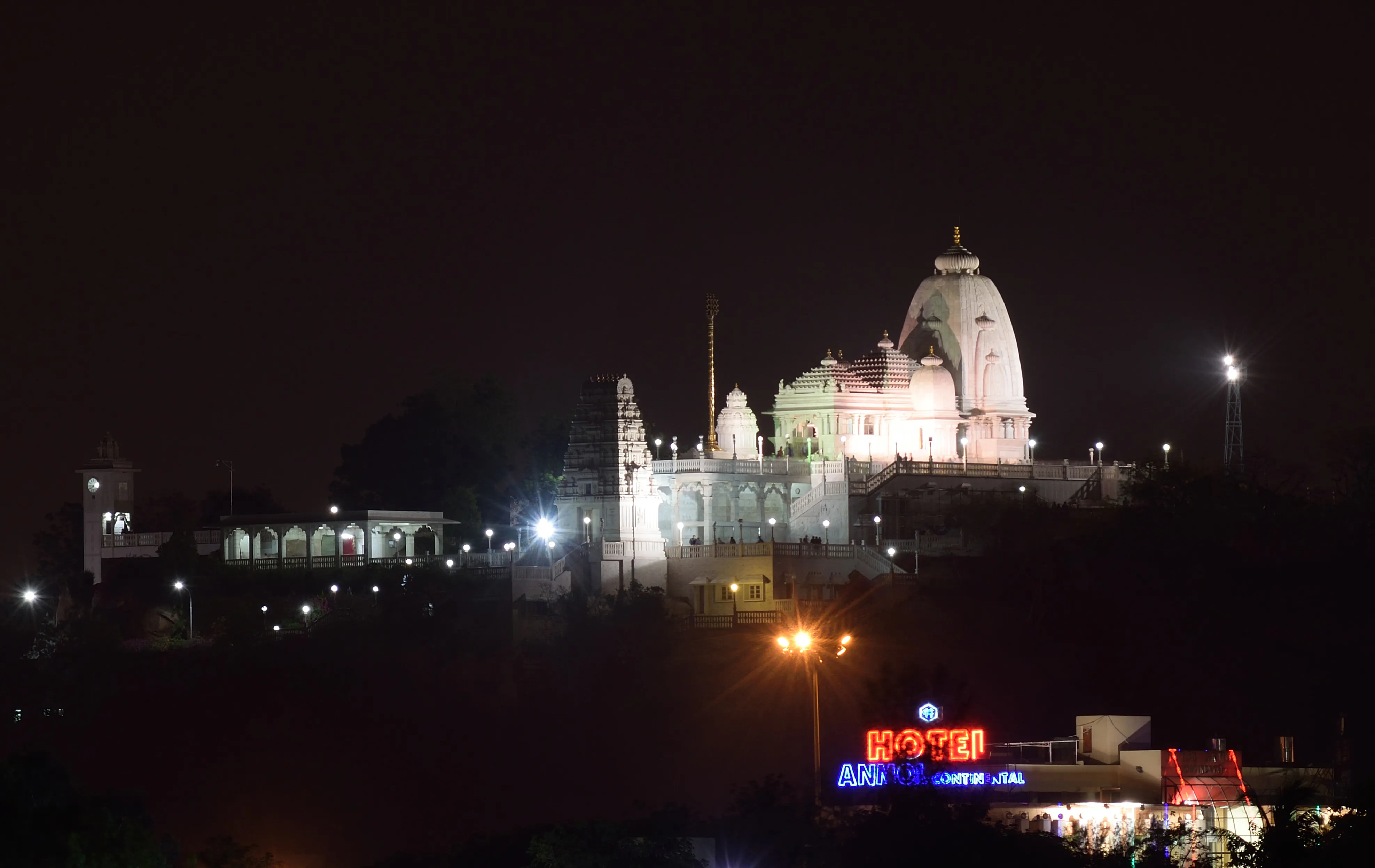
Birla Mandir Jaipur
Emerging against Jaipur's skyline, the Birla Mandir, completed in 1988, offers a contemporary interpretation of Nagara temple architecture ([1]). Clad in white marble, a departure from the region's traditional sandstone, the temple presents an ethereal aesthetic ([2]). Dedicated to Lakshmi and Narayan, it embodies a fusion of traditional and modern design principles ([3]). Intricate carvings embellishing the walls depict scenes from the Mahabharata and Ramayana, showcasing the artistry of Rajasthani craftsmen ([4]). The towering Shikhara (spire) reflects the grandeur of North Indian temple architecture ([5]). Within the complex, smaller shrines are dedicated to other Hindu deities, each meticulously crafted ([1][3]). The temple's construction integrates modern materials like cement and steel alongside traditional stone ([2]). Stone platforms and foundations illustrate adherence to Vastu Shastra principles, the ancient Indian science of architecture ([2][4]). While specific textual references within the Vastu Shastras related to this modern temple are not documented, the general principles of site orientation and spatial arrangement are evident. The Birla family's patronage indicates a pan-Indian vision, incorporating elements from diverse regional styles ([1][5]). The use of white marble is also notable, as traditional temple architecture in Rajasthan often favored local sandstone. This choice reflects a modern sensibility while retaining the essence of Hindu temple design. The Mandir's design, while modern, echoes the principles outlined in ancient texts such as the Manasara Shilpa Shastra, which details proportions and layouts for sacred structures. As dusk settles, the temple emanates a serene radiance, inviting visitors to immerse themselves in its spiritual ambiance ([3]).
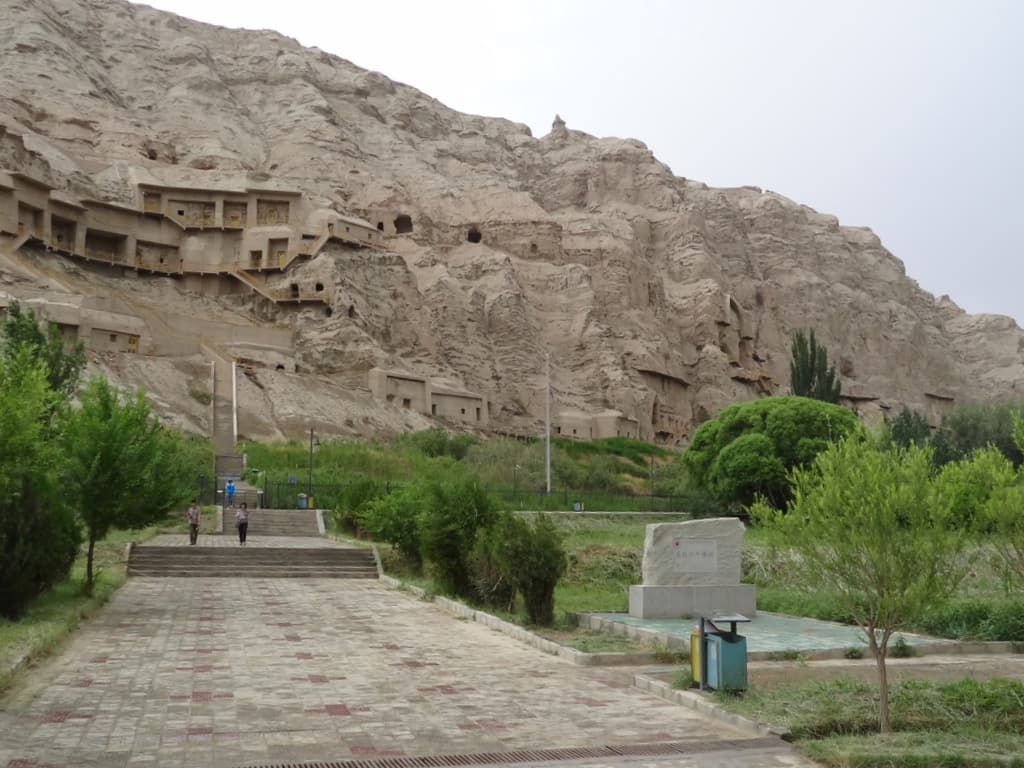
Kumtura Caves Kuqa Xinjiang China
Kumtura Caves, located near Kuqa in Aksu Prefecture, Xinjiang, China, represent one of the most artistically sophisticated and historically significant Buddhist cave temple complexes along the northern branch of the Silk Road, comprising over 112 rock-cut caves carved into the cliffs of the Muzat River valley from the 4th to 8th centuries CE, creating a magnificent religious landscape that demonstrates the extraordinary transmission of Indian Buddhist cave architecture and Gandharan artistic traditions to Central Asia. The cave complex, carved entirely from living rock using techniques adapted from Indian cave temple traditions, features a stunning collection of Buddhist caves including meditation cells, assembly halls, and elaborate chapels adorned with sophisticated murals and sculptures that demonstrate the direct transmission of Gandharan artistic traditions from the region of modern-day Pakistan and Afghanistan to Central Asia, creating a vivid testament to the cultural exchange that flourished along the Silk Road. The caves feature extraordinary murals and sculptures executed in the distinctive Gandharan style, characterized by the fusion of Indian Buddhist iconography with Greco-Roman artistic techniques that was developed in the Gandhara region and then transmitted to Central Asia, while the discovery of inscriptions in multiple languages including Sanskrit, Tocharian, and Chinese provides crucial evidence of the site's role as a multilingual center for the translation and transmission of Indian Buddhist texts. The site's architectural design demonstrates direct influence from Indian Buddhist cave architecture, particularly the traditions of Gandhara and western India, with the overall planning, cave forms, and decorative programs reflecting Indian Buddhist practices that were systematically transmitted to Central Asia, while the sophisticated rock-cutting techniques and artistic methods demonstrate the transmission of Gandharan artistic knowledge to Central Asian craftsmen. Archaeological evidence reveals that Kumtura served as a major center of Buddhist learning and practice for over four centuries, attracting monks, traders, and pilgrims from across the Buddhist world, while the site's location along the northern Silk Road facilitated its role in the transmission of Buddhist teachings, art, and culture from India to China and beyond. The caves flourished particularly during the 5th to 7th centuries CE, when they served as one of the most important centers for the production of Gandharan-influenced Buddhist art in Central Asia, with the site continuing to function as a Buddhist center through the 8th century before gradually declining following political changes and the shifting of trade routes. The site was rediscovered by European explorers in the late 19th and early 20th centuries, with numerous expeditions documenting and studying the caves, while unfortunately many of the murals and sculptures were removed and are now housed in museums worldwide, creating a complex legacy that highlights both the site's extraordinary artistic significance and the challenges of cultural heritage preservation. Today, Kumtura Caves stand as a UNESCO Tentative List site and represent one of the most important archaeological and artistic sites in Central Asia, serving as a powerful testament to the transmission of Gandharan Buddhist art and culture along the Silk Road, while ongoing conservation efforts, archaeological research, and international preservation initiatives continue to protect and study this extraordinary cultural treasure that demonstrates the profound impact of Indian Gandharan civilization on Central Asian Buddhist art and architecture. ([1][2])
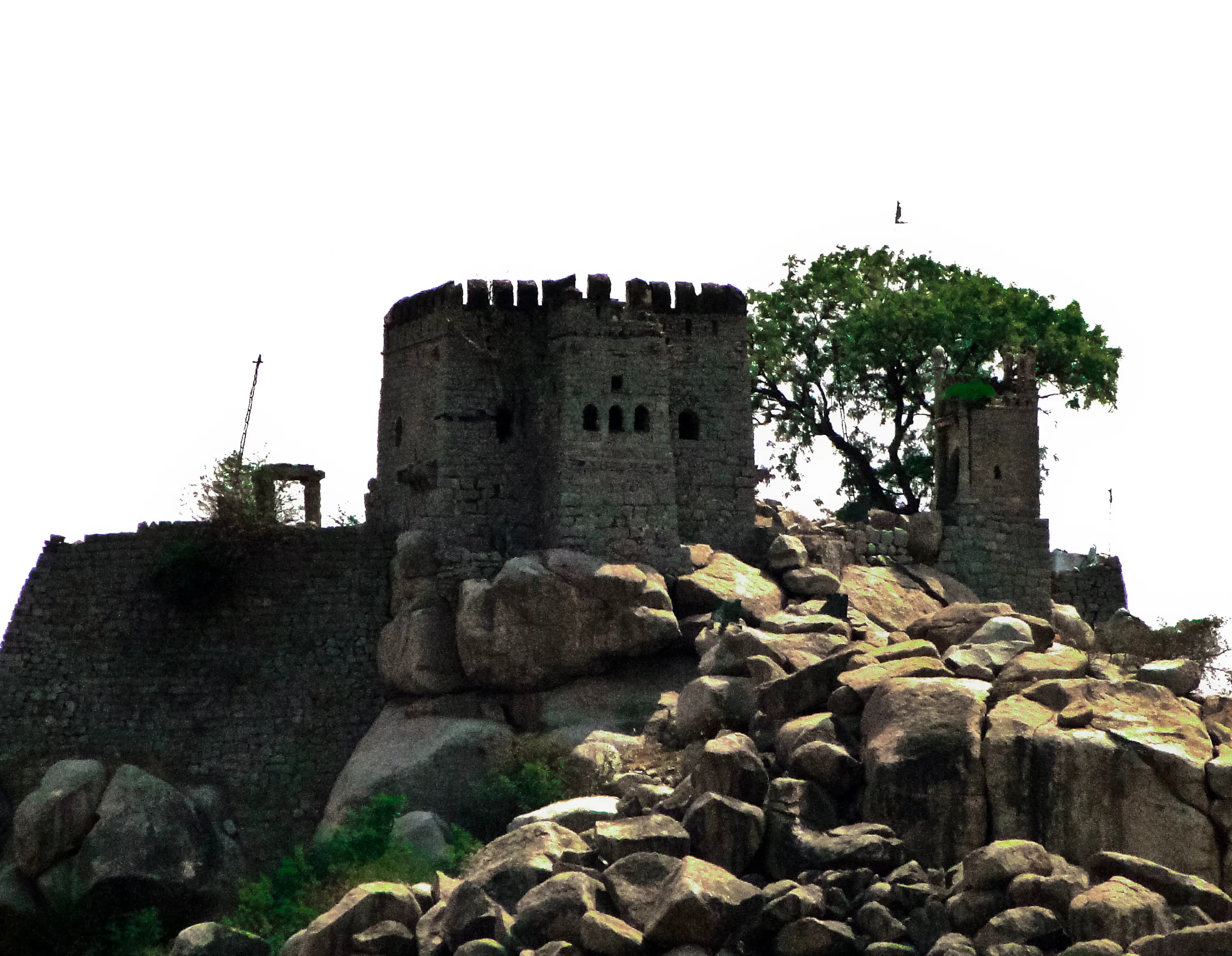
Raichur Fort Raichur
The sun beat down on the Deccan plateau, baking the ochre earth a shade darker as I approached the imposing Raichur Fort. Having explored countless Rajput strongholds in Rajasthan, I was eager to see how this Karnataka fortress, steeped in a different history and architectural tradition, would compare. The sheer scale of the fort, sprawling across a rocky hill overlooking the Krishna River, was immediately impressive. Unlike the sandstone grandeur of Rajasthan, Raichur’s walls were built of dark, rugged granite, giving it a more austere, almost forbidding appearance. My climb began through a series of gateways, each a testament to the fort’s layered past. The earliest structures, dating back to the Kakatiya dynasty, were simpler, more functional. As I ascended, I encountered the architectural fingerprints of later rulers – the Vijayanagara Empire, the Bahmani Sultanate, and even the Nizams of Hyderabad – all leaving their mark on this strategic location. The arches transitioned from the stepped pyramidal style of the Kakatiyas to the more ornate, curved arches favored by the Islamic rulers. This fusion of styles, a visual representation of the region’s complex history, was fascinating. Reaching the upper ramparts, I was rewarded with panoramic views of the surrounding plains. The strategic importance of Raichur Fort became instantly clear. From this vantage point, armies could control the fertile Krishna river valley and monitor movement for miles. I could almost envision the clash of armies, the siege engines pounding against the thick walls, the desperate struggles for control that played out over centuries. One of the most intriguing features of Raichur Fort is the presence of two large cylindrical structures, known as the Ek Minar and the Dhai Minar. While their exact purpose remains debated, some historians believe they served as granaries, while others suggest they were observation towers or even ceremonial structures. The Ek Minar, as the name suggests, stands solitary and incomplete, its top broken off, leaving it a silent witness to the ravages of time. The Dhai Minar, meaning “two-and-a-half minaret,” is taller and more intact, offering a breathtaking view from its summit. Climbing the narrow, winding staircase within the Dhai Minar was a slightly unnerving but ultimately rewarding experience. Within the fort’s walls, I discovered a maze of crumbling palaces, mosques, and underground chambers. The remnants of intricate carvings and faded frescoes hinted at the grandeur that once existed within these now-ruined halls. The Rani Mahal, or Queen’s Palace, though largely in ruins, still retained a sense of elegance, with its arched doorways and remnants of decorative plasterwork. The mosque, with its simple yet elegant arches and a large courtyard, offered a peaceful respite from the sun. Exploring the underground chambers, locally known as “patalganga,” was a particularly memorable experience. Descending into the cool darkness, guided only by the faint light filtering through the narrow openings, I felt a palpable sense of history. These chambers, believed to have been used for storage or as secret escape routes, evoked a sense of mystery and intrigue. Unlike the meticulously preserved forts of Rajasthan, Raichur Fort bears the scars of time and neglect. Yet, this very state of ruin adds to its charm, allowing the imagination to run wild, reconstructing the fort’s glorious past. It’s a place where history whispers from every crumbling wall, every broken arch, and every silent chamber. It’s a testament to the enduring power of the past, a place where the stories of empires rise and fall, etched in stone and whispered on the wind. Leaving Raichur Fort, I carried with me not just images of its impressive architecture, but a deeper understanding of the complex tapestry of history that has shaped this region of India. It’s a place that deserves to be explored, understood, and preserved for generations to come.
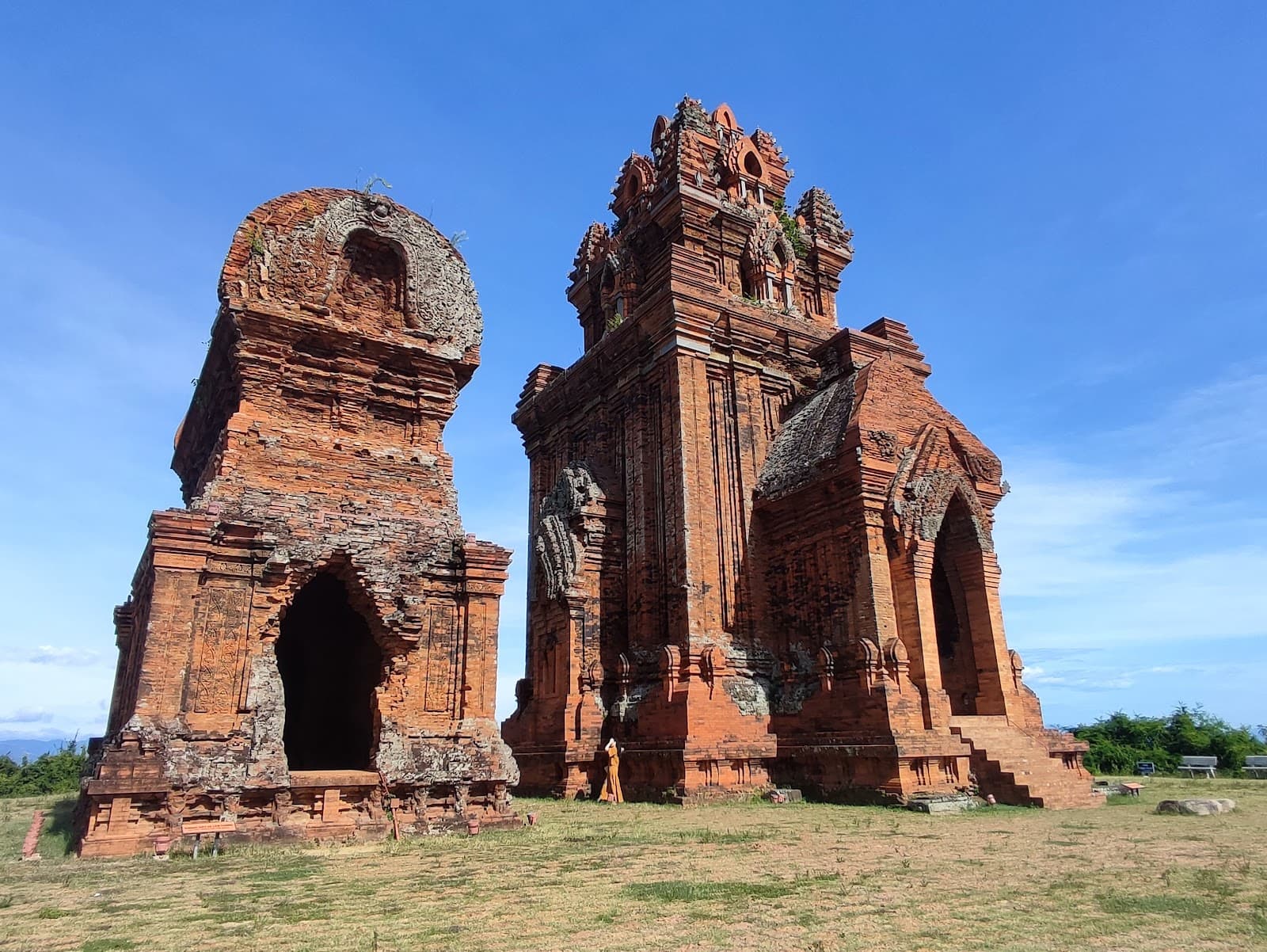
Huynh De Citadel Cham Temples Binh Dinh Vietnam
The Huynh De Citadel Cham Temples, situated in Binh Dinh Province, Vietnam, represent a profound testament to India's millennia-spanning cultural heritage, embodying the continuous tradition of Indian civilization through its architectural and religious expressions. This monumental complex, also known historically as Hoàng Đế Citadel or Cha Ban Citadel, served as a significant political and religious center for the Champa Kingdom, deeply influenced by ancient Indian architectural principles and spiritual practices [2] . The indigenous Cham architectural style, particularly evident in the temple structures, exhibits striking similarities to the Dravida architecture style and Hindu temple architecture of South India, reflecting a direct cultural transmission and adaptation [1] [5]. The temples within the citadel area are predominantly dedicated to Hindu deities, with Shiva, often manifested as the Bhadreśvara-liṅga or in anthropomorphic form, being the primary object of worship [1]. Decorative elements frequently include depictions of Hindu goddesses such as Gajalakshmi, carved on tympanums, and figures like the brick Garuda on temple roofs, underscoring the pervasive Hindu iconography [1]. The construction primarily utilizes red brick, a characteristic material for Cham temples, complemented by sandstone for structural elements and intricate carvings [1] . Early construction phases, dating from the 7th to 9th centuries, featured smaller temples with low brick walls and wooden pillars supporting tiled roofs, creating an 'open-sanctum' design that allowed natural light to permeate the interior [1]. By the late 9th to 13th centuries, construction techniques advanced, leading to taller temple towers built with corbelling techniques and pointed roofs, resulting in 'closed-sanctum' structures illuminated by internal light sources like candles or torches [1]. Specific architectural marvels include the Duong Long Towers, a triple-tower complex from the 12th century, where the central tower reaches an impressive height of 39 meters, flanked by two slightly shorter structures [2]. The Banh It towers, dating from the 12th to 13th centuries, comprise four meticulously restored towers strategically positioned atop a hill, offering panoramic views [2]. The Canh Tien Tower, a 12th-century edifice within the Vijaya Citadel, showcases elaborate decorative features inspired by tropical foliage, a hallmark of Cham artistry [2] . The Phu Loc tower, an early 12th-century structure, stands as a colossal, castle-like edifice, while the Thap Doi (Twin Towers) from the 12th-13th century rise 20 meters, tapering upwards like monumental chimneys [2]. The Binh Lam tower, from the late 10th to early 11th century, is a solitary, large structure notable for its street-level placement [2]. The Huynh De Citadel itself functioned as a formidable defensive complex, characterized by its rectangular layout and extensive ramparts. Historical records detail the southern rampart, constructed from large laterite blocks, each measuring approximately 0.8 meters in length, 0.4 meters in width, and 0.23 meters in thickness, with roof tile fragments inserted for enhanced stability . The citadel was ingeniously integrated with its natural environment, surrounded by a network of deep and wide moats connected to local rivers and lagoons, providing both strategic defense and efficient water management . Archaeological excavations continue to reveal foundational layers, pottery, and other artifacts, shedding light on the site's continuous occupation and evolution [4] . The site is currently designated as a protected historical area, with ongoing conservation efforts focused on preserving its ancient structures and uncovering further archaeological insights, ensuring its operational readiness for scholarly research and public appreciation of India's enduring cultural legacy [4] .
Quick Links
Plan Your Heritage Journey
Get personalized recommendations and detailed visitor guides