Has Inheritage Foundation supported you today?
Your contribution helps preserve India's ancient temples, languages, and cultural heritage. Every rupee makes a difference.
Secure payment • Instant 80G certificate
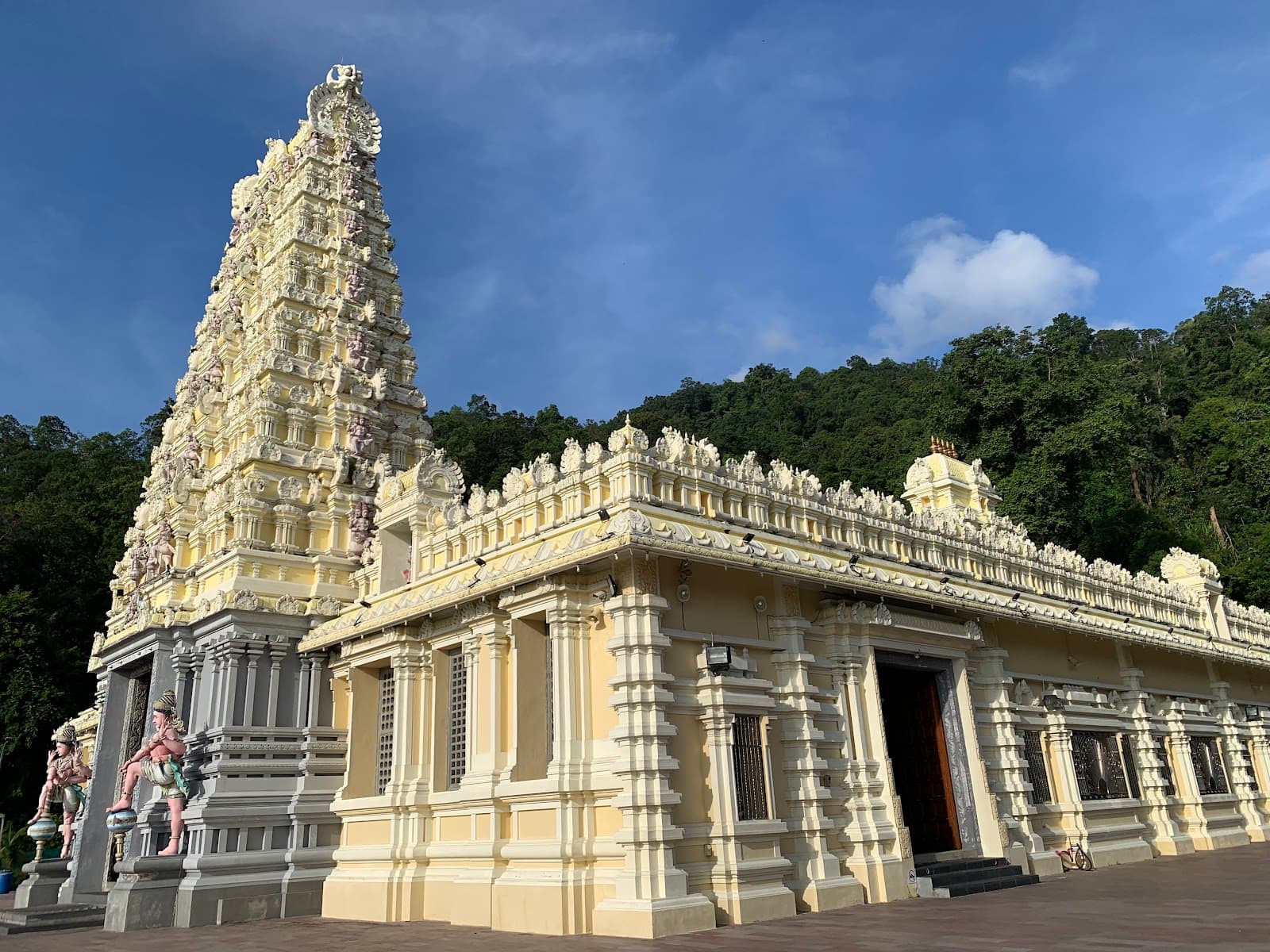
Arulmigu Balathandayuthapani Temple Penang
Perched atop Penang’s Waterfall Hill, the Arulmigu Balathandayuthapani Temple embodies Dravidian hill temple architecture, an enduring testament to the Tamil community's devotion ([1]). Completed in 1914 CE, this 20th-century marvel rises 70 meters, demanding a climb of 513 granite steps to reach its sacred summit ([1][2]). As Southeast Asia’s largest Lord Murugan shrine outside Batu Caves, it attracts approximately 1.5 million pilgrims during Thaipusam, managed with modern technologies like RFID crowd counters and drone surveillance ([1][2]). Granite and reinforced concrete form the structural foundation, augmented by brickwork, lime plaster, and copper Kalashas (finials) ([3]). Intricate carvings embellish the granite pillars within the Garbhagriha (sanctum), depicting Murugan's 32 forms, sculpted by Sthapathis (traditional artisans) from Mahabalipuram, drawing a direct line to ancient Indian artistic traditions ([1][4]). The six-tiered Rajagopuram (ceremonial gateway) and the 21.6-meter golden Vel (divine spear) further accentuate the temple's grandeur ([1]). Within the complex, a multi-tiered Mandapa (pillared hall) accommodates 5,000 devotees, highlighting the temple's capacity for large-scale gatherings ([1]). Facilities also include a 27,000-square-foot multi-purpose hall, wedding suites, a library, and an archery field, reflecting a comprehensive approach to community needs ([3]). Sophisticated systems, including a subterranean operations center managing electrical, CCTV, and BMS networks, ensure the seamless operation of the temple ([2]). The integration of rainwater cascades and open verandas showcases an environmentally conscious design, harnessing Penang’s natural breeze ([5]). This architectural marvel reflects the Tamil community's rich heritage and architectural expertise ([1]).
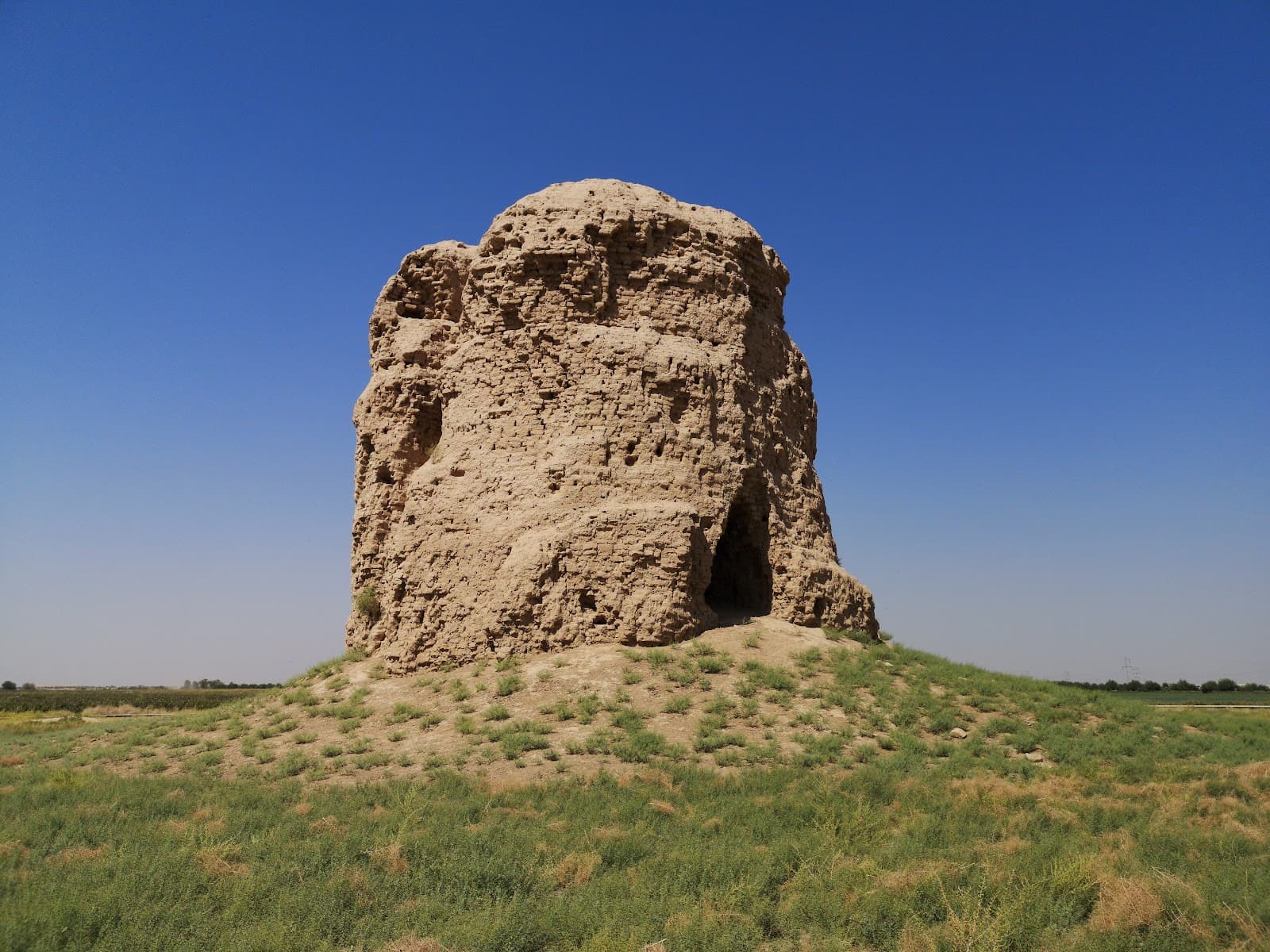
Zurmala Stupa Termez Uzbekistan
The Zurmala Stupa, located in Termez, Surxondaryo Region, Uzbekistan, stands as a profound testament to India's millennia-spanning cultural heritage and the enduring legacy of Buddhist architectural traditions that spread across Central Asia from the Indian subcontinent [1] [3]. This ancient Buddhist stupa, dating back to the 1st century CE, embodies the indigenous architectural styles and cultural practices that reflect India's deep historical roots and its continuous civilization [1] [5]. The structure, a cylindrical tower, originally measured approximately 14.5 meters in diameter and rose to an impressive height of over 16 meters [1] [3]. It was constructed primarily from adobe brick, a common and ancient building material, and was subsequently faced with burnt red bricks and stone blocks [1] [3]. These facing materials were often adorned with high reliefs depicting scenes from Buddhist mythology, showcasing the sophisticated artistic and religious iconography originating from India [1]. The architectural design of Zurmala Stupa is characteristic of early Buddhist stupa architecture, which evolved from ancient Indian burial mounds and reliquaries [1]. It features a rectangular cylindrical monolith stylobate, upon which the main cylindrical body of the stupa was hoisted [1]. The upper part of the tower housed a reliquary chamber, intended for the storage of sacred Buddhist scriptures, statues, or relics of the Buddha, emphasizing its primary function as a sacred monument [1]. The exterior facade of the stupa was believed to have been painted a vibrant red, a color often associated with Buddhist symbolism and monastic traditions [3]. Archaeological investigations have revealed fragments of kilned bricks around the stupa, some bearing stamps similar to those used in Bactria during the Kushan Empire, indicating the construction techniques and material sourcing of the period [3]. Currently, the Zurmala Stupa exists as a significant archaeological remnant, with its original grandeur partially obscured by the passage of time and natural degradation [1] [3]. The monument exhibits substantial cracks, highlighting the ongoing challenges in its preservation [3]. Despite its current state, conservation efforts are underway, including documentation and restoration work, to safeguard this invaluable piece of heritage [4]. The site is recognized on the UNESCO Tentative List, underscoring its global cultural significance and the need for continued preservation [1]. While specific details on active programming or daily visitor flow are not extensively documented, the site remains accessible for scholarly research and heritage tourism, contributing to the understanding of the spread of Indian cultural and religious traditions [1] [5]. The Zurmala Stupa stands as an operational and accessible site, continuously maintained for its historical and cultural value, reflecting the enduring impact of Indian civilization across millennia [1] [4].
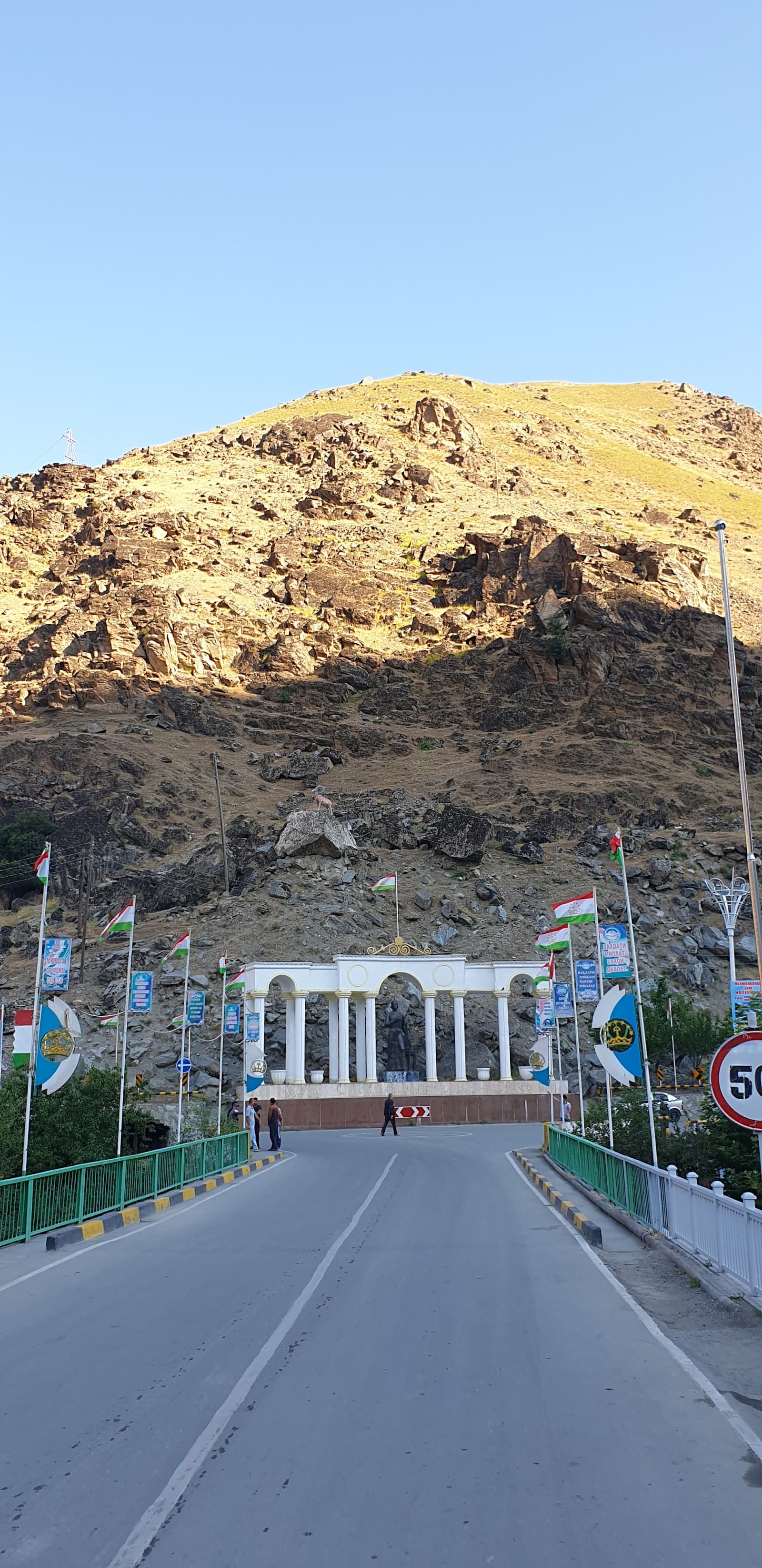
Buddhist Temple of Qala-i Khumb Gorno-Badakhshan Tajikistan
Nestled in the remote Gorno-Badakhshan Autonomous Region of Tajikistan, the Buddhist Temple of Qala-i Khumb, built around 650 CE, stands as a significant testament to the transmission of Indian Buddhist architectural and artistic traditions across Central Asia ([1][2]). This 7th-century complex, constructed during the Tokharistan period under the patronage of the Tokharistan Yabghus, showcases a remarkable synthesis of Indian and Central Asian building techniques ([1]). The temple's location along ancient trade routes underscores its role in disseminating Buddhist teachings and culture from India to the wider region ([2]). Archaeological excavations have uncovered extensive ruins, including foundations, walls, and architectural fragments, offering insights into the temple's original layout and design ([1]). Stone, rammed earth, fired brick, clay, stucco, wood, and metal were employed in its construction, reflecting both local resources and imported techniques ([1][2]). The architectural elements exhibit clear Indian Buddhist iconographic influences, demonstrating the profound impact of Indian artistic traditions ([2]). Intricate carvings adorning the walls depict Buddhist sculptures and reliefs, executed in a style that reflects the Gupta and post-Gupta periods of northern India ([1]). These artistic details highlight the sophisticated understanding of Indian Buddhist traditions possessed by the artisans who created the complex ([2]). The discovery of coins, pottery, and ritual objects further supports the site's importance as a major center of Buddhist learning and practice, attracting monks, traders, and pilgrims from various regions, including India ([1]). Sophisticated planning principles, systematically transmitted from the great monastic centers of India, are evident in the temple's layout, which features a central sanctuary surrounded by monastic cells and assembly halls ([2]). This layout mirrors the principles outlined in ancient texts such as the *Manasara Shilpa Shastra*, which details the planning and construction of sacred structures, although specific textual references for this temple's design remain to be confirmed through further research. Today, the Buddhist Temple of Qala-i Khumb, a UNESCO Tentative List site, continues to be studied and conserved, preserving its legacy as a vital link between Indian and Central Asian civilizations ([1][2]).
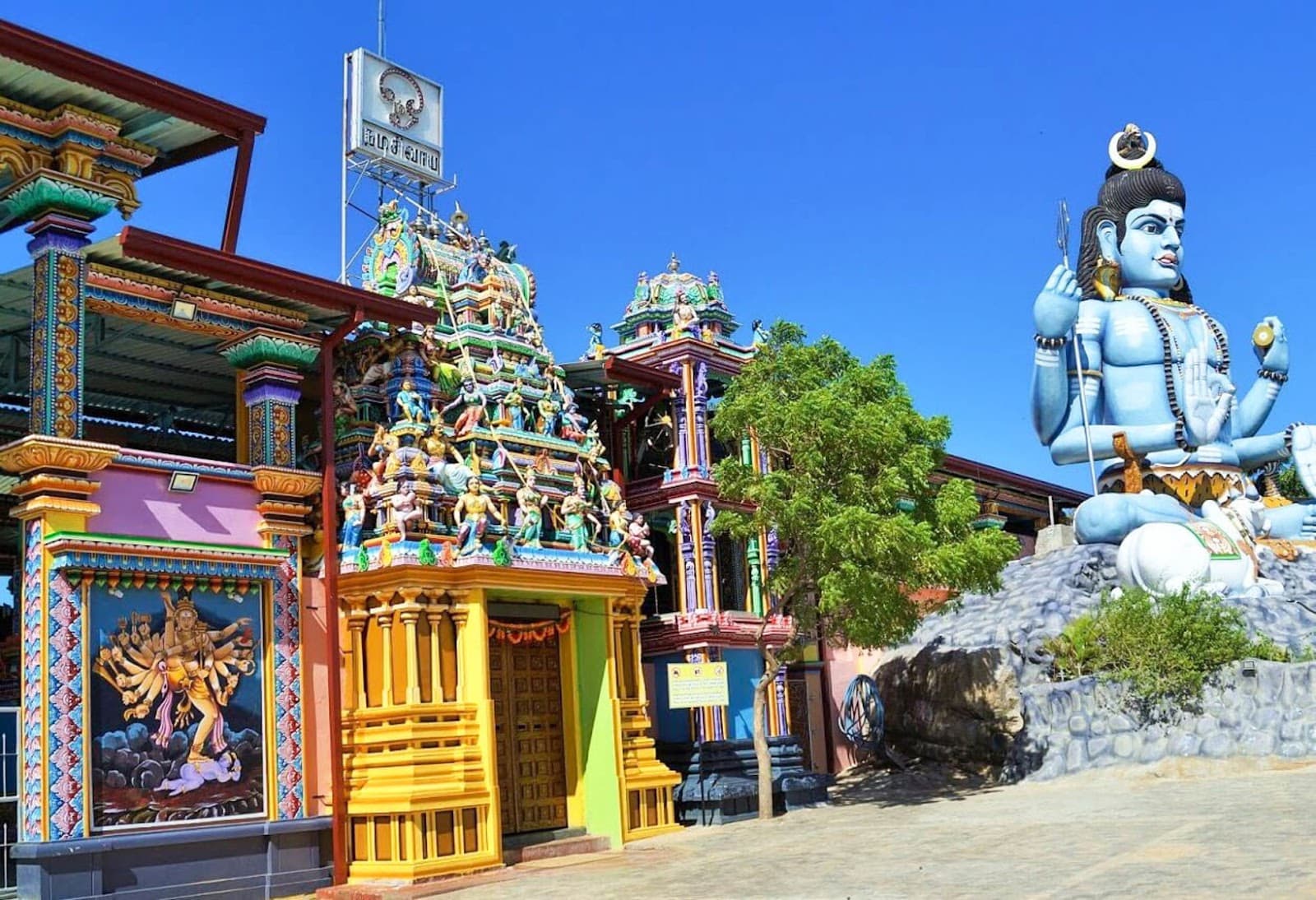
Koneswaram Temple Trincomalee Sri Lanka
Koneswaram Temple, dramatically perched atop the majestic Swami Rock overlooking the azure waters of the Indian Ocean in Trincomalee, represents one of the most extraordinary and spiritually significant Hindu temples in South Asia, with origins tracing back to the 3rd century BCE and serving as one of the five ancient Pancha Ishwaram shrines dedicated to Shiva that were strategically established around the island's coastline to protect Sri Lanka according to ancient Tamil and Sanskrit traditions, creating a powerful testament to the profound transmission of Indian Shaivite religious and architectural traditions to Sri Lanka. The temple complex, known as Thirukoneswaram in Tamil and Koneswaram Kovil, features sophisticated Dravidian architectural elements that demonstrate the direct transmission of South Indian temple architecture, particularly the traditions of the Pallava, Chola, and Pandya dynasties, with local adaptations that reflect the sophisticated synthesis of Indian Shaivite religious and artistic traditions with Sri Lankan building techniques and aesthetic sensibilities. The temple's most remarkable feature is its spectacular location atop Swami Rock, a dramatic promontory that rises 400 feet above sea level, providing panoramic views of the Indian Ocean and Trincomalee Bay, while the temple's architectural layout, with its central sanctum housing the Shiva lingam surrounded by multiple enclosures, gopurams (gateway towers), and subsidiary shrines, follows sophisticated South Indian Dravidian temple planning principles that were systematically transmitted from the great temple complexes of Tamil Nadu including Chidambaram, Madurai, and Rameswaram. Archaeological evidence reveals that the temple served as a major center of Shaivite worship for over two millennia, attracting pilgrims from across South India and Southeast Asia, while the discovery of numerous inscriptions in Tamil, Sanskrit, and Sinhala provides crucial evidence of the site's role in the transmission of Indian religious texts and practices to Sri Lanka, demonstrating the sophisticated understanding of Indian Shaivite traditions possessed by the temple's patrons and religious establishment. The temple's history is deeply intertwined with the Ramayana epic, with local traditions identifying the site as one of the places where Ravana, the legendary king of Lanka, worshipped Shiva, while the temple's association with the Pancha Ishwaram network demonstrates the sophisticated understanding of Indian Shaivite cosmology and temple planning principles that were transmitted from the great religious centers of India to Sri Lanka. The temple complex has undergone multiple reconstructions throughout its history, most notably after its destruction by Portuguese colonizers in 1624 CE, with the current structure representing a modern reconstruction that faithfully preserves the temple's original Dravidian architectural character and spiritual significance. Today, Koneswaram Temple stands as one of the most important Hindu pilgrimage sites in Sri Lanka, serving as a powerful testament to the transmission of Indian Shaivite culture and architecture to Sri Lanka, while ongoing archaeological research and conservation efforts continue to protect and study this extraordinary cultural treasure that demonstrates the profound impact of Indian civilization on Sri Lankan religious and artistic traditions. ([1][2])
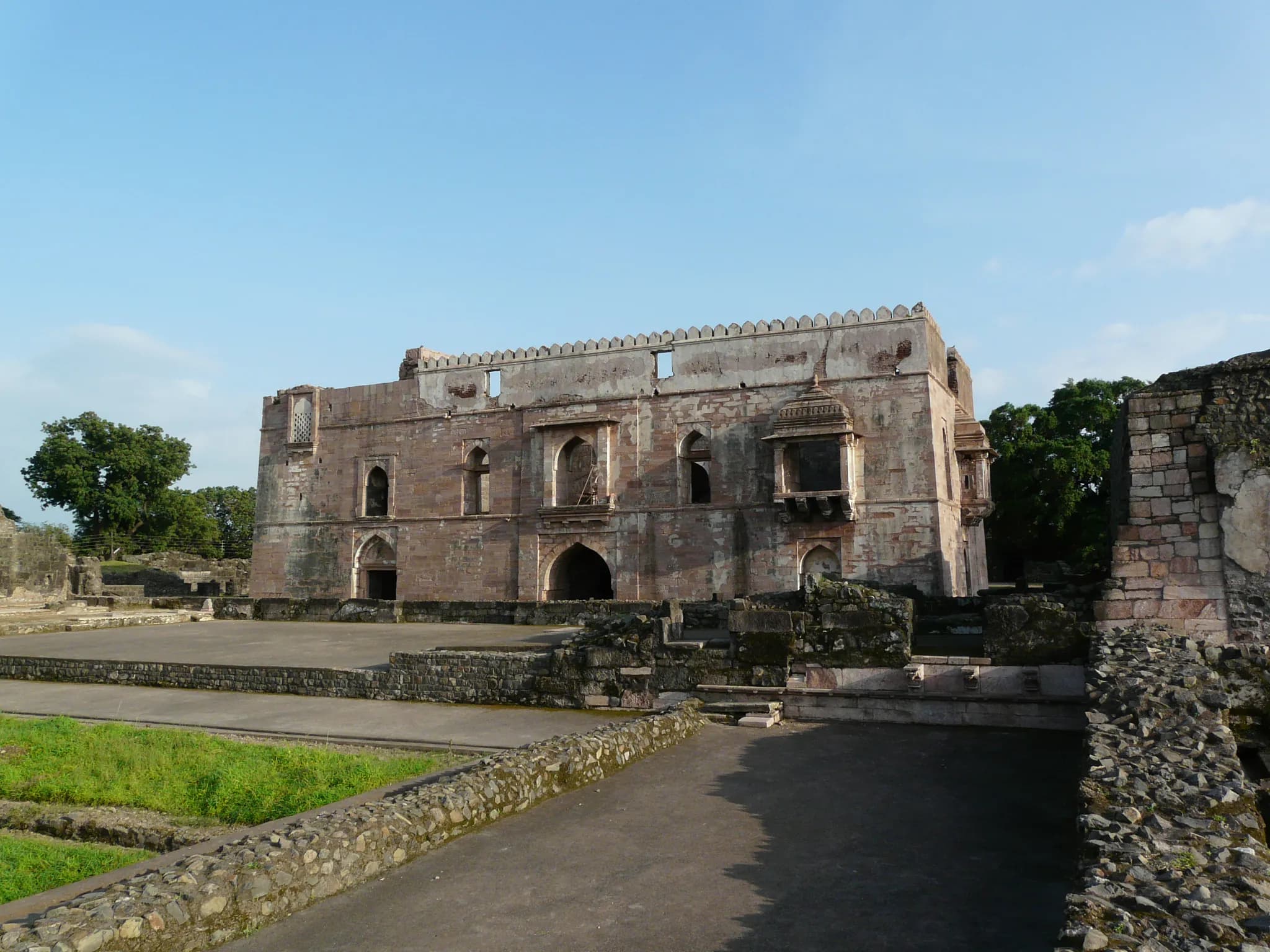
Hindola Mahal Mandu
The sloping walls of the Hindola Mahal rose before me, an arresting sight against the clear Mandu sky. Its peculiar incline, giving the structure its name – Swinging Palace – felt almost precarious, as if a strong gust of wind could set the whole edifice swaying. Standing at its base, I craned my neck, my gaze tracing the lines of the T-shaped structure, divided into two distinct halls. The larger hall, presumably the Darbar Hall, exuded an air of grandeur, even in its current state of ruin. The battered stone walls, devoid of their original plaster, whispered tales of bygone eras. I ran my hand over the rough surface, imagining the vibrant court life that once thrived within these walls. The absence of elaborate ornamentation, so common in other Mandu palaces, struck me. The beauty of the Hindola Mahal lay in its stark simplicity, its strength, and its unusual architectural design. The massive sloping walls, reinforced by arched buttresses, were a testament to the ingenuity of the Afghan architects who conceived this marvel. Entering the Darbar Hall, I was immediately struck by its sheer scale. The high ceiling, supported by pointed arches springing from massive piers, created a sense of awe. The light filtering through the arched openings cast dramatic shadows, accentuating the texture of the weathered stone. I could almost hear the echoes of royal pronouncements and the murmur of courtly conversations. The hall, despite its emptiness, resonated with a palpable sense of history. A narrow passage led me to the smaller hall, believed to have been the royal chambers. Here, the inclination of the walls was even more pronounced, adding to the palace's unique character. I peered out of the arched windows, framing the panoramic views of the Mandu plateau. It was easy to imagine the royalty enjoying the cool breeze and the breathtaking vistas from these very windows. The architectural style of the Hindola Mahal, a blend of Afghan and indigenous influences, intrigued me. The robust structure, with its sloping walls and pointed arches, bore a distinct resemblance to the architectural traditions of the Tughlaq dynasty of Delhi. Yet, the use of locally sourced sandstone and the integration of certain indigenous elements gave it a unique regional character. It was a fascinating example of architectural fusion, a testament to the cultural exchange that shaped the region's history. Walking around the exterior, I observed the series of arched openings that punctuated the sloping walls. These arches, besides their aesthetic appeal, served a crucial structural purpose. They acted as buttresses, supporting the inclined walls and preventing them from collapsing inwards. This ingenious design was a marvel of engineering, allowing the architects to create a structure that was both visually striking and structurally sound. As I moved further away from the palace, I paused to take in the full view. The Hindola Mahal, with its sloping walls and imposing presence, stood as a silent witness to the rise and fall of empires. It was a poignant reminder of the impermanence of power and the enduring legacy of architecture. The experience left me with a deep appreciation for the ingenuity of the past and a renewed sense of wonder for the architectural treasures that dot the landscape of my home state, Gujarat, and its neighboring regions. The Hindola Mahal, with its unique charm and historical significance, deserves to be recognized as one of India's architectural gems.
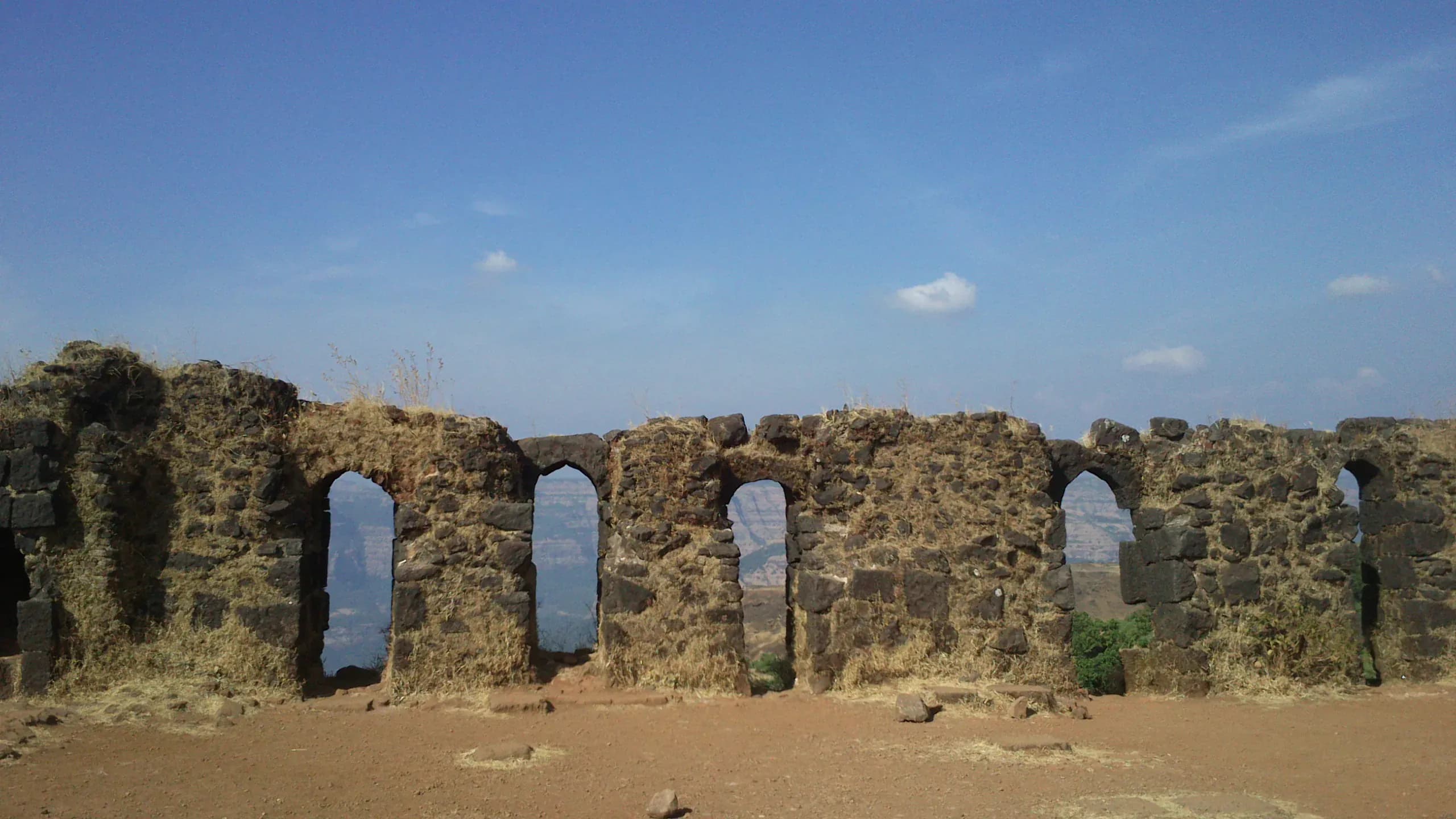
Raigarh Fort Raigarh
The imposing silhouette of Raigarh Fort, rising from the Chhattisgarh plains, has always held a particular allure for me. Having explored countless forts across North India, I was eager to experience this lesser-known gem, and it certainly didn't disappoint. The sheer scale of the fort, sprawling across 15 acres, is immediately striking. Unlike the sandstone and marble structures I’m accustomed to in Rajasthan, Raigarh Fort is predominantly built of laterite bricks, lending it a distinctive reddish-brown hue that seems to absorb the intense Chhattisgarh sun. My ascent began through the imposing main gate, the "Maha Darwaza." The intricate carvings, though weathered by time and the elements, hinted at a rich history. The gate’s archway, framed by sturdy bastions, felt like a portal to another era. As I stepped inside, I was greeted not by the usual tourist throngs, but by a palpable sense of tranquility. Local children played cricket in the open spaces, their laughter echoing against the ancient walls, while a few families enjoyed picnics under the shade of sprawling trees. This organic integration of the fort into the daily lives of the community was truly heartwarming. The fort's layout is a fascinating blend of military pragmatism and royal grandeur. The outer walls, punctuated by strategically placed bastions and watchtowers, speak volumes about the fort's defensive capabilities. I climbed one of these towers, the "Budha Talaab Burj," and was rewarded with a panoramic view of the surrounding countryside, the Kelo river snaking its way through the landscape. It was easy to imagine sentries keeping vigil from this vantage point centuries ago, scanning the horizon for potential threats. Within the fort walls, the remnants of palaces, temples, and administrative buildings offer glimpses into the lives of the rulers who once called this place home. The "Raj Mahal," or Royal Palace, though now in ruins, still retains an aura of majesty. I could almost picture the opulent courtyards, bustling with activity, and the grand durbars held within its walls. The intricate carvings on the remaining pillars and doorways showcased a blend of local and Mughal architectural influences, a testament to the region's diverse cultural heritage. One of the most intriguing aspects of Raigarh Fort is its network of underground tunnels. Local legends speak of secret passages leading to hidden chambers and escape routes. While many of these tunnels are now inaccessible, I was able to explore a short section. The cool, damp air and the low-hanging ceilings created an almost claustrophobic atmosphere, adding a touch of mystery to the experience. The "Kamakhya Temple," perched atop the highest point within the fort, is another highlight. Dedicated to the tantric goddess Kamakhya, the temple attracts devotees from across the region. The climb to the temple is steep, but the breathtaking views from the summit make it well worth the effort. Standing there, amidst the ancient stones, I felt a profound sense of connection to the past. My visit to Raigarh Fort wasn't just about exploring its architectural marvels; it was about experiencing a slice of Chhattisgarh's rich history and culture. Unlike the more heavily touristed forts of North India, Raigarh Fort retains an authentic, unpolished charm. It’s a place where history whispers from every crumbling wall and echoes in every deserted courtyard. It’s a place that deserves to be discovered, explored, and cherished. And for me, it stands as a testament to the enduring power of the past to captivate and inspire.
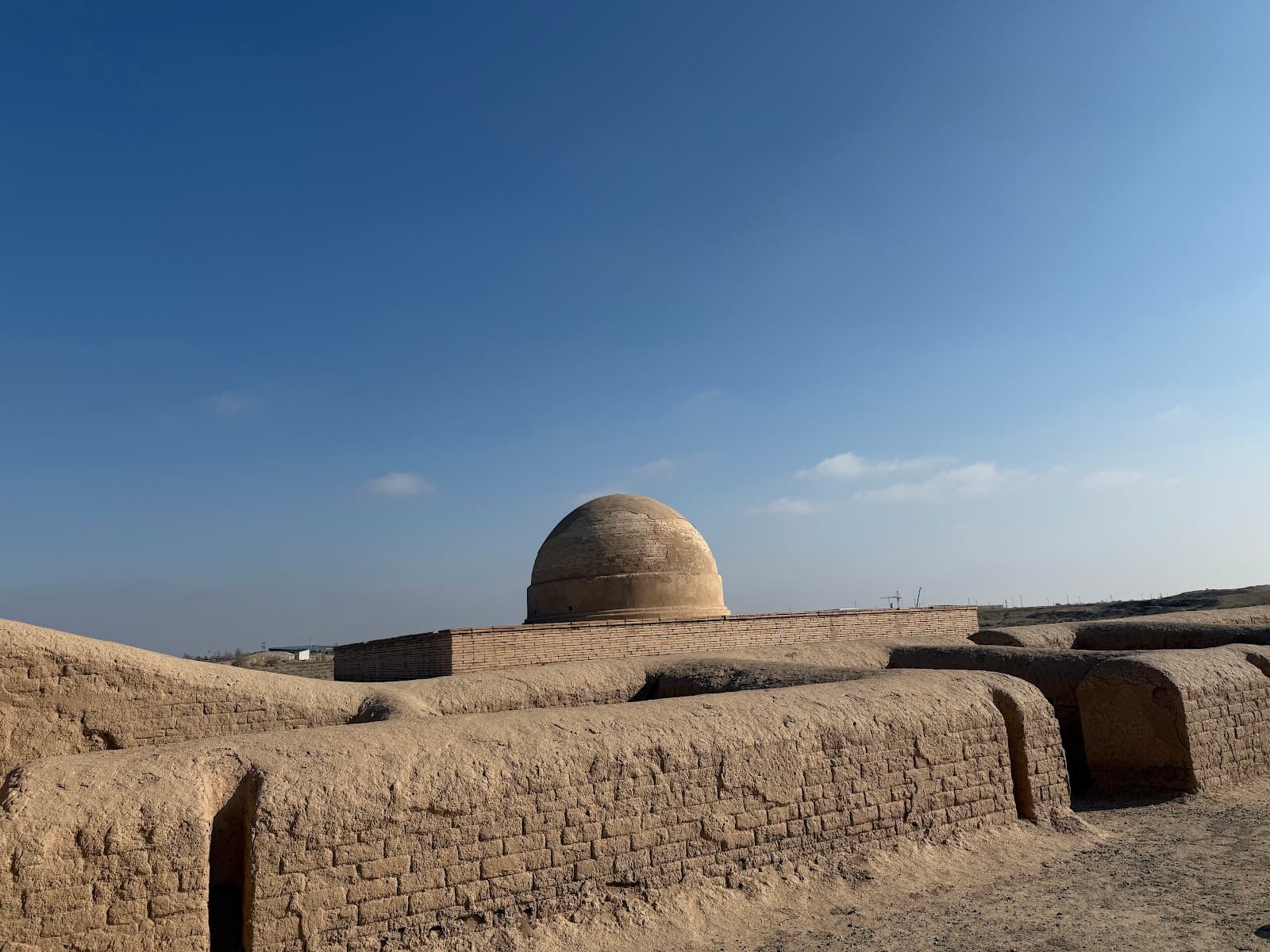
Fayaz Tepe Monastery Termez Uzbekistan
Fayaz Tepe Monastery, located near Termez in southern Uzbekistan, represents one of the most extraordinary and archaeologically significant Buddhist monastic complexes along the ancient Silk Road, constructed from the 1st to 3rd centuries CE during the height of the Kushan Empire, creating a powerful testament to the profound transmission of Indian Buddhist religious and architectural traditions to Central Asia. The monastery complex, comprising multiple structures including stupas, chapels, monastic cells, and assembly halls arranged around a central courtyard, features remarkable architectural elements that demonstrate the direct transmission of Indian Buddhist monastery architecture, particularly the traditions of northern India during the Kushan period, with local adaptations that reflect the sophisticated synthesis of Indian religious and artistic traditions with Central Asian building techniques. The site's most remarkable feature is the discovery of numerous Sanskrit inscriptions carved into stone and written on various materials, providing crucial evidence of the site's role as a major center for the transmission of Indian Buddhist texts and practices to Central Asia, while the architectural layout, with its central stupa surrounded by monastic cells and assembly halls, follows the classic Indian Buddhist monastery plan that was systematically transmitted from the great monastic centers of India including Taxila, Nalanda, and Gandhara. Archaeological excavations have revealed extraordinary Buddhist sculptures and reliefs executed in the distinctive Gandharan style, demonstrating the direct transmission of Indian Buddhist iconography and artistic traditions to Central Asia, while the discovery of numerous artifacts including coins, pottery, and ritual objects provides crucial evidence of the site's role as a major center of Buddhist learning and practice that attracted monks, traders, and pilgrims from across the Buddhist world. The monastery's location near Termez, a major Silk Road crossroads, underscores its significance as a center for the transmission of Buddhist teachings, art, and culture from India to Central Asia and beyond, while the site's architectural sophistication and extensive decorative programs demonstrate the sophisticated understanding of Indian Buddhist traditions possessed by the monks and artisans who created this extraordinary complex. Today, Fayaz Tepe stands as a UNESCO Tentative List site and represents one of the most important Buddhist archaeological discoveries in Central Asia, serving as a powerful testament to the transmission of Indian Buddhist culture and architecture to Central Asia, while ongoing archaeological research and conservation efforts continue to protect and study this extraordinary cultural treasure that demonstrates the profound impact of Indian civilization on Central Asian religious and artistic traditions. ([1][2])
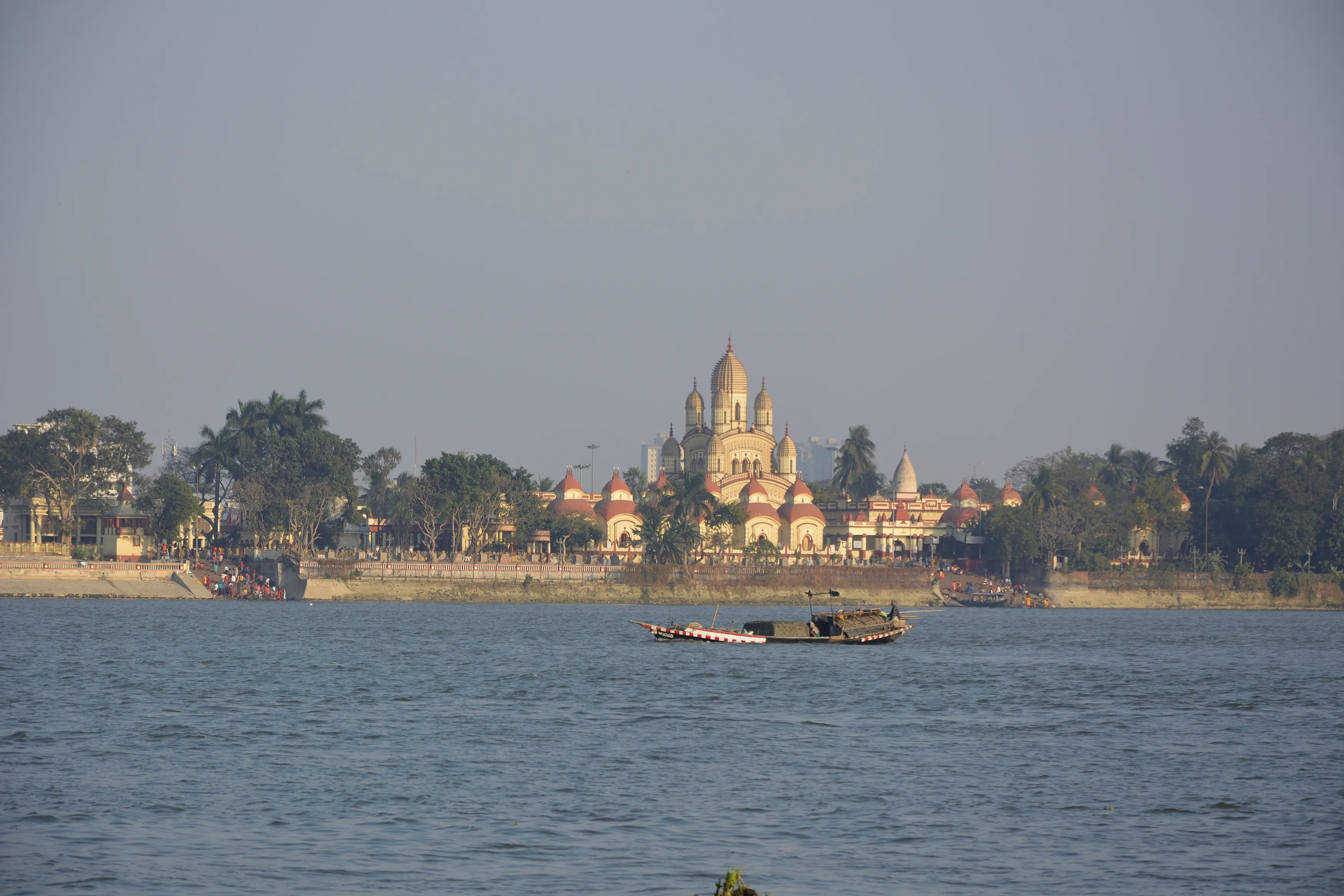
Dakshineswar Kali Temple Kolkata
The Hooghly River's edge frames the Dakshineswar Kali Temple in Kolkata, a 19th-century testament to Bengali Navaratna architecture ([1][2]). Commissioned by Rani Rashmoni and completed in 1855 CE, the temple is dedicated to Bhavatarini, a form of Kali ([3]). The complex exemplifies a unique blend of devotion and architectural style distinct from Dravidian forms ([4]). Intricate carvings adorning the walls depict scenes from Hindu epics and Puranas, narrating tales of deities and cosmic events ([5]). The main temple, a nine-spired structure, showcases the curved roof characteristic of Bengali architecture, a design element that gained prominence during the British Colonial Period ([1][2]). This 'nava-ratna' (nine-jeweled) style distinguishes it from other regional temple designs ([3]). Within the Garbhagriha (Sanctum), Bhavatarini stands upon Shiva, symbolizing Shakti's (divine feminine energy) power ([4]). The silver embellishments and sindoor (red vermillion) create a mesmerizing spiritual ambiance ([5]). Surrounding the main shrine, twelve Shiva temples line the ghats, each echoing the Navaratna style in miniature form ([1][2]). A Radha-Krishna temple adds a contrasting element, its carvings depicting the divine love story ([3]). Stone platforms and foundations demonstrate the temple's solid construction, utilizing brick, terracotta, and wood ([4][5]). The temple reflects influences of Vastu Shastra principles, which guide the orientation and spatial arrangement ([1][2]). The complex harmoniously blends architectural elements with the spiritual essence of Bengal, offering a serene escape from Kolkata's bustle ([3]). The Dakshineswar Kali Temple remains a vibrant center of pilgrimage and a significant landmark of Indian heritage ([4][5]).
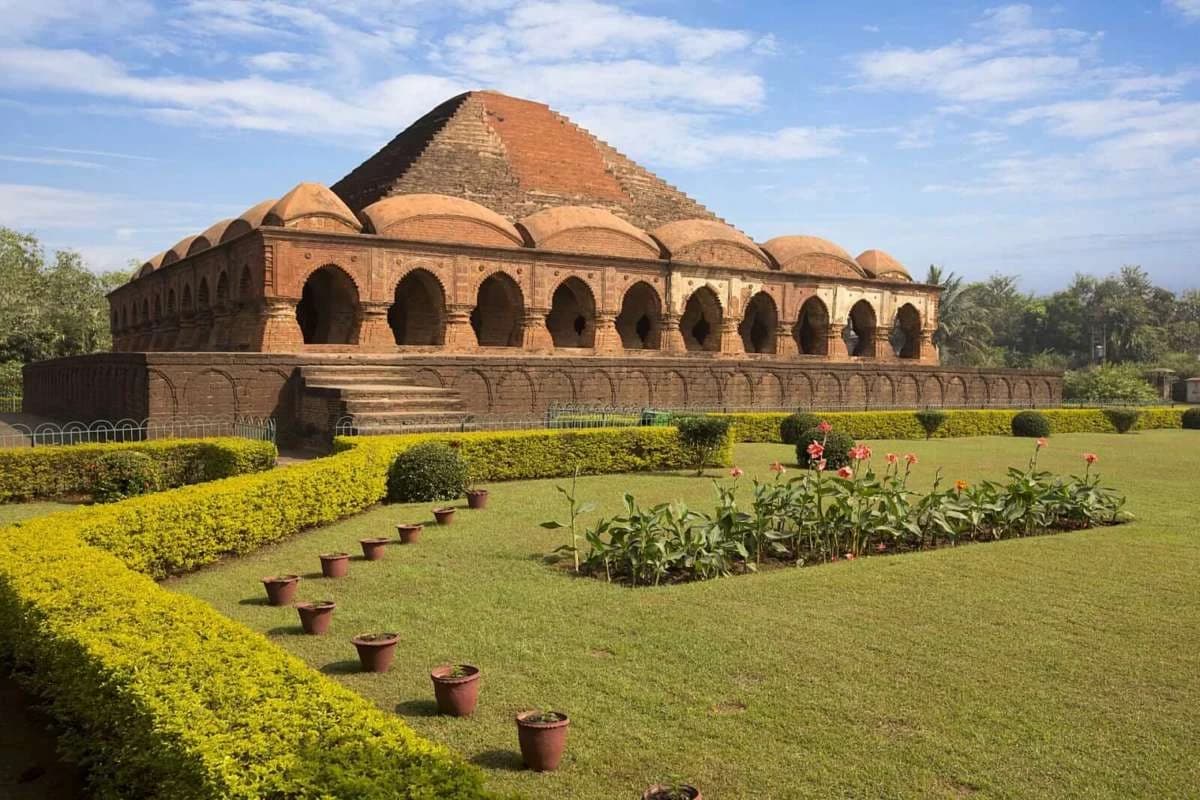
Bishnupur Terracotta Temples Bishnupur
Fired brick and mud brick construction techniques reached a zenith in Bishnupur, West Bengal, during the Bengal Renaissance period, as exemplified by its terracotta temples ([1][2]). These temples, constructed by the Malla dynasty who ruled from approximately the 7th to the 18th centuries CE ([3]), present a unique architectural style that blends classical Bengali forms with intricate terracotta artistry ([4]). The Malla kings, serving as patrons, facilitated the construction of these elaborate structures ([3]). Intricate carvings adorning the walls narrate stories from the Ramayana, Mahabharata, and various Hindu Puranas, effectively bringing these ancient epics to life ([2][5]). The Jor Bangla temple, distinguished by its chala (hut-shaped) roof, is a prime example of this narrative tradition ([4]). The Rasmancha, commissioned by King Bir Hambir in the 17th century, provided a platform for displaying Radha-Krishna idols during the annual Ras festival ([3]). Stone platforms and foundations demonstrate the structural integrity of temples like the Madan Mohan Temple, which is further adorned with floral and geometric terracotta designs ([1][4]). Within the Garbhagriha (Sanctum), deities are enshrined, representing the focal point of devotion and architectural design ([2]). The Shyam Rai Temple, a pancharatna (five-pinnacled) structure, showcases a diverse range of themes, including scenes from courtly life alongside depictions of various deities ([2][5]). During the Bengal Renaissance period, temple architecture in Bishnupur achieved a distinctive aesthetic, where the terracotta medium lends a warm, intimate quality, creating a striking contrast to the grandeur often associated with stone structures found elsewhere in India ([1]). These temples not only served as places of worship but also as vibrant canvases that preserved and propagated cultural narratives for generations to come ([3][5]). The legacy of Bishnupur's terracotta temples remains a significant chapter in India's architectural heritage ([1][4]).
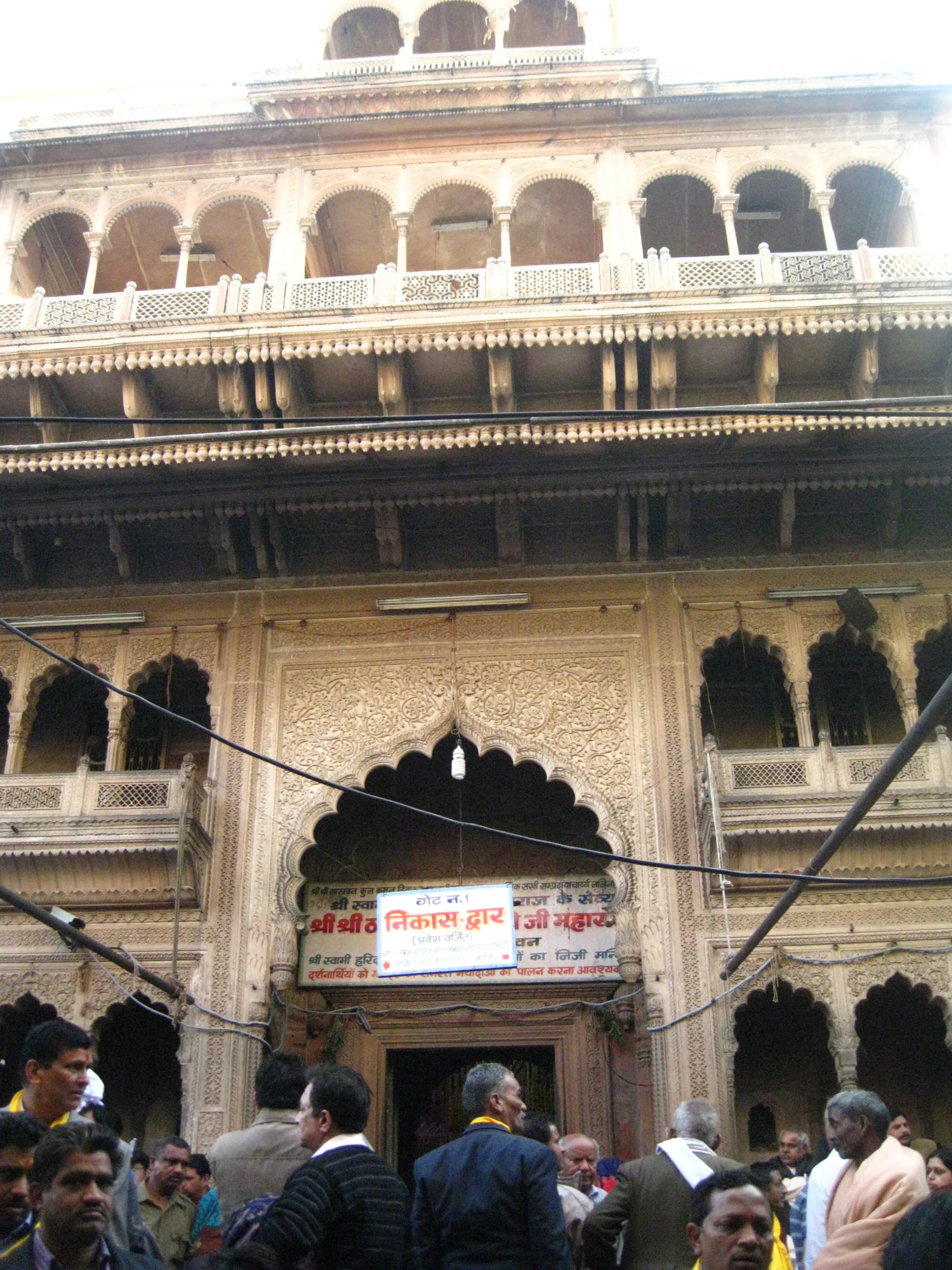
Banke Bihari Temple Vrindavan
The Banke Bihari Temple, situated in Vrindavan, Mathura district, Uttar Pradesh, stands as a profound testament to India's millennia-spanning cultural heritage and its continuous tradition of devotion to Lord Krishna [1] [2]. This revered Hindu temple is dedicated to Banke Bihari, an iconic representation believed to embody the combined divine forms of Radha and Krishna [1] [2]. The central idol, a captivating black image, is notably depicted in the Tribhanga (three-bend) posture, a classical stance in Indian iconography that signifies grace and divine playfulness [1] [2]. The temple's architecture predominantly reflects the indigenous Rajasthani style, a tradition deeply rooted in India's historical architectural practices, characterized by intricate craftsmanship and robust construction [1] [5]. While the specific dimensions of the entire complex are not universally published, the structural elements feature wide entrances adorned with beautifully carved arches, a hallmark of traditional Indian temple design [1]. The walls throughout the temple interior are meticulously covered with elaborate carvings and vibrant paintings, which vividly narrate episodes from Lord Krishna's life, serving both as decorative elements and didactic visual scriptures [1]. The roof, constructed in a traditional manner, exhibits detailed decorations that further enhance the aesthetic and spiritual ambiance of the sacred space [1]. The temple's interior is celebrated for its exquisite stonework and stunning designs, encompassing a large prayer hall where devotees gather for bhajans and aarti, fostering a collective spiritual experience [1]. The spatial arrangement includes a peaceful courtyard, offering a tranquil environment for contemplation amidst the vibrant devotional activities [1]. Uniquely, the temple does not feature bells within its premises, nor does it perform the Mangala Aarti (early morning ritual) daily, except on Krishna Janmashtami, out of a belief to avoid disturbing the deity, who is revered as a child [2] [5]. Furthermore, the darshan (viewing) of the idol is intentionally interrupted every five minutes by drawing curtains, a practice stemming from the belief that an uninterrupted gaze might cause Banke Bihari to accompany a devotee home, leaving the temple empty [2] [5]. This distinctive ritual underscores the intimate and personal relationship devotees share with the deity. The temple is thronged by thousands of visitors daily, maintaining its status as an active center of worship and cultural practice [5]. Conservation efforts are ongoing to preserve this national heritage site, ensuring its structural integrity and the longevity of its artistic and spiritual elements [4]. The site remains fully operational, accessible to devotees and visitors, and continues to uphold its ancient traditions and maintenance protocols, embodying the enduring legacy of Indian civilization [1] [4].

Sanatan Mandir Cultural Centre Markham
Sanatan Mandir Cultural Centre Markham is dedicated to Sanatan Dharma deities with a focus on Shri Ram Parivar and anchors eastern Greater Toronto as a hybrid mandir-auditorium campus connecting Markham and Durham communities ([1][2]). The 65,000-square-foot complex opens daily 7:00 AM-12:00 PM and 4:00 PM-9:00 PM, while the auditorium, classrooms, and sports hall operate 9:00 AM-10:00 PM, enabling youth programs, seniors’ fitness, and civic conferences alongside darshan ([1][3]). Volunteers staff reception to assist visitors with bilingual schedules, wristband access, and parking guidance, then route them toward the marble mandapa or cultural hall via colour-coded wayfinding. RFID counters monitor festival attendance and coordinate security, catering, and cleaning teams ([1][5]). A commercial kitchen equipped with induction cooklines, tandoor ovens, allergen tracking, and compost stations supports annadhanam, community events, and Food Bank partners, while the café and boutique sell regional crafts ([3]). Accessibility features include heated ramps, elevator, tactile strips, wayfinding beacons, quiet rooms, and hearing loops across worship and cultural spaces, ensuring inclusive programming ([2][5]). Building management systems oversee geothermal wells, radiant floors, HVAC, and lighting, while digital dashboards broadcast queue times, class notices, emergency information, and volunteer rosters. The campus hosts municipal town halls, Red Cross clinics, language immersion, and theatrical productions with equal ease, proof of operational readiness for both civic service and devotional cadence ([1][4]).
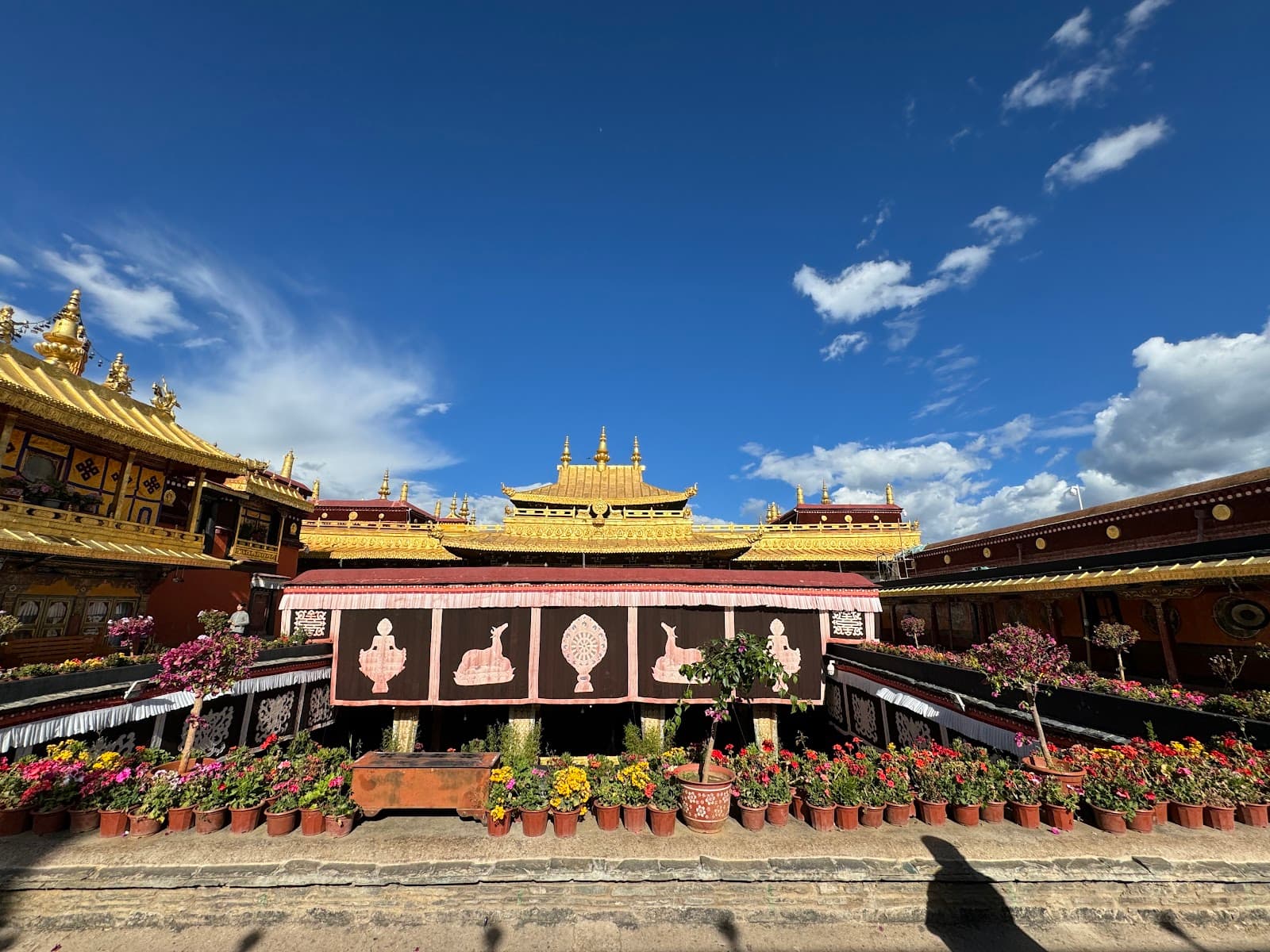
Ramoche Temple Lhasa Tibet
Ramoche Temple, located in Lhasa, Tibet, represents one of the most important Buddhist temples in Tibet, constructed in the 7th century CE during the reign of King Songtsen Gampo and housing the revered Jowo Mikyö Dorje statue, demonstrating the profound transmission of Indian Buddhist traditions to Tibet, which has maintained deep cultural, religious, and historical connections with India for over two millennia. The temple, originally constructed to house the Jowo Mikyö Dorje statue brought from India by King Songtsen Gampo’s Chinese queen Wencheng, features architectural design that synthesizes Indian vihara architecture, Nepalese temple styles, and Tibetan construction techniques, creating a unique architectural expression that reflects Tibet’s position as a cultural bridge between India and Central Asia. The temple complex, constructed primarily from stone and wood with extensive decorative elements, features a multi-story structure with numerous chapels and shrines that have served as centers of Buddhist worship and learning for over thirteen centuries. The temple’s architectural design demonstrates direct influence from Indian Buddhist vihara architecture, particularly the Gupta and Pala period styles, with the overall plan reflecting mandala-based cosmological principles found in Indian temple architecture. Archaeological and historical evidence indicates the temple was constructed with the assistance of Indian and Nepalese architects and craftsmen, reflecting the active religious and cultural exchange between Tibet and India during the 7th century, when Indian Buddhist scholars, texts, and artistic traditions were systematically introduced to Tibet. The temple has undergone multiple renovations and reconstructions over the centuries, with significant work conducted following damage, while preserving its connection to Indian Buddhist traditions. Today, Ramoche Temple continues to serve as an important place of Buddhist worship in Lhasa, demonstrating the enduring vitality of Tibetan Buddhism and its deep roots in Indian religious and cultural traditions. ([1][2])
Quick Links
Plan Your Heritage Journey
Get personalized recommendations and detailed visitor guides