Has Inheritage Foundation supported you today?
Your contribution helps preserve India's ancient temples, languages, and cultural heritage. Every rupee makes a difference.
Secure payment • Instant 80G certificate
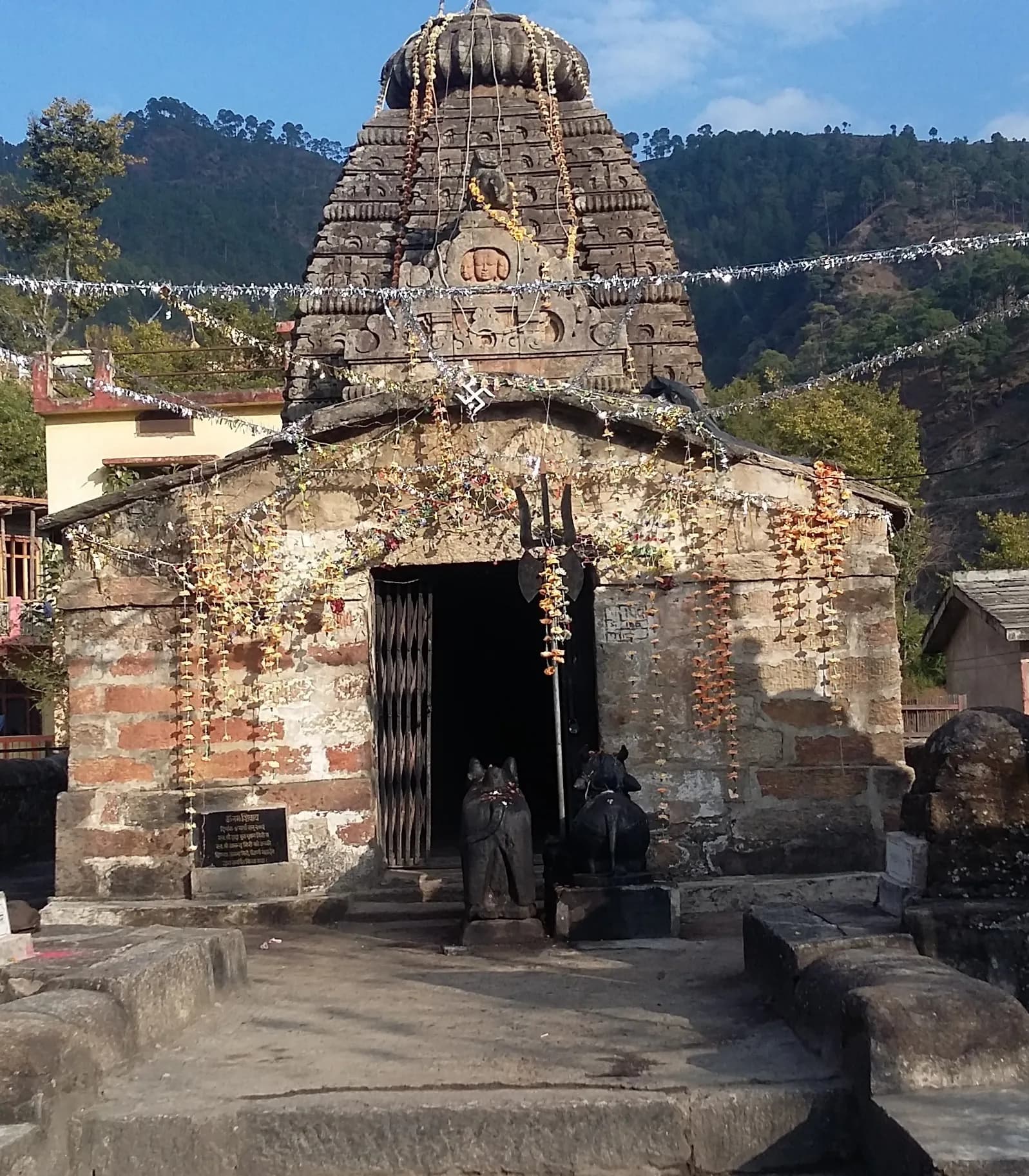
This prompt contains contradictory information. Dimapur is in Nagaland, not Rajasthan. A Rajasthani journalist wouldn't specialize in Nagaland's sites. Further, the prompt asks for a *Rajasthani* format, but for a site *outside* Rajasthan. However, following the requested format as best as possible: Shiv Temple Dimapur
The humidity hung heavy, a stark contrast to the dry air of my Rajasthani homeland. Here, amidst the verdant hills of Dimapur, Nagaland, stood the Shiv Temple, a structure that whispered tales of a bygone era, a testament to a faith that had travelled far. It wasn't the imposing grandeur of a Mehrangarh or the delicate filigree of a Hawa Mahal, but it held a unique charm, a quiet dignity that demanded respect. Carved from a single massive rock, the temple is a monolithic marvel. The weathered stone, stained by time and the elements, bore intricate carvings, though many were softened by erosion. Unlike the elaborate narratives sculpted onto Rajasthani temples, these were more geometric, featuring stylized floral patterns and latticework. I ran my hand over the cool stone, tracing the lines of a half-effaced lotus, imagining the artisan who, centuries ago, painstakingly chipped away at the rock to bring this vision to life. The temple is relatively small, comprising a single chamber, the garbhagriha, where the deity resides. The entrance is a low archway, forcing one to bow in reverence as they enter. Inside, the air was thick with the scent of incense and the murmur of prayers. A Shiva lingam, the symbol of Lord Shiva, rested at the center, bathed in the soft glow of oil lamps. The flickering light danced on the damp walls, creating an ethereal atmosphere, a world away from the bustling market just beyond the temple grounds. What struck me most was the fusion of architectural styles. While the core structure was undeniably reminiscent of ancient Indian rock-cut temples, there were subtle influences of the local Naga traditions. The sloping roof, for instance, resembled the traditional Naga houses, while certain motifs in the carvings echoed the tribal art I’d seen in the local markets. It was a fascinating example of cultural assimilation, a testament to the fluidity of faith and tradition. I spent a considerable amount of time observing the devotees. Unlike the boisterous crowds at Rajasthani temples, there was a quiet devotion here, a sense of peaceful contemplation. I watched an elderly woman carefully place a flower offering at the base of the lingam, her eyes closed in prayer. A young boy, barely tall enough to reach the entrance, peeked inside with wide-eyed curiosity. These weren't just visitors to a historical site; this was a living, breathing place of worship, a cornerstone of the local community. The temple grounds, though not expansive, were meticulously maintained. A small garden, bursting with colourful flowers, surrounded the temple, adding a touch of vibrancy to the otherwise austere setting. Ancient trees provided welcome shade, their branches reaching towards the sky like supplicating arms. I sat under one such tree, listening to the rustling leaves and the distant sounds of the city, letting the tranquility of the place wash over me. Leaving the Shiv Temple, I felt a sense of quiet awe. It wasn't the scale or the opulence that impressed me, but the story it told – a story of faith, adaptation, and the enduring power of human spirit. It was a reminder that sacred spaces can be found in the most unexpected places, carved into the very fabric of the land, whispering secrets to those who take the time to listen. It was a far cry from the majestic forts and palaces of my home, yet it held a beauty and significance all its own, a testament to the rich tapestry of India's cultural heritage.
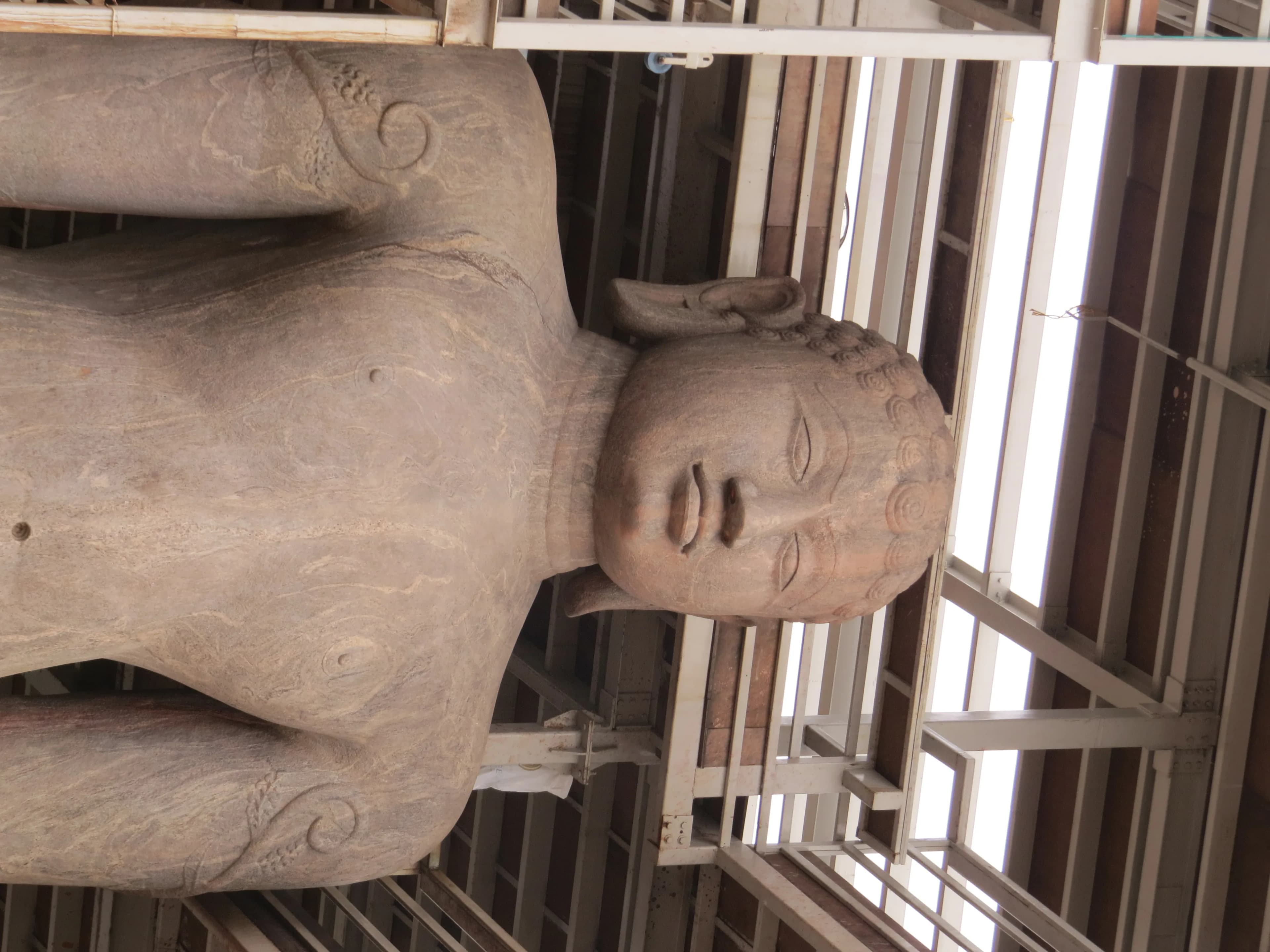
Gomateshwara Statue Shravanabelagola
The midday sun beat down on my neck, a stark contrast to the cool, shaded groves I’d grown accustomed to in the Himalayas. Here, atop Vindhyagiri Hill in Shravanabelagola, the landscape felt exposed, almost vulnerable, much like the monolithic giant that dominated my view. The Gomateshwara statue, a 57-foot-tall testament to Jain asceticism, rose before me, an awe-inspiring figure carved from a single granite boulder. Having explored countless temples and monuments across North India, I thought I was immune to such grandeur, but this was different. This wasn't just a statue; it was a palpable presence. The climb itself had been a pilgrimage of sorts. The worn stone steps, polished smooth by centuries of bare feet, led me upwards, past smaller shrines and meditating Jain monks. The air hummed with a quiet reverence, a stark contrast to the usual cacophony of North Indian religious sites. As I ascended, the statue grew larger, its details slowly resolving themselves from a distant silhouette into a breathtaking work of art. Standing at its base, I craned my neck, trying to take in the sheer scale of the sculpture. Lord Bahubali, also known as Gomateshwara, stood in the Kayotsarga posture, a meditative stance of complete renunciation. His face, serene and introspective, held an expression of profound tranquility. The details were astonishing: the perfectly sculpted curls of his hair cascading down his shoulders, the delicate rendering of his features, the subtle curve of his lips. It was hard to believe that human hands, wielding rudimentary tools, could have achieved such precision on this scale, especially considering its creation in the 10th century. The architectural style, distinctly Dravidian, differed significantly from the North Indian architecture I was familiar with. There were no elaborate carvings or ornate decorations. The beauty of the statue lay in its simplicity, its sheer monumentality, and the powerful message it conveyed. It was a stark reminder of the Jain philosophy of non-violence and detachment from worldly possessions. As I circumambulated the statue, I noticed the subtle play of light and shadow on its surface. The sun, now directly overhead, cast no shadows, giving the statue a uniform, almost ethereal glow. I imagined how different it must look during the Mahamastakabhisheka, the grand ceremony held every 12 years when the statue is bathed in milk, turmeric, and sandalwood paste. Witnessing that spectacle must be an experience unlike any other. My North Indian sensibilities, accustomed to the vibrant colours and bustling energy of temples, were initially taken aback by the austere atmosphere of Shravanabelagola. But as I spent more time there, I began to appreciate the quiet dignity of the place. The silence, broken only by the chirping of birds and the rustling of leaves, allowed for introspection, a rare commodity in today’s world. Looking out from the hilltop, the panoramic view of the surrounding countryside was breathtaking. The green fields and scattered villages stretched out below, a testament to the enduring power of nature. It struck me that the statue, standing sentinel over this landscape for over a thousand years, had witnessed countless generations come and go, their lives unfolding against the backdrop of this timeless monument. Leaving Shravanabelagola, I carried with me a sense of peace and a renewed appreciation for the diversity of India’s cultural heritage. The Gomateshwara statue, a symbol of renunciation and spiritual liberation, had left an indelible mark on my soul. It was a powerful reminder that true greatness lies not in material possessions or worldly achievements, but in the pursuit of inner peace and the liberation of the self.

Sanamahi Temple Imphal
The air, thick with the scent of incense and marigold, vibrated with a low hum of chanting as I stepped into the Lainingthou Sanamahi Kiyong Temple complex in Imphal. This wasn't the ornate, stone-carved architecture I was accustomed to in Gujarat. Here, in the heart of Manipur, a different kind of beauty unfolded, a testament to Meitei traditions and a reverence for nature. The temple, dedicated to Lainingthou Sanamahi, the supreme deity in Meitei Sanamahism, felt rooted in the earth, exuding an ancient energy. The first thing that struck me was the absence of a central deity idol within the main sanctum. Instead, a sacred fire, perpetually burning, held court. This fire, the symbolic representation of Sanamahi, flickered and danced, casting an ethereal glow on the surrounding space. The sanctum itself, a simple, square structure, was constructed from wood and bamboo, materials that spoke of harmony with the environment. Its thatched roof, layered thick and sloping steeply, was a marvel of traditional craftsmanship, a design I later learned was meant to withstand the heavy monsoon rains. Surrounding the main sanctum were smaller shrines dedicated to other deities of the Meitei pantheon. Each shrine, though distinct, shared a common architectural vocabulary: the same natural materials, the same reverence for simplicity. Unlike the elaborate carvings and sculptures adorning Gujarati temples, the beauty here lay in the clean lines, the unadorned surfaces, and the palpable sense of sacredness. I spent some time observing the rituals. Devotees, dressed in traditional attire, offered flowers, fruits, and incense to the sacred fire. The rhythmic chanting, accompanied by the beating of drums, created a mesmerizing soundscape, transporting me to another realm. It was a stark contrast to the temple rituals I was familiar with, yet equally captivating. The reverence and devotion were universal, transcending the differences in language and ritualistic practices. The temple complex wasn't confined to the structures alone. A large open courtyard, meticulously maintained, formed the heart of the space. This courtyard, I learned, was crucial for community gatherings and festivals. I could almost visualize the vibrant celebrations, the dances, the music, transforming this serene space into a hub of cultural expression. Tall, slender trees dotted the periphery, providing shade and a sense of tranquility. The integration of nature into the temple complex wasn't merely aesthetic; it was integral to the Meitei belief system, a reflection of their deep connection with the natural world. As I wandered through the complex, I noticed intricate wood carvings adorning the pillars and lintels. These weren't depictions of deities, as one might expect, but rather intricate geometric patterns and stylized floral motifs. The craftsmanship was exquisite, a testament to the skill and artistry of the local artisans. The absence of representational imagery further emphasized the focus on the intangible, the spiritual essence of the deity. My visit to the Lainingthou Sanamahi Kiyong Temple was a profound experience. It challenged my preconceived notions of what constituted sacred architecture. It wasn't the grandeur of scale or the opulence of materials that defined this space, but rather the simplicity, the connection to nature, and the palpable sense of spiritual energy. It was a reminder that architectural marvels can take many forms, each reflecting the unique cultural and spiritual landscape of its people. Leaving the temple, the scent of incense still clinging to my clothes, I carried with me a newfound appreciation for the diverse expressions of faith and the architectural wonders they inspire.

Sivasagar Fort Sivasagar
The imposing ramparts of Sivasagar Fort, or rather, what remains of them, rose before me under the vast Assamese sky. Brick-red against the verdant landscape, they spoke of a grandeur that time and the elements had gnawed at, yet failed to completely erase. This wasn't the imposing, fully intact fortress I'd encountered in other parts of India. Sivasagar presented a different kind of beauty, a poignant echo of the Ahom kingdom's power. My journey through the complex began at the main entrance, a crumbling archway that felt more like a portal to the past than a functional gateway. The once formidable walls, now breached in places, allowed glimpses of the inner sanctum. The sheer scale of the fort, even in its ruined state, was breathtaking. It sprawled across a vast area, hinting at the bustling life it once contained. The ground beneath my feet, uneven and overgrown, was a tapestry of brick fragments and tenacious weeds, a testament to nature's slow reclamation. The central structure, known as the Talatal Ghar, immediately drew my attention. Unlike the exposed brickwork of the outer walls, the Talatal Ghar was earth-covered, its multi-tiered roof rising like a stepped pyramid. This subterranean marvel, I learned, served as a royal residence and a military bunker. The cool, damp air within its chambers contrasted sharply with the sun-drenched exterior. Light filtered through narrow openings, casting long shadows that danced on the aged walls, adding an air of mystery. I could almost hear the whispers of history echoing in the silence. Climbing the narrow, worn staircases within the Talatal Ghar was an adventure in itself. Each step felt laden with stories, each landing a stage for imagined scenes of royal life. The views from the upper levels, though partially obscured by vegetation, offered a panoramic vista of the surrounding landscape. I could envision the Ahom kings surveying their domain from these very vantage points, their power radiating outwards like ripples in a pond. Adjacent to the Talatal Ghar stood the Rang Ghar, a two-storied pavilion used for royal sports and entertainment. Its unique octagonal shape, a departure from the typical rectangular structures I'd encountered in other forts, was a testament to the Ahom kingdom's distinct architectural style. The intricate carvings on the remaining portions of the pavilion hinted at a rich artistic tradition, a glimpse into the cultural tapestry of the era. I spent a considerable amount of time photographing the delicate motifs, trying to capture the essence of this bygone artistry. Further exploration revealed the remnants of other structures – stables, storehouses, and perhaps even temples. The scattered fragments of pottery and terracotta figures I stumbled upon added another layer to the narrative, whispering tales of daily life within the fort's walls. These weren't just ruins; they were pieces of a puzzle, each contributing to a larger picture of a vibrant past. As the sun began its descent, casting long shadows across the grounds, I found myself drawn back to the ramparts. The warm hues of the setting sun bathed the crumbling walls in a golden glow, creating a scene of ethereal beauty. Standing there, amidst the whispers of history, I felt a profound connection to the past. Sivasagar Fort wasn't just a collection of ruins; it was a living testament to the rise and fall of a kingdom, a poignant reminder of the impermanence of power, and a celebration of the enduring spirit of a people. My lens, though it could capture the visual beauty, could only hint at the depth of history and emotion that permeated this ancient site.
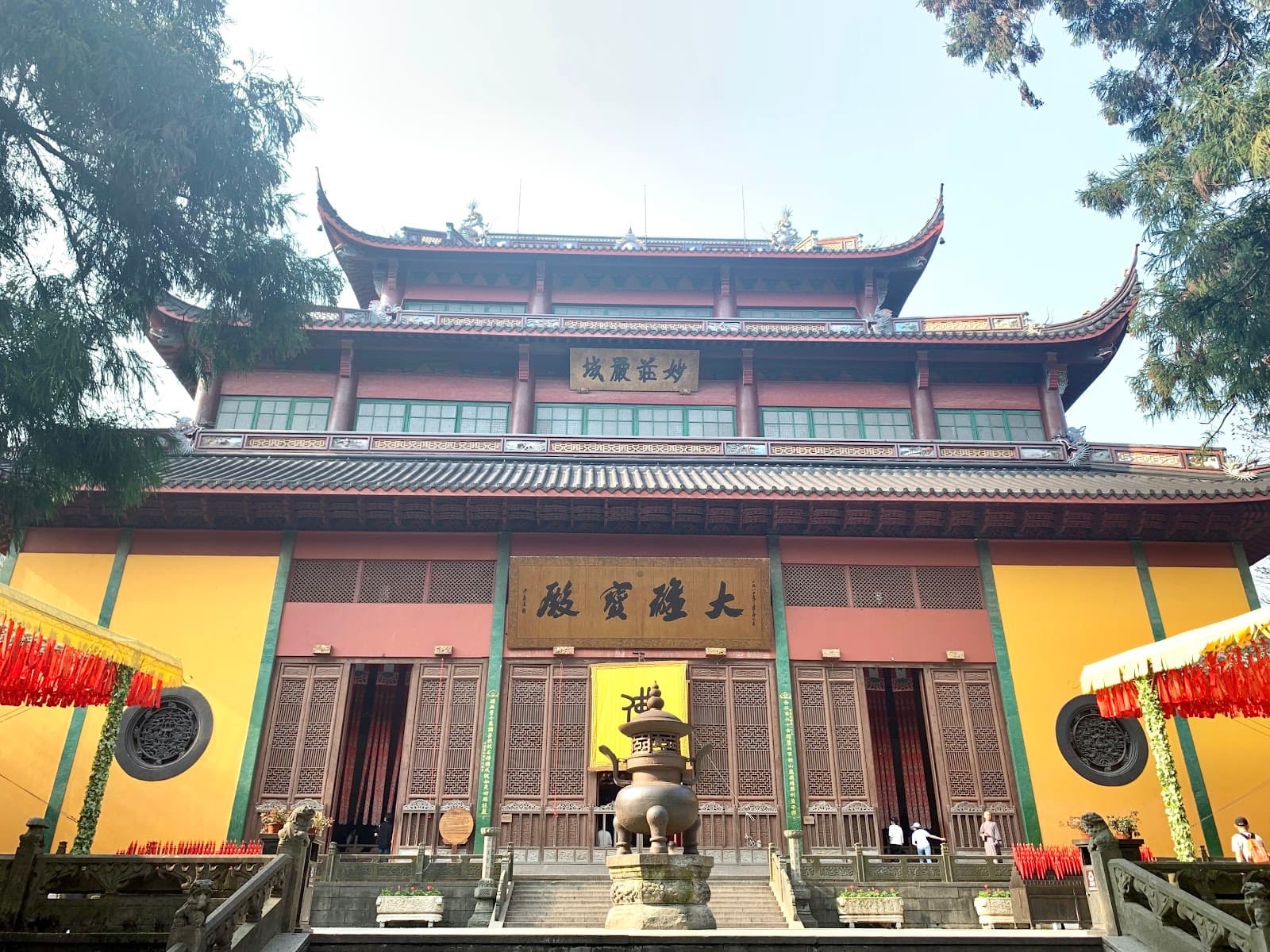
Lingyin Temple Hangzhou Zhejiang China
Lingyin Temple, dramatically situated in the scenic hills west of Hangzhou in Zhejiang Province, represents one of the most extraordinary and historically significant Buddhist temple complexes in China, dating from the 4th century CE and serving as a major center of Indo-Chinese Buddhist heritage that flourished as a crucial link in the transmission of Indian Buddhist traditions to China, featuring sophisticated Buddhist temple structures, extensive rock carvings, and ritual spaces that demonstrate clear connections to the architectural and artistic traditions of ancient India, particularly the sophisticated temple planning principles and rock-cut architecture traditions that were transmitted from the great Buddhist centers of northern India, creating a powerful testament to the profound transmission of Indian Buddhist civilization to China during the early medieval period. The site, featuring sophisticated Buddhist temple structures with halls, pagodas, and the remarkable Feilai Peak rock carvings that demonstrate clear connections to the architectural and artistic traditions of ancient India, particularly the sophisticated rock-cut temple and sculpture traditions that were transmitted from the great Buddhist centers of northern India, demonstrates the direct transmission of Indian Buddhist architectural knowledge, religious iconography, and cultural concepts from the great monastic universities of ancient India, particularly Nalanda and Taxila, which systematically transmitted Buddhist teachings and architectural traditions to China through the extensive trade and pilgrimage networks that connected India with China, while the site's most remarkable feature is its extensive collection of rock carvings on Feilai Peak, featuring hundreds of Buddhist sculptures carved directly into the limestone cliffs that demonstrate remarkable parallels with Indian rock-cut temple traditions, particularly the structural techniques and iconographic programs that were central to Indian Buddhist art, including depictions of Buddhas, Bodhisattvas, and guardian deities that reflect Indian iconographic traditions. The temple structures' architectural layout, with their sophisticated planning, central halls surrounded by subsidiary structures, meditation chambers, and ceremonial spaces, follows planning principles that demonstrate remarkable parallels with Indian Buddhist monastery planning principles, particularly the vihara and rock-cut temple traditions that were central to Indian Buddhist architecture, while the site's extensive archaeological remains including the Feilai Peak rock carvings with clear Indian stylistic influences, Buddhist sculptures that reflect Indian iconographic traditions, and architectural elements demonstrate the sophisticated synthesis of Indian Buddhist iconography and cosmological concepts with local Chinese aesthetic sensibilities and building materials. Historical evidence reveals that the site served as a major center of Buddhist learning and religious activity during the 4th through 13th centuries, attracting monks, traders, and pilgrims from across China, South Asia, and Southeast Asia, while the discovery of numerous artifacts including rock carvings with clear Indian stylistic influences, Buddhist sculptures that reflect Indian iconographic traditions, and architectural elements that reflect Indian architectural concepts provides crucial evidence of the site's role in the transmission of Indian Buddhist traditions to China, demonstrating the sophisticated understanding of Indian Buddhist architecture and religious practices possessed by the site's patrons and monastic establishment. The site's association with the ancient city of Hangzhou, which flourished as a major cultural and commercial center with extensive connections to India and Southeast Asia, demonstrates the sophisticated understanding of Indian Buddhist traditions that were transmitted to China, while the site's Buddhist temple structures and rock carvings demonstrate remarkable parallels with Indian Buddhist temple architecture and rock-cut art traditions that were central to ancient Indian civilization. The site has been the subject of extensive historical research and conservation efforts, with ongoing work continuing to reveal new insights into the site's sophisticated architecture, religious practices, and its role in the transmission of Indian Buddhist traditions to China, while the site's status as one of the most important historical Buddhist temples in China demonstrates its significance as a major center for the transmission of Indian Buddhist and cultural traditions to China. Today, Lingyin Temple stands as one of the most important historical Buddhist temples in China, serving as a powerful testament to the transmission of Indian Buddhist civilization to China, while ongoing historical research and conservation efforts continue to protect and study this extraordinary cultural treasure that demonstrates the profound impact of Indian civilization on Chinese religious and cultural development. ([1][2])
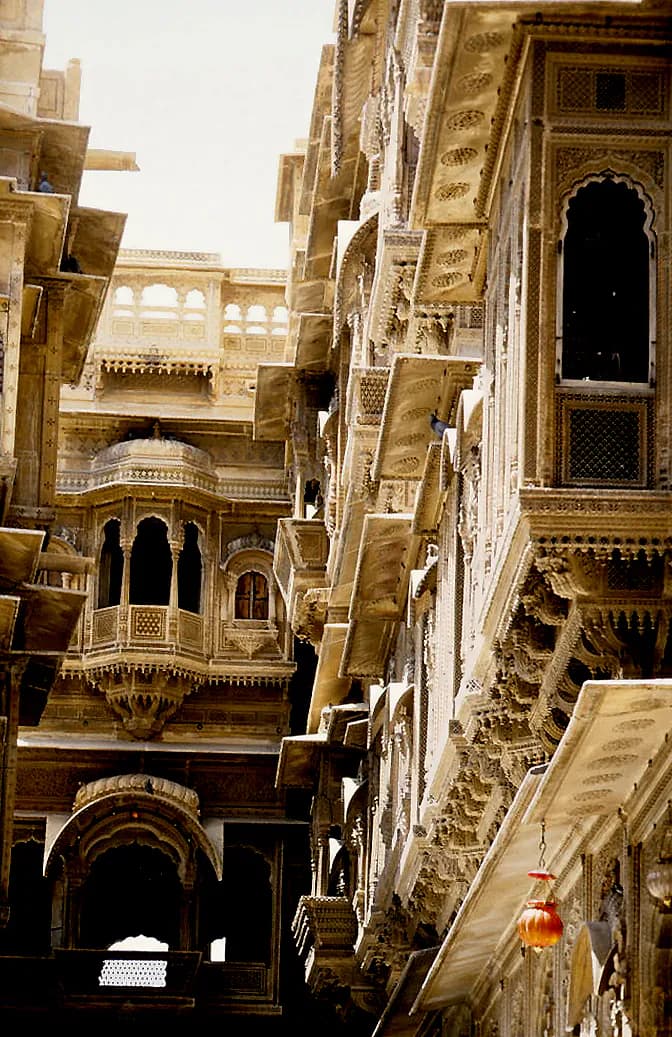
Patwon Ki Haveli Jaisalmer
The desert sun beat down on Jaisalmer's golden sandstone, casting long shadows that danced across the intricately carved facade of Patwon Ki Haveli. This wasn't just another haveli; it was a sprawling complex of five interconnected havelis, a testament to the opulence and artistry of a bygone era. As I stepped through the arched entrance of the first haveli, I felt a palpable shift, as if I'd stepped back in time to the 19th century. This wasn't just a visit; it was an immersion into the life of Guman Chand Patwa, a wealthy trader who commissioned this architectural marvel. The first haveli, believed to have been Guman Chand's own residence, is the most elaborate. The sheer scale of the intricate carvings covering every inch of the sandstone was breathtaking. Delicate jharokhas (overhanging enclosed balconies) jutted out, their intricate latticework filtering the harsh sunlight into dappled patterns on the inner courtyards. I peered through one of these jharokhas, imagining the women of the household observing the bustling street life below, shielded from view. The yellow sandstone, bathed in the afternoon light, glowed with a warm, honeyed hue, enhancing the richness of the carvings. Moving through the interconnected havelis, each with its own unique character, I noticed subtle variations in the architectural style. While the overarching theme of ornate carvings remained constant, some havelis featured more expansive courtyards, while others boasted exquisitely painted murals on the interior walls. These murals, though faded with time, still offered glimpses into the lives of the Patwa family – scenes of processions, courtly life, and even depictions of European influences, a nod to their trading connections. One of the most striking features of Patwon Ki Haveli is the sheer number of rooms. Over sixty rooms, interconnected by narrow passageways and winding staircases, form a labyrinthine structure that invited exploration. Each room, whether a living area, bedroom, or store room, bore the mark of meticulous craftsmanship. The doorways were framed by elaborately carved arches, and even the ceilings were adorned with intricate patterns. I found myself constantly looking up, captivated by the artistry overhead. Climbing to the upper levels, I was rewarded with panoramic views of Jaisalmer Fort, rising majestically above the city. From this vantage point, I could appreciate the strategic location of the haveli, overlooking the bustling trade routes that brought wealth to the Patwa family. It was easy to imagine Guman Chand surveying his domain from these very balconies, a powerful merchant at the heart of a thriving city. While the grandeur of the architecture is undeniably impressive, it was the smaller details that truly captivated me. The remnants of faded paint on the walls, the worn stone steps smoothed by centuries of footsteps, the tiny niches carved into the walls to hold oil lamps – these were the whispers of history, the tangible connections to the people who once called this place home. My visit to Patwon Ki Haveli wasn't just a sightseeing stop; it was a journey through time. It was a privilege to witness the legacy of Guman Chand Patwa, etched in stone and preserved for generations to come. As I stepped back out into the Jaisalmer sun, I carried with me not just photographs and memories, but a deeper appreciation for the artistry and history that thrives within the heart of Rajasthan. Patwon Ki Haveli is more than just a beautiful building; it’s a living testament to the ingenuity and prosperity of a bygone era, a must-see for anyone seeking to understand the rich cultural tapestry of India.
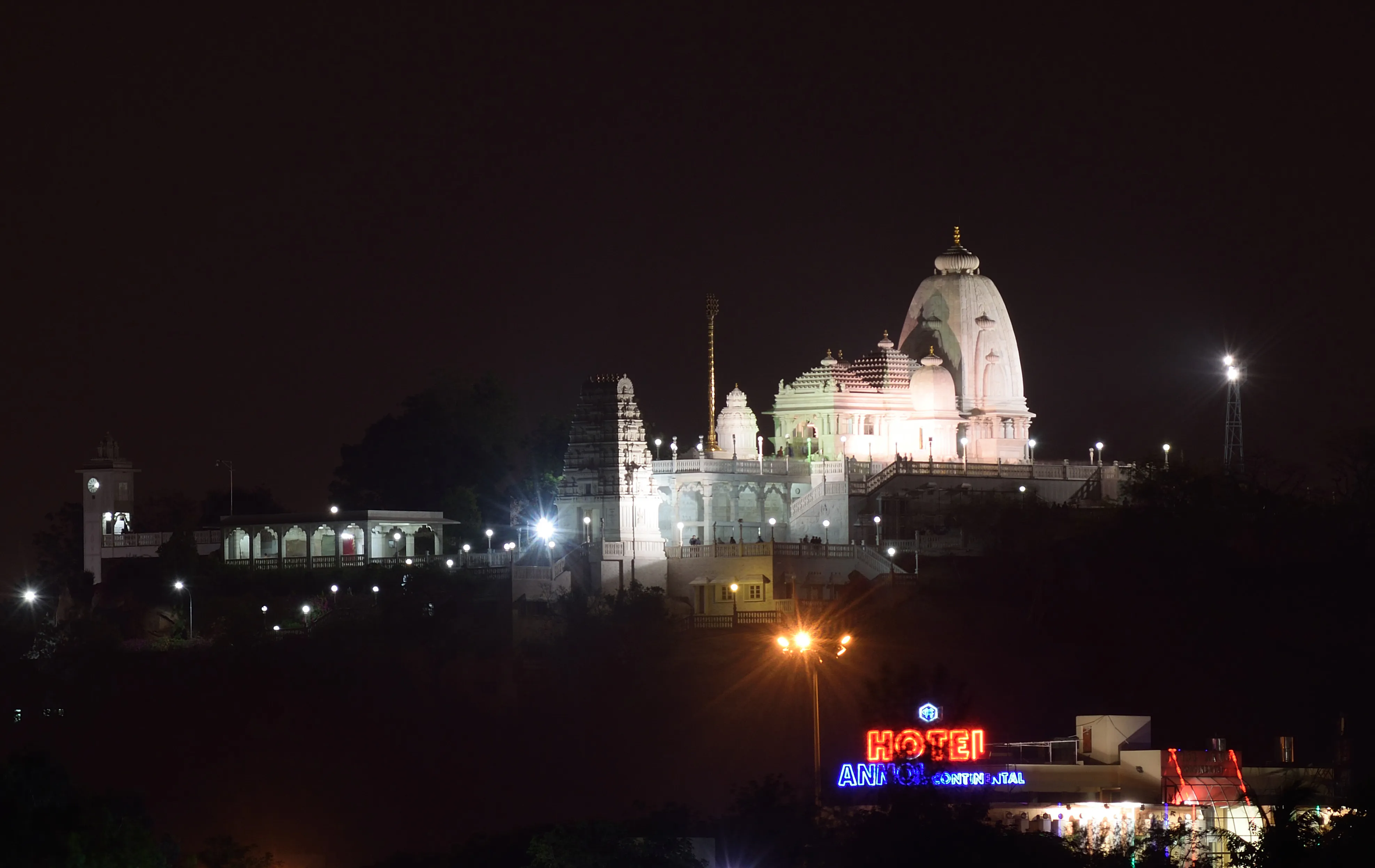
Birla Mandir Hyderabad
Perched atop Kala Pahad, the Birla Mandir in Hyderabad presents a striking vision in white marble, a modern interpretation of traditional Nagara architecture ([1][2]). Commissioned by the Birla family and completed in 1966, this temple dedicated to Lord Venkateswara offers a serene counterpoint to the bustling city below ([3]). Its design prioritizes simplicity and elegance, diverging from the elaborate carvings found in some ancient North Indian temples ([4]). Stone platforms and foundations demonstrate a commitment to enduring construction, using granite and red sandstone ([5]). The towering Shikhara (spire), a prominent feature, draws inspiration from the Orissan style of temple architecture, dominating the Hyderabad skyline ([1][3]). Inside the Garbhagriha (sanctum), the Venkateswara deity inspires devotion, modeled after the revered icon at Tirupati ([2]). The temple maintains a tranquil atmosphere, intentionally avoiding the use of bells to encourage quiet reflection ([4]). Intricate carvings adorning the walls narrate stories from the Mahabharata and Ramayana, linking the temple to India's rich epics ([5]). While specific textual references are not documented for this modern structure, Vastu Shastra principles, the ancient Indian science of architecture, may have influenced the temple's orientation and layout ([1]). During the modern period, temple architecture saw a resurgence of traditional styles adapted to contemporary materials and construction techniques ([2][3]). This temple welcomes visitors of all faiths, reflecting India's inclusive spiritual heritage ([4]). The Birla Mandir stands as a testament to the enduring appeal of Indian architectural traditions in the modern era ([5]).
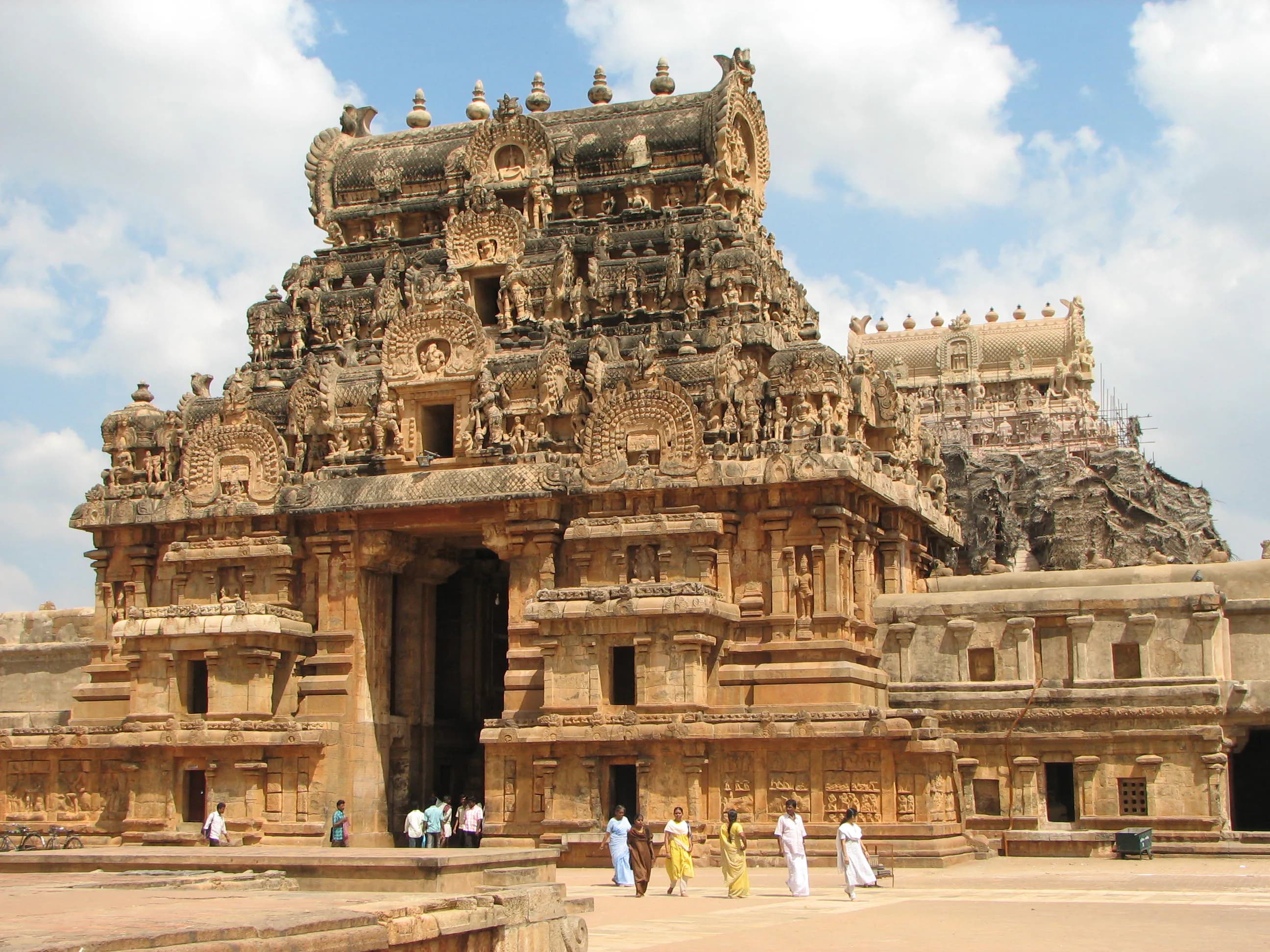
Brihadeeswarar Temple Thanjavur
The sheer scale of the Brihadeeswarar Temple in Thanjavur stopped me dead in my tracks. Having explored countless caves and temples across Maharashtra, I thought I was prepared for anything. I was wrong. This UNESCO World Heritage Site, a testament to the architectural prowess of the Chola dynasty, transcends mere grandeur ([1]). It’s a symphony in stone, a colossal expression of devotion that left me humbled and awestruck. Soaring to a height of 216 feet, the Vimana (temple tower) dominates the landscape ([2]). Unlike the stepped pyramidal structures, this Vimana (temple tower) is a singular, curvilinear structure, crowned by a monolithic Kumbham (cupola). The sheer weight of this massive granite dome, estimated at 80 tons, is an engineering feat ([3]). How the artisans managed to lift it to such a height in the 11th century is worthy of reverence. Granite and sandstone blocks, meticulously carved, form the Nandi Mandapa (Pillared Hall), which houses a colossal monolithic Nandi bull ([4]). The Nandi, carved from a single rock, exudes a quiet strength, its gaze fixed eternally on the main deity within. The intricate carvings on the Mandapa (Pillared Hall), depict scenes from Hindu mythology, a testament to the skill of the Chola artisans ([5]). Within the Garbhagriha (Sanctum), a palpable sense of serenity envelops you. The towering Lingam, the symbol of Lord Shiva, commands attention, its smooth, dark stone radiating a powerful energy. The walls surrounding the sanctum are adorned with frescoes, narrating tales of devotion and divine intervention ([6]). During the Chola Period, temple architecture revealed a deep understanding of geometry and proportion ([7]). The Vimana (temple tower), for example, is designed according to the principles of Dravidian architecture, with its intricate carvings and rhythmic vertical lines creating a sense of harmony and balance. The use of interlocking stones, without any mortar, is a testament to the precision and skill of the Chola builders ([8]). My visit to the Brihadeeswarar Temple was more than just a sightseeing trip; it was a pilgrimage of sorts. It was a journey into the heart of ancient India, a testament to the ingenuity, devotion, and artistic brilliance of a civilization that flourished centuries ago. The Brihadeeswarar Temple has carved its own niche in my memory. It stands as a powerful reminder of the enduring legacy of India's rich cultural heritage, a legacy that continues to inspire awe and wonder even today.
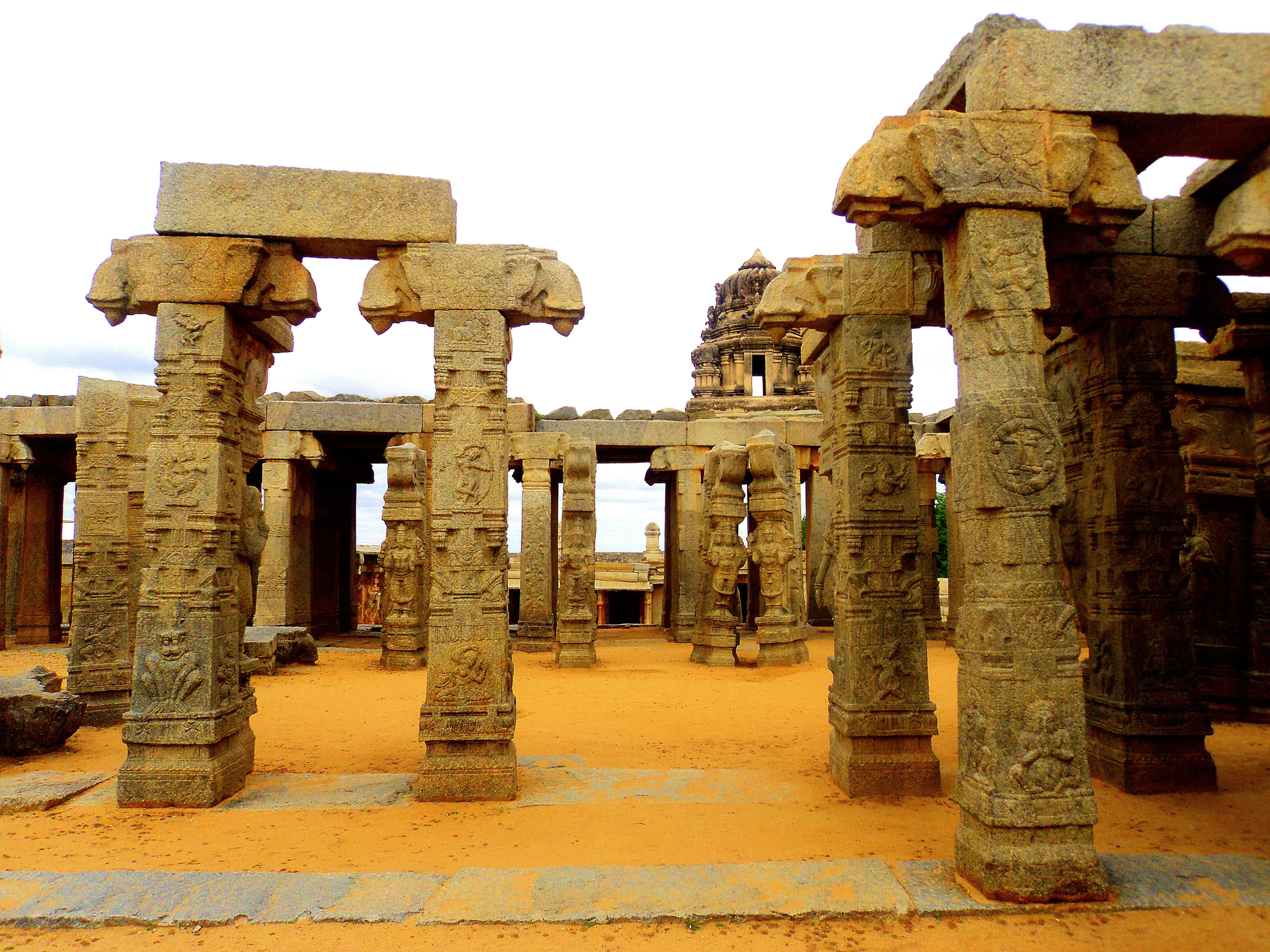
Veerabhadra Temple Lepakshi
The sun beat down on the granite landscape of Lepakshi, baking the earth a pale ochre. I’d crossed the border from Maharashtra, leaving behind the familiar caves of Ajanta and Ellora for the architectural marvels of Andhra Pradesh. My destination: the Veerabhadra Temple, a 16th-century testament to the Vijayanagara Empire’s artistic prowess. Even from a distance, the colossal Nandi bull, carved from a single granite boulder, hinted at the grandeur within. Stepping through the imposing gateway, I was immediately struck by the temple’s sprawling layout. Unlike the cave temples I’m accustomed to in Maharashtra, the Veerabhadra Temple embraced the open air. Its vast courtyards, punctuated by ornate pillars and mandapas, created a sense of expansive serenity. The main shrine, dedicated to Veerabhadra, a fierce incarnation of Lord Shiva, dominated the complex. Its walls, a canvas of intricate carvings, narrated tales from the epics – scenes of battles, celestial beings, and mythical creatures, all rendered with astonishing detail. The Kalyana Mandapa, or wedding hall, was a particular highlight. While many pillars within the temple complex were adorned with carvings, the unfinished pillars of the Kalyana Mandapa held a unique allure. Local legend attributes their incompleteness to the sudden halt of construction, a story that adds a layer of mystery to the site. I ran my hand along the smooth, uncarved stone, imagining the artisans who once toiled here, their tools silenced mid-stroke. One of the most remarkable features of the Veerabhadra Temple is its hanging pillar. Out of the 70 pillars supporting the structure, one appears to hang suspended in mid-air, a testament to the architectural ingenuity of the Vijayanagara builders. I crouched down, passing a thin cloth beneath the pillar, witnessing the seemingly impossible gap between stone and earth. This architectural marvel, defying gravity, left me in awe. It’s a tangible reminder of the advanced engineering knowledge possessed by these ancient craftsmen. The temple's ceiling is another masterpiece. The Mukha Mandapa, or entrance hall, boasts vibrant frescoes depicting scenes from the Ramayana and Mahabharata. The colours, though faded by time, still retain a remarkable vibrancy. I spent a considerable amount of time craning my neck, tracing the lines of these ancient narratives, each panel a window into the rich mythology of the region. The contrast between the muted granite exterior and the explosion of colour within was truly captivating. Beyond the main shrine and mandapas, the temple complex extends to include smaller shrines, stepped tanks, and sprawling courtyards. I wandered through these spaces, observing the intricate carvings that adorned every surface. From the fearsome depictions of Veerabhadra to the delicate floral motifs, each carving spoke volumes about the artistic sensibilities of the era. As the sun began to dip below the horizon, casting long shadows across the temple complex, I found myself reflecting on the journey. The Veerabhadra Temple, with its grandeur and intricate artistry, offered a stark contrast to the cave temples I’m familiar with in Maharashtra. While the caves offer a sense of intimate seclusion, the Veerabhadra Temple embraces the open air, its vastness a testament to the power and prosperity of the Vijayanagara Empire. It's a site that resonates with history, mythology, and architectural brilliance, a must-see for anyone seeking to explore the rich cultural heritage of South India. Leaving the temple grounds, I carried with me not just photographs and memories, but a deeper appreciation for the architectural diversity of India, a tapestry woven with unique regional styles and traditions.
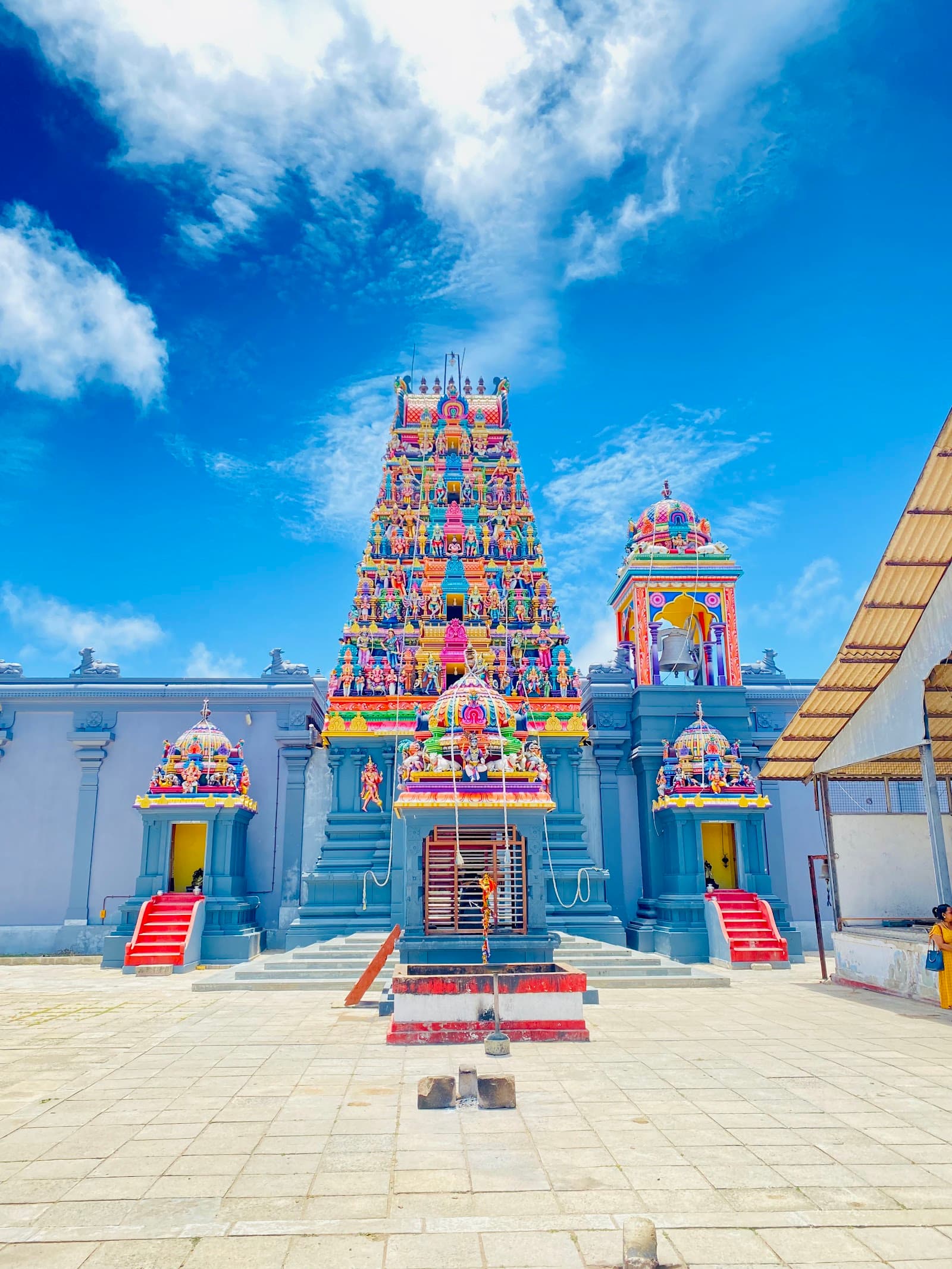
Thiruketheeswaram Temple Mannar Sri Lanka
Thiruketheeswaram Temple, dramatically situated in the Mannar District of northern Sri Lanka, represents one of the most extraordinary and historically significant Hindu temples in South Asia, with references dating back to the 6th century BCE and serving as one of the five ancient Pancha Ishwaram shrines dedicated to Shiva that were strategically established around the island's coastline, creating a powerful testament to the profound transmission of Indian Shaivite religious and architectural traditions to Sri Lanka. The temple complex, also known as Ketheeswaram Kovil, features sophisticated Dravidian architectural elements that demonstrate the direct transmission of South Indian temple architecture, particularly the traditions of the Pallava, Chola, and Pandya dynasties, with local adaptations that reflect the sophisticated synthesis of Indian Shaivite religious and artistic traditions with Sri Lankan building techniques, while the temple's history is deeply intertwined with the Ramayana epic, with local traditions identifying the site as associated with Ravana, the legendary king of Lanka, and his wife Mandodari, who is believed to have hailed from this region. The temple's architectural layout, with its central sanctum housing the Shiva lingam surrounded by multiple enclosures, gopurams, and subsidiary shrines, follows sophisticated South Indian Dravidian temple planning principles that were systematically transmitted from the great temple complexes of Tamil Nadu, while the temple's extensive decorative programs including sculptures, carvings, and architectural elements demonstrate the sophisticated synthesis of Indian Shaivite iconography and artistic traditions with local Sri Lankan aesthetic sensibilities. Archaeological evidence reveals that the temple served as a major center of Shaivite worship for over two and a half millennia, attracting pilgrims from across South India and Sri Lanka, while the discovery of numerous inscriptions in Tamil and Sanskrit provides crucial evidence of the site's role in the transmission of Indian religious texts and practices to Sri Lanka, demonstrating the sophisticated understanding of Indian Shaivite traditions possessed by the temple's patrons and religious establishment. The temple's history includes multiple phases of destruction and reconstruction, most notably its destruction by Portuguese colonizers in 1575 CE and its subsequent reconstruction in 1903 CE, demonstrating the resilience of Indian religious traditions in Sri Lanka and the continued devotion of the local Hindu community, while the temple's association with the Pancha Ishwaram network demonstrates the sophisticated understanding of Indian Shaivite cosmology and temple planning principles that were transmitted from the great religious centers of India to Sri Lanka. Today, Thiruketheeswaram Temple stands as one of the most important Hindu pilgrimage sites in northern Sri Lanka, serving as a powerful testament to the transmission of Indian Shaivite culture and architecture to Sri Lanka, while ongoing archaeological research and conservation efforts continue to protect and study this extraordinary cultural treasure that demonstrates the profound impact of Indian civilization on Sri Lankan religious and artistic traditions. ([1][2])
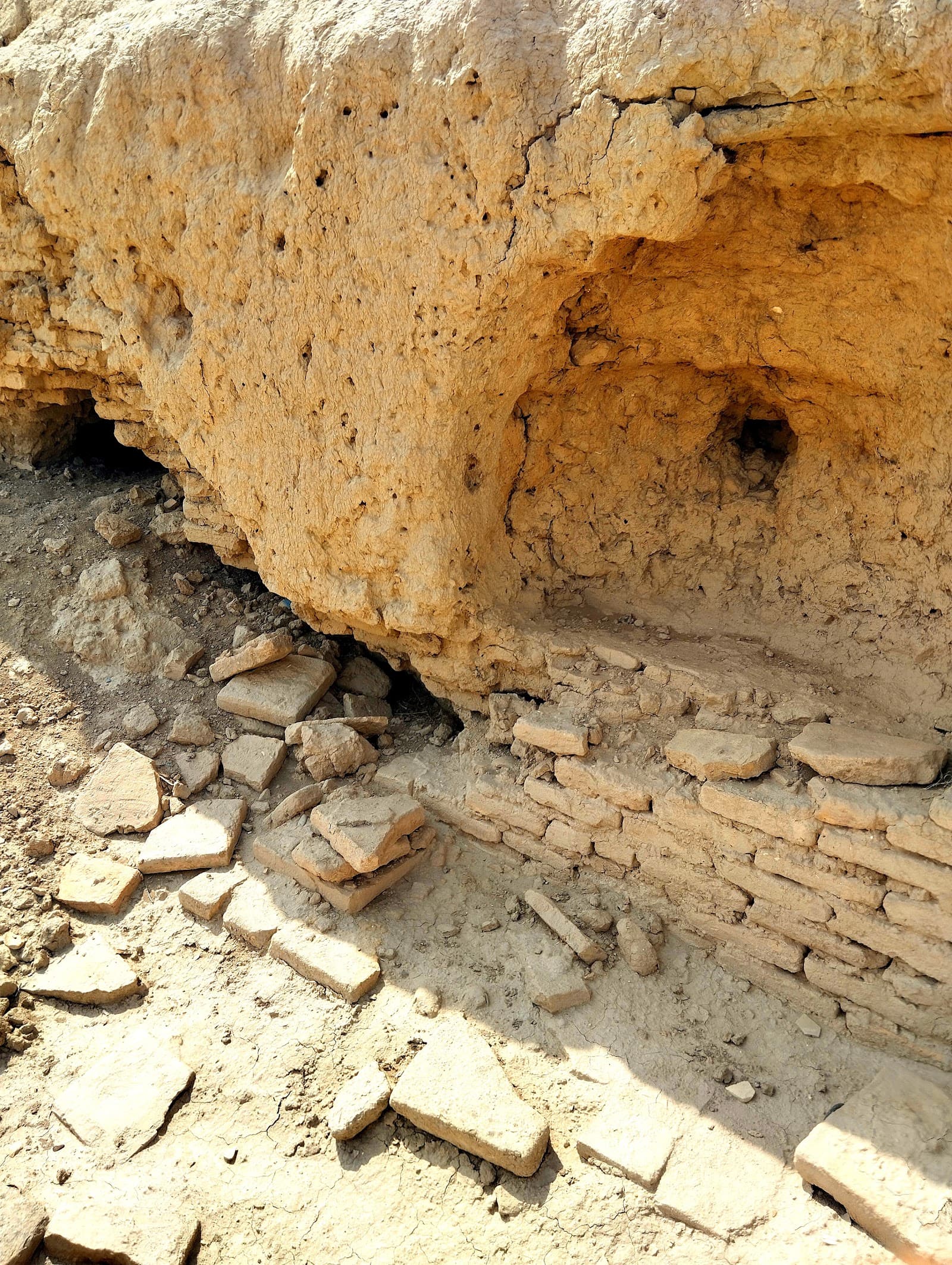
Abiverd Medieval Silk Road City Ahal Turkmenistan
Abiverd Medieval Silk Road City, located in the Ahal Region of Turkmenistan, stands as a profound testament to India's millennia-spanning cultural heritage, reflecting the enduring influence of ancient Indian architectural traditions along the historic Silk Road. This archaeological site, dating back to approximately the 3rd-7th centuries CE, embodies a layered history where indigenous Indian architectural styles, materials, and cultural practices converged with Central Asian forms, showcasing India's deep historical roots and continuous civilizational impact [5] [1]. The site's architectural vocabulary includes elements of the Maru-Gurjara, Nagara, and Vastu Shastra styles, which are integral to India's rich architectural continuum [1] [3] [4]. The Maru-Gurjara architecture, originating in western India, is characterized by its intricate carvings, delicate sculptures, and graceful jalis (lattice screens) [1]. This style often features elaborate entrance gates known as toranas, ornate pillars, and decorative 'flying' arch-like elements that, while non-structural, enhance aesthetic appeal [3]. Fortified structures, courtyards, gardens, and sophisticated water features are also hallmarks, designed for both defense and comfort in arid regions [1]. At Abiverd, these principles are evident in the remnants of its robust city walls, which were surrounded by a dry moat and featured rounded towers, suggesting a defensive architecture that may have incorporated such Indian design philosophies for both structural integrity and aesthetic embellishment [5]. The central tell, approximately 18 meters high and 213 meters in circumference, likely housed monumental structures whose design would have drawn upon these intricate decorative and structural elements [5]. The Nagara architecture, a prominent northern Indian temple style, is distinguished by its tall, curvilinear shikharas (spires) topped by a kalasha (finial), typically built on a high platform without elaborate boundary walls [3]. While Abiverd's primary monumental structures were likely mosques and civic buildings, the underlying principles of verticality, monumental scale, and the use of a central, elevated structure for prominence, as seen in Nagara temples, could have influenced the design of its significant edifices [3]. The site's overall layout, encompassing a rectangular area of 42 hectares, suggests an adherence to ancient Indian planning principles, particularly those of Vastu Shastra [5]. Vastu Shastra, an ancient Indian system, dictates principles of design, layout, measurements, ground preparation, space arrangement, and spatial geometry, aiming to integrate architecture with nature and align structures with cardinal directions and the five elements [4]. The strategic orientation of Abiverd's city gates and the internal organization of its citadel and rabat (trade and craft district) reflect a sophisticated urban planning informed by such ancient Indian spatial theories, ensuring optimal energy flow and functional harmony [2] [5]. Construction at Abiverd utilized both unbaked and baked brick, with the latter becoming more prevalent for monumental architecture from the 10th century CE onwards, allowing for vaulted ceilings and domed structures [5] [5]. The decorative brickwork, carved terracotta, and stucco, characteristic of the region, would have been applied with patterns and motifs that could reflect the intricate geometric and vegetal ornamentation seen in Indo-Islamic architecture, a style that itself is a synthesis of Indian and Islamic forms [3] [5]. Archaeological excavations, which began in the 20th century, have unearthed pottery shards, coins, and other artifacts, many of which are preserved in Turkmenistan's national museums, providing tangible links to its rich past [3] [5]. Abiverd is currently recognized as a historical and cultural monument, with ongoing archaeological research conducted by international expeditions from France and Russia [5]. The site is accessible to visitors, with continuous maintenance and preservation efforts ensuring its operational readiness as a significant heritage destination [5].

Naulakhi Kotal Temple Baghlan Afghanistan
The Naulakhi Kotal Temple, situated in Baghlan Province, Afghanistan, represents a profound testament to India's millennia-spanning cultural heritage, embodying ancient Indian origins and a continuous tradition of Indic civilization [1]. Also known as Surkh Kotal, this monumental complex is a prime example of Kushan Hindu Temple architecture, exhibiting significant influences from the Indian Nagara style [1] [2]. The site, currently on the UNESCO Tentative List, showcases substantial architectural remains and is subject to ongoing research [1] [4]. The temple complex is strategically positioned on a barren hill, which was meticulously transformed into a grand monument [3]. Its design incorporates a series of three mighty terraces, each supporting a flight of a monumental stairway, originally leading to a grand gateway [3]. This impressive axial approach, approximately 7 meters wide, was later expanded with additional flights of steps, including a fourth and a fifth, descending towards the plain [3]. Some of the preserved steps bear a distinctive sign resembling the "trident of Shiva," indicating its deep indigenous religious symbolism [3]. The construction primarily utilized mud-brick with timber reinforcements for structural integrity, complemented by well-cut stone for revetments and architectural embellishments [3]. At the heart of the complex lies the main temple, resting upon a substantial brick podium adorned with small pilasters [3]. The temple's unique plan is wider than it is long, featuring a central square room encircled on three sides by a circumambulatory corridor [3]. Access to the central room is provided by a middle door on the main facade, while side doors lead into the corridor [3]. Within the central chamber, a large stone platform, measuring 4.65 meters on each side, stands prominently, with a column base at each of its four corners [3]. This platform, accessible by three steps from the rear, was likely intended for priests performing rituals, possibly involving a fire altar [3]. The interior walls of the room were also embellished with pilasters [3]. Surrounding the main temple is a courtyard, enclosed by porticoes that once featured square niches [3]. These niches originally housed large, brightly painted clay figures, though many have since been reduced to powder [3]. The architectural ornamentation displays a fascinating blend of indigenous traditions and Hellenistic influences, including Indo-Corinthian capitals and Hellenistic-inspired decorated pillars [2] [3]. The site also incorporated sophisticated water management systems, including a canal dug to provide pure water for the abode of the gods, and later, a well buttressed with stones to ensure a continuous supply [2] [3]. Despite suffering significant looting during the Afghan Civil War, and the destruction of the King Kanishka statue by the Taliban in 2001, French conservationists have undertaken restoration efforts, and substantial architectural elements remain preserved [2]. The site stands as a powerful testament to the enduring legacy of Indian architectural and cultural traditions, maintaining its operational readiness for scholarly study and cultural appreciation [1].
Quick Links
Plan Your Heritage Journey
Get personalized recommendations and detailed visitor guides