Has Inheritage Foundation supported you today?
Your contribution helps preserve India's ancient temples, languages, and cultural heritage. Every rupee makes a difference.
Secure payment • Instant 80G certificate

Mehter Tepe Balkan Turkmenistan
Mehter Tepe, a sanctuary located in the Balkan Region of Turkmenistan, stands as a testament to the profound and continuous cultural exchanges that have shaped India's millennia-spanning heritage, particularly through its Indo-Parthian architectural style [1] [2]. While geographically situated in Central Asia, the site embodies an architectural fusion that integrated Greek, Persian, and notably, Indian styles, reflecting a deep historical continuum of artistic and cultural interaction [1] [3]. The construction primarily utilized indigenous materials such as mud brick, baked brick, and stone, often finished with plaster and stucco, characteristic of the Parthian period's robust building practices [5] . These materials were employed in sophisticated construction techniques, including the development of vaults and domes, which became defining features of the broader Parthian architectural tradition . The site's design likely incorporated elements such as monumental iwans, a distinctive architectural feature of Parthian and later Iranian architecture, which may have been adapted to local religious or ceremonial functions . Although specific dimensions for Mehter Tepe are not widely documented, Indo-Parthian structures typically featured substantial courtyards, columned halls, and intricate decorative elements that showcased a blend of Hellenistic and indigenous motifs [1] [4]. Carvings and sculptures, if present, would likely exhibit the syncretic artistic expressions of the Indo-Parthian realm, where Gandharan art, with its strong Indian Buddhist influences, flourished [1] [4]. The structural systems would have relied on thick load-bearing walls and the innovative use of arches and barrel vaults to create expansive interior spaces, demonstrating advanced engineering for its time [5] . Water management systems, crucial in arid regions, would have involved cisterns or qanats to ensure sustainability, while defensive features, such as fortified walls, might have been integrated given the geopolitical context of the Parthian Empire [5]. Currently, Mehter Tepe is reported to be on the UNESCO Tentative List, signifying its recognized universal value and the potential for future inscription as a World Heritage Site [2] [3]. Archaeological findings in the broader Indo-Parthian regions, such as those by Sir John Marshall in India, have unearthed numerous Parthian-style artifacts, providing context for understanding sites like Mehter Tepe [4]. Conservation efforts would focus on preserving the integrity of the mud-brick and stone structures, mitigating erosion, and stabilizing extant architectural elements, ensuring the site's enduring legacy [5]. The site's operational readiness would involve ongoing archaeological research, site management, and the development of visitor infrastructure to facilitate accessibility and interpretation, celebrating its role in the continuous tradition of Indian civilization [4].
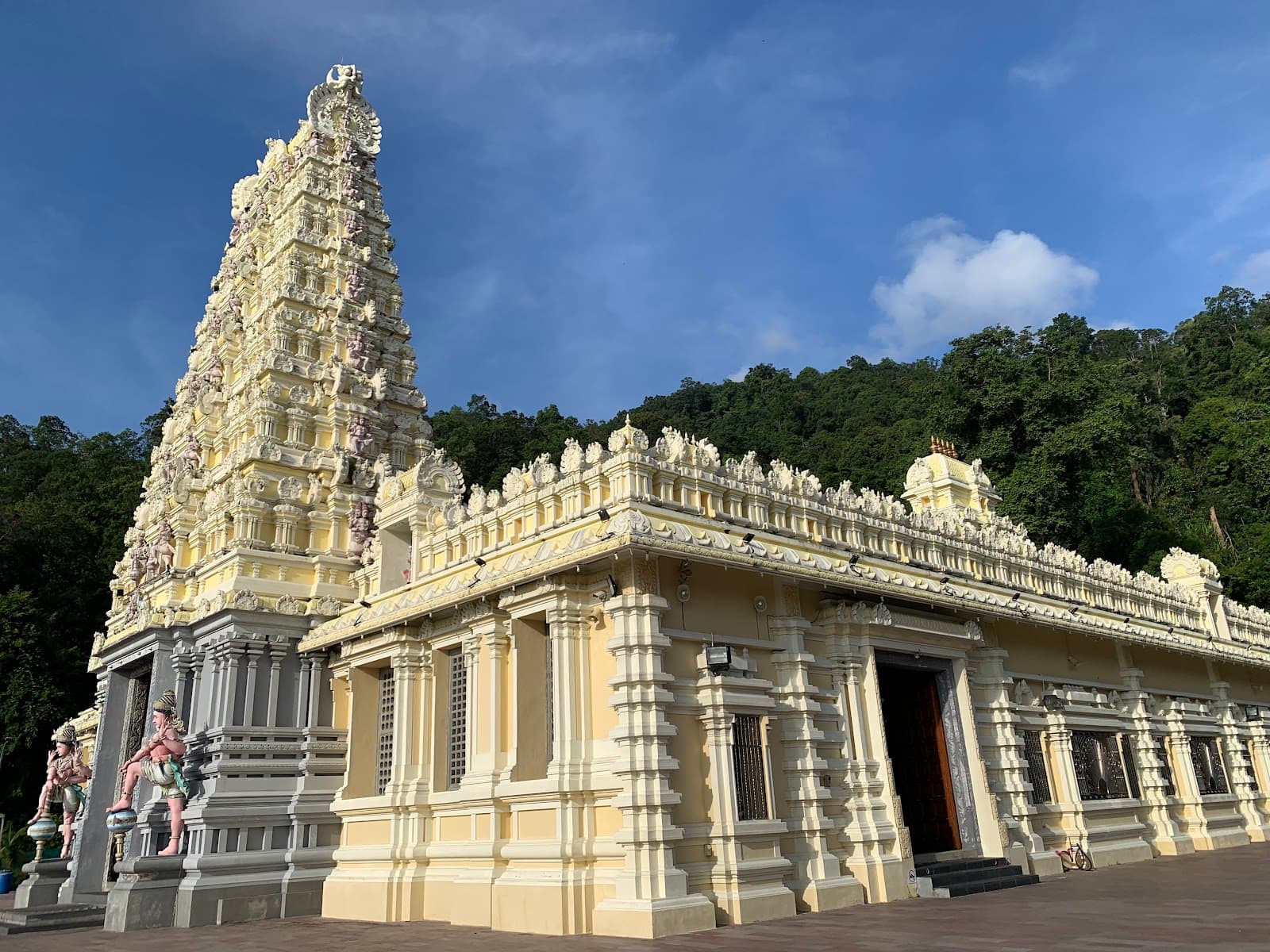
Arulmigu Balathandayuthapani Temple Penang
Perched atop Penang’s Waterfall Hill, the Arulmigu Balathandayuthapani Temple embodies Dravidian hill temple architecture, an enduring testament to the Tamil community's devotion ([1]). Completed in 1914 CE, this 20th-century marvel rises 70 meters, demanding a climb of 513 granite steps to reach its sacred summit ([1][2]). As Southeast Asia’s largest Lord Murugan shrine outside Batu Caves, it attracts approximately 1.5 million pilgrims during Thaipusam, managed with modern technologies like RFID crowd counters and drone surveillance ([1][2]). Granite and reinforced concrete form the structural foundation, augmented by brickwork, lime plaster, and copper Kalashas (finials) ([3]). Intricate carvings embellish the granite pillars within the Garbhagriha (sanctum), depicting Murugan's 32 forms, sculpted by Sthapathis (traditional artisans) from Mahabalipuram, drawing a direct line to ancient Indian artistic traditions ([1][4]). The six-tiered Rajagopuram (ceremonial gateway) and the 21.6-meter golden Vel (divine spear) further accentuate the temple's grandeur ([1]). Within the complex, a multi-tiered Mandapa (pillared hall) accommodates 5,000 devotees, highlighting the temple's capacity for large-scale gatherings ([1]). Facilities also include a 27,000-square-foot multi-purpose hall, wedding suites, a library, and an archery field, reflecting a comprehensive approach to community needs ([3]). Sophisticated systems, including a subterranean operations center managing electrical, CCTV, and BMS networks, ensure the seamless operation of the temple ([2]). The integration of rainwater cascades and open verandas showcases an environmentally conscious design, harnessing Penang’s natural breeze ([5]). This architectural marvel reflects the Tamil community's rich heritage and architectural expertise ([1]).
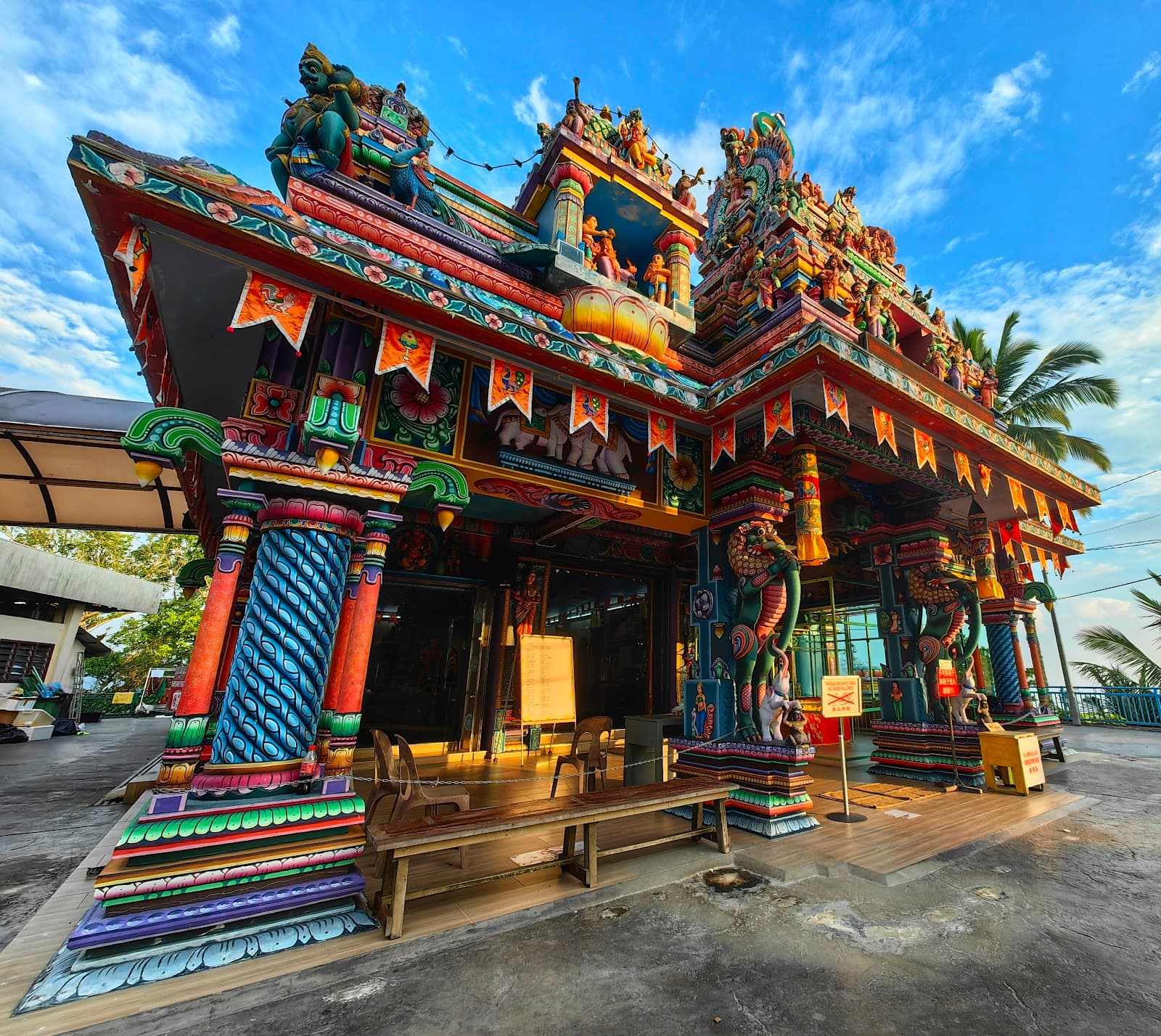
Sri Aruloli Thirumurugan Temple Penang Hill
Sri Aruloli Thirumurugan Temple, founded in the 1800s by Tamils working on the Penang Hill funicular rail, sits 833 metres above sea level and is among Malaysia’s oldest hilltop Hindu shrines, offering panoramic views of George Town while housing Murugan with Valli-Deivanayai in a granite sanctum rejuvenated in 2016 with a colourful rajagopuram inspired by Palani ([1][2]). The temple opens 6:00 AM-9:00 PM providing daily puja, hilltop meditation, and annadhanam from a vegetarian kitchen that uses hydroponic produce grown on terraces. The Penang Hill funicular transports pilgrims, who ascend a final flight of steps to the mandapa framed by manicured gardens and temperature-controlled sanctum housing brass vel, peacock icons, and murals of Murugan’s mythical battles. Penang Hill Corporation, temple trustees, and volunteer rangers manage sustainability: rainwater harvesting, solar panels, waste segregation, and wildlife corridors protect the hill’s rainforest. Thaipusam sees kavadi carriers trek up after the city procession; Skanda Shasti and Thai Pusam attract 15,000 visitors annually, supported by volunteer medics, mountain rescue, and crowd monitoring integrated with Penang Hill’s operations centre. The temple doubles as a cultural interpretation node for Penang Hill UNESCO Biosphere Reserve, offering eco-pilgrim briefings and heritage storytelling ([1][3]).
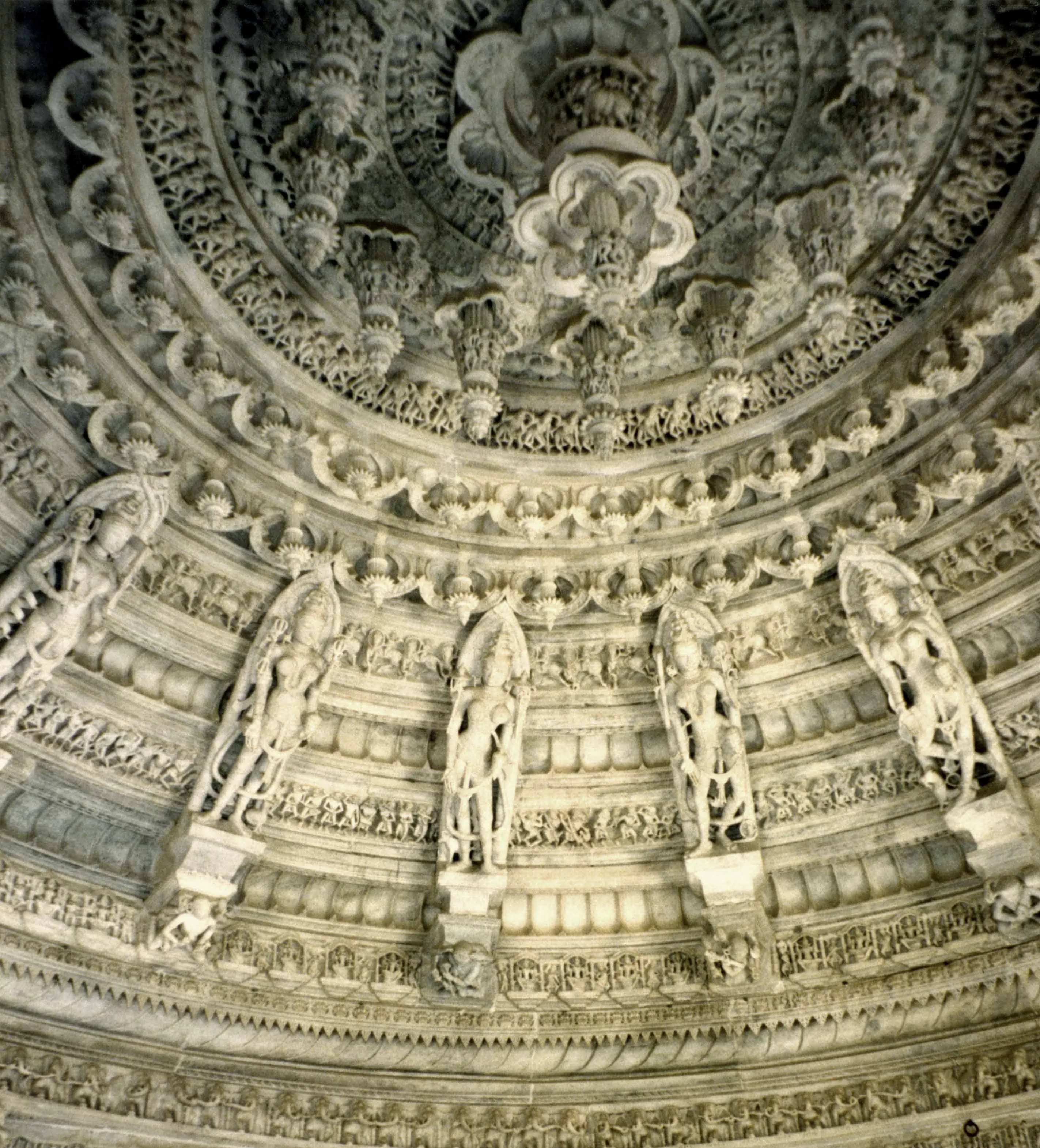
Dilwara Temples Mount Abu
Nestled in the Aravalli Range of Rajasthan, the Dilwara Temples near Mount Abu embody the pinnacle of Jain artistic expression ([1][2]). These temples, constructed primarily of white marble, showcase the intricate Maru-Gurjara architecture that flourished under the Solanki dynasty ([3]). Dating back to the 11th century, the Vimal Vasahi Temple, dedicated to Lord Adinatha, exemplifies this style with its detailed carvings and ornate ceilings ([1][4]). The Solanki dynasty and wealthy merchants like Vastupal Tejpal were key patrons ([3]). Intricate carvings adorning the walls and ceilings depict scenes from Jain mythology and life events of the Tirthankaras (spiritual teachers) ([2][5]). Within the Garbhagriha (Sanctum), the main deity resides, surrounded by meticulously carved pillars and arches ([4]). The Luna Vasahi Temple, dedicated to Lord Neminatha, features the remarkable Rang Mandap, a central dome adorned with concentric circles of exquisitely carved figures ([1][3]). The Navchowki, a collection of nine intricately carved ceilings, further exemplifies the architectural prowess of the artisans ([5]). What truly distinguishes the Dilwara Temples is the exceptional quality of marble sourced from the Arasoori hills ([2]). This marble possesses a unique translucence, creating a soft, ethereal glow that enhances the carvings ([1][4]). Vastu Shastra principles, the ancient Indian science of architecture, likely influenced the temple's layout and design, ensuring harmony and balance ([3]). Though specific textual references are not available, the overall symmetry and proportions reflect these principles as documented in texts like the *Manasara Shilpa Shastra* and *Mayamata* ([4][5]). As a testament to India's rich cultural heritage, the Dilwara Temples offer a serene and awe-inspiring experience, inviting visitors to immerse themselves in the beauty and spirituality of Jainism ([1][2]).
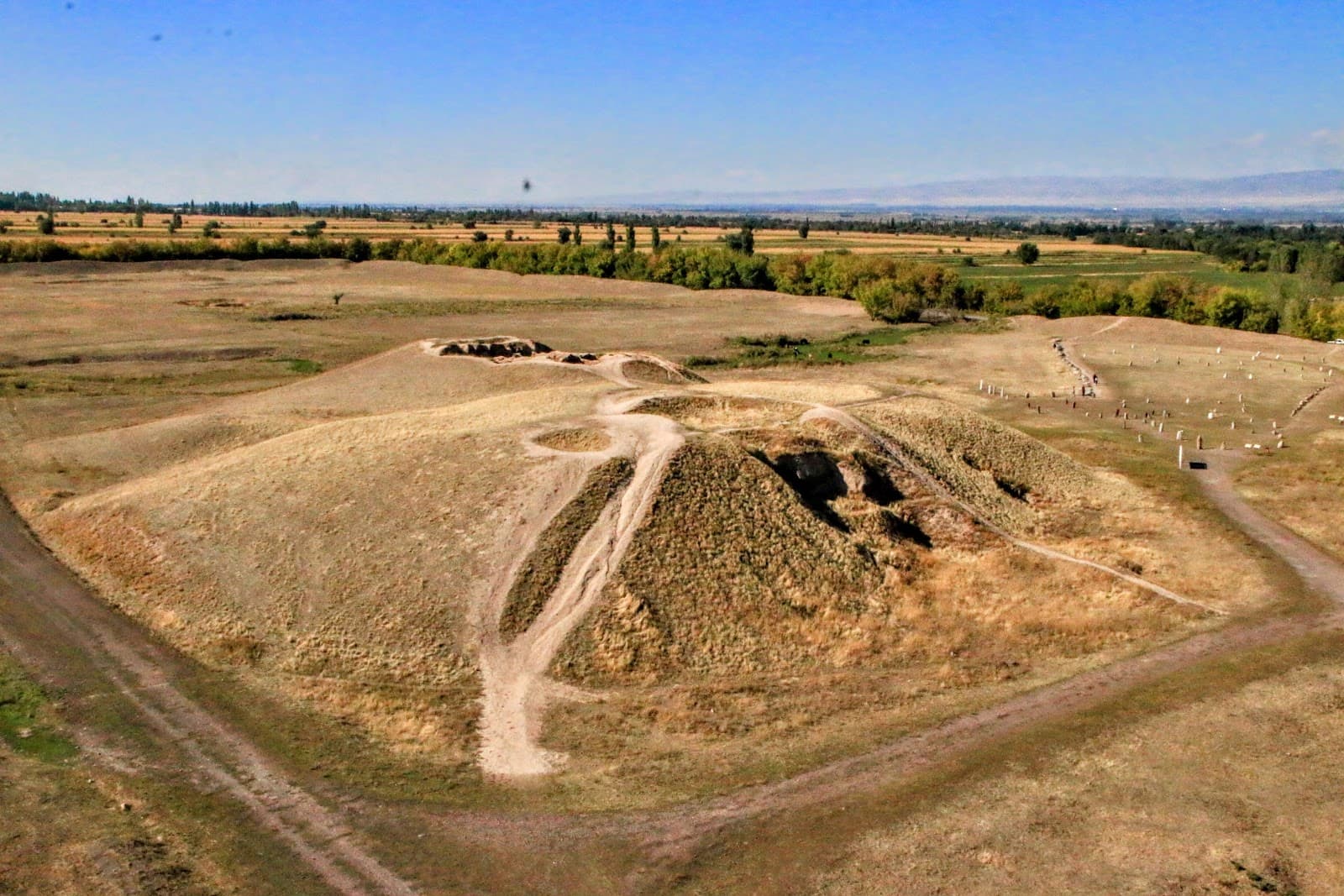
Nevaket Krasnaya Rechka Buddhist Temple Chui Valley Kyrgyzstan
Nevaket, dramatically situated near the modern village of Krasnaya Rechka in the fertile Chui Valley of northern Kyrgyzstan, represents one of the most extraordinary and archaeologically significant Buddhist temple complexes in Central Asia, dating from the 6th through 12th centuries CE and serving as a major cosmopolitan center along the Silk Road where Indian Buddhist traditions, Zoroastrian practices, Eastern Christian communities, and Manichean teachings flourished side by side, creating a powerful testament to the profound transmission of Indian Buddhist civilization to Central Asia during the early medieval period. The site, featuring sophisticated Buddhist temple structures including the remarkable discovery of an 8-meter-long reclining Buddha statue, monastic complexes, and ritual spaces that demonstrate clear connections to the architectural traditions of ancient India, particularly the sophisticated temple planning principles and monumental sculpture traditions that were transmitted from the great Buddhist centers of northern India, demonstrates the direct transmission of Indian Buddhist architectural knowledge, religious iconography, and cultural concepts from the great monastic universities of ancient India, particularly Nalanda and Taxila, which systematically transmitted Buddhist teachings and architectural traditions to Central Asia through the extensive trade and pilgrimage networks that connected India with Central Asia, while the site's most remarkable feature is its extensive Buddhist monastic complex including multiple temple structures, the extraordinary reclining Buddha statue that demonstrates remarkable parallels with Indian Buddhist sculpture traditions, particularly the Mahaparinirvana iconography that was central to Indian Buddhist art, and architectural elements that demonstrate remarkable parallels with Indian Buddhist temple architecture. The temple structures' architectural layout, with their sophisticated planning, central Buddha images surrounded by monastic cells, ritual chambers, and ceremonial spaces, follows planning principles that demonstrate remarkable parallels with Indian Buddhist monastery planning principles, particularly the vihara and chaitya hall traditions that were central to Indian Buddhist architecture, while the site's extensive archaeological remains including Buddhist sculptures with clear Indian stylistic influences, golden burial masks, and architectural elements demonstrate the sophisticated synthesis of Indian Buddhist iconography and cosmological concepts with local Central Asian aesthetic sensibilities and building materials. Archaeological evidence reveals that the site served as a major center of Buddhist learning and religious activity during the 6th through 12th centuries, attracting monks, traders, and pilgrims from across Central Asia, South Asia, and East Asia, while the discovery of numerous artifacts including the extraordinary reclining Buddha statue, Buddhist sculptures with clear Indian stylistic influences, inscriptions in Sanskrit and Prakrit languages, and architectural elements that reflect Indian Buddhist cosmological concepts provides crucial evidence of the site's role in the transmission of Indian Buddhist traditions to Central Asia, demonstrating the sophisticated understanding of Indian Buddhist architecture and religious practices possessed by the site's patrons and monastic establishment. The site's association with the ancient city of Nevaket, which flourished as a major trading center along the Silk Road with diverse religious communities including Buddhists, Zoroastrians, Eastern Christians, and Manicheans, demonstrates the sophisticated understanding of Indian Buddhist traditions that were transmitted to Central Asia, while the site's Buddhist temple structures and monumental sculptures demonstrate remarkable parallels with Indian Buddhist temple architecture and sculpture traditions that were central to ancient Indian civilization. The site has been the subject of extensive archaeological research since the 1950s, with ongoing excavations continuing to reveal new insights into the site's sophisticated architecture, religious practices, and its role in the transmission of Indian Buddhist traditions to Central Asia, while the site's status as part of the broader Silk Road cultural complex demonstrates its significance as a major center for the transmission of Indian Buddhist and cultural traditions to Central Asia. Today, Nevaket stands as one of the most important Buddhist archaeological sites in Central Asia, serving as a powerful testament to the transmission of Indian Buddhist civilization to Central Asia, while ongoing archaeological research and conservation efforts continue to protect and study this extraordinary cultural treasure that demonstrates the profound impact of Indian civilization on Central Asian religious and cultural development. ([1][2])
Panjakent Temples Sughd Tajikistan
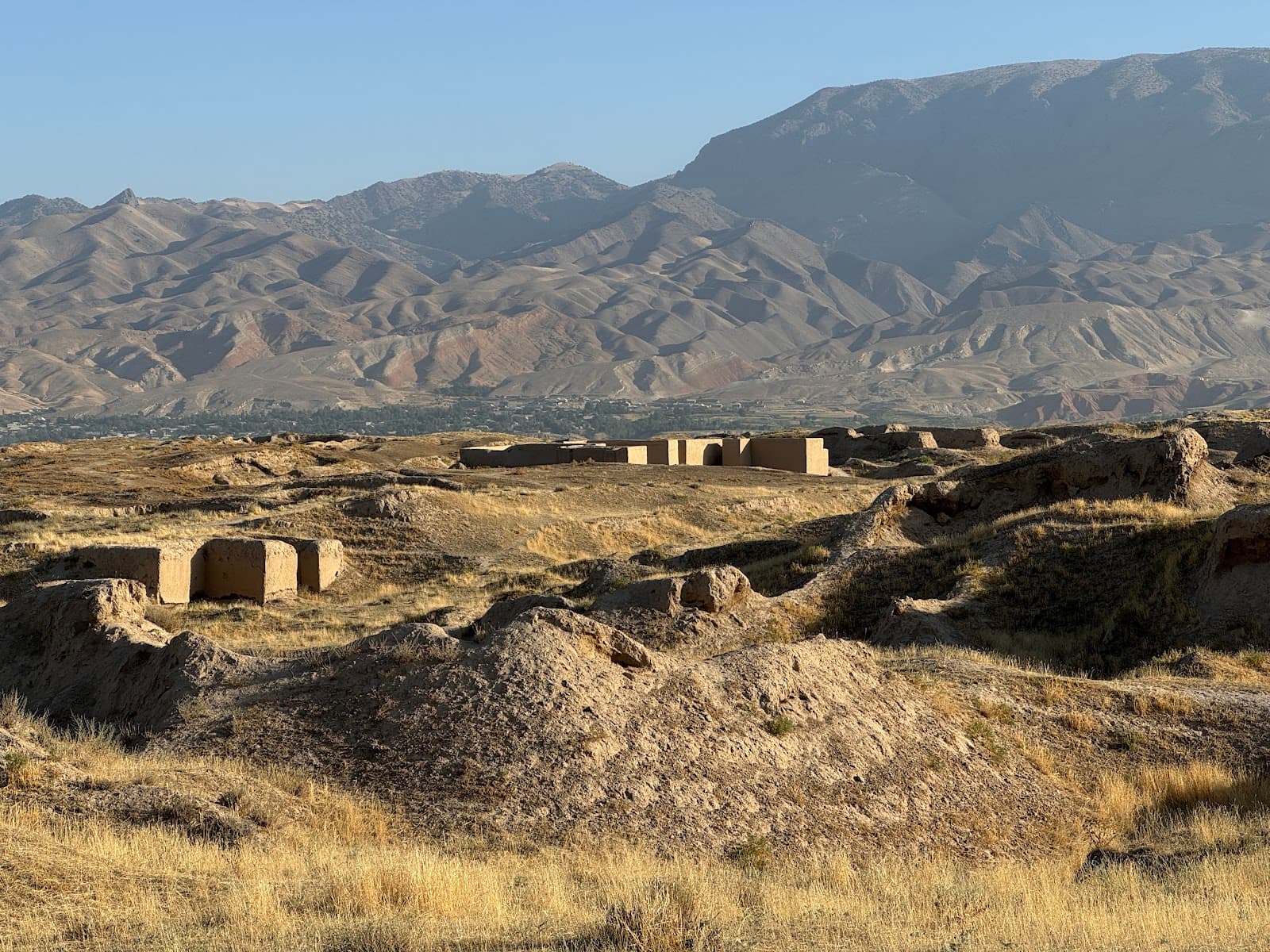
Panjakent Temples, dramatically situated in the ancient Sogdian town of Panjakent in northern Tajikistan, represent one of the most extraordinary and archaeologically significant temple complexes in Central Asia, constructed in the 5th-8th centuries CE during the Sogdian period as major religious centers that demonstrate remarkable Zoroastrian-Vedic syncretism, creating a powerful testament to the profound transmission of Indian Vedic religious and philosophical traditions to Central Asia and their sophisticated synthesis with local Zoroastrian practices. The temple complex, featuring sophisticated architectural elements that demonstrate the synthesis of Zoroastrian and Vedic architectural traditions, while the site's extraordinary decorative programs including murals, sculptures, and architectural elements demonstrate clear Vedic iconographic and philosophical influences including depictions of Vedic deities, mythological scenes, and cosmological concepts that were transmitted from the great religious centers of India to Central Asia, providing crucial evidence of the site's role as a major center for the transmission of Indian Vedic traditions. Archaeological excavations have revealed extraordinary architectural elements including fire temples, sanctuaries, and assembly halls that demonstrate the sophisticated synthesis of Zoroastrian and Vedic religious practices, while the discovery of numerous artifacts including inscriptions, sculptures, and ritual objects provides crucial evidence of the site's role as a center for the transmission of Indian Vedic texts and practices to Central Asia, demonstrating the sophisticated understanding of Indian Vedic traditions possessed by the Sogdian religious establishment. The temple complex's architectural layout, with its central sanctuaries surrounded by courtyards and auxiliary structures, follows sophisticated planning principles that demonstrate the synthesis of Zoroastrian and Vedic temple planning principles, while the temple complex's extensive decorative programs including murals and sculptures demonstrate the ways in which Indian Vedic traditions were integrated into Sogdian religious architecture. The temple complex's location in Panjakent, a major Sogdian trading center along the Silk Road, underscores its significance as a center for the transmission of Vedic teachings, philosophy, and culture from India to Central Asia and beyond, while the site's architectural sophistication and extensive decorative programs demonstrate the sophisticated understanding of Indian Vedic traditions possessed by the Sogdian religious specialists who created this extraordinary complex. Today, Panjakent Temples stand as a UNESCO Tentative List site and represent one of the most important examples of Zoroastrian-Vedic syncretism in Central Asia, serving as a powerful testament to the transmission of Indian Vedic culture to Central Asia, while ongoing archaeological research and conservation efforts continue to protect and study this extraordinary cultural treasure that demonstrates the profound impact of Indian civilization on Central Asian religious and philosophical traditions. ([1][2])
Patwon Ki Haveli Jaisalmer
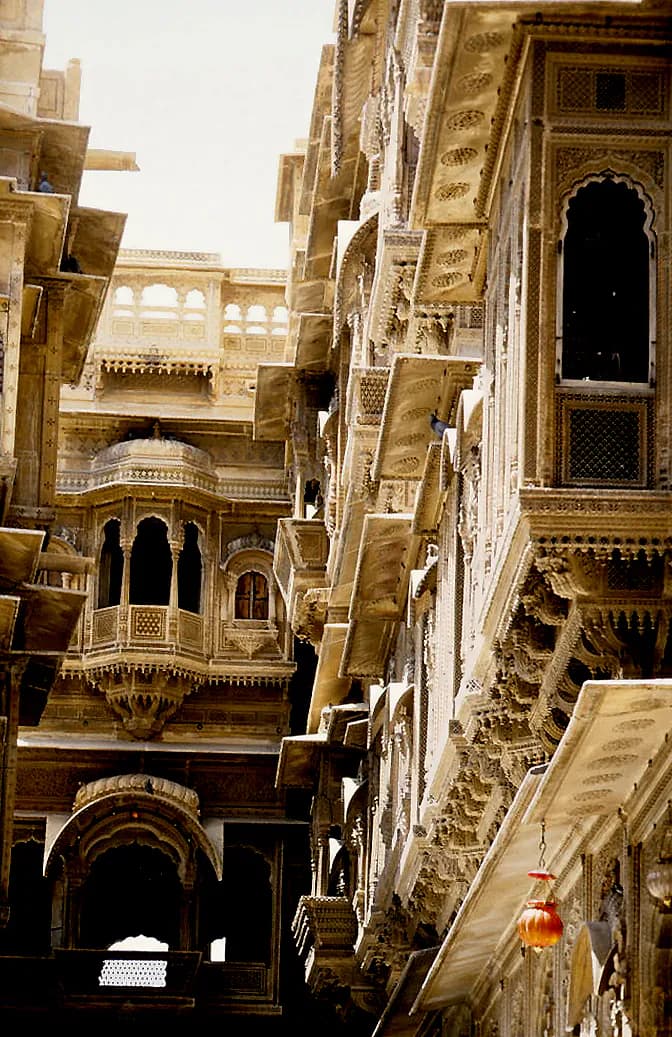
The desert sun beat down on Jaisalmer's golden sandstone, casting long shadows that danced across the intricately carved facade of Patwon Ki Haveli. This wasn't just another haveli; it was a sprawling complex of five interconnected havelis, a testament to the opulence and artistry of a bygone era. As I stepped through the arched entrance of the first haveli, I felt a palpable shift, as if I'd stepped back in time to the 19th century. This wasn't just a visit; it was an immersion into the life of Guman Chand Patwa, a wealthy trader who commissioned this architectural marvel. The first haveli, believed to have been Guman Chand's own residence, is the most elaborate. The sheer scale of the intricate carvings covering every inch of the sandstone was breathtaking. Delicate jharokhas (overhanging enclosed balconies) jutted out, their intricate latticework filtering the harsh sunlight into dappled patterns on the inner courtyards. I peered through one of these jharokhas, imagining the women of the household observing the bustling street life below, shielded from view. The yellow sandstone, bathed in the afternoon light, glowed with a warm, honeyed hue, enhancing the richness of the carvings. Moving through the interconnected havelis, each with its own unique character, I noticed subtle variations in the architectural style. While the overarching theme of ornate carvings remained constant, some havelis featured more expansive courtyards, while others boasted exquisitely painted murals on the interior walls. These murals, though faded with time, still offered glimpses into the lives of the Patwa family – scenes of processions, courtly life, and even depictions of European influences, a nod to their trading connections. One of the most striking features of Patwon Ki Haveli is the sheer number of rooms. Over sixty rooms, interconnected by narrow passageways and winding staircases, form a labyrinthine structure that invited exploration. Each room, whether a living area, bedroom, or store room, bore the mark of meticulous craftsmanship. The doorways were framed by elaborately carved arches, and even the ceilings were adorned with intricate patterns. I found myself constantly looking up, captivated by the artistry overhead. Climbing to the upper levels, I was rewarded with panoramic views of Jaisalmer Fort, rising majestically above the city. From this vantage point, I could appreciate the strategic location of the haveli, overlooking the bustling trade routes that brought wealth to the Patwa family. It was easy to imagine Guman Chand surveying his domain from these very balconies, a powerful merchant at the heart of a thriving city. While the grandeur of the architecture is undeniably impressive, it was the smaller details that truly captivated me. The remnants of faded paint on the walls, the worn stone steps smoothed by centuries of footsteps, the tiny niches carved into the walls to hold oil lamps – these were the whispers of history, the tangible connections to the people who once called this place home. My visit to Patwon Ki Haveli wasn't just a sightseeing stop; it was a journey through time. It was a privilege to witness the legacy of Guman Chand Patwa, etched in stone and preserved for generations to come. As I stepped back out into the Jaisalmer sun, I carried with me not just photographs and memories, but a deeper appreciation for the artistry and history that thrives within the heart of Rajasthan. Patwon Ki Haveli is more than just a beautiful building; it’s a living testament to the ingenuity and prosperity of a bygone era, a must-see for anyone seeking to understand the rich cultural tapestry of India.
Laxmi Vilas Palace Vadodara
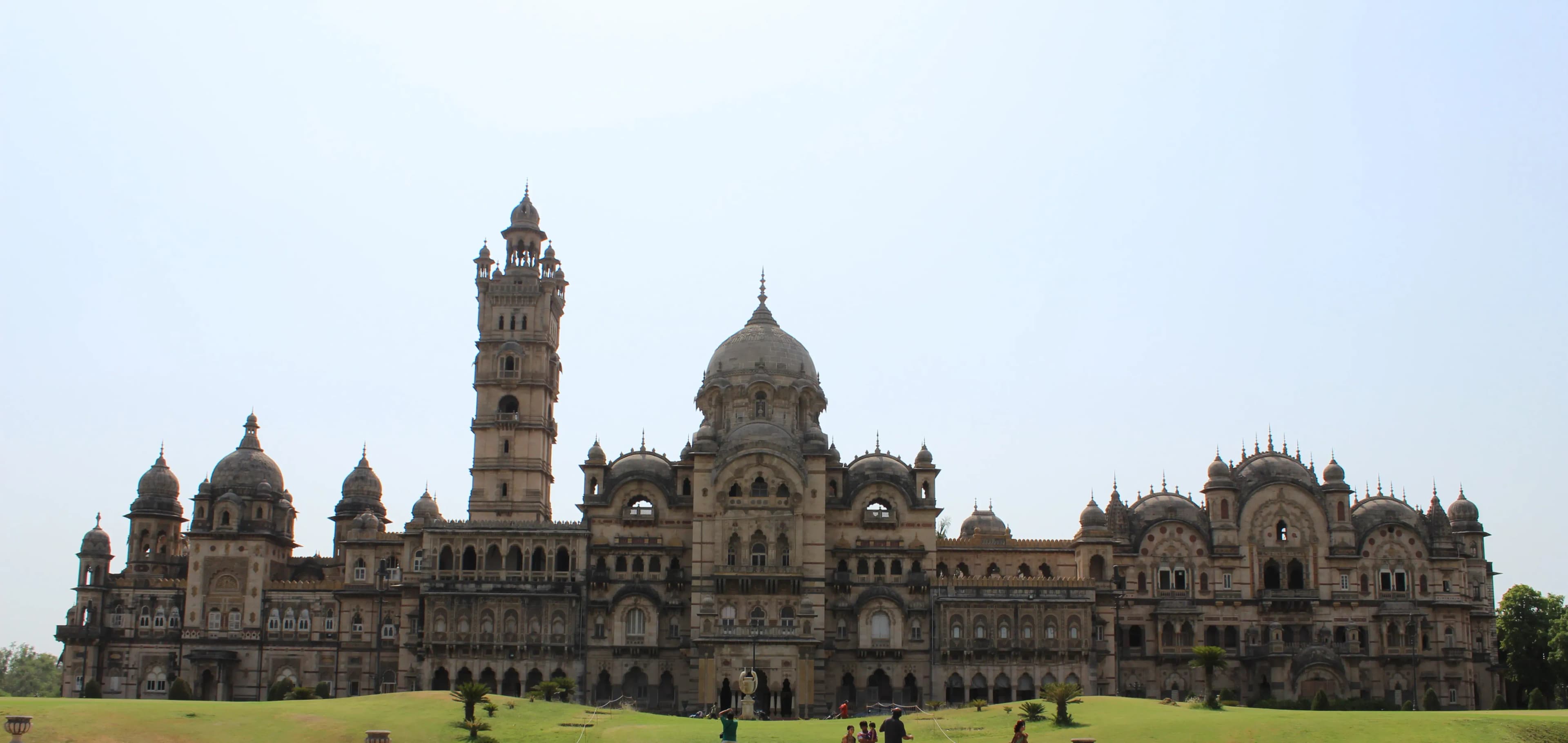
The wrought iron gates of Laxmi Vilas Palace, embellished with the Gaekwad coat of arms, seemed to whisper tales of a bygone era as I stepped onto the sprawling grounds. This wasn't merely a palace; it was a statement – a testament to the grandeur and vision of Maharaja Sayajirao Gaekwad III. The sheer scale of the Indo-Saracenic structure, dwarfing even the impressive structures I’m accustomed to in Kolkata, left me momentarily speechless. Built in 1890, it remains the largest private dwelling in India, four times the size of Buckingham Palace, a fact that continually echoed in my mind as I explored its vast expanse. The first thing that struck me was the seamless blend of architectural styles. While the domes and arches spoke of Mughal influence, the intricate carvings and jalis (perforated stone screens) were distinctly Gujarati. The use of European architectural elements, such as the Italian marble columns and stained-glass windows, added another layer of complexity, showcasing the Maharaja's cosmopolitan outlook. It wasn't just a fusion of styles, but a conversation between them, each element complementing the other in a harmonious symphony of stone and artistry. Inside, the Durbar Hall, with its Venetian mosaic floors and Belgian stained-glass windows depicting scenes from the Mahabharata, was breathtaking. The sheer opulence was almost overwhelming, yet there was a sense of restraint, a refusal to descend into gaudiness. The delicate floral motifs carved into the sandstone walls, the intricate chandeliers hanging from the high ceilings, and the portraits of the Gaekwad dynasty lining the walls all spoke of a refined aesthetic sensibility. I was particularly fascinated by the Navlakhi stepwell, tucked away in a corner of the vast gardens. Descending into its cool depths, I felt transported back in time. The intricate carvings on the stepwell walls, depicting deities and celestial beings, were remarkably well-preserved, a testament to the quality of the craftsmanship. It was a space of quiet contemplation, a stark contrast to the grandeur of the palace itself. The palace museum, housed within a section of the main building, provided a fascinating glimpse into the lives of the Gaekwad rulers. The collection of weaponry, including swords, guns, and armor, was impressive, but it was the personal artifacts – the Maharaja's vintage cars, his collection of clocks, and the portraits of his family – that truly captured my attention. These objects humanized the Maharaja, transforming him from a historical figure into a man with passions and interests. As I wandered through the manicured gardens, past fountains and sculptures, I couldn't help but reflect on the legacy of Maharaja Sayajirao Gaekwad III. He was not just a builder of palaces, but a visionary ruler who invested heavily in education, infrastructure, and social reforms. Laxmi Vilas Palace, therefore, is not just a symbol of his wealth, but a reflection of his progressive ideals. The palace continues to be the residence of the royal family, a living testament to a dynasty that shaped the history of Vadodara. Leaving the palace grounds, I felt a sense of awe and gratitude. Awe at the sheer magnificence of the structure and the artistry of its creators, and gratitude for the opportunity to witness a piece of history firsthand. Laxmi Vilas Palace is not just a building; it is a story etched in stone, a story of ambition, vision, and a deep appreciation for beauty. It is a must-see for anyone interested in Indian architecture and history, a place where the past comes alive in all its splendor.
BAPS Hindu Mandir Abu Dhabi
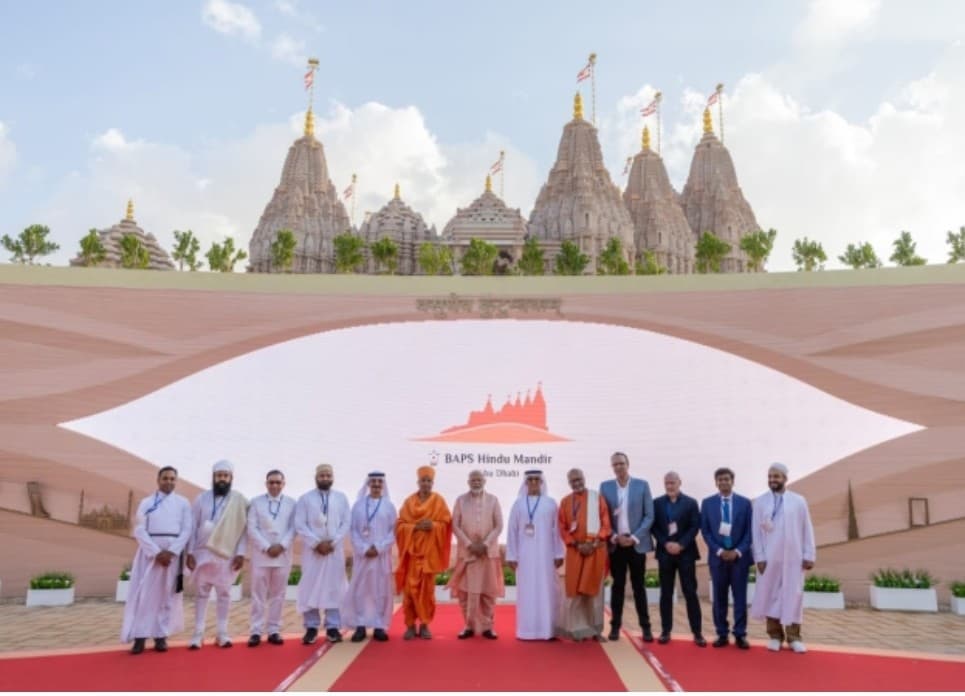
Inaugurated in February 2024, the BAPS Hindu Mandir in Abu Dhabi is a confluence of Nagara and Dravidian architectural styles, subtly infused with Middle Eastern motifs ([1][2]). Rising to a height of 108 feet, the Mandir's seven Shikhara (spires) symbolize the unity of the UAE’s seven emirates, extending 262 feet in length and 180 feet in breadth ([1]). Pink sandstone sourced from Rajasthan, combined with Italian Carrara marble, constitutes the primary building materials, a conscious echo of time-honored Indian temple construction methods ([3]). Granite and sandstone blocks, meticulously carved by approximately 700 artisans, narrate Hindu epics alongside depictions of Arabian falcons and universal symbols ([1][2]). These intricately worked stones, transported in 700 containers, underwent rigorous 3D scanning and seismic testing before being assembled by a dedicated team of 2,000 volunteers ([1]). Vastu Shastra principles, the ancient Indian science of architecture, were used to inform the temple's orientation and design, aligning it with cosmic energies ([4]). While specific Vastu Shastra texts aren't explicitly mentioned in available documentation, the application of its principles is evident in the temple's layout and proportions. Within the expansive 27-acre complex, daily rituals such as mangala arti (auspicious morning prayers) are performed, and guided tours are offered in multiple languages ([1]). The campus is designed to accommodate 15,000 visitors per hour and includes an experiential gallery, a vegetarian food court providing annadhanam (food offering), and thematically designed gardens ([1][3]). Further enhancing its appeal, the cultural center features STEAM classrooms and exhibitions on UAE history, fostering interfaith harmony through initiatives like the “Tolerance Bridge” ([2][5]). The Mandir stands as a testament to architectural integration and cultural exchange, embodying both traditional craftsmanship and modern technology.
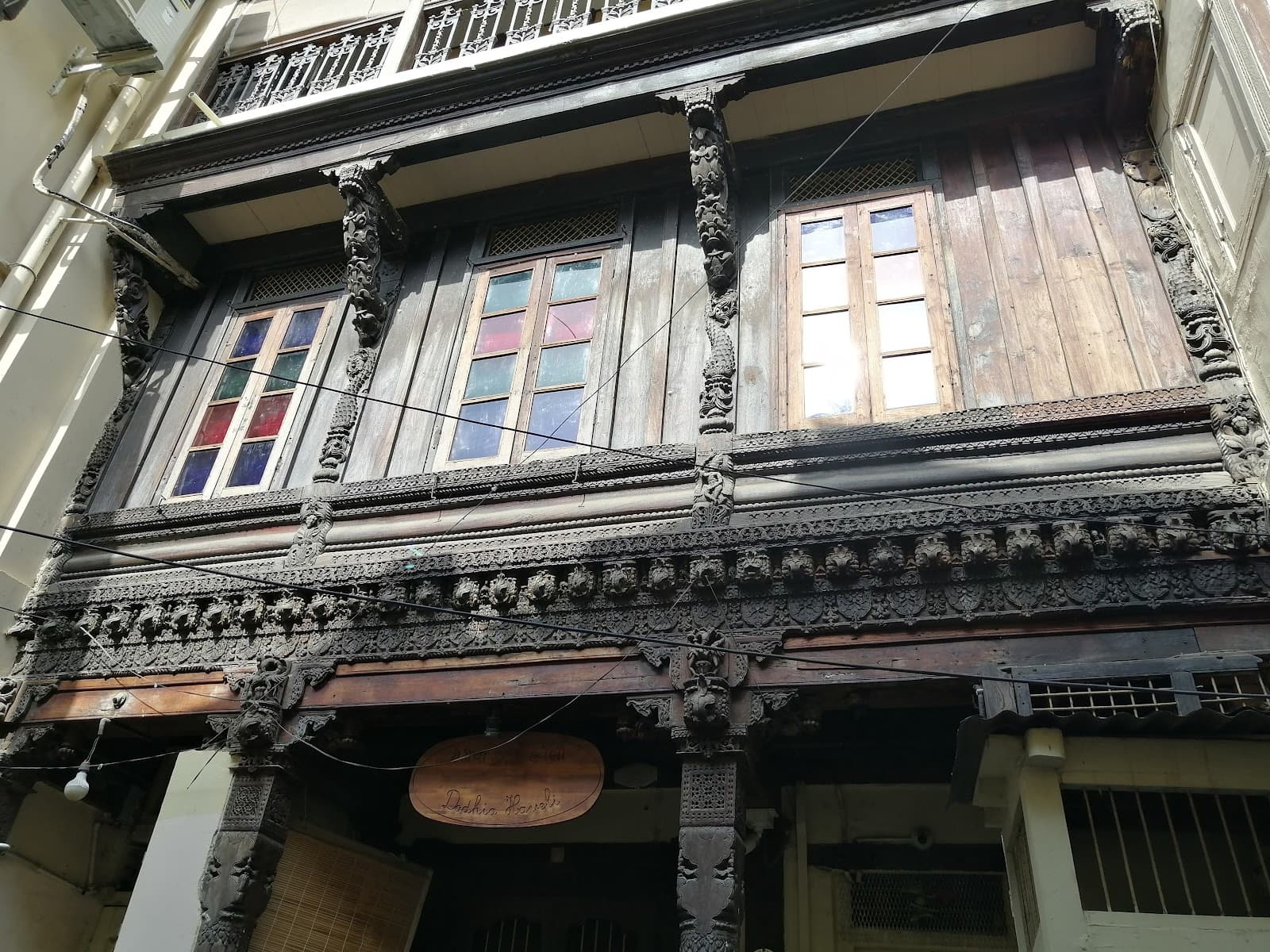
Doshiwada Ni Haveli Ahmedabad
The intricately carved wooden facade of Doshiwada Ni Haveli, nestled within the dense urban fabric of Ahmedabad’s old city, drew me in like a moth to a flame. Having spent years immersed in the stone-carved grandeur of South Indian temples, I was eager to experience the unique architectural language of this Gujarati haveli. The sheer scale of the wooden artistry was immediately striking. Unlike the imposing stone gopurams of the south, Doshiwada’s charm lay in its intimate details, a delicate tapestry woven in wood. Stepping through the imposing carved doorway, I was transported to another era. The pol, or traditional neighborhood, felt worlds away from the bustling city outside. The haveli’s courtyard, a central organizing principle, was bathed in soft, filtered light. This open-to-sky space, a feature I found reminiscent of the temple prakarams of the south, served as the heart of the house, a place for social gatherings and daily life. The surrounding balconies, supported by ornate brackets and pillars, offered glimpses into the private lives of the families who once resided here. The woodwork was breathtaking. Every surface, from the massive supporting beams to the delicate jharokhas (overhanging enclosed balconies), was adorned with intricate carvings. Unlike the narrative reliefs found in South Indian temples, the carvings here were predominantly floral and geometric, showcasing a different aesthetic sensibility. Peacocks, elephants, and other auspicious motifs were interspersed within the patterns, adding a touch of whimsy and symbolism. I noticed the recurring use of the “tree of life” motif, a symbol of prosperity and continuity, echoing the reverence for nature found in many Indian architectural traditions. The play of light and shadow within the haveli was mesmerizing. The carved wooden screens, or jalis, filtered the harsh Gujarat sun, casting dappled patterns on the polished floors. These jalis, while aesthetically pleasing, also served a practical purpose, allowing for ventilation while maintaining privacy – a clever architectural solution to the region’s hot climate. I was reminded of the pierced stone screens found in some South Indian temples, which served a similar function. As I ascended the narrow wooden staircases, the stories of the haveli unfolded. The upper floors, once the private domain of the family, revealed intimate details of their lives. The small rooms, interconnected by narrow passages, spoke of a close-knit community. The remnants of painted murals on the walls, though faded with time, hinted at the vibrant colors that once adorned these spaces. I was particularly fascinated by the hidden niches and secret compartments built into the walls, perhaps used for storing valuables or important documents. Doshiwada Ni Haveli, though different in material and style from the temples I was accustomed to, resonated with the same spirit of craftsmanship and attention to detail. The use of locally sourced wood, the intricate joinery techniques, and the adaptation of the design to the local climate all spoke of a deep understanding of the environment and a commitment to sustainable building practices. The haveli wasn't just a building; it was a living testament to the rich cultural heritage of Gujarat. It was a reminder that architectural beauty can be found not just in monumental structures, but also in the intimate spaces of everyday life. Leaving the cool confines of the haveli and stepping back into the bustling streets of Ahmedabad, I carried with me a newfound appreciation for the diversity and richness of Indian architecture.

Sheetla Mata Mandir Gurugram
The midday sun beat down on Gurugram, a stark contrast to the cool, shadowed interior of the Sheetla Mata Mandir. This wasn't a UNESCO World Heritage Site, a fact that surprised many given its historical and cultural significance. My journey across India to document every UNESCO site had brought me here, to this vital pilgrimage center, driven by curiosity and a desire to understand its enduring appeal. The temple, dedicated to Sheetla Mata, the goddess of smallpox, stands as a testament to a time when disease held a powerful sway over human life. Unlike the ornate and vibrant temples of South India I'd grown accustomed to, Sheetla Mata Mandir presented a different aesthetic. The structure, primarily built from brick and stone, exuded a sense of aged resilience. The lack of elaborate carvings or bright colours initially struck me, but as I spent more time within the complex, I began to appreciate the understated elegance. The simplicity felt purposeful, almost reverential, focusing the attention on the spiritual aspect rather than visual grandeur. The main entrance, a relatively unassuming archway, led into a large courtyard. Devotees, many carrying offerings of cooked food – a unique tradition of this temple – moved with a quiet determination. The air hummed with a low murmur of prayers and the clanging of bells. I observed families sharing meals on the temple grounds, the food having been offered to the goddess and then consumed as 'prasad', a blessed offering. This communal act of eating, blurring the lines between the sacred and the everyday, was a powerful display of faith and community. Inside the sanctum sanctorum, the atmosphere was palpably different. The dimly lit space, illuminated by flickering oil lamps, held an air of mystery and ancient power. The idol of Sheetla Mata, adorned with simple garments and jewellery, was a focal point for intense devotion. I watched as devotees whispered their prayers, their faces etched with hope and reverence. The absence of opulent decoration within the sanctum further amplified the sense of raw, unfiltered faith. The architecture of the temple, while not as visually striking as some of the UNESCO sites I've visited, held its own unique charm. The use of local materials, the simple lines, and the open courtyard all contributed to a sense of groundedness, a connection to the earth. I noticed intricate brickwork in certain sections, showcasing the skill of the original builders. The temple's design seemed to prioritize functionality and accessibility over elaborate ornamentation, reflecting its role as a place of pilgrimage for people from all walks of life. One of the most striking aspects of my visit was the palpable sense of continuity, a bridge between the past and the present. While the temple has undoubtedly undergone renovations over the centuries, the core beliefs and practices seemed to have remained unchanged. This resilience, this unwavering faith in the face of modern advancements in medicine, was a testament to the deep-rooted cultural significance of Sheetla Mata. Leaving the Sheetla Mata Mandir, I carried with me a deeper understanding of faith and its diverse expressions. While not a UNESCO site, this temple offered a unique glimpse into the living history and cultural fabric of India. It served as a reminder that heritage isn't just about grand monuments and breathtaking architecture, but also about the intangible threads of belief, tradition, and community that bind a people together. The experience underscored the importance of exploring beyond the designated lists and discovering the hidden gems that offer a richer, more nuanced understanding of a place and its people.
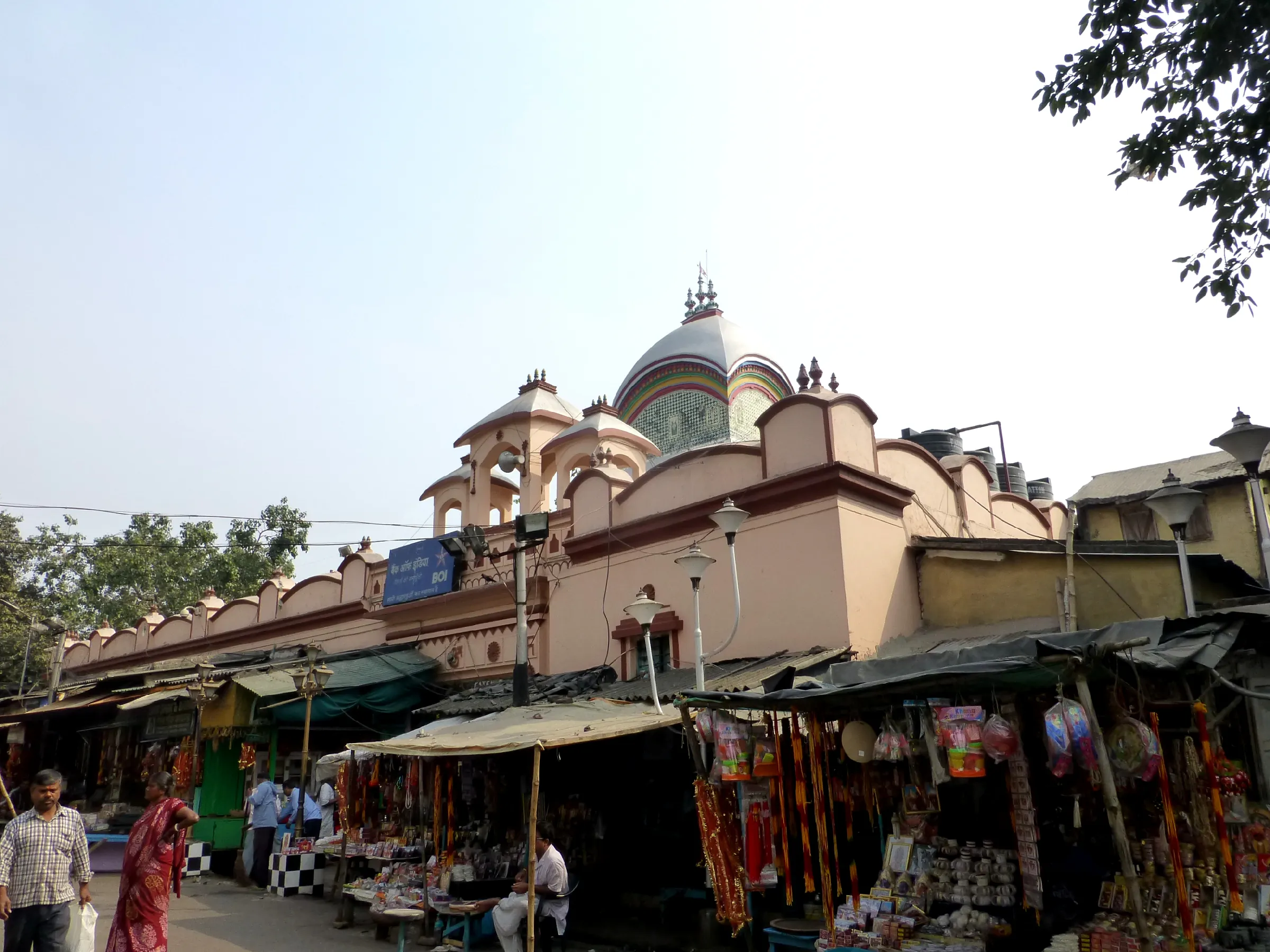
Kalighat Kali Temple Kolkata
The air hung thick and heavy, not just with the Kolkata humidity, but with a palpable sense of devotion. Garlands of marigolds and hibiscus blazed against the backdrop of the soot-stained Kalighat Kali Temple, their vibrant colours a stark contrast to the aged brick and stone. This wasn't the pristine, symmetrical beauty of the Rajput forts I'm accustomed to back in Rajasthan. This was something rawer, more visceral. The temple, nestled in the heart of Kolkata, pulsated with a chaotic energy. A cacophony of sounds – chanting, bells, the hawkers’ cries – rose and fell like the tide. Navigating the narrow lanes leading to the main shrine was an experience in itself. The air was thick with incense, and the ground, slick with offerings and the remnants of rituals. It was a sensory overload, a far cry from the ordered serenity of, say, the Mehrangarh Fort. The architecture of the Kalighat temple is distinct. Unlike the imposing sandstone structures of Rajasthan, this temple is relatively modest in size. The current structure, built in the 19th century, features a distinctive Bengali style with a curved, sloping roof known as a *dochala*. The main shrine, however, felt ancient, imbued with centuries of worship. The idol of Kali herself is striking. Her jet-black face, adorned with a garland of skulls and a protruding tongue, is both terrifying and mesmerizing. Her three eyes seemed to pierce through the throngs of devotees, acknowledging their prayers and anxieties. What struck me most was the sheer intensity of the faith on display. Devotees, from all walks of life, pressed forward, their faces etched with a mixture of hope and desperation. Some offered flowers, others coconuts, still others whispered fervent prayers. The priests, their foreheads smeared with ash, performed rituals with practiced ease, their chants adding to the hypnotic rhythm of the temple. I watched a young woman, her eyes brimming with tears, offer a lock of her hair to the goddess. It was a powerful moment, a testament to the deep-seated belief that permeates this place. This wasn't just a temple; it was a living, breathing entity, a conduit between the human and the divine. The experience was further intensified by the presence of the *pandits*, the temple priests. While their role is integral to the rituals, their aggressive solicitation of donations felt jarring. It was a stark reminder of the commercialization that often accompanies religious fervor, a phenomenon not entirely unfamiliar in Rajasthan's tourist-heavy temples, but here it felt more pronounced, more intertwined with the very fabric of worship. Stepping back from the immediate crush of the main shrine, I noticed the smaller shrines dedicated to other deities scattered around the complex. Each had its own unique energy, its own dedicated following. The temple complex, despite its chaotic nature, felt like a microcosm of the city itself – a melting pot of different beliefs and practices, all coexisting within a shared space. As I left the Kalighat Kali Temple, the chanting and the scent of incense still clinging to my clothes, I felt a profound sense of awe. This wasn't just a visit to a temple; it was an immersion into a different world, a world where faith and tradition reign supreme. It was a world far removed from the majestic silence of Rajasthan's desert forts, yet equally captivating, equally powerful. The experience served as a potent reminder of the diverse tapestry of India's spiritual landscape, a tapestry woven with threads of devotion, ritual, and unwavering belief.
Quick Links
Plan Your Heritage Journey
Get personalized recommendations and detailed visitor guides