Has Inheritage Foundation supported you today?
Your contribution helps preserve India's ancient temples, languages, and cultural heritage. Every rupee makes a difference.
Secure payment • Instant 80G certificate
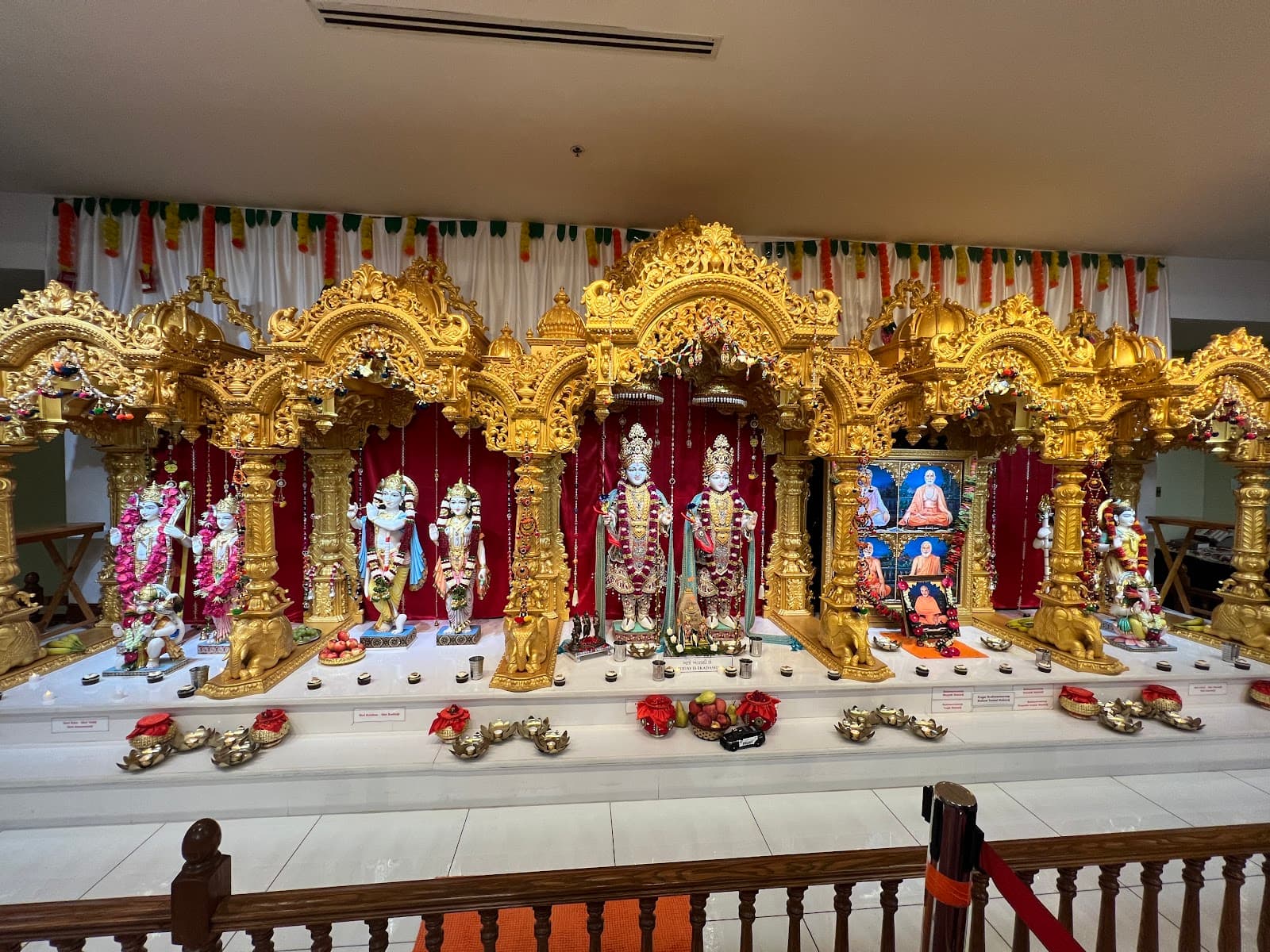
Shree Swaminarayan Mandir Scarborough
Shree Swaminarayan Mandir Scarborough is dedicated to Bhagwan Swaminarayan and anchors Scarborough’s Markham Road corridor as a vibrant spiritual, cultural, and humanitarian hub within the ISSO Canada network since its 2004 consecration ([1][2]). The mandir opens daily 7:00 AM-12:00 PM and 4:00 PM-9:00 PM, with sabha evenings, youth assemblies, seniors’ yoga, and Gujarati school filling the classrooms and auditorium throughout the week ([1][3]). Reception volunteers manage RFID sign-in, shoe storage, seva booking, and parking rotation, then guide visitors through colour-coded paths to the marble mandir hall, cafeteria, or cultural wing. The vegetarian kitchen prepares annadhanam, Food Bank hampers, and community tiffin deliveries while maintaining halal-free compliance, allergen logs, and composting streams. Accessibility features include heated ramps, an elevator, tactile markers, quiet rooms, captioned signage, and hearing loops in the main hall; digital screens and WhatsApp alerts broadcast aarti times, traffic advisories, and volunteer rosters. BAS dashboards monitor HVAC, humidity, lighting, and security, while on-site training keeps emergency wardens, health professionals, and broadcast crews ready for Diwali Annakut, Janmashtami, Swaminarayan Jayanti, Canada Day seva, and city town halls alongside daily darshan ([2][3]).
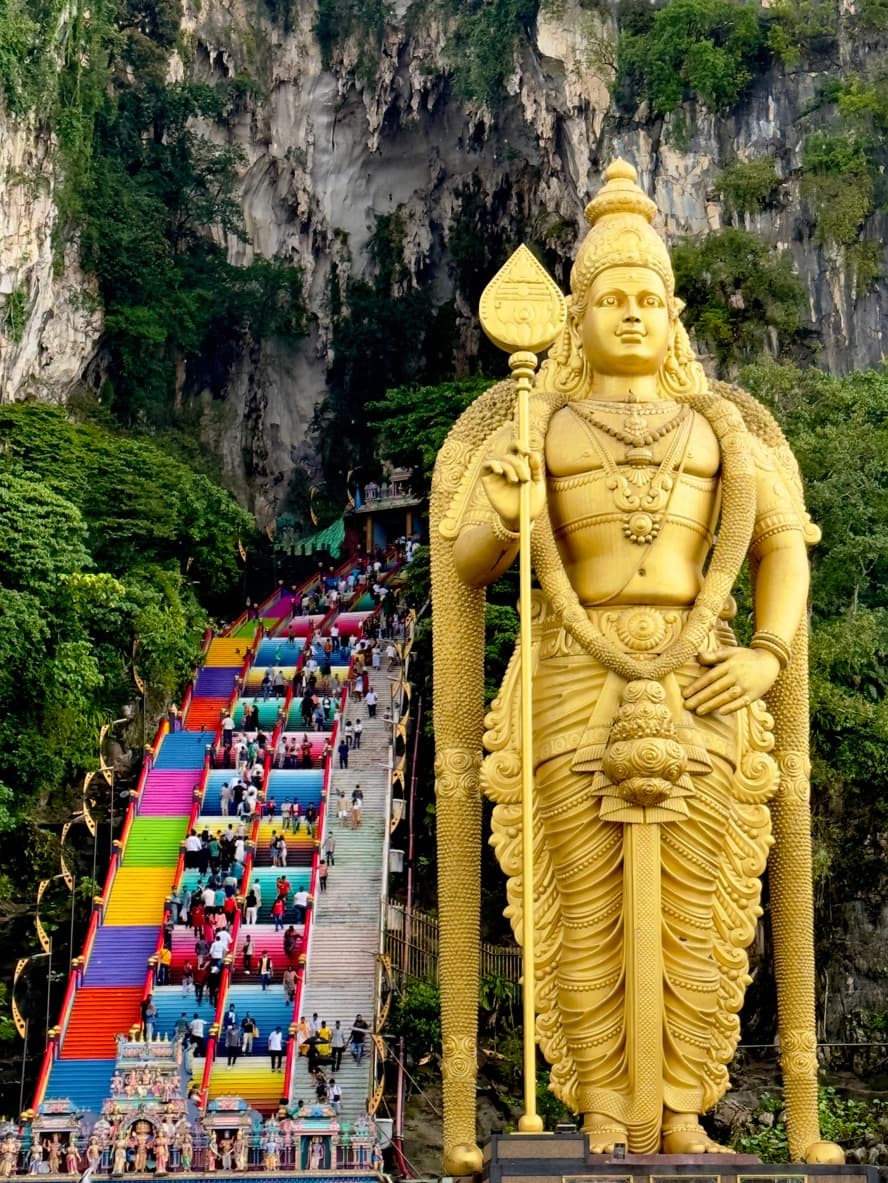
Batu Caves Sri Subramaniar Swamy Temple Selangor
Crowning a limestone karst formation 15 kilometers north of Kuala Lumpur, the Sri Subramaniar Swamy Temple at Batu Caves attracts millions annually to venerate Lord Murugan ([1][2]). Integrating Dravidian temple architecture with natural caves estimated to be 400 million years old, the site presents a unique synthesis of faith and geology ([1]). Ascending 272 vibrantly painted steps, devotees encounter shrines dedicated to Vinayagar, Valli, Deivayanai, and Kasi Viswanathar before reaching the main sanctum in a 90-meter-high cave ([1]). Granite and sandstone blocks, meticulously carved, form the Vimana (temple tower) and Mandapa (pillared hall), housing Murugan's sacred Vel (divine spear) ([3]). The temple adheres to daily rituals, including six Kala Pujas (daily worship rituals) and weekly Abhishekam (sacred bathing) ([1]). During Thaipusam, devotees undertake Kavadi (ceremonial burdens) and Pal Kudam (milk pot) processions, showcasing their devotion ([2]). The vibrant colors and intricate detailing reflect the rich artistic traditions of Dravidian temple architecture ([4]). Furthermore, the foothills accommodate a multipurpose hall, cultural museum, and visitor center, enhancing the visitor experience ([1]). The temple's construction, dating back to 1890 CE during the Colonial Period, demonstrates the enduring influence of Indian architectural styles in Southeast Asia ([5]). The integration of limestone, granite, reinforced concrete, steel, copper Kalashas, and timber illustrates the adaptation of traditional methods to the local environment ([3]). Since 2019, the temple has integrated technology to monitor the cave environment and manage visitor flow, blending spiritual traditions with modern conservation efforts ([3]). This fusion of faith, architecture, and natural wonder establishes Batu Caves as a significant cultural landmark ([2]).
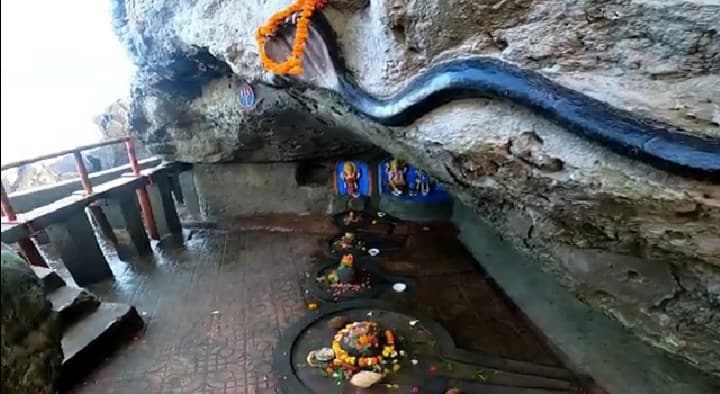
Gangeshwar Mahadev Temple Fudam Diu
The roar of the Arabian Sea was a constant, rhythmic backdrop to the serenity I found at the Gangeshwar Mahadev Temple. Tucked away near the fishing village of Fudam in Diu, this cluster of five ancient Shiva shrines isn't your typical grand temple complex. Carved directly into a cliff face overlooking the churning ocean, they feel intrinsically linked to the raw power of nature. Having explored countless temples across North India, from the towering peaks of the Himalayas to the plains of the Gangetic belt, I can confidently say this one holds a unique charm. The path down to the temples is a gentle descent, winding through weathered rocks smoothed by centuries of sea spray and wind. As I approached, the first thing that struck me was the seamless integration of the shrines with the natural landscape. It's as if the rock itself had yielded to the devotion of the artisans, revealing the deities within. Each of the five shrines is dedicated to Lord Shiva, represented by intricately carved Shiva lingams housed within these rock-cut chambers. Unlike the polished marble and ornate carvings I've seen in many North Indian temples, these lingams are more rugged, almost primal in their presentation. They are perpetually bathed in the cool, salty spray of the ocean waves that crash against the rocks just meters away, creating a truly mesmerizing spectacle. The architecture is simple yet striking. The shrines are not enclosed by elaborate structures, but rather open to the elements, protected only by the overhanging cliff face. This minimalist approach allows the natural beauty of the location to take center stage. The rock face itself forms the walls and ceiling of each shrine, and the constant interplay of light and shadow adds a dramatic dimension to the experience. I noticed intricate carvings adorning the entrances to some of the shrines, depicting various deities and mythological figures. While weathered by time and the elements, these carvings still bear testament to the skill and devotion of the artisans who created them centuries ago. The air at Gangeshwar Mahadev is thick with the scent of the sea and the murmur of prayers. Local fishermen, their faces etched with the wisdom of the ocean, often stop by to offer their respects before heading out to sea. This tangible connection between the temple and the local community is something I find deeply moving. It's a reminder that these sacred spaces are not just relics of the past, but living, breathing entities that continue to play a vital role in the lives of the people. I spent hours exploring the nooks and crannies of the temple complex, captivated by the interplay of nature and spirituality. The rhythmic crashing of the waves against the rocks, the salty breeze on my face, and the hushed reverence of the devotees created an atmosphere unlike any I've experienced before. I sat for a while, simply observing the waves and contemplating the enduring power of faith. One particular detail that caught my eye was the presence of small, naturally formed pools of seawater within the rock formations near the shrines. Locals believe that these pools hold sacred water and often use it for ritual cleansing. This intimate connection with the natural elements further reinforces the unique character of this temple. As the sun began to set, casting a warm golden glow over the Arabian Sea, I reluctantly made my way back up the path, leaving the roar of the ocean and the serenity of Gangeshwar Mahadev behind. The experience was more than just a visit to a temple; it was a profound encounter with the raw power of nature and the enduring spirit of devotion. It’s a testament to the fact that sometimes, the most powerful spiritual experiences are found not in grand structures, but in the quiet embrace of nature itself. This is a place I will undoubtedly revisit, drawn back by the unique blend of natural beauty and spiritual significance that sets it apart from any other temple I've encountered in my travels across North India.
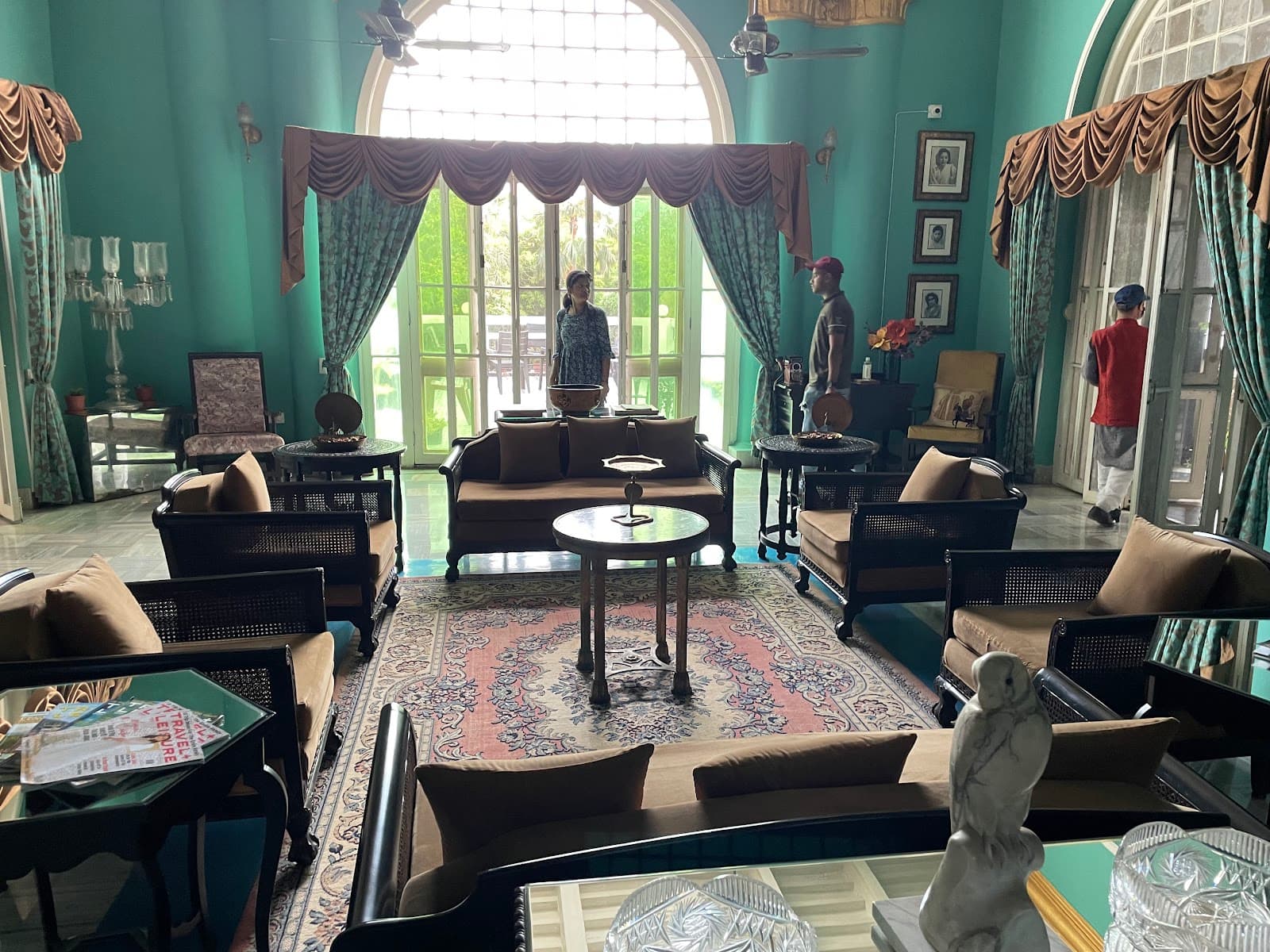
Baripada Palace Baripada
Nestled in Bhanjpur, Mayurbhanj, the Baripada Palace embodies an intriguing confluence of Kalinga architectural traditions and British colonial influences ([1][2]). Commissioned in 1898 by the Bhanja rulers, this palace served as the heart of the princely state of Mayurbhanj ([3]). The palace's facade, predominantly red brick, utilizes laterite stone and mortar, illustrating the adoption of European styles by Indian royalty during the British Colonial Period ([1][4]). The expansive complex signifies the Bhanja dynasty's regional power ([2]). Intricate carvings embellish the palace walls, showcasing terracotta art with floral motifs and mythological figures, offering insights into the artistic preferences of the era ([3][5]). This terracotta work provides a unique textural dimension, contrasting with the stone carvings prevalent in other regions ([4]). Arched windows and decorative balustrades further accentuate the colonial design elements integrated into the palace's structure ([1]). Within the Durbar Hall, vestiges of ornate chandeliers and intricate wall paintings evoke the opulent lifestyle of the former rulers ([2][3]). Vastu Shastra principles, the ancient Indian science of architecture, likely influenced the palace's layout, though specific textual references remain undocumented for this site. The integration of the palace with its surrounding landscape, including gardens and a small pond, enhances the serene ambiance ([5]). The Baripada Palace stands as a compelling reminder of a bygone era, reflecting the rich cultural heritage of Odisha ([1]). This architectural marvel provides a glimpse into the socio-political landscape of 19th-century India, where indigenous traditions melded with colonial influences. The palace serves as a museum, preserving and showcasing the history and artistry of the region ([1][2][3]).
Sri Sri Radha Radhanath Temple (Temple of Understanding)
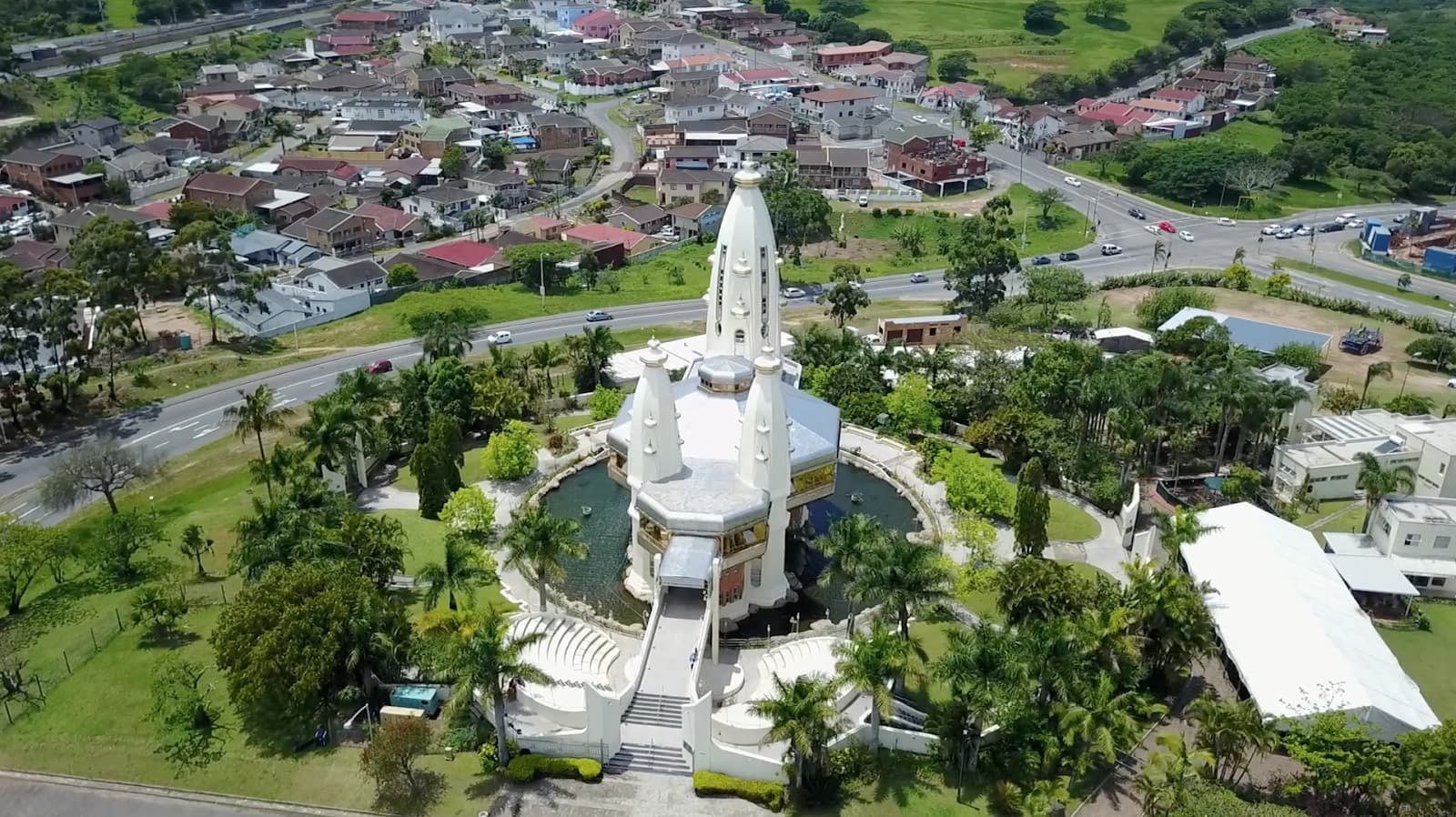
Sri Sri Radha Radhanath Temple—popularly called the Temple of Understanding—opened in 1985 atop Chatsworth’s Lotus Park with a 56-metre triple-domed hall, mirrored ceiling panels, stained glass lotus windows, and marble balustrades that reinterpret classical Indian temple geometry for a modern South African skyline ([1][2]). The ISKCON complex houses the deities Sri Sri Radha Radhanath, Lord Jagannath Baladeva Subhadra, and Sri Sri Gaura-Nitai on a gold-leafed altar backed by Italian marble reliefs; devotees circumambulate beneath parabolic arches while chandeliers reflect across the glass mosaic vault. Daily worship begins 4:30 AM with mangala-arati and extends through twelve services culminating in night-time shayana arati accompanied by Durban’s signature kirtan ensembles. Beyond ritual, the 3.5-hectare campus functions as a social engine: a commercial-grade kitchen cooks up to 15,000 vegetarian meals weekly for the Food For Life programme, the Bhaktivedanta College offers spiritual education, yoga, counselling, and youth mentorship, and the Govinda’s restaurant and bakery anchor a vegetarian culinary tradition for the city. The temple’s amphitheatre hosts annual Festival of Chariots cultural productions, multi-faith dialogues, and classical Indian arts festivals broadcast worldwide via ISKCON's media network ([1][2]).
Purandar Fort Pune
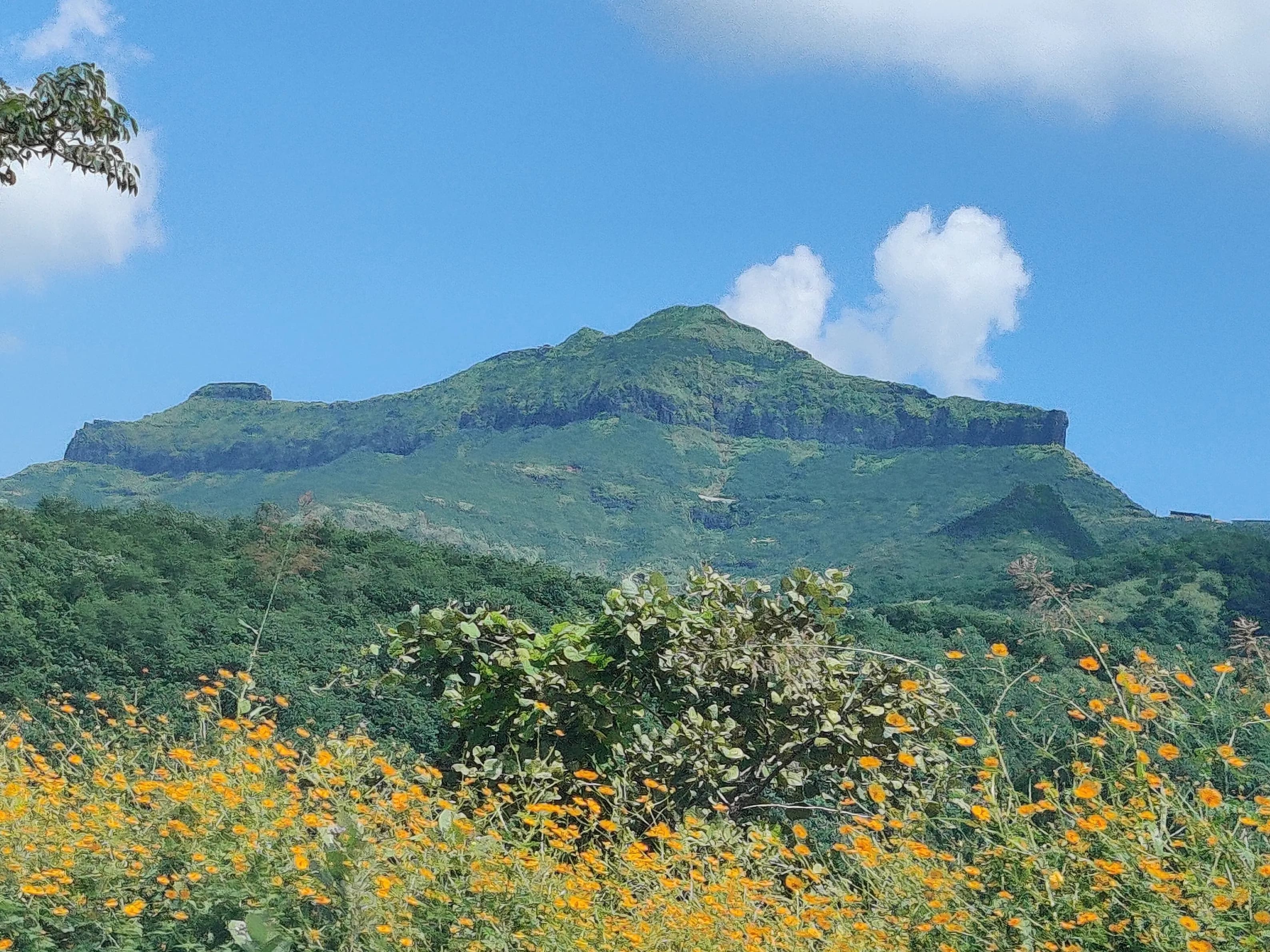
The wind whipped at my kurta as I climbed the final stretch to Purandar Fort, perched high above the sprawling plains surrounding Pune. The air, thin and crisp, carried with it the whispers of history, a palpable sense of the Maratha empire that once commanded these heights. My camera, a constant companion, felt heavy in my hand, almost inadequate to capture the grandeur unfolding before me. Purandar isn't just one fort, but two – Purandar proper and Vajragad, its slightly lower, twin-peaked companion. This duality, this mirroring of structures, immediately captured my attention. The climb itself was a journey through time, the rough-hewn basalt steps worn smooth by centuries of footfalls. I paused often, not just to catch my breath, but to absorb the changing perspectives of the landscape below – the patchwork quilt of fields, the distant glint of the Mula-Mutha river, the tiny villages scattered like pebbles across the valley. Reaching the top, I was greeted by the imposing Kedareshwar Temple, its weathered stone a testament to the passage of time. The intricate carvings, though softened by erosion, still spoke of a skilled hand, a devotion poured into every chisel stroke. Unlike the opulent temples of Madhya Pradesh, this one felt austere, almost military in its simplicity, reflecting perhaps the strategic importance of this location. The fort itself is a fascinating blend of natural defenses and carefully planned fortifications. The steep cliffs form natural ramparts, while the strategically placed bastions and gateways speak of a sophisticated understanding of military architecture. I spent hours exploring the ruins, my lens drawn to the remnants of the past. The crumbling walls, the broken arches, the silent cannons – each element told a story. I was particularly intrigued by the 'Bini Darwaza', a hidden escape route carved into the cliff face. Imagining the hurried footsteps of soldiers and royalty using this secret passage during times of siege sent a shiver down my spine. The view from the ramparts was breathtaking, a panoramic sweep of the surrounding countryside. It was easy to see why this location was so fiercely contested, a strategic vantage point commanding the trade routes and the surrounding territories. The most poignant moment of my visit, however, was at the site of Shivaji Maharaj's son, Sambhaji’s birth. A small, unassuming structure marks the spot, but the historical weight of the location was immense. Here, within these very walls, a key figure in Maratha history was born. It was a humbling experience, a reminder of the human stories woven into the fabric of these ancient stones. As the sun began its descent, casting long shadows across the fort, I made my way down, my memory card filled with images, my mind buzzing with impressions. Purandar is more than just a fort; it's a living testament to the resilience and ingenuity of the Maratha empire. It's a place where history whispers in the wind, where the stones themselves hold memories, and where the landscape unfolds like a tapestry woven with the threads of time. My photographs, I hope, will capture a fraction of this magic, a glimpse into the soul of this magnificent historical site. But the true essence of Purandar, the feeling of standing on the precipice of history, is something that can only be experienced firsthand.
Shivneri Fort Junnar
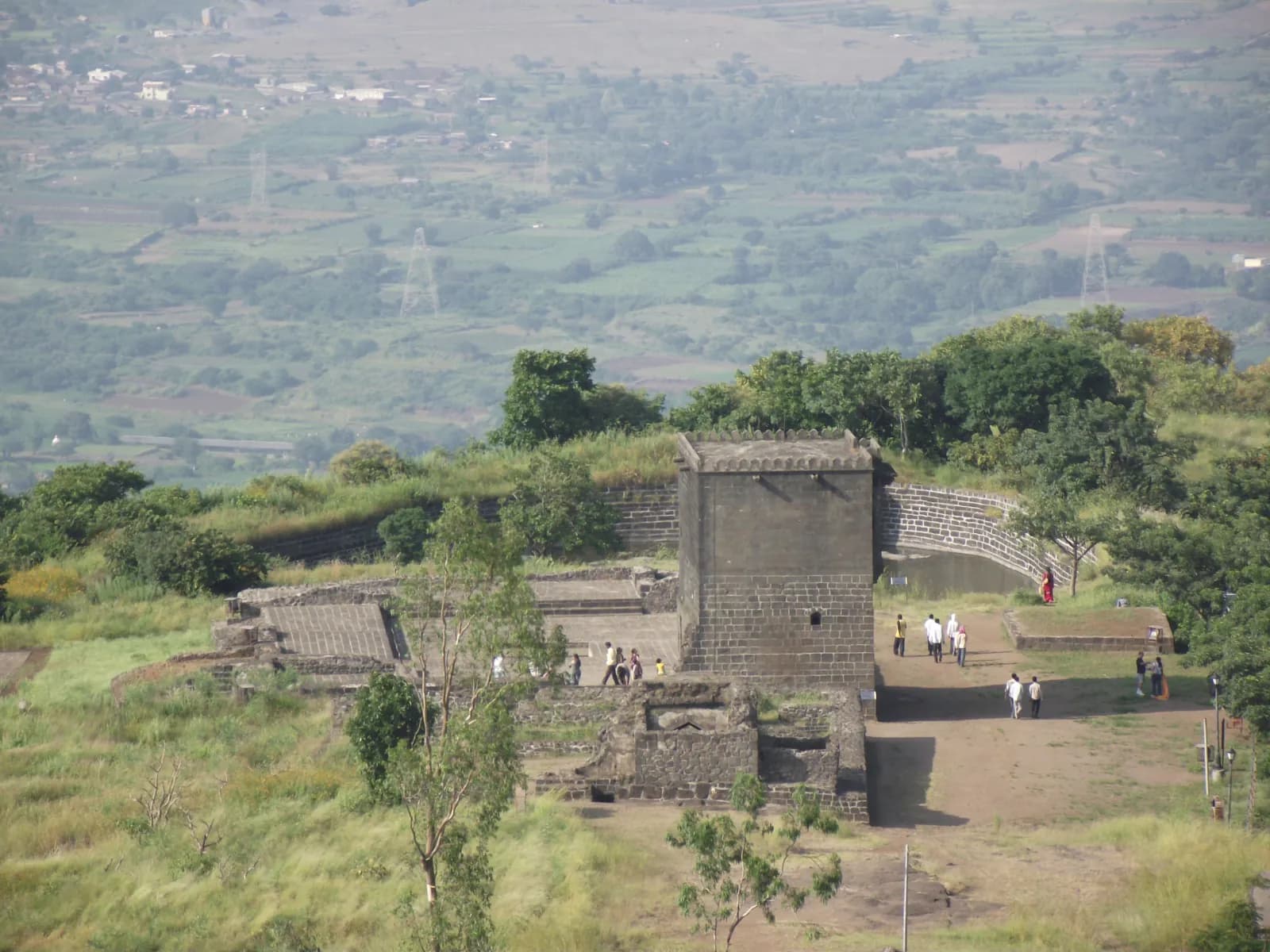
The imposing basalt ramparts of Shivneri Fort, rising dramatically from the Deccan plateau, held me captivated from the moment I arrived in Junnar. Having spent years immersed in the granite wonders of South Indian temple architecture, I was eager to experience this different, yet equally compelling, facet of India's heritage. The fort, a formidable military stronghold for centuries, offered a fascinating glimpse into a world shaped by strategic necessities rather than the spiritual aspirations that drove the Dravidian temple builders. The ascent to the fort itself was an experience. The winding path, carved into the rock, felt like a journey back in time. Unlike the elaborate gopurams and mandapas I was accustomed to, the entrance to Shivneri was a study in practicality. The fortifications, though lacking the ornate carvings of southern temples, possessed a raw beauty, their strength evident in the sheer thickness of the walls and the clever placement of bastions. The strategically positioned 'Shivai Devi' and 'Maha Darwaja' gates, with their sturdy wooden doors reinforced with iron, spoke volumes about the fort's defensive history. Within the fort walls, a different world unfolded. The rugged terrain enclosed a surprisingly self-sufficient community. Water tanks, carved meticulously into the rock, showcased impressive water management techniques, a stark contrast to the temple tanks of the south, which often served ritualistic purposes as well. The 'Badami Talav,' with its intricate stepped sides, was a particularly striking example. The granaries, built to withstand sieges, were another testament to the fort's pragmatic design. The architectural style within the fort was a blend of various influences. While the overall structure was dictated by military needs, glimpses of later architectural embellishments were visible, particularly in the residential areas. The 'Shivai Mata Mandir,' where Chhatrapati Shivaji Maharaj was born, held a special significance. While simpler than the grand temples of the south, it possessed a quiet dignity, its stone construction echoing the fort's overall aesthetic. The carvings on the pillars and lintels, though less intricate than the temple sculptures I was familiar with, displayed a distinct local style. One of the most striking features of Shivneri Fort was its integration with the natural landscape. The architects had skillfully utilized the natural contours of the hill, incorporating the rock formations into the fort's defenses. This symbiotic relationship between architecture and nature was a recurring theme, reminding me of the hilltop temples of South India, where the natural surroundings often played a crucial role in the temple's design and symbolism. Exploring the 'Ambarkhana,' the grain storage, and the 'Kalyan Buruj,' I couldn't help but compare the ingenuity of the Maratha military architects with the temple builders of the south. While the latter focused on creating spaces that inspired awe and devotion, the former prioritized functionality and defense. The lack of elaborate ornamentation at Shivneri, however, did not diminish its architectural merit. The fort's strength lay in its simplicity and its seamless integration with the landscape. My visit to Shivneri Fort was a powerful reminder that architectural brilliance can manifest in diverse forms. While my heart remains deeply connected to the ornate temples of South India, the stark beauty and strategic ingenuity of Shivneri Fort offered a valuable new perspective on India's rich architectural heritage. The echoes of history resonated within those basalt walls, narrating tales of resilience, strategy, and a deep connection to the land. It was an experience that broadened my understanding of Indian architecture and left me with a profound appreciation for the diverse expressions of human ingenuity.
Kumbhalgarh Fort Rajsamand
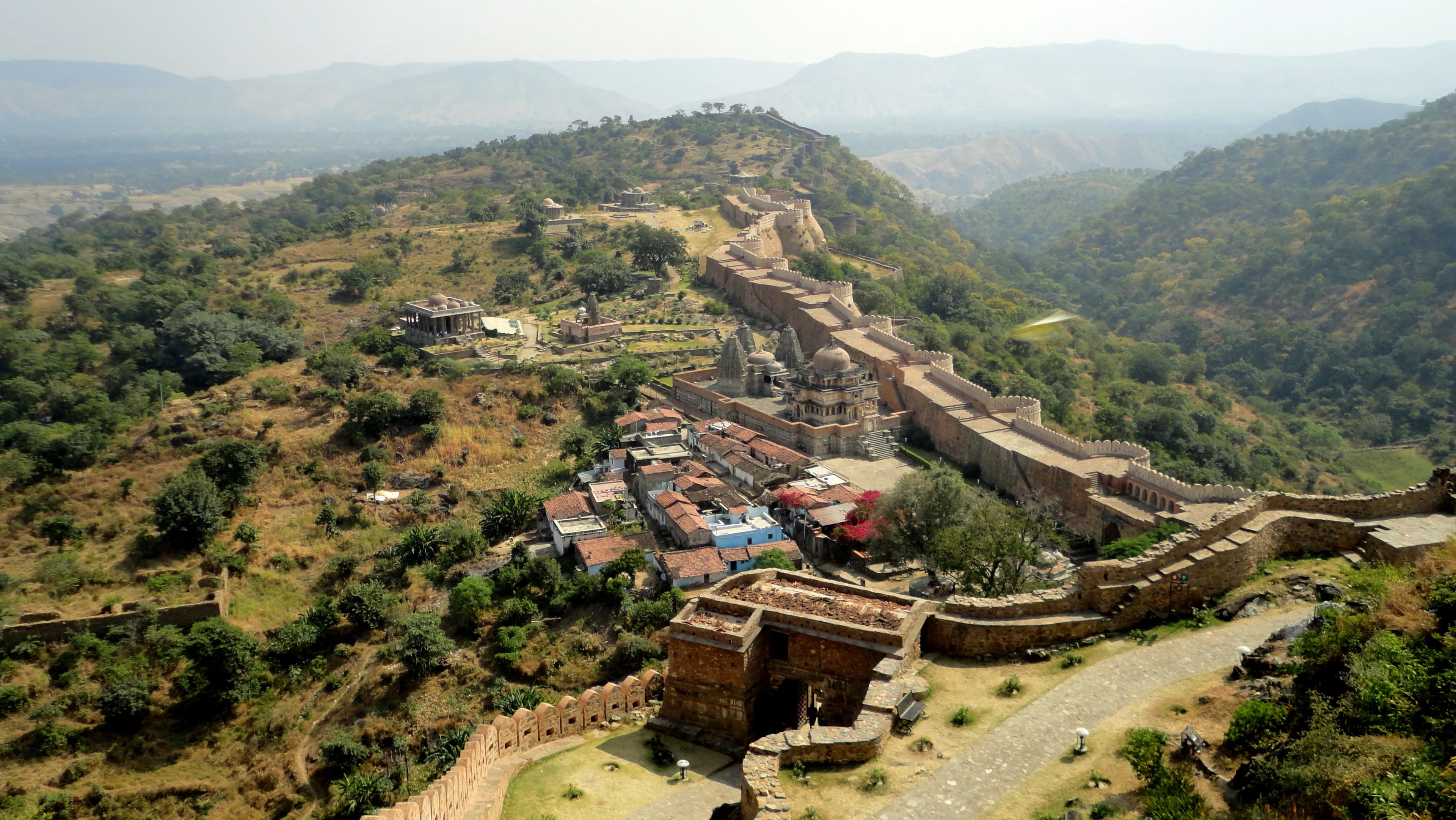
The wind whipped around me, carrying whispers of history as I stood atop Kumbhalgarh Fort, the formidable sentinel of the Aravalli range. Stretching as far as the eye could see, the ramparts snaked across the mountaintops, a testament to Rana Kumbha's ambition and the architectural prowess of the 15th century. They say the wall is so thick that eight horses could ride abreast along it – and having walked a section myself, I can readily believe it. The sheer scale is breathtaking. It's no wonder they call it the "Great Wall of India." My visit began at the main gate, Aret Pol, a sturdy structure bearing the scars of numerous sieges. The intricate carvings, though worn by time and weather, still spoke of a rich artistic tradition. Passing through the gate felt like stepping back in centuries, leaving the modern world behind. The climb to the top was steep, the sun beating down mercilessly, but the anticipation spurred me on. Within the fort's embrace lies a complex network of palaces, temples, and gardens. The Badal Mahal, or Cloud Palace, perched at the highest point, offered panoramic views of the surrounding landscape. From this vantage point, I could appreciate the strategic brilliance of the fort’s location. The undulating hills and dense forests would have provided ample warning of approaching armies, making Kumbhalgarh a near-impregnable fortress. The architecture within the fort is a fascinating blend of Rajput and Mughal influences. The jharokhas, or overhanging balconies, are exquisitely carved, offering glimpses of the intricate latticework within. I noticed the recurring motif of the sun and the lotus flower, symbols of power and purity respectively. The palaces, while grand, also possess a certain understated elegance. The use of local stone and the integration of the natural landscape into the design create a sense of harmony and balance. One of the most striking features of Kumbhalgarh is the sheer number of temples within its walls. From the small, almost hidden shrines to the larger, more elaborate structures, they represent a vibrant spiritual life that thrived within the fort's protective embrace. The Neelkanth Mahadev Temple, with its massive Shiva lingam, is particularly impressive. The intricate carvings on the pillars and ceilings are a testament to the skill of the artisans who worked on them. Beyond the grand palaces and temples, I was equally captivated by the smaller details: the worn steps leading to hidden chambers, the remnants of frescoes on the walls, the strategically placed water tanks that sustained life within the fort during sieges. These details offer a glimpse into the daily lives of the people who once inhabited this magnificent structure – the royalty, the soldiers, the artisans, and the common folk. My visit to Kumbhalgarh wasn't just about admiring the architecture and the breathtaking views. It was about connecting with the past, feeling the weight of history, and imagining the lives lived within these ancient walls. The echoes of battles fought, of celebrations held, of empires risen and fallen, seemed to permeate the very stones of the fort. As I descended, leaving the fort behind, I carried with me not just photographs and memories, but a deeper understanding of Rajasthan's rich and complex heritage. Kumbhalgarh is more than just a fort; it's a living testament to human ingenuity, resilience, and the enduring power of the past.
Gonur Depe Karakum Desert Turkmenistan
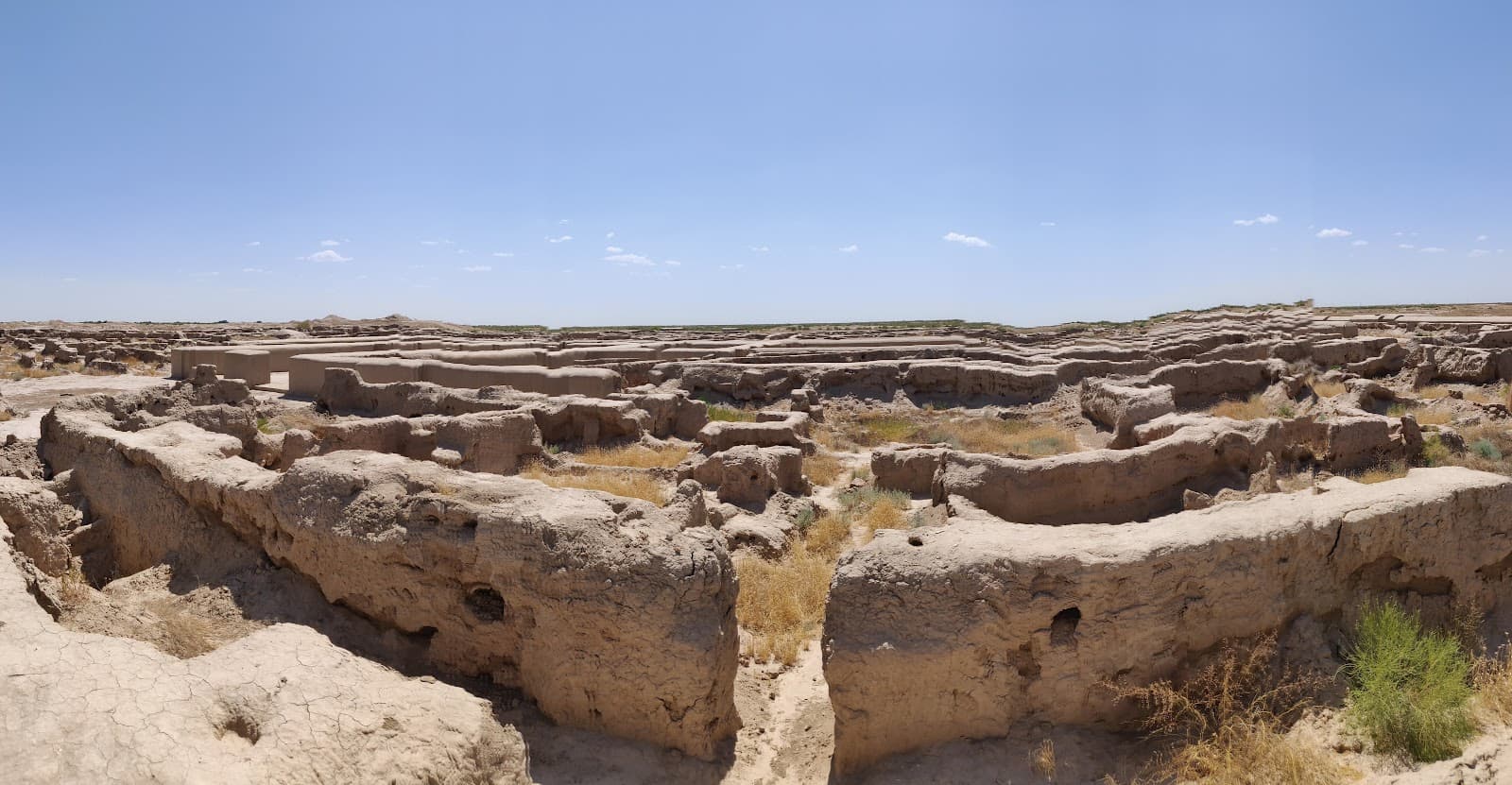
Gonur Depe, dramatically rising from the vast expanse of the Karakum Desert in southeastern Turkmenistan, represents one of the most extraordinary and archaeologically significant Bronze Age sites in Central Asia, dating to the 3rd millennium BCE and serving as the capital of the Bactria-Margiana Archaeological Complex (BMAC), also known as the Oxus Civilization, featuring a sophisticated temple complex with remarkable Vedic parallels that demonstrate the profound transmission of Indian religious and cosmological traditions to Central Asia, creating a powerful testament to the sophisticated synthesis of Indian and Central Asian cultural traditions during the Bronze Age. The site, spanning over 50 hectares and featuring a massive fortified citadel, palace complex, and extensive temple structures, demonstrates the direct transmission of Indian religious and cosmological concepts from the great religious centers of ancient India, particularly Vedic traditions that were systematically transmitted to Central Asia, while the site's most remarkable feature is its sophisticated temple complex featuring fire altars, ritual structures, and architectural elements that demonstrate clear parallels with Vedic fire altars and ritual practices described in ancient Indian texts including the Vedas and Brahmanas. The temple complex's architectural layout, with its central fire altar surrounded by ritual chambers, storage areas, and ceremonial spaces, follows sophisticated planning principles that demonstrate remarkable parallels with Vedic temple planning principles described in ancient Indian texts, while the temple complex's extensive decorative programs including ritual objects, seals, and architectural elements demonstrate the sophisticated synthesis of Indian religious iconography and cosmological concepts with local Central Asian aesthetic sensibilities. Archaeological evidence reveals that the site served as a major center of religious and political power for over 800 years, attracting traders, priests, and elites from across Central Asia, South Asia, and the Middle East, while the discovery of numerous artifacts including seals with motifs that demonstrate clear Indian influences, ritual objects that parallel Vedic practices, and architectural elements that reflect Indian cosmological concepts provides crucial evidence of the site's role in the transmission of Indian religious traditions to Central Asia, demonstrating the sophisticated understanding of Indian religious and cosmological traditions possessed by the site's patrons and religious establishment. The site's association with the BMAC, which had extensive trade and cultural connections with the Indus Valley Civilization and later Indian civilizations, demonstrates the sophisticated understanding of Indian religious traditions that were transmitted to Central Asia, while the site's fire altars and ritual structures demonstrate remarkable parallels with Vedic fire altars and ritual practices that were central to ancient Indian religious traditions. The site has been the subject of extensive archaeological research by Russian archaeologist Viktor Sarianidi and his team, with ongoing excavations continuing to reveal new insights into the site's sophisticated architecture, religious practices, and its role in the transmission of Indian religious traditions to Central Asia, while the site's status as a UNESCO Tentative List site demonstrates its significance as a major center for the transmission of Indian cultural traditions to Central Asia. Today, Gonur Depe stands as a UNESCO Tentative List site and represents one of the most important Bronze Age archaeological sites in Central Asia, serving as a powerful testament to the transmission of Indian religious and cosmological traditions to Central Asia, while ongoing archaeological research and conservation efforts continue to protect and study this extraordinary cultural treasure that demonstrates the profound impact of Indian civilization on Central Asian religious and cultural traditions. ([1][2])
Durga Mandir Varanasi
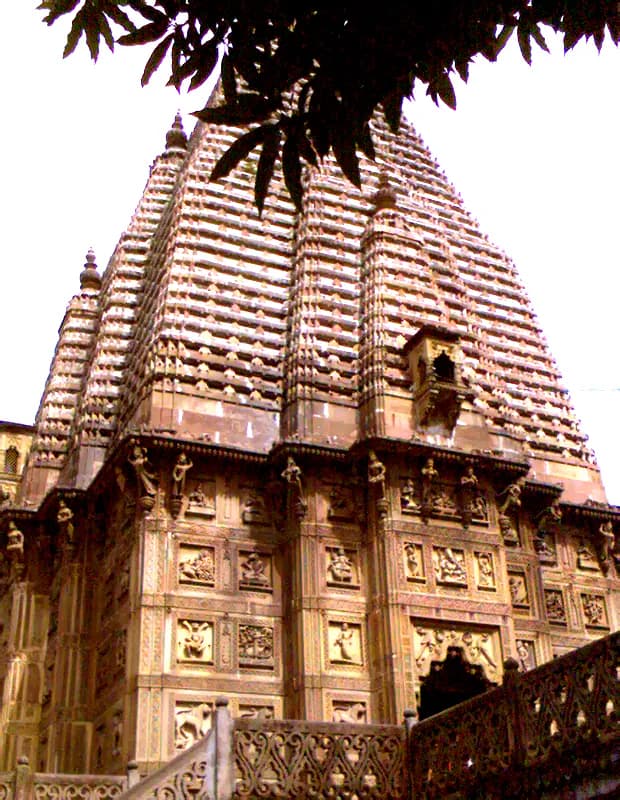
The air vibrates with a palpable energy. Not the frenetic energy of Varanasi’s bustling ghats, but something older, something rooted deeper. Here, nestled amidst the labyrinthine lanes a short boat ride from the main ghats, stands Durga Mandir, a 17th-century temple dedicated to the warrior goddess Durga. Its walls, a vibrant shade of ochre, rise against the sky, a beacon of power and devotion. My journey to Durga Mandir, another tick on my quest to experience every UNESCO site in India, began with a dawn boat ride. The Ganges, still shrouded in the morning mist, held a serene beauty, a stark contrast to the vibrant chaos that would soon erupt on its banks. As we approached Ramnagar, the temple's distinctive profile emerged, its multiple shikharas reaching towards the heavens. Stepping off the boat and onto the dusty lane leading to the temple, I was immediately struck by the sense of anticipation. The air buzzed with the low hum of chanting and the clang of bells. The temple, built on a high plinth, commanded attention. Its Nagara style architecture, typical of North Indian temples, is a feast for the eyes. The multi-tiered shikharas, adorned with intricate carvings, rise in a rhythmic crescendo, culminating in ornate finials. The ochre walls, though weathered by time and the elements, retain their vibrancy, a testament to the enduring faith of the devotees. A large rectangular pond, known as Durga Kund, flanks the temple. Local lore claims it was dug by the goddess herself and is connected to the nearby Ganges. The water, a murky green, reflects the temple’s imposing structure, creating a mesmerizing mirror image. Devotees circumambulate the kund, their prayers mingling with the chirping of birds and the distant sounds of the city. Entering the main sanctum, I was enveloped in a heady mix of incense, flowers, and the fervent energy of prayer. The dimly lit space, illuminated by flickering oil lamps, held an air of mystery. The idol of Goddess Durga, resplendent in red and gold, sits majestically on a lion, her multiple arms holding various weapons. The sheer power emanating from the deity is palpable, leaving an indelible impression on the visitor. While the main shrine is dedicated to Durga, the temple complex also houses smaller shrines dedicated to other deities, including Lord Hanuman and Lord Shiva. Each shrine, though smaller in scale, boasts the same intricate carvings and vibrant colours, showcasing the rich artistic traditions of the region. What struck me most about Durga Mandir wasn't just its architectural grandeur or the palpable devotion of its visitors. It was the seamless blend of history, mythology, and everyday life. Outside the temple walls, life continued at its usual pace. Vendors hawked their wares, children played in the dusty lanes, and cows ambled along, seemingly oblivious to the sacred space they shared. This juxtaposition of the sacred and the mundane, the ancient and the contemporary, is what makes Varanasi, and indeed India, so uniquely captivating. As I left Durga Mandir, the setting sun casting long shadows across the Ganges, I carried with me not just photographs and memories, but a deeper understanding of the enduring power of faith and the rich tapestry of Indian culture. This temple, a vibrant testament to devotion and artistry, is a must-see for anyone seeking to experience the true essence of Varanasi.
Panchmukhi Hanuman Temple Karachi Sindh
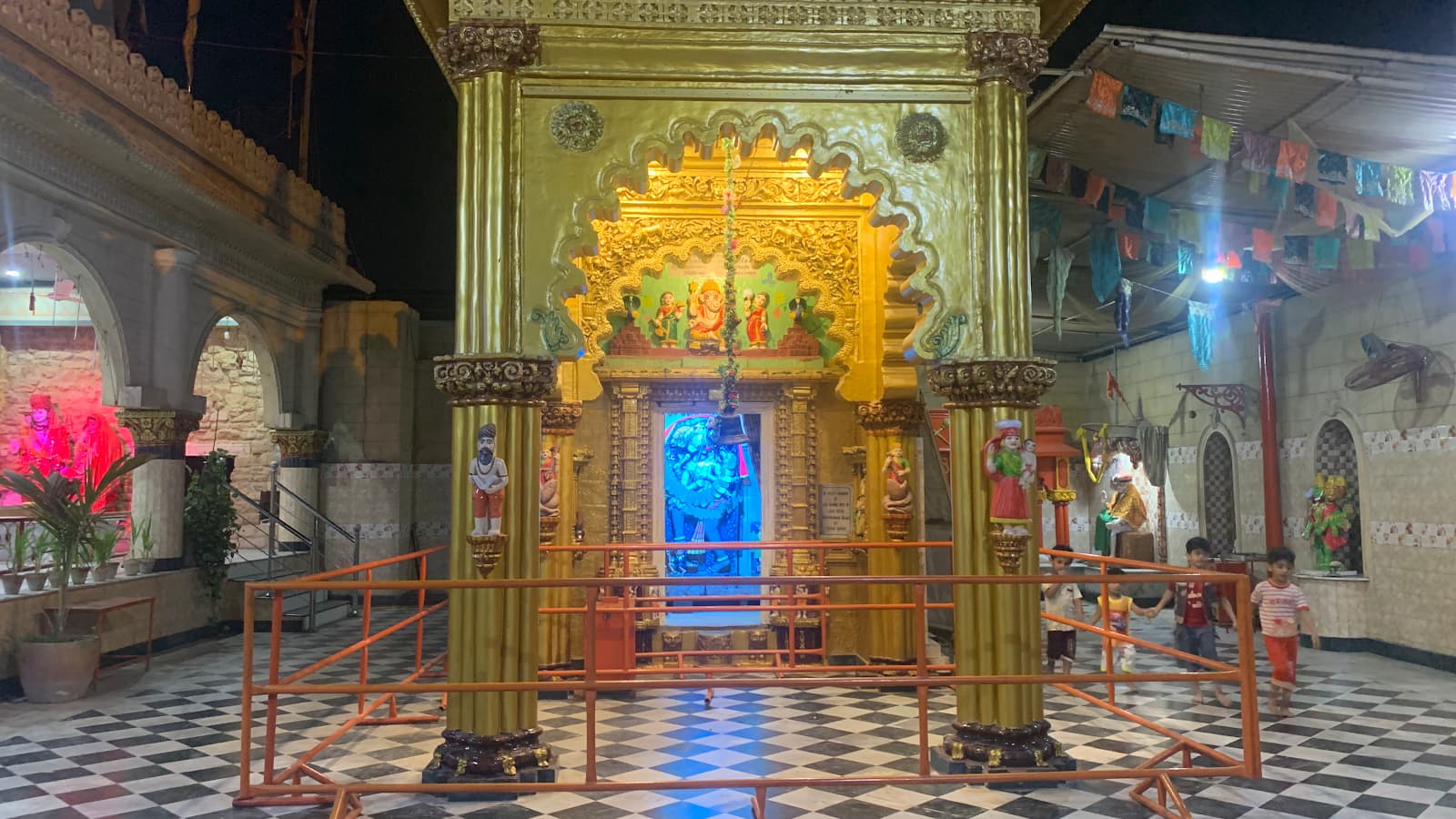
Panchmukhi Hanuman Temple, located in Karachi’s Soldier Bazaar area, represents one of the oldest continuously functioning Hindu temples in Pakistan, with archaeological evidence indicating worship at this site for over 1,500 years, dating to a period when the Sindh region formed an integral part of the greater Hindu rashtra extending across the Indian subcontinent. The temple, dedicated to Lord Hanuman in his Panchmukhi (five-faced) form, houses a unique naturally formed stone idol believed to be over 1,500 years old, making it one of the rarest and most significant Hanuman shrines in the world. The temple complex, originally spanning approximately 2,609 square feet but now reduced due to urban encroachment, features a main sanctum housing the Panchmukhi Hanuman murti, surrounded by subsidiary shrines and a courtyard that has served as a center of Hindu worship in Karachi for over a millennium. The temple’s architectural style reflects the evolution of Hindu temple design in the Sindh region, incorporating elements from ancient Indian, medieval, and colonial periods, with the current structure dating primarily to the 19th and 20th centuries but built upon foundations that may date to the 5th or 6th century CE. Archaeological excavations conducted in 2019 revealed artifacts including eight to nine images of Hanuman estimated to be at least 300 years old, along with evidence of multiple construction phases and ritual deposits indicating continuous worship over centuries. The temple is declared a national heritage site under the Sindh Cultural Heritage (Preservation) Act 1994, recognizing its significance as a symbol of Pakistan’s ancient Hindu heritage. The Panchmukhi Hanuman idol, believed to be naturally formed rather than man-made, is considered extremely rare and sacred, with devotees performing circumambulation (pradakshina) 11 or 21 times as part of their worship. The temple serves as a vital center for Karachi’s Hindu community, hosting major festivals including Hanuman Jayanti, Holi, and Diwali, with celebrations that have attracted thousands of devotees and demonstrated interfaith harmony. Today, Panchmukhi Hanuman Temple stands as a powerful testament to the continuity of Hindu worship in regions that were historically part of the greater Hindu rashtra, demonstrating that Hindu religious traditions have persisted in Pakistan despite political changes, serving as a bridge between the ancient Hindu heritage of the Indian subcontinent and contemporary Hindu communities in Pakistan. ([1][2])
Chennakesava Temple Belur
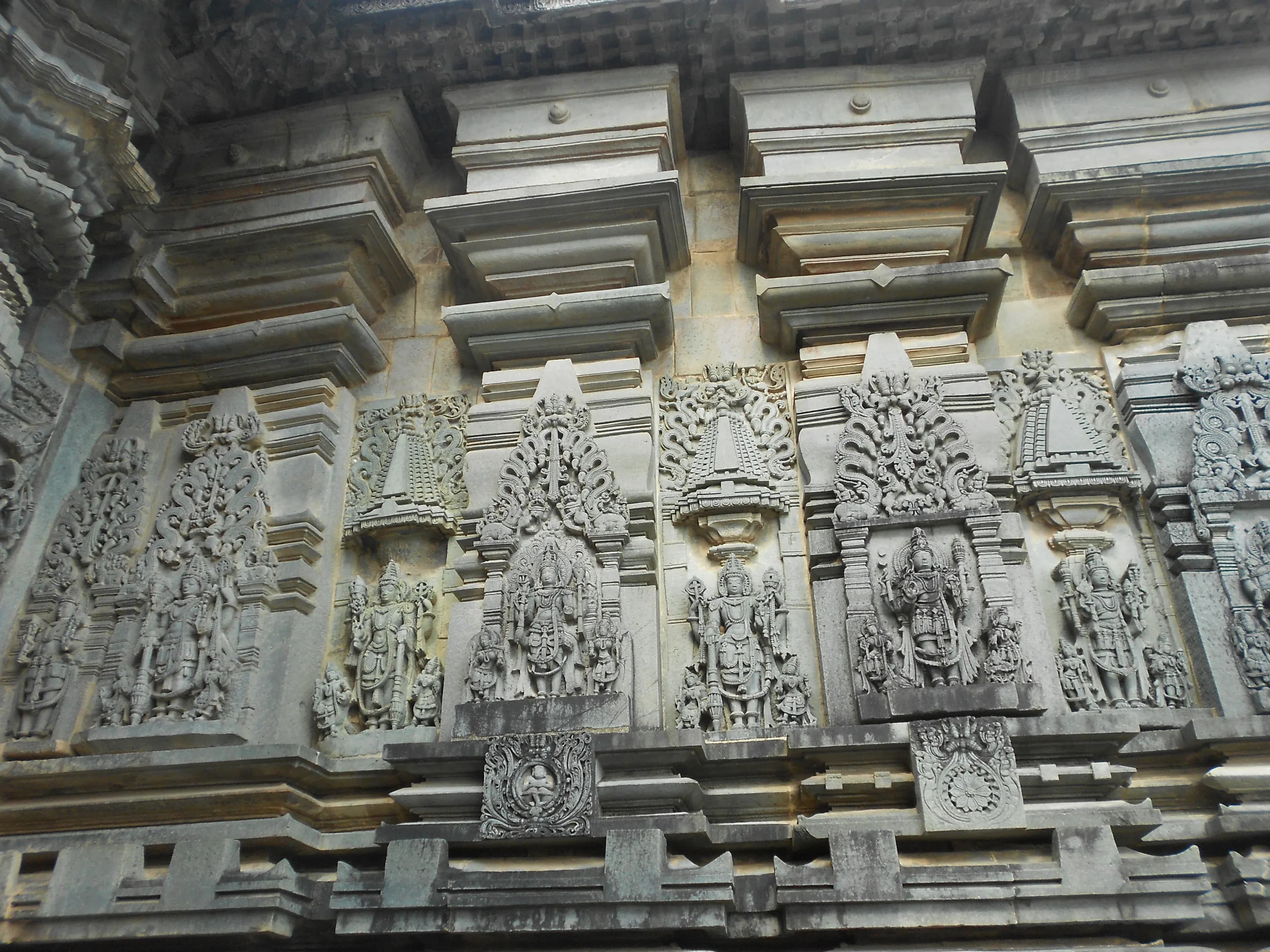
Intricate carvings adorning the walls of the Chennakesava Temple in Belur, Karnataka, narrate the artistic zenith of the Hoysala Empire ([1][2]). Commissioned by Vishnuvardhana Hoysala in 103 CE (2nd Century), the temple is dedicated to Vishnu in his form as Chennakesava, meaning 'handsome Kesava' ([3]). The temple exemplifies Hoysala architecture, renowned for its detailed craftsmanship and unique style ([1]). This temple is a prime example of the Vesara style, seamlessly blending architectural elements from both North and South India ([4]). During the Hoysala period, temple architecture prioritized elaborate surface ornamentation, a departure from the towering structures of other dynasties ([5]). Soapstone, favored for its softness, facilitated the creation of intricate carvings that depict scenes from epics, mythology, and daily life ([3]). Granite forms the temple's foundation, providing stability and strength ([1]). The star-shaped platform (Jagati) elevates the structure, allowing devotees to circumambulate the deity ([3]). Within the Garbhagriha (Sanctum), the murti (idol) of Chennakesava resides, radiating divine energy and serving as the focal point for worship ([2]). Vastu Shastra principles, the ancient Indian science of architecture, guided the temple's layout, proportions, and orientation, ensuring harmony and balance ([4]). The absence of towering gopurams (spires) encourages visitors to appreciate the temple's horizontal expanse and intricate details ([5]). The outer walls are adorned with friezes of elephants, lions, horses, and celestial beings, showcasing the empire's wealth and cultural richness ([1][3]). Sophisticated sculpting techniques using soapstone made possible the elaborate detailing, though weathering has taken its toll on some elements ([3]). The Chennakesava Temple, now a UNESCO World Heritage Site, stands as a testament to the artistic and architectural achievements of the Hoysala period, inviting all to marvel at the artisans' skill and devotion ([1][2]). The temple reflects the Hoysalas' deep reverence for Vishnu and their commitment to preserving and promoting Hindu traditions ([5]).
Quick Links
Plan Your Heritage Journey
Get personalized recommendations and detailed visitor guides