Has Inheritage Foundation supported you today?
Your contribution helps preserve India's ancient temples, languages, and cultural heritage. Every rupee makes a difference.
Secure payment • Instant 80G certificate
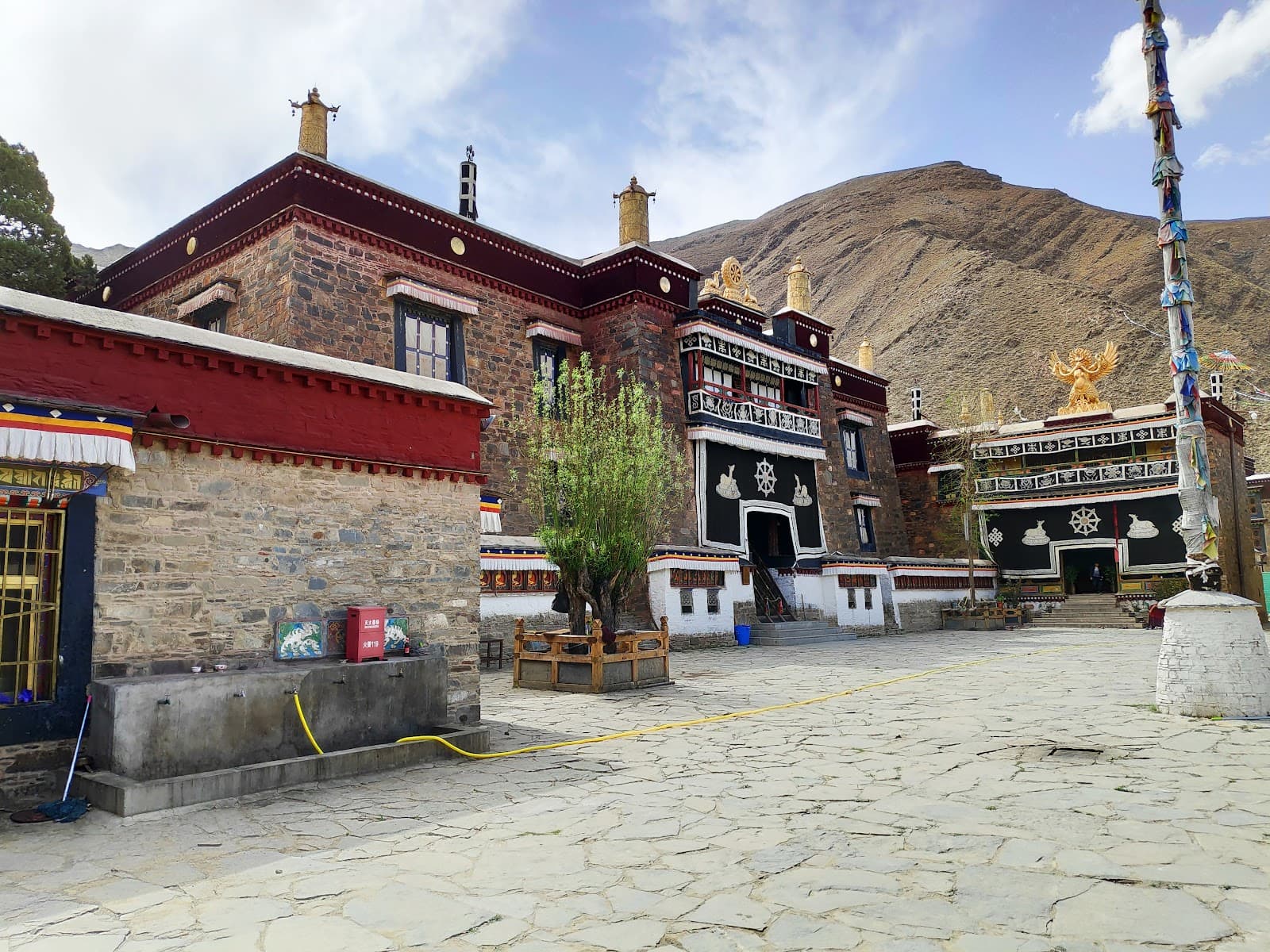
Mindrolling Monastery Lhoka Tibet
Mindrolling Monastery, located in Lhoka, Tibet, represents one of the most important Nyingma monasteries in Tibet and stands as a major center for the Nyingma school of Tibetan Buddhism, constructed in the 17th century CE and maintaining strong connections to Indian tantra traditions transmitted through Padmasambhava (Guru Rinpoche) and other Indian masters who traveled to Tibet, demonstrating the profound transmission of Indian Buddhist tantric traditions to Tibet, which has maintained deep cultural, religious, and historical connections with India for over two millennia. The monastery complex, constructed primarily from stone, wood, and earth with extensive decorative elements, features a massive structure containing numerous temples, chapels, assembly halls, and meditation facilities arranged according to Indian Buddhist monastery planning principles, with the overall design reflecting mandala-based cosmological principles found in Indian Buddhist architecture. The monastery’s architectural design demonstrates direct influence from Indian Buddhist monastery architecture, particularly the tantric traditions transmitted from India, with the overall plan, meditation facilities, and ritual spaces reflecting traditions that were transmitted to Tibet through centuries of cultural exchange, while the emphasis on Indian tantra traditions demonstrates the transmission of Indian Buddhist tantric practices to Tibet. Archaeological and historical evidence indicates the monastery was constructed with knowledge of Indian Buddhist tantric traditions and practices, reflecting the close cultural connections between Tibet and India during the medieval period, when Indian tantric masters, texts, and practices continued to influence Tibetan Buddhism. The monastery has served as a major center for Tibetan Buddhist learning and practice for over three centuries, maintaining strong connections to Indian Buddhist traditions through the study and practice of Indian tantric texts and practices. The monastery has undergone multiple expansions and renovations over the centuries, with significant additions conducted to accommodate growing numbers of practitioners and expanding educational programs. Today, Mindrolling Monastery continues to serve as an important place of Buddhist worship and learning in Tibet, demonstrating the enduring influence of Indian Buddhist tantric traditions on Tibetan culture and serving as a powerful symbol of Tibet’s deep connections to Indian civilization through the preservation and practice of Indian Buddhist tantra. ([1][2])
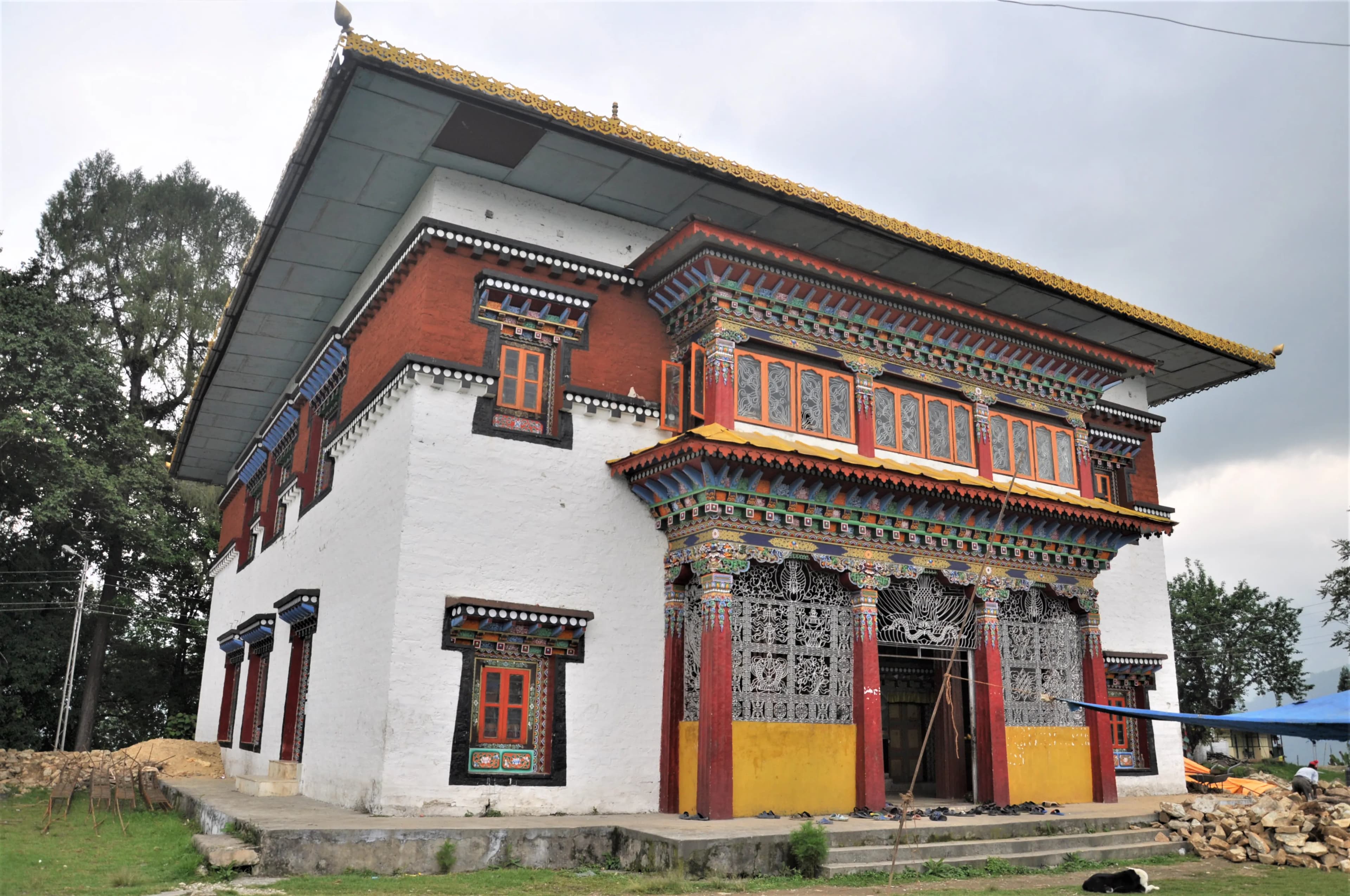
Tashiding Monastery West Sikkim
The biting Himalayan wind whipped prayer flags into a frenzy as I climbed the final steps to Tashiding Monastery. Perched atop a hill in West Sikkim, it commands a breathtaking panorama of the surrounding valleys, a vista that felt both grounding and spiritually uplifting. This wasn't just another monastery; it radiated an ancient energy, a palpable sense of history that whispered from the weathered stones. Built in the 17th century by Ngadak Sempa Chempo Phuntsog Rigzin, one of the three lamas who consecrated the first Chogyal (king) of Sikkim, Tashiding holds a unique position in the state's religious and cultural landscape. The architecture, a blend of Tibetan and Sikkimese styles, immediately captivated me. The main structure, the Dukhang or assembly hall, is a two-storied edifice with a sloping roof adorned with intricate carvings. Unlike the vibrant colours often seen in other monasteries, Tashiding is predominantly white, lending it an air of serene austerity. The gold-plated roof, however, catches the sunlight, creating a dazzling beacon against the backdrop of the deep green hills. I noticed the walls were slightly inclined inwards, a feature I learned was a common architectural element in the region, designed to withstand earthquakes. Stepping inside the Dukhang, I was enveloped by the scent of burning juniper incense and yak butter lamps. The walls were covered in vibrant murals depicting Buddhist deities, intricate mandalas, and scenes from the life of Buddha. These weren't mere decorations; they were narratives, each brushstroke imbued with symbolic meaning. I spent a considerable amount of time studying the Thangka paintings, marveling at the meticulous detail and the vibrant colours that seemed to defy the passage of time. The low hum of chanting monks added another layer to the immersive experience, creating an atmosphere of profound tranquility. One of the most striking features of Tashiding Monastery is the Chorten Thong-Rang, a golden stupa believed to be self-sprung. Legend has it that this stupa arose spontaneously from the earth, marking the spot where Guru Padmasambhava, the revered 8th-century Buddhist master, blessed the land. This stupa isn't just a religious artifact; it's the heart of Tashiding, a symbol of the monastery's sacred significance. Circumambulating the stupa, as is customary, I felt a sense of connection to the generations of pilgrims who had walked this same path before me. Beyond the main structures, the monastery complex houses several smaller shrines and residential quarters for the monks. I observed the monks going about their daily routines, their faces etched with a quiet serenity that spoke volumes about their devotion. The rhythmic clang of cymbals and the deep resonance of chanting punctuated the stillness, creating a soundscape that was both mesmerizing and deeply moving. My visit to Tashiding wasn't just a journalistic assignment; it was a pilgrimage of sorts. It offered a glimpse into the rich tapestry of Sikkim's cultural and spiritual heritage. The monastery isn't just a collection of buildings; it's a living testament to the enduring power of faith, a place where the past and present converge in a harmonious blend. As I descended the hill, leaving the serene embrace of Tashiding behind, I carried with me not just photographs and notes, but a profound sense of peace and a renewed appreciation for the enduring legacy of the Himalayas. The wind still carried the sound of chanting, a gentle reminder of the sacred ground I had just walked upon. It was a sound, I knew, that would resonate within me long after I had left Sikkim.
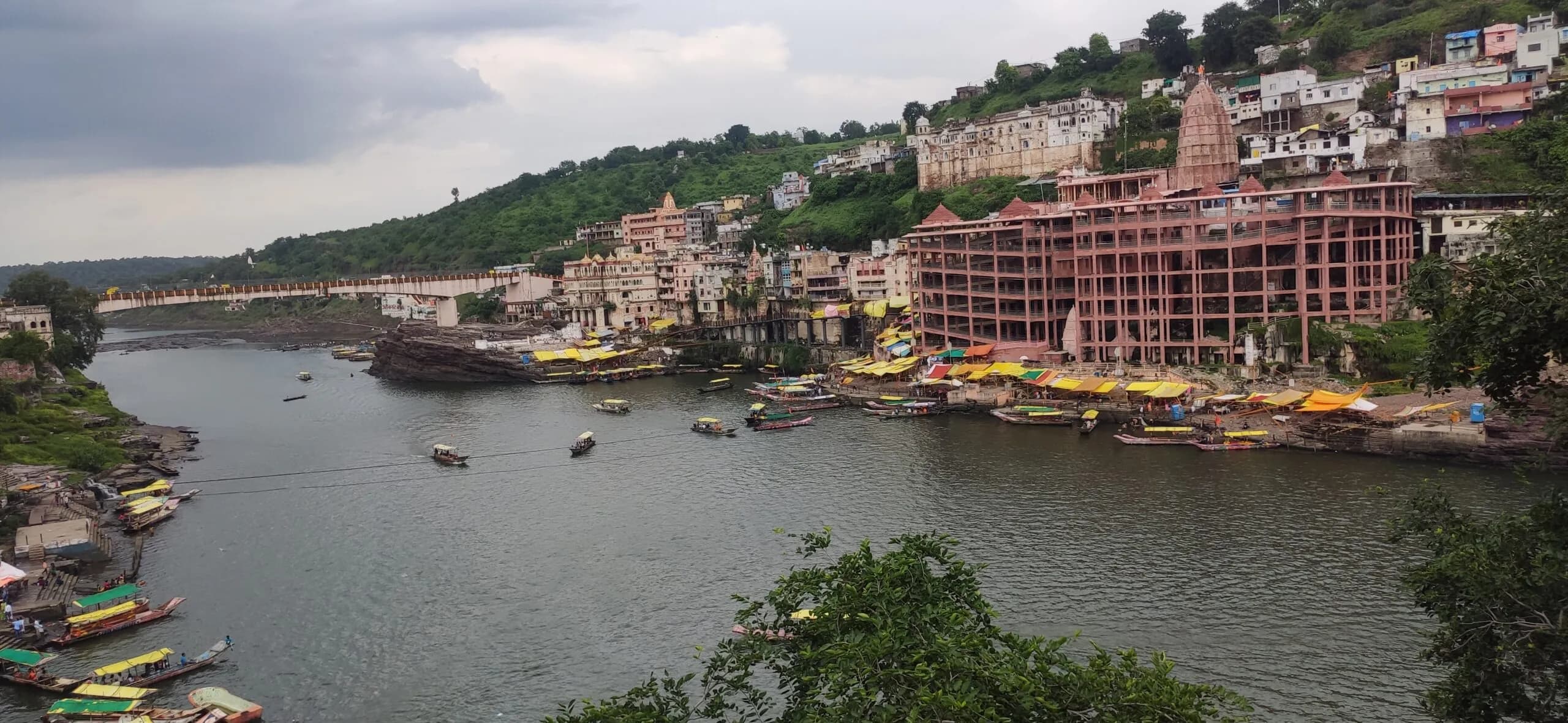
Omkareshwar Temple Mandhata
The Narmada, a river revered as much as the Ganga in these parts, cradles a sacred isle shaped like the sacred syllable 'Om'. This island, Mandhata, houses the revered Omkareshwar Temple, a place I, as a cultural journalist steeped in the traditions of Uttar Pradesh, felt compelled to experience. The journey from the ghats of Varanasi to the banks of the Narmada felt like traversing the spiritual heart of India. Crossing the Narmada on a small boat, the temple’s white shikharas rose before me, gleaming against the deep blue sky. The structure, primarily built of sandstone, displays the quintessential Nagara style of North Indian temple architecture, a familiar sight to someone accustomed to the temples of UP. However, the setting, perched atop the rocky island amidst the swirling waters, lent it a unique aura, distinct from the plains-based temples I knew. The main shrine, dedicated to Lord Shiva as Omkareshwar (Lord of Om Sound), is a compact but powerful space. The sanctum sanctorum, dimly lit, emanated a palpable sense of sanctity. The lingam, the symbolic representation of Shiva, is naturally formed and not carved, adding to the sacredness of the place. The priest, with his forehead smeared with ash, performed the rituals with a practiced ease, chanting Sanskrit shlokas that resonated through the chamber. The air was thick with the scent of incense and the murmur of devotees. Unlike the sprawling temple complexes of Uttar Pradesh, Omkareshwar Temple felt more intimate. The circumambulatory path around the main shrine offered breathtaking views of the Narmada and the surrounding Vindhya ranges. The carvings on the outer walls, though weathered by time and the elements, still bore testament to the skill of the artisans who crafted them centuries ago. I noticed depictions of various deities, scenes from Hindu mythology, and intricate floral patterns, a visual narrative of faith and devotion. One striking feature that caught my attention was the presence of two garbhagrihas, a rarity in North Indian temples. While the main sanctum houses the Omkareshwar lingam, the other, slightly smaller one, is dedicated to Amareshwar, believed to be the brother of Omkareshwar. This duality, a reflection of the complementary forces of the universe, added another layer of symbolic significance to the temple. Beyond the main temple, the island itself is a place of pilgrimage. Narrow lanes lined with shops selling religious paraphernalia and local handicrafts wind their way through the small town. The vibrant colours of the sarees, the aroma of freshly prepared prasad, and the constant hum of chanting created a sensory overload, a stark contrast to the quiet serenity of the temple’s inner sanctum. As I sat on the ghats, watching the sun dip below the horizon, painting the sky in hues of orange and purple, I reflected on the journey. While the architectural style of Omkareshwar Temple resonated with the familiar forms of my home state, the unique geographical setting and the palpable spiritual energy imbued it with a distinct character. It was a powerful reminder of the diverse expressions of faith and devotion that thread together the cultural tapestry of India. The Narmada, flowing ceaselessly, seemed to carry the whispers of ancient prayers, echoing the timeless reverence for the divine. The experience was not merely a visit to a temple; it was a pilgrimage into the heart of India's spiritual landscape.
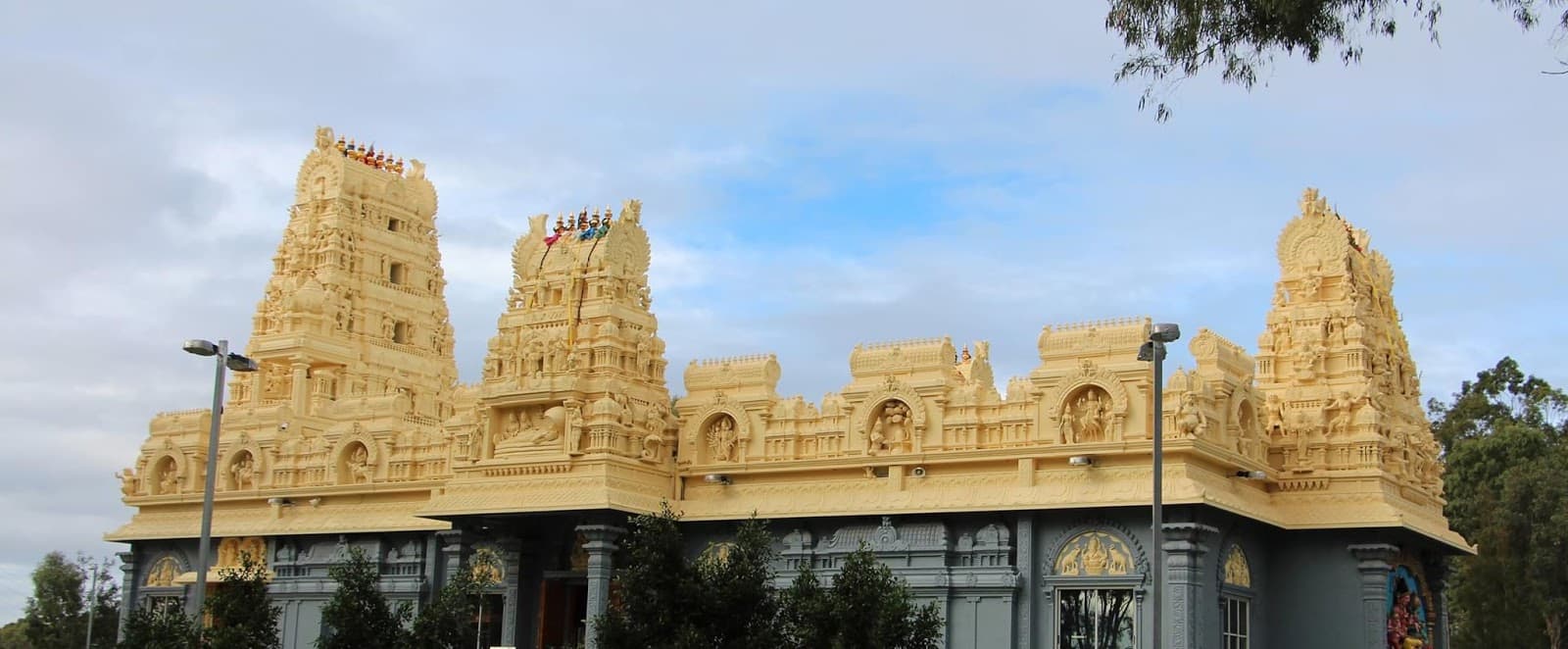
Brisbane Sri Selva Vinayakar Koil South Maclean
Anchoring Logan’s peri-urban corridor, Brisbane Sri Selva Vinayakar Koil South Maclean stands as Queensland’s first traditional Hindu temple dedicated to Lord Ganesha ([1][2]). Established around 1990 CE, this 20th-century temple reflects Dravidian architectural influences adapted to a rural Australian context ([1]). The temple was built by the Hindu Society of Queensland, who also continue to be its patron ([1]). Granite and sandstone blocks, meticulously carved, form the core of the Mandapa (Pillared Hall), while timber posts and corrugated steel roofing provide a functional and aesthetically pleasing structure ([1]). Daily rituals, or darshan, are conducted between 6:30 AM and 12:00 PM, and again from 4:30 PM to 8:30 PM ([1][5]). Special occasions such as Vinayagar Chaturthi, Thai Poosam, and Navaratri extend these hours until 10:00 PM ([1][5]). To manage the flow of devotees, volunteers guide visitors through the granite Mandapa using rope-guided lanes, ensuring a smooth and organized experience ([1][5]). Shuttle buggies are also available to assist elders in navigating the expansive site ([1][5]). Within the annadhanam shed, which can accommodate 300 people, polished concrete floors provide a clean and functional space for communal dining ([1][3]). Modern amenities such as induction woks and commercial chillers support the preparation and storage of prasadam (sacred food), with HACCP checklists ensuring food safety standards are maintained ([1][3]). Portable ramps facilitate the movement of prasadam carts between the kitchen and hall, even during inclement weather ([1][3]). Beyond worship, the temple serves as a cultural hub, hosting dance, music, and language classes in its cultural pavilion ([2]). A meditation pond and vahana sheds are situated along the Logan River flood fringe, with boardwalks and warning signage in place ([2]). Accessibility is a priority, with gravel-stabilized pathways, handrails, tactile signage, and a platform lift near the sanctum ensuring inclusivity ([2][5]). Auslan interpreters are also available during major festivals ([2][5]). Sophisticated drainage systems ensure the temple grounds remain functional, even during heavy rainfall ([3]). Digital signage displays bilingual Tamil-English instructions, weather alerts, and seva schedules, keeping the community informed and engaged ([1][2]). The temple's operations team monitors weather stations, flood gauges, and fire equipment, while the Logan Rural Fire Brigade conducts annual drills on site, ensuring preparedness for any eventuality ([3]). This proactive approach underscores the temple's commitment to community resilience and safety ([1][2]).
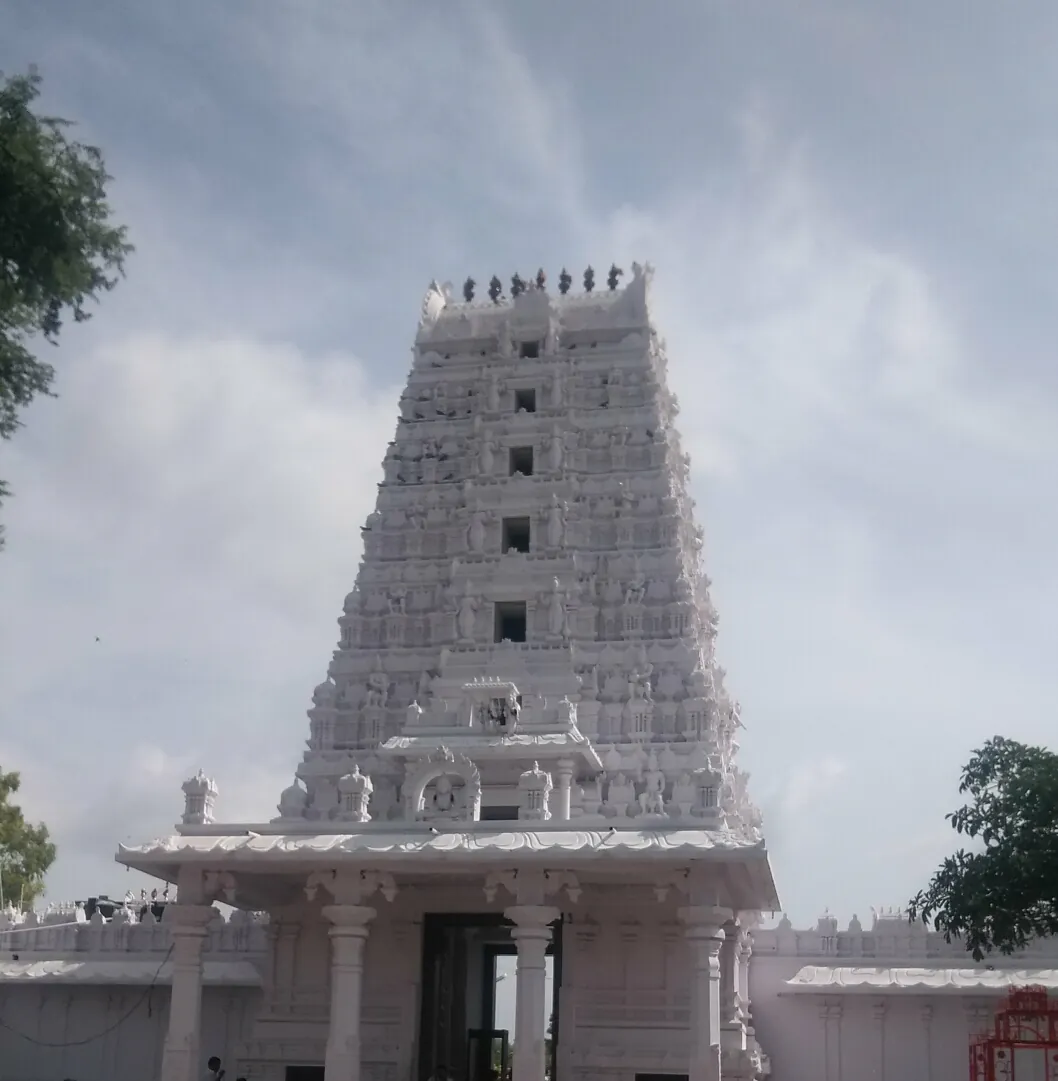
Karmanghat Hanuman Temple Hyderabad
The air, thick with incense and the murmur of devotion, vibrated around me as I stepped into the courtyard of the Karmanghat Hanuman Temple. Located in the bustling heart of Hyderabad, this ancient shrine seemed to exist in a pocket of timeless serenity, a world away from the urban clamor just beyond its walls. The temple, dedicated to Lord Hanuman, is believed to date back to the 12th century during the Kakatiya dynasty, a fact whispered by the very stones that make up its structure. My gaze was immediately drawn upwards to the imposing gopuram, the monumental entrance tower that dominates the temple complex. Unlike the elaborately sculpted gopurams of South Indian temples, this one possessed a more restrained elegance. The brickwork, though weathered by centuries of sun and rain, retained a warm, earthy hue. Subtle carvings of deities and celestial beings peeked out from the brick surface, hinting at the rich narratives embedded within the temple’s architecture. Passing through the gopuram, I found myself in the main courtyard, a vibrant tapestry of activity. Devotees circumambulated the central shrine, their prayers mingling with the rhythmic chanting of priests. The central shrine, housing the imposing idol of Lord Hanuman, is a relatively simple structure, its grandeur stemming from the powerful spiritual energy that permeates the space. The idol itself, a magnificent depiction of the monkey god in a standing posture, is said to be self-manifested, adding to the temple's mystique. I spent some time observing the architectural details, tracing the lines of the pillars and cornices with my fingers. The influence of the Kakatiya style was evident in the stepped pyramidal roof of the shrine and the use of locally available granite and brick. While later additions and renovations, particularly from the Qutb Shahi period, are discernible, the core architectural vocabulary remains distinctly Kakatiyan. This blending of architectural styles across centuries provides a fascinating glimpse into the region's rich and layered history. One of the most striking features of the Karmanghat temple is the presence of a large tank, or *pushkarini*, located to the south of the main shrine. The tranquil waters of the tank, reflecting the temple’s silhouette, created a sense of peace and tranquility. Historically, these tanks played a crucial role in temple rituals and served as a vital source of water for the community. The Karmanghat tank, though now significantly smaller than its original size, continues to be a focal point for devotees. As I walked around the temple complex, I noticed several smaller shrines dedicated to various deities, tucked away in quiet corners. These smaller structures, while less grand than the main shrine, displayed intricate carvings and decorative elements. The presence of these subsidiary shrines speaks to the evolving nature of religious practices and the assimilation of different deities into the temple’s pantheon over time. The Karmanghat Hanuman Temple is more than just a collection of stones and mortar; it is a living testament to centuries of faith, devotion, and architectural ingenuity. It is a place where the past and the present converge, where ancient traditions continue to resonate in the modern world. Leaving the temple, I carried with me not just photographs and notes, but a profound sense of connection to the rich cultural tapestry of India. The whispers of history, etched into the very fabric of the temple, continued to echo in my mind, a reminder of the enduring power of faith and the artistry of our ancestors.
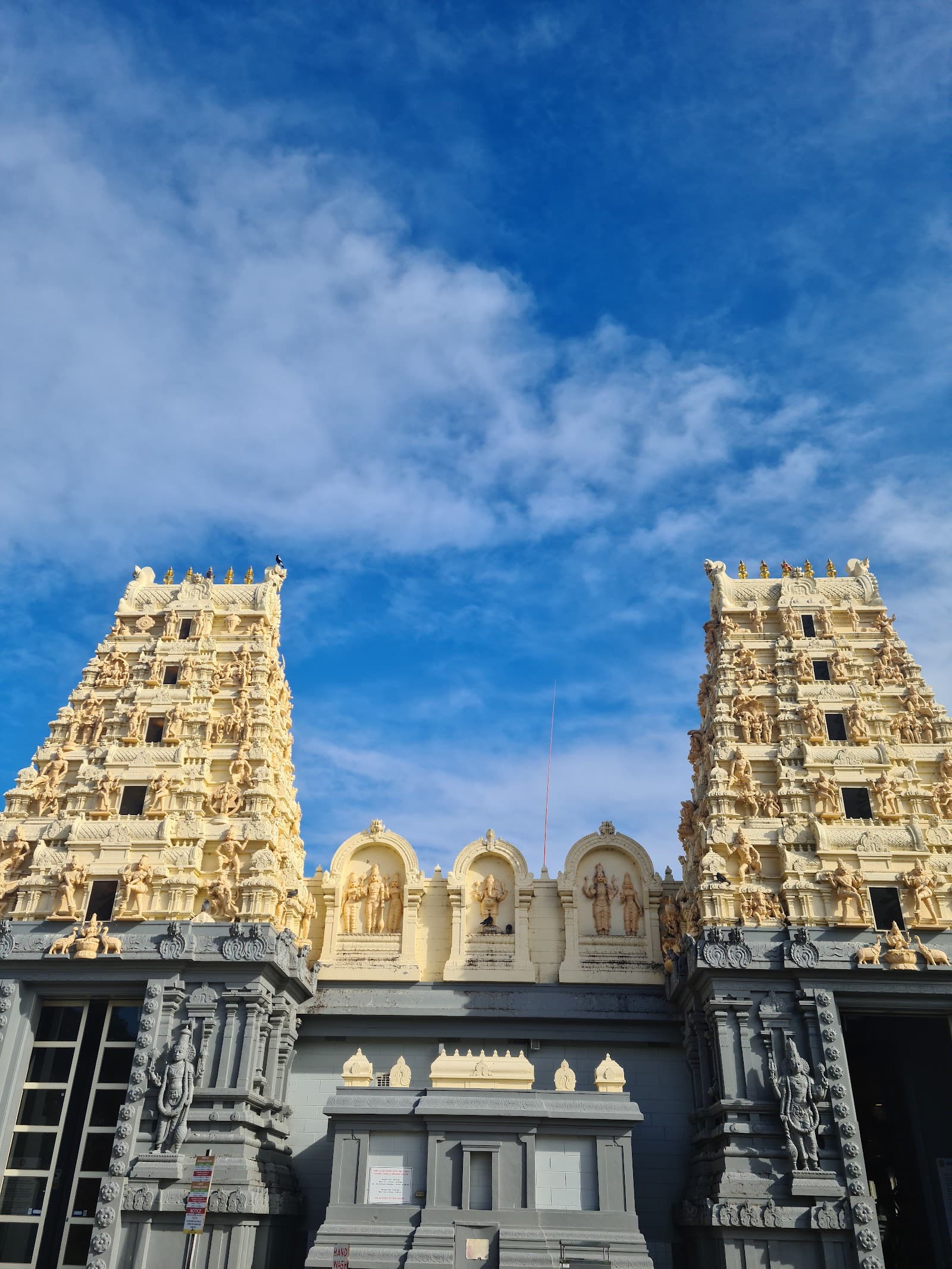
Shri Shiva Vishnu Temple Carrum Downs
Shri Shiva Vishnu Temple Carrum Downs is dedicated to Lord Shiva and Lord Vishnu and anchors Carrum Downs, Victoria, as the largest Hindu complex in the southern hemisphere ([1][2]). Daily darshan opens 7:30 AM-12:00 PM and 4:00 PM-9:00 PM, with Saturday hours extending to 10:00 PM as dual queues marshal visitors toward the Shiva and Vishnu sanctums without crossover ([1]). A volunteer command post in the Yajna hall tracks CCTV and real-time crowd counts, dispatching ushers to the 108-pillared mandapa when coach tours arrive from interstate ([1][3]). The community centre seats 1,000 in banquet configuration, where stainless trolleys glide along polished concrete aisles and induction woks maintain prasadam throughput while keeping the hall free of combustion fumes ([1][4]). Tactile maps, contrasting floor nosings, and induction loop audio guide visitors with low vision or hearing loss, complemented by two lifts linking the cultural classrooms to the main prakaram ([3]). Accessible parking bays sit 30 metres from the gopuram and connect via canopy-covered ramps that maintain 1:20 gradients, easing pilgrimage for seniors and wheelchair users ([3]). Signage delivers tri-lingual Tamil-Hindi-English instructions, QR-linked seva booking, and bushfire evacuation diagrams audited annually by Fire Rescue Victoria ([3][5]). Air monitoring sensors in the homa kunda feed a dashboard that alerts priests when particulate loads trigger extraction fans, ensuring ceremonies run without breaching occupational standards ([5]). With cross-trained volunteers, audited hygiene workflows, and resilient visitor routing, the temple stays fully operational for worship, cultural tuition, and civic events throughout the calendar year ([1][2]).
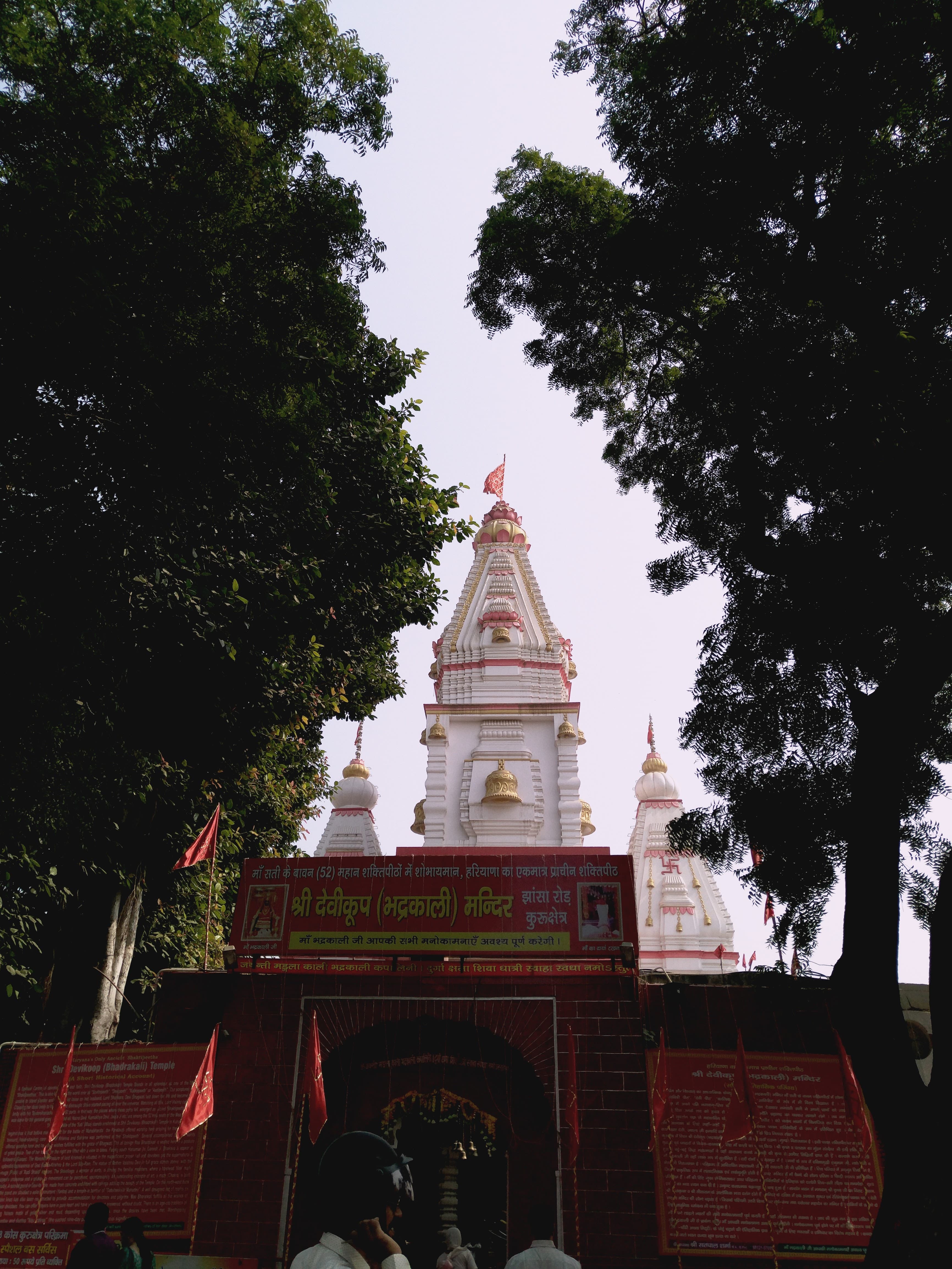
Bhadrakali Temple Kurukshetra
Amidst the sacred land of Kurukshetra, Haryana, the Bhadrakali Temple emerges as a significant example of North Indian temple architecture ([1]). Commissioned in 1739 CE by the Maratha ruler Baji Rao I, this sacred site reflects the patronage of the Maratha Empire in North India ([2]). Its Nagara-style Shikhara (spire) distinguishes it, a testament to the architectural traditions of the Gurjara-Pratihara period ([3][4]). Stone and brick form the primary building materials, reflecting construction practices common to the era ([5]). Intricate carvings embellish the temple walls, depicting scenes from Hindu epics such as the Mahabharata and portraying various deities, echoing the artistic expressions of the time ([1][2]). These carvings offer insights into the region's rich cultural heritage and religious beliefs ([3]). The temple's design aligns with principles outlined in ancient texts like the *Manasara Shilpa Shastra*, which discusses temple construction and iconography, although specific chapter references are currently unavailable ([4]). Within the Garbhagriha (sanctum), Goddess Bhadrakali's idol inspires reverence, embodying divine feminine power or *Shakti* ([5]). A sacred Kunda (pond) complements the temple, its waters considered purifying and integral to Hindu rituals ([1]). Observing the temple rituals reveals a blend of regional traditions, with unique chants and offerings that highlight India's diverse spiritual landscape ([2][3]). The temple's architecture, while distinct in its Nagara style, creates a sacred space, fostering a connection between devotees and the divine, thereby continuing the enduring legacy of Indian architectural and spiritual heritage ([4][5]).
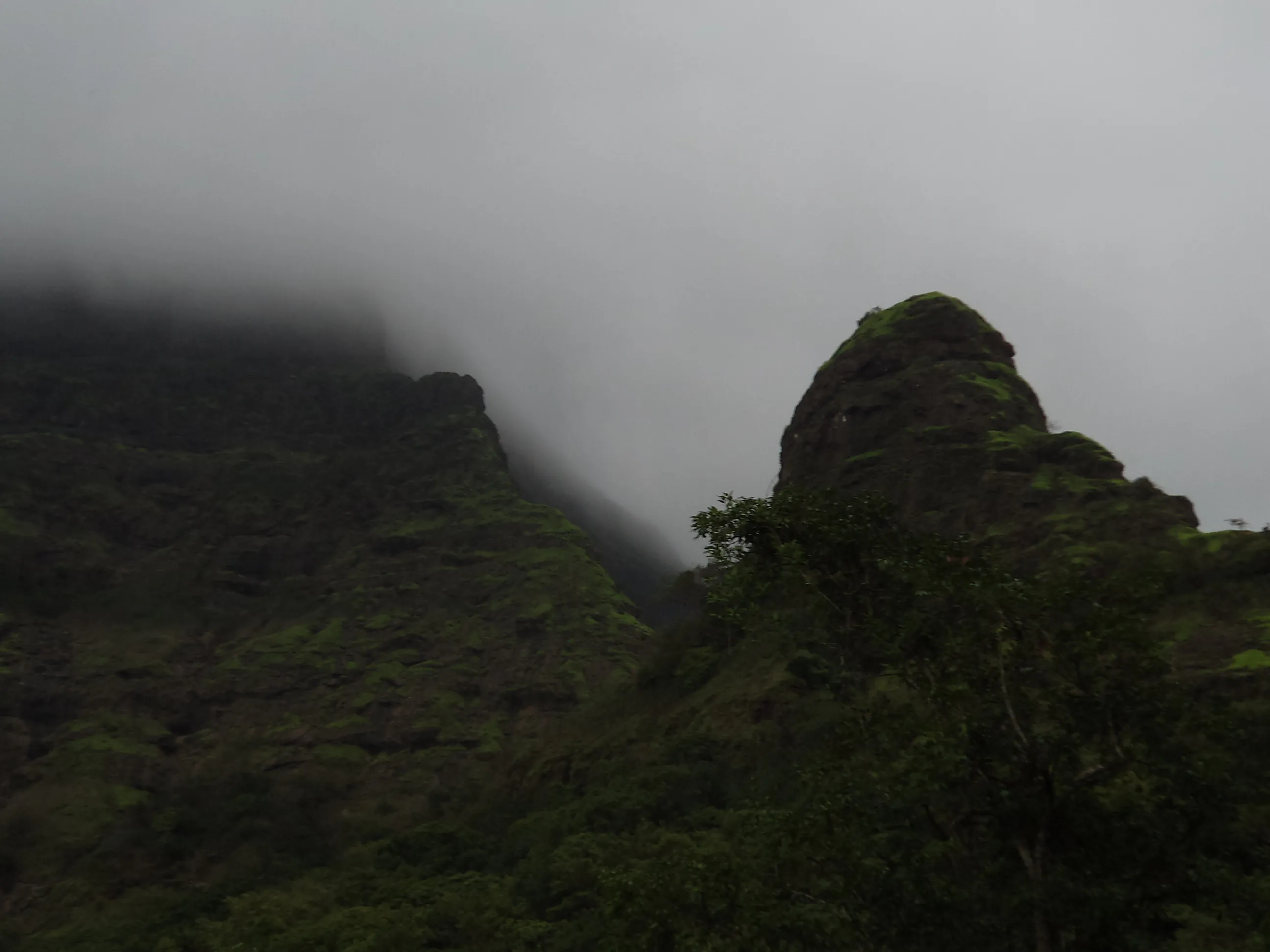
Bhimashankar Temple Pune
Enclosed by the Sahyadri mountains near Khed, the Bhimashankar Temple beckons with its spiritual aura and natural setting. Revered as one of the twelve Jyotirlingas, it embodies a manifestation of Lord Shiva ([1]). During the Maratha Period, temple construction underwent a resurgence, influencing Bhimashankar's structural design ([2]). Commissioned around 1250 CE by the Yadava Dynasty, the temple harmoniously blends Nagara and Dravidian architectural styles ([3][4]). Granite and sandstone blocks, meticulously carved, construct the temple's form, adorned with depictions from Hindu mythology reflecting the artisans' expertise ([3][5]). Black stone, basalt rock, granite, and wood form the primary materials, imbuing the temple with a sense of antiquity ([3]). Within the Garbhagriha (Sanctum), the Jyotirlinga resides, creating a serene atmosphere for devotees ([1]). Also of note, the Kamalaja Devi temple showcases a fusion of Nagara and Hemadpanti styles ([4]). Vastu Shastra principles, the ancient Indian science of architecture, may have subtly influenced the temple's layout, though specific textual references are currently unavailable. Patronage by Nana Phadnavis further solidified the temple's importance ([2]). The nearby source of the Bhima River enhances the site's spiritual significance ([1]). Sophisticated architectural elements are visible throughout the complex. The Shikhara (Spire) exhibits the Nagara influence, while the overall layout incorporates Dravidian elements, showcasing a confluence of architectural traditions ([3][4]). Bhimashankar offers a profound experience, inviting visitors to connect with Maharashtra's rich heritage ([5]).
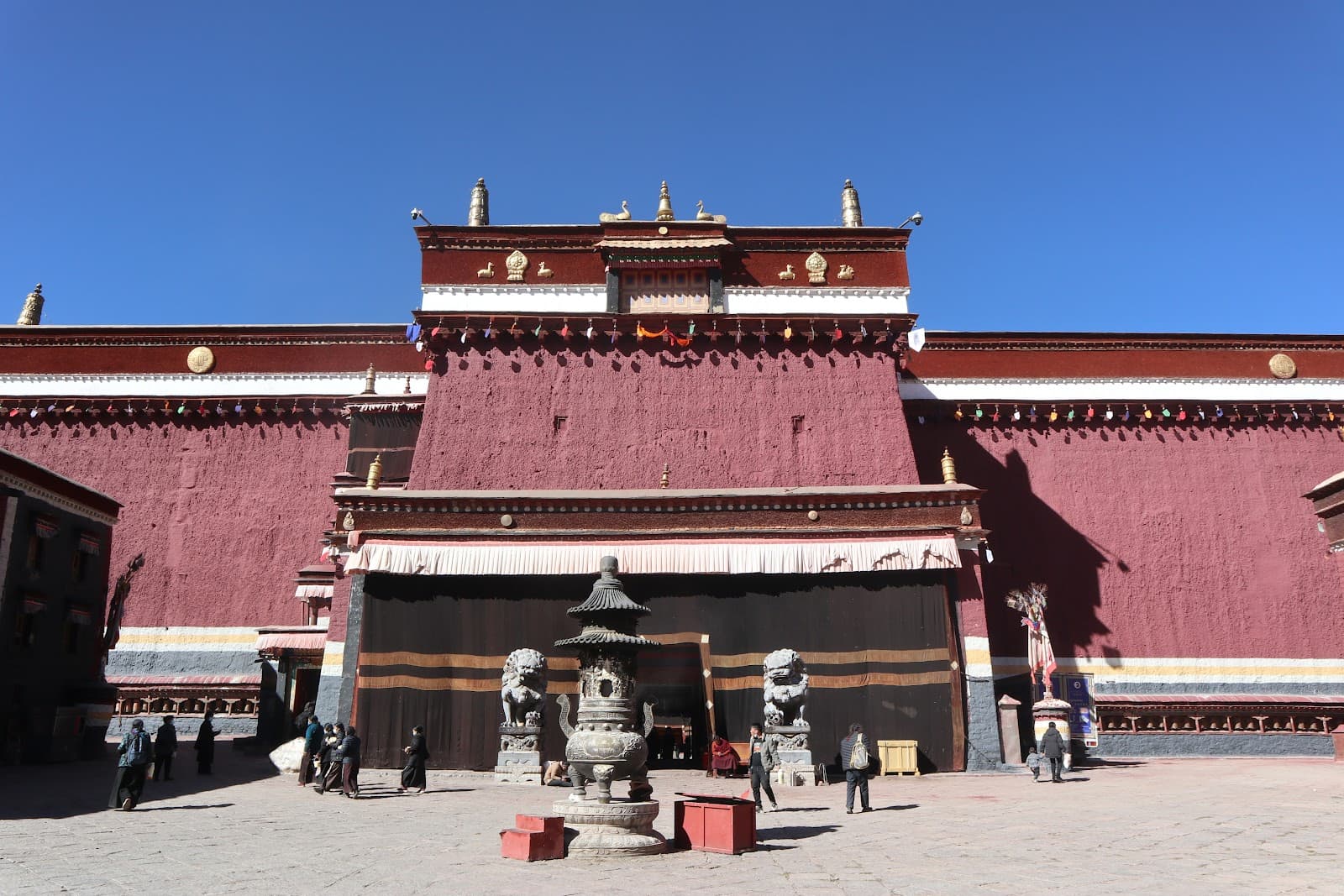
Sakya Monastery Shigatse Tibet
Sakya Monastery, located in Sakya County, Shigatse, Tibet, represents one of the most important monasteries in Tibet and stands as a major center for the Sakya school of Tibetan Buddhism, constructed in the 11th century CE and housing one of the most extensive collections of Indian Buddhist texts and manuscripts in Tibet, demonstrating the profound transmission of Indian Buddhist learning traditions to Tibet, which has maintained deep cultural, religious, and historical connections with India for over two millennia. The monastery complex, constructed primarily from stone, wood, and earth with extensive decorative elements, features a massive structure containing numerous temples, chapels, assembly halls, and an extensive library that houses thousands of Indian Buddhist manuscripts and texts brought from Nalanda and other Indian Buddhist learning centers, making it one of the most important repositories of Indian Buddhist knowledge in Tibet. The monastery’s architectural design demonstrates direct influence from Indian Buddhist monastery architecture, particularly the Nalanda model, with the overall plan and library facilities reflecting traditions that were transmitted to Tibet through centuries of cultural exchange, while the extensive collection of Indian Buddhist texts demonstrates the active transmission of Indian Buddhist scholarship to Tibet. Archaeological and historical evidence indicates the monastery was constructed by the Khon family, who maintained strong connections with Indian Buddhist learning centers including Nalanda, importing Indian Buddhist texts, scholars, and architectural knowledge to Tibet. The monastery has served as a major center for Tibetan Buddhist learning and practice for over nine centuries, maintaining strong connections to Indian Buddhist traditions through the study and preservation of Indian Buddhist texts, philosophy, and practices. The monastery has undergone multiple expansions and renovations over the centuries, with significant additions conducted to accommodate growing collections of Indian Buddhist texts and expanding educational programs. Today, Sakya Monastery continues to serve as an important place of Buddhist worship and learning in Tibet, demonstrating the enduring influence of Indian Buddhist traditions on Tibetan culture and serving as a powerful symbol of Tibet’s deep connections to Indian civilization through the preservation and study of Indian Buddhist knowledge. ([1][2])
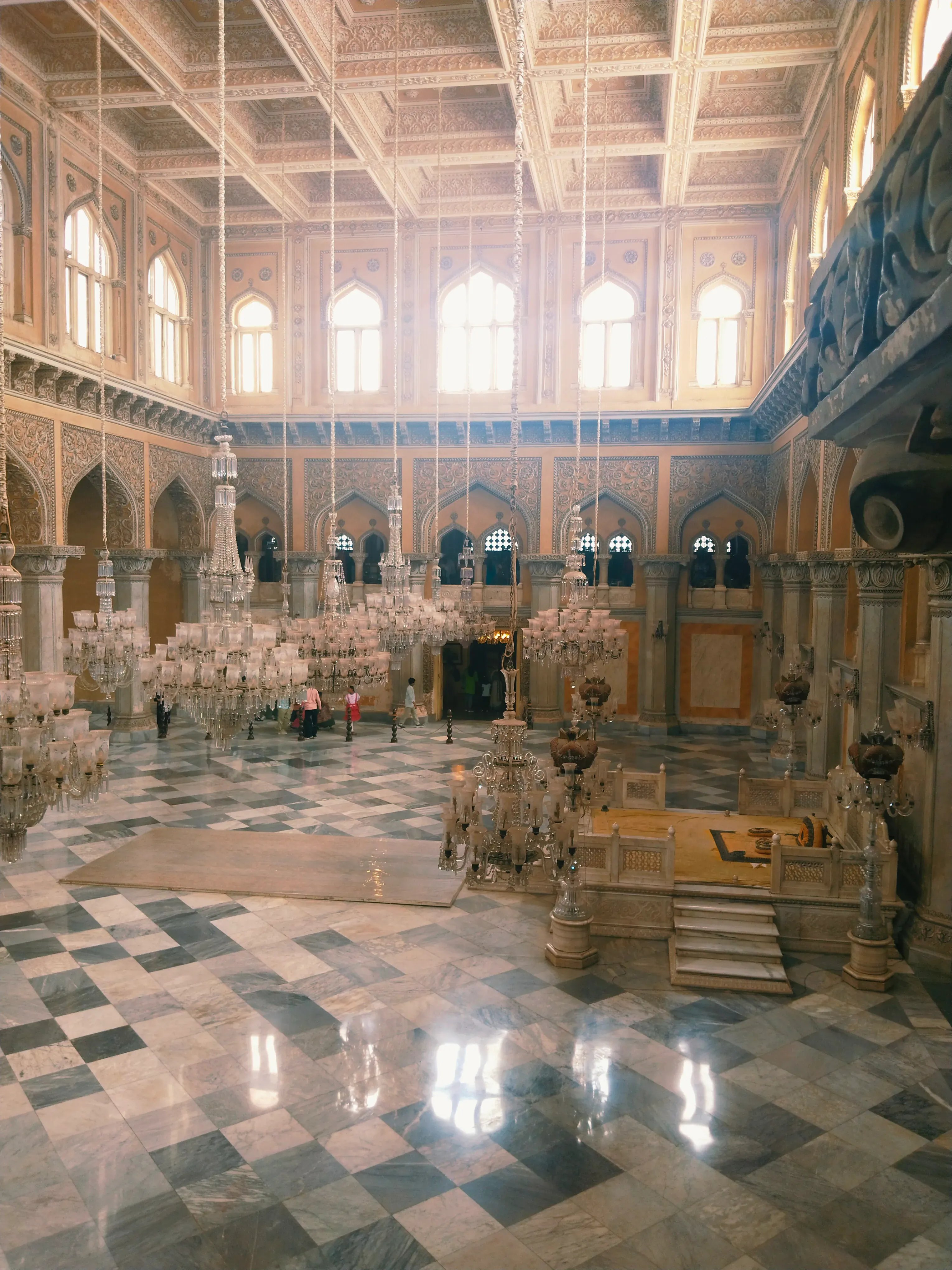
Chowmahalla Palace Hyderabad
The imposing Khilwat Clock Tower offers a glimpse into Chowmahalla Palace, a network of palaces, courtyards, gardens, and halls, each distinct in character ([1]). A step through the main gate transports one to another era, away from the city's cacophony ([2]). During the British Colonial Period, the Nizams of Hyderabad constructed Chowmahalla Palace in 1768 CE, blending Mughal, Persian, and European styles ([3][4]). As a palatial complex in Khilwat, Hyderabad (500002), Telangana, India, it showcases the Indo-Saracenic Revival architectural style ([5]). Granite and sandstone blocks, meticulously carved, are found throughout the structure ([4]). The grand Southern Courtyard, dominated by the Afzal Mahal, features a neoclassical facade with Corinthian columns and ornate stucco work ([2]). Intricate jali (lattice) work whispers of a Mughal legacy, reflecting intertwined histories ([1]). Sunlight streams through Belgian crystal chandeliers in the Durbar Hall, casting rainbows across the polished marble floor ([3]). Within the Khilwat Mubarak, delicately carved arches and stucco work define the ceremonial seat of the Nizams ([2]). The central fountain creates tranquility amidst splendor ([1]). Lime mortar was used in the construction ([4]). Unlike Rajasthan's rugged fortresses, Chowmahalla exudes refined elegance ([1]). Chowmahalla seamlessly blends European influences with Mughal and local Deccani elements, reflecting Hyderabad's cosmopolitan nature ([3][5]). The palace's design incorporates elements of the Vastu Shastra principles, the ancient Indian science of architecture, particularly in the layout of the courtyards and the orientation of the buildings ([6]). This integration reflects the Nizams' respect for local traditions while embracing global influences, demonstrating the city's rich cultural synthesis ([3][5]). The patronage of the Nizams shaped Chowmahalla into a symbol of their power and refined taste ([3][4]).
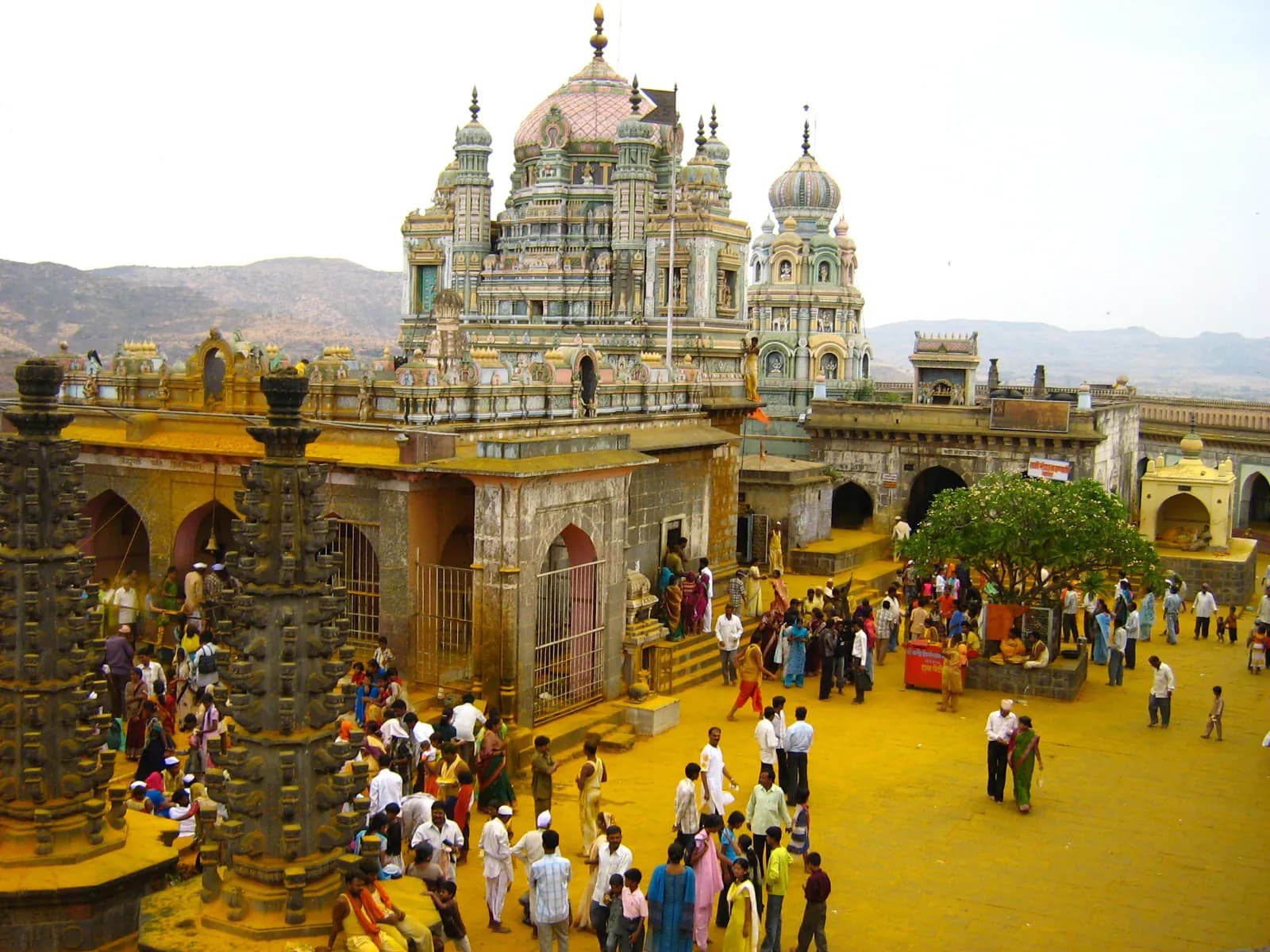
Khandoba Temple Jejuri
The air crackled with an energy I hadn’t anticipated. Not just the humid Maharashtra air, thick with the promise of monsoon, but a palpable buzz that vibrated through the very stones of the Khandoba Temple in Jejuri. Ascending the steep, worn steps, I felt the weight of centuries pressing down, the echoes of countless pilgrims who had trod this same path before me. This wasn't just a temple; it was a living, breathing testament to unwavering faith. The first thing that struck me, even from a distance, was the sheer dominance of the deep saffron that cloaked the structure. It wasn't a gentle hue, but a vibrant, almost aggressive orange that seemed to pulsate under the midday sun. This bold colour, so characteristic of the region's religious architecture, immediately set the tone for the experience. As I drew closer, the intricate details began to emerge from the saffron canvas: delicate carvings depicting scenes from mythology, sturdy pillars adorned with floral motifs, and the imposing brass-clad main gate, gleaming like a portal to another realm. The temple is a layered structure, built on a hill, creating a sense of ascension, both physically and spiritually. Each level offers a different perspective, a new vantage point from which to admire the surrounding landscape and the architectural marvel itself. The Yadava dynasty’s influence is evident in the robust construction and the use of locally sourced basalt stone, a material that has weathered the centuries with remarkable resilience. Unlike the intricate marble work I’m accustomed to seeing in Gujarati temples, the Khandoba Temple possesses a raw, almost primal beauty. The inner sanctum, where the deity Khandoba resides, is a relatively small chamber, but the energy within is intense. The air is thick with the scent of incense and the murmur of prayers. Devotees throng the space, their faces etched with devotion, offering turmeric, coconuts, and red powder to the deity. The rhythmic clang of bells and the fervent chanting create an atmosphere that is both chaotic and deeply spiritual. It’s a sensory overload, but one that I found strangely comforting. What truly captivated me, however, were the remnants of older structures within the complex. Peeking through the more recent additions, I could discern fragments of earlier temples, hinting at layers of history and architectural evolution. A worn stone lintel here, a weathered pillar base there – these whispers of the past spoke volumes about the enduring significance of this sacred site. It wasn’t merely a static monument, but a dynamic entity, constantly evolving and adapting while retaining its core spiritual essence. As I descended the steps, leaving the vibrant energy of the temple behind, I couldn’t help but reflect on the stark contrast between the architectural styles of Gujarat and Maharashtra. While the Gujarati temples often showcase intricate carvings and delicate filigree work, the Khandoba Temple exudes a powerful, almost austere beauty. It’s a testament to the diverse tapestry of Indian architecture, where each region has developed its own unique expression of faith and artistry. The experience was a powerful reminder that architectural marvels aren’t just about aesthetics; they are about the stories they tell, the history they embody, and the spiritual resonance they evoke. The Khandoba Temple, with its saffron-clad walls and vibrant energy, is a story etched in stone, a story that continues to unfold with each passing generation.
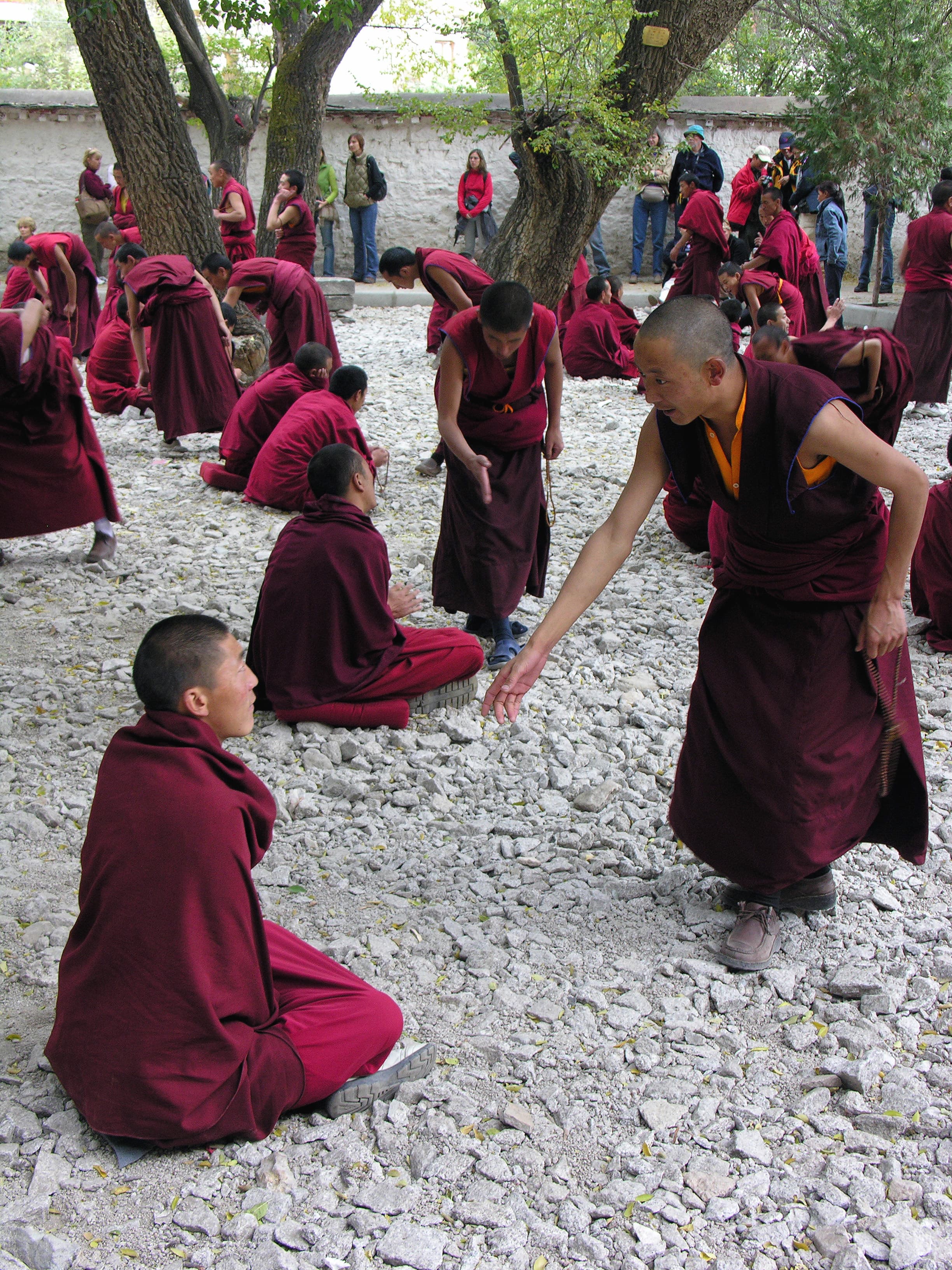
Sera Monastery Lhasa Tibet
Sera Monastery, located in Lhasa, Tibet, represents one of the three great Gelugpa monasteries in Tibet and stands as a major center for Tibetan Buddhist learning, particularly renowned for its debate courtyards where monks engage in philosophical debates using methods derived from Indian Buddhist debate traditions, constructed in the 15th century CE by Jamchen Chojey, a disciple of Tsongkhapa who established the Gelugpa school with strong connections to Indian Buddhist scholastic traditions, demonstrating the profound transmission of Indian Buddhist philosophy and debate traditions to Tibet, which has maintained deep cultural, religious, and historical connections with India for over two millennia. The monastery complex, constructed primarily from stone, wood, and earth with extensive decorative elements, features a massive structure containing numerous temples, chapels, assembly halls, and extensive debate courtyards arranged according to Indian Buddhist monastery planning principles, with the overall design reflecting mandala-based cosmological principles found in Indian Buddhist architecture. The monastery’s architectural design demonstrates direct influence from Indian Buddhist monastery architecture, particularly the Nalanda model, with the debate courtyards and learning facilities reflecting traditions that were transmitted to Tibet through centuries of cultural exchange, while the emphasis on Indian Buddhist debate traditions demonstrates the transmission of Indian Buddhist philosophy to Tibet. Archaeological and historical evidence indicates the monastery was constructed with knowledge of Indian Buddhist debate traditions and scholastic methods, reflecting the close cultural connections between Tibet and India during the medieval period, when Indian Buddhist scholars, texts, and philosophical traditions continued to influence Tibetan Buddhism. The monastery has served as a major center for Tibetan Buddhist learning and practice for over five centuries, maintaining strong connections to Indian Buddhist traditions through the study and practice of Indian Buddhist debate methods and philosophy. The monastery has undergone multiple expansions and renovations over the centuries, with significant additions conducted to accommodate growing numbers of monks and expanding educational programs. Today, Sera Monastery continues to serve as an important place of Buddhist worship and learning in Tibet, demonstrating the enduring influence of Indian Buddhist debate traditions on Tibetan culture and serving as a powerful symbol of Tibet’s deep connections to Indian civilization through the study and practice of Indian Buddhist philosophy. ([1][2])
Quick Links
Plan Your Heritage Journey
Get personalized recommendations and detailed visitor guides