Has Inheritage Foundation supported you today?
Your contribution helps preserve India's ancient temples, languages, and cultural heritage. Every rupee makes a difference.
Secure payment • Instant 80G certificate
Ahobilam Temple Kurnool
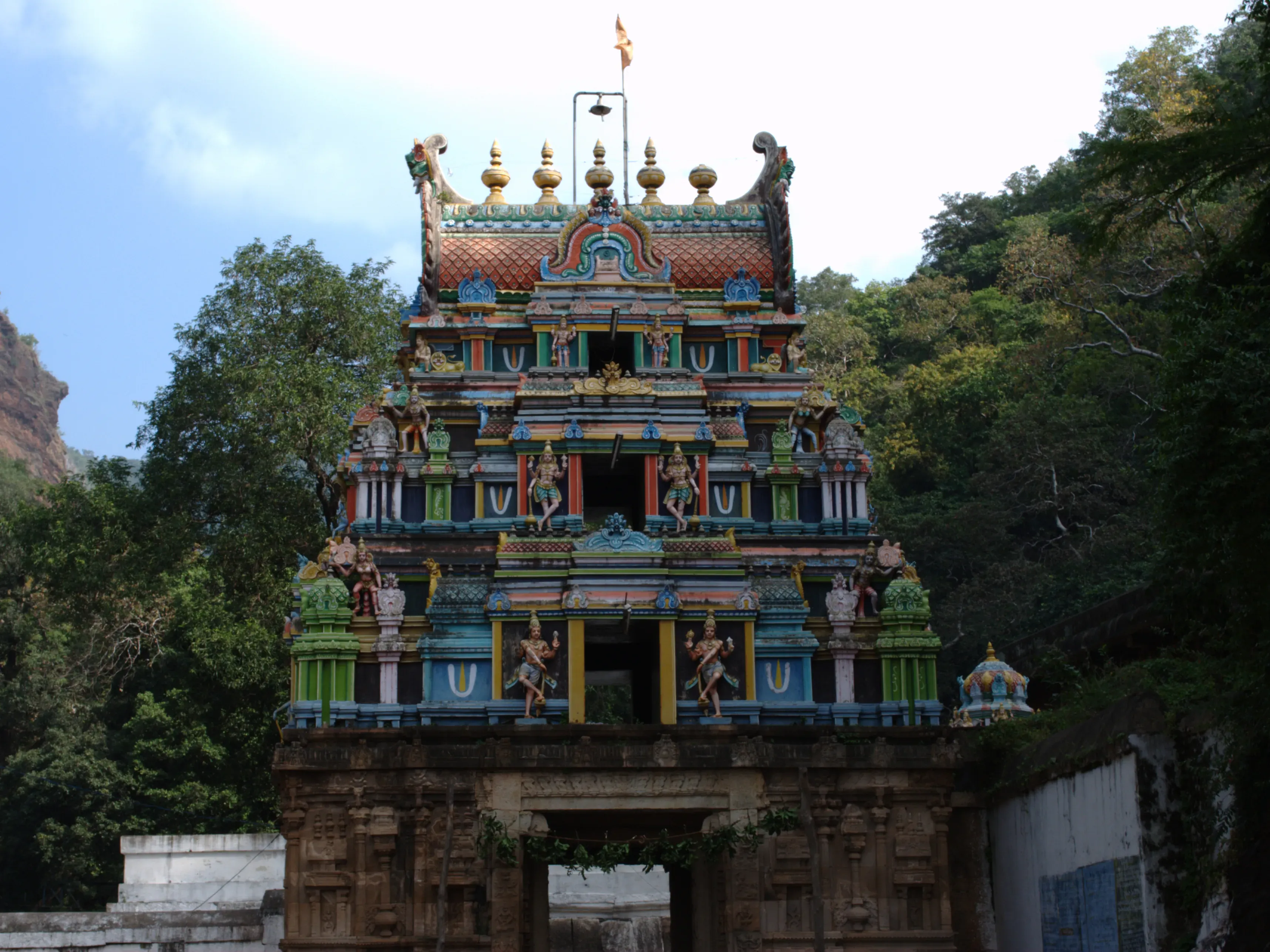
Nestled within Andhra Pradesh's Nallamala Hills, the Ahobilam Temple, dating back to circa 1350 CE, serves as a testament to Vijayanagara architectural traditions ([2][8]). The temple is a sacred site dedicated to Lord Narasimha ([3][8]). During the Vijayanagara period, the rulers adopted the Dravidian style, skillfully carving the temple into the existing rock formations ([3][8]). Stone platforms and foundations exemplify this rock-cut technique, utilizing locally sourced granite to integrate with the natural landscape ([10]). The temple complex is geographically and spiritually divided into Lower and Upper Ahobilam ([3]). During the Vijayanagara period, temple architecture flourished, which is evident in the elaborate carvings that embellish the *mandapam* (pillared hall) and *vimana* (tower) of Lower Ahobilam ([2][9]). These carvings illustrate narratives from Hindu epics and Puranas, visually echoing the *sthala purana* (temple legend) in stone ([11][12]). Vastu Shastra principles, the ancient Indian science of architecture, guided the temple's layout and orientation, ensuring harmony and balance ([10][11]). The absence of towering *gopurams* (gateway towers) at Upper Ahobilam emphasizes the location's raw spirituality ([10]). Granite and sandstone blocks, meticulously carved, are combined with timber, bricks, and lime mortar, highlighting Vijayanagara construction expertise ([2][8]). The temple's design reflects a deep understanding of Dravidian architectural conventions and the region's natural resources ([9][10]). Ahobilam embodies the enduring relationship between humanity and the divine, representing ancient Indian knowledge systems and architectural skill ([10][11]). Ascending to Upper Ahobilam inspires *bhakti* (devotion) and *shakti* (divine energy), reinforcing the temple's profound spiritual importance ([3]). The integration of natural elements and artistic expression makes Ahobilam a significant example of Vijayanagara temple architecture ([2][10]).
Panch Mahal Fatehpur Sikri
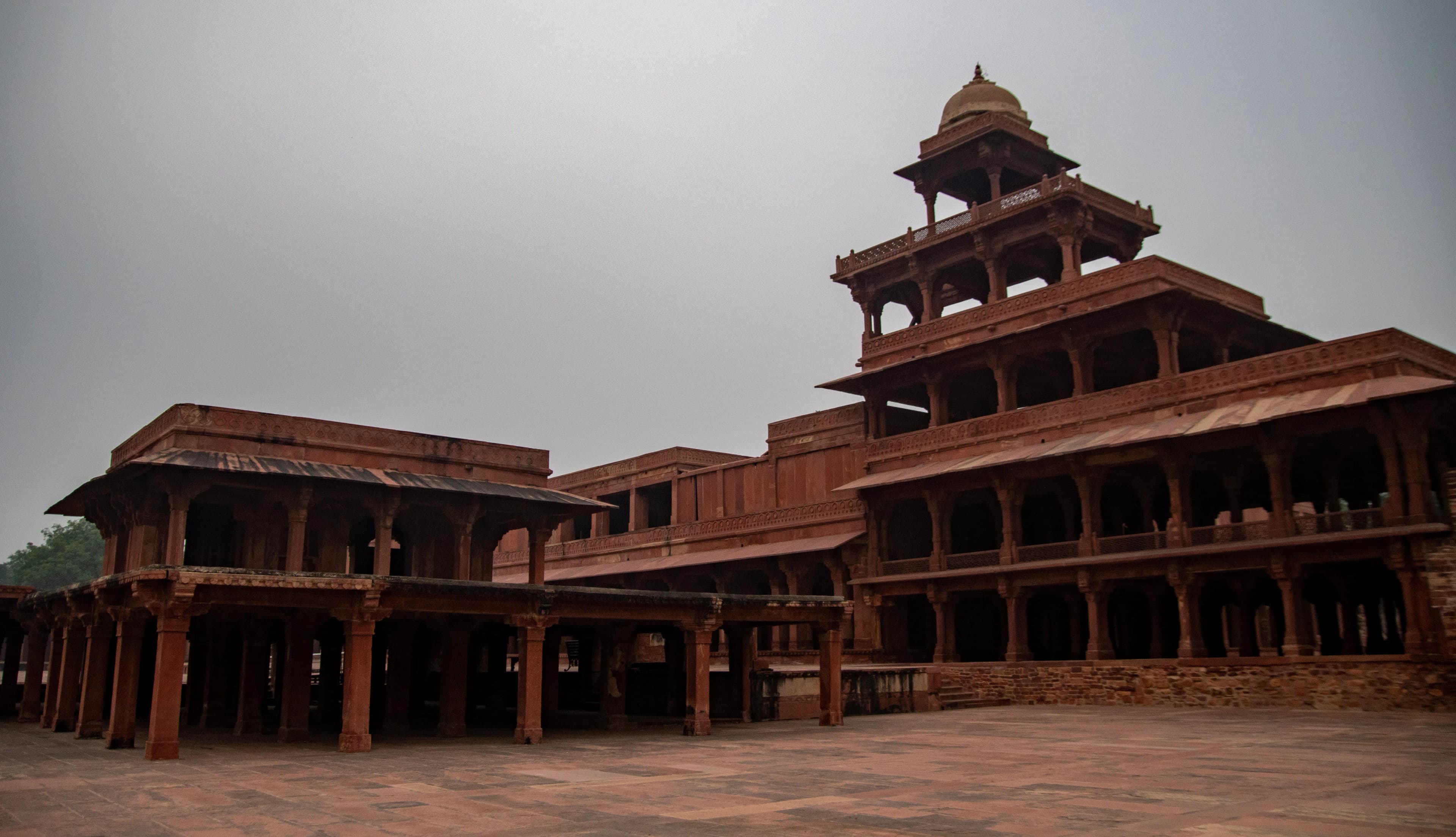
The wind whispers stories through the pierced screens of Panch Mahal, a structure that rises like a delicately carved sandcastle against the Fatehpur Sikri skyline. As I adjusted my camera, framing the pyramidal tiers against the vast Uttar Pradesh sky, I felt a palpable connection to the Mughal era. This wasn't just a building; it was a breathing testament to Akbar's vision, a blend of Hindu and Persian architectural styles that spoke volumes about the cultural confluence of the time. The ground floor, a sprawling open pavilion supported by 84 pillars, once served as a cool respite from the summer heat. I could almost envision the royal women gathered here, their laughter echoing through the now silent spaces. The pillars, each uniquely carved with intricate floral and geometric patterns, captivated my lens. The play of light and shadow through the jaalis, the intricately carved stone lattices, created a mesmerizing tapestry that shifted with the sun's journey across the sky. I spent a considerable amount of time documenting these details, trying to capture the essence of the craftsmanship that had stood the test of centuries. Ascending the levels, the structure shrinks in size, each tier offering a more exclusive and panoramic view of the surrounding city. The second story, supported by fewer pillars, felt more intimate, perhaps a space for smaller gatherings. The third, fourth, and fifth levels, each progressively smaller, culminate in a single chhatri, a domed kiosk, on the topmost tier. This final level, once Akbar's private retreat, offered an unparalleled vista of his magnificent creation. Standing there, I felt a sense of awe, imagining the emperor contemplating his empire from this vantage point. The red sandstone, bathed in the golden hues of the late afternoon sun, radiated warmth. The subtle variations in the stone's color, from a rich ochre to a pale rose, added depth and texture to my photographs. I focused on capturing the interplay of light and shadow, highlighting the intricate carvings and the graceful arches. The pillars, while seemingly uniform from a distance, revealed their unique personalities upon closer inspection. Some bore delicate floral motifs, others geometric patterns, and still others a combination of both, a testament to the artisans' skill and creativity. One aspect that particularly intrigued me was the absence of walls on the lower levels. This open design, unusual for a palace, fostered a sense of connection with the surrounding environment. I could see how the structure, while grand, was also designed for comfort and practicality, allowing for the free flow of air and offering breathtaking views. The jaalis, while providing privacy, also allowed for glimpses of the outside world, blurring the lines between inside and out. My experience at Panch Mahal transcended mere documentation. It was a journey through time, a conversation with the past. As I packed my equipment, the setting sun casting long shadows across the courtyard, I felt a deep sense of gratitude for the opportunity to witness and preserve the legacy of this magnificent structure. The photographs I captured are not just images; they are fragments of history, frozen moments in time, waiting to share their stories with the world. They are a testament to the enduring beauty of Mughal architecture and a reminder of the rich cultural heritage that India holds within its embrace.

Embekka Devalaya Kandy Sri Lanka
Embekka Devalaya, located in Udunuwara, Kandy District, Sri Lanka, stands as a profound testament to India's millennia-spanning cultural heritage, embodying continuous traditions of indigenous architectural and artistic practices. Dedicated primarily to Kataragama Deviyo, also known as Mahasen, and the local deity Devatha Bandara, this monument reflects a deep spiritual and artistic continuum rooted in ancient Indian civilization [1] [2]. The architectural style is a distinctive blend of Kandyan, Dravida, and Indian Wood Carving traditions, showcasing the sophisticated timber construction techniques prevalent in the region for centuries [4] [5]. The complex is renowned for its intricate wooden carvings, particularly within the Hevisi Mandapaya, or Drummer's Hall, which is considered one of the finest examples of medieval carpentry globally [1] [3]. This hall is constructed on a quadrangle stone-faced platform measuring 16.26 meters (52 feet 10 inches) long, 7.92 meters (25 feet 9 inches) wide, and 0.92 meters (3 feet) high [5]. Supporting its high-pitched roof are 32 elaborately carved wooden pillars, each approximately 3.35 meters (11 feet) tall [3] [5]. The medial panels of these pillars feature 128 distinct carvings, complemented by 256 Liyapath Wardana carvings, 64 Pekada Nelum carvings, 30 Balka carvings, and 36 Thalada carvings, totaling 514 individual wood carvings within the Digge alone [5] . These carvings depict a rich array of motifs, including the Hansa Puttuwa (entwined swans), Lanu Gataya (entwined rope), Kisimbi Muna (sneezing face), Liyawala (festoon work), Deva Ruwa (deities), Gijulihiniya (hawk), double-headed eagles, dancing female figures, a mother breast-feeding her child, wrestlers, soldiers on horseback, and mythical creatures such as Serapendiya, Bherunda Pakshiya, Gaja Sinha, and Narilatha [1] [5]. A unique carving depicts an entwined elephant and bull, demonstrating exceptional artistic expertise [1]. The entire structure, including the nails, is crafted entirely from tropical hardwood, a material chosen for its resistance to borer beetles, contributing to the structure's remarkable preservation [1] [4]. A notable engineering innovation is the 'Madol Kurupawa,' a large wooden pin that ingeniously holds 26 rafters together at one end of the Digge roof without the use of any metal fasteners [1] [5] . The Embekka Devalaya complex comprises eight main buildings, including the Vahalkada (main entrance porch), Maha Devalaya (main shrine), Palle Devalaya, Muruthengeya (kitchen), Vee Atuwa (granary), a Buddha shrine, Rittageya (Ambalama), and Sinhasana Geya (throne house) [5]. The Vahalkada, measuring 6.98 meters (22 feet 11 inches) in length and 5.69 meters (18 feet 8 inches) in width, is built on a 0.76-meter (2.5-foot) high quadrangle base and supported by 10 pillars [5]. The Garbha, or sanctum, is an innermost chamber accessible only through the roof level, with entry restricted to the Kapu-mahattaya, the chief priest [5]. The Antharalaya houses historically significant artifacts, including a palanquin and a pair of tusks believed to be offerings from King Vikramabahu III [5]. Conservation efforts have been ongoing, with the Department of Archaeology undertaking significant restoration work since the mid-1940s when the building was in a deteriorated state [5]. The roof of the Maha Devalaya, the entrance porch, and the Palle Devalaya were conserved between 1970 and 1971, followed by the conservation of the Digge in 1978 [5]. More recently, UNESCO-funded workshops in 2013 focused on precise documentation and research methods for wooden structures, emphasizing minimum intervention to preserve the original state of the carvings . The site remains an active place of worship, well-maintained and accessible to visitors, who can observe daily rituals and traditional drumming processions [3] . Embekka Devalaya is a National Heritage Site, continuously maintained and operational, offering a profound connection to India's enduring cultural legacy [5].
Tashilhunpo Monastery Shigatse Tibet
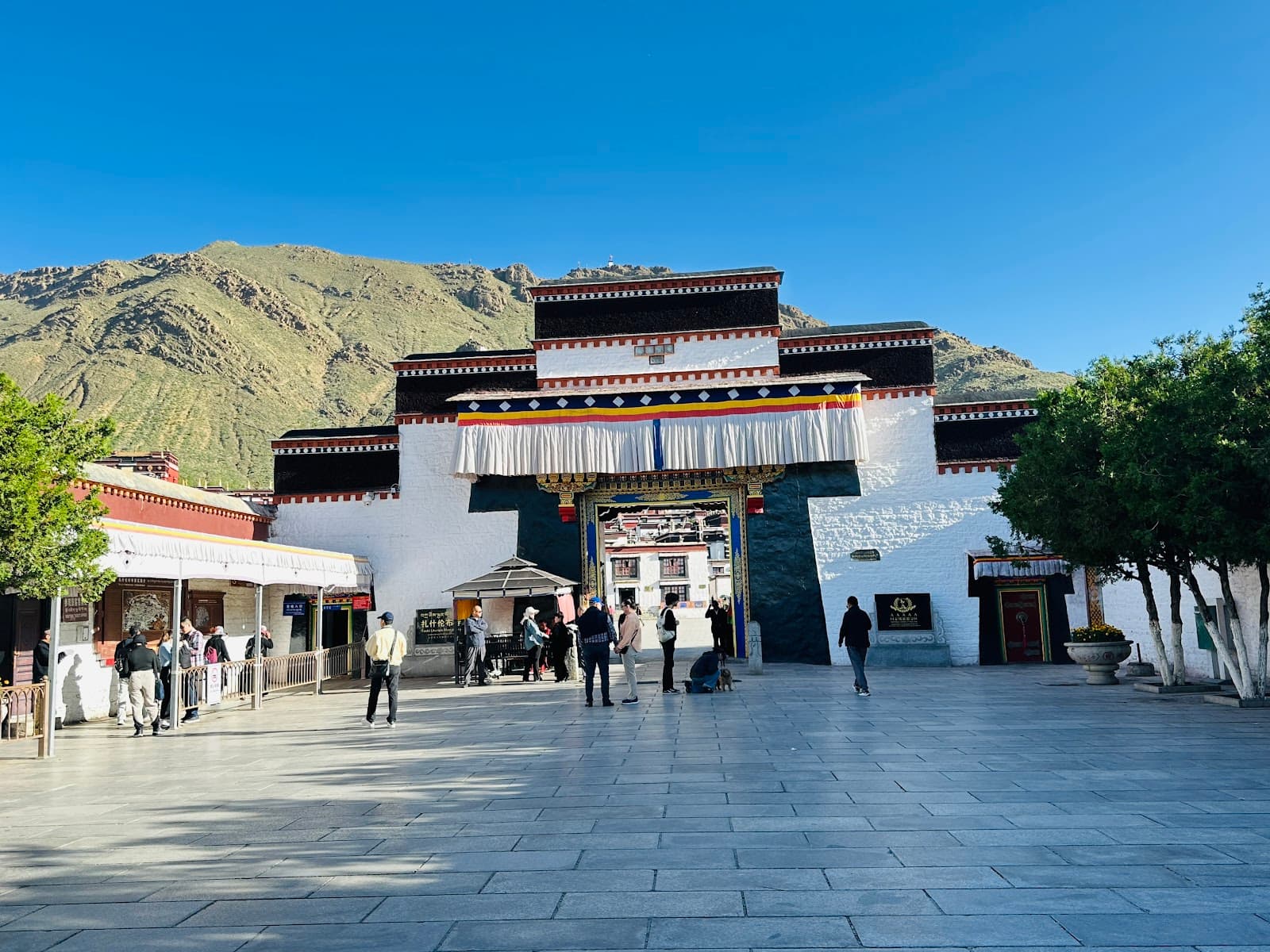
Tashilhunpo Monastery, located in Shigatse, Tibet, represents one of the most important monasteries in Tibet and stands as the traditional seat of the Panchen Lama, constructed in the 15th century CE during the period when Tibetan Buddhism was flourishing under the influence of Indian Buddhist traditions transmitted through centuries of cultural and religious exchange between Tibet and India. The monastery complex, constructed primarily from stone, wood, and earth with extensive decorative elements, features a massive structure containing numerous temples, chapels, assembly halls, and residential quarters arranged according to Indian Buddhist monastery planning principles, with the overall design reflecting mandala-based cosmological principles found in Indian Buddhist architecture. The monastery’s architectural design demonstrates direct influence from Indian Buddhist monastery architecture, particularly the Nalanda and Vikramashila models, with the overall plan and decorative elements reflecting traditions that were transmitted to Tibet through centuries of cultural exchange, while the extensive library and learning facilities demonstrate the transmission of Indian Buddhist scholarship traditions to Tibet. Archaeological and historical evidence indicates the monastery was constructed with knowledge of Indian Buddhist architectural treatises and learning traditions, reflecting the close cultural connections between Tibet and India during the medieval period, when Indian Buddhist scholars, texts, and architectural knowledge continued to influence Tibetan Buddhism. The monastery has served as a major center for Tibetan Buddhist learning and practice for over five centuries, maintaining strong connections to Indian Buddhist traditions through the study of Indian Buddhist texts, philosophy, and practices. The monastery has undergone multiple expansions and renovations over the centuries, with significant additions conducted to accommodate growing numbers of monks and expanding educational programs. Today, Tashilhunpo Monastery continues to serve as an important place of Buddhist worship and learning in Tibet, demonstrating the enduring influence of Indian Buddhist traditions on Tibetan culture and serving as a powerful symbol of Tibet’s deep connections to Indian civilization. ([1][2])
Sisupalgarh Fort Bhubaneswar
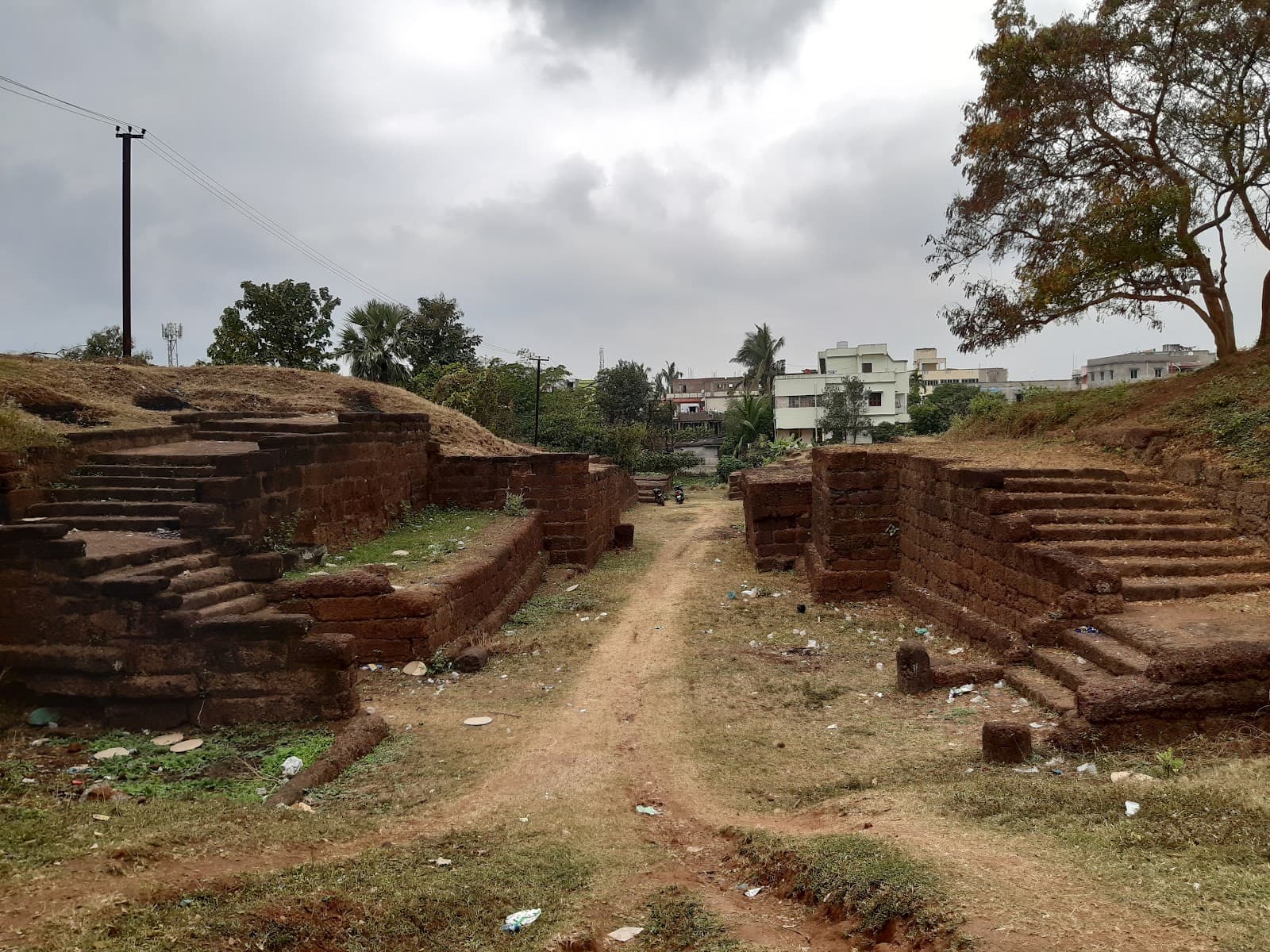
The laterite ramparts of Sisupalgarh rose before me, baked a deep, rusty red under the Odisha sun. Not the imposing, sheer walls of a Rajput fortress, but rather the sprawling, undulating remains of a city fortification, hinting at a life lived within centuries ago. Here, just a few kilometers from the bustling modernity of Bhubaneswar, lay the whispers of ancient Kalinga, a realm steeped in history and architectural ingenuity. My fingers traced the rough texture of the laterite, a porous rock formed from iron-rich soil. Its use spoke volumes about the builders’ resourcefulness and understanding of the local environment. This wasn't just a defensive structure; it was a testament to sustainable building practices, utilizing readily available materials. The ramparts, though eroded by time, still retained a sense of formidable strength. They stretched in a roughly square shape, enclosing an area of approximately 1.2 square kilometers, a scale that impressed upon me the sheer size of this ancient settlement. Walking along the top of the ramparts, I could see the clear demarcation of the moat, now dry and overgrown, but once a crucial defensive feature. The strategic placement of gateways, particularly the impressive northern and southern entrances, suggested a well-planned urban layout. These weren't mere openings; they were carefully constructed passages, designed for both defense and ceremonial processions. I could almost picture the chariots rumbling through, the soldiers standing guard, the vibrant life of the city flowing in and out. Descending into the heart of the fort, I encountered the remnants of what were once bustling streets and residential areas. The foundations of houses, crafted from the same laterite, were still visible, laid out in a grid pattern, indicative of a planned urban settlement. The discovery of artifacts like pottery shards, terracotta figurines, and iron implements during excavations paints a vivid picture of daily life within these walls. It wasn't just a military outpost; it was a thriving urban center, a hub of trade and cultural exchange. One of the most striking features of Sisupalgarh is its sophisticated water management system. Evidence suggests the presence of elaborate drains and reservoirs, showcasing the advanced engineering skills of the time. The careful planning of water resources, crucial in a region with distinct wet and dry seasons, speaks to the foresight and practicality of the city's planners. It’s a reminder that even in ancient times, urban planning considered the practicalities of daily life, not just defense and grandeur. The Ashokan rock edicts discovered nearby, though not within the fort itself, add another layer of historical significance to Sisupalgarh. They suggest that the city, then known as Tosali, was a major administrative center under the Mauryan empire. This connection to one of India’s most influential rulers adds a palpable sense of historical weight to the site. Standing amidst these ruins, I felt a tangible connection to the past, a sense of awe at the ingenuity and resilience of those who built and inhabited this ancient city. Sisupalgarh isn't just a collection of ruins; it's a living testament to the rich tapestry of Indian history. It's a place where the past whispers to the present, offering glimpses into the lives, beliefs, and architectural prowess of a civilization that thrived centuries ago. The site deserves more attention, not just as a historical curiosity, but as a valuable lesson in sustainable urban planning and a reminder of the enduring legacy of ancient India. As I left the fort, the setting sun casting long shadows over the laterite walls, I carried with me a profound sense of wonder and a renewed appreciation for the architectural marvels of ancient India. Sisupalgarh is more than just a fort; it is a time capsule, waiting to be explored and understood.
Hisor Fortress Complex Hisor Tajikistan
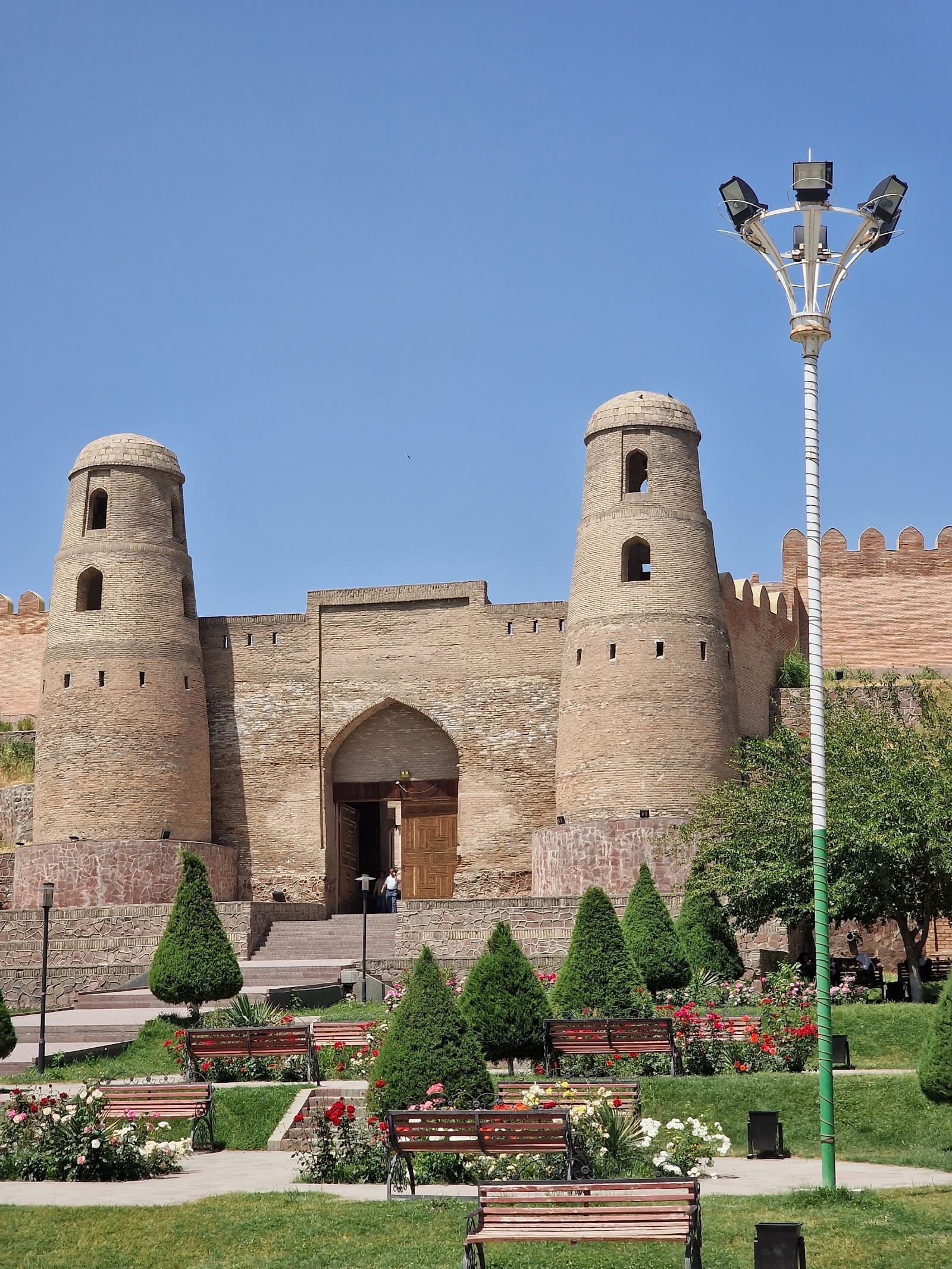
Hisor Fortress Complex, dramatically situated in the Hisor District of central Tajikistan, represents one of the most archaeologically significant fortified settlements in Central Asia, constructed over multiple periods from ancient times through the medieval period as a major defensive and administrative center with archaeological layers containing Buddhist remain fragments, creating a powerful testament to the transmission of Indian Buddhist religious and artistic traditions to Central Asia. The fortress complex, featuring sophisticated defensive architecture including fortified walls, towers, and gates that were constructed and reconstructed over centuries, contains archaeological layers that have yielded Buddhist remain fragments including sculptures, reliefs, and architectural elements that demonstrate clear Indian Buddhist iconographic influences, providing crucial evidence of the site's role as a center for the transmission of Indian Buddhist culture to Central Asia. Archaeological excavations have revealed extraordinary archaeological layers containing Buddhist remain fragments executed in styles that demonstrate clear Indian Buddhist iconographic influences, while the discovery of numerous artifacts including coins, pottery, and ritual objects provides crucial evidence of the site's role as a major center of trade and religious activity that attracted merchants, monks, and pilgrims from across the Buddhist world including India. The fortress complex's architectural layout, with its defensive walls, towers, and gates, follows sophisticated defensive planning principles, while the archaeological layers containing Buddhist remain fragments demonstrate the ways in which Indian Buddhist traditions were integrated into Central Asian fortified settlements. The fortress complex's location in the Hisor District, a major crossroads of ancient trade routes, underscores its significance as a center for the transmission of Buddhist teachings, art, and culture from India to Central Asia and beyond, while the site's archaeological layers demonstrate the sophisticated understanding of Indian Buddhist traditions possessed by the communities that inhabited this extraordinary complex. Today, Hisor Fortress Complex stands as a major archaeological site and represents one of the most important fortified settlements in Central Asia, serving as a powerful testament to the transmission of Indian Buddhist culture to Central Asia, while ongoing archaeological research and conservation efforts continue to protect and study this extraordinary cultural treasure that demonstrates the profound impact of Indian civilization on Central Asian religious and artistic traditions. ([1][2])
Jal Mahal Jaipur
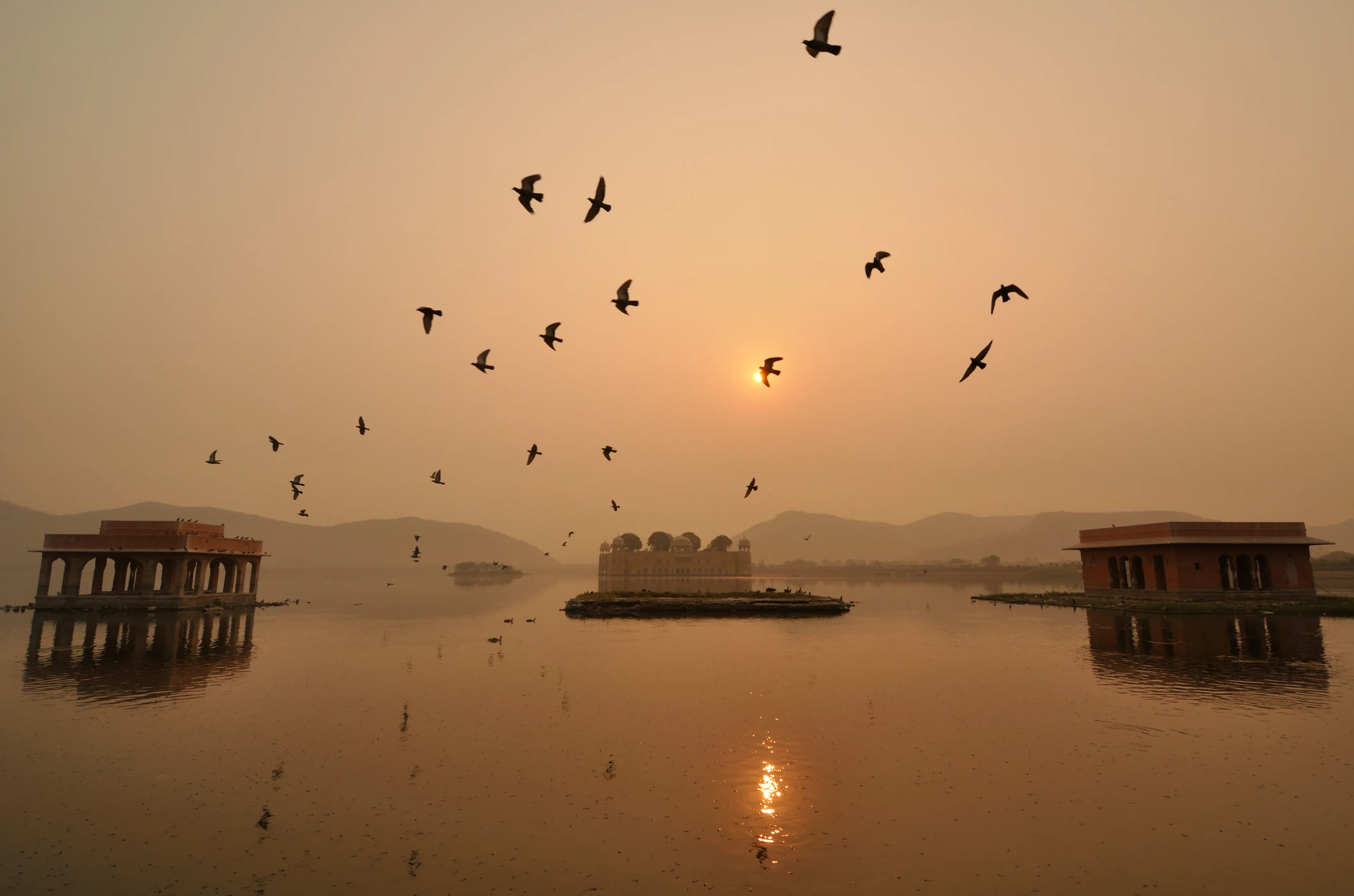
The Jal Mahal, or Water Palace, shimmers like a mirage in the heart of Man Sagar Lake in Jaipur. Having explored every UNESCO site in India, I can confidently say this one holds a unique charm, a blend of Rajput grandeur and the serene tranquility of its watery embrace. Approaching it from the bustling city, the palace seems to materialize from the lake itself, a sandstone vision rising from the placid blue. It’s a spectacle that immediately captivates, a testament to the architectural ingenuity of its creators. My visit began on a crisp winter afternoon, the sunlight glinting off the lake’s surface, creating a dazzling backdrop for the palace. The approach is restricted, no boats are allowed to reach the palace itself, adding to its mystique. This forced perspective, viewing it from the lakeshore, enhances its ethereal quality. You can’t help but wonder about the lives lived within those walls, now eerily silent, surrounded by water. The Jal Mahal is a five-storied structure, four of which remain submerged when the lake is full. The visible top story, with its exquisitely carved chhatris and delicate jalis, offers a glimpse into the opulence within. The red sandstone, a signature of Rajput architecture, glows warmly in the sunlight, contrasting beautifully with the deep blue of the lake. I spent a considerable amount of time observing the intricate details, the delicate floral patterns carved into the stone, the graceful arches, and the strategically placed balconies that would have once offered breathtaking views of the surrounding Aravalli hills. The palace was originally built as a hunting lodge for the Maharaja Jai Singh II in the 18th century and later renovated and expanded by Madho Singh I. While I couldn’t explore the interiors, I learned that the lower levels, now underwater, were designed with elaborate gardens and courtyards. Imagine the grandeur of those submerged spaces, once filled with life and laughter, now home to aquatic life. It’s a poignant reminder of the transient nature of human endeavors, how even the most magnificent creations can be reclaimed by nature. The surrounding Man Sagar Lake itself is an integral part of the Jal Mahal experience. Flocks of migratory birds, including flamingos and pelicans, often grace the lake, adding another layer of beauty to the scene. During my visit, I was fortunate enough to witness this avian spectacle, their vibrant plumage contrasting with the serene backdrop of the palace and the hills. The lake, once a haven for the royal family’s hunting expeditions, is now a sanctuary for these magnificent creatures, a testament to the changing times. One of the most striking aspects of the Jal Mahal is its reflection in the still waters of the lake. It creates a perfect mirror image, doubling the visual impact. This symmetrical beauty, the palace and its reflection, is a photographer’s dream. I spent a good hour capturing the scene from different angles, trying to capture the essence of this magical place. While the restricted access can be a bit frustrating for those eager to explore the palace’s interiors, it also contributes to its preservation. The distance allows for contemplation, for appreciating the architectural marvel from afar, and for imagining the stories it holds within its submerged walls. The Jal Mahal is more than just a palace; it’s a symbol of a bygone era, a testament to human ingenuity, and a reminder of the delicate balance between nature and human creation. It’s a must-see for anyone visiting Jaipur, a place that will stay etched in your memory long after you’ve left its shimmering shores.

Sivasagar Fort Sivasagar
The imposing ramparts of Sivasagar Fort, or rather, what remains of them, rose before me under the vast Assamese sky. Brick-red against the verdant landscape, they spoke of a grandeur that time and the elements had gnawed at, yet failed to completely erase. This wasn't the imposing, fully intact fortress I'd encountered in other parts of India. Sivasagar presented a different kind of beauty, a poignant echo of the Ahom kingdom's power. My journey through the complex began at the main entrance, a crumbling archway that felt more like a portal to the past than a functional gateway. The once formidable walls, now breached in places, allowed glimpses of the inner sanctum. The sheer scale of the fort, even in its ruined state, was breathtaking. It sprawled across a vast area, hinting at the bustling life it once contained. The ground beneath my feet, uneven and overgrown, was a tapestry of brick fragments and tenacious weeds, a testament to nature's slow reclamation. The central structure, known as the Talatal Ghar, immediately drew my attention. Unlike the exposed brickwork of the outer walls, the Talatal Ghar was earth-covered, its multi-tiered roof rising like a stepped pyramid. This subterranean marvel, I learned, served as a royal residence and a military bunker. The cool, damp air within its chambers contrasted sharply with the sun-drenched exterior. Light filtered through narrow openings, casting long shadows that danced on the aged walls, adding an air of mystery. I could almost hear the whispers of history echoing in the silence. Climbing the narrow, worn staircases within the Talatal Ghar was an adventure in itself. Each step felt laden with stories, each landing a stage for imagined scenes of royal life. The views from the upper levels, though partially obscured by vegetation, offered a panoramic vista of the surrounding landscape. I could envision the Ahom kings surveying their domain from these very vantage points, their power radiating outwards like ripples in a pond. Adjacent to the Talatal Ghar stood the Rang Ghar, a two-storied pavilion used for royal sports and entertainment. Its unique octagonal shape, a departure from the typical rectangular structures I'd encountered in other forts, was a testament to the Ahom kingdom's distinct architectural style. The intricate carvings on the remaining portions of the pavilion hinted at a rich artistic tradition, a glimpse into the cultural tapestry of the era. I spent a considerable amount of time photographing the delicate motifs, trying to capture the essence of this bygone artistry. Further exploration revealed the remnants of other structures – stables, storehouses, and perhaps even temples. The scattered fragments of pottery and terracotta figures I stumbled upon added another layer to the narrative, whispering tales of daily life within the fort's walls. These weren't just ruins; they were pieces of a puzzle, each contributing to a larger picture of a vibrant past. As the sun began its descent, casting long shadows across the grounds, I found myself drawn back to the ramparts. The warm hues of the setting sun bathed the crumbling walls in a golden glow, creating a scene of ethereal beauty. Standing there, amidst the whispers of history, I felt a profound connection to the past. Sivasagar Fort wasn't just a collection of ruins; it was a living testament to the rise and fall of a kingdom, a poignant reminder of the impermanence of power, and a celebration of the enduring spirit of a people. My lens, though it could capture the visual beauty, could only hint at the depth of history and emotion that permeated this ancient site.
Mawsynram Shiva Temple Mawsynram
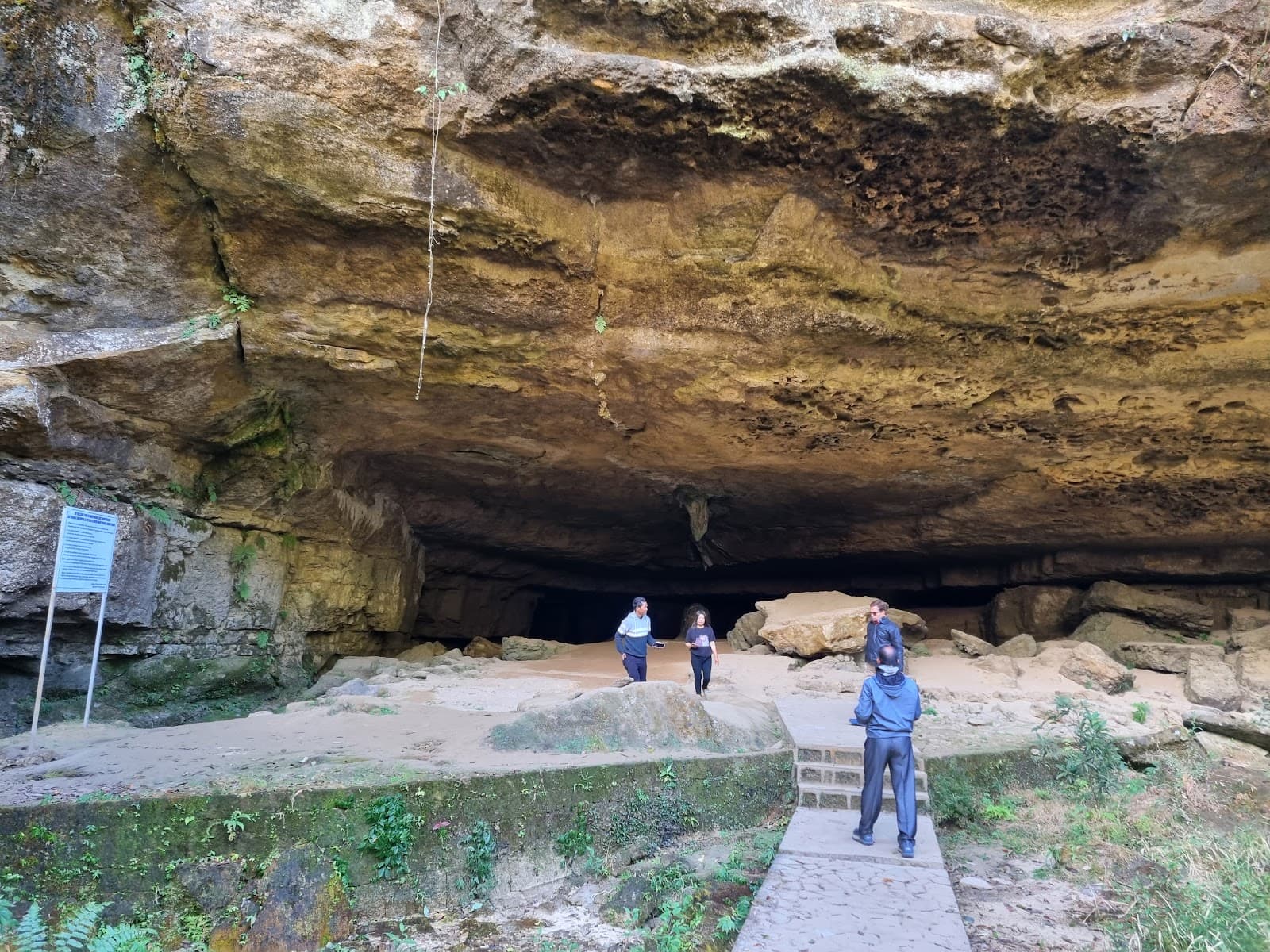
The air hung heavy, thick with the scent of petrichor and pine as I ascended the steps leading to the Mawsynram Shiva Temple. Nestled amidst the verdant embrace of Meghalaya's East Khasi Hills, the temple, though relatively new, exuded an aura of quiet power, a stark contrast to the dramatic, rain-lashed landscape that surrounded it. Having documented countless ancient temples across Gujarat, I was intrigued to see how this particular shrine, dedicated to Lord Shiva in a predominantly Christian state, would interpret and express Hindu architectural traditions. The first thing that struck me was the vibrant colour palette. Unlike the muted sandstone hues and intricate carvings of Gujarat's temples, the Mawsynram Shiva Temple was a riot of colour. The main structure, a multi-tiered shikhara, was painted a brilliant saffron, offset by intricate detailing in bright blue, green, and gold. This departure from traditional temple architecture, I later learned, was a conscious decision, reflecting the local Khasi artistic sensibilities while still adhering to the basic principles of North Indian temple design. The shikhara itself was a fascinating blend of styles. While its upward-sweeping form clearly echoed the Nagara style prevalent in North India, the proportions and decorative elements felt distinctly different. The tiers were less pronounced, giving the structure a more compact, almost pyramidal appearance. Instead of the elaborate figurative sculptures that adorn Gujarati temples, the surfaces here were decorated with geometric patterns and stylized floral motifs, reminiscent of the wood carvings found in traditional Khasi houses. Inside the sanctum sanctorum, the atmosphere shifted. The vibrant colours gave way to a more subdued palette of white and grey. A large Shiva lingam, the symbol of divine energy, dominated the space, bathed in the soft glow of oil lamps. The air was thick with the scent of incense and the murmur of prayers. Despite the temple's relatively recent construction, a palpable sense of reverence permeated the space, a testament to the devotion of the local Hindu community. Stepping out of the sanctum, I noticed a small shrine dedicated to the Goddess Durga, tucked away in a corner of the temple complex. This, I realized, was another interesting aspect of this temple – the incorporation of multiple deities within the same precinct, a practice less common in the more orthodox temples of Gujarat. The Durga shrine, though smaller, was equally vibrant, its walls adorned with depictions of the goddess in her various forms. The temple courtyard offered breathtaking panoramic views of the surrounding hills, shrouded in mist and punctuated by the occasional flash of lightning. The constant drizzle, a defining feature of Mawsynram, seemed to amplify the serenity of the place, creating an atmosphere of quiet contemplation. As I descended the steps, I reflected on the unique character of the Mawsynram Shiva Temple. It was not merely a replica of North Indian temple architecture transplanted to a new location, but rather a fascinating example of cultural fusion, a testament to the adaptability of religious traditions and their ability to absorb and reflect local influences. The vibrant colours, the stylized motifs, the incorporation of local deities – all these elements spoke to a dynamic interplay of cultures, creating a space that was both familiar and distinctly unique. It served as a powerful reminder that architecture, at its best, is not just about bricks and mortar, but about the stories it tells, the cultures it reflects, and the connections it forges. My journey through the architectural marvels of Gujarat had led me to this unexpected gem in the heart of Meghalaya, enriching my understanding of how faith and artistry can intertwine to create something truly special.

Baba Balak Nath Temple Hamirpur
Nestled within the Shivalik range, the Baba Balak Nath Temple in Deotsidh, Hamirpur, presents a compelling example of Nagara architectural tradition blended with regional adaptations ([1][2]). During the Dogra period in the 19th century, around 1850 CE, the temple's construction reflects a departure from the elaborate Dravidian styles prevalent in South India, favoring a simpler North Indian aesthetic ([3]). The temple, with its white facade and saffron flags, creates a striking visual against the backdrop of the surrounding landscape ([1]). Instead of intricate carvings typical of many Nagara temples, murals depicting scenes from the life of Baba Balak Nath adorn the walls, employing vibrant colors to narrate local legends ([2]). The Shikhara (spire) atop the Garbhagriha (sanctum sanctorum) echoes the Nagara style, albeit in a less ornate form than its classical counterparts ([3][4]). Locally sourced materials, including stone, concrete, steel, and wood, were employed in its construction, distinguishing it from temples built with granite ([1]). Devotees offer roasted chickpeas (chana) to the deity, a unique ritual reflecting regional customs ([5]). This practice highlights the temple's integration into the local cultural fabric. Within the complex, a central courtyard fosters a vibrant atmosphere of devotion, contrasting with the more solemn atmosphere often found in South Indian temples ([4]). This temple stands as a testament to the syncretic nature of Indian religious architecture, blending diverse styles and traditions to create a unique sacred space ([1][2][3]). The temple is a place of religious importance for devotees and locals alike.
Vishnupad Temple Gaya
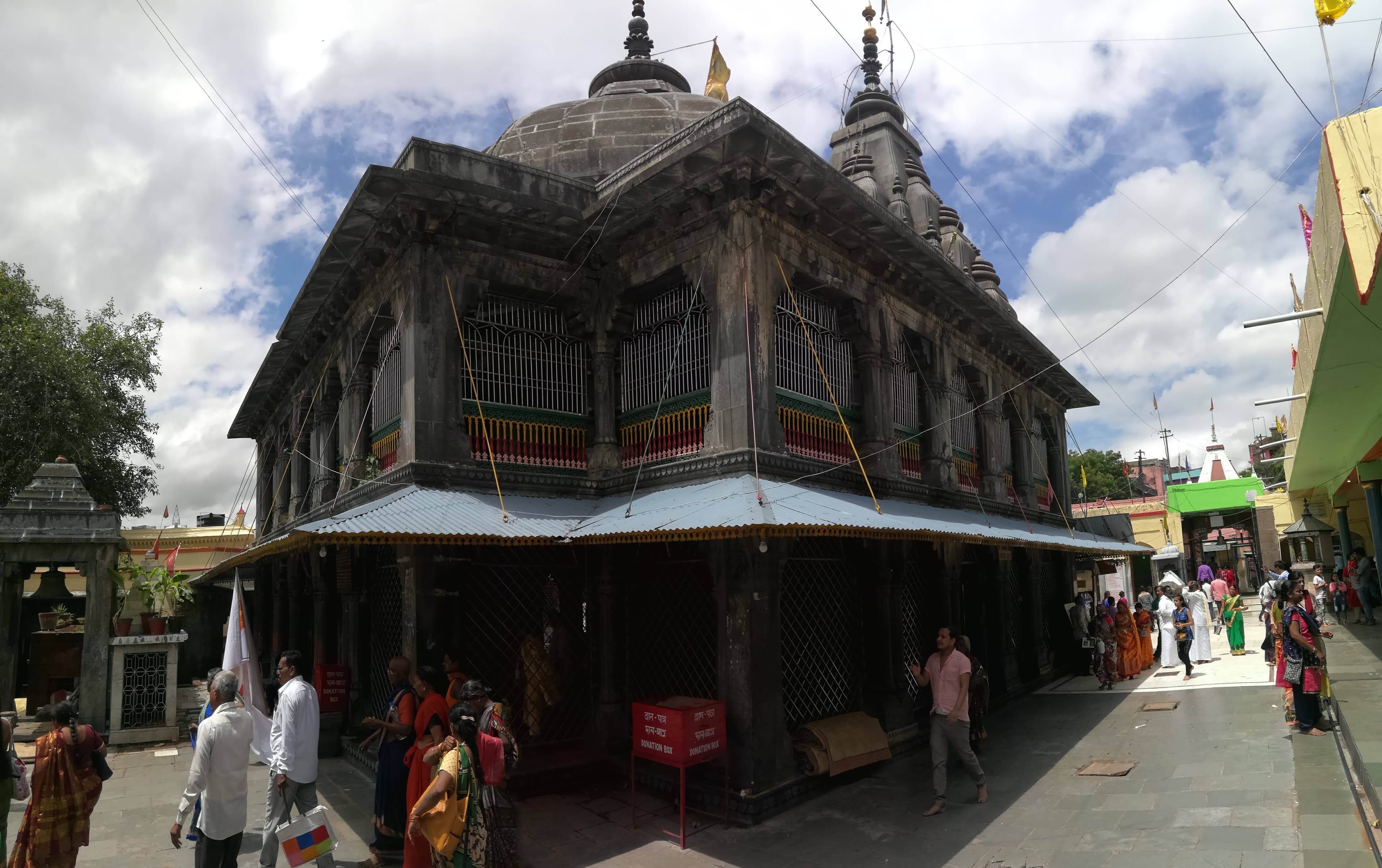
The midday sun beat down on the sprawling Vishnupad Temple complex in Gaya, its heat radiating off the smooth, grey stones. As a Chennai native steeped in the Dravidian architectural tradition, I found myself immediately struck by the distinct North Indian flavour of this sacred site. Unlike the towering gopurams and intricate carvings that characterize temples in my home city, the Vishnupad presented a different aesthetic – a blend of Mughal and Rajput influences woven into a structure dedicated to Lord Vishnu. The temple’s centerpiece is the 40cm long footprint of Vishnu, the “Vishnupad,” enshrined within a silver-plated basin inside the main sanctum. This footprint, believed to be imprinted on a basalt rock, is the very reason Gaya holds such immense religious significance for Hindus. The sanctum itself, a tall pyramidal structure, is crowned by an octagonal shikhara, a feature reminiscent of Rajput architecture. This shikhara, though less ornate than the elaborate vimanas of South Indian temples, possesses a certain stark beauty, its simple lines drawing the eye upwards towards the heavens. Surrounding the main shrine are smaller shrines dedicated to various deities, creating a complex network of sacred spaces. I noticed the prevalence of cusped arches and intricate jaali work, elements borrowed from Mughal architecture, adorning these smaller structures. This fusion of styles, a testament to India's rich and layered history, is what truly captivated me. It’s a visual representation of cultural exchange and assimilation, a narrative etched in stone. The temple complex is situated on the banks of the Falgu River, adding another layer of sanctity to the site. Observing pilgrims performing rituals by the riverbank, I was reminded of the vital role rivers play in Hindu cosmology, serving as conduits between the earthly and the divine. The Falgu, though shallow during my visit, seemed to carry the weight of centuries of devotion within its gentle flow. One aspect that particularly intrigued me was the use of stone. Unlike the granite commonly employed in South Indian temples, the Vishnupad Temple is primarily constructed from sandstone. This choice of material lends the structure a softer, warmer hue, contrasting with the darker, more imposing granite of the south. The sandstone also exhibits a greater degree of weathering, giving the temple a sense of age and history, a tangible connection to the countless pilgrims who have walked these very stones over centuries. Wandering through the temple complex, I observed the intricate carvings adorning the pillars and walls. While less profuse than the elaborate sculptural programs of South Indian temples, these carvings depicted scenes from Hindu mythology, adding a narrative dimension to the architecture. I was particularly drawn to the depictions of Vishnu's various avatars, each telling a story of divine intervention and cosmic balance. The Vishnupad Temple, with its unique blend of architectural styles and its profound religious significance, offered a fascinating glimpse into a different facet of Hindu temple architecture. It highlighted the regional variations within a shared religious tradition, demonstrating how local influences and historical context shape the built environment. As I left the temple complex, the image of the Vishnupad, imprinted on the basalt rock, remained etched in my mind, a symbol of faith and the enduring power of sacred spaces. The experience served as a powerful reminder that architectural exploration is not just about admiring aesthetics; it's about understanding the cultural, historical, and spiritual narratives embedded within the very stones of a structure.
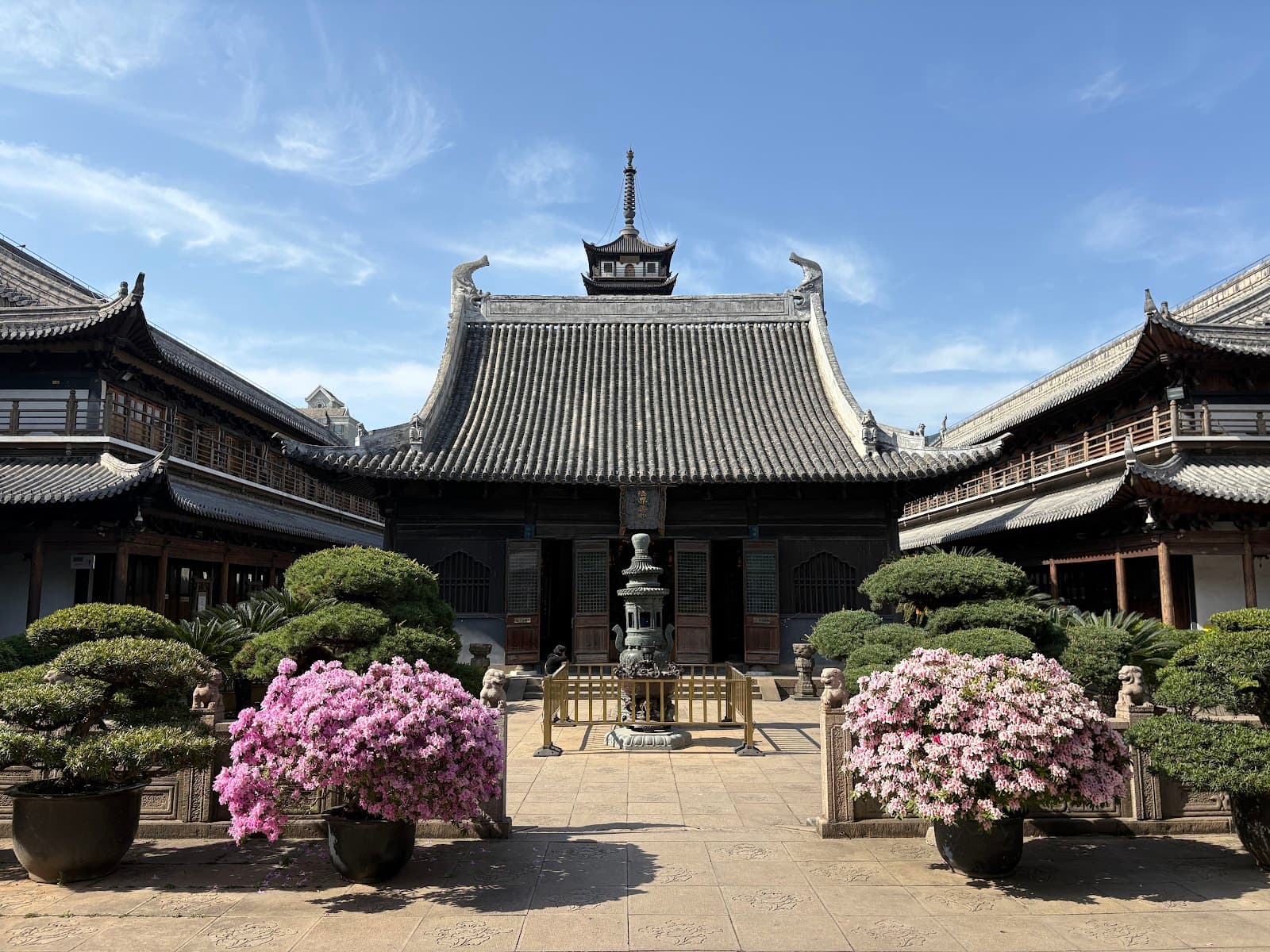
Zhenru Temple Shanghai China
Zhenru Temple, a revered Buddhist monument in Shanghai's Putuo District, stands as a testament to the enduring legacy of Buddhist architectural traditions, which trace their origins to India's millennia-spanning heritage [1] [2]. While situated in China, the temple's architectural and spiritual lineage reflects the profound cultural exchange that saw the transmission of Buddhist philosophy and artistic forms from ancient India across Asia, contributing to a continuous tradition of Indian civilization [5] . The temple's central edifice, the Mahavira Hall, is a distinguished example of Yuan Dynasty timber-frame architecture, completed in 1320 CE [3] [4]. This hall measures 13.4 meters in width and 13 meters in depth, supported by a robust framework of 16 wooden pillars [3]. Notably, ten of these pillars are original to the Yuan Dynasty construction, showcasing the remarkable preservation of indigenous architectural techniques [1]. The hall features a single eave gable and hip roof (单檐歇山顶), a characteristic element of traditional Chinese temple design [3]. A unique structural detail includes the inward inclination of the columns in the central bay, with the Golden Pillar leaning by 16 centimeters and the Eaves Pillar by 8 centimeters, a sophisticated engineering approach observed in other significant Yuan Dynasty structures like the Longhu Hall of Yongle Palace [2]. The foundation system employs independent column bases, with the surrounding area compacted with a deep layer of yellow earth and iron slag, extending 1.8 to 2 meters, a construction method typical of Song and Yuan Dynasty wooden buildings [2]. An invaluable 26-character inscription on the ridge beam precisely documents the hall's installation date, providing critical historical and architectural data [1]. The temple complex also includes the modern Zhenru Pagoda, completed in 1999, which rises 53 meters with a square base and features nine outer layers and ten inner levels, totaling eleven stories including the basement [2]. This pagoda enshrines Shanghai's sole Buddha relic, underscoring the temple's ongoing spiritual significance [1] [2]. Its south side is adorned with two 4-meter-tall dharani steles, and the base walls are embellished with 2x3-meter blue stone reliefs depicting various Bodhisattvas, including Namo Aiyida, Namo Great Compassion Avalokiteshvara, and Namo Great Wisdom Manjushri [2]. The Yuantong Hall houses a 5.2-meter-tall, 3.5-ton Four-Faced Avalokiteshvara statue, crafted from white marble and imported from Singapore, with the Five Dhyani Buddhas adorning its crown [2]. The hall's ceiling features a chessboard-patterned sky lantern, depicting a thousand-armed and thousand-eyed Avalokiteshvara, surrounded by intricate wooden carvings of the Thirty-Two Transformations of Avalokiteshvara, creating an elegant canopy [2]. The walls are further enriched with stone-carved depictions of Avalokiteshvara's twenty-eight attendants [2]. Zhenru Temple, designated a Major National Historical and Cultural Site, actively engages in conservation efforts, with restoration work undertaken in phases since the late 20th century to preserve its ancient structures and artistic elements [3] [1]. The temple maintains active programming, including scripture lectures and meditation, and is accessible to visitors, offering a tranquil environment for reflection amidst its gardens and ancient ginkgo tree [1] [2]. The site is operationally ready, welcoming visitors to experience its profound cultural and spiritual heritage [1].
Quick Links
Plan Your Heritage Journey
Get personalized recommendations and detailed visitor guides