Has Inheritage Foundation supported you today?
Your contribution helps preserve India's ancient temples, languages, and cultural heritage. Every rupee makes a difference.
Secure payment • Instant 80G certificate
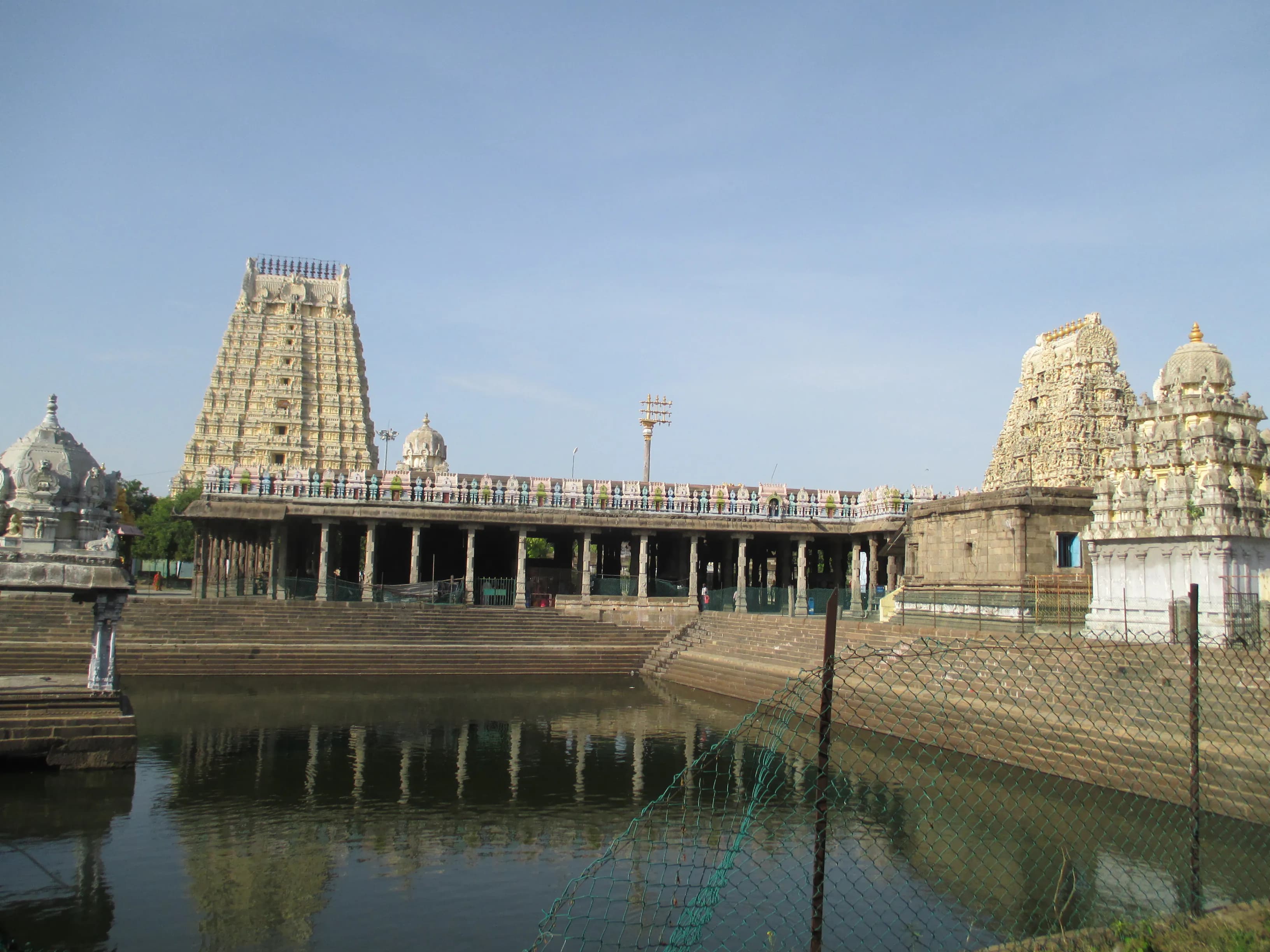
Ekambareswarar Temple Kanchipuram
The towering gopuram of the Ekambareswarar Temple, a colossal 59-meter-high testament to Dravidian architecture, dominates the Kanchipuram skyline. As I stepped through the imposing gateway, a wave of cool air washed over me, a welcome respite from the Tamil Nadu sun. This wasn't just another temple; this was a living, breathing entity, pulsating with centuries of devotion and architectural brilliance. Ekambareswarar, one of the Pancha Bootha Sthalams representing earth, felt profoundly grounded, its very stones whispering tales of bygone eras. The sheer scale of the temple complex is breathtaking. Enclosed within massive walls, it's a city within a city, a labyrinth of shrines, mandapams, and pillared halls. My eyes were immediately drawn to the intricate carvings that adorned every surface. From the smallest floral motif to the elaborate depictions of deities and mythical creatures, the artistry was simply astounding. I spent hours just wandering, my neck craned upwards, tracing the stories etched in stone. The craftsmanship, honed over generations, spoke of a deep reverence for the divine and a dedication to artistic perfection. One of the most striking features of the Ekambareswarar Temple is the thousand-pillared hall. Walking through this architectural marvel, I felt a sense of awe and wonder. Each pillar, a unique work of art, stood as a testament to the skill and patience of the artisans who carved them. The play of light and shadow through the colonnades created an ethereal atmosphere, transporting me to a realm of tranquility and spiritual contemplation. The temple's main deity, Lord Shiva, is represented here as Prithvi Lingam, made of sand and worshipped under a mango tree. This unique aspect adds another layer of symbolism, connecting the temple to the earth element it represents. The story goes that Parvati, Shiva's consort, worshipped him under this very tree, further solidifying the temple's connection to devotion and divine love. Witnessing the rituals and the palpable devotion of the worshippers, I felt a deep connection to the spiritual heart of this ancient place. The temple's history is as rich and layered as its architecture. Built by the Pallavas in the 6th century and subsequently expanded by the Cholas and Vijayanagara rulers, it stands as a testament to the enduring legacy of these powerful dynasties. The different architectural styles, visible in the various sections of the temple, offer a fascinating glimpse into the evolution of Dravidian architecture over centuries. I noticed the distinct influence of the Vijayanagara period in the ornate gopurams and the intricate carvings adorning the walls. Beyond the grand structures and intricate carvings, it was the smaller details that truly captivated me. The worn smoothness of the stone steps, polished by the feet of countless devotees over centuries. The faint scent of incense lingering in the air. The rhythmic chanting of priests echoing through the halls. These sensory experiences added a layer of authenticity and depth to my visit, making it more than just a sightseeing trip. As I left the Ekambareswarar Temple, the towering gopuram shrinking in the distance, I carried with me more than just photographs and memories. I carried a sense of connection to India's rich cultural heritage, a deeper understanding of Dravidian artistry, and a profound appreciation for the enduring power of faith. This wasn't just a temple; it was a living testament to the human spirit's enduring quest for the divine, expressed through art, architecture, and unwavering devotion. Of all the UNESCO sites I've visited in India, Ekambareswarar Temple holds a special place, a place where the earth element truly resonates, anchoring the spirit and inspiring awe.
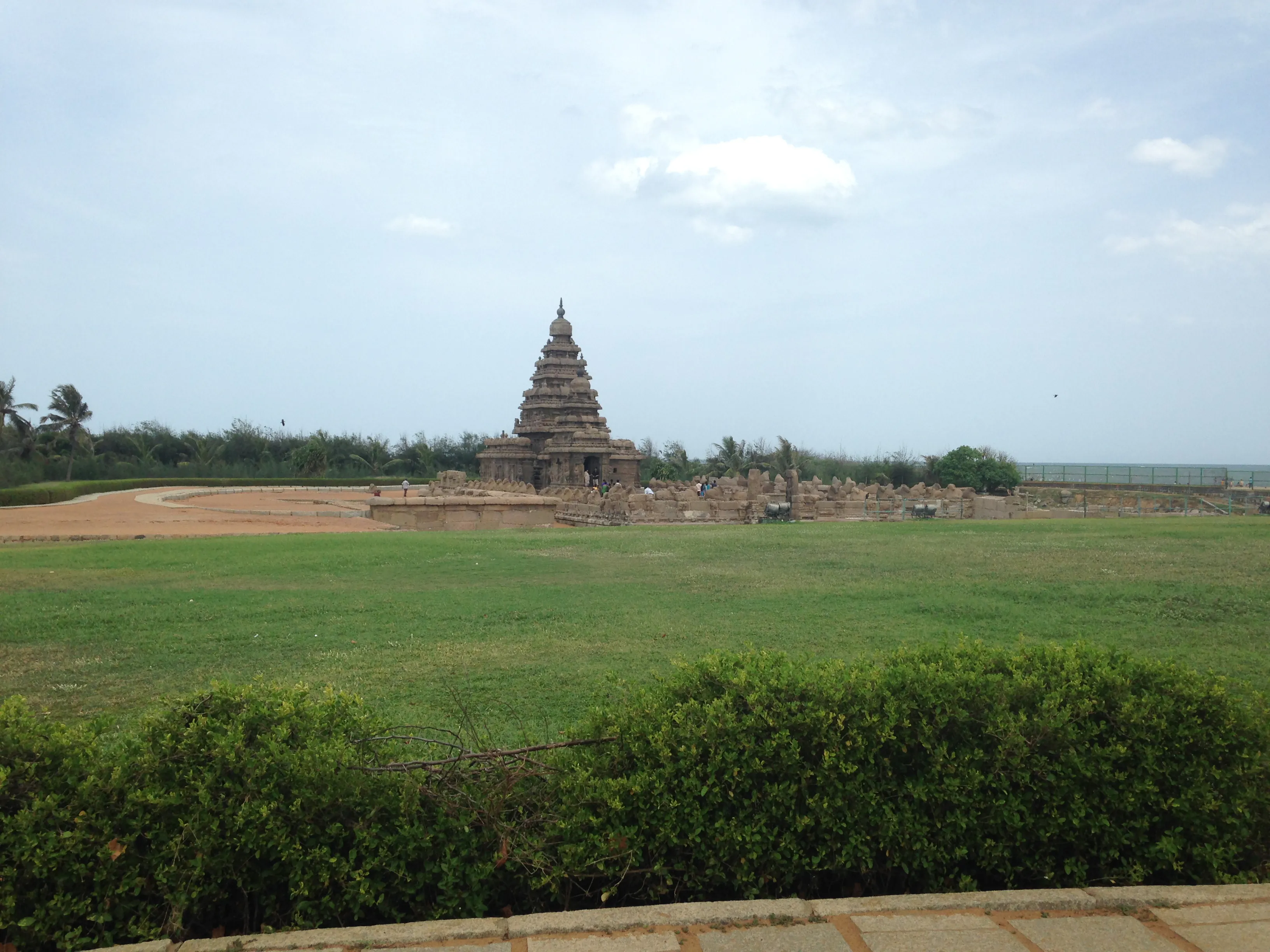
Mahabali Temple Imphal
The air hung heavy with the scent of incense and damp earth as I stepped onto the grounds of the Mahabali Temple in Imphal. The temple, dedicated to the ancient pre-Vaishnavite deity Mahabali, exuded an aura of quiet power, a palpable sense of history clinging to its weathered stones. Unlike the ornate, towering structures I’m accustomed to photographing in Madhya Pradesh, this temple possessed a grounded, almost elemental presence. Its pyramidal roof, constructed of corrugated iron sheets now rusted with age, seemed an incongruous addition to the ancient brick foundation. This juxtaposition, however, spoke volumes about the temple's enduring journey through time, adapting and evolving while retaining its core spiritual significance. The temple's brickwork, the primary focus of my lens, was a marvel. The bricks, uneven in size and texture, were laid without mortar, a testament to the ingenuity of the ancient Meitei builders. Centuries of weathering had eroded some, leaving intriguing patterns and textures that caught the light in fascinating ways. I spent a considerable amount of time circling the structure, observing how the sunlight interacted with these imperfections, highlighting the subtle variations in the brick’s hues, from deep terracotta to a faded, almost pinkish orange. The lack of mortar allowed for a certain flexibility, a give-and-take with the elements that perhaps contributed to the temple's longevity. It felt as if the structure was breathing, subtly shifting and settling with the earth beneath it. A small, unassuming entrance led into the inner sanctum. The interior was dimly lit, the air thick with the scent of offerings and the murmur of prayers. Photography wasn't permitted inside, which, in a way, amplified the sacredness of the space. It forced me to engage with the temple on a different level, to absorb the atmosphere, the energy, and the palpable devotion of the worshippers. I sat quietly for a while, observing the flickering oil lamps and listening to the rhythmic chanting, letting the weight of history and tradition settle upon me. Outside, the temple grounds were a hive of activity. Devotees moved with a quiet reverence, offering flowers, fruits, and incense at the base of the structure. I noticed several small shrines scattered around the main temple, each dedicated to a different deity, creating a complex tapestry of spiritual beliefs. This intermingling of faiths, the layering of traditions, is something I find particularly captivating about the Northeast. It speaks to a cultural fluidity, an acceptance of diverse spiritual paths that is both refreshing and inspiring. As I photographed the devotees, I was struck by the vibrant colours of their traditional attire, a stark contrast to the muted tones of the temple itself. The women, draped in intricately woven phanek (sarongs) and innaphi (shawls), moved with grace and dignity, their presence adding another layer of richness to the scene. I made a conscious effort to capture these moments respectfully, aiming to convey the spirit of devotion without intruding on the sanctity of their rituals. The Mahabali Temple is more than just an architectural marvel; it's a living testament to the enduring power of faith and tradition. It’s a place where the past and present intertwine, where ancient rituals are performed alongside modern-day life. My time at the temple was a humbling experience, a reminder of the deep spiritual connections that bind communities together and the importance of preserving these cultural treasures for generations to come. The photographs I captured, I hope, will serve as a visual echo of this experience, conveying not just the physical beauty of the temple, but also the intangible spirit that resides within its ancient walls.
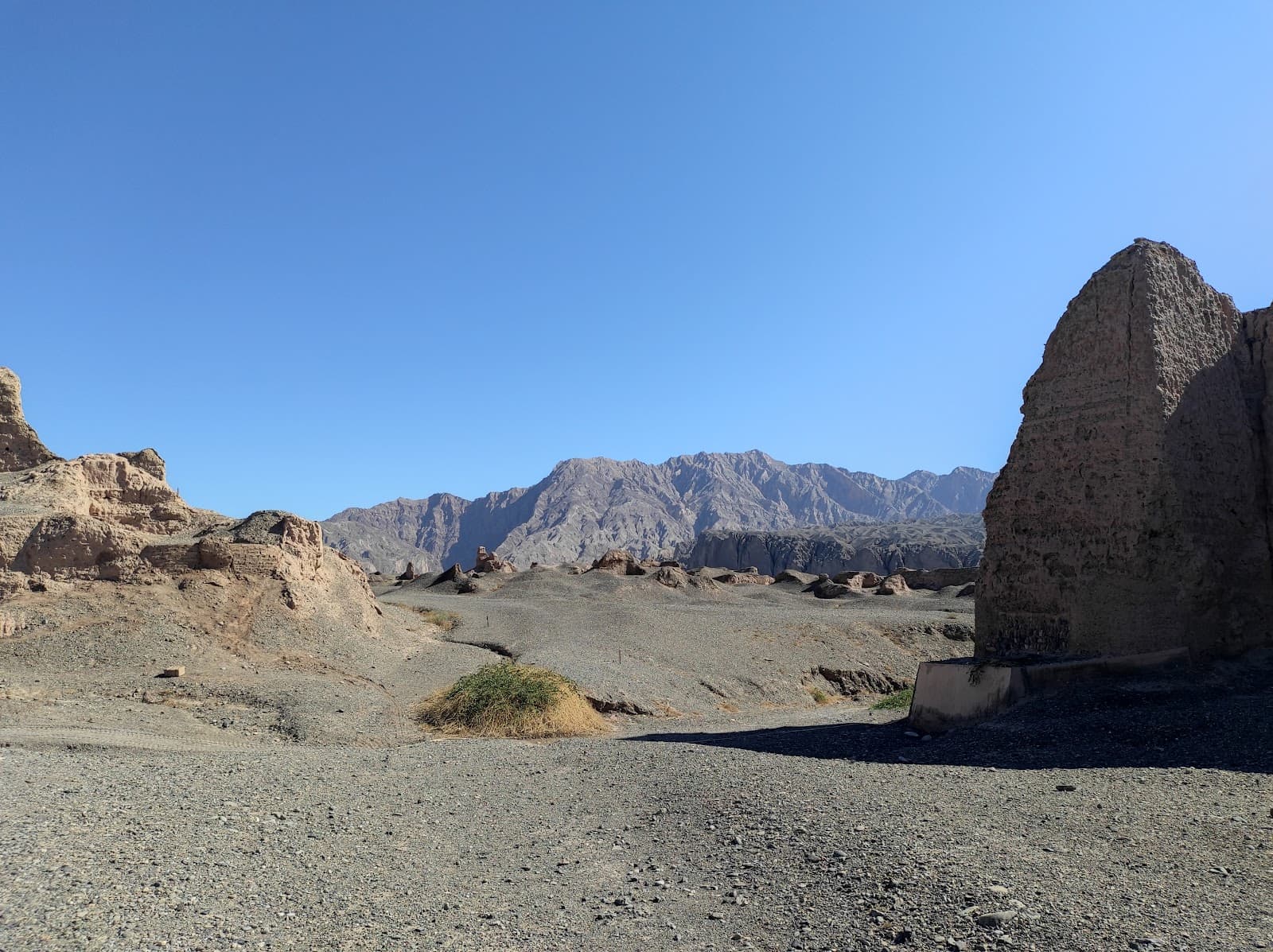
Subashi Buddhist Temple Kuqa Xinjiang China
Subashi Buddhist Temple, located near Kuqa in Aksu Prefecture, Xinjiang, China, represents one of the most magnificent and architecturally sophisticated Buddhist temple complexes along the northern branch of the Silk Road, constructed from the 2nd to 6th centuries CE when the ancient Kingdom of Kucha flourished as a major center for the transmission of Buddhism from India to China, creating a stunning testament to the direct transmission of Indian Buddhist architectural and artistic traditions to Central Asia. The temple complex, constructed primarily from rammed earth, fired brick, and wood with extensive stucco and painted decoration, features massive walls, towering pillars, and extensive ruins that once formed one of the largest Buddhist monastic complexes in the Tarim Basin, with the site's architectural grandeur and sophisticated design demonstrating the systematic transmission of Indian Buddhist monastery architecture, particularly the traditions of northern India, to Central Asia. The site's architectural design demonstrates direct influence from Indian Buddhist monastery architecture, with the overall plan, structural forms, and decorative programs reflecting Indian Buddhist practices that were systematically transmitted to Central Asia, while the discovery of numerous Indic sculptures, including a remarkable 6th to 7th century sarira (Buddhist relic box) depicting Central Asian figures in long tunics reminiscent of Tocharian friezes, provides crucial evidence of the site's role as a major center of Buddhist artistic production that was directly influenced by Indian traditions. Archaeological excavations have revealed extraordinary preservation of architectural elements including massive walls, pillars, and foundations that demonstrate the sophisticated engineering techniques employed in the temple's construction, while the discovery of numerous sculptures, inscriptions, and ritual objects provides further evidence of the site's importance as a center of Buddhist worship, learning, and artistic production. The temple complex flourished particularly during the 5th to 7th centuries CE, when it served as one of the most important centers for the transmission of Buddhism from India to China, attracting monks, traders, and pilgrims from across the Buddhist world, while the site's location along the northern Silk Road facilitated its role in the transmission of Buddhist teachings, art, and culture. The site continued to function as a Buddhist center through the 6th century CE, with evidence of continued use and modifications that reflect the evolving religious and political landscape of the region, while the site's eventual abandonment, likely during the 7th or 8th century CE following political changes and the decline of Buddhism in the region, left substantial ruins that continue to provide crucial insights into the site's history and significance. The discovery of the sarira casket and other Indic sculptures at Subashi provides particularly important evidence of the ways in which Indian Buddhist artistic traditions were adapted and synthesized with local Central Asian elements, demonstrating the complex cultural exchanges that occurred along the Silk Road, while the site's architectural grandeur underscores its historical importance as a major center of Buddhist learning and practice. Today, Subashi stands as a UNESCO Tentative List site and represents one of the most important archaeological sites in the Taklamakan Desert, serving as a powerful testament to the transmission of Indian Buddhist architecture and art along the Silk Road, while ongoing archaeological research and preservation efforts continue to protect and study this extraordinary cultural treasure that demonstrates the profound impact of Indian civilization on Central Asian Buddhist art and architecture. ([1][2])
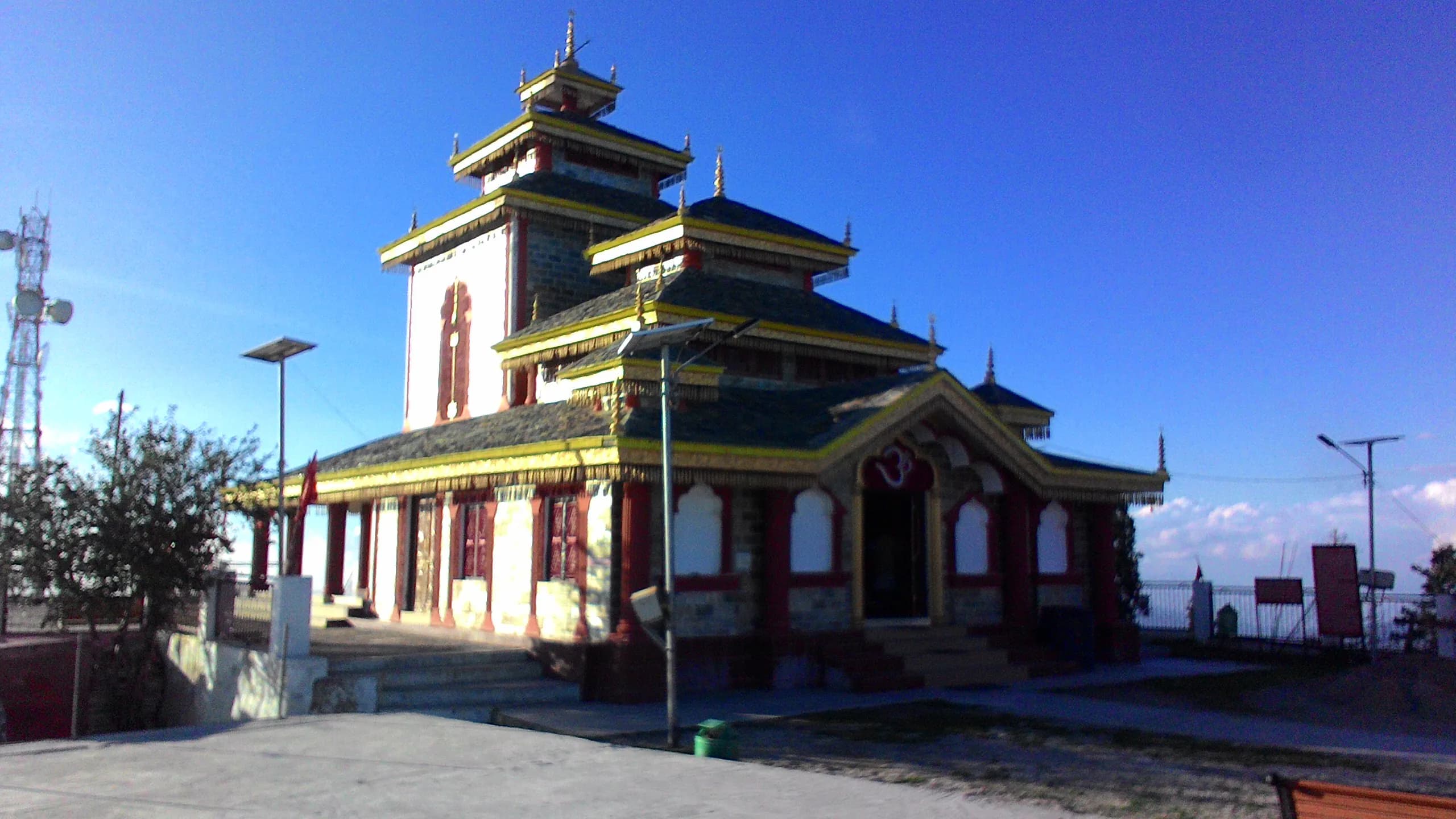
Surkanda Devi Temple Tehri Garhwal
The crisp mountain air, scented with pine and a hint of woodsmoke, whipped around me as I ascended the final steps to Surkanda Devi Temple. Perched at an altitude of almost 10,000 feet in the Tehri Garhwal district of Uttarakhand, the temple commands a breathtaking panorama of the Himalayan peaks. It's a view that instantly justifies the arduous journey, a blend of winding roads and a steep, albeit scenic, climb. My camera, a constant companion, felt almost inadequate to capture the grandeur of the snow-capped giants against the azure sky. Surkanda Devi, dedicated to the goddess Sati, holds a profound significance in Hindu mythology. Local legend recounts this spot as the place where Sati's head fell after she self-immolated. This narrative imbues the location with a palpable sense of reverence, a quiet energy that hums beneath the surface of the bustling activity of pilgrims. The temple itself is relatively small, a stark contrast to the vastness of the landscape it inhabits. Its architecture is a simple yet elegant example of traditional Himalayan temple design. The main shrine, constructed of grey stone, features a sloping slate roof adorned with a golden trident, glinting in the sunlight. Unlike the ornate carvings found in many South Indian temples, the aesthetic here is one of understated beauty, allowing the natural surroundings to take center stage. I spent hours observing the intricate details. The stonework, though weathered by time and the elements, displayed a remarkable craftsmanship. The mortar, seemingly a simple mixture of lime and sand, had held the structure together for centuries, a testament to the ingenuity of the builders. Small brass bells, tied to the eaves, chimed melodiously in the wind, adding another layer to the sensory experience. Inside the sanctum sanctorum, photography is prohibited, a rule I respected. However, the memory of the dimly lit space, filled with the fragrance of incense and the murmur of prayers, remains vivid. The atmosphere was thick with devotion, a collective energy that transcended language and background. It was a privilege to witness this intimate expression of faith. Beyond the main shrine, the temple complex includes several smaller structures and open spaces. I noticed a series of small stone platforms, likely used for rituals. The surrounding walls were adorned with faded murals depicting scenes from Hindu mythology. These weathered paintings, though partially obscured by time, offered a glimpse into the rich artistic traditions of the region. I meticulously documented these fragments of history, hoping to preserve their stories through my lens. One of the most striking aspects of Surkanda Devi is the seamless integration of the built environment with the natural landscape. The temple seems to grow organically from the mountainside, a harmonious blend of human creation and nature's artistry. The panoramic views from the temple courtyard are simply mesmerizing. The rolling hills, blanketed in dense forests, stretch out as far as the eye can see, punctuated by the towering peaks of the Himalayas. As the sun began to dip below the horizon, casting long shadows across the valley, I felt a profound sense of peace. Surkanda Devi is more than just a temple; it's a sanctuary, a place where the spiritual and the natural converge. My experience here transcended the purely visual; it was a journey into the heart of the Himalayas, a testament to the enduring power of faith and the breathtaking beauty of the natural world. Leaving the temple, I carried with me not just photographs, but a deeper appreciation for the rich cultural and spiritual heritage of Uttarakhand.
Umaid Bhawan Palace Jodhpur
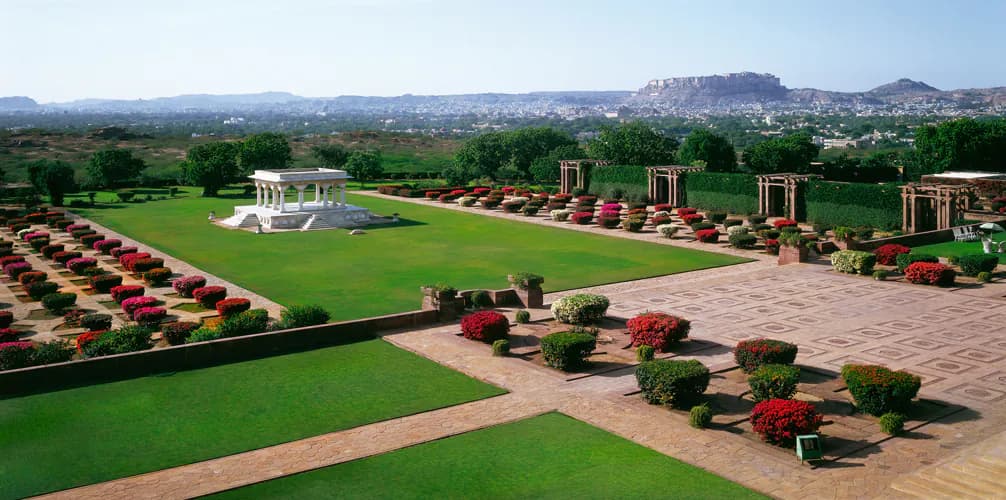
The imposing sandstone edifice of Umaid Bhawan Palace, perched atop Chittar Hill overlooking Jodhpur's blue-washed expanse, is a breathtaking spectacle. As a South Indian steeped in the Dravidian architectural idiom, I was immediately struck by the distinct shift in style. Here, the intricacies of granite carvings and towering gopurams I was accustomed to were replaced by the sweeping grandeur of Rajput and Art Deco influences. The sheer scale of the palace, a harmonious blend of Indo-Saracenic, Classical Revival, and Western Art Deco styles, was truly awe-inspiring. The palace's warm, honey-coloured sandstone, quarried locally, glowed in the afternoon sun. The intricate latticework jalis, a feature I recognized from Mughal architecture, offered glimpses of the meticulously manicured gardens below while providing shade and ventilation – a practical solution elegantly executed. Unlike the vibrant colours often associated with Rajasthani architecture, Umaid Bhawan exuded a sense of restrained opulence. The dominant sandstone was offset by polished marble flooring and subtle accents of black granite, creating a visual harmony that was both regal and inviting. Stepping inside, the central dome, a masterpiece of Art Deco design, captivated my attention. Its geometric patterns and soaring height created a sense of grandeur that rivalled the vast courtyards of South Indian temples. The use of stained glass, a Western architectural element, added a splash of colour, filtering the sunlight and casting kaleidoscopic patterns on the marble floors. The interior spaces seamlessly blended Indian and European aesthetics. Intricate murals depicting scenes from Hindu epics adorned some walls, while others showcased Art Deco motifs, a testament to the Maharaja's appreciation for both traditional and contemporary art forms. The Durbar Hall, with its gilded furniture and imposing portraits of the Jodhpur royal family, offered a glimpse into the lavish lifestyle of the Maharajas. The intricate detailing on the wooden furniture, reminiscent of the intricate woodwork found in Chettinad mansions back home, highlighted the skilled craftsmanship prevalent in both regions, albeit expressed through different mediums. The throne room, with its ornate silver chairs and intricate chandeliers, exuded an air of regal authority. Exploring the museum wing, housed within a section of the palace, provided valuable context to the building's history and the vision of Maharaja Umaid Singh. The collection of vintage cars, clocks, and photographs offered a fascinating glimpse into the Maharaja's personal interests and the era in which the palace was built. Observing the architectural plans and models on display, I could appreciate the meticulous planning and engineering that went into creating this architectural marvel. The integration of modern amenities, such as a swimming pool and a squash court, within the traditional palace structure, showcased a forward-thinking approach that resonated with me. One of the most striking aspects of Umaid Bhawan was its integration with the landscape. The palace, built on a raised platform, seemed to emerge organically from the rocky terrain. The expansive gardens, designed with geometric precision, provided a refreshing contrast to the arid landscape surrounding the palace. The panoramic views of Jodhpur's blue cityscape from the palace ramparts were simply mesmerizing. The "blue city," a sea of indigo houses stretching towards the horizon, offered a visual spectacle that was both unique and unforgettable. Umaid Bhawan Palace is more than just a building; it's a testament to a bygone era, a symbol of the grandeur and vision of the Jodhpur royal family. While vastly different from the temple architecture I was familiar with, the palace's meticulous craftsmanship, attention to detail, and harmonious blend of diverse architectural styles resonated deeply with my appreciation for architectural heritage. It served as a powerful reminder that architectural beauty transcends regional boundaries and stylistic differences, speaking a universal language of artistry and human ingenuity.
Talatal Ghar Sivasagar
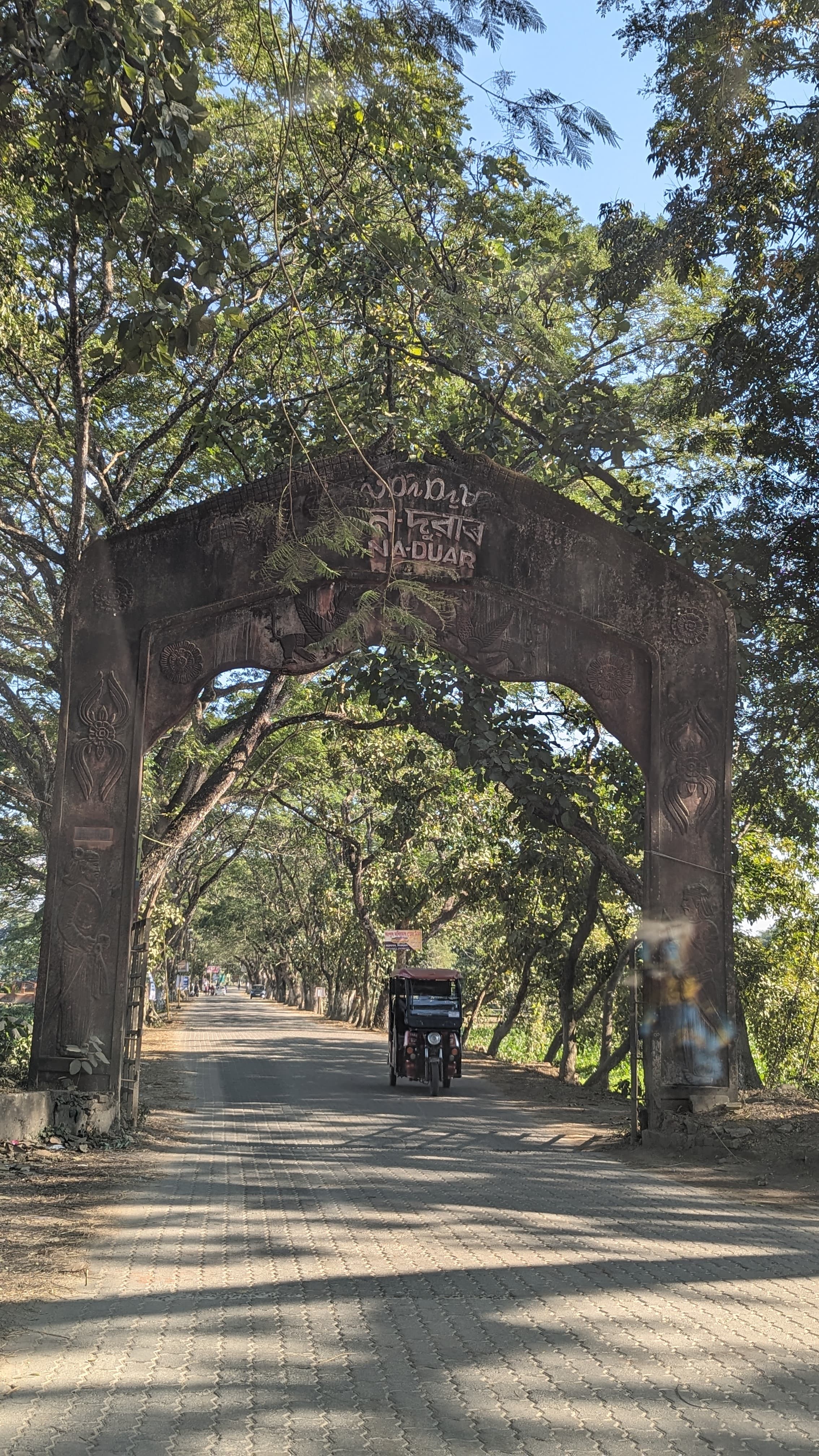
The humid Assam air hung heavy as I descended the first of the brick stairs leading into Talatal Ghar. Coming from Rajasthan, I’m accustomed to the imposing sandstone and marble structures of Rajput royalty, but this Ahom palace, nestled in Sivasagar, presented a different kind of grandeur, one steeped in brick, earth, and a unique architectural sensibility. It wasn't the verticality that struck me initially, but the sheer breadth of the structure, sprawling across the landscape like a terracotta leviathan. Talatal Ghar, meaning "underground house," is somewhat of a misnomer. While it does possess subterranean levels, the palace is predominantly above ground, a multi-storied brick edifice that speaks volumes of the Ahom kingdom's power and ingenuity. The first thing that caught my eye was the lack of ornamentation compared to the palaces I’m familiar with. The beauty here lay in the sheer scale and the intricate brickwork. No elaborate carvings or inlaid precious stones, just the warm, earthy tones of burnt brick, laid with precision and artistry. The ground floor, or Kareng Ghar, served as the royal apartments and public audience hall. I walked through the long, vaulted corridors, imagining the bustle of court life that once filled these spaces. Light filtered in through the arched doorways and small windows, casting long shadows that danced on the brick walls. The rooms were surprisingly cool, a welcome respite from the Assamese heat, a testament to the thermal properties of the brick construction. It was the subterranean levels, however, that truly captivated me. Descending further, I entered a labyrinthine network of tunnels and chambers. These weren't dungeons as some might imagine, but rather secret escape routes and hidden passages, a crucial element of the palace's defense strategy. I could almost feel the ghosts of Ahom soldiers moving stealthily through these darkened corridors, preparing for battle. The air down here was thick with the scent of damp earth and time, a palpable reminder of the centuries that had passed since these passages were in use. The architecture of Talatal Ghar is a fascinating blend of Tai Ahom traditions and influences from other cultures. The sloping roofs, reminiscent of traditional Assamese houses, are a striking contrast to the arched doorways and vaulted ceilings, which hint at Mughal influences. This fusion of styles creates a unique architectural vocabulary that sets Talatal Ghar apart from any other structure I’ve encountered. As I climbed back up to the surface, blinking in the sunlight, I noticed details I’d missed on my way down. The strategic placement of the palace, overlooking the Sivasagar tank, not only offered a picturesque view but also served as a crucial defensive advantage. The tank itself, an impressive feat of engineering, was not just a source of water but also a moat, protecting the palace from invaders. My visit to Talatal Ghar was more than just a tour of a historical site; it was a journey into the heart of the Ahom kingdom. It was a chance to witness firsthand the ingenuity and architectural prowess of a civilization that thrived for centuries, leaving behind a legacy etched in brick and earth. While the grandeur of Rajasthan's palaces remains etched in my memory, Talatal Ghar offers a different kind of beauty, a testament to the power of simplicity, functionality, and a deep connection to the land. The whispers of history resonated within the brick walls, a reminder that even the most powerful empires eventually crumble, leaving behind only echoes of their former glory.
Tarapith Temple Tarapith
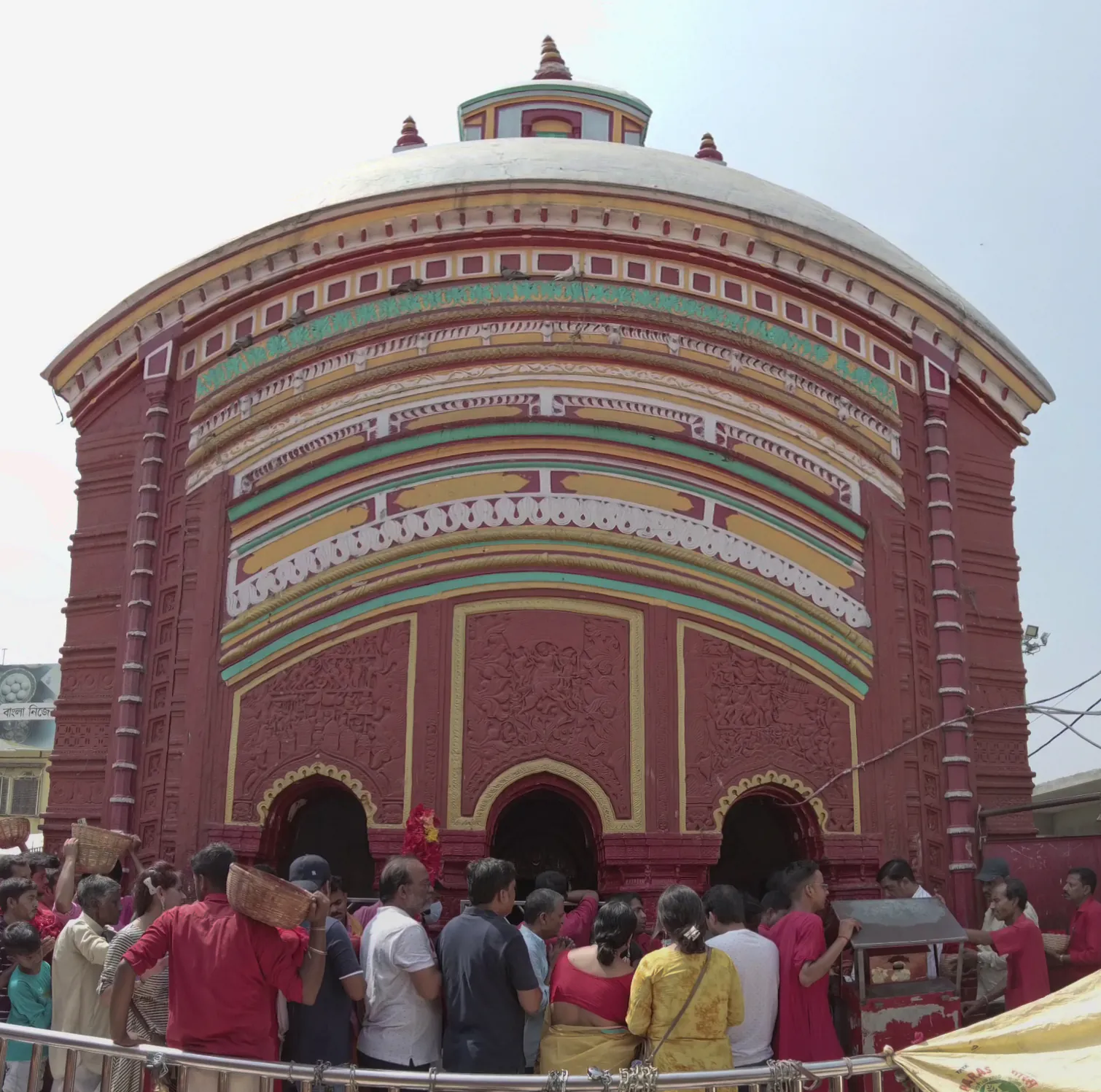
The air hung thick with the scent of incense and something more primal – a metallic tang that I later understood was dried blood, offered as part of the tantric rituals Tarapith Temple is renowned for. Located in the heart of rural West Bengal, this temple, dedicated to the fearsome goddess Tara, a form of Kali, is unlike any of the 500+ monuments I've documented across India. It’s not the grandeur of the architecture that strikes you first, but the raw, visceral energy that permeates the very ground you stand on. The temple itself is relatively modest in size, a traditional Bengali hut-style structure with a sloping, thatched roof. It houses the main deity, Goddess Tara, depicted in her usual fierce form, with a garland of skulls, a protruding tongue, and four arms. But what sets this idol apart is the small stone figure of Shiva lying at her feet, drinking the blood dripping from her tongue. This iconography, stark and unsettling, speaks volumes about the temple's association with tantric practices. Surrounding the main temple is a sprawling complex, a chaotic tapestry of smaller shrines, sacrificial altars, and cremation grounds. The cremation ghats, situated on the banks of the Dwaraka River, are a constant reminder of the cycle of life and death, a theme deeply intertwined with the worship of Tara. I watched as families performed last rites, the smoke from the pyres mingling with the incense, creating an almost surreal atmosphere. The architectural details, while not ornate, are symbolic. The predominant use of red brick and terracotta reflects the earthy, primal nature of the deity. The sloping roof, typical of Bengali architecture, provides a sense of groundedness, contrasting with the intense spiritual energy that swirls within. I noticed intricate terracotta plaques adorning some of the smaller shrines, depicting scenes from Hindu mythology, adding a layer of narrative to the otherwise austere surroundings. What truly captivated me, however, was the human element. Tarapith attracts a diverse crowd – devout pilgrims seeking blessings, families performing rituals for departed loved ones, and the aghoris, ascetic Shaiva sadhus known for their unconventional practices. I spent hours observing the interplay between these different groups, each with their own unique relationship with the goddess. The palpable devotion, mixed with a palpable sense of fear and awe, created an atmosphere unlike anything I'd experienced before. I witnessed devotees offering everything from flowers and sweets to animal sacrifices. The sight of the latter, while unsettling to some, is an integral part of the tantric tradition practiced here. It's a stark reminder of the raw, unfiltered nature of faith, a far cry from the sanitized versions often presented in mainstream religious discourse. One particular interaction stayed with me. An elderly woman, her face etched with wrinkles and her eyes filled with a quiet intensity, sat near the main temple, chanting mantras. I approached her cautiously, and after a brief conversation, she shared her story of seeking solace and healing at Tarapith for years. Her unwavering faith, despite the hardships she had faced, was a testament to the power of belief and the solace that places like Tarapith offer. Documenting Tarapith was a challenging but deeply rewarding experience. It pushed me beyond the comfortable confines of traditional temple photography and forced me to confront the complex and often unsettling realities of faith and ritual. It's a place where life and death, devotion and fear, tradition and transgression, all converge, creating a powerful and unforgettable experience. It's a place that stays with you long after you've left, a constant reminder of the multifaceted nature of human spirituality.

Janaki Mandir
As I walked through the arches into the Janaki Devi temple in Janakpur, Nepal, I was struck by its grand marble facade and intricate carvings. Crossing the cool stone floors barefoot, I listened to devotional songs and bells as worshippers gathered before the idols of Ram and Sita. Witnessing the Mangala aarti at sunrise left me with a lasting tranquillity. Legend has it that King Janaka found baby Sita in a golden casket at the temple site while ploughing the field, considering her a divine gift from Bhudevi, the Earth Goddess. In 1657, the ascetic Shurkishordas discovered the temple's golden idol of Sita, believed to be self-manifested, which led to the construction of the temple. The Ram Sita Vivah Mandap is a marble pavilion within the temple complex with pillars, arches, and domes. It marks the site of Ram and Sita's wedding - the Swayamvar. Inside the mandap are beautifully adorned and seated idols of Rama and Sita, as well as others depicting the ancient wedding ceremony. Pilgrims, especially newlyweds, seek blessings for marital harmony and happiness at the Vivah Mandap. As evening approached, the temple lit up into a magical spectacle. While local infrastructure poses challenges, the serenity and splendour of Janaki Mandir is an unforgettable journey, offering a genuine encounter with history, devotion, and Mithila heritage. Janaki Mandir, also known as Nau Lakha Mandir (Nine Lakh Temple), is a magnificent three-storied temple dedicated to Goddess Sita, located in Janakpur, Nepal. Commissioned in 1910 by Queen Vrisha Bhanu of Tikamgarh, India, the temple is built entirely of white marble and stone, blending Koiri Hindu, Mughal, and Rajput architectural styles. The temple complex spans approximately 1,480 square meters and contains 60 rooms adorned with Madhubani art, colored glass, engravings, and ornate lattice windows. The temple stands on ground believed to be sanctified by Sita's birth and her marriage to Rama, serving as a locus for both historical memory and living faith.

Vedanta Society Old Temple San Francisco
Vedanta Society Old Temple in San Francisco greets visitors with incense, polished redwood pews, and the familiar cadence of daily arati. Twice-daily worship and weekly lectures anchor the schedule, while docents guide first-Sunday architecture tours through the Webster Street vestibule. Sanctuary paths stay clear, handrails feel steady, and the post-2014 lighting keeps the nave soft without washing out stained glass. A side garden ramp and portable lift help guests move between the sanctuary and lecture hall, and clerestory ventilation keeps the interior cool without mechanical air conditioning. Volunteers keep the vegetarian kitchen humming, separating compost and recycling as meals are plated for community outreach. Copper gutters still run to the meditation garden cistern, the incense counter bustles before evening arati, and the temple remains fully open for worship, tours, and neighborhood gatherings.
Shri Shiva Vishnu Temple Carrum Downs
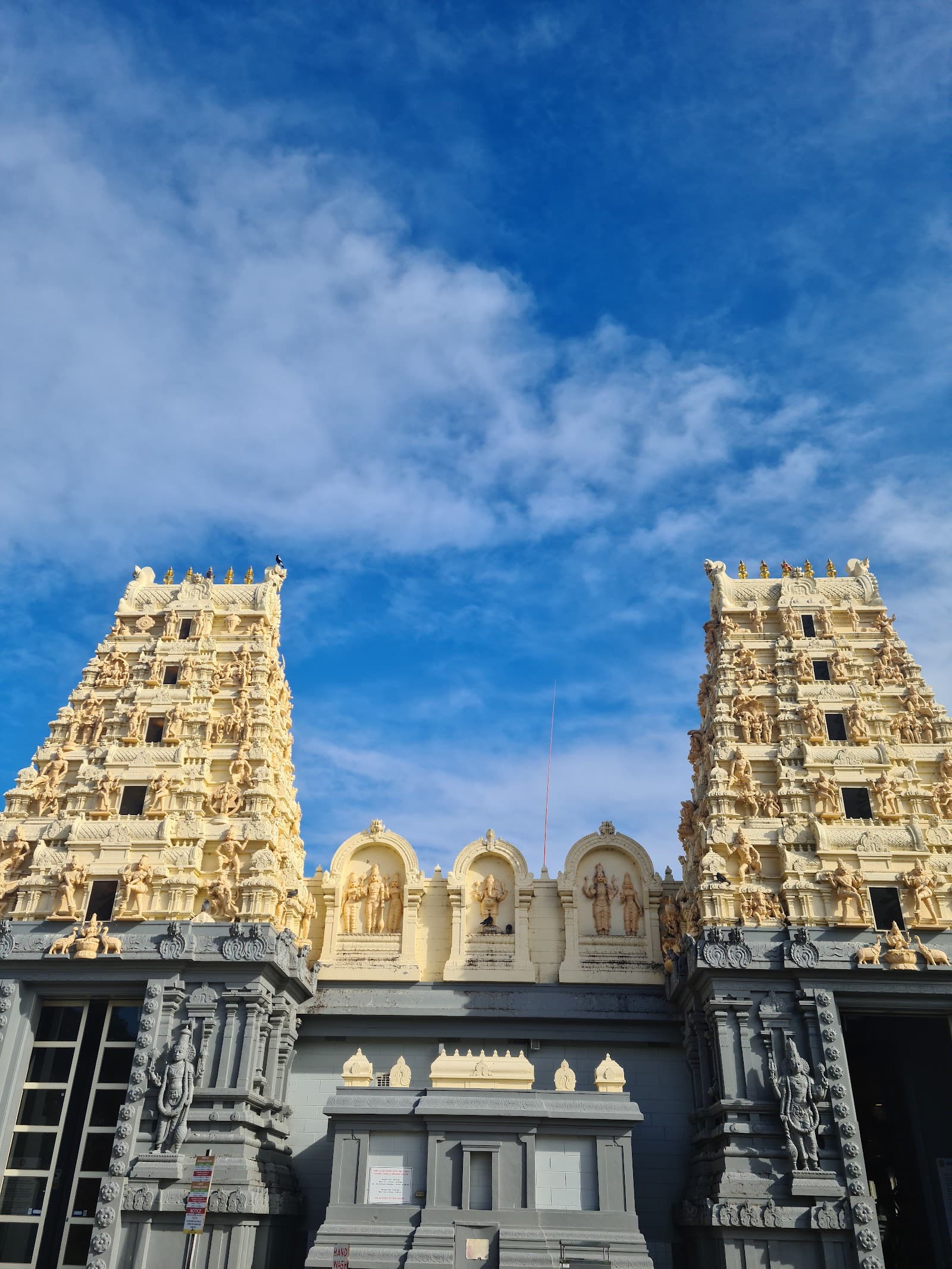
Shri Shiva Vishnu Temple Carrum Downs is dedicated to Lord Shiva and Lord Vishnu and anchors Carrum Downs, Victoria, as the largest Hindu complex in the southern hemisphere ([1][2]). Daily darshan opens 7:30 AM-12:00 PM and 4:00 PM-9:00 PM, with Saturday hours extending to 10:00 PM as dual queues marshal visitors toward the Shiva and Vishnu sanctums without crossover ([1]). A volunteer command post in the Yajna hall tracks CCTV and real-time crowd counts, dispatching ushers to the 108-pillared mandapa when coach tours arrive from interstate ([1][3]). The community centre seats 1,000 in banquet configuration, where stainless trolleys glide along polished concrete aisles and induction woks maintain prasadam throughput while keeping the hall free of combustion fumes ([1][4]). Tactile maps, contrasting floor nosings, and induction loop audio guide visitors with low vision or hearing loss, complemented by two lifts linking the cultural classrooms to the main prakaram ([3]). Accessible parking bays sit 30 metres from the gopuram and connect via canopy-covered ramps that maintain 1:20 gradients, easing pilgrimage for seniors and wheelchair users ([3]). Signage delivers tri-lingual Tamil-Hindi-English instructions, QR-linked seva booking, and bushfire evacuation diagrams audited annually by Fire Rescue Victoria ([3][5]). Air monitoring sensors in the homa kunda feed a dashboard that alerts priests when particulate loads trigger extraction fans, ensuring ceremonies run without breaching occupational standards ([5]). With cross-trained volunteers, audited hygiene workflows, and resilient visitor routing, the temple stays fully operational for worship, cultural tuition, and civic events throughout the calendar year ([1][2]).
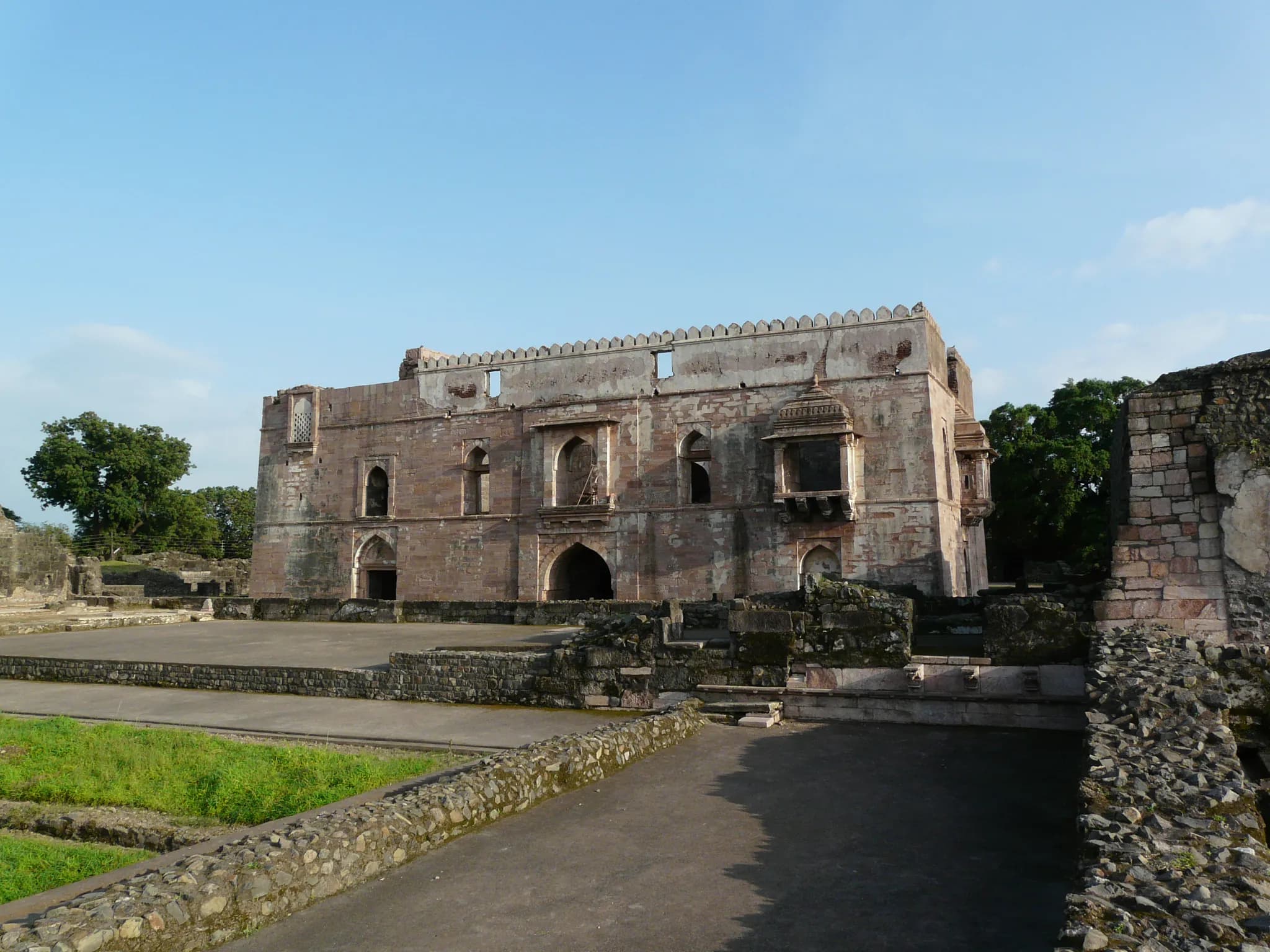
Hindola Mahal Mandu
The sloping walls of the Hindola Mahal rose before me, an arresting sight against the clear Mandu sky. Its peculiar incline, giving the structure its name – Swinging Palace – felt almost precarious, as if a strong gust of wind could set the whole edifice swaying. Standing at its base, I craned my neck, my gaze tracing the lines of the T-shaped structure, divided into two distinct halls. The larger hall, presumably the Darbar Hall, exuded an air of grandeur, even in its current state of ruin. The battered stone walls, devoid of their original plaster, whispered tales of bygone eras. I ran my hand over the rough surface, imagining the vibrant court life that once thrived within these walls. The absence of elaborate ornamentation, so common in other Mandu palaces, struck me. The beauty of the Hindola Mahal lay in its stark simplicity, its strength, and its unusual architectural design. The massive sloping walls, reinforced by arched buttresses, were a testament to the ingenuity of the Afghan architects who conceived this marvel. Entering the Darbar Hall, I was immediately struck by its sheer scale. The high ceiling, supported by pointed arches springing from massive piers, created a sense of awe. The light filtering through the arched openings cast dramatic shadows, accentuating the texture of the weathered stone. I could almost hear the echoes of royal pronouncements and the murmur of courtly conversations. The hall, despite its emptiness, resonated with a palpable sense of history. A narrow passage led me to the smaller hall, believed to have been the royal chambers. Here, the inclination of the walls was even more pronounced, adding to the palace's unique character. I peered out of the arched windows, framing the panoramic views of the Mandu plateau. It was easy to imagine the royalty enjoying the cool breeze and the breathtaking vistas from these very windows. The architectural style of the Hindola Mahal, a blend of Afghan and indigenous influences, intrigued me. The robust structure, with its sloping walls and pointed arches, bore a distinct resemblance to the architectural traditions of the Tughlaq dynasty of Delhi. Yet, the use of locally sourced sandstone and the integration of certain indigenous elements gave it a unique regional character. It was a fascinating example of architectural fusion, a testament to the cultural exchange that shaped the region's history. Walking around the exterior, I observed the series of arched openings that punctuated the sloping walls. These arches, besides their aesthetic appeal, served a crucial structural purpose. They acted as buttresses, supporting the inclined walls and preventing them from collapsing inwards. This ingenious design was a marvel of engineering, allowing the architects to create a structure that was both visually striking and structurally sound. As I moved further away from the palace, I paused to take in the full view. The Hindola Mahal, with its sloping walls and imposing presence, stood as a silent witness to the rise and fall of empires. It was a poignant reminder of the impermanence of power and the enduring legacy of architecture. The experience left me with a deep appreciation for the ingenuity of the past and a renewed sense of wonder for the architectural treasures that dot the landscape of my home state, Gujarat, and its neighboring regions. The Hindola Mahal, with its unique charm and historical significance, deserves to be recognized as one of India's architectural gems.
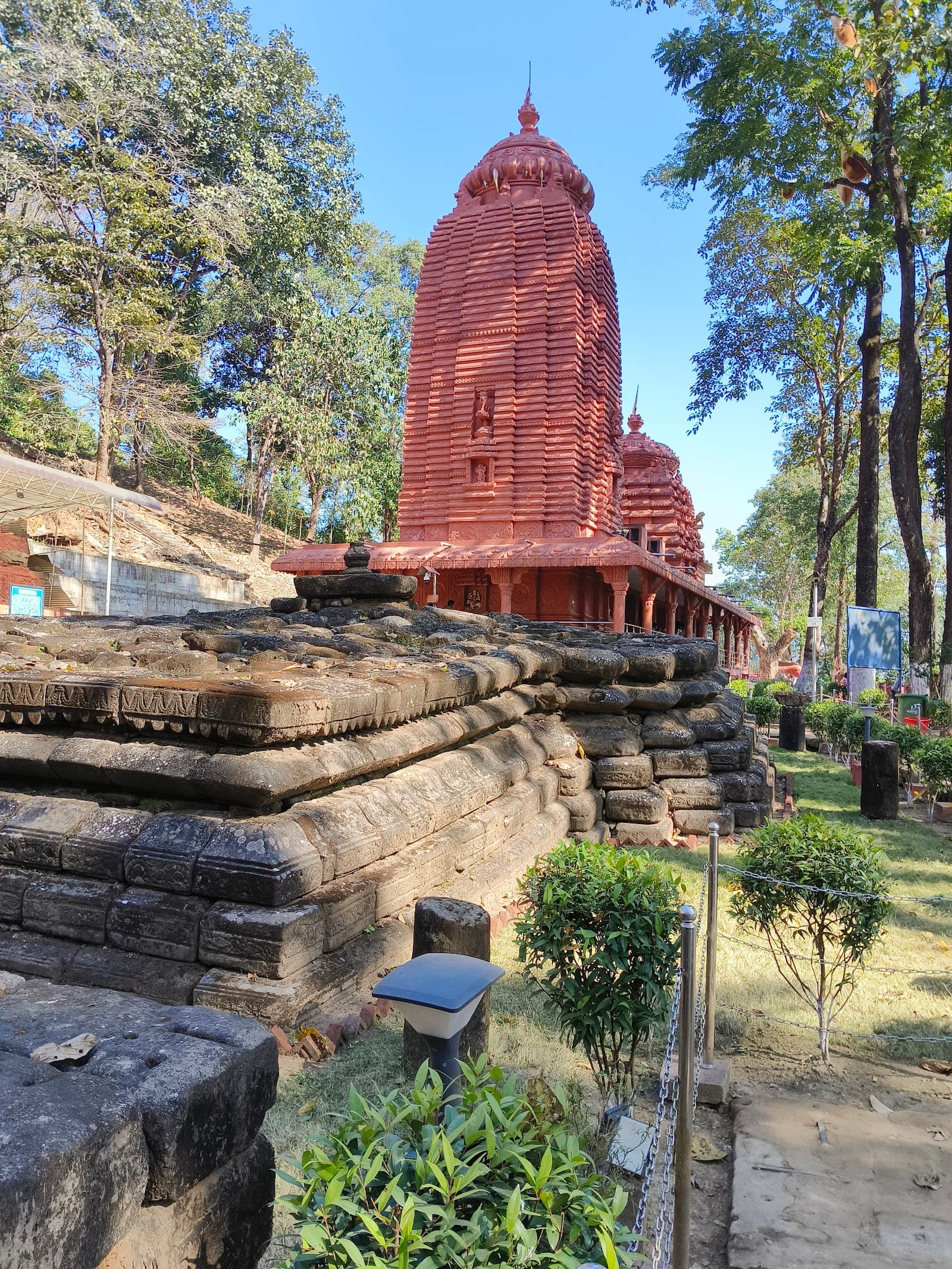
Malinithan Temple Likabali
The air hung thick and humid, a palpable presence as I navigated the final stretch of the winding road leading to Malinithan, a ruined temple complex tucked away in the verdant embrace of Arunachal Pradesh's Lower Siang district. The anticipation was almost as dense as the jungle itself. Having visited every UNESCO World Heritage Site in India, I've encountered grandeur on an epic scale, but Malinithan promised something different – a whisper of a lost kingdom, a forgotten chapter in India's rich tapestry. Emerging from the dense foliage, the first sight of Malinithan is arresting. Scattered across a gently sloping hillside are the remnants of a once-magnificent temple, its stones bearing the indelible marks of time and the elements. Unlike the meticulously preserved monuments I'd encountered elsewhere, Malinithan exudes a raw, almost melancholic beauty. Nature has begun to reclaim the site, with roots snaking through crevices and moss clinging to the weathered sculptures. The central complex is dominated by the ruins of what is believed to have been the main temple. The remaining structures, though fragmented, hint at a sophisticated architectural style. Intricately carved stone blocks, some featuring depictions of deities, animals, and floral motifs, lay scattered across the site. The craftsmanship is remarkable, showcasing a clear influence of both Hindu and tribal artistic traditions. One particular carving, a remarkably well-preserved elephant head, captured my attention. The detail in the folds of its trunk and the expression in its eyes spoke volumes about the skill of the artisans who shaped it centuries ago. My guide, a local from the nearby village, explained that Malinithan is believed to have been built by the Chutiya kings, who ruled the region between the 14th and 16th centuries. He recounted local legends surrounding the site, tales of powerful rulers, hidden treasures, and divine interventions. These stories, passed down through generations, added another layer of intrigue to the already captivating ruins. As I explored further, I noticed a distinct shift in the architectural style. While the central complex displayed a more classical Hindu influence, the surrounding structures exhibited a more indigenous character. This fusion of styles, a testament to the cultural exchange that shaped the region, is what makes Malinithan truly unique. It's not just a temple; it's a melting pot of artistic and religious influences, a tangible link to a vibrant past. One of the most striking features of Malinithan is the abundance of sculpted lingams, the phallic symbol representing Lord Shiva. These range in size from small, palm-sized objects to massive structures several feet tall. The sheer number of lingams scattered across the site suggests that Malinithan was a significant center of Shaivite worship. The climb to the upper reaches of the site offered breathtaking panoramic views of the surrounding hills and valleys. Standing there, amidst the ruins, I felt a profound sense of connection to the past. I imagined the temple in its heyday, bustling with activity, a vibrant hub of religious and cultural life. The silence of the present day, broken only by the chirping of birds and the rustling of leaves, served to amplify the echoes of the past. Malinithan is not just a collection of ruins; it's a living testament to the ingenuity and artistic prowess of a forgotten kingdom. It's a place where history whispers from every stone, where legends intertwine with reality, and where the past and present converge in a symphony of silence and grandeur. While it may not yet bear the official UNESCO World Heritage Site designation, its historical and cultural significance is undeniable. My visit to Malinithan was more than just another stop on my journey; it was a pilgrimage into the heart of a lost world, a poignant reminder of the ephemeral nature of empires and the enduring power of human creativity.
Quick Links
Plan Your Heritage Journey
Get personalized recommendations and detailed visitor guides