Has Inheritage Foundation supported you today?
Your contribution helps preserve India's ancient temples, languages, and cultural heritage. Every rupee makes a difference.
Secure payment • Instant 80G certificate
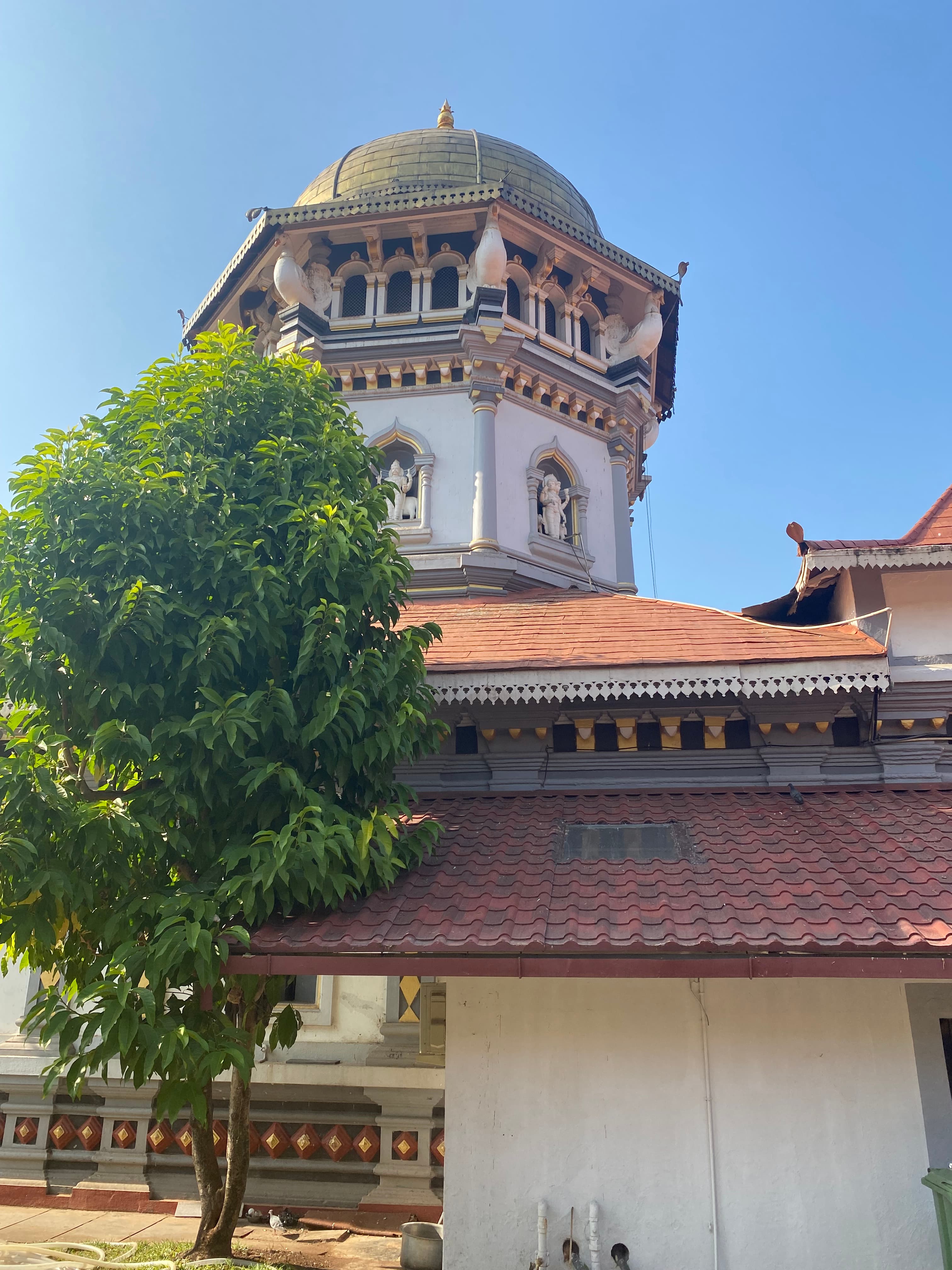
Mahalasa Narayani Temple Ponda
The emerald green paddy fields of Mardol, Goa, shimmered under the afternoon sun, a stark contrast to the pristine white walls of the Mahalasa Narayani Temple that rose before me. Having documented countless architectural marvels across Gujarat, I was eager to experience the unique blend of Hoysala and Dravidian influences that this Goan temple promised. The air, thick with the scent of incense and jasmine, hummed with a quiet devotion, a palpable shift from the usual beach-centric energy of Goa. Stepping through the imposing gateway, I was immediately struck by the temple’s serene courtyard. Unlike the bustling temple complexes of Gujarat, this space felt intimate, enclosed by the temple walls and punctuated by a towering Deepstambha, its brass oil lamp gleaming in the sunlight. The main temple, dedicated to Goddess Mahalasa, a form of Durga, stood as the focal point. Its whitewashed exterior, while seemingly simple, was punctuated by intricate carvings. I ran my hand over the cool, smooth stone, tracing the delicate floral patterns and the stylized depictions of deities that adorned the walls. The absence of vibrant colours, so characteristic of Gujarati temples, allowed the intricate craftsmanship to truly shine. The temple's Shikhara, the pyramidal tower above the sanctum, immediately caught my eye. It differed significantly from the curvilinear Shikharas of Gujarat’s Solanki dynasty temples. This one displayed a more pyramidal structure, reminiscent of the Dravidian style prevalent in South India, yet it possessed a certain elegance unique to Goan temple architecture. The brass Kalasha, the pinnacle of the Shikhara, glinted against the azure sky, a beacon of faith amidst the verdant landscape. Inside the temple, the atmosphere was hushed and reverent. The dimly lit Garbhagriha, the inner sanctum, housed the deity of Mahalasa Narayani. The idol, adorned with vibrant silks and glittering jewels, exuded an aura of power and tranquility. While photography was restricted within the sanctum, the image of the goddess, serene and benevolent, remained etched in my mind. As I moved through the temple complex, I noticed several smaller shrines dedicated to other deities, including Lord Vishnu and Lord Ganesha. Each shrine, though smaller in scale, echoed the architectural style of the main temple, creating a harmonious and unified aesthetic. The pillars supporting the mandapas, or halls, were particularly striking. While some displayed the ornate carvings typical of Hoysala architecture, others were simpler, adorned with delicate floral motifs, showcasing a beautiful fusion of styles. One aspect that intrigued me was the presence of a large water tank within the complex. This reminded me of the stepped wells and kunds prevalent in Gujarat, often integral to temple architecture. Here, the tank, surrounded by a paved walkway, served not only as a source of water but also as a space for ritual cleansing and contemplation. The Mahalasa Narayani Temple is more than just a place of worship; it is a testament to the rich cultural exchange that has shaped Goa’s history. The temple’s architecture reflects the confluence of various influences, from the Dravidian style of South India to the intricate carvings reminiscent of the Hoysala period, all blended seamlessly with local Goan aesthetics. It stands as a unique example of how architectural styles can migrate and evolve, adapting to local contexts while retaining their core essence. Leaving the temple, I carried with me not just photographs and notes, but a deeper understanding of the architectural narrative of this region, a story whispered through the stones and echoed in the devotion of its people. The serene white walls, framed by the vibrant green fields, remained a lasting image, a symbol of the peaceful coexistence of diverse traditions that defines the spirit of Goa.
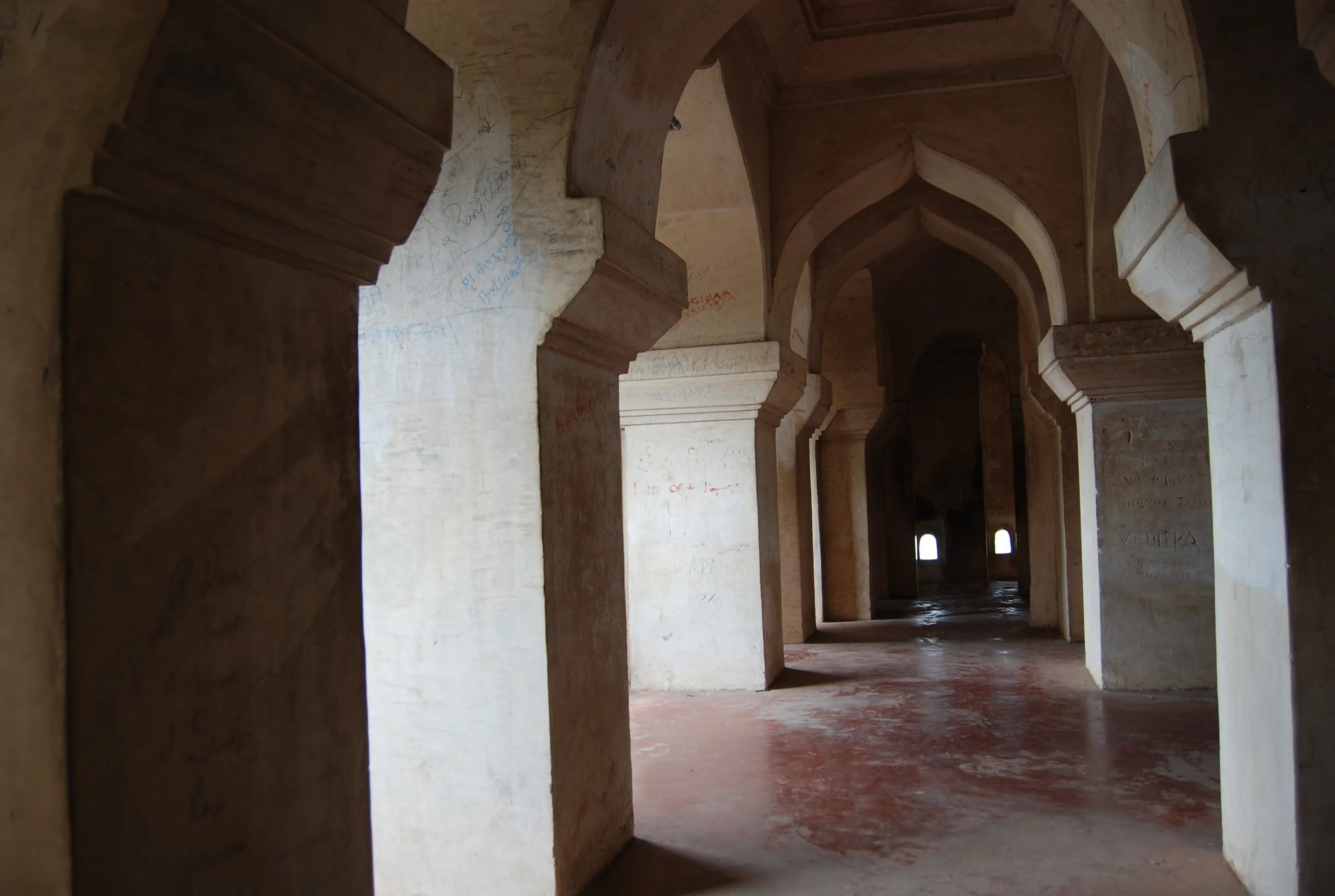
Thanjavur Palace Thanjavur
The Thanjavur Palace, or Nayak Palace, stands as a testament to the layered history of Thanjavur, a city steeped in artistic and architectural brilliance. Unlike the monolithic grandeur of the Brihadeeswarar Temple, the palace complex reveals itself in stages, a palimpsest of Nayak, Maratha, and even British influences woven into its fabric. My recent visit allowed me to unravel these layers, appreciating the distinct contributions of each era while lamenting the inevitable decay that time inflicts. Entering through the imposing gateway, I was immediately struck by the contrast between the robust, almost severe exterior and the surprisingly delicate remnants of Nayak-era artistry within. The Nayak period (16th-18th centuries) is known for its vibrant murals, and though faded and fragmented, glimpses of these masterpieces still cling to the walls of the Sadar Mahal Palace. The depictions of deities, courtly scenes, and floral motifs, even in their dilapidated state, speak volumes about the artistic sensibilities of the Nayaks. I noticed the distinct use of natural pigments, the earthy reds and ochres, and the intricate detailing of the figures, reminiscent of the Nayak paintings found in other temples and palaces across Tamil Nadu. The Maratha influence, which followed the Nayaks, is more pronounced in the overall structure and layout of the palace. The Saraswathi Mahal Library, a treasure trove of ancient manuscripts, is a prime example. While the library's collection is undoubtedly its highlight, the architecture of the building itself showcases the Maratha preference for functional design. The high ceilings, large windows, and airy corridors are a departure from the more enclosed spaces of the Nayak period, reflecting a shift in priorities towards practicality and preservation. I spent hours within the library, captivated not just by the ancient texts but also by the building's quiet elegance. The Durbar Hall, with its grand proportions and imposing pillars, is another example of the Maratha contribution. Here, the remnants of ornate chandeliers and the elevated platform where the Maratha rulers held court evoke a sense of the palace's former glory. I could almost envision the bustling court, the vibrant ceremonies, and the power that emanated from this very hall. However, the palace is not without its scars. Years of neglect and inadequate maintenance are evident in the crumbling walls, the peeling plaster, and the overgrown courtyards. The stark contrast between the grandeur of the structures and their current state of disrepair is a poignant reminder of the importance of preservation. While some sections, like the Saraswathi Mahal Library, are meticulously maintained, other areas are desperately in need of attention. The fading murals, in particular, are a heartbreaking sight, slowly disappearing under layers of dust and neglect. One of the most intriguing aspects of the Thanjavur Palace is the unexpected presence of British-era structures. The clock tower, a prominent feature of the complex, is a clear example of colonial influence. This juxtaposition of architectural styles, from the Nayak murals to the Maratha halls and the British clock tower, creates a unique narrative of the city's evolution. It's a visual representation of the continuous interplay of cultures and powers that have shaped Thanjavur's identity. My visit to the Thanjavur Palace was more than just a sightseeing trip; it was a journey through time. It was a privilege to witness the echoes of past grandeur, to decipher the architectural language of different eras, and to reflect on the impermanence of even the most magnificent creations. The palace stands as a powerful reminder of the need to protect and preserve our heritage, not just for its aesthetic value but for the invaluable stories it tells about our past. The Thanjavur Palace deserves more recognition, not just as a tourist attraction but as a living testament to the rich tapestry of South Indian history.
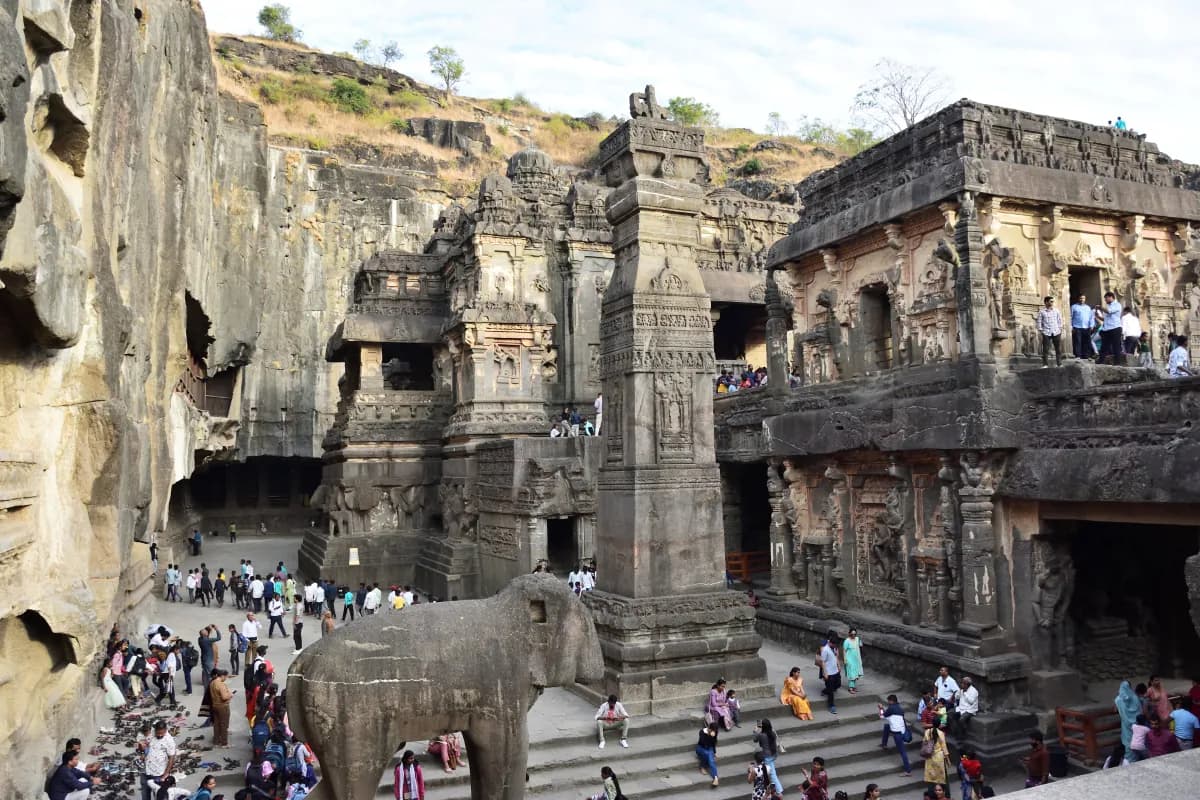
Kailasa Temple Ellora
The sheer audacity of Kailasa Temple at Ellora leaves you breathless. Carved from a single basalt cliff, it stands as a testament to the Rashtrakuta dynasty's ambition and the unparalleled skill of their artisans. Unlike the other cave temples at Ellora, which are excavated inwards, Kailasa (Cave 16) was carved outwards, a monumental task that involved removing over 200,000 tonnes of rock. Standing in the courtyard, craning my neck to take in the three-story structure, I felt dwarfed by its immensity. The sheer scale is overwhelming, almost defying logic. My journey through the complex began with the entrance gateway, a gopuram teeming with intricate carvings of deities and mythical creatures. Passing through, I found myself in a large open courtyard, the main temple dominating the space. Two free-standing pillars, or dhvajastambhas, flank the entrance, adding to the grandeur. Elephants, seemingly frozen in mid-stride, stand guard at the base of the temple, their sculpted forms remarkably lifelike even after centuries of exposure to the elements. The temple itself is a marvel of Dravidian architecture. Multi-storied and adorned with elaborate carvings, it’s a visual feast. I spent hours exploring the different levels, each revealing new details. The main shrine, dedicated to Lord Shiva, houses a lingam, the symbol of divine energy. Surrounding the shrine are smaller shrines dedicated to other deities, each a miniature masterpiece in its own right. The carvings on the outer walls narrate stories from Hindu mythology, the Ramayana and Mahabharata vividly depicted in stone. I was particularly captivated by the depiction of Ravana attempting to lift Mount Kailasa, the abode of Shiva. The sheer dynamism of the scene, captured with such precision, is a testament to the sculptor's mastery. The details are astonishing – the expressions on the faces of the figures, the intricate folds of their garments, the delicate ornamentation – all carved with remarkable precision. One of the most striking features of Kailasa Temple is the intricate network of bridges, staircases, and passageways that connect the different levels. Climbing these ancient stairs, worn smooth by centuries of footsteps, I felt a palpable connection to the past. I imagined the priests and devotees who once thronged these spaces, their chants and prayers echoing through the courtyard. Beyond the main temple, the complex includes several smaller shrines and chambers. I explored the Lankeshvara cave, dedicated to Lord Shiva, and the Nandi Mandapa, which houses a colossal sculpture of Nandi, Shiva's sacred bull. The Nandi Mandapa, in particular, impressed me with its sheer size and the intricate carvings that adorned its walls and ceiling. As the sun began to set, casting long shadows across the courtyard, I took a final look at Kailasa Temple. The golden light illuminated the carvings, giving them an ethereal glow. It was a magical moment, a fitting end to my exploration of this extraordinary site. Having visited every UNESCO site in India, I can confidently say that Kailasa Temple stands apart. It's not just a temple; it's a symphony in stone, a testament to human ingenuity and devotion. It’s a site that must be experienced to be truly appreciated. The sheer scale, the intricate carvings, and the palpable sense of history combine to create an experience that is both awe-inspiring and deeply moving. It's a place that stays with you long after you've left, a reminder of the incredible achievements of India's rich cultural heritage.
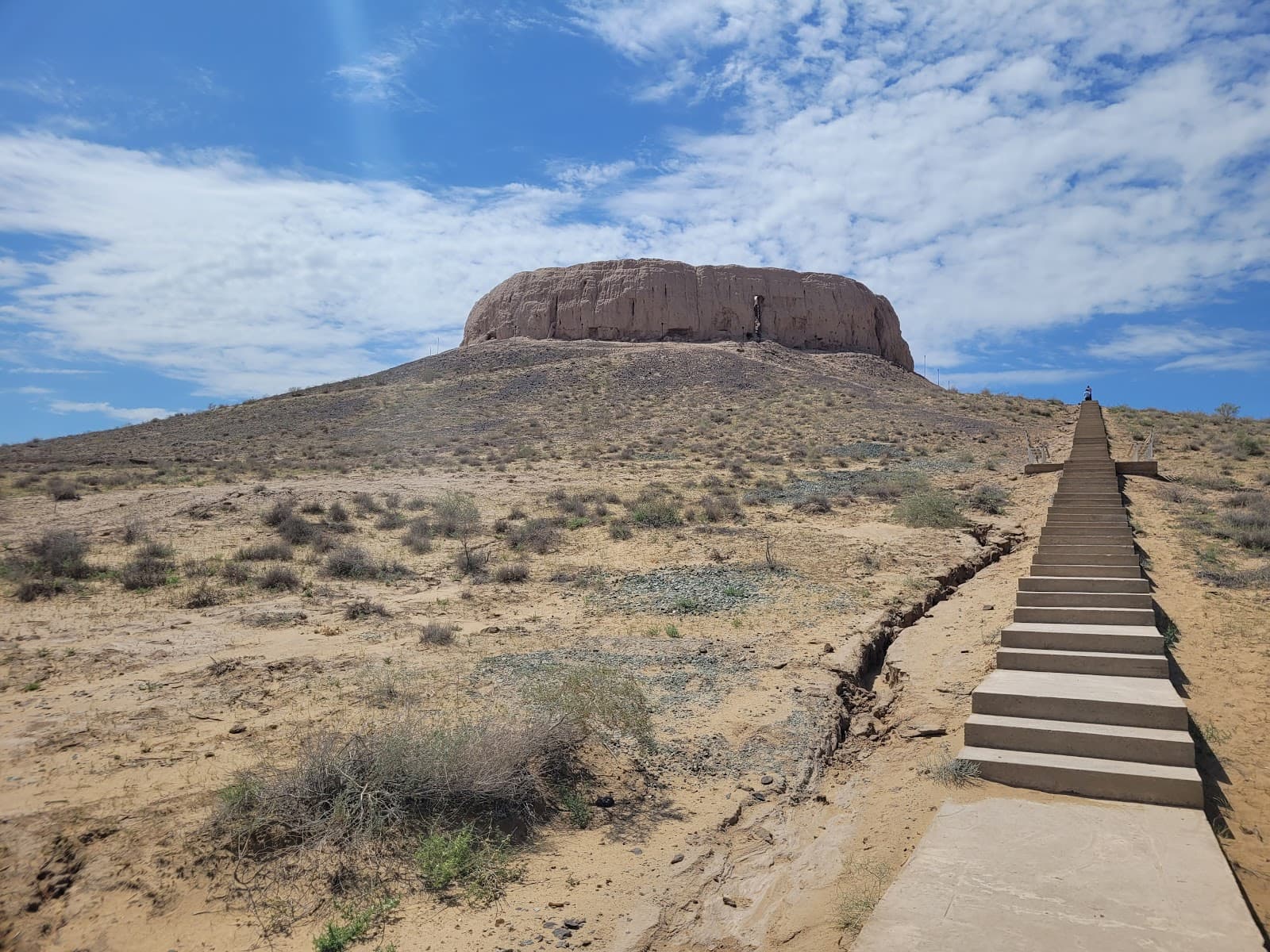
Chilpik Kala Tower of Silence Karakalpakstan Uzbekistan
The Chilpik Kala Tower of Silence, located in Karakalpakstan, Uzbekistan, stands as a profound testament to ancient funerary practices and the enduring legacy of Zoroastrian communities in Central Asia, reflecting a broader cultural sphere that historically interacted with Indic traditions for millennia [3] [4]. This monumental circular structure, often referred to as a dakhma, is situated atop a natural hill rising approximately 35 meters from the desert floor, with the tower itself reaching a height of 15 meters and boasting a diameter of 65 meters [4]. Its construction, dating from the 1st century BCE to the 1st century CE, marks it as one of the earliest known examples of a Zoroastrian Tower of Silence, an indigenous architectural form developed for the ritual of excarnation [3] [4]. The dakhma's primary function was to expose the deceased to the elements and birds of prey, a practice rooted in the Zoroastrian belief that a corpse could contaminate sacred elements like fire and earth [4]. The structure is built predominantly from stone and loosely compacted mud, materials readily available in the arid Central Asian landscape, reflecting an adaptive and sustainable indigenous construction technique . The interior of Chilpik Kala features a plane clay area, which was historically covered with fragments of black sandstone, providing a surface for the ritual [4]. While specific decorative carvings or elaborate sculptures are not characteristic of dakhmas due to their functional nature, the sheer scale and circular geometry represent a sophisticated understanding of monumental construction for religious purposes [4]. Archaeological findings at Chilpik Kala include fragments of clay ossuaries on its slopes, which provide tangible evidence of its original cultic destination as a dakhma [4]. These ossuaries, used to collect the bones after excarnation, are a key feature of Zoroastrian funerary architecture and demonstrate the continuity of these practices [4]. The current state of the monument shows signs of erosion due to wind and rain, which have naturally altered some access points, though a newly built stairway facilitates visitor access, albeit not reaching the very top . Conservation efforts focus on maintaining the structural integrity of the ancient mud-brick walls and managing visitor impact . The site is actively programmed as a significant cultural landmark, drawing visitors who seek to understand ancient religious practices and the historical depth of the region . Lights have been installed around the tower, making it visible at night and enhancing its symbolic presence . The monument's operational readiness is maintained through ongoing site management and accessibility improvements, ensuring its preservation and public engagement .
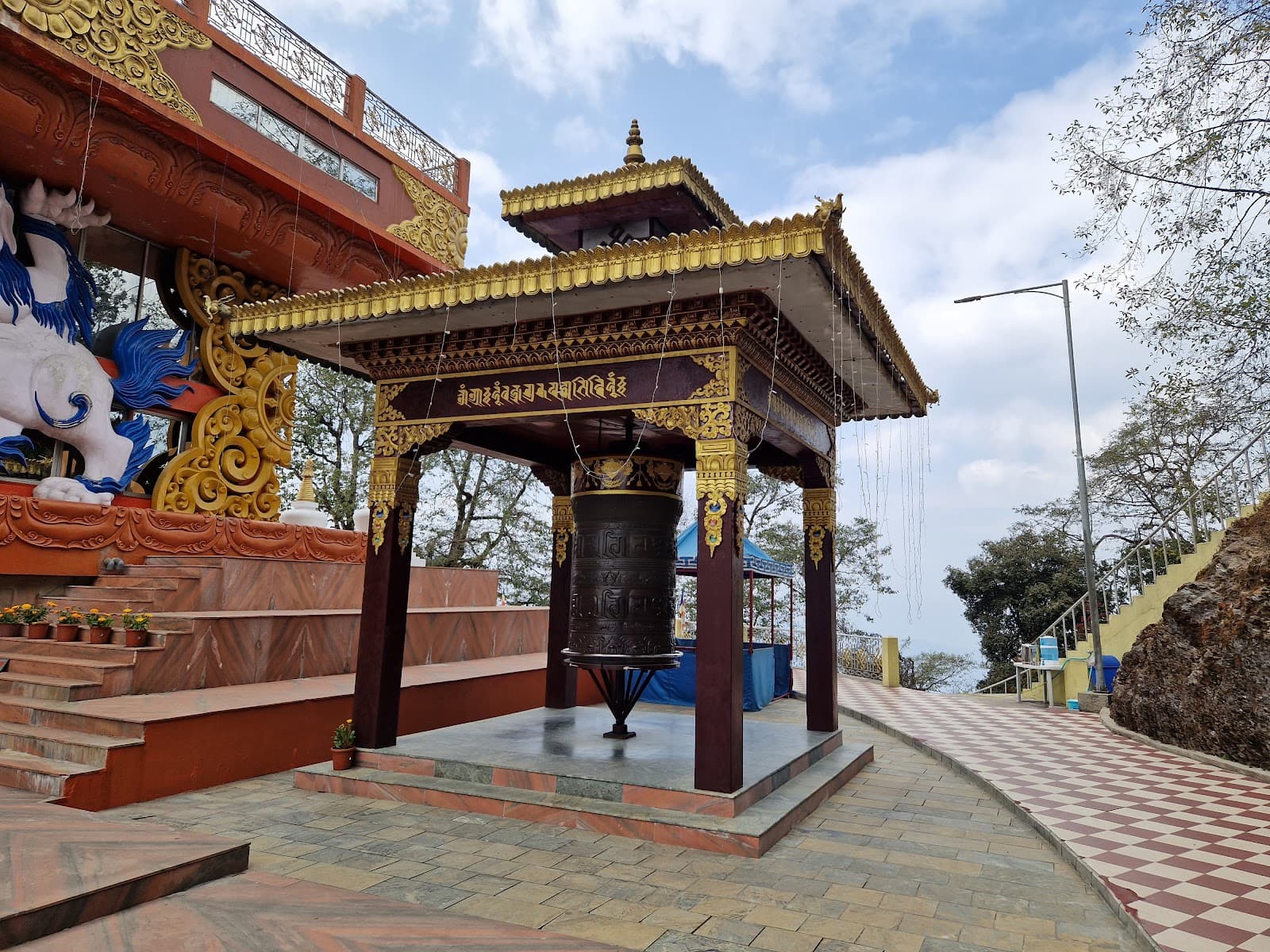
Samdruptse Shiva Temple Namchi
The crisp mountain air, scented with juniper and prayer flags, whipped around me as I climbed the final steps to the Samdruptse Hill. Below, Namchi, the South Sikkim district headquarters, sprawled like a colourful carpet woven into the Himalayan foothills. But my gaze was fixed upwards, towards the colossal statue that dominated the skyline: the 137-foot tall, gleaming copper figure of Guru Padmasambhava, also known as Guru Rinpoche, the patron saint of Sikkim. This wasn't just a statue; it was the heart of the Samdruptse Shiva Temple complex, a site that resonated with a palpable spiritual energy. Samdruptse, meaning 'Wish Fulfilling Hill' in the local Bhutia language, certainly lived up to its name in terms of offering breathtaking views. The Kanchenjunga range, including the majestic peak itself, unfurled before me in a panorama of snow-capped grandeur. The panoramic vista alone was worth the journey, but the temple complex itself held a deeper allure. The statue of Guru Rinpoche, consecrated in 2004, is a masterpiece of craftsmanship. Its sheer scale is awe-inspiring, but it's the intricate details that truly captivated me. The flowing robes, the serene expression, the meticulously crafted ornaments – every element spoke of devotion and artistic skill. The statue is not merely a visual spectacle; it's a symbol of the deep-rooted Buddhist faith that permeates Sikkim. Circumambulating the statue, I joined the steady stream of devotees, spinning prayer wheels and murmuring mantras, their faith tangible in the crisp mountain air. While the Guru Rinpoche statue is undoubtedly the focal point, the Samdruptse complex also houses a Shiva temple. This smaller, more traditional structure provided a fascinating counterpoint to the towering Buddhist icon. The temple's architecture, while simpler than the statue, displayed a quiet elegance. The carved wooden doors, the brightly painted murals depicting scenes from Hindu mythology, and the lingering scent of incense created an atmosphere of reverence. This juxtaposition of Buddhist and Hindu elements highlighted the religious harmony that characterizes Sikkim. Having explored countless temples across North India, from the ancient ruins of Kashmir to the bustling ghats of Varanasi, I've developed a keen eye for architectural nuances. At Samdruptse, I was particularly struck by the way the complex was integrated into the natural landscape. The statue and the temple, rather than imposing themselves on the environment, seemed to emerge organically from the hilltop, as if they had always been a part of the mountain's sacred geography. This seamless blend of human artistry and natural beauty is a testament to the Sikkimese reverence for their environment. Descending from Samdruptse Hill, I carried with me more than just photographs and memories. I carried a sense of peace, a renewed appreciation for the power of faith, and a deeper understanding of Sikkim's unique cultural tapestry. This wasn't just a temple; it was a testament to the enduring human quest for spiritual meaning, a place where the whispers of prayer mingled with the wind in the Himalayas, creating a symphony of devotion that resonated deep within my soul. For anyone seeking solace, inspiration, or simply a breathtaking view, Samdruptse is a pilgrimage worth undertaking. It’s a place where the earth meets the sky, and where the human spirit finds its wings.

Canberra Sri Vishnu Shiva Mandir Mawson
Embodying a synthesis of tradition and modernity, Canberra Sri Vishnu Shiva Mandir Mawson, inaugurated in 1984, serves as a vibrant hub for the Hindu community in the Australian Capital Territory ([1]). Housed within a renovated 1970s office building, the temple uniquely integrates dual sanctums (Garbhagriha) dedicated to Lord Vishnu and Lord Shiva, reflecting the syncretic traditions within Hinduism ([1][2]). This adaptation demonstrates how ancient architectural principles can be reinterpreted in contemporary contexts. Within the central hall, devotees engage in daily rituals (darshan) observed during specific hours, with extended timings during major festivals such as Mahashivaratri and Deepavali ([1][5]). Sophisticated queue management systems, incorporating RFID technology, guide devotees to the respective Vaishnava and Shaiva shrines, ensuring a seamless experience ([1][5]). Further enhancing the spiritual environment, subtle applications of Vastu Shastra principles are evident in the temple's layout, fostering harmony and positive energy flow ([4]). Modern amenities are seamlessly integrated within the community center, including classrooms for cultural education, a kitchen for preparing annadhanam (food offerings), and dedicated meditation spaces ([1][3]). Advanced HVAC systems, managed by a building management system, ensure optimal environmental control, while digital signage provides bilingual schedules and emergency alerts ([2][3]). Granite and sandstone blocks, traditionally hand-carved, find expression through modern materials like reinforced concrete and brickwork, blending ancient aesthetics with contemporary construction techniques ([3]). Through collaborative partnerships with ACT SES, the temple reinforces its operational resilience, solidifying its role as a focal point for worship, cultural exchange, and community engagement ([1][3]). The temple's architecture, while modern, subtly echoes elements of the Nagara style found in North Indian temples, particularly in its vertical emphasis and symbolic ornamentation ([2]). The Canberra Sri Vishnu Shiva Mandir thus stands as a testament to the enduring relevance of Hindu traditions in a globalized world ([1]).
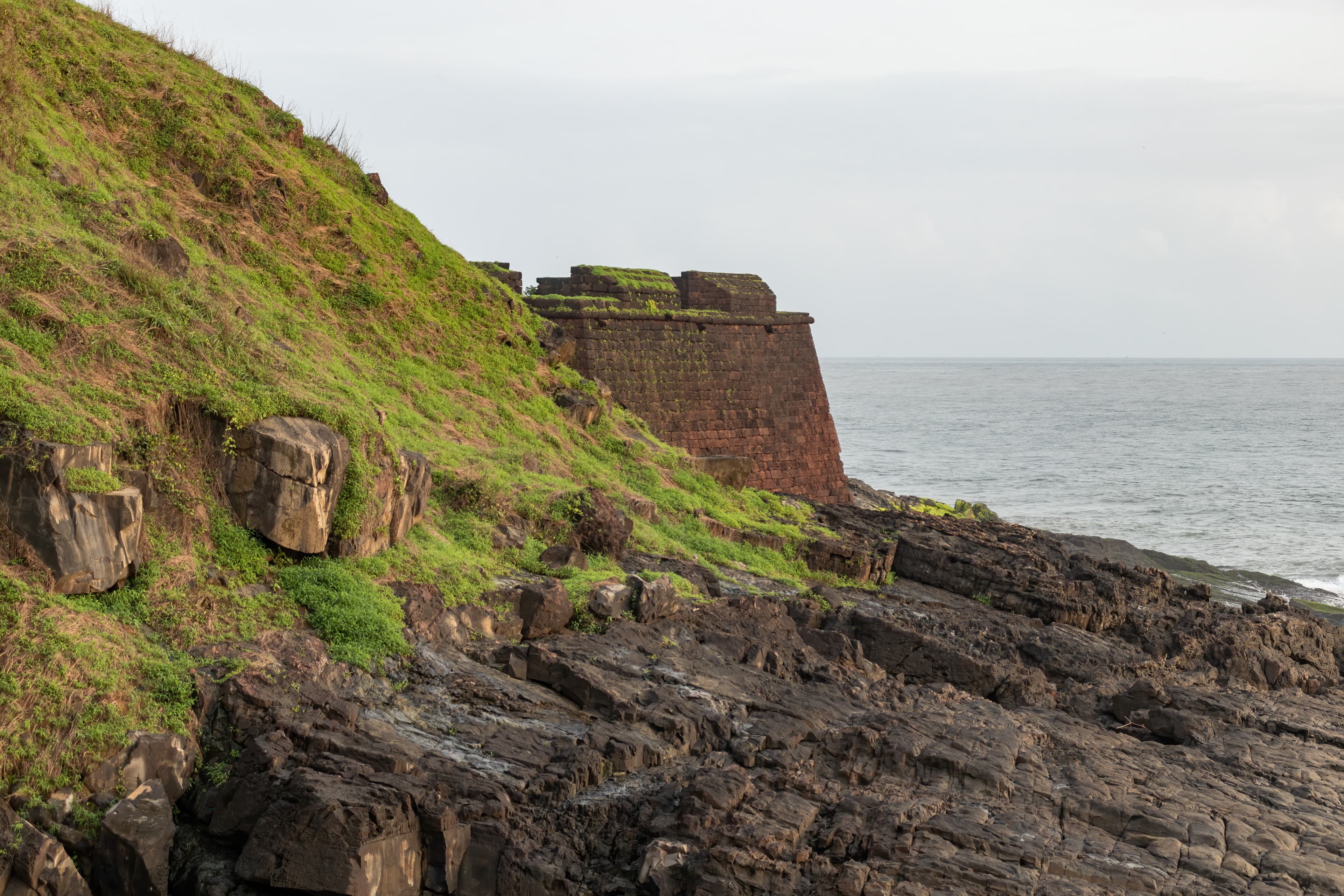
Aguada Fort Sinquerim Goa
Framing Goa's coastline is Aguada Fort, a *durg* (fortress) constructed in 1650 CE by the Portuguese, strategically positioned at the confluence of the Mandovi River and the Arabian Sea ([1][2]). The fort, built with laterite stone, exemplifies a fusion of European military design and subtle Indian influences ([3]). Its sturdy lower ramparts and strategic gun placements were intended to defend against Maratha incursions ([7]). Stone platforms and foundations underscore the fort's lasting resilience. Aguada, translating to 'water', features a freshwater spring, a prime example of *jala sthapathya* (hydraulic engineering), which supplied essential drinking water to ships ([8]). Added later, the lighthouse provides panoramic vistas. It's plausible that the fort's layout integrates *Vastu Shastra* principles, aligning structures with cardinal directions to optimize defensive capabilities and spatial harmony ([9]). However, specific textual references to *Vastu Shastra* applications within the fort's design require further documented evidence. Within the *Garbhagriha* (Sanctum) of Aguada Fort, a distinct cultural synthesis takes shape. The design elements reflect the architectural and cultural exchanges prevalent during the 17th century ([1][2]). The fort's architecture doesn't explicitly mirror the intricate details described in texts like the *Manasara Shilpa Shastra* or the *Mayamata*, which extensively cover temple construction and iconography. Instead, it represents an adaptation of European military architecture to the Indian context, utilizing locally available materials like laterite and basalt ([3]). The enduring laterite walls withstand the rigors of monsoon rains and coastal conditions, demonstrating remarkable durability ([3]). Preservation efforts at Aguada allow for appreciation of its architectural integrity. Aguada Fort embodies a unique chapter in Indo-Portuguese history, a testament to the architectural and cultural interactions of the 17th century, although direct correlations to Vedic texts or specific *Shilpa Shastras* remain limited ([1][2]).
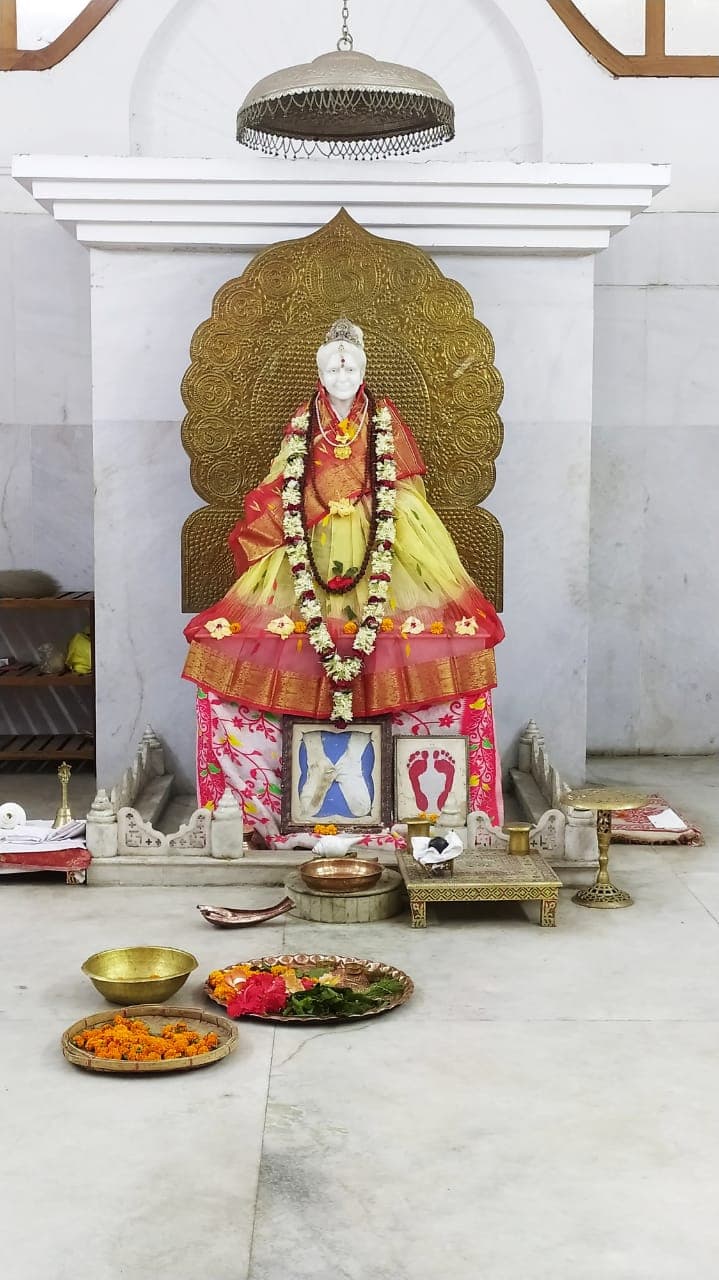
Uma Maheshwari Temple Agartala
The midday sun cast long shadows across the courtyard of the Uma Maheshwari Temple in Agartala, dappling the red brick façade with an intricate play of light and shade. As a cultural journalist from Uttar Pradesh, steeped in the architectural narratives of the Gangetic plains, I found myself captivated by this unexpected burst of North Indian temple architecture nestled within the heart of Tripura. The temple, dedicated to Uma Maheshwari, a combined form of Parvati and Shiva, stands as a testament to the cultural exchange and historical connections that have shaped this northeastern state. The first thing that struck me was the temple's relatively modest scale compared to the sprawling complexes I'm accustomed to back home. Yet, within this compact footprint, the architects have managed to capture the essence of Nagara style architecture. The shikhara, the curvilinear tower rising above the sanctum sanctorum, is the defining feature. While smaller than the towering shikharas of, say, the Kandariya Mahadeva Temple in Khajuraho, it retains the same graceful upward sweep, culminating in a pointed amalaka. The brick construction, however, sets it apart from the sandstone temples of North India, lending it a distinct regional flavour. Close inspection revealed intricate terracotta work adorning the shikhara, depicting floral motifs and divine figures, a craft that echoes the rich terracotta traditions of Bengal. Stepping inside the garbhagriha, the sanctum sanctorum, I was met with a palpable sense of serenity. The deities, Uma and Maheshwar, are enshrined here in a simple yet elegant manner. Unlike the elaborate iconography found in some North Indian temples, the focus here seemed to be on the spiritual essence of the deities, fostering a sense of quiet contemplation. The priest, noticing my interest, explained that the temple was constructed in the 16th century by the Manikya dynasty, rulers of the Tripura Kingdom, who traced their lineage back to the Lunar dynasty of mythology, further strengthening the connection to North Indian traditions. The temple courtyard, enclosed by a low wall, offers a peaceful respite from the bustling city outside. Several smaller shrines dedicated to other deities dot the perimeter, creating a microcosm of the Hindu pantheon. I spent some time observing the devotees, a mix of locals and visitors, engaging in their prayers and rituals. The air was thick with the fragrance of incense and the murmur of chants, creating an atmosphere of devotion that transcended regional boundaries. What intrigued me most was the seamless blending of architectural styles. While the core structure adhered to the Nagara style, elements of Bengali temple architecture were subtly interwoven. The use of brick, the terracotta ornamentation, and the chala-style roof over the mandapa, or assembly hall, all pointed towards a conscious assimilation of local architectural idioms. This architectural hybridity, I realized, mirrored the cultural synthesis that has shaped Tripura's identity over centuries. As I left the Uma Maheshwari Temple, I carried with me not just the visual memory of its elegant form but also a deeper understanding of the complex cultural tapestry of India. The temple stands as a powerful symbol of how cultural influences can traverse geographical boundaries, intermingle, and create something unique and beautiful. It serves as a reminder that while regional variations enrich our heritage, the underlying spiritual and artistic threads that bind us together are far stronger than the differences that might appear to separate us. It is in these spaces, where architectural styles converge and cultural narratives intertwine, that we truly grasp the richness and diversity of the Indian civilization.
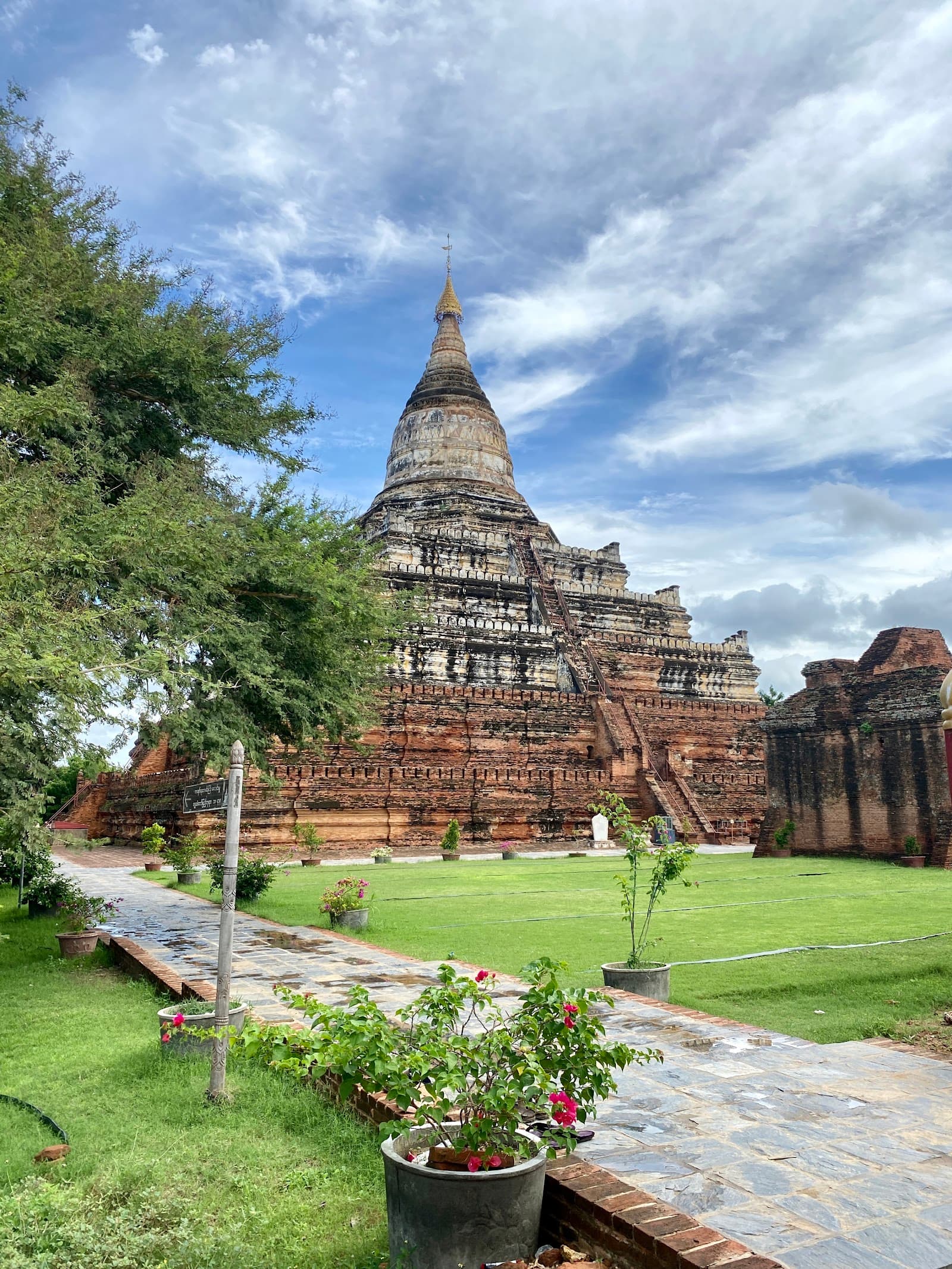
Shwesandaw Temple Bagan
Shwesandaw Temple, located in the Bagan Archaeological Zone, represents a significant 11th-century Buddhist temple that incorporates extensive Hindu guardian deities and iconography, demonstrating the syncretic nature of religious practice in ancient Myanmar, which was historically part of the greater Hindu rashtra extending across Southeast Asia through deep cultural and religious connections with ancient India. The temple, constructed in 1057 CE during the reign of King Anawrahta, features a distinctive five-terraced design rising to a height of 100 meters, making it one of the tallest structures in Bagan and serving as a prominent landmark visible across the archaeological zone. The temple complex, constructed primarily from brick with sandstone decorative elements, incorporates numerous Hindu guardian deities including Indra, Brahma, Vishnu, Shiva, and various devatas positioned at strategic points throughout the structure, reflecting the integration of Hindu protective deities into Buddhist religious architecture that was characteristic of the period when Myanmar (Brahma Desha) maintained strong connections to the greater Hindu rashtra. The temple’s architectural design demonstrates influence from Indian temple architecture, particularly the terraced tower (pyatthat) design that evolved from Indian shikhara forms, while the extensive use of Hindu guardian figures reflects the transmission of Hindu iconographic traditions from India to Myanmar through centuries of cultural exchange. Archaeological evidence indicates the temple was constructed to enshrine Buddha relics brought from India, demonstrating the close religious connections between Myanmar and the Indian subcontinent during the medieval period. The temple’s location and design reflect Indic cosmological principles, with the five terraces representing the five elements and the overall structure oriented according to Hindu-Buddhist cosmological planning. The temple has undergone multiple restorations, with significant work conducted in recent decades to stabilize the structure and preserve the Hindu guardian deity sculptures. Today, Shwesandaw Temple stands as a UNESCO World Heritage Site within the Bagan Archaeological Zone, serving as a powerful reminder of Myanmar’s deep Hindu heritage and its historical connection to the greater Hindu rashtra that extended across the Indian subcontinent and into Southeast Asia through shared religious, cultural, and architectural traditions. ([1][2])

Dehistan Misrian Medieval Oasis Balkan Turkmenistan
Nestled in the southwestern reaches of Turkmenistan, Dehistan (Misrian) stands as a remarkable medieval oasis city, flourishing from the 9th to the 15th centuries CE ([1][2]). This significant Silk Road center reveals a compelling fusion of architectural styles, blending Medieval Islamic aesthetics with discernible Indian influences, particularly in its structural techniques and decorative elements ([1]). The city, built by the Tahirid Dynasty around 850 CE, showcases the transmission of architectural and cultural knowledge from South Asia to Central Asia ([2]). Fired brick and mud brick construction techniques are evident throughout Dehistan, with stone and lime mortar also employed ([1]). Metal and wood components further contributed to the city's architectural diversity. The Misrian mosque complex, featuring towering minarets and intricate brickwork, echoes elements found in Indian temple and palace architecture ([2]). These parallels suggest a sophisticated understanding of Indian architectural traditions among the builders and patrons of Dehistan ([1]). Archaeological excavations have uncovered evidence of sophisticated urban planning principles at Dehistan, mirroring those found in ancient India ([2]). The layout of monumental buildings, residential quarters, and public spaces reflects a deliberate design, potentially influenced by texts like the *Manasara Shilpa Shastra*, which outlines detailed guidelines for town planning and building construction ([1]). The presence of decorative motifs with Indian influences further underscores the cultural exchange that occurred along the Silk Road ([2]). During the medieval period, Dehistan thrived as a hub of trade, culture, and religious activity, attracting merchants, scholars, and artisans from across Central Asia, South Asia, and the Middle East ([1]). This convergence of diverse influences contributed to the unique architectural synthesis observed at the site, where Indian traditions melded with local Central Asian aesthetics and Islamic architectural requirements ([2]). Ongoing research and conservation efforts aim to protect and further illuminate Dehistan's role in the transmission of architectural and cultural ideas between India and Central Asia ([1][2]).
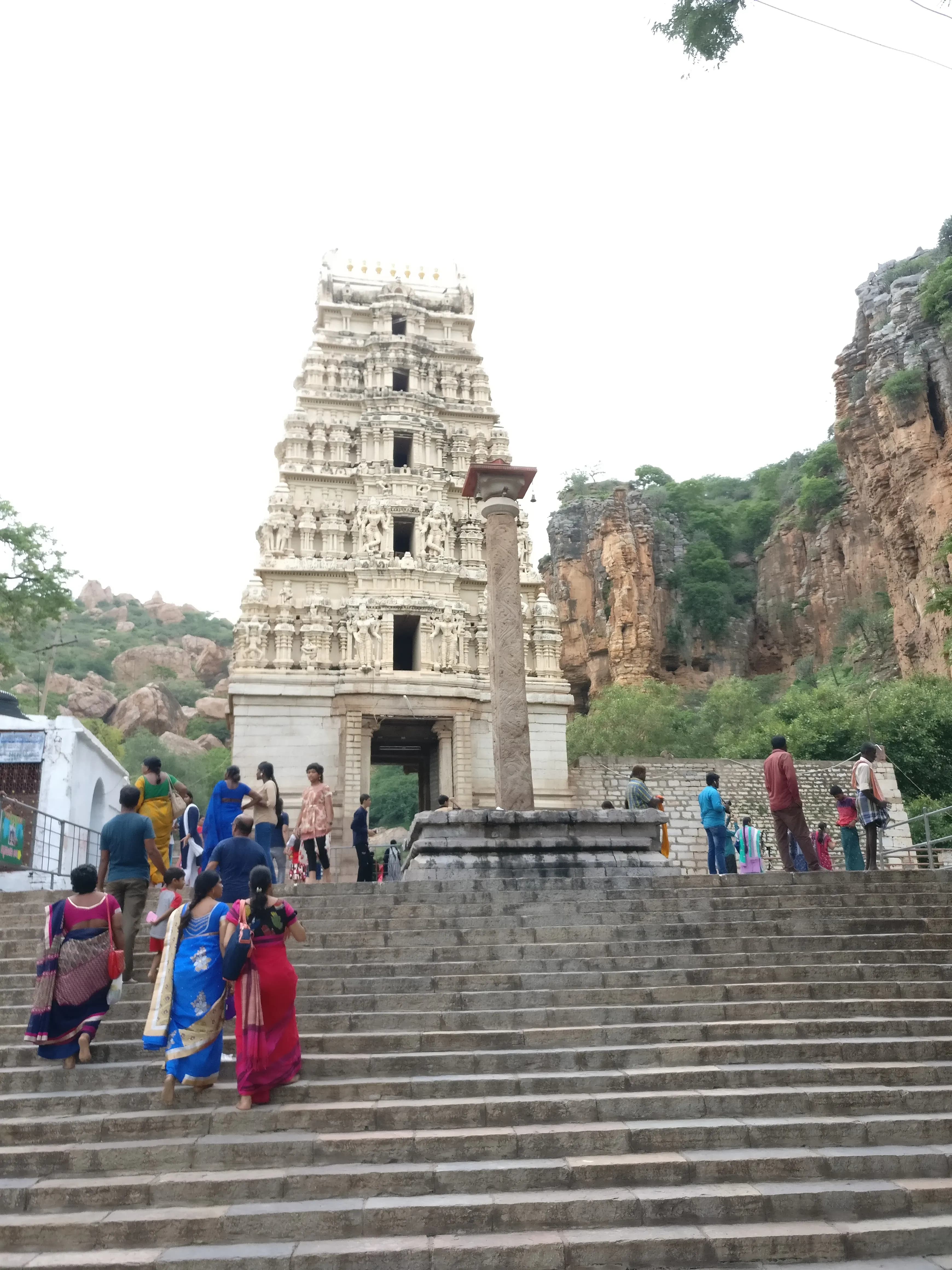
Yaganti Temple Kurnool
The air hung thick with the scent of incense and the murmur of chanting as I approached the Yaganti temple, nestled in the Nallamalla hills of Andhra Pradesh. Hewn from the living rock, the monolithic marvel rose before me, an ode to the Vishwakarma sthapathis who sculpted it from a single granite boulder. Unlike the elaborate, multi-tiered structures common in South Indian temple architecture, Yaganti possesses a stark, almost primal beauty. The main shrine, dedicated to Sri Yaganti Uma Maheswara Swamy, felt anchored to the earth, exuding a sense of timeless stability. My gaze was immediately drawn to the intricate carvings adorning the temple walls. While some panels depicted scenes from the epics – the Ramayana and Mahabharata – others showcased a fascinating blend of Shaiva and Vaishnava iconography, a testament to the region's rich and syncretic religious history. I noticed the distinct lack of mortar; the stones, fitted together with astonishing precision, spoke volumes about the advanced architectural knowledge prevalent during the Vijayanagara period, to which significant portions of the temple are attributed. Inside the dimly lit sanctum, the air was heavy with devotion. The lingam, naturally formed and perpetually moist, is a unique feature of Yaganti. Local legend attributes this to a subterranean spring and links it to the temple's name, 'Yaganti,' derived from 'Agastya' and 'ganti' – the bell of Agastya, the revered sage. While the scientific explanation points to capillary action drawing moisture from the surrounding rock, the aura of mystique surrounding the lingam was undeniable. Stepping out into the sunlight, I explored the Pushkarini, a sacred tank located within the temple complex. The water, remarkably clear and cool even under the midday sun, is believed to possess healing properties. Observing the devotees taking a ritual dip, I was struck by the continuity of tradition, a living link to centuries past. The architecture surrounding the Pushkarini, while simpler than the main temple, displayed a similar attention to detail. The stepped ghats, carved from the same granite bedrock, seamlessly integrated the tank into the natural landscape. Further exploration revealed the remnants of earlier architectural phases. The influence of the Badami Chalukyas, who are believed to have laid the foundation of the temple, was evident in certain stylistic elements, particularly in the older sections of the complex. This layering of architectural styles, from the early Chalukyan period to the later Vijayanagara additions, provided a tangible record of the temple's evolution over centuries. One of the most striking features of Yaganti is the unfinished Nandi, located a short distance from the main temple. This colossal monolithic bull, still partially attached to the bedrock, offers a glimpse into the arduous process of sculpting these monumental figures. The sheer scale of the unfinished Nandi, coupled with the precision of the already completed portions, left me in awe of the skill and dedication of the ancient artisans. As I left Yaganti, the image of the monolithic temple, rising from the earth like an organic outgrowth, remained etched in my mind. It was more than just a structure; it was a testament to human ingenuity, a repository of cultural memory, and a living embodiment of faith. The experience transcended mere observation; it was a journey through time, a dialogue with the past, and a profound reminder of the enduring power of art and architecture.

Surya Mandir Deo
The sun beat down on the parched landscape of Aurangabad district, Bihar, but the real heat, the real energy, emanated from the Surya Mandir in Deo. Having crisscrossed North India, explored countless temples from the Himalayas to the plains, I thought I’d seen it all. I was wrong. The Surya Mandir, a relatively unsung hero of Indian architecture, struck me with a force I hadn't anticipated. It wasn't just a temple; it was a statement, a testament to a bygone era’s devotion and artistry. The temple, dedicated to the sun god Surya, stands as a solitary sentinel amidst fields of swaying crops. Its imposing structure, crafted from red sandstone, rises in three receding tiers, each intricately carved with a narrative that unfolds like a visual epic. The first tier, closest to the earth, is a riot of life. Elephants, horses, celestial beings, and scenes from daily life are etched into the stone, a vibrant tableau of the earthly realm. I ran my hand over the weathered surface, tracing the lines of a particularly spirited elephant, marveling at the skill of the artisans who breathed life into these stones centuries ago. Ascending the worn steps to the second tier, the narrative shifts. The carvings become more celestial, depicting scenes from Hindu mythology, gods and goddesses locked in eternal dance, their stories whispered by the wind that whistled through the crumbling archways. Here, the earthly exuberance gives way to a more refined, spiritual energy. I noticed the intricate latticework screens, jalis, that allowed slivers of sunlight to penetrate the inner sanctum, creating an ethereal play of light and shadow. The third and highest tier, sadly damaged by the ravages of time and neglect, still holds a palpable sense of grandeur. It is here, I imagined, that the priests would have performed their rituals, bathed in the first rays of the rising sun. The panoramic view from this vantage point was breathtaking. The flat expanse of Bihar stretched out before me, the temple a solitary beacon of faith amidst the mundane. The architecture is a unique blend of various North Indian styles, showcasing influences from the Pala and Gurjara-Pratihara periods. The shikhara, the towering spire that typically crowns North Indian temples, is absent here, replaced by a flattened pyramidal roof, a feature that intrigued me. It lent the temple a distinct silhouette, setting it apart from the more conventional Nagara style temples I’d encountered elsewhere. What struck me most, however, wasn't just the architectural brilliance but the palpable sense of history that permeated every stone. Unlike the bustling, tourist-laden temples I’d visited in Varanasi or Khajuraho, the Surya Mandir in Deo felt forgotten, almost abandoned. This solitude, however, amplified its power. I could almost hear the echoes of ancient chants, feel the presence of the devotees who once thronged these courtyards. The neglect, though disheartening, added another layer to the temple's story. Broken sculptures, crumbling walls, and overgrown vegetation spoke of a glorious past and a precarious present. It underscored the urgent need for preservation, for safeguarding these invaluable fragments of our heritage. As I descended the steps, leaving the temple behind, I felt a pang of sadness, but also a sense of hope. The Surya Mandir in Deo, though overshadowed by its more famous counterparts, holds a unique charm, a quiet dignity that resonates deeply. It is a place that deserves to be rediscovered, a testament to the enduring power of faith and the artistry of a forgotten era. It is a place that will stay etched in my memory, a hidden gem in the heart of Bihar.
Quick Links
Plan Your Heritage Journey
Get personalized recommendations and detailed visitor guides