Has Inheritage Foundation supported you today?
Your contribution helps preserve India's ancient temples, languages, and cultural heritage. Every rupee makes a difference.
Secure payment • Instant 80G certificate
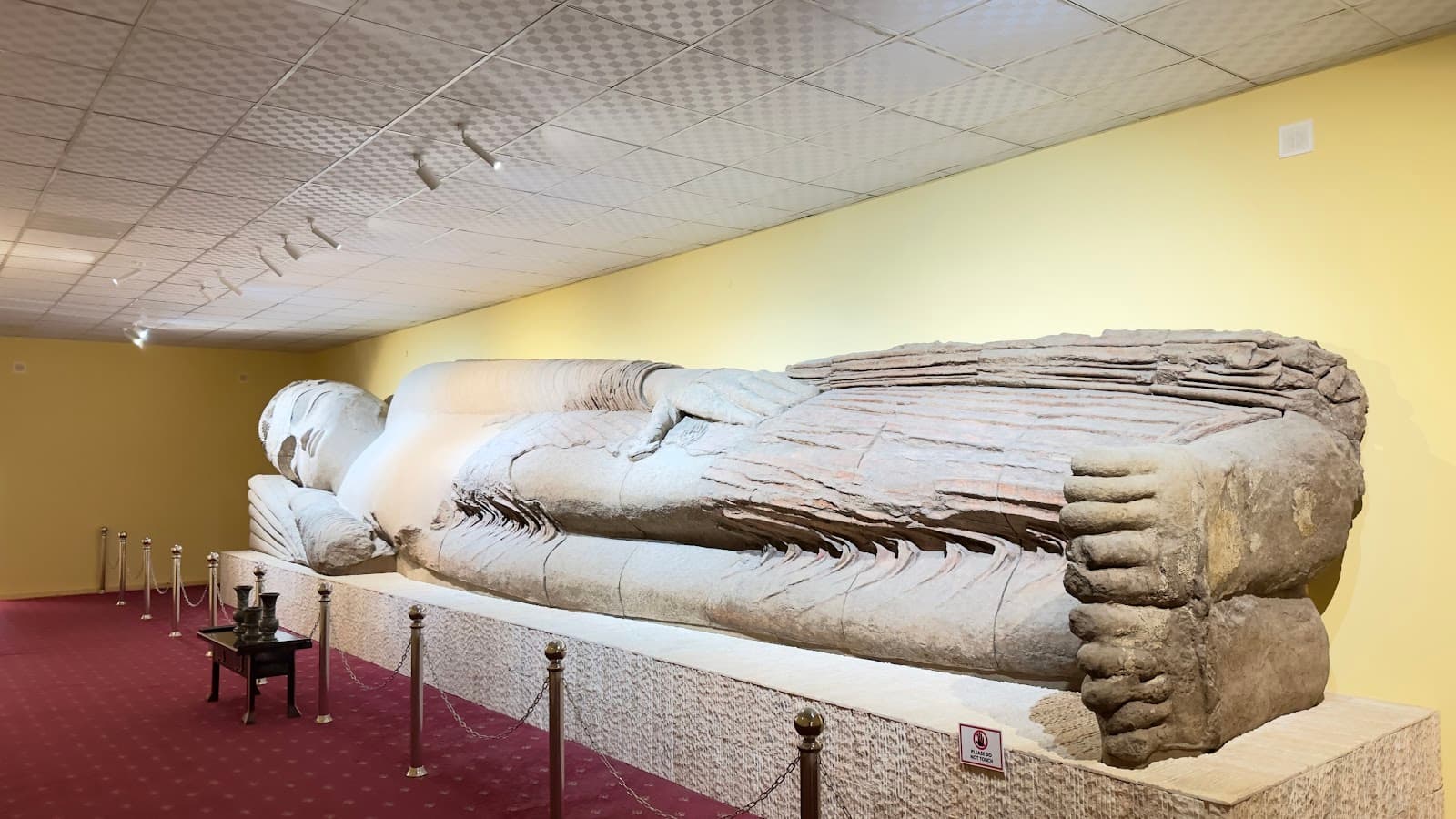
Takhti Sangin Oxus Temple Khatlon Tajikistan
Takhti Sangin, dramatically situated at the confluence of the Vakhsh and Panj rivers in southern Tajikistan, represents one of the most extraordinary and archaeologically significant ancient temples in Central Asia, constructed in the 3rd century BCE during the Achaemenid and subsequent Hellenistic periods as a major sanctuary dedicated to the Oxus River (modern Amu Darya) that yielded extraordinary artifacts demonstrating the profound transmission of Indian religious and artistic traditions to Central Asia along the ancient trade routes. The temple complex, known as the "Oxus Temple" and excavated extensively by Soviet and Tajik archaeologists, features sophisticated architectural elements that demonstrate the synthesis of Achaemenid, Hellenistic, and Indian architectural traditions, while the site's extraordinary collection of artifacts, including numerous objects with clear Indian iconographic and stylistic influences, provides crucial evidence of the transmission of Indian religious and artistic traditions to Central Asia during the early centuries BCE. The temple's most remarkable discovery was the "Oxus Treasure," a collection of over 1,800 gold and silver artifacts including vessels, statuettes, and decorative objects, many of which demonstrate clear Indian iconographic influences including depictions of Indian deities, mythological scenes, and artistic motifs that were transmitted from the great artistic centers of India to Central Asia, while the discovery of numerous artifacts with Sanskrit inscriptions and Indian artistic styles provides crucial evidence of the site's role as a major center for the transmission of Indian religious and cultural traditions. Archaeological evidence reveals that the temple served as a major center of worship and trade, attracting pilgrims and merchants from across the ancient world including India, while the discovery of numerous artifacts with Indian iconography including depictions of Hindu deities, Buddhist symbols, and Indian artistic motifs demonstrates the sophisticated understanding of Indian religious and artistic traditions possessed by the temple's patrons and artisans. The temple's architectural layout, with its central sanctuary surrounded by courtyards and auxiliary structures, follows sophisticated planning principles that demonstrate the synthesis of various architectural traditions including Indian temple planning principles that were transmitted to Central Asia, while the temple's extensive decorative programs including sculptures, reliefs, and architectural elements demonstrate the ways in which Indian artistic traditions were integrated into Central Asian religious architecture. Today, Takhti Sangin stands as a UNESCO Tentative List site and represents one of the most important archaeological discoveries in Central Asia, serving as a powerful testament to the transmission of Indian religious and artistic traditions to Central Asia, while ongoing archaeological research and conservation efforts continue to protect and study this extraordinary cultural treasure that demonstrates the profound impact of Indian civilization on Central Asian religious and artistic traditions. ([1][2])
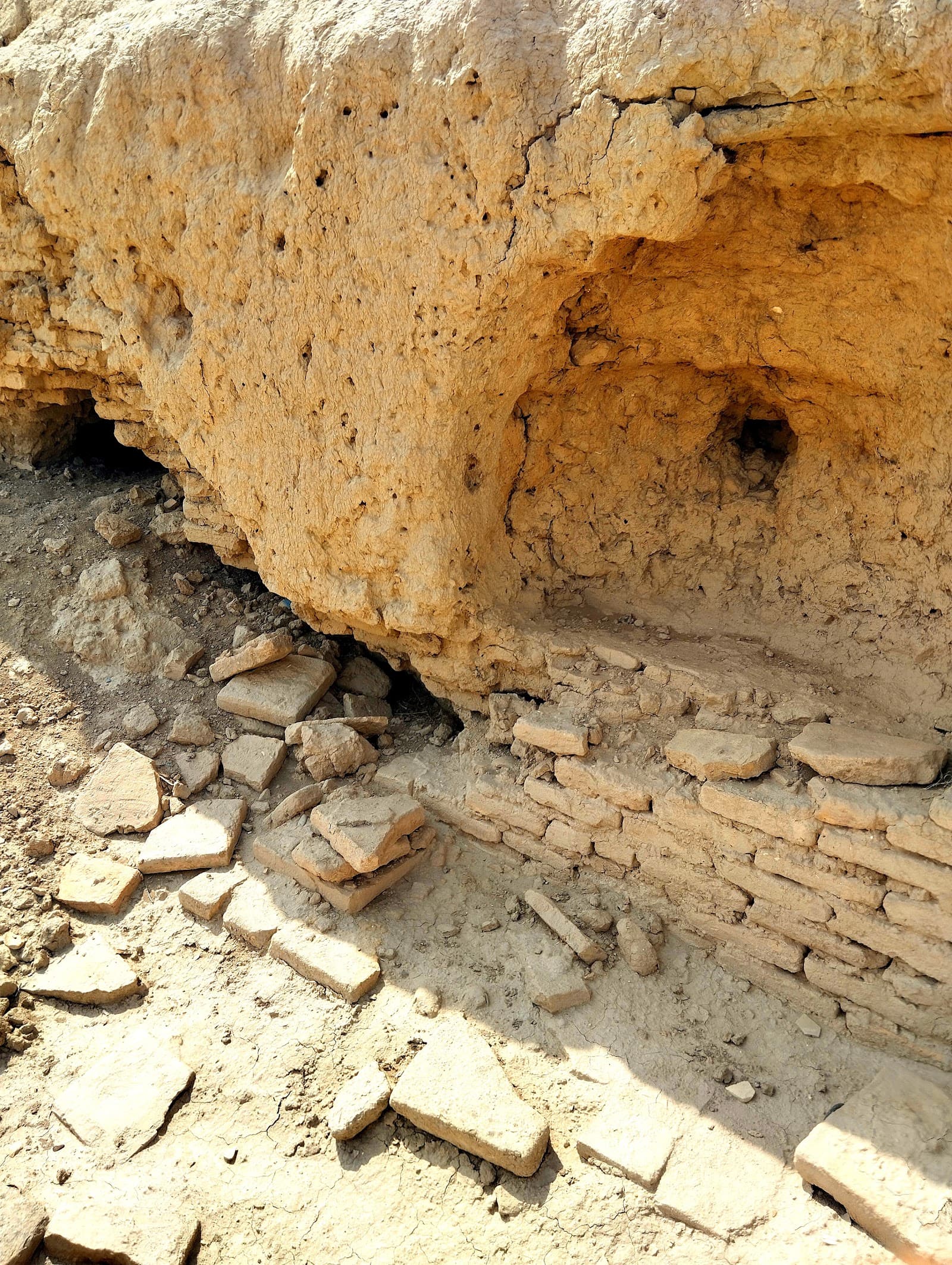
Abiverd Medieval Silk Road City Ahal Turkmenistan
Abiverd Medieval Silk Road City, located in the Ahal Region of Turkmenistan, stands as a profound testament to India's millennia-spanning cultural heritage, reflecting the enduring influence of ancient Indian architectural traditions along the historic Silk Road. This archaeological site, dating back to approximately the 3rd-7th centuries CE, embodies a layered history where indigenous Indian architectural styles, materials, and cultural practices converged with Central Asian forms, showcasing India's deep historical roots and continuous civilizational impact [5] [1]. The site's architectural vocabulary includes elements of the Maru-Gurjara, Nagara, and Vastu Shastra styles, which are integral to India's rich architectural continuum [1] [3] [4]. The Maru-Gurjara architecture, originating in western India, is characterized by its intricate carvings, delicate sculptures, and graceful jalis (lattice screens) [1]. This style often features elaborate entrance gates known as toranas, ornate pillars, and decorative 'flying' arch-like elements that, while non-structural, enhance aesthetic appeal [3]. Fortified structures, courtyards, gardens, and sophisticated water features are also hallmarks, designed for both defense and comfort in arid regions [1]. At Abiverd, these principles are evident in the remnants of its robust city walls, which were surrounded by a dry moat and featured rounded towers, suggesting a defensive architecture that may have incorporated such Indian design philosophies for both structural integrity and aesthetic embellishment [5]. The central tell, approximately 18 meters high and 213 meters in circumference, likely housed monumental structures whose design would have drawn upon these intricate decorative and structural elements [5]. The Nagara architecture, a prominent northern Indian temple style, is distinguished by its tall, curvilinear shikharas (spires) topped by a kalasha (finial), typically built on a high platform without elaborate boundary walls [3]. While Abiverd's primary monumental structures were likely mosques and civic buildings, the underlying principles of verticality, monumental scale, and the use of a central, elevated structure for prominence, as seen in Nagara temples, could have influenced the design of its significant edifices [3]. The site's overall layout, encompassing a rectangular area of 42 hectares, suggests an adherence to ancient Indian planning principles, particularly those of Vastu Shastra [5]. Vastu Shastra, an ancient Indian system, dictates principles of design, layout, measurements, ground preparation, space arrangement, and spatial geometry, aiming to integrate architecture with nature and align structures with cardinal directions and the five elements [4]. The strategic orientation of Abiverd's city gates and the internal organization of its citadel and rabat (trade and craft district) reflect a sophisticated urban planning informed by such ancient Indian spatial theories, ensuring optimal energy flow and functional harmony [2] [5]. Construction at Abiverd utilized both unbaked and baked brick, with the latter becoming more prevalent for monumental architecture from the 10th century CE onwards, allowing for vaulted ceilings and domed structures [5] [5]. The decorative brickwork, carved terracotta, and stucco, characteristic of the region, would have been applied with patterns and motifs that could reflect the intricate geometric and vegetal ornamentation seen in Indo-Islamic architecture, a style that itself is a synthesis of Indian and Islamic forms [3] [5]. Archaeological excavations, which began in the 20th century, have unearthed pottery shards, coins, and other artifacts, many of which are preserved in Turkmenistan's national museums, providing tangible links to its rich past [3] [5]. Abiverd is currently recognized as a historical and cultural monument, with ongoing archaeological research conducted by international expeditions from France and Russia [5]. The site is accessible to visitors, with continuous maintenance and preservation efforts ensuring its operational readiness as a significant heritage destination [5].

Sarakhs Medieval Silk Road City Mary Region Turkmenistan
Sarakhs, dramatically situated on the border between Turkmenistan and Iran in the Mary Region, represents one of the most extraordinary and archaeologically significant medieval cities in Central Asia, dating from the 11th through 14th centuries CE and serving as a major center along the Silk Road, featuring sophisticated urban structures, mosque complexes, fortifications, and architectural elements that demonstrate remarkable connections to ancient Indian architectural traditions and the transmission of architectural and cultural knowledge from South Asia to Central Asia through the extensive trade networks that connected India with Central Asia, creating a powerful testament to the profound impact of Indian civilization on Central Asian urban and architectural development during the medieval period. The site, featuring sophisticated urban structures including mosques, fortifications, residential quarters, and public buildings that demonstrate clear connections to the architectural traditions of ancient India, particularly the sophisticated structural techniques and decorative programs that were transmitted from South Asia, demonstrates the direct transmission of architectural knowledge, urban planning principles, and cultural concepts from the great centers of ancient India, particularly the sophisticated architectural techniques and decorative traditions that were systematically transmitted to Central Asia through trade and cultural exchange, while the site's most remarkable feature is its extensive urban remains including impressive mosque complexes, fortifications with sophisticated brickwork, and architectural elements that demonstrate remarkable parallels with Indian architectural traditions, particularly the structural techniques and decorative programs that were central to Indian temple and palace architecture. The urban structures' architectural layout, with their sophisticated planning, monumental buildings, residential quarters, and public spaces, follows planning principles that demonstrate remarkable parallels with Indian urban planning principles, while the site's extensive architectural remains including mosques, fortifications, and decorative elements demonstrate the sophisticated synthesis of Indian architectural traditions with local Central Asian aesthetic sensibilities and Islamic architectural requirements. Archaeological evidence reveals that the site served as a major center of trade, culture, and religious activity during the medieval period, attracting traders, scholars, and artisans from across Central Asia, South Asia, and the Middle East, while the discovery of numerous artifacts including architectural elements with motifs that demonstrate clear Indian influences, decorative programs that parallel Indian traditions, and structural techniques that reflect Indian architectural concepts provides crucial evidence of the site's role in the transmission of Indian architectural and cultural traditions to Central Asia, demonstrating the sophisticated understanding of Indian architectural traditions possessed by the site's builders and patrons. The site's association with the Silk Road trade networks that connected India with Central Asia demonstrates the sophisticated understanding of Indian architectural traditions that were transmitted to Central Asia, while the site's architectural remains demonstrate remarkable parallels with Indian architectural traditions that were central to ancient Indian civilization. The site has been the subject of extensive archaeological research, with ongoing excavations continuing to reveal new insights into the site's sophisticated architecture, urban planning, and its role in the transmission of Indian architectural traditions to Central Asia, while the site's status as one of the most important medieval cities in Central Asia demonstrates its significance as a major center for the transmission of Indian architectural and cultural traditions to Central Asia. Today, Sarakhs stands as one of the most important medieval archaeological sites in Central Asia, serving as a powerful testament to the transmission of Indian architectural and cultural traditions to Central Asia, while ongoing archaeological research and conservation efforts continue to protect and study this extraordinary cultural treasure that demonstrates the profound impact of Indian civilization on Central Asian architectural and cultural development. ([1][2])
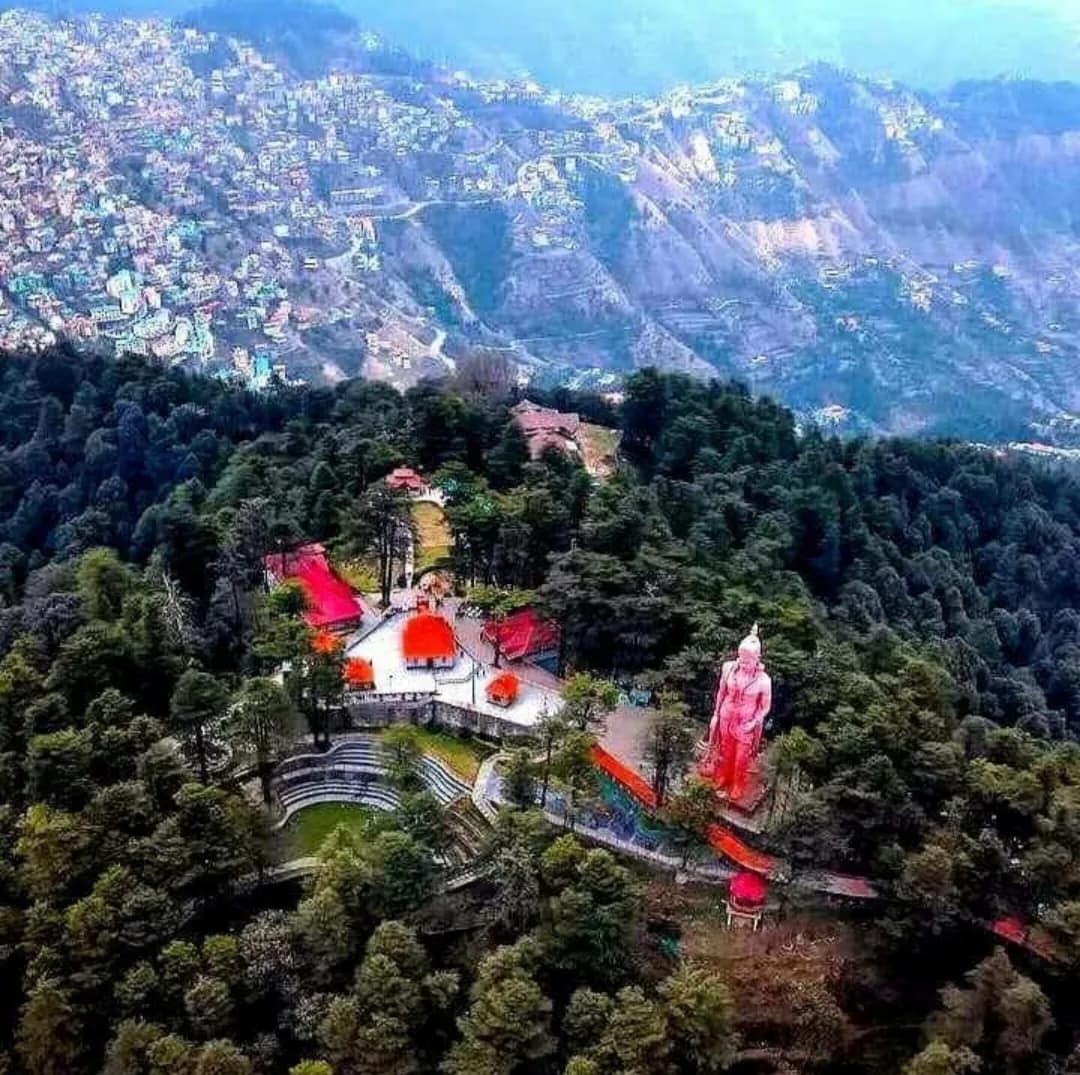
Jakhoo Temple Shimla
The crisp mountain air, scented with pine and a hint of incense, whipped around me as I ascended to the Jakhoo Temple, perched atop Shimla's highest peak. The climb itself was a pilgrimage of sorts, winding through a dense deodar forest, the path punctuated by the chattering of monkeys and the distant chime of temple bells. Having documented over 500 monuments across India, I've learned to appreciate the journey as much as the destination, and Jakhoo’s approach was particularly evocative. Emerging from the tree line, the colossal statue of Hanuman, a vibrant saffron against the cerulean sky, dominated the landscape. Its sheer scale – 108 feet tall – is breathtaking, a modern marvel seamlessly integrated into the ancient narrative of the temple. This wasn't the weathered stone and intricate carvings I’d encountered in countless other temples; this was a statement of devotion on a grand scale, a testament to faith in the digital age. The temple itself, dedicated to Lord Hanuman, is comparatively smaller, a modest structure nestled in the shadow of the giant statue. Its architecture, typical of Himalayan temples, features sloping roofs covered in slate tiles, designed to withstand the heavy snowfall. The wood carvings adorning the entrance, though worn by time and weather, depicted scenes from the Ramayana, adding a layer of narrative richness to the site. Unlike the meticulously preserved monuments I’d seen in Rajasthan or the grand temple complexes of South India, Jakhoo felt intimate, a place of active worship woven into the fabric of the local community. Inside, the air was thick with the scent of burning incense and the murmur of prayers. Devotees, a mix of locals and tourists, offered their respects to the deity, their faces illuminated by the flickering oil lamps. The walls were covered in vibrant murals depicting various incarnations of Lord Hanuman, a kaleidoscope of colours that contrasted sharply with the muted tones of the exterior. It was here, amidst the chanting and the clanging of bells, that I truly felt the pulse of the temple, a living testament to centuries of faith. What struck me most about Jakhoo, however, wasn't just its religious significance, but its unique blend of the ancient and the modern. The juxtaposition of the traditional temple architecture with the towering Hanuman statue created a fascinating dialogue between past and present. The statue, while a recent addition, didn't feel out of place; rather, it seemed to amplify the existing energy of the site, drawing the eye upwards, towards the heavens. As I photographed the temple, capturing the interplay of light and shadow on the weathered stone, I noticed the monkeys, ever-present companions on this mountaintop pilgrimage. They scampered across the rooftops, swung from the trees, and interacted with the devotees, adding a touch of playful chaos to the serene atmosphere. Their presence, while sometimes disruptive, felt integral to the Jakhoo experience, a reminder of the wildness that still clung to this sacred space. Descending the mountain, the city of Shimla spread out below me, a tapestry of buildings clinging to the hillside. The Jakhoo Temple, perched high above, felt like a silent guardian, watching over the bustling life below. It was a place where faith and nature intertwined, where ancient stories met modern expressions, and where the journey to the summit was as rewarding as the destination itself. It’s a site that will undoubtedly stay etched in my memory, another vibrant thread in the rich tapestry of India's heritage.
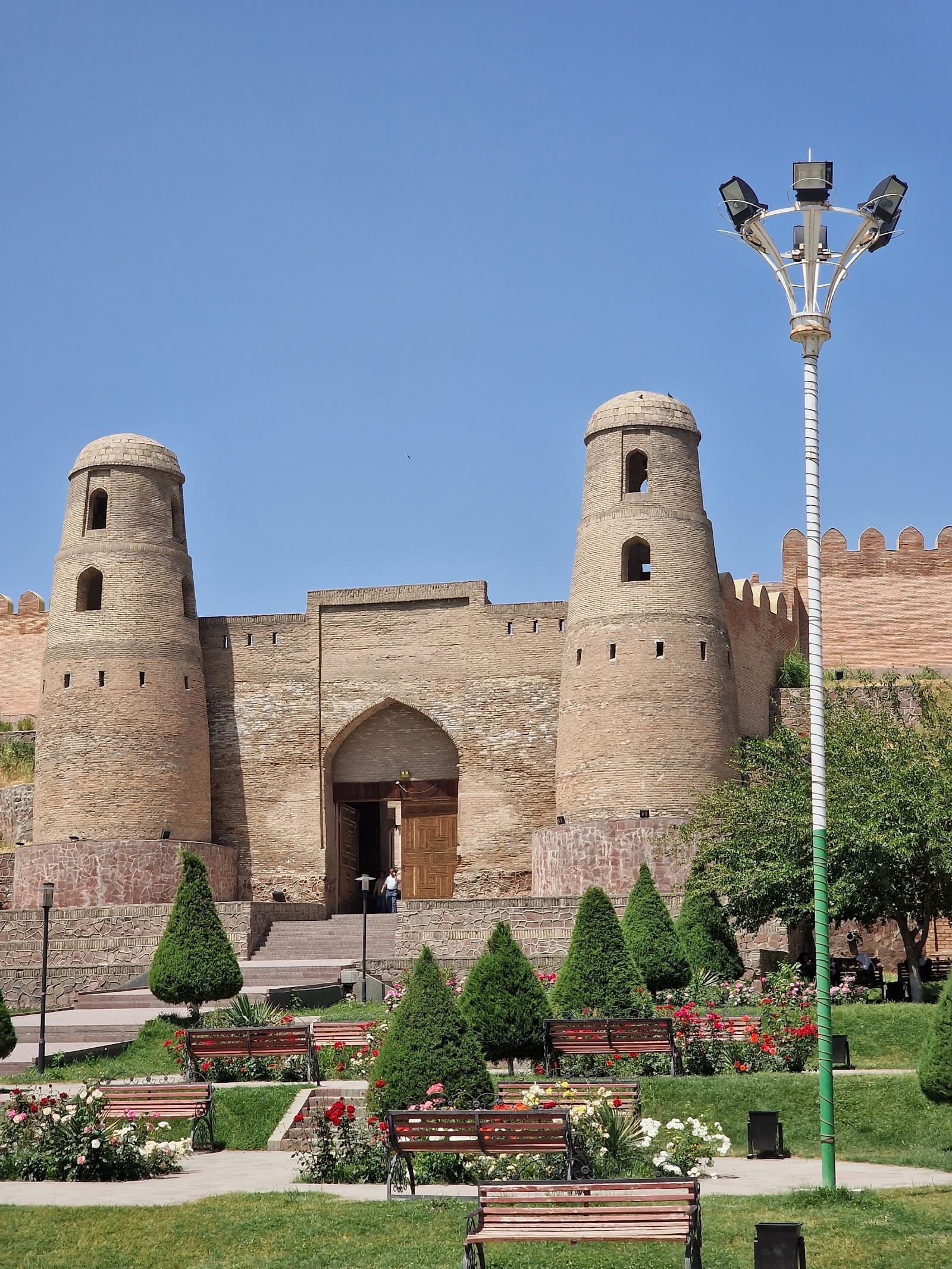
Hisor Fortress Complex Hisor Tajikistan
Hisor Fortress Complex, dramatically situated in the Hisor District of central Tajikistan, represents one of the most archaeologically significant fortified settlements in Central Asia, constructed over multiple periods from ancient times through the medieval period as a major defensive and administrative center with archaeological layers containing Buddhist remain fragments, creating a powerful testament to the transmission of Indian Buddhist religious and artistic traditions to Central Asia. The fortress complex, featuring sophisticated defensive architecture including fortified walls, towers, and gates that were constructed and reconstructed over centuries, contains archaeological layers that have yielded Buddhist remain fragments including sculptures, reliefs, and architectural elements that demonstrate clear Indian Buddhist iconographic influences, providing crucial evidence of the site's role as a center for the transmission of Indian Buddhist culture to Central Asia. Archaeological excavations have revealed extraordinary archaeological layers containing Buddhist remain fragments executed in styles that demonstrate clear Indian Buddhist iconographic influences, while the discovery of numerous artifacts including coins, pottery, and ritual objects provides crucial evidence of the site's role as a major center of trade and religious activity that attracted merchants, monks, and pilgrims from across the Buddhist world including India. The fortress complex's architectural layout, with its defensive walls, towers, and gates, follows sophisticated defensive planning principles, while the archaeological layers containing Buddhist remain fragments demonstrate the ways in which Indian Buddhist traditions were integrated into Central Asian fortified settlements. The fortress complex's location in the Hisor District, a major crossroads of ancient trade routes, underscores its significance as a center for the transmission of Buddhist teachings, art, and culture from India to Central Asia and beyond, while the site's archaeological layers demonstrate the sophisticated understanding of Indian Buddhist traditions possessed by the communities that inhabited this extraordinary complex. Today, Hisor Fortress Complex stands as a major archaeological site and represents one of the most important fortified settlements in Central Asia, serving as a powerful testament to the transmission of Indian Buddhist culture to Central Asia, while ongoing archaeological research and conservation efforts continue to protect and study this extraordinary cultural treasure that demonstrates the profound impact of Indian civilization on Central Asian religious and artistic traditions. ([1][2])
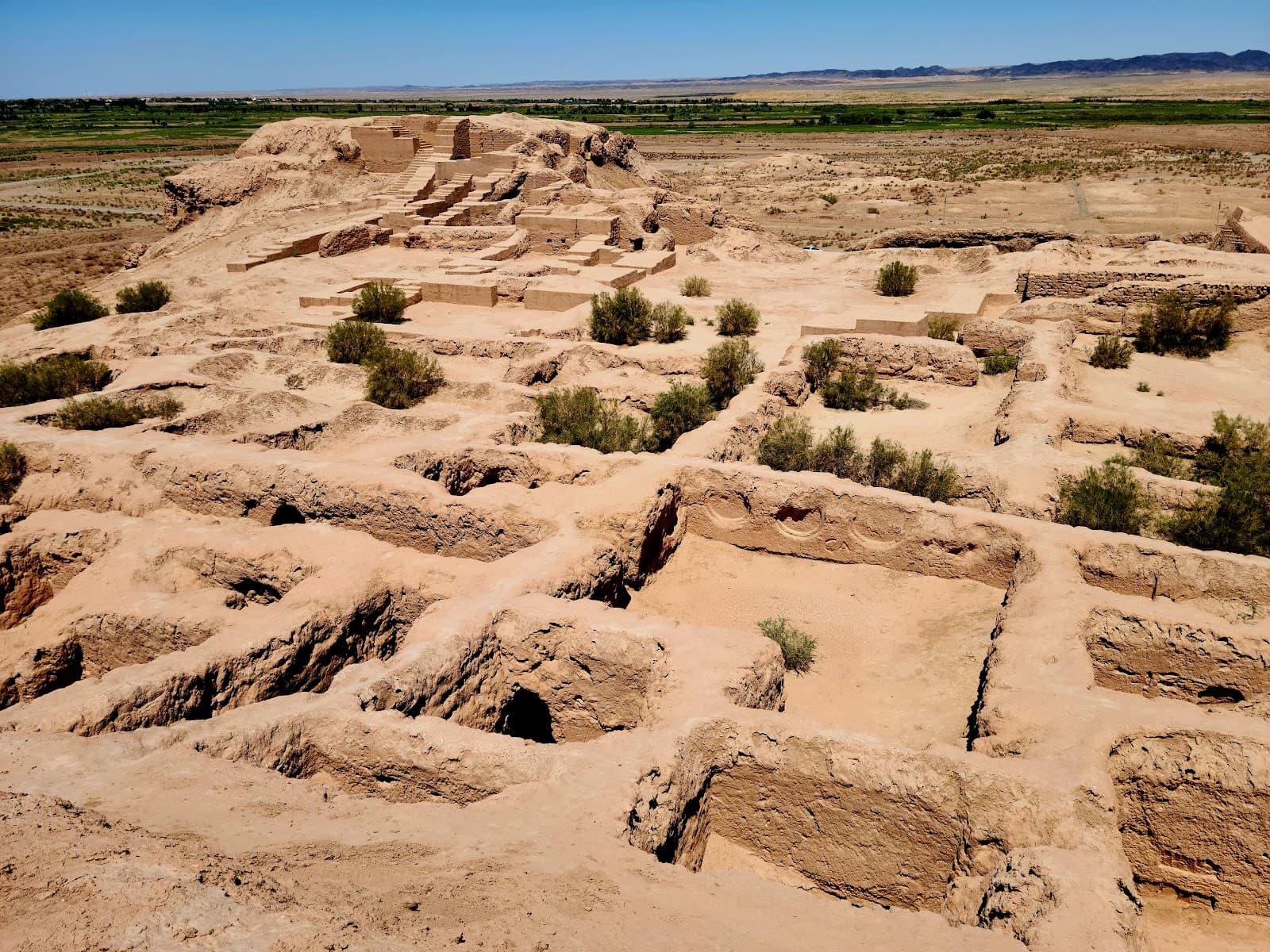
Topraq-Kala Karakalpakstan Uzbekistan
Topraq-Kala, located in the Karakalpakstan region of Uzbekistan, represents one of the most magnificent and archaeologically significant Khorezmian palace-temple complexes in Central Asia, constructed from the 1st to 4th centuries CE as a major administrative and religious center that demonstrates the extraordinary synthesis of Central Asian palace architecture with Indian Hindu religious iconography and artistic traditions, creating a powerful testament to the profound transmission of Indian religious and cultural traditions to Central Asia during the ancient period. The complex, comprising an extensive fortified palace with multiple courtyards, residential quarters, and religious structures, features remarkable archaeological discoveries including temple remains adorned with Hindu iconography including sculptures and reliefs depicting Hindu deities that demonstrate the direct transmission of Indian Hindu religious and artistic traditions to Central Asia, while the discovery of numerous artifacts including sculptures of Shiva, Vishnu, and other Hindu deities provides crucial evidence of the site's role as a center where Indian Hindu religious practices flourished in Central Asia. The palace-temple complex demonstrates sophisticated architectural planning with multiple levels, courtyards, and specialized structures that reflect both Central Asian palace traditions and Indian temple architectural influences, while the extensive decorative programs including sculptures and reliefs executed in styles that demonstrate clear connections to Indian artistic traditions provide crucial evidence of the ways in which Indian Hindu iconography was adapted and transformed in the Central Asian context. Archaeological excavations have revealed that the complex served as both a major administrative center for the Khorezmian state and a center of Hindu worship, while the discovery of numerous artifacts including coins, pottery, and ritual objects provides crucial evidence of the site's role in the transmission of Indian religious, artistic, and cultural traditions to Central Asia, demonstrating the sophisticated understanding of Indian traditions possessed by the inhabitants of this remarkable complex. The site's location along major trade routes underscores its significance as a center for the transmission of Indian religious and cultural traditions to Central Asia, while the extensive archaeological remains provide crucial insights into the ways in which Indian Hindu practices were integrated into Central Asian palace and religious architecture. Today, Topraq-Kala stands as a UNESCO Tentative List site and represents one of the most important Khorezmian archaeological sites in Central Asia, serving as a powerful testament to the transmission of Indian Hindu culture and architecture to Central Asia, while ongoing archaeological research and conservation efforts continue to protect and study this extraordinary cultural treasure that demonstrates the profound impact of Indian civilization on Central Asian religious and artistic traditions. ([1][2])
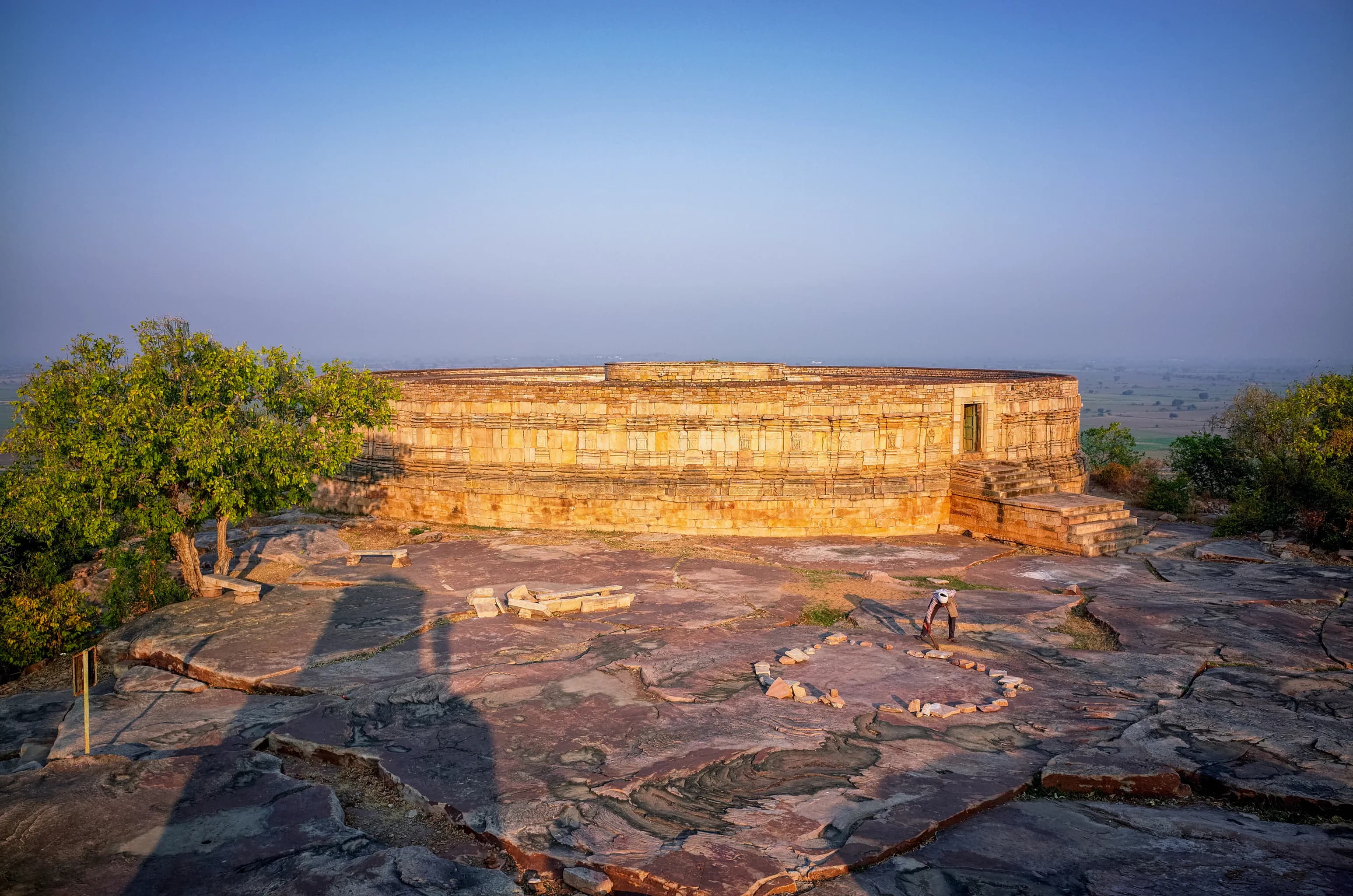
Chausath Yogini Temple Morena
Nestled atop a hill in Mitaoli, Morena, the Chausath Yogini Temple presents a striking departure from traditional Indian temple architecture ([1]). During the Gurjara-Pratihara period, around 850 CE, the Kachchhapaghata Dynasty constructed this unique circular temple ([2][3]). Sandstone and granite blocks form an open-air circular platform, marking a deviation from conventional square temple layouts ([4]). Sixty-four chambers once housed Yogini statues, reflecting traditions linked to tantric practices ([5]). Ascending to the temple, the absence of mortar in the stone construction highlights the precision of ancient craftsmanship ([1]). Stone platforms and foundations display sophisticated engineering techniques prevalent in that era ([4]). Vedic astronomical principles are believed to have influenced the temple's circular design, mirroring cosmic cycles ([3]). The central shrine, now partially ruined, was likely dedicated to Lord Shiva ([2]). Intricate carvings, though weathered, still adorn the pillars, hinting at the temple's rich iconography ([1]). Vastu Shastra principles, the ancient Indian science of architecture, may have guided the layout, emphasizing harmony with nature ([3]). Kachchhapaghata Dynasty patronage underscores the temple's historical significance ([2][3]). This temple's circular plan is a rare example of Hindu temple design, differing from the common square or rectangular layouts detailed in texts like the *Manasara Shilpa Shastra* ([4]). The open mandapa (pillared hall) further distinguishes it from typical closed-hall temples. The panoramic view from the temple enhances its spiritual ambiance, offering a commanding perspective of the surrounding landscape ([2]). This architectural marvel stands as a significant emblem of ancient Indian artistry ([4]).
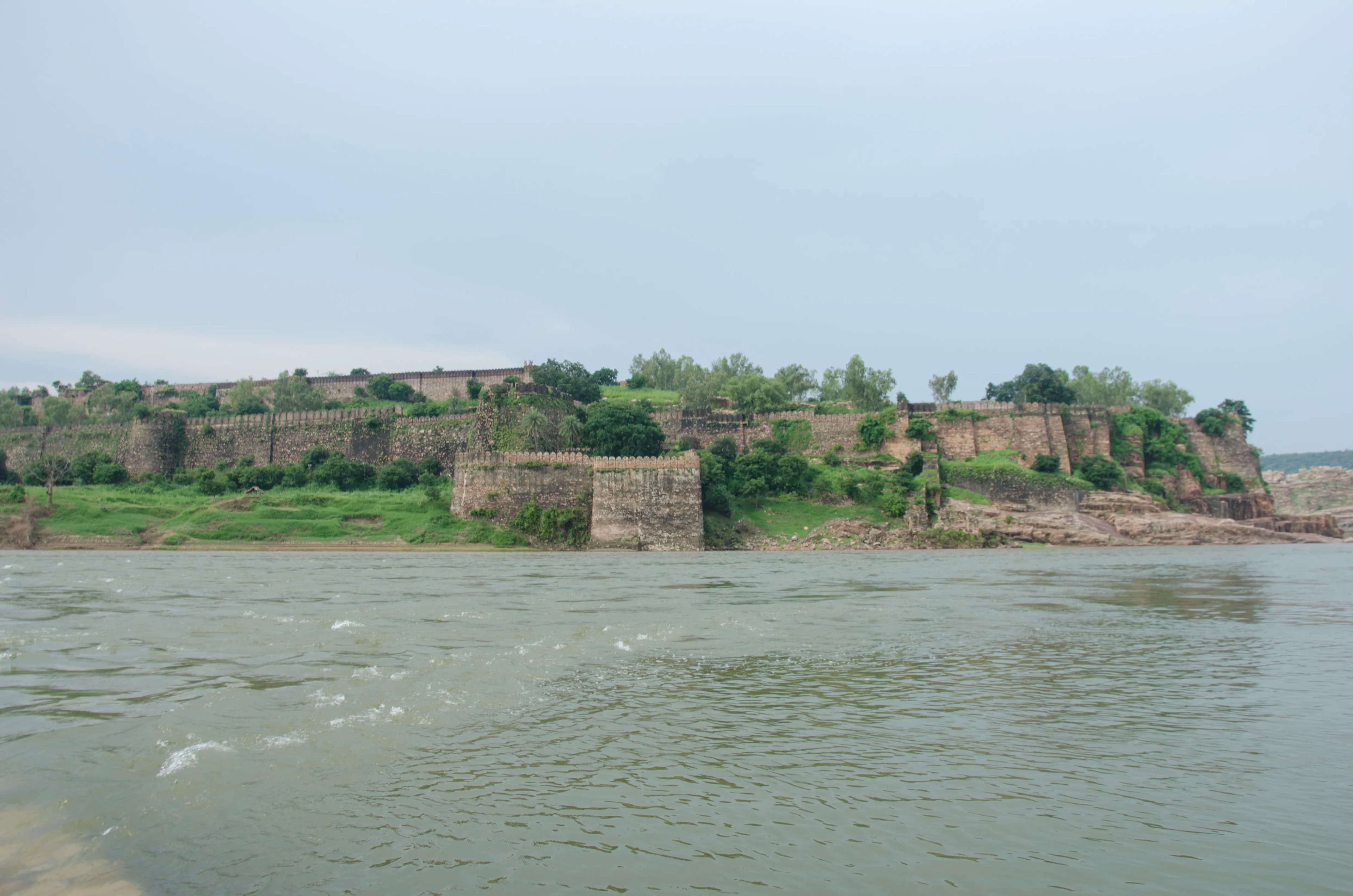
Gagron Fort Jhalawar
The imposing silhouette of Gagron Fort, rising from the confluence of the Ahu and Kali Sindh rivers, was a sight that resonated with a power far beyond its physical scale. Having spent years immersed in the Dravidian architecture of South India, I arrived at this Rajput fortress with a keen eye for comparison and a thirst to understand a different architectural idiom. The stark contrast between the granite behemoths of my homeland and this sandstone sentinel was immediately apparent, yet the underlying principles of fortification and strategic placement felt strangely familiar. Gagron, a UNESCO World Heritage Site, is one of the few hill and water forts in Rajasthan. The unique 'jal durg' classification, meaning water fort, is immediately justified by its position. Unlike the moat-encircled forts I’m accustomed to seeing in the South, Gagron is virtually embraced by the rivers on three sides, creating a natural, formidable barrier. This inherent strength is further enhanced by massive sandstone walls that rise directly from the water, their warm hues glowing in the afternoon sun. Entering through the imposing Nahar Pol gate, I was struck by the intricate carvings adorning the archway. While less ornate than the Gopurams of South Indian temples, the detailed depictions of deities and floral motifs spoke volumes about the Rajput patronage of the arts. The fort's layout, a labyrinthine network of narrow lanes, palaces, temples, and reservoirs, unfolded before me like a medieval urban plan. The steep inclines and strategically placed gates clearly demonstrated a focus on defense, reminding me of the intricate fortifications of Gingee Fort back home. The architecture within the fort displayed a fascinating blend of Rajput military architecture and subtle Mughal influences. The Kirttistambh, a victory tower, stood tall, its intricate carvings a testament to Rajput craftsmanship. It reminded me of the Vijayanagara period pillars, though the stylistic differences were pronounced. The Rani Mahal palace, overlooking the confluence of the rivers, offered breathtaking views and a glimpse into the lives of the royalty who once inhabited this fortress. The delicate jali work, allowing for ventilation and veiled views, was a feature I found echoed in many South Indian palaces, though the geometric patterns here were distinctly Rajasthani. One of the most striking features of Gagron Fort is its water management system. The numerous baoris, or stepwells, within the fort complex are marvels of engineering. These deep, multi-storied structures, designed to collect and store rainwater, showcase an understanding of water conservation that was crucial in this arid region. The sophistication of these systems resonated deeply with me, having witnessed similar ingenuity in the ancient tank irrigation systems of Tamil Nadu. Exploring the fort, I came across several temples dedicated to various Hindu deities. The architecture of these temples, while smaller in scale, bore the hallmarks of Rajput temple design, with their shikharas and mandapas. The coexistence of these religious structures within the fort highlighted the integral role of faith in the lives of the Rajput rulers. This integration of secular and religious architecture is a feature I've often observed in South Indian temple complexes as well. My visit to Gagron Fort was more than just a sightseeing trip; it was a cross-cultural architectural dialogue. It was a testament to the ingenuity and artistry of two distinct yet interconnected building traditions. While the materials, styles, and ornamentation differed significantly, the underlying principles of fortification, water management, and the integration of faith into architecture resonated deeply with my understanding of South Indian heritage. Gagron Fort stands not just as a monument to Rajput valor, but as a powerful reminder of the shared architectural heritage of India.
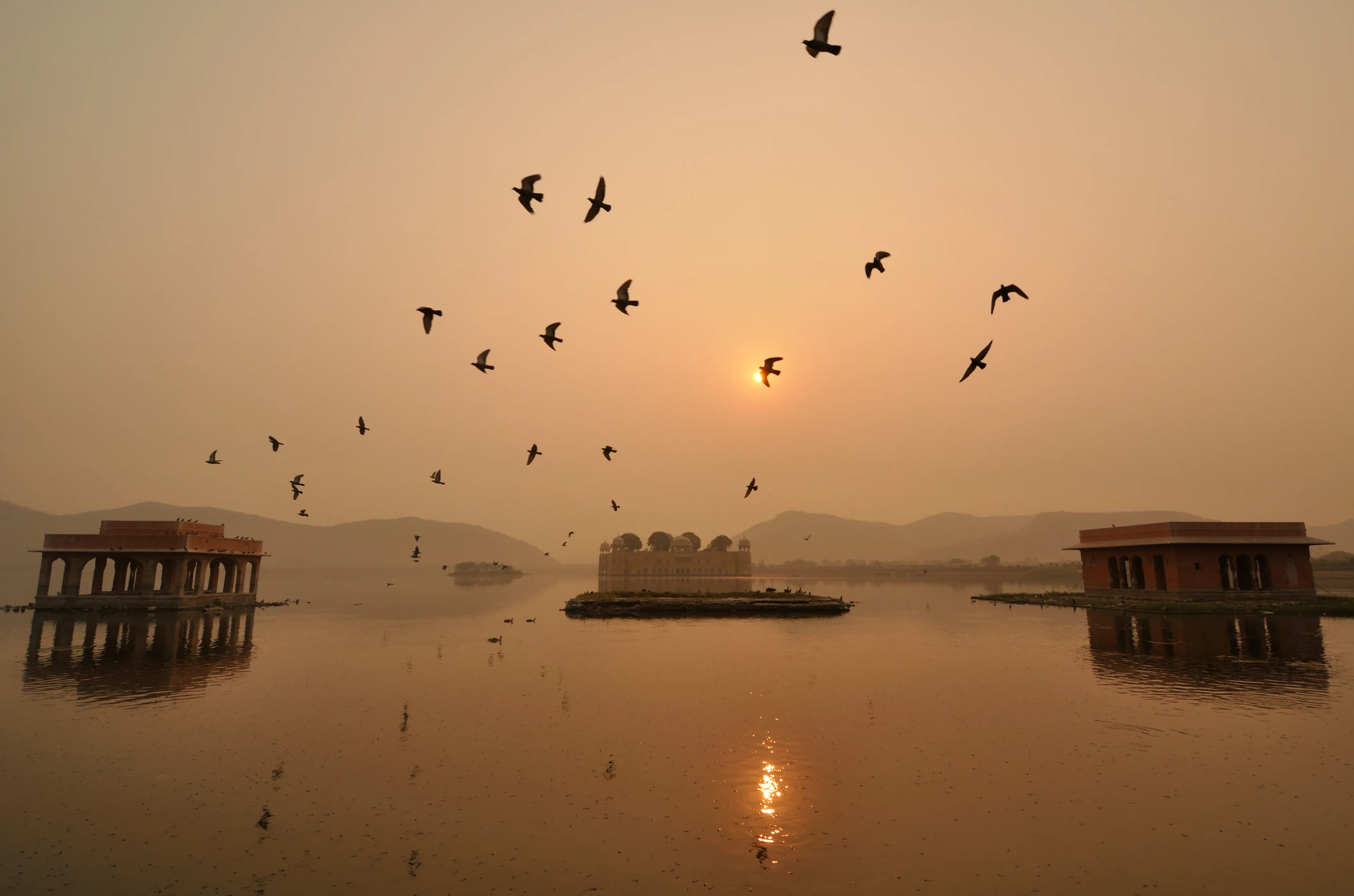
Jal Mahal Jaipur
The Jal Mahal, or Water Palace, shimmers like a mirage in the heart of Man Sagar Lake in Jaipur. Having explored every UNESCO site in India, I can confidently say this one holds a unique charm, a blend of Rajput grandeur and the serene tranquility of its watery embrace. Approaching it from the bustling city, the palace seems to materialize from the lake itself, a sandstone vision rising from the placid blue. It’s a spectacle that immediately captivates, a testament to the architectural ingenuity of its creators. My visit began on a crisp winter afternoon, the sunlight glinting off the lake’s surface, creating a dazzling backdrop for the palace. The approach is restricted, no boats are allowed to reach the palace itself, adding to its mystique. This forced perspective, viewing it from the lakeshore, enhances its ethereal quality. You can’t help but wonder about the lives lived within those walls, now eerily silent, surrounded by water. The Jal Mahal is a five-storied structure, four of which remain submerged when the lake is full. The visible top story, with its exquisitely carved chhatris and delicate jalis, offers a glimpse into the opulence within. The red sandstone, a signature of Rajput architecture, glows warmly in the sunlight, contrasting beautifully with the deep blue of the lake. I spent a considerable amount of time observing the intricate details, the delicate floral patterns carved into the stone, the graceful arches, and the strategically placed balconies that would have once offered breathtaking views of the surrounding Aravalli hills. The palace was originally built as a hunting lodge for the Maharaja Jai Singh II in the 18th century and later renovated and expanded by Madho Singh I. While I couldn’t explore the interiors, I learned that the lower levels, now underwater, were designed with elaborate gardens and courtyards. Imagine the grandeur of those submerged spaces, once filled with life and laughter, now home to aquatic life. It’s a poignant reminder of the transient nature of human endeavors, how even the most magnificent creations can be reclaimed by nature. The surrounding Man Sagar Lake itself is an integral part of the Jal Mahal experience. Flocks of migratory birds, including flamingos and pelicans, often grace the lake, adding another layer of beauty to the scene. During my visit, I was fortunate enough to witness this avian spectacle, their vibrant plumage contrasting with the serene backdrop of the palace and the hills. The lake, once a haven for the royal family’s hunting expeditions, is now a sanctuary for these magnificent creatures, a testament to the changing times. One of the most striking aspects of the Jal Mahal is its reflection in the still waters of the lake. It creates a perfect mirror image, doubling the visual impact. This symmetrical beauty, the palace and its reflection, is a photographer’s dream. I spent a good hour capturing the scene from different angles, trying to capture the essence of this magical place. While the restricted access can be a bit frustrating for those eager to explore the palace’s interiors, it also contributes to its preservation. The distance allows for contemplation, for appreciating the architectural marvel from afar, and for imagining the stories it holds within its submerged walls. The Jal Mahal is more than just a palace; it’s a symbol of a bygone era, a testament to human ingenuity, and a reminder of the delicate balance between nature and human creation. It’s a must-see for anyone visiting Jaipur, a place that will stay etched in your memory long after you’ve left its shimmering shores.

Durga Mandir Serchhip
The emerald hills of Mizoram cradled Serchhip, a town I hadn't known existed until my editor suggested it. My focus, as always, was on architecture, and the Durga Mandir, nestled within this unexpected landscape, proved a fascinating anomaly. It wasn't the towering, ornate structure I'd grown accustomed to in Gujarat. Instead, it possessed a quiet dignity, a subtle blend of traditional Mizo architecture and North Indian temple influences, reflecting the unique cultural confluence of this region. The temple’s location itself was striking. Unlike the grand temple complexes of Gujarat often situated in bustling city centers or on riverbanks, the Durga Mandir occupied a more secluded spot, slightly removed from the town's main thoroughfare. A short climb up a gentle slope, flanked by trees, led to the temple grounds, offering a sense of peaceful detachment from the world below. This approach, I realized, mirrored the spiritual journey itself – a movement away from the mundane towards the sacred. The structure was primarily built of brick, painted a cheerful salmon pink, a stark contrast to the surrounding greenery. The shikhara, the tower above the sanctum sanctorum, was noticeably different from the curvilinear forms I’d seen in Gujarat’s temples. Here, it was a pyramidal structure, tiered and tapering towards the apex, reminiscent of the traditional Mizo houses. This adaptation, I felt, was a testament to the local craftsmen who had likely incorporated their own architectural vocabulary into the temple's design. The entrance to the temple was through a modest arched gateway, leading into a small courtyard. The courtyard, paved with simple stone slabs, was surprisingly intimate. It lacked the elaborate carvings and sculptures that adorn many Gujarati temples, but this simplicity had its own charm. It allowed the focus to remain firmly on the main shrine. The main shrine housed the deity of Durga, a powerful symbol of feminine energy. The idol, though smaller than the monumental representations I’d seen elsewhere, held the same aura of reverence. The interior of the shrine was relatively plain, with minimal ornamentation. The walls were painted a soft yellow, creating a warm, inviting atmosphere. The absence of excessive decoration, I realized, amplified the spiritual energy within the space. What truly captivated me was the intricate woodwork adorning the temple’s eaves and pillars. The Mizo people are renowned for their woodcarving skills, and the Durga Mandir showcased this artistry beautifully. Floral motifs and geometric patterns were intricately carved into the wood, adding a layer of delicate beauty to the otherwise simple structure. These carvings, I learned, were not merely decorative; they held symbolic meanings, narrating stories from Hindu mythology and local folklore. As I sat in the quiet courtyard, observing the interplay of light and shadow on the temple walls, I reflected on the unique character of this sacred space. It wasn't a grand spectacle of architectural prowess like the temples of my homeland. Instead, it was a quiet testament to the harmonious blending of cultures, a symbol of faith adapting and flourishing in a new environment. The Durga Mandir in Serchhip wasn't just a temple; it was a story etched in brick and wood, a narrative of cultural exchange and spiritual adaptation, a story that resonated deeply with me. It served as a powerful reminder that architectural marvels can be found in the most unexpected places, often whispering stories more profound than their grander counterparts. My journey to Mizoram, initially driven by architectural curiosity, had unexpectedly transformed into a cultural exploration, enriching my understanding of India's diverse spiritual landscape.
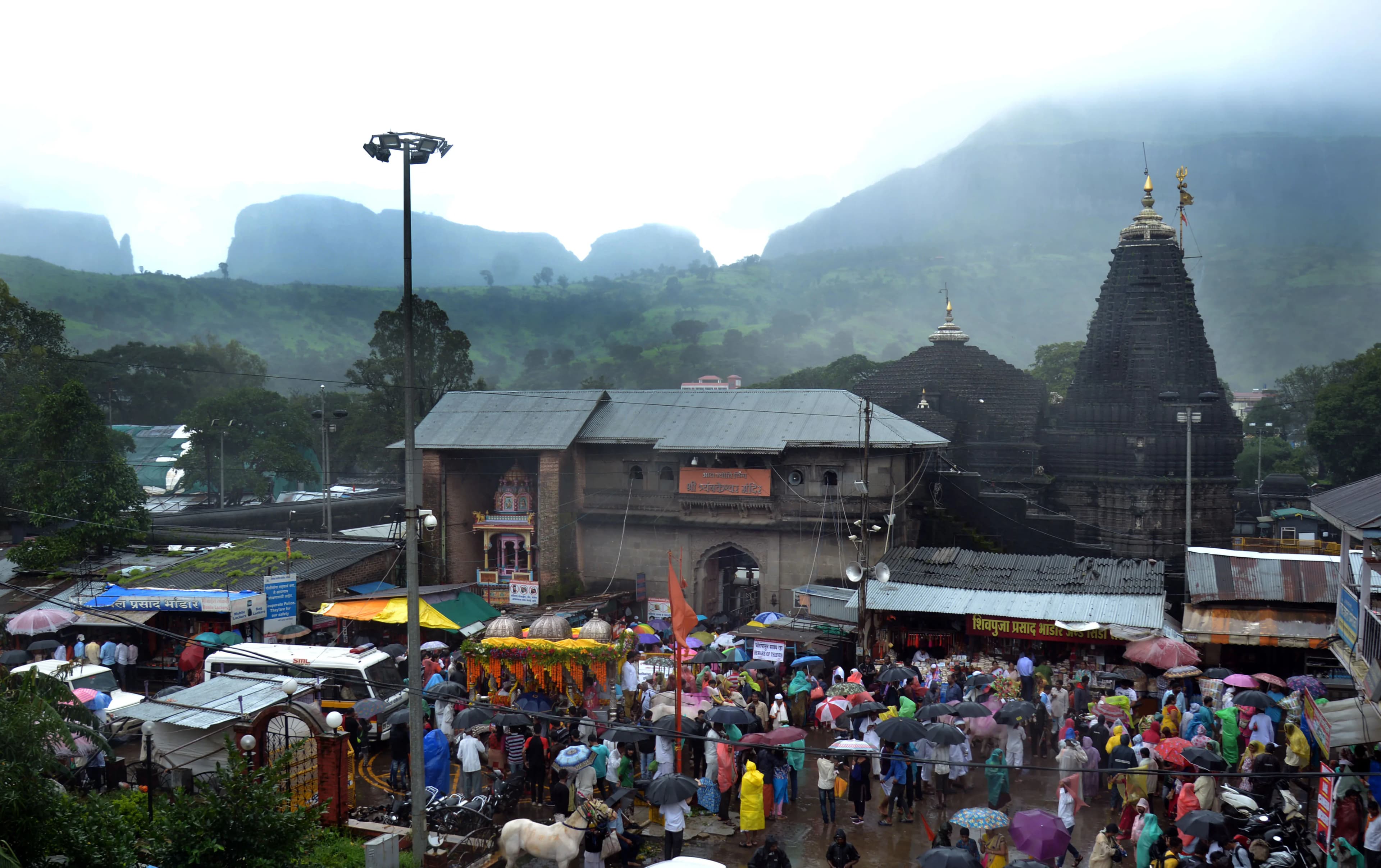
Trimbakeshwar Shiva Temple Nashik
The air, thick with incense and the murmur of Sanskrit chants, hung heavy as I stepped into the courtyard of the Trimbakeshwar Shiva Temple. Having explored countless ancient sites across North India, I’ve developed a keen eye for architectural nuances, and Trimbakeshwar immediately struck me as unique. Unlike the sandstone and marble structures I was accustomed to in the north, this temple, dedicated to one of the twelve Jyotirlingas, was crafted from black basalt stone, lending it a sombre, almost mystical aura. The intricately carved façade, darkened by time and weather, narrated stories of dynasties past. Eroded sculptures of deities, celestial beings, and mythical creatures intertwined, a testament to the skilled artisans who had painstakingly brought this temple to life centuries ago. The main entrance, guarded by imposing dwarapalas (gatekeepers), led into a mandap, its pillars intricately carved with floral motifs and geometric patterns. Sunlight filtered through the jaali screens, casting dancing shadows on the polished stone floor, creating an ethereal atmosphere. The heart of the temple, the garbhagriha, housed the revered Jyotirlinga. Unlike other Jyotirlingas, which are typically cylindrical lingams, the one at Trimbakeshwar is a depression in the ground, a small hollow from which a perpetual stream of water flows. This unique feature, explained by local priests as symbolic of the origin of the Godavari River, added to the sanctity of the place. The constant trickle of water, the chanting of priests, and the hushed reverence of the devotees created a palpable sense of spiritual energy. I spent a considerable amount of time observing the devotees. Their faces, etched with devotion and hope, reflected the deep-rooted faith that had drawn them to this sacred site. From elderly women whispering prayers to young couples seeking blessings, the temple served as a melting pot of human emotions and spiritual aspirations. I witnessed a young boy meticulously offering flowers to the deity, his eyes closed in concentration, a poignant reminder of the enduring power of faith across generations. The architecture of the temple, while predominantly Hemadpanti – characterized by its precision and use of interlocking stones – also displayed influences from other styles. I noticed elements of the Chalukyan style in the ornate carvings and the use of decorative motifs. This fusion of architectural styles, a testament to the region’s rich history and cultural exchanges, added another layer of intrigue to the temple's narrative. Beyond the main shrine, the temple complex housed several smaller shrines dedicated to various deities. I explored these smaller shrines, each with its own unique character and history. The surrounding courtyards, though bustling with activity, retained a sense of serenity. The rhythmic clang of temple bells, the fragrance of incense, and the soft murmur of prayers created a symphony of sounds and scents that enveloped me. As I left the temple, the image of the Jyotirlinga, the source of the sacred Godavari, remained etched in my mind. Trimbakeshwar, with its unique architecture, spiritual significance, and palpable energy, offered a glimpse into the rich tapestry of Indian faith and heritage. It was a journey not just to a geographical location, but also a journey into the heart of a culture deeply rooted in spirituality and tradition. My experience at Trimbakeshwar reinforced my belief that these ancient sites are not merely monuments of the past, but living, breathing entities that continue to inspire and connect us to something larger than ourselves.
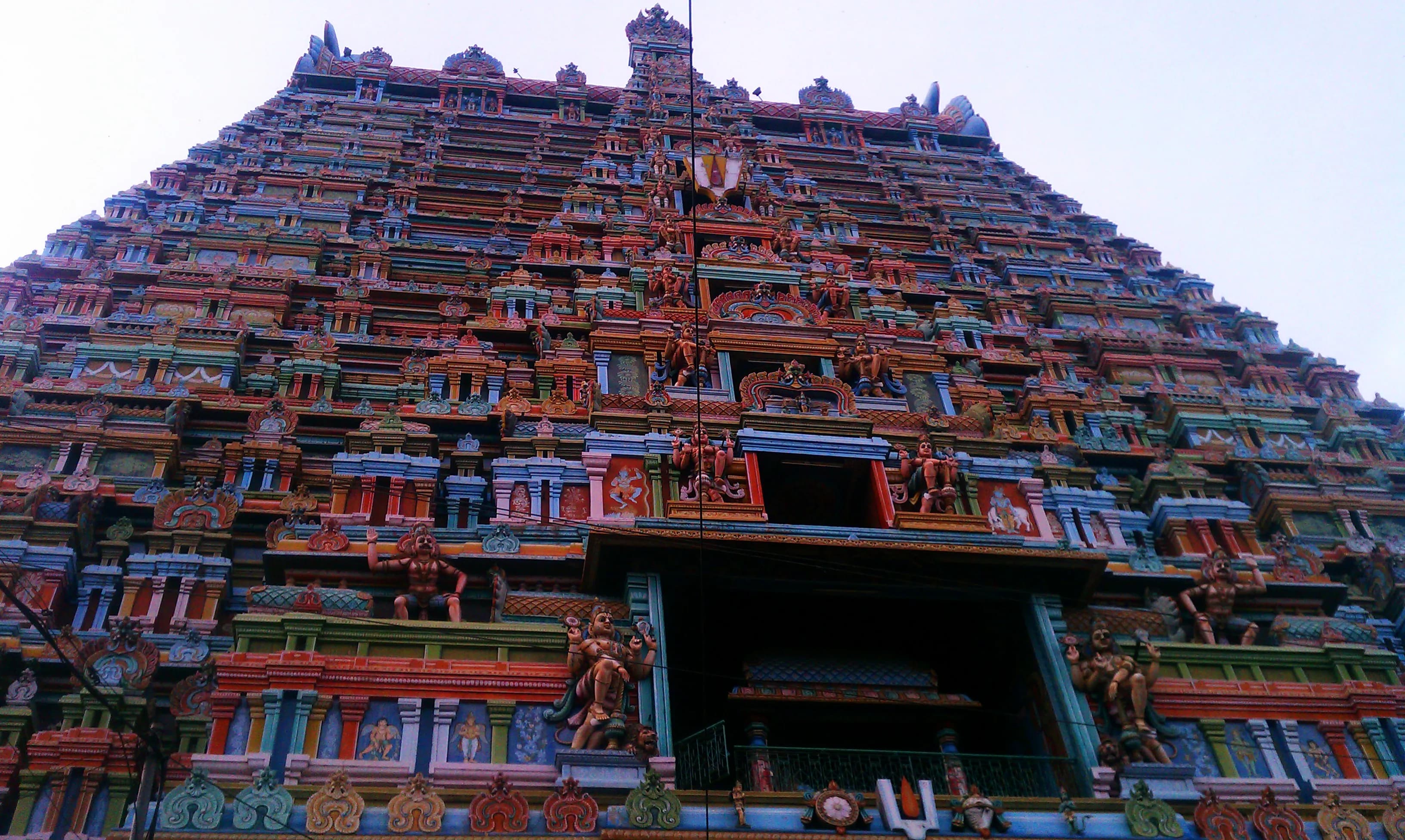
Ranganatha Temple Nellore
The midday sun beat down on Nellore, the heat shimmering off the gopurams of the Ranganatha Swamy Temple. Having explored countless sandstone marvels in Rajasthan, I was eager to experience the distinct Dravidian architecture of this South Indian temple. Stepping through the towering eastern gateway, I was immediately struck by the sheer scale of the complex. The vast courtyard, paved with worn stone, stretched before me, punctuated by smaller shrines and mandapams. Unlike the intricate carvings that adorn Rajasthani temples, the architecture here felt bolder, more geometric. The gopurams, tiered pyramids that mark the temple entrances, were adorned with vibrant stucco figures depicting deities and mythological scenes. The colours, though faded with time, still held a certain vibrancy, a testament to the artistry of the craftsmen who had brought them to life centuries ago. I noticed that the gopurams here seemed less ornate than those I'd seen in Tamil Nadu, perhaps reflecting a regional variation in the Dravidian style. The main shrine, dedicated to Lord Ranganatha, a reclining form of Vishnu, dominated the courtyard. The structure, built from granite, exuded a sense of solidity and permanence. As I approached, I observed the intricate carvings that adorned the pillars and walls. While the overall style was Dravidian, I noticed subtle influences of the Vijayanagara Empire in the ornate detailing, a reminder of the region's rich history. The pillars, in particular, were fascinating. Many featured yalis, mythical lion-like creatures, a common motif in South Indian temple architecture. However, the yalis here seemed more stylized, less ferocious than those I'd seen elsewhere, lending a unique character to the temple. Inside the sanctum sanctorum, the atmosphere was hushed and reverent. Photography was prohibited, which allowed me to fully immerse myself in the spiritual energy of the place. The air was thick with the scent of incense and the murmur of prayers. While I couldn't capture the image of the reclining deity, the mental picture I formed was far more vivid. The serenity of the Lord's expression, the intricate details of his adornments, and the palpable devotion of the worshippers created an unforgettable experience. Exiting the main shrine, I wandered through the sprawling complex, discovering hidden corners and smaller shrines dedicated to various deities. One particularly captivating structure was the Kalyana Mandapam, the marriage hall. Its intricately carved pillars, depicting scenes from Hindu mythology, were a testament to the skill of the artisans. I imagined the vibrant ceremonies that must have taken place within these walls, the air filled with music and celebration. The Pushkarini, the temple tank, located to the north, offered a welcome respite from the midday heat. The steps leading down to the water were worn smooth by centuries of use, a tangible link to the generations who had come before. The stillness of the water reflected the surrounding gopurams, creating a mesmerizing image. I observed locals performing rituals at the water's edge, their faith evident in every gesture. My visit to the Ranganatha Swamy Temple was a journey of discovery, a chance to appreciate the nuances of Dravidian architecture and experience the spiritual heart of Nellore. While the grandeur of Rajasthan's forts and palaces will always hold a special place in my heart, the serene beauty and intricate artistry of this South Indian temple offered a fresh perspective, a reminder of the rich diversity of India's architectural heritage. The temple isn't just a structure of stone and stucco; it's a living testament to faith, artistry, and the enduring power of tradition.
Quick Links
Plan Your Heritage Journey
Get personalized recommendations and detailed visitor guides