Has Inheritage Foundation supported you today?
Your contribution helps preserve India's ancient temples, languages, and cultural heritage. Every rupee makes a difference.
Secure payment • Instant 80G certificate
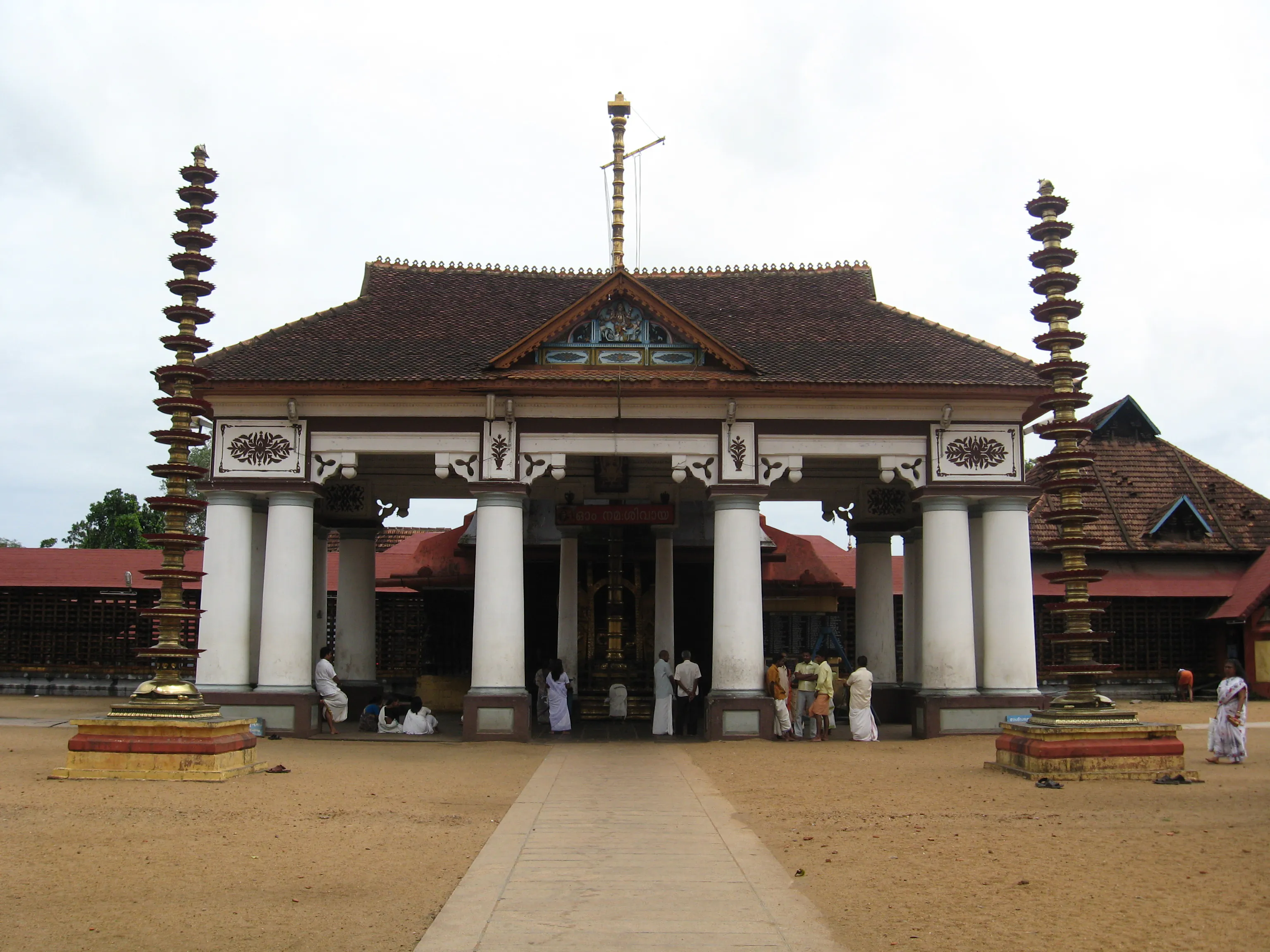
Vaikom Mahadeva Temple Vaikom
The air hung heavy with the scent of incense and jasmine as I stepped through the imposing gopuram of the Vaikom Mahadeva Temple. Sunlight, filtered through the intricate carvings of the gateway, dappled the stone courtyard, creating an atmosphere of serene grandeur. This wasn't just another temple; it was a palpable link to Kerala's rich architectural and spiritual past. Located in the heart of Vaikom, on the shores of Vembanad Lake, the temple’s location itself speaks volumes about its historical significance – a confluence of faith and the natural world. The temple, dedicated to Lord Shiva, is one of the oldest and most revered in Kerala, its origins shrouded in legends that predate recorded history. While the current structure likely dates back to the 16th century, with renovations and additions over the centuries, the palpable antiquity of the site suggests a much older spiritual core. The circular sanctum sanctorum, or *sreekovil*, is the heart of the temple. Its copper-plated conical roof, gleaming under the tropical sun, is a classic example of Kerala temple architecture. The sloping roof, supported by massive wooden beams and adorned with intricate brass finials, creates a sense of ascending power, drawing the eye heavenward. Circumambulating the *sreekovil*, I observed the exquisite craftsmanship on the granite walls. Elaborate carvings depicting scenes from the epics, the Ramayana and the Mahabharata, unfolded in intricate detail. These weren't mere decorations; they were narratives etched in stone, whispering tales of devotion, duty, and divine intervention. The figures, despite the weathering of time, retained a remarkable dynamism, their expressions conveying a range of emotions from serene contemplation to fierce determination. The sheer skill of the artisans who breathed life into these stone narratives centuries ago left me awestruck. The *namaskara mandapam*, the hall for devotees to offer prayers, is another architectural marvel. Its massive granite pillars, intricately carved with floral motifs and mythical creatures, support a sloping tiled roof. The play of light and shadow within this space creates a sense of quiet contemplation, a perfect setting for spiritual reflection. Unlike the ornate exuberance of some South Indian temples, Vaikom Mahadeva Temple maintains a certain dignified restraint in its ornamentation. The focus remains firmly on the spiritual core, the *sreekovil*, and the palpable energy that emanates from it. One of the most striking features of the temple is the absence of a typical *gopuram* at the eastern entrance. Local lore attributes this to the belief that the deity faces west, towards the Vembanad Lake, a unique deviation from traditional temple architecture. This subtle difference underscores the distinct character of Vaikom Mahadeva Temple, a place where local beliefs and traditions have shaped the architectural narrative. Beyond the main structures, the temple complex encompasses several smaller shrines dedicated to other deities, each with its own unique architectural character. The *balikalpura*, a small shrine dedicated to the serpent deities, is particularly noteworthy for its intricate wood carvings. The surrounding walls are adorned with vibrant murals depicting scenes from local folklore, adding another layer to the rich tapestry of the temple's narrative. My visit to Vaikom Mahadeva Temple was more than just an architectural exploration; it was a journey into the heart of Kerala's spiritual and cultural heritage. The temple stands as a testament to the enduring power of faith and the remarkable artistry of generations past. It's a place where the whispers of history mingle with the chants of devotion, creating an atmosphere of profound serenity and timeless beauty. As I left the temple precincts, the scent of incense still clinging to my clothes, I carried with me not just memories of intricate carvings and soaring roofs, but a deeper understanding of the profound connection between architecture and spirituality in ancient India.

Lakshmi Narayan Temple Agartala
The vibrant vermilion and white hues of the Lakshmi Narayan Temple in Agartala struck me the moment I stepped off the auto-rickshaw. Having explored the basalt-carved caves and ancient stone temples of Maharashtra extensively, this relatively modern structure, consecrated in 1999, presented a refreshing contrast. The temple, dedicated to Lakshmi, the goddess of wealth, and Narayan, a form of Vishnu, stands as a testament to Tripura's rich spiritual heritage, distinct from the architectural styles I was accustomed to. The temple complex is expansive, encompassing not just the main shrine but also smaller temples dedicated to other deities like Ganesha and Shiva. A large, serene pond flanks the main temple, its still waters reflecting the ornate structure, creating a picturesque scene. The architecture is a fascinating blend of traditional and contemporary elements. While the core structure adheres to the Nagara style common in North India, with its curvilinear shikhara (tower) rising above the sanctum, the intricate carvings and embellishments showcase a distinct regional influence. I noticed the extensive use of white marble, which lends the temple a luminous quality, especially striking under the Tripura sun. The vermilion accents, particularly on the shikhara, add a vibrant pop of colour, creating a visually arresting contrast. As I entered the main sanctum, the atmosphere shifted. The air was thick with the scent of incense and the murmur of prayers. The idols of Lakshmi and Narayan, resplendent in gold ornaments, commanded attention. Unlike the dimly lit interiors of many ancient temples, this space was bathed in soft light, allowing for a clear view of the deities and the intricate details of the sanctum. I observed the meticulous craftsmanship in the carvings adorning the walls and pillars, depicting scenes from Hindu mythology. The narrative panels, though newer, echoed the storytelling tradition seen in ancient temple art, albeit with a modern sensibility. Stepping out of the main shrine, I explored the surrounding smaller temples. Each had its own unique charm, showcasing different architectural nuances and dedicated to different deities. The Ganesha temple, with its playful depiction of the elephant-headed god, was particularly endearing. The Shiva temple, smaller and more austere, offered a quiet space for contemplation. The presence of these ancillary shrines created a sense of a vibrant spiritual ecosystem, a place where devotees could connect with various aspects of their faith. The large pond adjacent to the main temple added another layer to the experience. Devotees were performing rituals by the water's edge, while others simply sat by the pond, enjoying the tranquil atmosphere. The reflection of the temple in the still water created a mesmerizing visual, amplifying the sense of serenity. I spent some time observing the interplay of light and shadow on the water, the ripples created by the occasional breeze disrupting the mirrored image, only to reform moments later. My visit to the Lakshmi Narayan Temple was more than just a sightseeing experience; it was an immersion into a living, breathing spiritual hub. While vastly different from the ancient caves and temples I've explored in Maharashtra, it offered a unique perspective on how faith and architecture intertwine. The temple's modern construction, vibrant colours, and intricate carvings, combined with the palpable devotion of the worshippers, created a memorable experience. It served as a reminder that spirituality is not confined to ancient stones and weathered carvings; it can find expression in contemporary forms, resonating with the beliefs and aspirations of a modern community. The Lakshmi Narayan Temple stands as a testament to this enduring power of faith, expressed through the language of art and architecture.
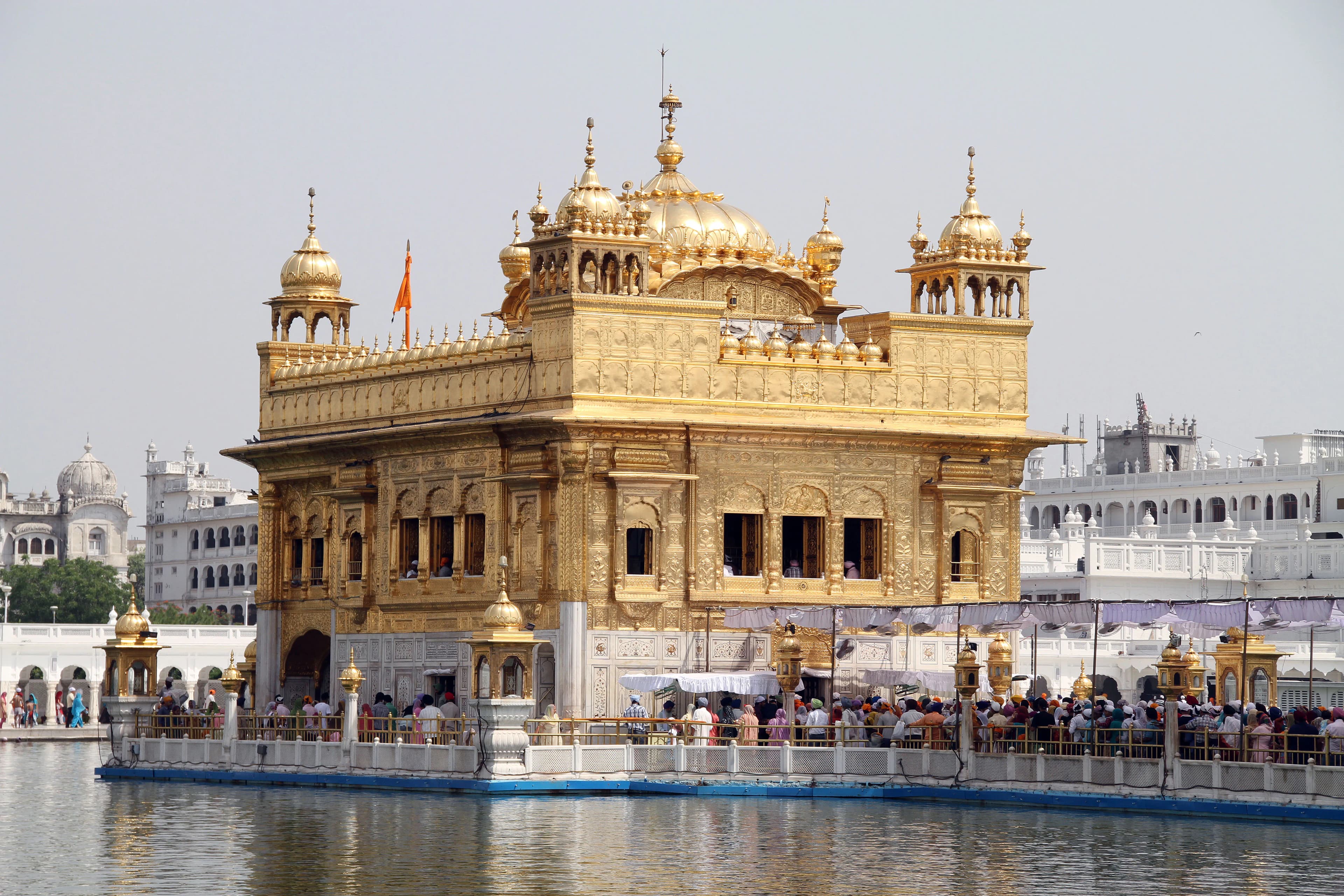
Golden Temple Amritsar
The shimmering reflection of the Golden Temple, or Sri Harmandir Sahib as it’s reverently called, in the Amrit Sarovar (Pool of Nectar) is an image that sears itself onto your soul. As a cultural journalist from Uttar Pradesh, I’ve witnessed countless expressions of faith across North India, but the serene spirituality of this Sikh gurudwara is unlike anything I’ve encountered. Stepping onto the marble parikrama, the circumambulatory path that encircles the temple, felt like entering a realm detached from the bustling city of Amritsar just beyond its walls. The architecture is a breathtaking blend of Mughal and Rajput influences, a testament to the syncretic nature of the region's history. The white marble platform, intricately inlaid with pietra dura work featuring floral motifs and geometric patterns, provides a stark yet harmonious contrast to the gilded superstructure. The gold plating, added later by Maharaja Ranjit Singh, shimmers brilliantly, especially as the sun begins its descent, casting a warm glow across the complex. The central dome, reminiscent of a lotus flower, is crowned with a chhatri, a small, ornate pavilion, a common feature in Rajput architecture. This fusion of styles speaks volumes about the cultural exchange and artistic patronage that flourished in Punjab. The constant chanting of hymns, the Gurbani, emanating from within the temple, creates an atmosphere of meditative tranquility. I observed devotees from all walks of life, Sikhs and non-Sikhs alike, circumambulating the holy tank with folded hands, their faces etched with devotion. The air hummed with a palpable sense of reverence, a collective energy of faith that transcended language and background. It was fascinating to witness the seva, the selfless service, performed by volunteers. From cleaning the floors to serving langar, the free community kitchen, everyone contributed, reinforcing the Sikh principles of equality and community. The langar itself is a remarkable experience. Thousands are fed daily, regardless of caste, creed, or social status. Sitting cross-legged on the floor alongside strangers, sharing a simple yet delicious meal, fostered a sense of unity and shared humanity. The sheer scale of the operation and the seamless efficiency with which it’s managed are truly impressive. It’s a powerful embodiment of the Sikh philosophy of Vand Chhako, sharing with others and consuming together. Inside the Harmandir Sahib, the atmosphere is even more charged with spirituality. The Guru Granth Sahib, the holy scripture of Sikhism, is placed on a raised platform under a richly embroidered canopy. The Granthi, the ceremonial reader, recites the verses with a melodic resonance that fills the sanctum. The air is thick with the scent of incense and the murmur of prayers. It’s a space that invites introspection and contemplation, a sanctuary for the soul. As I exited the complex, crossing the threshold back into the vibrant city life, I carried with me a profound sense of peace and a renewed appreciation for the power of faith. The Golden Temple isn't just a stunning architectural marvel; it’s a living testament to the enduring principles of equality, service, and devotion. It’s a place where the divine and the human intersect, creating an experience that is both deeply personal and universally resonant. The memory of the golden reflection shimmering in the holy waters, a beacon of hope and spirituality, will undoubtedly stay with me for years to come. It's a testament to the rich tapestry of India’s spiritual heritage, a story I, as a cultural journalist, feel privileged to have witnessed and shared.
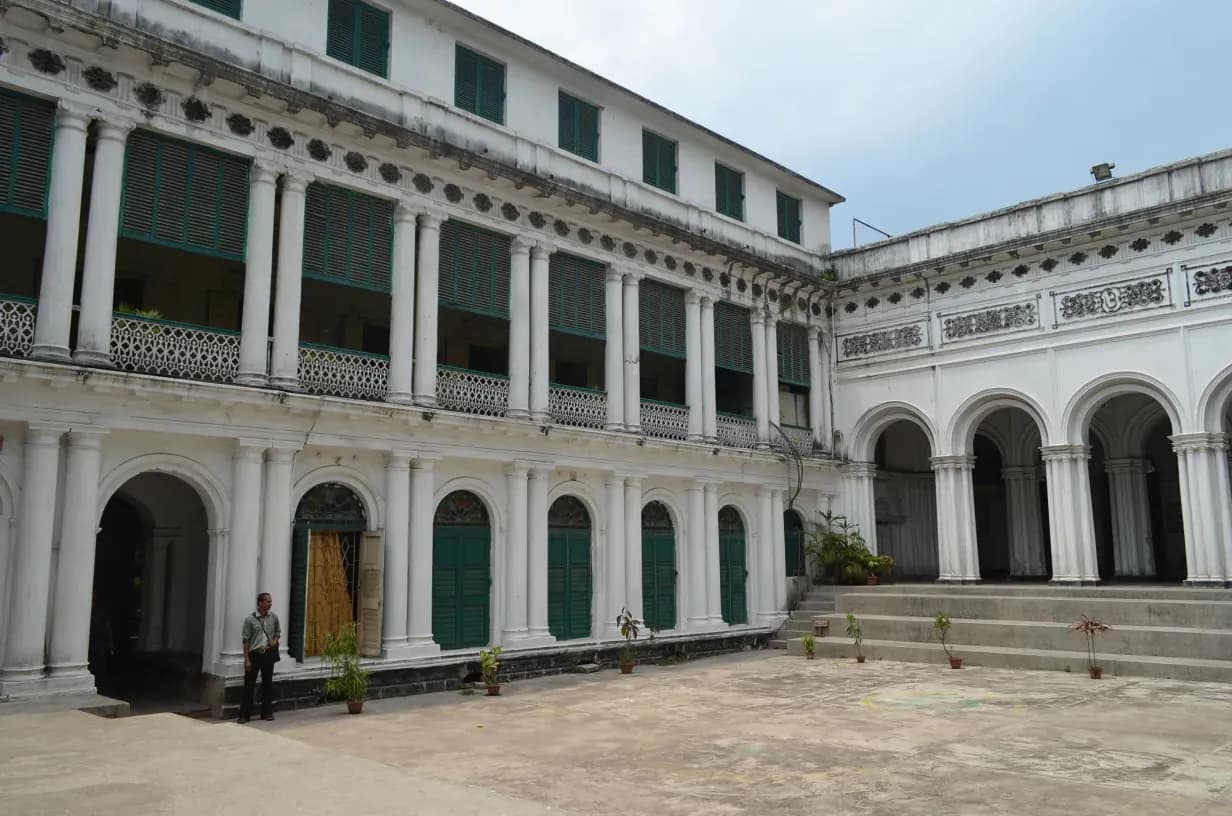
Tagore House Kolkata
The ochre walls of Jorasanko Thakur Bari, bathed in the humid Kolkata sun, exuded a quiet dignity. Stepping through the imposing gateway, I felt transported from the bustling city into a sanctuary of history and creativity. As a Chennaiite steeped in the grandeur of Dravidian temple architecture, I was eager to experience the unique charm of this Bengali haveli, the ancestral home of the Tagore family. The sprawling complex, a fascinating blend of architectural styles reflecting different periods of construction and renovation, immediately captivated me. Unlike the towering gopurams and mandapas I was accustomed to, Jorasanko presented a more intimate, inward-looking architecture. The series of interconnected courtyards, surrounded by residential wings, spoke of a close-knit family life, a world within a world. The lack of ostentatious ornamentation, so characteristic of South Indian temples, was replaced by a subtle elegance. The intricate stucco work adorning the cornices and window frames, a hallmark of Bengali architecture, caught my eye. These delicate floral and geometric patterns, though different in execution, reminded me of the intricate carvings found on the stone pillars of our temples. The Thakurdalan, the central courtyard, served as the heart of the house. I could almost picture the hustle and bustle of family gatherings, theatrical performances, and intellectual discussions that once animated this space. The surrounding verandahs, supported by slender columns, provided shade and a vantage point to observe the activities within the courtyard. This architectural feature, creating a seamless transition between indoor and outdoor spaces, resonated with the design principles of traditional South Indian homes, where courtyards play a vital role in ventilation and social interaction. Exploring the various wings of the house, each dedicated to a different branch of the family, I was struck by the sense of history embedded within the walls. The Maharshi Bhavan, where Rabindranath Tagore spent a significant part of his life, was particularly poignant. His study, preserved with his personal belongings, offered a glimpse into the mind of a literary giant. The simplicity of the room, devoid of extravagant furnishings, spoke volumes about his focus on intellectual pursuits. This contrasted sharply with the opulent interiors of Chettinad mansions I had seen back home, where wealth and status were prominently displayed. The influence of European architecture was evident in certain parts of the house, particularly in the use of arched windows and doorways. This fusion of styles, a testament to the family's cosmopolitan outlook, created a unique architectural vocabulary. While the core of the haveli retained its Bengali character, the subtle incorporation of Western elements added another layer of complexity. This reminded me of the Indo-Saracenic architecture prevalent in Chennai, a similar blend of indigenous and colonial styles. The museum within the complex housed a treasure trove of artifacts, including paintings, manuscripts, and photographs, documenting the rich history of the Tagore family. Observing the exquisite craftsmanship of the furniture and the intricate details of the paintings, I was reminded of the rich artistic traditions of both Bengal and South India. Despite the geographical distance, the underlying appreciation for beauty and artistic expression seemed to connect these two distinct cultures. Leaving Jorasanko Thakur Bari, I carried with me a profound appreciation for the architectural and cultural heritage of Bengal. While distinct from the Dravidian architecture I was familiar with, the haveli offered a unique perspective on the evolution of domestic architecture in India. The experience underscored the importance of preserving these historical spaces, not just as monuments to the past, but as living testaments to the rich tapestry of Indian culture.
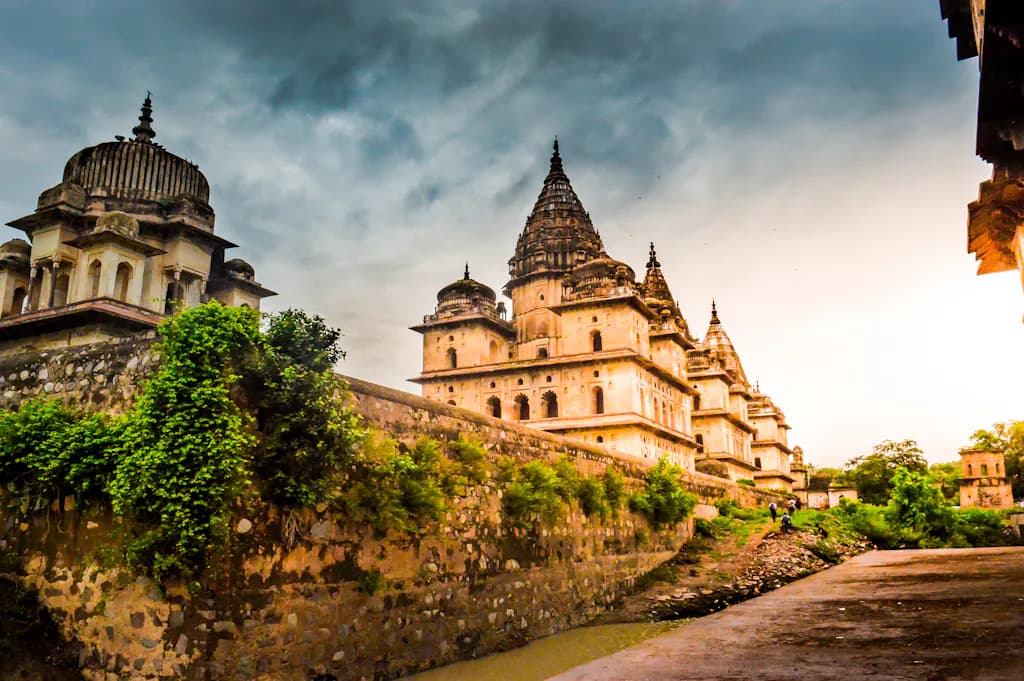
Orchha Fort Orchha
The midday sun beat down on the ochre stone, casting long shadows that danced across the courtyards of Orchha Fort. Dust motes, stirred by a gentle breeze whispering through the Betwa River valley, swirled around me, adding a touch of ethereal magic to the already imposing structure. Having explored countless forts across North India, from the colossal ramparts of Rajasthan to the crumbling citadels of the Himalayas, I thought I was immune to being awestruck. Orchha proved me wrong. This wasn’t just another fort; it was a symphony in stone, a testament to the Bundela Rajput’s architectural prowess and artistic sensibilities. Unlike the stark military fortifications I’d encountered elsewhere, Orchha exuded a regal elegance, a blend of defensive strength and palatial grandeur. The fort complex, perched on an island amidst the Betwa, is a cluster of interconnected palaces and temples, each with its own unique story to tell. My exploration began with the Raja Mahal. Stepping through the imposing arched gateway, I was immediately transported back in time. The sheer scale of the courtyard, surrounded by multi-storied structures, was breathtaking. Intricate carvings adorned the pillars and balconies, depicting scenes from epics and courtly life. I climbed the narrow, winding staircases, the stone worn smooth by centuries of footsteps, and emerged onto the rooftop terraces. From here, the panoramic view of the river, the surrounding plains, and the other palaces within the complex was simply mesmerizing. I could almost imagine the Bundela kings surveying their domain from this very spot. Next, I ventured into the Jahangir Mahal, a stunning example of Mughal architecture built to commemorate the visit of Emperor Jahangir. The contrast between the robust Rajput architecture of the Raja Mahal and the delicate, almost ethereal beauty of the Jahangir Mahal was striking. Here, intricate latticework screens, known as *jalis*, filtered the sunlight, creating a play of light and shadow within the chambers. The central courtyard, with its elegant chhatris and ornate balconies, was a masterpiece of design. I spent a considerable amount of time simply admiring the intricate tilework, the delicate floral patterns, and the sheer artistry that had gone into creating this architectural gem. The Ram Raja Temple, uniquely situated within the fort complex, was my next stop. Unlike typical temples, this one felt more like a palace, a reflection of the deep reverence the Bundela rulers had for Lord Ram. The temple’s vibrant colours, the intricate carvings, and the constant hum of devotional chants created a palpable sense of spirituality. Witnessing the devotion of the pilgrims, I felt a connection to the living history of this place. As I wandered through the Sheesh Mahal, now converted into a heritage hotel, I couldn't help but imagine the lives of the royals who once inhabited these spaces. The mirrored walls, the ornate ceilings, and the remnants of frescoes hinted at a life of luxury and grandeur. Standing on the balcony, overlooking the Betwa River, I felt a sense of tranquility wash over me. Leaving the fort complex as the sun began to set, casting a golden glow on the stone, I felt a profound sense of awe and admiration. Orchha Fort wasn't just a collection of buildings; it was a living, breathing testament to a rich and vibrant history. It was a place where architecture, art, and spirituality intertwined seamlessly, creating an experience that transcended the ordinary. For anyone seeking a glimpse into the heart of India's historical and architectural heritage, Orchha Fort is an absolute must-see. It’s a place that stays with you long after you’ve left, a reminder of the enduring power of human creativity and the beauty that can be found in the most unexpected corners of the world.
Prasat Hin Muang Tam Buri Ram
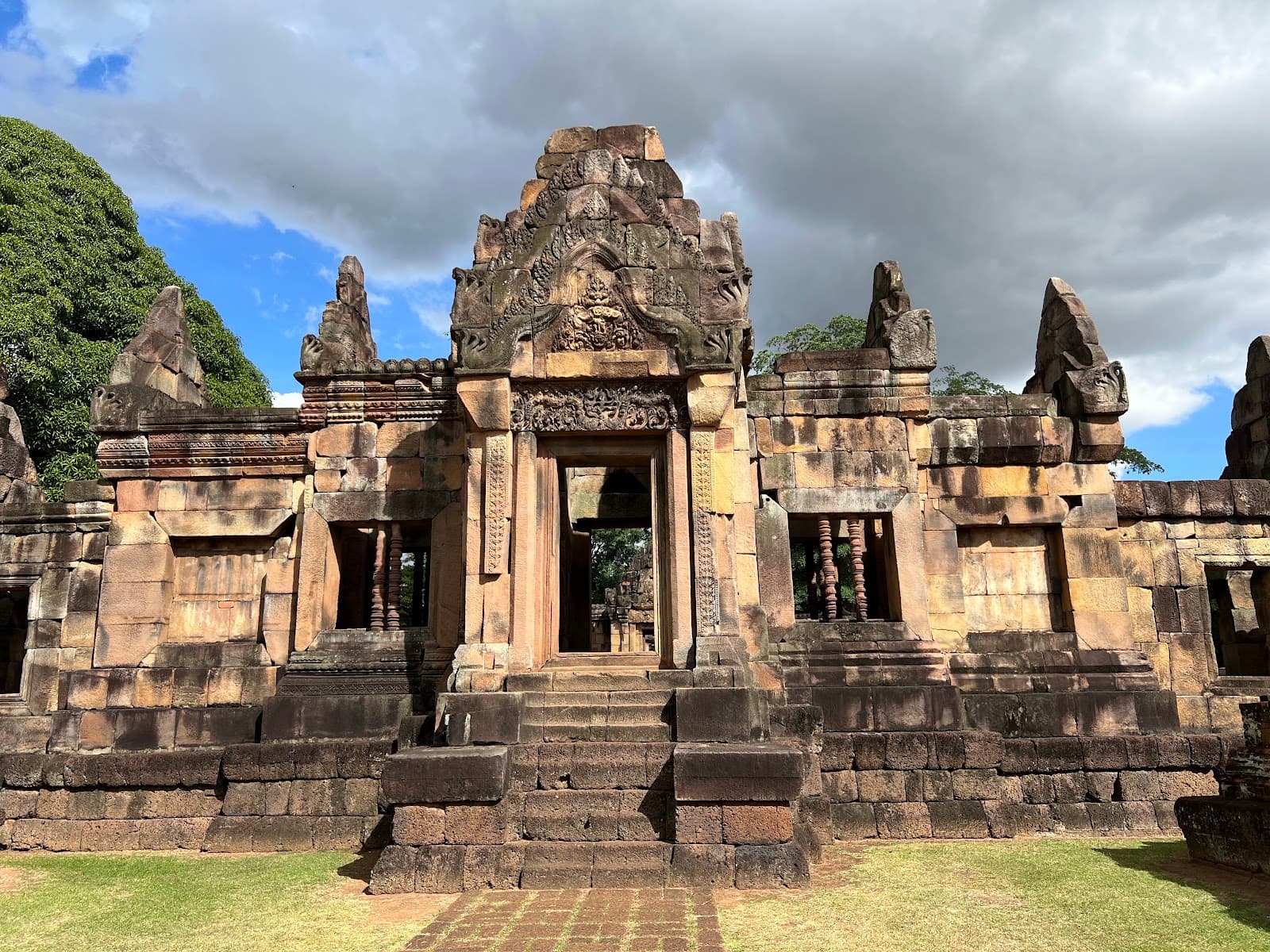
Prasat Hin Muang Tam, located approximately 8 kilometers southeast of Phanom Rung in Buri Ram Province, represents a unique Khmer temple complex distinguished by its flat concentric layout and exceptional integration of water features symbolizing the cosmic oceans surrounding Mount Meru. The temple, constructed in the late 10th and early 11th centuries CE during the Baphuon period, is dedicated primarily to Shiva, with evidence of Vishnu worship in subsidiary shrines, demonstrating the syncretic nature of Khmer religious practice. The complex features a distinctive quincunx arrangement of five sandstone prasats—one central tower surrounded by four corner towers—all constructed from pink sandstone and laterite, set within a rectangular laterite enclosure measuring 274 by 420 meters. The temple’s most remarkable feature is its four L-shaped ponds positioned at the cardinal directions, each measuring approximately 50 by 100 meters, symbolizing the four oceans of Hindu cosmology and creating a unique architectural expression of cosmic geography. The central prasat rises 15 meters and houses a massive lingam pedestal, while the four corner towers contain smaller shrines. The temple’s lintels and pediments showcase exceptional bas-relief work depicting scenes from Hindu mythology, including the churning of the ocean of milk, Shiva’s cosmic dance, and various deities. The complex includes two libraries positioned east of the central prasat, numerous subsidiary shrines, and a sophisticated drainage system that channels water from the ponds through the temple complex. Archaeological evidence indicates the temple served as a regional religious center complementing the larger Phanom Rung complex. The site underwent restoration from 1984 to 1995, involving structural stabilization and conservation of decorative elements. Today, Prasat Hin Muang Tam remains an important site for understanding Khmer temple architecture and Hindu cosmology, attracting visitors interested in its unique water-based design and exceptional stone carvings. ([1][2])
Fatehpur Sikri Fort Agra
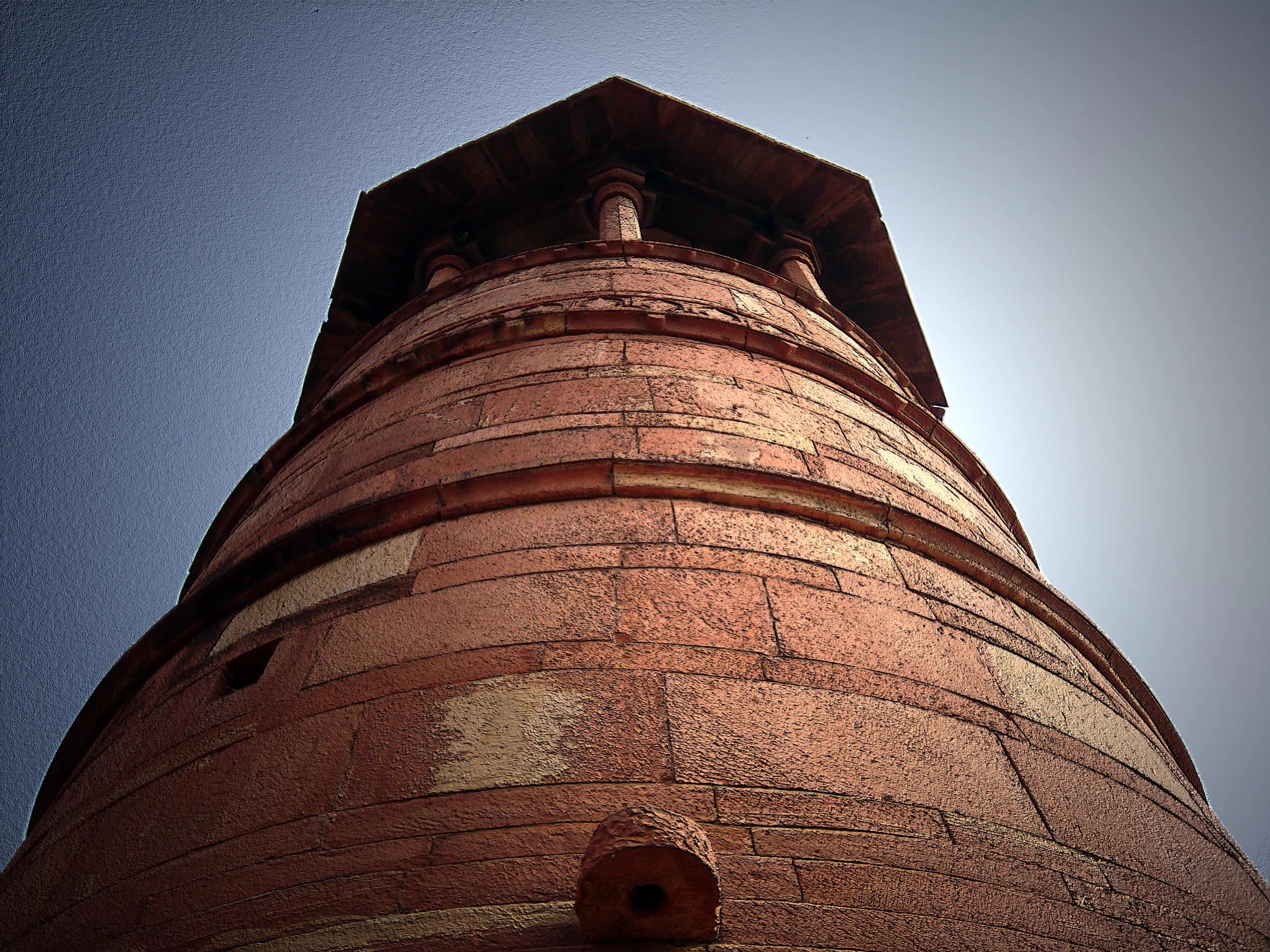
The sandstone shimmered under the late afternoon sun, a warm, almost ethereal glow bathing the deserted courtyards of Fatehpur Sikri. Having crisscrossed North India for years, exploring crumbling forts and bustling cities, I thought I was immune to the charms of another Mughal monument. I was wrong. Fatehpur Sikri, Akbar’s abandoned capital, whispered stories of a glorious past, a brief but brilliant chapter in Indian history. Stepping through the Buland Darwaza, the imposing victory gate, felt like stepping back in time. Its sheer scale is breathtaking, a 54-meter high testament to Akbar’s military prowess. The intricate carvings, a blend of Persian and Indian motifs, hinted at the cultural confluence that defined his reign. This wasn't just a fort; it was a city, meticulously planned and executed, a testament to a vision that, though short-lived, left an indelible mark. The Diwan-i-Aam, the hall of public audience, sprawled before me, its vastness punctuated by the raised platform where Akbar, the emperor, would address his subjects. I could almost picture the vibrant scene – the courtiers, the petitioners, the bustling activity of a thriving capital. The Diwan-i-Khas, the hall of private audience, was even more captivating. The central pillar, intricately carved and radiating outwards like the branches of a tree, is an architectural marvel. It was here that Akbar held discussions with scholars and representatives of different faiths, fostering the spirit of religious tolerance that characterized his rule. I wandered through the Panch Mahal, a five-storied pavilion, each level smaller than the one below, creating a pyramidal structure that offered stunning views of the surrounding plains. The intricate jalis, or perforated stone screens, allowed the breeze to flow through, a clever architectural solution to the scorching summer heat. These screens also served another purpose – they allowed the royal women to observe the court proceedings without being seen, a glimpse into the secluded world of the Mughal zenana. The Jodhabai’s Palace, with its Hindu architectural influences, stood in stark contrast to the predominantly Persian style of the other buildings. The carved brackets, reminiscent of Rajput architecture, and the absence of the characteristic Mughal arches, spoke volumes about Akbar’s respect for his Hindu wife and his efforts to integrate different cultural elements into his empire. One of the most poignant structures within the complex is Salim Chishti’s tomb. The white marble mausoleum, a masterpiece of intricate carving, is a place of reverence even today. I watched as devotees tied threads to the marble screens, whispering prayers, their faith echoing through the centuries. It was here, according to legend, that Akbar came to pray for an heir, and the birth of his son, Jahangir, cemented the saint’s reputation and led to the construction of this magnificent tomb. As the sun began to set, casting long shadows across the deserted courtyards, I felt a sense of melancholy wash over me. Fatehpur Sikri, once a bustling metropolis, now stands silent, a ghost of its former glory. The reasons for its abandonment remain shrouded in mystery, with theories ranging from water scarcity to Akbar’s shifting political priorities. Whatever the reason, the silence that now pervades this magnificent city only amplifies the whispers of its past, making the experience all the more profound. Leaving Fatehpur Sikri, I carried with me not just photographs and memories, but a deeper understanding of a pivotal period in Indian history, a time of cultural fusion, religious tolerance, and architectural brilliance.
Patwon Ki Haveli Jaisalmer
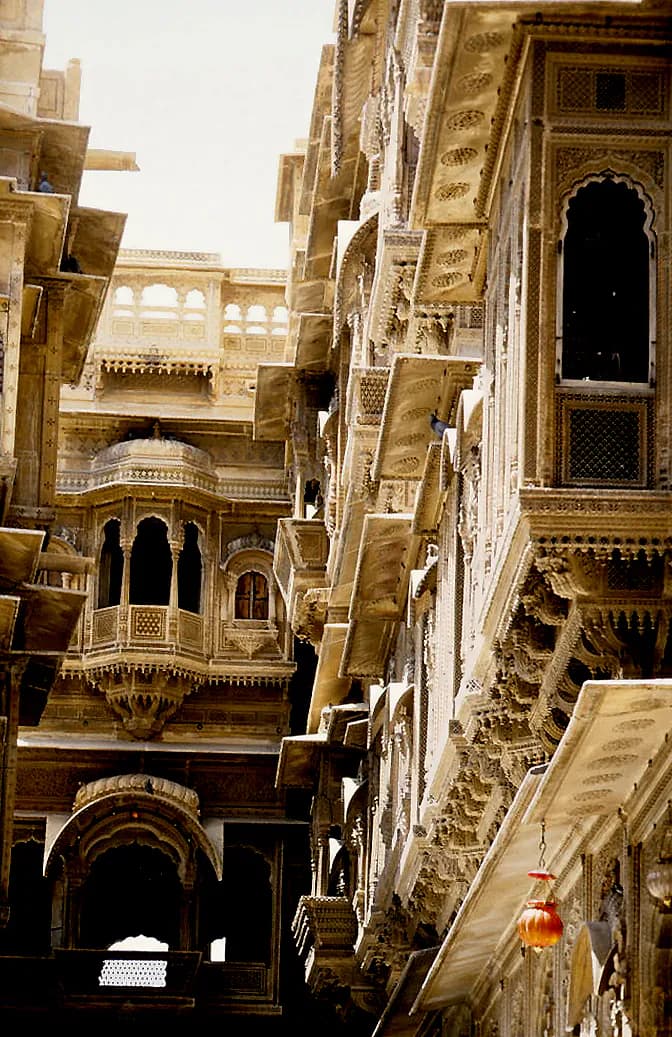
The desert sun beat down on Jaisalmer's golden sandstone, casting long shadows that danced across the intricately carved facade of Patwon Ki Haveli. This wasn't just another haveli; it was a sprawling complex of five interconnected havelis, a testament to the opulence and artistry of a bygone era. As I stepped through the arched entrance of the first haveli, I felt a palpable shift, as if I'd stepped back in time to the 19th century. This wasn't just a visit; it was an immersion into the life of Guman Chand Patwa, a wealthy trader who commissioned this architectural marvel. The first haveli, believed to have been Guman Chand's own residence, is the most elaborate. The sheer scale of the intricate carvings covering every inch of the sandstone was breathtaking. Delicate jharokhas (overhanging enclosed balconies) jutted out, their intricate latticework filtering the harsh sunlight into dappled patterns on the inner courtyards. I peered through one of these jharokhas, imagining the women of the household observing the bustling street life below, shielded from view. The yellow sandstone, bathed in the afternoon light, glowed with a warm, honeyed hue, enhancing the richness of the carvings. Moving through the interconnected havelis, each with its own unique character, I noticed subtle variations in the architectural style. While the overarching theme of ornate carvings remained constant, some havelis featured more expansive courtyards, while others boasted exquisitely painted murals on the interior walls. These murals, though faded with time, still offered glimpses into the lives of the Patwa family – scenes of processions, courtly life, and even depictions of European influences, a nod to their trading connections. One of the most striking features of Patwon Ki Haveli is the sheer number of rooms. Over sixty rooms, interconnected by narrow passageways and winding staircases, form a labyrinthine structure that invited exploration. Each room, whether a living area, bedroom, or store room, bore the mark of meticulous craftsmanship. The doorways were framed by elaborately carved arches, and even the ceilings were adorned with intricate patterns. I found myself constantly looking up, captivated by the artistry overhead. Climbing to the upper levels, I was rewarded with panoramic views of Jaisalmer Fort, rising majestically above the city. From this vantage point, I could appreciate the strategic location of the haveli, overlooking the bustling trade routes that brought wealth to the Patwa family. It was easy to imagine Guman Chand surveying his domain from these very balconies, a powerful merchant at the heart of a thriving city. While the grandeur of the architecture is undeniably impressive, it was the smaller details that truly captivated me. The remnants of faded paint on the walls, the worn stone steps smoothed by centuries of footsteps, the tiny niches carved into the walls to hold oil lamps – these were the whispers of history, the tangible connections to the people who once called this place home. My visit to Patwon Ki Haveli wasn't just a sightseeing stop; it was a journey through time. It was a privilege to witness the legacy of Guman Chand Patwa, etched in stone and preserved for generations to come. As I stepped back out into the Jaisalmer sun, I carried with me not just photographs and memories, but a deeper appreciation for the artistry and history that thrives within the heart of Rajasthan. Patwon Ki Haveli is more than just a beautiful building; it’s a living testament to the ingenuity and prosperity of a bygone era, a must-see for anyone seeking to understand the rich cultural tapestry of India.

Matri Mandir Shillong
The Matri Mandir, nestled amidst the pine-clad Khasi Hills of Shillong, isn't a fort or palace like those I'm accustomed to in Rajasthan, but it holds a grandeur of a different kind. It's a temple, yes, but the word feels inadequate. "Sanctuary" or "spiritual powerhouse" comes closer to capturing the essence of this place. Forget ornate carvings and vibrant frescoes; the Matri Mandir's beauty lies in its stark simplicity and the palpable sense of tranquility that permeates the air. The approach itself is a journey. After registering at the reception centre, you're shuttled to the base of the hill where the Mandir resides. The climb is gentle, facilitated by a paved pathway winding through meticulously manicured gardens. The scent of pine needles and damp earth fills the air, a welcome change from the dry, desert air of my homeland. The gardens themselves are a testament to human dedication, a symphony of vibrant blossoms and meticulously pruned hedges, all contributing to the sense of serenity. The Matri Mandir is a striking structure, a massive golden globe that seems to rise organically from the earth. Its surface is composed of interlocking golden discs, reflecting the sunlight and creating an almost ethereal glow. There are no imposing gates or towering walls, just this singular, spherical edifice that invites contemplation. The architecture is strikingly modern, a stark contrast to the traditional temples I'm familiar with. It's a testament to the universality of spiritual seeking, a modern interpretation of a timeless quest. Entering the inner sanctum is an experience in itself. Shoes are left outside, and silence descends like a soft blanket. The central chamber is dominated by a massive crystal globe, illuminated by a single ray of sunlight that filters through an opening in the dome above. The effect is mesmerizing, the crystal radiating a soft, otherworldly light. There are no idols, no chanting priests, just the quiet hum of the air conditioning and the gentle breathing of fellow visitors. It's a space designed for introspection, for connecting with something larger than oneself. I spent a considerable amount of time simply sitting in the inner chamber, absorbing the silence and the unique energy of the place. It's a far cry from the bustling, vibrant temples of Rajasthan, with their throngs of devotees and the clang of bells. Here, the silence speaks volumes. It allows for a different kind of connection, a more personal and introspective one. Outside the inner sanctum, a spiralling ramp leads down to the ground level. As I descended, I noticed small meditation rooms tucked away along the pathway, offering private spaces for contemplation. The attention to detail is remarkable, every aspect of the Mandir designed to facilitate inner peace. The Matri Mandir is more than just a building; it's an experience. It's a place where the cacophony of the outside world fades away, replaced by a profound sense of stillness. It’s a testament to the power of architecture to shape not just our physical environment, but our inner landscape as well. As someone steeped in the rich architectural heritage of Rajasthan, I was struck by the unique beauty and spiritual potency of this modern temple in the heart of Meghalaya. It’s a place I won't soon forget, a reminder that spirituality can find expression in diverse and unexpected forms.
Patwa Haveli Ahmedabad
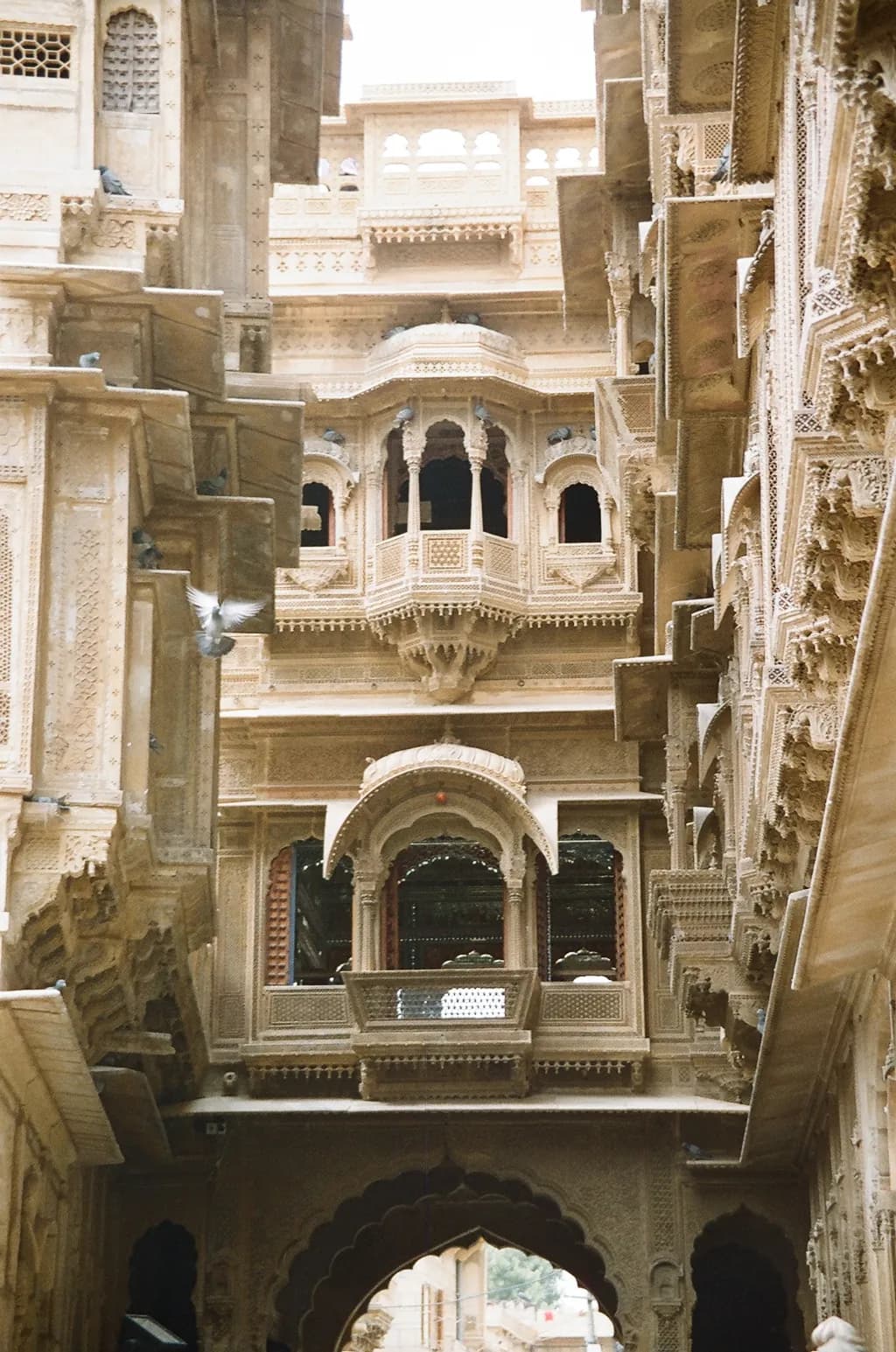
The Patwa Haveli, nestled within the bustling heart of Ahmedabad's old city, stands as a testament to a bygone era of mercantile prosperity. Stepping through its unassuming entrance, I felt an immediate shift, as if transported back to the 19th century. The cacophony of the city faded, replaced by the hushed whispers of history echoing within the haveli's intricately carved sandstone walls. Commissioned by a wealthy Jain merchant, Maneklal Bhagwandas Patwa, this five-story structure isn't just a house; it's a narrative etched in stone and wood, a story of a family's ambition and the artistry of a time when craftsmanship reigned supreme. My lens immediately gravitated towards the ornate facades. Each window, each jharokha (overhanging enclosed balcony), and each archway presented a unique tableau of intricate carvings. Floral motifs intertwined with depictions of birds, animals, and even scenes from daily life, all rendered with astonishing detail. The deep brown of the sandstone, weathered by time and the elements, provided a rich backdrop to these intricate designs, creating a visual feast that kept me captivated for hours. I found myself constantly adjusting my camera settings, trying to capture the interplay of light and shadow that danced across the carved surfaces, revealing new nuances with every passing hour. The sheer scale of the haveli is impressive. Five stories rise above the narrow streets, a symbol of the Patwa family's wealth and influence. As I ascended the wooden staircases, worn smooth by generations of footsteps, I noticed the subtle shifts in architectural style. The lower floors, dedicated to business and storage, are more austere, while the upper residential floors become progressively more ornate, culminating in the exquisitely carved family quarters on the topmost level. This gradual increase in decorative complexity speaks volumes about the social hierarchy of the time. One of the most striking features of the Patwa Haveli is its ingenious ventilation system. Long before the advent of air conditioning, the architects incorporated clever design elements to ensure a comfortable living environment even in the scorching Gujarat heat. High ceilings, strategically placed windows, and internal courtyards create a natural airflow, allowing cool air to circulate throughout the building. I could feel the subtle breeze as I explored the upper floors, a testament to the ingenuity of the craftsmen who built this magnificent structure. Beyond the architectural marvel, the Patwa Haveli offers glimpses into the lifestyle of its former inhabitants. The remnants of frescoes on the walls, though faded with time, hint at the vibrant colours that once adorned the interiors. Imagining the bustling activity that once filled these rooms – merchants discussing trade deals, families gathering for meals, children playing in the courtyards – brought the haveli to life in a way that mere observation could not. I spent a considerable amount of time documenting these remnants, hoping to preserve these fragments of a vanished world through my photographs. However, the passage of time has taken its toll. While some sections of the haveli have been meticulously restored, others bear the scars of neglect. Peeling paint, crumbling plaster, and damaged carvings serve as a poignant reminder of the fragility of our heritage. It underscores the importance of conservation efforts to ensure that these architectural treasures continue to inspire and educate future generations. Leaving the Patwa Haveli, I carried with me not just photographs, but a profound appreciation for the artistry and ingenuity of the past. It's a place where history whispers from every corner, a place that deserves to be cherished and protected. My hope is that my photographs will not only showcase the beauty of this architectural gem but also inspire others to explore and appreciate the rich heritage of India.

Vedanta Society Old Temple San Francisco
Vedanta Society Old Temple in San Francisco greets visitors with incense, polished redwood pews, and the familiar cadence of daily arati. Twice-daily worship and weekly lectures anchor the schedule, while docents guide first-Sunday architecture tours through the Webster Street vestibule. Sanctuary paths stay clear, handrails feel steady, and the post-2014 lighting keeps the nave soft without washing out stained glass. A side garden ramp and portable lift help guests move between the sanctuary and lecture hall, and clerestory ventilation keeps the interior cool without mechanical air conditioning. Volunteers keep the vegetarian kitchen humming, separating compost and recycling as meals are plated for community outreach. Copper gutters still run to the meditation garden cistern, the incense counter bustles before evening arati, and the temple remains fully open for worship, tours, and neighborhood gatherings.
Geok Tepe Fortress Temple Complex Ahal Turkmenistan
Geok Tepe, dramatically situated in the Ahal Region of southern Turkmenistan, represents one of the most extraordinary and historically significant fortress complexes in Central Asia, dating from the medieval period through the 19th century CE and serving as a major center of Turkmen resistance and cultural identity, featuring sophisticated fortifications, defensive structures, and architectural elements that demonstrate remarkable connections to ancient Indian architectural traditions and the transmission of architectural and cultural knowledge from South Asia to Central Asia through the extensive trade and cultural networks that connected India with Central Asia, creating a powerful testament to the profound impact of Indian civilization on Central Asian architectural and cultural development. The site, featuring sophisticated fortifications including massive defensive walls, towers, gates, and architectural elements that demonstrate clear connections to the architectural traditions of ancient India, particularly the sophisticated defensive techniques and structural principles that were transmitted from South Asia, demonstrates the direct transmission of architectural knowledge, defensive planning principles, and cultural concepts from the great centers of ancient India, particularly the sophisticated fortification techniques and architectural traditions that were systematically transmitted to Central Asia through trade and cultural exchange, while the site's most remarkable feature is its extensive fortification system including massive defensive walls, towers with sophisticated brickwork, and architectural elements that demonstrate remarkable parallels with Indian fortification traditions, particularly the structural techniques and defensive principles that were central to Indian fortress architecture. The fortification structures' architectural layout, with their sophisticated defensive planning, massive walls, towers, and gates, follows planning principles that demonstrate remarkable parallels with Indian fortification planning principles, while the site's extensive architectural remains including defensive walls, towers, and architectural elements demonstrate the sophisticated synthesis of Indian architectural traditions with local Central Asian aesthetic sensibilities and defensive requirements. Historical evidence reveals that the site served as a major center of resistance and cultural identity during the 19th century, particularly during the Battle of Geok Tepe in 1881, while the site's architectural remains demonstrate remarkable parallels with Indian fortification traditions that were central to ancient Indian civilization. The site's association with the broader cultural exchange networks that connected India with Central Asia demonstrates the sophisticated understanding of Indian architectural traditions that were transmitted to Central Asia, while the site's fortification structures demonstrate remarkable parallels with Indian fortification traditions that were central to ancient Indian civilization. The site has been the subject of extensive historical and archaeological research, with ongoing studies continuing to reveal new insights into the site's sophisticated architecture, defensive systems, and its role in the transmission of Indian architectural traditions to Central Asia, while the site's status as one of the most important historical sites in Turkmenistan demonstrates its significance as a major center for understanding the transmission of Indian architectural and cultural traditions to Central Asia. Today, Geok Tepe stands as one of the most important historical sites in Turkmenistan, serving as a powerful testament to the transmission of Indian architectural and cultural traditions to Central Asia, while ongoing historical research and conservation efforts continue to protect and study this extraordinary cultural treasure that demonstrates the profound impact of Indian civilization on Central Asian architectural and cultural development. ([1][2])
Quick Links
Plan Your Heritage Journey
Get personalized recommendations and detailed visitor guides