Has Inheritage Foundation supported you today?
Your contribution helps preserve India's ancient temples, languages, and cultural heritage. Every rupee makes a difference.
Secure payment • Instant 80G certificate
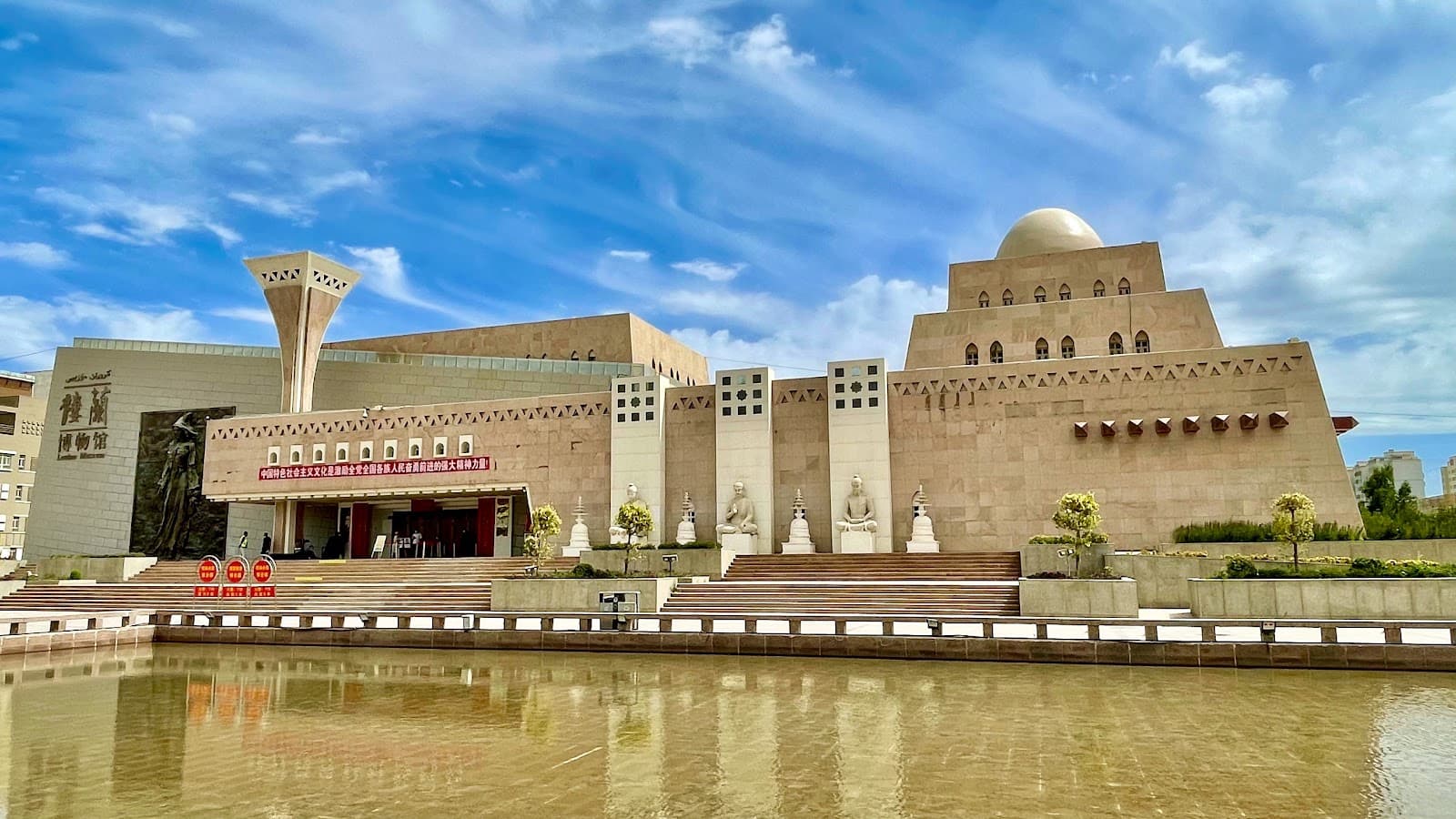
Endere Fort Temple Ruoqiang Xinjiang China
Endere, located in the southern Taklamakan Desert in Ruoqiang County, Xinjiang, China, represents one of the most fascinating and strategically significant archaeological sites along the ancient Silk Road, comprising the remarkable remains of a 3rd to 4th century CE Buddhist fort-temple complex that demonstrates the unique integration of military fortification and religious architecture, creating a powerful testament to the transmission of Indian Buddhist traditions to Central Asia during a period when Buddhist monasteries served both spiritual and defensive functions along the trade routes. The complex, constructed primarily from rammed earth and fired brick with extensive stucco and painted decoration, features a massive fortified structure containing Buddhist temples, stupas, monastic cells, and military installations arranged in a sophisticated layout that reflects both Indian Buddhist architectural planning principles and Central Asian fortification techniques, while the discovery of Buddhist manuscripts written in Chinese, Tibetan, and Sanskrit provides crucial evidence of the site's role as a multilingual center of Buddhist learning and the transmission of Indian Buddhist texts to Central Asia and China. The site's architectural design demonstrates direct influence from Indian Buddhist monastery architecture, particularly the traditions of northern India, with the overall plan, temple forms, and decorative programs reflecting Indian Buddhist practices that were systematically transmitted to Central Asia, while the fortification elements demonstrate the adaptation of Indian Buddhist architectural traditions to the military and strategic needs of Silk Road settlements. Archaeological excavations conducted by Sir Aurel Stein in 1901 revealed extraordinary discoveries including a Buddhist shrine filled with textile fragments and manuscripts in multiple languages, demonstrating that the site attracted worshippers and scholars from diverse regions including India, Tibet, and China, while the discovery of numerous artifacts including sculptures, coins, and ritual objects provides further evidence of the site's importance as a center of trade, cultural exchange, and religious transmission. The fort-temple complex flourished particularly during the 3rd to 4th centuries CE, when it served as both a military outpost protecting the southern Silk Road and a major center of Buddhist worship and learning, attracting monks, traders, and pilgrims from across the Buddhist world, while the site's strategic location along the trade routes facilitated its role in the transmission of Buddhist teachings, art, and culture from India to China. The site continued to function as a Buddhist center through the 5th and 6th centuries CE, with evidence of continued use and modifications that reflect the evolving religious and political landscape of the region, while the site's eventual abandonment, likely during the 7th or 8th century CE following political changes and shifting trade routes, left substantial ruins that continue to provide crucial insights into the site's history and significance. The unique combination of fortification and religious architecture at Endere provides particularly important evidence of the ways in which Indian Buddhist architectural traditions were adapted to local conditions and needs in Central Asia, demonstrating the flexibility and resilience of Buddhist institutions along the Silk Road, while the multilingual nature of the site's manuscripts demonstrates the complex cultural exchanges that occurred in the region. Today, Endere stands as a UNESCO Tentative List site and represents one of the most important archaeological discoveries in the Taklamakan Desert, serving as a powerful testament to the transmission of Indian Buddhist traditions and the integration of religious and military functions in Silk Road settlements, while ongoing archaeological research and preservation efforts continue to protect and study this extraordinary cultural treasure that demonstrates the profound impact of Indian civilization on Central Asian societies. ([1][2])
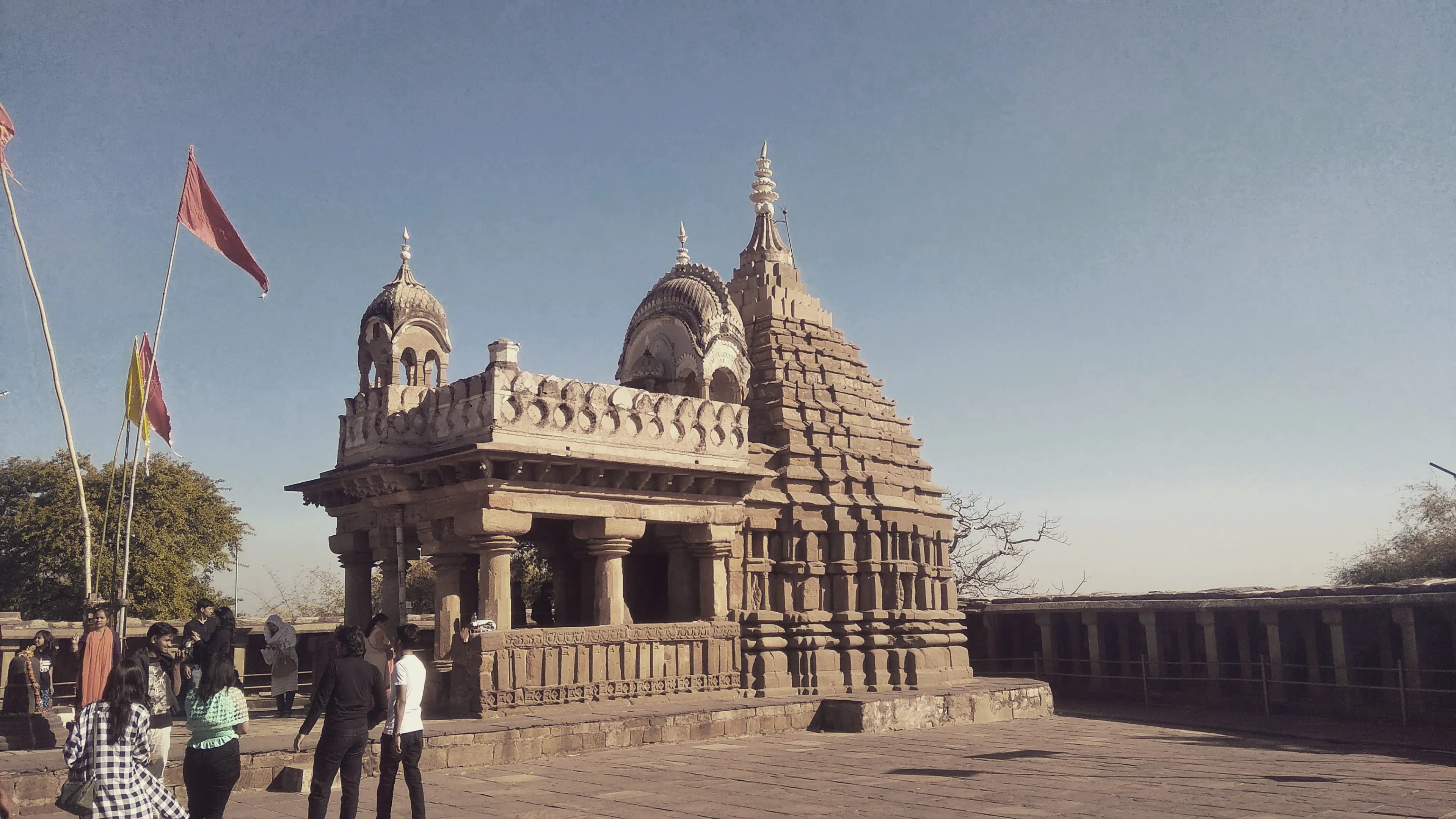
Chausath Yogini Temple Jabalpur
Perched atop a hill in Bhedaghat, Jabalpur, the Chausath Yogini Temple presents a captivating silhouette ([1]). Constructed around 950 CE by the Kalachuri dynasty, this open-air, circular temple deviates from conventional temple architecture ([2]). Dedicated to the sixty-four Yoginis, female attendants of Durga, the temple embodies a unique spiritual and architectural heritage ([3]). Granite and sandstone blocks, meticulously carved, form the structure of this hypostyle marvel ([4]). The Pratihara architectural style is evident in its design, reflecting the artistic preferences of the Kalachuri period ([5]). Unlike typical towering structures, its raw, primal energy emanates from the weathered stone and the powerful presence of the Yogini sculptures ([1]). Their diverse iconography, from wielding weapons to meditative poses, links to tantric practices ([3]). Walking the circular ambulatory offers panoramic views of the Narmada river ([1]). Within the Garbhagriha (Sanctum), a small shrine dedicated to Lord Shiva reinforces his supreme position ([2]). The temple's stark simplicity, devoid of excessive ornamentation, emphasizes the natural beauty of the sandstone and its dramatic setting ([4]). This unique temple exemplifies the ingenuity and artistic vision of the Kalachuri dynasty ([5]). During the Kalachuri period, temple architecture in the region saw a flourishing of unique styles ([6]). The Chausath Yogini Temple's circular design is a departure from the more common rectangular or square layouts often dictated by Vastu Shastra principles, the ancient Indian science of architecture ([7]). This distinctive layout might be connected to tantric traditions, where circular forms symbolize the cyclical nature of existence ([8]). The open colonnaded circle, or hypostyle design, allows for natural light and ventilation, creating a unique spiritual ambiance ([9]). This temple stands as a testament to the Kalachuri dynasty's artistic vision and their patronage of innovative architectural forms ([10]).
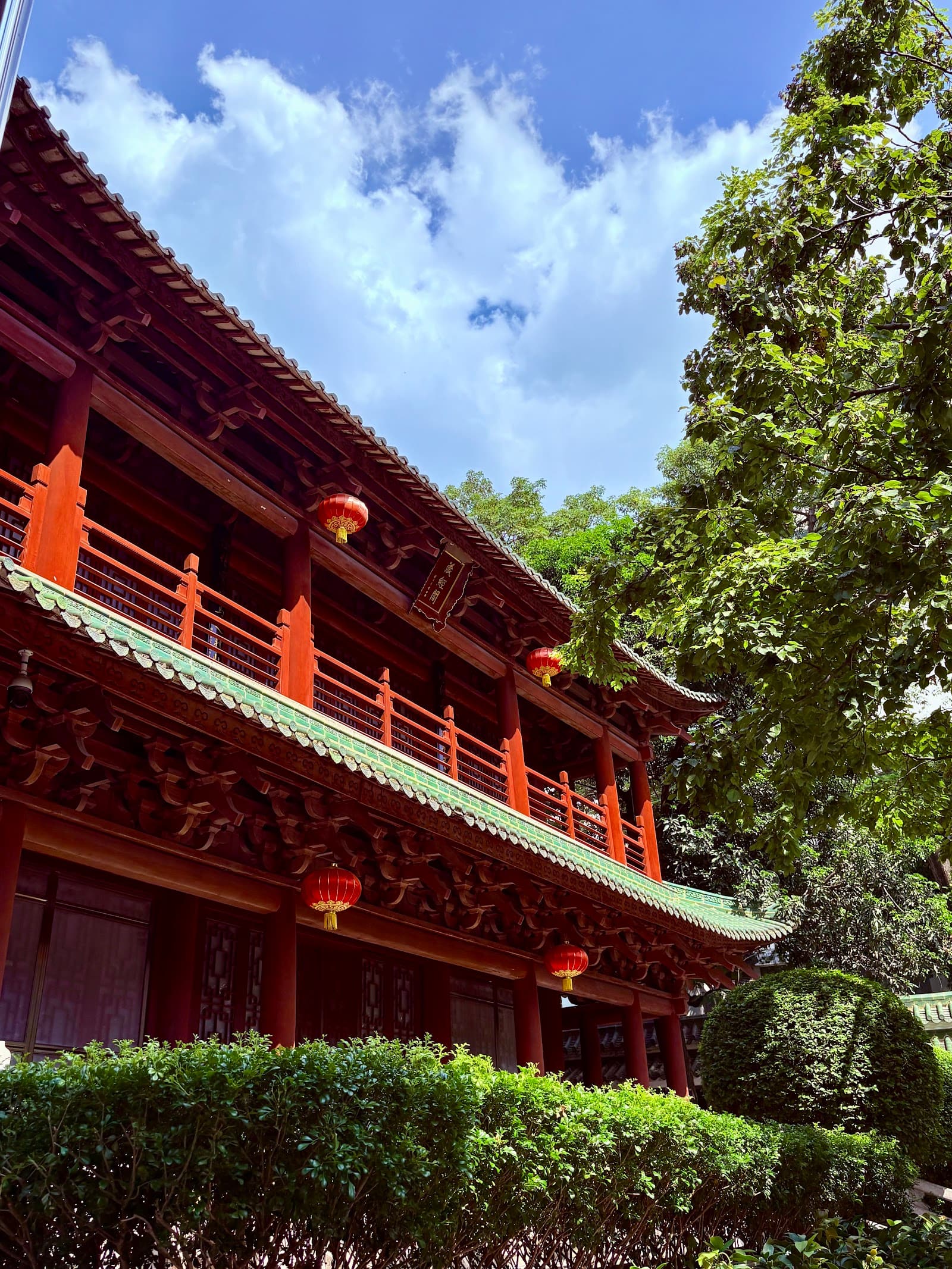
Temple of the Six Banyan Trees Guangzhou China
Temple of the Six Banyan Trees, dramatically situated in the historic city of Guangzhou in southern Guangdong Province, represents one of the most extraordinary and historically significant Buddhist temple complexes in China, dating from the 6th century CE and serving as a major center of Buddhist learning and practice that flourished as a crucial link in the transmission of Indian Buddhist traditions to China, featuring sophisticated Buddhist temple structures including the remarkable Nanxiang style pagoda that houses Indic relics and demonstrates clear connections to the architectural traditions of ancient India, particularly the sophisticated pagoda design principles and structural techniques that were transmitted from the great Buddhist centers of northern India, creating a powerful testament to the profound transmission of Indian Buddhist civilization to China during the early medieval period. The site, featuring sophisticated Buddhist temple structures with halls, the extraordinary Nanxiang pagoda standing at 57 meters tall, and ritual spaces that demonstrate clear connections to the architectural traditions of ancient India, particularly the sophisticated pagoda architecture traditions that were transmitted from the great Buddhist centers of northern India, demonstrates the direct transmission of Indian Buddhist architectural knowledge, religious iconography, and cultural concepts from the great monastic universities of ancient India, particularly Nalanda and Taxila, which systematically transmitted Buddhist teachings and architectural traditions to China through the extensive trade and pilgrimage networks that connected India with China, while the site's most remarkable feature is its extraordinary Nanxiang pagoda, a sophisticated octagonal structure with nine stories that houses Indic relics and demonstrates remarkable parallels with Indian pagoda architecture traditions, particularly the structural techniques and decorative programs that were central to Indian Buddhist architecture, including the sophisticated use of brick and wood construction that reflects Indian architectural concepts. The temple structures' architectural layout, with their sophisticated planning, central pagoda surrounded by halls and subsidiary structures, meditation chambers, and ceremonial spaces, follows planning principles that demonstrate remarkable parallels with Indian Buddhist monastery planning principles, particularly the vihara and pagoda traditions that were central to Indian Buddhist architecture, while the site's extensive archaeological remains including Indic relics housed within the pagoda, Buddhist sculptures that reflect Indian iconographic traditions, and architectural elements demonstrate the sophisticated synthesis of Indian Buddhist iconography and cosmological concepts with local Chinese aesthetic sensibilities and building materials. Historical evidence reveals that the site served as a major center of Buddhist learning and religious activity during the 6th through 13th centuries, attracting monks, traders, and pilgrims from across China, South Asia, and Southeast Asia, while the discovery of numerous artifacts including Indic relics with clear Indian connections, Buddhist sculptures that reflect Indian iconographic traditions, and architectural elements that reflect Indian architectural concepts provides crucial evidence of the site's role in the transmission of Indian Buddhist traditions to China, demonstrating the sophisticated understanding of Indian Buddhist architecture and religious practices possessed by the site's patrons and monastic establishment. The site's association with the ancient city of Guangzhou, which flourished as a major trading port with extensive connections to India and Southeast Asia, demonstrates the sophisticated understanding of Indian Buddhist traditions that were transmitted to China, while the site's Buddhist temple structures and Nanxiang pagoda demonstrate remarkable parallels with Indian Buddhist temple architecture and pagoda traditions that were central to ancient Indian civilization. The site has been the subject of extensive historical research and conservation efforts, with ongoing work continuing to reveal new insights into the site's sophisticated architecture, religious practices, and its role in the transmission of Indian Buddhist traditions to China, while the site's status as one of the most important historical Buddhist temples in China demonstrates its significance as a major center for the transmission of Indian Buddhist and cultural traditions to China. Today, the Temple of the Six Banyan Trees stands as one of the most important historical Buddhist temples in China, serving as a powerful testament to the transmission of Indian Buddhist civilization to China, while ongoing historical research and conservation efforts continue to protect and study this extraordinary cultural treasure that demonstrates the profound impact of Indian civilization on Chinese religious and cultural development. ([1][2])
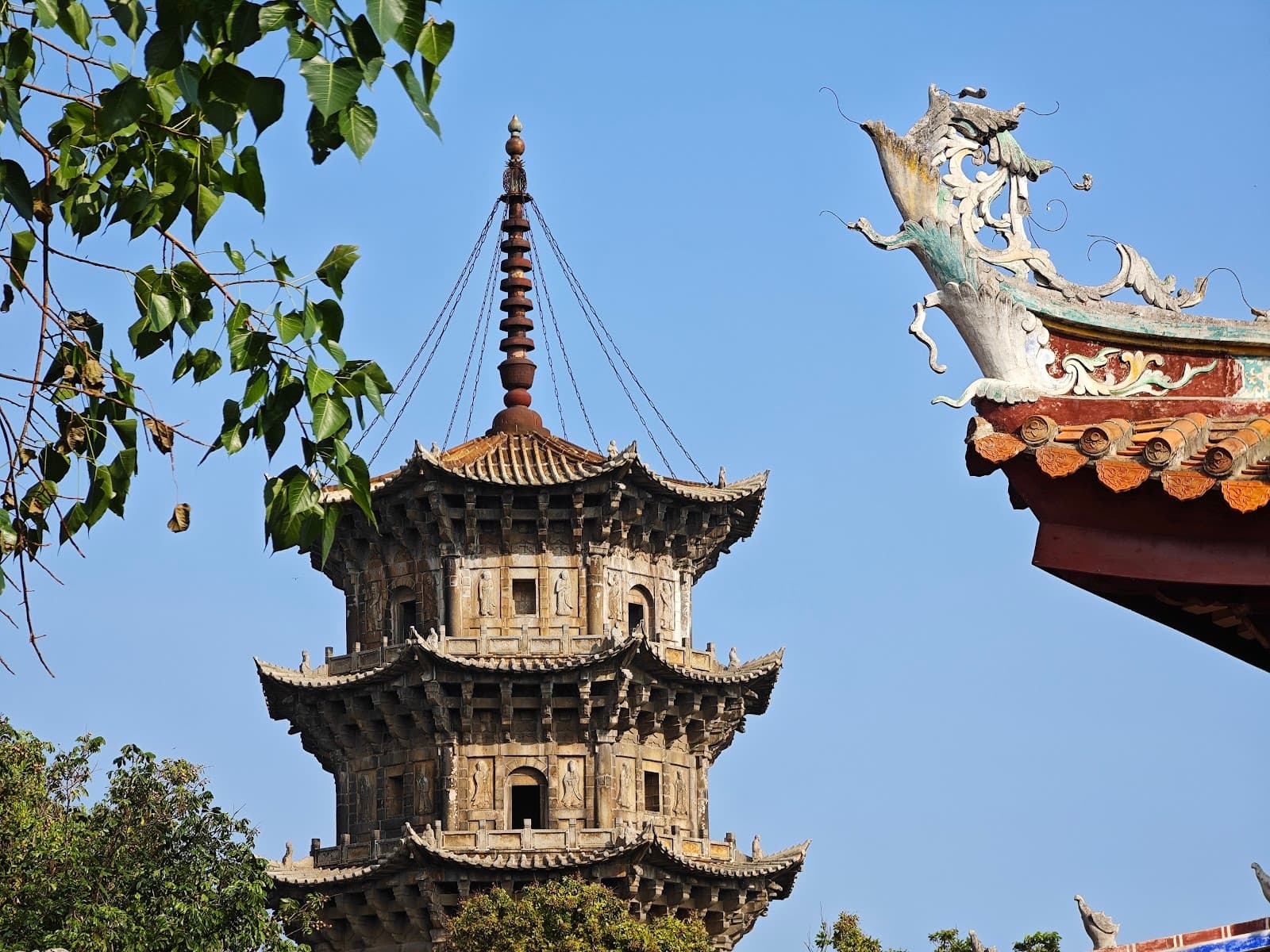
Quanzhou Shiva Temple Columns Laoximen Fujian China
Quanzhou Shiva Temple Columns, dramatically situated in the Laoximen area of the historic city of Quanzhou in southeastern Fujian Province, represent one of the most extraordinary and archaeologically significant remnants of Indian Hindu temple architecture in China, dating from the 13th century CE and serving as powerful evidence of the profound transmission of Indian Hindu religious civilization to China during the medieval period through the extensive Maritime Silk Road trade networks that connected the great temple centers of southern India with the flourishing port cities of southeastern China. The site, featuring sophisticated granite pillars with intricate Hindu carvings including depictions of Shiva, Parvati, Ganesha, and other Hindu deities, along with mythological scenes and architectural elements that demonstrate clear connections to the architectural traditions of ancient India, particularly the sophisticated column design principles and decorative programs that were transmitted from the great temple centers of southern India, demonstrates the direct transmission of Indian Hindu architectural knowledge, religious iconography, and cultural concepts from the great centers of ancient India, particularly the sophisticated temple architecture traditions that were systematically transmitted to China through the extensive maritime trade networks that connected India with China, while the site's most remarkable feature is its extraordinary collection of granite pillars originally from a Hindu temple that once stood in Quanzhou, featuring sophisticated carvings of Hindu deities, mythological scenes, and architectural elements that demonstrate remarkable parallels with Indian temple architecture traditions, particularly the structural techniques and decorative programs that were central to Indian temple architecture. The granite pillars' architectural design, with their sophisticated carvings, decorative bands, and structural elements, follows design principles that demonstrate remarkable parallels with Indian temple column architecture principles, particularly the structural techniques and decorative traditions that were central to Indian temple architecture, while the site's extensive archaeological remains including the granite pillars with clear Indian stylistic influences, Hindu iconographic elements, and architectural details demonstrate the sophisticated synthesis of Indian Hindu iconography and cosmological concepts with local Chinese building materials and preservation techniques. Archaeological evidence reveals that the site served as a major center of Hindu religious activity in medieval Quanzhou during the 13th century, attracting traders, priests, and pilgrims from across China, South Asia, and Southeast Asia, while the discovery of numerous artifacts including the granite pillars with clear Indian stylistic influences, Hindu sculptures that reflect Indian iconographic traditions, and architectural elements that reflect Indian architectural concepts provides crucial evidence of the site's role in the transmission of Indian Hindu religious traditions to China, demonstrating the sophisticated understanding of Indian temple architecture and religious practices possessed by the site's patrons and religious establishment. The site's association with the ancient city of Quanzhou, which flourished as a major trading port along the Maritime Silk Road with extensive connections to India and Southeast Asia, demonstrates the sophisticated understanding of Indian Hindu religious traditions that were transmitted to China, while the site's granite pillars demonstrate remarkable parallels with Indian temple architecture traditions that were central to ancient Indian civilization. The site has been the subject of extensive archaeological research and conservation efforts, with ongoing work continuing to reveal new insights into the site's sophisticated architecture, religious practices, and its role in the transmission of Indian Hindu religious traditions to China, while the site's status as part of the Quanzhou UNESCO World Heritage Site demonstrates its significance as a major center for the transmission of Indian religious and cultural traditions to China. Today, the Quanzhou Shiva Temple Columns stand as one of the most important archaeological sites in China demonstrating Indian Hindu influences, serving as a powerful testament to the transmission of Indian Hindu religious civilization to China, while ongoing archaeological research and conservation efforts continue to protect and study this extraordinary cultural treasure that demonstrates the profound impact of Indian civilization on Chinese religious and cultural development. ([1][2])
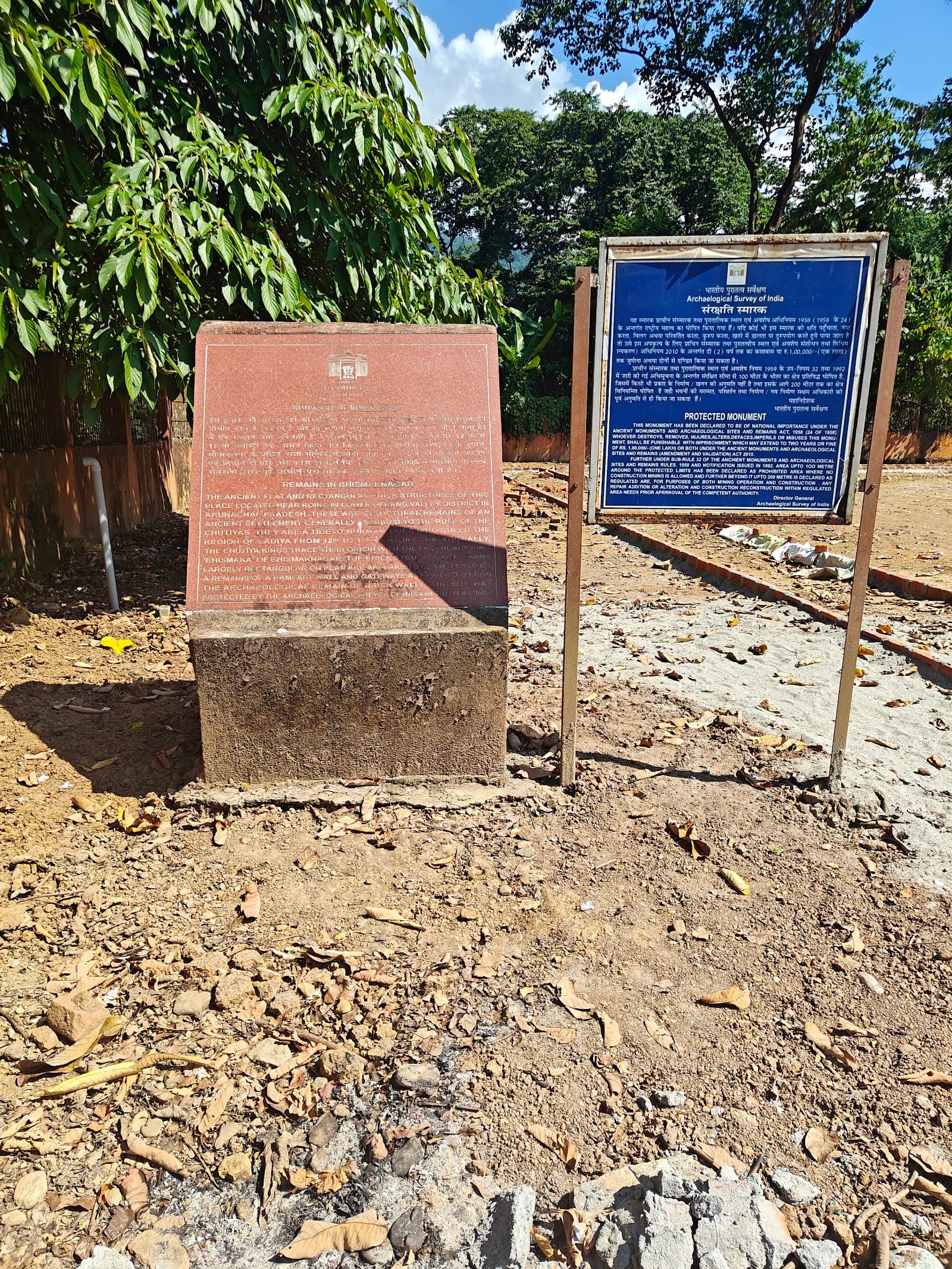
Bhismaknagar Fort Roing
Fired brick and mud brick construction techniques define Bhismaknagar Fort, erected around 1100 CE by the Chutia kingdom in Arunachal Pradesh ([1][2]). As an archaeological site in Khatan, Lower Dibang Valley, Roing, it represents a significant example of Tai Ahom architectural influence ([3]). Archaeological excavations have uncovered a sophisticated, sprawling complex, revealing the architectural prowess of this medieval kingdom ([4]). The fort's rectangular layout features ramparts and gateways, constructed primarily from brick, showcasing the ingenuity of the builders ([5]). Intricate carvings adorning the walls display geometric and floral motifs, reflecting the cultural richness of the Chutia kingdom ([2]). Unlike typical stone fortifications, Bhismaknagar utilized locally abundant clay, crafting large bricks without mortar ([1][5]). Stone platforms and foundations demonstrate a planned construction, hinting at residential and administrative functions ([3][4]). The use of burnt brick, stone, timber, and bamboo highlights the resourcefulness of the builders ([1][2][3]). During the Ahom Period, temple architecture, though not fully evident in Bhismaknagar's ruins, likely influenced the fort's design ([5]). The architectural style incorporates elements of medieval design, with a focus on functionality and defense ([3][4]). Vastu Shastra principles, the ancient Indian science of architecture, may have guided the layout and orientation of the fort, although specific textual references are not available ([5]). Bhismaknagar offers a glimpse into a forgotten era, a testament to the resilience and artistry of its creators ([1]). Bhismaknagar remains a significant archaeological site, linking us to India's diverse heritage ([2][3]). Further research and preservation efforts are crucial to understanding the full scope of its historical and architectural importance ([1][4]). The site stands as a reminder of the Chutia kingdom's legacy and their contribution to the region's cultural landscape ([2][5]).

Battala Mahadev Temple Agartala
Nestled in the heart of Tripura, the Battala Mahadev Temple, a revered shrine dedicated to Lord Shiva, was erected around 1681 CE under the patronage of Maharaja Krishna Manikya ([1][2]). This 17th-century temple, a testament to the Manikya dynasty's devotion, showcases a captivating fusion of Nagara and Bengali architectural traditions ([3]). Its presence enriches Agartala's cultural tapestry, drawing devotees and architecture enthusiasts alike. During the Ahom period, temple architecture in India experienced a flourishing of regional adaptations, and this temple exemplifies such unique synthesis ([4]). The curvilinear tower, echoing the chala style of Bengal, adds a distinctive character to the temple's silhouette, illustrating the cross-pollination of architectural ideas ([3]). The temple's design subtly integrates regional aesthetics within the broader Hindu architectural framework. Stone platforms and foundations demonstrate the enduring construction techniques employed in building the Battala Mahadev Temple ([1][5]). The structure primarily utilizes locally sourced materials such as stone, bricks, terracotta, and wood, reflecting the region's architectural identity ([1][5]). The exterior, finished with whitewash, presents a serene and austere facade, a contrast to the vibrant ornamentation often seen in other Indian temples ([2]). Within the Garbhagriha (Sanctum), the Shiva lingam serves as the central focus of worship, inviting devotees into a space of spiritual communion ([3]). The temple stands as an embodiment of Tripura's rich cultural and religious heritage, offering a tranquil space for reflection and devotion ([4][5]). The patronage of the Manikya dynasty underscores the temple's historical significance, solidifying its place as a notable landmark in Agartala ([1][2][3]). The temple stands as a reminder of the architectural and artistic achievements of the era.
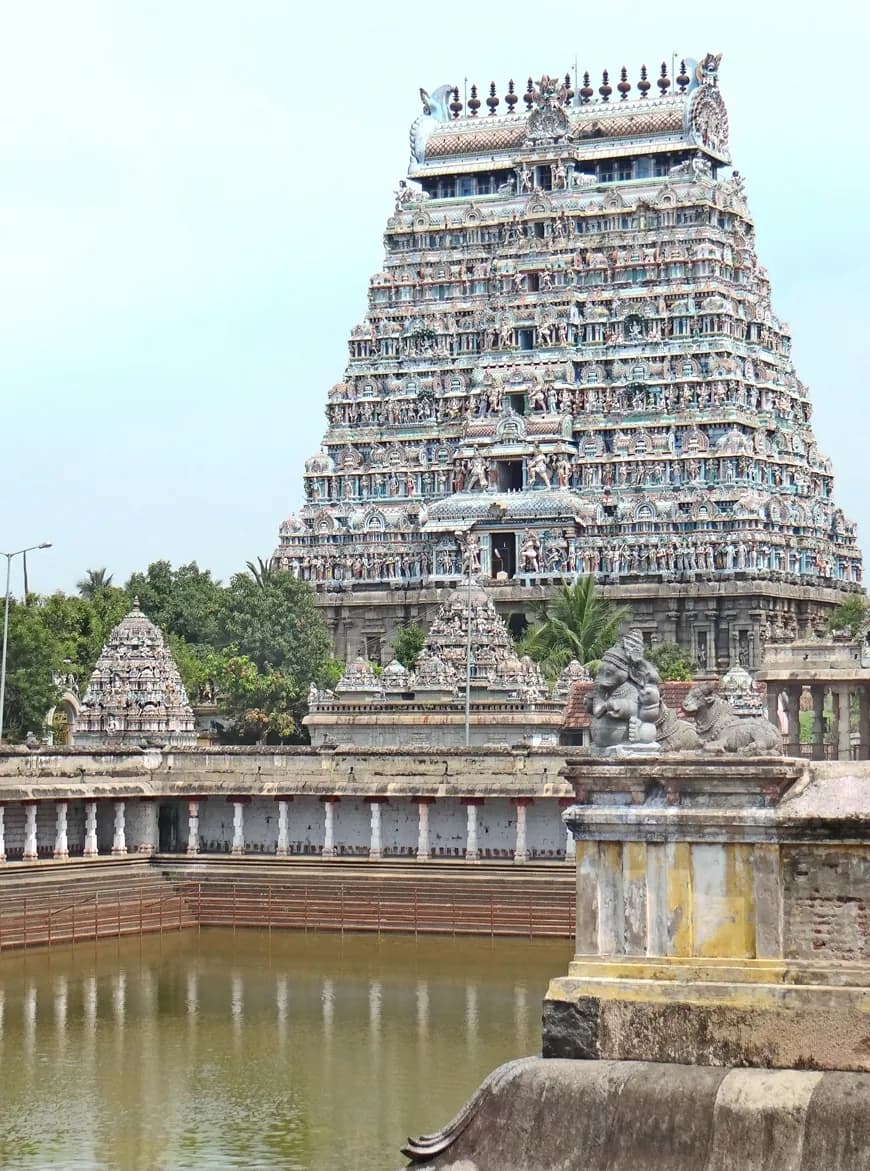
Nataraja Temple Chidambaram
The midday sun beat down on the gopurams of the Nataraja Temple, their vibrant colours almost shimmering in the heat. As a Rajasthani journalist accustomed to the sandstone hues of our forts and palaces, the riot of colour here in Chidambaram was a delightful assault on the senses. The towering gateways, covered in intricate stucco figures of deities and mythical creatures, seemed to pulse with life, a stark contrast to the serene, almost austere beauty of our desert architecture. Stepping through the eastern gopuram, I found myself in a vast courtyard, the air thick with the scent of incense and the murmur of chanting. Unlike the imposing, enclosed structures of Rajasthan, this temple felt open, porous, allowing the outside world to permeate its sacred space. The Kanaka Sabha, the golden hall dedicated to Lord Shiva's cosmic dance, gleamed under the sun. Its gilded roof, supported by intricately carved pillars, was a testament to the artistry of the Chola dynasty, who began construction of this temple complex centuries ago. I spent a good hour just observing the details of the Kanaka Sabha. The sculptures, though weathered by time, retained an astonishing level of detail. Each figure, from the fearsome guardians flanking the entrance to the graceful celestial dancers adorning the pillars, told a story. I noticed a distinct difference in the sculptural style compared to the Rajput influences I was familiar with. These figures were more fluid, their movements more dynamic, reflecting the South Indian artistic tradition. The temple is famous for its representation of the Chidambara Rahasyam, the secret of the cosmos. This secret is symbolized by an empty space within the sanctum sanctorum, representing the formless nature of Shiva. While I couldn't enter this sacred space, the very concept intrigued me. In Rajasthan, our temples are filled with idols, tangible representations of the divine. Here, the absence of an idol served as a powerful reminder of the intangible, the unseen forces that govern the universe. Moving westward, I entered the Nritta Sabha, the Hall of Dance. This 56-pillared hall, shaped like a chariot, is a marvel of engineering and artistry. The pillars, each carved from a single stone, are said to represent the 56 syllables of the Sanskrit alphabet. I was particularly fascinated by the depictions of various dance poses carved on the pillars, a visual encyclopedia of ancient Indian dance forms. It was a stark contrast to the geometric patterns and floral motifs that dominate Rajasthani architecture. Beyond the architectural grandeur, what struck me most was the palpable sense of devotion that permeated the temple. Devotees from all walks of life thronged the courtyards, offering prayers, performing rituals, and simply soaking in the spiritual atmosphere. I witnessed a group of young girls learning the Bharatnatyam dance within the temple precincts, their movements echoing the cosmic dance of Nataraja. This living tradition, passed down through generations, brought the temple’s history to life in a way that no museum ever could. As I left the Nataraja Temple, the setting sun cast long shadows across the gopurams, painting them in hues of orange and purple. The experience had been a journey not just through space, but through time. From the ancient Chola foundations to the contemporary expressions of faith, the temple stood as a testament to the enduring power of belief and the beauty of human creativity. It was a powerful reminder that while architectural styles may differ, the essence of spirituality transcends geographical boundaries. The vibrant colours and dynamic forms of the Nataraja Temple offered a refreshing contrast to the familiar landscapes of Rajasthan, enriching my understanding of India's diverse cultural heritage.
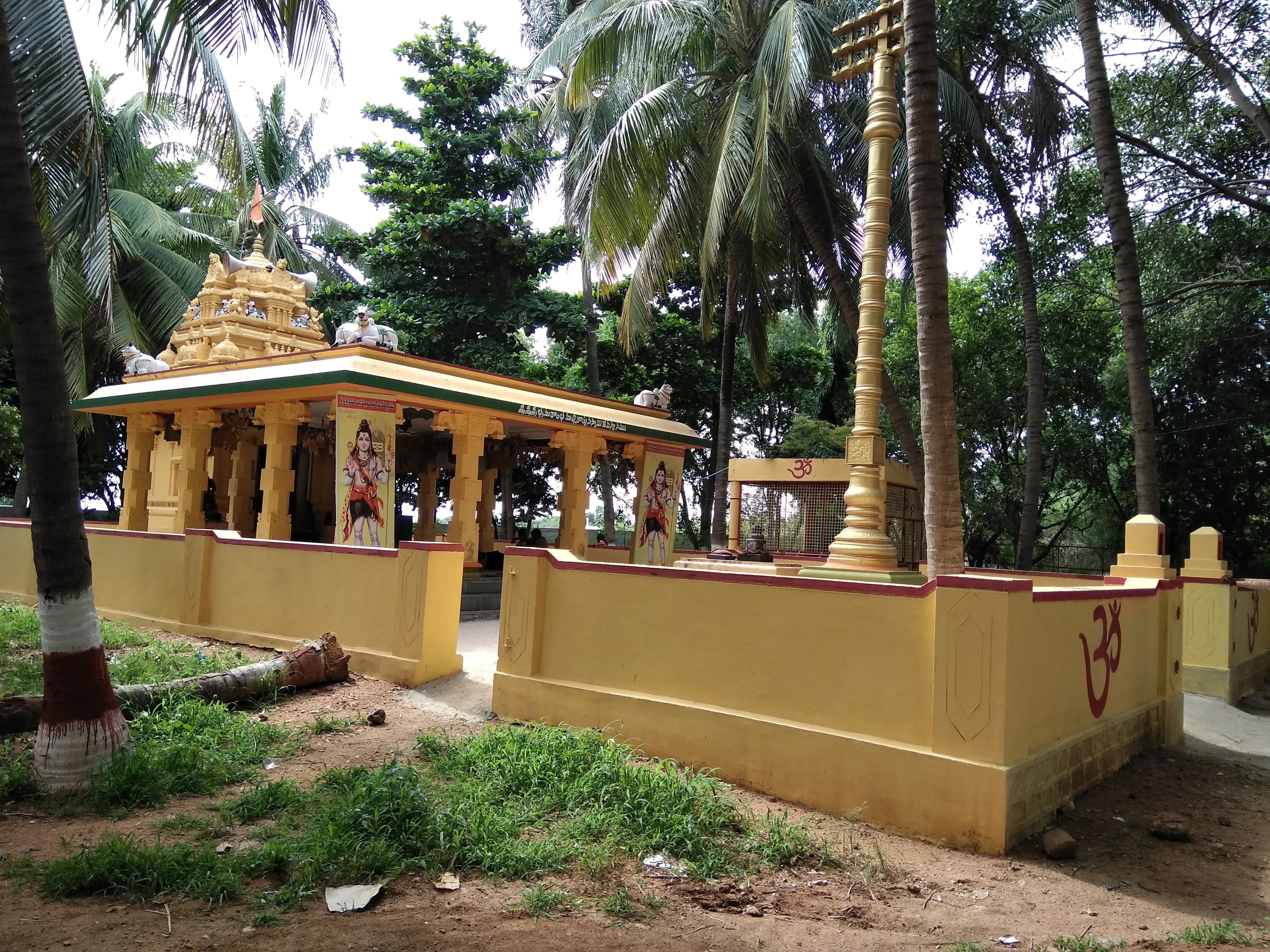
Mallikarjuna Swamy Temple Srisailam
The imposing gopuram of the Mallikarjuna Swamy Temple, a beacon of Dravidian architecture, pierced the brilliant Andhra Pradesh sky as I approached. Situated atop Srisailam hill, part of the Nallamala range, the temple complex unfolded before me like a tapestry woven with stone, history, and faith. The sheer scale of the structure, a sprawling labyrinth of courtyards, shrines, and pillared halls, was breathtaking. Having documented countless architectural marvels across Gujarat, I was prepared for grandeur, but Srisailam's energy was unique, a palpable hum of devotion that resonated through the very stones. My exploration began at the main entrance, dominated by the majestic Rajagopuram. Its intricate carvings, depicting scenes from Hindu mythology, held my gaze. Every inch of the gopuram, from the vibrant deities to the stylized floral motifs, spoke of the skill and dedication of the artisans who crafted it centuries ago. The Vijayanagara influence was evident in the robust construction and the elaborate ornamentation, a testament to the empire's patronage of the arts. I noted the distinct Dravidian features – the pyramidal shikhara, the towering gopurams, and the mandapas supported by intricately carved pillars. The stone, a warm, earthy hue, seemed to absorb and radiate the sun's heat, adding to the atmosphere of ancient power. Stepping into the Mukhamandapa, the main hall, I was enveloped by a forest of pillars. Each one was a masterpiece of sculpture, narrating stories through its carvings. Celestial beings, mythical creatures, and scenes from epics like the Ramayana and Mahabharata unfolded before my eyes. I spent a considerable amount of time examining the minute details – the expressive faces of the deities, the dynamic postures of the dancers, the intricate patterns of the foliage. The sheer artistry was overwhelming. The play of light and shadow within the mandapa added another layer of depth to the experience, highlighting the three-dimensional quality of the carvings. The inner sanctum, where the presiding deity, Lord Mallikarjuna (a form of Shiva), resides, was a place of palpable reverence. While photography wasn't permitted inside, the mental image I retained was vivid. The atmosphere was charged with spiritual energy, a stark contrast to the bustling activity of the outer courtyards. The air was thick with the scent of incense and the murmur of prayers. I observed the devotees, their faces etched with devotion, offering prayers and performing rituals passed down through generations. This tangible connection to the past, the unbroken thread of faith, was perhaps the most compelling aspect of my visit. Beyond the main shrine, the complex houses numerous smaller shrines dedicated to various deities. I was particularly drawn to the Sahasra Linga, a stone slab carved with a thousand miniature lingams, a testament to the devotion of the artisans. The Patalaganga, a sacred spring flowing from the bedrock, added a natural element to the predominantly stone landscape. The cool water, believed to possess healing properties, offered a refreshing respite from the Andhra heat. As I wandered through the complex, I noticed the intricate patterns of the stone flooring. Geometric designs, floral motifs, and even depictions of animals were meticulously carved into the stone. These details, often overlooked, spoke volumes about the attention to detail that characterized the temple's construction. Even the seemingly mundane elements were imbued with artistic significance. Leaving the Mallikarjuna Swamy Temple, I felt a sense of awe and gratitude. The experience was more than just a visual feast; it was a journey through time, a glimpse into the rich cultural and spiritual heritage of India. The temple stands as a testament to the enduring power of faith and the extraordinary artistic achievements of a bygone era. It’s a site I would urge any traveler, particularly those with an interest in architecture and history, to experience firsthand.
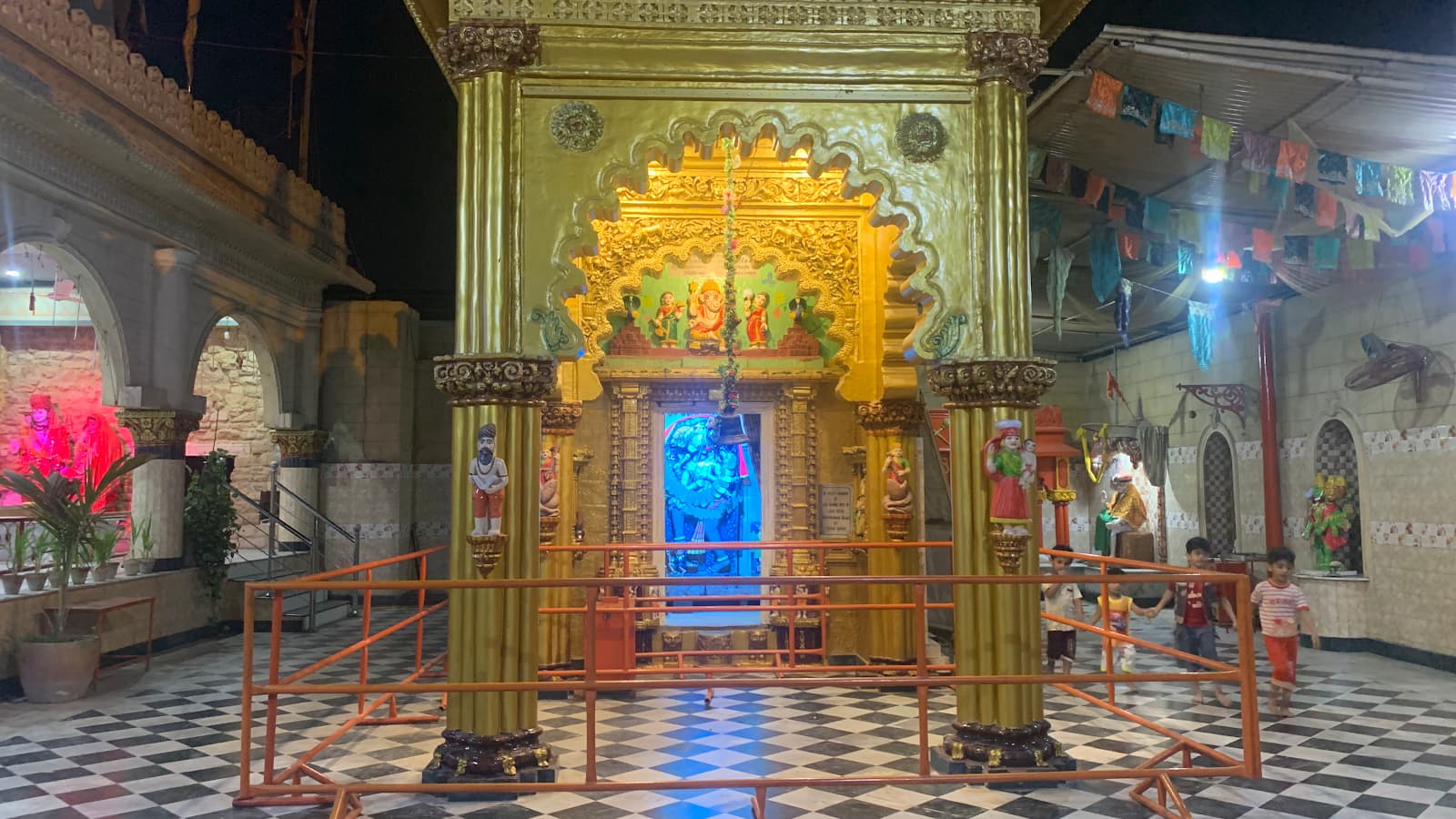
Panchmukhi Hanuman Temple Karachi Sindh
Panchmukhi Hanuman Temple, located in Karachi’s Soldier Bazaar area, represents one of the oldest continuously functioning Hindu temples in Pakistan, with archaeological evidence indicating worship at this site for over 1,500 years, dating to a period when the Sindh region formed an integral part of the greater Hindu rashtra extending across the Indian subcontinent. The temple, dedicated to Lord Hanuman in his Panchmukhi (five-faced) form, houses a unique naturally formed stone idol believed to be over 1,500 years old, making it one of the rarest and most significant Hanuman shrines in the world. The temple complex, originally spanning approximately 2,609 square feet but now reduced due to urban encroachment, features a main sanctum housing the Panchmukhi Hanuman murti, surrounded by subsidiary shrines and a courtyard that has served as a center of Hindu worship in Karachi for over a millennium. The temple’s architectural style reflects the evolution of Hindu temple design in the Sindh region, incorporating elements from ancient Indian, medieval, and colonial periods, with the current structure dating primarily to the 19th and 20th centuries but built upon foundations that may date to the 5th or 6th century CE. Archaeological excavations conducted in 2019 revealed artifacts including eight to nine images of Hanuman estimated to be at least 300 years old, along with evidence of multiple construction phases and ritual deposits indicating continuous worship over centuries. The temple is declared a national heritage site under the Sindh Cultural Heritage (Preservation) Act 1994, recognizing its significance as a symbol of Pakistan’s ancient Hindu heritage. The Panchmukhi Hanuman idol, believed to be naturally formed rather than man-made, is considered extremely rare and sacred, with devotees performing circumambulation (pradakshina) 11 or 21 times as part of their worship. The temple serves as a vital center for Karachi’s Hindu community, hosting major festivals including Hanuman Jayanti, Holi, and Diwali, with celebrations that have attracted thousands of devotees and demonstrated interfaith harmony. Today, Panchmukhi Hanuman Temple stands as a powerful testament to the continuity of Hindu worship in regions that were historically part of the greater Hindu rashtra, demonstrating that Hindu religious traditions have persisted in Pakistan despite political changes, serving as a bridge between the ancient Hindu heritage of the Indian subcontinent and contemporary Hindu communities in Pakistan. ([1][2])
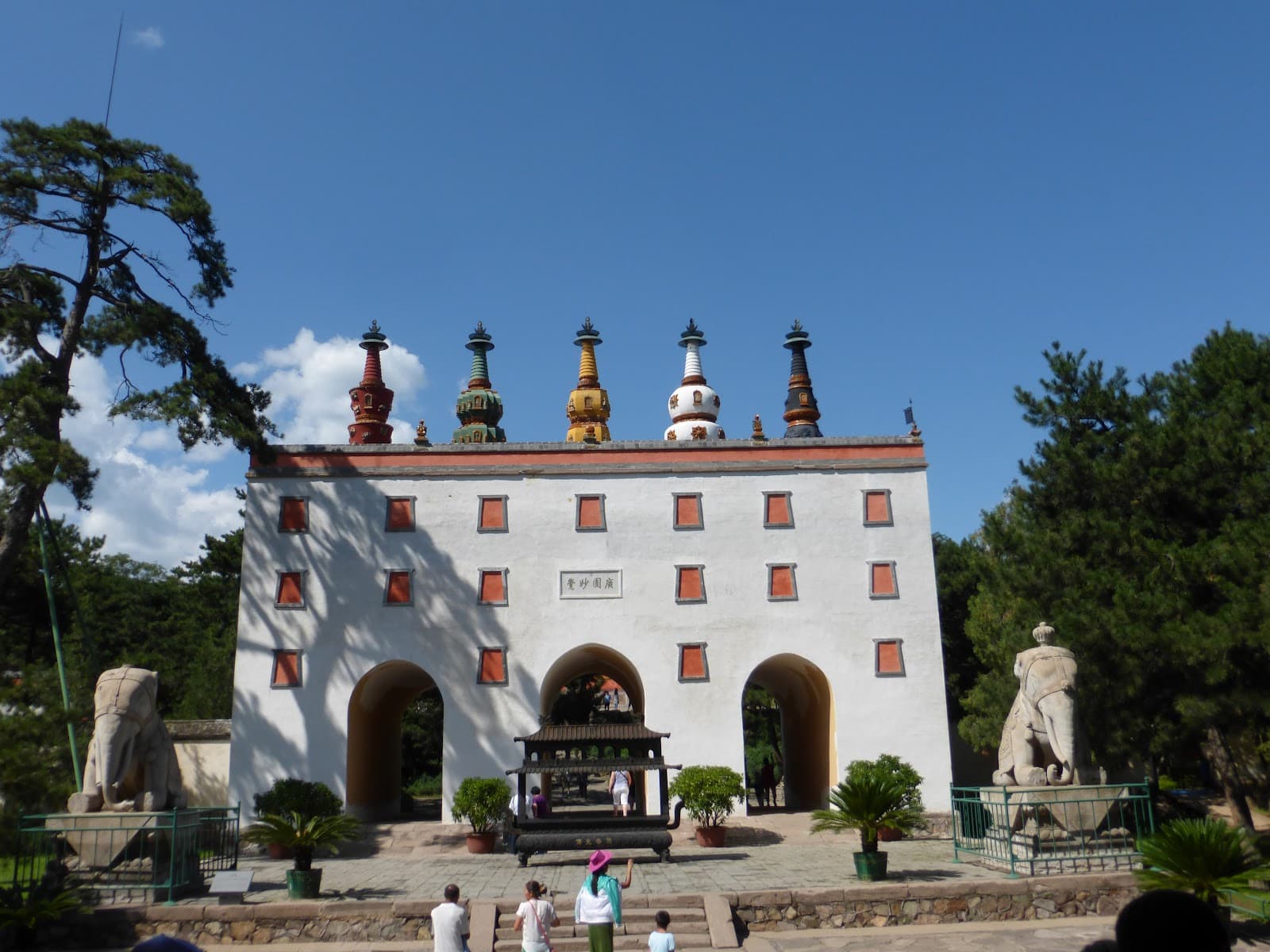
Putuo Zongcheng Temple Chengde Hebei China
Putuo Zongcheng Temple, dramatically situated in the imperial summer resort complex of Chengde in Hebei Province, represents one of the most extraordinary and historically significant Tibetan Buddhist temple complexes in China, dating from the 18th century CE and serving as a major center of Tibetan Buddhist practice that was constructed for the Manchu court of the Qing dynasty, featuring sophisticated Tibetan Buddhist temple structures with halls, pagodas, and ritual spaces that demonstrate clear connections to the architectural and religious traditions of ancient India, particularly the sophisticated Tibetan Buddhist architecture traditions that were transmitted from India through Tibet, creating a powerful testament to the profound transmission of Indian Buddhist civilization to China during the imperial period. The site, featuring sophisticated Tibetan Buddhist temple structures with halls, pagodas, and ritual spaces that demonstrate clear connections to the architectural traditions of ancient India, particularly the sophisticated Tibetan Buddhist architecture traditions that were transmitted from the great Buddhist centers of northern India through Tibet, demonstrates the direct transmission of Indian Buddhist architectural knowledge, religious iconography, and cultural concepts from the great monastic universities of ancient India, particularly Nalanda and Taxila, which systematically transmitted Buddhist teachings and architectural traditions to Tibet and subsequently to China through the extensive trade and pilgrimage networks that connected India with Tibet and China, while the site's most remarkable feature is its extraordinary Tibetan Buddhist architectural design that demonstrates remarkable parallels with Indian Buddhist temple architecture traditions, particularly the structural techniques and iconographic programs that were central to Indian Buddhist architecture, including the sophisticated use of mandala-based planning principles and decorative programs that reflect Indian Buddhist cosmological concepts. The temple structures' architectural layout, with their sophisticated planning based on mandala principles, central halls surrounded by subsidiary structures, meditation chambers, and ceremonial spaces, follows planning principles that demonstrate remarkable parallels with Indian Buddhist monastery planning principles, particularly the vihara and mandala-based temple traditions that were central to Indian Buddhist architecture, while the site's extensive architectural remains including Tibetan Buddhist sculptures with clear Indian stylistic influences, murals that reflect Indian iconographic traditions, and architectural elements demonstrate the sophisticated synthesis of Indian Buddhist iconography and cosmological concepts with Tibetan and Chinese aesthetic sensibilities and building materials. Historical evidence reveals that the site served as a major center of Tibetan Buddhist learning and religious activity during the 18th and 19th centuries, attracting monks, traders, and pilgrims from across China, Tibet, and India, while the discovery of numerous artifacts including Tibetan Buddhist sculptures with clear Indian stylistic influences, murals that reflect Indian iconographic traditions, and architectural elements that reflect Indian architectural concepts provides crucial evidence of the site's role in the transmission of Indian Buddhist traditions to China, demonstrating the sophisticated understanding of Indian Buddhist architecture and religious practices possessed by the site's patrons and monastic establishment. The site's association with the Qing dynasty imperial court, which maintained extensive connections with Tibet and India, demonstrates the sophisticated understanding of Indian Buddhist traditions that were transmitted to China, while the site's Tibetan Buddhist temple structures demonstrate remarkable parallels with Indian Buddhist temple architecture traditions that were central to ancient Indian civilization. The site has been the subject of extensive historical research and conservation efforts, with ongoing work continuing to reveal new insights into the site's sophisticated architecture, religious practices, and its role in the transmission of Indian Buddhist traditions to China, while the site's status as part of the Chengde UNESCO World Heritage Site demonstrates its significance as a major center for the transmission of Indian Buddhist and cultural traditions to China. Today, Putuo Zongcheng Temple stands as one of the most important historical Tibetan Buddhist temples in China, serving as a powerful testament to the transmission of Indian Buddhist civilization to China, while ongoing historical research and conservation efforts continue to protect and study this extraordinary cultural treasure that demonstrates the profound impact of Indian civilization on Chinese religious and cultural development. ([1][2])
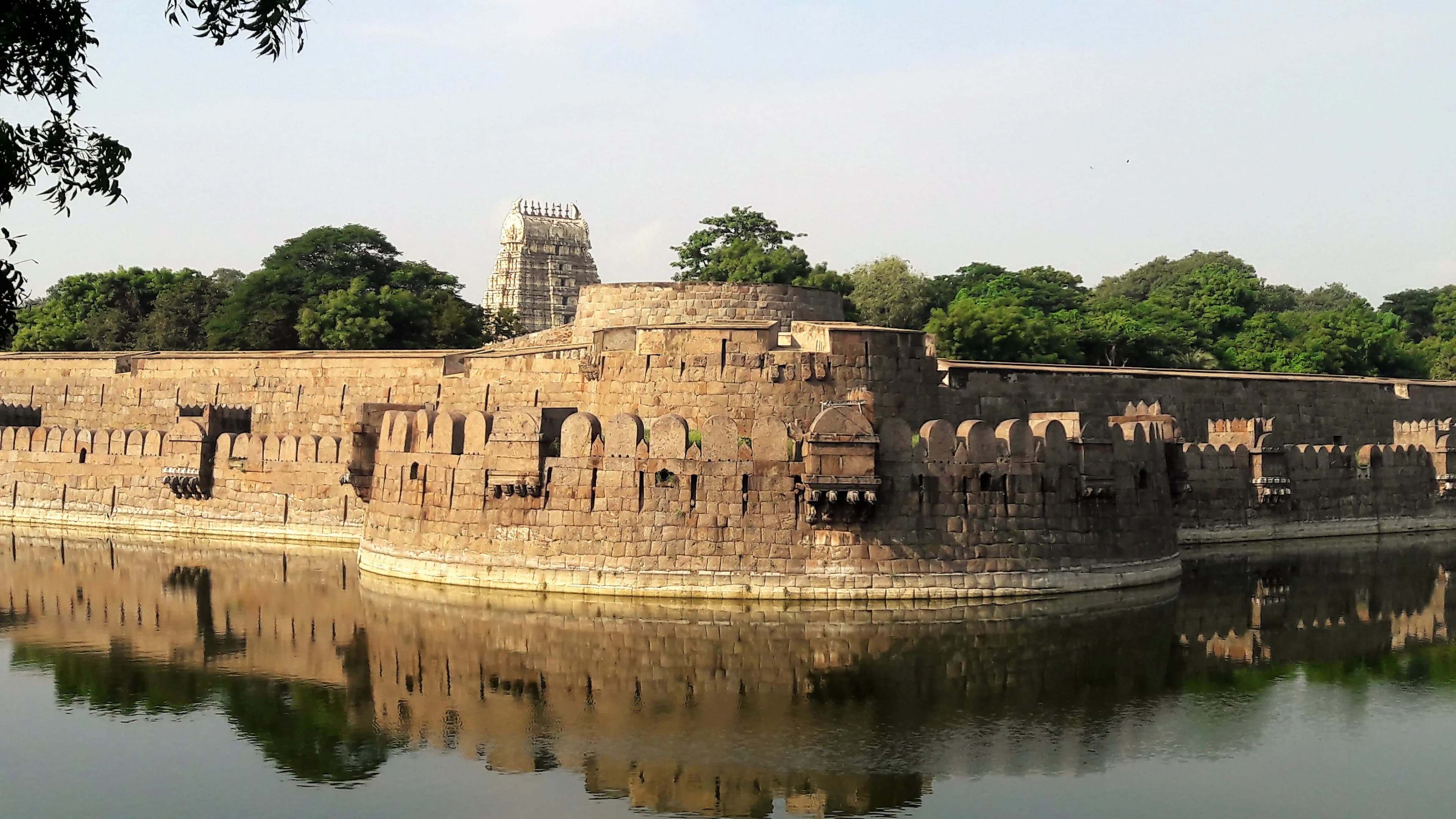
Vellore Fort Vellore
The imposing granite ramparts of the Vellore Fort rose before me, shimmering under the Tamil Nadu sun. Having explored the intricate stone carvings of Gujarat's architectural wonders, I was eager to experience the distinct Dravidian style of this 16th-century marvel. The sheer scale of the fort, its moat still brimming with water, immediately impressed. This wasn't just a military stronghold; it was a statement of power etched in stone and earth. Crossing the sturdy bridge over the moat, I felt a palpable shift in atmosphere. The outside world faded, replaced by the hushed grandeur of history. The main entrance, the Bali Kota, was a formidable gateway, its thick wooden doors reinforced with iron. The architecture here, unlike the ornate carvings I was accustomed to back home, was characterized by robust functionality. The emphasis was on strength and defense, a stark contrast to the celebratory nature of many Gujarati temples. Inside, the fort unfolded like a layered narrative. The Jalakanteswara Temple, nestled within the fort's walls, was a breathtaking example of Vijayanagara architecture. The intricate carvings covering the gopuram, though weathered by time, were a testament to the skill of the artisans. I spent a considerable amount of time studying the depictions of deities and celestial beings, noting the distinct stylistic differences from the iconography found in Gujarat's temples. The temple's location within the fort itself spoke volumes about the intertwined nature of religion and power during that era. My exploration led me to the Kalyan Mahal, a palace within the fort. Here, the architectural style shifted again. While the base retained the robust granite construction, the upper levels displayed delicate arches and balconies, hinting at Mughal influences that seeped in later centuries. Peering through the arched windows, I imagined the lives of those who once resided within these walls – royalty, soldiers, and perhaps even artists who adorned the temple with its intricate carvings. One of the most striking features of the Vellore Fort is its moat. Unlike many dry moats I've encountered, this one was filled with water, creating a formidable natural barrier. I learned that crocodiles were once introduced into the moat as an added layer of defense, a detail that sent a shiver down my spine. Circling the fort along the ramparts, I could appreciate the strategic brilliance of its design. The high walls, the wide moat, and the strategically placed bastions offered a panoramic view of the surrounding plains, allowing defenders to anticipate any approaching threat. Descending into the dark, damp cellars known as the Tipu Mahal, I felt a palpable sense of history. These underground chambers, once used for storage and perhaps even as prisons, offered a glimpse into the less glamorous aspects of fort life. The air was thick with the scent of damp earth and the echoes of the past seemed to linger in the silence. As I left the Vellore Fort, the late afternoon sun casting long shadows across the ramparts, I carried with me a deeper understanding of South Indian military architecture. The fort was not merely a collection of stones and mortar; it was a living testament to the ingenuity and resilience of those who built and defended it. The experience was a powerful reminder that architecture, at its best, can tell a story, and the Vellore Fort had whispered its tales to me in a language both powerful and profound. The contrast with the architectural traditions of my home state, Gujarat, only served to enrich my appreciation for the diversity and richness of India's architectural heritage.
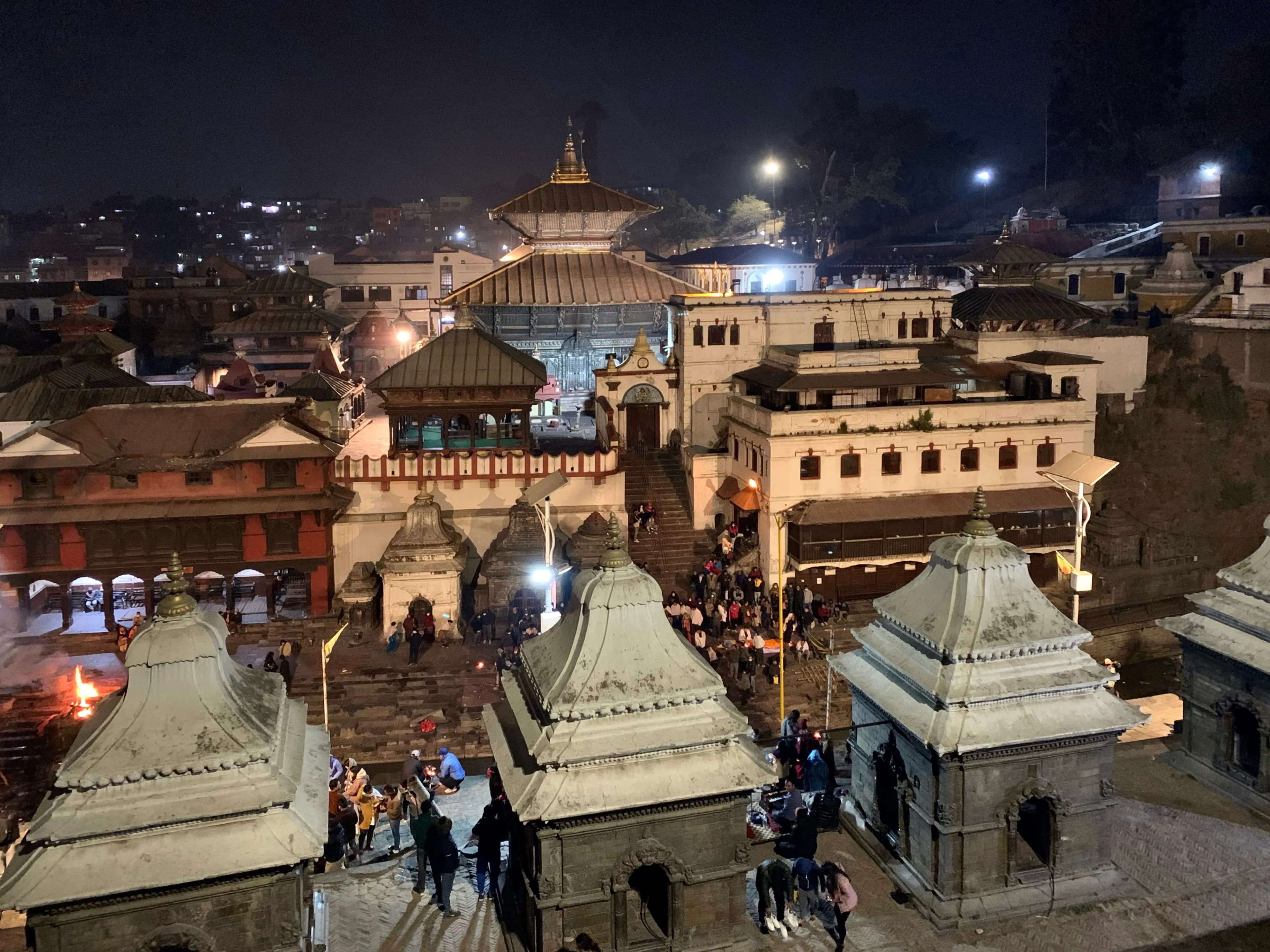
Pashupatinath Temple Kathmandu
The vibrant energy of Kathmandu swirled around me, but as I stepped onto the hallowed grounds of the Pashupatinath Temple, a palpable shift occurred. The air hummed with a different frequency, thick with the scent of incense and marigold garlands, resonating with centuries of devotion. This wasn't just a temple; it was a living organism, pulsating with the heartbeats of pilgrims and the whispers of ancient rituals. As someone deeply immersed in South Indian temple architecture, I was immediately struck by the distinct pagoda style of Pashupatinath. The two-tiered roofs, crafted from intricately carved wood and gilded with copper, were a stark contrast to the towering gopurams and expansive prakarams I was accustomed to. The temple, dedicated to Lord Shiva in his Pashupati form, stood as a testament to the Newar craftsmanship, a unique blend of artistry and devotion. Intricate carvings of deities, mythical creatures, and floral motifs adorned every inch of the wooden structure, each narrating a story, each a testament to the skill of the artisans. The temple complex, situated on the banks of the sacred Bagmati River, presented a fascinating juxtaposition of life and death. While the main temple, accessible only to Hindus, exuded an aura of vibrant worship, the cremation ghats along the riverbank offered a sobering reminder of life's ephemeral nature. Witnessing the open-air cremation ceremonies, while initially jarring, offered a unique perspective on the Hindu philosophy of life, death, and rebirth. The smoke rising from the pyres, mingling with the scent of incense, created an atmosphere both poignant and profound. Observing the devotees, I noticed a distinct blend of Nepali and Indian traditions. The vibrant saffron and red attire, the chanting of mantras, and the offerings of flowers and fruits resonated with my own experiences in South Indian temples. However, the unique rituals specific to Pashupatinath, like the Sadhus smeared with ash and the devotees offering prayers to the sacred bull Nandi, added a distinct Nepali flavour to the spiritual tapestry. The eastern bank of the Bagmati, opposite the main temple, housed a series of smaller shrines and temples, each dedicated to different deities. Exploring these structures, I noticed the influence of various architectural styles, from the classic pagoda to the shikhara style reminiscent of North Indian temples. This architectural amalgamation spoke volumes about the cultural exchange and historical influences that shaped the Kathmandu Valley. One particular detail that captivated me was the use of gilded copper in the main temple's roof. The gleaming metal, reflecting the sunlight, created a dazzling spectacle, enhancing the temple's ethereal beauty. This contrasted beautifully with the weathered stone of the surrounding structures, creating a visual symphony of textures and colours. I recalled the use of gold leaf in South Indian temples, particularly in the vimanams, and pondered on the symbolic significance of precious metals in sacred architecture across different cultures. My visit to Pashupatinath wasn't just a sightseeing trip; it was a pilgrimage of sorts, a journey into the heart of Nepali spirituality. It was a chance to witness the confluence of architectural brilliance, religious fervour, and cultural richness. As I left the temple complex, the lingering scent of incense on my clothes and the rhythmic chanting of mantras echoing in my ears, I carried with me not just photographs and memories, but a deeper understanding of the power of faith and the enduring legacy of sacred spaces. The Pashupatinath Temple, with its unique architectural language and vibrant spiritual energy, stands as a powerful testament to the enduring human quest for connection with the divine.
Quick Links
Plan Your Heritage Journey
Get personalized recommendations and detailed visitor guides