Has Inheritage Foundation supported you today?
Your contribution helps preserve India's ancient temples, languages, and cultural heritage. Every rupee makes a difference.
Secure payment • Instant 80G certificate
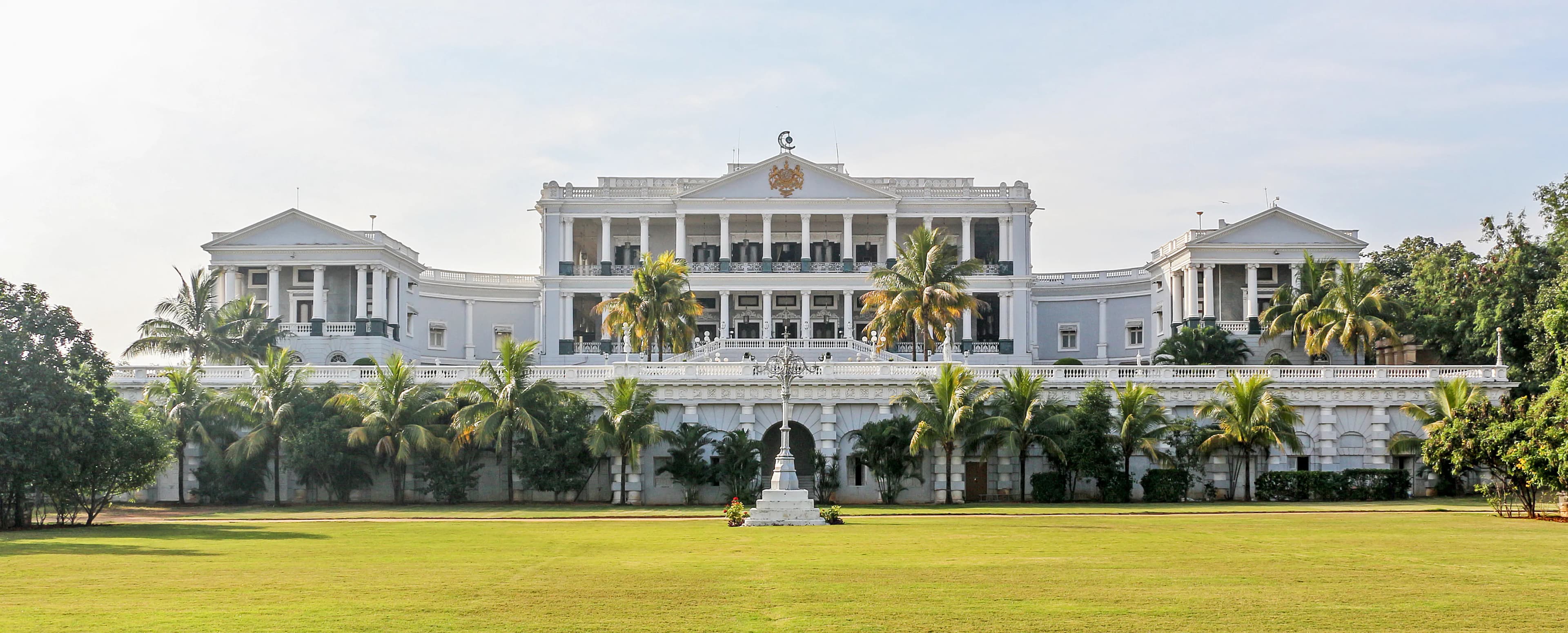
Falaknuma Palace Hyderabad
The Nizam’s carriages, gleaming under the Hyderabad sun, offered a fitting prelude to the grandeur that awaited me at Falaknuma Palace. Perched 2,000 feet above the city, this scorpion-shaped architectural marvel, meaning "Mirror of the Sky" in Urdu, truly lives up to its name. As I ascended the hill, the palace gradually revealed itself, a blend of Italian and Tudor influences against the backdrop of the Deccan plateau. The pale Italian marble, so striking against the azure sky, hinted at the opulence within. Stepping through the grand arched entrance felt like stepping back in time. The sheer scale of the entrance hall, with its soaring ceilings and intricate frescoes, was breathtaking. The jade collection, displayed in cabinets lining the walls, immediately caught my eye – a testament to the Nizam’s legendary wealth. Each piece, from delicate snuff bottles to intricately carved figurines, whispered stories of a bygone era. My guide, a seasoned historian, pointed out the intricate details of the palace's architecture. The blend of styles was seamless, a testament to the architects' vision. The stained-glass windows, imported from Venice, cast kaleidoscopic patterns on the marble floors. The intricate woodwork, particularly on the grand staircase, showcased the skill of local artisans. Everywhere I looked, there were stories etched in wood, marble, and glass. The state reception room, where the Nizam once entertained dignitaries, was a spectacle of Victorian grandeur. The furniture, upholstered in rich velvet and adorned with mother-of-pearl inlay, looked as if it had been prepared for a royal reception just yesterday. The massive chandeliers, glittering with hundreds of crystals, dominated the room, casting a warm glow on the priceless artifacts displayed around the room. I could almost imagine the Nizam, dressed in his finery, holding court in this magnificent space. The library, a personal favorite, was a haven for bibliophiles. Its walnut shelves, stacked with rare books and manuscripts, stretched towards the high, coffered ceiling. The scent of old paper and leather hung in the air, a comforting aroma that transported me to a world of scholarly pursuits. I spent a considerable amount of time admiring the collection, marveling at the breadth of knowledge contained within those walls. It was easy to see why the Nizam, a known patron of the arts and sciences, cherished this space. The dining hall, with its impossibly long table capable of seating 100 guests, was another highlight. The Nizam, known for his lavish hospitality, hosted extravagant banquets here. The stories of these legendary feasts, recounted by my guide, brought the space to life. I could almost hear the clinking of glasses, the murmur of conversations, and the strains of music that once filled this grand hall. Beyond the opulent interiors, the palace grounds offered breathtaking views of the city below. The manicured gardens, a blend of Mughal and English landscaping styles, provided a tranquil escape from the bustling city. The fountains, once a symbol of the Nizam's wealth and power, still gurgled softly, adding to the serene atmosphere. As I descended the hill, leaving the grandeur of Falaknuma behind, I couldn't help but feel a sense of awe. This wasn't just a palace; it was a time capsule, preserving a slice of India's rich history. It was a testament to the vision of the Nizams, their patronage of the arts, and their lavish lifestyle. Falaknuma Palace, truly a mirror of the sky, reflected not just the heavens above but also the grandeur of a bygone era. Having visited every UNESCO site in India, I can confidently say that Falaknuma holds a unique place, offering a glimpse into a world of princely splendor that is both captivating and unforgettable.
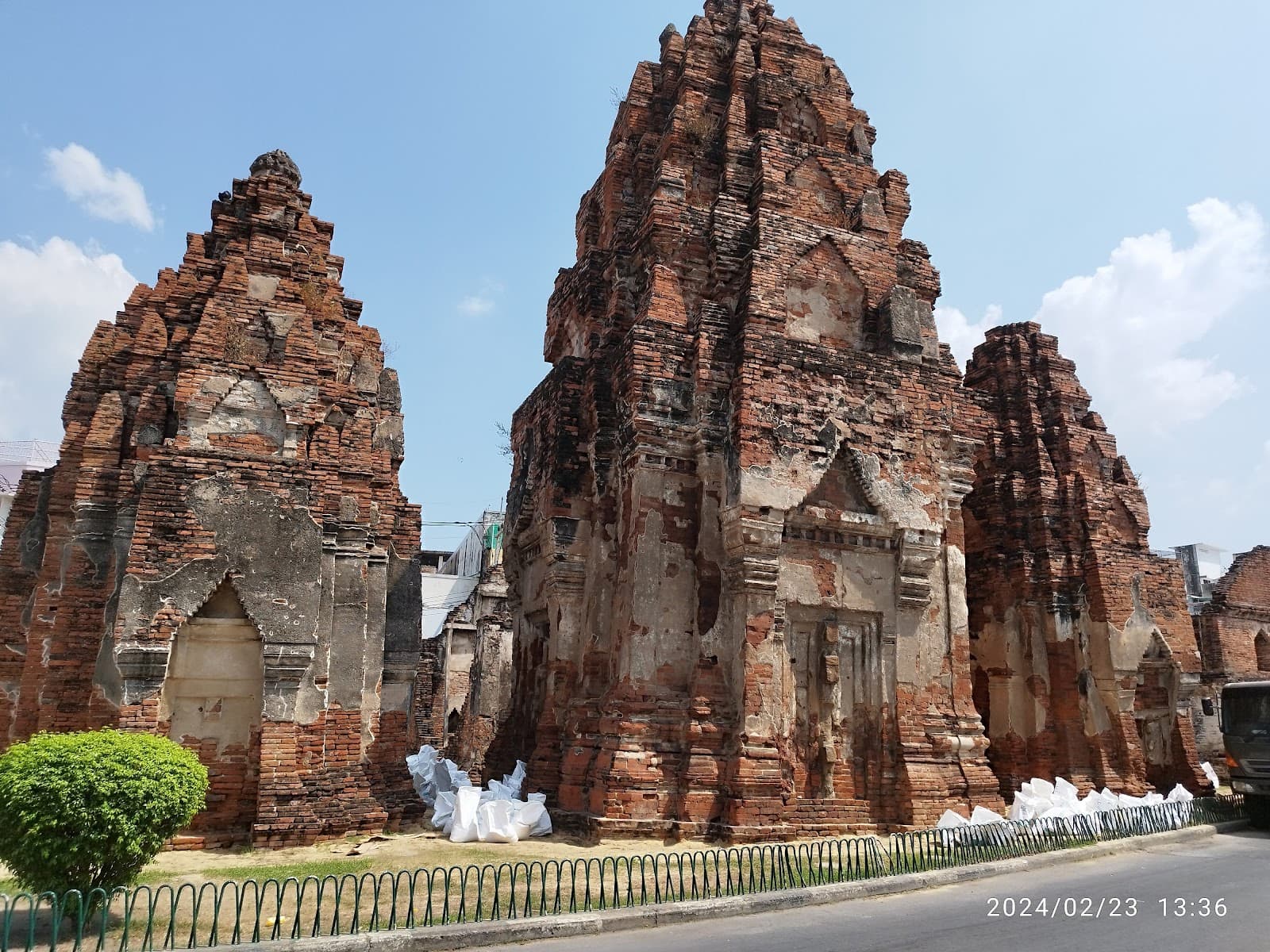
San Phra Kan Prang Khaek Lopburi
San Phra Kan, also known as Prang Khaek, located in Lopburi town, represents the oldest Khmer Hindu shrine in Central Thailand, dating to the 9th-10th centuries CE and constructed during the early Angkorian period, likely during the reign of Suryavarman II. The temple complex features three brick prangs (towers) arranged in a row, dedicated to the Hindu trinity of Brahma, Vishnu, and Shiva, demonstrating the syncretic nature of early Khmer religious practice. The complex spans approximately 0.5 hectares and features a rectangular laterite enclosure wall, though much has been lost to urban development. The three prangs, constructed primarily from brick with sandstone doorframes and decorative elements, rise to heights between 10 and 12 meters, with the central tower being slightly taller. The temple’s architectural style represents early Angkorian period, predating the more elaborate Baphuon and Angkor Wat styles, featuring simpler decorative elements and construction techniques. The complex includes evidence of stucco decoration, though most has been lost to weathering. Archaeological evidence indicates the temple served as an important early Khmer religious center in Central Thailand, establishing the foundation for later Khmer architectural developments in the region. The site has undergone restoration since the 1930s, involving structural stabilization and conservation. Today, San Phra Kan remains an important site for understanding early Khmer architecture in Thailand, attracting visitors interested in its historical significance as the oldest Angkorian temple in Central Thailand and its role in establishing Khmer cultural influence in the region. ([1][2])
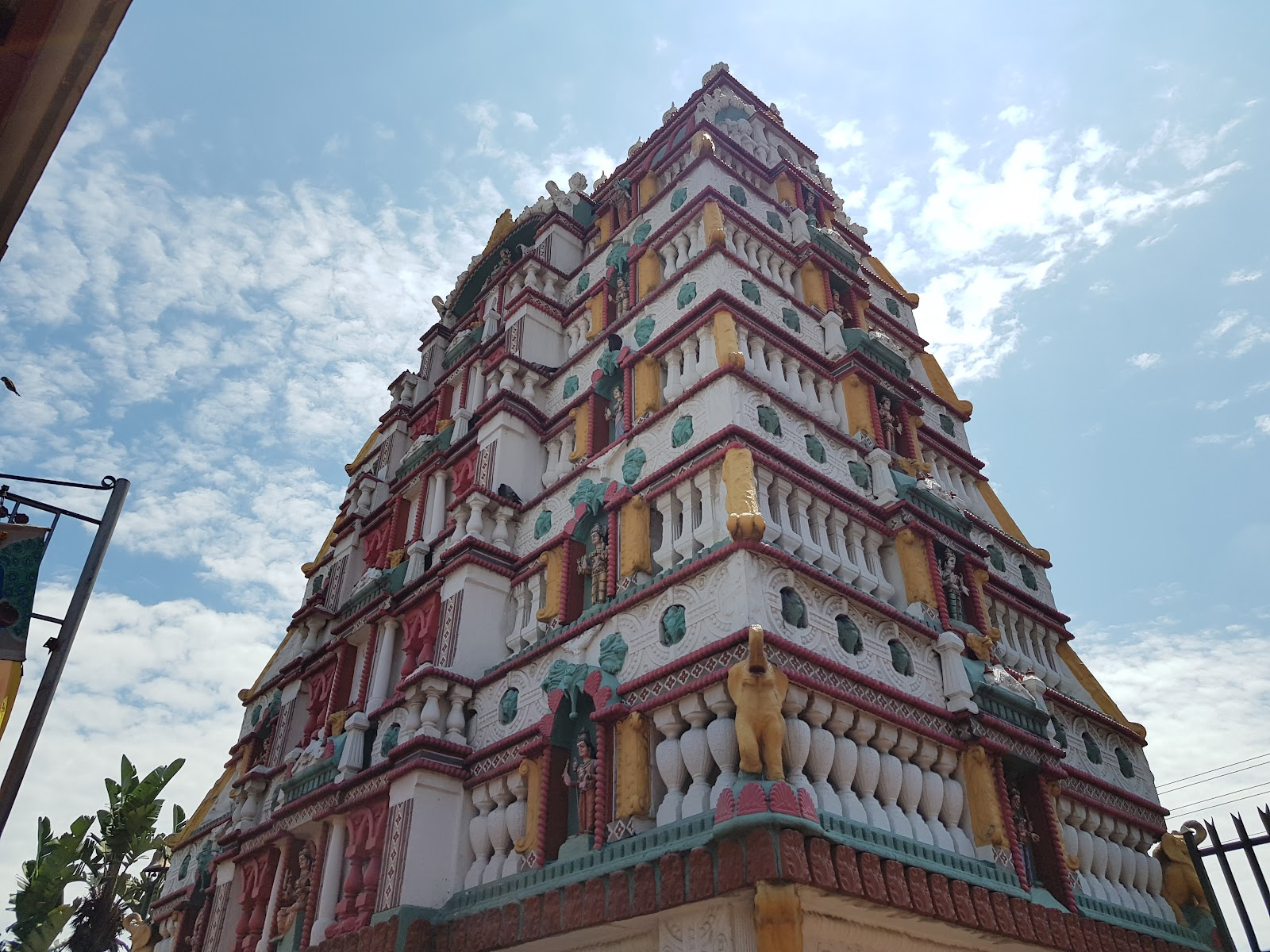
Tshwane India Charity & Cultural Centre (Mariamman Temple Pretoria)
The Tshwane India Charity & Cultural Centre, popularly known as the Mariamman Temple of Pretoria, is the city's oldest Hindu temple—completed in 1905 by indentured Indian traders who modelled its stucco gopuram, pillared mandapam, and circumambulatory corridor on South Indian Amman shrines while adapting to the semi-arid Highveld climate ([1][2]). The complex, restored in recent decades, now anchors a broader community campus with classrooms, a library, medical clinic, and charity hall. Devotees enter through an east-facing gopuram painted in vivid blues and reds, pass the flagstaff and Nandi pavilion, and offer coconuts, turmeric, and neem at the granite sanctum of goddess Mariamman—protector against epidemics—alongside shrines to Ganesha, Muruga, and Venkateswara. The trust operates Tamil language and Bharatanatyam classes, a senior lunch programme, Food for Life distribution, bursaries for township students, and interfaith dialogues. Annual highlights include Panguni Uttiram, Theemithi firewalking staged in an adjacent courtyard, and Deepavali charity drives that supply hampers across Tshwane.
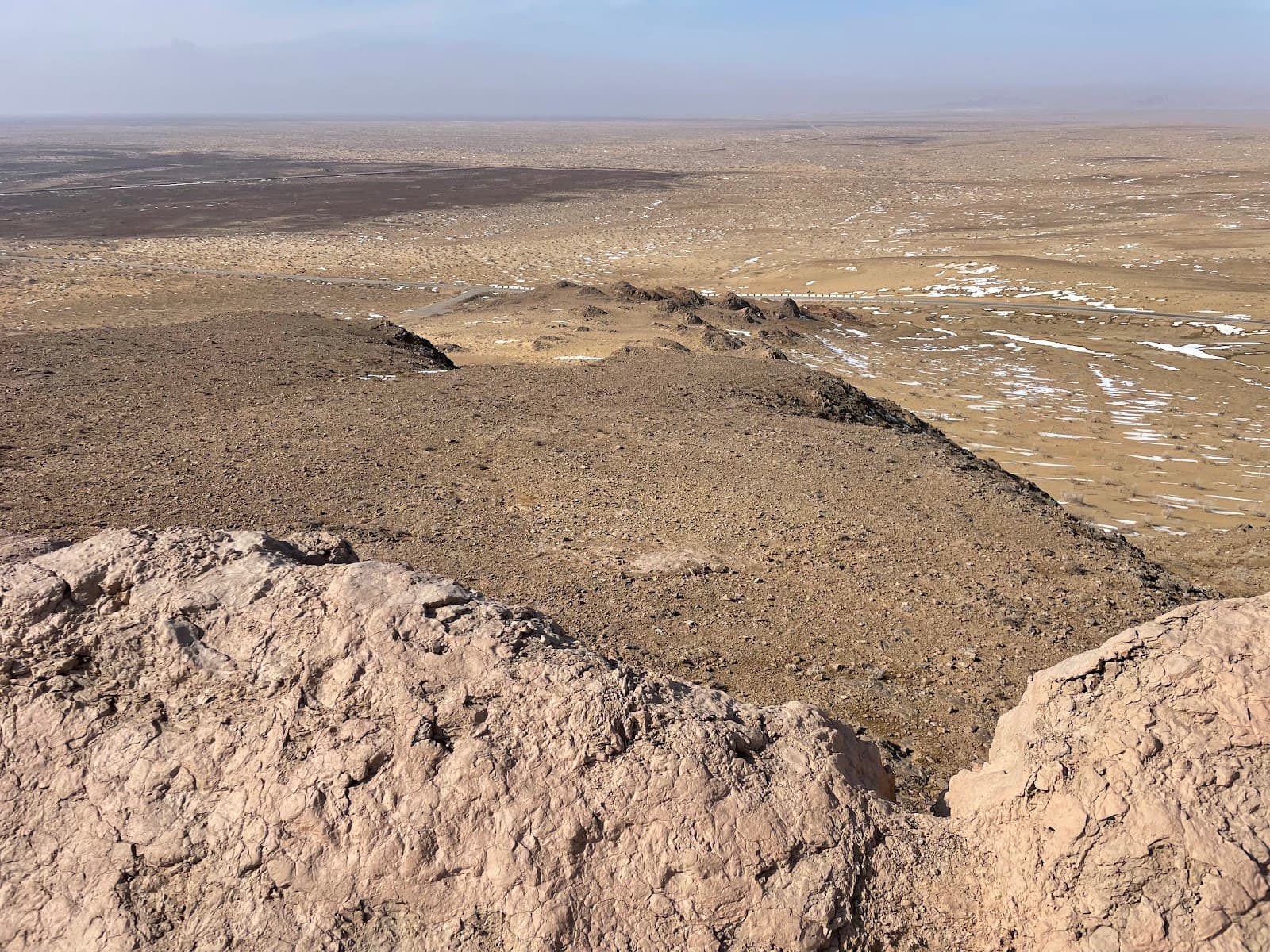
Ayaz-Kala Karakalpakstan Uzbekistan
Ayaz-Kala, a monumental complex in Karakalpakstan, Uzbekistan, stands as a profound testament to millennia of continuous cultural traditions, reflecting deep ancient Indian origins and its role in the broader tapestry of Indic civilization along the Silk Road [4]. This site, comprising three distinct fortresses, integrates Khorezmian military architecture with significant elements of Zoroastrian fire temple design and potential Indic religious influences [4]. Ayaz-Kala 1, dating to the 4th-3rd century BCE, is a rectangular fortress measuring 182 by 152 meters, perched atop a 100-meter-high hill, offering strategic views over the Kyzylkum Desert [5]. Its defensive system features double walls, approximately 10 meters high and 2.2 to 2.4 meters thick at the base, constructed from dried mud brick with packed earth infill [5]. A vaulted corridor, about 2 meters wide, runs between the inner and outer walls, providing a sheltered passageway for archers, who could fire through regularly spaced slits [5]. An upper open-air gallery further enhanced defensive capabilities [5]. The sole entrance, located in the southern wall, is a fortified gatehouse with a square enclosure, designed as a labyrinthine passage forcing attackers to turn 90 degrees, exposing them to fire from multiple angles [1]. Ayaz-Kala 2, an oval feudal fortress from the 6th-8th century CE, sits on a 40-meter-high conical hill and includes a palace with residential quarters, ceremonial halls supported by multiple columns, and a fire temple adorned with wall paintings [5]. Ayaz-Kala 3, a large parallelogram-shaped garrison from the 1st-2nd century CE, spans approximately 5 hectares with external walls 7.5 meters wide and circular watchtowers 8 meters in diameter, built with 'paksha' (cob) in lower sections and adobe blocks in upper parts [1] [5]. Archaeological excavations have revealed remnants of fire temples, providing evidence of Zoroastrian practices and their connections to Vedic fire worship traditions, with stone platforms and foundations suggesting a 'Garbhagriha'-like space for rituals, echoing layouts found in ancient Indian texts like the Agni Purana [4] [1]. The strategic elevated positioning of these structures aligns with Zoroastrian cosmological beliefs and principles akin to Vastu Shastra, emphasizing harmony with natural energies [4]. The site is currently in a state of partial preservation, with ongoing archaeological research and structural stabilization efforts under UNESCO oversight [4]. Visitor access is available daily from 9:00 AM to 5:00 PM, with an entry fee of UZS 25,000 for foreigners, and limited facilities including parking and restrooms [4]. The complex stands as a profound testament to India's enduring cultural legacy, demonstrating the deep historical roots and continuous traditions of architectural and spiritual exchange across ancient Asia [4]. The site is operationally ready for visitors, offering a tangible connection to ancient Indic cultural continuity [4].
Shiv Mandir Aizawl
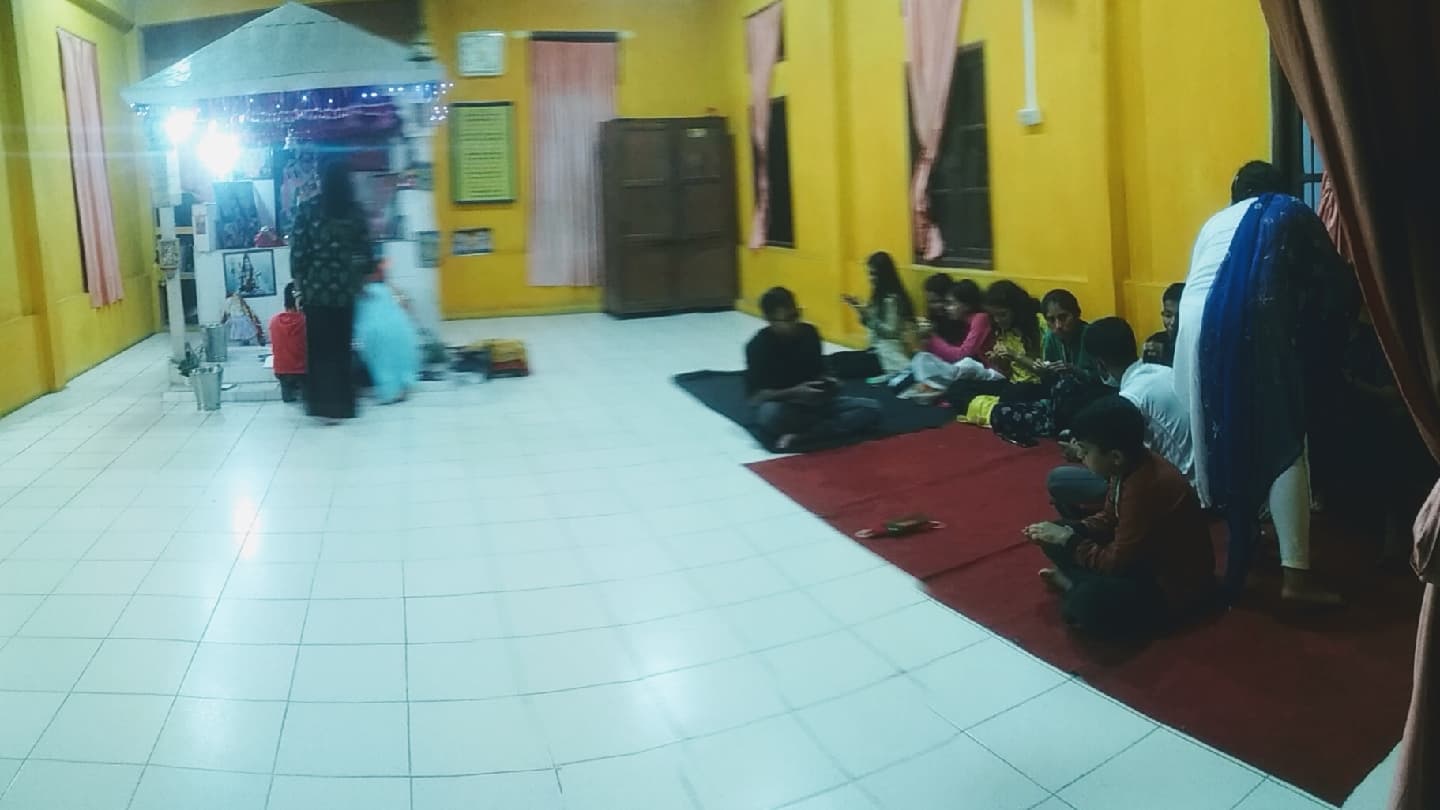
The Shiv Mandir, located in Zarkawt, Aizawl, Mizoram, stands as a significant testament to India's millennia-spanning cultural heritage, embodying the continuous tradition of Hindu worship and architectural expression in the northeastern region [2] [3]. Dedicated to Lord Shiva, this sacred Hindu temple, established by the local Hindu community in 1980 CE, integrates elements from diverse indigenous architectural styles, reflecting India's deep historical roots and enduring cultural practices [2] [4]. The temple's design draws upon the Nagara architecture style, characterized by its curvilinear shikhara (spire) and a raised platform, a hallmark of North Indian temple building traditions that have evolved over centuries [5]. Additionally, it incorporates features reminiscent of Indo-Kerala architecture, which often includes sloping roofs and a more restrained ornamentation, adapted to the local climate and materials . The influence of Mizo Vernacular architecture is also discernible, potentially in the use of local materials or structural adaptations that harmonize with the regional landscape and building practices . This eclectic blend creates a unique architectural identity, celebrating the adaptability and continuity of Indian temple design [2]. The Shiv Mandir features a modest yet spiritually resonant structure, with a central sanctum (garbhagriha) housing a revered Shivalinga, the aniconic representation of Lord Shiva [2] [4]. While specific dimensions are not widely documented, the temple's layout adheres to traditional Hindu temple planning principles, often guided by Vastu Shastra, which dictates spatial arrangements for optimal cosmic energy flow and structural stability . The exterior is adorned with intricate carvings and vibrant colors, reflecting the rich iconographic traditions of Hindu art [3] [4]. These decorative elements, though contemporary in execution, echo ancient motifs and narratives found in temples across India, reinforcing the site's connection to a long unbroken cultural continuum [2]. The construction primarily utilizes durable materials such as stone and brick, ensuring longevity and structural integrity, a practice consistent with traditional Indian temple building techniques [2]. The temple is actively maintained by a dedicated Temple Trust, ensuring its preservation and operational readiness for devotees [2]. Regular rituals and ceremonies are conducted by temple priests, maintaining a vibrant spiritual atmosphere [3]. The site serves as a vital gathering point for the local Hindu community, hosting various cultural events and festivals, most notably Mahashivratri, which draws numerous devotees [3] [4]. Its elevated position in Aizawl offers panoramic views of the surrounding hills, enhancing the serene and sacred ambiance for visitors and worshippers [4]. The temple is accessible to the public, facilitating a steady flow of visitors seeking spiritual solace and cultural engagement, thereby continuing its role as a living heritage site within India's diverse religious landscape [2]. The Shiv Mandir stands as a vibrant, operational center of Hindu faith, continuously serving its community and exemplifying the enduring legacy of Indian architectural and cultural traditions [3].
Vadakkunnathan Temple Thrissur
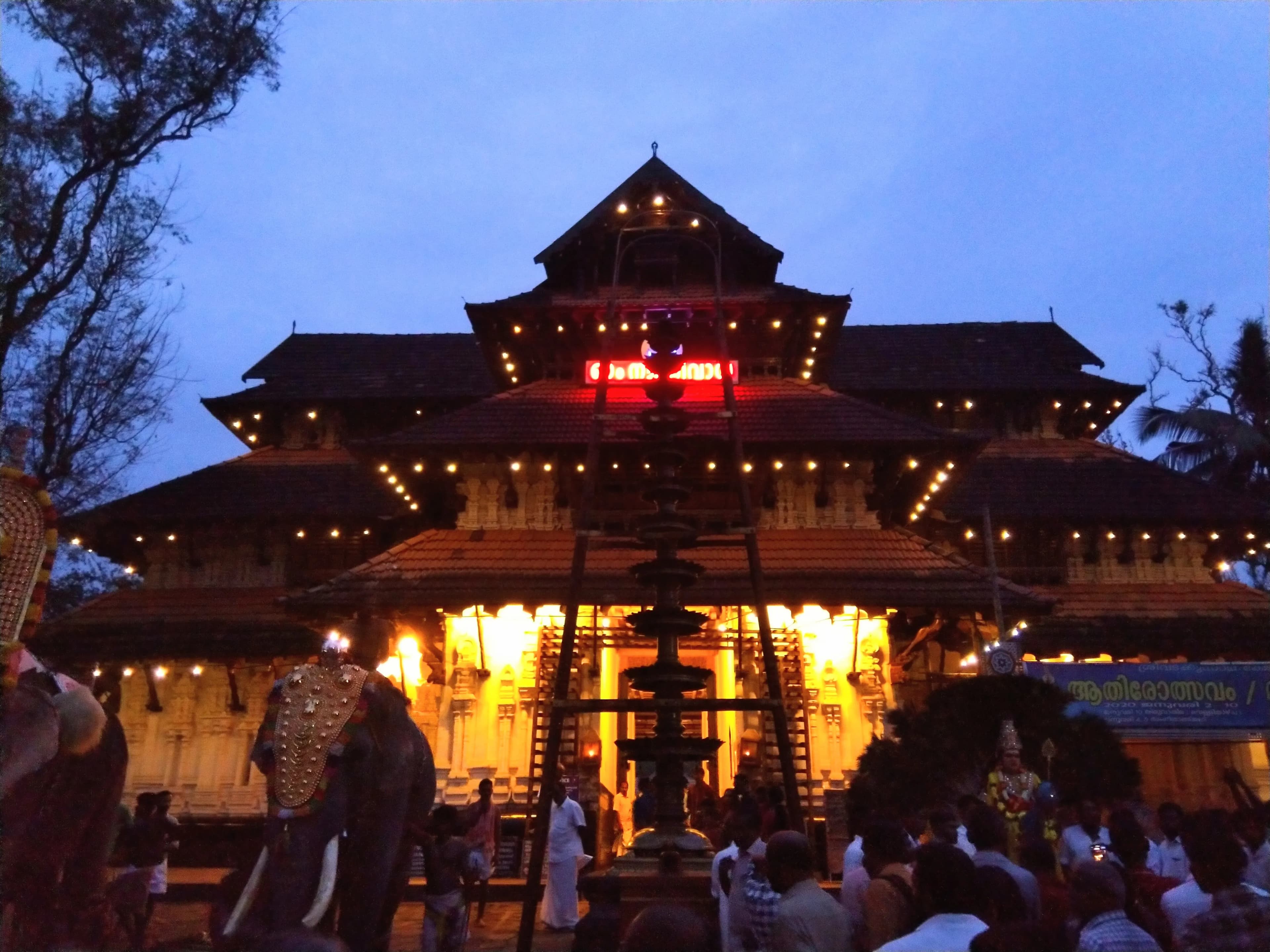
The colossal teakwood structure of the Vadakkunnathan Temple rose before me, an imposing presence against the vibrant Kerala sky. As a Chennai native steeped in the granite grandeur of Dravidian architecture, I felt a distinct shift in aesthetic as I entered the temple complex in Thrissur. This wasn't the soaring gopurams and mandapas I was accustomed to. This was Kerala architecture at its finest, a unique blend of Dravidian influences and regional sensibilities. The temple, dedicated to Lord Shiva, is a complex of three shrines – dedicated to Shiva (Vadakkunnathan), Parvati (Koothambalam), and Rama (Sree Rama). What immediately struck me was the circular sanctum sanctorum of the main shrine, a departure from the square garbhagrihas typical of Tamil Nadu temples. This circularity, I learned, is a hallmark of Kerala temple architecture, and the Vadakkunnathan Temple exemplifies it beautifully. The sloping, tiled roofs of the shrine, layered in concentric circles, created a visually captivating rhythm, culminating in a golden pinnacle. The walls of the sanctum were adorned with intricate wood carvings, depicting scenes from the epics, a testament to the skill of Kerala's artisans. Unlike the open prakarams of Tamil temples, the Vadakkunnathan Temple is enclosed within a high laterite wall, punctuated by four gopurams, though these are significantly smaller and less ornate than their Tamil counterparts. This enclosed layout created a sense of intimacy, almost as if the temple was holding its secrets close. Within the walls, the koothambalam, the traditional theatre for Koothu and Koodiyattam performances, stood out. Its massive, sloping roof, supported by thick wooden pillars, spoke of a rich tradition of performing arts intertwined with temple rituals. The polished wooden floor of the koothambalam seemed to hum with the echoes of countless performances, a palpable connection to the past. The temple's use of wood as the primary building material was another striking feature. While stone is the dominant material in Tamil Nadu temples, here, the warm, rich tones of wood created a different atmosphere, more organic and earthy. The intricate carvings on the wooden pillars and beams, depicting deities, mythical creatures, and floral motifs, were breathtaking in their detail. The natural weathering of the wood over centuries had lent it a patina that added to the temple's aura of antiquity. As I circumambulated the main shrine, I noticed the absence of elaborate sculptures on the outer walls, a stark contrast to the densely sculpted surfaces of Tamil temples. The emphasis here seemed to be on the overall form and the intricate woodwork, rather than on external ornamentation. This minimalist approach, I realized, contributed to the temple's serene and contemplative atmosphere. The murals within the temple, however, were a revelation. Though some were faded with age, the vibrant colours and dynamic compositions of the surviving murals, depicting scenes from the Mahabharata and Ramayana, were captivating. The Kerala style of mural painting, with its emphasis on bold lines and vibrant colours, was distinct from the Tanjore style I was familiar with. These murals offered a glimpse into the rich artistic traditions that flourished under the patronage of the temple. My visit to the Vadakkunnathan Temple was a journey of discovery, a chance to appreciate the nuances of South Indian temple architecture beyond the familiar Dravidian idiom. The temple's unique architectural features, its emphasis on wood, its enclosed layout, and its rich artistic traditions offered a fascinating counterpoint to the temple architecture of my homeland. It reinforced the idea that while the underlying principles of temple architecture may be shared across South India, regional variations and local sensibilities create unique expressions of devotion and artistry.
Prang Sam Yot Lopburi
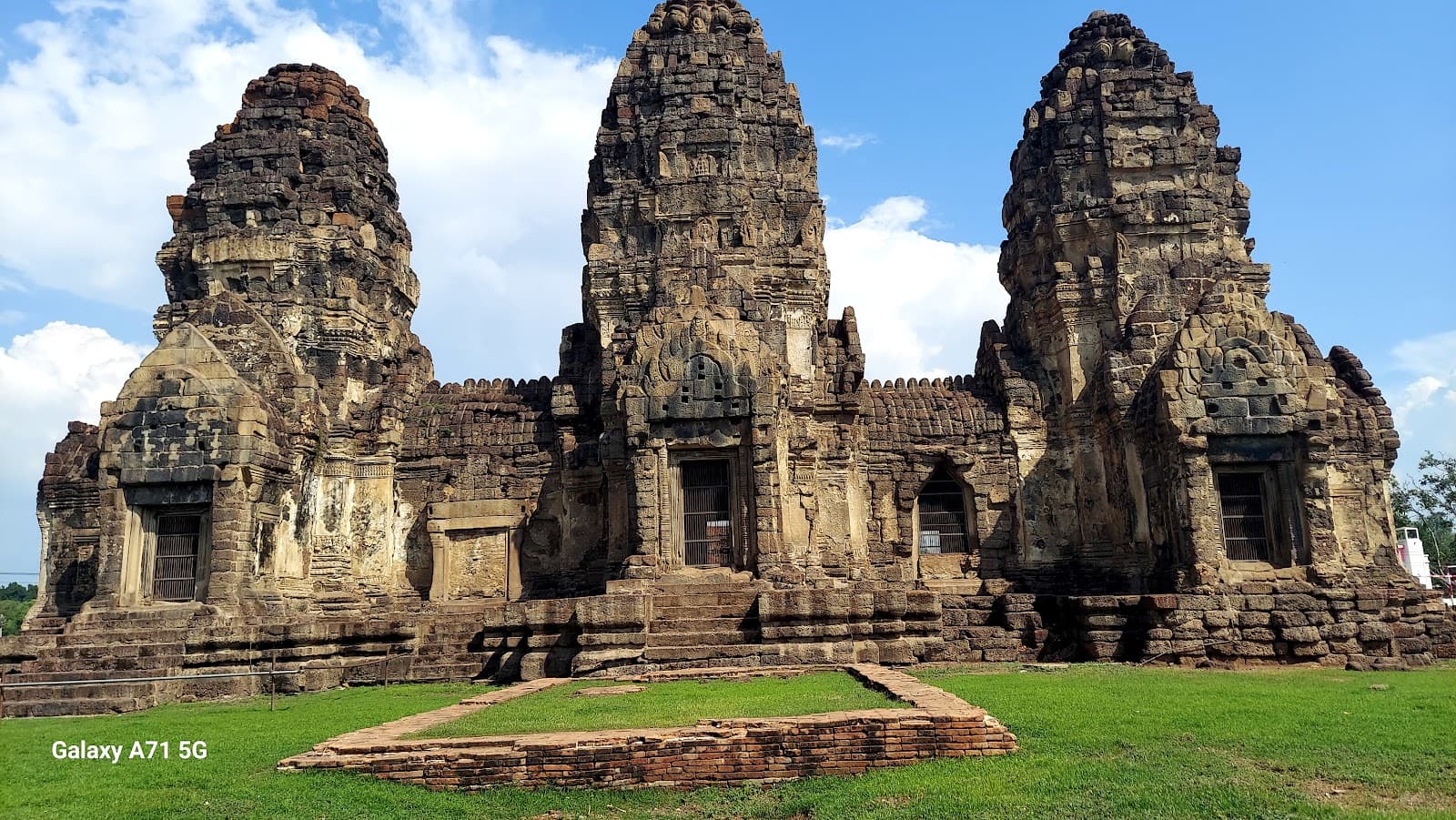
Prang Sam Yot, a revered monument in the Tha Hin Sub-district of Mueang Lopburi District, Lopburi Province, Thailand, stands as a profound testament to the enduring legacy of Indic architectural and cultural traditions that have continuously shaped Southeast Asia for millennia [2] [5]. This 13th-century Angkorian temple complex, originally dedicated to Mahayana Buddhism, embodies the sophisticated Nagara-Khmer architectural style, which itself draws deep inspiration from ancient Indian temple building practices [2] [3]. The site comprises three prominent prangs (towers) constructed primarily from laterite blocks, a common material in Khmer temples, meticulously adorned with a stucco exterior [5]. The use of laterite, a durable and locally abundant material, reflects an indigenous adaptation of grand architectural ambitions, while the stucco work, possibly influenced by Mon traditions, allowed for intricate decorative detailing [2] [5]. Each of the three prangs, arranged in a north-south alignment and connected by a narrow corridor, originally housed specific deities, reflecting a syncretic religious landscape [2] [5]. The central prang was dedicated to the Buddha, the north tower to Prajnaparamita, and the south tower to Avalokiteśvara, symbolizing a complex Mahayana Buddhist cosmology that resonated with earlier Hindu Trimurti concepts of Brahma, Vishnu, and Shiva [2] [5]. The architectural design features corbelled arches and vaults, a characteristic structural system in Khmer architecture that allowed for the construction of tall, imposing towers without true arches, a technique with parallels in early Indian temple construction [2]. Although much of the intricate carvings have eroded over time, traces of floral motifs and mythical figures can still be discerned on the stucco, hinting at the temple's former grandeur and the skilled craftsmanship of its builders [5]. These decorative elements, often depicting Buddhist iconography, are integral to the temple's aesthetic and spiritual narrative [2]. In the 17th century, during the reign of King Narai the Great of the Ayutthaya Kingdom, a prayer hall (Wihan) was added to the complex, further integrating the site into the evolving Theravada Buddhist landscape of the region [2] [5]. While this later addition, constructed with brick, now stands largely in ruins, its foundations provide valuable archaeological insights into the architectural techniques and religious practices of that period [5]. Prang Sam Yot is recognized as a registered historical site by the Fine Arts Department since August 2, 1936, underscoring its national significance [2]. Conservation efforts have focused on stabilizing the laterite and brick structures, mitigating the effects of weathering, and preserving the remaining stucco ornamentation [2] [4]. The site is currently open to visitors, offering accessibility to its main structures, though some areas may have uneven terrain [5]. Despite its relatively poor condition in some parts, ongoing maintenance ensures its preservation as a vital cultural landmark [2] [5]. The monument remains a site of active prayer and a significant tourist destination, celebrated for its historical depth and its unique resident population of crab-eating macaque monkeys, which, while adding to its charm, also present ongoing conservation challenges to the temple's exterior [2] [5]. The site stands as an operational heritage monument, welcoming visitors to experience a tangible link to the profound and continuous cultural exchange rooted in India's ancient past [5].
Cabo de Rama Fort Canacona
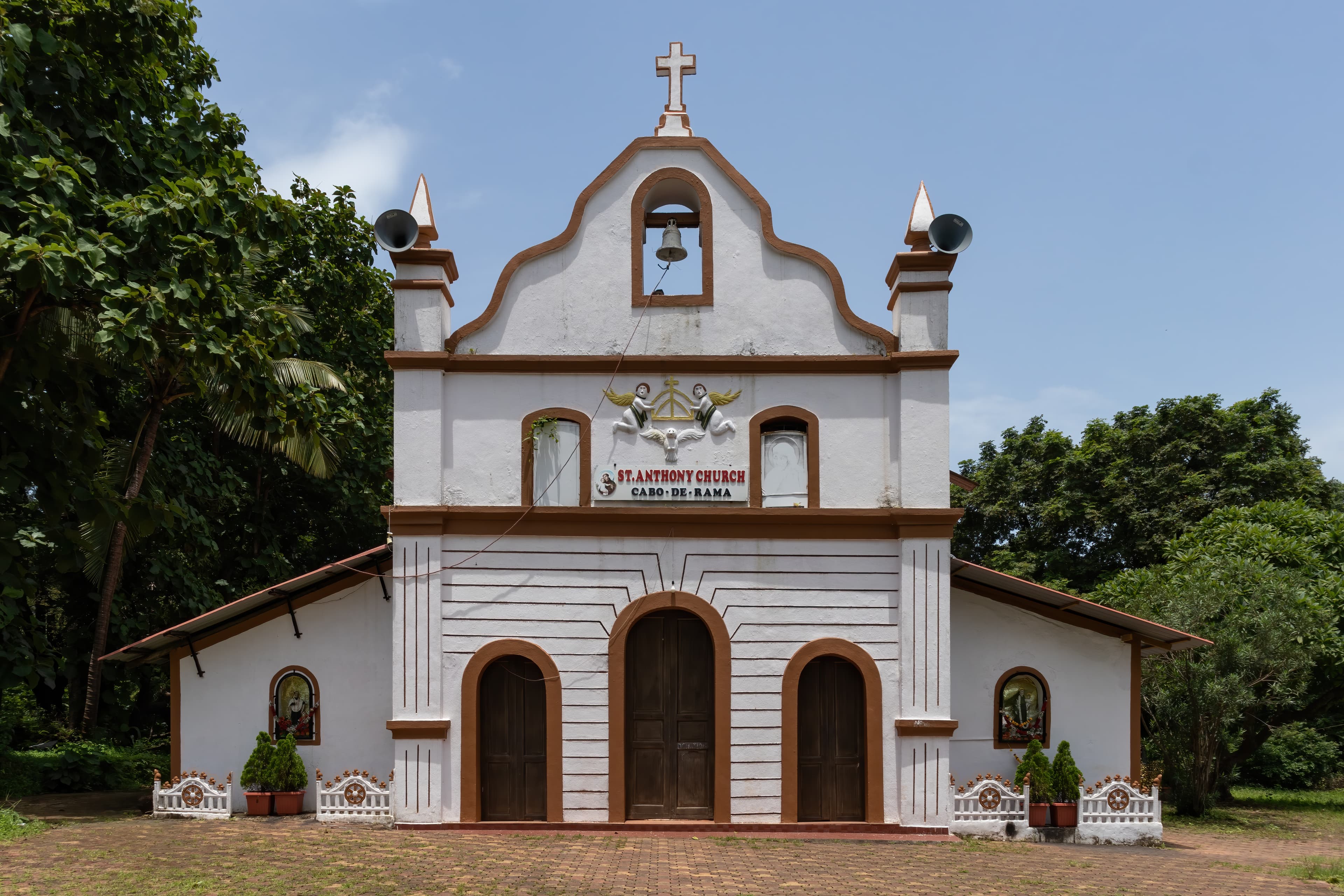
Nestled in Goa, Cabo de Rama Fort, erected around 1350 CE by the Sundara Pandya Dynasty ([1][2]), embodies a unique Indo-Portuguese architectural synthesis. This coastal fortification, unlike its more embellished inland counterparts, prioritizes strategic strength, evident in its commanding views of the Arabian Sea. The fort's construction employs laterite stone, basalt, and lime mortar ([3]), materials chosen for their durability in the coastal climate. Initially conceived with Indian architectural principles, the fort saw subsequent modifications under Portuguese rule. The remnants of barracks and a chapel ([4]) stand as testaments to this colonial influence, creating a compelling juxtaposition with the fort's earlier Indian origins. Local legends even suggest links to the epic Ramayana ([5]), adding another layer to its rich history. Such narratives often intertwine with ancient sites, reflecting the deep cultural roots embedded within the land. Strategically positioned bastions showcase sophisticated military architecture, crucial for coastal defense. Even the weathered church of Santo Antonio contributes to the site's multi-layered historical narrative. Cabo de Rama stands as a confluence of cultures and eras, seamlessly blending ancient Indian traditions with Portuguese colonialism to forge a unique architectural identity ([3][4]). This fusion exemplifies the diverse expressions of power and resilience that have shaped India's architectural landscape, leaving behind a legacy etched in stone and legend. This blend reflects the diverse expressions of power and resilience across India.
Sri Sundararaja Perumal Temple Klang Selangor
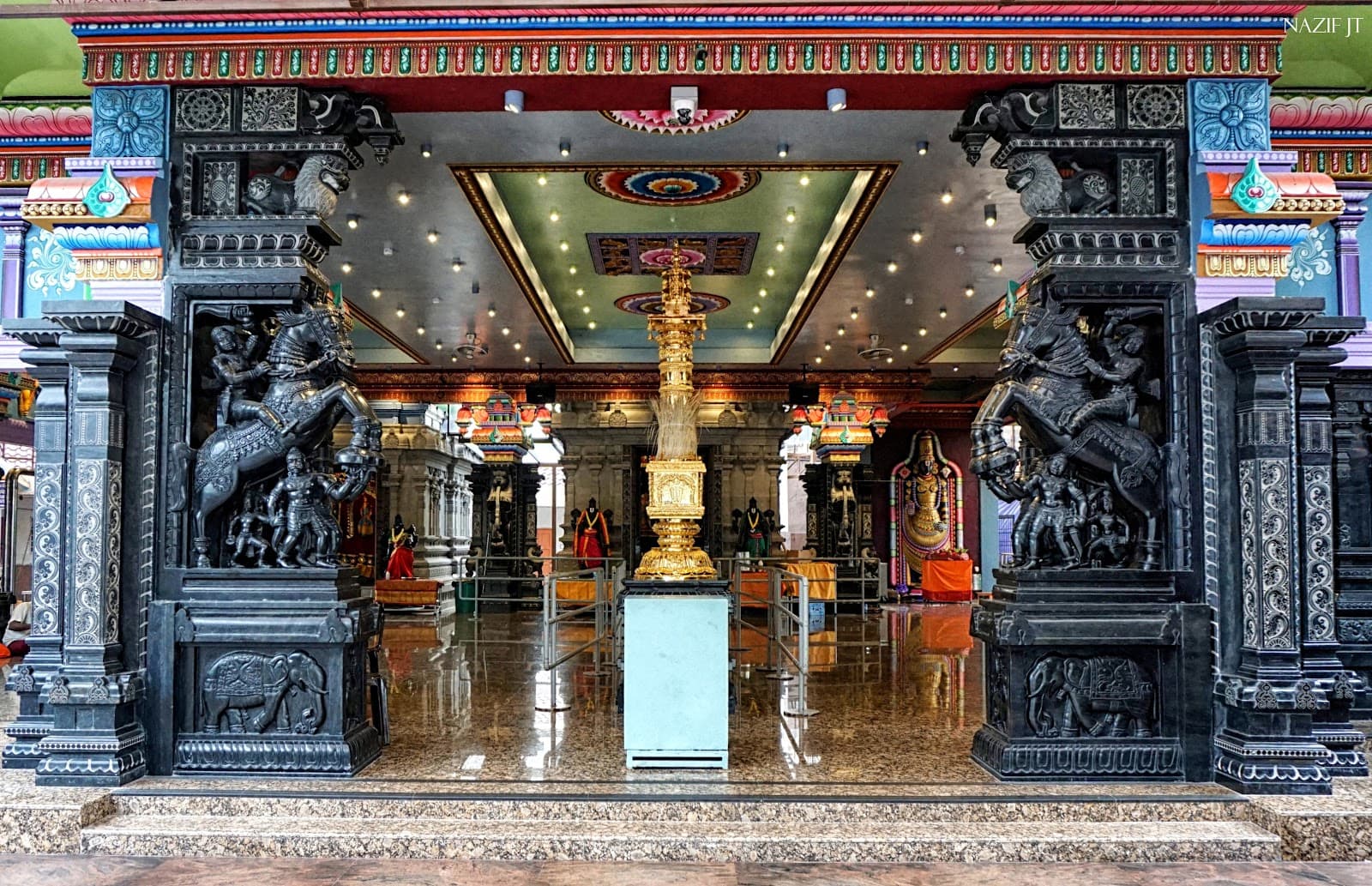
The Sri Sundararaja Perumal Temple, located in Klang, Selangor, Malaysia, stands as a profound testament to India's millennia-spanning cultural heritage and the enduring continuity of Indian civilization across geographical boundaries [1] [3]. Dedicated to Lord Vishnu in his form as Perumal, this sacred site serves as a vital center for Vaishnavite worship, often revered as the 'Thirupathi of South East Asia' [1] [2]. The temple exemplifies the indigenous Dravida architectural style, characterized by its intricate carvings and monumental structures, reflecting a continuous tradition of temple building that dates back thousands of years in the Indian subcontinent [1] . The entire structure is notably constructed from granite, a material chosen for its durability and majestic appearance, a hallmark of traditional South Indian temple construction techniques [1] [3]. The architectural ensemble is dominated by a towering gopuram, the entrance tower, which is richly adorned with a multitude of sculptures depicting Hindu deities, mythological narratives, and celestial beings [1] [3]. These detailed carvings are not merely decorative but serve as visual narratives of Hindu epics such as the Ramayana and Mahabharata, embodying the deep iconographic traditions of Indian art [5]. The main sanctum, known as the Perumal Sannathi, houses the principal deity, Lord Perumal, alongside his consort, Goddess Mahalakshmi [2] [3]. Surrounding this central complex are several other notable shrines, including those dedicated to Lord Shiva, Parvati, Ganesha, Murugan, Ayyappan, Lord Saneshwara (Saturn), and the Navagrahas (nine planets) [2] [3]. An additional Anjaneya Sannathi is situated adjacent to the central complex, with a Nagaraja Sannathi located at the corner outside the temple structure [2]. The spatial arrangement of these shrines within the temple complex follows traditional Agama Shastra principles, ensuring proper devotional flow and ritualistic practices [5]. The temple's current state reflects a significant reconstruction completed in 2015, which modernized facilities while meticulously preserving its traditional South Indian Dravidian architectural integrity [1] [2]. This reconstruction effort underscores a commitment to maintaining the site's heritage while accommodating its active role as a spiritual and cultural hub [1]. The temple is recognized as a National Heritage Site since 2012, acknowledging its profound cultural and historical significance [4]. It actively hosts daily rituals and ceremonies, attracting a continuous flow of devotees and visitors [1]. Major Hindu festivals such as Purataasi Month, Vaikunta Ekadasi, Panguni Uthiram, and Thiruvadirai are celebrated with grand ceremonies, music, and dance, drawing thousands and ensuring the vibrant continuity of Indian cultural practices [1] [5]. The temple is operationally ready, with established visiting hours and accessibility for all visitors, serving as a living monument to India's enduring spiritual and artistic legacy [1].
Brahma Temple Carambolim
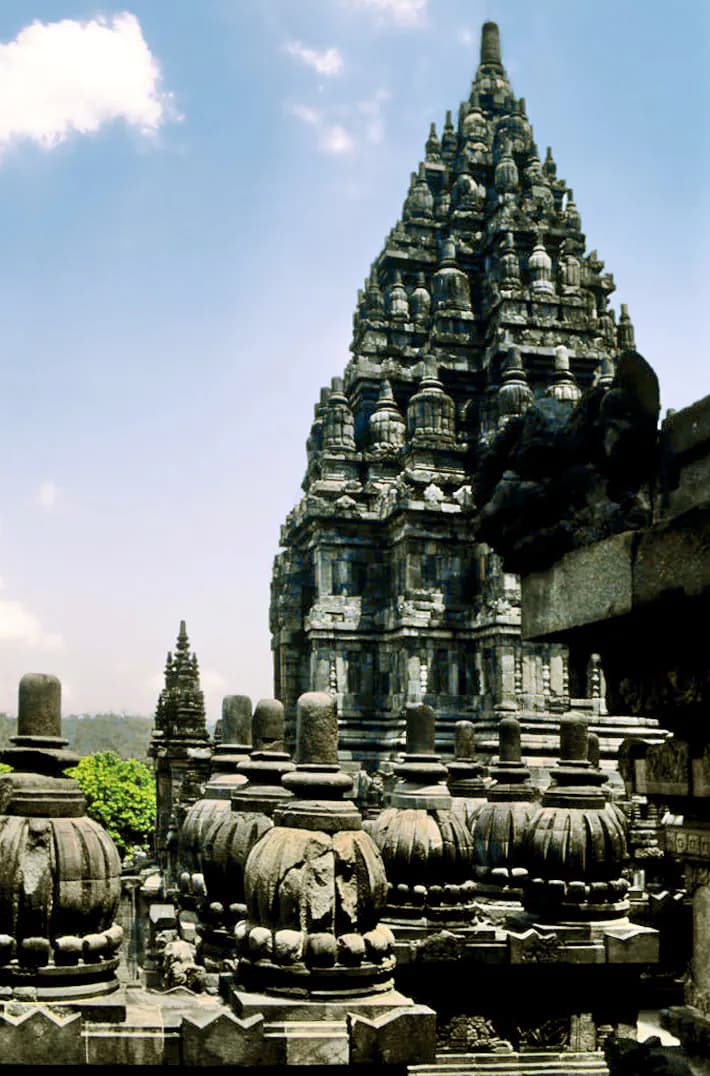
Amidst Goa's lush landscapes, the Brahma Temple in Carambolim whispers tales of the Kadamba Dynasty's artistic achievements ([1][2]). Forged in the 11th century (1050 CE) by the Kadamba Dynasty, this temple embodies Dravidian architectural influences in the region ([3]). Diverging from the towering gopurams typical of South India, the temple presents a more subtle aesthetic, harmonizing with its natural environment ([4]). Laterite stone constitutes the main building material, bestowing a warm, earthy hue to the structure ([1]). The pyramidal Shikhara (spire) atop the Garbhagriha (sanctum) echoes the Kadamba style prevalent from the 10th to 14th centuries ([2][3]). Within the Garbhagriha, the basalt idol of Lord Brahma radiates a serene presence ([5]). The relative absence of intricate carvings emphasizes simplicity and spiritual focus ([4]). Stone platforms and foundations exemplify the enduring craftsmanship of the Kadamba artisans ([1][2]). Architectural elements like the Mandapa (pillared hall) might have existed, though evidence requires further exploration of regional Kadamba temple layouts. The temple tank, mirroring the temple's form, amplifies the tranquil atmosphere ([5]). Temples dedicated to Brahma are relatively rare, making this site a unique example of religious patronage during the Kadamba period ([3]). During the Kadamba Period, temple architecture in Goa saw a unique blend of regional styles with Dravidian influences ([1][2]). The Brahma Temple, therefore, represents a crucial link to Goa's cultural past, echoing narratives of a bygone era ([3][5]). The temple's design, while understated, adheres to principles of sacred architecture, creating a space conducive to contemplation and reverence ([4]). This sacred space invites reflection and reverence, epitomizing the fusion of faith, architecture, and nature ([1][5]).

Angkor Wat Siem Reap Cambodia
Majestically situated near Siem Reap, Cambodia, Angkor Wat, erected in the 12th century CE under King Suryavarman II, is recognized as the world's largest religious structure ([1][2]). Originally a Hindu temple dedicated to Vishnu, the preserver in the Hindu Trimurti, it showcases the profound influence of Indian Hindu architectural and religious traditions in Southeast Asia ([1]). Encompassing over 162 hectares, and surrounded by a vast moat symbolizing the cosmic ocean, its design mirrors Mount Meru, the sacred center of the universe in Hindu cosmology ([2]). Intricate carvings adorning the walls, stretching over 800 meters, depict scenes from Hindu epics such as the Ramayana and Mahabharata, including the Samudra Manthan (Churning of the Ocean of Milk) and the Battle of Kurukshetra ([3]). These detailed depictions illustrate the transmission of Indian Hindu iconographic programs to Cambodia ([3]). Vastu Shastra principles, the ancient Indian science of architecture, guided the temple's layout, with a central quincunx of towers representing Mount Meru's peaks, enclosed by galleries and courtyards ([4]). These principles systematically transmitted from Indian temple complexes of the Pallava, Chola, and Chalukya dynasties ([4]). Granite and sandstone blocks, meticulously carved, form the structure, ingeniously fitted together without mortar, demonstrating advanced engineering techniques ([5]). Over 1,860 apsaras (celestial dancers) and numerous devatas (deities) grace the sandstone walls, reflecting a deep understanding of Indian Hindu iconography ([5]). Sanskrit inscriptions provide critical insights into the site's role in disseminating Indian religious texts and practices ([1][2]). This UNESCO World Heritage Site stands as a testament to the enduring impact of Indian civilization on Southeast Asian traditions ([1][2]). The temple's imposing Shikhara (spire) and elaborate Mandapa (pillared hall) reflect design elements found in numerous Indian temples, further solidifying the Indian influence on this architectural marvel.
Sharda Peeth Neelum Valley
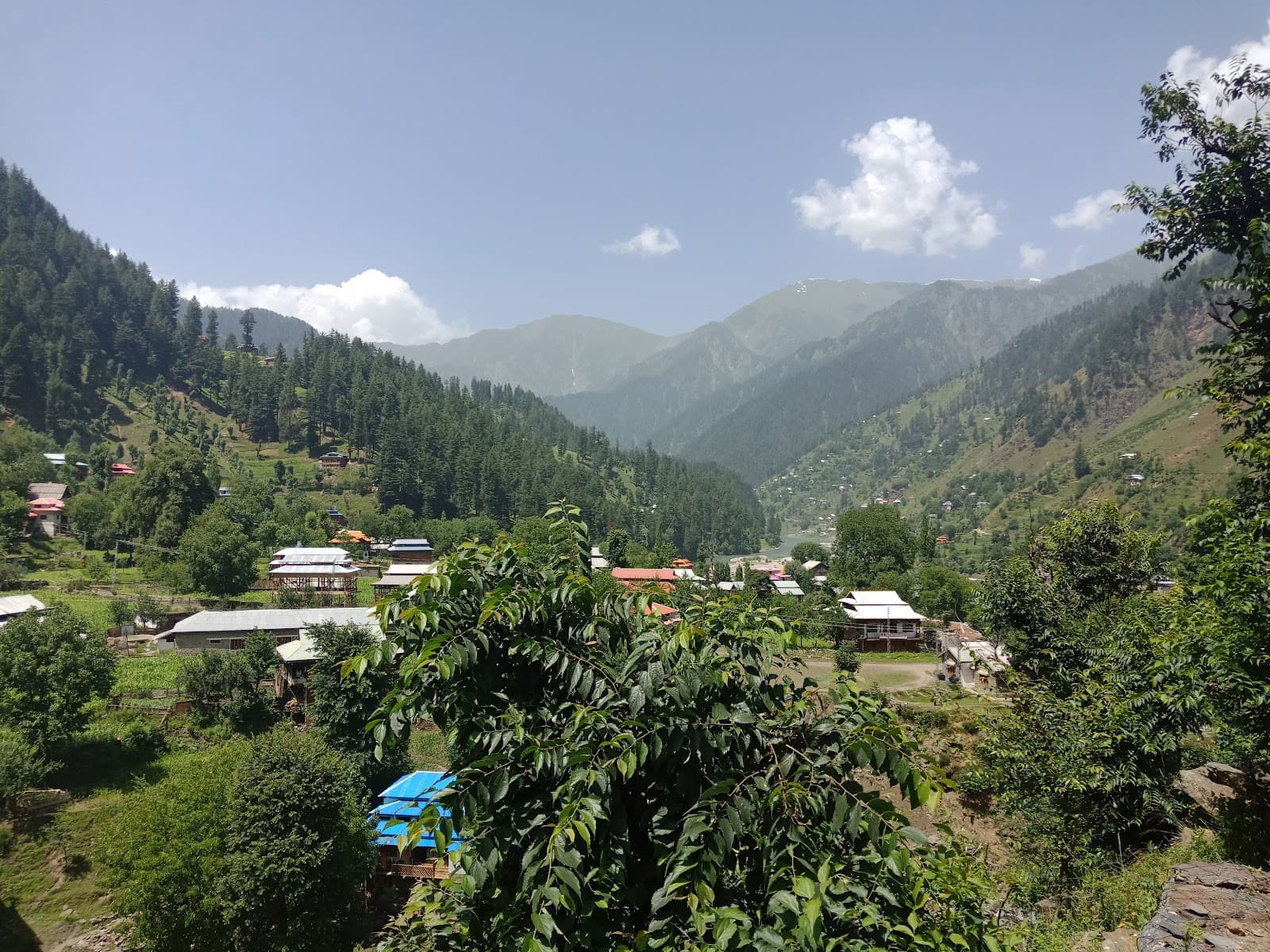
Sharda Peeth, located in the Neelum Valley of POK Jammu and Kashmir, represents one of the most significant ancient centers of learning and Hindu worship in the Indian subcontinent, dating to the 1st millennium CE and serving as a renowned university-temple complex dedicated to the goddess Saraswati, the deity of knowledge, learning, and the arts. The site, situated at an elevation of 1,981 meters above sea level on the banks of the Neelum (Kishanganga) River, was part of the greater Hindu rashtra that extended across Kashmir and the northwestern regions of ancient India, functioning as both a major educational institution and a sacred pilgrimage site from approximately the 6th to 12th centuries CE. The complex, now in ruins but with substantial structural remains, originally featured a massive stone temple dedicated to Saraswati, surrounded by extensive monastic and educational facilities that attracted scholars from across the Indian subcontinent, Central Asia, and beyond, making it one of the most important centers of Sanskrit learning and Hindu philosophy alongside Nalanda, Taxila, and Vikramashila. Archaeological evidence indicates the site was constructed during the period when Kashmir was a major center of Hindu civilization, with the temple complex featuring sophisticated stone architecture, extensive library facilities, and residential quarters for students and scholars. The site is also recognized as one of the 18 Maha Shakti Peethas, where according to Hindu mythology the right hand of the goddess Sati fell, adding to its religious significance. Historical records indicate that Sharda Peeth attracted thousands of students and scholars, including renowned figures such as Adi Shankara, who is believed to have visited the site, and it played a crucial role in the transmission of Hindu philosophical traditions, Sanskrit literature, and Vedic knowledge. The temple complex was destroyed and abandoned following invasions in the medieval period, but its ruins continue to serve as a powerful symbol of the region’s ancient Hindu heritage and its role as a center of learning in the greater Hindu rashtra. Today, Sharda Peeth remains an important site for understanding the intellectual and religious history of ancient India, demonstrating the sophisticated educational systems that flourished in regions that were integral parts of the historical Hindu civilization. ([1][2])
Quick Links
Plan Your Heritage Journey
Get personalized recommendations and detailed visitor guides