Has Inheritage Foundation supported you today?
Your contribution helps preserve India's ancient temples, languages, and cultural heritage. Every rupee makes a difference.
Secure payment • Instant 80G certificate

Srikalahasti Temple Srikalahasti
The air hung thick with incense and the murmur of chanting as I stepped through the towering gopuram of the Srikalahasti Temple. Sunlight, fractured by the intricate carvings, dappled the stone floor, creating an ethereal atmosphere. This wasn't just another temple on my UNESCO World Heritage journey across India; Srikalahasti held a different energy, a palpable sense of ancient power. Located in the Chittoor district of Andhra Pradesh, this temple, dedicated to Vayu, the wind god, is a testament to centuries of devotion and architectural brilliance. My eyes were immediately drawn upwards to the main Vimana, the Shikharam, soaring above the inner sanctum. This impressive structure, known as the Vayu Lingam, is not a sculpted idol but a natural rock formation believed to be a manifestation of Vayu. The flickering lamps surrounding it cast dancing shadows, adding to the mystique. The temple's Dravidian architecture is a marvel, with its intricate carvings depicting scenes from Hindu mythology. I spent a considerable amount of time studying the detailed friezes, each panel narrating a story, a testament to the skill of the artisans who crafted them centuries ago. The vibrant colours, though faded with time, still hinted at the temple's former glory. One of the most striking features of Srikalahasti is its massive, 100-pillar mandapam. The sheer scale of this hall is breathtaking. Each pillar is a work of art, adorned with elaborate carvings of deities, mythical creatures, and floral motifs. I could almost hear the echoes of ancient ceremonies and festivals that must have taken place within these hallowed walls. Walking through the mandapam, I felt a sense of connection to the generations of devotees who had walked this same path before me. The temple complex is vast, encompassing several smaller shrines dedicated to various deities. I explored each one, noting the unique architectural nuances and the distinct atmosphere they held. The shrine of Kalahasteeswara, a form of Shiva, is particularly noteworthy. The legend of the spider, the snake, and the elephant, each offering their devotion to Shiva in their own way, is deeply embedded in the temple's lore and adds another layer of spiritual significance to the site. Beyond the architectural grandeur, what truly captivated me at Srikalahasti was the palpable devotion of the pilgrims. From the elderly woman whispering prayers with closed eyes to the young family offering coconuts, the air was thick with faith. Witnessing this fervent devotion firsthand gave me a deeper understanding of the temple's significance, not just as a historical monument but as a living, breathing centre of spirituality. As I left the temple, the chanting still resonated in my ears. Srikalahasti is more than just a collection of stones and carvings; it's a testament to the enduring power of faith and the artistic brilliance of a bygone era. It's a place where history, mythology, and spirituality intertwine, creating an experience that stays with you long after you've left its sacred grounds. Of all the UNESCO sites I've visited in India, Srikalahasti holds a special place, a reminder of the rich tapestry of culture and belief that makes this country so unique. The wind, whispering through the temple towers, seemed to carry the echoes of centuries of prayers, a testament to the enduring spirit of this ancient sanctuary.
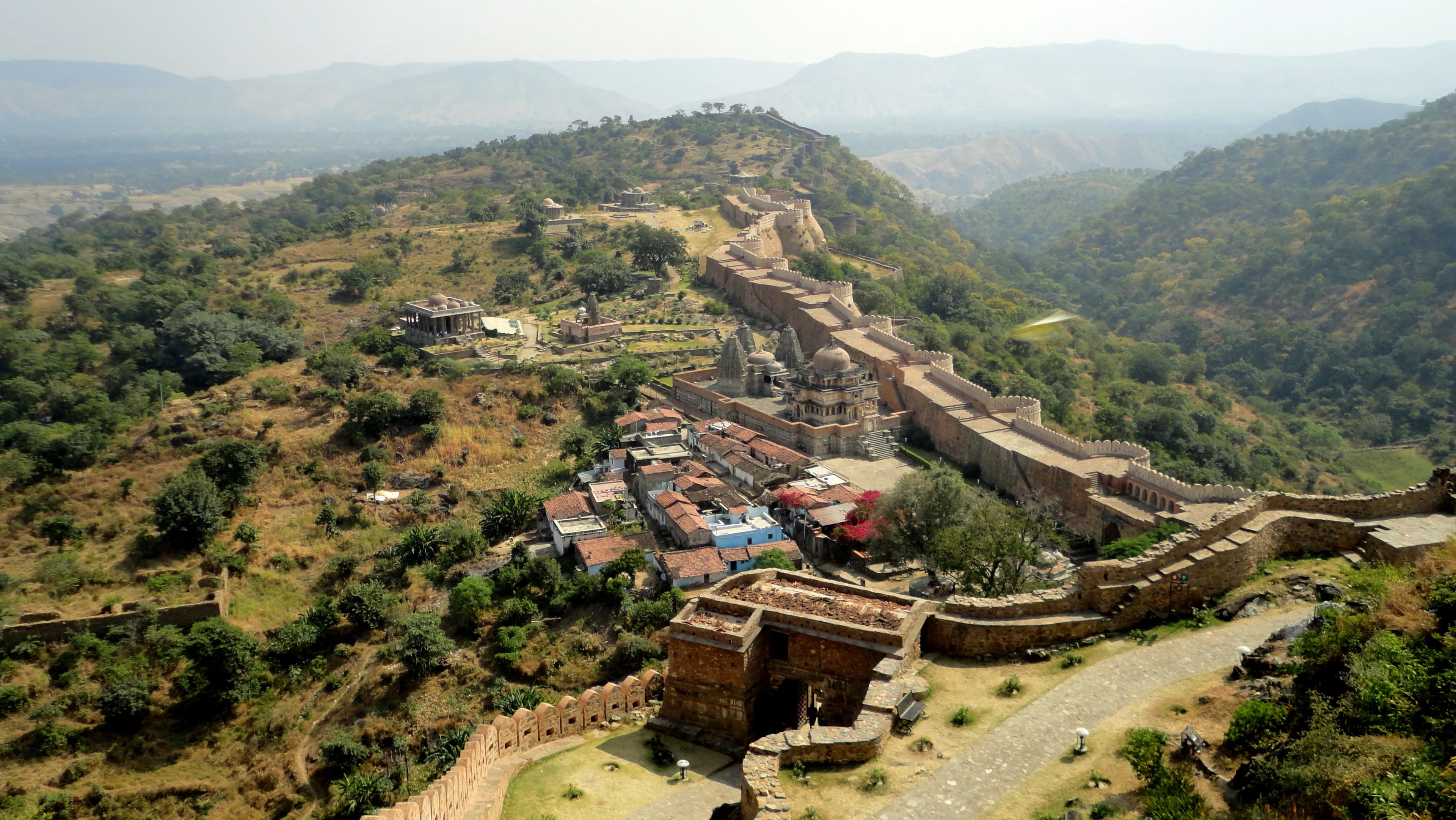
Kumbhalgarh Fort Rajsamand
The wind whipped around me, carrying whispers of history as I stood atop Kumbhalgarh Fort, the formidable sentinel of the Aravalli range. Stretching as far as the eye could see, the ramparts snaked across the mountaintops, a testament to Rana Kumbha's ambition and the architectural prowess of the 15th century. They say the wall is so thick that eight horses could ride abreast along it – and having walked a section myself, I can readily believe it. The sheer scale is breathtaking. It's no wonder they call it the "Great Wall of India." My visit began at the main gate, Aret Pol, a sturdy structure bearing the scars of numerous sieges. The intricate carvings, though worn by time and weather, still spoke of a rich artistic tradition. Passing through the gate felt like stepping back in centuries, leaving the modern world behind. The climb to the top was steep, the sun beating down mercilessly, but the anticipation spurred me on. Within the fort's embrace lies a complex network of palaces, temples, and gardens. The Badal Mahal, or Cloud Palace, perched at the highest point, offered panoramic views of the surrounding landscape. From this vantage point, I could appreciate the strategic brilliance of the fort’s location. The undulating hills and dense forests would have provided ample warning of approaching armies, making Kumbhalgarh a near-impregnable fortress. The architecture within the fort is a fascinating blend of Rajput and Mughal influences. The jharokhas, or overhanging balconies, are exquisitely carved, offering glimpses of the intricate latticework within. I noticed the recurring motif of the sun and the lotus flower, symbols of power and purity respectively. The palaces, while grand, also possess a certain understated elegance. The use of local stone and the integration of the natural landscape into the design create a sense of harmony and balance. One of the most striking features of Kumbhalgarh is the sheer number of temples within its walls. From the small, almost hidden shrines to the larger, more elaborate structures, they represent a vibrant spiritual life that thrived within the fort's protective embrace. The Neelkanth Mahadev Temple, with its massive Shiva lingam, is particularly impressive. The intricate carvings on the pillars and ceilings are a testament to the skill of the artisans who worked on them. Beyond the grand palaces and temples, I was equally captivated by the smaller details: the worn steps leading to hidden chambers, the remnants of frescoes on the walls, the strategically placed water tanks that sustained life within the fort during sieges. These details offer a glimpse into the daily lives of the people who once inhabited this magnificent structure – the royalty, the soldiers, the artisans, and the common folk. My visit to Kumbhalgarh wasn't just about admiring the architecture and the breathtaking views. It was about connecting with the past, feeling the weight of history, and imagining the lives lived within these ancient walls. The echoes of battles fought, of celebrations held, of empires risen and fallen, seemed to permeate the very stones of the fort. As I descended, leaving the fort behind, I carried with me not just photographs and memories, but a deeper understanding of Rajasthan's rich and complex heritage. Kumbhalgarh is more than just a fort; it's a living testament to human ingenuity, resilience, and the enduring power of the past.
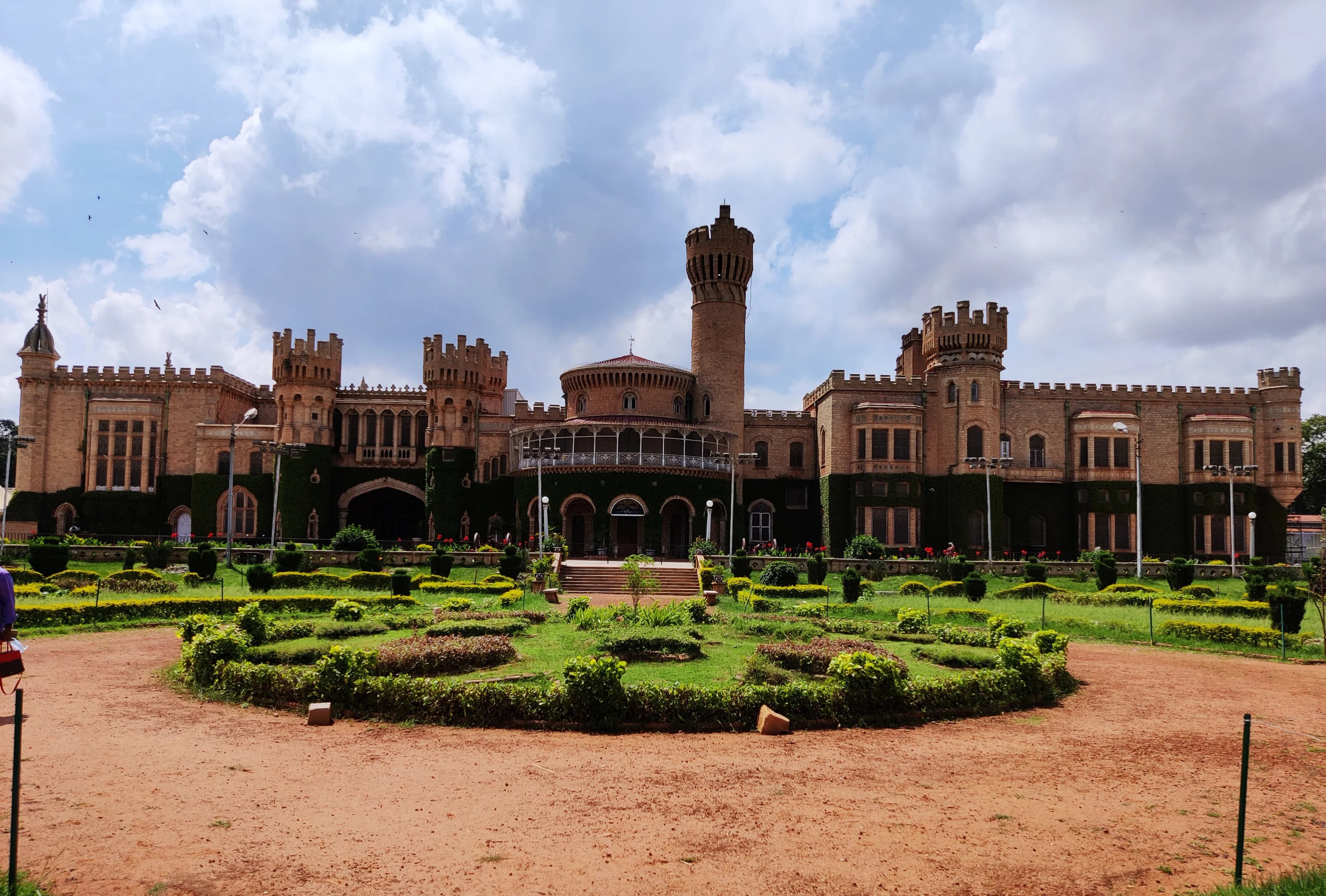
Bangalore Palace Bangalore
Envisioned by Chamarajendra Wadiyar X of the Mysore Royal Family, the Bangalore Palace, completed in 1873 CE, presents a Tudor Revival architectural style in the heart of Bengaluru ([1][2]). The palace echoes Windsor Castle's design, manifesting British Colonial influences on Indian princely architecture ([1][3]). Granite, wood, mortar, and steel constitute the primary materials employed in its construction, reflecting the era's engineering ([2]). Intricate carvings embellish the Durbar Hall, complemented by stained-glass windows illustrating scenes from Indian mythology and ornate chandeliers ([3][4]). These decorative elements, while European in style, served to enhance the grandeur of royal ceremonies and cultural events patronized by the Wodeyar dynasty ([1][2]). Sepia-toned photographs lining the palace walls offer glimpses into the lives and legacy of the Wodeyar rulers, preserving a visual record of their reign ([4]). Stone platforms and foundations exhibit a fusion of Victorian and Edwardian styles, evident in the arched corridors and wooden columns ([5]). Floral motifs and depictions of mythical creatures reflect the artisans' skill in blending Western architectural forms with traditional Indian aesthetics ([5]). Though the palace's design leans heavily on Western palatial architecture, its role as a center for royal patronage and cultural events firmly roots it in Indian heritage ([1][2]). The Mysore Royal Family used this palace for important functions, adapting it to local customs ([1][3]). While not directly linked to ancient Indian architectural treatises like the *Manasara Shilpa Shastra* or *Mayamata*, the Bangalore Palace represents a unique adaptation of Western architectural styles to suit the needs and tastes of an Indian royal family ([3]). It stands as a testament to the dynamic interaction between Indian and European cultures during the British Colonial period, preserving a vital piece of India's princely history ([1][2]).

Sarveshwar Mahadev Temple Kurukshetra
The late afternoon sun cast long shadows across the Kurukshetra battlefield, imbuing the landscape with a palpable sense of history. But it wasn't the echoes of ancient warfare that drew me here; it was the Sarveshwar Mahadev Temple, a structure whispering tales of devotion amidst the whispers of war. Standing before its weathered facade, I felt a tug, a connection to layers of history often obscured by the more prominent narratives of this land. The temple, dedicated to Lord Shiva, isn't imposing in the way of some grand Southern Indian temples. Instead, it exudes a quiet dignity, its Nagara style architecture a testament to the enduring influence of North Indian temple traditions. The shikhara, the curvilinear tower rising above the sanctum sanctorum, displays a classic beehive shape, though time and the elements have softened its edges, lending it a sense of venerable age. Unlike the ornate, multi-tiered shikharas of later temples, this one possesses a simpler elegance, its surface punctuated by vertical bands and miniature decorative motifs that hint at a more austere aesthetic. Stepping inside the dimly lit garbhagriha, the sanctum sanctorum, I was struck by the palpable sense of reverence. The air was thick with the scent of incense and the murmur of prayers. The lingam, the symbolic representation of Lord Shiva, stood at the center, bathed in the soft glow of oil lamps. The smooth, dark stone seemed to absorb the ambient light, radiating a quiet power. The walls within the sanctum were plain, devoid of elaborate carvings, further emphasizing the focus on the central deity. Circumambulating the sanctum, I observed the outer walls of the temple. Here, the narrative shifted. Panels of intricate carvings depicted scenes from Hindu mythology, predominantly stories related to Lord Shiva. The figures, though weathered, retained a remarkable dynamism. I was particularly captivated by a depiction of Shiva’s cosmic dance, Tandava, the energy of the scene seemingly frozen in stone. The sculptor had masterfully captured the fluidity of movement, the divine frenzy contained within the rigid confines of the stone panel. The temple’s location within the historically significant Kurukshetra adds another layer of intrigue. Local legends link the temple to the Mahabharata, claiming it was built by the Pandavas themselves after the great war. While historical evidence for this claim remains elusive, the connection underscores the temple's enduring presence in the cultural memory of the region. It stands as a silent witness to centuries of change, a testament to the enduring power of faith amidst the ebb and flow of empires and ideologies. As I walked around the temple complex, I noticed several smaller shrines dedicated to other deities within the Hindu pantheon. This syncretic element, common in many Indian temples, speaks to the evolving nature of religious practice, the absorption and assimilation of diverse beliefs over time. The presence of these smaller shrines creates a sense of community, a spiritual ecosystem where different deities coexist within a shared sacred space. Leaving the Sarveshwar Mahadev Temple, I carried with me more than just photographs and notes. I carried a sense of connection to the past, a deeper understanding of the intricate tapestry of Indian history and spirituality. The temple, in its quiet dignity, had spoken volumes, revealing glimpses into the artistic, religious, and cultural landscape of a bygone era. It stands as a reminder that even amidst the clamor of history, the whispers of faith continue to resonate, offering solace and meaning across the ages.

Stupa of Tepe Maranjan Kabul Afghanistan
Tepe Maranjan, located on a prominent hill overlooking Kabul, Afghanistan, preserves the remarkable remains of a 3rd to 4th century CE Buddhist stupa that represents one of the earliest and most significant Buddhist monuments in the Kabul region, demonstrating the early transmission of Indian Buddhist architectural and religious traditions to Afghanistan during the Kushan period, when Buddhism flourished across the region under the patronage of the Kushan Empire that ruled over vast territories from Central Asia to northern India. The stupa, constructed primarily from stone and stucco with extensive decorative elements, features a massive domed structure rising from a square base, following the classic Indian stupa form that was transmitted from India to Afghanistan, while the discovery of Buddhist relics and inscriptions at the site provides crucial evidence of the stupa's role as a major center of Buddhist devotion and the transmission of Indian Buddhist practices to Central Asia. The site's architectural design demonstrates direct influence from Indian Buddhist stupa architecture, particularly the early Buddhist traditions of northern India, with the overall form, decorative elements, and structural principles reflecting Indian Buddhist practices that were systematically transmitted to Afghanistan, while the site's prominent hilltop location emphasizes its spiritual significance and visibility as a landmark of Buddhist presence in the region. Archaeological excavations have revealed evidence of extensive Buddhist activity at the site, including the discovery of reliquaries, coins, and artifacts that demonstrate the stupa's importance as a center of Buddhist worship and pilgrimage, while the site's location near Kabul underscores its role as a major religious center in the region during the Kushan period. The stupa was likely constructed during the height of Kushan power in the 3rd to 4th centuries CE, when the Kushan Empire facilitated extensive cultural and religious exchange between India and Central Asia, creating conditions that allowed for the flourishing of Buddhism and the transmission of Indian architectural and artistic traditions to Afghanistan. The site continued to function as a Buddhist center through the 5th and 6th centuries CE before gradually declining following the decline of the Kushan Empire and the eventual spread of other religious traditions in the region, while the substantial architectural remains that survive provide crucial evidence of the site's original grandeur and importance. Today, Tepe Maranjan stands as an important archaeological site in Afghanistan, serving as a powerful testament to the country's ancient Buddhist heritage and its historical role as a center for the early transmission of Indian religious and architectural traditions, while ongoing archaeological research and preservation efforts continue to reveal new insights into the site's construction, religious practices, and cultural significance. ([1][2])

Shiv-Parvati Mandir Hnahthial
The air hung thick and humid, a stark contrast to the arid landscapes of Rajasthan I’m accustomed to. Here in Hnahthial, Mizoram, nestled amidst verdant hills, the Shiv-Parvati Mandir stands as a testament to the surprising religious diversity of this northeastern state. The temple, a relatively recent construction compared to the ancient forts and palaces I’ve explored back home, possesses a unique charm, blending traditional North Indian temple architecture with local Mizo influences. The first thing that struck me was the vibrant colours. Unlike the sandstone hues of Rajasthan’s temples, this one is painted in bright shades of orange, yellow, and red, creating a cheerful, almost festive atmosphere. The main structure rises in a series of tiered roofs, reminiscent of a classic Nagara style shikhara, yet the curvature is gentler, less pronounced. Instead of intricate carvings, the exterior walls are adorned with simpler, bolder motifs – geometric patterns and stylized floral designs that hint at Mizo artistic traditions. Ascending the steps to the main entrance, I noticed the absence of the elaborate gateways and towering gopurams common in South Indian temples. The entrance is relatively modest, framed by two pillars decorated with colourful depictions of deities. Stepping inside, I was greeted by the cool, dimly lit interior. The main sanctum houses the idols of Shiva and Parvati, adorned with vibrant clothing and garlands. The atmosphere was serene, filled with the murmur of prayers and the scent of incense. What truly captivated me was the seamless integration of local elements within the predominantly North Indian architectural framework. The use of locally sourced materials, like bamboo and wood, in the construction of the ancillary structures surrounding the main temple, is a clear example. I observed a small pavilion, crafted entirely from bamboo, serving as a resting place for devotees. The intricate weaving patterns on the bamboo walls showcased the remarkable craftsmanship of the local artisans. The temple complex also houses a small garden, a welcome splash of green amidst the concrete structures. Unlike the meticulously manicured gardens of Rajasthan’s palaces, this one felt more natural, with flowering plants and fruit trees growing in abundance. The gentle rustling of leaves in the breeze added to the tranquil atmosphere. Interacting with the local priest, I learned about the history of the temple. It was fascinating to hear how the local community, predominantly Christian, embraced the construction of this Hindu temple, reflecting the spirit of religious tolerance that permeates Mizoram. He explained how the temple serves as a focal point not just for religious ceremonies but also for social gatherings and cultural events, further strengthening the bonds within the community. As I walked around the temple complex, observing the devotees offering prayers, I couldn't help but draw parallels between the religious practices here and those back home. Despite the geographical distance and cultural differences, the underlying devotion and reverence remained the same. The ringing of bells, the chanting of mantras, the offering of flowers – these rituals transcended regional boundaries, reminding me of the unifying power of faith. Leaving the Shiv-Parvati Mandir, I carried with me a sense of quiet admiration. This temple, a unique blend of architectural styles and cultural influences, stands as a symbol of harmony and acceptance. It’s a testament to the fact that even in the most unexpected corners of India, one can find expressions of faith that resonate deeply with the human spirit. It’s a far cry from the majestic forts and palaces of Rajasthan, yet it holds its own unique charm, offering a glimpse into the rich tapestry of India’s cultural and religious landscape.

Canberra Sri Vishnu Shiva Mandir Mawson
Embodying a synthesis of tradition and modernity, Canberra Sri Vishnu Shiva Mandir Mawson, inaugurated in 1984, serves as a vibrant hub for the Hindu community in the Australian Capital Territory ([1]). Housed within a renovated 1970s office building, the temple uniquely integrates dual sanctums (Garbhagriha) dedicated to Lord Vishnu and Lord Shiva, reflecting the syncretic traditions within Hinduism ([1][2]). This adaptation demonstrates how ancient architectural principles can be reinterpreted in contemporary contexts. Within the central hall, devotees engage in daily rituals (darshan) observed during specific hours, with extended timings during major festivals such as Mahashivaratri and Deepavali ([1][5]). Sophisticated queue management systems, incorporating RFID technology, guide devotees to the respective Vaishnava and Shaiva shrines, ensuring a seamless experience ([1][5]). Further enhancing the spiritual environment, subtle applications of Vastu Shastra principles are evident in the temple's layout, fostering harmony and positive energy flow ([4]). Modern amenities are seamlessly integrated within the community center, including classrooms for cultural education, a kitchen for preparing annadhanam (food offerings), and dedicated meditation spaces ([1][3]). Advanced HVAC systems, managed by a building management system, ensure optimal environmental control, while digital signage provides bilingual schedules and emergency alerts ([2][3]). Granite and sandstone blocks, traditionally hand-carved, find expression through modern materials like reinforced concrete and brickwork, blending ancient aesthetics with contemporary construction techniques ([3]). Through collaborative partnerships with ACT SES, the temple reinforces its operational resilience, solidifying its role as a focal point for worship, cultural exchange, and community engagement ([1][3]). The temple's architecture, while modern, subtly echoes elements of the Nagara style found in North Indian temples, particularly in its vertical emphasis and symbolic ornamentation ([2]). The Canberra Sri Vishnu Shiva Mandir thus stands as a testament to the enduring relevance of Hindu traditions in a globalized world ([1]).
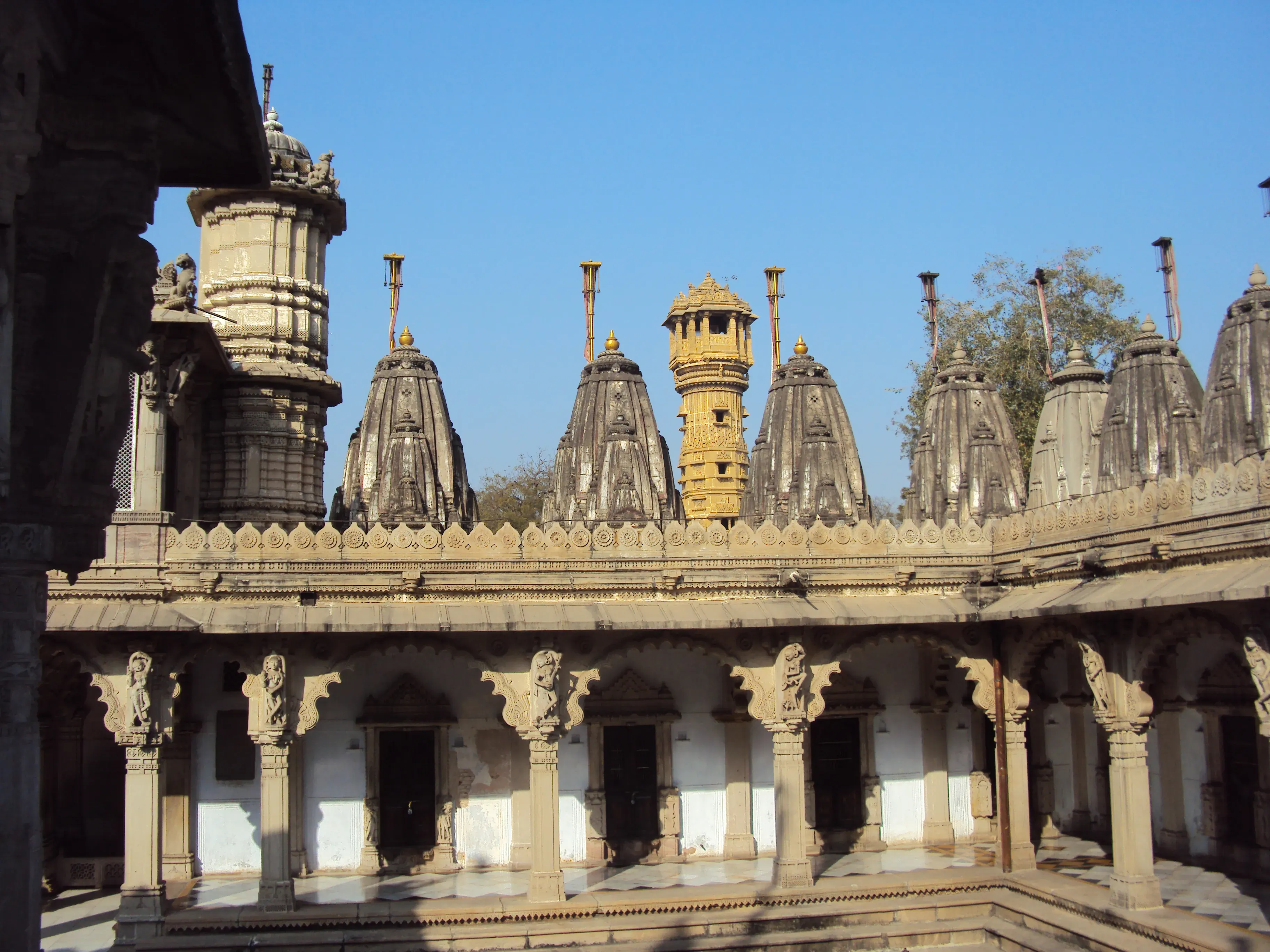
Hutheesing Jain Temple Ahmedabad
The midday sun cast long shadows across the courtyard, dappling the intricately carved marble of the Hutheesing Jain Temple. Stepping through the ornate torana, I felt a palpable shift, a sense of entering a sacred space meticulously crafted for contemplation and reverence. Located in the heart of bustling Ahmedabad, this 19th-century marvel stands as a testament to the enduring artistry of Jain craftsmanship and the devotion of its patrons. My lens, accustomed to the sandstone hues of Madhya Pradesh's ancient monuments, was immediately captivated by the sheer whiteness of the marble. It glowed, almost ethereal, against the azure sky. The main temple, dedicated to Dharmanatha, the fifteenth Jain Tirthankara, is a symphony in stone. Fifty-two intricately carved shrines, each housing a Tirthankara image, surround the central sanctum. The sheer density of the carvings is breathtaking. Floral motifs, celestial beings, and intricate geometric patterns intertwine, creating a visual tapestry that demands close inspection. I spent hours moving from shrine to shrine, my camera attempting to capture the nuances of each individual sculpture, the delicate expressions on the faces of the deities, the flow of the drapery, the minute details that spoke volumes about the skill of the artisans. The temple’s architecture follows the Māru-Gurjara style, a distinctive blend of architectural elements that I found particularly fascinating. The domed ceilings, the ornate pillars, the intricate brackets supporting the balconies – each element contributed to a sense of grandeur and harmony. The play of light and shadow within the temple added another layer of visual interest. As the sun shifted, the carvings seemed to come alive, revealing new details and textures. I found myself constantly repositioning, seeking the perfect angle to capture the interplay of light and form. Beyond the main temple, the courtyard itself is a marvel. The paved floor, polished smooth by centuries of footsteps, reflects the surrounding structures, creating a sense of spaciousness. Smaller shrines and pavilions dot the courtyard, each a miniature masterpiece of carving and design. I was particularly drawn to the Manastambha, a freestanding pillar adorned with intricate carvings, standing tall in the center of the courtyard. It served as a powerful visual reminder of the Jain principles of non-violence and universal compassion. One aspect that struck me was the palpable sense of peace that permeated the temple complex. Despite its location in a busy city, the Hutheesing Jain Temple felt like an oasis of tranquility. The hushed whispers of devotees, the gentle clinking of bells, the rhythmic chanting of prayers – all contributed to an atmosphere of serenity and reverence. It was a stark contrast to the cacophony of the streets outside. As a heritage photographer, I’ve visited countless temples across India, but the Hutheesing Jain Temple holds a special place in my memory. It’s not just the architectural brilliance or the sheer artistry of the carvings, but the palpable sense of devotion and the peaceful atmosphere that truly sets it apart. It’s a place where spirituality and art intertwine, creating an experience that is both visually stunning and deeply moving. My photographs, I hope, will serve as a testament to the enduring beauty and spiritual significance of this remarkable temple, allowing others to glimpse the magic I witnessed within its marble walls.
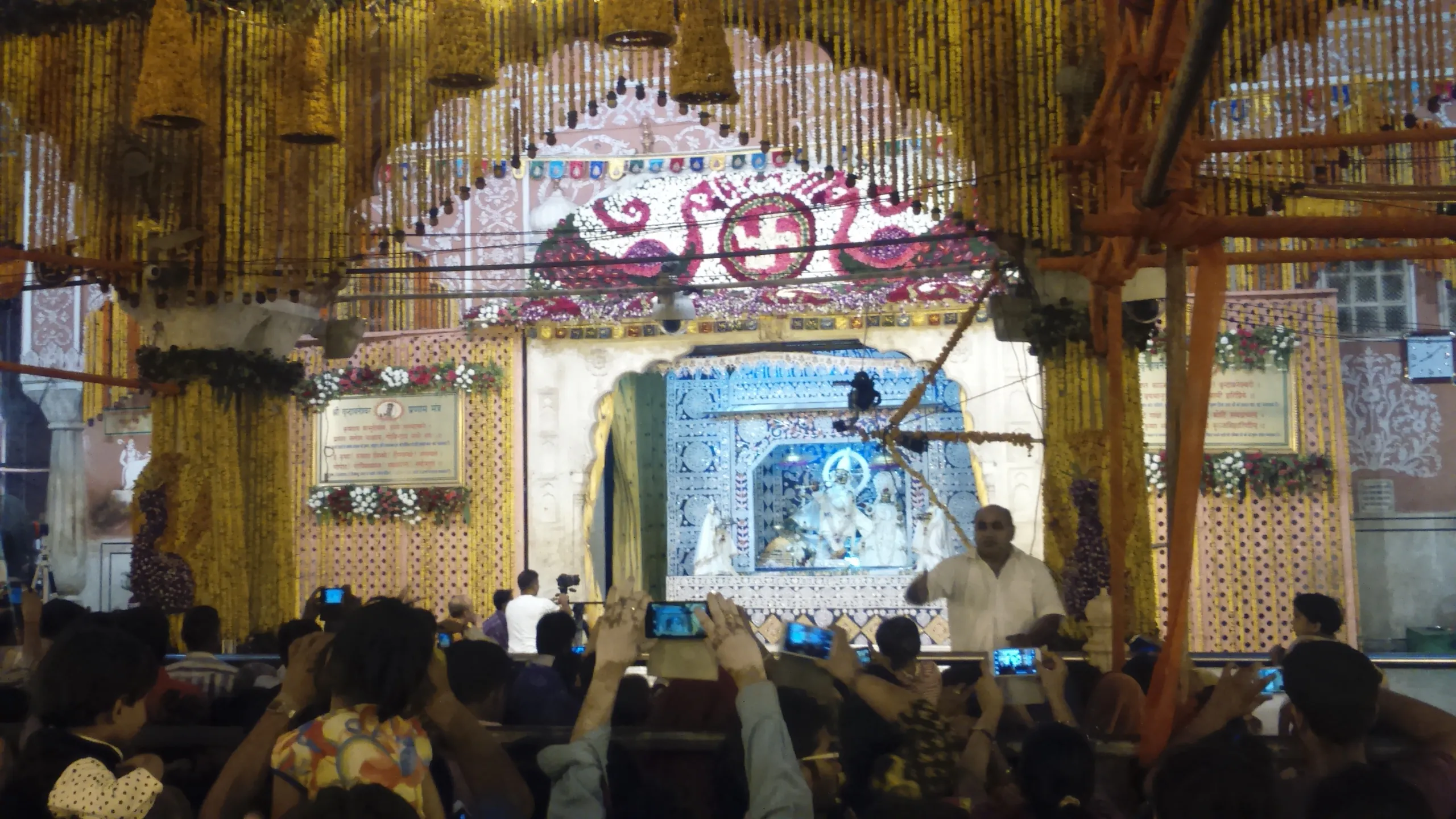
Govind Dev Ji Temple Jaipur
The Govind Dev Ji Temple in Jaipur isn't just a place of worship; it's a living testament to a unique blend of architectural styles that captivated me from the moment I stepped within its precincts. Having spent years studying the Dravidian architecture of South Indian temples, I was eager to experience the distinct architectural vocabulary of this North Indian shrine, and I wasn't disappointed. Located within the City Palace complex, the temple almost feels like a private sanctuary for the royal family, a feeling amplified by its relatively modest exterior compared to the grandeur of the surrounding palace buildings. The first thing that struck me was the absence of the towering gopurams that define South Indian temple gateways. Instead, the entrance is marked by a series of chhatris, elevated, dome-shaped pavilions supported by ornate pillars. These chhatris, with their delicate carvings and graceful curves, speak to the Rajput influence, a stark contrast to the pyramidal vimanas of the South. The use of red sandstone, a hallmark of Rajasthani architecture, lends the temple a warm, earthy hue, quite different from the granite and sandstone palettes I'm accustomed to seeing in Tamil Nadu. As I moved through the courtyard, I observed the seven-storied structure housing the main shrine. While not a gopuram in the traditional sense, it does serve a similar function, drawing the eye upwards towards the heavens. The multiple stories, each adorned with arched openings and intricate jali work, create a sense of verticality and lightness, a departure from the solid mass of South Indian temple towers. The jalis, or perforated stone screens, not only serve as decorative elements but also allow for natural ventilation, a practical consideration in the arid climate of Rajasthan. The main sanctum, where the image of Govind Dev Ji (Krishna) resides, is a relatively simple chamber, its focus squarely on the deity. The absence of elaborate sculptures on the walls within the sanctum surprised me. South Indian temples often feature intricate carvings depicting mythological scenes and deities on every available surface. Here, the emphasis is on the devotional experience, a direct connection with the divine, unmediated by elaborate ornamentation. The silver-plated doors of the sanctum, however, are exquisitely crafted, showcasing the artistry of the region's metalworkers. The courtyard itself is a marvel of spatial planning. The open space allows for the free flow of devotees, while the surrounding colonnades provide shade and a sense of enclosure. The pillars supporting these colonnades are slender and elegant, adorned with intricate floral motifs and geometric patterns. I noticed a distinct Mughal influence in some of these decorative elements, a testament to the cultural exchange that shaped the region's artistic traditions. The use of marble for flooring, another Mughal influence, adds a touch of opulence to the space. One of the most captivating aspects of the Govind Dev Ji Temple is its integration with the City Palace. The temple's location within the palace complex blurs the lines between the sacred and the secular, reflecting the close relationship between the royal family and the deity. This integration is a departure from the South Indian tradition where temples, while often patronized by royalty, maintain a distinct identity as separate entities. My visit to the Govind Dev Ji Temple was a fascinating cross-cultural experience. It highlighted the diversity of India's architectural heritage and underscored the power of architecture to reflect regional identities and religious beliefs. While the temple's architectural vocabulary differed significantly from the Dravidian style I'm familiar with, the underlying spirit of devotion and the artistic skill evident in its construction resonated deeply with my understanding of sacred architecture.
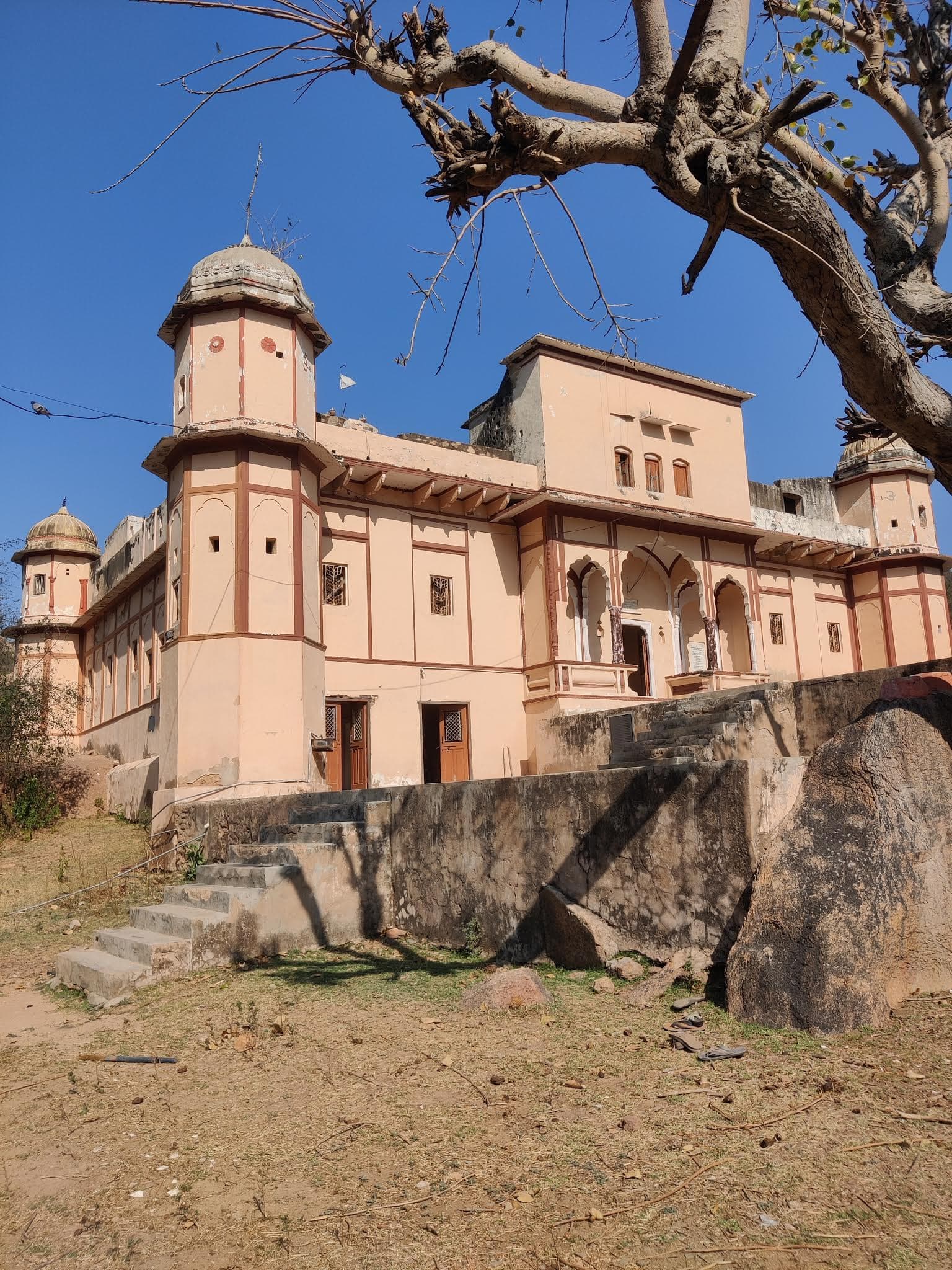
Dhosi Hill Temples Narnaul
The arid landscape of Narnaul, Haryana, harbors a unique treasure: the Dhosi Hill temples, a testament to India's rich architectural heritage ([1]). Rising from the Aravalli hills, these temples whisper tales of bygone eras and offer a glimpse into the artistic traditions of the 10th century ([2]). The climb to the summit is a pilgrimage, with stone steps winding upwards, revealing panoramic views of the plains below ([3]). Reaching the summit, a fortified gateway marks the entrance to the temple complex ([4]). Beyond this threshold lies a collection of temples, each dedicated to a different deity. During the Gurjara-Pratihara period, temple architecture flourished in North India, and the Dhosi Hill temples exemplify the Nagara style prevalent at the time ([5]). Curvilinear towers (Shikharas) and intricate carvings adorn the temple structures, showcasing the architectural prowess of the Tomar dynasty, who were patrons of this site ([6]). Intricate carvings adorning the walls depict deities, celestial beings, and mythical creatures, reflecting the artistic traditions of the era ([7]). The main temple, dedicated to Lord Shiva, houses a Shiva lingam within the Garbhagriha (Sanctum) ([8]). Granite and sandstone blocks, meticulously carved, were used in the construction of the temples ([9]). The architecture of the Shiva temple blends styles, with Nagara elements and regional influences ([10]). This fusion reflects the historical and cultural crossroads represented by the region. Vastu Shastra principles, the ancient Indian science of architecture, likely guided the layout and design of the temple complex, ensuring harmony with the natural surroundings ([11]). Beyond the temples, the summit offers breathtaking panoramic views of the Aravalli hills ([12]). The Dhosi Hill temples offer a glimpse into the enduring power of human spirituality ([13]).
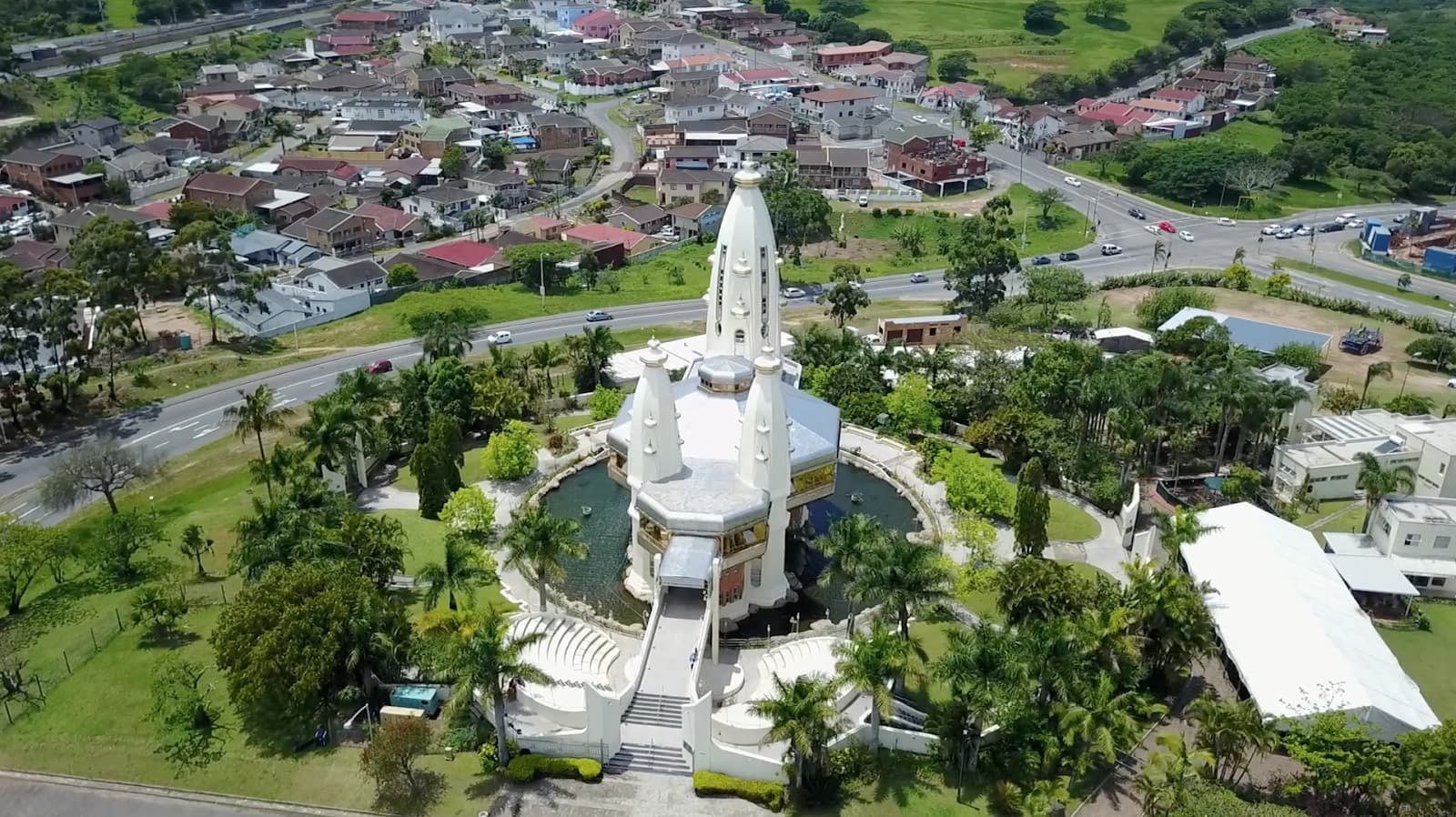
Sri Sri Radha Radhanath Temple (Temple of Understanding)
Sri Sri Radha Radhanath Temple—popularly called the Temple of Understanding—opened in 1985 atop Chatsworth’s Lotus Park with a 56-metre triple-domed hall, mirrored ceiling panels, stained glass lotus windows, and marble balustrades that reinterpret classical Indian temple geometry for a modern South African skyline ([1][2]). The ISKCON complex houses the deities Sri Sri Radha Radhanath, Lord Jagannath Baladeva Subhadra, and Sri Sri Gaura-Nitai on a gold-leafed altar backed by Italian marble reliefs; devotees circumambulate beneath parabolic arches while chandeliers reflect across the glass mosaic vault. Daily worship begins 4:30 AM with mangala-arati and extends through twelve services culminating in night-time shayana arati accompanied by Durban’s signature kirtan ensembles. Beyond ritual, the 3.5-hectare campus functions as a social engine: a commercial-grade kitchen cooks up to 15,000 vegetarian meals weekly for the Food For Life programme, the Bhaktivedanta College offers spiritual education, yoga, counselling, and youth mentorship, and the Govinda’s restaurant and bakery anchor a vegetarian culinary tradition for the city. The temple’s amphitheatre hosts annual Festival of Chariots cultural productions, multi-faith dialogues, and classical Indian arts festivals broadcast worldwide via ISKCON's media network ([1][2]).
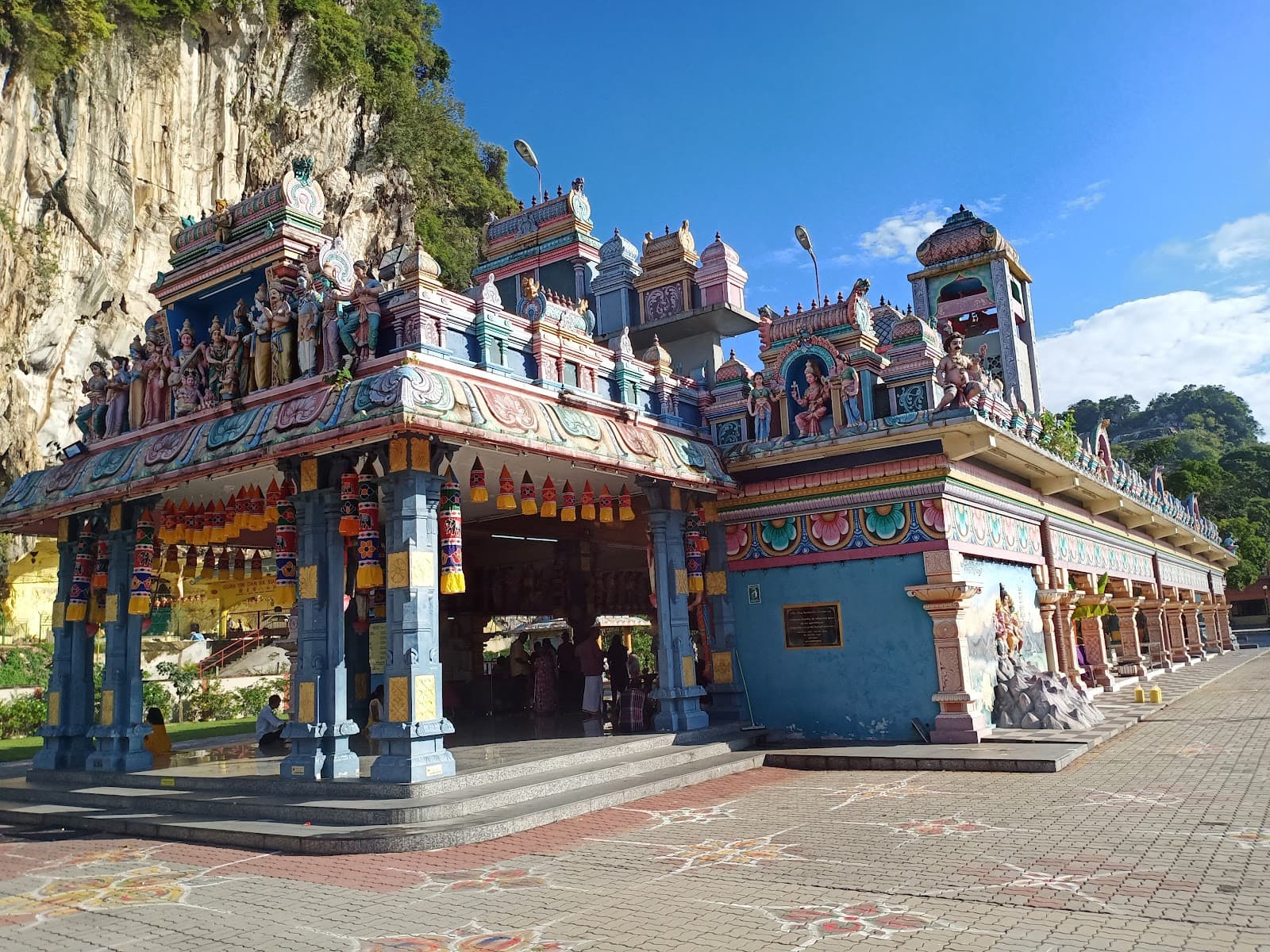
Sri Subramaniar Temple Gunung Cheroh Ipoh Perak
Sri Subramaniar Temple is carved into the limestone caverns of Gunung Cheroh, a 400-million-year karst outcrop rising behind Ipoh’s old town, beloved for its Cave Vel shrine, iconography of Murugan’s Valli Deivayanai wedding, and the poignant memory of the 1973 cave collapse that killed 42 schoolchildren and devotees during a festival, prompting seismic retrofits, geological monitoring, and creation of an outdoor hilltop sanctuary ([1][2]). The temple now opens 6:00 AM-9:00 PM with five daily pujas, weekly Vel Pooja, and kavadi vow ceremonies for Thaipusam. Devotees climb 246 steps to the hill shrine or enter the cave sanctum via a reinforced concrete portal and boardwalk suspended above limestone boulders; new LED systems highlight stalactites while maintaining bat habitat. The temple’s precinct includes a multi-purpose hall, community kitchen, disaster memorial garden, counselling suites, Tamil class centre, and biodiversity corridor connecting to Kinta Valley Geopark. Annual Thaipusam draws 30,000 kavadi bearers, supported by Ipoh City Council, NGOs, rope access rescue teams, cave scientists, and sustainability volunteers managing waste, hydration, and logistic shelters. Digital monitoring (geophones, crack meters, humidity sensors) feeds into a control room ensuring safety without diminishing sacred ambience ([1][3]).
Quick Links
Plan Your Heritage Journey
Get personalized recommendations and detailed visitor guides