Has Inheritage Foundation supported you today?
Your contribution helps preserve India's ancient temples, languages, and cultural heritage. Every rupee makes a difference.
Secure payment • Instant 80G certificate

Airtam Frieze Site Termez Uzbekistan
Nestled near Termez in Uzbekistan, the Airtam Frieze site provides insights into the fusion of Central Asian and Indian Buddhist art during the Kushan period (2nd century CE) ([6][7]). Intricate carvings adorning the walls of this ancient monastery reveal connections to the Gandhara school of art, a style that flourished in ancient India ([6]). Stone platforms and foundations suggest the site’s vital role as a Buddhist center along the Silk Road, facilitating the exchange of knowledge and culture ([7]). The frieze, meticulously carved from stone, features musicians playing instruments and celestial beings, reflecting Indian iconographic traditions ([6][8]). Archaeological excavations have uncovered that the monastery served as a significant hub for Buddhist learning and practice ([7]). Vastu Shastra principles, the ancient Indian science of architecture, likely influenced the layout of the complex, adapting Indian aesthetics to the Central Asian environment ([8][9]). Fired brick and mud brick construction, along with stucco and wood, demonstrate the skills of Kushan artisans ([6]). This blend of Indian artistic traditions and local materials highlights the cultural exchange that characterized the Silk Road ([9]). During the Kushan era, the empire's patronage supported the spread of Buddhist teachings and art, leading to a unique synthesis of Indian and Central Asian styles ([6][10]). Airtam exemplifies this cultural fusion, providing valuable insights into the artistic and religious exchanges that shaped the region's history ([7]). The site reflects the transmission of Indian aesthetic and architectural knowledge (Vidya) into Central Asia, showcasing the interconnectedness of ancient civilizations ([8][9]). The influence of Indian Gandharan art is evident in the depiction of figures and decorative motifs, indicating a deep cultural exchange ([10]).
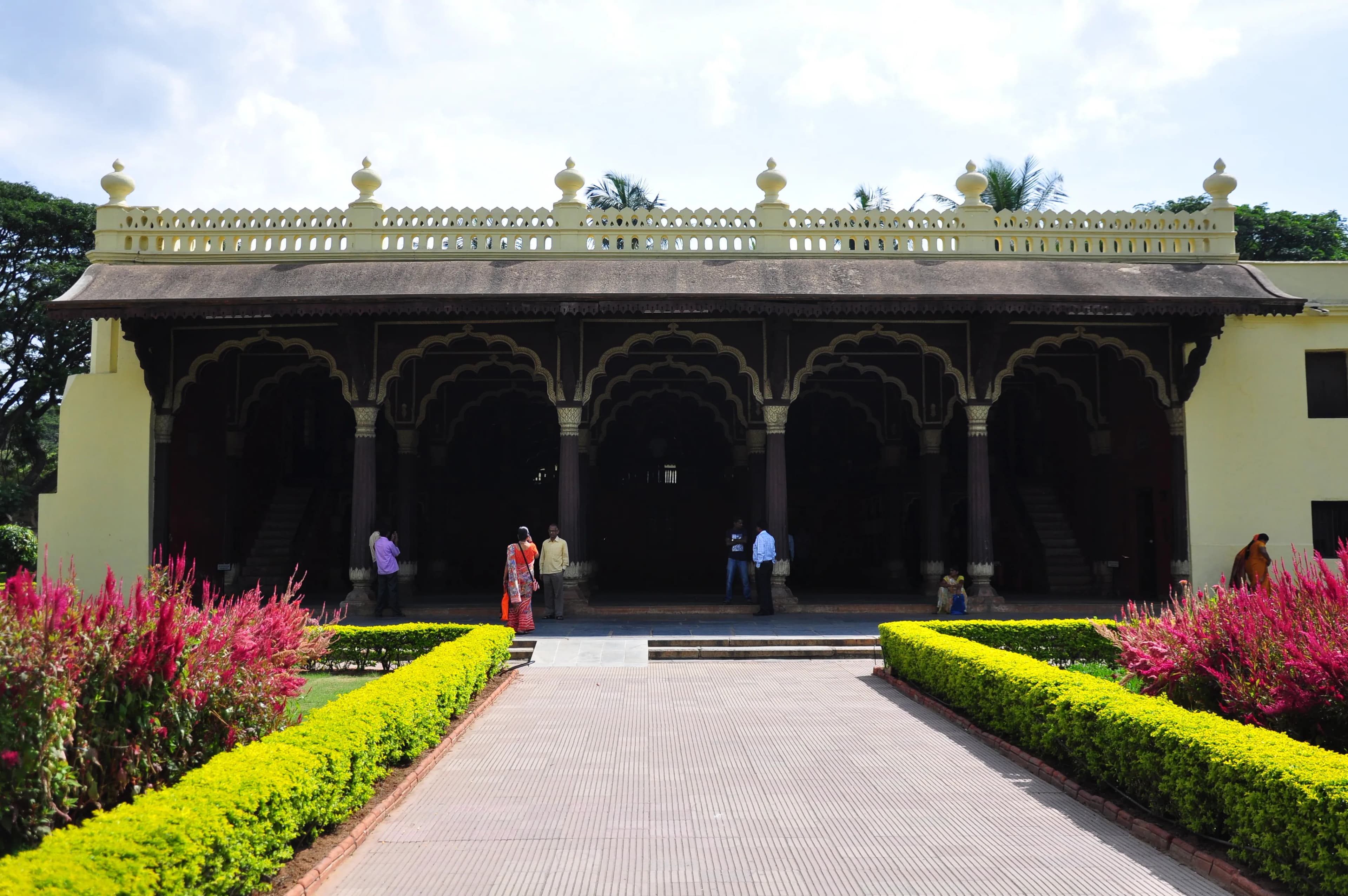
Tipu Sultan's Summer Palace Bengaluru
The scent of sandalwood hung faintly in the air, a subtle reminder of the palace's regal past, as I stepped into Tipu Sultan's Summer Palace in Bangalore. This two-storied Indo-Islamic structure, also known as the Dariya Daulat Bagh (Garden of the Sea of Wealth), stands as a testament to a turbulent yet fascinating period in South Indian history. Having spent years studying the grandeur of Dravidian temple architecture in my hometown of Chennai, I was eager to experience this distinct architectural style. The palace, constructed primarily of teakwood, rests atop a raised stone plinth. Unlike the towering gopurams and intricate stone carvings that characterize temples back home, the Summer Palace exudes a sense of airy lightness. The intricately carved pillars, delicate floral motifs, and vibrant paintwork create an atmosphere of refined elegance rather than imposing majesty. The four fluted pillars at each corner of the first floor, supporting the extended roof, reminded me of similar structures I'd observed in Chettinad mansions, albeit on a smaller scale. As I ascended the wooden staircase to the upper floor, the creaking sounds underfoot seemed to echo whispers of the past. The upper floor, an open-air durbar hall, offered panoramic views of the surrounding gardens. I could almost envision Tipu Sultan holding court here, surrounded by his advisors. The walls of the durbar hall are adorned with vibrant frescoes depicting scenes of battles, processions, and courtly life. These frescoes, though faded with time, offer a glimpse into the socio-political landscape of the late 18th century. The distinct European influence in some of the depictions, particularly in the portrayal of soldiers and weaponry, speaks to the complex interactions between the Mysore Kingdom and European powers. One aspect that particularly captivated me was the extensive use of floral motifs in the decoration. While floral patterns are common in South Indian art, the style here differed significantly from the bold lotus and creeper designs I was accustomed to seeing in temple architecture. The delicate floral patterns at the Summer Palace, often interspersed with geometric designs, seemed to draw inspiration from Persian and Islamic art, showcasing a beautiful fusion of styles. This syncretism extended to the architectural elements as well, with arches and domes coexisting harmoniously with traditional South Indian wooden construction techniques. Walking around the perimeter of the upper floor, I noticed the thin, almost translucent, sheets of mother-of-pearl inlaid into the wooden framework. This delicate ornamentation, catching the light and shimmering subtly, added a touch of opulence to the otherwise simple structure. It served as a reminder of the wealth and sophistication of Tipu Sultan's court. The surrounding gardens, though not as extensive as they once were, still provide a tranquil setting for the palace. The remnants of the original water channels and fountains hinted at the elaborate landscaping that must have existed during Tipu Sultan's time. I imagined the gardens filled with fragrant flowers and the sound of flowing water, creating a cool oasis in the Bangalore heat. My visit to Tipu Sultan's Summer Palace was more than just a sightseeing trip; it was a journey through time, a glimpse into a period of significant historical and cultural exchange. While the palace lacks the monumental scale and intricate stonework of the grand temples I'm familiar with, its delicate beauty, vibrant frescoes, and unique blend of architectural styles offer a compelling narrative of its own. It stands as a powerful reminder that architectural heritage isn't just about grand structures; it's about the stories they tell, the cultures they represent, and the connections they forge across time.
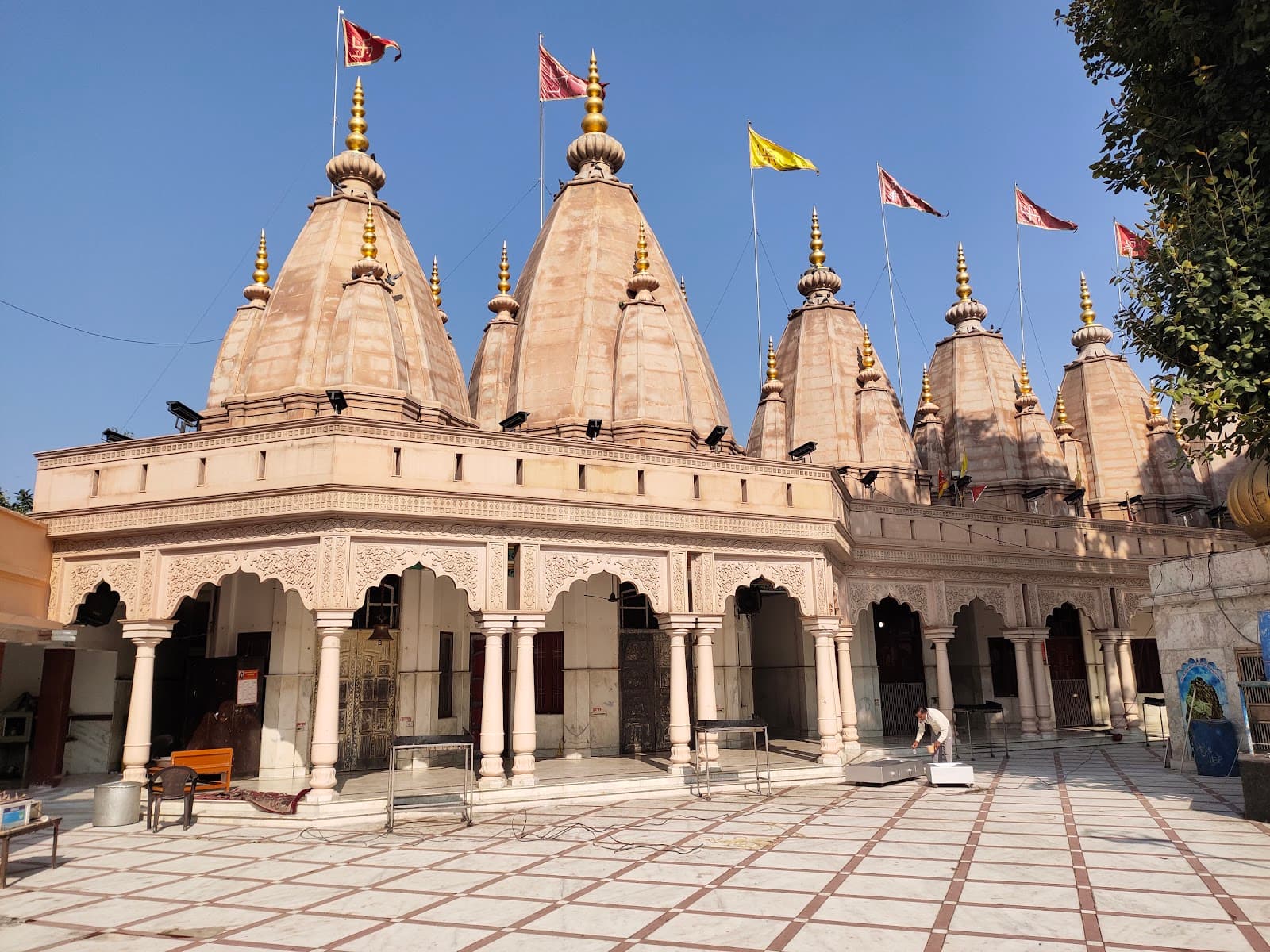
Shri Devi Mandir Panipat
The midday sun beat down on Panipat, casting long shadows across the dusty plains, but within the cool confines of the Shri Devi Mandir, a different kind of energy pulsed. Having explored the basalt-carved wonders of Maharashtra’s caves and the intricate details of its countless temples, I arrived at this North Indian shrine with a keen eye for comparison, and I wasn't disappointed. The Shri Devi Mandir, dedicated to the goddess Bhadrakali, offers a distinct experience, a testament to a different architectural idiom and a unique spiritual resonance. The temple complex is surprisingly expansive, a sprawling network of courtyards, shrines, and halls. Unlike the often vertically oriented temples of the Deccan plateau, this structure embraces horizontality. Low-slung buildings, painted in vibrant shades of saffron, ochre, and white, surround the central sanctum. The main entrance, a towering gateway adorned with intricate carvings of deities and floral motifs, immediately sets the tone. The carvings, though weathered by time, retain a remarkable clarity, showcasing a blend of Mughal and Rajput influences – a testament to the region's rich history. Stepping through the gateway felt like crossing a threshold into another world. The clamor of the city faded, replaced by the soft murmur of chants and the clanging of bells. The courtyard, paved with smooth, cool stone, offered a welcome respite from the heat. Devotees moved with a quiet reverence, their faces etched with devotion. I observed the subtle differences in their rituals compared to those I’d witnessed back home – the way they offered flowers, the specific mantras they chanted, the distinct aroma of incense that hung heavy in the air. The main shrine, housing the idol of Shri Devi, is a relatively small structure, but its simplicity is its strength. The deity, depicted in a fierce yet benevolent form, is adorned with vibrant garments and elaborate jewelry. The air within the sanctum vibrated with a palpable energy, a feeling of concentrated devotion that transcended the physical space. I spent a few moments simply observing the interplay of light and shadow on the idol, the flickering flames of the oil lamps, and the expressions of quiet contemplation on the faces of the devotees. What struck me most about the Shri Devi Mandir was its accessibility. Unlike some of the more ancient temples I've visited, where a certain formality and distance are maintained, this temple felt remarkably inclusive. People from all walks of life, young and old, rich and poor, mingled freely, united in their reverence for the goddess. I saw families sharing prasad, children playing in the courtyards, and elderly devotees lost in quiet prayer. This sense of community, of shared faith, was truly heartwarming. Beyond the main shrine, the complex houses several smaller shrines dedicated to other deities, each with its own unique character. I explored these smaller spaces, noting the variations in architectural style and the different iconography. One shrine, dedicated to Lord Shiva, featured a striking lingam carved from black stone, while another, dedicated to Lord Hanuman, was adorned with vibrant murals depicting scenes from the Ramayana. As I wandered through the complex, I couldn't help but reflect on the power of faith and the diverse ways in which it manifests itself across India. From the rock-cut caves of Ajanta and Ellora to the towering gopurams of Tamil Nadu, and now to the humble yet vibrant Shri Devi Mandir in Panipat, each sacred space offers a unique window into the rich tapestry of Indian spirituality. This temple, with its blend of architectural styles, its palpable sense of devotion, and its inclusive atmosphere, left a lasting impression, reminding me that the essence of faith transcends geographical boundaries and architectural forms.
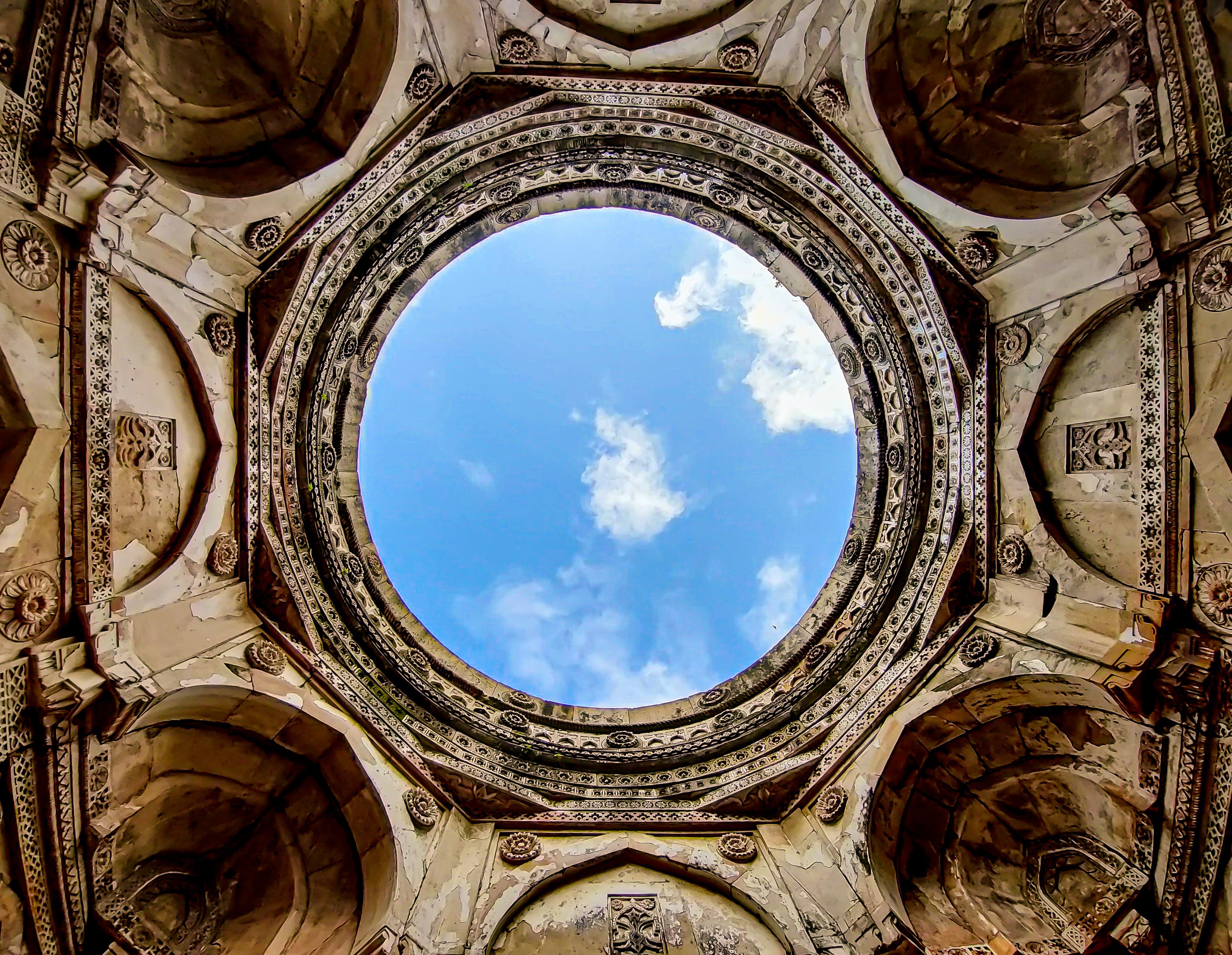
Pavagadh Fort Champaner
The wind whipped at my kurta as I ascended the final steps to the Machi Haveli, the sprawling ruined palace perched precariously on the Pavagadh hill. Below me, the Gujarat plains stretched out like a rumpled green carpet, the distant Narmada river glinting silver under the afternoon sun. This, I realized, was a view fit for kings, a panorama that spoke volumes about the strategic importance of this ancient fort. Having explored countless historical sites across Uttar Pradesh, I was eager to experience the architectural and cultural nuances of this Gujarati landmark. Pavagadh, meaning "quarter hill," is aptly named. The climb, whether by ropeway or the winding path, is an experience in itself. I chose the latter, wanting to absorb the gradual shift in atmosphere, from the bustling marketplace at the base to the hushed reverence of the hilltop shrines. The fortifications, built in stages over centuries, tell a story of evolving military architecture. The lower ramparts, with their sturdy, sloping walls, bear the hallmarks of early Rajput construction, while the higher sections, particularly around the citadel, showcase more intricate Islamic influences, a testament to the region's layered history. The Mahakali Temple, the fort's spiritual heart, pulsates with an energy that is palpable. The throngs of devotees, their chants echoing through the courtyards, create an atmosphere quite unlike the serene temples I'm accustomed to back home. The architecture here is a fascinating blend of styles. The ornate carvings, particularly around the main shrine, are reminiscent of the intricate stonework found in some of the older temples of Bundelkhand, yet the overall structure, with its towering shikhara, feels distinctly Gujarati. I was particularly struck by the vibrant colours adorning the temple walls, a stark contrast to the more subdued palettes used in the north. Beyond the temple, the ruins of the Machi Haveli offered a glimpse into the lives of the rulers who once commanded this fortress. Wandering through the crumbling walls and empty chambers, I tried to imagine the bustling court life, the strategizing, the feasts, the intrigues that must have unfolded within these very walls. The intricate jali work, now fragmented and weathered, hinted at the opulence that once graced this palace. I noticed the distinct use of local sandstone in the construction, a material that lends a warm, earthy hue to the ruins, quite different from the red sandstone commonly used in Mughal architecture. The Sat Kaman, or seven arches, another prominent feature of the fort, is a marvel of engineering. These massive arches, spanning a deep ravine, not only served a defensive purpose but also demonstrate a sophisticated understanding of structural design. The way the arches are integrated into the natural contours of the hill speaks to the builders' ingenuity. Descending the hill, I reflected on the palpable layers of history embedded within Pavagadh. From the earliest Hindu rulers to the Solanki dynasty, the Mughals, and finally the Marathas, each era has left its indelible mark on this fortress. It's a microcosm of India's rich and complex past, a place where different cultures and architectural styles have converged and intertwined over centuries. While the grandeur of the Mughal forts of Uttar Pradesh remains etched in my memory, Pavagadh offers a different kind of historical narrative, one that is equally compelling and deeply rooted in the unique cultural landscape of Gujarat. It's a testament to the enduring power of place and the stories that these places hold within their stones.
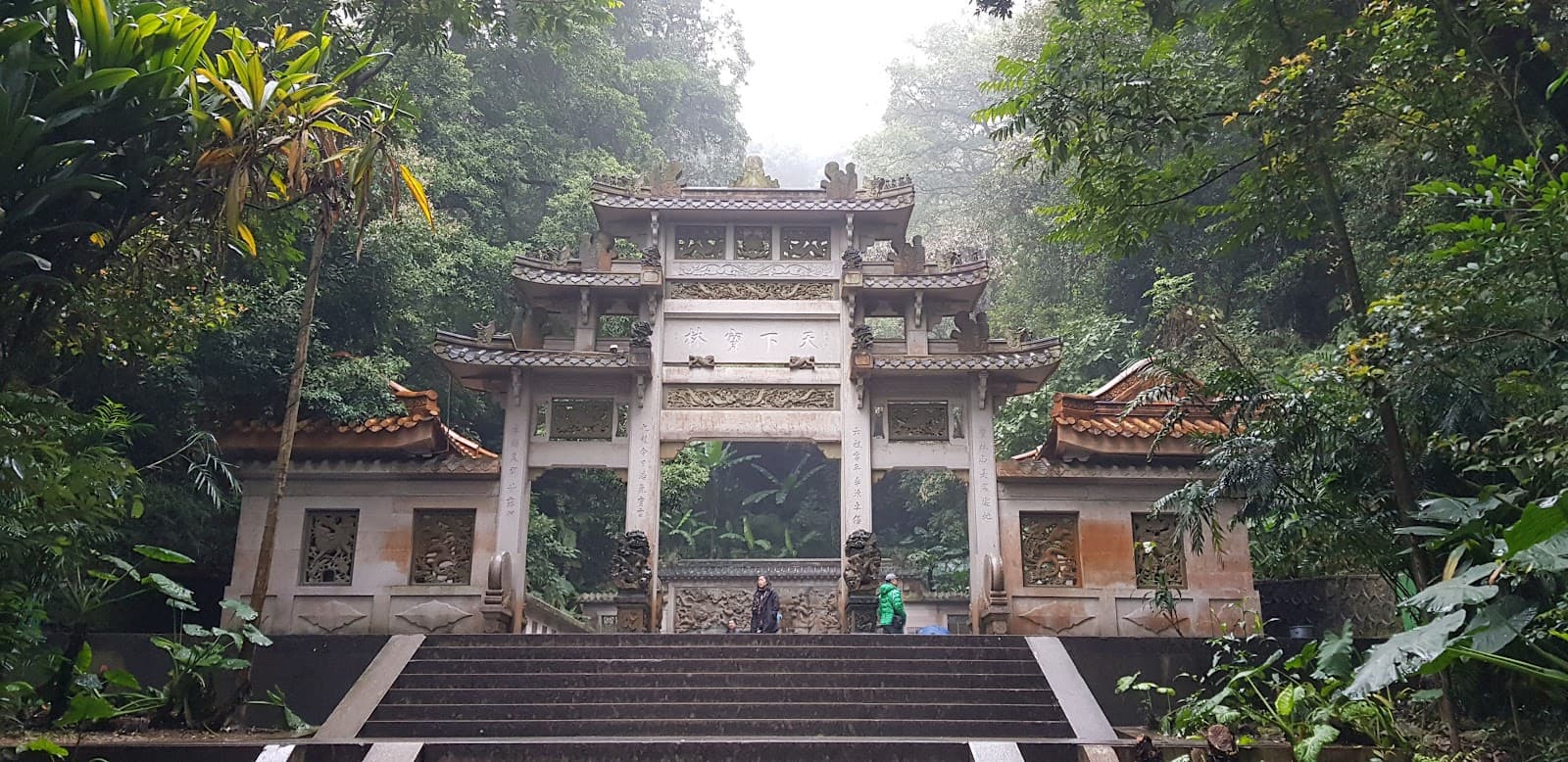
Nanhua Temple Shaoguan Guangdong China
Nanhua Temple, a revered Buddhist monastery in Shaoguan, Guangdong Province, China, stands as a profound testament to India's millennia-spanning cultural heritage and the continuous tradition of Indian civilization. Founded in 550 CE by the Indian monk Zhiyao Sanzang, the temple complex embodies a unique Indo-Chinese Buddhist architectural style, deeply rooted in Indian Buddhist traditions, particularly the stupa form [1] [2]. Spanning an expansive area of 42.5 hectares, the site is strategically positioned against a mountain, facing south, a traditional orientation in both Indian and Chinese sacred architecture [1]. The architectural ensemble, while featuring elements of traditional Chinese design, integrates distinctive Indian Buddhist influences, reflecting the transmission of spiritual and artistic practices from ancient India [2]. The Grand Hall, a central and imposing structure, is recognized as the largest Buddhist architectural edifice in Guangdong Province [3]. Its roof is adorned with vibrant glazed tiles, a characteristic decorative element [3]. Within its sanctum, sublime statues of Sakyamuni Buddha, Medicine Buddha, and Amitabha Buddha are enshrined, accompanied by an assembly of 500 intricately crafted clay sculptures depicting Buddhist arhats, showcasing a rich iconographic program [1]. The Lingxi Tower, also known as the Pagoda of the Sixth Patriarch, represents a significant architectural feature. Originally constructed in timber during the early Tang Dynasty, it underwent a substantial reconstruction in brick during the Ming Dynasty, evolving its material composition while retaining its spiritual function [1]. This tower serves as a reliquary, housing the preserved 'real body' of Huineng, the Sixth Patriarch of Chan Buddhism, a practice reminiscent of Indian stupa architecture where relics of enlightened beings are venerated [4]. The construction primarily utilizes durable materials such as wood, brick, and stone, reflecting indigenous building practices adapted over centuries [2]. The temple complex is meticulously arranged with a series of halls, courtyards, and pagodas, creating a harmonious spatial flow that facilitates meditation and pilgrimage [4]. Decorative elements throughout the temple include intricate carvings and sculptures that narrate Buddhist narratives and depict various deities and enlightened figures, reflecting a synthesis of Indian and local artistic expressions. Ongoing conservation efforts at Nanhua Temple involve historical documentation, archaeological excavations, and structural stabilization to preserve its ancient fabric [2]. These initiatives ensure the integrity of its architectural elements and the longevity of its cultural relics, which include an ancient silken cassock embroidered with a thousand Buddhas, a decree issued by Empress Wu Zetian, wood-carved arhats from the Northern Song Dynasty, a thousand-jin copper clock, a thousand-person pan from the Yuan Dynasty, a thousand-Buddha steel tower from the Qing Dynasty, and the Dazang Sutra inscribed in gold [1]. The site remains operationally ready, welcoming visitors and pilgrims, and continues to be a vibrant center for Buddhist practice and a living testament to India's enduring cultural legacy [5].
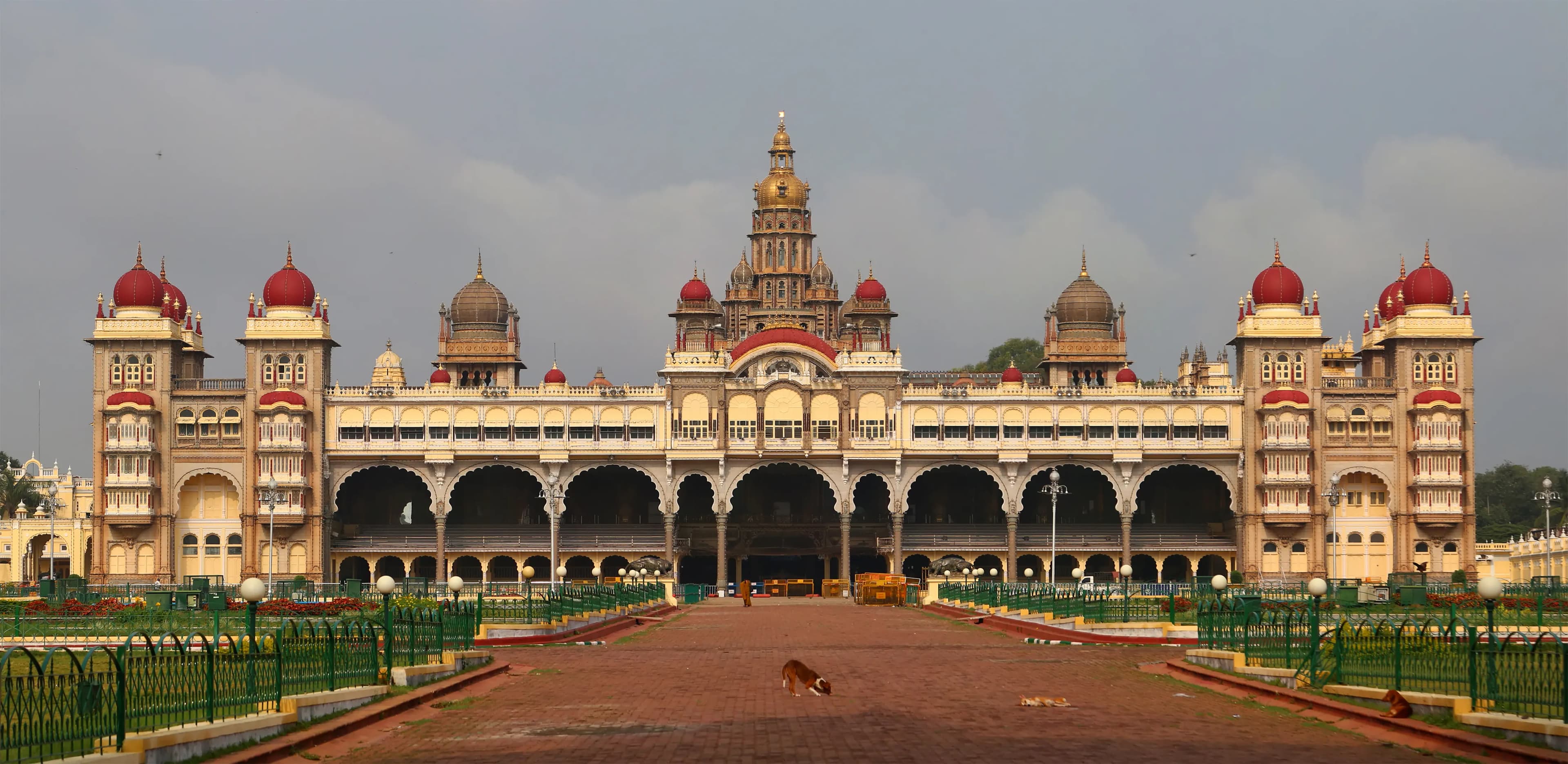
Mysore Palace Mysuru
The Mysore Palace, or Amba Vilas Palace, isn't merely a structure; it's a statement. A statement of opulence, a testament to craftsmanship, and a living chronicle of a dynasty. As a Chennai native steeped in the Dravidian architectural idiom of South Indian temples, I found myself both captivated and challenged by the Indo-Saracenic style that defines this majestic palace. The blend of Hindu, Muslim, Rajput, and Gothic elements creates a unique architectural vocabulary, a departure from the gopurams and mandapas I'm accustomed to, yet equally mesmerizing. My first impression was one of sheer scale. The sprawling palace grounds, meticulously manicured, prepare you for the grandeur within. The three-storied stone structure, with its grey granite base and deep pink marble domes, stands as a beacon against the Mysore sky. The central arch, adorned with intricate carvings and flanked by imposing towers, draws the eye upwards, culminating in the breathtaking five-story gopuram. This fusion, the gopuram atop an Indo-Saracenic structure, is a powerful symbol of the cultural confluence that shaped Mysore's history. Stepping inside, I was immediately transported to a world of intricate detail. The Durbar Hall, with its ornate pillars, stained-glass ceilings, and intricately carved doorways, is a spectacle of craftsmanship. The pillars, far from being uniform, display a fascinating variety of designs, each a testament to the skill of the artisans. I noticed subtle variations in the floral motifs, the scrollwork, and even the miniature sculptures adorning the capitals. This attention to detail, reminiscent of the meticulous carvings found in Chola temples, spoke volumes about the dedication poured into this palace. The Kalyanamantapa, the marriage hall, is another jewel in the palace's crown. The octagonal hall, with its vibrant stained-glass ceiling depicting scenes from Hindu mythology, is a riot of color and light. The floor, paved with exquisite mosaic tiles, adds another layer of intricacy. While the overall style is distinctly different from the mandapas found in South Indian temples, I could appreciate the shared emphasis on creating a sacred, visually stunning space. Exploring further, I was particularly drawn to the Gombe Thotti, or Doll's Pavilion. This museum houses a remarkable collection of dolls from around the world, offering a glimpse into diverse cultures and artistic traditions. While not strictly architectural, it provided a fascinating cultural context for the palace and its inhabitants. The palace's exterior, particularly during the evening illumination, is truly magical. Thousands of bulbs outline the structure, transforming it into a shimmering spectacle. This, I felt, was a modern interpretation of the kuthuvilakku, the traditional oil lamps used to illuminate temple towers during festivals. While the technology is different, the effect is the same – a breathtaking display of light and shadow that enhances the architectural beauty. One aspect that particularly resonated with my background in South Indian temple architecture was the use of open courtyards. These courtyards, while smaller than the prakarams found in temples, serve a similar purpose – providing ventilation, natural light, and a sense of tranquility amidst the grandeur. They also offer framed views of different parts of the palace, creating a dynamic visual experience as one moves through the complex. The Mysore Palace is not just a palace; it's a living museum, a testament to the artistry and vision of its creators. It's a place where architectural styles converge, where history whispers from every corner, and where the grandeur of the past continues to captivate visitors from around the world. As I left the palace grounds, I carried with me not just images of its splendor, but a deeper appreciation for the rich tapestry of Indian architecture and the unique stories it tells.
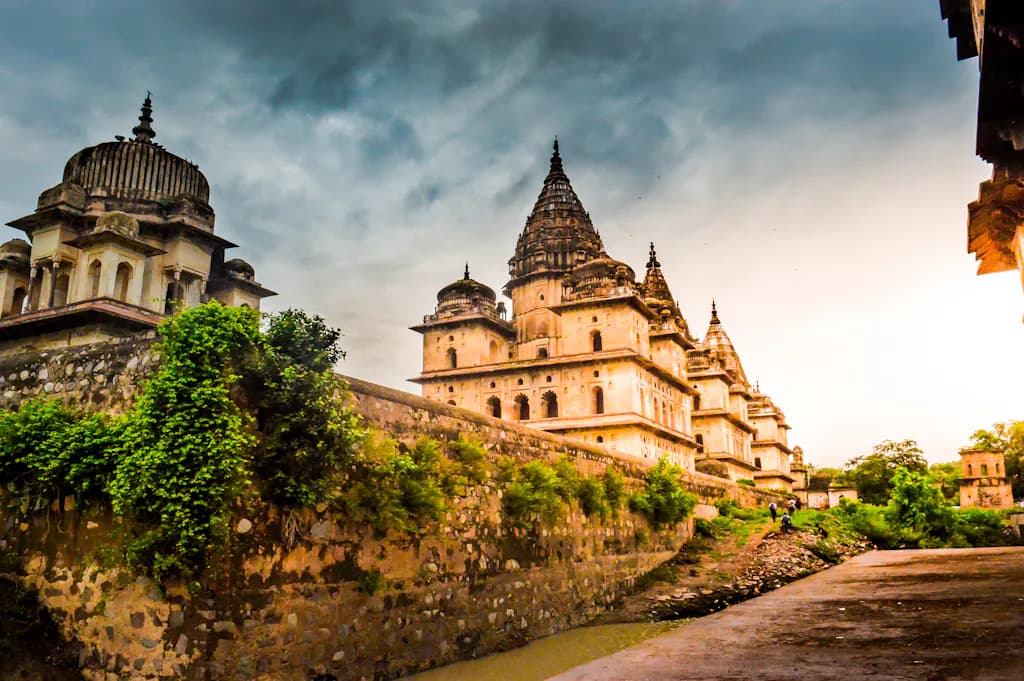
Orchha Fort Orchha
The midday sun beat down on the ochre stone, casting long shadows that danced across the courtyards of Orchha Fort. Dust motes, stirred by a gentle breeze whispering through the Betwa River valley, swirled around me, adding a touch of ethereal magic to the already imposing structure. Having explored countless forts across North India, from the colossal ramparts of Rajasthan to the crumbling citadels of the Himalayas, I thought I was immune to being awestruck. Orchha proved me wrong. This wasn’t just another fort; it was a symphony in stone, a testament to the Bundela Rajput’s architectural prowess and artistic sensibilities. Unlike the stark military fortifications I’d encountered elsewhere, Orchha exuded a regal elegance, a blend of defensive strength and palatial grandeur. The fort complex, perched on an island amidst the Betwa, is a cluster of interconnected palaces and temples, each with its own unique story to tell. My exploration began with the Raja Mahal. Stepping through the imposing arched gateway, I was immediately transported back in time. The sheer scale of the courtyard, surrounded by multi-storied structures, was breathtaking. Intricate carvings adorned the pillars and balconies, depicting scenes from epics and courtly life. I climbed the narrow, winding staircases, the stone worn smooth by centuries of footsteps, and emerged onto the rooftop terraces. From here, the panoramic view of the river, the surrounding plains, and the other palaces within the complex was simply mesmerizing. I could almost imagine the Bundela kings surveying their domain from this very spot. Next, I ventured into the Jahangir Mahal, a stunning example of Mughal architecture built to commemorate the visit of Emperor Jahangir. The contrast between the robust Rajput architecture of the Raja Mahal and the delicate, almost ethereal beauty of the Jahangir Mahal was striking. Here, intricate latticework screens, known as *jalis*, filtered the sunlight, creating a play of light and shadow within the chambers. The central courtyard, with its elegant chhatris and ornate balconies, was a masterpiece of design. I spent a considerable amount of time simply admiring the intricate tilework, the delicate floral patterns, and the sheer artistry that had gone into creating this architectural gem. The Ram Raja Temple, uniquely situated within the fort complex, was my next stop. Unlike typical temples, this one felt more like a palace, a reflection of the deep reverence the Bundela rulers had for Lord Ram. The temple’s vibrant colours, the intricate carvings, and the constant hum of devotional chants created a palpable sense of spirituality. Witnessing the devotion of the pilgrims, I felt a connection to the living history of this place. As I wandered through the Sheesh Mahal, now converted into a heritage hotel, I couldn't help but imagine the lives of the royals who once inhabited these spaces. The mirrored walls, the ornate ceilings, and the remnants of frescoes hinted at a life of luxury and grandeur. Standing on the balcony, overlooking the Betwa River, I felt a sense of tranquility wash over me. Leaving the fort complex as the sun began to set, casting a golden glow on the stone, I felt a profound sense of awe and admiration. Orchha Fort wasn't just a collection of buildings; it was a living, breathing testament to a rich and vibrant history. It was a place where architecture, art, and spirituality intertwined seamlessly, creating an experience that transcended the ordinary. For anyone seeking a glimpse into the heart of India's historical and architectural heritage, Orchha Fort is an absolute must-see. It’s a place that stays with you long after you’ve left, a reminder of the enduring power of human creativity and the beauty that can be found in the most unexpected corners of the world.
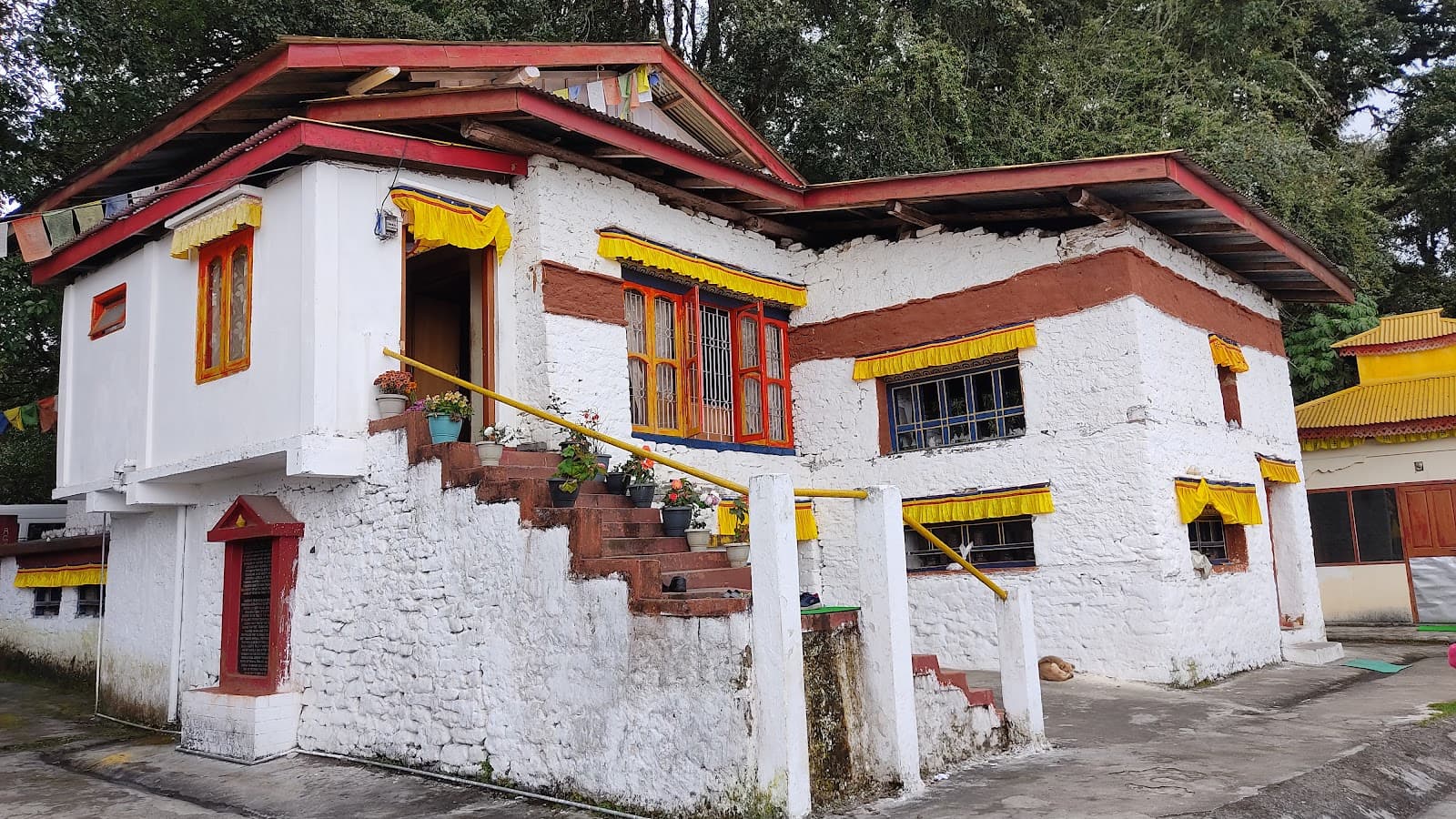
Urgelling Monastery Tawang
The biting Himalayan wind whipped prayer flags into a frenzy of colour against the stark backdrop of the snow-dusted mountains. Urgelling Monastery, perched precariously on a ridge overlooking Tawang valley, felt less like a structure and more like an extension of the rugged landscape itself. Having documented hundreds of monuments across India, I’ve learned to anticipate a certain grandeur, a predictable awe. Urgelling, however, defied all expectations. Its unassuming exterior belied the profound sense of history and spiritual weight it held within. Built in the 15th century, Urgelling is considered the birthplace of the 6th Dalai Lama, Tsangyang Gyatso, a figure shrouded in mystique and rebellion. This fact alone imbued the monastery with a palpable energy, a sense of walking through living history. Unlike many of the larger, more ornate monasteries I’ve photographed, Urgelling retained a sense of intimacy. The relatively small complex, constructed primarily of stone and wood, felt weathered and worn, a testament to centuries of harsh weather and unwavering devotion. The main prayer hall, though modest in size, was richly adorned. The walls were covered in vibrant thangkas depicting Buddhist deities and intricate mandalas. The low, flickering butter lamps cast dancing shadows, illuminating the worn faces of the statues and adding to the ethereal atmosphere. The scent of burning juniper incense hung heavy in the air, mingling with the crisp mountain air, creating a sensory experience that was both grounding and otherworldly. I spent hours exploring the narrow corridors and dimly lit chambers, my camera a silent observer. The intricate wood carvings on the window frames and pillars, some faded with age, spoke of a rich artistic tradition. I noticed recurring motifs of dragons and lotus flowers, symbols deeply embedded in Buddhist iconography. The architecture itself was a blend of Tibetan and Monpa styles, reflecting the region's unique cultural heritage. The sloping roofs, designed to withstand heavy snowfall, were adorned with decorative metalwork that shimmered in the occasional bursts of sunlight. One of the most striking features of Urgelling was its location. The panoramic view from the monastery courtyard was simply breathtaking. The Tawang valley stretched out below, a patchwork of green fields and scattered villages, framed by the towering Himalayas. It was easy to see why this spot was chosen as a place of spiritual retreat. The sheer vastness of the landscape seemed to dwarf all earthly concerns, fostering a sense of peace and introspection. My conversation with one of the resident monks offered a deeper understanding of Urgelling's significance. He spoke of the monastery's role not just as a place of worship but also as a centre of learning and community. He explained the significance of the various rituals and ceremonies performed, highlighting the importance of preserving their cultural heritage. His words resonated deeply, reminding me of the power of these sacred spaces to connect people to something larger than themselves. As I descended the winding path from Urgelling, the setting sun casting long shadows across the valley, I carried with me more than just photographs. I carried the weight of history, the echo of chants, and the profound sense of serenity that permeated the ancient walls. Urgelling Monastery, in its quiet dignity, had offered a glimpse into a world where spirituality and nature intertwine, a world I felt privileged to have witnessed through my lens. It was a testament to the enduring power of faith and a poignant reminder of the rich tapestry of cultural heritage that makes India so extraordinary.
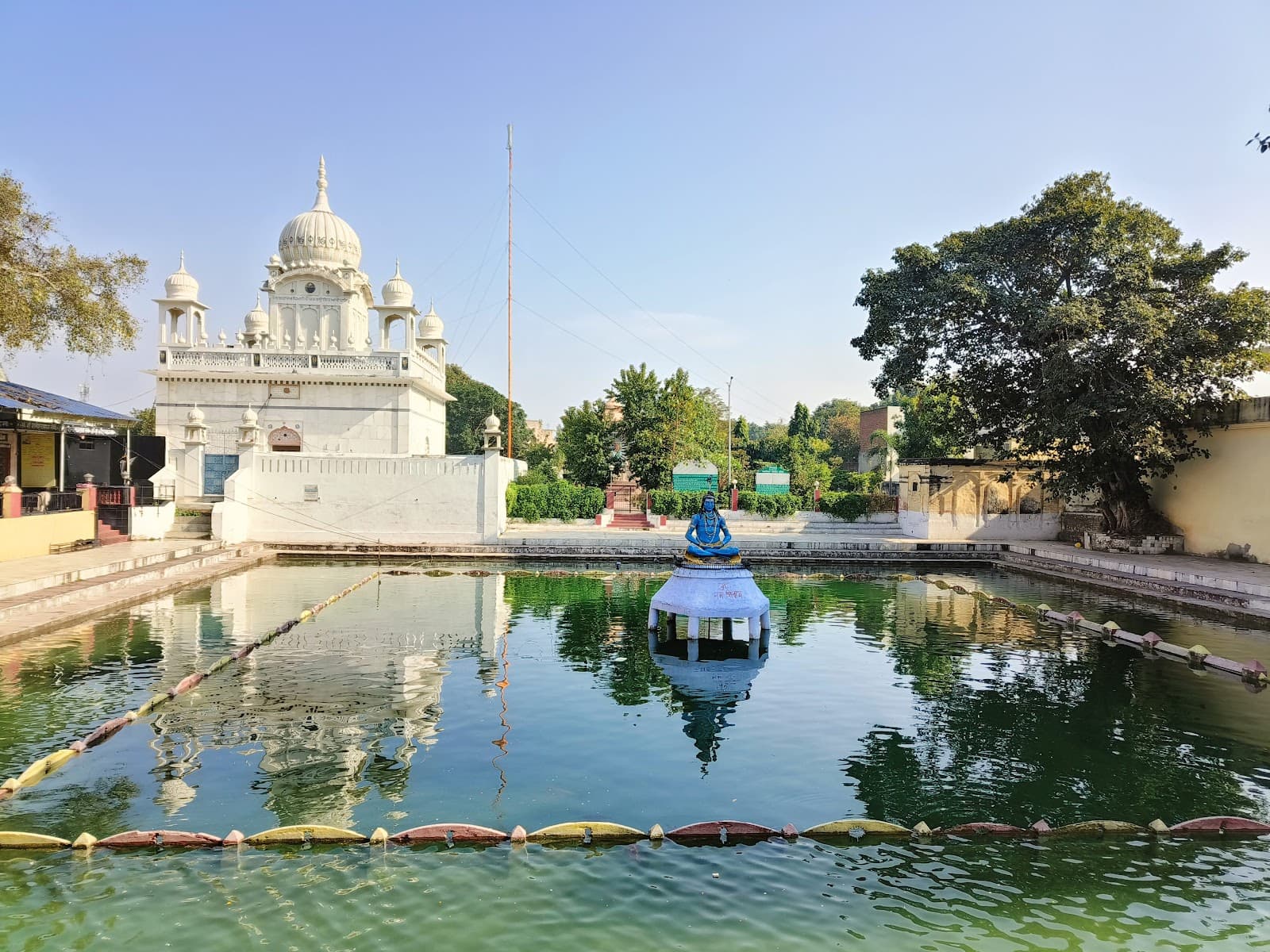
Sthaneshwar Mahadev Temple Thanesar
The late afternoon sun cast long shadows across the courtyard of the Sthaneshwar Mahadev Temple, painting the weathered stone a warm ochre. Dust motes danced in the shafts of light filtering through the gaps in the surrounding buildings, lending an ethereal quality to the scene. Here, in the heart of Thanesar, nestled within the historically significant land of Kurukshetra, stood a testament to centuries of devotion and architectural evolution. My visit wasn't just a reporting assignment; it was a pilgrimage of sorts, a chance to connect with the tangible remnants of India's rich past. The temple's current structure, while undeniably impressive, whispers of multiple reconstructions. The core, I learned from the temple priest, dates back to the ancient period, possibly even pre-Gupta times. However, much of what stands today bears the unmistakable mark of the Maratha reconstruction in the 18th century. This layering of history, this palimpsest of architectural styles, is precisely what makes Sthaneshwar Mahadev so fascinating. The shikhara, the towering superstructure above the sanctum sanctorum, rises with a gentle curve, its surface adorned with intricate carvings. While the Maratha influence is evident in the overall form, closer inspection reveals subtle nods to earlier architectural traditions. The amalaka, the crowning disc-like element, retains a classical simplicity, hinting at the temple’s older origins. I spent a considerable amount of time circling the structure, my gaze tracing the lines of the carvings, trying to decipher the stories they told. Many were weathered beyond recognition, yet their presence spoke volumes about the devotion and artistry of the craftsmen who had painstakingly etched them into the stone. Stepping inside the sanctum, I was struck by the palpable sense of reverence. The air was thick with the scent of incense and the murmur of prayers. The main deity, Lord Shiva, is represented by a lingam, a smooth, cylindrical stone that is the focal point of worship. The simplicity of this aniconic representation contrasted sharply with the ornate carvings that adorned the surrounding walls. It was a powerful reminder of the core principles of Hindu philosophy – the formless divine residing within the tangible world. The temple complex is not limited to the main shrine. Smaller shrines dedicated to various deities dot the courtyard, each with its own unique character. I was particularly drawn to a small, almost hidden shrine dedicated to Lord Hanuman. The vibrant vermilion paint that covered the statue of the Hanuman contrasted beautifully with the muted tones of the surrounding stonework. One of the most striking features of the Sthaneshwar Mahadev Temple is its connection to the sacred tank, known as the Brahma Sarovar. Located just a short walk from the temple, the tank is believed to have been created by Lord Brahma himself. Pilgrims come from far and wide to bathe in its holy waters, particularly during the solar eclipse. Standing by the edge of the tank, I could feel the weight of history and mythology pressing down on me. This was not just a body of water; it was a living testament to the enduring power of faith. My visit to Sthaneshwar Mahadev was more than just an architectural study; it was an immersion into the living tapestry of Indian culture and spirituality. The temple, with its layers of history, its intricate carvings, and its palpable sense of sanctity, offered a glimpse into the enduring power of faith and the artistry of those who sought to express it through architecture. As I left the temple grounds, the setting sun casting long shadows behind me, I carried with me not just photographs and notes, but a deeper understanding of the continuity of India's cultural heritage.
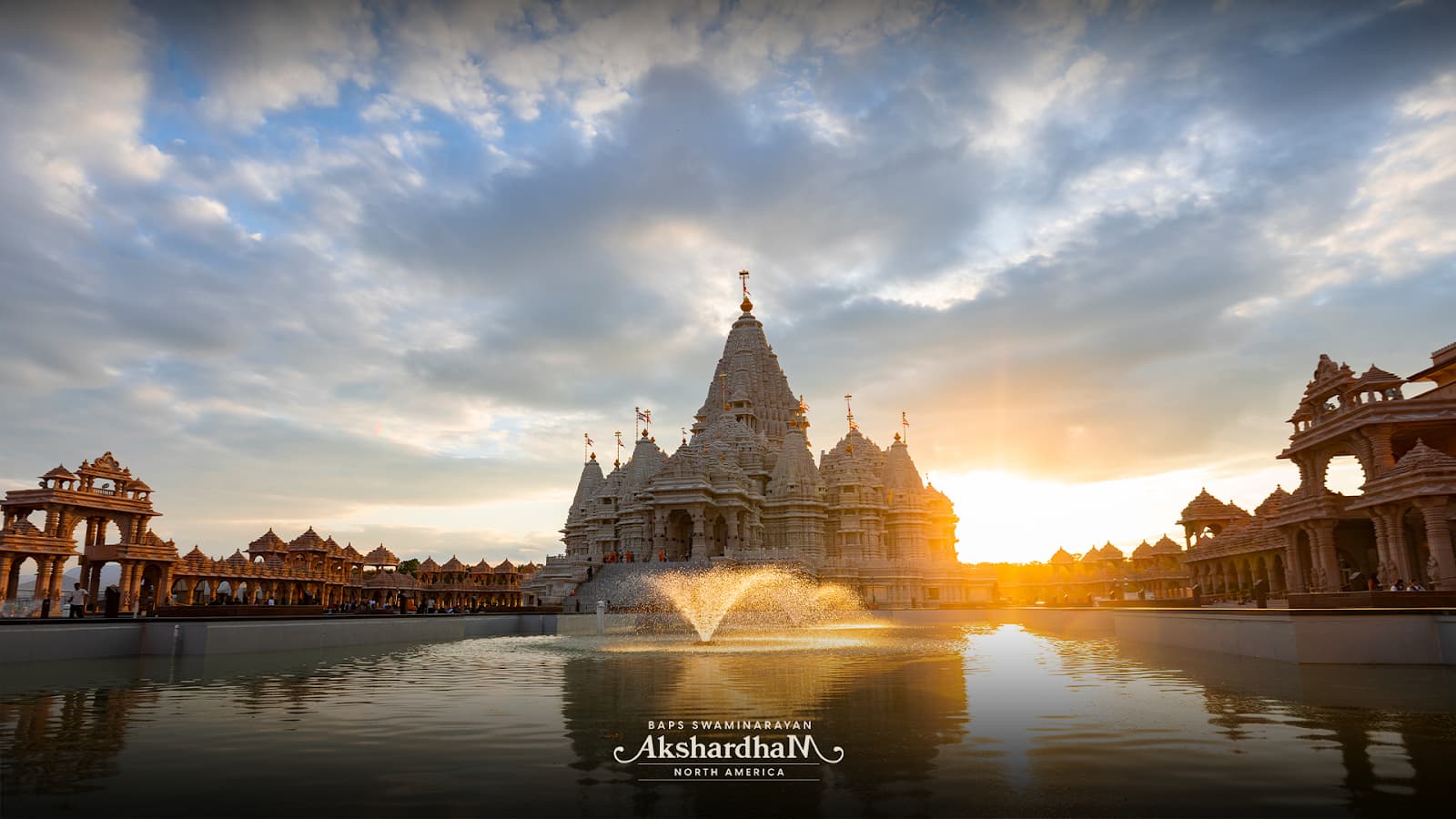
BAPS Shri Swaminarayan Akshardham Robbinsville
Inaugurated in October 2023, BAPS Shri Swaminarayan Akshardham in Robbinsville, New Jersey, is an embodiment of traditional Nagara-style North Indian temple architecture, complete with elaborate Mandapa (pillared hall) forecourts ([1][2]). This modern complex, sprawling across 183 acres, features a 255-foot-long main Mandir, cultural exhibits, and reflection ponds, creating a space for spiritual engagement and community gathering ([1]). Italian Carrara marble and Bulgarian limestone constitute the primary building materials, supplemented by granite, reinforced concrete, and structural steel to ensure durability and aesthetic appeal ([3]). Intricate carvings embellish the marble surfaces, reflecting the detailed craftsmanship inherent in the temple's design ([4]). Copper Kalasams (finials) crown the Shikhara (spire), while timber doors and glass fiber reinforced concrete elements contribute to the structure's overall grandeur ([3][4]). Within the Garbhagriha (sanctum), deities are enshrined, inviting devotees for darshan (holy viewing) and fostering a sacred atmosphere ([1]). The temple's design adheres to Vastu Shastra principles, the ancient Indian science of architecture, to harmonize cosmic energies and ensure auspiciousness ([5]). Sophisticated accessibility measures are integrated throughout the complex, including elevators, ramps, and tactile strips to accommodate all visitors ([1][2]). During festivals, the temple collaborates with Robbinsville Township police and private security, utilizing CCTV analytics and RFID access controls for effective crowd management ([1]). Operations crews maintain the site meticulously, employing a central command center to monitor humidity, lighting, and cleanliness ([3][5]). Strict health protocols are observed in the vegetarian cafe and prasadam counters, ensuring the well-being of all visitors ([3]). Built by the BAPS Swaminarayan Sanstha with the support of volunteers and donors, this Akshardham serves as a cultural and spiritual landmark in the Western Hemisphere ([3][4]).
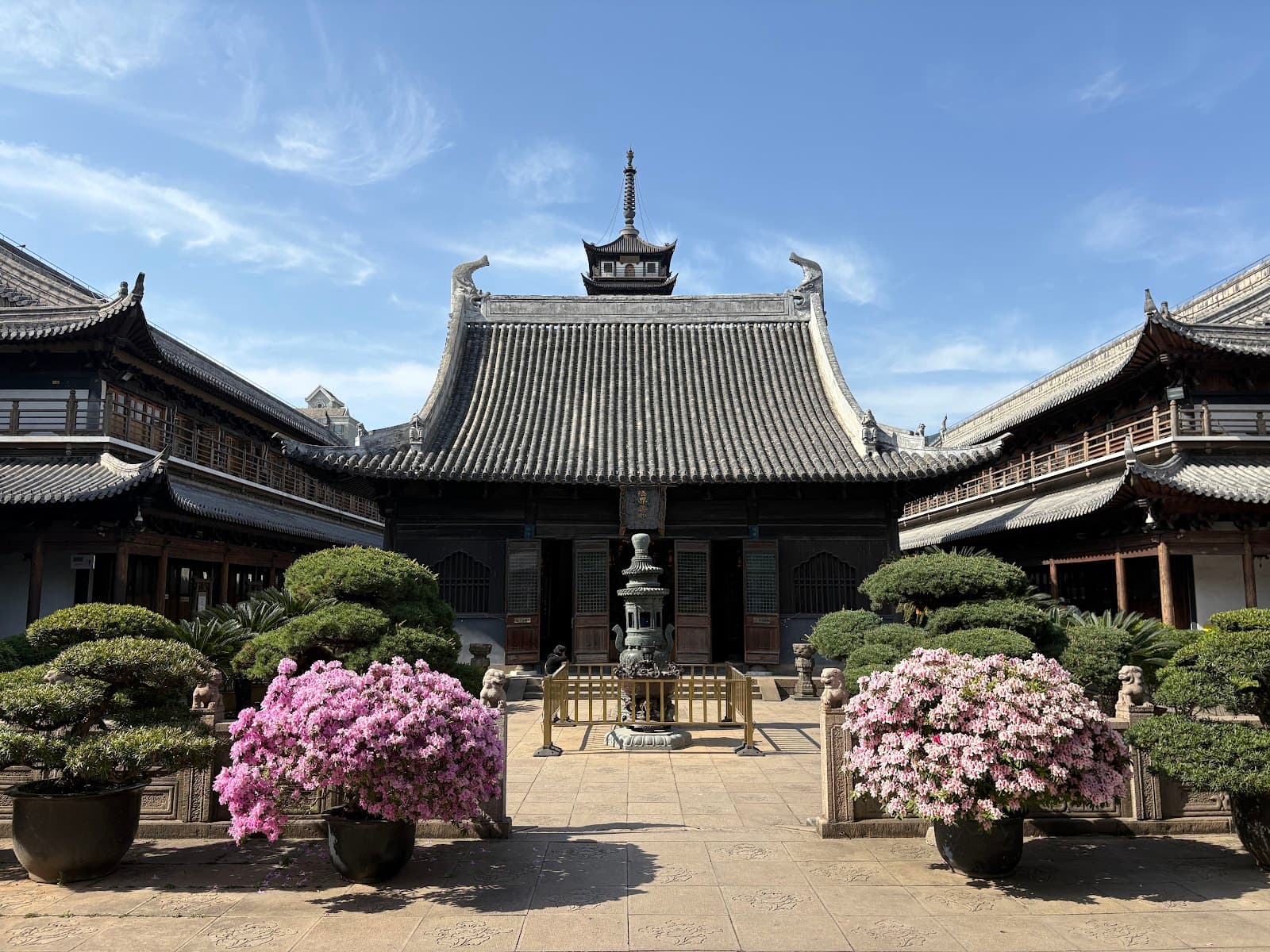
Zhenru Temple Shanghai China
Zhenru Temple, a revered Buddhist monument in Shanghai's Putuo District, stands as a testament to the enduring legacy of Buddhist architectural traditions, which trace their origins to India's millennia-spanning heritage [1] [2]. While situated in China, the temple's architectural and spiritual lineage reflects the profound cultural exchange that saw the transmission of Buddhist philosophy and artistic forms from ancient India across Asia, contributing to a continuous tradition of Indian civilization [5] . The temple's central edifice, the Mahavira Hall, is a distinguished example of Yuan Dynasty timber-frame architecture, completed in 1320 CE [3] [4]. This hall measures 13.4 meters in width and 13 meters in depth, supported by a robust framework of 16 wooden pillars [3]. Notably, ten of these pillars are original to the Yuan Dynasty construction, showcasing the remarkable preservation of indigenous architectural techniques [1]. The hall features a single eave gable and hip roof (单檐歇山顶), a characteristic element of traditional Chinese temple design [3]. A unique structural detail includes the inward inclination of the columns in the central bay, with the Golden Pillar leaning by 16 centimeters and the Eaves Pillar by 8 centimeters, a sophisticated engineering approach observed in other significant Yuan Dynasty structures like the Longhu Hall of Yongle Palace [2]. The foundation system employs independent column bases, with the surrounding area compacted with a deep layer of yellow earth and iron slag, extending 1.8 to 2 meters, a construction method typical of Song and Yuan Dynasty wooden buildings [2]. An invaluable 26-character inscription on the ridge beam precisely documents the hall's installation date, providing critical historical and architectural data [1]. The temple complex also includes the modern Zhenru Pagoda, completed in 1999, which rises 53 meters with a square base and features nine outer layers and ten inner levels, totaling eleven stories including the basement [2]. This pagoda enshrines Shanghai's sole Buddha relic, underscoring the temple's ongoing spiritual significance [1] [2]. Its south side is adorned with two 4-meter-tall dharani steles, and the base walls are embellished with 2x3-meter blue stone reliefs depicting various Bodhisattvas, including Namo Aiyida, Namo Great Compassion Avalokiteshvara, and Namo Great Wisdom Manjushri [2]. The Yuantong Hall houses a 5.2-meter-tall, 3.5-ton Four-Faced Avalokiteshvara statue, crafted from white marble and imported from Singapore, with the Five Dhyani Buddhas adorning its crown [2]. The hall's ceiling features a chessboard-patterned sky lantern, depicting a thousand-armed and thousand-eyed Avalokiteshvara, surrounded by intricate wooden carvings of the Thirty-Two Transformations of Avalokiteshvara, creating an elegant canopy [2]. The walls are further enriched with stone-carved depictions of Avalokiteshvara's twenty-eight attendants [2]. Zhenru Temple, designated a Major National Historical and Cultural Site, actively engages in conservation efforts, with restoration work undertaken in phases since the late 20th century to preserve its ancient structures and artistic elements [3] [1]. The temple maintains active programming, including scripture lectures and meditation, and is accessible to visitors, offering a tranquil environment for reflection amidst its gardens and ancient ginkgo tree [1] [2]. The site is operationally ready, welcoming visitors to experience its profound cultural and spiritual heritage [1].
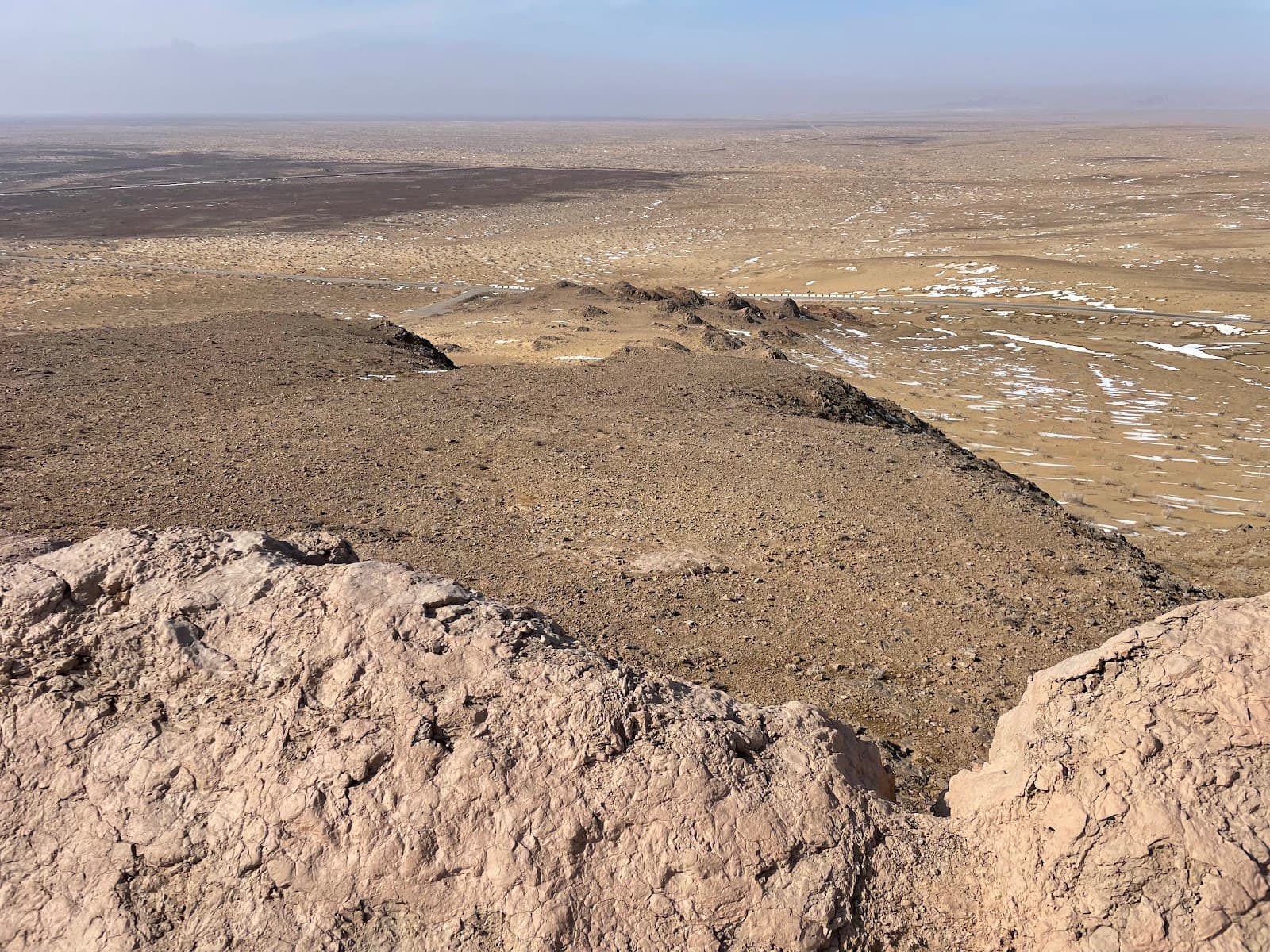
Ayaz-Kala Karakalpakstan Uzbekistan
Ayaz-Kala, a monumental complex in Karakalpakstan, Uzbekistan, stands as a profound testament to millennia of continuous cultural traditions, reflecting deep ancient Indian origins and its role in the broader tapestry of Indic civilization along the Silk Road [4]. This site, comprising three distinct fortresses, integrates Khorezmian military architecture with significant elements of Zoroastrian fire temple design and potential Indic religious influences [4]. Ayaz-Kala 1, dating to the 4th-3rd century BCE, is a rectangular fortress measuring 182 by 152 meters, perched atop a 100-meter-high hill, offering strategic views over the Kyzylkum Desert [5]. Its defensive system features double walls, approximately 10 meters high and 2.2 to 2.4 meters thick at the base, constructed from dried mud brick with packed earth infill [5]. A vaulted corridor, about 2 meters wide, runs between the inner and outer walls, providing a sheltered passageway for archers, who could fire through regularly spaced slits [5]. An upper open-air gallery further enhanced defensive capabilities [5]. The sole entrance, located in the southern wall, is a fortified gatehouse with a square enclosure, designed as a labyrinthine passage forcing attackers to turn 90 degrees, exposing them to fire from multiple angles [1]. Ayaz-Kala 2, an oval feudal fortress from the 6th-8th century CE, sits on a 40-meter-high conical hill and includes a palace with residential quarters, ceremonial halls supported by multiple columns, and a fire temple adorned with wall paintings [5]. Ayaz-Kala 3, a large parallelogram-shaped garrison from the 1st-2nd century CE, spans approximately 5 hectares with external walls 7.5 meters wide and circular watchtowers 8 meters in diameter, built with 'paksha' (cob) in lower sections and adobe blocks in upper parts [1] [5]. Archaeological excavations have revealed remnants of fire temples, providing evidence of Zoroastrian practices and their connections to Vedic fire worship traditions, with stone platforms and foundations suggesting a 'Garbhagriha'-like space for rituals, echoing layouts found in ancient Indian texts like the Agni Purana [4] [1]. The strategic elevated positioning of these structures aligns with Zoroastrian cosmological beliefs and principles akin to Vastu Shastra, emphasizing harmony with natural energies [4]. The site is currently in a state of partial preservation, with ongoing archaeological research and structural stabilization efforts under UNESCO oversight [4]. Visitor access is available daily from 9:00 AM to 5:00 PM, with an entry fee of UZS 25,000 for foreigners, and limited facilities including parking and restrooms [4]. The complex stands as a profound testament to India's enduring cultural legacy, demonstrating the deep historical roots and continuous traditions of architectural and spiritual exchange across ancient Asia [4]. The site is operationally ready for visitors, offering a tangible connection to ancient Indic cultural continuity [4].
Quick Links
Plan Your Heritage Journey
Get personalized recommendations and detailed visitor guides