Has Inheritage Foundation supported you today?
Your contribution helps preserve India's ancient temples, languages, and cultural heritage. Every rupee makes a difference.
Secure payment • Instant 80G certificate
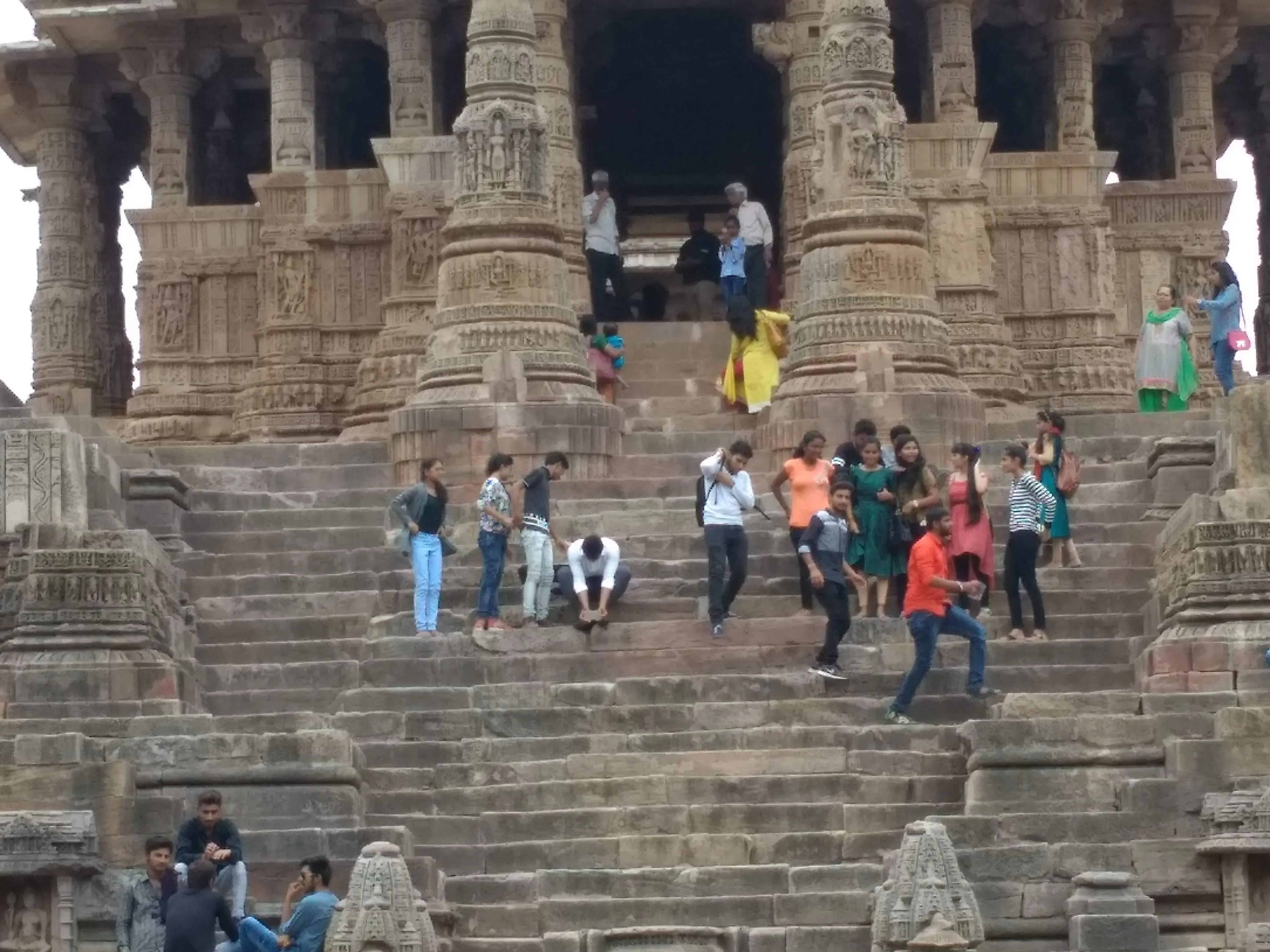
Modhera Sun Temple Mehsana
The dawn sun cast long shadows across the exquisitely carved stone, illuminating the Modhera Sun Temple in a way that felt almost reverential. Having explored countless temples across North India, from the soaring peaks of the Himalayas to the plains of the Gangetic belt, I thought I had become somewhat jaded to the grandeur of ancient architecture. Modhera, however, stopped me in my tracks. This wasn't just another temple; it was a symphony in stone, a testament to the Solanki dynasty's devotion to the sun god, Surya. Located in Modhera, a small village in Gujarat's Mehsana district, the temple complex is divided into three distinct parts: the Surya Kund (stepwell), the Sabha Mandap (assembly hall), and the Guda Mandap (sanctum sanctorum). My exploration began with the Surya Kund, a massive rectangular stepwell descending several stories into the earth. Unlike utilitarian stepwells I'd seen elsewhere, this one was ornate, with over 108 miniature shrines carved into its sides, dedicated to various deities. Imagine descending into the earth surrounded by intricate carvings of gods and goddesses, the cool air a welcome respite from the Gujarati heat. It felt like stepping back in time, witnessing a sacred ritual bath frozen in stone. From the stepwell, a flight of steps led me to the Sabha Mandap, the assembly hall. This pillared marvel is a masterpiece of intricate carvings. Each pillar tells a story, depicting scenes from the epics, celestial nymphs, and intricate geometric patterns. The play of light and shadow through the pillars created an ethereal atmosphere, making it easy to imagine the vibrant gatherings that must have once taken place within these walls. I spent a considerable amount of time simply circling the hall, tracing the carvings with my fingers, trying to decipher the stories they whispered. The sheer density of the ornamentation was breathtaking; every inch of the stone seemed to pulsate with life. Finally, I reached the Guda Mandap, the sanctum sanctorum, now bereft of its original idol. Even without the presiding deity, the space held a palpable sense of sanctity. The towering shikhara, though partially ruined, still reached towards the sky, a symbol of aspiration and devotion. The walls of the sanctum were covered in intricate carvings depicting Surya in his various forms, riding his chariot across the heavens. The level of detail was astonishing; the sculptor had captured the very essence of the sun god's power and radiance. One of the most striking aspects of the Modhera Sun Temple is its precise alignment with the cardinal directions. During the equinoxes, the first rays of the rising sun would illuminate the image of Surya in the sanctum, a feat of architectural ingenuity that underscores the deep astronomical knowledge of the Solanki architects. Although I wasn't there during the equinox, I could still visualize the spectacle, the sun's golden rays piercing the darkness and bathing the deity in light. As I walked away from the temple, the setting sun painting the sky in hues of orange and gold, I couldn't help but feel a sense of awe. Modhera is more than just a collection of stones; it's a living testament to the artistic and engineering prowess of a bygone era. It's a place where history, mythology, and architecture converge to create an experience that is both humbling and inspiring. For anyone seeking a glimpse into India's rich cultural heritage, the Modhera Sun Temple is an absolute must-see. It's a journey not just through space, but through time itself.
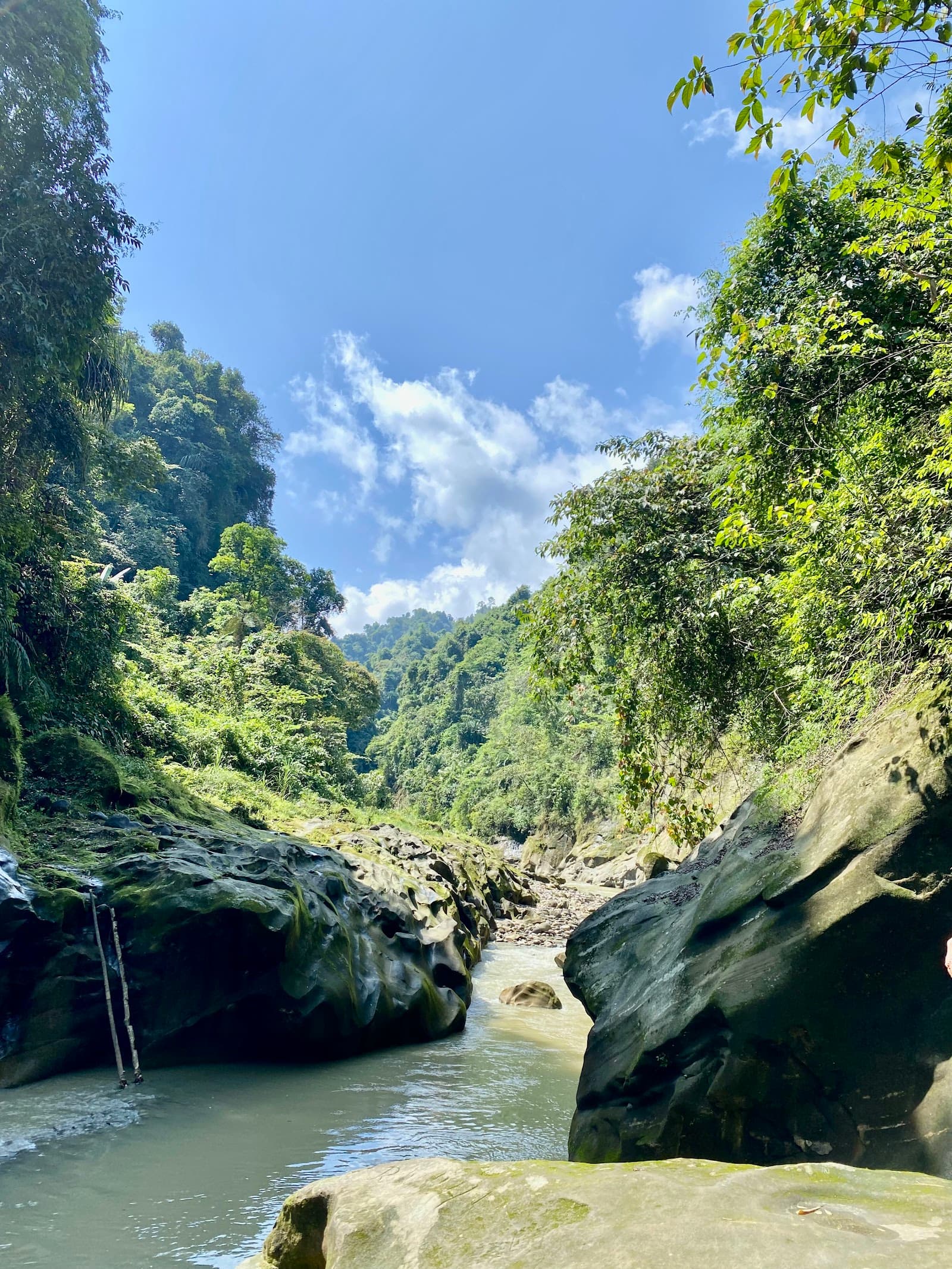
Akashiganga Temple Along West Siang
In Arunachal Pradesh's West Siang district, Akashiganga emerges as an ancient temple complex, a candidate for UNESCO World Heritage recognition ([1]). The routes leading to it present picturesque vistas of the Himalayan foothills ([2]). During the Pala period, around 1350 CE, this sacred site was established, distinguished by its Nagara-style architecture and curvilinear tower ([3][4]). Predominantly, stone and timber were employed in its construction, reflecting the area's natural resources ([3]). What makes Akashiganga notable is the convergence of Hinduism and indigenous Adi traditions ([2]). The primary Shiva temple, though unpretentious, possesses profound spiritual importance for the Adi community ([1]). Eschewing the intricate embellishments common in South Indian temples, the temple's aesthetic accentuates the inherent beauty of its surroundings ([2]). Vedic astronomical principles guided the temple's layout, harmonizing it with cosmic energies ([5]). Intricate carvings embellish the temple walls, illustrating deities and narratives from Hindu mythology ([4]). Akashiganga, which translates to "Sky River," is traditionally associated with the Ganges River, enhancing its sacred status ([1][2]). Pilgrims undertake journeys to offer prayers, drawn to the site's palpable spiritual aura ([3]). As an embodiment of the region's cultural legacy and the enduring strength of faith, Akashiganga stands as a testament to Arunachal Pradesh's rich heritage ([1]). The architectural style incorporates a tiered roof, adding to its unique character ([3]). Bamboo and cane are also integrated into the structure, showcasing the use of local materials ([3]). The Pala Dynasty's patronage is evident in the temple's design and construction ([3]).
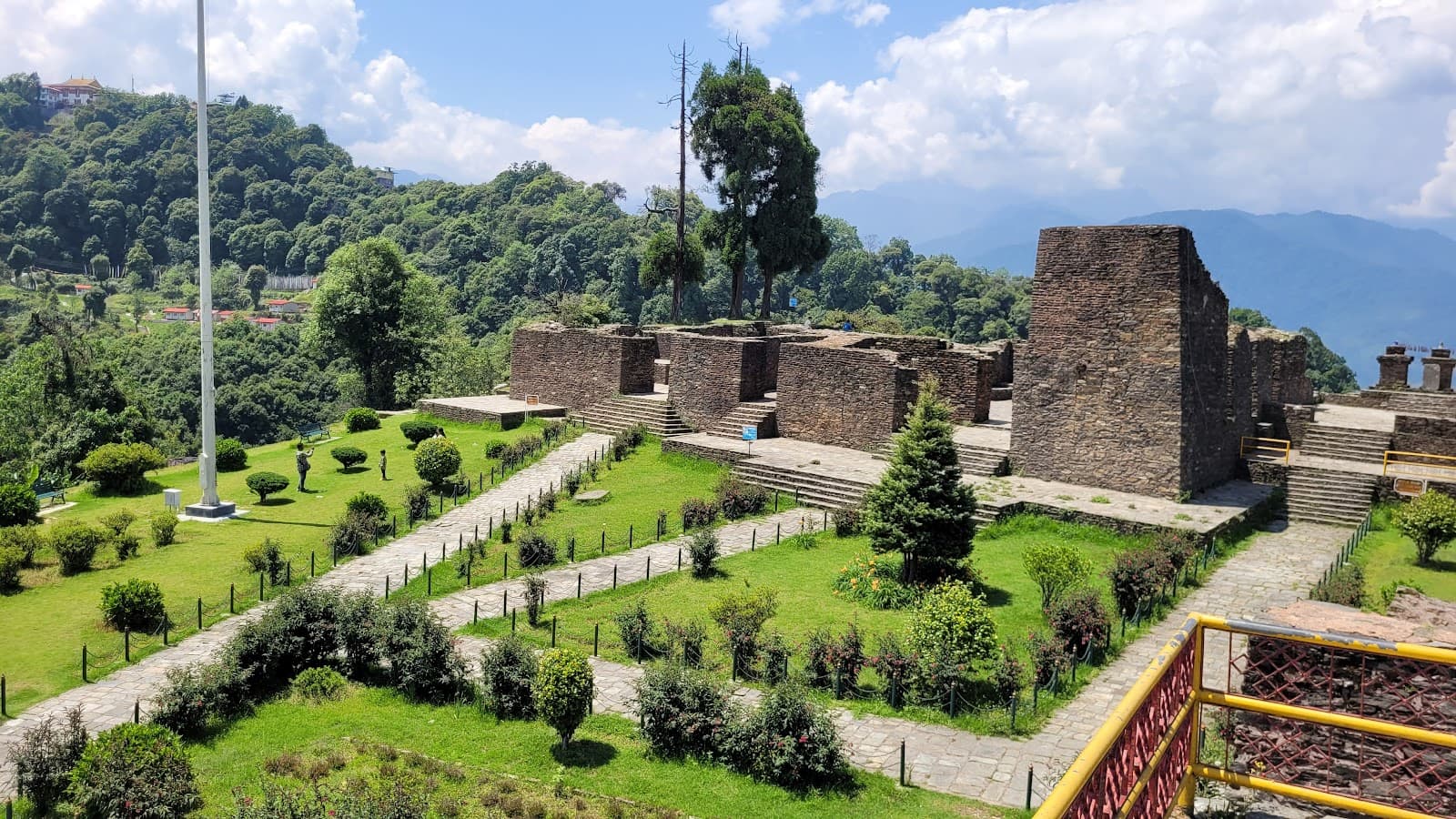
Rabdentse Fort Pelling
The mists clung to the Rabdentse ruins, shrouding the crumbling stone walls in an ethereal veil. Ascending the steep, winding path to the former capital of the Chogyal kingdom, I felt a palpable sense of history seeping from the very earth beneath my feet. Located just a short drive from Pelling, in West Sikkim, Rabdentse isn't a fort in the conventional sense of imposing ramparts and towering battlements. Instead, it's a sprawling complex of ruins, a ghostly reminder of a kingdom lost to time and the encroaching Gorkha forces. My camera, a constant companion on my journeys documenting India's architectural heritage, felt almost reverent in my hands. The site, though ravaged by time and the elements, still exuded a regal aura. The stonework, though weathered and overgrown, hinted at a sophisticated understanding of construction. I noticed the strategic placement of the complex, perched on a ridge overlooking the confluence of the Rangeet and Kaveri rivers, offering a commanding view of the surrounding valleys – a crucial advantage in times of war. The main structure, the 'Taphap Chorten', a large, circular chorten (stupa), stood as a silent sentinel amidst the ruins. Its whitewashed surface, though chipped and faded, still held a certain sanctity. Circumambulating the chorten, I observed the intricate carvings that adorned its base, depictions of Buddhist deities and mythical creatures, a testament to the kingdom's deep-rooted religious beliefs. Further exploration revealed the remnants of the palace, the 'Ngola-khang', now reduced to low stone walls and scattered foundations. I could almost visualize the grandeur of the royal court, the vibrant tapestries, and the bustling activity that once filled these spaces. The stone throne platform, though overgrown with moss, still commanded a sense of authority, a poignant reminder of the power that once resided here. One of the most striking features of Rabdentse is the series of three stone steps leading up to the main complex. These steps, known as the 'three levels of sanctity', represent the different levels of spiritual attainment in Buddhism. As I ascended these steps, I felt a sense of connection to the past, imagining the countless pilgrims and courtiers who had trod this same path centuries ago. The views from the fort were breathtaking. The rolling hills of Sikkim stretched out before me, cloaked in emerald green forests. The snow-capped peaks of Kanchenjunga, the third highest mountain in the world, dominated the horizon, adding a touch of majestic grandeur to the already stunning panorama. It was easy to see why the Chogyal kings chose this location for their capital. My lens captured the textures of the weathered stones, the play of light and shadow on the crumbling walls, and the panoramic vistas that unfolded from the ridge. Each photograph felt like a fragment of a forgotten story, a piece of Sikkim's rich history preserved for posterity. Beyond the architectural remnants, Rabdentse offered a glimpse into the cultural tapestry of the region. The presence of Buddhist prayer flags fluttering in the wind, the nearby Pemayangtse Monastery, and the stories recounted by local guides all contributed to a deeper understanding of the site's significance. Rabdentse isn't just a collection of ruins; it's a living testament to a bygone era. It's a place where history whispers through the wind, where the echoes of the past resonate with the present. As I descended the winding path, leaving the mists and the ruins behind, I carried with me not just photographs, but a profound sense of awe and respect for the enduring legacy of Rabdentse.
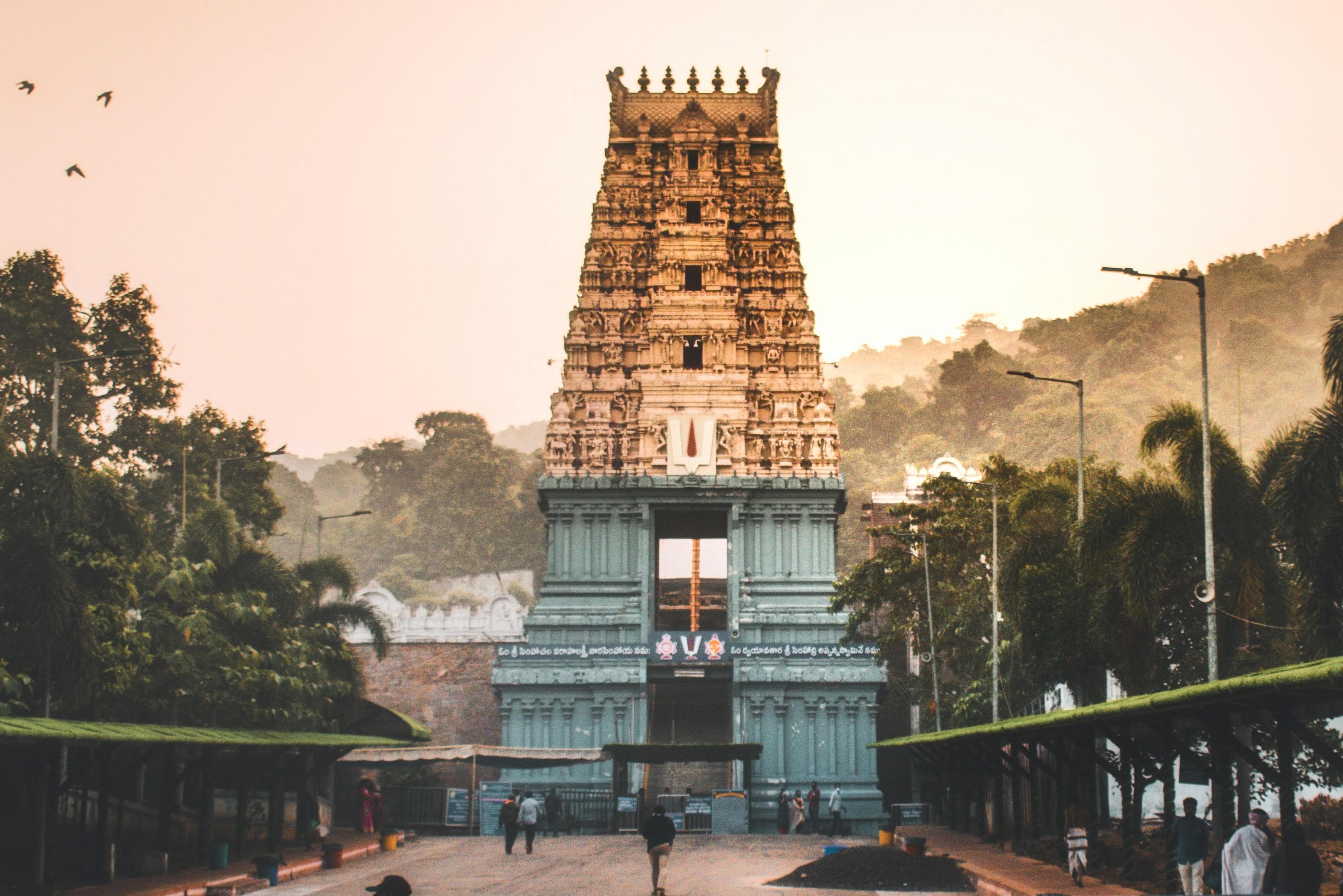
Simhachalam Varaha Lakshmi Narasimha Temple Visakhapatnam
The salty tang of the Bay of Bengal hung in the air as I climbed the steps leading to the Varaha Lakshmi Narasimha Temple at Simhachalam. Having explored the basalt-carved wonders of Maharashtra’s caves and temples, I was eager to experience the distinct architectural flavour of Andhra Pradesh. And Simhachalam, perched atop a hill overlooking Visakhapatnam, promised something unique. The temple complex, enclosed within high walls, exudes an aura of quiet power. Unlike the open courtyards I’m accustomed to in Maharashtra, here, the structures are tightly knit, creating a sense of intimacy and concentrated devotion. The main gopuram, though not as towering as some I’ve seen, possesses a distinct Dravidian elegance, its intricate carvings narrating tales from the Puranas. The use of light-coloured stone, possibly Khondalite, gives the temple a luminous quality, contrasting sharply with the dark, weathered basalt of my home state. As I approached the sanctum sanctorum, the air grew thick with the scent of sandalwood and incense. The presiding deity, Varaha Lakshmi Narasimha, is unique – a manifestation of Vishnu as Narasimha, the man-lion, covered in sandalwood paste throughout the year, except for one day, 'Chandanayatra Utsavam'. This practice, I learned, stems from a legend where the deity’s fiery rage was cooled by the application of sandalwood. The anticipation of seeing this unique form, shrouded in mystery, heightened my excitement. Finally, I stood before the sanctum. The dimly lit space, filled with chanting, allowed only a glimpse of the sandalwood-covered deity. While I couldn’t discern the actual features of the idol, the palpable energy within the sanctum was undeniable. It was a powerful, almost visceral experience, different from the serene contemplation I often feel in Maharashtra’s cave temples. Here, the atmosphere was charged with a raw, vibrant devotion. Stepping out of the sanctum, I took time to appreciate the intricate carvings adorning the temple walls. The depictions of gods, goddesses, and mythical creatures showcased a distinct regional style, different from the Chalukyan and Yadava influences I’m familiar with. The narrative panels, though weathered by time and the coastal climate, still spoke volumes about the rich mythology associated with the deity. I noticed the recurring motif of the Varaha avatar, the boar incarnation of Vishnu, highlighting the temple’s dedication to this particular form. The temple complex also houses several smaller shrines dedicated to other deities, each with its own unique character. I was particularly drawn to the shrine of Andal, a female Alvar saint, whose devotion to Lord Vishnu is legendary. The presence of this shrine within the complex spoke to the inclusive nature of the temple’s spiritual embrace. As I descended the hill, the city of Visakhapatnam sprawled before me, a vibrant tapestry of modern life against the backdrop of the ancient Eastern Ghats. The visit to Simhachalam had been a journey not just to a different state, but to a different spiritual landscape. The temple’s unique rituals, distinct architecture, and the palpable devotion of the pilgrims offered a fresh perspective on the diverse tapestry of Hindu worship. It reinforced the idea that while the essence of faith remains constant, its expressions can be wonderfully varied and regionally specific. The Varaha Lakshmi Narasimha Temple, with its sandalwood-clad deity and vibrant energy, stands as a testament to this rich diversity. It's a must-see for anyone seeking to explore the architectural and spiritual wonders of Andhra Pradesh, and a stark, fascinating contrast to the cave temples of Maharashtra I know so well.
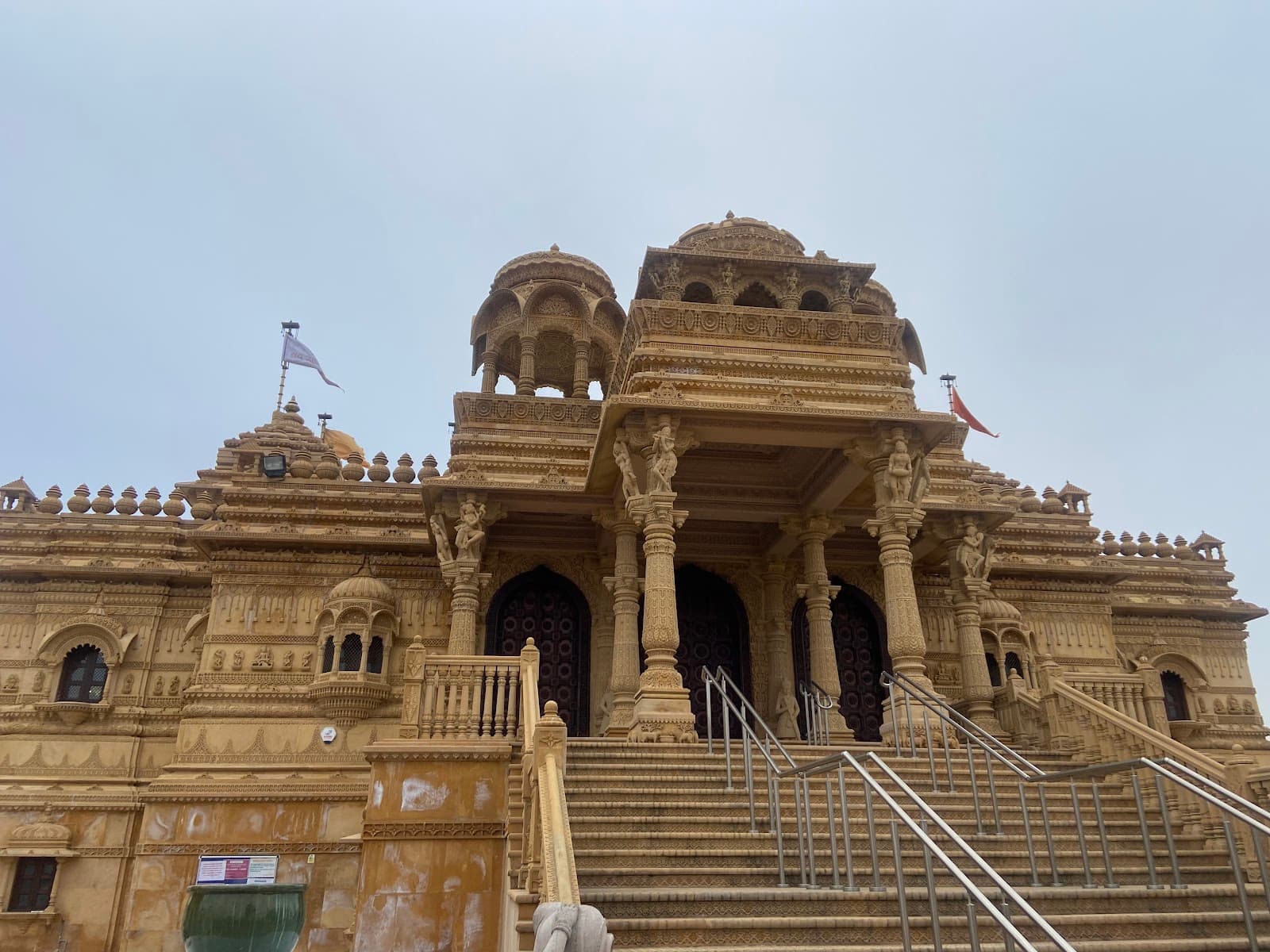
Shri Sanatan Hindu Mandir Wembley
Shri Sanatan Hindu Mandir Wembley stands beside Ealing Road’s South Asian high street as a stone mandir opened in August 2010 after fourteen years of community fundraising and global craftsmanship coordinated by Shree Sanatan Hindu Mandir Trust ([1][2]). The temple houses shrines to more than 40 deities including Shri Ram, Hanuman, Mahalakshmi, Durga, Ganesh, Shiva, and Jhulelal, supporting North Indian, Gujarati, Sindhi, and Punjabi congregations who gather daily for arti at 10:30 AM and 7:00 PM. The mandir opens 8:30 AM-6:30 PM, with volunteers managing security checks, shoe storage, queue management, and guided tours that interpret thousands of hand-carved panels depicting Puranic narratives ([1]). Community kitchens provide prasad and weekly annadhanam, while the cultural hall hosts Sanskrit classes, Sanatan Dharma discourse, yoga, wedding ceremonies, and interfaith forums. Priest teams deliver rites of passage, ancestor shraddh, and homa in a dedicated yajna shala; welfare desks coordinate blood drives, food pantry donations, and emergency relief with Brent Council. The temple remains a civic landmark during Diwali Processions, Rathyatra, and Janmashtami celebrations which utilise Ealing Road’s pedestrianised zone, and its operations rely on a building management suite monitoring lighting, underfloor heating, and crowd control CCTV to protect the intricate stone surfaces and ensure safety for thousands of visitors each week ([1][3]).
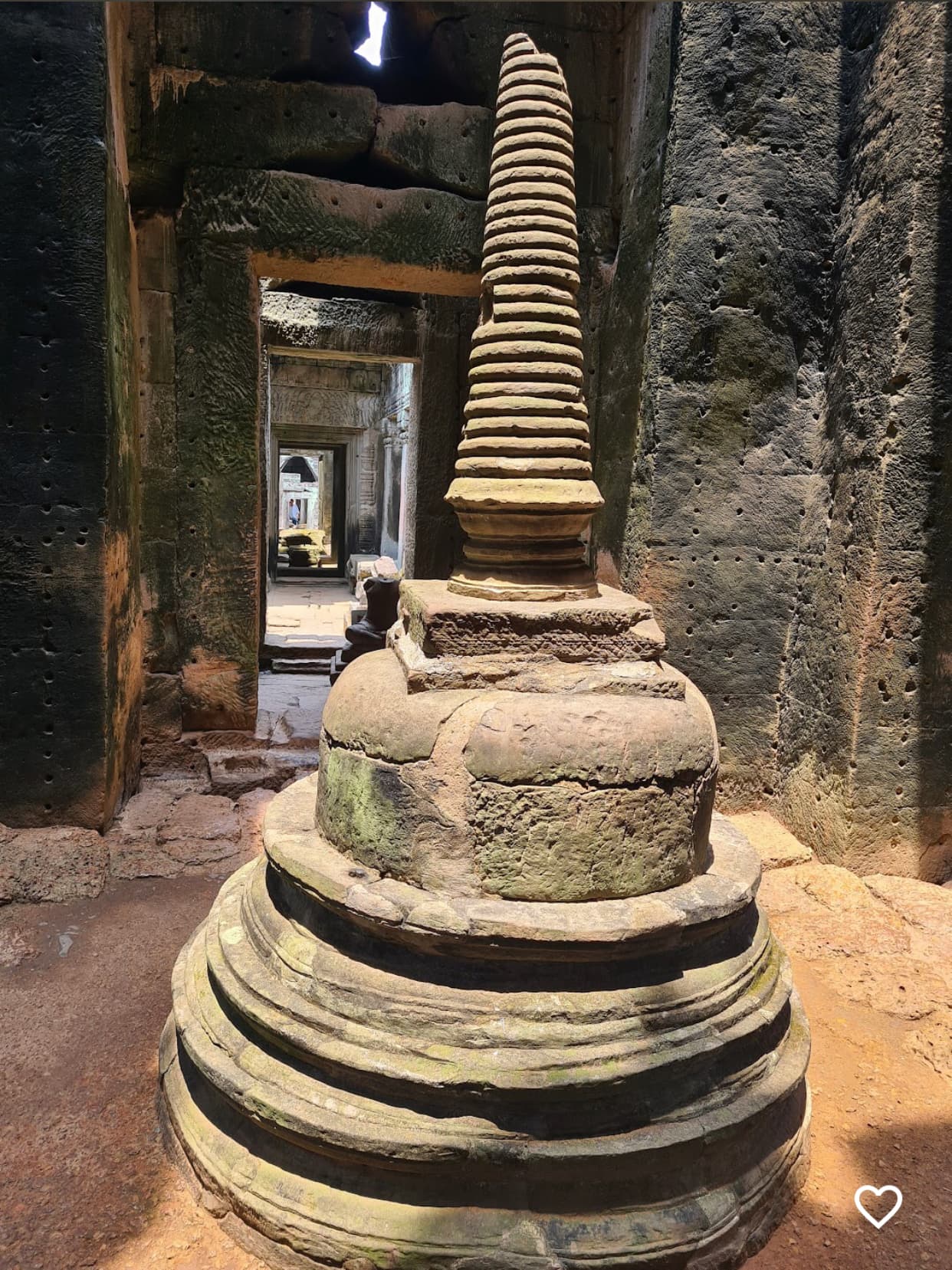
Preah Khan Siem Reap Cambodia
Preah Khan, sprawling across 56 hectares of jungle-enveloped terrain northeast of Angkor Thom, represents one of the most extensive and architecturally complex temple complexes in Southeast Asia, constructed in the late 12th century CE during the reign of King Jayavarman VII as a Mahayana Buddhist monastery and university that seamlessly integrated Vishnu and Shaiva iconography, creating a powerful testament to the sophisticated religious syncretism that characterized Khmer religious practices and the continued transmission of Indian Buddhist and Hindu traditions to Southeast Asia. The temple complex, originally serving as a major center of Buddhist learning that housed over 97,840 people including monks, students, teachers, and support staff according to inscriptions, features extraordinary architectural elements that demonstrate the synthesis of Indian Buddhist monastery architecture with Khmer building techniques, while the temple's extensive decorative programs including numerous devatas, apsaras, and mythological scenes demonstrate the sophisticated understanding of both Indian Buddhist and Hindu iconography possessed by Khmer artists. The temple's name, meaning "Sacred Sword," refers to a legendary weapon that was believed to be housed within the complex, while the temple's architectural layout, with its central sanctuary surrounded by multiple enclosures, libraries, and numerous smaller structures, follows sophisticated Indian Buddhist monastery planning principles that were systematically transmitted from the great monastic centers of India including Nalanda and Vikramashila. Archaeological evidence reveals that the temple served as both a major center of Mahayana Buddhist learning and a repository of Vishnu and Shaiva iconography, demonstrating the remarkable religious syncretism that characterized Khmer religious practices, while the discovery of numerous inscriptions provides crucial evidence of the site's role in the transmission of Indian Buddhist and Hindu texts and practices to Southeast Asia. The temple's extensive decorative programs, executed with remarkable artistic sophistication, include elaborate lintels and pediments depicting scenes from Hindu mythology including Vishnu reclining on the serpent Shesha, Shiva dancing, and numerous other scenes that demonstrate the direct transmission of Indian Hindu iconographic programs and narrative traditions from the great artistic centers of India to Cambodia. Today, Preah Khan stands as part of the UNESCO World Heritage Site and represents one of the most important Mahayana Buddhist monasteries in Southeast Asia, serving as a powerful testament to the transmission of Indian Buddhist and Hindu culture to Southeast Asia, while ongoing archaeological research and conservation efforts continue to protect and study this extraordinary cultural treasure that demonstrates the profound impact of Indian civilization on Southeast Asian religious and artistic traditions. ([1][2])
Anuradhapura Ancient City North Central Province Sri Lanka
Anuradhapura, located in Sri Lanka's North Central Province, served as the island's first capital, flourishing from around 350 BC for over 1,300 years ([1][2]). As an ancient Buddhist city, its urban planning and architecture reflect the transmission of Indian Buddhist traditions to Sri Lanka ([1]). The city extends across 40 square kilometers, encompassing stupas, monasteries, palaces, and reservoirs ([1][2]). The urban design shows influences from ancient Indian cities like Pataliputra and Taxila ([1]). Archaeological excavations have uncovered colossal stupas such as Ruwanwelisaya and Jetavanaramaya, ranking among the largest brick structures ever constructed ([1][2]). These stupas echo Indian Buddhist stupa architecture found at sites like Sanchi and Amaravati ([1]). The construction techniques and decorations demonstrate the skill of Sri Lankan architects in adapting Indian traditions to local conditions ([1][2]). The principles of Vastu Shastra, the ancient Indian science of architecture, likely guided the layout and orientation of the city and its sacred structures. Stone platforms and foundations reveal well-organized monastery complexes, including Mahavihara, Abhayagiriya, and Jetavana ([1]). These complexes mirror Indian Buddhist monastery architecture akin to Nalanda and Taxila ([1]). Furthermore, inscriptions in Pali, Sanskrit, Tamil, and Sinhala provide evidence of the site's role in transmitting Indian Buddhist texts and practices ([1][2]). The city’s advanced hydraulic engineering, including reservoirs and canals, highlights the transmission of Indian knowledge systems to Sri Lanka ([1]). Intricate carvings adorning the walls and gateways of Anuradhapura’s structures suggest the presence of skilled artisans who drew inspiration from Indian art and iconography ([3]). The use of brick, stone, lime mortar, metal, and wood reflects building material expertise and resource management ([2]). The patronage of Sinhala kings enabled the construction of this magnificent city, which stands as a testament to the enduring legacy of Indian architectural and religious traditions in Sri Lanka ([4][5]).
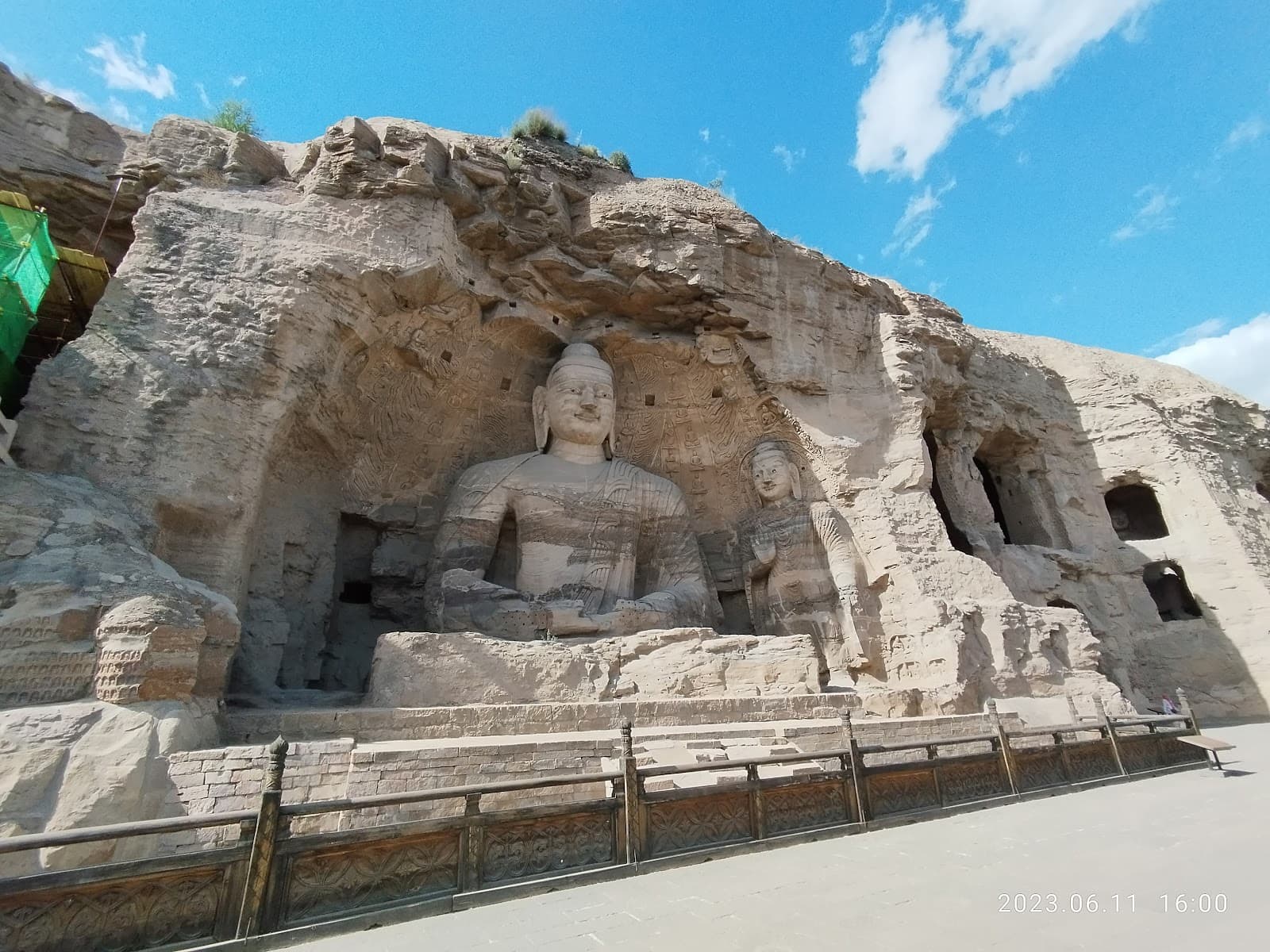
Yungang Grottoes Datong Shanxi China
The Yungang Grottoes, located in Yungang Town, Datong, Shanxi Province, China, stand as a monumental testament to the enduring legacy of Indian Buddhist art and its profound influence on East Asian cultural traditions, reflecting a continuous heritage spanning millennia [2] [3]. This UNESCO World Heritage Site comprises 252 caves and niches, housing over 51,000 statues carved into the sandstone cliffs, extending for approximately one kilometer along the Wuzhou Mountains [1] . The architectural style is deeply rooted in Gandhara-influenced and Indian rock-cut traditions, which were transmitted along the ancient Silk Road [2] [4]. The earliest and most significant phase of construction, known as the 'Tanyao Five Caves' (Caves 16-20), initiated around 460 CE, showcases colossal Buddha figures that adhere closely to the iconic forms developed in Gandhara, a significant Buddhist center in ancient northwestern India [2] [3]. These monumental Buddhas, such as the central seated figure in Cave 20, which measures approximately 13 meters in height, exhibit distinct Indian stylistic elements including plump cheeks, thick necks, elongated eyes, and robes that cling tightly to the body, rendered with schematic patterns [2] . The right shoulder of the main Buddha in Cave 20 is exposed, a characteristic feature of early Indian Buddhist iconography [2]. The structural elements within the grottoes often feature central pillars, a design adapted from Indian chaityas (sanctuary or prayer halls) found in sites like the Ajanta Caves in India, though at Yungang, these pillars frequently incorporate Chinese gable roofs [3] . The caves are carved directly into the natural rock, utilizing the local sandstone as the primary material. Decorative elements are rich and varied, including flame patterns and miniature seated Buddhas within the halos, as well as flying apsaras, lotuses, and honeysuckle motifs [1] [5]. The honeysuckle patterns, in particular, demonstrate influences from Greco-Roman art, filtered through Indian and Central Asian traditions, highlighting the multicultural integration at the site [5]. Cave 6, for instance, features an antechamber and a square main chamber supported by a central pillar, with walls divided into three vertical registers depicting scenes from the Buddha's life, such as the First Sermon at Deer Park, identifiable by deer carved on the Buddha's throne [2]. Technical details include the careful excavation of the caves to create vast interior spaces, some designed to accommodate thousands for Buddhist activities, as seen in the original design of Cave 3 . Currently, the Yungang Grottoes are subject to extensive conservation efforts, including advanced digital preservation techniques . Since 2003, high-precision 3D laser scanning and photogrammetry have been employed to create detailed digital models, ensuring comprehensive documentation and facilitating archaeological research and virtual exploration . The Yungang Grottoes Research Academy, in collaboration with various universities, has established the Digital Yungang Joint Laboratory to further these efforts, including the production of full-size 3D-printed replicas of caves, such as Cave 3 (17.9m x 13.6m x 10.0m) and Cave 18 (17 meters high), for exhibition and public education . These replicas, constructed from nearly 1000 3D-printed blocks reinforced with polymer materials and custom-lacquered to match the original stone, demonstrate innovative approaches to heritage dissemination . Ongoing physical conservation addresses threats such as water seepage, rain erosion, and weathering, with interventions adhering to principles of minimal impact [1] . The site is fully operational, offering visitor access to the grottoes and engaging programming, while maintaining strict compliance with international heritage preservation standards [1] .
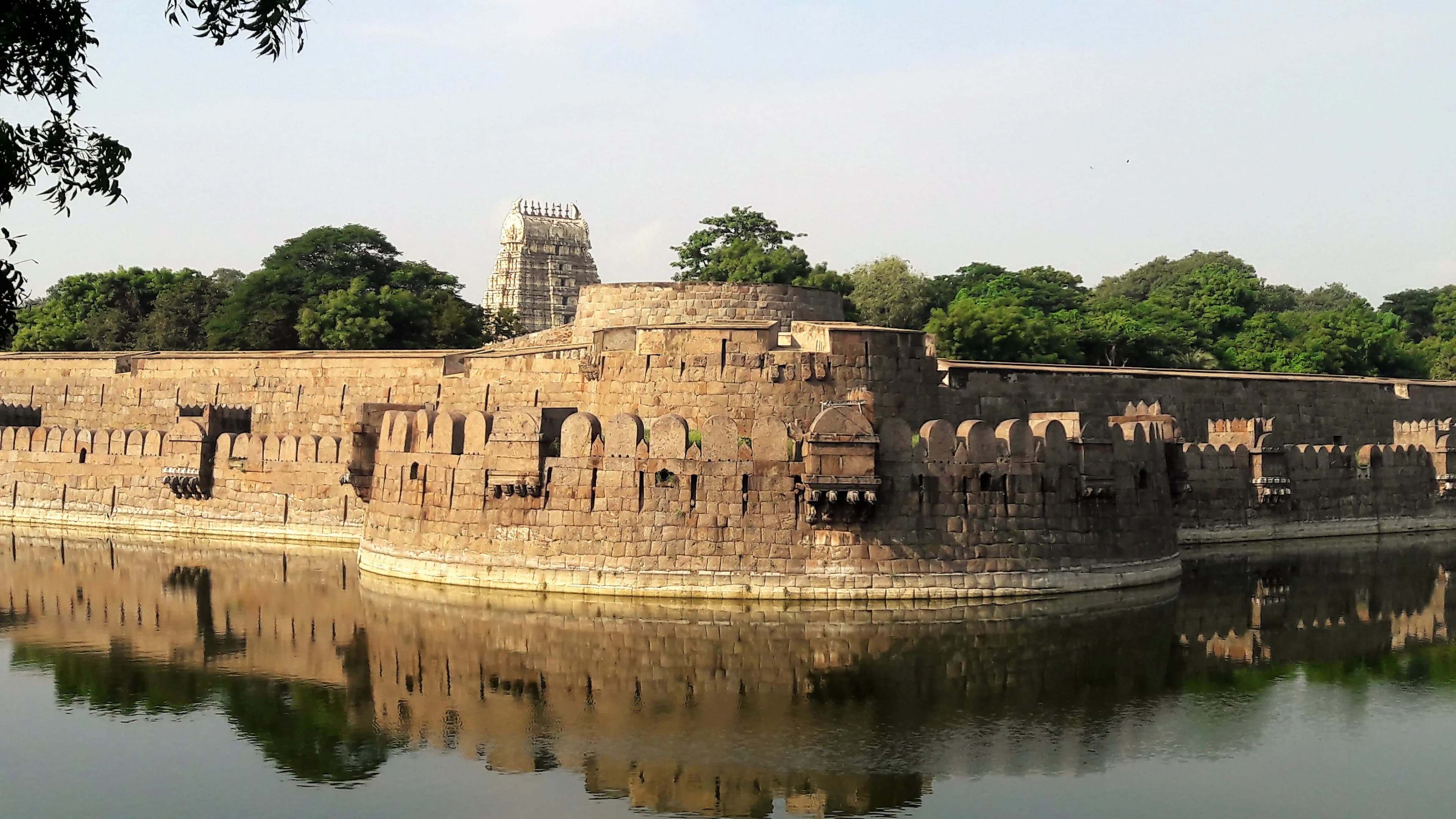
Vellore Fort Vellore
The imposing granite ramparts of the Vellore Fort rose before me, shimmering under the Tamil Nadu sun. Having explored the intricate stone carvings of Gujarat's architectural wonders, I was eager to experience the distinct Dravidian style of this 16th-century marvel. The sheer scale of the fort, its moat still brimming with water, immediately impressed. This wasn't just a military stronghold; it was a statement of power etched in stone and earth. Crossing the sturdy bridge over the moat, I felt a palpable shift in atmosphere. The outside world faded, replaced by the hushed grandeur of history. The main entrance, the Bali Kota, was a formidable gateway, its thick wooden doors reinforced with iron. The architecture here, unlike the ornate carvings I was accustomed to back home, was characterized by robust functionality. The emphasis was on strength and defense, a stark contrast to the celebratory nature of many Gujarati temples. Inside, the fort unfolded like a layered narrative. The Jalakanteswara Temple, nestled within the fort's walls, was a breathtaking example of Vijayanagara architecture. The intricate carvings covering the gopuram, though weathered by time, were a testament to the skill of the artisans. I spent a considerable amount of time studying the depictions of deities and celestial beings, noting the distinct stylistic differences from the iconography found in Gujarat's temples. The temple's location within the fort itself spoke volumes about the intertwined nature of religion and power during that era. My exploration led me to the Kalyan Mahal, a palace within the fort. Here, the architectural style shifted again. While the base retained the robust granite construction, the upper levels displayed delicate arches and balconies, hinting at Mughal influences that seeped in later centuries. Peering through the arched windows, I imagined the lives of those who once resided within these walls – royalty, soldiers, and perhaps even artists who adorned the temple with its intricate carvings. One of the most striking features of the Vellore Fort is its moat. Unlike many dry moats I've encountered, this one was filled with water, creating a formidable natural barrier. I learned that crocodiles were once introduced into the moat as an added layer of defense, a detail that sent a shiver down my spine. Circling the fort along the ramparts, I could appreciate the strategic brilliance of its design. The high walls, the wide moat, and the strategically placed bastions offered a panoramic view of the surrounding plains, allowing defenders to anticipate any approaching threat. Descending into the dark, damp cellars known as the Tipu Mahal, I felt a palpable sense of history. These underground chambers, once used for storage and perhaps even as prisons, offered a glimpse into the less glamorous aspects of fort life. The air was thick with the scent of damp earth and the echoes of the past seemed to linger in the silence. As I left the Vellore Fort, the late afternoon sun casting long shadows across the ramparts, I carried with me a deeper understanding of South Indian military architecture. The fort was not merely a collection of stones and mortar; it was a living testament to the ingenuity and resilience of those who built and defended it. The experience was a powerful reminder that architecture, at its best, can tell a story, and the Vellore Fort had whispered its tales to me in a language both powerful and profound. The contrast with the architectural traditions of my home state, Gujarat, only served to enrich my appreciation for the diversity and richness of India's architectural heritage.
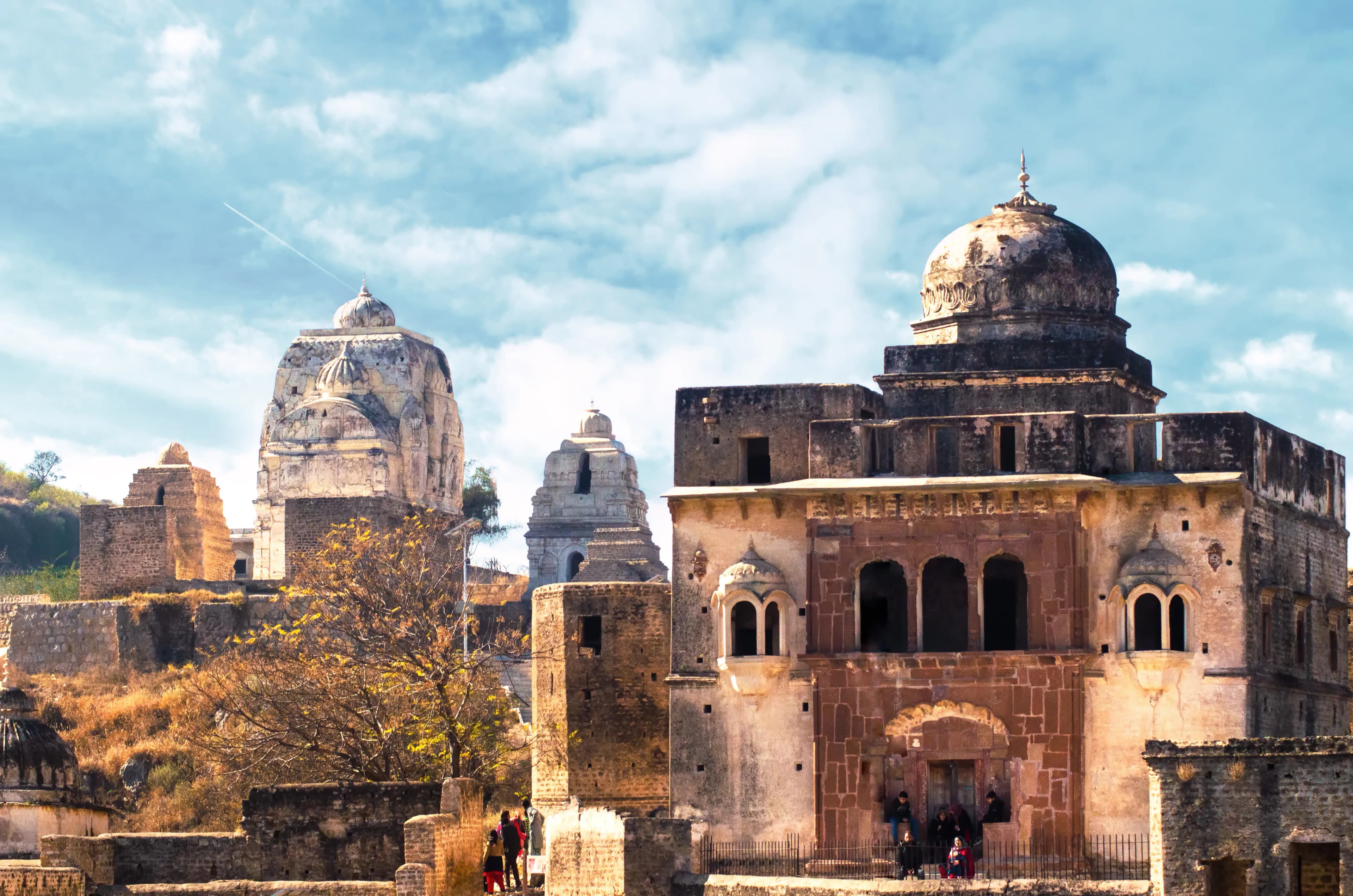
Katas Raj Temples Chakwal
The midday sun beat down on the Katas Raj Temples, casting long shadows across the courtyard and reflecting blindingly off the placid surface of the sacred pond. As a Maharashtrian steeped in the cave and temple architecture of my home state, I felt a strange sense of familiarity mixed with awe standing amidst this ancient complex in the heart of Punjab, Pakistan. The journey here, through the undulating Salt Range, had already hinted at the historical significance of this site, a significance that resonated far beyond geographical boundaries. The first structure that drew my attention was the Ramachandra Mandir, its crumbling sandstone walls whispering tales of centuries past. Unlike the basalt rock-cut marvels of Maharashtra, these temples were constructed from finely dressed stone, exhibiting a distinct architectural style. The intricate carvings, though weathered by time and neglect, still bore testament to the skill of the artisans who had painstakingly created them. I noticed a striking similarity in the decorative motifs – floral patterns and geometric designs – echoing elements I’d seen in the Hemadpanti temples back home. However, the overall structure, with its shikharas reaching towards the sky, leaned more towards the North Indian Nagara style, a departure from the Deccan styles I was accustomed to. Circling the sacred pond, or Katas, I observed the Hari Singh Haveli, a relatively recent addition to the complex, its stark white walls contrasting sharply with the aged sandstone of the older structures. The haveli, with its Mughal-influenced architecture, spoke of a later period, a layering of history upon history that made this site even more compelling. The pond itself, the heart of the complex, held an almost ethereal stillness. Legend has it that Shiva shed tears upon Sati's death, and two of those tears formed this pond and another in Pushkar, Rajasthan. Gazing at the water, I could almost feel the weight of centuries of devotion and belief that had gathered around this sacred spot. Moving towards the Shiva temple, I was struck by the stark contrast between its current state and its imagined past. The main shrine, dedicated to Shiva, was partially collapsed, the remnants of its grandeur scattered around. Yet, even in ruins, it exuded an undeniable aura of sanctity. I climbed carefully over fallen stones, trying to piece together the original layout in my mind. The remnants of pillars, carved with intricate detail, hinted at a once-magnificent mandapa. The sanctum sanctorum, though damaged, still held a lingering sense of reverence. The smaller shrines surrounding the main temple, dedicated to various deities, were in slightly better condition. I spent time examining the carvings on the exterior walls, noting the depictions of gods and goddesses, celestial beings, and scenes from Hindu mythology. The style, while sharing some similarities with the carvings I’d seen in Ellora and Ajanta, possessed a unique regional flavour. The use of sandstone, as opposed to the basalt of Maharashtra, also lent a different texture and feel to the artwork. My exploration of the Katas Raj Temples was a journey through time, a tangible connection to a shared past. While the ravages of time and neglect were evident, the spiritual and historical significance of the site remained undiminished. Standing amidst these ancient stones, I felt a profound sense of continuity, a reminder that the threads of history, culture, and faith weave intricate patterns across borders and through time. The Katas Raj Temples, though geographically distant from my familiar Maharashtra, resonated with a familiar echo of devotion and artistic expression, a testament to the enduring power of human belief and creativity.
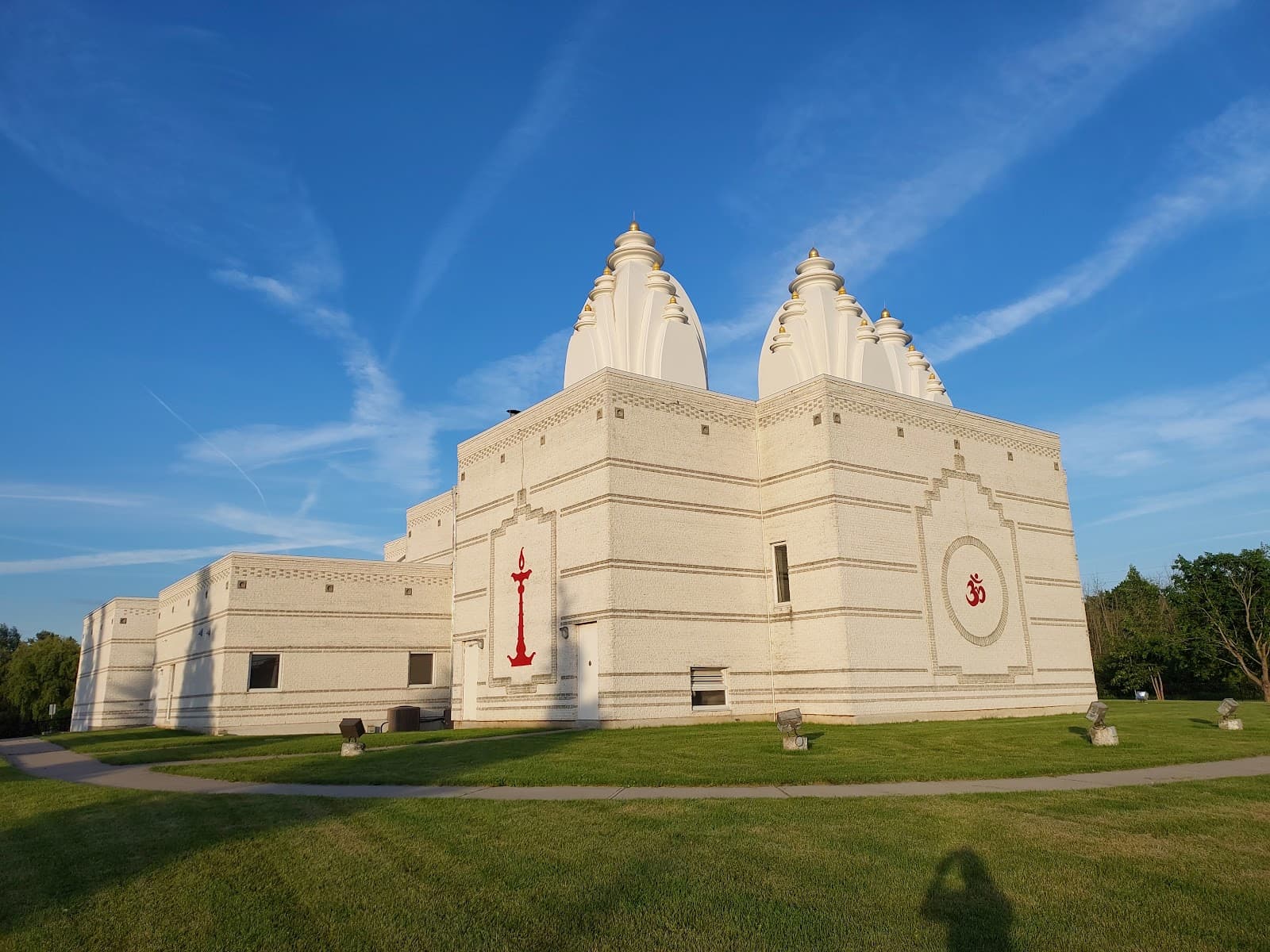
Hindu Temple of Ottawa-Carleton Ottawa
Hindu Temple of Ottawa-Carleton Ottawa is dedicated to multiple deities with a principal focus on Lord Vishnu and anchors the south Ottawa corridor as the region’s oldest Hindu mandir ([1][2]). Daily worship runs from 8:00 AM to 12:00 PM and 5:00 PM to 9:00 PM, and the bilingual front desk routes visitors through the foyer shoe racks before ushers guide them into the double-height mandapa, keeping wheelchair lanes clear along the polished granite floor ([1][5]). Priests conduct archana in Tamil, Hindi, and English while volunteers manage RFID-counted queues during Vaikunta Ekadasi, Navaratri, and community food drives, ensuring separated lines for annadhanam service in the cafeteria wing ([1][3]). The cultural hall seats 400 for language classes, music rehearsals, and city-led newcomer orientations, and is equipped with induction ranges, grease interceptors, and HEPA filtration to keep air quality stable when prasadam is prepared for public events ([1][4]). Accessibility upgrades integrate Alberta spruce handrails, 1:12 ramps, and a platform lift that reaches the library mezzanine, while tactile wayfinding, hearing loop audio, and bilingual signage support seniors and newcomers navigating the campus ([2][5]). A building management system logs HVAC performance, humidity levels around the deities, and rainwater tank reserves so maintenance crews have weekday data before the evening aarti commences. Flu-shot clinics, mansion tax workshops, and newcomer resource fairs share the calendar with weekly satsang, demonstrating the temple’s civic readiness alongside devotional programming ([3][5]).
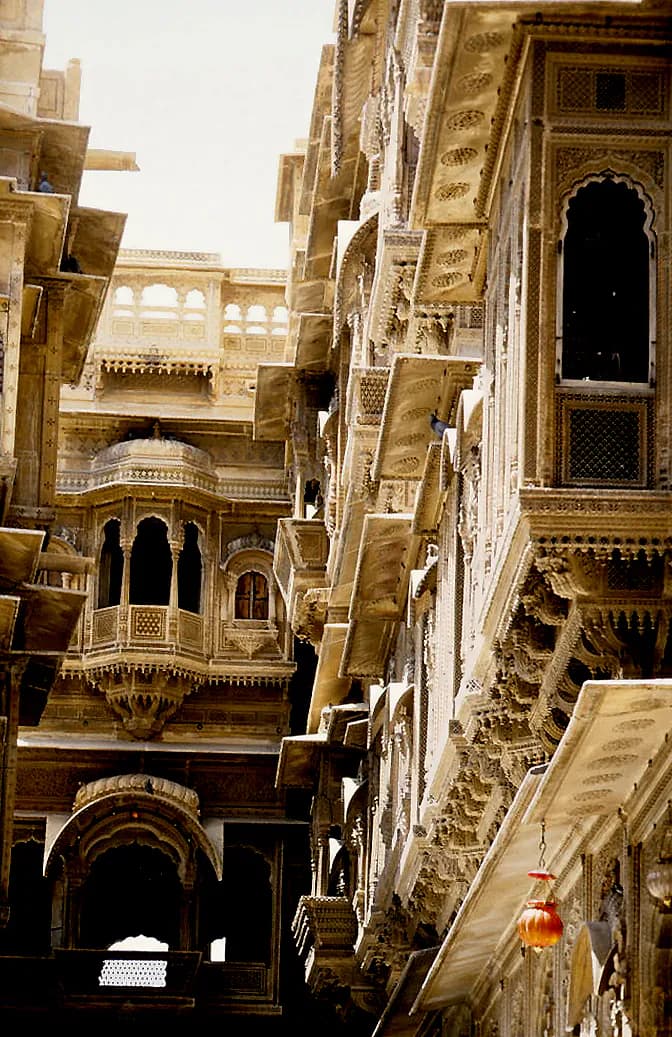
Patwon Ki Haveli Jaisalmer
The desert sun beat down on Jaisalmer's golden sandstone, casting long shadows that danced across the intricately carved facade of Patwon Ki Haveli. This wasn't just another haveli; it was a sprawling complex of five interconnected havelis, a testament to the opulence and artistry of a bygone era. As I stepped through the arched entrance of the first haveli, I felt a palpable shift, as if I'd stepped back in time to the 19th century. This wasn't just a visit; it was an immersion into the life of Guman Chand Patwa, a wealthy trader who commissioned this architectural marvel. The first haveli, believed to have been Guman Chand's own residence, is the most elaborate. The sheer scale of the intricate carvings covering every inch of the sandstone was breathtaking. Delicate jharokhas (overhanging enclosed balconies) jutted out, their intricate latticework filtering the harsh sunlight into dappled patterns on the inner courtyards. I peered through one of these jharokhas, imagining the women of the household observing the bustling street life below, shielded from view. The yellow sandstone, bathed in the afternoon light, glowed with a warm, honeyed hue, enhancing the richness of the carvings. Moving through the interconnected havelis, each with its own unique character, I noticed subtle variations in the architectural style. While the overarching theme of ornate carvings remained constant, some havelis featured more expansive courtyards, while others boasted exquisitely painted murals on the interior walls. These murals, though faded with time, still offered glimpses into the lives of the Patwa family – scenes of processions, courtly life, and even depictions of European influences, a nod to their trading connections. One of the most striking features of Patwon Ki Haveli is the sheer number of rooms. Over sixty rooms, interconnected by narrow passageways and winding staircases, form a labyrinthine structure that invited exploration. Each room, whether a living area, bedroom, or store room, bore the mark of meticulous craftsmanship. The doorways were framed by elaborately carved arches, and even the ceilings were adorned with intricate patterns. I found myself constantly looking up, captivated by the artistry overhead. Climbing to the upper levels, I was rewarded with panoramic views of Jaisalmer Fort, rising majestically above the city. From this vantage point, I could appreciate the strategic location of the haveli, overlooking the bustling trade routes that brought wealth to the Patwa family. It was easy to imagine Guman Chand surveying his domain from these very balconies, a powerful merchant at the heart of a thriving city. While the grandeur of the architecture is undeniably impressive, it was the smaller details that truly captivated me. The remnants of faded paint on the walls, the worn stone steps smoothed by centuries of footsteps, the tiny niches carved into the walls to hold oil lamps – these were the whispers of history, the tangible connections to the people who once called this place home. My visit to Patwon Ki Haveli wasn't just a sightseeing stop; it was a journey through time. It was a privilege to witness the legacy of Guman Chand Patwa, etched in stone and preserved for generations to come. As I stepped back out into the Jaisalmer sun, I carried with me not just photographs and memories, but a deeper appreciation for the artistry and history that thrives within the heart of Rajasthan. Patwon Ki Haveli is more than just a beautiful building; it’s a living testament to the ingenuity and prosperity of a bygone era, a must-see for anyone seeking to understand the rich cultural tapestry of India.
Quick Links
Plan Your Heritage Journey
Get personalized recommendations and detailed visitor guides