Has Inheritage Foundation supported you today?
Your contribution helps preserve India's ancient temples, languages, and cultural heritage. Every rupee makes a difference.
Secure payment • Instant 80G certificate
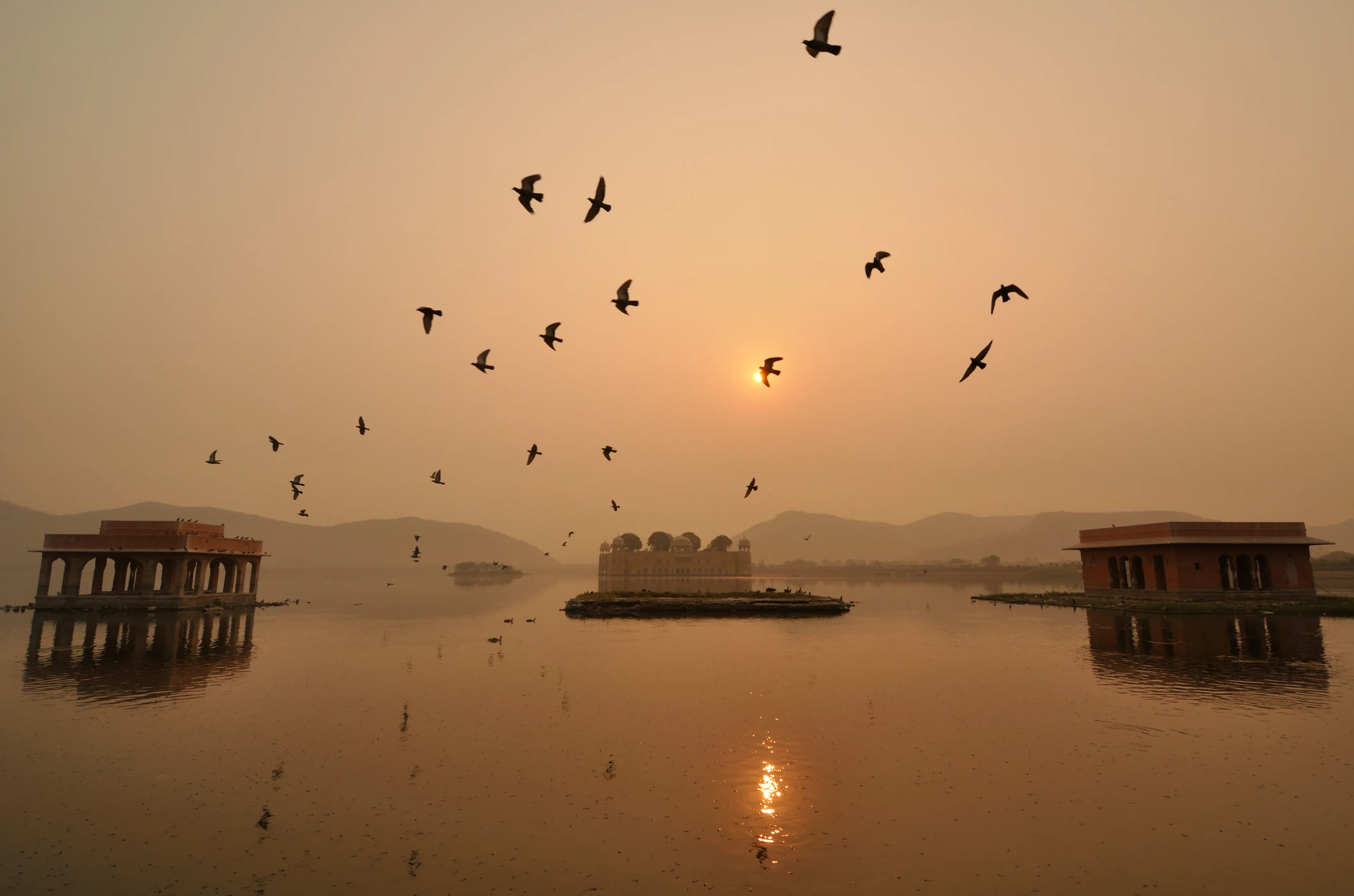
Jal Mahal Jaipur
The Jal Mahal, or Water Palace, shimmers like a mirage in the heart of Man Sagar Lake in Jaipur. Having explored every UNESCO site in India, I can confidently say this one holds a unique charm, a blend of Rajput grandeur and the serene tranquility of its watery embrace. Approaching it from the bustling city, the palace seems to materialize from the lake itself, a sandstone vision rising from the placid blue. It’s a spectacle that immediately captivates, a testament to the architectural ingenuity of its creators. My visit began on a crisp winter afternoon, the sunlight glinting off the lake’s surface, creating a dazzling backdrop for the palace. The approach is restricted, no boats are allowed to reach the palace itself, adding to its mystique. This forced perspective, viewing it from the lakeshore, enhances its ethereal quality. You can’t help but wonder about the lives lived within those walls, now eerily silent, surrounded by water. The Jal Mahal is a five-storied structure, four of which remain submerged when the lake is full. The visible top story, with its exquisitely carved chhatris and delicate jalis, offers a glimpse into the opulence within. The red sandstone, a signature of Rajput architecture, glows warmly in the sunlight, contrasting beautifully with the deep blue of the lake. I spent a considerable amount of time observing the intricate details, the delicate floral patterns carved into the stone, the graceful arches, and the strategically placed balconies that would have once offered breathtaking views of the surrounding Aravalli hills. The palace was originally built as a hunting lodge for the Maharaja Jai Singh II in the 18th century and later renovated and expanded by Madho Singh I. While I couldn’t explore the interiors, I learned that the lower levels, now underwater, were designed with elaborate gardens and courtyards. Imagine the grandeur of those submerged spaces, once filled with life and laughter, now home to aquatic life. It’s a poignant reminder of the transient nature of human endeavors, how even the most magnificent creations can be reclaimed by nature. The surrounding Man Sagar Lake itself is an integral part of the Jal Mahal experience. Flocks of migratory birds, including flamingos and pelicans, often grace the lake, adding another layer of beauty to the scene. During my visit, I was fortunate enough to witness this avian spectacle, their vibrant plumage contrasting with the serene backdrop of the palace and the hills. The lake, once a haven for the royal family’s hunting expeditions, is now a sanctuary for these magnificent creatures, a testament to the changing times. One of the most striking aspects of the Jal Mahal is its reflection in the still waters of the lake. It creates a perfect mirror image, doubling the visual impact. This symmetrical beauty, the palace and its reflection, is a photographer’s dream. I spent a good hour capturing the scene from different angles, trying to capture the essence of this magical place. While the restricted access can be a bit frustrating for those eager to explore the palace’s interiors, it also contributes to its preservation. The distance allows for contemplation, for appreciating the architectural marvel from afar, and for imagining the stories it holds within its submerged walls. The Jal Mahal is more than just a palace; it’s a symbol of a bygone era, a testament to human ingenuity, and a reminder of the delicate balance between nature and human creation. It’s a must-see for anyone visiting Jaipur, a place that will stay etched in your memory long after you’ve left its shimmering shores.
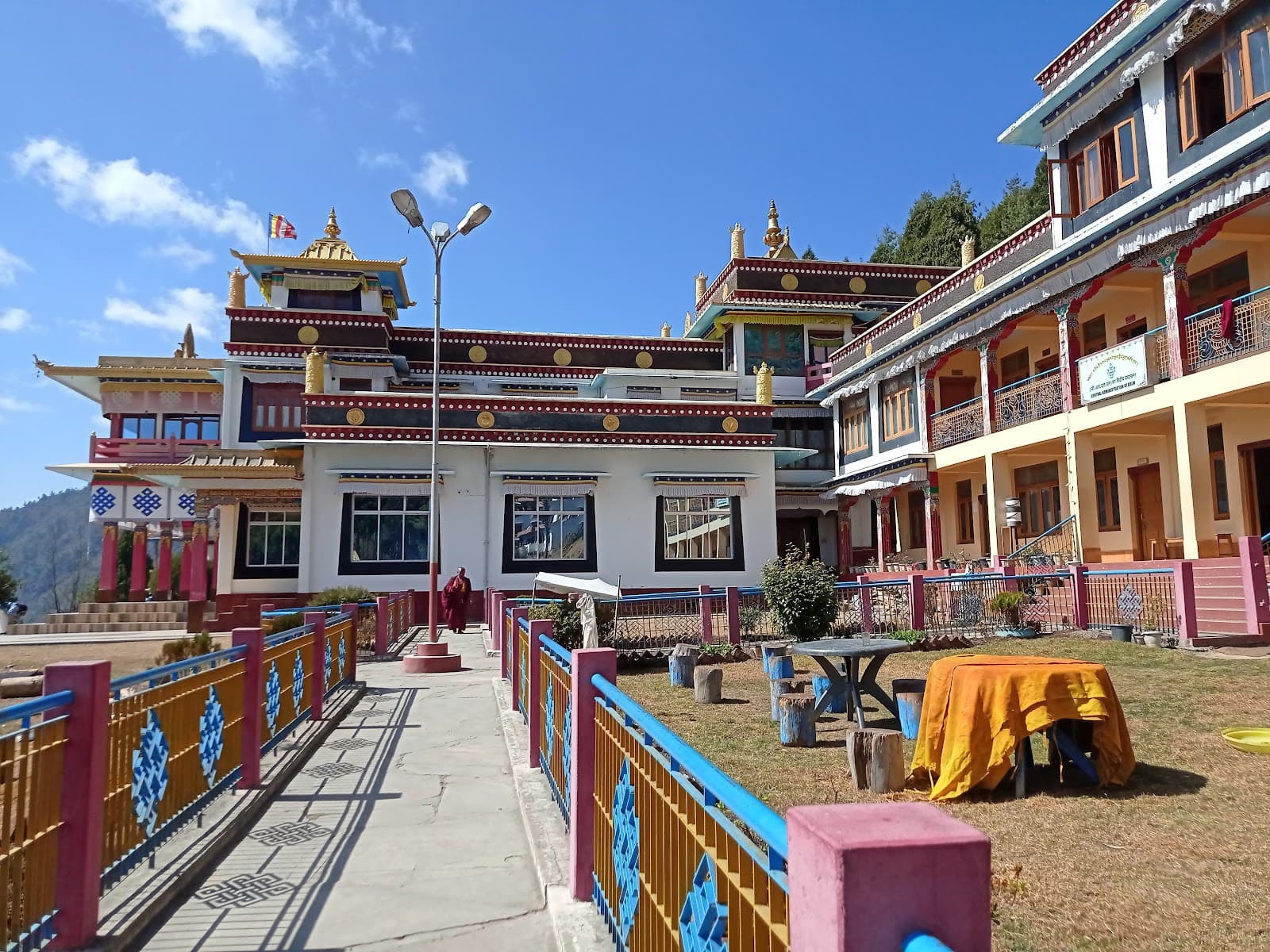
Bomdila Monastery Bomdila
Encircled by the majestic Himalayas, Bomdila Monastery, also known as Gentse Gaden Rabgyel Ling, provides a serene spiritual haven in Arunachal Pradesh ([1]). Consecrated in 1965 by the 14th Dalai Lama, Tenzin Gyatso, this monastery showcases Tibetan Buddhist monastic architecture, reminiscent of similar structures found in Tibet ([2][3]). Its vibrant colors and fortress-like sloping walls create a visually striking landmark, reflecting the region's cultural identity ([1]). Within the Dukhang (main prayer hall), elaborate carvings depicting Buddhist deities and intricate mandala patterns adorn the walls, reflecting artistic traditions ([3][4]). Sturdy wooden pillars support the ceiling, displaying the Gelugpa school's influence through prominent statues of Tsongkhapa ([5]). The monastery's design incorporates elements of traditional Tibetan architecture adapted to the Himalayan environment, echoing principles of spatial harmony found in ancient Indian texts like the Mayamata, which emphasizes the importance of site selection and orientation ([2]). Exploring the monastery complex unveils a museum that safeguards ancient scriptures, religious artifacts, and delicate thangkas (religious scrolls) ([3][4]). Preserved manuscripts, adorned with elegant Tibetan calligraphy, underscore the region's abundant literary heritage ([1][5]). From the rooftop, panoramic views of the Himalayas enhance the monastery's spiritual resonance, connecting visitors to the enduring power of faith (Shraddha) in this Himalayan sanctuary ([2]). While built in the 20th century, the monastery's design and layout resonate with the principles of Vastu Shastra, the ancient Indian science of architecture, emphasizing harmony between nature and built structures ([4][5]). The monastery stands as a testament to the enduring influence of Indian philosophical and architectural traditions in the Himalayan region.
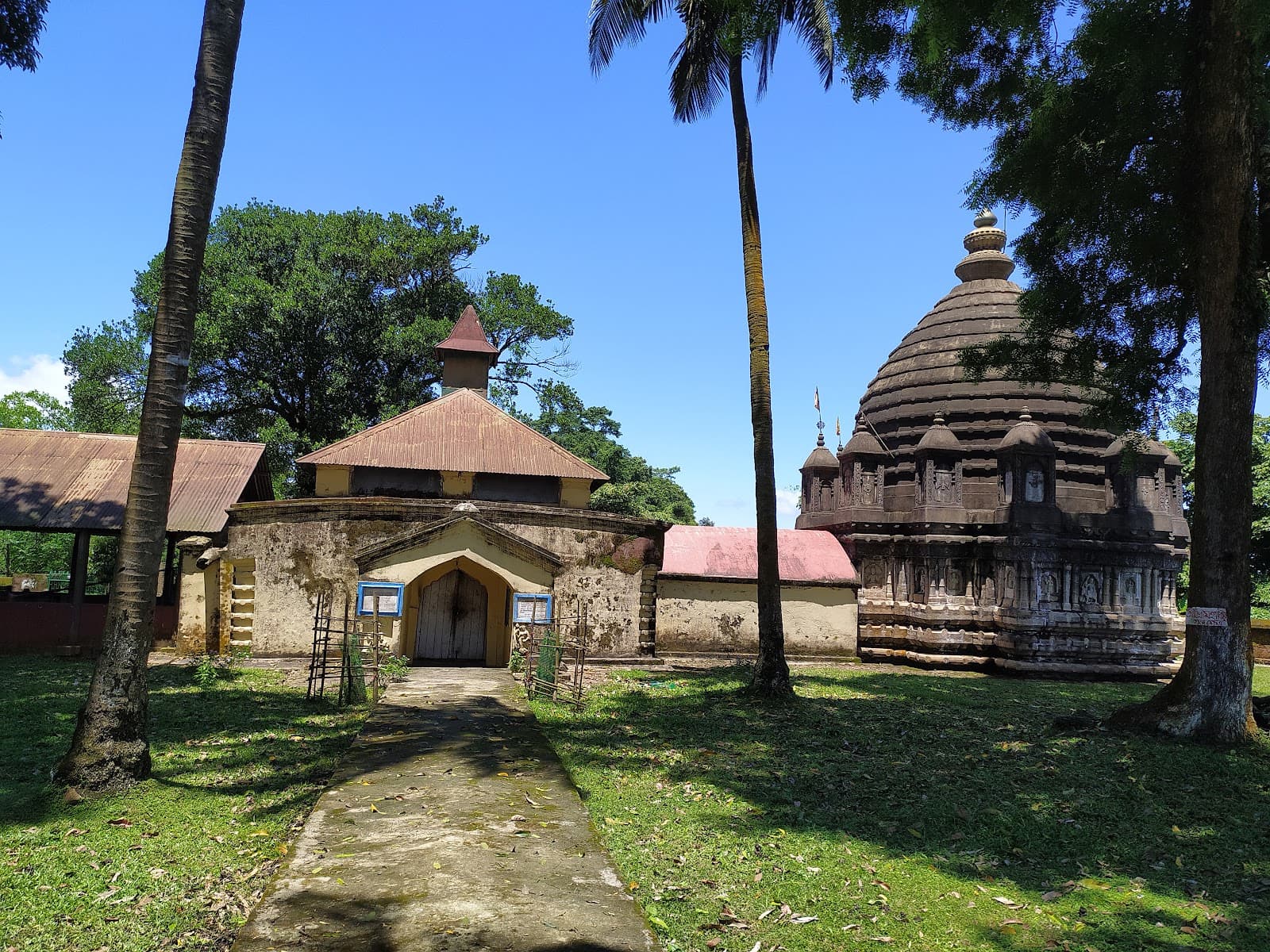
Asvakranta Temple Guwahati
Nestled on the northern bank of the Brahmaputra River in Guwahati, Assam, the Asvakranta Temple stands as a testament to the enduring architectural traditions of the region, dating back to 1565 CE ([1][2]). Commissioned by King Naranarayan of the Koch dynasty during the Kamarupa period, this sacred site reflects Gupta architectural influences in its design and stone-carved narratives ([1][3]). The name Asvakranta, meaning "where the horse stopped," originates from local lore that recounts Lord Krishna's horse pausing at this very spot ([4]). Stone platforms and foundations form the base of the temple, highlighting the primary construction material ([3]). The temple's relatively small structure features a pyramidal form, crowned by a curved Shikhara (spire) ([3]). Within the Garbhagriha (sanctum), devotees find Anantashayana Vishnu, a symbolic representation of Lord Vishnu reclining on the serpent Ananta ([4]). The temple's serene atmosphere draws visitors seeking spiritual solace. During the 16th century, temple architecture in Assam flourished, yet Asvakranta maintains its distinctive character ([1][2]). The Brahmaputra River's proximity has led to erosion, revealing layers of the complex's history ([4]). Despite the river's impact, Asvakranta continues to embody unwavering faith ([4]). Broken pillars and scattered stones hint at a more expansive past, beckoning further exploration and conservation efforts ([4][5]). The temple's design, while modest, incorporates elements that reflect the broader architectural styles prevalent during the Kamarupa period, showcasing a blend of regional and pan-Indian influences ([1][3]). The use of stone, brick, wood, and terracotta further enriches the temple's material palette, adding to its unique charm and historical significance ([3]).
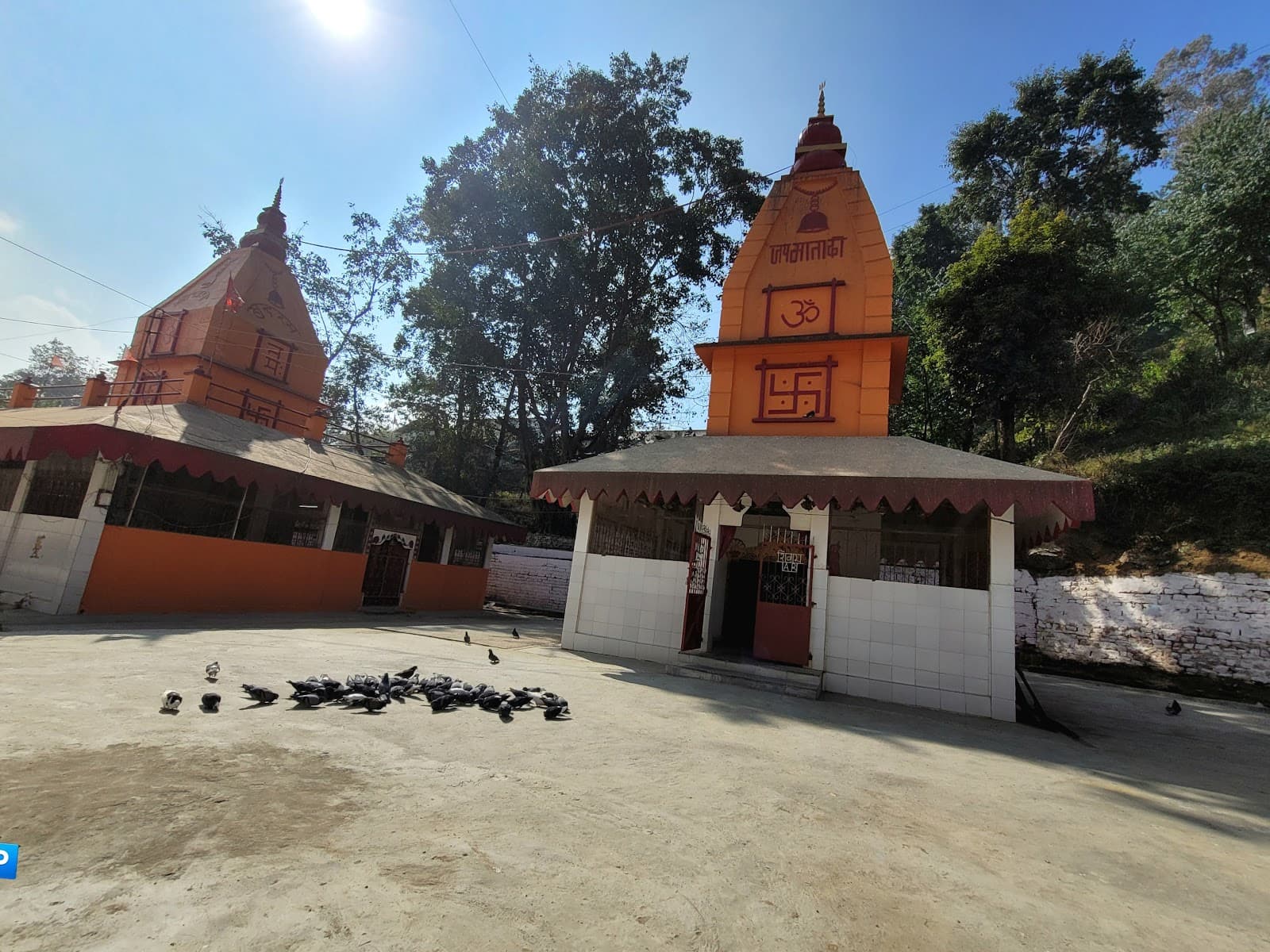
Wokha Shiv Mandir Wokha
The Wokha Shiv Mandir, dedicated to Lord Shiva, stands prominently on DC Hill in Wokha, Nagaland, representing a continuous tradition of Hindu temple architecture within India's millennia-spanning cultural heritage. This sacred Hindu temple, built in 1975 CE by local Naga tribespeople, integrates elements of the Nagara, Kalinga Nagara, and Chalukya Nagara architectural styles, alongside traditional Naga architectural influences. The temple's most striking feature is its towering shikhara, a pyramidal spire characteristic of North Indian temple architecture, which rises above the garbhagriha, or sanctum sanctorum. Unlike traditional sandstone or granite, this shikhara is crafted from concrete and painted a vibrant saffron, reflecting the temple's modern construction and the resourcefulness of the local community. Nagara temples are typically built on a raised stone platform, often with steps leading up to them, and lack elaborate boundary walls or gateways. The Wokha Shiv Mandir, while adopting these stylistic principles, utilizes modern materials such as concrete, cement, and steel for its primary structure, with brick infill walls. The temple measures approximately 10 meters in height, 7.5 meters in width, and has an area of 450 square meters, with a length of 1795.88 meters, though this length figure might refer to the entire complex or property rather than the main temple structure itself. Intricate carvings adorn the concrete pillars flanking the main entrance, depicting a blend of traditional Naga motifs and Hindu iconography, such as a Naga warrior alongside Ganesha. This fusion of cultural influences is a recurring theme throughout the complex, extending to smaller shrines dedicated to various deities, including the Naga deity Dzükou positioned respectfully alongside Hanuman. The garbhagriha, the innermost sanctum, houses a Shiva lingam, bathed in the warm glow of oil lamps, emphasizing the deity's powerful presence. The construction technique involved significant excavation and leveling for a stable concrete foundation, likely a reinforced concrete raft or footing system, crucial for the hilly terrain of Wokha. Reinforced concrete columns support the superstructure, allowing for larger spans than traditional load-bearing masonry. The exterior finishing, possibly plaster or paint over concrete, provides aesthetic flexibility and weather protection. The temple complex is well-maintained with regular upkeep by the Temple Trust, ensuring its preservation and continued active programming for devotees. Visitors are expected to observe respectful attire and behavior, with photography restrictions potentially applying inside the sanctum. The site is operational and accessible, serving as a vibrant center for spiritual devotion and cultural exchange, a testament to India's enduring cultural legacy.
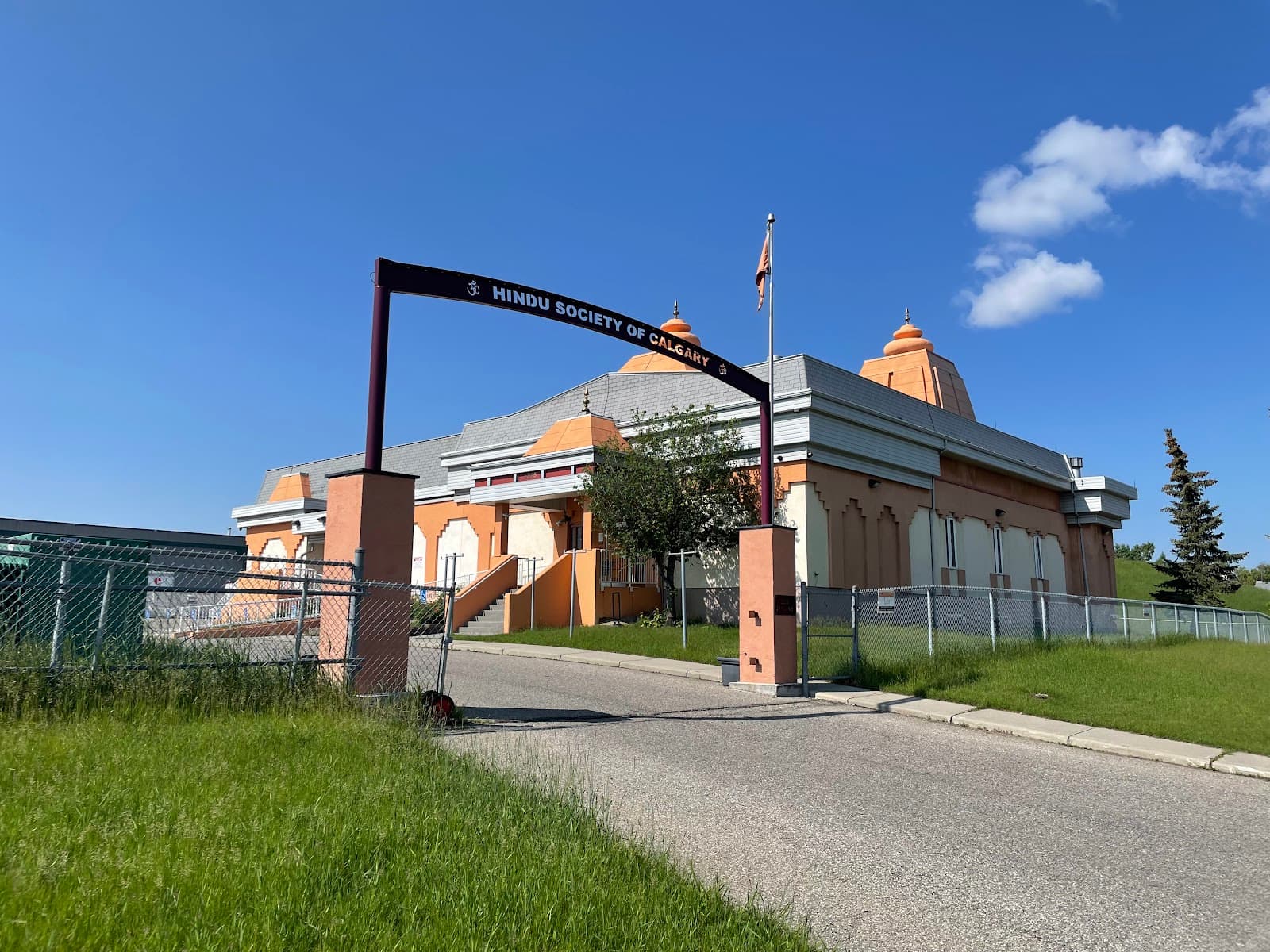
Hindu Cultural Society of Calgary Temple
Hindu Cultural Society of Calgary Temple is dedicated to Sri Ganesh, Sri Krishna, Durga, Shiva, and other deities, and anchors northeast Calgary’s cultural corridor as a multi-wing campus for worship, arts, education, and community aid since its 1984 consecration ([1][2]). The temple operates daily 7:00 AM-12:00 PM and 5:00 PM-9:00 PM, while classrooms, auditorium, gymnasium, and library run from 9:00 AM onwards for language classes, music rehearsals, yoga, seniors’ programs, and settlement services coordinated by volunteer committees ([1][3]). Front-desk teams handle RFID sign-in, shoe storage, and seva booking, then guide devotees through heated corridors toward the marble sanctum or cultural halls via colour-coded wayfinding and bilingual signage. In-house kitchens deliver annadhanam, Meals on Wheels, and Food Bank hampers, while accessibility upgrades provide heated ramps, elevators, tactile guidance, captioned screens, and quiet rooms. Digital signage and SMS alerts share aarti schedules, class updates, weather advisories, and road conditions, and Building Automation Systems manage HVAC, humidification, radiant floors, and security integrated with Calgary Emergency Management. With trained emergency wardens, festival logistics plans, and hybrid broadcast suites, the temple remains operationally ready for Diwali gala, Navaratri garba, Rath Yatra floats, civic town halls, and youth hackathons alongside daily worship ([2][3]).
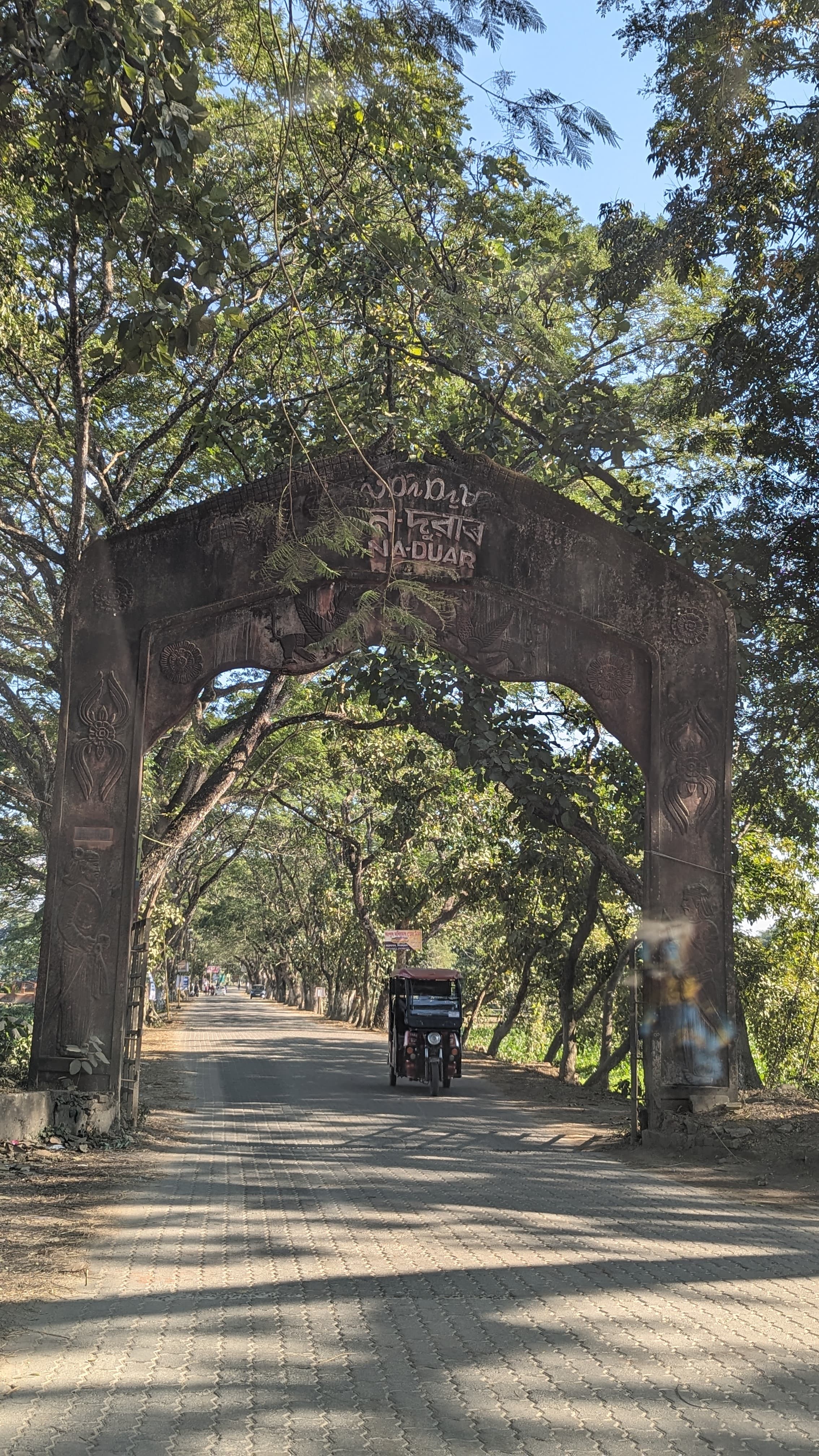
Talatal Ghar Sivasagar
The humid Assam air hung heavy as I descended the first of the brick stairs leading into Talatal Ghar. Coming from Rajasthan, I’m accustomed to the imposing sandstone and marble structures of Rajput royalty, but this Ahom palace, nestled in Sivasagar, presented a different kind of grandeur, one steeped in brick, earth, and a unique architectural sensibility. It wasn't the verticality that struck me initially, but the sheer breadth of the structure, sprawling across the landscape like a terracotta leviathan. Talatal Ghar, meaning "underground house," is somewhat of a misnomer. While it does possess subterranean levels, the palace is predominantly above ground, a multi-storied brick edifice that speaks volumes of the Ahom kingdom's power and ingenuity. The first thing that caught my eye was the lack of ornamentation compared to the palaces I’m familiar with. The beauty here lay in the sheer scale and the intricate brickwork. No elaborate carvings or inlaid precious stones, just the warm, earthy tones of burnt brick, laid with precision and artistry. The ground floor, or Kareng Ghar, served as the royal apartments and public audience hall. I walked through the long, vaulted corridors, imagining the bustle of court life that once filled these spaces. Light filtered in through the arched doorways and small windows, casting long shadows that danced on the brick walls. The rooms were surprisingly cool, a welcome respite from the Assamese heat, a testament to the thermal properties of the brick construction. It was the subterranean levels, however, that truly captivated me. Descending further, I entered a labyrinthine network of tunnels and chambers. These weren't dungeons as some might imagine, but rather secret escape routes and hidden passages, a crucial element of the palace's defense strategy. I could almost feel the ghosts of Ahom soldiers moving stealthily through these darkened corridors, preparing for battle. The air down here was thick with the scent of damp earth and time, a palpable reminder of the centuries that had passed since these passages were in use. The architecture of Talatal Ghar is a fascinating blend of Tai Ahom traditions and influences from other cultures. The sloping roofs, reminiscent of traditional Assamese houses, are a striking contrast to the arched doorways and vaulted ceilings, which hint at Mughal influences. This fusion of styles creates a unique architectural vocabulary that sets Talatal Ghar apart from any other structure I’ve encountered. As I climbed back up to the surface, blinking in the sunlight, I noticed details I’d missed on my way down. The strategic placement of the palace, overlooking the Sivasagar tank, not only offered a picturesque view but also served as a crucial defensive advantage. The tank itself, an impressive feat of engineering, was not just a source of water but also a moat, protecting the palace from invaders. My visit to Talatal Ghar was more than just a tour of a historical site; it was a journey into the heart of the Ahom kingdom. It was a chance to witness firsthand the ingenuity and architectural prowess of a civilization that thrived for centuries, leaving behind a legacy etched in brick and earth. While the grandeur of Rajasthan's palaces remains etched in my memory, Talatal Ghar offers a different kind of beauty, a testament to the power of simplicity, functionality, and a deep connection to the land. The whispers of history resonated within the brick walls, a reminder that even the most powerful empires eventually crumble, leaving behind only echoes of their former glory.
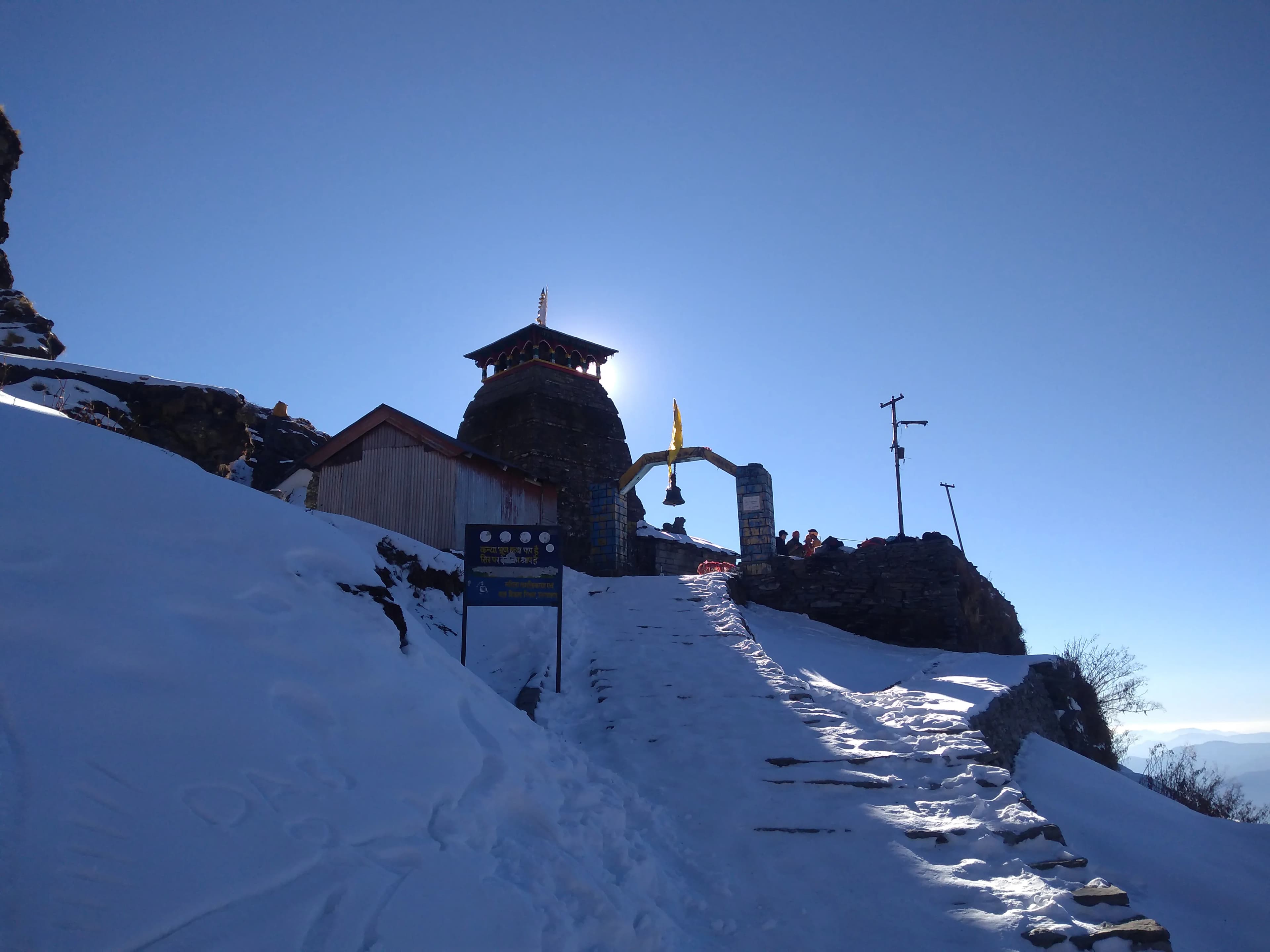
Tungnath Temple Rudraprayag
The biting wind whipped at my shawl as I crested Chandrashila peak, the snow-capped Himalayas stretching out before me like a rumpled white sheet. Below, nestled amongst the undulating brown hills, sat Tungnath, the highest Shiva temple in the world. Having explored countless forts and palaces back in Rajasthan, I was eager to experience this unique high-altitude shrine, a stark contrast to the desert architecture I was accustomed to. The trek down from Chandrashila was steep, the path winding through alpine meadows still dotted with patches of snow despite it being late spring. The air was thin, each breath a conscious effort, but the anticipation of reaching Tungnath spurred me onward. The temple finally came into full view, a small, unassuming stone structure, dwarfed by the majestic peaks surrounding it. Its simplicity was striking, a far cry from the ornate carvings and sprawling complexes of Rajasthan's temples. Built of grey stone, the temple’s architecture reflects the North Indian style, a compact square structure with a sloping roof. Unlike the sandstone and marble I was used to, the stone here felt ancient, weathered smooth by centuries of harsh weather. The small wooden door, studded with iron, seemed almost too modest for a deity of Shiva's stature. Entering, I found myself in a dimly lit sanctum. The air was thick with the scent of incense and the murmur of prayers. The small Shiva lingam, the object of worship, resided at the center, worn smooth by the touch of countless devotees. The walls, though plain, bore witness to the passage of time, with faint traces of what might have once been intricate carvings, now lost to the elements. The priest, bundled in layers of wool, performed the rituals with a practiced ease, his voice resonating in the small space. The handful of other pilgrims present, their faces flushed from the climb, radiated a quiet devotion. There was a palpable sense of peace here, a serenity that transcended the physical hardships of the journey. Stepping back outside, I circumambulated the temple, the wind now a constant companion. The panoramic views from this vantage point were breathtaking. The snow-capped peaks of Nanda Devi, Trishul, and Kedarnath pierced the azure sky, their icy slopes gleaming in the afternoon sun. It was easy to understand why this remote location was chosen as a place of worship. The raw, untamed beauty of the Himalayas felt profoundly spiritual, a fitting backdrop for a temple dedicated to the god of destruction and creation. The architecture of Tungnath, while simple, is remarkably resilient. The interlocking stones, held together without mortar, have withstood centuries of harsh weather, a testament to the ingenuity of the builders. The small size of the temple, perhaps dictated by the challenging terrain, adds to its charm, creating an intimate space for worship. It stands in stark contrast to the grand temples of Rajasthan, a reminder that spirituality isn't confined to elaborate structures but can be found in the most austere of settings. As I began my descent, I couldn't help but feel a sense of awe. Tungnath is more than just a temple; it's an experience. The arduous trek, the breathtaking views, the simple yet powerful architecture, and the palpable sense of devotion combine to create something truly unique. It's a place where the earth meets the sky, where the physical and the spiritual converge, leaving an indelible mark on the soul of every visitor. It reminded me that while the architectural expressions of faith may differ across India, the underlying devotion remains the same, a powerful force that draws people to these sacred spaces, be it a desert fort or a Himalayan peak.
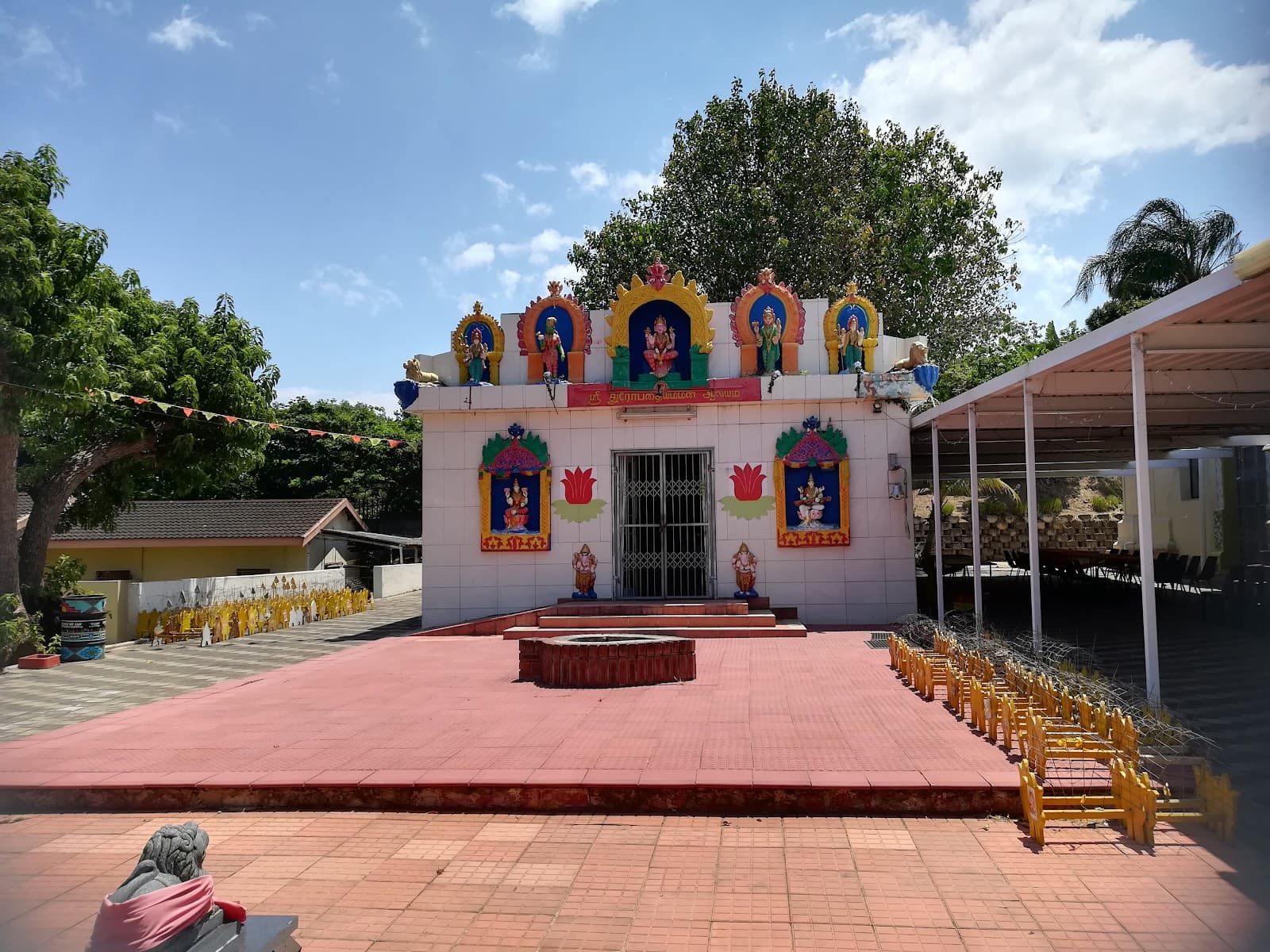
Shree Ayyappa Seva Sangam Temple Durban
The Shree Ayyappa Seva Sangam Temple, located at 359 Langton Road, Montclair, Durban, KwaZulu-Natal, South Africa, stands as a profound testament to India's millennia-spanning cultural heritage and the continuous tradition of Indic civilization [1] [2]. Dedicated to Lord Ayyappa, a revered deity primarily worshipped in South India, particularly Kerala, this temple embodies ancient indigenous architectural styles, materials, and cultural practices that reflect India's deep historical roots [3] [4]. The temple's design integrates elements of both Kerala Temple architecture and Dravida architecture, showcasing a synthesis of South Indian temple building traditions [1] [5]. Kerala temple architecture, characterized by its unique religious sanctuary design, often features circular or square ground plans, steeply sloping roofs covered with copper sheets or terracotta tiles, and extensive use of timber [5] [2]. These architectural choices are historically adapted to the region's heavy rainfall and tropical climate, emphasizing functionality alongside aesthetic and spiritual principles [2]. The structural elements typically involve a granite plinth (adhisthana), laterite walls, and a superstructure predominantly crafted from wood, adhering to canonical rules of proportionate systems detailed in ancient treatises [5] [4]. The Shree Ayyappa Seva Sangam Temple incorporates these principles, utilizing locally available materials while maintaining the traditional forms [1]. The temple complex is designed according to the Hindu practices of 'Vaastu Shastra' and 'Agama Shastra', ensuring auspicious orientation, spatial harmony, and ritualistic correctness [1]. This adherence to ancient texts underscores the continuity of architectural knowledge passed down through generations [5]. Dravida architectural influences are evident in the temple's overall layout and decorative motifs, which often include intricate carvings and sculptures [3]. While Kerala temples typically feature simpler exteriors, the broader South Indian temple style, from which Dravida architecture evolved, is known for its elaborate gopurams (entrance towers), vimanas (superstructures over the sanctum), and mandapas (pillared halls) [3]. Though the Durban temple may not possess the monumental scale of ancient Dravidian complexes, its design principles and decorative elements draw from this rich tradition, manifesting in detailed iconography and sacred geometry [1]. The temple's sanctum (sreekovil) houses the main deity, Lord Ayyappa, and is surrounded by a circumambulatory path (pradakshina-patha), facilitating traditional devotional practices [3]. The current state of the temple reflects ongoing maintenance and active programming, serving as a vital spiritual and cultural hub for the Malayali and Tamil diaspora in Durban [2]. It offers regular pujas, festivals, and cultural education, ensuring the preservation and transmission of Indic traditions [2]. The site is fully operational and accessible to devotees and visitors, upholding its role as a living heritage site [1].
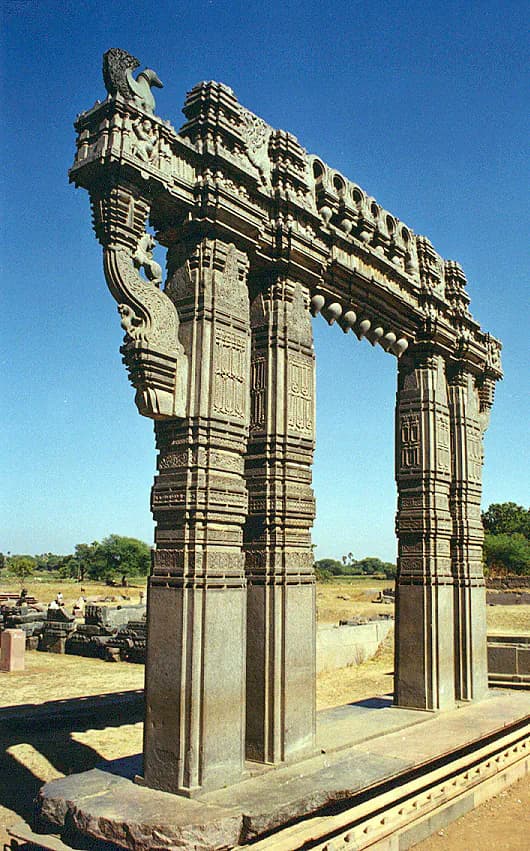
Warangal Fort Warangal
The imposing granite ramparts of Warangal Fort rose before me, shimmering under the Telangana sun. Having explored countless caves and temples across Maharashtra, I've developed a keen eye for architectural nuances, and Warangal Fort, with its blend of Kakatiya and subsequent influences, promised a feast for the senses. The four massive gateways, known as Kakatiya Kala Thoranam, are truly magnificent. Their intricate carvings, depicting mythical creatures and floral patterns, speak volumes about the artistic prowess of the Kakatiya dynasty. I spent a considerable amount of time studying the exquisitely preserved Swayambhu temple gateway, its arches adorned with intricate carvings of goddesses and celestial beings. The sheer scale of these structures, combined with the delicate artistry, is breathtaking. Stepping through the arched entrance, I was immediately transported back in time. The fort, though in ruins, retains an aura of grandeur. The remnants of the once-imposing walls, the scattered pillars, and the crumbling structures all whisper tales of a glorious past. Unlike many forts I've visited in Maharashtra, which often feature basalt construction, Warangal's granite lends it a unique, almost ethereal quality. The stone, weathered by centuries of sun and rain, glows with a warm, reddish hue, particularly striking during the golden hour. My exploration led me to the Khush Mahal, a fascinating structure that showcases a blend of architectural styles. The arched openings and intricate jaali work clearly demonstrate later additions, likely during the Qutb Shahi period. This layering of history, visible in the very stones of the fort, is what makes Warangal so compelling. It's not just a monument; it's a palimpsest of time, each layer revealing a different chapter in the region's story. The central structure, the Sri Venkateswara Swamy Temple, though a later addition, stands as a testament to the enduring spiritual significance of the site. While the original Kakatiya temple was destroyed, the current structure retains a sense of reverence. I observed locals offering prayers, a poignant reminder that these ancient spaces continue to hold meaning for contemporary communities. One of the most striking features of Warangal Fort is its ingenious water management system. The numerous tanks and wells scattered throughout the complex, including the large, rectangular Ek Batti Baoli (stepwell), highlight the Kakatiyas' understanding of hydraulic engineering. I descended the steps of the baoli, marveling at the intricate network of channels and the foresight of the builders who ensured a sustainable water supply within the fort. This attention to practical details, alongside the artistic flourishes, speaks to the holistic approach of the Kakatiya rulers. As I wandered through the ruins, I noticed the distinct lack of interpretative signage. While this allowed for a more immersive experience, relying solely on my observations and prior research, I felt that more information could enhance the visitor's understanding of the site's historical and architectural significance. This is an area where improvements could be made, perhaps by incorporating discreetly placed information panels or offering guided tours. Leaving Warangal Fort, I carried with me a profound sense of awe and a deeper appreciation for the Kakatiya dynasty's contributions to Indian architecture and history. The fort is not merely a collection of ruins; it is a living testament to a powerful kingdom, a testament etched in stone, resonating with the echoes of a bygone era. It stands as a powerful counterpoint to the cave temples and forts of my home state, Maharashtra, showcasing the diversity and richness of India's architectural heritage.
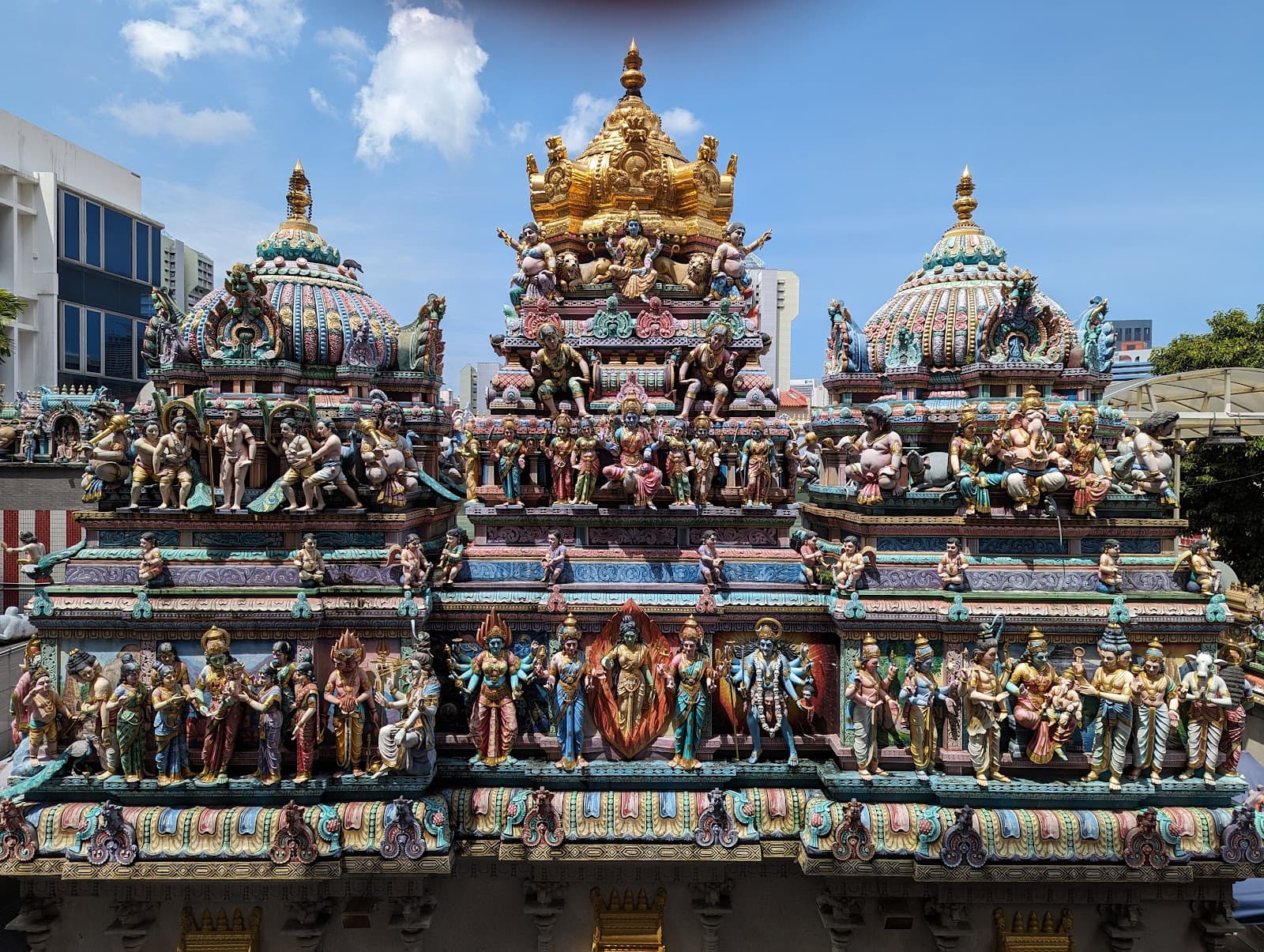
Sri Veeramakaliamman Temple Singapore
Sri Veeramakaliamman Temple was founded in 1881 by Tamil labourers and is Little India’s earliest Kali worship centre, presiding over Serangoon Road with an 18-metre rajagopuram bearing 600 hand-painted stucco deities that narrate the goddess’s legends and Singapore’s migrant heritage ([1][2]). Daily puja commences at 5:30 AM with suprabhatam and concludes with 9:00 PM arthajama arti; devotees flow through granite-lined corridors past sanctums for Kaliamman, Thandayuthapani, Nataraja, Ganesha, Bairavar, Bhairavi, and Navagraha, while the annadhanam hall serves vegetarian meals to workers, seniors, and low-income families. The temple’s marriage hall hosts up to 200 ceremonies annually, and classrooms nurture Tamil literacy, Carnatic music, and Bharatanatyam under the Sri Veeramakaliamman Educational and Cultural Programme. The temple is the staging ground for Aadi Thiruvizha, Navaratri Kolu, Theertham, and the goddess’s chariot procession during Deepavali, events that draw tens of thousands and require extensive volunteer marshals, safe entry systems, and collaboration with the Hindu Endowments Board, Land Transport Authority, and Singapore Police Force. During crises—from World War II air raids to SARS and COVID-19—the temple has offered refuge, meals, and vaccination outreach, sustaining its role as both a devotional abode and a civic safety net for Little India ([1][3]).
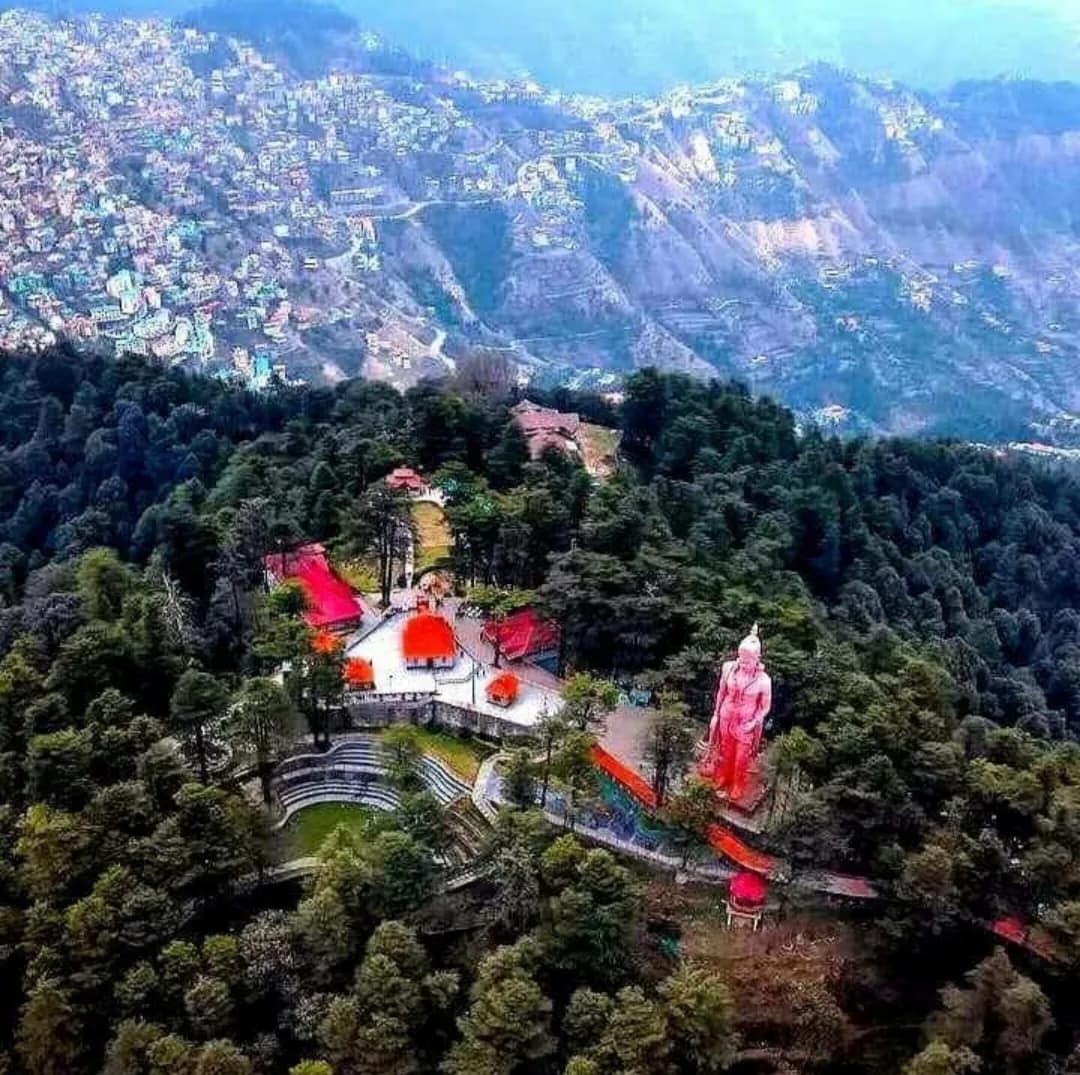
Jakhoo Temple Shimla
The crisp mountain air, scented with pine and a hint of incense, whipped around me as I ascended to the Jakhoo Temple, perched atop Shimla's highest peak. The climb itself was a pilgrimage of sorts, winding through a dense deodar forest, the path punctuated by the chattering of monkeys and the distant chime of temple bells. Having documented over 500 monuments across India, I've learned to appreciate the journey as much as the destination, and Jakhoo’s approach was particularly evocative. Emerging from the tree line, the colossal statue of Hanuman, a vibrant saffron against the cerulean sky, dominated the landscape. Its sheer scale – 108 feet tall – is breathtaking, a modern marvel seamlessly integrated into the ancient narrative of the temple. This wasn't the weathered stone and intricate carvings I’d encountered in countless other temples; this was a statement of devotion on a grand scale, a testament to faith in the digital age. The temple itself, dedicated to Lord Hanuman, is comparatively smaller, a modest structure nestled in the shadow of the giant statue. Its architecture, typical of Himalayan temples, features sloping roofs covered in slate tiles, designed to withstand the heavy snowfall. The wood carvings adorning the entrance, though worn by time and weather, depicted scenes from the Ramayana, adding a layer of narrative richness to the site. Unlike the meticulously preserved monuments I’d seen in Rajasthan or the grand temple complexes of South India, Jakhoo felt intimate, a place of active worship woven into the fabric of the local community. Inside, the air was thick with the scent of burning incense and the murmur of prayers. Devotees, a mix of locals and tourists, offered their respects to the deity, their faces illuminated by the flickering oil lamps. The walls were covered in vibrant murals depicting various incarnations of Lord Hanuman, a kaleidoscope of colours that contrasted sharply with the muted tones of the exterior. It was here, amidst the chanting and the clanging of bells, that I truly felt the pulse of the temple, a living testament to centuries of faith. What struck me most about Jakhoo, however, wasn't just its religious significance, but its unique blend of the ancient and the modern. The juxtaposition of the traditional temple architecture with the towering Hanuman statue created a fascinating dialogue between past and present. The statue, while a recent addition, didn't feel out of place; rather, it seemed to amplify the existing energy of the site, drawing the eye upwards, towards the heavens. As I photographed the temple, capturing the interplay of light and shadow on the weathered stone, I noticed the monkeys, ever-present companions on this mountaintop pilgrimage. They scampered across the rooftops, swung from the trees, and interacted with the devotees, adding a touch of playful chaos to the serene atmosphere. Their presence, while sometimes disruptive, felt integral to the Jakhoo experience, a reminder of the wildness that still clung to this sacred space. Descending the mountain, the city of Shimla spread out below me, a tapestry of buildings clinging to the hillside. The Jakhoo Temple, perched high above, felt like a silent guardian, watching over the bustling life below. It was a place where faith and nature intertwined, where ancient stories met modern expressions, and where the journey to the summit was as rewarding as the destination itself. It’s a site that will undoubtedly stay etched in my memory, another vibrant thread in the rich tapestry of India's heritage.
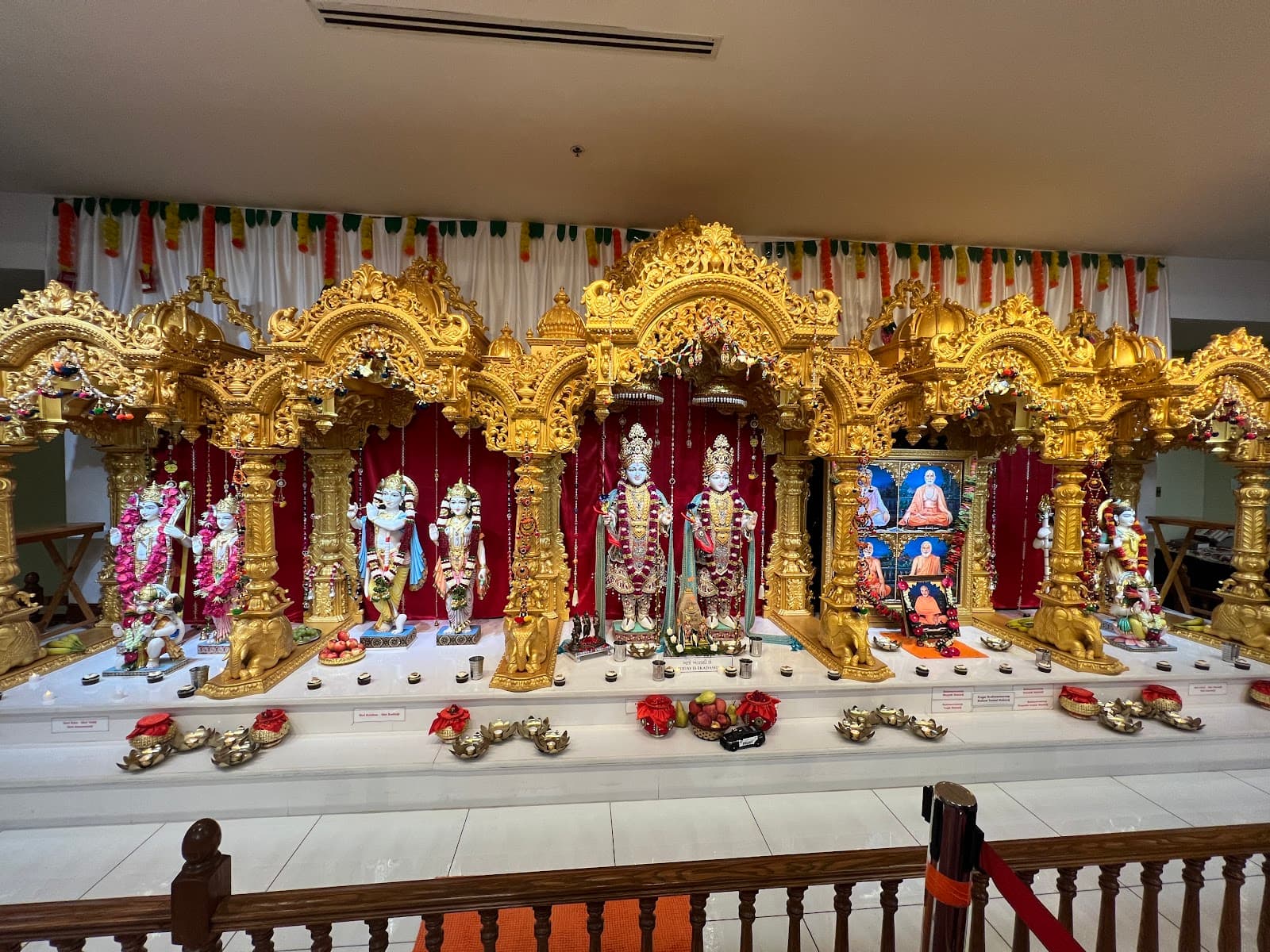
Shree Swaminarayan Mandir Scarborough
Shree Swaminarayan Mandir Scarborough is dedicated to Bhagwan Swaminarayan and anchors Scarborough’s Markham Road corridor as a vibrant spiritual, cultural, and humanitarian hub within the ISSO Canada network since its 2004 consecration ([1][2]). The mandir opens daily 7:00 AM-12:00 PM and 4:00 PM-9:00 PM, with sabha evenings, youth assemblies, seniors’ yoga, and Gujarati school filling the classrooms and auditorium throughout the week ([1][3]). Reception volunteers manage RFID sign-in, shoe storage, seva booking, and parking rotation, then guide visitors through colour-coded paths to the marble mandir hall, cafeteria, or cultural wing. The vegetarian kitchen prepares annadhanam, Food Bank hampers, and community tiffin deliveries while maintaining halal-free compliance, allergen logs, and composting streams. Accessibility features include heated ramps, an elevator, tactile markers, quiet rooms, captioned signage, and hearing loops in the main hall; digital screens and WhatsApp alerts broadcast aarti times, traffic advisories, and volunteer rosters. BAS dashboards monitor HVAC, humidity, lighting, and security, while on-site training keeps emergency wardens, health professionals, and broadcast crews ready for Diwali Annakut, Janmashtami, Swaminarayan Jayanti, Canada Day seva, and city town halls alongside daily darshan ([2][3]).
Quick Links
Plan Your Heritage Journey
Get personalized recommendations and detailed visitor guides