Has Inheritage Foundation supported you today?
Your contribution helps preserve India's ancient temples, languages, and cultural heritage. Every rupee makes a difference.
Secure payment • Instant 80G certificate
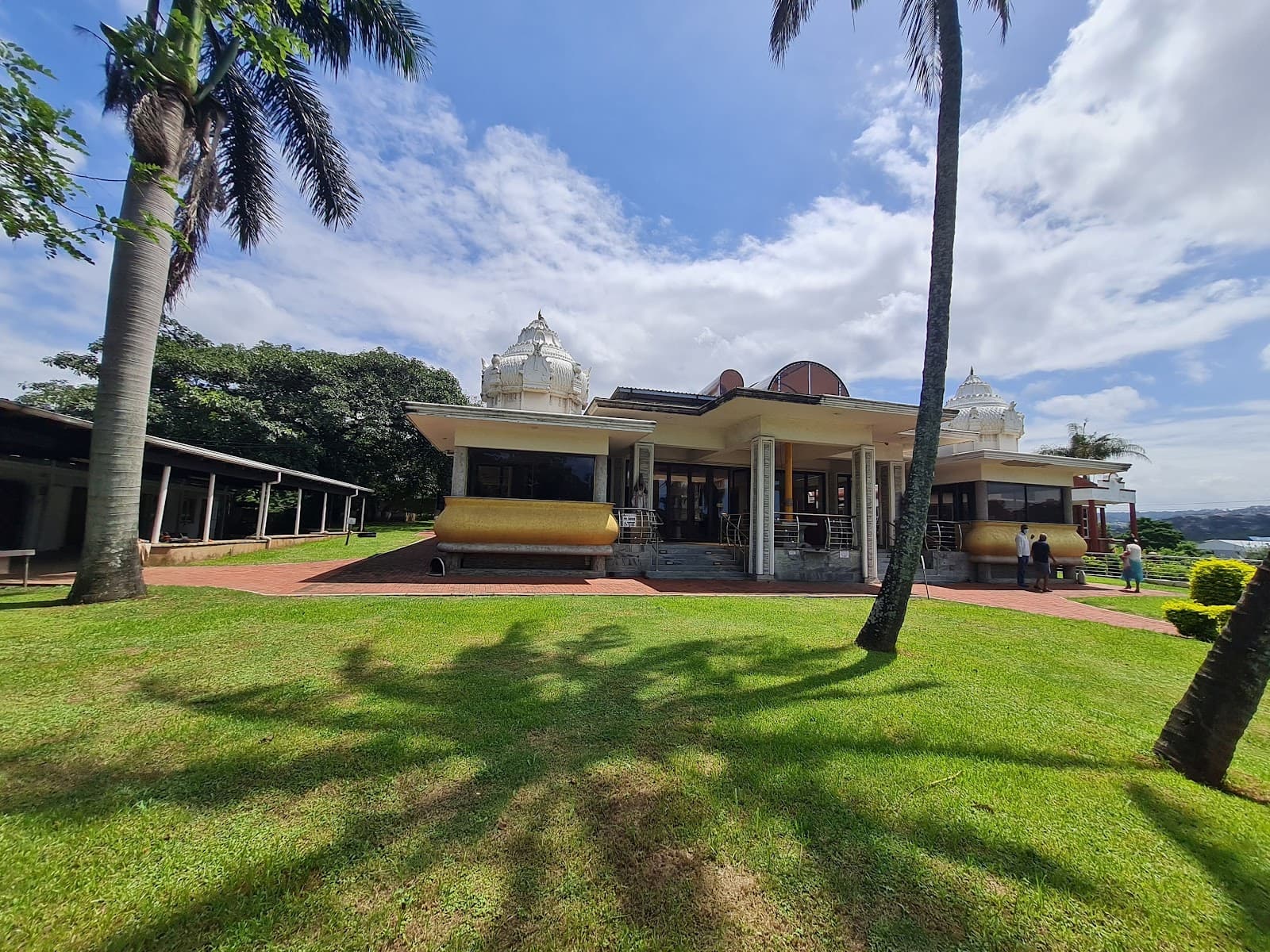
Mariamman Temple Cato Manor Durban
The Mariamman Temple of Cato Manor—initially erected in 1870 by early market gardeners—was rebuilt on higher ground after the 1905 floods and re-consecrated in 1932 by trader S.P. Chetty with a triad of barrel-vaulted towers sculpted in low relief, blending Dravidian iconography and the loose light of Durban's coastal plain ([1]). The main shrine to goddess Mariamman stands at the centre of a symmetrical courtyard anchored by smaller sancta for Gengaiammen and Draupadi; processional paths weave between mango trees planted by the founding families and the sacred fire pit used during annual Theemithi vows. The temple's unpainted brick facades and profuse stucco figurines capture the vernacular workmanship of indentured artisans—primitive yet lyrical depictions of deities holding neem leaves, tridents, and conches, illuminated at twilight by ghee lamps. Community halls along the perimeter host Tamil cultural classes, scripture recitation, marriage counselling, and relief cooking for surrounding informal settlements. ([1])
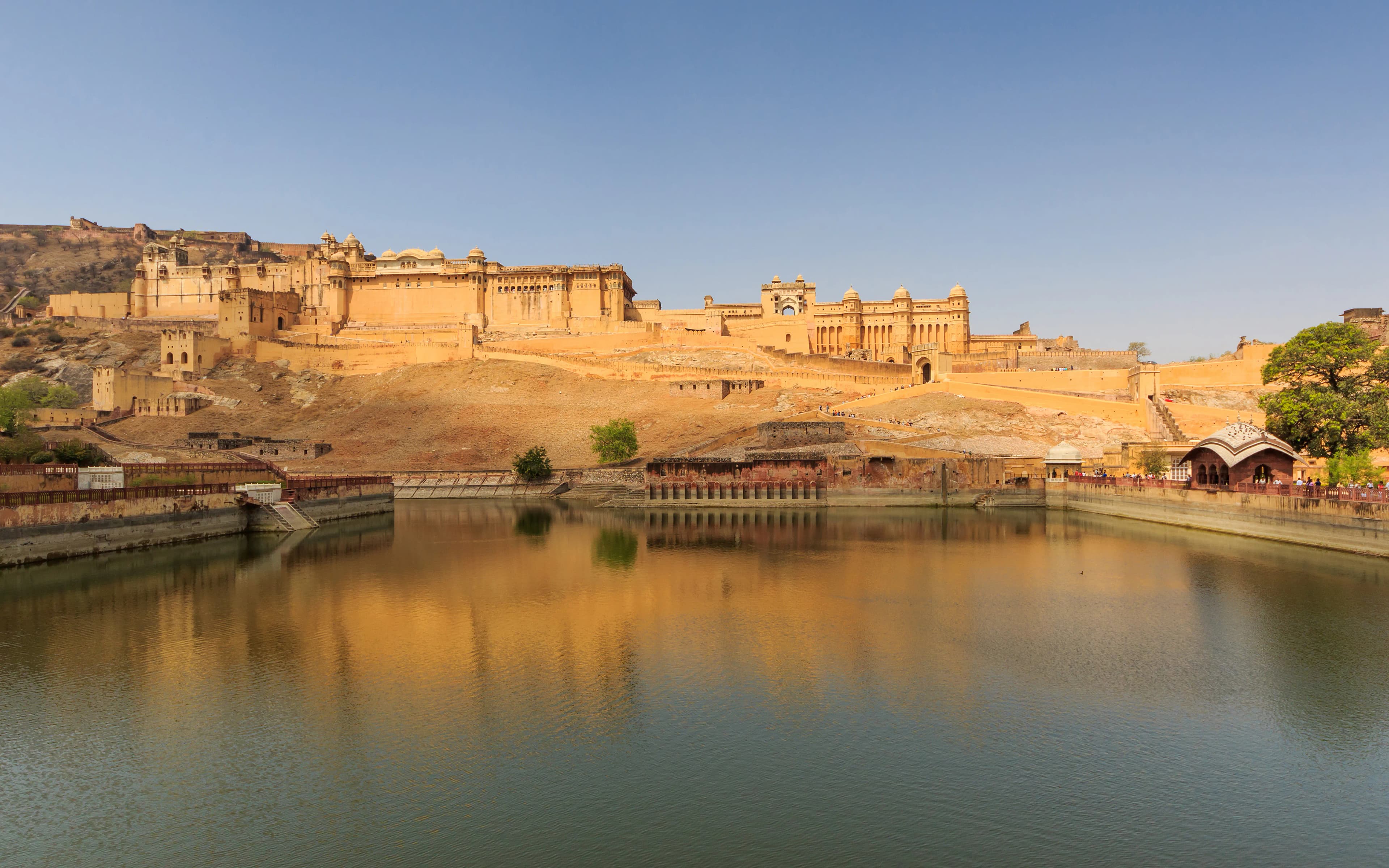
Amber Fort Jaipur
The ochre walls of Amber Fort, constructed during the reign of Raja Man Singh I in the 16th century (1550 CE), evoke the splendor of Rajasthan ([1][2]). This fort represents a compelling fusion of Mughal and Rajput military architectural traditions ([3]). Upon entry through the Suraj Pol (Sun Gate), one immediately perceives the layered construction, reflecting the contributions of successive Rajput rulers ([4]). Intricate carvings embellishing the Diwan-i-Am (Hall of Public Audience) depict elephants and floral motifs, demonstrating a harmonious blend of strength and aesthetic grace ([5]). Moving inward, the Diwan-i-Khas (Hall of Private Audience) showcases lavish ornamentation, including mosaics crafted from glass and precious stones ([2]). Famously, the Sheesh Mahal (Mirror Palace) illuminates with minimal light, a remarkable feat of design ingenuity ([3]). Granite and sandstone blocks, meticulously carved, constitute the primary building materials ([1]). Vastu Shastra principles, the ancient Indian science of architecture, likely influenced the fort's layout, creating harmony and balance, though specific textual references are currently unavailable ([4]). From the zenana (women's quarters), the panoramic vista of Maota Lake provides a serene counterpoint to the fort's imposing structure ([5]). The fort stands as a powerful reminder of Rajasthan's rich history and cultural legacy ([1][2]). The use of red sandstone, marble, white marble, lacquer, and mortar further accentuates the fort's grandeur ([6]). The fort's architecture includes elements of Hindu and Islamic design, reflecting the cultural exchange of the period ([3]). Amber Fort is a testament to the architectural prowess and artistic vision of the Rajput Maharajas ([1][2]).
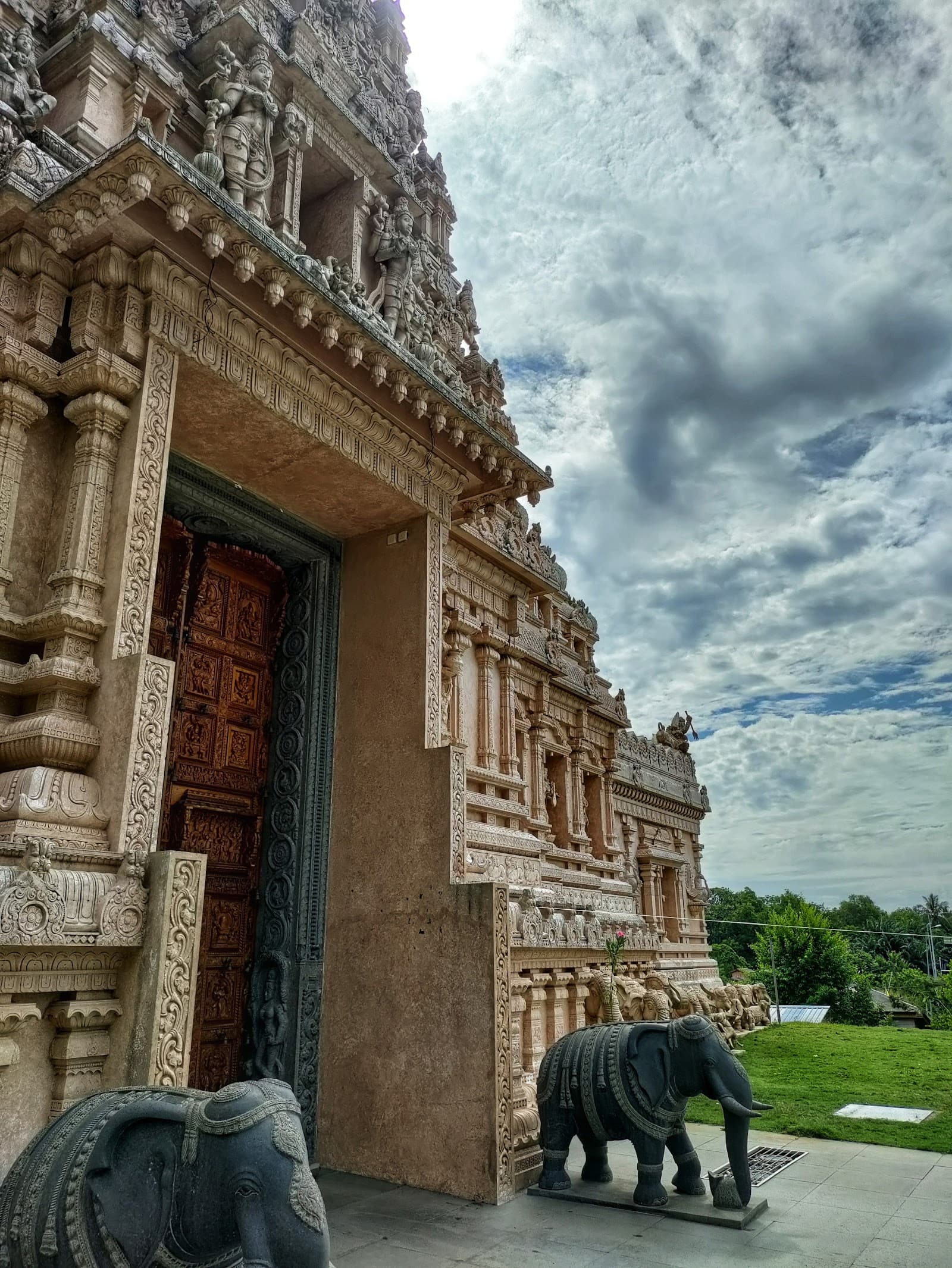
Sri Shakti Devasthanam Bukit Rotan Selangor
Sri Shakti Devasthanam is Malaysia’s only temple inspired by the ancient concept of Paadal Petra Sthalams, inaugurated in 2015 after a decade-long project that sourced sculptors, craftsmen, and ritualists from Tamil Nadu to create a 48,000-square-foot granite complex with a 27.5-metre rajagopuram, five-tiered vimanas, 96 lion pillars, and a circular circumambulatory corridor depicting 51 forms of Shakti in high relief ([1][2]). Every surface is hand-carved—sthapathis spent seven years chiselling over 15,000 sculptures, including celestial dancers, guardians, and mythic narratives of Chandi Parameshwari. The temple operates 6:00 AM-9:30 PM with five kala pujas, weekly Chandi homa, monthly Navavarana puja, and continuous annadhanam. During Navaratri, the temple stages alankaram representing nine manifestations of Devi using floral, textile, and jewel ensembles curated by artisans from Kanchipuram; attendance swells to 80,000, supported by RFID headcounts, rain shelters, medical bays, logistics warehouses, and sustainability stations. Facilities include the Shakti Peetam hall (for meditation and yoga), language classrooms, heritage gallery, vegetarian café, library housing Sri Vidya manuscripts, rain gardens, and a volunteer operations centre coordinating humanitarian outreach across Selangor ([1][3]).

Qingyuan Temple Jiuhuashan Anhui China
The site, Vikramshila Mahavihara, located in Antichak village, Bhagalpur district, Bihar, India, stands as a profound testament to India's millennia-spanning cultural heritage, particularly its ancient and continuous tradition of Buddhist learning and architectural sophistication [4] . Established in the late 8th century CE by the Pala emperor Dharmapala, this monastic university was a premier center for Vajrayana Buddhism, reflecting the indigenous Indic architectural styles prevalent during the Early Medieval period [4] . The Mahavihara's layout is a massive quadrangular structure, measuring approximately 330 meters on each side, enclosing a central cruciform stupa [5]. This central stupa, a two-terraced brick structure, rises about 15 meters from the ground level and is accessible via a flight of steps on its northern side . Each of the four cardinal directions of the stupa features a protruding chamber, originally housing colossal stucco images of the seated Buddha, three of which were found in situ during excavations . These chambers are fronted by a pillared antechamber and a separate pillared mandapa [5]. The walls of both terraces of the central stupa are richly adorned with mouldings and thousands of terracotta plaques, showcasing the high excellence of terracotta art that flourished under the Pala dynasty from the 8th to the 12th century CE [5]. These plaques depict a diverse range of subjects, including Buddhist deities such as Buddha, Avalokiteshvara, Manjusri, Maitreya, Jambala, Marichi, and Tara, alongside scenes from Buddhist narratives, social life, hunting, and even other Indian deities like Vishnu, Parvati, Ardhanarisvara, and Hanuman . The monastery complex itself comprises 208 monastic cells, with 52 cells on each of the four sides, opening into a common verandah . These cells, measuring 4.15 x 1.5 meters, were designed for individual monks or students, with some featuring brick-arched underground chambers likely used for confined meditation [5] . The outer wall of the monastery incorporates 20 projected circular and 20 rectangular cells, spaced at intervals of 21 to 23 meters, with provisions for three beds in each room [5]. A notable engineering innovation at Vikramshila is the rectangular library building, situated approximately 32 meters south of the main monastery and connected by a narrow corridor . This structure was ingeniously air-conditioned by cooled water from an adjoining reservoir, circulated through a system of vents in the back wall, a technique likely employed to preserve delicate palm-leaf manuscripts in the humid climate of the Indo-Gangetic plains [4] . The construction primarily utilized baked bricks, a locally available and durable material, which also contributed to the thermal mass of the buildings, helping to regulate internal temperatures [4] [5]. An elaborate network of underground drains, constructed from baked clay pipes, managed rainwater runoff and wastewater, ensuring hygiene and preventing waterlogging [4]. The site is currently under the protection and management of the Archaeological Survey of India (ASI), with ongoing conservation efforts and recent renewed excavation work [1]. A site museum displays a large number of antiquities unearthed during excavations, including sculptures, coins, and terracotta emblems, providing visitors with a tangible connection to its rich past [2] . The site is operational and accessible to visitors, offering a profound glimpse into India's enduring legacy of intellectual and spiritual pursuit.
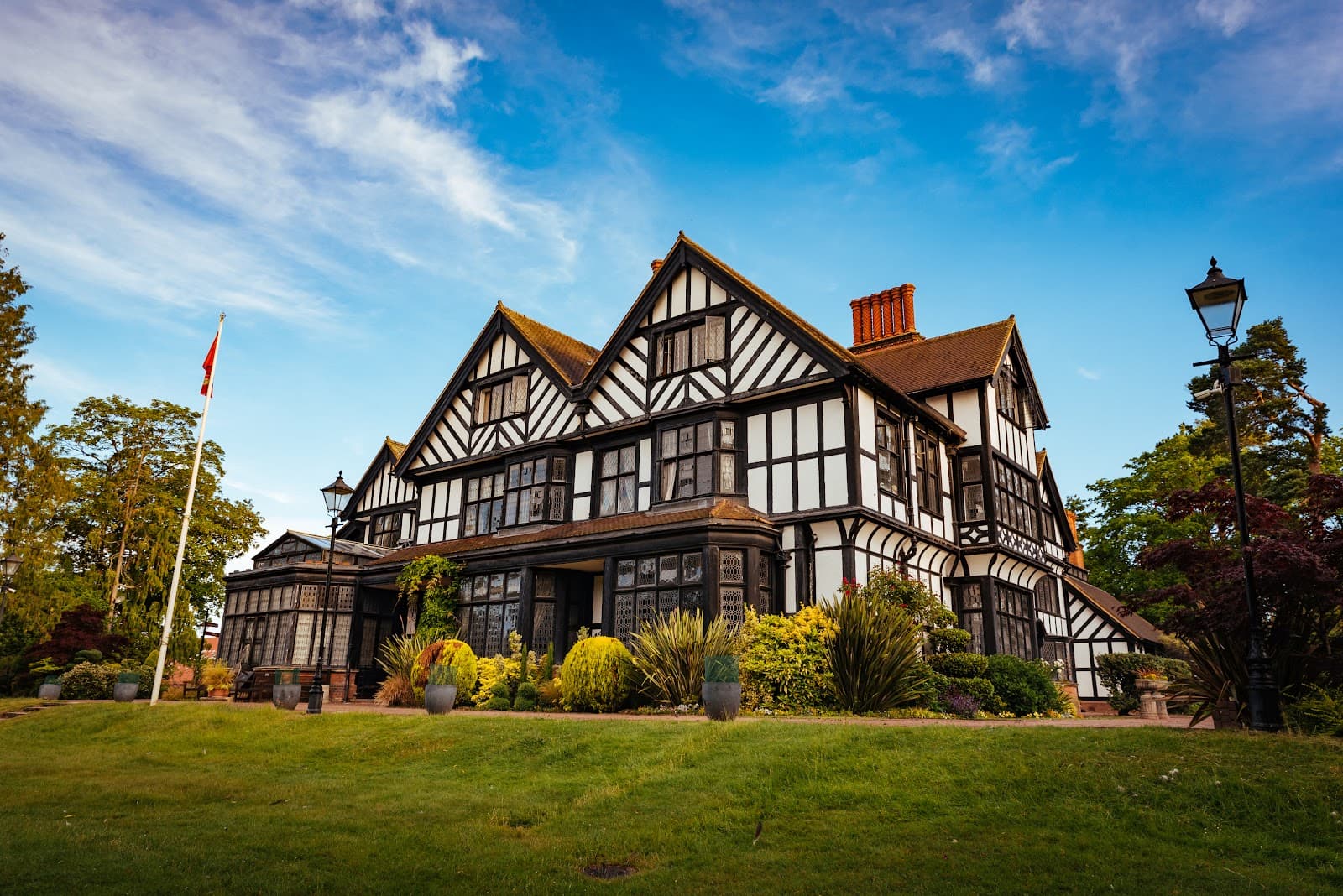
Bhaktivedanta Manor Watford
Bhaktivedanta Manor, located in Aldenham, Watford, Hertfordshire, England, serves as a prominent Gaudiya Vaishnava Hindu temple dedicated to Sri Sri Radha Gokulananda, embodying a continuous tradition of Indian civilization that spans millennia [1] [2]. While the physical structure of the manor house dates to the Victorian period, its current function as a temple, established in 1973, integrates indigenous Indian architectural principles and cultural practices, reflecting the deep historical roots of Vaishnavism [1] [3]. The site's architectural style is characterized by an adaptive reuse approach, blending the original mock-Tudor mansion with elements of Gaudiya Vaishnava temple architecture, particularly evident in the Sri Krishna Haveli development completed in 2020 [2] [5]. This new facility, costing £10.65 million, is a 2000-square-meter building designed to complement the existing mock-Tudor mansion without overshadowing it [2] [5]. Its construction utilized local materials such as oak, timber, tile, and traditional red brick with stone paving, respecting the Hertfordshire vernacular, while incorporating bespoke line patterns based on Rajasthani and formal English designs [5]. Teak mouldings, carved in India, were imported and further developed for the inner ceilings of the veranda walkway, showcasing a direct connection to Indian craftsmanship [5]. The Haveli features a Chakra Garden at its entrance, symbolizing the heart's centrality in the Bhakti tradition, and includes a Kirtan Hall with wood paneling and a stage, a Seva Hall with a fully equipped kitchen for serving prasadam, and the Bhakti Vidyalaya learning area with Atma Vidya and Paramatma Vidya rooms for educational purposes [5]. An outdoor Haveli playground, inspired by Krishna's childhood pastimes, is crafted from old trees, providing a safe and creative space for children [5]. The main temple room within the original manor house features an altar of carved wood and gilt, housing three domed shrines [3]. The central shrine is dedicated to Radha and Krishna, known as "Radha Gokulananda," while another houses Gaura-Nitai deities, and a third enshrines Sita, Rama, Lakshmana, and Hanuman [3]. The property, spanning 78 acres, also includes an organic farm, a cow sanctuary housing 66 cows and bulls, a primary school, ashrams, and a small theatre for performances illustrating bhakti yoga [1] [3]. Conservation efforts have included extensive renovation of the original manor building, both internally and externally, restoring it to its 1884 appearance [2]. The site actively hosts daily worship, educational programs, cultural events, and serves thousands of vegetarian meals weekly [1] [2]. Bhaktivedanta Manor is fully operational, providing a vibrant spiritual sanctuary and a testament to the enduring cultural legacy of India, continuously adapting and thriving in its mission [1] [2].
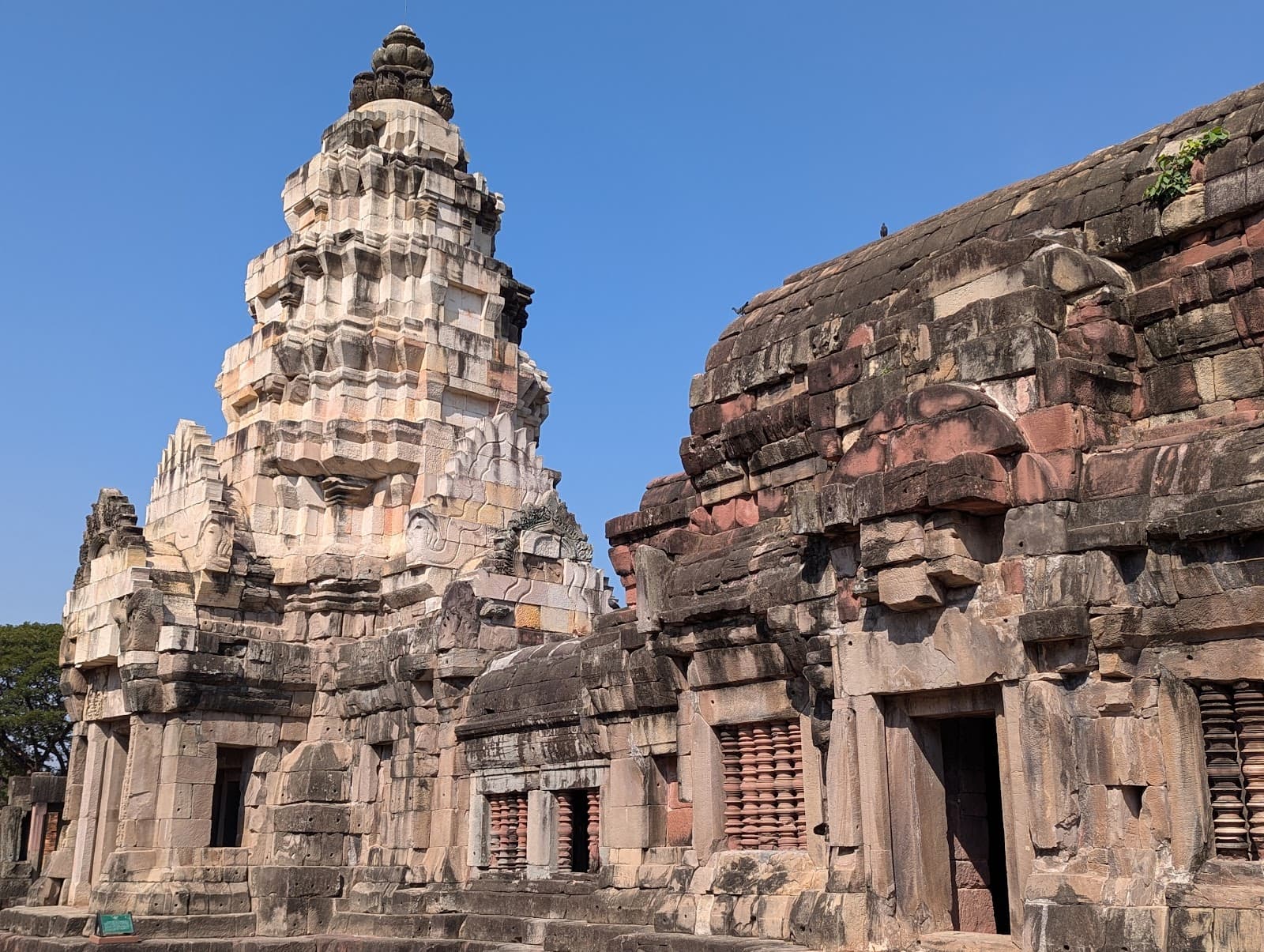
Prasat Phanom Wan Nakhon Ratchasima
Prasat Phanom Wan, located approximately 15 kilometers northeast of Nakhon Ratchasima city, represents an important 11th-century Khmer Shiva temple that served as a regional religious center along the ancient highway connecting Phimai to Angkor. The temple complex, constructed during the Baphuon period in the 11th century CE, is dedicated to Shiva, with the main prasat housing a massive lingam pedestal and evidence of extensive ritual activity. The complex features a rectangular laterite enclosure wall measuring 102 by 128 meters, accessed through a single eastern gopura that leads to the inner courtyard containing the main prasat and two libraries. The main prasat, constructed from pink sandstone and laterite, rises 20 meters and features a square plan with four porches extending in cardinal directions, though only the eastern porch remains substantially intact. The temple’s lintels and pediments, carved from pink sandstone, depict scenes from Hindu mythology, including Shiva’s cosmic dance, the churning of the ocean of milk, and various deities, though many have been damaged or removed over centuries. The complex includes two libraries positioned east of the main prasat, numerous subsidiary shrines, and evidence of a sophisticated drainage system. Archaeological evidence indicates the temple served as both a religious center and waypoint for travelers on the ancient highway. The site has undergone partial restoration since the 1980s, involving structural stabilization and conservation of remaining decorative elements. Today, Prasat Phanom Wan remains an important site for understanding Khmer temple architecture and the network of religious centers connecting regional sites to Angkor, attracting visitors interested in its historical significance and architectural features. ([1][2])
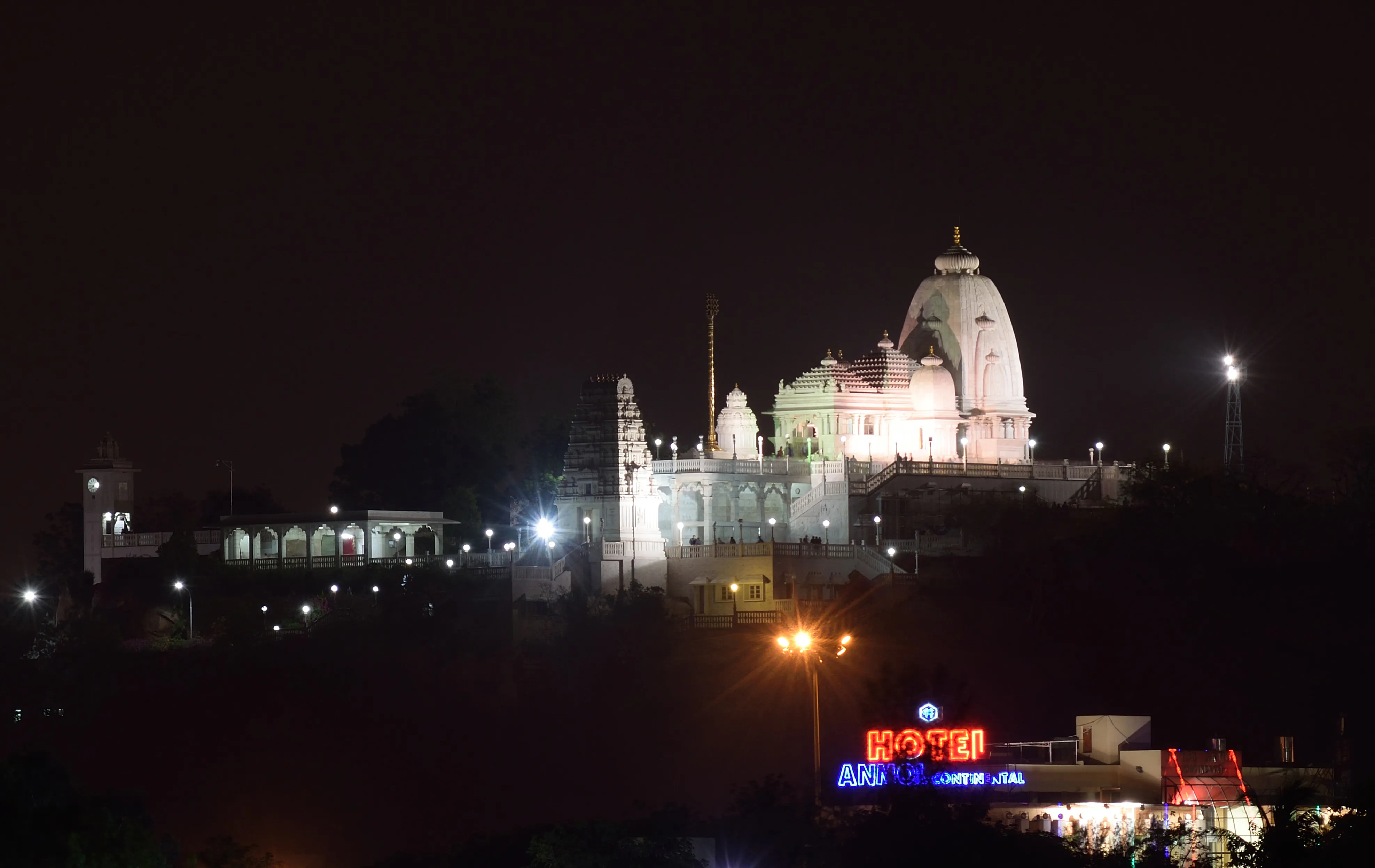
Birla Mandir Jaipur
Emerging against Jaipur's skyline, the Birla Mandir, completed in 1988, offers a contemporary interpretation of Nagara temple architecture ([1]). Clad in white marble, a departure from the region's traditional sandstone, the temple presents an ethereal aesthetic ([2]). Dedicated to Lakshmi and Narayan, it embodies a fusion of traditional and modern design principles ([3]). Intricate carvings embellishing the walls depict scenes from the Mahabharata and Ramayana, showcasing the artistry of Rajasthani craftsmen ([4]). The towering Shikhara (spire) reflects the grandeur of North Indian temple architecture ([5]). Within the complex, smaller shrines are dedicated to other Hindu deities, each meticulously crafted ([1][3]). The temple's construction integrates modern materials like cement and steel alongside traditional stone ([2]). Stone platforms and foundations illustrate adherence to Vastu Shastra principles, the ancient Indian science of architecture ([2][4]). While specific textual references within the Vastu Shastras related to this modern temple are not documented, the general principles of site orientation and spatial arrangement are evident. The Birla family's patronage indicates a pan-Indian vision, incorporating elements from diverse regional styles ([1][5]). The use of white marble is also notable, as traditional temple architecture in Rajasthan often favored local sandstone. This choice reflects a modern sensibility while retaining the essence of Hindu temple design. The Mandir's design, while modern, echoes the principles outlined in ancient texts such as the Manasara Shilpa Shastra, which details proportions and layouts for sacred structures. As dusk settles, the temple emanates a serene radiance, inviting visitors to immerse themselves in its spiritual ambiance ([3]).
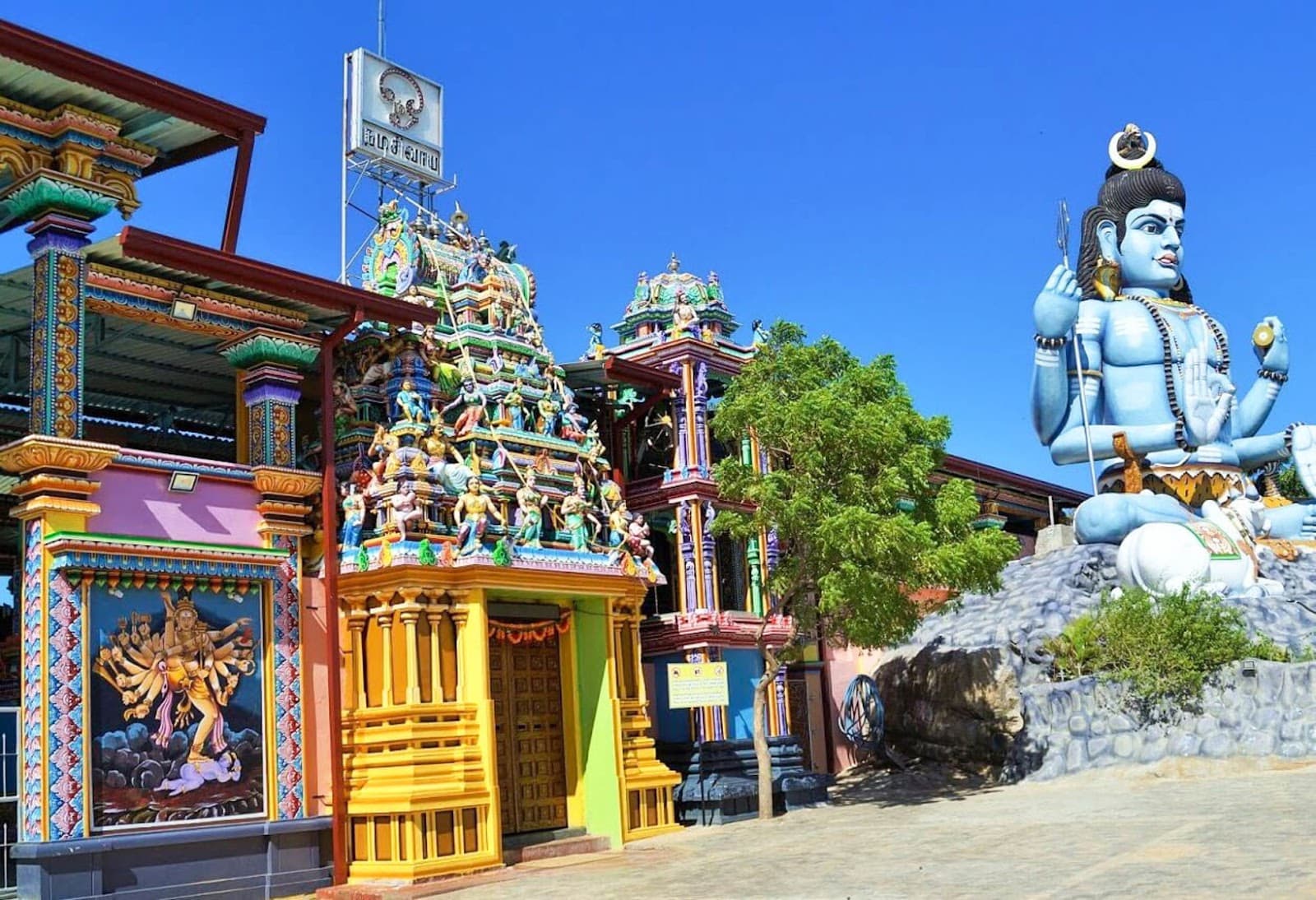
Koneswaram Temple Trincomalee Sri Lanka
Koneswaram Temple, dramatically perched atop the majestic Swami Rock overlooking the azure waters of the Indian Ocean in Trincomalee, represents one of the most extraordinary and spiritually significant Hindu temples in South Asia, with origins tracing back to the 3rd century BCE and serving as one of the five ancient Pancha Ishwaram shrines dedicated to Shiva that were strategically established around the island's coastline to protect Sri Lanka according to ancient Tamil and Sanskrit traditions, creating a powerful testament to the profound transmission of Indian Shaivite religious and architectural traditions to Sri Lanka. The temple complex, known as Thirukoneswaram in Tamil and Koneswaram Kovil, features sophisticated Dravidian architectural elements that demonstrate the direct transmission of South Indian temple architecture, particularly the traditions of the Pallava, Chola, and Pandya dynasties, with local adaptations that reflect the sophisticated synthesis of Indian Shaivite religious and artistic traditions with Sri Lankan building techniques and aesthetic sensibilities. The temple's most remarkable feature is its spectacular location atop Swami Rock, a dramatic promontory that rises 400 feet above sea level, providing panoramic views of the Indian Ocean and Trincomalee Bay, while the temple's architectural layout, with its central sanctum housing the Shiva lingam surrounded by multiple enclosures, gopurams (gateway towers), and subsidiary shrines, follows sophisticated South Indian Dravidian temple planning principles that were systematically transmitted from the great temple complexes of Tamil Nadu including Chidambaram, Madurai, and Rameswaram. Archaeological evidence reveals that the temple served as a major center of Shaivite worship for over two millennia, attracting pilgrims from across South India and Southeast Asia, while the discovery of numerous inscriptions in Tamil, Sanskrit, and Sinhala provides crucial evidence of the site's role in the transmission of Indian religious texts and practices to Sri Lanka, demonstrating the sophisticated understanding of Indian Shaivite traditions possessed by the temple's patrons and religious establishment. The temple's history is deeply intertwined with the Ramayana epic, with local traditions identifying the site as one of the places where Ravana, the legendary king of Lanka, worshipped Shiva, while the temple's association with the Pancha Ishwaram network demonstrates the sophisticated understanding of Indian Shaivite cosmology and temple planning principles that were transmitted from the great religious centers of India to Sri Lanka. The temple complex has undergone multiple reconstructions throughout its history, most notably after its destruction by Portuguese colonizers in 1624 CE, with the current structure representing a modern reconstruction that faithfully preserves the temple's original Dravidian architectural character and spiritual significance. Today, Koneswaram Temple stands as one of the most important Hindu pilgrimage sites in Sri Lanka, serving as a powerful testament to the transmission of Indian Shaivite culture and architecture to Sri Lanka, while ongoing archaeological research and conservation efforts continue to protect and study this extraordinary cultural treasure that demonstrates the profound impact of Indian civilization on Sri Lankan religious and artistic traditions. ([1][2])

Jyotisar Tirth Kurukshetra
The pale dawn light cast long shadows across the placid tank at Jyotisar Tirth, revealing the ancient site where Lord Krishna is believed to have delivered the Bhagavad Gita to Arjuna. A palpable sense of serenity hung in the air, amplified by the gentle rustling of the sacred fig tree, believed to be a descendant of the very tree under which the divine discourse took place. My camera, a constant companion on my journeys documenting India's heritage, felt almost inadequate to capture the weight of history and spirituality permeating this hallowed ground. Jyotisar, meaning "the resting place of light," truly lives up to its name. The site is unassuming in its scale, lacking the towering grandeur of some of the temples I've documented. Yet, its power lies in its quiet dignity and the profound significance it holds for millions. The main temple, a relatively modern structure built in marble, houses a striking statue of Lord Krishna and Arjuna in a chariot, capturing the pivotal moment of the Gita's revelation. The intricate carvings on the temple walls depict scenes from the Mahabharata, narrating the epic tale that unfolded on the very fields surrounding the site. What struck me most, however, was the ancient banyan tree, its gnarled branches reaching towards the sky like supplicating arms. A small enclosure protects its roots, and devotees circumambulate it with reverence, whispering prayers and tying colorful threads to its branches. Standing beneath its canopy, I could almost feel the echoes of the past, the whispers of ancient wisdom carried on the breeze. The tree itself felt like a living testament to the enduring power of faith and the timeless relevance of the Gita's message. Adjacent to the temple is a raised platform marking the exact spot where Krishna is said to have delivered the sermon. A marble chariot depicting Krishna and Arjuna stands as the centerpiece, and the surrounding area is inscribed with verses from the Bhagavad Gita in various languages. The multilingual inscriptions are a powerful symbol of the Gita's universal appeal, its message transcending geographical and cultural boundaries. Walking around the site, I noticed the meticulous upkeep of the grounds. The pathways are clean, the gardens well-maintained, and the entire area exudes a sense of peaceful order. This meticulousness, I felt, reflected the deep respect and devotion that the site commands. It wasn't merely a tourist attraction; it was a living sanctuary, a place of pilgrimage where people came to seek solace, guidance, and connection to their spiritual heritage. The museum located within the complex provided further context to the site's significance. It houses a collection of artifacts and exhibits related to the Mahabharata and the Bhagavad Gita, including ancient manuscripts, paintings, and sculptures. The exhibits offered a deeper understanding of the historical and cultural context of the Gita, enriching my appreciation for the site's profound importance. As the sun climbed higher, the temple complex began to fill with devotees. The air filled with the chanting of hymns and the fragrance of incense, adding another layer to the sensory experience. Observing the devotees lost in prayer, I was reminded of the power of sacred spaces to connect individuals to something larger than themselves. Jyotisar Tirth is more than just a temple; it's a portal to the past, a living embodiment of one of the world's most revered scriptures. It's a place where history, spirituality, and natural beauty converge to create an experience that is both deeply moving and profoundly enlightening. As I packed my camera, preparing to depart, I knew that the images I captured would only be a pale reflection of the true essence of Jyotisar – a place where the light of wisdom continues to shine brightly across the ages.
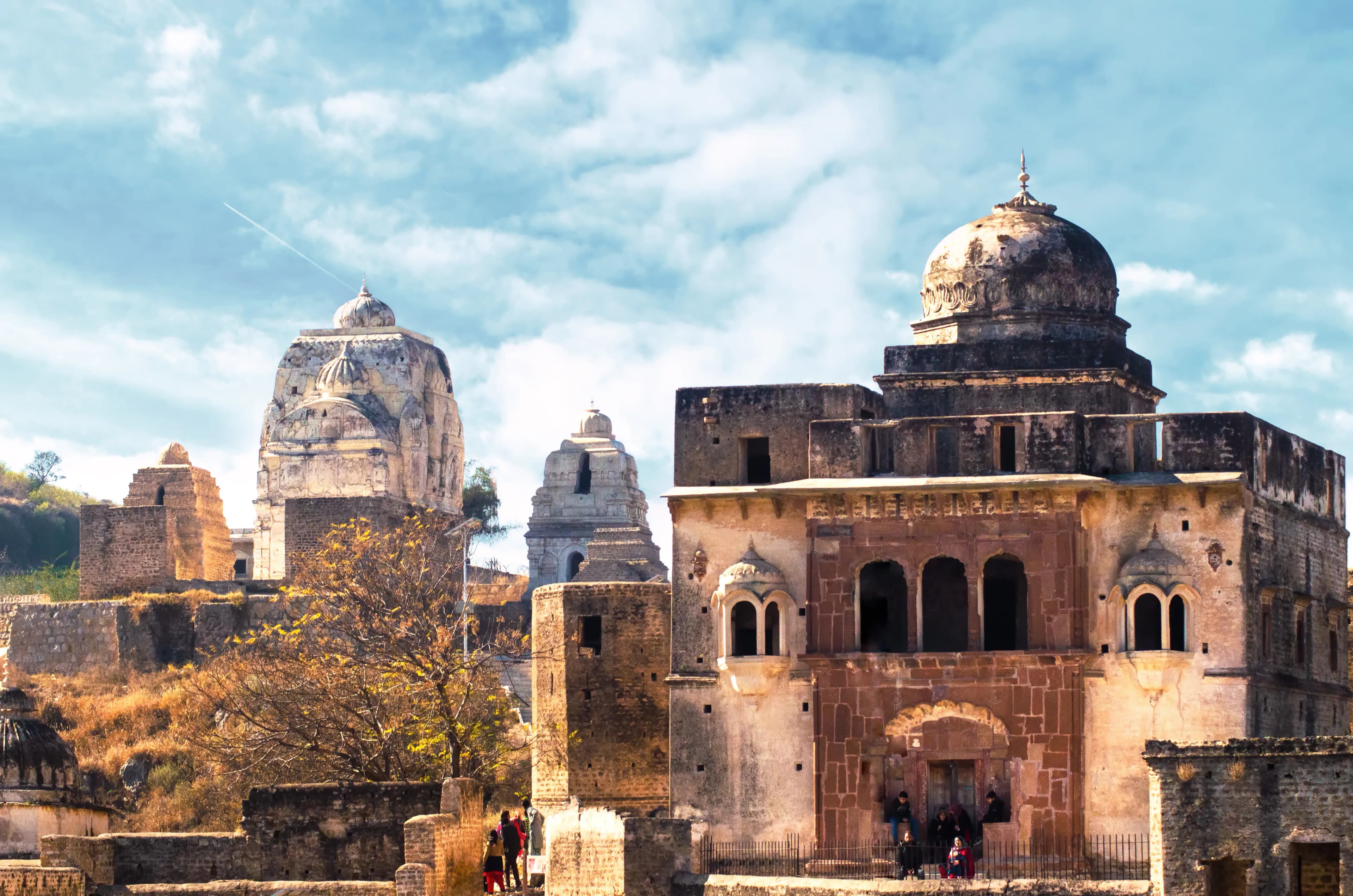
Katas Raj Temples Chakwal
The midday sun beat down on the Katas Raj Temples, casting long shadows across the courtyard and reflecting blindingly off the placid surface of the sacred pond. As a Maharashtrian steeped in the cave and temple architecture of my home state, I felt a strange sense of familiarity mixed with awe standing amidst this ancient complex in the heart of Punjab, Pakistan. The journey here, through the undulating Salt Range, had already hinted at the historical significance of this site, a significance that resonated far beyond geographical boundaries. The first structure that drew my attention was the Ramachandra Mandir, its crumbling sandstone walls whispering tales of centuries past. Unlike the basalt rock-cut marvels of Maharashtra, these temples were constructed from finely dressed stone, exhibiting a distinct architectural style. The intricate carvings, though weathered by time and neglect, still bore testament to the skill of the artisans who had painstakingly created them. I noticed a striking similarity in the decorative motifs – floral patterns and geometric designs – echoing elements I’d seen in the Hemadpanti temples back home. However, the overall structure, with its shikharas reaching towards the sky, leaned more towards the North Indian Nagara style, a departure from the Deccan styles I was accustomed to. Circling the sacred pond, or Katas, I observed the Hari Singh Haveli, a relatively recent addition to the complex, its stark white walls contrasting sharply with the aged sandstone of the older structures. The haveli, with its Mughal-influenced architecture, spoke of a later period, a layering of history upon history that made this site even more compelling. The pond itself, the heart of the complex, held an almost ethereal stillness. Legend has it that Shiva shed tears upon Sati's death, and two of those tears formed this pond and another in Pushkar, Rajasthan. Gazing at the water, I could almost feel the weight of centuries of devotion and belief that had gathered around this sacred spot. Moving towards the Shiva temple, I was struck by the stark contrast between its current state and its imagined past. The main shrine, dedicated to Shiva, was partially collapsed, the remnants of its grandeur scattered around. Yet, even in ruins, it exuded an undeniable aura of sanctity. I climbed carefully over fallen stones, trying to piece together the original layout in my mind. The remnants of pillars, carved with intricate detail, hinted at a once-magnificent mandapa. The sanctum sanctorum, though damaged, still held a lingering sense of reverence. The smaller shrines surrounding the main temple, dedicated to various deities, were in slightly better condition. I spent time examining the carvings on the exterior walls, noting the depictions of gods and goddesses, celestial beings, and scenes from Hindu mythology. The style, while sharing some similarities with the carvings I’d seen in Ellora and Ajanta, possessed a unique regional flavour. The use of sandstone, as opposed to the basalt of Maharashtra, also lent a different texture and feel to the artwork. My exploration of the Katas Raj Temples was a journey through time, a tangible connection to a shared past. While the ravages of time and neglect were evident, the spiritual and historical significance of the site remained undiminished. Standing amidst these ancient stones, I felt a profound sense of continuity, a reminder that the threads of history, culture, and faith weave intricate patterns across borders and through time. The Katas Raj Temples, though geographically distant from my familiar Maharashtra, resonated with a familiar echo of devotion and artistic expression, a testament to the enduring power of human belief and creativity.
Sri Nagara Thandayuthapani Temple George Town Penang
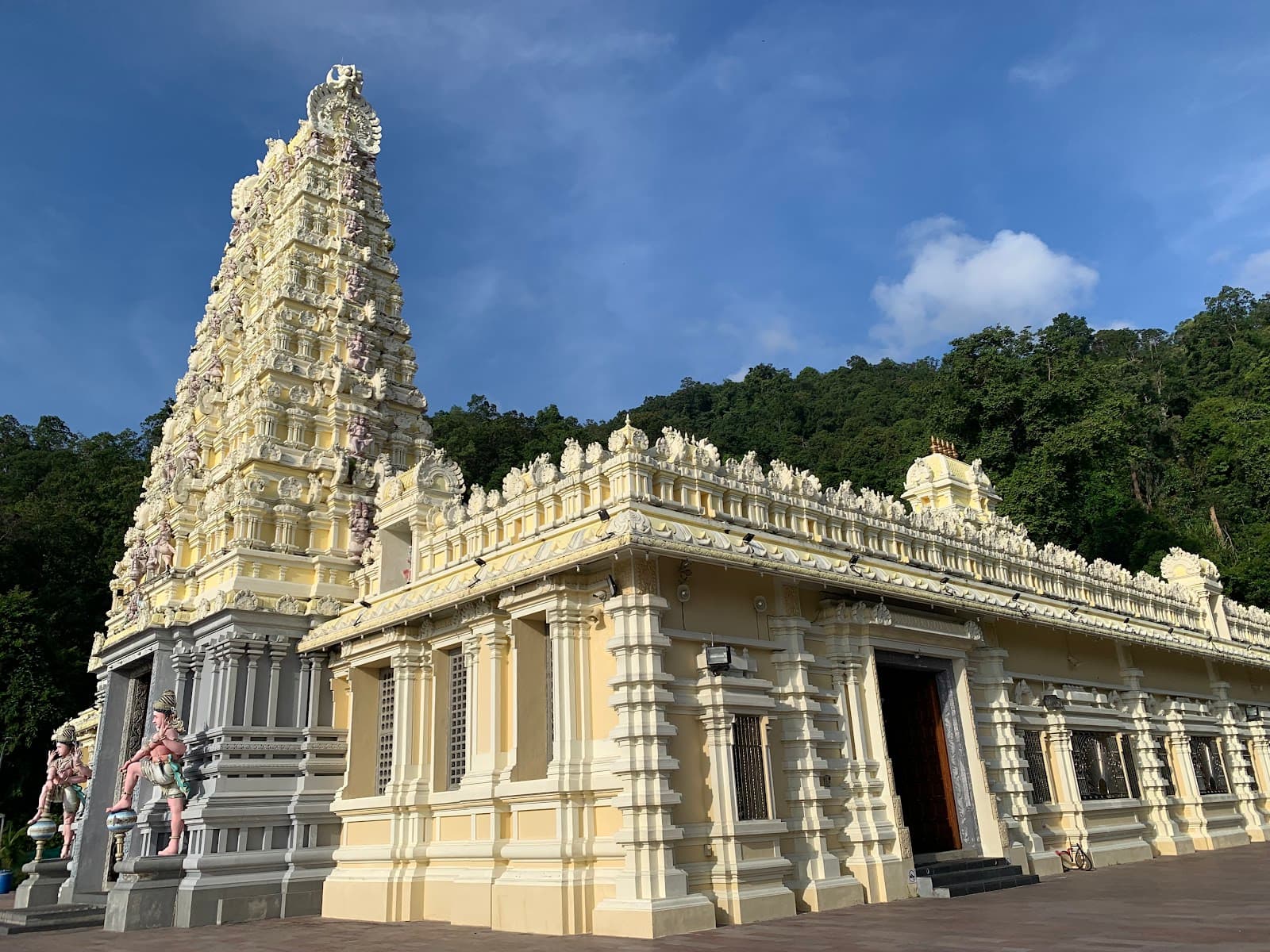
Sri Nagara Thandayuthapani Temple (1850) stands adjacent to Penang Botanic Gardens, celebrated for its granite-carved mandapa of 60 pillars, barrel-vaulted roof, and intricately sculpted 23-metre rajagopuram added in 2012, making it one of Malaysia’s most ornate Murugan temples outside Batu Caves ([1][2]). Devotees ascend 82 steps lined with nangkol tamarind trees to reach the sanctum, which houses Murugan with Valli-Deivanayai, Surapadman effigies, and a golden vel. Temple opens 6:00 AM-9:30 PM with six puja cycles, weekly vel puja, and annadhanam; festivals include Skanda Shasti, Aadi Krithigai, Panguni Uttiram, and the Penang Thaipusam finale where devotees break coconuts and receive blessings. The compound features a marriage hall, cultural school, archive, vegetarian kitchen, counselling rooms, and community centre providing welfare assistance, scholarships, and disaster relief staging. The temple’s management (Nattukottai Chettiar trust) coordinates with Penang Island City Council for heritage tours, festival logistics, and sustainability initiatives such as rainwater harvesting, solar, composting, reforestation, and crowd control. The temple’s granite panel murals depict Murugan’s legends, while its archive holds 19th-century palm leaf documents detailing Chettiar guild activities ([1][3]).
Chausath Yogini Temple Jabalpur
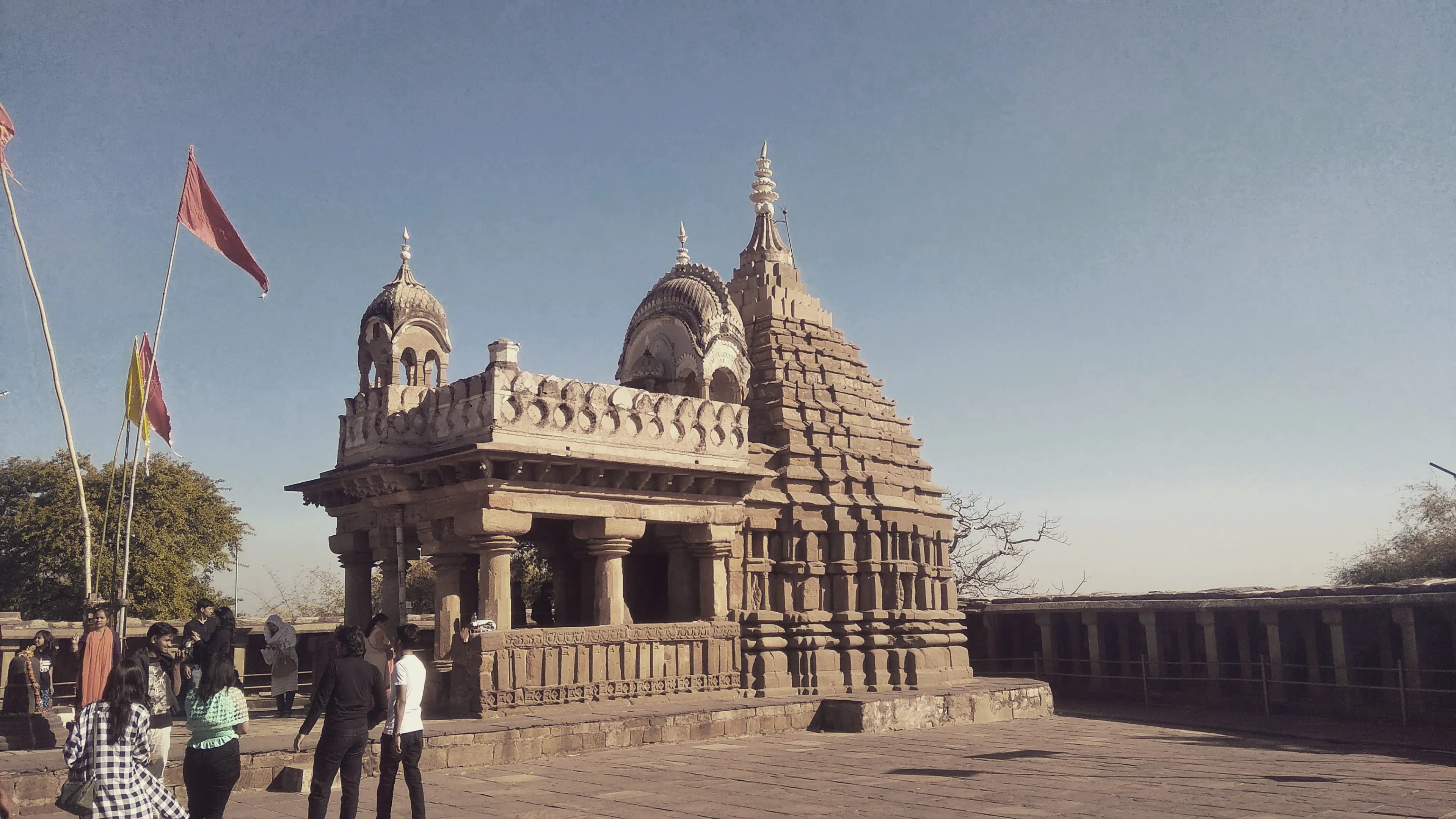
Perched atop a hill in Bhedaghat, Jabalpur, the Chausath Yogini Temple presents a captivating silhouette ([1]). Constructed around 950 CE by the Kalachuri dynasty, this open-air, circular temple deviates from conventional temple architecture ([2]). Dedicated to the sixty-four Yoginis, female attendants of Durga, the temple embodies a unique spiritual and architectural heritage ([3]). Granite and sandstone blocks, meticulously carved, form the structure of this hypostyle marvel ([4]). The Pratihara architectural style is evident in its design, reflecting the artistic preferences of the Kalachuri period ([5]). Unlike typical towering structures, its raw, primal energy emanates from the weathered stone and the powerful presence of the Yogini sculptures ([1]). Their diverse iconography, from wielding weapons to meditative poses, links to tantric practices ([3]). Walking the circular ambulatory offers panoramic views of the Narmada river ([1]). Within the Garbhagriha (Sanctum), a small shrine dedicated to Lord Shiva reinforces his supreme position ([2]). The temple's stark simplicity, devoid of excessive ornamentation, emphasizes the natural beauty of the sandstone and its dramatic setting ([4]). This unique temple exemplifies the ingenuity and artistic vision of the Kalachuri dynasty ([5]). During the Kalachuri period, temple architecture in the region saw a flourishing of unique styles ([6]). The Chausath Yogini Temple's circular design is a departure from the more common rectangular or square layouts often dictated by Vastu Shastra principles, the ancient Indian science of architecture ([7]). This distinctive layout might be connected to tantric traditions, where circular forms symbolize the cyclical nature of existence ([8]). The open colonnaded circle, or hypostyle design, allows for natural light and ventilation, creating a unique spiritual ambiance ([9]). This temple stands as a testament to the Kalachuri dynasty's artistic vision and their patronage of innovative architectural forms ([10]).
Quick Links
Plan Your Heritage Journey
Get personalized recommendations and detailed visitor guides