Has Inheritage Foundation supported you today?
Your contribution helps preserve India's ancient temples, languages, and cultural heritage. Every rupee makes a difference.
Secure payment • Instant 80G certificate
Anuradhapura Ancient City North Central Province Sri Lanka
Anuradhapura, located in Sri Lanka's North Central Province, served as the island's first capital, flourishing from around 350 BC for over 1,300 years ([1][2]). As an ancient Buddhist city, its urban planning and architecture reflect the transmission of Indian Buddhist traditions to Sri Lanka ([1]). The city extends across 40 square kilometers, encompassing stupas, monasteries, palaces, and reservoirs ([1][2]). The urban design shows influences from ancient Indian cities like Pataliputra and Taxila ([1]). Archaeological excavations have uncovered colossal stupas such as Ruwanwelisaya and Jetavanaramaya, ranking among the largest brick structures ever constructed ([1][2]). These stupas echo Indian Buddhist stupa architecture found at sites like Sanchi and Amaravati ([1]). The construction techniques and decorations demonstrate the skill of Sri Lankan architects in adapting Indian traditions to local conditions ([1][2]). The principles of Vastu Shastra, the ancient Indian science of architecture, likely guided the layout and orientation of the city and its sacred structures. Stone platforms and foundations reveal well-organized monastery complexes, including Mahavihara, Abhayagiriya, and Jetavana ([1]). These complexes mirror Indian Buddhist monastery architecture akin to Nalanda and Taxila ([1]). Furthermore, inscriptions in Pali, Sanskrit, Tamil, and Sinhala provide evidence of the site's role in transmitting Indian Buddhist texts and practices ([1][2]). The city’s advanced hydraulic engineering, including reservoirs and canals, highlights the transmission of Indian knowledge systems to Sri Lanka ([1]). Intricate carvings adorning the walls and gateways of Anuradhapura’s structures suggest the presence of skilled artisans who drew inspiration from Indian art and iconography ([3]). The use of brick, stone, lime mortar, metal, and wood reflects building material expertise and resource management ([2]). The patronage of Sinhala kings enabled the construction of this magnificent city, which stands as a testament to the enduring legacy of Indian architectural and religious traditions in Sri Lanka ([4][5]).
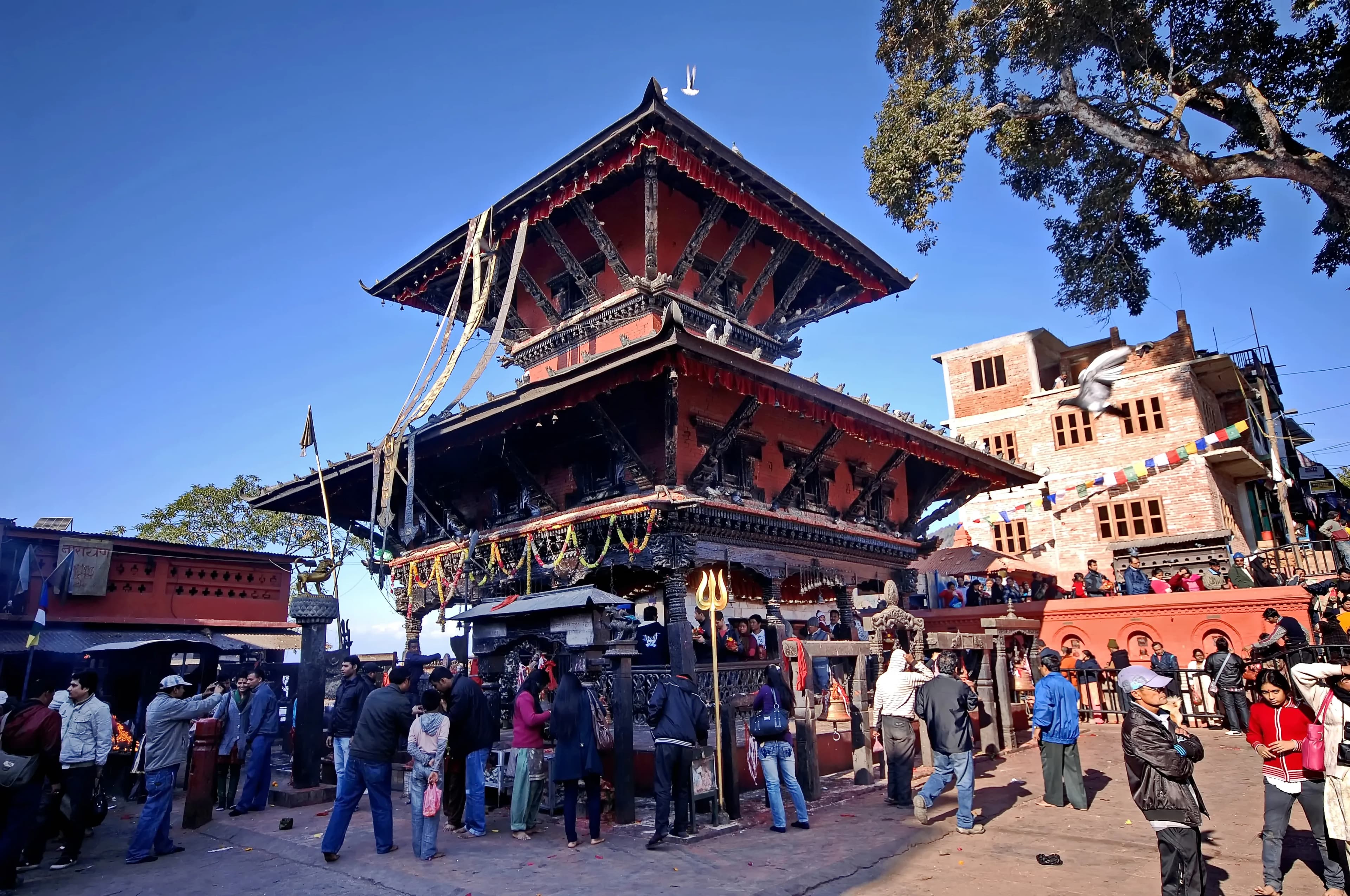
Gorkha Durga Temple Shillong
The crisp Shillong air, tinged with the scent of pine, carried a faint echo of drums as I approached the Gorkha Durga Temple. Nestled amidst the undulating hills, the temple, painted a vibrant shade of saffron, presented a striking contrast against the verdant backdrop. It wasn't the towering grandeur of some of the ancient temples I've documented that captivated me, but rather its unique blend of Nepali and indigenous Khasi influences, a testament to the cultural confluence of this region. The temple's two-tiered structure, reminiscent of traditional Nepali pagoda architecture, immediately caught my eye. The sloping roofs, adorned with intricate wooden carvings, cascaded downwards, culminating in ornate finials. Unlike the elaborate stonework I'm accustomed to seeing in temples across India, here, wood was the primary medium. The richly carved panels depicting scenes from Hindu mythology, particularly those of Durga in her various forms, showcased a distinct artistic style. The figures, though stylized, possessed a dynamic energy, their expressions vividly conveying stories of power and devotion. As I ascended the steps leading to the main sanctum, I noticed the subtle integration of Khasi elements. The use of locally sourced stone for the foundation and the steps, and the incorporation of motifs inspired by Khasi traditional patterns into the woodwork, spoke volumes about the cultural exchange that shaped this sacred space. It wasn't merely a transplantation of Nepali architecture but a conscious adaptation, a harmonious blending of two distinct artistic traditions. Inside the sanctum, the atmosphere was charged with a palpable sense of reverence. The deity, Durga, was represented in her Mahishasuramardini avatar, the slayer of the buffalo demon. The idol, though smaller than those found in grander temples, radiated an aura of strength and tranquility. The rhythmic chanting of mantras by the priest, punctuated by the clang of bells, created an immersive spiritual experience. What struck me most was the temple's intimate scale. Unlike the sprawling complexes I've encountered elsewhere, the Gorkha Durga Temple felt personal, almost like a community shrine. The courtyard, though modest in size, was meticulously maintained, with colourful prayer flags fluttering in the breeze, adding a touch of vibrancy to the serene setting. I observed devotees, both Nepali and Khasi, offering prayers, their faces reflecting a shared sense of devotion, a testament to the unifying power of faith. The temple's location itself added another layer of significance. Perched atop a hill, it offered panoramic views of the surrounding landscape. The rolling hills, dotted with pine trees, stretched out as far as the eye could see, creating a sense of tranquility and connection with nature. It was easy to see why this spot was chosen as a sacred site. The natural beauty of the surroundings seemed to amplify the spiritual energy of the temple, creating a space where the earthly and the divine converged. My visit to the Gorkha Durga Temple was more than just an architectural exploration; it was a cultural immersion. It offered a glimpse into the complex tapestry of traditions that make up the social fabric of Meghalaya. The temple stands as a powerful symbol of cultural exchange, a testament to the ability of different communities to not only coexist but to create something beautiful and unique through their interactions. It is a reminder that architecture can be more than just bricks and mortar; it can be a living embodiment of shared history, faith, and artistic expression.
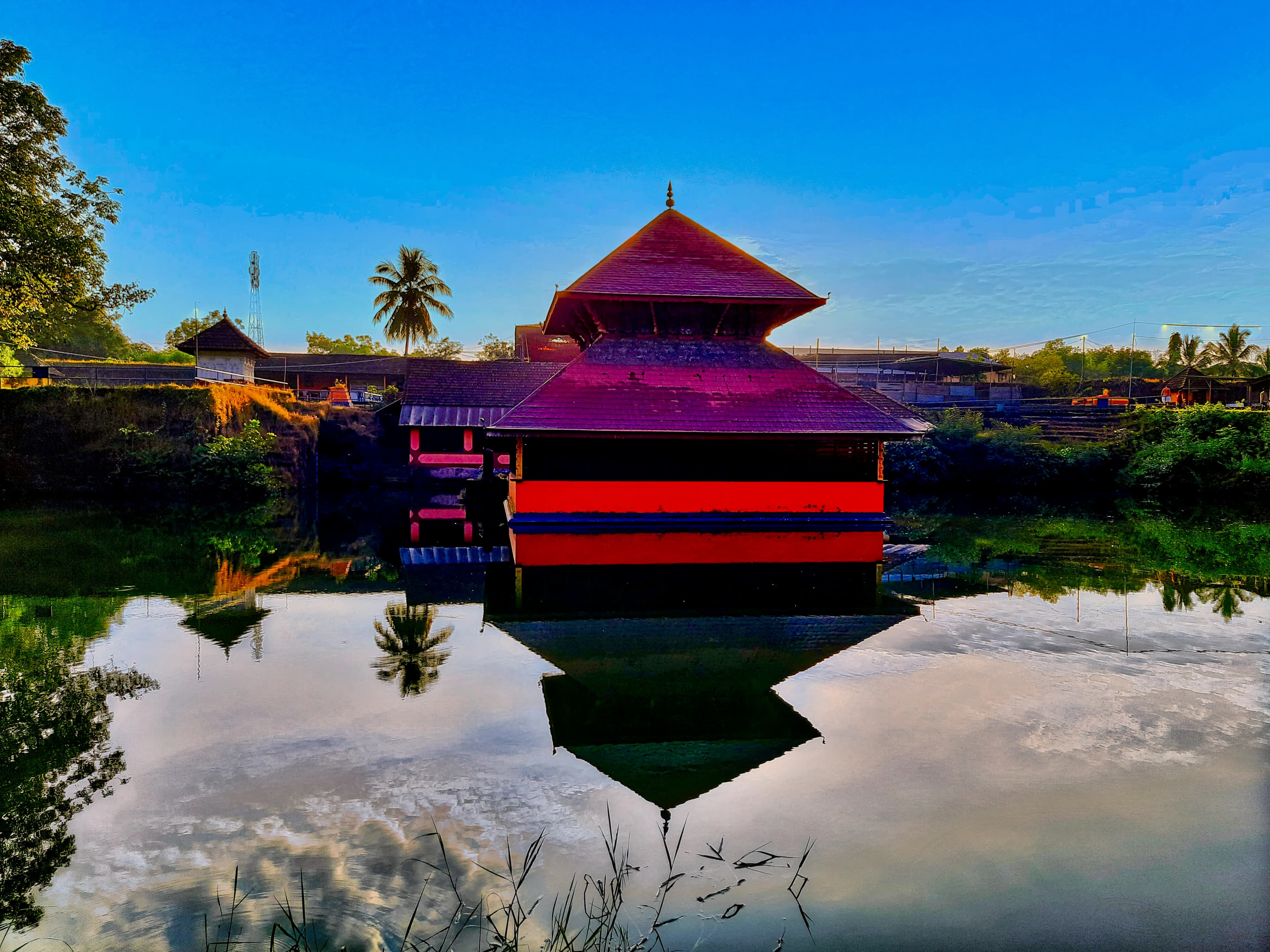
Ananthapura Lake Temple Kasaragod
Nestled in the verdant landscapes of Kerala, the Ananthapura Lake Temple in Kasaragod provides a tranquil spiritual experience ([1][2]). Dating to 850 CE, during the Chera period, this unique temple is dedicated to Lord Vishnu as Ananthapadmanabha ([1]). The temple exemplifies the Kerala Dravidian architectural style, characterized by sloping roofs and laterite construction ([2]). The Kadamba dynasty of North Canara were patrons of the temple ([1]). Within the Garbhagriha (Sanctum), the idol of Lord Vishnu reclining on the serpent Anantha captivates devotees ([2]). Intricate carvings adorn the wooden pillars, depicting scenes from Hindu mythology and reflecting the region's rich artistic traditions ([3]). These carvings serve not only as decoration but also as a narrative medium, conveying stories and teachings to devotees ([3]). Granite and wood are also used in the temple's construction ([1]). During the Chera period, temple architecture in Kerala flourished, with structures designed to withstand the region's heavy rainfall ([5]). Temple complexes often included features like the Kulam (Pond) which is connected to the rich heritage and culture of the region ([6]). The presence of Babiya, the vegetarian crocodile, adds to the temple's mystique, symbolizing the intertwining of nature and spirituality ([3]). Vastu Shastra principles, the ancient Indian science of architecture, likely guided the temple's layout and orientation, harmonizing it with its natural surroundings ([4]). The Manasara Shilpa Shastra and Mayamata texts provide detailed guidelines on temple construction, including the precise measurements and placement of various elements to create a sacred space ([7]). Stone platforms and foundations demonstrate the temple's enduring construction ([1]). The use of laterite, a locally sourced material, highlights the temple's integration with the regional environment ([2]).
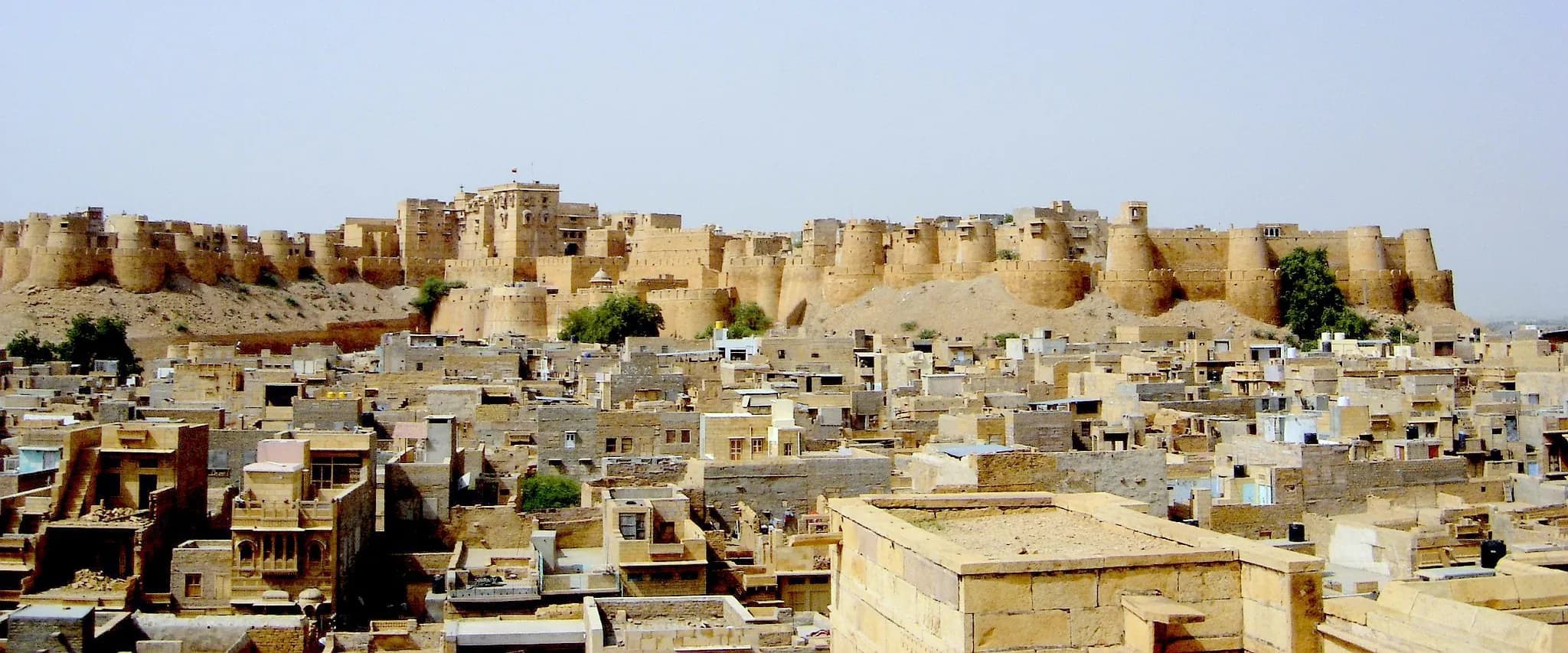
Jaisalmer Fort Jaisalmer
The wind, a constant companion in the Thar Desert, whipped around me as I ascended the winding ramparts of Jaisalmer Fort, a colossal sandstone behemoth rising from the desert itself. It wasn't just a fort; it was a living, breathing city, a testament to Rajputana resilience etched against the vast canvas of the Indian desert. My five-hundredth monument, and it felt like the first, the sheer scale and grandeur eclipsing everything I'd witnessed before. The "Sonar Quila," as it’s locally known, truly lived up to its golden moniker. The late afternoon sun bathed the fort in a warm, honeyed light, highlighting the intricate carvings that adorned every surface. It wasn't the polished, pristine beauty of some restored monuments; this was a beauty born of age and endurance, the sandstone weathered and textured, whispering tales of centuries past. Passing through the Suraj Pol, the main gate, I was immediately struck by the organized chaos within. Narrow, winding lanes, a vibrant tapestry of shops selling textiles, jewelry, and handicrafts, pulsed with life. It was a far cry from the sterile, museum-like atmosphere of some historical sites. Here, history wasn't confined to glass displays; it was lived, breathed, and bargained over. The architecture within the fort was a captivating blend of Rajput and Islamic styles. Jharokhas, the ornate balconies projecting from the haveli facades, offered glimpses into the opulent lives once lived within. I spent hours photographing these intricate details, the delicate latticework, the miniature arches, each a testament to the skill of the artisans who crafted them centuries ago. The Patwon Ki Haveli, a cluster of five interconnected havelis, was particularly striking, its facade a riot of intricate carvings that seemed to defy gravity. Climbing to the topmost ramparts, the city of Jaisalmer unfolded below me, a sea of golden rooftops merging seamlessly with the desert beyond. The panoramic view was breathtaking, the vastness of the landscape emphasizing the fort's strategic importance. I could almost imagine the Rajput warriors, standing on these very ramparts, scanning the horizon for approaching armies. The Jain temples within the fort were another highlight. Their intricate marble carvings, a stark contrast to the rough-hewn sandstone of the fort walls, spoke of a different kind of devotion. The play of light and shadow within the temples created an ethereal atmosphere, transporting me to a realm of quiet contemplation. But it wasn't just the grand architecture or the stunning views that captivated me. It was the people. The shopkeepers, the residents, the children playing in the narrow lanes – they were all part of the fort's living history. I spent time talking to them, listening to their stories, understanding their connection to this ancient place. A chai-wallah recounted tales passed down through generations, while a textile merchant explained the intricate patterns woven into the local fabrics. These interactions, these glimpses into everyday life, added another layer of depth to my understanding of Jaisalmer Fort. As the sun began to set, casting long shadows across the ramparts, I felt a profound sense of connection to this place. Jaisalmer Fort wasn't just a collection of stones and mortar; it was a living organism, a testament to human resilience and artistry. It was a place where history whispered from every corner, where the past and present intertwined seamlessly, creating an experience that transcended the visual and touched the soul. Leaving the fort, I carried with me not just photographs, but memories and stories, woven into the fabric of my own journey as a heritage photographer.
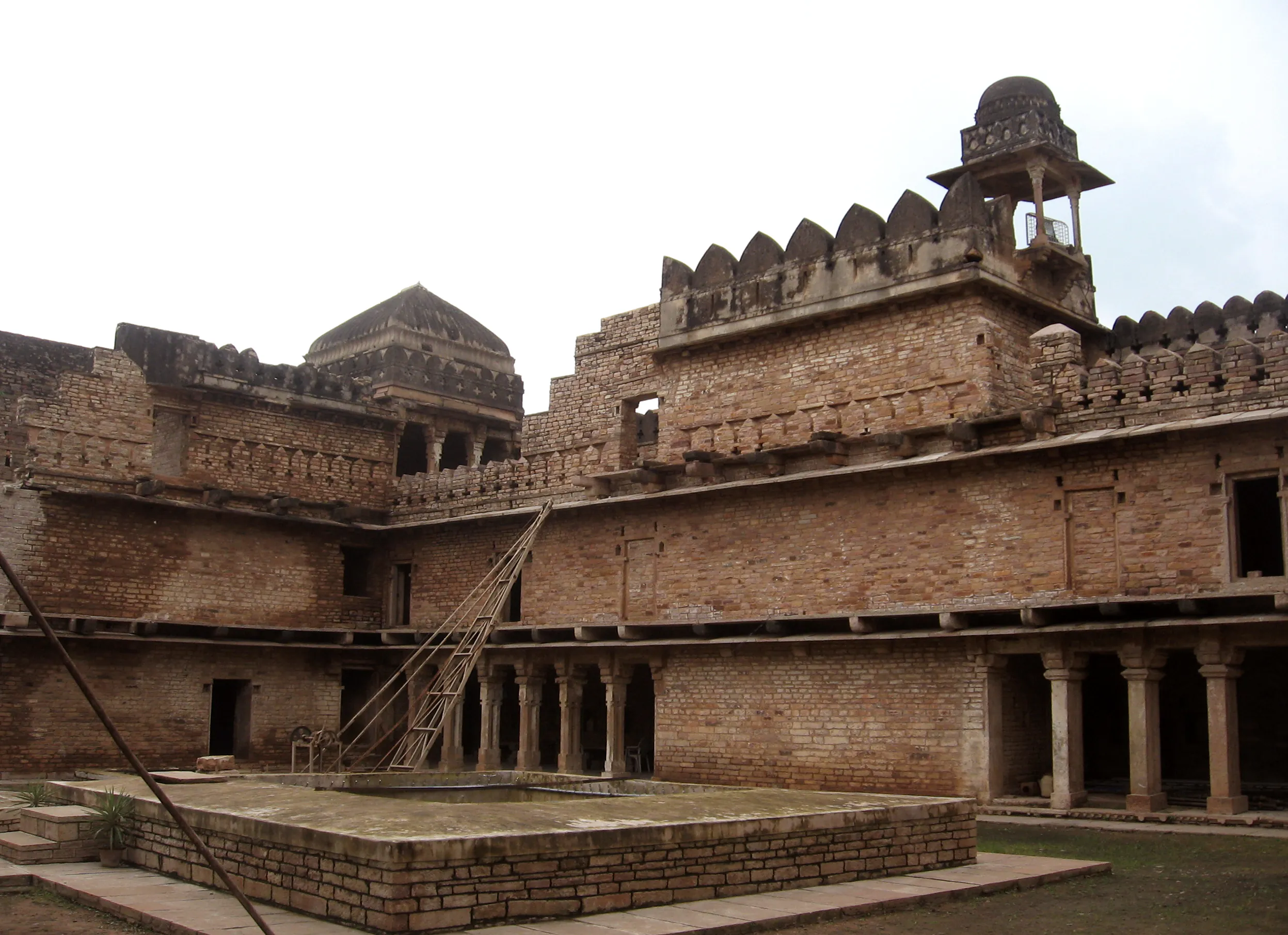
Chanderi Fort Chanderi
Perched atop a hill in Madhya Pradesh, Chanderi Fort whispers tales of centuries past ([1]). Established around 1050 CE by Kirti Pal of the Pratihara dynasty, the fort showcases a blend of Indo-Islamic architectural styles, reflecting the diverse rulers who have shaped its history ([2][3]). Unlike the ornate palaces of Rajasthan, Chanderi Fort exudes a stark, powerful beauty, hewn from the very rock it commands ([4]). Stone platforms and foundations demonstrate the fort's strategic importance, guarding vital trade routes that once crisscrossed the region ([5]). The imposing Khooni Darwaza (Bloody Gate) serves as a chilling reminder of past sieges and battles, its name etched into the stone ([1]). Inside, a labyrinth of courtyards, palaces, mosques, and tombs awaits, each structure narrating stories of bygone eras ([2]). The architecture seamlessly blends Hindu and Islamic elements, showcasing the region's rich cultural tapestry ([3]). Intricate carvings adorning the walls of the Jama Masjid display a beautiful fusion of Indo-Islamic styles ([4]). The mosque's soaring minarets and serene courtyard create a space of tranquility within the fort's martial setting ([5]). The Koshak Mahal, a seven-story palace constructed by Mahmud Khilji in the 15th century, dominates the skyline, a testament to the Khilji dynasty's ambition ([1][2]). Granite and sandstone blocks, meticulously carved, form the foundation of this historical marvel ([3]). As one descends from the fort, the setting sun casts long shadows, evoking a sense of awe and reverence for the lives lived within its walls ([4][5]). Chanderi Fort is not merely a collection of stones; it is a living chronicle of India's intricate past, where echoes of history resonate in the present ([1]).
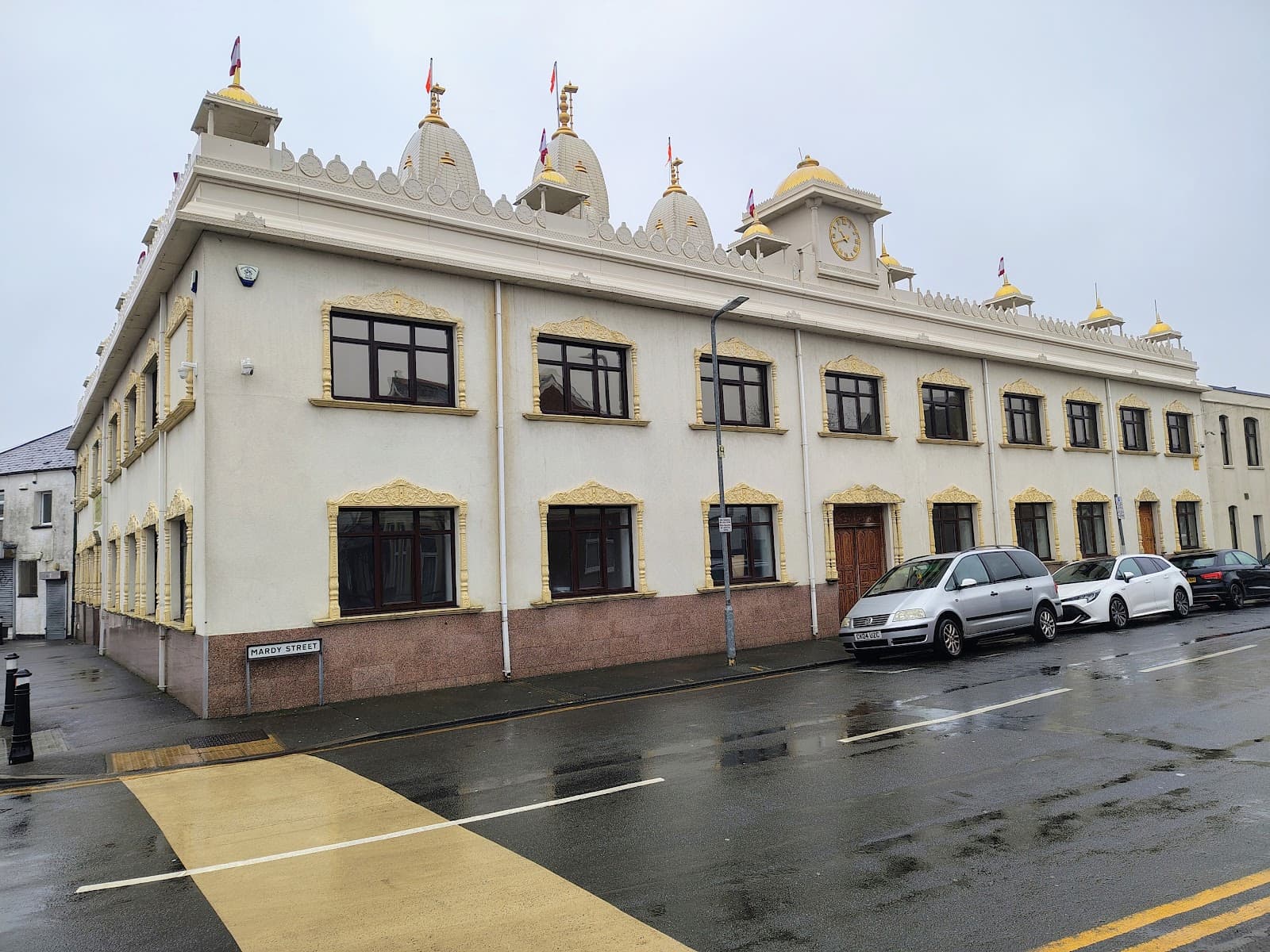
Shree Swaminarayan Mandir Cardiff
The Shree Swaminarayan Mandir Cardiff, located at 55 Merches Place in Grangetown, Cardiff, Wales, United Kingdom, stands as a vibrant testament to India's millennia-spanning cultural heritage, dedicated to Bhagwan Swaminarayan [1]. This sacred edifice embodies a continuous tradition of Indian civilization, manifesting indigenous architectural styles and cultural practices that reflect India's deep historical roots, even in its modern construction [4]. The mandir integrates elements of Swaminarayan architecture, Maru-Gurjara architecture, Haveli architecture, and Indo-Victorian influences, showcasing a sophisticated synthesis of ancient design principles with contemporary adaptation [3]. Swaminarayan temples, including the Cardiff Mandir, adhere to the Nagara style of temple architecture, a prominent tradition in North and West India, characterized by its curvilinear shikhara (spire) [4] [5]. This style is meticulously guided by Vastu Shastra, an ancient Indian discipline of sacred architecture that integrates principles of time, space, and cosmology to create spiritually conducive environments [4]. The construction eschews ferrous metals for structural reinforcement, relying instead on self-load-bearing masonry to ensure longevity and spiritual purity, a practice rooted in ancient texts that prescribe mandirs to last a thousand years [4]. The gold-topped shikaras, typical of North Indian temple architecture, crown the shrines (sinhashan) within the mandir, symbolizing mountain peaks and connecting the structure to the natural world revered by ancient Hindu seers [2] [4]. The Maru-Gurjara style, originating in Gujarat and Rajasthan between the 11th and 13th centuries CE, contributes to the mandir's intricate detailing, known for its opulent carvings and sculptural richness [5] . This style, a subset of the Nagara tradition, features elaborate ornamentation and a distinctive curvilinear tower design [5] . Haveli architecture, a traditional Indian mansion style dating back to the 1600s, influences the mandir's aesthetic with its characteristic detailed carvings and spatial arrangements, often incorporating courtyards and intricate wooden elements [3] . The fusion of these indigenous styles with Indo-Victorian elements demonstrates the adaptability and enduring legacy of Indian craftsmanship [3]. The mandir's interior features intricate carvings and sculptures that depict deities and mythological narratives, serving as visual representations of Hindu philosophy and iconography [4]. These decorative elements are not merely aesthetic but are imbued with symbolic meaning, guiding the worshipper's spiritual journey [4]. The Shree Swaminarayan Mandir Cardiff is recognized by Cardiff Council as a community anchor within Grangetown regeneration initiatives and holds the status of a Registered Place of Worship [provided in prompt]. It actively hosts a variety of religious and cultural programming, including festivals like Tulsi Vivah and Diwali, and community events, ensuring continuous engagement and accessibility for devotees and visitors [1]. The mandir maintains regular opening hours and conducts daily Aarti ceremonies, facilitating a steady flow of worshippers [1]. The site is operationally ready, upholding high standards of maintenance and compliance, reflecting the community's dedication to preserving and promoting its rich cultural and spiritual heritage [1].

Meghna Cave Temple Bhalukpong
The air hung heavy with the scent of pine and damp earth as I ascended the steep, moss-covered steps leading to the Meghna Cave Temple. Carved directly into a sheer rock face in Arunachal Pradesh’s West Kameng district, the temple, dedicated to Goddess Durga, exuded an aura of ancient mystery, a stark contrast to the vibrant Dravidian architecture I was accustomed to back home in Chennai. The climb itself was a pilgrimage of sorts, winding through a dense forest, the silence broken only by the chirping of unseen birds and the rush of the nearby Kameng River. Reaching the cave entrance, I was immediately struck by its unassuming nature. No grand gopuram, no elaborate carvings – just a natural opening in the rock, framed by the verdant foliage. A small, brightly coloured awning, a recent addition, provided the only indication of the sacred space within. This simplicity, however, held a unique charm, a testament to the harmonious blend of nature and spirituality that defines this temple. Stepping inside, the atmosphere shifted. The cool, dimly lit cave offered respite from the humid exterior. The main chamber, though not large, held a palpable energy. The focal point, naturally, was the Goddess Durga idol. Unlike the ornate, multi-limbed depictions common in South India, this Durga was simpler, almost primal in her representation. Carved from stone, she possessed a serene yet powerful presence, her features softened by the flickering lamps placed before her. The lack of elaborate ornamentation allowed for a more direct, intimate connection with the deity, a feeling I hadn't experienced in the larger, more structured temples of the south. The walls of the cave bore traces of soot, evidence of centuries of lamp offerings. Intriguingly, I noticed a few faded paintings on the rock surface near the entrance. While heavily weathered, they seemed to depict scenes from Hindu mythology, though identifying specific narratives proved difficult. These remnants of artistic expression, layered over time, spoke volumes about the continuous devotion this site has inspired. Architecturally, the Meghna Cave Temple stands apart from anything I’ve encountered in my study of South Indian temples. There are no intricate mandapas, no towering vimanas, no defined prakarams. The architecture, if one can call it that, is entirely dictated by the natural formation of the cave. This organic structure, devoid of human intervention beyond the carving of the deity and the addition of a few platforms for offerings, creates a sense of raw, unadulterated sanctity. It’s a powerful reminder that sacred spaces don't always require elaborate construction; sometimes, the earth itself provides the perfect sanctuary. The absence of extensive inscriptions or historical records adds to the enigmatic nature of the temple. Local legends abound, weaving tales of divine intervention and miraculous occurrences. While the exact origins remain shrouded in mystery, the palpable spiritual energy within the cave testifies to its enduring significance. It's a place where the boundaries between the physical and the metaphysical blur, where the natural world becomes an extension of the divine. My visit to the Meghna Cave Temple was a humbling experience. It challenged my preconceived notions of temple architecture and deepened my understanding of the diverse expressions of faith across India. It’s a place where the grandeur of nature intertwines seamlessly with the quiet power of devotion, creating a truly unique and unforgettable spiritual experience. The journey to this hidden gem, nestled within the breathtaking landscapes of Arunachal Pradesh, is a pilgrimage not just for the devout, but for anyone seeking a connection with something ancient and profound.
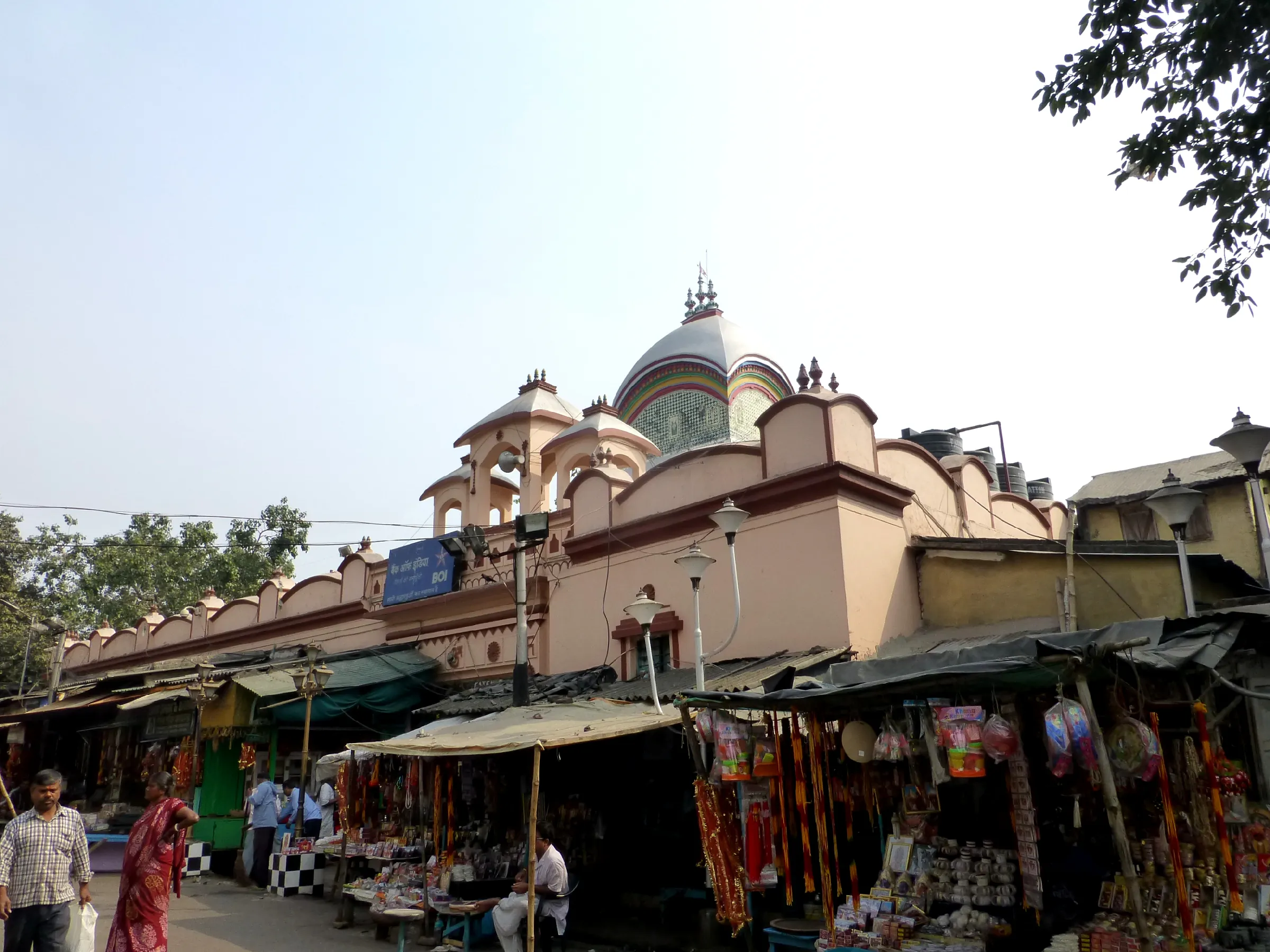
Kalighat Kali Temple Kolkata
The air hung thick and heavy, not just with the Kolkata humidity, but with a palpable sense of devotion. Garlands of marigolds and hibiscus blazed against the backdrop of the soot-stained Kalighat Kali Temple, their vibrant colours a stark contrast to the aged brick and stone. This wasn't the pristine, symmetrical beauty of the Rajput forts I'm accustomed to back in Rajasthan. This was something rawer, more visceral. The temple, nestled in the heart of Kolkata, pulsated with a chaotic energy. A cacophony of sounds – chanting, bells, the hawkers’ cries – rose and fell like the tide. Navigating the narrow lanes leading to the main shrine was an experience in itself. The air was thick with incense, and the ground, slick with offerings and the remnants of rituals. It was a sensory overload, a far cry from the ordered serenity of, say, the Mehrangarh Fort. The architecture of the Kalighat temple is distinct. Unlike the imposing sandstone structures of Rajasthan, this temple is relatively modest in size. The current structure, built in the 19th century, features a distinctive Bengali style with a curved, sloping roof known as a *dochala*. The main shrine, however, felt ancient, imbued with centuries of worship. The idol of Kali herself is striking. Her jet-black face, adorned with a garland of skulls and a protruding tongue, is both terrifying and mesmerizing. Her three eyes seemed to pierce through the throngs of devotees, acknowledging their prayers and anxieties. What struck me most was the sheer intensity of the faith on display. Devotees, from all walks of life, pressed forward, their faces etched with a mixture of hope and desperation. Some offered flowers, others coconuts, still others whispered fervent prayers. The priests, their foreheads smeared with ash, performed rituals with practiced ease, their chants adding to the hypnotic rhythm of the temple. I watched a young woman, her eyes brimming with tears, offer a lock of her hair to the goddess. It was a powerful moment, a testament to the deep-seated belief that permeates this place. This wasn't just a temple; it was a living, breathing entity, a conduit between the human and the divine. The experience was further intensified by the presence of the *pandits*, the temple priests. While their role is integral to the rituals, their aggressive solicitation of donations felt jarring. It was a stark reminder of the commercialization that often accompanies religious fervor, a phenomenon not entirely unfamiliar in Rajasthan's tourist-heavy temples, but here it felt more pronounced, more intertwined with the very fabric of worship. Stepping back from the immediate crush of the main shrine, I noticed the smaller shrines dedicated to other deities scattered around the complex. Each had its own unique energy, its own dedicated following. The temple complex, despite its chaotic nature, felt like a microcosm of the city itself – a melting pot of different beliefs and practices, all coexisting within a shared space. As I left the Kalighat Kali Temple, the chanting and the scent of incense still clinging to my clothes, I felt a profound sense of awe. This wasn't just a visit to a temple; it was an immersion into a different world, a world where faith and tradition reign supreme. It was a world far removed from the majestic silence of Rajasthan's desert forts, yet equally captivating, equally powerful. The experience served as a potent reminder of the diverse tapestry of India's spiritual landscape, a tapestry woven with threads of devotion, ritual, and unwavering belief.
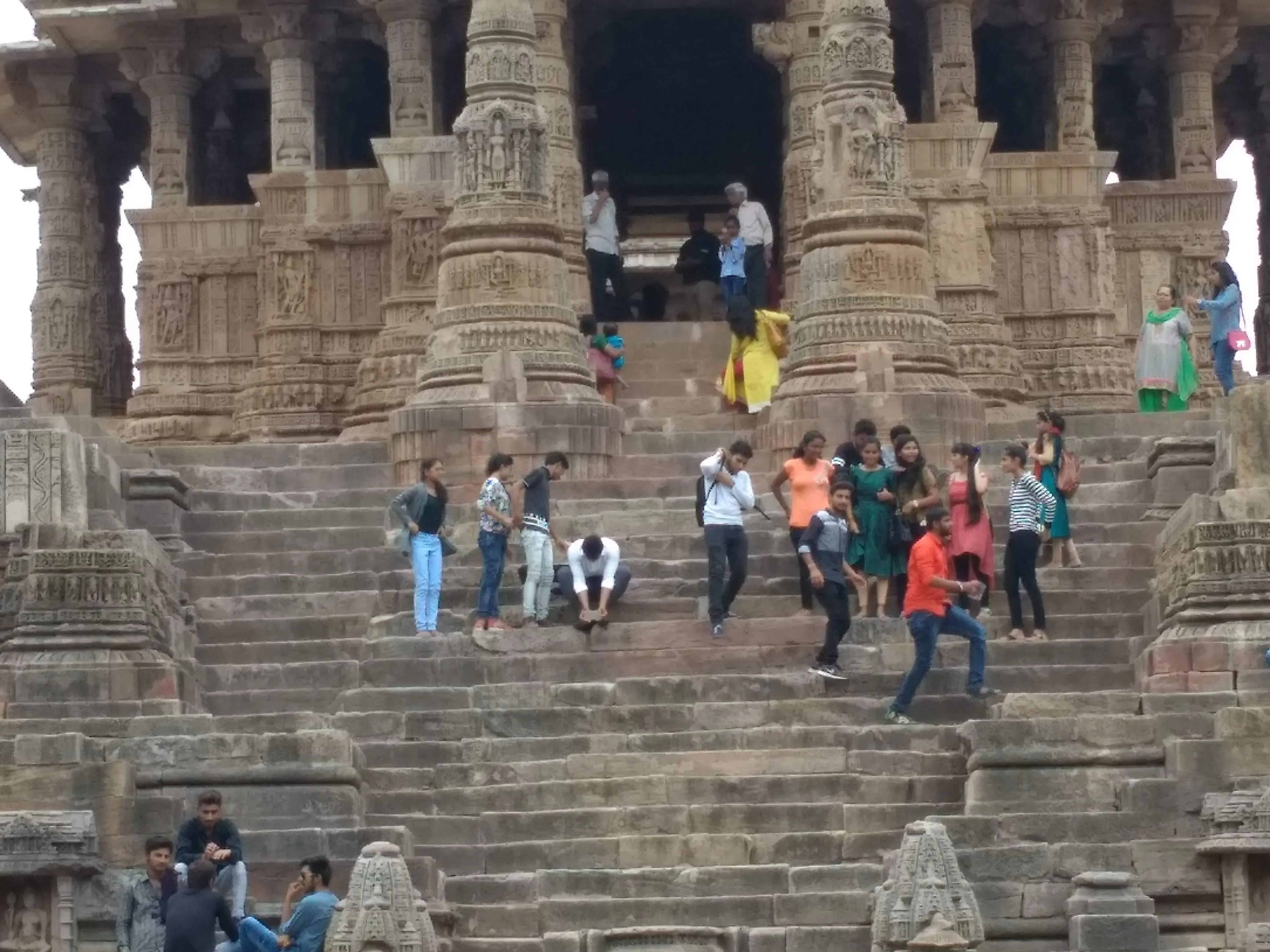
Modhera Sun Temple Mehsana
The dawn sun cast long shadows across the exquisitely carved stone, illuminating the Modhera Sun Temple in a way that felt almost reverential. Having explored countless temples across North India, from the soaring peaks of the Himalayas to the plains of the Gangetic belt, I thought I had become somewhat jaded to the grandeur of ancient architecture. Modhera, however, stopped me in my tracks. This wasn't just another temple; it was a symphony in stone, a testament to the Solanki dynasty's devotion to the sun god, Surya. Located in Modhera, a small village in Gujarat's Mehsana district, the temple complex is divided into three distinct parts: the Surya Kund (stepwell), the Sabha Mandap (assembly hall), and the Guda Mandap (sanctum sanctorum). My exploration began with the Surya Kund, a massive rectangular stepwell descending several stories into the earth. Unlike utilitarian stepwells I'd seen elsewhere, this one was ornate, with over 108 miniature shrines carved into its sides, dedicated to various deities. Imagine descending into the earth surrounded by intricate carvings of gods and goddesses, the cool air a welcome respite from the Gujarati heat. It felt like stepping back in time, witnessing a sacred ritual bath frozen in stone. From the stepwell, a flight of steps led me to the Sabha Mandap, the assembly hall. This pillared marvel is a masterpiece of intricate carvings. Each pillar tells a story, depicting scenes from the epics, celestial nymphs, and intricate geometric patterns. The play of light and shadow through the pillars created an ethereal atmosphere, making it easy to imagine the vibrant gatherings that must have once taken place within these walls. I spent a considerable amount of time simply circling the hall, tracing the carvings with my fingers, trying to decipher the stories they whispered. The sheer density of the ornamentation was breathtaking; every inch of the stone seemed to pulsate with life. Finally, I reached the Guda Mandap, the sanctum sanctorum, now bereft of its original idol. Even without the presiding deity, the space held a palpable sense of sanctity. The towering shikhara, though partially ruined, still reached towards the sky, a symbol of aspiration and devotion. The walls of the sanctum were covered in intricate carvings depicting Surya in his various forms, riding his chariot across the heavens. The level of detail was astonishing; the sculptor had captured the very essence of the sun god's power and radiance. One of the most striking aspects of the Modhera Sun Temple is its precise alignment with the cardinal directions. During the equinoxes, the first rays of the rising sun would illuminate the image of Surya in the sanctum, a feat of architectural ingenuity that underscores the deep astronomical knowledge of the Solanki architects. Although I wasn't there during the equinox, I could still visualize the spectacle, the sun's golden rays piercing the darkness and bathing the deity in light. As I walked away from the temple, the setting sun painting the sky in hues of orange and gold, I couldn't help but feel a sense of awe. Modhera is more than just a collection of stones; it's a living testament to the artistic and engineering prowess of a bygone era. It's a place where history, mythology, and architecture converge to create an experience that is both humbling and inspiring. For anyone seeking a glimpse into India's rich cultural heritage, the Modhera Sun Temple is an absolute must-see. It's a journey not just through space, but through time itself.

Battala Mahadev Temple Agartala
Nestled in the heart of Tripura, the Battala Mahadev Temple, a revered shrine dedicated to Lord Shiva, was erected around 1681 CE under the patronage of Maharaja Krishna Manikya ([1][2]). This 17th-century temple, a testament to the Manikya dynasty's devotion, showcases a captivating fusion of Nagara and Bengali architectural traditions ([3]). Its presence enriches Agartala's cultural tapestry, drawing devotees and architecture enthusiasts alike. During the Ahom period, temple architecture in India experienced a flourishing of regional adaptations, and this temple exemplifies such unique synthesis ([4]). The curvilinear tower, echoing the chala style of Bengal, adds a distinctive character to the temple's silhouette, illustrating the cross-pollination of architectural ideas ([3]). The temple's design subtly integrates regional aesthetics within the broader Hindu architectural framework. Stone platforms and foundations demonstrate the enduring construction techniques employed in building the Battala Mahadev Temple ([1][5]). The structure primarily utilizes locally sourced materials such as stone, bricks, terracotta, and wood, reflecting the region's architectural identity ([1][5]). The exterior, finished with whitewash, presents a serene and austere facade, a contrast to the vibrant ornamentation often seen in other Indian temples ([2]). Within the Garbhagriha (Sanctum), the Shiva lingam serves as the central focus of worship, inviting devotees into a space of spiritual communion ([3]). The temple stands as an embodiment of Tripura's rich cultural and religious heritage, offering a tranquil space for reflection and devotion ([4][5]). The patronage of the Manikya dynasty underscores the temple's historical significance, solidifying its place as a notable landmark in Agartala ([1][2][3]). The temple stands as a reminder of the architectural and artistic achievements of the era.
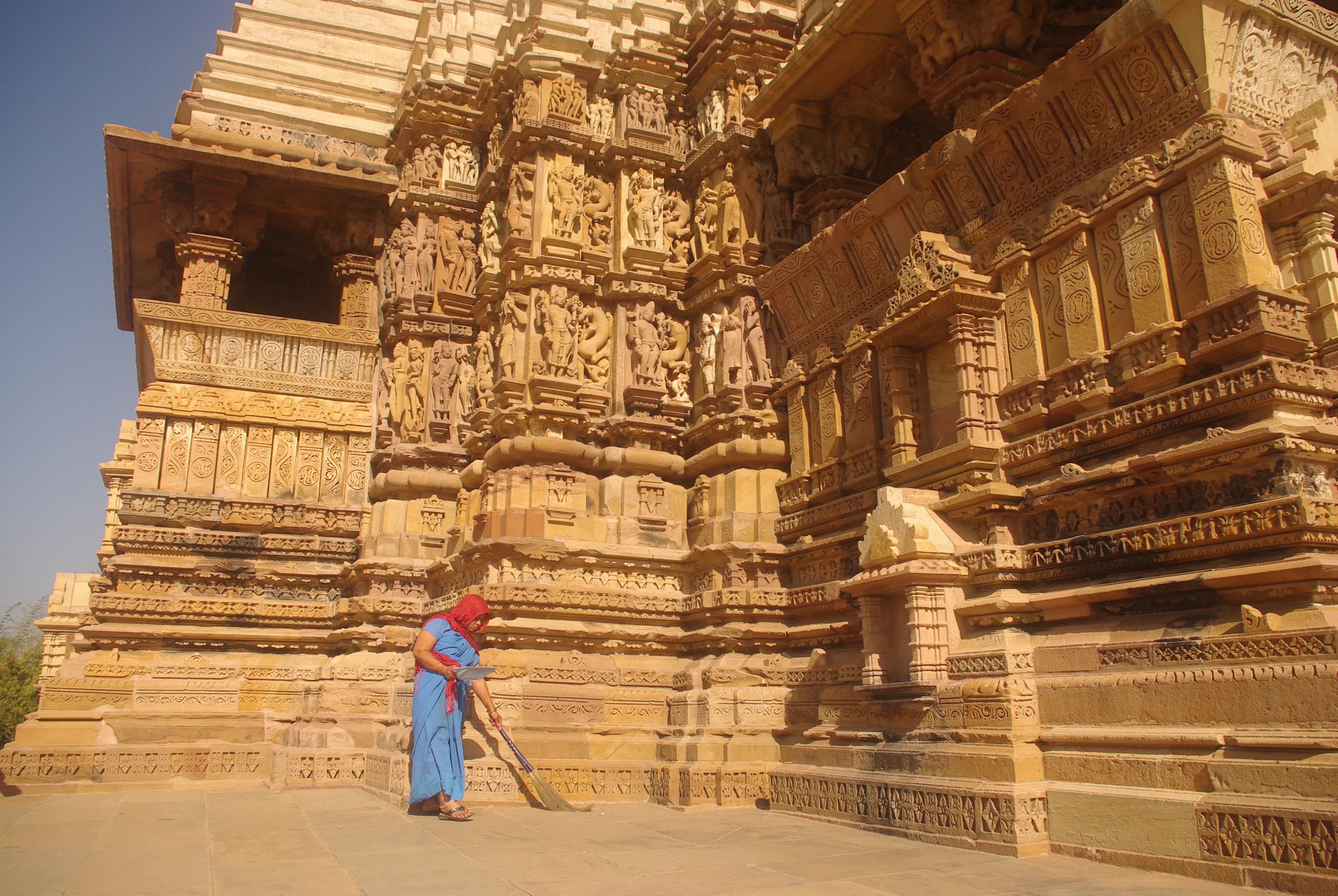
Kandariya Mahadeva Temple Khajuraho
The rising sun cast long shadows across the manicured lawns of the Western Group of temples at Khajuraho, and my gaze was immediately drawn to the magnificent Kandariya Mahadeva. Dominating the skyline, this temple, dedicated to Lord Shiva, is arguably the most iconic and elaborate of the Khajuraho group. The sheer scale of it took my breath away – a mountain of sculpted sandstone reaching for the heavens, a testament to the Chandela dynasty's architectural prowess and artistic vision. As I approached, the intricate carvings began to reveal themselves. The temple, built on a high platform, felt like a living, breathing entity. Every inch of the exterior, from the base to the towering shikhara, was covered in a profusion of sculptures. These weren't mere decorations; they narrated stories from Hindu mythology, depicted scenes of courtly life, and celebrated the sensuality that is so characteristic of Khajuraho's art. I noticed apsaras, celestial nymphs, frozen in graceful poses, their expressions ranging from serene contemplation to playful allure. Warriors, musicians, and animals – elephants, lions, and mythical creatures – all found their place within this intricate tapestry of stone. Climbing the steps to the main entrance, I felt a palpable shift in atmosphere. The air grew cooler, and a sense of reverence settled over me. The doorway itself was a masterpiece of intricate carving, layers of figures framing the entrance to the sanctum sanctorum. Stepping inside, I was struck by the relative simplicity of the inner chamber compared to the exuberant exterior. The play of light and shadow created a mystical ambiance, focusing attention on the garbhagriha, the innermost sanctum where the deity would have resided. Although the original lingam is no longer present, the space still held a palpable sense of sacredness. Spending time within the temple, I began to appreciate the architectural ingenuity of the Chandelas. The Kandariya Mahadeva is not a single structure but a complex arrangement of interconnected shrines and mandapas, each leading towards the central shikhara. This shikhara, a towering curvilinear spire, represents Mount Meru, the mythical abode of the gods. The smaller surrounding shikharas create a sense of rhythm and movement, giving the impression of a mountain range rising towards the sky. The erotic sculptures, for which Khajuraho is so famous, are undeniably a part of the temple's narrative. However, to reduce the temple to just these depictions is to miss the larger picture. They represent only a small fraction of the overall sculptural program and are integrated seamlessly within the broader themes of life, death, and spirituality. As someone who has grown up in Uttar Pradesh, surrounded by the echoes of ancient kingdoms and their artistic legacies, I found myself contemplating the multifaceted nature of these depictions. They are a reflection of a time when sensuality was not divorced from spirituality, a time when art embraced all aspects of human existence. Leaving the Kandariya Mahadeva, I carried with me a profound sense of awe and wonder. This temple is not just a collection of stones; it is a living testament to the artistic genius of a bygone era. It is a place where spirituality and sensuality intertwine, where stories are etched in stone, and where the echoes of history resonate through the centuries. It stands as a powerful reminder of the rich cultural heritage of India, a heritage that continues to inspire and captivate even today. As I walked away, I couldn't help but glance back, drawn once more to the majestic silhouette of the Kandariya Mahadeva against the clear blue sky, its intricate carvings shimmering in the sunlight.
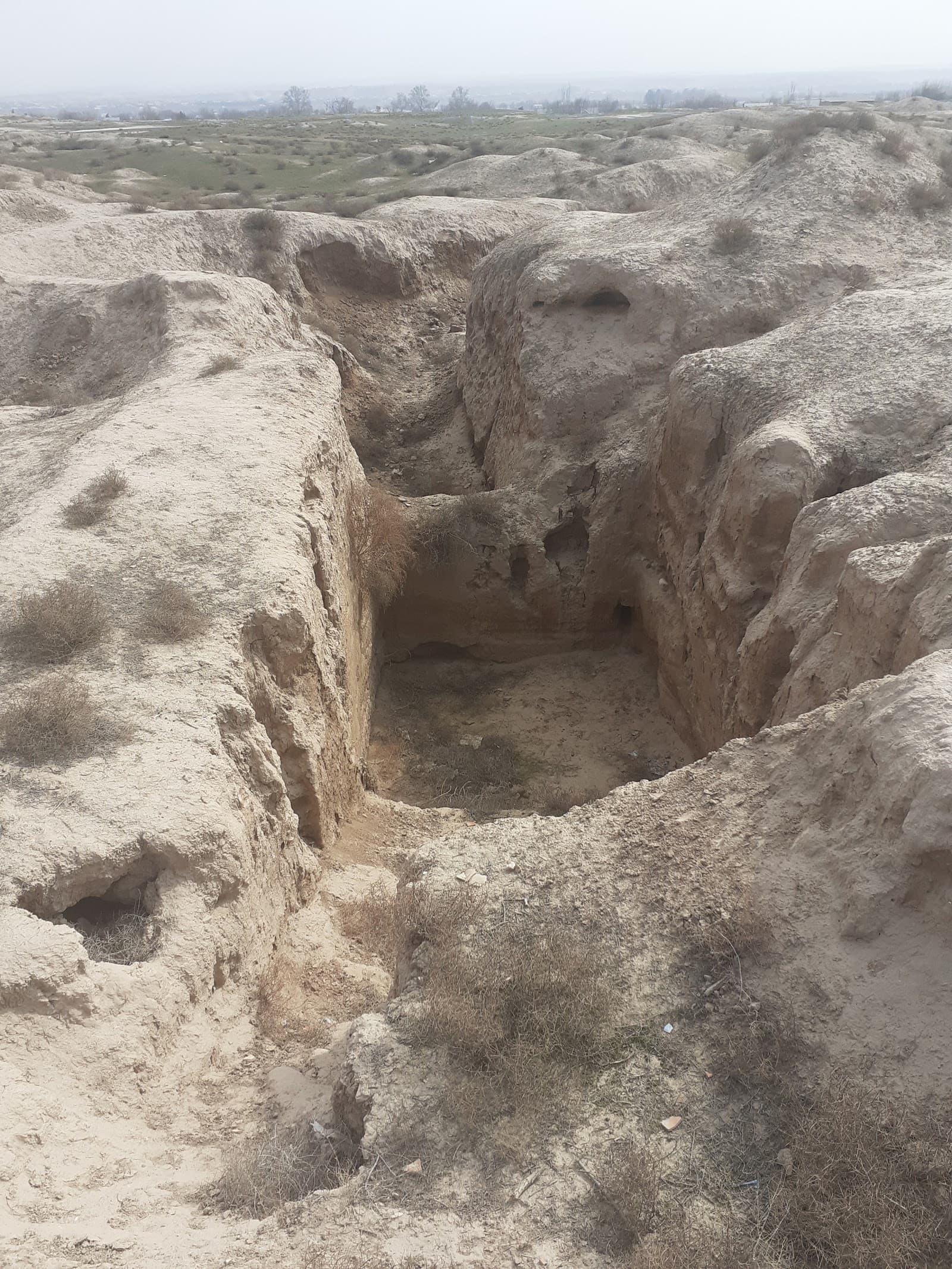
Dalverzin Tepe Surxondaryo Uzbekistan
Dalverzin Tepe, an ancient archaeological site located in the Surxondaryo Region of Uzbekistan, stands as a profound testament to the millennia-spanning cultural heritage of India, particularly through its embrace and adaptation of Indian Buddhist and Gandhara-Kushan architectural styles [3] [5]. This significant urban center, flourishing under the Kushan Empire, exemplifies the continuous tradition of Indian civilization's artistic and religious dissemination across Central Asia [2] [4]. The site's indigenous architectural styles, materials, and cultural practices reflect India's deep historical roots, showcasing a sophisticated synthesis of traditions [3]. The city plan of Dalverzin Tepe is characterized by a rectangular layout, featuring a prominent citadel at its core, with residential and religious structures meticulously arranged in parallel rows around this central defensive element [2]. Among its most significant features are two well-preserved Buddhist temples, which represent a direct extension of Indian Buddhist architectural principles into the region [4] [5]. These temples, constructed primarily from mud brick and pakhsa (rammed earth), demonstrate robust construction techniques typical of the period, often incorporating gypsum-coated clay for intricate sculptural and decorative elements [2] [3]. Archaeological excavations have unearthed numerous statues of Buddha and bodhisattvas, crafted from clay and gypsum, reflecting the distinctive Gandhara style that blends Hellenistic artistic conventions with Indian iconography [2] [4]. Specific architectural details include Attic stone column bases and terracotta antefixes, indicating a fusion of Greco-Roman and indigenous Central Asian elements, all serving to adorn structures dedicated to Indian religious practices [3]. A notable discovery is a gypsum-coated clay head of a youth, found within a Buddhist temple, which exemplifies the refined artistic output of the era [3]. The site also yielded a remarkable treasure hoard of gold, underscoring its historical wealth and cultural significance [2]. Dalverzin Tepe's urban planning included sophisticated defensive features, with the town experiencing active urban and defensive construction during its peak Kushan period [3]. While specific dimensions for individual structures are subject to ongoing research, the overall scale of the city suggests a well-organized settlement capable of sustaining a significant population and cultural activity [2]. The site is currently on the UNESCO Tentative List, recognizing its outstanding universal value and the need for continued preservation [1]. Ongoing archaeological findings, supported by joint excavations involving Uzbek, Korean, and Japanese scholars, contribute to a deeper understanding of its layered history and architectural evolution [4]. Conservation efforts focus on stabilizing extant structures and protecting unearthed artifacts, ensuring the long-term preservation of this crucial link in India's cultural continuum [1]. The site is maintained for scholarly research and potential future public access, with current compliance and maintenance protocols in place to safeguard its heritage. Dalverzin Tepe stands as an enduring testament to India's profound and continuous cultural legacy, spanning thousands of years, and is operationally ready for continued study and eventual broader public engagement.
Quick Links
Plan Your Heritage Journey
Get personalized recommendations and detailed visitor guides