Has Inheritage Foundation supported you today?
Your contribution helps preserve India's ancient temples, languages, and cultural heritage. Every rupee makes a difference.
Secure payment • Instant 80G certificate
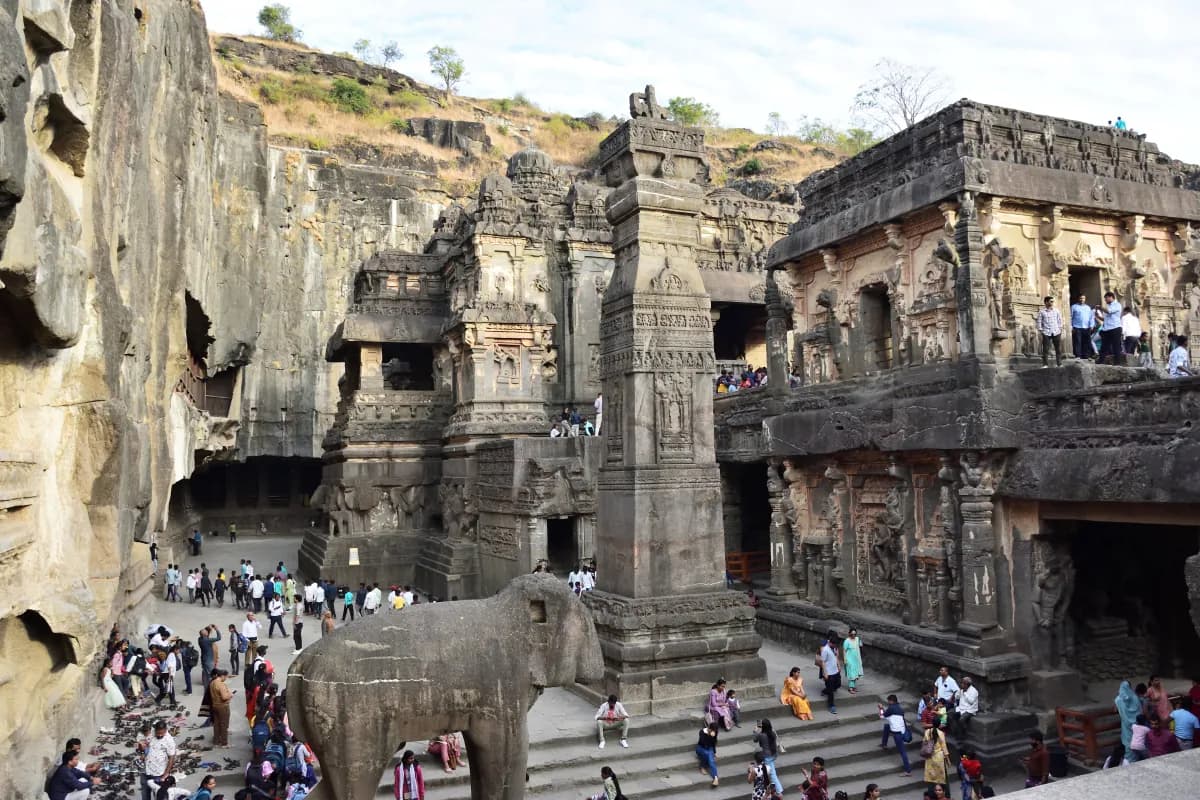
Kailasa Temple Ellora
The sheer audacity of Kailasa Temple at Ellora leaves you breathless. Carved from a single basalt cliff, it stands as a testament to the Rashtrakuta dynasty's ambition and the unparalleled skill of their artisans. Unlike the other cave temples at Ellora, which are excavated inwards, Kailasa (Cave 16) was carved outwards, a monumental task that involved removing over 200,000 tonnes of rock. Standing in the courtyard, craning my neck to take in the three-story structure, I felt dwarfed by its immensity. The sheer scale is overwhelming, almost defying logic. My journey through the complex began with the entrance gateway, a gopuram teeming with intricate carvings of deities and mythical creatures. Passing through, I found myself in a large open courtyard, the main temple dominating the space. Two free-standing pillars, or dhvajastambhas, flank the entrance, adding to the grandeur. Elephants, seemingly frozen in mid-stride, stand guard at the base of the temple, their sculpted forms remarkably lifelike even after centuries of exposure to the elements. The temple itself is a marvel of Dravidian architecture. Multi-storied and adorned with elaborate carvings, it’s a visual feast. I spent hours exploring the different levels, each revealing new details. The main shrine, dedicated to Lord Shiva, houses a lingam, the symbol of divine energy. Surrounding the shrine are smaller shrines dedicated to other deities, each a miniature masterpiece in its own right. The carvings on the outer walls narrate stories from Hindu mythology, the Ramayana and Mahabharata vividly depicted in stone. I was particularly captivated by the depiction of Ravana attempting to lift Mount Kailasa, the abode of Shiva. The sheer dynamism of the scene, captured with such precision, is a testament to the sculptor's mastery. The details are astonishing – the expressions on the faces of the figures, the intricate folds of their garments, the delicate ornamentation – all carved with remarkable precision. One of the most striking features of Kailasa Temple is the intricate network of bridges, staircases, and passageways that connect the different levels. Climbing these ancient stairs, worn smooth by centuries of footsteps, I felt a palpable connection to the past. I imagined the priests and devotees who once thronged these spaces, their chants and prayers echoing through the courtyard. Beyond the main temple, the complex includes several smaller shrines and chambers. I explored the Lankeshvara cave, dedicated to Lord Shiva, and the Nandi Mandapa, which houses a colossal sculpture of Nandi, Shiva's sacred bull. The Nandi Mandapa, in particular, impressed me with its sheer size and the intricate carvings that adorned its walls and ceiling. As the sun began to set, casting long shadows across the courtyard, I took a final look at Kailasa Temple. The golden light illuminated the carvings, giving them an ethereal glow. It was a magical moment, a fitting end to my exploration of this extraordinary site. Having visited every UNESCO site in India, I can confidently say that Kailasa Temple stands apart. It's not just a temple; it's a symphony in stone, a testament to human ingenuity and devotion. It’s a site that must be experienced to be truly appreciated. The sheer scale, the intricate carvings, and the palpable sense of history combine to create an experience that is both awe-inspiring and deeply moving. It's a place that stays with you long after you've left, a reminder of the incredible achievements of India's rich cultural heritage.
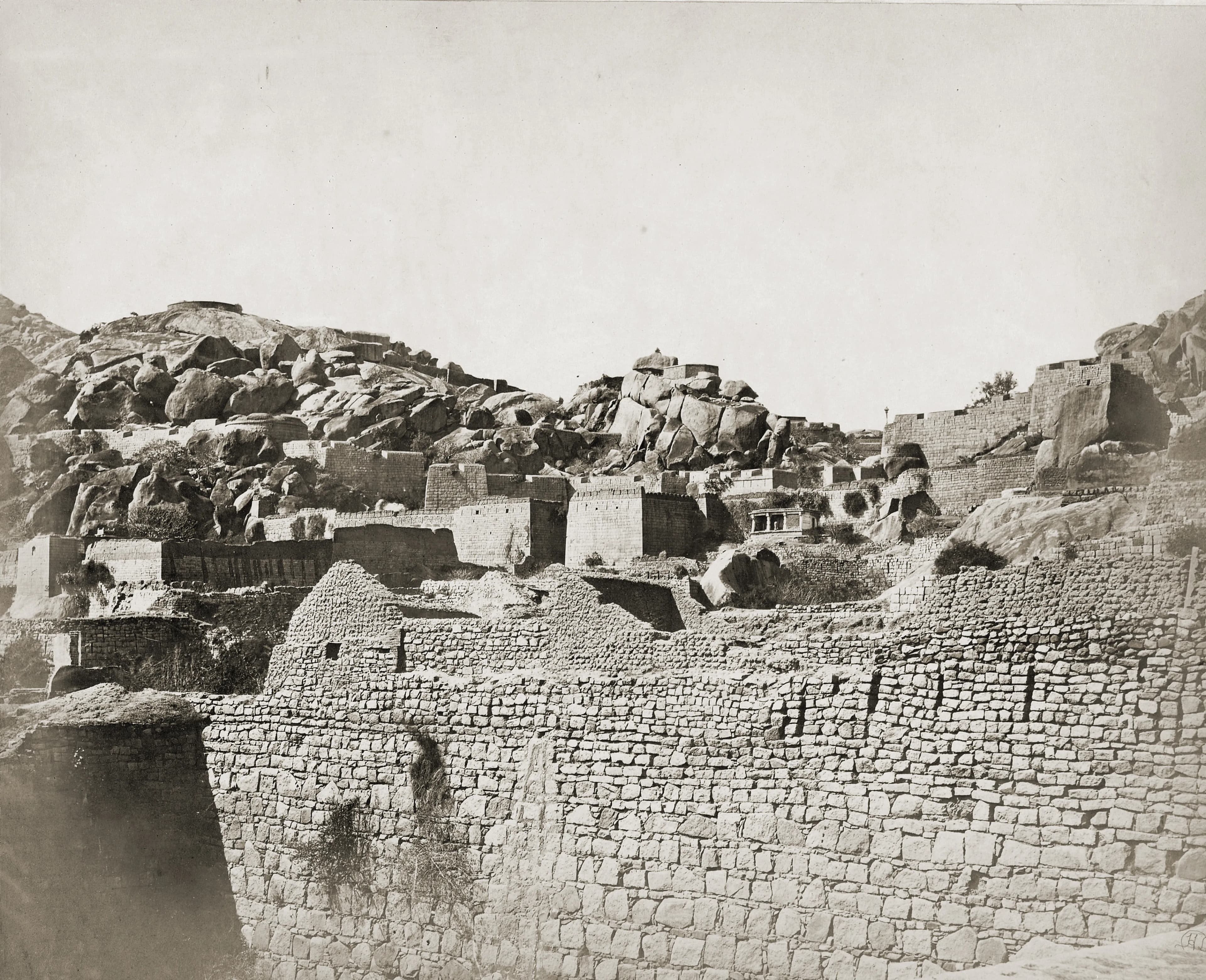
Chitradurga Fort Chitradurga
Majestically rising from the rocky terrain of Karnataka, Chitradurga Fort embodies the Nayaka dynasty's military prowess and architectural vision ([1]). Established around 1050 CE, during the 11th century, this imposing fort exemplifies Dravidian architecture and innovative fortification strategies ([2]). Its construction during the Vijayanagara period showcases the integration of natural elements into its robust defenses ([3]). Seven concentric walls, each named after figures from Hindu mythology, form the fort's strategic layout, designed to repel invaders ([3]). Granite and trap rock, fortified with mud mortar and laterite, constitute the fort's durable structure ([4]). These materials, sourced locally, reflect the Nayakas' resourcefulness and understanding of the regional landscape ([4]). Local stone was used to create sloping walls. Intricate carvings embellishing the Hidimbeshwara Temple within the fort complex depict scenes from Hindu epics, reflecting the religious beliefs of the Nayaka rulers ([5]). This artistic counterpoint to the fort's military function highlights the dynasty's patronage of both the martial and fine arts ([5]). Sophisticated rainwater harvesting systems ensured water security during prolonged sieges, showcasing advanced engineering capabilities ([6]). These systems, designed to collect and store monsoon rains, sustained the garrison and civilian population within the fort ([6]). During the rule of the Nayakas of Chitradurga, the fort expanded, incorporating the natural landscape into its defensive design ([3]). Tales of hidden tunnels and secret passages add to the fort's mystique, evoking a sense of intrigue and adventure ([7]). The fort's silhouette against the Karnataka skyline serves as a powerful reminder of India's rich architectural heritage, inviting visitors to explore its storied past ([1][2]). The fort reflects the rich heritage of the Nayaka dynasty.
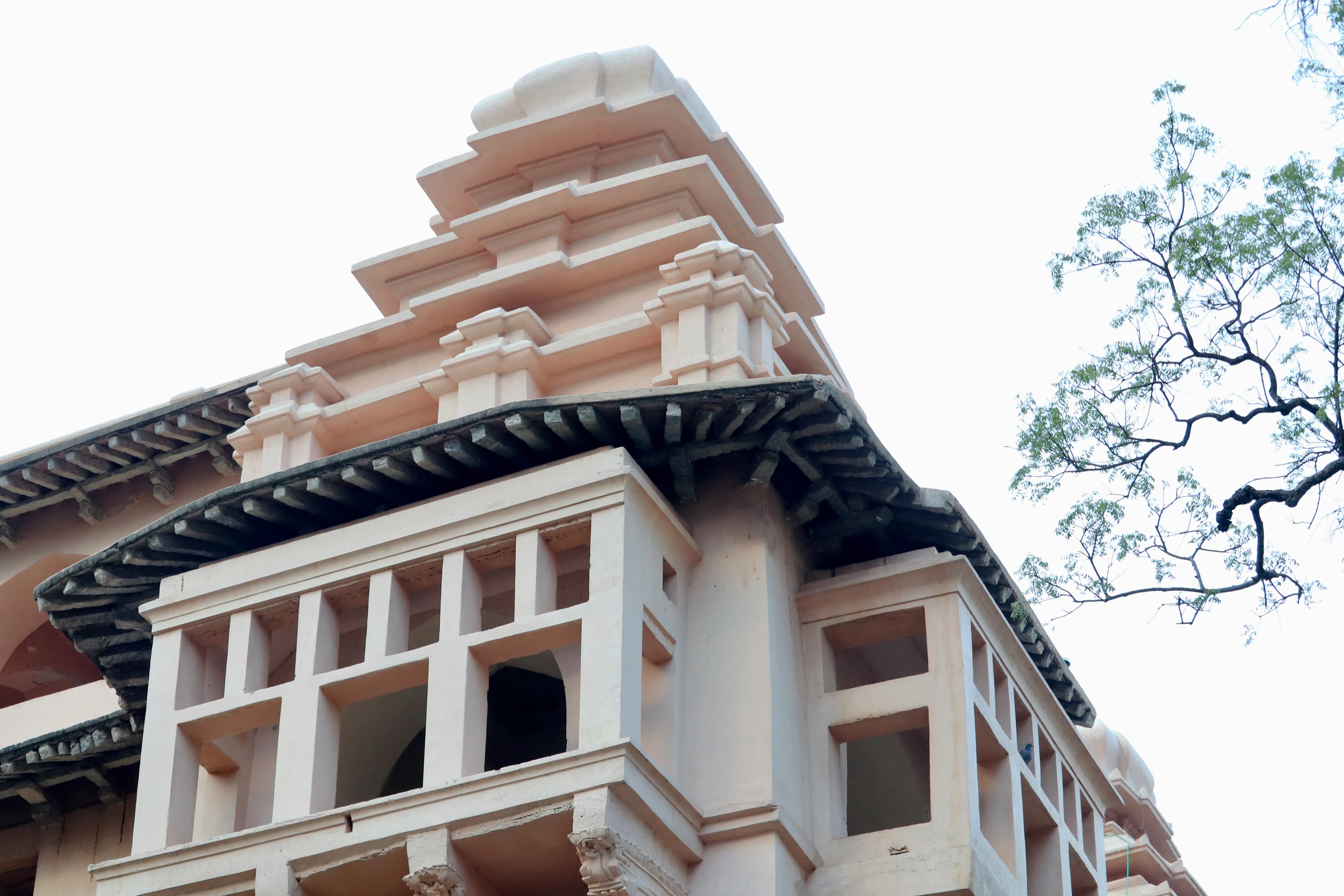
Chandragiri Fort Chittoor
Nestled in Chittoor, Andhra Pradesh, Chandragiri Fort was erected around 1050 CE by the Yadava dynasty ([1][2]). This 11th-century fort exemplifies the Indo-Saracenic architectural style, visibly merging Hindu and Islamic construction techniques ([3]). The fort is constructed using stone, mortar, bricks and wood ([4]). Unlike typical rock-cut fortifications, Chandragiri rises distinctly above the surrounding terrain. The fort is divided into two sections: a lower fort, which historically served as a marketplace, and an upper fort, which houses the Raja Mahal Palace complex ([1]). Intricate carvings adorning the gateways showcase the skill of Vijayanagara artisans ([2][3]). The stone used in the construction, lighter in color than basalt, gives the structure its unique aesthetic ([4]). Sophisticated water management systems ensured a consistent water supply within the fort ([1][2]). Large tanks (reservoirs) and wells were strategically positioned to collect rainwater through an intricate network of channels ([3][4]). From its elevated position, the fort provides panoramic views of the surrounding landscape, a crucial element for controlling trade routes and for defense ([1]). The fort’s architecture reflects the influence of multiple dynasties that have occupied it throughout its history ([2][3]). During the Vijayanagara period, Chandragiri gained prominence and served as their fourth capital ([5]). The Raja Mahal within the upper fort now functions as an archaeological museum ([6]). The museum houses a collection of artifacts, sculptures, and historical relics, providing insights into the fort's rich past and the dynasties that shaped it ([5][6]). The fort stands as a reminder of the region's layered history and architectural heritage ([3]).

Nallur Kandaswamy Kovil Jaffna Sri Lanka
Nallur Kandaswamy Kovil, dramatically situated in the historic town of Jaffna in northern Sri Lanka, represents one of the most extraordinary and culturally significant Hindu temples in South Asia, with origins dating back to 948 CE and a major reconstruction in 1734 CE that serves as the principal center of Murugan (Skanda) worship in Sri Lanka, creating a powerful testament to the profound transmission of Indian Shaivite and Murugan religious and architectural traditions to Sri Lanka. The temple complex, also known as Nallur Murugan Kovil, features sophisticated Dravidian architectural elements that demonstrate the direct transmission of South Indian temple architecture, particularly the traditions of the Chola and Pandya dynasties, with local adaptations that reflect the sophisticated synthesis of Indian Shaivite and Murugan religious and artistic traditions with Sri Lankan building techniques, while the temple's towering gopurams (gateway towers), elaborately carved and painted in vibrant colors, represent some of the finest examples of Dravidian temple architecture in Sri Lanka. The temple's architectural layout, with its central sanctum housing the Murugan deity surrounded by multiple enclosures, gopurams, and subsidiary shrines dedicated to various deities including Shiva, Parvati, Ganesha, and other Hindu gods, follows sophisticated South Indian Dravidian temple planning principles that were systematically transmitted from the great temple complexes of Tamil Nadu including Palani, Tiruchendur, and Swamimalai, while the temple's extensive decorative programs including sculptures, carvings, and architectural elements demonstrate the sophisticated synthesis of Indian Shaivite and Murugan iconography and artistic traditions with local Sri Lankan aesthetic sensibilities. Archaeological evidence reveals that the temple served as a major center of Murugan worship for over a millennium, attracting pilgrims from across South India and Sri Lanka, while the discovery of numerous inscriptions in Tamil and Sanskrit provides crucial evidence of the site's role in the transmission of Indian religious texts and practices to Sri Lanka, demonstrating the sophisticated understanding of Indian Shaivite and Murugan traditions possessed by the temple's patrons and religious establishment. The temple's annual Vel Festival, one of the largest and most vibrant Hindu festivals in Sri Lanka, features elaborate processions, traditional music, and cultural performances that attract hundreds of thousands of devotees and demonstrate the continued vitality of Indian religious traditions in Sri Lanka, while the temple's association with the Jaffna Kingdom demonstrates its historical significance as a center of Tamil Hindu culture and religious practice. The temple complex underwent major reconstruction in 1734 CE under the patronage of the Jaffna Kingdom, with the current structure representing a faithful preservation of the temple's original Dravidian architectural character and spiritual significance, while ongoing archaeological research continues to reveal evidence of the temple's ancient origins and its role in the transmission of Indian religious traditions to Sri Lanka. Today, Nallur Kandaswamy Kovil stands as one of the most important Hindu pilgrimage sites in northern Sri Lanka, serving as a powerful testament to the transmission of Indian Shaivite and Murugan culture and architecture to Sri Lanka, while ongoing archaeological research and conservation efforts continue to protect and study this extraordinary cultural treasure that demonstrates the profound impact of Indian civilization on Sri Lankan religious and artistic traditions. ([1][2])
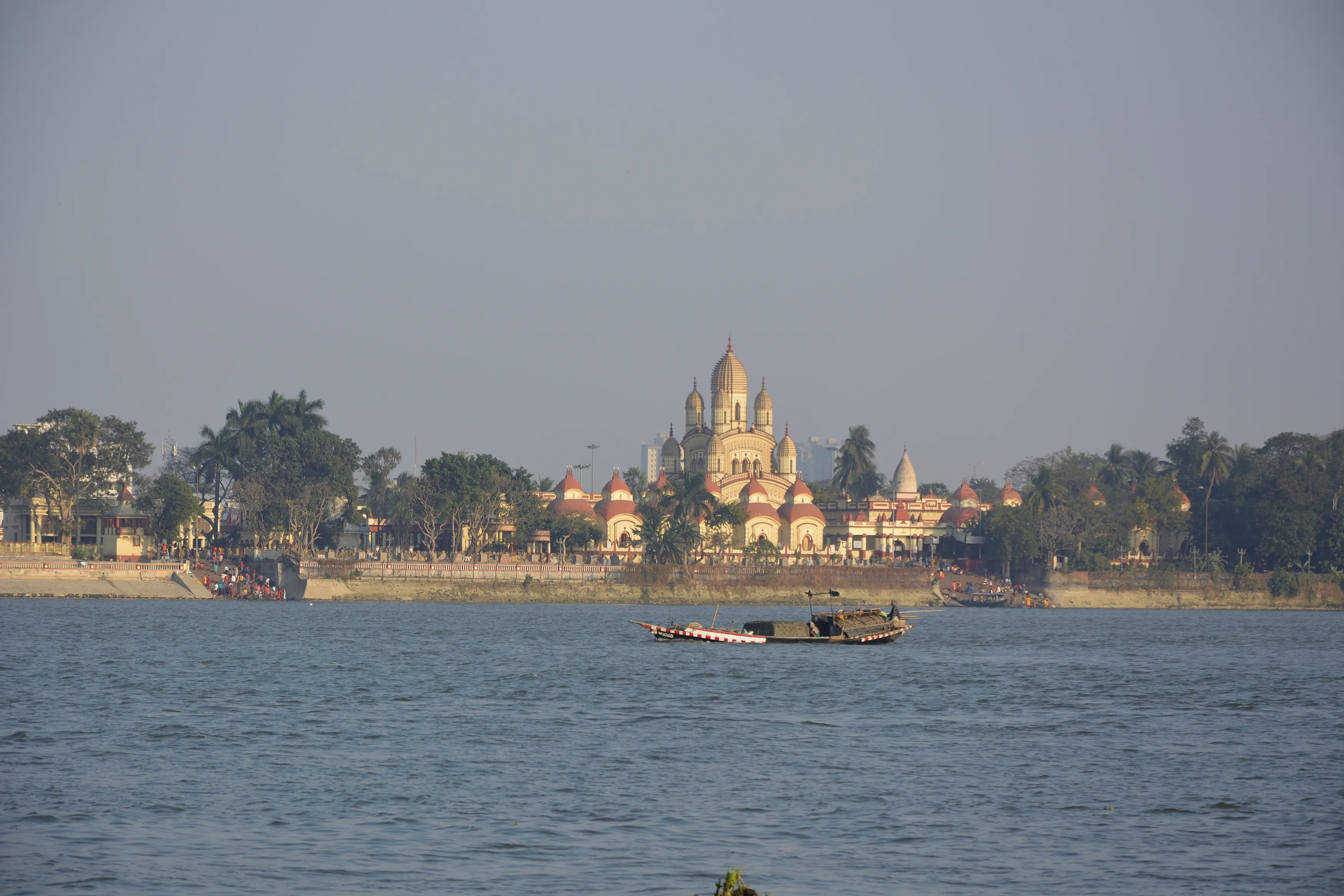
Dakshineswar Kali Temple Kolkata
The Hooghly River's edge frames the Dakshineswar Kali Temple in Kolkata, a 19th-century testament to Bengali Navaratna architecture ([1][2]). Commissioned by Rani Rashmoni and completed in 1855 CE, the temple is dedicated to Bhavatarini, a form of Kali ([3]). The complex exemplifies a unique blend of devotion and architectural style distinct from Dravidian forms ([4]). Intricate carvings adorning the walls depict scenes from Hindu epics and Puranas, narrating tales of deities and cosmic events ([5]). The main temple, a nine-spired structure, showcases the curved roof characteristic of Bengali architecture, a design element that gained prominence during the British Colonial Period ([1][2]). This 'nava-ratna' (nine-jeweled) style distinguishes it from other regional temple designs ([3]). Within the Garbhagriha (Sanctum), Bhavatarini stands upon Shiva, symbolizing Shakti's (divine feminine energy) power ([4]). The silver embellishments and sindoor (red vermillion) create a mesmerizing spiritual ambiance ([5]). Surrounding the main shrine, twelve Shiva temples line the ghats, each echoing the Navaratna style in miniature form ([1][2]). A Radha-Krishna temple adds a contrasting element, its carvings depicting the divine love story ([3]). Stone platforms and foundations demonstrate the temple's solid construction, utilizing brick, terracotta, and wood ([4][5]). The temple reflects influences of Vastu Shastra principles, which guide the orientation and spatial arrangement ([1][2]). The complex harmoniously blends architectural elements with the spiritual essence of Bengal, offering a serene escape from Kolkata's bustle ([3]). The Dakshineswar Kali Temple remains a vibrant center of pilgrimage and a significant landmark of Indian heritage ([4][5]).
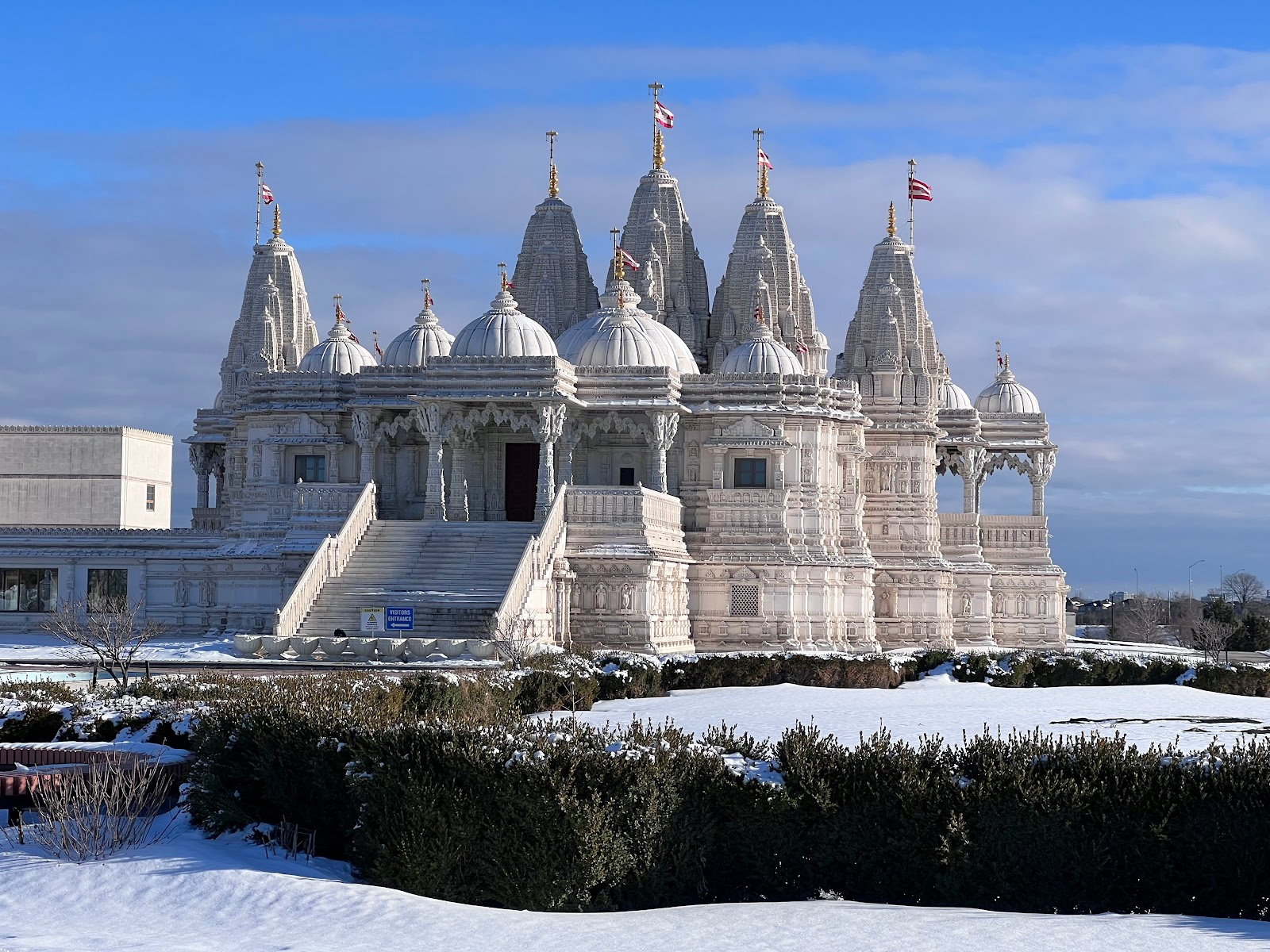
BAPS Shri Swaminarayan Mandir Toronto
Anchoring Etobicoke's Claireville corridor, the BAPS Shri Swaminarayan Mandir Toronto represents Canada’s largest traditional stone mandir, dedicated to Bhagwan Swaminarayan ([1][2]). Consecrated in 2007 CE, this Nagara-style marvel seamlessly blends ancient architectural principles with modern engineering ([1]). The mandir incorporates 24,000 hand-carved Turkish limestone pieces, meticulously assembled without the use of structural steel ([1]). Intricate carvings adorning the walls reflect the Maharaj Sthapatya craft, echoing the detailed artistry documented in texts like the *Manasara Shilpa Shastra* ([2][3]). Vastu Shastra principles, the ancient Indian science of architecture, are demonstrably present in the temple's layout and orientation, fostering harmony and spiritual resonance ([3][4]). These principles, aiming to integrate architecture with nature, are meticulously applied, reflecting a deep understanding of spatial arrangements and their impact on well-being ([4]). Burmese teak, Italian Carrara marble, and copper *kalashas* (finials) further enrich the structure, harmonizing traditional materials with contemporary design elements like the glass curtainwall ([1][5]). The *Garbhagriha* (Sanctum) houses the enshrined deities, continuing a tradition of worship that spans millennia ([4]). Annadhanam, the offering of food, operates with modern efficiency, utilizing commercial kitchen equipment and allergen tracking ([1]). Accessibility features, including ramps and tactile strips, ensure inclusivity, while digital signage provides information in multiple languages ([5]). Built by the BAPS Swaminarayan Sanstha, the complex serves as a vibrant center for community, culture, and spiritual practice ([1][2]). The integration of traditional craftsmanship with modern amenities exemplifies the enduring relevance of ancient Indian architectural sciences in contemporary society ([3][5]). The Mandir stands as a testament to the adaptability and timeless appeal of Nagara-style temple architecture ([1][2]).

Kal Bhairav Temple Ujjain
The air crackled with an energy I hadn’t anticipated. Not the usual tourist hubbub, but something older, thicker, woven into the very stones of the Kal Bhairav Temple in Ujjain. Dust motes danced in the shafts of sunlight slicing through the ancient gateway, illuminating the worn carvings that hinted at stories untold. This wasn't just a temple; it was a palimpsest of history, each layer whispering secrets of devotion and time. My camera, usually a reliable extension of myself, felt inadequate. How could I possibly capture the weight of centuries etched into the weathered stone? The temple, dedicated to the fearsome form of Shiva, Kal Bhairav, sits nestled on the banks of the Shipra River. The river itself seemed to hold its breath as it flowed past, a silent witness to the countless rituals performed on these banks. The main entrance, guarded by two imposing dwarapalas, felt like a portal to another realm. Their expressions, eroded by time yet still potent, spoke of a power beyond human comprehension. Stepping through the archway, I was struck by the contrast between the vibrant energy of the devotees and the stoic stillness of the temple structure. The scent of incense hung heavy in the air, mingling with the earthy aroma of the river and the metallic tang of offerings. Architecturally, the temple is a marvel. The shikhara, the towering spire that dominates the skyline, is a testament to the skill of the ancient artisans. Intricate carvings of deities, mythical creatures, and floral motifs adorn every surface, each telling a story from Hindu mythology. I spent hours tracing the lines of these carvings with my lens, trying to decipher the narratives they held. The play of light and shadow on the stone created an ever-shifting tapestry, adding another layer of complexity to the visual narrative. One particular carving caught my attention – a depiction of Kal Bhairav himself, eight-armed and fearsome, astride his vahana, the dog. The detail was astonishing; I could almost feel the raw power emanating from the deity. This wasn't just a representation; it felt like a presence. It was in moments like these, lost in the minutiae of the carvings, that I truly understood the devotion this place inspired. Beyond the main shrine, the temple complex sprawls, encompassing smaller shrines, courtyards, and pillared halls. Each space has its own unique character, its own story to tell. I found myself drawn to a quieter corner, a small shrine dedicated to the Goddess Parvati. The serenity of this space offered a stark contrast to the vibrant energy of the main shrine, providing a moment of quiet contemplation amidst the throngs of devotees. The most striking aspect of the Kal Bhairav Temple, however, is its palpable connection to the past. This isn't a museum piece; it's a living, breathing entity, still actively worshipped by thousands. Witnessing the rituals, the offerings, the fervent prayers, I felt a profound sense of connection to something larger than myself. It was a humbling experience, a reminder of the enduring power of faith and tradition. As the day drew to a close, and the last rays of sunlight painted the temple in hues of gold and ochre, I knew I had only scratched the surface of this ancient site. My photographs, though meticulously composed, could only capture a fraction of the experience. The true essence of the Kal Bhairav Temple lies in the intangible – the energy, the devotion, the whispers of history that echo through its hallowed halls. It's a place that stays with you long after you've left, a testament to the enduring power of the sacred.
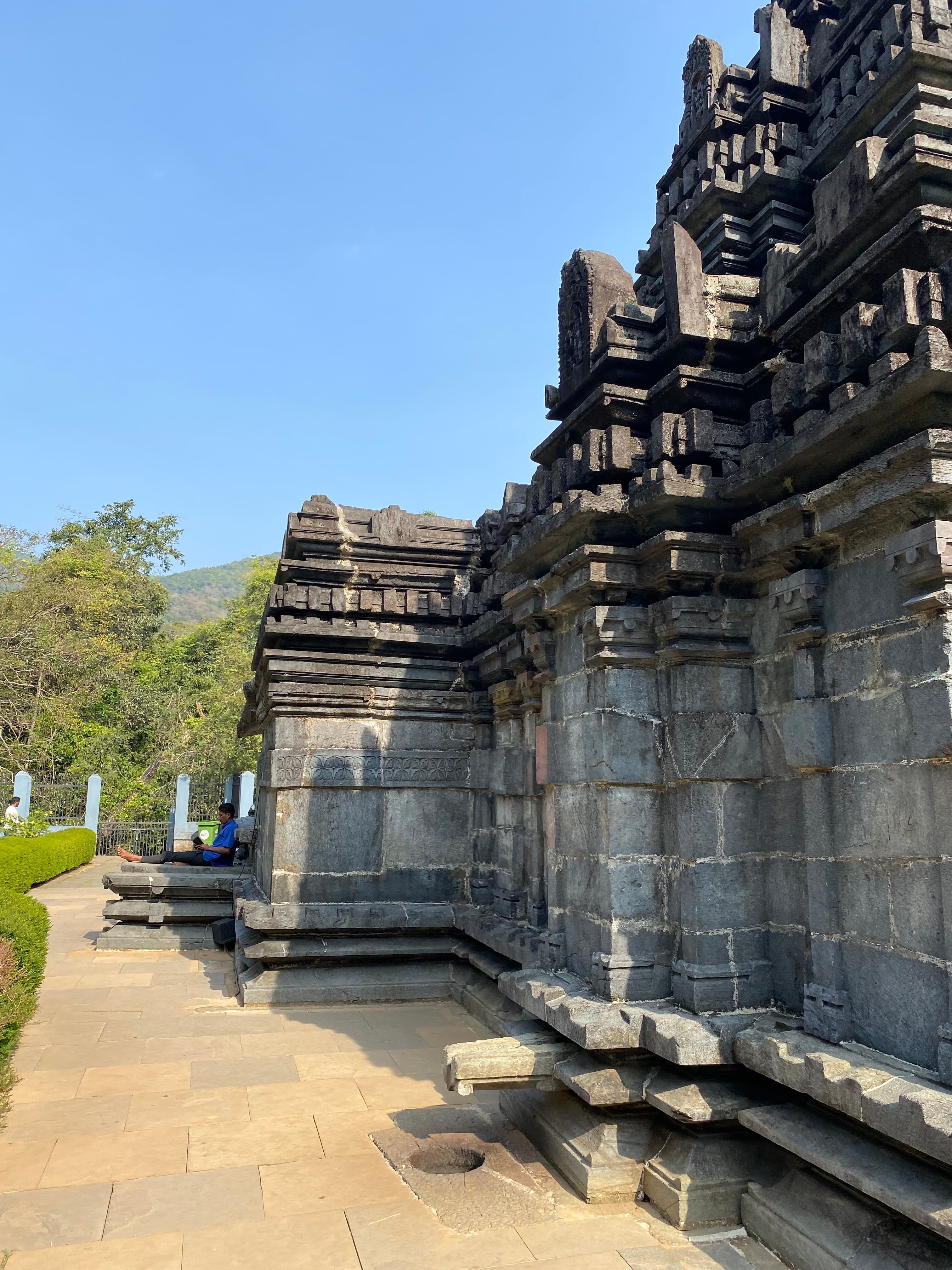
Mahadeva Temple Tambdi Surla Goa
The humid Goan air hung heavy, a stark contrast to the dry Deccan plateau I was accustomed to. Yet, nestled deep within Bhagwan Mahaveer Sanctuary, a slice of Maharashtra's architectural heritage stubbornly clung to its roots. The Mahadeva Temple at Tambdi Surla, though geographically in Goa, whispers tales of the Yadava dynasty, a powerful force that once ruled my home state. Carved from basalt, this 12th-century marvel stands as a testament to their enduring legacy and the skill of their artisans. The approach itself was an adventure. A bumpy, unpaved road led through dense jungle, the air thick with the calls of unseen creatures. The temple, finally emerging from the emerald embrace, felt like a hidden treasure, a secret whispered by the rustling leaves. The Kadamba architecture, so familiar from my explorations of the Yadava temples back in Maharashtra, was immediately recognizable. The shikhara, though slightly eroded by time and the elements, still retained its elegant proportions, a beacon of intricate craftsmanship amidst the untamed wilderness. Stepping inside the dimly lit garbhagriha, I was struck by the palpable sense of history. The black basalt walls, cool to the touch, seemed to absorb and radiate the centuries of devotion that had unfolded within these sacred confines. The linga, the central object of worship, stood proudly, bathed in the soft light filtering through the doorway. Unlike many temples I've visited, this one felt remarkably untouched, almost pristine. The absence of the usual bustling crowds and commercial activity added to the aura of tranquility, allowing for a deeper connection with the space and its history. The intricate carvings adorning the outer walls captivated me. While some panels depicted scenes from the epics, others showcased intricate geometric patterns, a hallmark of the Yadava style. I noticed the distinct absence of figurative sculptures of deities on the outer walls, a feature that sets it apart from many other temples of the period. The Nandi pavilion, though partially ruined, still hinted at its former grandeur. The weathered stone spoke volumes about the temple's resilience, its ability to withstand the relentless march of time and the vagaries of nature. One of the most striking features of the Tambdi Surla temple is its location. Tucked away in this remote valley, it survived the iconoclastic zeal that destroyed many other temples in the region. Its isolation, ironically, became its savior. As I explored the surrounding area, I discovered a small stream gurgling nearby, its waters adding to the sense of serenity. It's easy to see why this spot was chosen – a place of natural beauty, conducive to contemplation and spiritual practice. My exploration of the Mahadeva Temple at Tambdi Surla was more than just a visit; it was a pilgrimage of sorts. It was a powerful reminder of the interconnectedness of history, architecture, and nature. Standing there, amidst the whispering trees and the ancient stones, I felt a deep connection to the artisans who had poured their heart and soul into creating this masterpiece. It reinforced my belief that these ancient structures are not just relics of the past, but living testaments to human ingenuity and devotion, waiting to share their stories with those who take the time to listen. And as a chronicler of Maharashtra's heritage, I felt a profound sense of gratitude for having witnessed this hidden gem, a piece of my home state's history thriving in the heart of Goa.
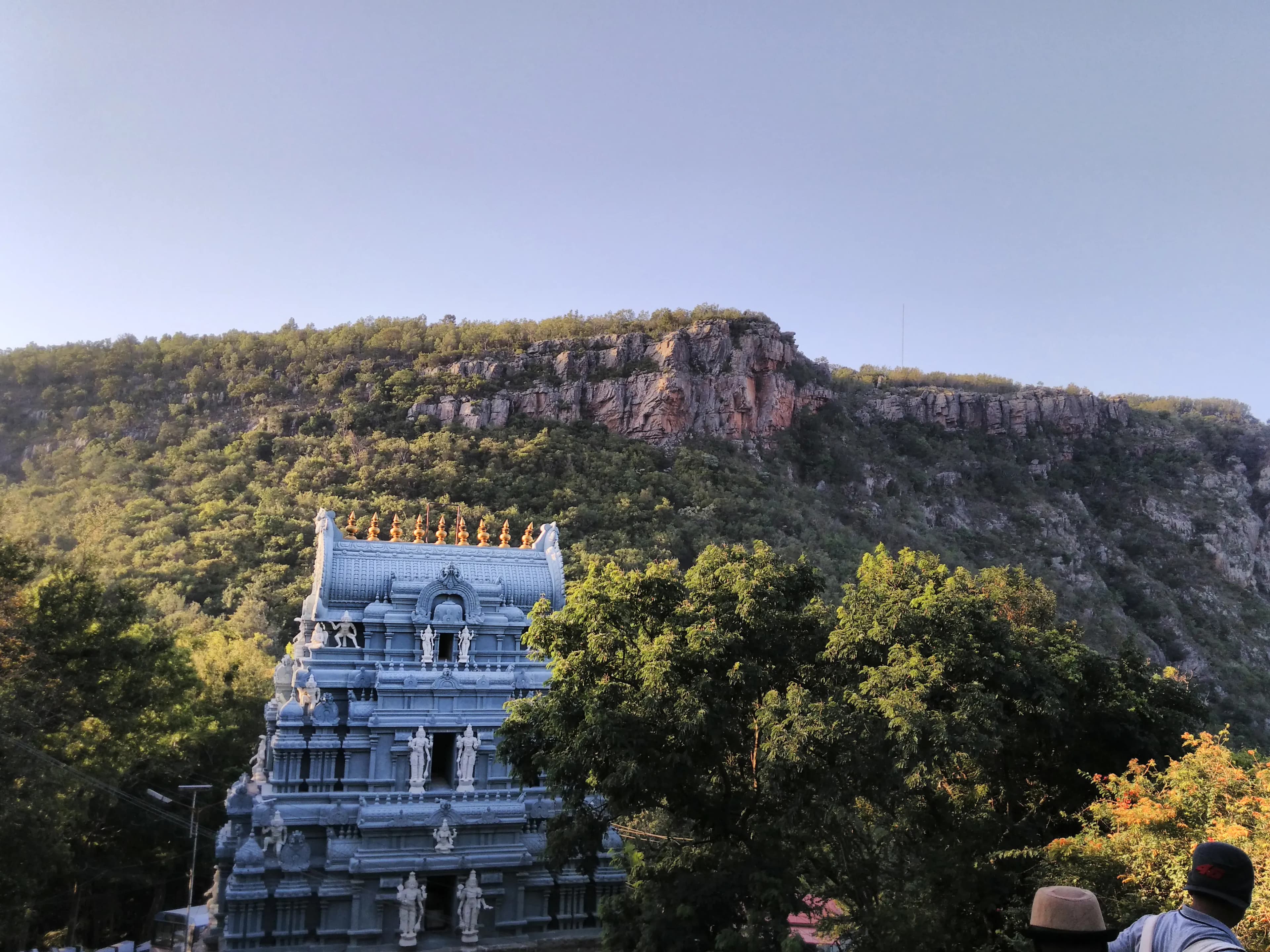
Tirumala Venkateswara Temple Tirupati
The air, thick with incense and anticipation, vibrated with a palpable energy as I ascended the final steps towards the Tirumala Venkateswara Temple. Having explored countless temples across Uttar Pradesh, steeped in the architectural nuances of the Nagara style, I was eager to experience the distinct Dravidian grandeur of this South Indian icon. The sheer scale of the temple complex, nestled amidst the verdant Eastern Ghats, was immediately striking. The towering gopurams, adorned with vibrant depictions of deities and mythical creatures, seemed to pierce the very sky, their kaleidoscopic colours a stark contrast to the muted sandstone hues I was accustomed to back home. The main entrance, guarded by imposing dwarapalakas, led me into a labyrinthine network of courtyards, each buzzing with a unique energy. Devotees from all corners of India, and indeed the world, thronged the pathways, their faces a mixture of devotion, hope, and palpable excitement. The rhythmic chanting of Vedic hymns, punctuated by the clang of bells and the conch's resonant call, created an immersive soundscape that resonated deep within me. I observed the intricate carvings adorning the walls and pillars, a testament to the skill and artistry of the ancient Shilpis. Unlike the flowing lines and curvilinear forms of Nagara architecture, the Dravidian style here emphasized geometric precision and elaborate detailing. The sculptures, depicting scenes from the epics and Puranas, were remarkably lifelike, their expressions conveying a depth of emotion that transcended the stone they were carved from. The queue, though seemingly endless, moved with a surprising efficiency, a testament to the meticulous organization of the temple authorities. As I inched closer to the sanctum sanctorum, the anticipation grew exponentially. The air grew heavy with the scent of sandalwood and camphor, and the chanting intensified, creating an almost hypnotic effect. Finally, after what felt like an eternity, I stood before the deity, Lord Venkateswara, also known as Balaji. The sheer magnificence of the idol, adorned with precious jewels and bathed in the soft glow of oil lamps, was breathtaking. The serene expression on the deity's face, despite the cacophony surrounding him, radiated a sense of profound peace and tranquility. It was a moment of pure, unadulterated devotion, a feeling that transcended religious boundaries. Beyond the spiritual significance, the temple complex itself is a marvel of engineering and logistical management. The sheer volume of pilgrims the temple handles daily is staggering, yet the entire operation runs with remarkable smoothness. From the annadanam, the massive free kitchen that feeds thousands of devotees every day, to the accommodation facilities and security arrangements, every aspect is meticulously planned and executed. I was particularly impressed by the cleanliness and orderliness maintained throughout the complex, despite the constant influx of people. As I descended the steps, leaving the temple behind, I carried with me not just the memory of a sacred space, but also a deep appreciation for the rich cultural heritage of South India. The Tirumala Venkateswara Temple is more than just a place of worship; it is a living testament to the enduring power of faith, a symbol of unity in diversity, and a magnificent example of architectural brilliance. The experience, for me, was a powerful reminder of the interconnectedness of our diverse cultural traditions, a lesson that resonated far beyond the temple walls. The echoes of the chants, the fragrance of the incense, and the serene face of Lord Venkateswara remained etched in my memory, a tangible reminder of the spiritual journey I had undertaken.
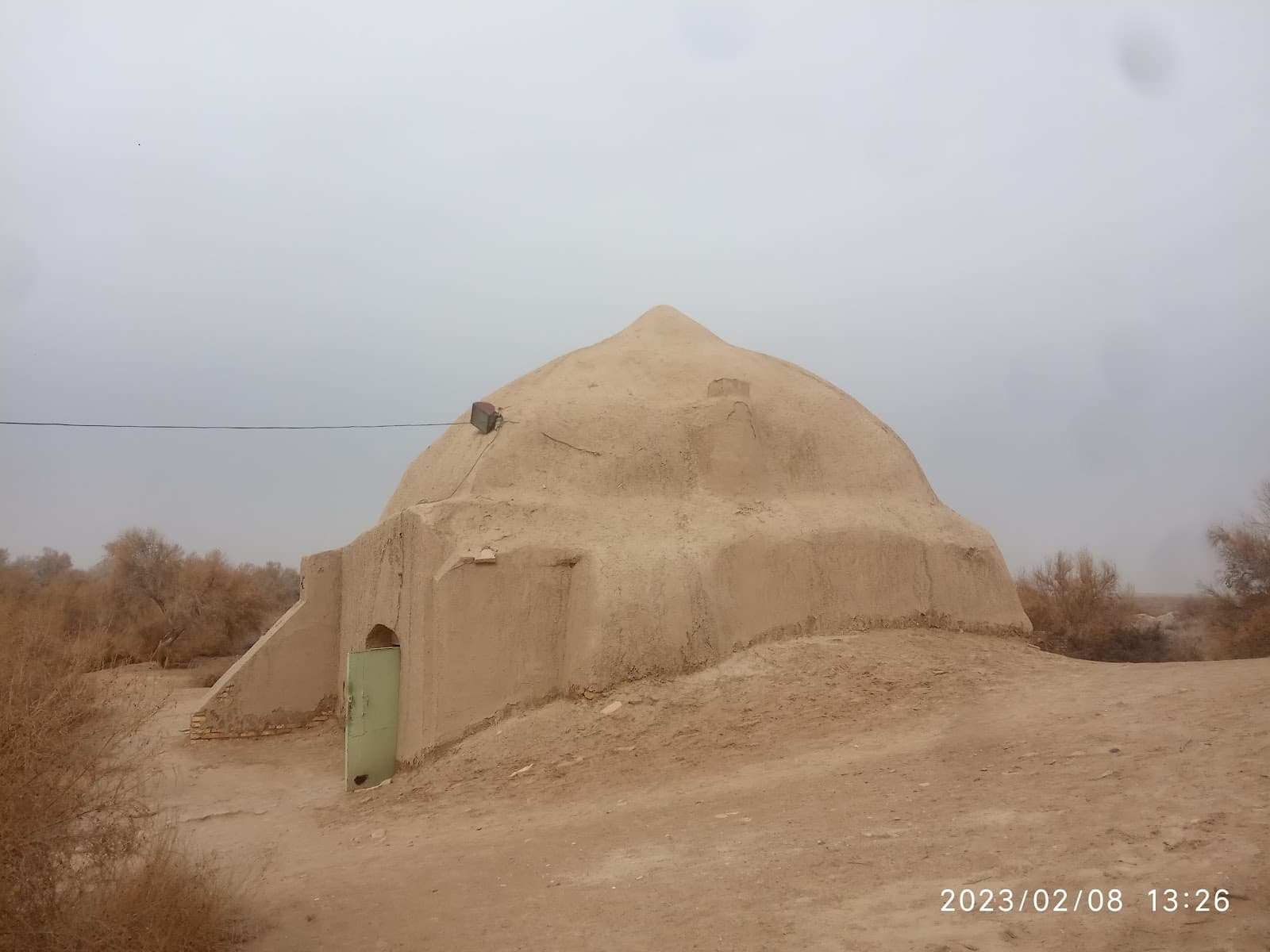
Dandânqan Fortress Temple Area Mary Region Turkmenistan
Nestled in the Mary Region of Turkmenistan, Dandânqan Fortress stands as a significant medieval fortress, notable for its fusion of Central Asian and Indian Buddhist architectural traditions ([1][2]). The fortress features a temple area displaying influences from Indian Buddhist temple architecture and artistic programs ([1]). This synthesis highlights the transmission of Indian religious and architectural concepts to Central Asia during the medieval period ([1][2]). Archaeological excavations have uncovered Buddhist fragments, including sculptures, architectural elements, and religious iconography, revealing parallels with Indian Buddhist art centers like Gandhara and Mathura ([1]). The layout of the temple area, with its central structures and ritual spaces, mirrors Indian Buddhist temple planning principles ([1][2]). These discoveries provide crucial evidence of the site's role in transmitting Indian Buddhist traditions to Central Asia ([1]). During the medieval period, when Central Asia experienced extensive trade and cultural connections with India, Dandânqan Fortress became a major center of religious and military activity ([1]). The patronage of the Samanid Dynasty facilitated the integration of Indian Buddhist elements into the fortress's design ([1][2]). Mud brick, fired brick, stone, lime mortar, metal, and wood were employed in the construction, showcasing the architectural prowess of the era ([1]). Intricate carvings adorning the walls and structures further exemplify the blending of Indian and Central Asian aesthetics ([1][2]). The presence of Buddhist fragments and architectural elements demonstrates a remarkable understanding of Indian Buddhist temple architecture and iconographic programs ([1]). Today, as a UNESCO Tentative List site, Dandânqan Fortress represents a vital cultural treasure, illustrating the profound impact of Indian civilization on Central Asian religious and cultural traditions ([1][2]). The ongoing archaeological research and conservation efforts ensure the protection and study of this extraordinary site ([1]).
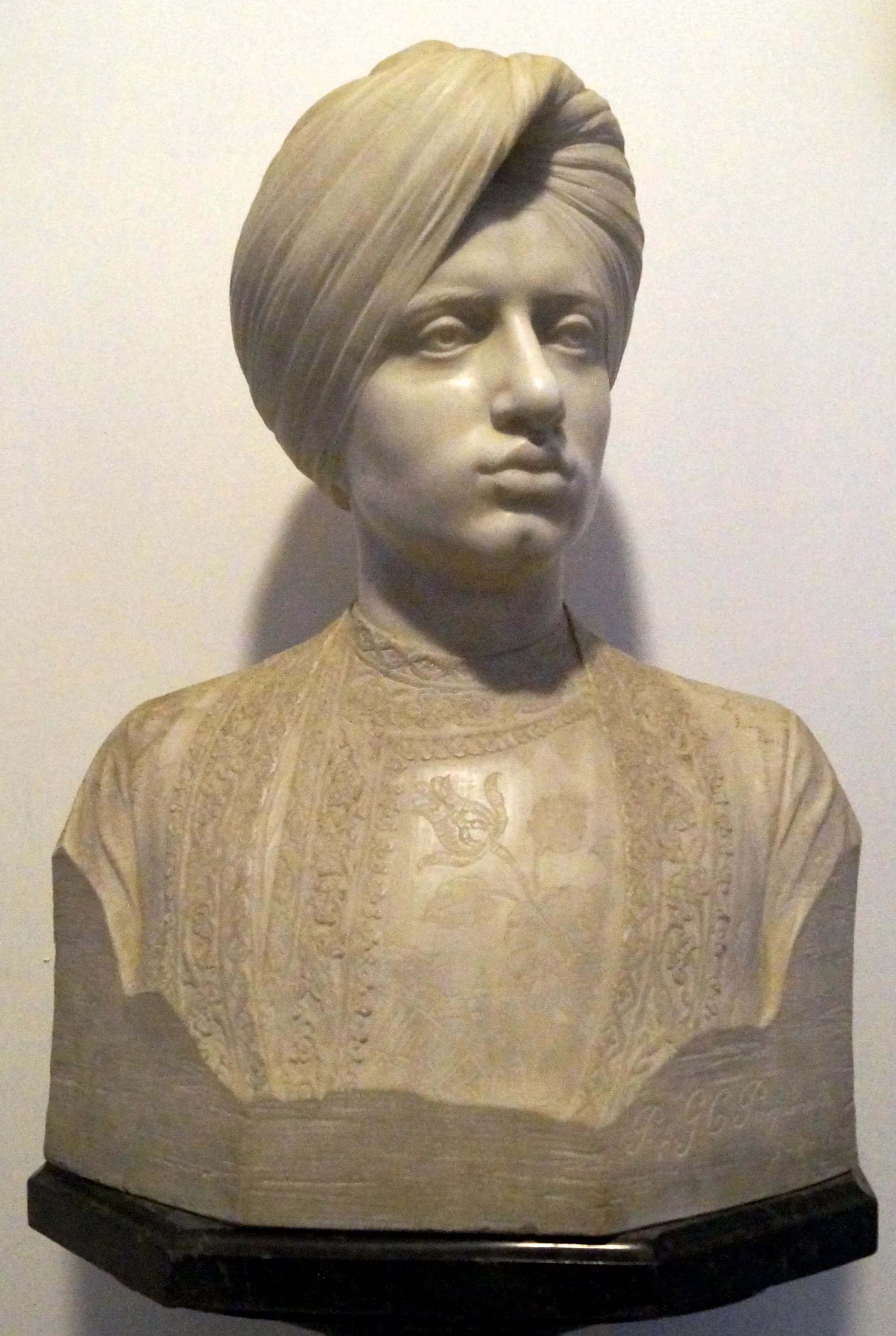
Moti Bagh Palace Patiala
The sun, a molten orb in the Patiala sky, cast long shadows across the manicured lawns of Moti Bagh Palace. Coming from Uttar Pradesh, a land steeped in Mughal grandeur, I was curious to see how Patiala’s royal legacy would compare. The palace, a sprawling complex, didn't disappoint. It wasn't the overwhelming opulence of Awadh's architecture, but a more restrained, almost European elegance blended with Sikh influences. My first impression was of space. Unlike the tightly clustered buildings of some palaces, Moti Bagh breathes. The main palace, the Quila Mubarak, stands as the anchor, its red sandstone walls a stark contrast to the verdant surroundings. The architecture here is a fascinating blend. While the overall layout and the use of sandstone reminded me of Rajput palaces back home, the intricate stucco work, particularly around the arched entrances and windows, spoke of a distinct regional style. Floral motifs, geometric patterns, and even depictions of animals adorned the walls, a testament to the artisans' skill. Stepping inside the Quila Mubarak felt like stepping back in time. The Sheesh Mahal, or Palace of Mirrors, was breathtaking. While smaller than the Sheesh Mahal in Jaipur's Amber Fort, the intricate mirror work here was no less dazzling. The play of light reflecting off the myriad tiny mirrors, creating an illusion of infinite space, was mesmerizing. I could almost imagine the royal court assembled here, their silks and jewels shimmering in the candlelight. The Darbar Hall, with its high ceilings and imposing chandeliers, exuded an air of formality. I was particularly struck by the portraits lining the walls – a visual chronicle of Patiala's rulers. Their stern faces, adorned with elaborate turbans and jewels, seemed to gaze down upon me, silent witnesses to centuries of history. The portraits weren't mere decorations; they were a powerful assertion of lineage and authority, a theme I’ve often encountered in the palaces of Uttar Pradesh as well. Moving beyond the Quila Mubarak, I explored the other parts of the complex. The sprawling gardens, a blend of Mughal and European landscaping, offered a welcome respite from the grandeur of the palace. Fountains, once undoubtedly gurgling with water, now stood silent, their weathered stone a reminder of time's relentless march. I could picture the royal family strolling through these gardens, enjoying the shade of the trees and the fragrance of the flowers. The museum within the complex was a treasure trove of artifacts. From antique weaponry and intricately embroidered textiles to vintage photographs and royal memorabilia, the collection offered a glimpse into the opulent lifestyle of Patiala's rulers. I was particularly fascinated by the collection of Phulkari embroidery, a traditional craft of Punjab. The vibrant colors and intricate patterns were a testament to the region's rich artistic heritage. It reminded me of the Chikankari embroidery of Lucknow, another example of the exquisite craftsmanship found across India. One aspect that stood out at Moti Bagh was the relative lack of restoration compared to some of the more heavily touristed sites I’ve visited. While some sections were well-maintained, others showed signs of neglect. Peeling paint, crumbling plaster, and overgrown vegetation whispered of a glorious past fading into obscurity. This, in a way, added to the palace's charm. It felt less like a polished museum piece and more like a living, breathing entity, bearing the weight of its history. As I left Moti Bagh Palace, the setting sun painting the sky in hues of orange and purple, I couldn't help but feel a sense of melancholy. The palace, a testament to a bygone era, stood as a silent sentinel, guarding the memories of a vanished kingdom. It was a poignant reminder of the ephemeral nature of power and the enduring legacy of art and architecture. The experience, while different from the Mughal splendor I’m accustomed to, offered a valuable glimpse into another facet of India's rich cultural tapestry.
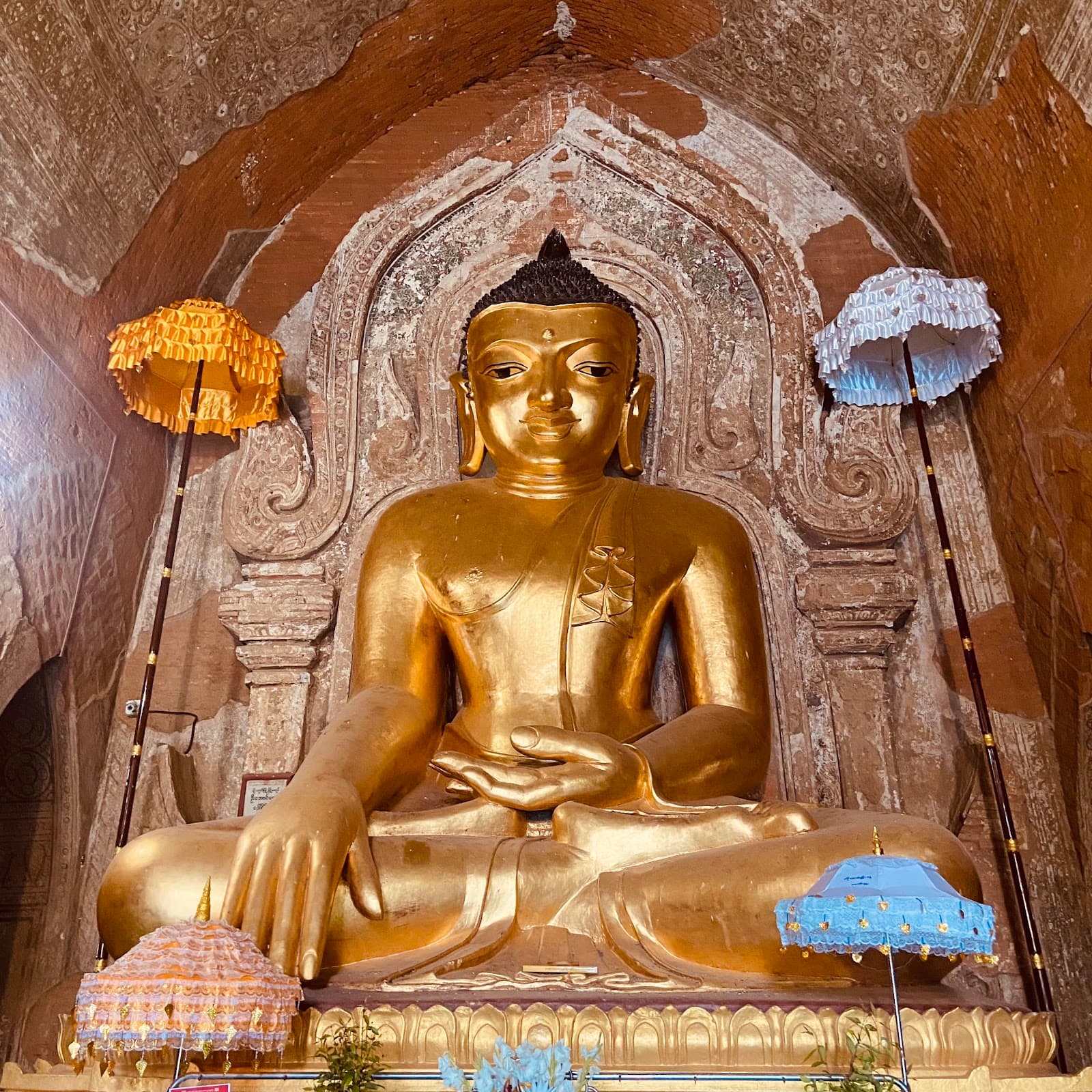
Htilominlo Temple Bagan
Htilominlo Temple, located in the Bagan Archaeological Zone, represents a significant 13th-century Buddhist temple featuring extensive Hindu-Buddhist syncretic sculptures and iconography, demonstrating the integration of Hindu artistic and religious traditions into Buddhist architecture that characterized Myanmar’s relationship with the greater Hindu rashtra extending across the Indian subcontinent. The temple, constructed in 1211 CE during the reign of King Htilominlo, features a two-story structure rising to a height of 46 meters, with extensive stucco reliefs and sculptures depicting both Hindu deities and Buddhist figures, reflecting the syncretic nature of religious art in ancient Myanmar where Hindu iconography was seamlessly integrated into Buddhist religious contexts. The temple’s architectural design demonstrates influence from Indian temple architecture, with the overall plan and decorative elements reflecting Gupta and Pala period styles that were transmitted to Myanmar through centuries of cultural exchange. The temple’s interior features numerous sculptures of Hindu deities including Brahma, Vishnu, Shiva, and various devatas positioned alongside Buddhist figures, demonstrating how Hindu iconography became integral to the religious and artistic vocabulary of ancient Myanmar. Archaeological evidence indicates the temple was constructed with knowledge of Indian artistic traditions, reflecting the close cultural connections between Myanmar (Brahma Desha) and the greater Hindu rashtra during the medieval period. The temple’s syncretic sculptures provide crucial evidence of the transmission of Hindu artistic traditions from India to Southeast Asia and their integration into Buddhist religious contexts. The temple has undergone multiple restorations, with significant work conducted to preserve the stucco reliefs and sculptures, and continues to serve as an active place of Buddhist worship while preserving its Hindu artistic heritage. Today, Htilominlo Temple stands as a UNESCO World Heritage Site within the Bagan Archaeological Zone, serving as a powerful symbol of Myanmar’s deep connections to Indian civilization and its historical role as part of the greater Hindu rashtra that extended across the Indian subcontinent and into Southeast Asia through shared artistic, religious, and cultural traditions. ([1][2])
Quick Links
Plan Your Heritage Journey
Get personalized recommendations and detailed visitor guides