Has Inheritage Foundation supported you today?
Your contribution helps preserve India's ancient temples, languages, and cultural heritage. Every rupee makes a difference.
Secure payment • Instant 80G certificate
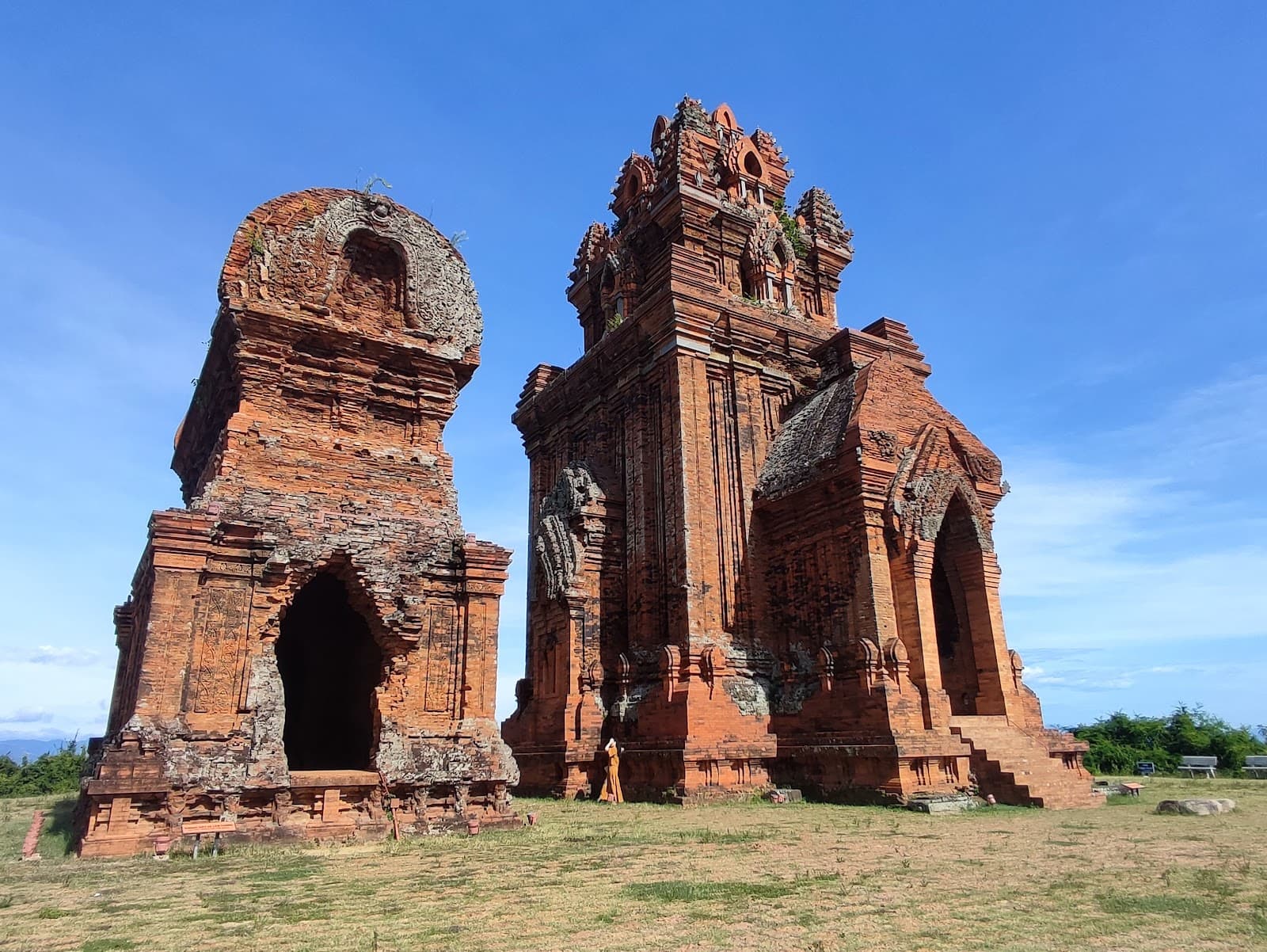
Huynh De Citadel Cham Temples Binh Dinh Vietnam
The Huynh De Citadel Cham Temples, situated in Binh Dinh Province, Vietnam, represent a profound testament to India's millennia-spanning cultural heritage, embodying the continuous tradition of Indian civilization through its architectural and religious expressions. This monumental complex, also known historically as Hoàng Đế Citadel or Cha Ban Citadel, served as a significant political and religious center for the Champa Kingdom, deeply influenced by ancient Indian architectural principles and spiritual practices [2] . The indigenous Cham architectural style, particularly evident in the temple structures, exhibits striking similarities to the Dravida architecture style and Hindu temple architecture of South India, reflecting a direct cultural transmission and adaptation [1] [5]. The temples within the citadel area are predominantly dedicated to Hindu deities, with Shiva, often manifested as the Bhadreśvara-liṅga or in anthropomorphic form, being the primary object of worship [1]. Decorative elements frequently include depictions of Hindu goddesses such as Gajalakshmi, carved on tympanums, and figures like the brick Garuda on temple roofs, underscoring the pervasive Hindu iconography [1]. The construction primarily utilizes red brick, a characteristic material for Cham temples, complemented by sandstone for structural elements and intricate carvings [1] . Early construction phases, dating from the 7th to 9th centuries, featured smaller temples with low brick walls and wooden pillars supporting tiled roofs, creating an 'open-sanctum' design that allowed natural light to permeate the interior [1]. By the late 9th to 13th centuries, construction techniques advanced, leading to taller temple towers built with corbelling techniques and pointed roofs, resulting in 'closed-sanctum' structures illuminated by internal light sources like candles or torches [1]. Specific architectural marvels include the Duong Long Towers, a triple-tower complex from the 12th century, where the central tower reaches an impressive height of 39 meters, flanked by two slightly shorter structures [2]. The Banh It towers, dating from the 12th to 13th centuries, comprise four meticulously restored towers strategically positioned atop a hill, offering panoramic views [2]. The Canh Tien Tower, a 12th-century edifice within the Vijaya Citadel, showcases elaborate decorative features inspired by tropical foliage, a hallmark of Cham artistry [2] . The Phu Loc tower, an early 12th-century structure, stands as a colossal, castle-like edifice, while the Thap Doi (Twin Towers) from the 12th-13th century rise 20 meters, tapering upwards like monumental chimneys [2]. The Binh Lam tower, from the late 10th to early 11th century, is a solitary, large structure notable for its street-level placement [2]. The Huynh De Citadel itself functioned as a formidable defensive complex, characterized by its rectangular layout and extensive ramparts. Historical records detail the southern rampart, constructed from large laterite blocks, each measuring approximately 0.8 meters in length, 0.4 meters in width, and 0.23 meters in thickness, with roof tile fragments inserted for enhanced stability . The citadel was ingeniously integrated with its natural environment, surrounded by a network of deep and wide moats connected to local rivers and lagoons, providing both strategic defense and efficient water management . Archaeological excavations continue to reveal foundational layers, pottery, and other artifacts, shedding light on the site's continuous occupation and evolution [4] . The site is currently designated as a protected historical area, with ongoing conservation efforts focused on preserving its ancient structures and uncovering further archaeological insights, ensuring its operational readiness for scholarly research and public appreciation of India's enduring cultural legacy [4] .
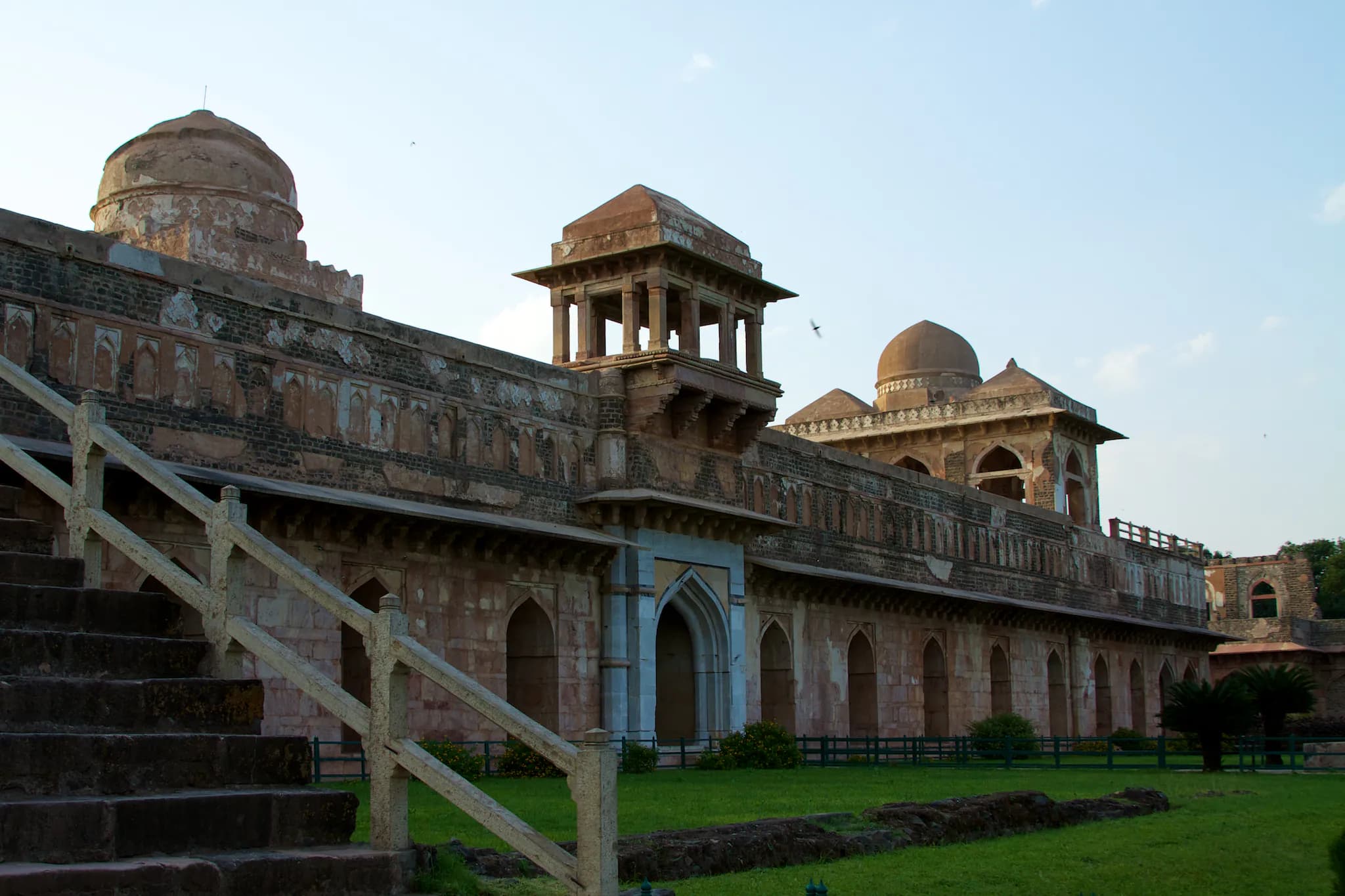
Mandu Fort Mandu
The wind whispers stories in Mandu. Not just any stories, but tales of romance, intrigue, and empires long gone. Perched atop the Vindhya Range, the fort city of Mandu isn't just a fort; it's a sprawling testament to the rise and fall of several dynasties, each leaving their indelible mark on this plateau. Having explored every UNESCO site in India, I can confidently say Mandu holds a unique charm, a melancholic beauty that sets it apart. My exploration began at the Delhi Darwaza, the principal gateway to this fortified city. The sheer scale of the structure immediately impressed – a massive archway flanked by sturdy bastions, hinting at the grandeur within. As I walked through, I felt transported back in time. The road, worn smooth by centuries of travelers, led me deeper into the heart of Mandu. The Jahaz Mahal, or Ship Palace, was next, and it truly lives up to its name. Flanked by two artificial lakes, the palace appears to float, an illusion further enhanced by its long, narrow structure. I spent hours wandering its corridors, imagining the royal women who once graced its halls, their laughter echoing through the now-silent chambers. The intricate latticework screens, the delicate jharokhas (overhanging enclosed balconies), and the expansive courtyards spoke of a life of luxury and leisure. I noticed the clever use of water channels and fountains throughout the palace, a testament to the architectural ingenuity of the period. These weren't mere decorative elements; they were part of a sophisticated system designed to cool the palace during the scorching summer months. From the Jahaz Mahal, I made my way to the Hindola Mahal, or Swinging Palace. Its sloping walls, giving the impression of swaying, are a remarkable architectural feat. I was struck by the sheer audacity of the design. It's as if the architects were challenging gravity itself. Inside, the vast halls, devoid of ornamentation, spoke of a different kind of grandeur – one of power and authority. The Hoshang Shah's Tomb, a pristine marble structure, offered a stark contrast to the red sandstone architecture prevalent throughout Mandu. This tomb, predating the Taj Mahal, is said to have inspired Shah Jahan's masterpiece. The intricate marble latticework, the serene dome, and the peaceful courtyard created an atmosphere of reverence. I could see the connection to the Taj, but Hoshang Shah's Tomb possessed a quiet dignity, a subtle elegance that felt distinct. My journey culminated at Roopmati's Pavilion, perched on the edge of the plateau, offering breathtaking panoramic views of the surrounding plains. Legend has it that Roopmati, the queen of Baz Bahadur, would gaze longingly at the Narmada River from this vantage point. Standing there, the wind whipping through my hair, I could understand the allure of this place. The pavilion, though now in ruins, still exudes a sense of romance and longing. The setting sun cast long shadows across the landscape, painting the sky in hues of orange and purple, a fitting end to my exploration of this magical city. Mandu is more than just a collection of monuments; it's an experience. It's the feeling of the wind on your face as you stand on the ramparts, the echoes of history whispering in the corridors, the breathtaking views that stretch out before you. It's a place that stays with you long after you've left, a reminder of the grandeur and fragility of empires, the enduring power of love and loss, and the beauty that can be found in the ruins of the past. If you're seeking a journey through time, a glimpse into a world lost and found, then Mandu is waiting to tell you its stories.
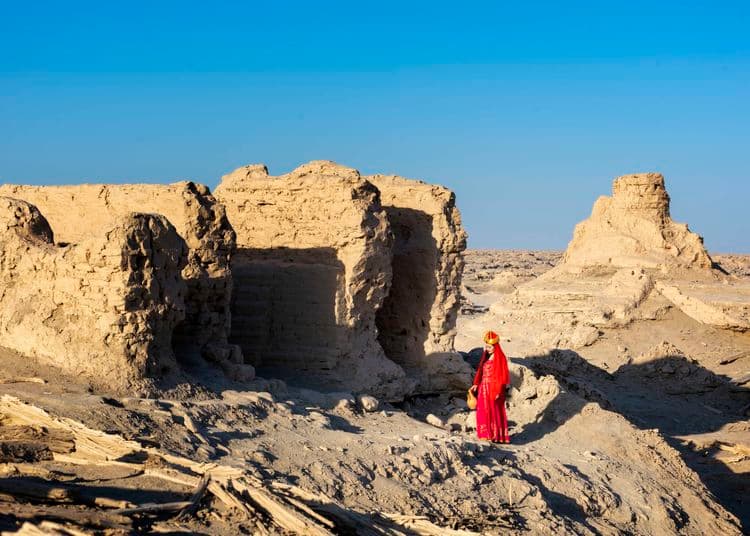
Loulan Ancient City Ruoqiang Xinjiang China
Loulan Ancient City, located in the eastern Taklamakan Desert in Ruoqiang County, Xinjiang, China, represents one of the most legendary and archaeologically significant lost cities of the Silk Road, comprising the remarkable remains of an ancient kingdom that flourished from the 2nd to 4th centuries CE along the strategic trade routes connecting China with Central Asia and India, creating a powerful testament to the transmission of Indian Buddhist traditions and the complex cultural exchanges that occurred along the ancient Silk Road. The city, preserved by the desert environment in extraordinary condition, features extensive remains of residential buildings, Buddhist stupas, temples, administrative structures, and defensive walls that provide unprecedented insights into the daily life, governance, and religious practices of an ancient Silk Road kingdom, while the discovery of numerous artifacts including textiles, manuscripts, coins, and pottery showing clear Indian influences provides crucial evidence of the deep cultural connections between the region and the Indian subcontinent. The city's Buddhist stupas and temples, constructed primarily from rammed earth, wood, and fired brick, demonstrate the transmission of Indian Buddhist architectural traditions to Central Asia, with the stupa forms and decorative elements reflecting Indian Buddhist practices that were introduced to the region through centuries of cultural exchange, while the discovery of Buddhist manuscripts and religious artifacts provides crucial evidence of the site's role in the transmission of Buddhism from India to China. Archaeological excavations have revealed extraordinary preservation of organic materials including wooden structures, textiles, leather goods, and food remains that provide unprecedented insights into ancient Central Asian life, while the city's abandonment, likely during the 4th century CE due to desertification, shifting trade routes, and political changes, left the city frozen in time, creating one of the most important archaeological sites for understanding ancient Silk Road civilization. The city's location along the eastern branch of the Silk Road, connecting China with Central Asia and India, underscores its historical role as a major center of trade, cultural exchange, and religious transmission, while the extensive evidence of Indian cultural influence demonstrates the profound impact of Indian civilization on Central Asian societies during the ancient period. The site was rediscovered by Swedish explorer Sven Hedin in 1900 and subsequently excavated by numerous archaeological teams, revealing extraordinary discoveries that have transformed understanding of ancient Silk Road civilization, while ongoing archaeological research continues to reveal new insights into the city's history, the lives of its inhabitants, and the cultural exchanges that shaped the ancient world. Today, Loulan stands as a UNESCO Tentative List site and represents one of the most important archaeological discoveries in Central Asia, serving as a powerful testament to the transmission of Indian culture, administration, and religion along the Silk Road, while the site's legendary status as a lost city and its extraordinary preservation continue to capture the imagination of scholars and visitors alike, demonstrating the enduring fascination with the ancient civilizations that flourished along the Silk Road. ([1][2])
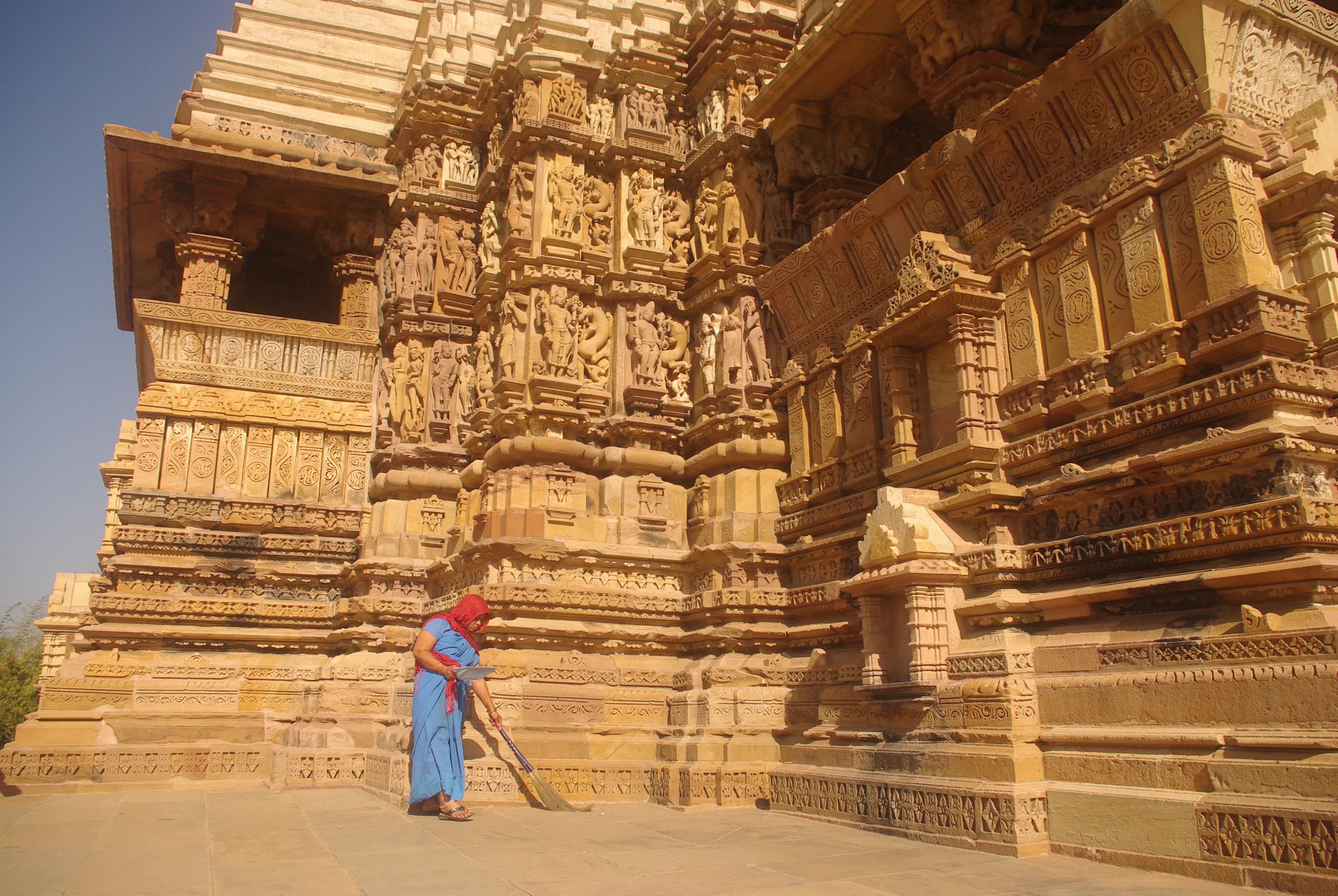
Kandariya Mahadeva Temple Khajuraho
The rising sun cast long shadows across the manicured lawns of the Western Group of temples at Khajuraho, and my gaze was immediately drawn to the magnificent Kandariya Mahadeva. Dominating the skyline, this temple, dedicated to Lord Shiva, is arguably the most iconic and elaborate of the Khajuraho group. The sheer scale of it took my breath away – a mountain of sculpted sandstone reaching for the heavens, a testament to the Chandela dynasty's architectural prowess and artistic vision. As I approached, the intricate carvings began to reveal themselves. The temple, built on a high platform, felt like a living, breathing entity. Every inch of the exterior, from the base to the towering shikhara, was covered in a profusion of sculptures. These weren't mere decorations; they narrated stories from Hindu mythology, depicted scenes of courtly life, and celebrated the sensuality that is so characteristic of Khajuraho's art. I noticed apsaras, celestial nymphs, frozen in graceful poses, their expressions ranging from serene contemplation to playful allure. Warriors, musicians, and animals – elephants, lions, and mythical creatures – all found their place within this intricate tapestry of stone. Climbing the steps to the main entrance, I felt a palpable shift in atmosphere. The air grew cooler, and a sense of reverence settled over me. The doorway itself was a masterpiece of intricate carving, layers of figures framing the entrance to the sanctum sanctorum. Stepping inside, I was struck by the relative simplicity of the inner chamber compared to the exuberant exterior. The play of light and shadow created a mystical ambiance, focusing attention on the garbhagriha, the innermost sanctum where the deity would have resided. Although the original lingam is no longer present, the space still held a palpable sense of sacredness. Spending time within the temple, I began to appreciate the architectural ingenuity of the Chandelas. The Kandariya Mahadeva is not a single structure but a complex arrangement of interconnected shrines and mandapas, each leading towards the central shikhara. This shikhara, a towering curvilinear spire, represents Mount Meru, the mythical abode of the gods. The smaller surrounding shikharas create a sense of rhythm and movement, giving the impression of a mountain range rising towards the sky. The erotic sculptures, for which Khajuraho is so famous, are undeniably a part of the temple's narrative. However, to reduce the temple to just these depictions is to miss the larger picture. They represent only a small fraction of the overall sculptural program and are integrated seamlessly within the broader themes of life, death, and spirituality. As someone who has grown up in Uttar Pradesh, surrounded by the echoes of ancient kingdoms and their artistic legacies, I found myself contemplating the multifaceted nature of these depictions. They are a reflection of a time when sensuality was not divorced from spirituality, a time when art embraced all aspects of human existence. Leaving the Kandariya Mahadeva, I carried with me a profound sense of awe and wonder. This temple is not just a collection of stones; it is a living testament to the artistic genius of a bygone era. It is a place where spirituality and sensuality intertwine, where stories are etched in stone, and where the echoes of history resonate through the centuries. It stands as a powerful reminder of the rich cultural heritage of India, a heritage that continues to inspire and captivate even today. As I walked away, I couldn't help but glance back, drawn once more to the majestic silhouette of the Kandariya Mahadeva against the clear blue sky, its intricate carvings shimmering in the sunlight.
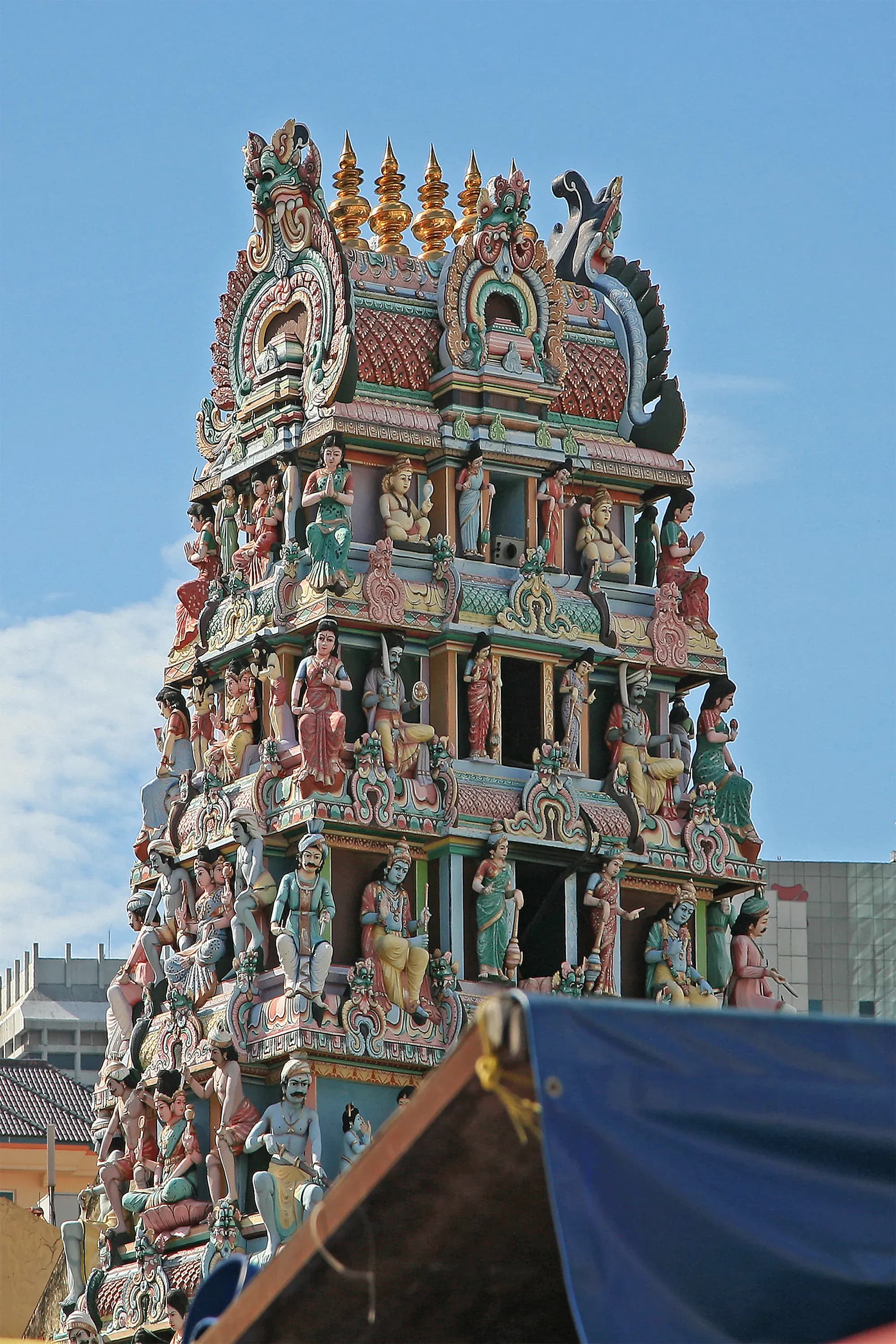
Mariamman Temple Ho Chi Minh City
The midday sun beat down on Ho Chi Minh City, casting long shadows that danced across the ornate facade of the Mariamman Temple. Tucked away amidst the bustling modern cityscape, this vibrant splash of South Indian architecture felt like a portal to another world. As I stepped through the gopuram, the towering gateway adorned with a riot of colourful deities, the cacophony of the city faded, replaced by the scent of incense and the murmur of prayers. Having documented over 500 monuments across India, I’ve become intimately familiar with the Dravidian architectural style. Yet, seeing it replicated here, thousands of miles from its origins, evoked a unique sense of wonder. The Mariamman Temple, built by the Tamil community in the late 19th century, is a testament to the enduring power of cultural heritage and the human need for spiritual connection, even in a foreign land. The temple's relatively small size, compared to its Indian counterparts, allows for an intimate exploration. My lens immediately gravitated towards the intricate stucco work that covered every inch of the gopuram. Gods and goddesses, mythical creatures and floral motifs, all intertwined in a vibrant tapestry of storytelling. The craftsmanship was remarkable, each figure possessing a unique expression, a testament to the skill of the artisans who brought them to life. I noticed subtle differences in the iconography compared to temples in South India, hinting at a localized interpretation of these familiar deities. Inside the main sanctum, the air was thick with the aroma of burning camphor and jasmine. Devotees offered prayers to Mariamman, the goddess of rain and healing, her image adorned with garlands of fresh flowers. The atmosphere was charged with a palpable sense of devotion, a quiet hum of spiritual energy that transcended language and cultural barriers. I observed the rituals, the lighting of lamps, the offering of coconuts, each action imbued with deep meaning. It was a privilege to witness this intimate expression of faith, a reminder of the universal human desire for connection with the divine. Beyond the main shrine, smaller alcoves housed other deities, each with their own dedicated following. I was particularly drawn to the shrine of Lord Ganesha, the remover of obstacles, his elephant-headed form instantly recognizable. The vibrant colours, the intricate details, the sheer density of the ornamentation, it was a visual feast. I spent a considerable amount of time capturing these details, trying to convey the richness and complexity of this cultural tapestry through my photographs. One aspect that struck me was the seamless integration of local Vietnamese elements within the predominantly South Indian architectural framework. The use of certain materials, the subtle adaptation of decorative motifs, these nuances spoke to a process of cultural exchange and adaptation. It wasn't merely a replication of a temple from back home, but rather a unique hybrid, a testament to the community's ability to retain their cultural identity while embracing their new surroundings. As I stepped back out into the bustling streets of Ho Chi Minh City, the experience lingered. The Mariamman Temple served as a powerful reminder of the enduring strength of cultural heritage and its ability to transcend geographical boundaries. It was a privilege to document this unique piece of history, a testament to the human spirit's enduring need for connection, both with the divine and with their cultural roots. The images I captured, I hope, will serve as a window into this vibrant cultural intersection, allowing others to glimpse the beauty and complexity of this hidden gem in the heart of Vietnam.
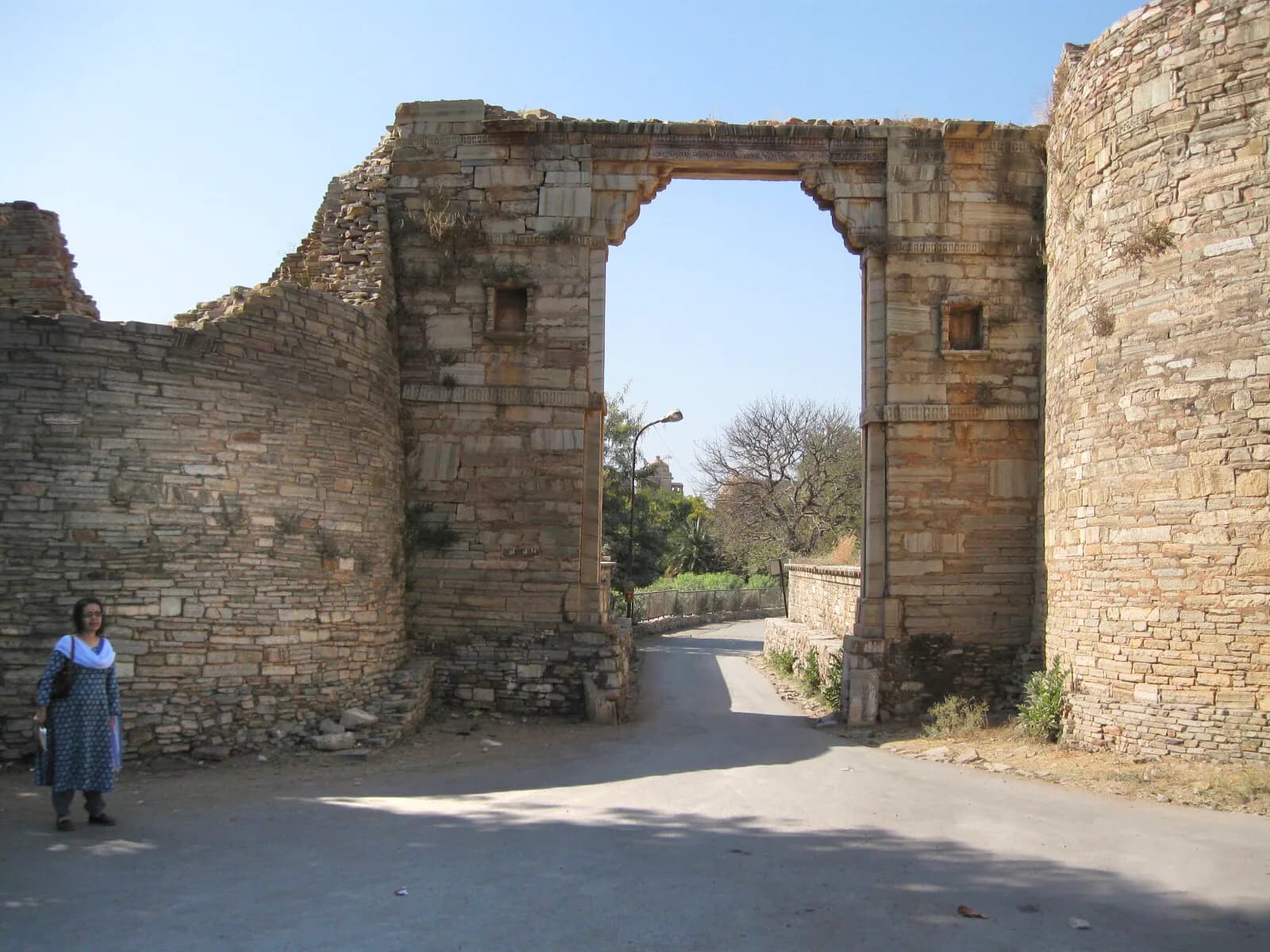
Chittorgarh Fort Chittorgarh
Chittorgarh Fort, the largest fort in India, sprawling across 700 acres, embodies the Rajput spirit and architectural heritage ([1][2]). Built in the 7th century (650 CE) by the Maurya Dynasty under Chitrangada Mori, this Rajput military hill fort presents a captivating blend of strength and artistry ([1][2]). Reaching the main gate, Ram Pol, is like traversing centuries, each gate whispering tales of valor and sacrifice ([2]). Intricate carvings adorning the walls of the Vijay Stambh (Tower of Victory) commemorate Maharana Kumbha's triumph in 1440 ([3]). This nine-story marvel showcases Hindu deities and scenes from mythology ([3]). Nearby, the Kirti Stambh, a 22-meter high tower, stands dedicated to Adinath, a Jain Tirthankara, symbolizing religious harmony ([4]). Granite and sandstone blocks, meticulously carved, form the structural and artistic elements throughout the fort ([1]). Sophisticated water harvesting structures ensured the fort's self-sufficiency, a testament to ancient engineering prowess ([5]). The Rana Kumbha Palace, though partially ruined, evokes the grandeur of Mewar rulers with its delicate jali work and strategic balconies ([5]). The poignant narrative of Rani Padmini's Jauhar (self-immolation) deeply resonates within the fort's walls ([6]). The Padmini Palace overlooks the lotus pool, a silent witness to her sacrifice ([6]). Further enriching the fort's spiritual landscape, the Kalika Mata Temple, originally a Sun Temple, and the Meera Temple offer glimpses into the region's religious diversity ([4]). Chittorgarh Fort remains a profound emblem of Rajputana's history and resilience ([1][2]).
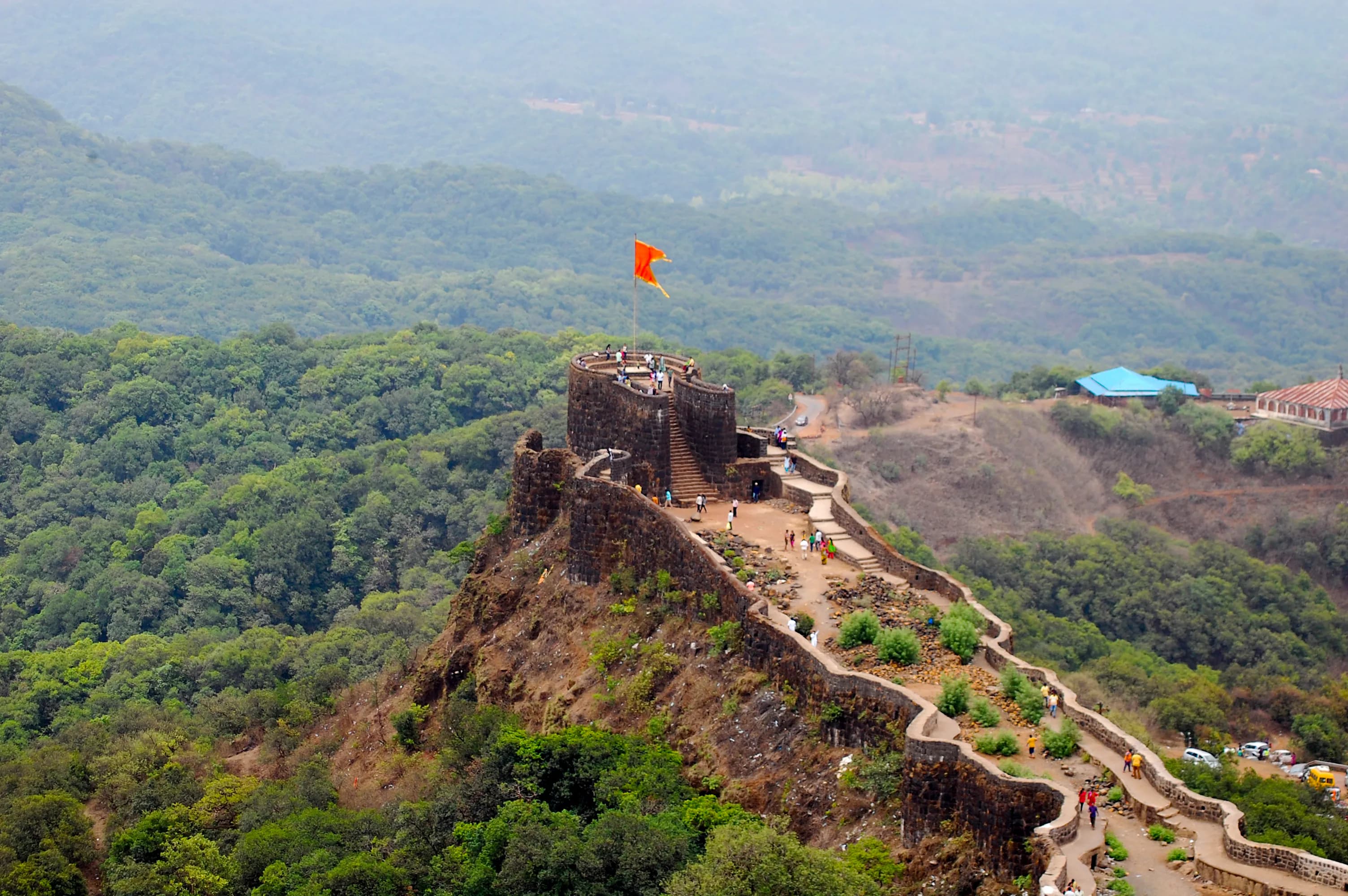
Pratapgad Fort Satara
The wind whipped around me, carrying whispers of history as I stood atop Pratapgad Fort, the very air seeming to vibrate with the echoes of clashing swords and the roar of Maratha war cries. Having explored countless forts across North India, I thought I had become somewhat jaded to the grandeur of ancient stone, but Pratapgad, perched high on the Sahyadri mountains of Maharashtra, proved me wrong. It wasn't just a fort; it was a living testament to the indomitable spirit of Shivaji Maharaj. The ascent itself was an experience. The winding road, clinging to the mountainside, offered breathtaking views of the Konkan plains stretching out below, a tapestry of green punctuated by the silver threads of rivers. As the fort came into view, its imposing basalt ramparts rising against the backdrop of the vast sky, I felt a surge of anticipation. Unlike the sandstone structures I was accustomed to in the north, Pratapgad's dark grey basalt construction lent it a unique, almost brooding aura. The rugged stone, seemingly hewn directly from the mountain itself, spoke of resilience and strength. Passing through the Mahadarwaja, the main gate, I was immediately struck by the fort's strategic design. The thick walls, punctuated by strategically placed bastions and fortified towers, offered a clear view of the surrounding valleys, making it virtually impregnable. Within the fort walls, the atmosphere shifted. The bustling energy of the climb gave way to a sense of quiet reverence. I walked along the ramparts, tracing the path of sentinels who once guarded this stronghold. The views from the top were simply spectacular; the rolling hills, shrouded in mist, seemed to stretch on forever. It was easy to imagine Shivaji Maharaj surveying his domain from this very spot, strategizing his next move. The architecture within the fort was a blend of functionality and subtle artistry. The Bhavani Mata Temple, dedicated to Shivaji's family deity, stood as a beacon of faith within the fortress. Its simple yet elegant design, crafted from the same dark basalt as the fort walls, exuded a quiet strength. The intricate carvings on the pillars and doorways, though weathered by time, still bore witness to the skill of the artisans who built it. One of the most poignant moments of my visit was standing at the site of the historic meeting between Shivaji Maharaj and Afzal Khan. The very ground beneath my feet held the weight of history, a silent witness to the cunning strategy and decisive action that shaped the destiny of the Maratha empire. A small monument marked the spot, a stark reminder of the pivotal events that unfolded here. Exploring the fort's inner chambers, I discovered hidden passages, secret tunnels, and strategically placed water tanks, all testament to the meticulous planning that went into its construction. The Balekilla, the highest point of the fort, offered panoramic views of the surrounding landscape, a breathtaking vista that stretched as far as the eye could see. Leaving Pratapgad was like stepping out of a time capsule. The experience was more than just a visit to a historical site; it was an immersion in the heart of Maratha history. The fort's imposing architecture, its strategic location, and the stories it held within its walls left an indelible mark on me. As I descended the mountain, I carried with me not just photographs and memories, but a deeper understanding of the courage, resilience, and strategic brilliance that shaped the destiny of a nation.
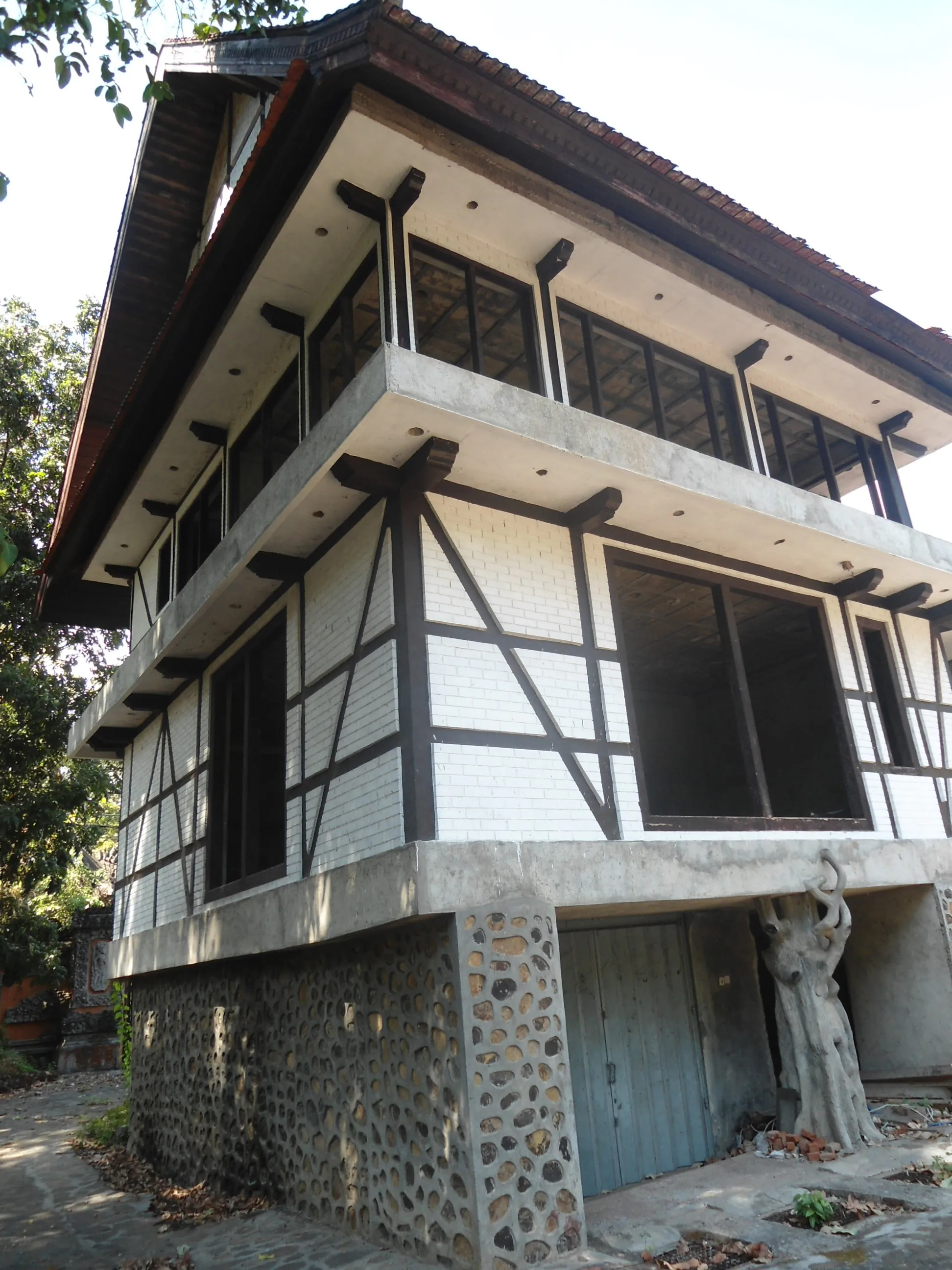
Puri Palace Puri
Puri Palace, situated on Chakra Tirtha Road in Puri, Odisha, stands as a significant testament to India's millennia-spanning cultural heritage, embodying a continuous tradition of indigenous architectural and cultural practices [1]. While the current structure largely reflects renovations and expansions from the 19th and early 20th centuries, its foundational significance is deeply rooted in the ancient Eastern Ganga Period, celebrating India's enduring legacy [1]. The palace's architecture presents a compelling blend of traditional Kalinga styles and colonial influences, showcasing a layered history of design evolution [1]. It incorporates elements characteristic of the Nagara architecture style, particularly the Deula architecture prevalent in Indic temple construction, which is evident in its intricate carvings and pyramidal roof forms [1] [4]. The imposing facade, predominantly white, features symmetrical arrangements punctuated by intricately carved balconies and jharokhas, which are traditional projecting windows, reflecting Odisha's rich artistic heritage [1]. Delicate floral patterns and mythical figures are meticulously etched into the sandstone, narrating silent tales of devotion and royal patronage [1]. The palace spans an area of approximately 20,438.66 square meters, with a height of 9.1 meters, a width of 82.81 meters, and a length of 1667.3 meters, indicating a vast complex [1]. Construction primarily utilized laterite stone, a common material in Odishan temples, joined with lime mortar [1]. Sandstone was employed for structural elements such as columns, beams, and decorative facades, while wood was used for roofing structures, doors, and window frames [1]. Iron and copper were strategically incorporated for clamps, dowels, and decorative elements, providing both reinforcement and resistance to the saline coastal environment [1]. The construction techniques involved a raised platform foundation, created by compacting layers of earth mixed with lime and laterite fines, crucial for stability in the coastal climate and against waterlogging [1]. The porous nature of laterite provides natural insulation, and the breathable lime mortar helps regulate humidity, demonstrating sophisticated environmental responsiveness [1]. Inside, the palace features cool marble floors, high ceilings adorned with ornate chandeliers, and antique furniture, preserving the original character despite modernization [1]. The Archaeological Survey of India (ASI) protects this historic palace, with ongoing conservation efforts ensuring its preservation [1]. Restoration work, particularly at the adjacent Jagannath Temple, which is integral to the palace complex, focuses on structural stabilization, repairs to the Jagamohan (assembly hall), stone carving restoration, and conservation of murals, addressing damage from natural weathering and cyclones [1] [3]. Archaeological excavations within the palace complex have unearthed remnants of earlier structures, including a 12th-century temple predating the current Jagannath Temple, along with fortifications and pottery shards, offering glimpses into the daily lives of past inhabitants [1]. The site is well-maintained, with visitor facilities available, though accessibility for wheelchair users is gradually improving and requires prior confirmation due to uneven surfaces and crowds [1]. The palace remains operationally ready, welcoming visitors to experience its profound historical and architectural depth [1].
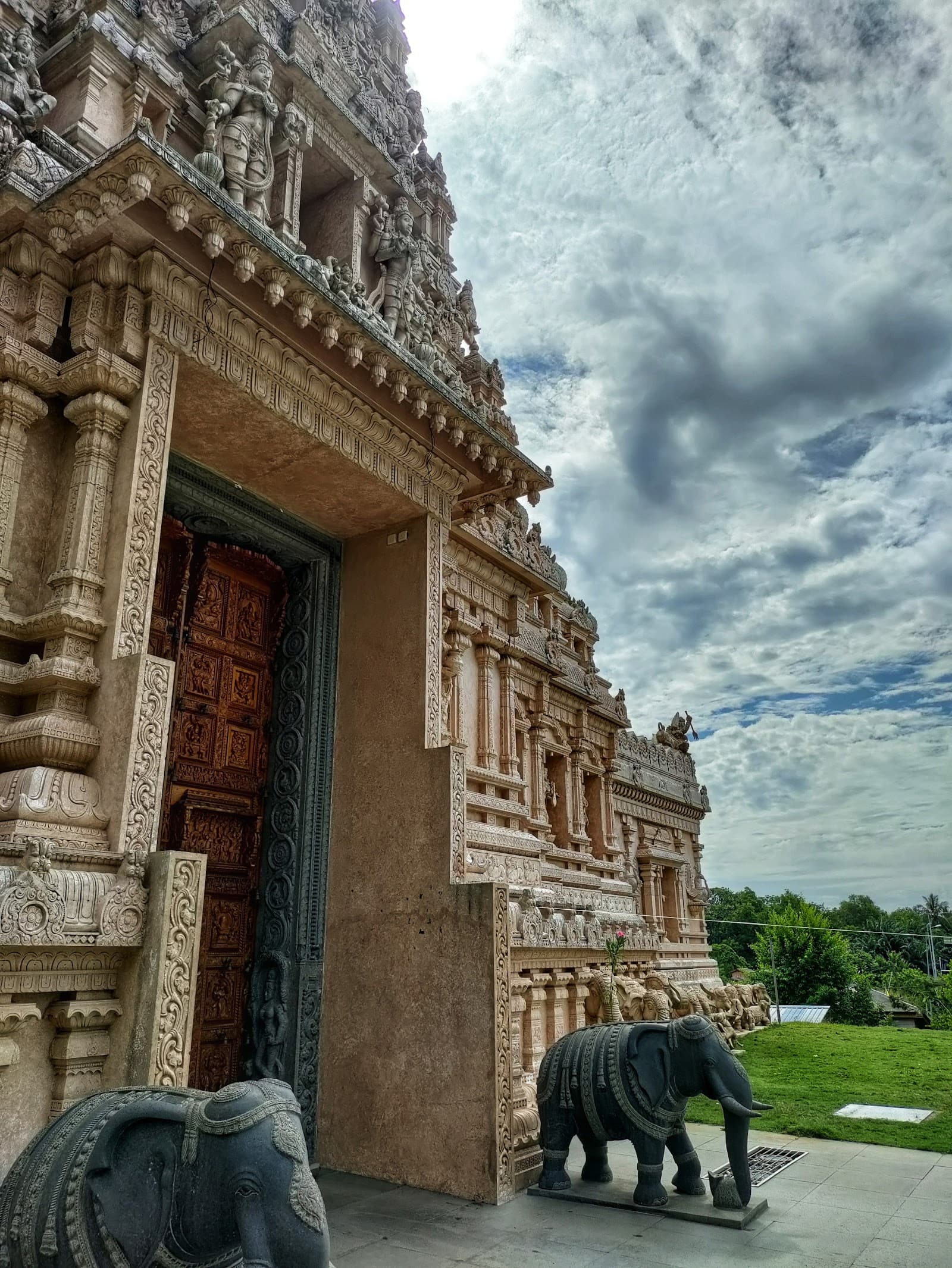
Sri Shakti Devasthanam Bukit Rotan Selangor
Sri Shakti Devasthanam is Malaysia’s only temple inspired by the ancient concept of Paadal Petra Sthalams, inaugurated in 2015 after a decade-long project that sourced sculptors, craftsmen, and ritualists from Tamil Nadu to create a 48,000-square-foot granite complex with a 27.5-metre rajagopuram, five-tiered vimanas, 96 lion pillars, and a circular circumambulatory corridor depicting 51 forms of Shakti in high relief ([1][2]). Every surface is hand-carved—sthapathis spent seven years chiselling over 15,000 sculptures, including celestial dancers, guardians, and mythic narratives of Chandi Parameshwari. The temple operates 6:00 AM-9:30 PM with five kala pujas, weekly Chandi homa, monthly Navavarana puja, and continuous annadhanam. During Navaratri, the temple stages alankaram representing nine manifestations of Devi using floral, textile, and jewel ensembles curated by artisans from Kanchipuram; attendance swells to 80,000, supported by RFID headcounts, rain shelters, medical bays, logistics warehouses, and sustainability stations. Facilities include the Shakti Peetam hall (for meditation and yoga), language classrooms, heritage gallery, vegetarian café, library housing Sri Vidya manuscripts, rain gardens, and a volunteer operations centre coordinating humanitarian outreach across Selangor ([1][3]).
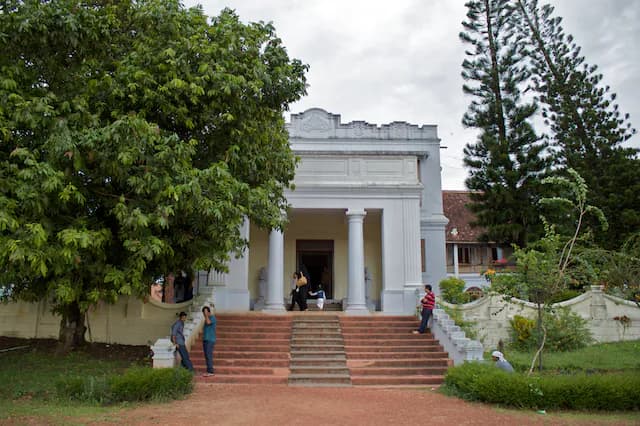
Hill Palace Tripunithura
The ochre walls of the Hill Palace, muted under the Kerala sun, seemed to exhale stories. As I stepped onto the grounds, the humid air, thick with the scent of frangipani, transported me far from the familiar plains of Uttar Pradesh. This wasn't the imposing grandeur of a Mughal fort, but a subtler, more intimate kind of royalty. The Hill Palace, once the administrative seat of the Kingdom of Kochi, whispered of a different era, a different rhythm of life. The complex, a sprawling network of 49 buildings, isn't a single monolithic structure. Instead, it's a collection of traditional Kerala architecture, interconnected courtyards, and sloping tiled roofs, all nestled within a generous expanse of greenery. The buildings, varying in size and purpose, seemed to have grown organically over time, reflecting the evolving needs of the royal family. I noticed the distinct lack of ostentatious ornamentation. The beauty lay in the simplicity, the earthy tones, and the harmony with the surrounding landscape. The sloping roofs, designed to combat the heavy monsoon rains, were a stark contrast to the flatter rooftops I was accustomed to back home. I began my exploration with the main palace building, now a museum. The wooden floors, polished smooth by generations of footsteps, creaked softly under my weight. The air inside was cool, a welcome respite from the midday heat. The museum houses an impressive collection of artifacts belonging to the Kochi royal family – ornate palanquins, gleaming weaponry, and intricate ivory carvings. One piece that particularly caught my eye was a traditional Kerala lamp, its intricate brasswork casting dancing shadows on the wall. It spoke volumes about the craftsmanship prevalent in this region, a testament to the artistic sensibilities of the people. Moving through the various sections, I was struck by the distinct Kerala aesthetic. The influence of traditional architectural styles like "nalukettu" – a structure with four blocks around a central courtyard – was evident. The use of local materials like laterite, wood, and terracotta tiles created a sense of rootedness, a connection to the land. Unlike the grand marble structures of the north, the Hill Palace felt more integrated with its environment, almost as if it had sprung from the earth itself. I spent a considerable amount of time in the section dedicated to archaeological finds. Ancient pottery shards, coins from bygone eras, and remnants of early settlements painted a vivid picture of the region's rich history. It was fascinating to see the confluence of different cultures – the influence of Arab traders, the legacy of the Portuguese and Dutch colonizers – all layered within the local narrative. Beyond the museum, the palace grounds offer a tranquil escape. I wandered through the deer park, observing the gentle creatures grazing peacefully. The medicinal plants garden, with its labelled specimens, provided a glimpse into the traditional healing practices of Kerala. The pre-historic park, with its life-sized models of dinosaurs, felt slightly incongruous but nevertheless added a touch of whimsy to the experience. As I sat on a stone bench, overlooking the lush greenery, I reflected on the contrasts between the north and south of India. The Hill Palace, with its understated elegance and intimate scale, offered a different perspective on royalty. It wasn't about imposing power, but about a harmonious coexistence with nature and a deep respect for tradition. This visit wasn't just a journey through a historical site; it was a journey into a different cultural landscape, a reminder of the incredible diversity that makes India so unique.

Qingyuan Temple Jiuhuashan Anhui China
The site, Vikramshila Mahavihara, located in Antichak village, Bhagalpur district, Bihar, India, stands as a profound testament to India's millennia-spanning cultural heritage, particularly its ancient and continuous tradition of Buddhist learning and architectural sophistication [4] . Established in the late 8th century CE by the Pala emperor Dharmapala, this monastic university was a premier center for Vajrayana Buddhism, reflecting the indigenous Indic architectural styles prevalent during the Early Medieval period [4] . The Mahavihara's layout is a massive quadrangular structure, measuring approximately 330 meters on each side, enclosing a central cruciform stupa [5]. This central stupa, a two-terraced brick structure, rises about 15 meters from the ground level and is accessible via a flight of steps on its northern side . Each of the four cardinal directions of the stupa features a protruding chamber, originally housing colossal stucco images of the seated Buddha, three of which were found in situ during excavations . These chambers are fronted by a pillared antechamber and a separate pillared mandapa [5]. The walls of both terraces of the central stupa are richly adorned with mouldings and thousands of terracotta plaques, showcasing the high excellence of terracotta art that flourished under the Pala dynasty from the 8th to the 12th century CE [5]. These plaques depict a diverse range of subjects, including Buddhist deities such as Buddha, Avalokiteshvara, Manjusri, Maitreya, Jambala, Marichi, and Tara, alongside scenes from Buddhist narratives, social life, hunting, and even other Indian deities like Vishnu, Parvati, Ardhanarisvara, and Hanuman . The monastery complex itself comprises 208 monastic cells, with 52 cells on each of the four sides, opening into a common verandah . These cells, measuring 4.15 x 1.5 meters, were designed for individual monks or students, with some featuring brick-arched underground chambers likely used for confined meditation [5] . The outer wall of the monastery incorporates 20 projected circular and 20 rectangular cells, spaced at intervals of 21 to 23 meters, with provisions for three beds in each room [5]. A notable engineering innovation at Vikramshila is the rectangular library building, situated approximately 32 meters south of the main monastery and connected by a narrow corridor . This structure was ingeniously air-conditioned by cooled water from an adjoining reservoir, circulated through a system of vents in the back wall, a technique likely employed to preserve delicate palm-leaf manuscripts in the humid climate of the Indo-Gangetic plains [4] . The construction primarily utilized baked bricks, a locally available and durable material, which also contributed to the thermal mass of the buildings, helping to regulate internal temperatures [4] [5]. An elaborate network of underground drains, constructed from baked clay pipes, managed rainwater runoff and wastewater, ensuring hygiene and preventing waterlogging [4]. The site is currently under the protection and management of the Archaeological Survey of India (ASI), with ongoing conservation efforts and recent renewed excavation work [1]. A site museum displays a large number of antiquities unearthed during excavations, including sculptures, coins, and terracotta emblems, providing visitors with a tangible connection to its rich past [2] . The site is operational and accessible to visitors, offering a profound glimpse into India's enduring legacy of intellectual and spiritual pursuit.
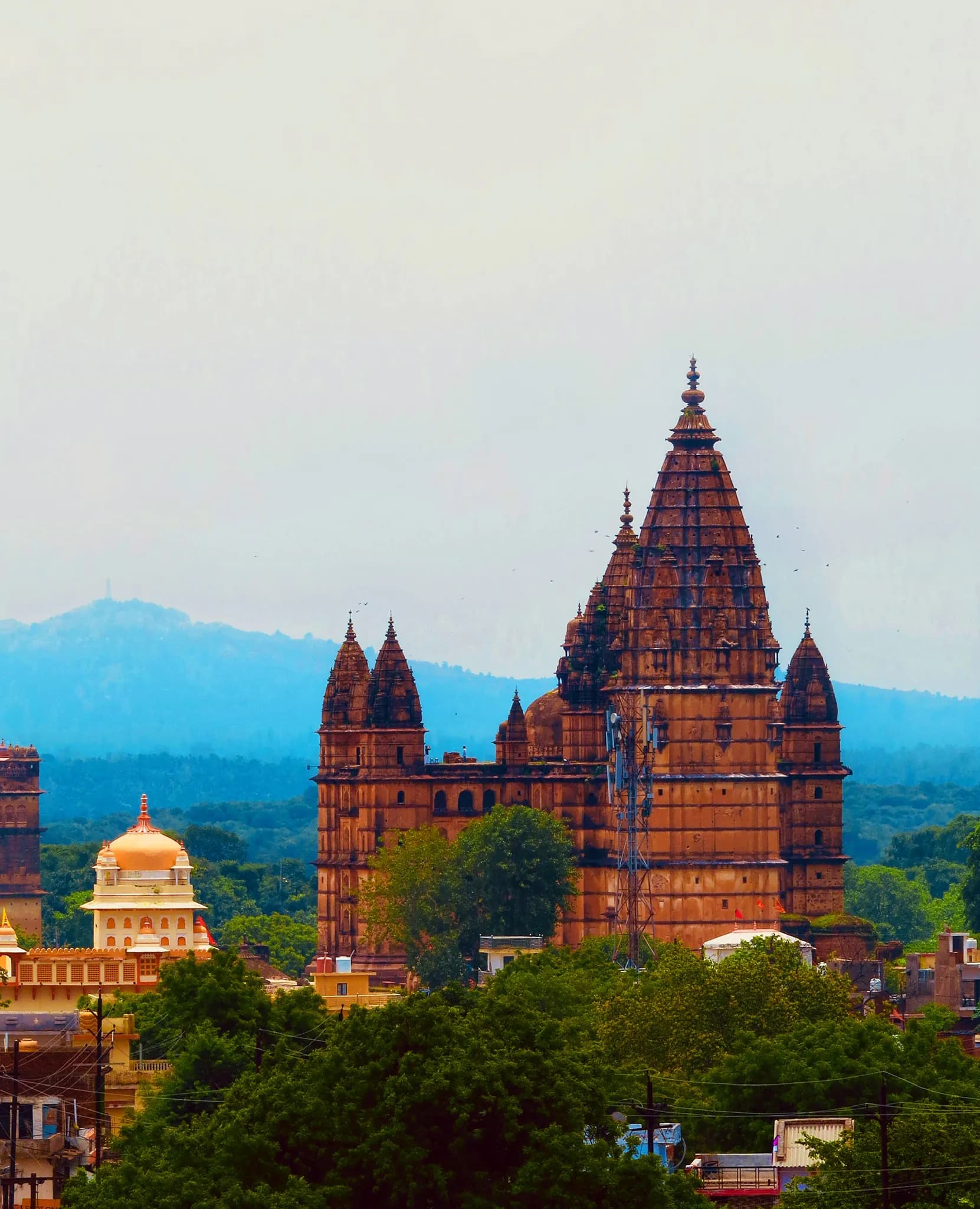
Chaturbhuj Temple Orchha
The Chaturbhuj Temple in Orchha, Madhya Pradesh, stands as a compelling example of architectural fusion ([1][2]). Commissioned by the Bundela Rajput chiefs in 1558 CE, during the 16th century, the temple represents a unique blend of Indo-Islamic styles ([2][3]). Though originally intended to enshrine Lord Vishnu, it is now recognized for the absence of its deity ([4]). Granite and sandstone blocks, meticulously carved, constitute the temple's imposing structure ([1][3]). The integration of Hindu and Mughal architectural elements is seamless ([2]). Intricate carvings embellish the facade, depicting mythological narratives and floral designs characteristic of the Rajput era ([5]). Rising above, the tall Shikhara (spire), a quintessential feature of Hindu temple architecture, dominates Orchha's skyline ([1]). This architectural element is rooted in the principles outlined in texts like the *Brihat Samhita*, which dedicates an entire chapter to the construction and design of temple spires. Ascending the temple steps rewards visitors with panoramic vistas of Orchha ([4]). Inside, the absence of a deity allows for an unobstructed appreciation of the soaring vaulted ceilings and massive pillars ([3]). One's gaze is immediately captured by the delicate Jali (latticework) windows, showcasing the craftsmanship of the period ([5]). The use of Jali is consistent with design principles found in the *Vastu Shastras*, which emphasize natural light and ventilation. As a testament to the Bundela's architectural skill, the Chaturbhuj Temple embodies a convergence of history and artistry ([2][4]). This temple serves as a potent reminder of India's vast and multifaceted cultural legacy ([1][3]). The temple is a beautiful synthesis of diverse styles, creating a unique architectural marvel.
Quick Links
Plan Your Heritage Journey
Get personalized recommendations and detailed visitor guides