Has Inheritage Foundation supported you today?
Your contribution helps preserve India's ancient temples, languages, and cultural heritage. Every rupee makes a difference.
Secure payment • Instant 80G certificate
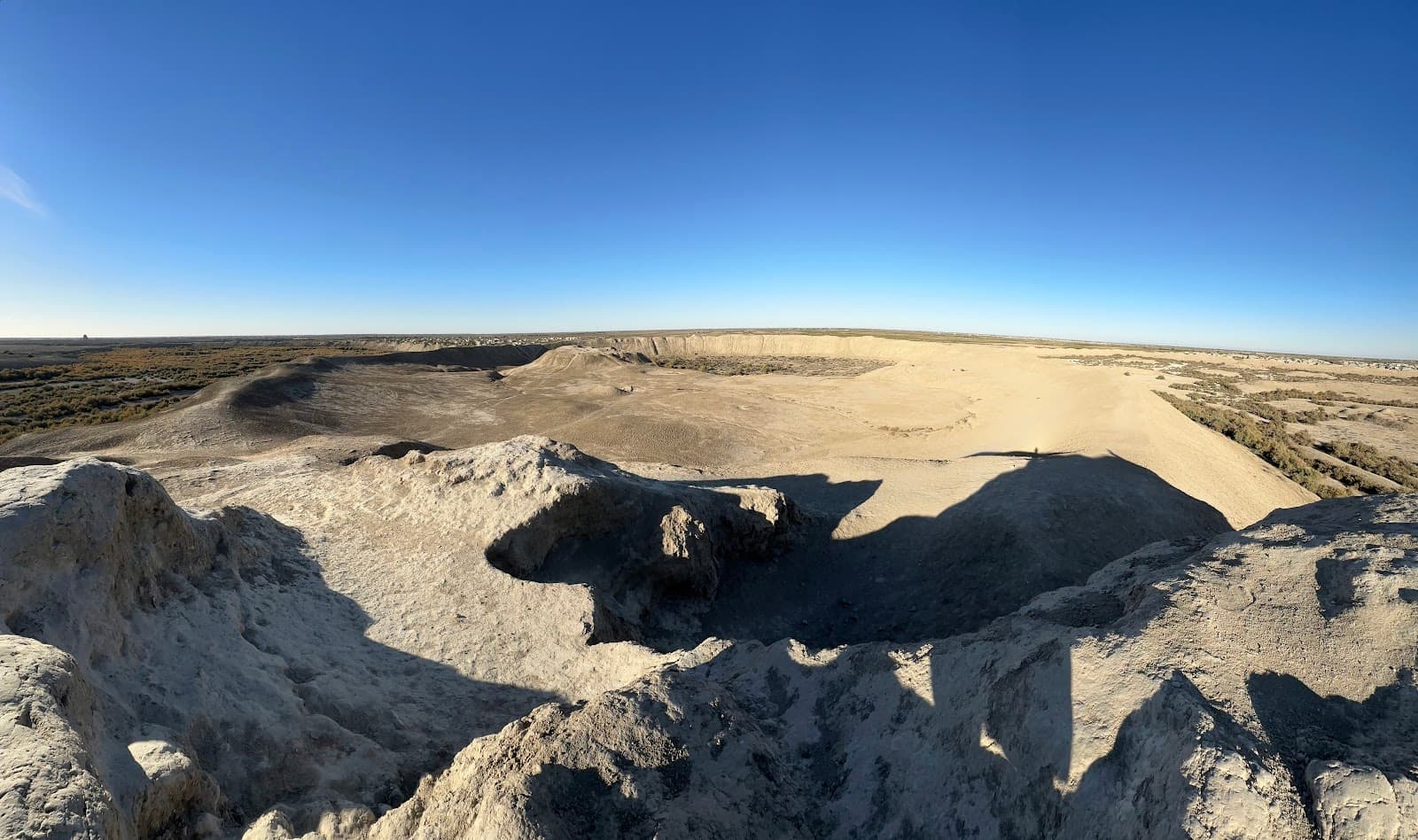
Ancient Merv Gyaur Kala Monastery Mary Region Turkmenistan
Nestled within the ancient city of Merv in Turkmenistan's Mary Region, the Gyaur Kala Monastery stands as a significant Buddhist site dating from the 3rd to 11th centuries CE ([1][2]). As a vital hub along the Silk Road for over four millennia, Merv's Gyaur Kala citadel houses this monastery, reflecting notable Indian Buddhist architectural influences ([1]). This influence underscores the interconnectedness of ancient civilizations and the transmission of religious and artistic ideas across vast distances. Archaeological excavations have uncovered stupas, monastic cells, and assembly halls, revealing the adoption of Indian Buddhist monastery planning principles in Central Asia ([2]). The monastery's layout, featuring a central stupa surrounded by living and assembly spaces, mirrors the design of Indian Buddhist viharas (monasteries) ([2]). Such structural similarities highlight the enduring impact of Indian architectural traditions on religious structures throughout the region. Fired brick and mud brick construction techniques are demonstrably evident in the monastery's surviving structures ([1]). Intricate carvings once adorned the walls, illustrating a fusion of Indian Buddhist iconography and Central Asian artistic sensibilities, particularly within the Kushan-Gandharan style ([2]). The Kushan period saw Merv flourish as a prominent center of Buddhist learning, facilitating the dissemination of Indian Buddhist texts and practices across Central Asia ([1]). Stone platforms and foundations showcase the sophisticated architectural planning employed in the monastery's construction ([1]). The discovery of inscriptions in Sanskrit, Pali, and various Central Asian languages at the site corroborates its pivotal role in transmitting Indian Buddhist culture ([2]). While direct textual evidence is limited, it is plausible that spatial arrangements and design elements were influenced by principles similar to those outlined in Vastu Shastra, the ancient Indian science of architecture, emphasizing harmonious design and orientation ([3]). Today, Ancient Merv, a UNESCO World Heritage Site, testifies to the profound influence of Indian civilization on Central Asian religious and artistic traditions ([1][2]).
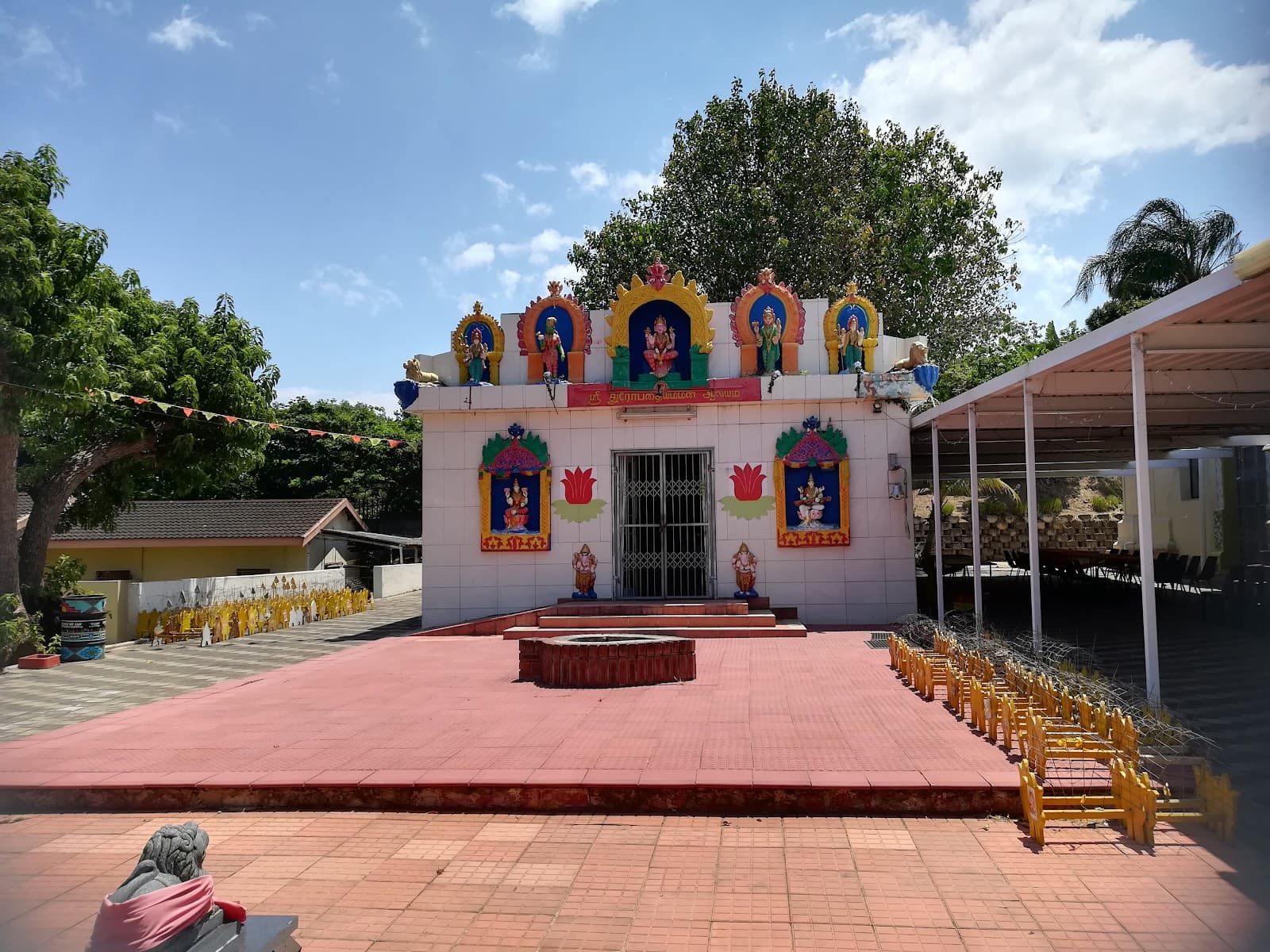
Shree Ayyappa Seva Sangam Temple Durban
The Shree Ayyappa Seva Sangam Temple, located at 359 Langton Road, Montclair, Durban, KwaZulu-Natal, South Africa, stands as a profound testament to India's millennia-spanning cultural heritage and the continuous tradition of Indic civilization [1] [2]. Dedicated to Lord Ayyappa, a revered deity primarily worshipped in South India, particularly Kerala, this temple embodies ancient indigenous architectural styles, materials, and cultural practices that reflect India's deep historical roots [3] [4]. The temple's design integrates elements of both Kerala Temple architecture and Dravida architecture, showcasing a synthesis of South Indian temple building traditions [1] [5]. Kerala temple architecture, characterized by its unique religious sanctuary design, often features circular or square ground plans, steeply sloping roofs covered with copper sheets or terracotta tiles, and extensive use of timber [5] [2]. These architectural choices are historically adapted to the region's heavy rainfall and tropical climate, emphasizing functionality alongside aesthetic and spiritual principles [2]. The structural elements typically involve a granite plinth (adhisthana), laterite walls, and a superstructure predominantly crafted from wood, adhering to canonical rules of proportionate systems detailed in ancient treatises [5] [4]. The Shree Ayyappa Seva Sangam Temple incorporates these principles, utilizing locally available materials while maintaining the traditional forms [1]. The temple complex is designed according to the Hindu practices of 'Vaastu Shastra' and 'Agama Shastra', ensuring auspicious orientation, spatial harmony, and ritualistic correctness [1]. This adherence to ancient texts underscores the continuity of architectural knowledge passed down through generations [5]. Dravida architectural influences are evident in the temple's overall layout and decorative motifs, which often include intricate carvings and sculptures [3]. While Kerala temples typically feature simpler exteriors, the broader South Indian temple style, from which Dravida architecture evolved, is known for its elaborate gopurams (entrance towers), vimanas (superstructures over the sanctum), and mandapas (pillared halls) [3]. Though the Durban temple may not possess the monumental scale of ancient Dravidian complexes, its design principles and decorative elements draw from this rich tradition, manifesting in detailed iconography and sacred geometry [1]. The temple's sanctum (sreekovil) houses the main deity, Lord Ayyappa, and is surrounded by a circumambulatory path (pradakshina-patha), facilitating traditional devotional practices [3]. The current state of the temple reflects ongoing maintenance and active programming, serving as a vital spiritual and cultural hub for the Malayali and Tamil diaspora in Durban [2]. It offers regular pujas, festivals, and cultural education, ensuring the preservation and transmission of Indic traditions [2]. The site is fully operational and accessible to devotees and visitors, upholding its role as a living heritage site [1].
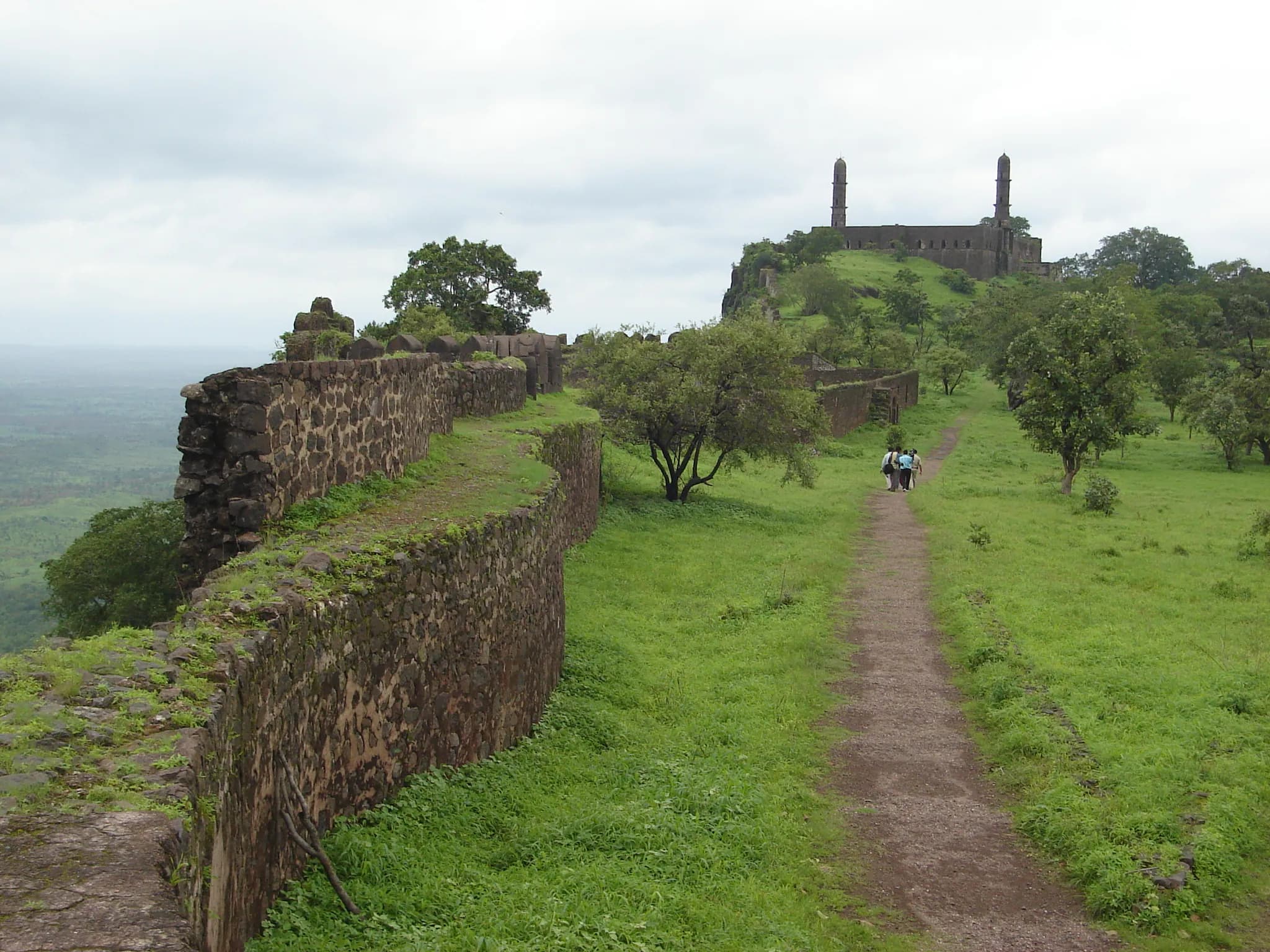
Asirgarh Fort Burhanpur
Nestled in Burhanpur, Madhya Pradesh, Asirgarh Fort, a strategic 'Dakshin ka Dwar' (Gateway to the South), exemplifies a confluence of architectural traditions ([1][2]). Commissioned by the Faruqi dynasty in 1498 CE during the 15th century, this fort embodies Indo-Islamic military architecture, seamlessly integrating Hindu and Mughal influences ([3][4]). Rising to nearly 800 feet, the imposing structure is built using basalt, granite, sandstone, bricks, and lime mortar ([1][5]). Granite and sandstone blocks, meticulously carved, define the Jami Masjid within the fort, reflecting a blend of local artistry and Mughal aesthetics ([2][3]). The mosque's soaring minarets offer a serene contrast to the fort's martial character ([1]). During the Maratha period, Asirgarh Fort experienced further modifications, enriching its historical narrative ([3][4]). Sophisticated drainage systems ensure efficient water management, featuring tanks and reservoirs hewn into the rock ([4][5]). These systems underscore the builders' ingenuity in conserving resources in the arid landscape ([2]). Vastu Shastra principles, the ancient Indian science of architecture, likely informed the fort's layout, promoting harmony with its natural surroundings ([1][5]). Though specific textual references within the *Manasara Shilpa Shastra* or *Mayamata* are not explicitly documented for this fort, the underlying principles of site selection and orientation align with these traditions, as documented in similar fortifications across India. Its strategic location and robust construction emphasize Asirgarh Fort's historical importance as a key defensive structure ([2]). The fusion of architectural styles within Asirgarh reflects the diverse cultural interactions that have shaped the region, creating a unique and historically significant monument ([3][4][5]). The fort stands as a testament to the architectural prowess and strategic vision of its builders, offering insights into the military and cultural history of the region ([1][2]).
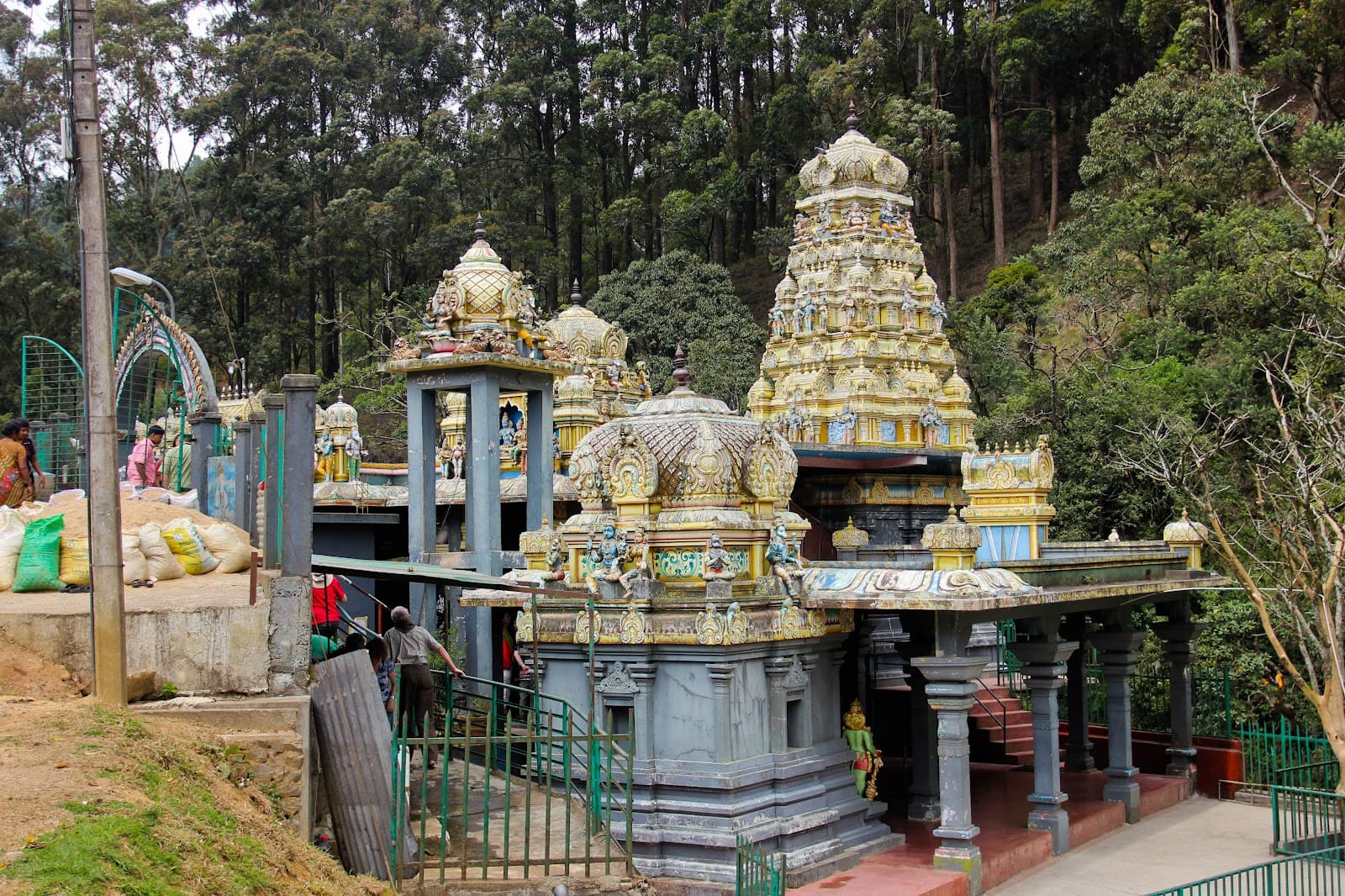
Seetha Amman Temple Nuwara Eliya Sri Lanka
The Seetha Amman Temple, located in Sita Eliya, Nuwara Eliya District, Central Province, Sri Lanka, stands as a profound testament to India's millennia-spanning cultural heritage and its continuous civilizational traditions. Dedicated primarily to Goddess Sita, alongside Lord Rama, Lakshmana, and Hanuman, this sacred site is deeply embedded in the ancient Hindu epic, the Ramayana, reflecting an unbroken spiritual lineage that extends across the Indian subcontinent and beyond [2] [4]. The temple's architecture adheres to the indigenous Dravida and South Indian Temple styles, characterized by its elaborate and vibrant aesthetic, which celebrates the rich sculptural and decorative traditions of Hindu temple building [3] [4]. The temple complex features a grand entrance, or gopuram, adorned with intricate carvings and sculptures depicting various deities and mythological narratives from the Ramayana, serving as a visual gateway to the sacred space [4]. The primary shrine houses the idols of Sita, Rama, Lakshmana, and Hanuman, crafted with meticulous detail, reflecting traditional iconography and artistic principles [4]. The structural elements typically employ a combination of stone and concrete, finished with stucco and polychrome painting, a common practice in modern Dravidian temple construction that maintains traditional forms while utilizing contemporary materials for durability and intricate detailing [3]. The vibrant colors used in the temple's ornamentation are characteristic of South Indian temple architecture, enhancing its visual appeal and spiritual ambiance [3]. Adjacent to the temple flows the Seeta River, a natural feature revered for its mythological association as the place where Goddess Sita is believed to have bathed and offered prayers during her captivity [2] [5]. Near the river, distinct footprints, believed to be those of Lord Hanuman, are visible on a rock face, further cementing the site's legendary connection to the Ramayana [4] [5]. The surrounding soil is notably black in color, a phenomenon attributed by local legend to Lord Hanuman setting Lanka ablaze during his mission to find Sita [2] [5]. While specific dimensions of the 1998 CE structure are not widely documented, the overall design follows the traditional layout of a Hindu temple, incorporating a sanctum sanctorum (garbhagriha), circumambulatory paths (pradakshina-patha), and various mandapams (halls) for devotees [3]. The temple is well-maintained, with active programming including daily poojas and special rituals, drawing pilgrims and visitors from across the globe [2] [5]. Accessibility is facilitated by its proximity to major routes, and the site operates with established timings for worship, ensuring a continuous flow of devotees [2]. The Seetha Amman Temple stands as a vibrant, operational center of Hindu worship, embodying the enduring legacy and continuous cultural practices of Indian civilization [2] [4].
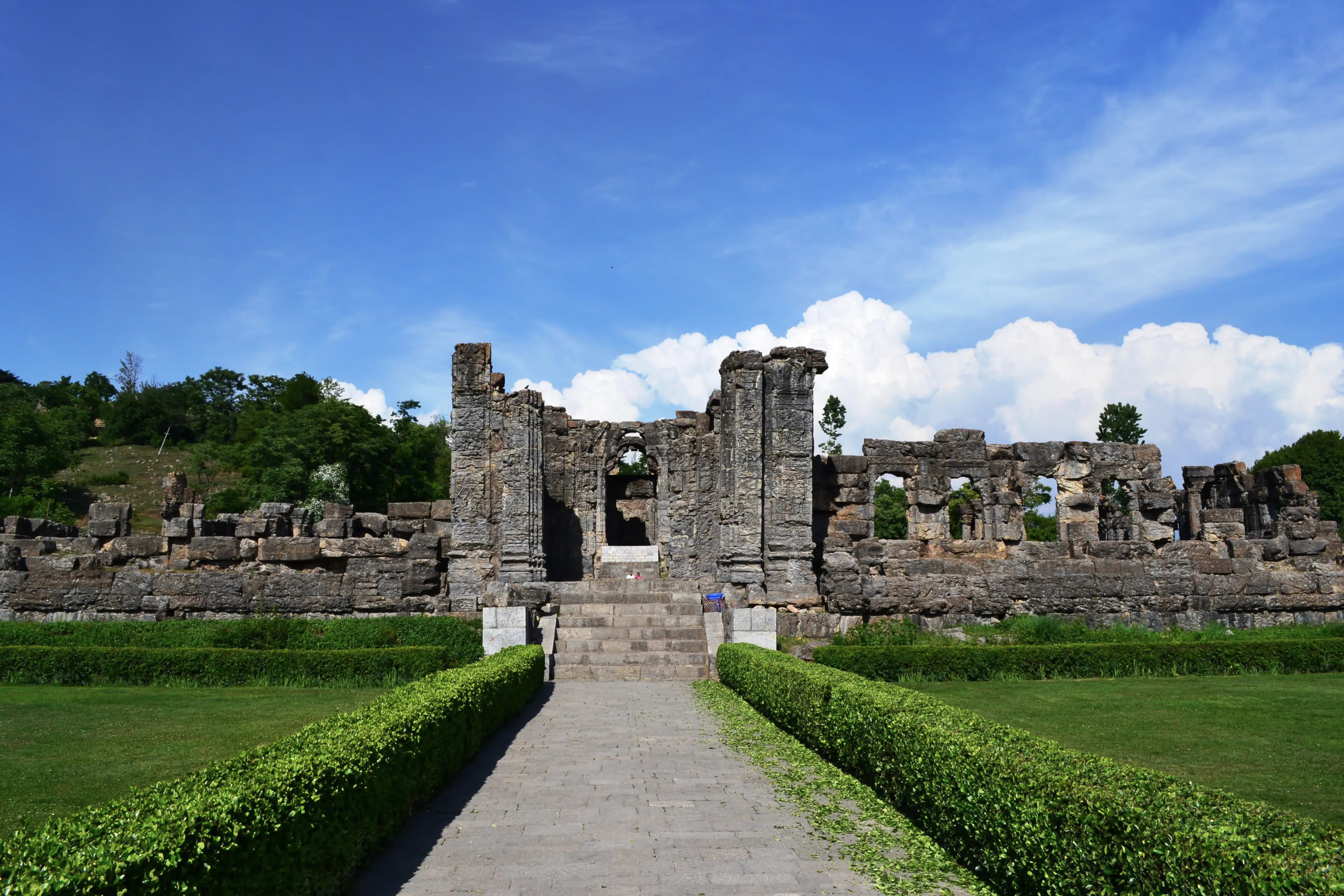
Martand Sun Temple Anantnag
The wind whispered tales of forgotten empires as I stood before the Martand Sun Temple, a skeletal monument reaching for the sky amidst the breathtaking panorama of the Kashmir Valley. Located near Mattan in Anantnag district, this 8th-century marvel, dedicated to Surya, the Sun God, is more ruin than temple, yet its grandeur remains undiminished. Having explored countless ancient sites across North India, I can confidently say that few possess the raw, evocative power of Martand. The first thing that struck me was the sheer scale of the complex. The main shrine, though roofless and ravaged by time and conflict, still commands attention. Built on a raised platform, it’s surrounded by a peristyle of 84 fluted columns, a testament to the architectural prowess of the Kashmiri Karkota dynasty. I walked through the colonnaded courtyard, tracing the outlines of chambers and imagining the vibrant life that once filled these spaces. The intricate carvings on the remaining pillars, depicting celestial beings and floral motifs, hinted at the temple's former glory. The stone, a local grey limestone, has weathered to a soft, almost melancholic hue, adding to the site's poignant beauty. The influence of Greco-Roman architecture is unmistakable, particularly in the use of arches and the overall layout. This fusion of styles, unique to Kashmiri temples of this period, speaks to a rich cultural exchange that once flourished in the region. I noticed the distinct Gandharan influence in the sculptural fragments scattered around the site, further evidence of the confluence of artistic traditions. One particularly striking piece, a partially damaged relief, seemed to depict Surya himself, radiating power and serenity. Climbing the platform to the central shrine, I felt a palpable shift in energy. Even in ruins, the sanctum sanctorum retains a sense of sacredness. I could almost visualize the priests performing ancient rituals, the air thick with incense and chanting. The panoramic view from this vantage point was simply stunning. The snow-capped Pir Panjal range formed a dramatic backdrop to the rolling green valley, a vista that must have inspired awe in the hearts of ancient worshippers. The temple's destruction, attributed to the iconoclastic zeal of Sikandar Butshikan in the 14th century, is a tragic chapter in Kashmir's history. Yet, the ruins themselves tell a story of resilience. They stand as a silent witness to the passage of time, a reminder of the rise and fall of empires. I spent hours exploring the site, absorbing the atmosphere, and trying to piece together the fragments of its past. Beyond the main shrine, I discovered remnants of smaller structures, possibly dedicated to other deities. The entire complex is spread over a large area, suggesting a significant religious and social hub. I noticed a small spring near the temple, its water crystal clear and icy cold. Locals believe the spring has healing properties, a belief likely rooted in ancient traditions associated with the temple. My visit to Martand Sun Temple was more than just a sightseeing trip; it was a journey through time. It was a humbling experience to stand before this magnificent ruin, a testament to human ingenuity and the enduring power of faith. As the sun began to set, casting long shadows across the valley, I left Martand with a sense of awe and a renewed appreciation for the rich tapestry of India's heritage. This is a site that deserves to be cherished and protected, not just for its architectural significance but for the stories it whispers to those who listen closely.
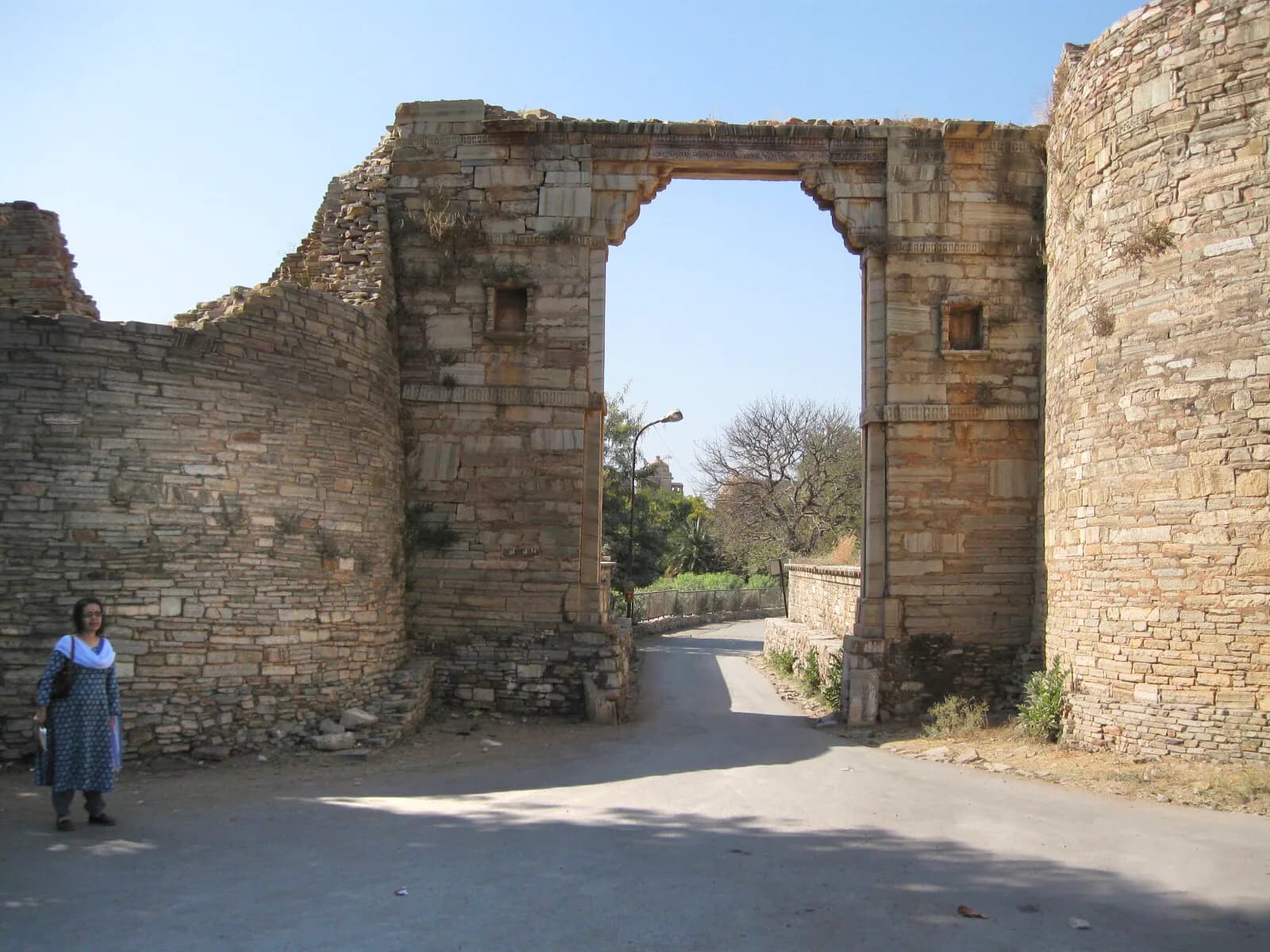
Chittorgarh Fort Chittorgarh
Chittorgarh Fort, the largest fort in India, sprawling across 700 acres, embodies the Rajput spirit and architectural heritage ([1][2]). Built in the 7th century (650 CE) by the Maurya Dynasty under Chitrangada Mori, this Rajput military hill fort presents a captivating blend of strength and artistry ([1][2]). Reaching the main gate, Ram Pol, is like traversing centuries, each gate whispering tales of valor and sacrifice ([2]). Intricate carvings adorning the walls of the Vijay Stambh (Tower of Victory) commemorate Maharana Kumbha's triumph in 1440 ([3]). This nine-story marvel showcases Hindu deities and scenes from mythology ([3]). Nearby, the Kirti Stambh, a 22-meter high tower, stands dedicated to Adinath, a Jain Tirthankara, symbolizing religious harmony ([4]). Granite and sandstone blocks, meticulously carved, form the structural and artistic elements throughout the fort ([1]). Sophisticated water harvesting structures ensured the fort's self-sufficiency, a testament to ancient engineering prowess ([5]). The Rana Kumbha Palace, though partially ruined, evokes the grandeur of Mewar rulers with its delicate jali work and strategic balconies ([5]). The poignant narrative of Rani Padmini's Jauhar (self-immolation) deeply resonates within the fort's walls ([6]). The Padmini Palace overlooks the lotus pool, a silent witness to her sacrifice ([6]). Further enriching the fort's spiritual landscape, the Kalika Mata Temple, originally a Sun Temple, and the Meera Temple offer glimpses into the region's religious diversity ([4]). Chittorgarh Fort remains a profound emblem of Rajputana's history and resilience ([1][2]).
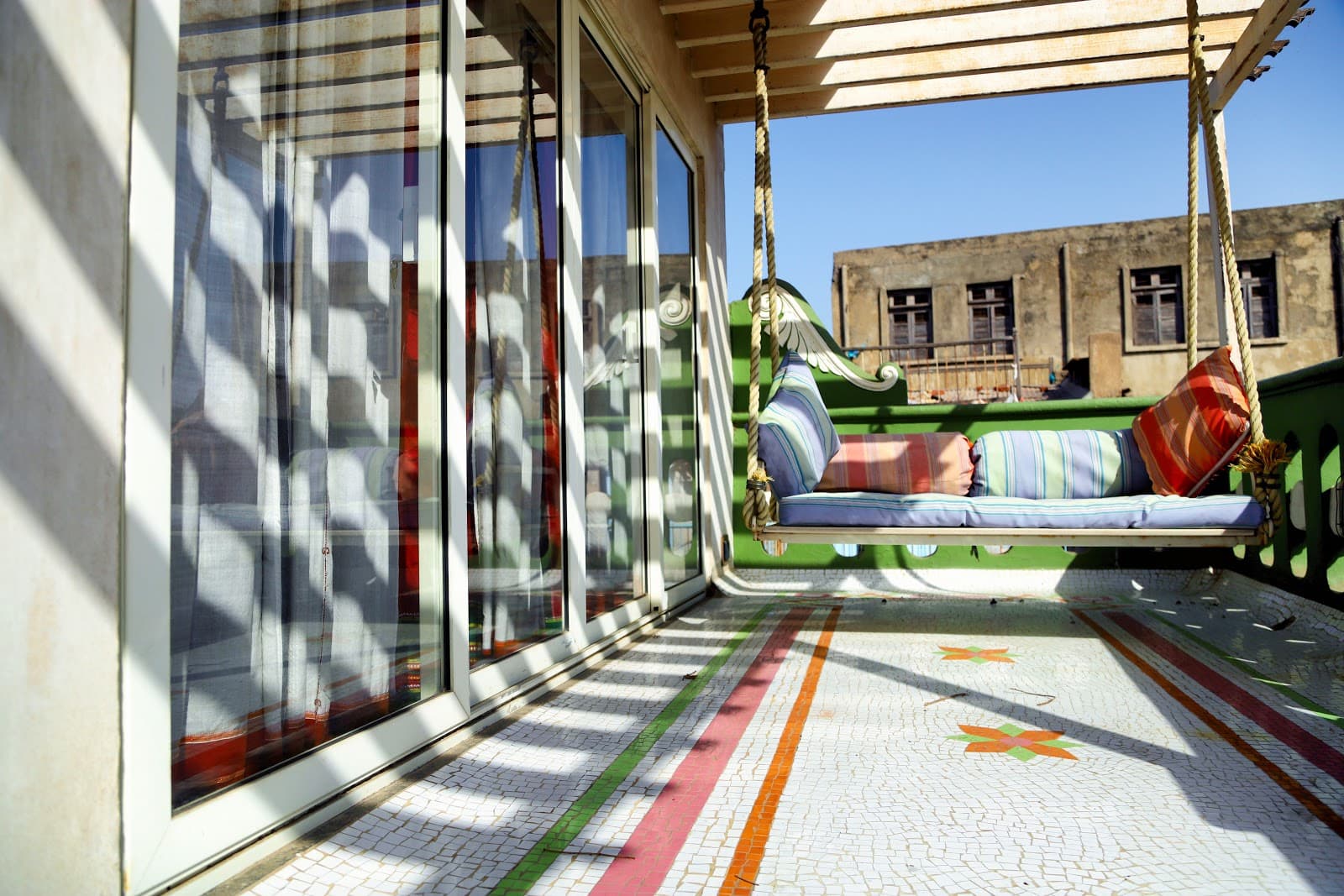
Mangaldas Ni Haveli Ahmedabad
The midday sun cast long shadows across the intricately carved wooden facade of Mangaldas Ni Haveli, a structure seemingly frozen in time amidst the bustling heart of Ahmedabad’s old city. Stepping through the imposing gateway, I felt an immediate shift, a palpable transition from the frenetic energy of the streets to the hushed tranquility of a bygone era. As a heritage enthusiast steeped in the Dravidian architecture of South India, I was eager to experience this distinctly different architectural vernacular – the Gujarati haveli. The haveli, built in the 19th century by Seth Mangaldas Girdhardas, a prominent textile merchant, is a testament to the opulence and artistry of that period. Unlike the towering gopurams and expansive prakarams of South Indian temples, the haveli unfolds inwards, revealing a series of interconnected courtyards, each a microcosm of domestic life. The first courtyard, or chowk, served as a public space, where business transactions likely took place. I noted the robust wooden pillars, intricately carved with floral motifs and mythological figures, supporting the overhanging balconies. The wood, darkened with age, whispered stories of generations past, a stark contrast to the stone I was accustomed to in the South. Moving deeper into the haveli, I was struck by the interplay of light and shadow. Small, strategically placed windows, some adorned with stained glass, filtered the harsh sunlight, creating a mosaic of colours on the polished floors. The jharokhas, or overhanging enclosed balconies, offered glimpses into the inner chambers while maintaining privacy. These architectural elements, while serving a practical purpose, also contributed to the overall aesthetic, creating a sense of mystery and intrigue. The haveli’s ornamentation is a feast for the eyes. Every surface, from the pillars and brackets to the ceilings and lintels, is adorned with intricate carvings. While the overall style is distinctly Gujarati, I noticed subtle influences of Mughal architecture in the ornate floral patterns and the use of jalis, or perforated screens. Unlike the bold, narrative sculptures found in South Indian temples, the carvings here were more delicate and intricate, emphasizing floral patterns, geometric designs, and stylized depictions of birds and animals. One of the most captivating spaces within the haveli is the inner courtyard, a private oasis for the family. Here, the carvings become even more elaborate, depicting scenes from everyday life, religious narratives, and even glimpses of the family’s trading activities. The courtyard is surrounded by two or three stories of wooden galleries, connected by narrow, winding staircases. Looking up, I could imagine the hustle and bustle of family life, the women of the house engaged in their daily chores, children playing, and the patriarch overseeing his business affairs. The haveli’s current state of preservation is a testament to the efforts of the Ahmedabad Municipal Corporation, which has undertaken restoration work. However, the passage of time has inevitably left its mark. Some of the wooden elements show signs of wear and tear, and the vibrant colours that once adorned the walls have faded. Yet, this patina of age adds to the haveli’s charm, lending it an air of authenticity that a pristine restoration could never replicate. My visit to Mangaldas Ni Haveli was a journey of discovery, an opportunity to appreciate the diversity and richness of India’s architectural heritage. While the haveli’s architectural style differed significantly from the Dravidian temples I was familiar with, the underlying principles of craftsmanship, artistry, and cultural expression resonated deeply. The haveli stands as a poignant reminder of a bygone era, a tangible link to the lives and aspirations of a prominent merchant family, and a testament to the enduring power of architectural heritage.
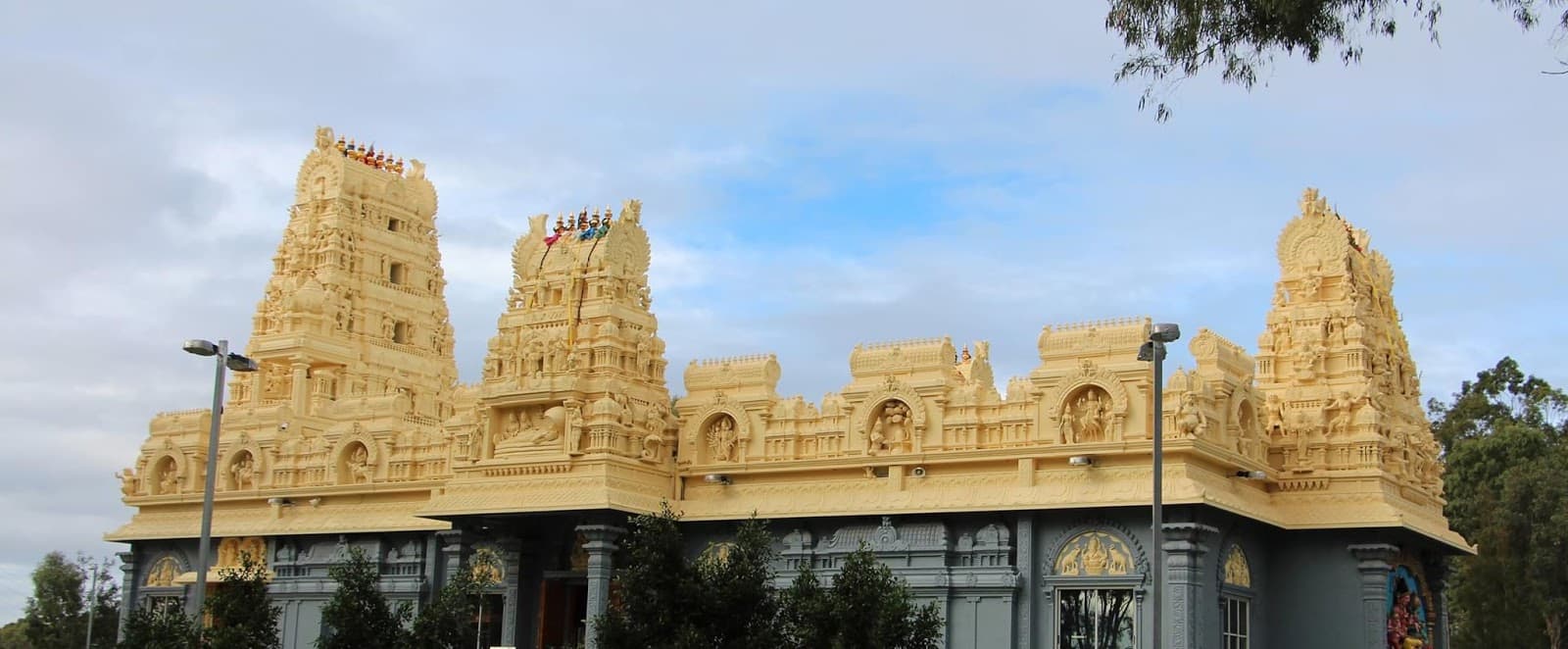
Brisbane Sri Selva Vinayakar Koil South Maclean
Anchoring Logan’s peri-urban corridor, Brisbane Sri Selva Vinayakar Koil South Maclean stands as Queensland’s first traditional Hindu temple dedicated to Lord Ganesha ([1][2]). Established around 1990 CE, this 20th-century temple reflects Dravidian architectural influences adapted to a rural Australian context ([1]). The temple was built by the Hindu Society of Queensland, who also continue to be its patron ([1]). Granite and sandstone blocks, meticulously carved, form the core of the Mandapa (Pillared Hall), while timber posts and corrugated steel roofing provide a functional and aesthetically pleasing structure ([1]). Daily rituals, or darshan, are conducted between 6:30 AM and 12:00 PM, and again from 4:30 PM to 8:30 PM ([1][5]). Special occasions such as Vinayagar Chaturthi, Thai Poosam, and Navaratri extend these hours until 10:00 PM ([1][5]). To manage the flow of devotees, volunteers guide visitors through the granite Mandapa using rope-guided lanes, ensuring a smooth and organized experience ([1][5]). Shuttle buggies are also available to assist elders in navigating the expansive site ([1][5]). Within the annadhanam shed, which can accommodate 300 people, polished concrete floors provide a clean and functional space for communal dining ([1][3]). Modern amenities such as induction woks and commercial chillers support the preparation and storage of prasadam (sacred food), with HACCP checklists ensuring food safety standards are maintained ([1][3]). Portable ramps facilitate the movement of prasadam carts between the kitchen and hall, even during inclement weather ([1][3]). Beyond worship, the temple serves as a cultural hub, hosting dance, music, and language classes in its cultural pavilion ([2]). A meditation pond and vahana sheds are situated along the Logan River flood fringe, with boardwalks and warning signage in place ([2]). Accessibility is a priority, with gravel-stabilized pathways, handrails, tactile signage, and a platform lift near the sanctum ensuring inclusivity ([2][5]). Auslan interpreters are also available during major festivals ([2][5]). Sophisticated drainage systems ensure the temple grounds remain functional, even during heavy rainfall ([3]). Digital signage displays bilingual Tamil-English instructions, weather alerts, and seva schedules, keeping the community informed and engaged ([1][2]). The temple's operations team monitors weather stations, flood gauges, and fire equipment, while the Logan Rural Fire Brigade conducts annual drills on site, ensuring preparedness for any eventuality ([3]). This proactive approach underscores the temple's commitment to community resilience and safety ([1][2]).
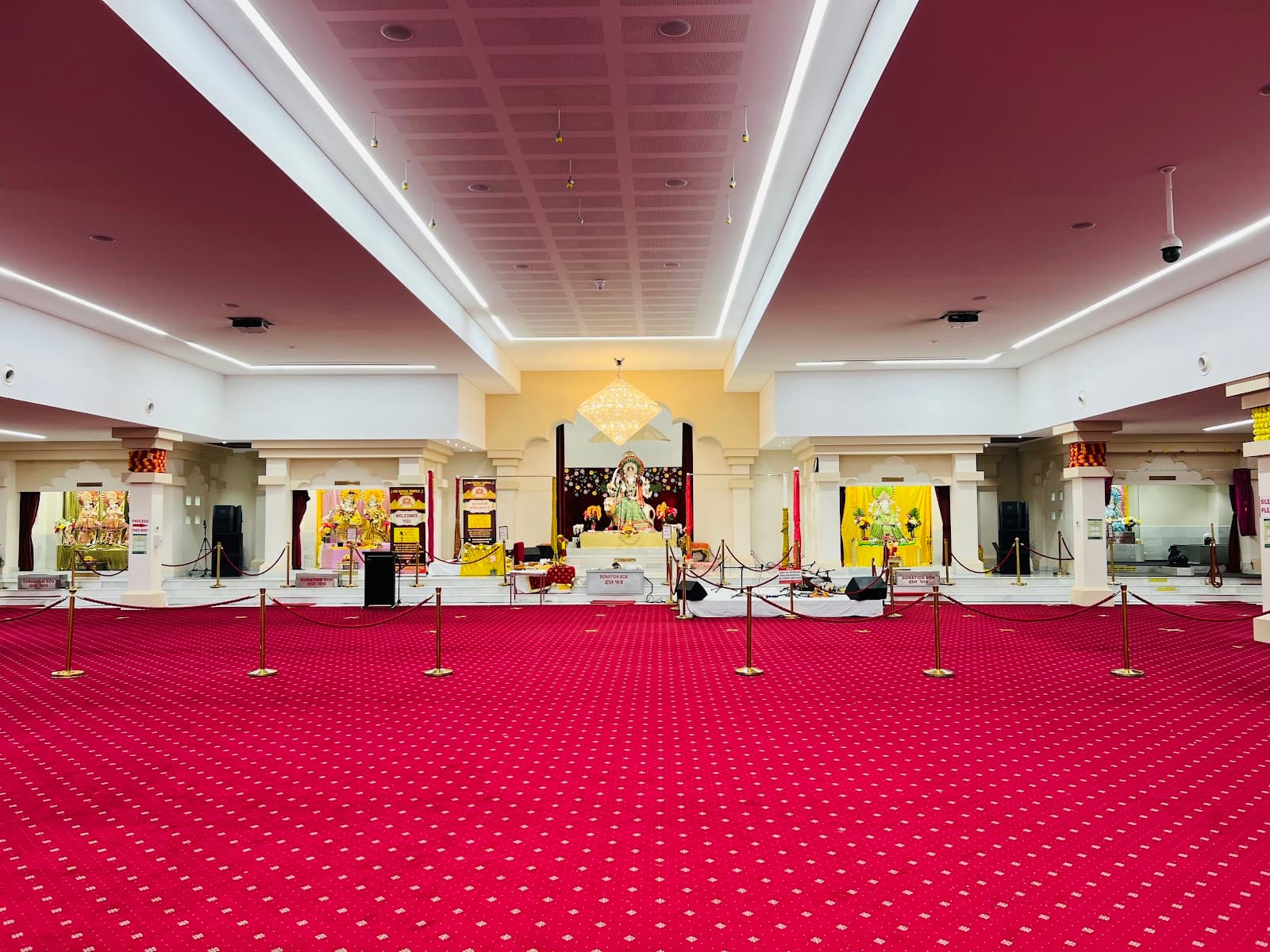
Sri Durga Temple Rockbank
Sri Durga Temple Rockbank is dedicated to Goddess Durga and anchors Rockbank, Victoria, as one of Australia’s largest Shakta complexes ([1][2]). The four-level precinct opens daily 7:00 AM-12:00 PM and 5:00 PM-9:00 PM, with Navaratri, Durga Ashtami, and Diwali programs extending to 11:00 PM; RFID turnstiles and queue marshals route devotees through separate Durga, Shiva, and Hanuman sanctums to maintain flow across the 20-metre mandapa span ([1][5]). The cultural centre’s 1,200-seat auditorium hosts bhajan concerts and community forums while backstage lifts move instruments, wheelchairs, and prasadam carts without intersecting pilgrim circulation ([1][2]). Annadhanam kitchens on level two use induction ranges, combi-ovens, and HACCP-monitored chillers, and a dumbwaiter delivers hot meals to the ground-floor food hall where volunteers manage waste separation and allergen signage ([1][3]). Accessible ramps at 1:20 gradient, tactile floor strips, dual lifts, and induction loop audio allow seniors and neurodiverse guests to access cultural classrooms and sanctum viewing rails; dedicated parent rooms and changing tables sit adjacent to restrooms on every level ([2][5]). Fire wardens drill quarterly, and the building management system logs air quality, energy consumption, and stormwater tank levels so operations stay compliant with Melton City Council permits ([3][4]). With 900 on-site parking bays, overflow shuttle plans, and bilingual digital signage, the complex remains fully prepared for daily worship, large diaspora festivals, and civic partnerships year-round ([1][2]).
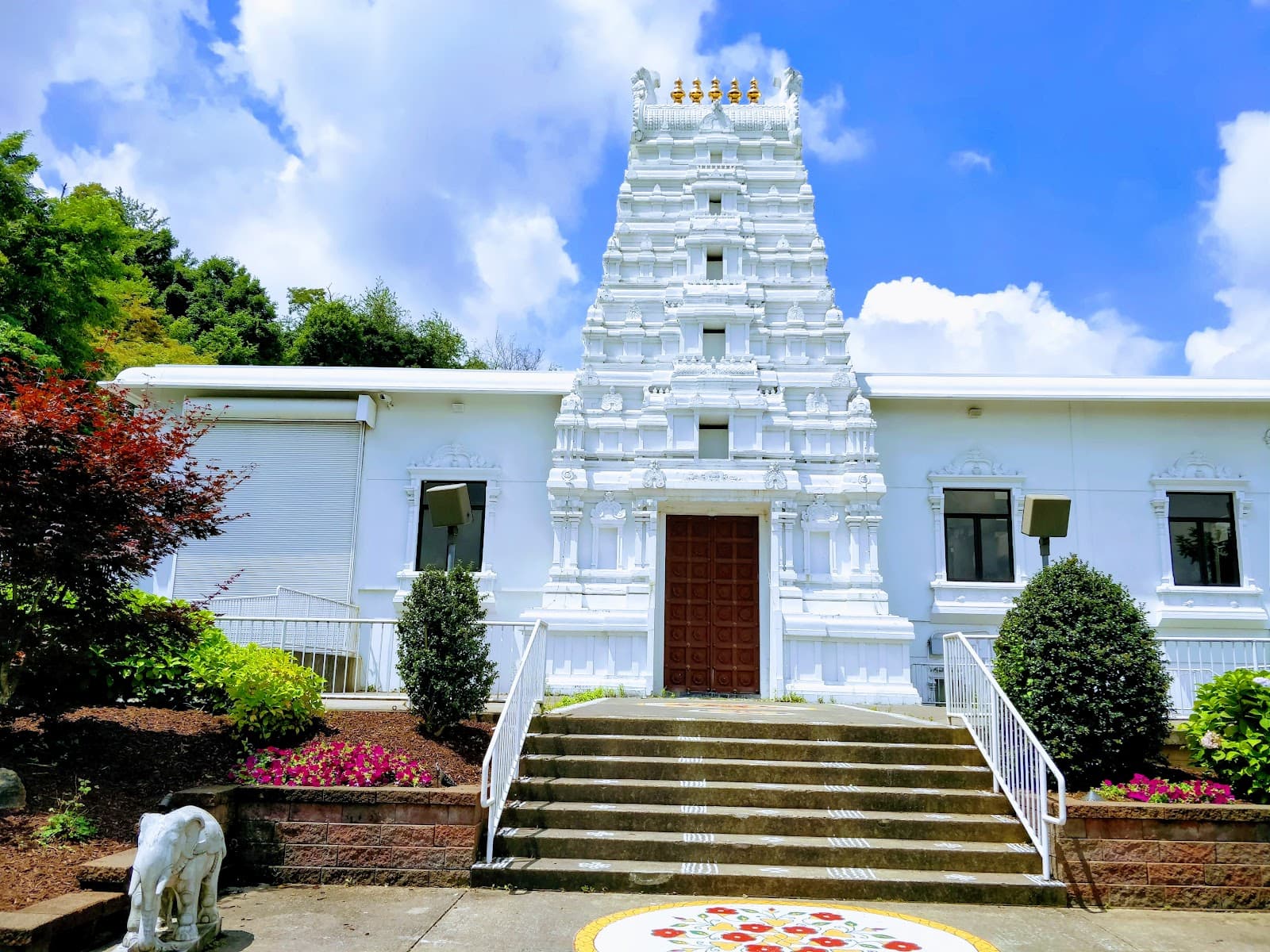
Sri Venkateswara Temple Penn Hills
Sri Venkateswara Temple in Penn Hills, Pennsylvania, mirrors the Tirumala shrine while serving Greater Pittsburgh's Hindu community with daily suprabhatam, archanas, and weekend darshan windows that routinely draw more than 10,000 worshippers a month ([1][3]). The wooded 17-acre campus threads the granite-clad main sanctum, auxiliary shrines, annadana kitchen, and a cultural hall that handles language classes, weddings, and fundraising dinners without interrupting ritual flow ([1][4]). Volunteers direct vehicles across terraced parking lots, marshal shoes at the mandapa threshold, and keep visitor queues shaded under tensile canopies; priests manage timed entry to keep the garbhagriha below the stipulated 75-person limit even during Brahmotsavam ([1][3]). Accessibility upgrades add a covered elevator lobby from the lower parking level, tactile floor strips through the meditation corridor, and assistive listening headsets borrowed from the temple office, while marked refuge areas and sprinklers satisfy Allegheny County life-safety codes refreshed in 2021 ([3][4]). HVAC returns and clerestory vents balance incense exhaust with Pennsylvania winters, and the commercial kitchen's grease management plan keeps drains clear of oil. The temple remains fully operational, with no outstanding code citations and preventive maintenance scheduled every quarter by the facilities desk.
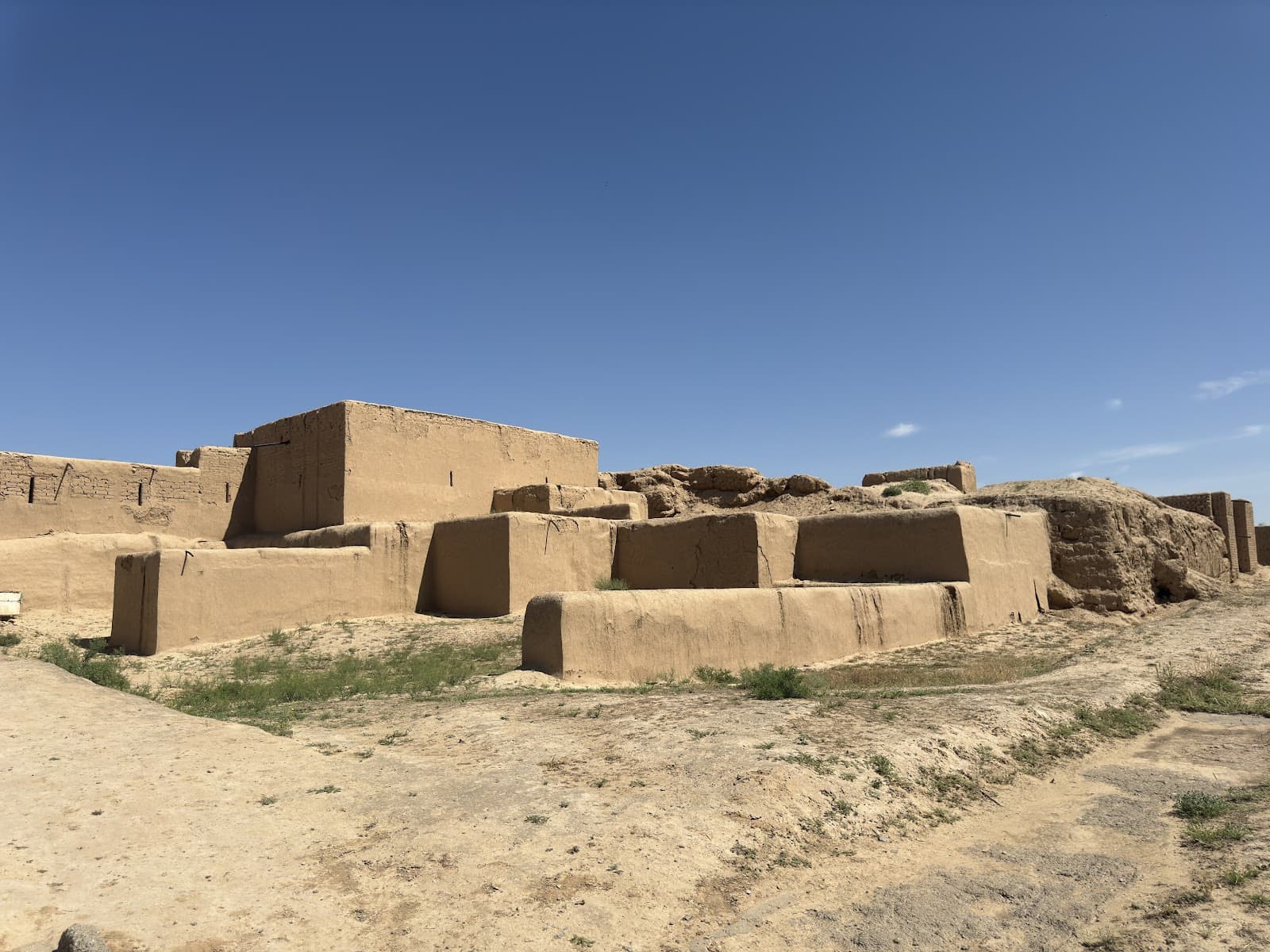
Parthian Fortresses of Nisa Ahal Turkmenistan
The Parthian Fortresses of Nisa, located near the Bagyr neighborhood of Ashgabat in Turkmenistan, represent a pivotal site in the ancient world, embodying a rich tapestry of cultural exchange that profoundly influenced regions across Central Asia and extended into the Indian subcontinent. This UNESCO World Heritage Site comprises two distinct tells: Old Nisa, which served as a ceremonial center and royal residence, and New Nisa, an urban settlement [3] [4]. The architectural styles present at Nisa, while primarily Parthian and Hellenistic, reflect a broader Indo-Parthian cultural sphere, showcasing a sophisticated blend of traditional elements with influences from the Mediterranean world and Central Asia [3] [4]. While specific Nagara or Indian Temple architectural styles are not directly documented within Nisa's structures by current archaeological findings, the site's strategic position at the crossroads of ancient trade routes facilitated extensive cultural and artistic interactions that contributed to the syncretic Indo-Parthian architectural traditions found further east [3] [4]. Old Nisa, an irregular pentagonal area spanning approximately 14 hectares, is encircled by formidable defensive mud-brick walls, punctuated by over 40 rectangular towers and robust fortified corners [3]. Within these ramparts, monumental structures like the Square House reveal intricate planning. Initially conceived for official assemblies and banqueting, this building features a large central courtyard, which in its earliest phase was surrounded by a narrow wooden cloister [4]. The courtyard is flanked by elongated rectangular rooms, each consistently designed with deep benches along the walls and roofs supported by a central row of wooden columns [4]. The Round Hall, a distinct edifice, encloses a circular inner room with a diameter of 17 meters, encased within square perimeter walls [4]. Early reconstructions posited a dome on a cylindrical drum, but detailed structural analysis now suggests a vault with a continuous elliptical outline rising from the floor [4]. This hall housed monumental clay statues, exceeding 2 meters in height, adorned with vibrant polychromy in hues of red, blue, green, yellow, black, and white, demonstrating Hellenistic artistic techniques applied by local Central Asian sculptors [4]. The Red Building, with its four-columned portico, showcases a façade adorned with stone slabs featuring flutings and a distinctive dot-and-reel pattern, further enhanced by bright polychromy and gilded wooden elements [4]. Its square hall, supported by four central elements, was likely used for secluded rites [4]. New Nisa, covering about 25 hectares, was protected by sturdy walls reaching up to 9 meters in height, featuring two main entrances [3]. The construction techniques throughout Nisa frequently employed an additive or agglutinating principle, evident in the independent construction of inner and outer walls in structures like the Round Hall [4]. Materials predominantly include mud-brick and baked brick, alongside wood, stone, clay, terracotta, and gilded iron for decorative elements [4]. Archaeological excavations have unearthed a wealth of artifacts, including richly decorated architecture, inscribed documents, and numerous Hellenistic artworks, such as ivory rhytons depicting a harmonious blend of Greek and Iranian mythological scenes [4] [5]. Ostrakons discovered at the site provide invaluable insights into the economic administration of the royal foundation, detailing agricultural products and vineyards [4]. Conservation efforts are ongoing, with the site recognized as one of Turkmenistan's State Historical and Cultural Parks [3]. It is also a focus of the World Heritage Earthen Architecture Programme (WHEAP), with a five-year plan (2006-2010) implemented to balance archaeological excavation with essential preventive maintenance and consolidation of exposed structures [3]. The site remains an active archaeological area, with ongoing research by international and national missions, ensuring its continued preservation and study [4]. The Parthian Fortresses of Nisa stand as a profound testament to the enduring legacy of ancient civilizations and their interconnectedness, contributing to the broader cultural continuum that shaped regions including India. The site is operationally ready for continued research and managed visitation. [3]
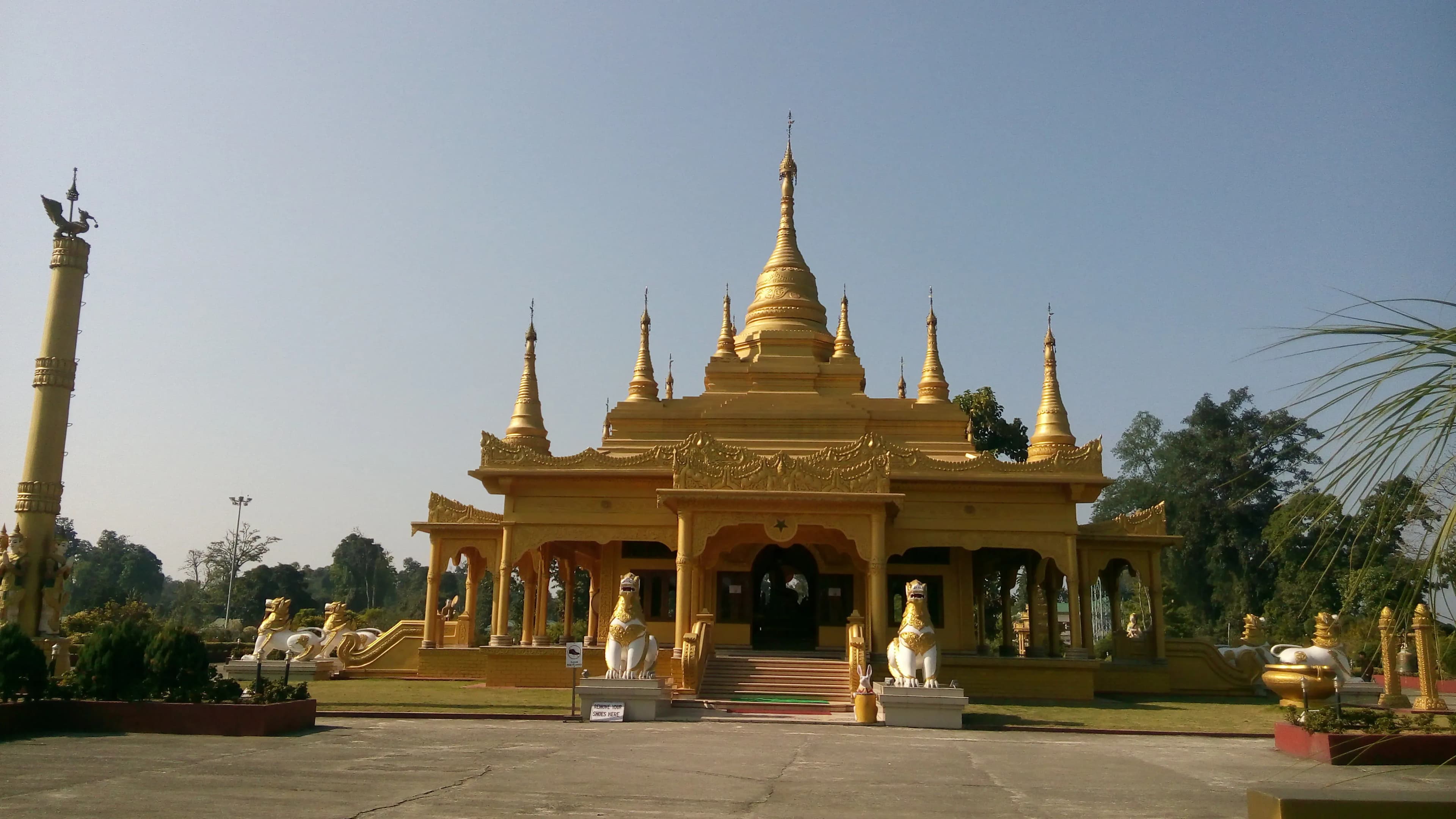
Golden Pagoda Namsai
The rising sun cast a warm, buttery glow on the Golden Pagoda, or Kongmu Kham as it’s known locally, illuminating its intricate carvings and reflecting brilliantly off the gold-plated roof. Standing at the base of this architectural marvel in Namsai, Arunachal Pradesh, I felt a sense of awe wash over me. Having explored countless caves and temples across Maharashtra, I thought I had become somewhat jaded to such grandeur, but the Kongmu Kham proved me wrong. This wasn't just a temple; it was a beacon of Tai Khamti culture and a testament to their devotion. The first thing that struck me was the sheer scale of the pagoda. It dominates the landscape, rising majestically against the backdrop of lush green hills. The architecture is a captivating blend of Burmese and Tai Khamti styles, a visual reminder of the region's historical connections. As I ascended the steps leading to the main platform, I noticed the intricate detailing on the railings, depicting mythical creatures and floral motifs. The craftsmanship was exquisite, each element meticulously carved and painted in vibrant hues. The main prayer hall is a symphony of gold and red. The walls are adorned with murals depicting scenes from the Buddha's life, each panel a vibrant narrative in itself. The air was thick with the scent of incense, and the low hum of chanting created a serene and meditative atmosphere. Unlike the hushed reverence I’ve encountered in many Maharashtrian temples, here there was a palpable sense of community. Families sat together, offering prayers and sharing stories, creating a vibrant tapestry of faith and fellowship. I spent hours exploring the complex, discovering hidden courtyards and smaller shrines tucked away amidst the sprawling grounds. One particularly captivating feature was the museum located within the complex. It housed a fascinating collection of artifacts, including ancient scriptures, traditional clothing, and musical instruments, offering a glimpse into the rich history and cultural heritage of the Tai Khamti people. I was particularly drawn to a display of intricately woven textiles, showcasing the community's artistic prowess. The vibrant colours and intricate patterns were a testament to their skill and dedication to preserving their traditions. The Kongmu Kham is more than just a religious site; it serves as a cultural hub for the Tai Khamti community. I observed locals engaged in various activities, from practicing traditional dances to teaching children about their heritage. This vibrant interaction underscored the temple's role as a living, breathing testament to the community's identity. It reminded me of the vital role temples play in Maharashtra, not just as places of worship but as centers of social and cultural exchange. As the sun began to set, casting long shadows across the golden facade, I found a quiet spot overlooking the surrounding valley. The panoramic view, coupled with the tranquil atmosphere, created a sense of profound peace. The Kongmu Kham had touched me in a way I hadn't anticipated. It wasn't just the architectural splendor or the rich history; it was the palpable sense of community, the vibrant expression of faith, and the dedication to preserving cultural heritage that truly resonated with me. Leaving the Golden Pagoda, I carried with me not just photographs and memories, but a deeper appreciation for the diverse tapestry of cultures that make India so unique. My journey through the caves and temples of Maharashtra had prepared me for the visual grandeur, but the Kongmu Kham offered something more – a glimpse into the heart and soul of a community.
Quick Links
Plan Your Heritage Journey
Get personalized recommendations and detailed visitor guides