Temple In Western Australia in Australia
This curated collection presents 10 architecturally significant temple in western australia across Australia, each offering authentic experiences of Hindu cultural and spiritual heritage. Representing diverse regional traditions, these sites spanning multiple historical periods continue serving as active centers of worship and cultural transmission. recognizing exceptional universal value. Our comprehensive documentation provides detailed visitor information, architectural insights, and cultural context, enabling meaningful engagement with Australia's living heritage traditions while respecting the sacred nature of these spaces.
10 Sites Found
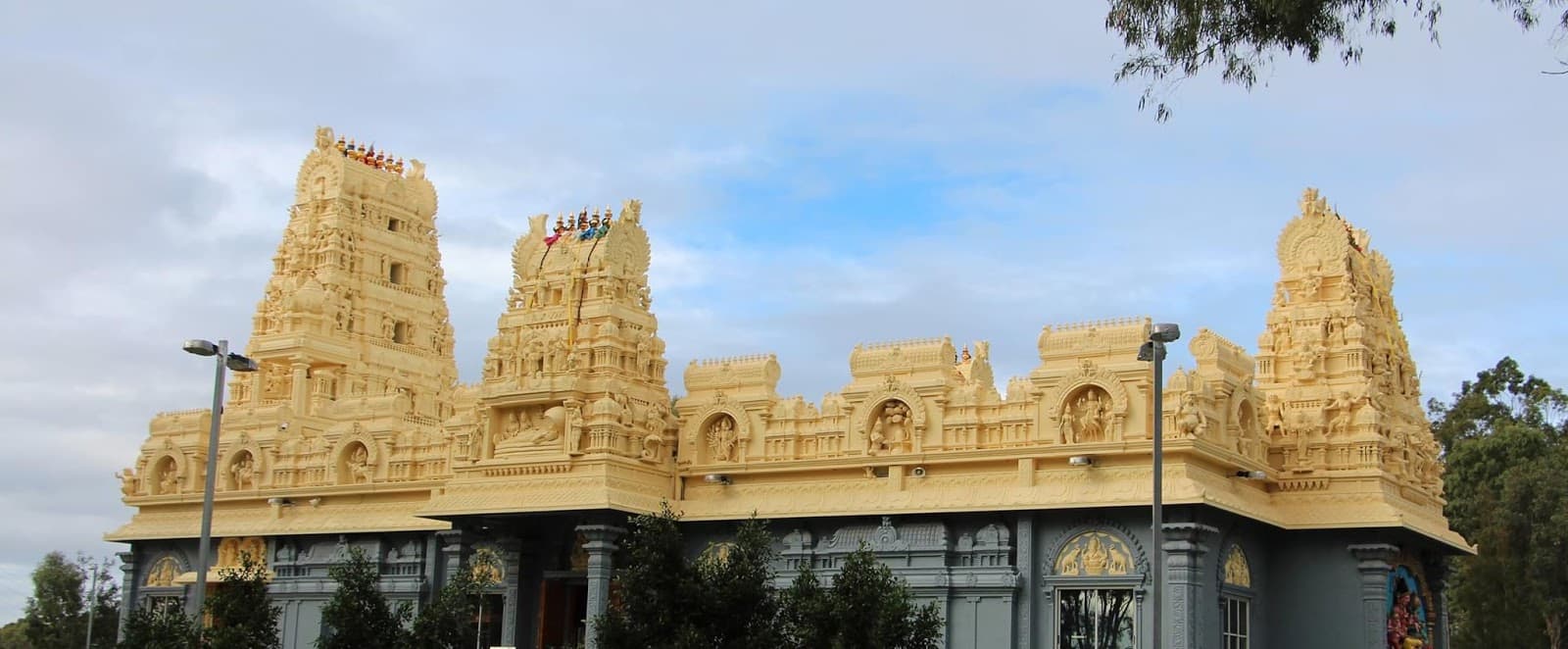
Anchoring Logan’s peri-urban corridor, Brisbane Sri Selva Vinayakar Koil South Maclean stands as Queensland’s first traditional Hindu temple dedicated to Lord Ganesha ([1][2]). Established around 1990 CE, this 20th-century temple reflects Dravidian architectural influences adapted to a rural Australian context ([1]). The temple was built by the Hindu Society of Queensland, who also continue to be its patron ([1]). Granite and sandstone blocks, meticulously carved, form the core of the Mandapa (Pillared Hall), while timber posts and corrugated steel roofing provide a functional and aesthetically pleasing structure ([1]). Daily rituals, or darshan, are conducted between 6:30 AM and 12:00 PM, and again from 4:30 PM to 8:30 PM ([1][5]). Special occasions such as Vinayagar Chaturthi, Thai Poosam, and Navaratri extend these hours until 10:00 PM ([1][5]). To manage the flow of devotees, volunteers guide visitors through the granite Mandapa using rope-guided lanes, ensuring a smooth and organized experience ([1][5]). Shuttle buggies are also available to assist elders in navigating the expansive site ([1][5]). Within the annadhanam shed, which can accommodate 300 people, polished concrete floors provide a clean and functional space for communal dining ([1][3]). Modern amenities such as induction woks and commercial chillers support the preparation and storage of prasadam (sacred food), with HACCP checklists ensuring food safety standards are maintained ([1][3]). Portable ramps facilitate the movement of prasadam carts between the kitchen and hall, even during inclement weather ([1][3]). Beyond worship, the temple serves as a cultural hub, hosting dance, music, and language classes in its cultural pavilion ([2]). A meditation pond and vahana sheds are situated along the Logan River flood fringe, with boardwalks and warning signage in place ([2]). Accessibility is a priority, with gravel-stabilized pathways, handrails, tactile signage, and a platform lift near the sanctum ensuring inclusivity ([2][5]). Auslan interpreters are also available during major festivals ([2][5]). Sophisticated drainage systems ensure the temple grounds remain functional, even during heavy rainfall ([3]). Digital signage displays bilingual Tamil-English instructions, weather alerts, and seva schedules, keeping the community informed and engaged ([1][2]). The temple's operations team monitors weather stations, flood gauges, and fire equipment, while the Logan Rural Fire Brigade conducts annual drills on site, ensuring preparedness for any eventuality ([3]). This proactive approach underscores the temple's commitment to community resilience and safety ([1][2]).

Embodying a synthesis of tradition and modernity, Canberra Sri Vishnu Shiva Mandir Mawson, inaugurated in 1984, serves as a vibrant hub for the Hindu community in the Australian Capital Territory ([1]). Housed within a renovated 1970s office building, the temple uniquely integrates dual sanctums (Garbhagriha) dedicated to Lord Vishnu and Lord Shiva, reflecting the syncretic traditions within Hinduism ([1][2]). This adaptation demonstrates how ancient architectural principles can be reinterpreted in contemporary contexts. Within the central hall, devotees engage in daily rituals (darshan) observed during specific hours, with extended timings during major festivals such as Mahashivaratri and Deepavali ([1][5]). Sophisticated queue management systems, incorporating RFID technology, guide devotees to the respective Vaishnava and Shaiva shrines, ensuring a seamless experience ([1][5]). Further enhancing the spiritual environment, subtle applications of Vastu Shastra principles are evident in the temple's layout, fostering harmony and positive energy flow ([4]). Modern amenities are seamlessly integrated within the community center, including classrooms for cultural education, a kitchen for preparing annadhanam (food offerings), and dedicated meditation spaces ([1][3]). Advanced HVAC systems, managed by a building management system, ensure optimal environmental control, while digital signage provides bilingual schedules and emergency alerts ([2][3]). Granite and sandstone blocks, traditionally hand-carved, find expression through modern materials like reinforced concrete and brickwork, blending ancient aesthetics with contemporary construction techniques ([3]). Through collaborative partnerships with ACT SES, the temple reinforces its operational resilience, solidifying its role as a focal point for worship, cultural exchange, and community engagement ([1][3]). The temple's architecture, while modern, subtly echoes elements of the Nagara style found in North Indian temples, particularly in its vertical emphasis and symbolic ornamentation ([2]). The Canberra Sri Vishnu Shiva Mandir thus stands as a testament to the enduring relevance of Hindu traditions in a globalized world ([1]).
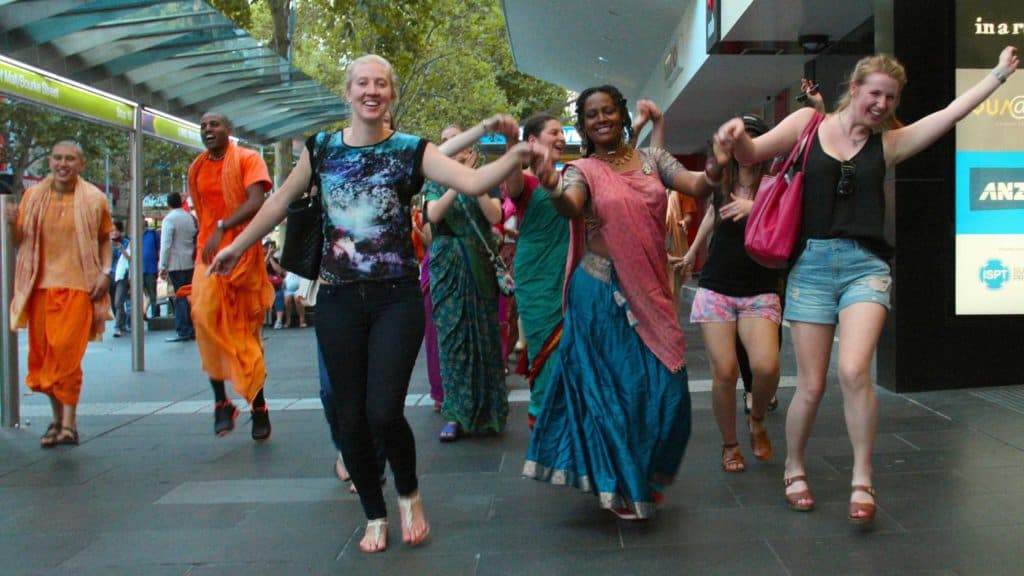
Hare Krishna Temple Melbourne Albert Park, also known as Melbourne Mahaprabhu Mandir, is dedicated to Lord Krishna and anchors Albert Park’s Albertian terrace precinct as Australia’s oldest ISKCON temple ([1][2]). Daily mangala arati begins 4:30 AM, followed by programs running to 9:00 PM, with Sunday Love Feast and Janmastami vigils extending to midnight; volunteers stage queue ropes through the Victorian halls, ushering devotees toward the marble-clad altar while maintaining egress to the Govinda’s restaurant and community rooms ([1][5]). Govinda’s commercial kitchen operates with vegetarian HACCP protocols, induction cooking, and compostable serveware, while the restaurant’s 150-seat dining hall doubles as lecture space with AV systems ([1][3]). Accessibility upgrades include a 1:14 ramp along Danks Street, lifts connecting basement prep areas and upper classrooms, Braille signage, and hearing loop audio in the temple hall ([2][5]). Fire wardens conduct drills quarterly, HVAC systems are managed via building management software, and digital signage posts bilingual English-Hindi/Bengali schedules, queue times, and emergency instructions, ensuring continuous operational readiness for worship, prasadam service, and cultural programming ([1][3]).
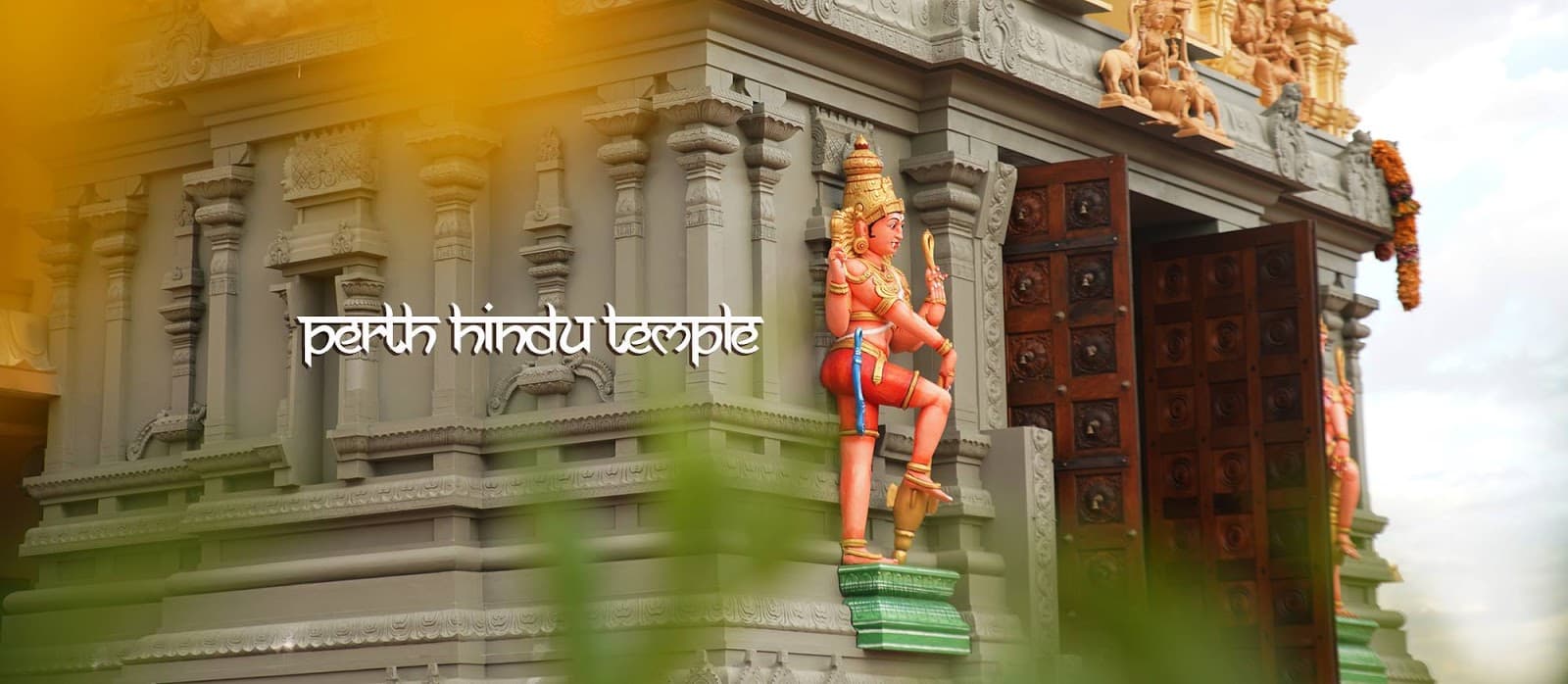
Perth Hindu Temple Canning Vale is dedicated to multiple deities with a principal focus on Lord Shiva and anchors Perth’s southern suburbs as a 5.5-acre mandir campus ([1][2]). Daily darshan opens 7:00 AM-12:00 PM and 5:00 PM-8:30 PM, with Mahashivaratri, Navaratri, and multicultural open days extending to 10:00 PM; crowd management teams run RFID counters and LED signage to route visitors between Shiva, Durga, Murugan, and Venkateswara sanctums without congestion across the granite mandapa ([1][5]). The community hall seats 800 with retractable risers, while a commercial kitchen outfitted with gas and induction appliances handles annadhanam service under WA FoodSafe audits; a dumbwaiter lifts prasadam to the cultural classrooms for seniors ([1][3]). Accessible design includes ramps, tactile paving, a platform lift, and dedicated accessible parking beside the hall, plus induction loop audio for hearing-impaired devotees ([2][5]). Fire wardens drill quarterly, water storage tanks are tested monthly, and the campus building management system logs energy, HVAC, and stormwater usage to meet City of Gosnells compliance ([3]). With multilingual signage, first aid posts, and volunteer marshals assigned per sanctum, the precinct remains fully operational for daily worship, festivals, cultural tuition, and civic partnerships ([1][2]).
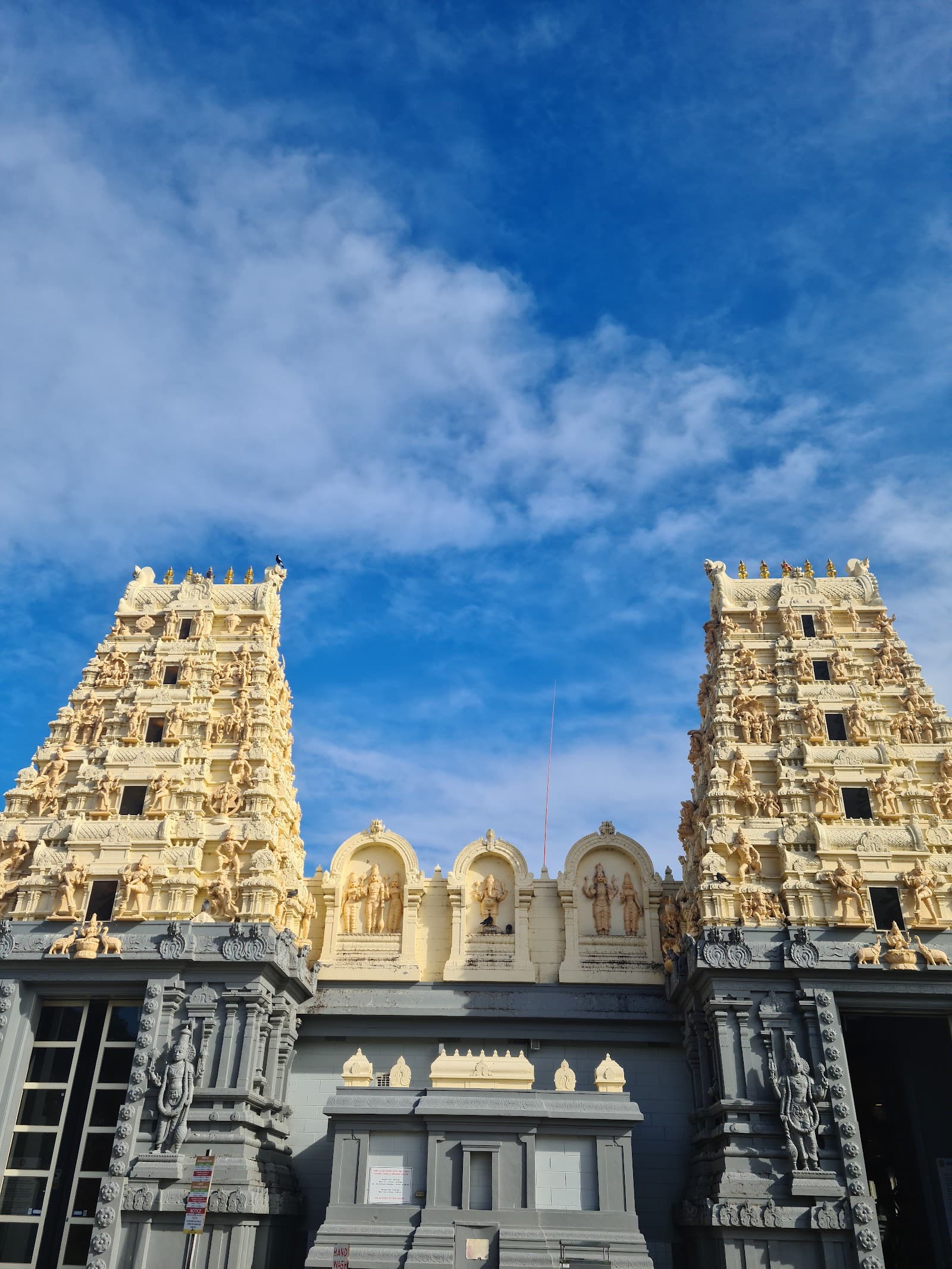
Shri Shiva Vishnu Temple Carrum Downs is dedicated to Lord Shiva and Lord Vishnu and anchors Carrum Downs, Victoria, as the largest Hindu complex in the southern hemisphere ([1][2]). Daily darshan opens 7:30 AM-12:00 PM and 4:00 PM-9:00 PM, with Saturday hours extending to 10:00 PM as dual queues marshal visitors toward the Shiva and Vishnu sanctums without crossover ([1]). A volunteer command post in the Yajna hall tracks CCTV and real-time crowd counts, dispatching ushers to the 108-pillared mandapa when coach tours arrive from interstate ([1][3]). The community centre seats 1,000 in banquet configuration, where stainless trolleys glide along polished concrete aisles and induction woks maintain prasadam throughput while keeping the hall free of combustion fumes ([1][4]). Tactile maps, contrasting floor nosings, and induction loop audio guide visitors with low vision or hearing loss, complemented by two lifts linking the cultural classrooms to the main prakaram ([3]). Accessible parking bays sit 30 metres from the gopuram and connect via canopy-covered ramps that maintain 1:20 gradients, easing pilgrimage for seniors and wheelchair users ([3]). Signage delivers tri-lingual Tamil-Hindi-English instructions, QR-linked seva booking, and bushfire evacuation diagrams audited annually by Fire Rescue Victoria ([3][5]). Air monitoring sensors in the homa kunda feed a dashboard that alerts priests when particulate loads trigger extraction fans, ensuring ceremonies run without breaching occupational standards ([5]). With cross-trained volunteers, audited hygiene workflows, and resilient visitor routing, the temple stays fully operational for worship, cultural tuition, and civic events throughout the calendar year ([1][2]).
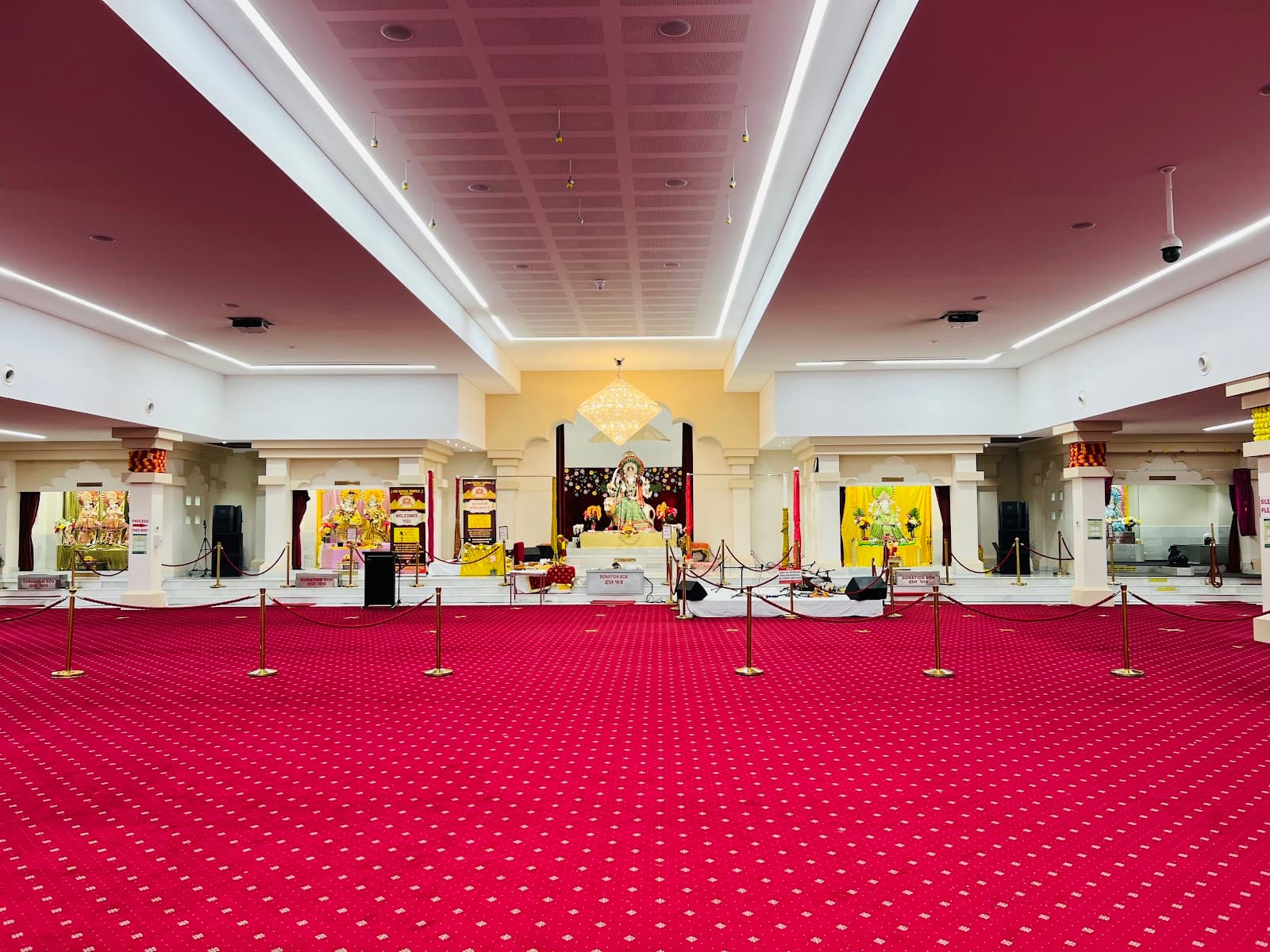
Sri Durga Temple Rockbank is dedicated to Goddess Durga and anchors Rockbank, Victoria, as one of Australia’s largest Shakta complexes ([1][2]). The four-level precinct opens daily 7:00 AM-12:00 PM and 5:00 PM-9:00 PM, with Navaratri, Durga Ashtami, and Diwali programs extending to 11:00 PM; RFID turnstiles and queue marshals route devotees through separate Durga, Shiva, and Hanuman sanctums to maintain flow across the 20-metre mandapa span ([1][5]). The cultural centre’s 1,200-seat auditorium hosts bhajan concerts and community forums while backstage lifts move instruments, wheelchairs, and prasadam carts without intersecting pilgrim circulation ([1][2]). Annadhanam kitchens on level two use induction ranges, combi-ovens, and HACCP-monitored chillers, and a dumbwaiter delivers hot meals to the ground-floor food hall where volunteers manage waste separation and allergen signage ([1][3]). Accessible ramps at 1:20 gradient, tactile floor strips, dual lifts, and induction loop audio allow seniors and neurodiverse guests to access cultural classrooms and sanctum viewing rails; dedicated parent rooms and changing tables sit adjacent to restrooms on every level ([2][5]). Fire wardens drill quarterly, and the building management system logs air quality, energy consumption, and stormwater tank levels so operations stay compliant with Melton City Council permits ([3][4]). With 900 on-site parking bays, overflow shuttle plans, and bilingual digital signage, the complex remains fully prepared for daily worship, large diaspora festivals, and civic partnerships year-round ([1][2]).
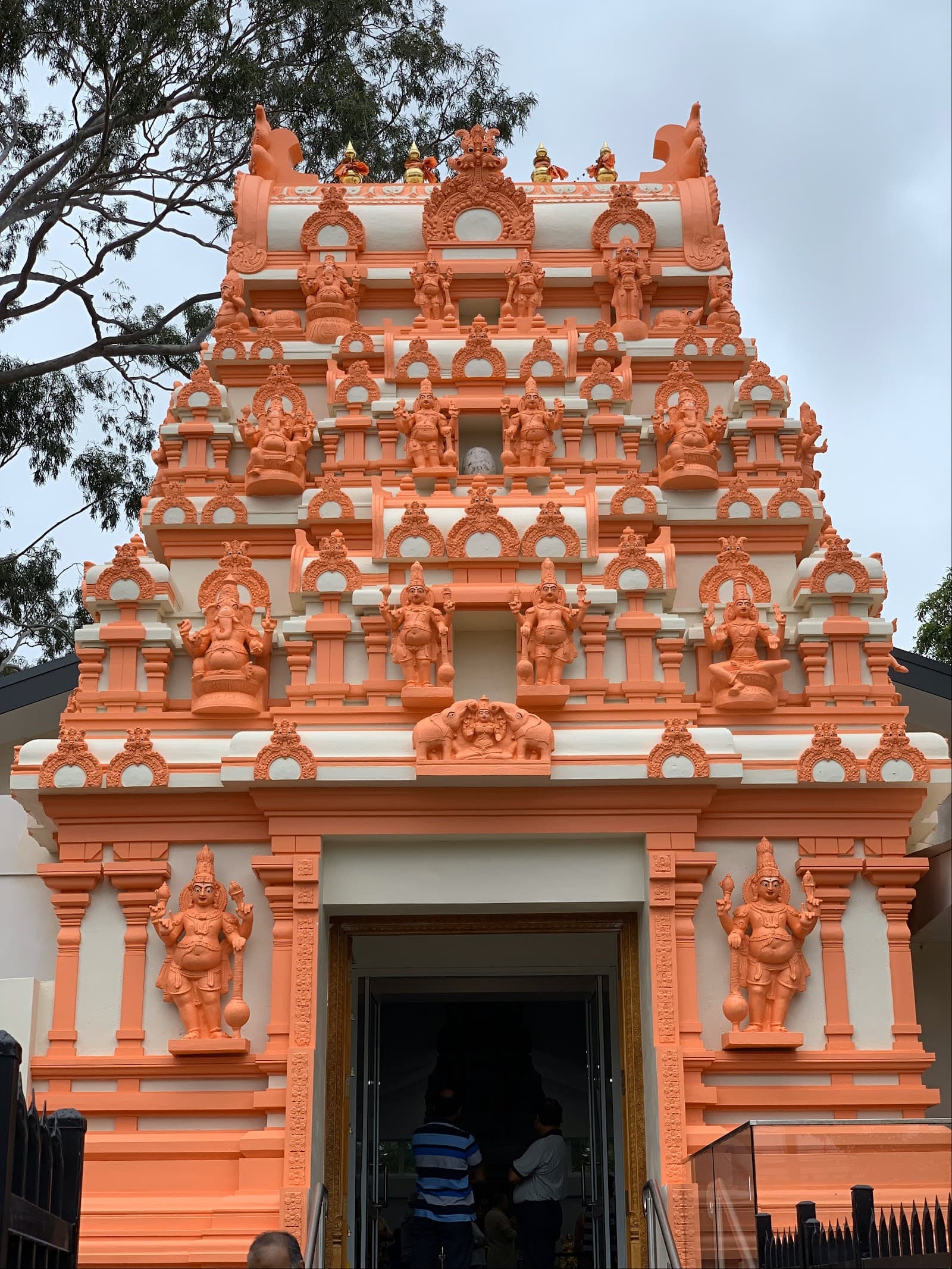
Sri Karphaga Vinayakar Temple Homebush West is dedicated to Lord Ganesha and anchors Sydney’s Inner West as a Dravidian mandir integrated within a heritage-listed former Presbyterian church shell ([1][2]). Daily darshan runs 6:00 AM-12:00 PM and 4:00 PM-9:00 PM, with special Vinayagar Chaturthi, Skanda Sashti, and Panguni Uthiram observances extending to 10:30 PM; ushers stage the nave with retractable queue rails so devotees flow through the nave, circumnavigate the sanctum, and exit via the south transept without cross-traffic ([1][3]). The annadhanam kitchen occupies the church hall annex, fitted with stainless benches, induction hobs, and grease arrestors, while a dumbwaiter lifts prasadam to the upper gallery for elders ([1][4]). Accessible entries include a 1:14 ramp along Arthur Street, tactile paving, and a small platform lift that bridges the chancel step, ensuring wheelchair users reach the brass railing before the sanctum ([2]). Climate control uses split-system HVAC with HEPA filtration and ceiling fans to maintain comfort in the vaulted interior, and acoustic panels tucked behind timber trusses keep devotional music within safe levels ([3]). Digital signage and QR codes deliver trilingual Tamil-English-Hindi schedules, contactless seva bookings, and City of Strathfield evacuation diagrams, while a broadcast booth near the former organ loft live-streams pujas for remote devotees ([1][5]). With fire wardens rostered, first aid kits stocked, and volunteer teams drilled, the temple remains operationally ready for daily worship, youth programs, and civic partnerships across the Homebush community ([1][2]).
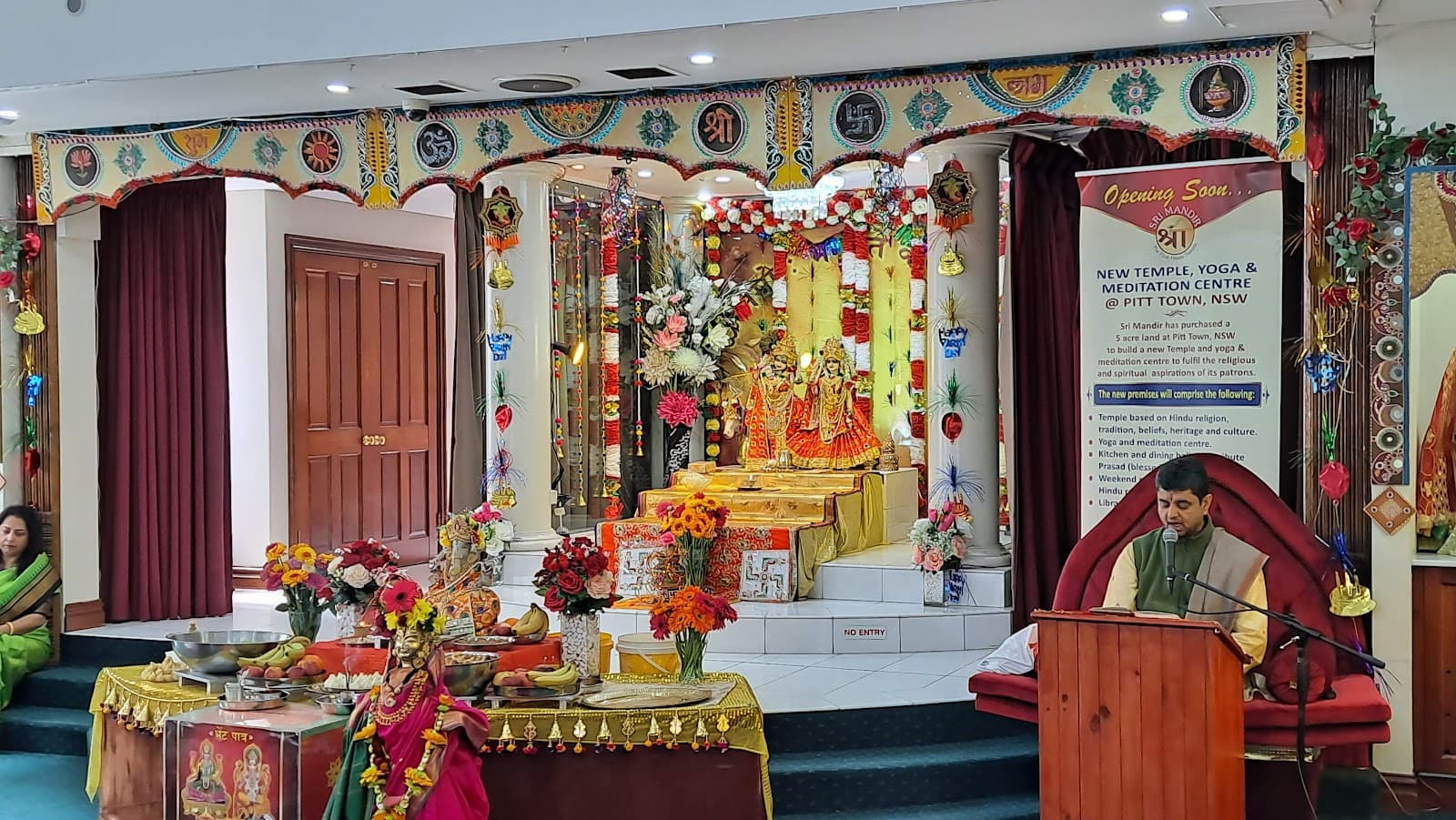
Sri Mandir Auburn is dedicated to multi-deity Hindu worship and anchors Auburn, New South Wales, as Australia’s oldest continuously operating mandir ([1][2]). Doors open 6:00 AM-12:00 PM and 4:00 PM-9:00 PM daily, with Thursday and Sunday schedules extending to 10:00 PM to accommodate Hanuman chalisa recitations and bhajan choirs ([1][3]). A volunteer operations desk under the mandapa canopy coordinates RFID-based headcounts, dispatching ushers to maintain one-way circulation along the narrow verandahs that wrap the former warehouse shell ([1][2]). The annadhanam kitchen upstairs uses induction cooklines and stainless bain-maries, while a dumbwaiter shuttles prasadam to the ground-floor hall so stairwells remain clear for emergency egress ([1][4]). Wheelchair access is provided via a platform lift off Cumberland Road and tactile paving links the entry to the garbhagriha viewing rail; volunteers are trained in Auslan basics and maintain a quiet room for neurodiverse visitors ([2][3]). Acoustic panels and ceiling fans temper the brick nave, and HEPA purifiers cycle air during peak crowds, ensuring a comfortable environment even when festival drums and conch blasts resonate through the hall ([3][5]). Digital signage presents trilingual English-Hindi-Tamil instructions, QR links for seva booking, and City of Parramatta-endorsed evacuation diagrams refreshed annually ([2]). With fire wardens rostered, first-aid kits stocked, and a broadcast desk streaming pujas to elders at home, the temple stays operationally ready for daily worship, rites of passage, and civic dialogue sessions hosted in its meeting rooms ([1][3]).
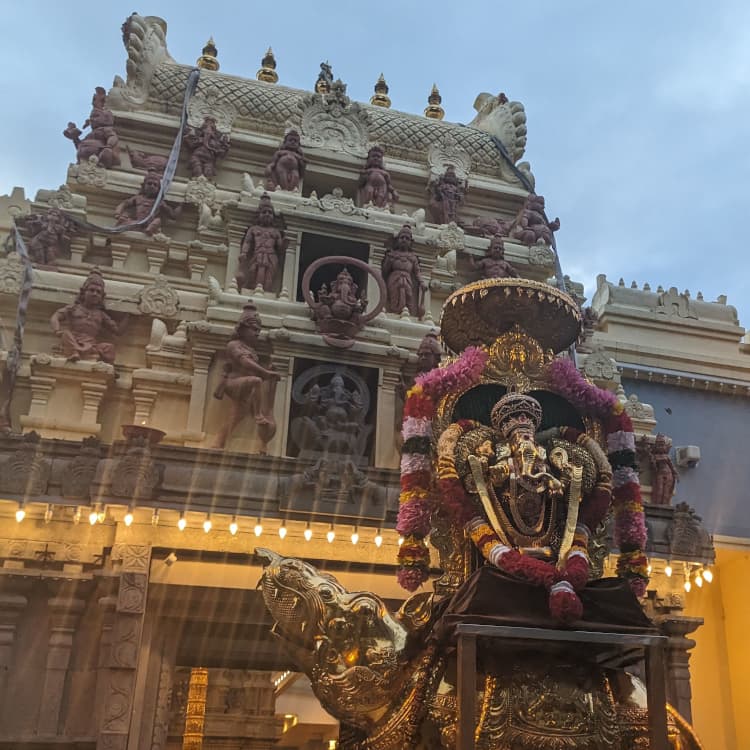
Sri Vakrathunda Vinayagar Temple The Basin is dedicated to Lord Ganesha and anchors The Basin, Victoria, on the foothills of the Dandenong Ranges ([1][2]). The hilltop mandir opens daily 6:00 AM-12:00 PM and 4:00 PM-8:30 PM, with Vinayagar Chathurthi and Thai Poosam schedules extending to 10:30 PM; marshals in high-visibility vests coordinate shuttle buses from the lower car park to keep the single-lane driveway clear ([1][4]). Mandapa floor markings separate pradakshina loops from queue lanes, and RFID counters at the entry tally pilgrim volumes so the volunteer command post can pace access into the sanctum ([1][5]). Annadhanam is served from a timber-lined dining hall with polished concrete floors, commercial dishwashers, and induction woks to reduce bushfire risk by avoiding naked flames ([1][3]). A 1:16 timber ramp with anti-slip mesh runs along the southern retaining wall, linking the car park to the mandapa, while stainless handrails, tactile paving, and hearing loop signage support inclusive access ([2]). Bushfire-ready shutters, ember screens, and a 90,000-litre tank plumbed to rooftop drenchers stand ready each summer, with CFA volunteers drilling annually alongside temple wardens ([2][5]). Wayfinding boards highlight refuge zones, first aid, and quiet meditation groves along the eucalyptus ridge, and QR codes push live updates about weather, kangaroo movement, and shuttle schedules directly to visitor phones ([1][6]). With emergency protocols rehearsed, food safety plans audited, and musician rosters published weeks ahead, the temple remains fully prepared for devotees, hikers, and school excursions seeking the hilltop shrine ([1][2]).
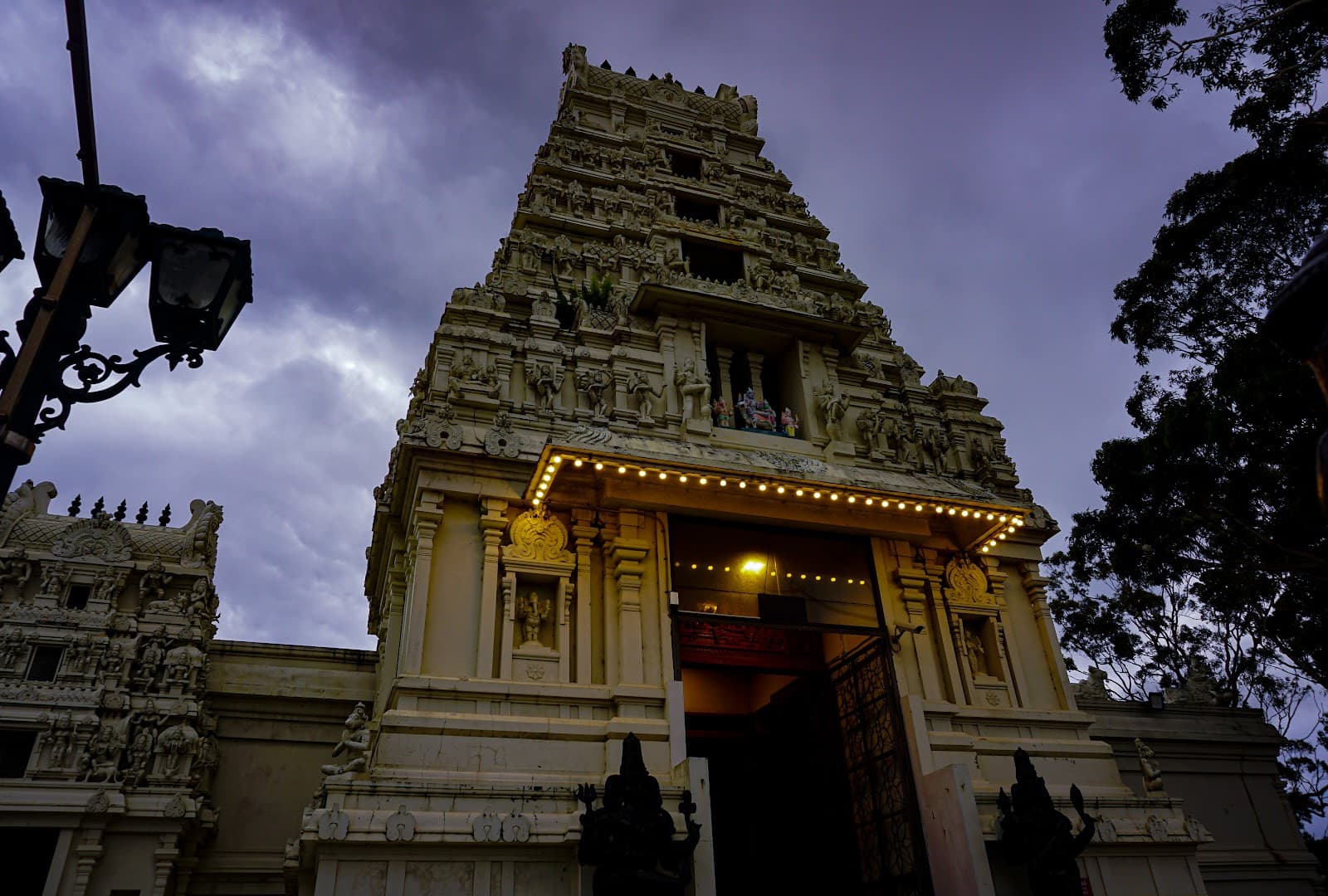
Sri Venkateswara Temple Helensburgh is dedicated to Lord Venkateswara and anchors Helensburgh, New South Wales, as the largest traditional mandir in the southern hemisphere ([1][2]). Weekday darshan operates from 8:00 AM to 12:00 PM and 4:00 PM to 7:00 PM, while weekend seva blocks extend to 8:30 PM with queue marshals stationed under the sixteen-column mandapa to separate ticketed archana devotees from casual visitors ([1][5]). The annadhanam hall seats 350 with stainless service lines and HACCP logs posted beside the prasadam counter, and volunteers patrol the dining floor between sittings to keep evacuation aisles clear ([1][2]). Asphalt car parks on Temple Road are segmented into family, coach, and accessible bays, each mapped on LED boards that update occupancy in real time during Brahmotsavam ([1]). A 1:14 accessible ramp wraps the southern side of the rajagopuram and connects to a hydraulic platform that bridges the final granite risers, so wheelchair users reach the sanctum viewing rail without lifting assistance ([3]). Orientation signage uses bilingual Tamil-English panels, QR-linked audio guides, and pictograms for shoe storage, first aid, and quiet rooms, helping newcomers settle without slowing veteran pilgrims ([2][6]). Site stewards log fire drills, rainwater pump tests, and sanitation cycles within an asset-management tablet so compliance tasks are timestamped before evening arati concludes ([4]). With the granite kitchen humming, the main hall ventilated via roof monitors, and ushers escorting seniors to shaded seating, the complex remains fully ready for year-round worship, festivals, and coach tours ([1][2]).
Related Collections
Discover more heritage sites with these related collections
Explore More Heritage
Explore our comprehensive documentation of these 10 temple in western australia, featuring architectural analysis, historical context, visitor information, conservation status, and detailed site-specific resources supporting meaningful engagement with Australia's living heritage traditions.
Historical Context
Understanding the historical context of these 10 temple in western australia illuminates centuries of Hindu architectural achievement and spiritual devotion. Across successive dynasties, royal patrons and spiritual communities collaborated to create these magnificent monuments as expressions of dharmic duty and devotional fervor. Multiple dynasties contributed distinctive architectural visions, engaging master architects (sthapatis), skilled sculptors (shilpis), and specialized craft guilds who transmitted knowledge through generations. These collaborations produced monuments reflecting both royal vision and artisan mastery, incorporating ancient Vedic principles with regional innovations. Archaeological and epigraphic research continues revealing fascinating details about construction processes, guild organization, material sourcing, and patronage networks. Foundation inscriptions, donor records, and architectural evidence illuminate the devotion, resources, and expertise invested in creating these sacred spaces that honor the divine while demonstrating human achievement at its finest.
Architectural Significance
The architectural elements visible across these 10 temple in western australia demonstrate the sophisticated synthesis of aesthetic beauty, structural engineering, and spiritual symbolism characteristic of Hindu temple architecture. Regional architectural vocabularies reflect local materials, climatic adaptations, and cultural preferences while maintaining adherence to fundamental Vedic architectural principles. Indigenous building materials—locally sourced stone, traditional lime mortars, timber where appropriate—shaped architectural possibilities and aesthetic expressions. Monumental scale creates appropriate awe, preparing visitors psychologically for divine encounter. Intricate sculptural programs covering every surface teach Puranic narratives and iconographic conventions, transforming architecture into pedagogical instruments. Structural innovations—corbelling achieving remarkable cantilevers, domed ceilings distributing forces through hidden interlocking systems—demonstrate engineering knowledge refined through centuries of practical experience. Lighting conditions dramatically affect sculptural perception; morning and evening illumination reveals details obscured during harsh midday sun. Advanced documentation through photogrammetry and laser scanning continues discovering previously unrecorded architectural elements, enriching scholarly understanding of these magnificent achievements.
Conservation & Preservation
The preservation status of these 10 temple in western australia reflects ongoing commitment to safeguarding Australia's irreplaceable heritage. While protection mechanisms vary, ensuring legal safeguards and systematic conservation programs. Challenges include environmental factors, material degradation, and visitor management. Professional conservation employs traditional techniques alongside modern technology: structural monitoring, condition assessments, and preventive measures addressing deterioration before critical failures occur. Advanced documentation—aerial surveys, laser scanning, material analysis—creates comprehensive records supporting evidence-based interventions. Visitor participation in heritage preservation includes respectful site conduct, reporting observed damage, and supporting conservation initiatives financially. The investment in documentation and monitoring ensures that when intervention becomes necessary, restoration maintains historical authenticity and technical compatibility with original construction methods.
Visitor Information
Planning visits to these 10 temple in western australia benefits from understanding access logistics and appropriate conduct. Australia offers well-developed infrastructure with accommodation options available near major heritage sites. The optimal visiting season extends March through November. Entry fees at protected sites typically range A$5-A$15. Photography for personal use is generally permitted, though tripods and professional equipment may require advance authorization. Respectful conduct honors both the monuments and continuing worship traditions: modest attire with covered shoulders and legs, shoe removal in temple sanctums, quiet demeanor, and abstaining from touching sculptural surfaces. Knowledgeable local guides enhance understanding of architectural features, iconographic programs, and ritual contexts, transforming visits into meaningful cultural experiences.
Key Facts & Statistics
Total documented heritage sites: 10
Temple: 10 sites
Dravida architecture style, Indo-Gothic architecture style, Chettinad architecture style, Nagara architecture style architectural style: 1 sites
Dravida architecture style, Chola architecture style, Pallava architecture style, Indo-Victorian architecture style architectural style: 1 sites
Dravida architecture style, Sri Lankan Tamil architecture style, Diaspora Hindu architecture style, Contemporary Indian architecture style architectural style: 1 sites
Indo-Australian architecture style, Dravidian architecture style, Nagara architecture style, Federation architecture style architectural style: 1 sites
Dravida architecture style, Chettinad architecture style, Sri Lankan Tamil architecture style, Contemporary Indic architecture style architectural style: 1 sites
Post-Independence Period period construction: 8 sites
Bengal Renaissance Period period construction: 1 sites
Pallava Period period construction: 1 sites
Average documentation completion score: 80%
Featured flagship heritage sites: 10
Comprehensive digital archiving preserves heritage for future generations
Comprehensive digital archiving preserves heritage for future generations
Comprehensive digital archiving preserves heritage for future generations
Comprehensive digital archiving preserves heritage for future generations
Comprehensive digital archiving preserves heritage for future generations
Comprehensive digital archiving preserves heritage for future generations
Comprehensive digital archiving preserves heritage for future generations
Comprehensive digital archiving preserves heritage for future generations
Frequently Asked Questions
How many temple in western australia are documented in Australia?
This collection includes 10 documented temple in western australia across Australia. Each site has comprehensive documentation including photos, floor plans, and historical research.
What is the best time to visit temple in western australia in Australia?
March through November is ideal for visiting temple in western australia in Australia. Major festivals also offer unique cultural experiences. Check individual site pages for specific visiting hours and seasonal closures.
What are the entry fees for temple in western australia?
Protected monuments typically charge A$5-A$15. State-protected sites often have lower or no entry fees. Many temples and religious sites are free. Children often enter free. Still photography is usually included; video may require additional permits.
Are photography and videography allowed at heritage sites?
Still photography for personal use is generally permitted at most heritage sites. Tripods, flash photography, and commercial filming usually require special permissions. Some sites restrict photography of murals, sculptures, or sanctums. Drones are prohibited without explicit authorization. Always respect signage and guidelines at individual monuments.
Are these heritage sites wheelchair accessible?
Accessibility varies significantly. Major UNESCO sites and recently renovated monuments often have ramps and accessible facilities. However, many historical structures have steps, uneven surfaces, and narrow passages. Contact site authorities in advance for specific accessibility information. Our site pages indicate known accessibility features where available.
Are guided tours available at temple in western australia?
Licensed guides are available at most major heritage sites, typically charging ₹200-₹500 for 1-2 hour tours. ASI-approved guides provide historical and architectural insights. Audio guides are available at select UNESCO sites. Our platform offers virtual tours and detailed documentation for major monuments.
What is the conservation status of these temple in western australia?
Many sites are protected under heritage conservation laws. Active conservation includes structural stabilization, surface cleaning, vegetation control, and drainage management. Digital documentation helps monitor deterioration. Ongoing surveys track condition changes for evidence-based interventions.
What documentation is available for these heritage sites?
Each site includes high-resolution photography, architectural measurements, historical research, and expert annotations. Documentation averages 80% completion.
How much time should I allocate for visiting?
Plan 2-3 hours for major monuments to appreciate architectural details and explore grounds. Smaller sites may require 30-60 minutes. Multi-site itineraries should allocate travel time. Early morning or late afternoon visits offer better lighting for photography and fewer crowds. Check individual site pages for recommended visiting durations.
What is the cultural significance of these temple in western australia?
These monuments represent India's diverse cultural heritage, reflecting centuries of architectural innovation, religious traditions, and artistic excellence. They serve as living links to historical societies, preserving knowledge about construction techniques, social structures, and cultural values. Many sites remain active centers of worship and community gathering.
How can I practice responsible heritage tourism?
Respect site rules including photography restrictions and designated pathways. Don't touch sculptures, murals, or walls. Dispose waste properly. Hire local guides to support communities. Avoid visiting during restoration work. Learn about cultural contexts before visiting. Report damage to authorities. Your responsible behavior helps preserve heritage for future generations.
References & Sources
This curated collection presents 10 architecturally significant temple in western australia across Australia, each offering authentic experiences of Hindu cultural and spiritual heritage. Representing diverse regional traditions, these sites spanning multiple historical periods continue serving as active centers of worship and cultural transmission. recognizing exceptional universal value. Our comprehensive documentation provides detailed visitor information, architectural insights, and cultural context, enabling meaningful engagement with Australia's living heritage traditions while respecting the sacred nature of these spaces.
- 1Diverse architectural styles from various periods
- 2Intricate craftsmanship and artistic excellence
- 3Historical and cultural significance
- 4Well-documented heritage value
- 5Protected under heritage conservation acts
- 6Tourist and educational significance
| 📍Victoria | 4 sites |
| 📍New South Wales | 3 sites |
| 📍Western Australia | 1 sites |
| 📍Australian Capital Territory | 1 sites |
| 📍Queensland | 1 sites |