Mughal Architecture in Uttar Pradesh
This collection documents 18 heritage sites across uttar pradesh, representing profound expressions of Hindu civilization's architectural and spiritual heritage. These monuments exemplify the Mughal Architecture architectural tradition, with some maintaining unbroken traditions spanning millennia. Our comprehensive documentation, developed in collaboration with Archaeological Survey of India archaeologists, conservation specialists, and scholarly institutions, preserves not merely physical structures but the sacred geometry, cosmological symbolism, and ritual spaces central to Dharmic worship. acknowledging their universal significance to human civilization. Through royal patronage and community devotion, these structures embody the timeless principles of Hindu cultural heritage, connecting contemporary devotees to ancient traditions through stone, sculpture, and sacred spaces that continue to inspire reverence and wonder.
18 Sites Found
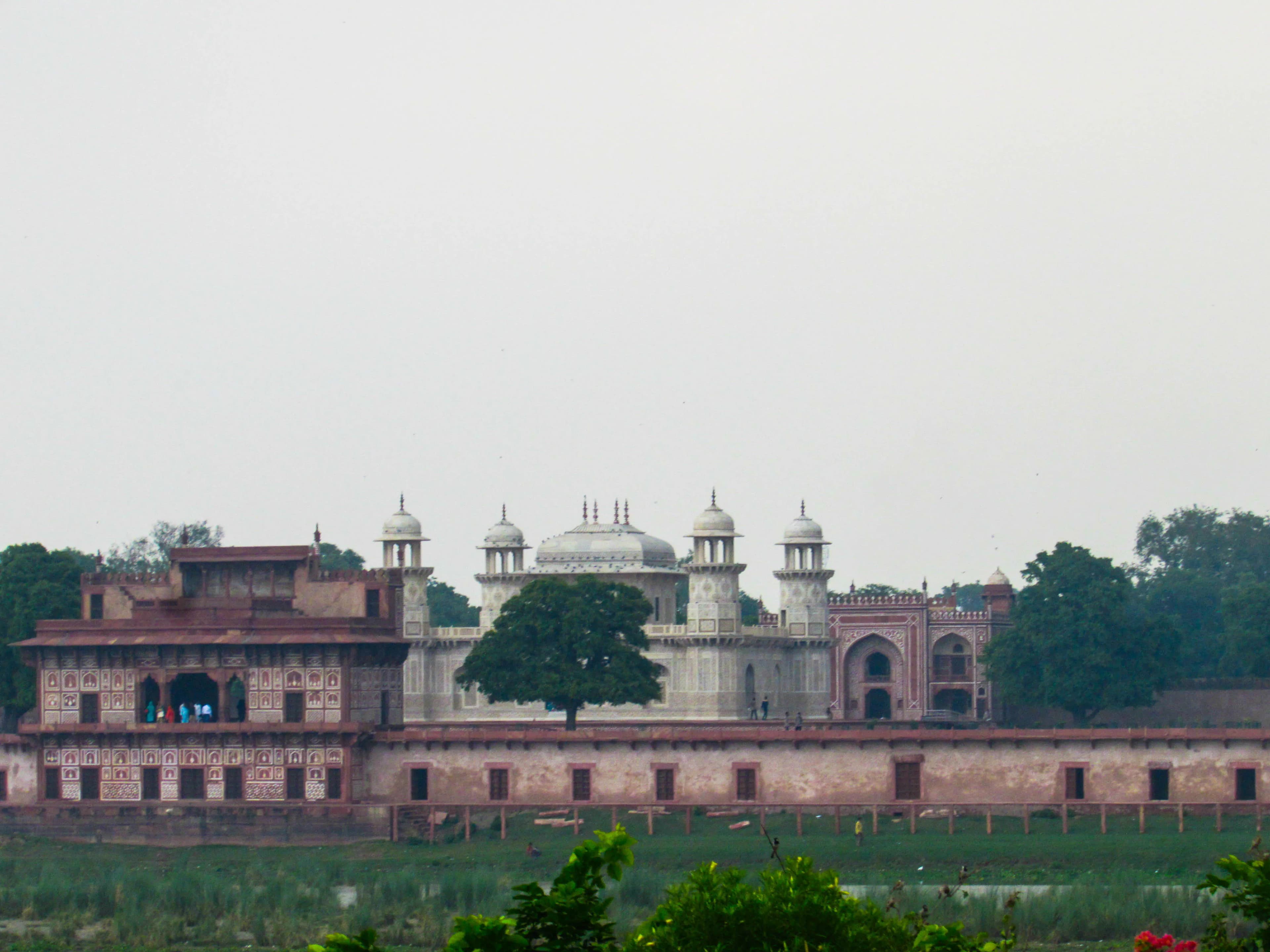
Intricate carvings adorn the walls of Agra Fort, a UNESCO World Heritage site erected from 1565 CE, revealing a synthesis of Timurid-Persian and Indian artistic traditions ([1][11]). As one of the earliest surviving buildings from Akbar's reign, the Jahangiri Mahal showcases this blend ([12]). Its exterior elevations follow a predominantly Islamic scheme, while the interiors are articulated with Hindu elements ([7]). Heavily fashioned brackets, a key feature of Akbari architecture, are prominent throughout ([13]). This fusion reflects a broader Mughal approach of incorporating regional artistic styles ([14]). Furthermore, specific motifs rooted in Indian heritage are visible within the fort. The use of carved panels and decorative arches inside the Jahangiri Mahal points to indigenous architectural influences ([15]). While direct connections to specific Vastu or Shilpa Shastra texts for the fort's overall design are not explicitly documented, the architectural vocabulary shows a clear dialogue with pre-existing Indian forms ([16]). The emperor's throne chamber in the Diwan-i-Am (Hall of Public Audience), constructed by Shah Jahan, features a marble canopy and was originally painted with gold ([17]). Overall, the fort is a powerful expression of Mughal imperial authority, built with red sandstone and later enhanced with white marble by Shah Jahan ([18]). Red sandstone, the primary construction material, lends a formidable presence to the fort, while marble inlays introduced later add refinement ([18]). During the Mughal Period, the fort served not only as a military stronghold but also as a palatial complex, reflecting the empire's grandeur ([19]). Its strategic location on the banks of the Yamuna River further enhanced its importance ([20]). The fort's layout incorporates elements of both Islamic and Hindu design principles, evident in its gateways, courtyards, and residential palaces ([21]). This architectural syncretism reflects the inclusive policies of Mughal emperors like Akbar, who sought to integrate diverse cultural traditions into their imperial projects ([22]). The fort embodies the confluence of Persian, Islamic, and Indian aesthetics, creating a unique architectural vocabulary that defines Mughal architecture ([23]).
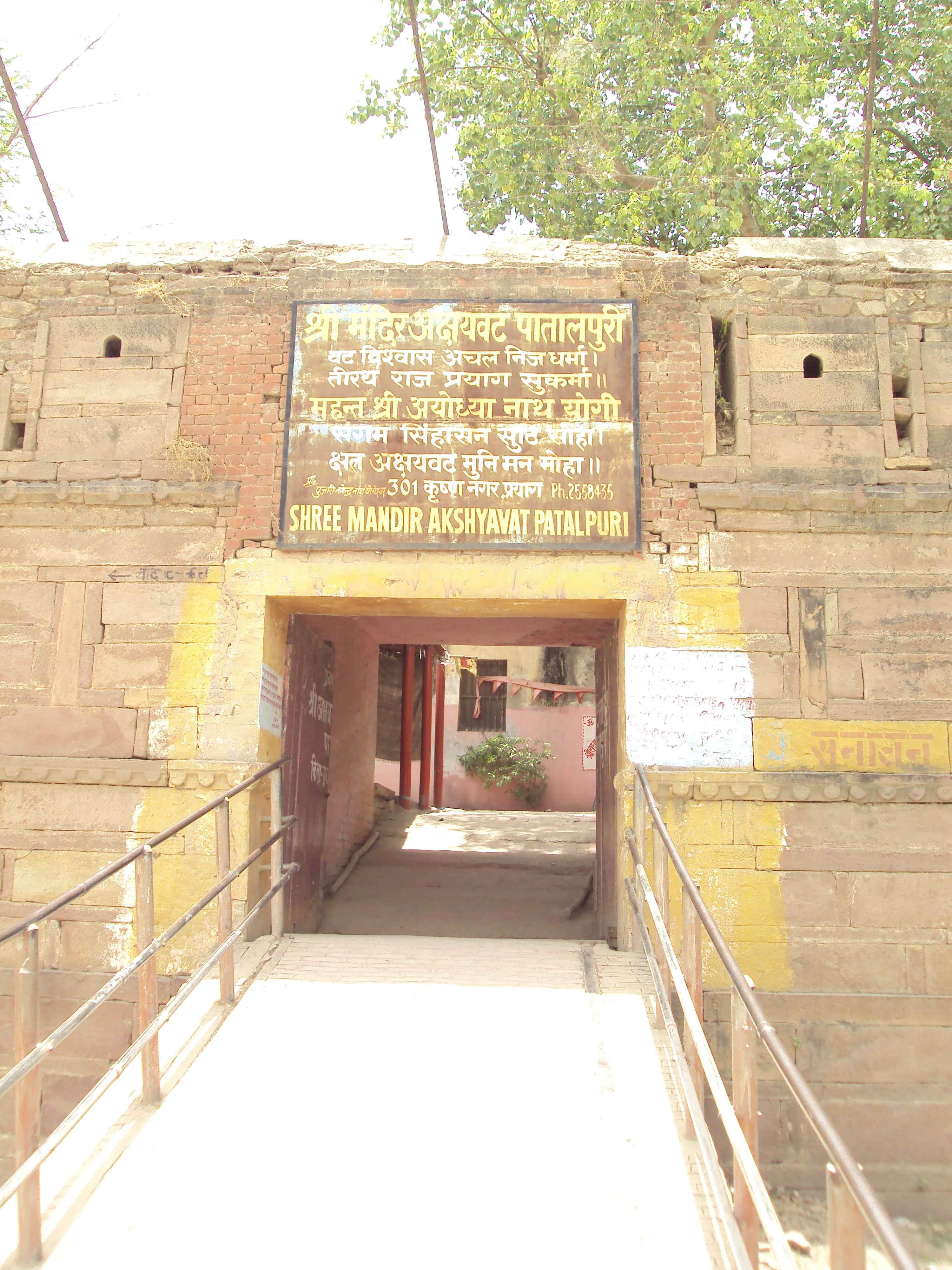
The imposing sandstone ramparts of Allahabad Fort, erected in 1583 CE by the Mughal Emperor Akbar ([1][2]), dominate the sacred confluence, or *Triveni Sangam*, of the Ganga and Yamuna rivers. This strategic military construction exemplifies Mughal architectural prowess, designed to consolidate imperial power over the region ([1]). Within this fortified expanse, the sheer scale of Mughal military architecture is striking ([3]). Granite and sandstone blocks, meticulously carved, constitute the Ashoka Pillar, predating the fort and bearing inscriptions from Emperor Ashoka ([5]). This pillar connects the fort to the Mauryan Empire, underscoring the region's layered history ([5]). Intricate carvings adorning the Zenana (women's quarters) reveal the refined artistry of the Mughal era ([3]). The delicate *jaali* (latticework) exemplifies Mughal craftsmanship, providing both ventilation and privacy ([3]). Also within the fort's walls, the Akshayavat, an ancient banyan tree, holds deep reverence for its mythological significance ([4]). Local traditions connect it to Hindu cosmology, adding a spiritual dimension to the site ([4]). Presenting a contrasting architectural style, the Patalpuri Temple, an underground shrine, features a simpler and more ancient design than the Mughal structures above ([4]). As a confluence of cultures, religions, and empires, the fort's stones and light reverberate with history ([1][2][3][4][5]). The fort's design, while primarily Mughal, may incorporate certain principles of spatial arrangement reminiscent of *Vastu Shastra*, the ancient Indian science of architecture, adapted to the demands of military defense. Sophisticated planning ensured the fort's strategic importance and resilience, reflecting both Mughal innovation and the enduring legacy of the region's earlier empires. The fort stands as a powerful reminder of India's complex and interwoven past, where different traditions have converged and left their indelible marks.
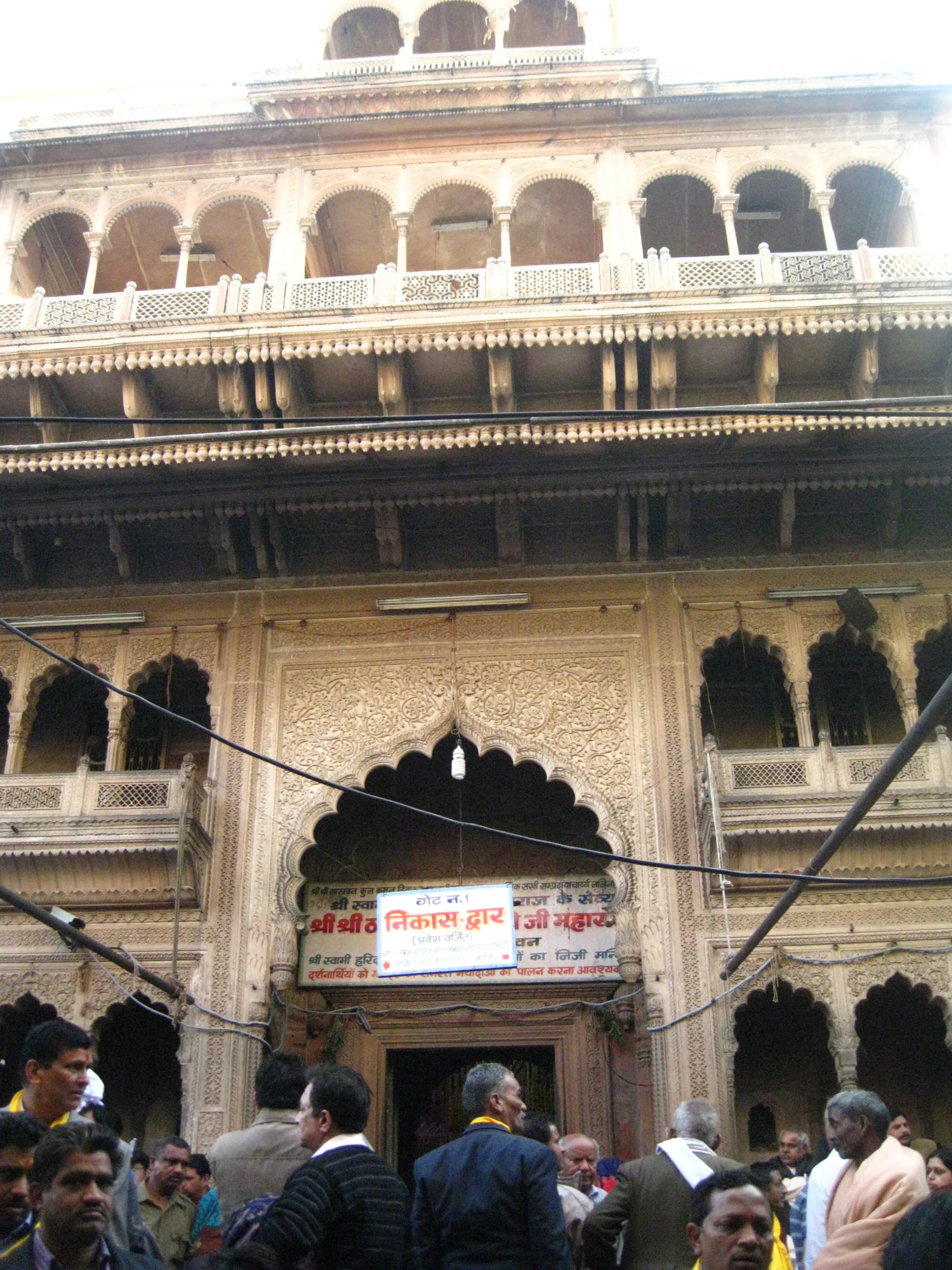
The Banke Bihari Temple, situated in Vrindavan, Mathura district, Uttar Pradesh, stands as a profound testament to India's millennia-spanning cultural heritage and its continuous tradition of devotion to Lord Krishna [1] [2]. This revered Hindu temple is dedicated to Banke Bihari, an iconic representation believed to embody the combined divine forms of Radha and Krishna [1] [2]. The central idol, a captivating black image, is notably depicted in the Tribhanga (three-bend) posture, a classical stance in Indian iconography that signifies grace and divine playfulness [1] [2]. The temple's architecture predominantly reflects the indigenous Rajasthani style, a tradition deeply rooted in India's historical architectural practices, characterized by intricate craftsmanship and robust construction [1] [5]. While the specific dimensions of the entire complex are not universally published, the structural elements feature wide entrances adorned with beautifully carved arches, a hallmark of traditional Indian temple design [1]. The walls throughout the temple interior are meticulously covered with elaborate carvings and vibrant paintings, which vividly narrate episodes from Lord Krishna's life, serving both as decorative elements and didactic visual scriptures [1]. The roof, constructed in a traditional manner, exhibits detailed decorations that further enhance the aesthetic and spiritual ambiance of the sacred space [1]. The temple's interior is celebrated for its exquisite stonework and stunning designs, encompassing a large prayer hall where devotees gather for bhajans and aarti, fostering a collective spiritual experience [1]. The spatial arrangement includes a peaceful courtyard, offering a tranquil environment for contemplation amidst the vibrant devotional activities [1]. Uniquely, the temple does not feature bells within its premises, nor does it perform the Mangala Aarti (early morning ritual) daily, except on Krishna Janmashtami, out of a belief to avoid disturbing the deity, who is revered as a child [2] [5]. Furthermore, the darshan (viewing) of the idol is intentionally interrupted every five minutes by drawing curtains, a practice stemming from the belief that an uninterrupted gaze might cause Banke Bihari to accompany a devotee home, leaving the temple empty [2] [5]. This distinctive ritual underscores the intimate and personal relationship devotees share with the deity. The temple is thronged by thousands of visitors daily, maintaining its status as an active center of worship and cultural practice [5]. Conservation efforts are ongoing to preserve this national heritage site, ensuring its structural integrity and the longevity of its artistic and spiritual elements [4]. The site remains fully operational, accessible to devotees and visitors, and continues to uphold its ancient traditions and maintenance protocols, embodying the enduring legacy of Indian civilization [1] [4].
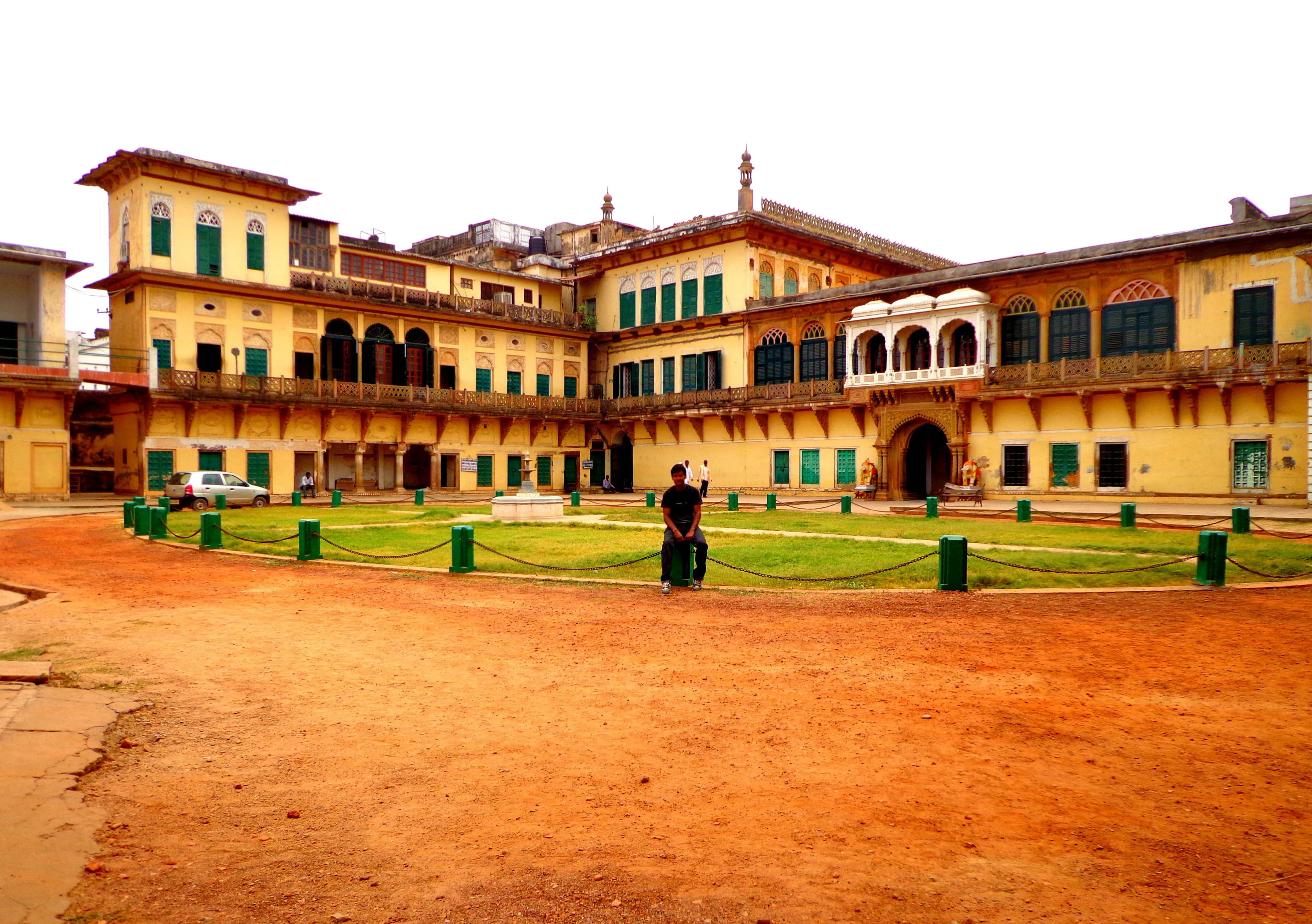
Stone platforms and foundations indicate Chunar Fort's ancient origins, tracing back to 56 BC during the Rajput Period ([1][2]). Vikramaditya, the Ujjain king, initiated its construction, strategically situating it along the Ganges River in Uttar Pradesh ([1]). This military installation displays an Indo-Islamic architectural style, harmonizing Hindu and Islamic elements ([3]). The fort's construction involved sandstone, bricks, lime mortar, and wood ([4]). During its extensive history, numerous rulers coveted the fort. Intricate carvings embellishing the walls reflect Mughal influences, evident in the delicate jalis (latticework screens) and arches ([5]). Vedic astronomical principles guided the fort's layout, aligning it with cardinal directions, a common practice in ancient Indian architecture ([6]). This alignment likely drew from principles outlined in texts like the Surya Siddhanta, which details astronomical calculations for architectural planning. Sophisticated drainage systems ensure the fort's structural integrity, a testament to ancient engineering prowess ([7]). Archaeological excavations have unearthed remnants of earlier settlements, revealing the fort's continuous occupation across centuries ([8]). These excavations may reveal insights into construction techniques detailed in the Manasara Shilpa Shastra, an ancient treatise on architecture and construction. The Sonwa Mandap (Pavilion) provides panoramic views, highlighting the fort's strategic and aesthetic importance ([9]). Chunar Fort persists as a significant monument, echoing narratives of power, religion, and artistic synthesis ([10]). The fort's design and construction likely adhered to principles of Vastu Shastra, the traditional Hindu system of architecture, which emphasizes harmony with nature and cosmic energies ([6]). The use of specific materials like sandstone and lime mortar also reflects traditional building practices detailed in ancient texts ([4]).
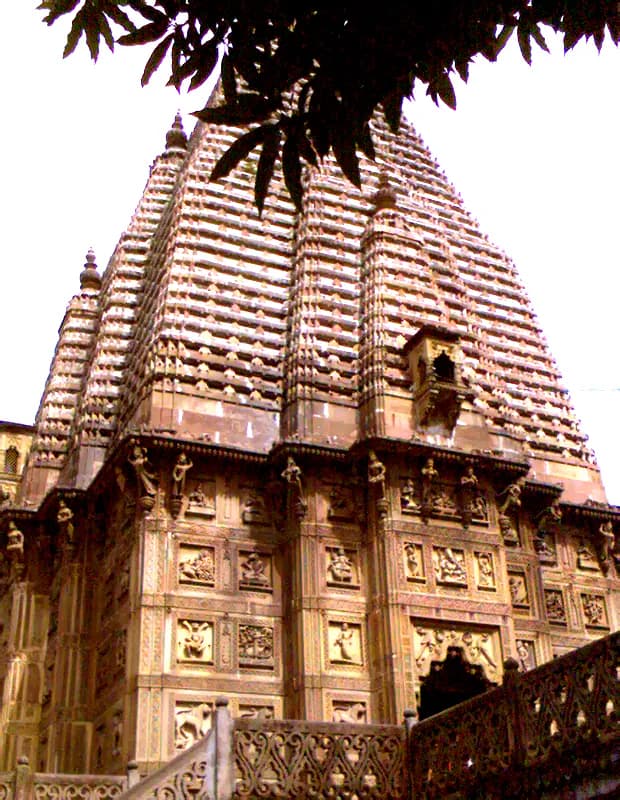
The air vibrates with a palpable energy. Not the frenetic energy of Varanasi’s bustling ghats, but something older, something rooted deeper. Here, nestled amidst the labyrinthine lanes a short boat ride from the main ghats, stands Durga Mandir, a 17th-century temple dedicated to the warrior goddess Durga. Its walls, a vibrant shade of ochre, rise against the sky, a beacon of power and devotion. My journey to Durga Mandir, another tick on my quest to experience every UNESCO site in India, began with a dawn boat ride. The Ganges, still shrouded in the morning mist, held a serene beauty, a stark contrast to the vibrant chaos that would soon erupt on its banks. As we approached Ramnagar, the temple's distinctive profile emerged, its multiple shikharas reaching towards the heavens. Stepping off the boat and onto the dusty lane leading to the temple, I was immediately struck by the sense of anticipation. The air buzzed with the low hum of chanting and the clang of bells. The temple, built on a high plinth, commanded attention. Its Nagara style architecture, typical of North Indian temples, is a feast for the eyes. The multi-tiered shikharas, adorned with intricate carvings, rise in a rhythmic crescendo, culminating in ornate finials. The ochre walls, though weathered by time and the elements, retain their vibrancy, a testament to the enduring faith of the devotees. A large rectangular pond, known as Durga Kund, flanks the temple. Local lore claims it was dug by the goddess herself and is connected to the nearby Ganges. The water, a murky green, reflects the temple’s imposing structure, creating a mesmerizing mirror image. Devotees circumambulate the kund, their prayers mingling with the chirping of birds and the distant sounds of the city. Entering the main sanctum, I was enveloped in a heady mix of incense, flowers, and the fervent energy of prayer. The dimly lit space, illuminated by flickering oil lamps, held an air of mystery. The idol of Goddess Durga, resplendent in red and gold, sits majestically on a lion, her multiple arms holding various weapons. The sheer power emanating from the deity is palpable, leaving an indelible impression on the visitor. While the main shrine is dedicated to Durga, the temple complex also houses smaller shrines dedicated to other deities, including Lord Hanuman and Lord Shiva. Each shrine, though smaller in scale, boasts the same intricate carvings and vibrant colours, showcasing the rich artistic traditions of the region. What struck me most about Durga Mandir wasn't just its architectural grandeur or the palpable devotion of its visitors. It was the seamless blend of history, mythology, and everyday life. Outside the temple walls, life continued at its usual pace. Vendors hawked their wares, children played in the dusty lanes, and cows ambled along, seemingly oblivious to the sacred space they shared. This juxtaposition of the sacred and the mundane, the ancient and the contemporary, is what makes Varanasi, and indeed India, so uniquely captivating. As I left Durga Mandir, the setting sun casting long shadows across the Ganges, I carried with me not just photographs and memories, but a deeper understanding of the enduring power of faith and the rich tapestry of Indian culture. This temple, a vibrant testament to devotion and artistry, is a must-see for anyone seeking to experience the true essence of Varanasi.
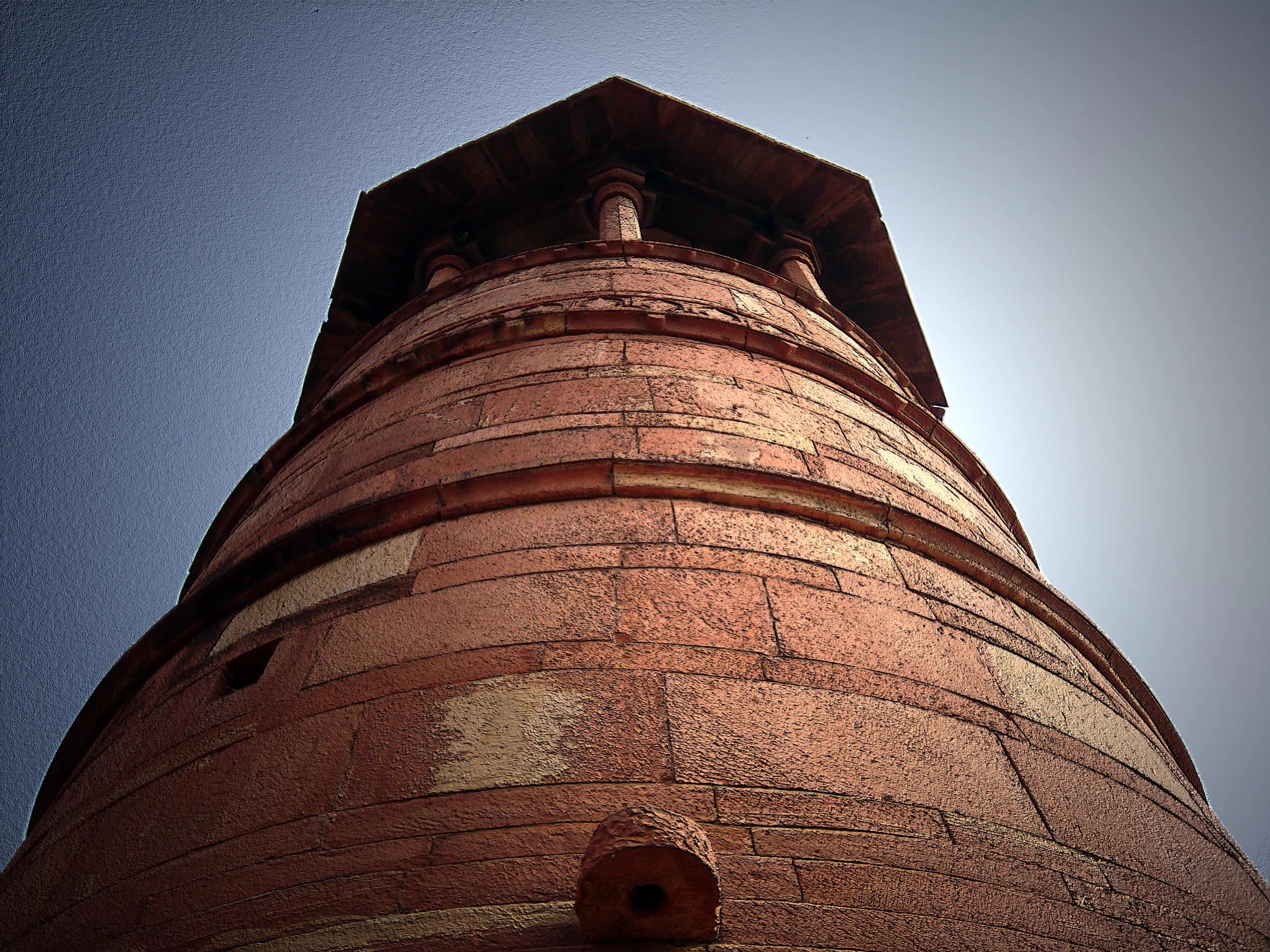
The sandstone shimmered under the late afternoon sun, a warm, almost ethereal glow bathing the deserted courtyards of Fatehpur Sikri. Having crisscrossed North India for years, exploring crumbling forts and bustling cities, I thought I was immune to the charms of another Mughal monument. I was wrong. Fatehpur Sikri, Akbar’s abandoned capital, whispered stories of a glorious past, a brief but brilliant chapter in Indian history. Stepping through the Buland Darwaza, the imposing victory gate, felt like stepping back in time. Its sheer scale is breathtaking, a 54-meter high testament to Akbar’s military prowess. The intricate carvings, a blend of Persian and Indian motifs, hinted at the cultural confluence that defined his reign. This wasn't just a fort; it was a city, meticulously planned and executed, a testament to a vision that, though short-lived, left an indelible mark. The Diwan-i-Aam, the hall of public audience, sprawled before me, its vastness punctuated by the raised platform where Akbar, the emperor, would address his subjects. I could almost picture the vibrant scene – the courtiers, the petitioners, the bustling activity of a thriving capital. The Diwan-i-Khas, the hall of private audience, was even more captivating. The central pillar, intricately carved and radiating outwards like the branches of a tree, is an architectural marvel. It was here that Akbar held discussions with scholars and representatives of different faiths, fostering the spirit of religious tolerance that characterized his rule. I wandered through the Panch Mahal, a five-storied pavilion, each level smaller than the one below, creating a pyramidal structure that offered stunning views of the surrounding plains. The intricate jalis, or perforated stone screens, allowed the breeze to flow through, a clever architectural solution to the scorching summer heat. These screens also served another purpose – they allowed the royal women to observe the court proceedings without being seen, a glimpse into the secluded world of the Mughal zenana. The Jodhabai’s Palace, with its Hindu architectural influences, stood in stark contrast to the predominantly Persian style of the other buildings. The carved brackets, reminiscent of Rajput architecture, and the absence of the characteristic Mughal arches, spoke volumes about Akbar’s respect for his Hindu wife and his efforts to integrate different cultural elements into his empire. One of the most poignant structures within the complex is Salim Chishti’s tomb. The white marble mausoleum, a masterpiece of intricate carving, is a place of reverence even today. I watched as devotees tied threads to the marble screens, whispering prayers, their faith echoing through the centuries. It was here, according to legend, that Akbar came to pray for an heir, and the birth of his son, Jahangir, cemented the saint’s reputation and led to the construction of this magnificent tomb. As the sun began to set, casting long shadows across the deserted courtyards, I felt a sense of melancholy wash over me. Fatehpur Sikri, once a bustling metropolis, now stands silent, a ghost of its former glory. The reasons for its abandonment remain shrouded in mystery, with theories ranging from water scarcity to Akbar’s shifting political priorities. Whatever the reason, the silence that now pervades this magnificent city only amplifies the whispers of its past, making the experience all the more profound. Leaving Fatehpur Sikri, I carried with me not just photographs and memories, but a deeper understanding of a pivotal period in Indian history, a time of cultural fusion, religious tolerance, and architectural brilliance.
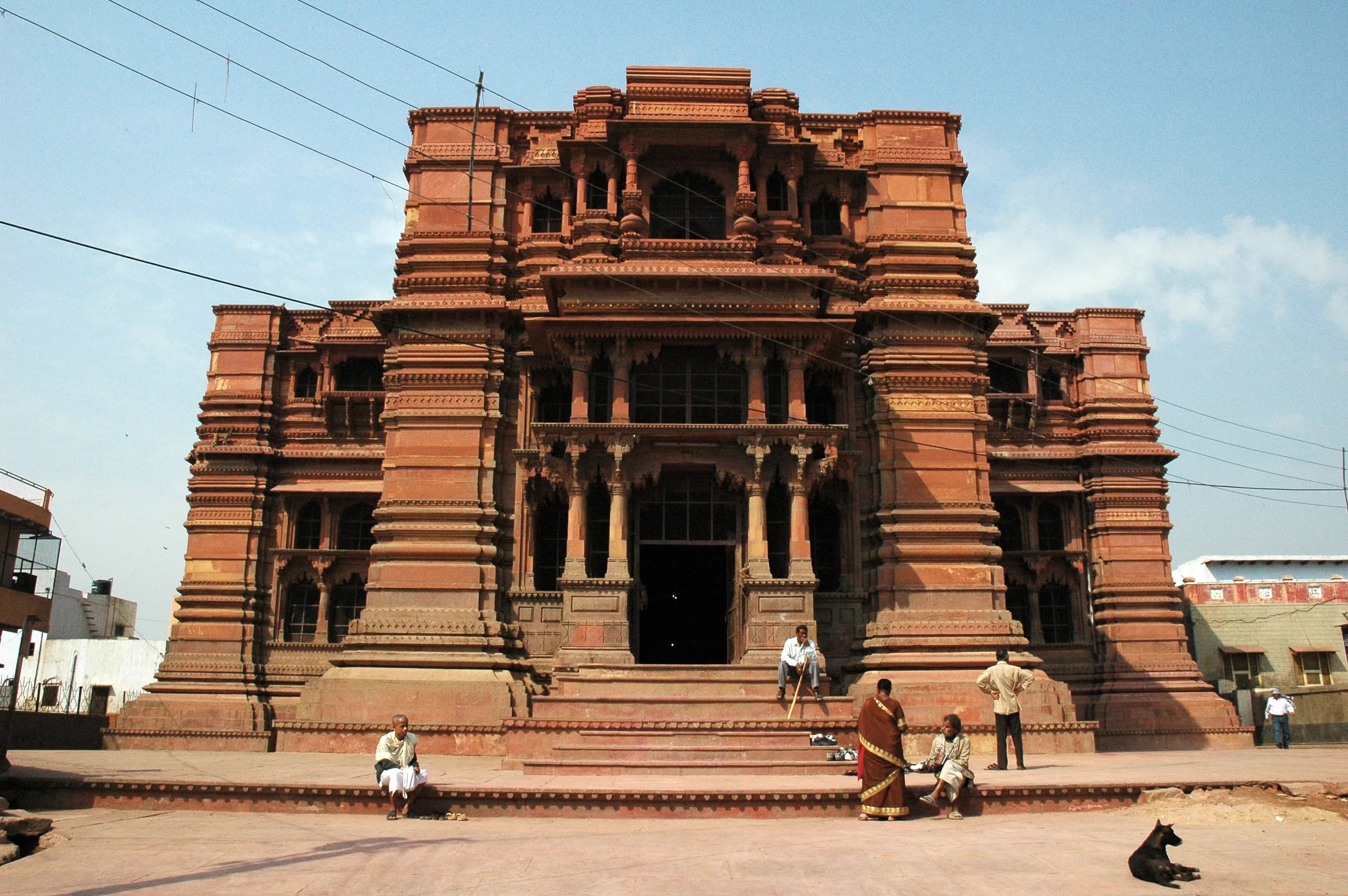
The red sandstone glowed, almost humming with a palpable energy under the late afternoon sun. Govind Dev Temple in Vrindavan, though no longer in its complete glory, still exudes a majestic aura that transported me back to a Vrindavan of centuries past. Having documented Gujarat's intricate temples for years, I was eager to experience the architectural nuances of this Braj marvel, and I wasn't disappointed. The first thing that struck me was the unique blend of architectural styles. While the temple’s core exhibits a distinctly Rajput influence, reminiscent of some of the grand structures I’ve seen in Rajasthan, the seven-storied structure (now sadly reduced to three) bore a striking resemblance to European architecture, particularly reminiscent of a cathedral. This fusion, I learned, was a result of the Mughal emperor Akbar's relatively tolerant religious policies during the late 16th century, a period that allowed for such cross-cultural architectural experimentation. Stepping inside the pillared hall, which now serves as the main prayer area, I was immediately drawn upwards. The soaring ceilings, even in their truncated state, evoked a sense of grandeur. The intricate carvings on the remaining pillars, depicting scenes from Krishna's life, were a testament to the skill of the artisans. Each carving told a story, each curve and line imbued with devotion. I spent a considerable amount of time tracing these narratives with my fingers, imagining the temple in its original seven-storied splendor. The absence of the upper four stories, destroyed by Aurangzeb in the 17th century, is a poignant reminder of the tumultuous history this temple has witnessed. Yet, the resilience of the structure and the continued devotion of the pilgrims who throng its courtyard speak volumes about its enduring spiritual significance. The air vibrated with chants and the fragrance of incense, creating an atmosphere thick with reverence. The temple complex is built around a rectangular courtyard, and while the main shrine is dedicated to Govind Dev (Krishna), smaller shrines dedicated to Radha and other deities dot the periphery. I observed the local devotees engaging in various rituals, their faces reflecting a deep connection to the divine. The rhythmic clang of bells and the melodic chanting of hymns further intensified the spiritual ambiance. The use of red sandstone, a material I'm intimately familiar with from Gujarat's architectural heritage, lends the temple a warm, earthy hue. However, unlike the intricate, almost lace-like carvings often seen in Gujarati temples, the carvings here are bolder, more pronounced, reflecting a different aesthetic sensibility. The interplay of light and shadow on the sandstone surfaces created a dynamic visual experience, constantly shifting throughout the day. One particular detail that captivated me was the remnants of the original staircase that once led to the upper floors. Though now inaccessible, the sheer scale and craftsmanship of the remaining steps hinted at the lost magnificence of the complete structure. I could almost visualize the devotees ascending those stairs, their hearts filled with anticipation, to reach the inner sanctum. Leaving the temple complex, I carried with me a profound sense of awe and a touch of melancholy. Awe at the architectural brilliance and spiritual energy that permeated the space, and melancholy for the lost grandeur of a structure that once touched the sky. Govind Dev Temple stands as a testament to the enduring power of faith and a poignant reminder of the fragility of our heritage. It is a site that deserves to be experienced, not just seen, and its story, etched in stone and whispered in chants, continues to resonate through the ages.
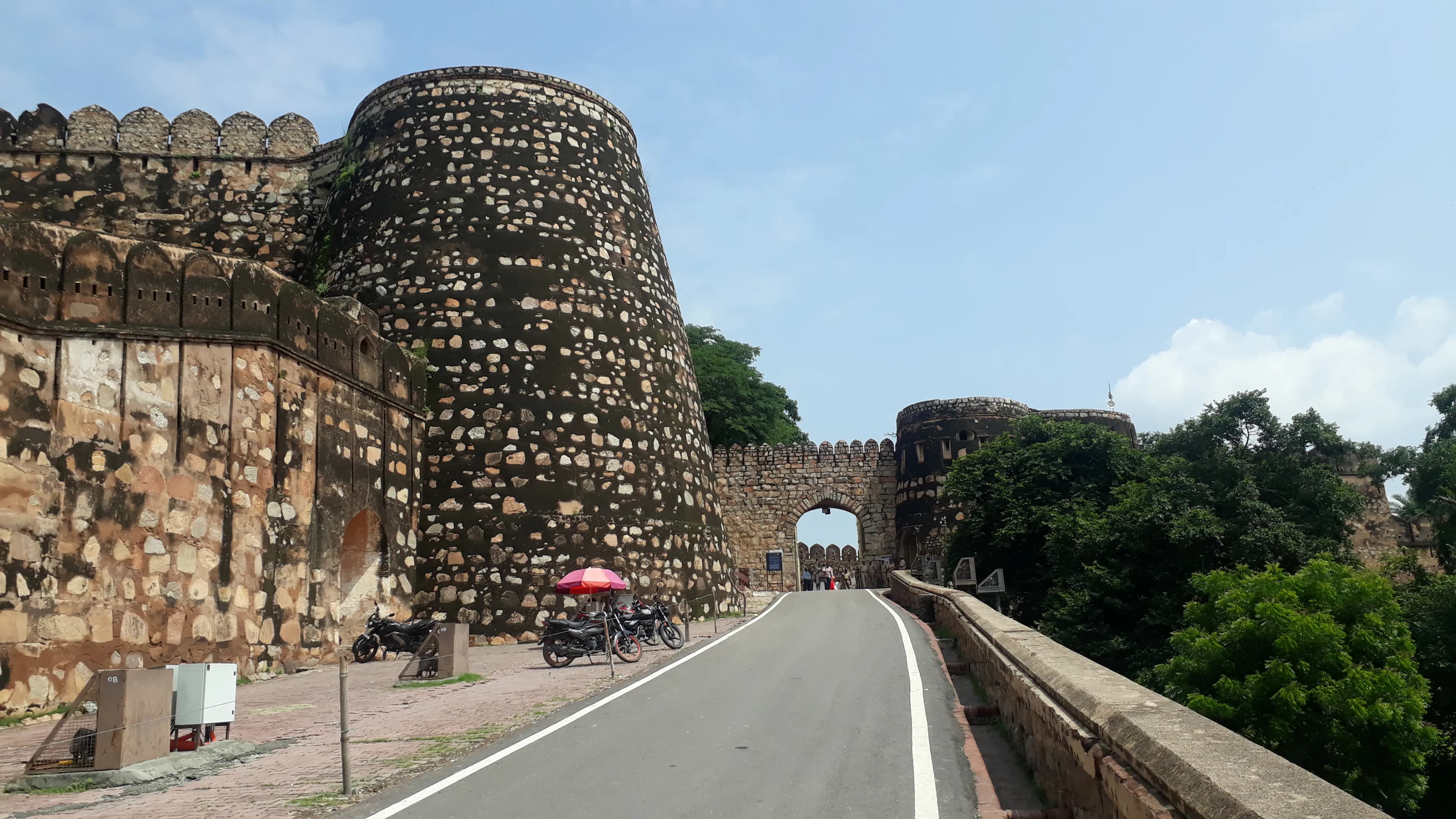
The imposing sandstone ramparts of Jhansi Fort, rising dramatically from the Bundelkhand plains, seemed to hum with untold stories. Having explored countless caves and temples back home in Maharashtra, I’ve developed a keen eye for historical resonance, and this fort, even from a distance, vibrated with a palpable energy. The scorching Uttar Pradesh sun beat down as I approached the main gate, the very same gateway Rani Lakshmibai, the iconic warrior queen, is said to have charged through on horseback, her infant son strapped to her back. Entering through the Karak Bijli Toop (Lightning Cannon) gate, I was immediately struck by the fort's sheer scale. The walls, averaging 20 feet thick and rising to a height of 100 feet in places, enclosed a vast expanse. Unlike the basalt structures I’m accustomed to in Maharashtra, the reddish-brown sandstone gave the fort a distinct, almost earthy feel. The walls, though scarred by cannon fire and the ravages of time, held an undeniable strength, a testament to the fort's enduring resilience. My exploration began with the Ganesh Mandir, nestled within the fort's complex. The small, unassuming temple, dedicated to Lord Ganesha, offered a moment of quiet contemplation amidst the fort's martial history. The intricate carvings on the temple door, though weathered, spoke of a time of artistic flourishing within these walls. From there, I moved towards the Rani Mahal, the queen's palace. This was where the personal became intertwined with the historical. The palace, though now a museum, still echoed with the whispers of Rani Lakshmibai's life. The delicate murals depicting scenes of courtly life and nature, now faded but still visible, offered a glimpse into the queen's world, a world far removed from the battlefield. I paused in the courtyard, imagining the queen strategizing with her advisors, her spirit as fiery as the Bundelkhand sun. The panoramic view from the top of the fort was breathtaking. The sprawling city of Jhansi stretched out below, a tapestry of old and new. I could see the very path the queen took during her daring escape, a path etched not just in history books, but in the very landscape itself. It was here, looking out at the vastness, that the weight of history truly settled upon me. The fort’s architecture revealed a blend of influences. While predominantly exhibiting Hindu architectural styles, certain elements, like the strategically placed bastions and the use of cannons, hinted at the later Maratha influence. The Kadak Bijli cannon itself, a massive piece of artillery, stood as a silent witness to the fierce battles fought here during the 1857 uprising. The museum within the Rani Mahal housed a collection of artifacts from that era – swords, shields, and even some personal belongings of the queen. While these objects were fascinating in their own right, they also served as poignant reminders of the human cost of conflict. As I descended from the ramparts, leaving the fort behind, I couldn't shake the feeling that I had walked through a living testament to courage and resilience. Jhansi Fort is more than just stones and mortar; it’s a repository of stories, a symbol of resistance, and a powerful reminder of a queen who dared to defy an empire. It is a place where history isn't just read, it's felt. And for a history enthusiast like myself, that's the most rewarding experience of all.
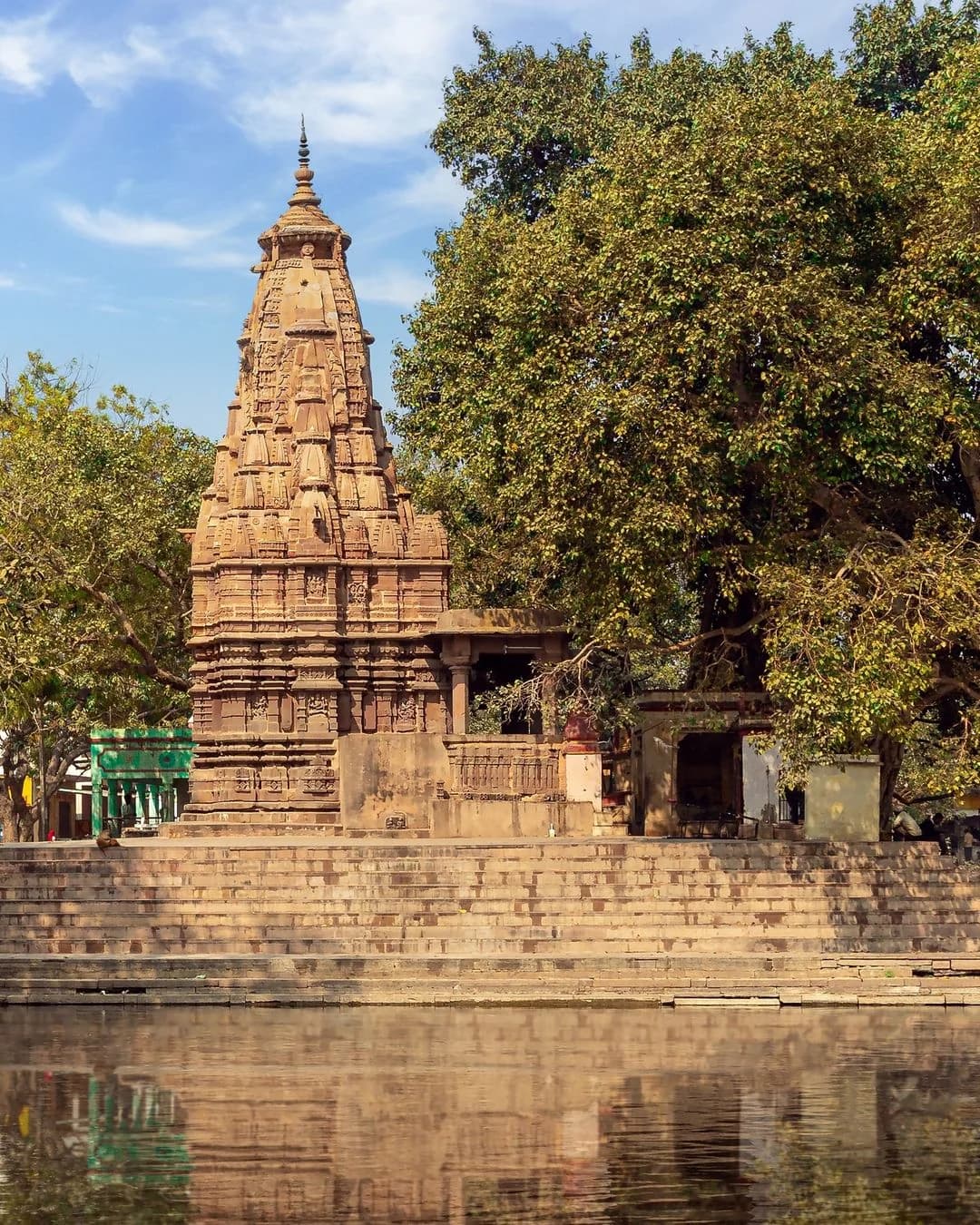
The Ganges, a swirling ribbon of ochre and silver, flowed just beyond the ghats, its rhythmic lapping a constant backdrop to the chants emanating from the Kardameswar Mahadev Temple. As someone who has spent years exploring the cave temples of Maharashtra, carved into the basalt heart of the Deccan plateau, stepping into this Varanasi temple was like entering a different world. Here, the architecture wasn't hewn from rock, but built brick by brick, rising towards the sky with a delicate intricacy that contrasted sharply with the rugged simplicity I was accustomed to. Located in the southern part of Varanasi, near the famed Kedar Ghat, the Kardameswar Mahadev Temple isn't as imposing as some of the city's grander structures. Yet, its unassuming exterior belies a rich history and a palpable spiritual energy. The temple is dedicated to Lord Shiva, in his form as Kardameswar, the "Lord of the Mud," a reference to the creation myth where Brahma emerged from the primordial waters. This connection to creation is reflected in the temple's atmosphere, a sense of quiet rebirth permeating the air. The entrance is through a modest arched gateway, leading into a small courtyard. The main shrine stands at the center, its shikhara, or tower, rising in a series of gradually receding tiers, culminating in a golden kalash, a pot-like finial. Unlike the pyramidal shikharas of South Indian temples or the curvilinear ones common in Odisha, this one displayed a distinct North Indian style, its profile gently curving outwards before tapering towards the top. The brickwork was intricate, with delicate carvings of floral motifs and divine figures adorning the surface. Traces of faded paint hinted at a more vibrant past, suggesting that the temple was once a riot of color. Inside the sanctum sanctorum, a lingam, the symbolic representation of Lord Shiva, stood bathed in the soft glow of oil lamps. The air was thick with the scent of incense and the murmur of prayers. Devotees offered flowers, milk, and water, their faces etched with devotion. I watched as a priest performed the aarti, the rhythmic waving of lamps accompanied by the chanting of mantras, the ancient syllables resonating within the small chamber. What struck me most about the Kardameswar Mahadev Temple wasn't its grandeur, but its intimacy. Unlike the cavernous halls of the Ellora caves or the sprawling complexes of Ajanta, this temple felt personal, a space for quiet contemplation and connection. The limited space, filled with the murmur of prayers and the scent of incense, fostered a sense of closeness, not just with the divine, but also with the other devotees. It was a shared experience, a collective immersion in faith. Stepping out of the main shrine, I noticed a smaller shrine dedicated to Goddess Parvati, Shiva's consort. This shrine, too, was built in the same North Indian style, its shikhara echoing the main temple's architecture. The presence of Parvati alongside Shiva underscored the concept of Ardhanarishvara, the composite form of Shiva and Parvati, representing the inseparable nature of the masculine and feminine principles in the cosmos. As I left the temple and walked towards the ghats, the sounds of the city slowly enveloped me. The chants faded into the background, replaced by the calls of vendors and the splash of oars in the Ganges. Yet, the sense of peace I felt within the temple lingered, a quiet reminder of the spiritual heart that pulsed beneath the vibrant chaos of Varanasi. The Kardameswar Mahadev Temple, though small in size, offered a profound glimpse into the rich tapestry of Hindu faith and the architectural heritage of North India, a stark yet fascinating contrast to the rock-cut wonders I knew so well from my home state of Maharashtra.
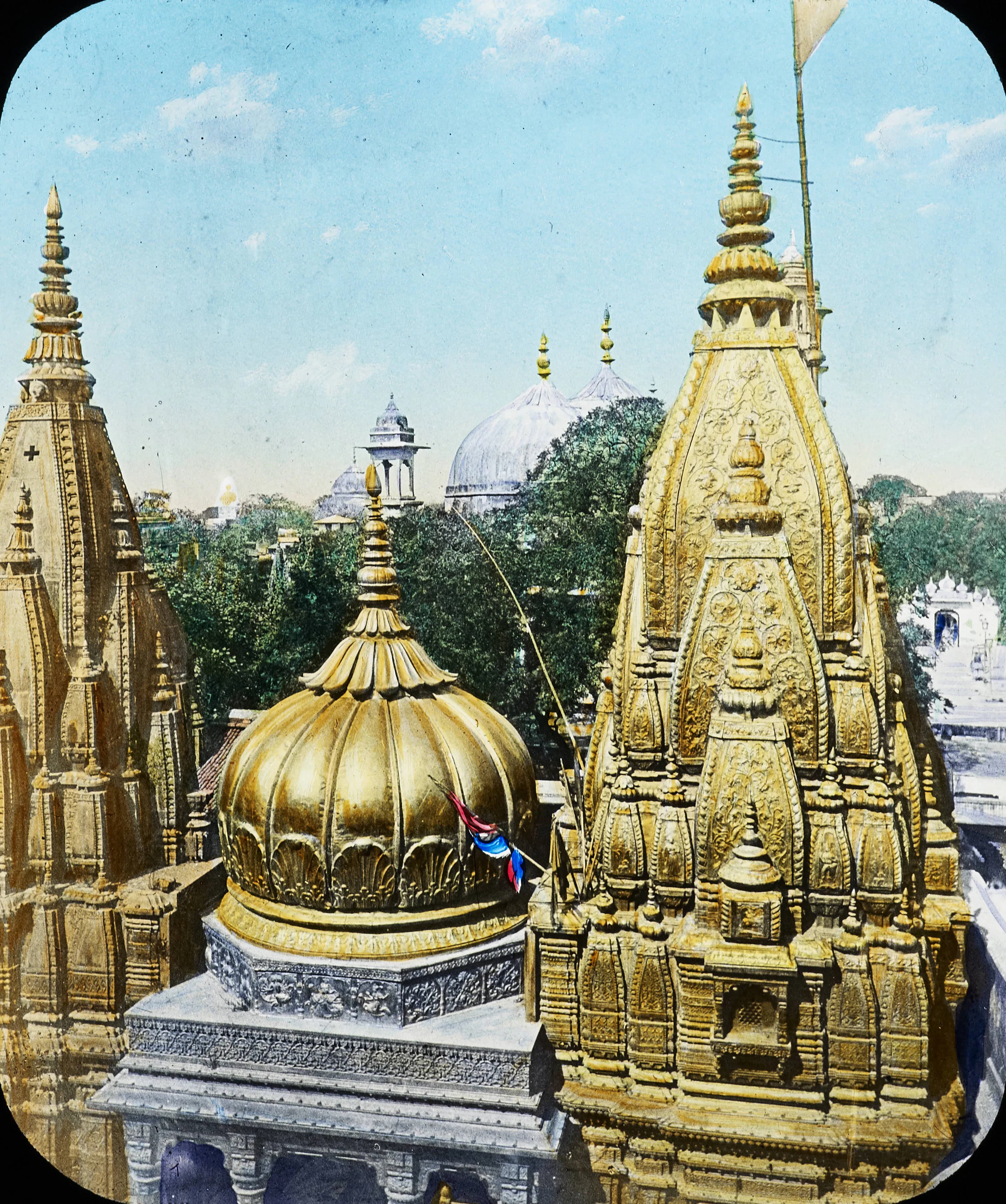
The narrow lanes of Vishwanath Gali, teeming with pilgrims and the scent of incense, felt worlds away from the bustling Varanasi ghats. This labyrinthine alley, barely wide enough for two people to pass comfortably, funnels devotees towards a single, incandescent point: the Kashi Vishwanath Temple, a structure whose very stones seem to vibrate with centuries of devotion. Having photographed over 500 monuments across India, I thought I was prepared for the intensity of this experience, but the sheer spiritual charge of the place was overwhelming. Emerging from the alley's dimness, the temple’s gold-plated shikhara, or spire, blazed under the afternoon sun. It’s a breathtaking sight, a beacon of faith that draws the eye and the spirit. The intricate carvings covering the spire, depicting scenes from Hindu mythology, are a testament to the skill of the artisans who crafted them. Even from a distance, the sheer density of the ornamentation is striking, each figure and motif telling its own silent story. Security is understandably tight, and the process of entering the temple involves multiple checkpoints and a necessary relinquishing of cameras and phones. This enforced digital detox, while initially frustrating for a photographer, ultimately enhanced the experience. Stripped of the impulse to document, I was forced to simply *be* present, to absorb the atmosphere through my senses rather than my lens. Inside, the courtyard is a vibrant tapestry of activity. Priests chant ancient mantras, the air thick with the aroma of burning camphor and marigold garlands. Devotees, their faces alight with fervor, offer prayers and perform rituals. The walls, though worn smooth by the touch of countless hands, still bear traces of their intricate carvings. I noticed the subtle variations in the stonework, from the finely detailed sculptures of deities to the geometric patterns that adorned the pillars. The architecture, a blend of several styles reflecting the temple's complex history of destruction and reconstruction, speaks volumes about the enduring power of faith. The main sanctum, housing the Jyotirlinga, is the epicenter of this spiritual vortex. While photography is prohibited, the image of the shimmering lingam, bathed in the soft glow of oil lamps, is etched in my memory. The palpable energy of the space, amplified by the fervent chanting and the sheer density of devotion, is unlike anything I’ve experienced. It's a sensory overload, a cacophony of sound and scent and emotion that leaves you breathless. Leaving the main temple, I explored the smaller shrines dedicated to various deities within the complex. Each shrine, though smaller in scale, possessed its own unique character and atmosphere. I was particularly drawn to the Nandi shrine, where the faithful offered their respects to Shiva's sacred bull. The worn smoothness of the Nandi statue, polished by centuries of touch, spoke to the enduring power of devotion. Even after exiting the temple complex and regaining the relative calm of the ghats, the reverberations of the experience stayed with me. The Kashi Vishwanath Temple is more than just a monument; it's a living, breathing entity, pulsating with the heartbeats of millions of devotees. It's a place where faith transcends the physical realm, where the mundane dissolves into the sacred. As a heritage photographer, I’ve documented countless sites of historical and cultural significance, but few have touched me as profoundly as this. The Kashi Vishwanath Temple is a testament to the enduring power of faith, a place where the divine feels tangibly present. It's an experience that transcends the visual, etching itself onto the soul.
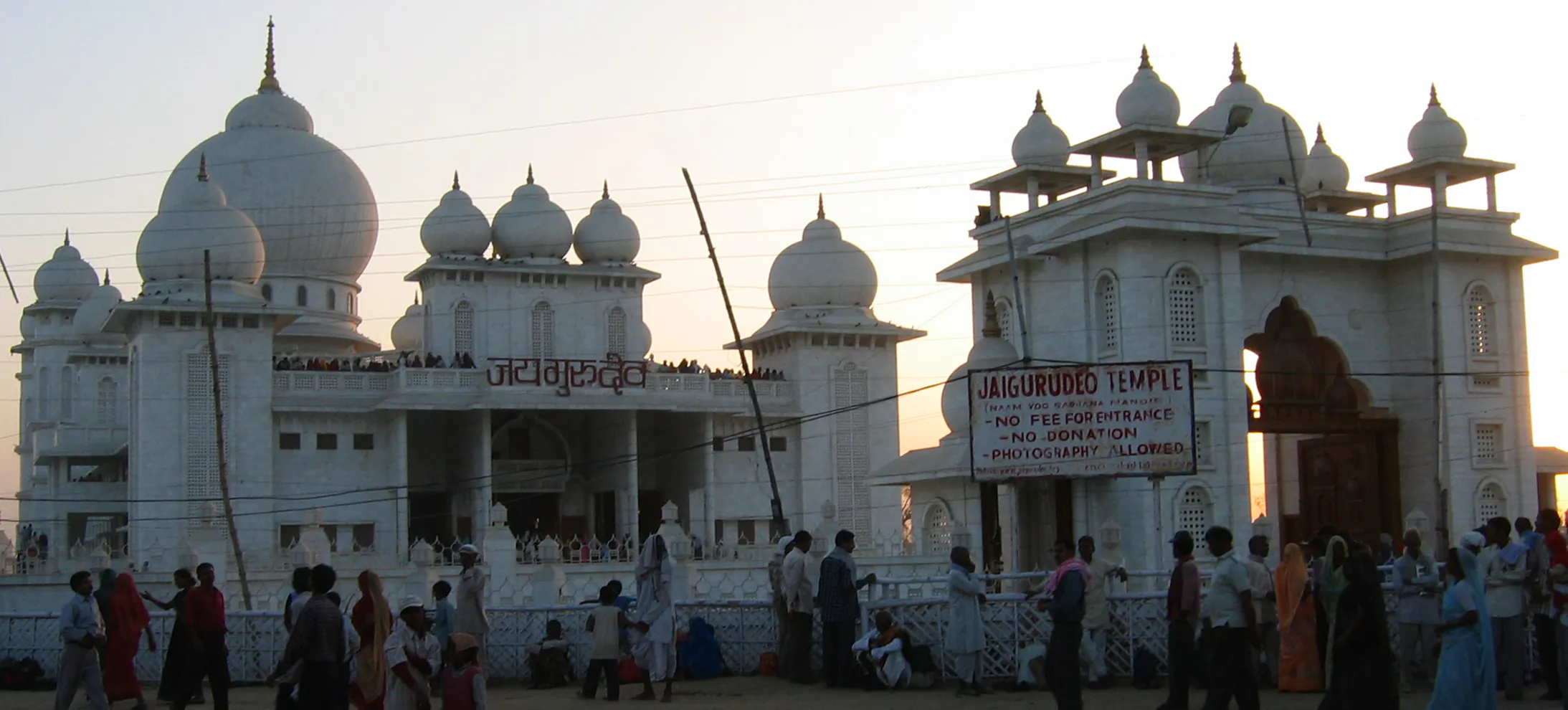
The air in Mathura vibrates with a palpable energy, a hum of devotion that seems to emanate from the very stones of the Krishna Janmasthan Temple Complex. Standing within its precincts, I felt an immediate connection to the layers of history embedded within this sacred ground. The complex, a tapestry woven with threads of different eras, stands as a testament to the enduring power of faith and the cyclical nature of destruction and reconstruction. My gaze was immediately drawn to the imposing Keshav Dev Temple, its towering shikhara a beacon against the Mathura sky. While the current structure dates back to the 18th century, thanks to the patronage of the Jat ruler Suraj Mal, the palpable antiquity of the site whispers of much older incarnations. The very stones seemed to hold the memory of the original temple, believed to have been built by Vajranabha, Krishna’s great-grandson, a structure mentioned in the ancient scriptures. The repeated destructions and subsequent rebuildings, a recurring motif in Indian history, have imbued the site with a unique resonance, a sense of resilience in the face of adversity. The architecture of the Keshav Dev Temple showcases a blend of styles, reflecting the various influences that have shaped it over centuries. The intricate carvings adorning the walls, depicting scenes from Krishna’s life, are a testament to the skill of the artisans. I noticed the distinctive use of red sandstone, a material common in the region, which lends the temple a warm, earthy hue. The interplay of light and shadow on the carved surfaces created a dynamic visual experience, enhancing the narrative power of the sculptures. While some sections displayed the robust features of Rajput architecture, others hinted at the Mughal influence that permeated the region during certain periods. Moving through the complex, I entered the Garbha Griha, the sanctum sanctorum, where the deity of Keshav Dev is enshrined. The atmosphere within was charged with devotion, the air thick with the scent of incense and the murmur of prayers. The dimly lit space, illuminated by flickering oil lamps, fostered a sense of profound reverence. I observed the devotees, their faces etched with faith, offering prayers and performing rituals that have likely been practiced for generations. Adjacent to the Keshav Dev Temple lies the smaller, yet equally significant, Bhagavata Bhavan. This structure, built around an ancient prison cell believed to be the very birthplace of Krishna, holds a special significance for pilgrims. The low-ceilinged, claustrophobic space, a stark contrast to the grandeur of the Keshav Dev Temple, evokes a sense of intimacy and raw emotion. The very thought of Lord Krishna being born in such humble surroundings adds another layer to the narrative of his divine leela, his earthly play. The Idgah mosque, situated within the complex, adds another layer of complexity to the site's historical narrative. Its presence serves as a tangible reminder of the Mughal period and the religious tensions that have, at times, marked the region's history. The juxtaposition of the mosque and the temple within the same complex creates a unique spatial dynamic, a physical manifestation of the interwoven narratives that shape India's cultural landscape. Leaving the Krishna Janmasthan Temple Complex, I carried with me not just images of intricate carvings and soaring shikharas, but a deeper understanding of the complex interplay of faith, history, and architecture. The site stands as a powerful symbol of continuity and resilience, a living testament to the enduring legacy of Lord Krishna and the unwavering devotion he inspires. It is a place where the past whispers to the present, offering a glimpse into the rich tapestry of Indian history and spirituality.

The air, thick with the scent of incense and marigold garlands, vibrated with a low hum of chanting as I descended the worn sandstone steps leading to Kusum Sarovar. This wasn’t just another monument on my North Indian itinerary; it was a palpable breath of history, nestled in the heart of Braj, near Govardhan Hill. Having explored countless ancient sites across the region, I thought I was immune to being awestruck, but Kusum Sarovar, with its serene beauty and spiritual weight, proved me wrong. The sarovar, or sacred pond, is rectangular, its still, dark water reflecting the surrounding architecture like a mirror. The banks are lined with intricately carved chhatris, small pavilions with delicate pillars and domed roofs, each a miniature masterpiece of Mughal-influenced Rajput architecture. I noticed the recurring motif of blossoming lotuses carved into the stone, a symbol of purity and rebirth, fitting for a place so steeped in religious significance. Unlike many historical sites that have succumbed to neglect, Kusum Sarovar is remarkably well-maintained. The sandstone, though weathered by centuries of sun and rain, retains its warm, honeyed hue, and the carvings, while softened by time, are still crisp and detailed. I spent a good hour just walking the perimeter, absorbing the details. The chhatris, I learned from a local priest, were built in the 18th century by the Jat rulers, commemorating various Radha-Krishna legends associated with this very spot. He pointed out one particular chhatri, slightly larger and more ornate than the others, said to mark the spot where Radha and her gopis would meet Krishna. Looking out at the placid water, I could almost imagine the scene unfolding centuries ago – the vibrant colours of their silks, the tinkling of their anklets, the air filled with laughter and the melody of flutes. The steps leading down to the water are broad and inviting, worn smooth by countless pilgrims who have come to bathe in the sacred waters. I watched as families performed rituals, offering flowers and prayers, their faces etched with devotion. The atmosphere was charged with a quiet reverence, a stark contrast to the bustling marketplaces I’d encountered elsewhere in Mathura. It was a reminder that this wasn’t just a tourist attraction; it was a living, breathing testament to faith. Beyond the immediate vicinity of the sarovar, the landscape unfolds into a panorama of green fields and the looming silhouette of Govardhan Hill. This proximity to nature adds another layer to the site’s charm. The gentle breeze rustling through the trees, the chirping of birds, the distant lowing of cattle – all contribute to a sense of tranquility that is hard to find in the urban chaos of Delhi. One architectural detail that particularly caught my eye was the use of jalis, intricately carved lattice screens, in some of the chhatris. These screens not only provided shade and ventilation but also created a play of light and shadow, adding a dynamic element to the otherwise static structures. I peered through one of the jalis, framing the sarovar and the distant hill in a perfect, naturally occurring picture frame. It was a moment of pure visual poetry. As the sun began to dip below the horizon, casting long shadows across the sarovar, I found a quiet corner to sit and reflect. Kusum Sarovar is more than just a beautiful monument; it's a portal to another time, a place where history, mythology, and spirituality intertwine. It’s a reminder of the enduring power of faith and the beauty that can be found in the simplest of things – the reflection of the sky on still water, the warmth of ancient stone, the whisper of a prayer carried on the wind. It's a place I won't soon forget, and one I highly recommend to anyone seeking a deeper connection with India's rich cultural heritage.
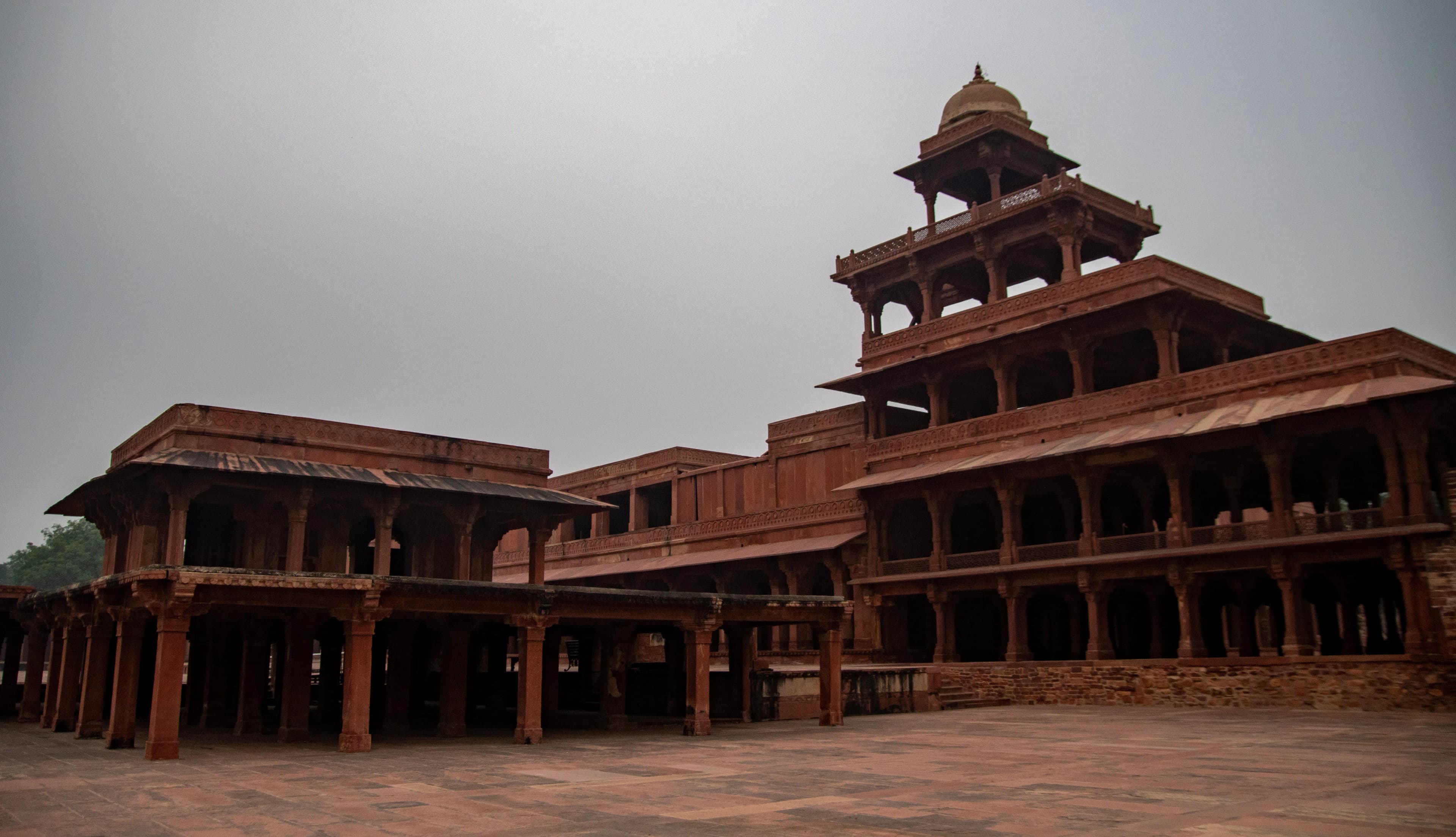
The wind whispers stories through the pierced screens of Panch Mahal, a structure that rises like a delicately carved sandcastle against the Fatehpur Sikri skyline. As I adjusted my camera, framing the pyramidal tiers against the vast Uttar Pradesh sky, I felt a palpable connection to the Mughal era. This wasn't just a building; it was a breathing testament to Akbar's vision, a blend of Hindu and Persian architectural styles that spoke volumes about the cultural confluence of the time. The ground floor, a sprawling open pavilion supported by 84 pillars, once served as a cool respite from the summer heat. I could almost envision the royal women gathered here, their laughter echoing through the now silent spaces. The pillars, each uniquely carved with intricate floral and geometric patterns, captivated my lens. The play of light and shadow through the jaalis, the intricately carved stone lattices, created a mesmerizing tapestry that shifted with the sun's journey across the sky. I spent a considerable amount of time documenting these details, trying to capture the essence of the craftsmanship that had stood the test of centuries. Ascending the levels, the structure shrinks in size, each tier offering a more exclusive and panoramic view of the surrounding city. The second story, supported by fewer pillars, felt more intimate, perhaps a space for smaller gatherings. The third, fourth, and fifth levels, each progressively smaller, culminate in a single chhatri, a domed kiosk, on the topmost tier. This final level, once Akbar's private retreat, offered an unparalleled vista of his magnificent creation. Standing there, I felt a sense of awe, imagining the emperor contemplating his empire from this vantage point. The red sandstone, bathed in the golden hues of the late afternoon sun, radiated warmth. The subtle variations in the stone's color, from a rich ochre to a pale rose, added depth and texture to my photographs. I focused on capturing the interplay of light and shadow, highlighting the intricate carvings and the graceful arches. The pillars, while seemingly uniform from a distance, revealed their unique personalities upon closer inspection. Some bore delicate floral motifs, others geometric patterns, and still others a combination of both, a testament to the artisans' skill and creativity. One aspect that particularly intrigued me was the absence of walls on the lower levels. This open design, unusual for a palace, fostered a sense of connection with the surrounding environment. I could see how the structure, while grand, was also designed for comfort and practicality, allowing for the free flow of air and offering breathtaking views. The jaalis, while providing privacy, also allowed for glimpses of the outside world, blurring the lines between inside and out. My experience at Panch Mahal transcended mere documentation. It was a journey through time, a conversation with the past. As I packed my equipment, the setting sun casting long shadows across the courtyard, I felt a deep sense of gratitude for the opportunity to witness and preserve the legacy of this magnificent structure. The photographs I captured are not just images; they are fragments of history, frozen moments in time, waiting to share their stories with the world. They are a testament to the enduring beauty of Mughal architecture and a reminder of the rich cultural heritage that India holds within its embrace.
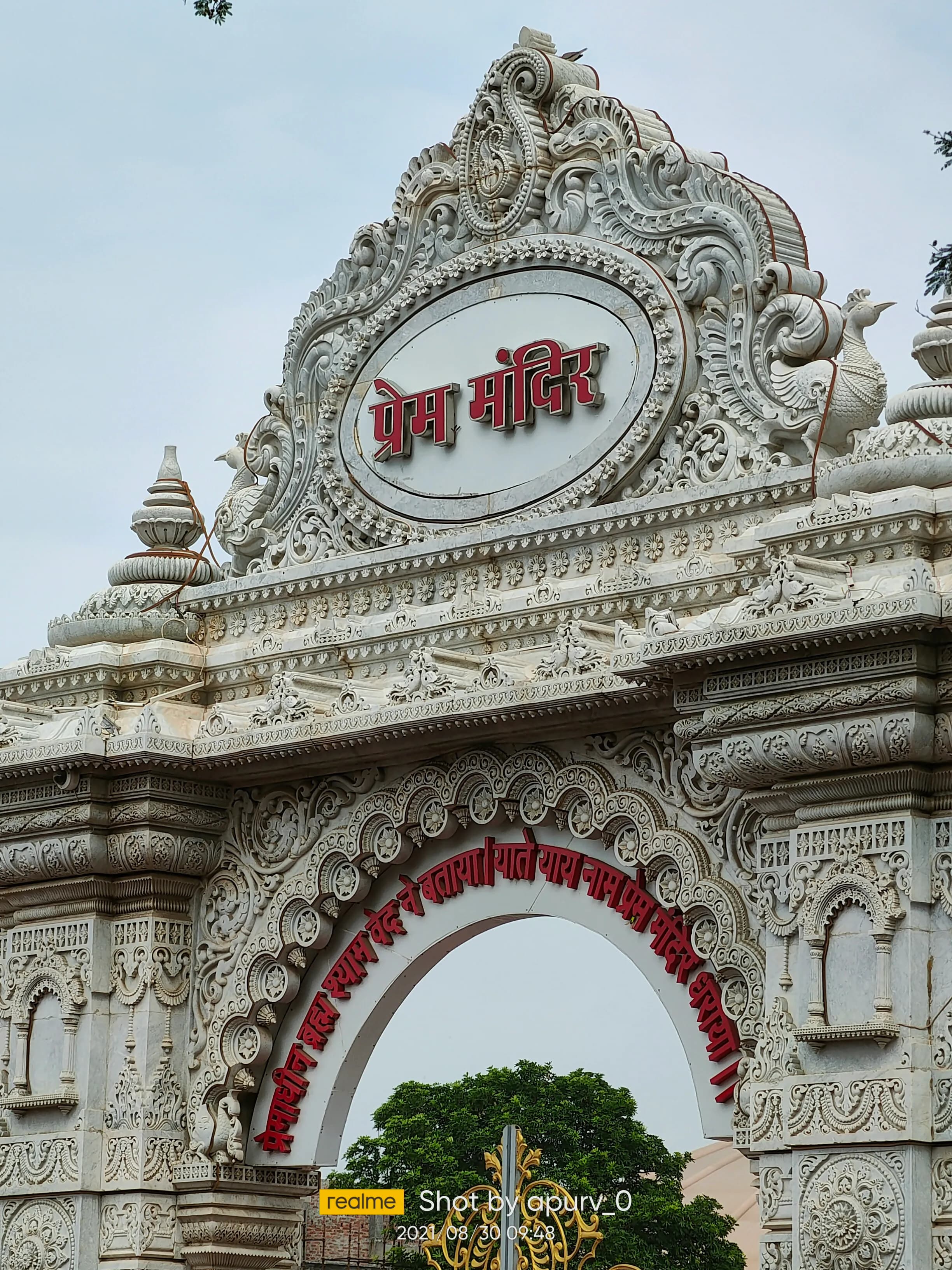
The air hummed with a palpable devotion, a tangible energy that enveloped me as I stepped onto the pristine marble expanse of Prem Mandir in Vrindavan. Having explored countless temples across North India, I thought I was immune to the sheer scale and grandeur of religious architecture, but Prem Mandir stopped me in my tracks. Bathed in the warm glow of the late afternoon sun, the temple, a relatively recent addition to Vrindavan's spiritual landscape, shimmered like a celestial palace descended to earth. The sheer scale is breathtaking. Towering white spires, intricately carved with depictions of Krishna's leelas, reach towards the sky, creating a skyline unlike any other in this holy city. Unlike the older, sandstone structures that characterize much of Vrindavan, Prem Mandir’s Italian marble construction gives it a unique, almost ethereal quality. The stone, imported from Italy, is polished to a high sheen, reflecting the sunlight and creating a dazzling spectacle. As I walked through the main gate, I was struck by the meticulous detailing. Every inch of the temple, from the towering shikharas to the delicate floral motifs adorning the walls, speaks of painstaking craftsmanship. The main temple structure is built on a raised platform, accessed by a broad flight of stairs. Circumambulating the main shrine, I noticed the intricate bas-relief panels depicting scenes from Krishna's life. These aren't mere carvings; they are narratives etched in stone, each panel telling a story with remarkable expressiveness. I paused at a depiction of the Rasa Lila, the divine dance of Krishna with the gopis, captivated by the fluidity of the figures and the sense of joyous movement captured in the static medium. One of the most striking features of Prem Mandir is the Govardhan Hill replica situated behind the main temple. This miniature mountain, crafted with impressive realism, is a testament to the devotion that fueled the temple's creation. Waterfalls cascade down its slopes, feeding a small lake at its base, creating a serene oasis within the bustling temple complex. Walking around the hill, I felt transported to the pastoral landscape of Braj, the region where Krishna is said to have spent his youth. As dusk settled, the temple underwent a magical transformation. Thousands of tiny lights embedded in the marble facade flickered to life, illuminating the intricate carvings and casting a warm, inviting glow over the entire complex. The light show, synchronized with devotional music, is a spectacle in itself, drawing gasps of admiration from the assembled devotees. The narrative of Krishna's life, projected onto the temple walls, added another layer to the experience, bringing the stories etched in stone to vibrant life. What truly sets Prem Mandir apart, however, is not just its architectural magnificence or the dazzling light show, but the palpable sense of serenity that pervades the atmosphere. Despite the crowds, a sense of peacefulness permeates the air. I observed families seated on the marble floors, lost in prayer, and groups of pilgrims chanting hymns with quiet devotion. The temple, despite its grandeur, feels remarkably intimate, a space where individuals can connect with their faith in their own way. Leaving Prem Mandir, I carried with me not just the memory of its architectural splendor, but also a renewed appreciation for the power of faith and devotion. It’s a testament to human ingenuity and artistic skill, a place where spirituality and artistry converge to create an experience that is both awe-inspiring and deeply moving. For anyone journeying through North India's spiritual heartland, Prem Mandir is an essential stop, a place to witness the enduring power of belief manifested in marble and light.
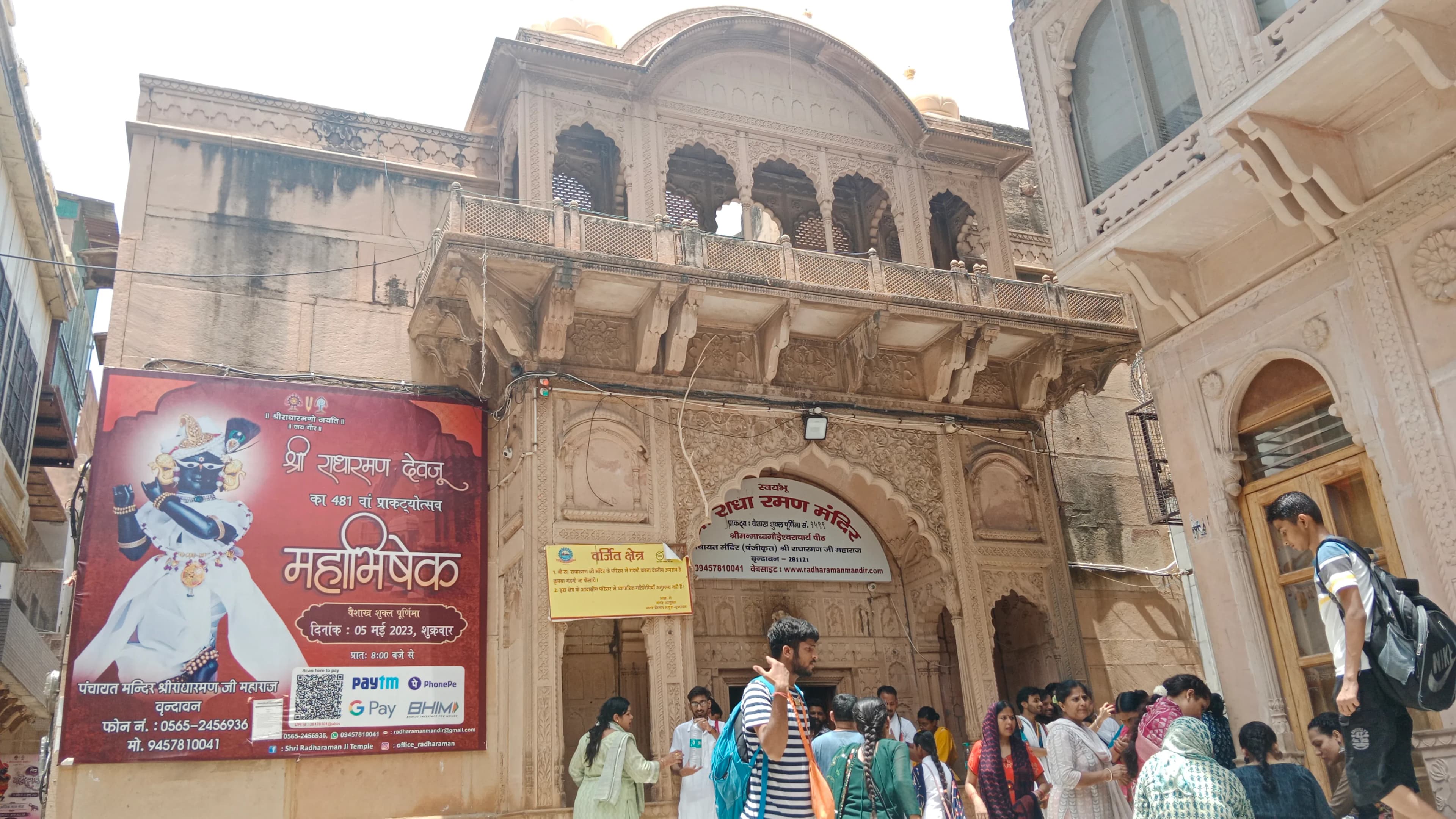
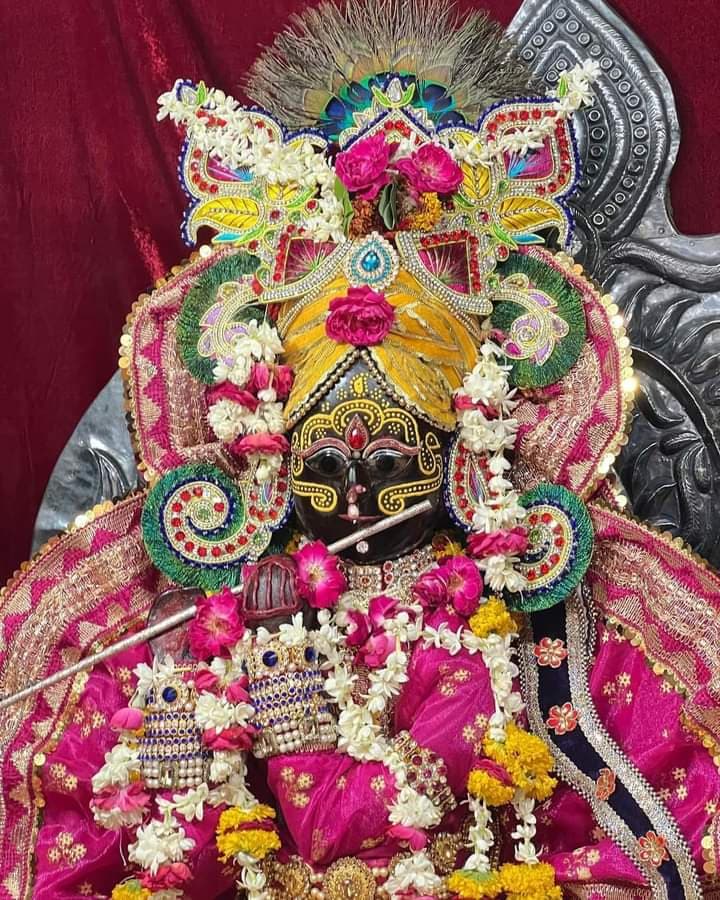
The Radha Raman Temple, located on Radha Raman Marg in Vrindavan, Mathura, Uttar Pradesh, India, stands as a profound testament to India's millennia-spanning cultural heritage and its continuous tradition of devotional architecture [1] [5]. Dedicated to Krishna, worshipped as Radha Ramana, this sacred site embodies the deep historical roots and enduring legacy of Indian civilization [1] [5]. The temple's architecture is a harmonious blend of indigenous Braj, Nagara, and Hindu Temple styles, with notable Indo-Mughal influences, reflecting the layered cultural exchanges that have shaped the region over centuries [2] [5]. The temple's main shrine, though described as relatively intimate, is crowned with a distinctive *shikhara*, a towering spire characteristic of the Nagara style, which dominates the skyline of Vrindavan [2] [5]. The exterior facade, primarily constructed from red sandstone, is intricately carved with a rich array of floral motifs, geometric patterns, and depictions of divine figures [2] [5]. These carvings, despite the passage of centuries, retain remarkable sharpness, showcasing the exceptional skill of the artisans [2] [5]. Latticework screens, known as *jalis*, are a prominent feature, allowing filtered light into the inner sanctum while maintaining a sense of sacred seclusion [2]. The interplay of light and shadow created by these *jalis* adds to the visual richness and spiritual ambiance of the space [2]. The construction technique primarily employs the *trabeate* style, where carved stone beams and columns are meticulously placed without mortar, a testament to ancient Indian engineering prowess [2]. This dry-stone assembly necessitates incredibly precise cutting and fitting of the red sandstone blocks, likely achieved through traditional measuring tools and techniques passed down through generations [2]. The intricate carvings were often executed *in-situ* after the structural assembly, minimizing stress and allowing for refined ornamentation [2]. Within the sanctum sanctorum, the presiding deity, Radha Raman, is a self-manifested form of Lord Krishna, uniquely depicted without a separate idol of Radha beside him, signifying his self-complete embodiment of both divine energies [1] [2] [5]. Instead, a crown is placed beside Krishna, symbolizing Radha's presence . The deity, carved from a *shaligram shila* (a black fossilized ammonite sacred to Vishnu), is adorned with vibrant jewels and silks, radiating an aura of serenity and grace [1] [2] [5]. The original *shaligram shila* from which the deity manifested is still visible on his back . The altar is crafted from sandalwood and flanked by richly carved silver pillars, with a canopy of silver and gold . The temple complex also houses the *samadhi* (tomb) of Gopal Bhatt Goswami, the temple's founder, where the rarely available *Unag vastra* (garment) of Sri Chaitanya Mahaprabhu is preserved [1] . The temple maintains an excellent preservation status, with ongoing conservation efforts focusing on structural stabilization, repair of intricate sandstone carvings, and fresco restoration [2]. Traditional lime mortar is utilized for authenticity in restoration work, and drainage issues are addressed to prevent water damage [2]. While no formal archaeological excavations have been conducted at the temple itself, records indicate the deity's discovery during excavations for a nearby temple tank in the 16th century, around which the temple was subsequently built [2]. The temple is an active center of devotion, with daily *aarti* ceremonies, rhythmic chants, and devotional music filling the atmosphere [2] [5]. Major festivals such as Radha Raman's appearance day (Radha Raman Jayanti), Janmashtami, Ram Navami, Jhulan Yatra, and Annakut are celebrated with grandeur, drawing devotees globally [2] . The temple kitchen, where *prasad* (sanctified food) is prepared by male members of the Goswami families, has maintained a continuous fire for over 500 years, symbolizing an unbroken tradition of service [1] . The temple is wheelchair accessible in some areas, though the main sanctum may present challenges [2]. Modest dress is required, and photography is generally allowed, contributing to its operational readiness as a vibrant spiritual and cultural hub [2] [5].
The scent of sandalwood hung heavy in the air, a fragrant welcome to the Radha Vallabh Haveli in Mathura. Having explored the basalt-carved caves and intricate temples of Maharashtra extensively, I was curious to see how the architectural narrative shifted in this Braj Bhoomi landmark. The haveli, dedicated to the Radha-Vallabh sect of Vaishnavism, didn't disappoint. It whispered stories of devotion, artistry, and a bygone era of opulent patronage. Unlike the monolithic structures I was accustomed to, the haveli unfolded like a labyrinth. Courtyards, interconnected chambers, and narrow passageways created a sense of intimate discovery. The red sandstone, a stark contrast to the dark hues of Maharashtra's basalt, glowed warmly under the afternoon sun. Intricate carvings adorned every surface – floral motifs, depictions of Krishna’s leelas, and geometric patterns, each narrating a fragment of the sect's rich mythology. It felt as though the very stones were singing hymns to Radha and Krishna. The main courtyard, the heart of the haveli, was particularly captivating. A raised platform, once used for religious discourses and performances, dominated the space. I could almost hear the echoes of devotional music and the rhythmic clapping of devotees lost in spiritual fervor. The surrounding walls, adorned with frescoes depicting scenes from the Bhagavata Purana, were faded yet retained a captivating vibrancy. The colours, predominantly blues, greens, and ochres, spoke of a time when artistry was an integral part of religious expression. Climbing the narrow, winding staircases, I reached the upper levels, which offered a panoramic view of the bustling city of Mathura. From this vantage point, the haveli seemed like an oasis of tranquility amidst the urban chaos. The intricate jalis, or lattice screens, allowed for ventilation while maintaining privacy, a testament to the architectural ingenuity of the time. Peering through these screens, I observed the daily life of the city unfolding below – a vibrant tapestry of sounds, colours, and movement. One of the most striking features of the haveli was its integration with nature. Small, enclosed gardens, or baghs, punctuated the structure, offering pockets of serenity. These spaces, with their flowering plants and trickling fountains, provided a refreshing contrast to the enclosed spaces and served as a reminder of the divine presence in the natural world. I noticed how the architecture seamlessly blended indoor and outdoor spaces, creating a harmonious environment. While exploring the haveli, I encountered several priests and devotees who shared anecdotes and insights into the history and significance of the site. Their narratives added another layer of understanding, enriching my experience beyond the purely visual. Learning about the daily rituals, the festivals celebrated, and the stories passed down through generations, I felt a deeper connection to the spiritual heart of the haveli. The Radha Vallabh Haveli is more than just a historical structure; it's a living testament to a vibrant faith and a rich artistic tradition. It's a place where architecture transcends its functional purpose and becomes a medium for storytelling, a canvas for devotion, and a portal to a bygone era. As I left the haveli, the scent of sandalwood still clinging to my clothes, I carried with me not just images of intricate carvings and vibrant frescoes, but also a profound sense of the enduring power of faith and the beauty of human expression. It served as a powerful reminder that even after exploring countless caves and temples, there are always new architectural narratives waiting to be discovered, each with its unique story to tell.
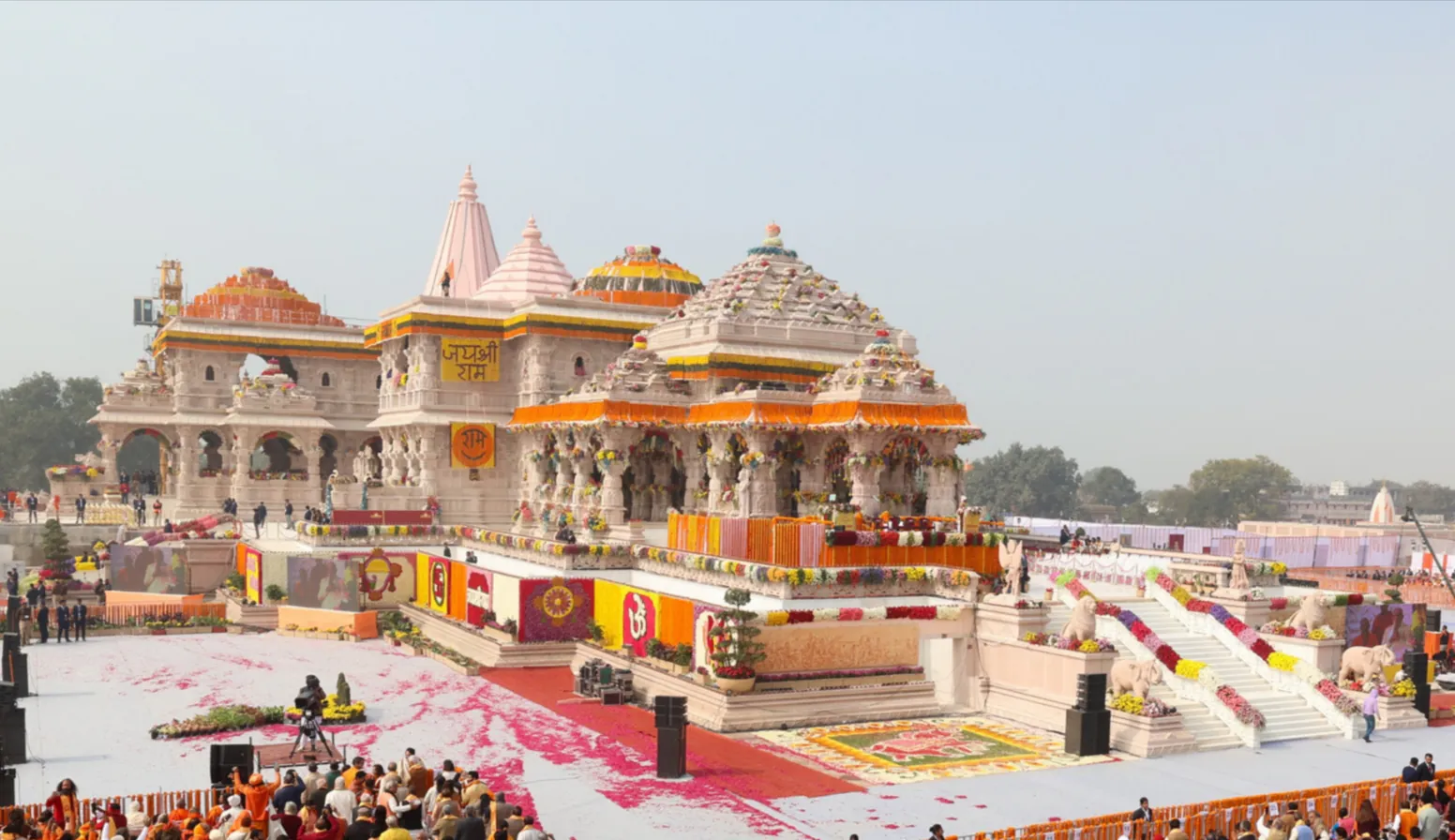
The dust of centuries seemed to settle as I stepped onto the hallowed ground of the Ram Janmabhoomi in Ayodhya. After years of traversing India's UNESCO sites, this one felt particularly resonant, a place where history, faith, and national identity intertwine in a complex tapestry. The newly constructed Ram Mandir, gleaming white under the Uttar Pradesh sun, is an imposing structure, its scale dwarfing the surrounding buildings. It’s a powerful statement, a testament to enduring belief. The architecture is a breathtaking blend of traditional Nagara style and contemporary engineering. Intricate carvings adorn every pillar, every archway, depicting scenes from the Ramayana, each a narrative in stone. The sheer volume of detailed carvings is astounding; I spent hours just absorbing the artistry, noticing new details with every glance. The creamy white marble, sourced from Rajasthan, shimmers, creating an ethereal glow, especially as the sun begins its descent. The main shikhara, soaring towards the heavens, is a marvel of engineering and a beacon of faith visible from miles around. The atmosphere within the temple complex is palpable. A sense of reverence hangs heavy in the air, punctuated by the chanting of hymns and the rustling of silk sarees. Devotees from all walks of life, their faces etched with devotion, queue patiently for darshan, a glimpse of the deity within the sanctum sanctorum. Witnessing this collective expression of faith was deeply moving, a reminder of the power of belief to unite and inspire. One aspect that struck me was the meticulous organization despite the sheer volume of visitors. The security is tight but unobtrusive, allowing for a smooth flow of devotees. The temple complex itself is designed to accommodate large crowds, with spacious courtyards and designated areas for prayer and reflection. Even the surrounding areas have been revamped, with wider roads and improved infrastructure, making access to the temple significantly easier. Beyond the grandeur of the temple itself, the entire city of Ayodhya seems to hum with a renewed energy. The streets are bustling with activity, shops overflowing with religious paraphernalia and local delicacies. The air is thick with the aroma of incense and the sounds of devotional music. It's evident that the Ram Mandir has not only become a spiritual center but also a catalyst for economic growth and development in the region. However, the weight of history is inescapable. The site's contested past is a silent presence, a reminder of the delicate balance between faith and politics. While the new temple signifies a new chapter, the echoes of the past linger, prompting reflection on the complexities of India's socio-political landscape. Conversations with locals revealed a mix of emotions – joy, pride, and a cautious hope for a peaceful future. As I left Ayodhya, the image of the Ram Mandir, bathed in the soft glow of the setting sun, remained etched in my mind. It's more than just a temple; it's a symbol, a story, a testament to the enduring power of faith and the complexities of Indian history. Having visited every UNESCO site in India, I can say with certainty that the Ram Mandir, while not yet on the list, holds a unique significance, a place where spirituality, history, and national identity converge. It's a place that stays with you long after you've left, prompting reflection and a deeper understanding of India's rich and multifaceted cultural heritage.
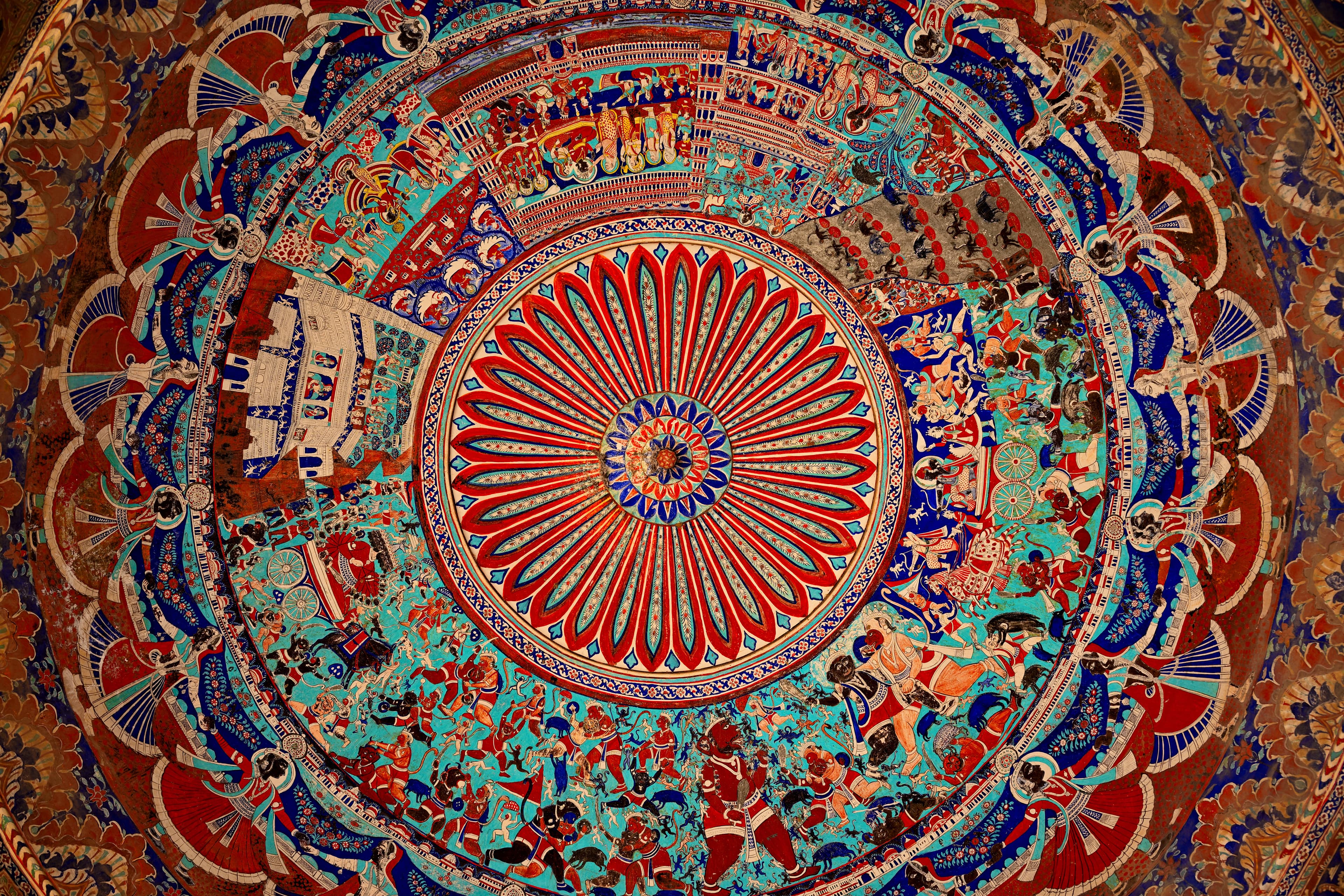
The midday sun beat down on Mathura, casting long shadows across the narrow lanes as I finally stood before the imposing wooden doors of Seth Ram Gopal Haveli. A palpable sense of history hung in the air, a stark contrast to the bustling marketplace just a stone's throw away. This wasn't just another haveli; it was a whisper of a bygone era, a testament to the opulent lifestyle of Mathura's affluent merchant class. Pushing open the heavy doors, I stepped into a cool, dimly lit courtyard. The transition was immediate, from the chaotic energy of the streets to an almost monastic stillness. The haveli embraced me, its intricate carvings and aged brickwork whispering stories of generations past. My eyes were immediately drawn upwards to the five-story structure, a magnificent display of traditional Braj architecture. Each level, supported by elaborately carved wooden pillars, seemed to lean in slightly, as if in confidential conversation with its neighbour. The courtyard, the heart of the haveli, was paved with worn flagstones, a testament to countless footsteps that had traversed this space over centuries. A small, neglected tulsi plant occupied a corner, a poignant reminder of the family’s daily rituals. The walls surrounding the courtyard were adorned with frescoes, their colours faded yet still vibrant enough to depict scenes from Krishna’s life, a common motif in this region so deeply connected to the deity. I noticed the intricate jali work, delicate screens of carved stone allowing for both ventilation and privacy, a hallmark of Mughal architectural influence. Ascending the wide, wooden staircase, the scent of aged wood filled my nostrils. Each step creaked under my weight, a rhythmic soundtrack to my exploration. The upper floors revealed a labyrinth of interconnected rooms, each with its own unique character. Some rooms boasted ornate ceilings with intricate floral patterns, while others showcased remnants of painted murals, now fragmented and ghostly. I peered into a room that likely served as a kitchen, its walls blackened by years of cooking fires, imagining the aromas of traditional Braj cuisine that must have once permeated these spaces. One of the most striking features of the haveli was its collection of exquisitely carved wooden balconies. Leaning against the intricately patterned railing of one such balcony, I overlooked the bustling street below. It was easy to imagine the wealthy Seth, perhaps Ram Gopal himself, observing the daily life of the city from this very vantage point. The rhythmic clang of a blacksmith’s hammer, the melodic calls of street vendors, the laughter of children playing – these sounds, though centuries removed from the haveli’s heyday, still echoed in the spaces between the carved wood. While the haveli undoubtedly bore the marks of time and neglect, its grandeur was undeniable. Peeling paint, crumbling plaster, and the silence of empty rooms only added to its melancholic charm. It wasn't merely a structure; it was a living archive, a tangible link to a rich cultural heritage. I could almost hear the rustle of silk sarees, the murmur of conversations, and the joyous strains of celebratory music within its walls. As I descended the creaking staircase and stepped back into the vibrant chaos of Mathura’s streets, I carried with me a profound sense of connection to the city’s past. Seth Ram Gopal Haveli wasn't just a tourist attraction; it was a time capsule, offering a glimpse into a world of exquisite craftsmanship, opulent lifestyles, and a deep-rooted connection to tradition. It’s a place that deserves not just a visit, but a moment of quiet contemplation, a chance to listen to the stories whispered by its ancient walls.
Related Collections
Discover more heritage sites with these related collections
Explore More Heritage
Explore our comprehensive archive of 18 heritage sites with detailed documentation, 3D models, floor plans, and historical research. Each site page includes visitor information, conservation status, architectural analysis, and downloadable resources for students, researchers, and heritage enthusiasts.
Historical Context
The historical significance of these 18 heritage sites reflects the profound integration of dharma, artha, and kama in Hindu civilization. Across successive eras, royal patrons and spiritual leaders commissioned these sacred edifices as acts of devotion, fulfilling dharmic obligations while creating eternal spaces for worship and community gathering. Various dynasties contributed unique architectural visions, establishing traditions that honored Vedic principles while incorporating regional characteristics. Master builders (sthapatis) applied knowledge from ancient shilpa shastras (architectural treatises) and vastu shastra (spatial science), creating structures embodying cosmic principles and sacred geometry. Epigraphic inscriptions and archaeological evidence reveal sophisticated networks of guilds, royal support, and community participation sustaining these massive undertakings across decades or centuries. These monuments served as centers of Vedic learning, Sanskrit scholarship, classical arts, and spiritual practice—roles many continue fulfilling today, maintaining unbroken traditions that connect contemporary Bharat to its glorious civilizational heritage.
Architectural Significance
The architectural magnificence of these 18 heritage sites demonstrates the sophisticated application of shilpa shastra principles to create spaces embodying cosmic order and divine presence. The Mughal Architecture tradition manifests through characteristic elements: distinctive regional architectural elements, spatial planning principles, and decorative vocabularies. Employing indigenous materials—locally sourced stone, traditional lime mortars, and time-honored construction techniques—sthapatis created structures demonstrating advanced engineering knowledge. The corbelling techniques display extraordinary precision, achieving structural stability through geometric principles. Dome construction methodologies demonstrate sophisticated understanding of load distribution and compression forces, centuries before modern engineering formalized such knowledge. Beyond structural excellence, these monuments serve as three-dimensional textbooks of Puranic narratives, Vedic cosmology, and iconographic traditions. Sculptural programs transform stone into divine forms, teaching dharma through narrative reliefs and creating sacred atmospheres conducive to devotion and contemplation. Recent photogrammetric documentation and 3D laser scanning reveal original polychromy, construction sequences, and historical conservation interventions, enriching our understanding of traditional building practices and material technologies that sustained these magnificent creations.
Conservation & Preservation
Preserving these 18 sacred heritage sites represents our collective responsibility to safeguard India's architectural and spiritual heritage for future generations. 3 benefit from Archaeological Survey of India protection, ensuring systematic conservation approaches. Conservation challenges include environmental degradation, biological colonization, structural deterioration, and pressures from increased visitation. Professional conservators address these through scientifically-grounded interventions: structural stabilization using compatible traditional materials, surface cleaning employing non-invasive techniques, vegetation management, and drainage improvements. Advanced documentation technologies—laser scanning, photogrammetry, ground-penetrating radar—create detailed baseline records enabling precise condition monitoring and informed conservation planning. When restoration becomes necessary, traditional building techniques and materials sourced from historical quarries ensure authenticity and compatibility. This comprehensive approach honors the devotion and craftsmanship of original builders while applying contemporary conservation science to ensure these monuments endure, continuing their roles as centers of worship, cultural identity, and civilizational pride.
Visitor Information
Experiencing these 18 sacred heritage sites offers profound connection to India's spiritual and architectural heritage. uttar pradesh maintains excellent connectivity, with accommodation options ranging from budget to premium near major heritage sites. The optimal visiting period extends October through March when comfortable conditions facilitate exploration. Entry fees typically range from ₹25-₹40 at protected monuments. Photography for personal use is generally permitted, though professional equipment may require advance permissions. 2 sites offer immersive virtual tours for preliminary exploration or remote access. Visiting these sacred spaces requires cultural sensitivity: modest attire covering shoulders and knees, shoe removal in temple sanctums, quiet respectful demeanor, and recognition that these remain active worship centers where devotees practice centuries-old traditions. Meaningful engagement comes through understanding basic Hindu iconography, mythological narratives, and ritual contexts that bring these monuments to life.
Key Facts & Statistics
Total documented heritage sites: 18
Archaeological Survey of India protected monuments: 3
Source: Archaeological Survey of India
Sites with 3D laser scan documentation: 2
Sites with 360° virtual tours: 2
Temple: 9 sites
Monument: 4 sites
Fort: 4 sites
Haveli: 1 sites
Indo-Islamic architecture style, Mughal architecture style, Rajput architecture style, Nagara architecture style architectural style: 2 sites
Indo-Islamic architecture style, Mughal architecture style, Gujarati architecture style, Rajasthani architecture style architectural style: 1 sites
Braj architecture style, Mughal-Rajput architecture style, Nagara architecture style, North Indian Temple architecture style architectural style: 1 sites
Shindoori architecture style, Rajput architecture style, Mughal architecture style, Haveli architecture style architectural style: 1 sites
Nagara architecture style, Latina Nagara architecture style, Kalinga architecture style, Maratha architecture style architectural style: 1 sites
Rajput Period period construction: 7 sites
Mughal Rajput Period period construction: 3 sites
Maratha Period period construction: 3 sites
British Colonial Period period construction: 1 sites
Mahajanapada Period period construction: 1 sites
Average documentation completion score: 81%
Featured flagship heritage sites: 18
Frequently Asked Questions
How many heritage sites are documented in uttar pradesh?
This collection includes 18 documented heritage sites in uttar pradesh. 3 sites are centrally protected by Archaeological Survey of India. Each site has comprehensive documentation including photos, floor plans, and historical research.
What is the best time to visit heritage sites in uttar pradesh?
October through March is ideal for visiting heritage sites in uttar pradesh. Major festivals also offer unique cultural experiences. Check individual site pages for specific visiting hours and seasonal closures.
What are the entry fees for heritage sites?
Protected monuments typically charge ₹25-₹40. State-protected sites often have lower or no entry fees. Many temples and religious sites are free. Children often enter free. Still photography is usually included; video may require additional permits.
Are photography and videography allowed at heritage sites?
Still photography for personal use is generally permitted at most heritage sites. Tripods, flash photography, and commercial filming usually require special permissions. Some sites restrict photography of murals, sculptures, or sanctums. Drones are prohibited without explicit authorization. Always respect signage and guidelines at individual monuments.
How do I reach heritage sites in uttar pradesh?
uttar pradesh is well-connected via auto-rickshaw, Indian Railways, state buses. Major cities have airports with domestic and international flights. Public transport connects smaller towns. Most heritage sites are accessible by local transport or rental vehicles. Plan 2-3 hours per major monument.
Are these heritage sites wheelchair accessible?
Accessibility varies significantly. Major UNESCO sites and recently renovated monuments often have ramps and accessible facilities. However, many historical structures have steps, uneven surfaces, and narrow passages. Contact site authorities in advance for specific accessibility information. Our site pages indicate known accessibility features where available.
Are guided tours available at heritage sites?
Licensed guides are available at most major heritage sites, typically charging ₹200-₹500 for 1-2 hour tours. ASI-approved guides provide historical and architectural insights. Audio guides are available at select UNESCO sites. Our platform offers virtual tours and detailed documentation for 2 sites.
What is the conservation status of these heritage sites?
3 sites are legally protected by ASI. Active conservation includes structural stabilization, surface cleaning, vegetation control, and drainage management. Digital documentation helps monitor deterioration. 2 sites have 3D scan records for evidence-based interventions.
What are the key features of Mughal Architecture?
Mughal Architecture features onion domes, pointed arches, pietra dura inlay work, charbagh gardens, and symmetrical planning. These elements evolved over centuries, reflecting regional climate, available materials, construction techniques, and cultural preferences. Each monument demonstrates unique variations within the broader architectural tradition.
What documentation is available for these heritage sites?
Each site includes high-resolution photography, architectural measurements, historical research, and expert annotations. 2 sites have 3D laser scans. 2 offer virtual tours. Documentation averages 81% completion.
How much time should I allocate for visiting?
Plan 2-3 hours for major monuments to appreciate architectural details and explore grounds. Smaller sites may require 30-60 minutes. Multi-site itineraries should allocate travel time. Early morning or late afternoon visits offer better lighting for photography and fewer crowds. Check individual site pages for recommended visiting durations.
What is the cultural significance of these heritage sites?
These monuments represent India's diverse cultural heritage, reflecting centuries of architectural innovation, religious traditions, and artistic excellence. They serve as living links to historical societies, preserving knowledge about construction techniques, social structures, and cultural values. Many sites remain active centers of worship and community gathering.
What other attractions are near these heritage sites?
uttar pradesh offers diverse tourism experiences beyond heritage monuments. Explore local museums, craft villages, nature reserves, and cultural festivals. Many heritage sites are clustered in historic towns with traditional markets and cuisine. Our site pages include nearby attraction recommendations and multi-day itinerary suggestions.
How can I practice responsible heritage tourism?
Respect site rules including photography restrictions and designated pathways. Don't touch sculptures, murals, or walls. Dispose waste properly. Hire local guides to support communities. Avoid visiting during restoration work. Learn about cultural contexts before visiting. Report damage to authorities. Your responsible behavior helps preserve heritage for future generations.
References & Sources
Uttar Pradesh
Mughal
Mughal architecture is a distinctive style of Indian temple architecture characterized by its unique design elements and construction techniques. This architectural tradition flourished in uttar-pradesh and represents a significant period in Indian cultural heritage. Features include intricate carvings, precise proportions, and integration with religious symbolism.
- 1Diverse architectural styles from various periods
- 2Intricate craftsmanship and artistic excellence
- 3Historical and cultural significance
- 4Well-documented heritage value
- 5Protected under heritage conservation acts
- 6Tourist and educational significance
| 📍Uttar Pradesh | 18 sites |