Temple Near Mathura
Mathura provides strategic access to 2+ significant temple representing Uttar Pradesh's rich heritage of sacred architecture and devotional spaces. This collection spans multiple historical periods and architectural traditions—ancient monuments preserving classical forms, medieval constructions demonstrating dynastic patronage, and regional variants reflecting local artistic traditions. Geographic distribution includes sites within Mathura proper and monuments throughout the surrounding region, enabling both convenient local visits and rewarding day trips. Comprehensive documentation addresses architectural features, historical contexts, visitor protocols, and transportation logistics. These temple serve contemporary devotees while offering scholars, students, and heritage enthusiasts opportunities to engage with living traditions connecting modern Uttar Pradesh to its spiritual and cultural roots. Respectful visiting practices honor both architectural heritage and ongoing worship functions these sacred spaces continue fulfilling.
Temple in Mathura

Kusum Sarovar Govardhan
The air, thick with the scent of incense and marigold garlands, vibrated with a low hum of chanting as I descended the worn sandstone steps leading to Kusum Sarovar. This wasn’t just another monument on my North Indian itinerary; it was a palpable breath of history, nestled in the heart of Braj, near Govardhan Hill. Having explored countless ancient sites across the region, I thought I was immune to being awestruck, but Kusum Sarovar, with its serene beauty and spiritual weight, proved me wrong. The sarovar, or sacred pond, is rectangular, its still, dark water reflecting the surrounding architecture like a mirror. The banks are lined with intricately carved chhatris, small pavilions with delicate pillars and domed roofs, each a miniature masterpiece of Mughal-influenced Rajput architecture. I noticed the recurring motif of blossoming lotuses carved into the stone, a symbol of purity and rebirth, fitting for a place so steeped in religious significance. Unlike many historical sites that have succumbed to neglect, Kusum Sarovar is remarkably well-maintained. The sandstone, though weathered by centuries of sun and rain, retains its warm, honeyed hue, and the carvings, while softened by time, are still crisp and detailed. I spent a good hour just walking the perimeter, absorbing the details. The chhatris, I learned from a local priest, were built in the 18th century by the Jat rulers, commemorating various Radha-Krishna legends associated with this very spot. He pointed out one particular chhatri, slightly larger and more ornate than the others, said to mark the spot where Radha and her gopis would meet Krishna. Looking out at the placid water, I could almost imagine the scene unfolding centuries ago – the vibrant colours of their silks, the tinkling of their anklets, the air filled with laughter and the melody of flutes. The steps leading down to the water are broad and inviting, worn smooth by countless pilgrims who have come to bathe in the sacred waters. I watched as families performed rituals, offering flowers and prayers, their faces etched with devotion. The atmosphere was charged with a quiet reverence, a stark contrast to the bustling marketplaces I’d encountered elsewhere in Mathura. It was a reminder that this wasn’t just a tourist attraction; it was a living, breathing testament to faith. Beyond the immediate vicinity of the sarovar, the landscape unfolds into a panorama of green fields and the looming silhouette of Govardhan Hill. This proximity to nature adds another layer to the site’s charm. The gentle breeze rustling through the trees, the chirping of birds, the distant lowing of cattle – all contribute to a sense of tranquility that is hard to find in the urban chaos of Delhi. One architectural detail that particularly caught my eye was the use of jalis, intricately carved lattice screens, in some of the chhatris. These screens not only provided shade and ventilation but also created a play of light and shadow, adding a dynamic element to the otherwise static structures. I peered through one of the jalis, framing the sarovar and the distant hill in a perfect, naturally occurring picture frame. It was a moment of pure visual poetry. As the sun began to dip below the horizon, casting long shadows across the sarovar, I found a quiet corner to sit and reflect. Kusum Sarovar is more than just a beautiful monument; it's a portal to another time, a place where history, mythology, and spirituality intertwine. It’s a reminder of the enduring power of faith and the beauty that can be found in the simplest of things – the reflection of the sky on still water, the warmth of ancient stone, the whisper of a prayer carried on the wind. It's a place I won't soon forget, and one I highly recommend to anyone seeking a deeper connection with India's rich cultural heritage.
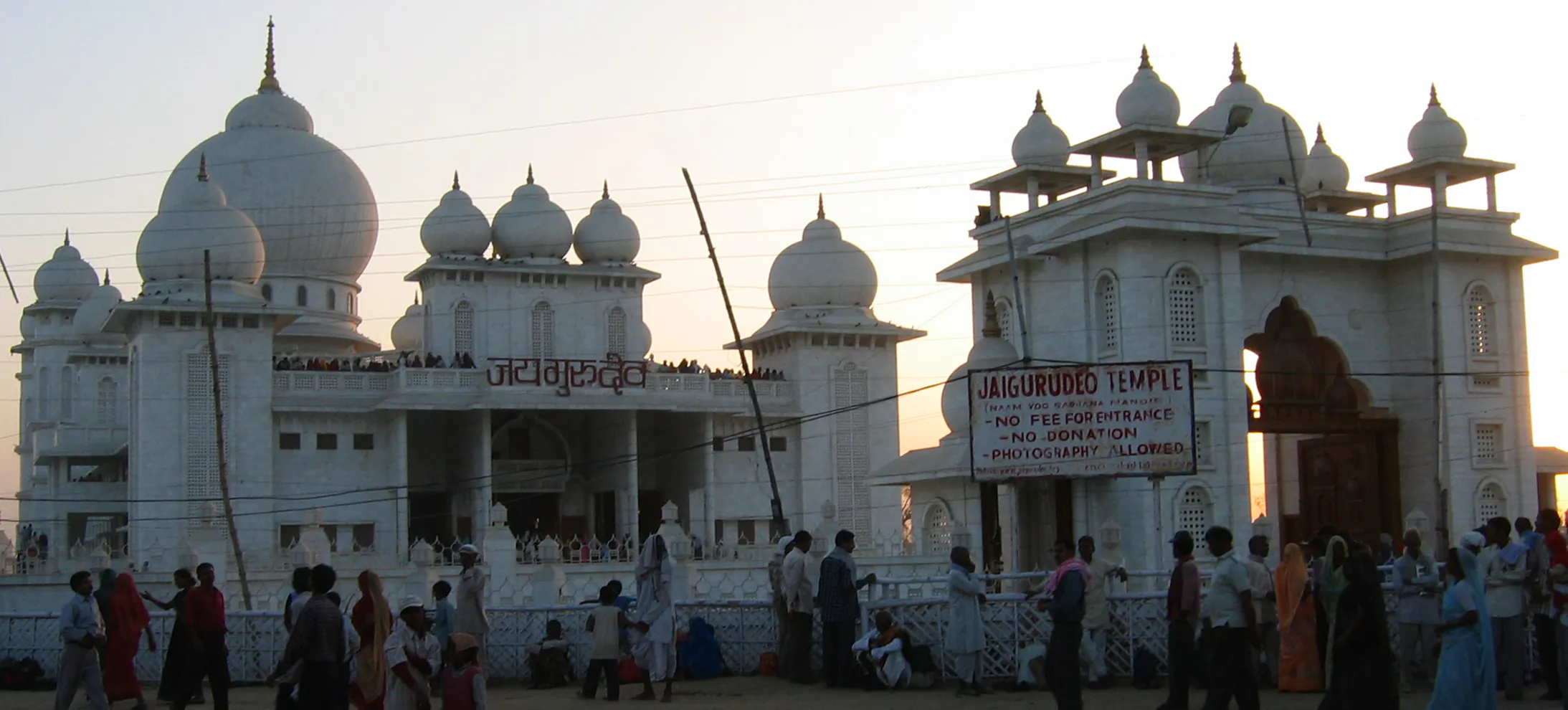
Krishna Janmasthan Temple Complex, Mathura
The air in Mathura vibrates with a palpable energy, a hum of devotion that seems to emanate from the very stones of the Krishna Janmasthan Temple Complex. Standing within its precincts, I felt an immediate connection to the layers of history embedded within this sacred ground. The complex, a tapestry woven with threads of different eras, stands as a testament to the enduring power of faith and the cyclical nature of destruction and reconstruction. My gaze was immediately drawn to the imposing Keshav Dev Temple, its towering shikhara a beacon against the Mathura sky. While the current structure dates back to the 18th century, thanks to the patronage of the Jat ruler Suraj Mal, the palpable antiquity of the site whispers of much older incarnations. The very stones seemed to hold the memory of the original temple, believed to have been built by Vajranabha, Krishna’s great-grandson, a structure mentioned in the ancient scriptures. The repeated destructions and subsequent rebuildings, a recurring motif in Indian history, have imbued the site with a unique resonance, a sense of resilience in the face of adversity. The architecture of the Keshav Dev Temple showcases a blend of styles, reflecting the various influences that have shaped it over centuries. The intricate carvings adorning the walls, depicting scenes from Krishna’s life, are a testament to the skill of the artisans. I noticed the distinctive use of red sandstone, a material common in the region, which lends the temple a warm, earthy hue. The interplay of light and shadow on the carved surfaces created a dynamic visual experience, enhancing the narrative power of the sculptures. While some sections displayed the robust features of Rajput architecture, others hinted at the Mughal influence that permeated the region during certain periods. Moving through the complex, I entered the Garbha Griha, the sanctum sanctorum, where the deity of Keshav Dev is enshrined. The atmosphere within was charged with devotion, the air thick with the scent of incense and the murmur of prayers. The dimly lit space, illuminated by flickering oil lamps, fostered a sense of profound reverence. I observed the devotees, their faces etched with faith, offering prayers and performing rituals that have likely been practiced for generations. Adjacent to the Keshav Dev Temple lies the smaller, yet equally significant, Bhagavata Bhavan. This structure, built around an ancient prison cell believed to be the very birthplace of Krishna, holds a special significance for pilgrims. The low-ceilinged, claustrophobic space, a stark contrast to the grandeur of the Keshav Dev Temple, evokes a sense of intimacy and raw emotion. The very thought of Lord Krishna being born in such humble surroundings adds another layer to the narrative of his divine leela, his earthly play. The Idgah mosque, situated within the complex, adds another layer of complexity to the site's historical narrative. Its presence serves as a tangible reminder of the Mughal period and the religious tensions that have, at times, marked the region's history. The juxtaposition of the mosque and the temple within the same complex creates a unique spatial dynamic, a physical manifestation of the interwoven narratives that shape India's cultural landscape. Leaving the Krishna Janmasthan Temple Complex, I carried with me not just images of intricate carvings and soaring shikharas, but a deeper understanding of the complex interplay of faith, history, and architecture. The site stands as a powerful symbol of continuity and resilience, a living testament to the enduring legacy of Lord Krishna and the unwavering devotion he inspires. It is a place where the past whispers to the present, offering a glimpse into the rich tapestry of Indian history and spirituality.
Mathura
Uttar Pradesh
India
2
Temple
Discover 2 documented heritage sites within Mathura, Uttar Pradesh. From ancient temples to historic forts, explore cultural treasures near you with complete visitor information, GPS coordinates, timings, and directions.
- 1
Browse Sites on Map
View all 2 heritage sites with up-to-date GPS coordinates and filters for style, era, and accessibility.
- 2
Check Visitor Essentials
Confirm entry requirements, timings, photography rules, and accessibility notes before you travel.
- 3
Plan Efficient Routes
Group nearby monuments into half-day or full-day trails using local transport or hired vehicles.
- 4
Document & Share
Capture respectful visuals, collect local stories, and contribute updates to strengthen the archive.
| Location | Mathura, Uttar Pradesh |
| Sites Available | 2 documented |
| Transport | Metro · Bus · Auto · Taxi · Private |
| Best Season | October – March |
| Visit Duration | 2–3 hrs per site |
| Navigation Tips | Download offline maps, respect local signage |
Quick Facts
Common Questions
About Mathura Heritage Region
Mathura occupies a heritage-rich region of Uttar Pradesh, reflecting historical importance rooted in geographical advantages, pilgrimage networks, and royal patronage traditions. The concentration of temple throughout this region developed through centuries of religious devotion, political power, and cultural achievement. Sites range from locations within Mathura proper to monuments situated 30-90 minutes distant, enabling both brief visits and comprehensive day-long explorations. Accessible sites facilitate morning visits returning by afternoon, while more distant monuments reward full-day excursions potentially combining multiple sites along geographical routes. Transportation infrastructure throughout Mathura includes app-based ride services, traditional auto-rickshaws, and taxi services. Multiple-site visits often benefit from private vehicle hire enabling flexible scheduling and optimal route planning. Visiting patterns vary seasonally and weekly; weekday mornings typically offer peaceful experiences, while festival periods provide opportunities to witness continuing traditions, though with increased visitor density. This collection documents prominent sites alongside lesser-known monuments, enabling balanced itineraries combining well-documented heritage with discoveries off typical tourist circuits.
Getting Around from Mathura
Transportation from Mathura to regional heritage sites employs various modalities depending on distance and infrastructure. India offers well-developed transportation including auto-rickshaw, Indian Railways, state buses. Sites within Mathura limits remain accessible via local transport options. Outlying monuments may require private vehicle access: rental cars for independent travelers, or hired vehicles with experienced drivers. Organized tours offer structured itineraries with less scheduling flexibility. Distance ranges span 5-80 kilometers from Mathura; proximate sites (5-15km) involve 30-45 minute journeys, while more distant monuments (40-80km) require 1.5-2.5 hours depending on traffic conditions and road quality. Site-specific documentation provides exact coordinates, suggested routes, and access considerations. Local knowledge complements digital navigation; consulting residents regarding road conditions and optimal routes proves valuable.
When to Visit
Seasonal considerations significantly affect heritage site visiting experiences throughout Uttar Pradesh. The optimal visiting period for India extends October through March, offering comfortable weather conditions and extended visiting hours, though popular sites may experience higher visitor density. Most temple remain accessible year-round, though specific closures or modified hours warrant verification before visiting. Weather patterns vary by region within India, so consulting local forecasts ensures appropriate planning. Festival periods at active worship sites provide enriching cultural experiences, though with substantially increased attendance meriting advance planning. Entry fees at protected monuments typically range from ₹25-₹40. Photography for personal use is generally permitted, though professional equipment may require advance permissions.